COLLABORATORS / 004 · EXPANDED STUDY
Franco FraticelliSuspense takes shape between images.
An editor’s craft across comedy and horror: organising attention, working with planned images and keeping original assembly distinct from later recutting.
THE COLLABORATOR STUDY
Franco Fraticelli’s editing connects an image with the information around it: what the spectator notices, remembers and reconsiders. His career also crosses comedy and drama, useful contexts for thinking about suspense as the organisation of a response.
01 / APPRENTICESHIP & RANGE
An editor before the Argento films.
Stefano Masi’s Treccani entry places Fraticelli’s apprenticeship with his uncle Mario Bonotti in 1947. It follows a career through filmmakers including Carlo Lizzani, Antonio Pietrangeli and Lina Wertmüller, as well as Argento. Io la conoscevo bene and the later Il mostro illustrate a range wider than horror. Masi’s career account ↗
Comedy is a useful neighbour for suspense: anticipation, interruption and the release of information matter to both. A wider career prevents the Argento collaboration from standing in for the whole craft.
02 / THE EDITING ROOM
The work has a physical history.
In first-person recollections reproduced online and attributed to Simone Riberto’s 1999 interviews, Fraticelli remembers the transition from acetone joining to the Catozzo splicer and changes in sound handling. The account offers Fraticelli’s own recollection of the craft. Reproduced testimony ↗
Editing also involves work that does not appear as a conspicuous cut. Synchronising material, maintaining versions and preparing a sequence for the next production stage are part of the process. The BFI Deep Red and Tenebrae credits name Pietro Bozza as assistant editor. Keeping the assistant visible helps resist a picture of post-production conducted by a single isolated author. Deep Red credits ↗ · Tenebrae credits ↗
03 / A CRITICAL ACCOUNT
How much information is enough?
Masi describes the early Argento collaboration through forceful juxtapositions and a concentration on essential narrative elements, with The Bird with the Crystal Plumage and The Cat o’ Nine Tails among his examples. This is a critic’s account of Fraticelli’s work, not a shot-by-shot analysis conducted for this page. Treccani analysis ↗
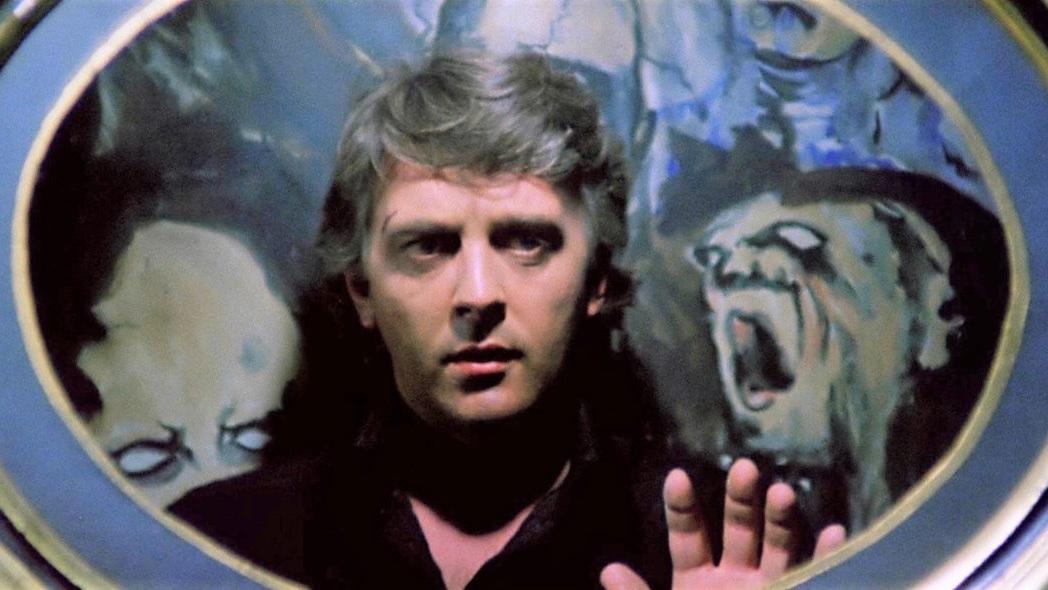
It gives the archive a precise question: where does the relation between images make the spectator supply a connection? A clue can be visible and still acquire its significance later. The Deep Red image above illustrates an arrangement of faces and a mirror, but only an identified moving-image passage could establish how long the viewer has to read it or how a return changes its force. Follow the memory study →
04 / DIRECTOR & EDITOR
Planning does not eliminate assembly.
In the Sparti interview, Argento recalls carefully planned shots, limited coverage and storyboards as reasons assembly could proceed quickly. His recollection describes the material reaching the editing room. It cannot, by itself, establish that the editor merely followed instructions or contributed no decisions. Argento’s account ↗
The useful distinction is between the range of alternatives available and the work of choosing relationships within that range. A prepared sequence still has durations, transitions and points of emphasis. We retain the director’s testimony without converting it into a claim about an individual cut’s authorship. The Cannes record credits Fraticelli with editing Suspiria. Suspiria credit ↗
Working from the planned shots
In Nine Lives (11:20–12:05), the interview on Arrow’s The Cat o’ Nine Tails Blu-ray, Argento remembers Fraticelli as a hard-working editor who respected the shooting list and the planned shots. The account places their collaboration within preparation as well as the later assembly of footage. It is Argento’s description of their working method, rather than a claim that the editor merely followed instructions without interpretation. Read the interview study →
05 / ORIGINAL CUT & LATER EDITIONS
A recut is a separate event.
Arrow’s Deep Red restoration record explains that the original negative had been physically recut for export and later required reconstruction. It also notes that English dialogue was never recorded for scenes unique to the Italian version. These are material reasons for differences between presentations. They do not identify Fraticelli as the person responsible for every export alteration. Restoration record, pp. 56–57 ↗
The same care applies to filmography: Four Flies on Grey Velvet credits Françoise Bonnot for editing. Fraticelli’s repeated collaboration with Argento should not erase that exception. Four Flies credits ↗
| Film / role | Follow the work |
|---|---|
| Bird · early collaboration → | Masi’s account of concentrated narrative cutting. |
| Deep Red · editing and later versions → | Original assembly, assistant-editor credit and a separately documented export recut. |
| Suspiria · editing → | The relationship between prepared images and their assembly. |
| Opera · editing → | A later collaboration, confirmed by the BFI crew record. Credits ↗ |
These routes distinguish an editor’s credited work from a film’s subsequent circulation. That distinction makes the history more accurate without withholding the central account until every surviving version has been compared.
FOLLOW THE CONNECTIONS
Another way in.
Follow the people across films, then return to the evidence for each contribution.
THE READING ROOM
Return to the source.
Source record reviewed 18 October 2026. Credits, recollections, criticism and material evidence retain their different scopes.
- 01
Franco Fraticelli — Enciclopedia del Cinema ↗
Stefano Masi, Treccani, 2003. Career and critical account. A signed reference essay; its description of editing is Masi’s analysis.
Return to the study ↑ - 02
Franco Fraticelli — recollections reproduced by TotòTruffa2002 ↗
First-person text; page attributes the interview to Simone Riberto, 12 October and 4/19 November 1999. The web reproduction was, not an original recording or transcript manuscript.
Return to the study ↑ - 03
Deep Red — BFI programme credits ↗
BFI Southbank, May 2023. Compiled crew credits, including Giuseppe Bassan, Armando Mannini, Franco Fraticelli and Pietro Bozza.
Return to the study ↑ - 04
Tenebrae — BFI programme credits ↗
BFI Southbank, May 2023. Compiled credits, including Giuseppe and Davide Bassan’s distinct jobs, Tovoli, Fraticelli and assistant editor Pietro Bozza.
Return to the study ↑ - 05
Suspiria (1977) — Dario Argento in conversation ↗
Rosario Sparti interview, republished 5 September 2018 from Il Mucchio. Answers about scale, Art Nouveau, storyboarding and cutting.
Return to the study ↑ - 06
Suspiria — Festival de Cannes credits ↗
Official record for the 2007 Cannes Classics presentation of the 1977 film. Screenplay, cinematography, production design and editing credits; not an original production document.
Return to the study ↑ - 07
Deep Red — Arrow restoration booklet ↗
Original PDF spreads inspected: credits pp. 4–5; Alan Jones on Gianna pp. 16–17; restoration record pp. 56–57. These locators distinguish criticism, testimony and material restoration evidence.
Return to the study ↑ - 08
Four Flies on Grey Velvet — BFI programme credits ↗
BFI Southbank, May 2023. Compiled credits checked: Franco Di Giacomo, cinematography; Françoise Bonnot, editing. Separate from later restoration personnel.
Return to the study ↑ - 09
Opera — BFI programme credits ↗
BFI Southbank, May 2023. Compiled credits checked: Davide Bassan, production design; Gian Maurizio Fercioni, Regio Theatre art direction; Fraticelli, editing. The cast list uses Myra; the accompanying synopsis uses Mira.
Return to the study ↑
KEEP EXPLORING
One film opens another.
Explore the films and collaborators → · Visit the Reading Room → · Find a piece for your collection →