COLLABORATORS / 001 · EXPANDED STUDY
Daria NicolodiA voice inside the work.
An actor and co-writer across the films: Gianna’s independence, the making of the Three Mothers and the distance between a credit and a creative contribution.
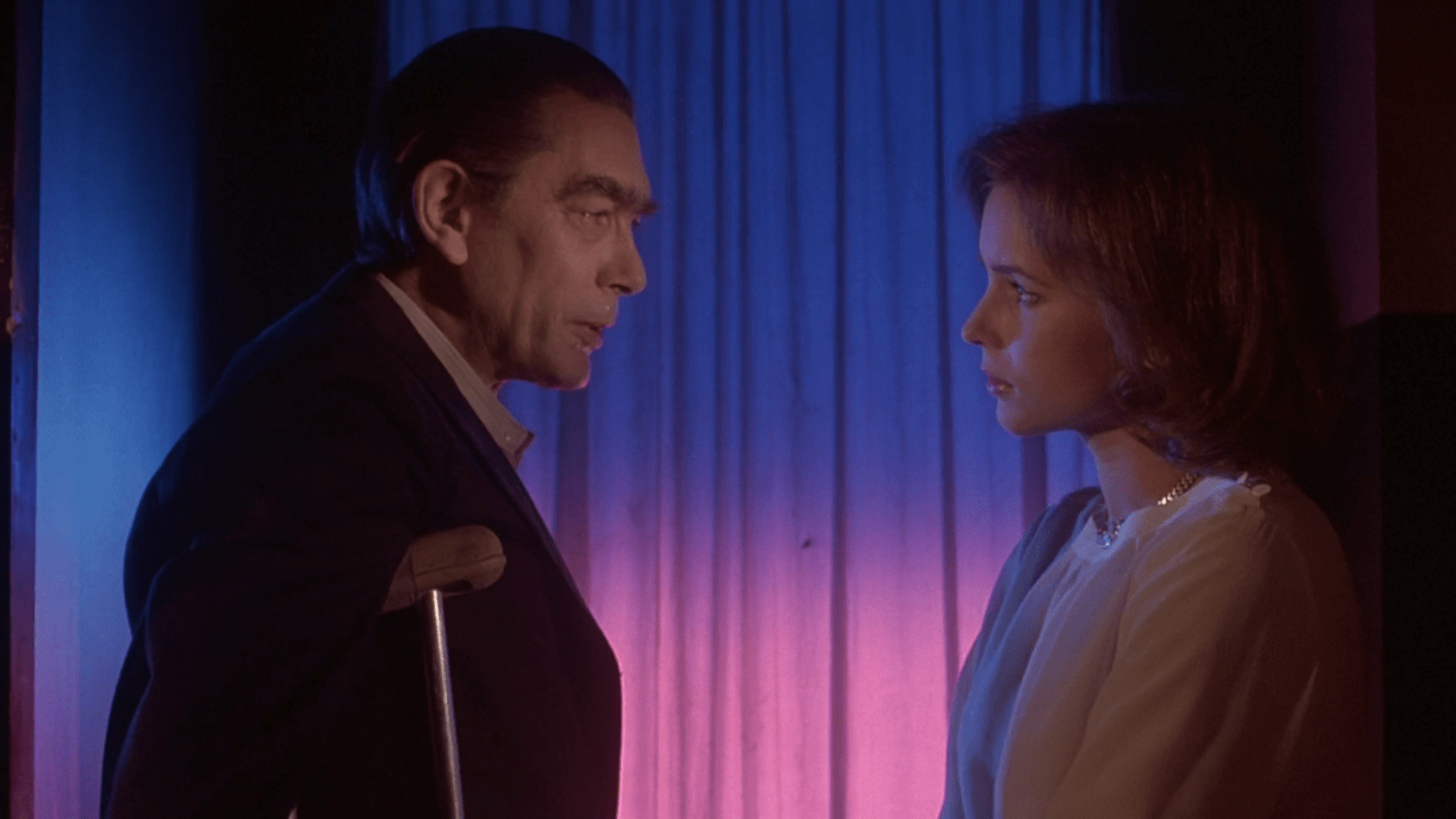
THE COLLABORATOR STUDY
Daria Nicolodi gives this archive a way to follow work across the boundaries between acting and writing. Her presence in a film, her contribution to its conception and her later explanation of that contribution are related forms of evidence, each with its own history.
01 / THEATRE & CINEMA
Begin with the actor.
In her 2014 La Nazione interview, Nicolodi recalls amateur theatre in Florence, training in Rome with Luca Ronconi and work at Venice’s Fenice. She describes meeting Argento through the Deep Red audition and finding shared interests in painting, cinema and the occult. That account places an already working performer at the beginning of the collaboration. Nicolodi’s recollection ↗
This matters to the way we approach the films. A performance is a contribution made through movement, speech, attention and response to other actors. Reducing Nicolodi to a biographical connection with the director leaves those decisions unexplored. Her recurring appearances invite comparison, but each character also needs to be encountered within the particular film.
02 / DEEP RED
Gianna changes the conversation.
Gianna gives Deep Red a second investigator whose confidence challenges Marc’s assumptions. In Alan Jones’s booklet account, Nicolodi values the character’s strength; the arm-wrestling encounter becomes a comic contest over masculine authority. The scene’s interest is not exhausted by who wins: Gianna can alter the terms on which Marc expects to conduct an exchange. Booklet, pp. 16–17 ↗
Nicolodi’s recollections in the public opening of the Mad Movies profile connect Gianna’s restless energy with Argento’s journalistic temperament. She also objects to the reduced role in the French cut. These are useful, distinct observations: a model for the character, and a reminder that an actor’s apparent importance changes when the film is shortened. Public interview excerpts ↗
Read Gianna’s comic friction alongside the film’s problem of mistaken observation. Marc’s authority is vulnerable in conversation as well as in the murder inquiry. Follow the Deep Red performance study →
03 / SUSPIRIA & INFERNO
A credit and a contribution.
The Cannes record credits Suspiria’s screenplay jointly to Dario Argento and Daria Nicolodi. That makes her authorship part of the film’s formal record. Inferno’s ICAA entry assigns story and screenplay to Argento, while Nicolodi’s later interview describes continuing author income from both films. Cozzi likewise recalls her writing involvement in both. These records answer different questions; the later accounts should not be silently converted into a different screen credit. Suspiria credits ↗ · Inferno record ↗ · Nicolodi ↗ · Cozzi ↗
The productive next step is to compare surviving drafts and contemporary correspondence. Until then, shared authorship does not justify distributing individual ideas or scenes between the writers. It does support reading the imaginative world through more than the director’s recollection. The academy and the Three Mothers belong to a history of collaboration that the archive should keep visible.
Sacchetti on the turn towards fantasy
In The Writer O’ Many Tales (28:25–29:18), Dardano Sacchetti credits Nicolodi with helping move Argento’s cinema from the solution-driven mystery towards the fantasy and horror of Suspiria. This is another collaborator’s retrospective assessment of her influence. It complements the film’s shared writing credit without replacing the more specific evidence of how the screenplay developed. Interview source and disc guide →
04 / AN UNMADE ROUTE
The trilogy had other possible futures.
Cozzi remembers discussing a third-Mother project with Nicolodi before transforming the material into his own The Black Cat. His account describes a significant change of direction, not a production history for Argento’s eventual Mother of Tears. The abandoned possibility and the later film must remain distinct. Cozzi on the project ↗
An unrealised project can reveal creative agency without supplying a lost “correct” version of a finished film. Here it opens a useful question about what Nicolodi wanted to carry forward. That question can be preserved without making access to an unlocated screenplay a condition of understanding her established contribution.
05 / SELECTED ROUTES
Follow the work across the films.
| Film / role | Follow the work |
|---|---|
| Deep Red · Gianna → | Performance, humour and the authority of the investigator. |
| Suspiria · co-writer → | The joint screenplay credit and the film’s accounts of its origins. |
| Inferno · performer / writing recollections → | Formal credits, later testimony and the continuation of the Three Mothers. |
| Opera · Mira / Myra → | A further acting collaboration; the BFI programme identifies her as Betty’s agent. Cast record ↗ |
This is a working route through the archive, not a complete filmography. For the connected crafts, follow Bassan’s spaces, Tovoli’s light and Fraticelli’s editing.
FOLLOW THE CONNECTIONS
Another way in.
Follow the people across films, then return to the evidence for each contribution.
THE READING ROOM
Return to the source.
Source record reviewed 18 October 2026. Credits, recollections, criticism and material evidence retain their different scopes.
- 01
Daria Nicolodi in conversation with Titti Giuliani Foti ↗
La Nazione, 21 September 2014. Written interview read: theatre, the Deep Red audition, shared interests and her account of writing income. Retrospective testimony, not a contract or draft.
Return to the study ↑ - 02
Légendes — Daria Nicolodi ↗
Mad Movies, 12 July 2017. Public opening and quoted recollections, including Gianna and the French cut. The subscriber-only continuation was not accessed.
Return to the study ↑ - 03
Deep Red — Arrow restoration booklet ↗
Original PDF spreads inspected: credits pp. 4–5; Alan Jones on Gianna pp. 16–17; restoration record pp. 56–57. These locators distinguish criticism, testimony and material restoration evidence.
Return to the study ↑ - 04
Suspiria — Festival de Cannes credits ↗
Official record for the 2007 Cannes Classics presentation of the 1977 film. Screenplay, cinematography, production design and editing credits; not an original production document.
Return to the study ↑ - 05
Inferno — ICAA film catalogue ↗
Official catalogue writing and cast record, checked in the Inferno dossier. Formal story/screenplay attribution to Argento is distinguished from recollections of Nicolodi’s contribution.
Return to the study ↑ - 06
Luigi Cozzi — written interview ↗
Barend de Voogd, interview associated with Cozzi’s February 2011 Brussels visit. Answer about Nicolodi and The Black Cat. A participant’s later account, not the abandoned screenplay.
Return to the study ↑ - 07
Opera — BFI programme credits ↗
BFI Southbank, May 2023. Compiled credits checked: Davide Bassan, production design; Gian Maurizio Fercioni, Regio Theatre art direction; Fraticelli, editing. The cast list uses Myra; the accompanying synopsis uses Mira.
Return to the study ↑
KEEP EXPLORING
One film opens another.
Explore the films and collaborators → · Visit the Reading Room → · Find a piece for your collection →