Twenty-four scene studies trace the investigation from the first overheard conversation to Lori’s final call. The photograph, the pendant and the injured hand each change meaning when someone examines them a second time.
The first witnesses
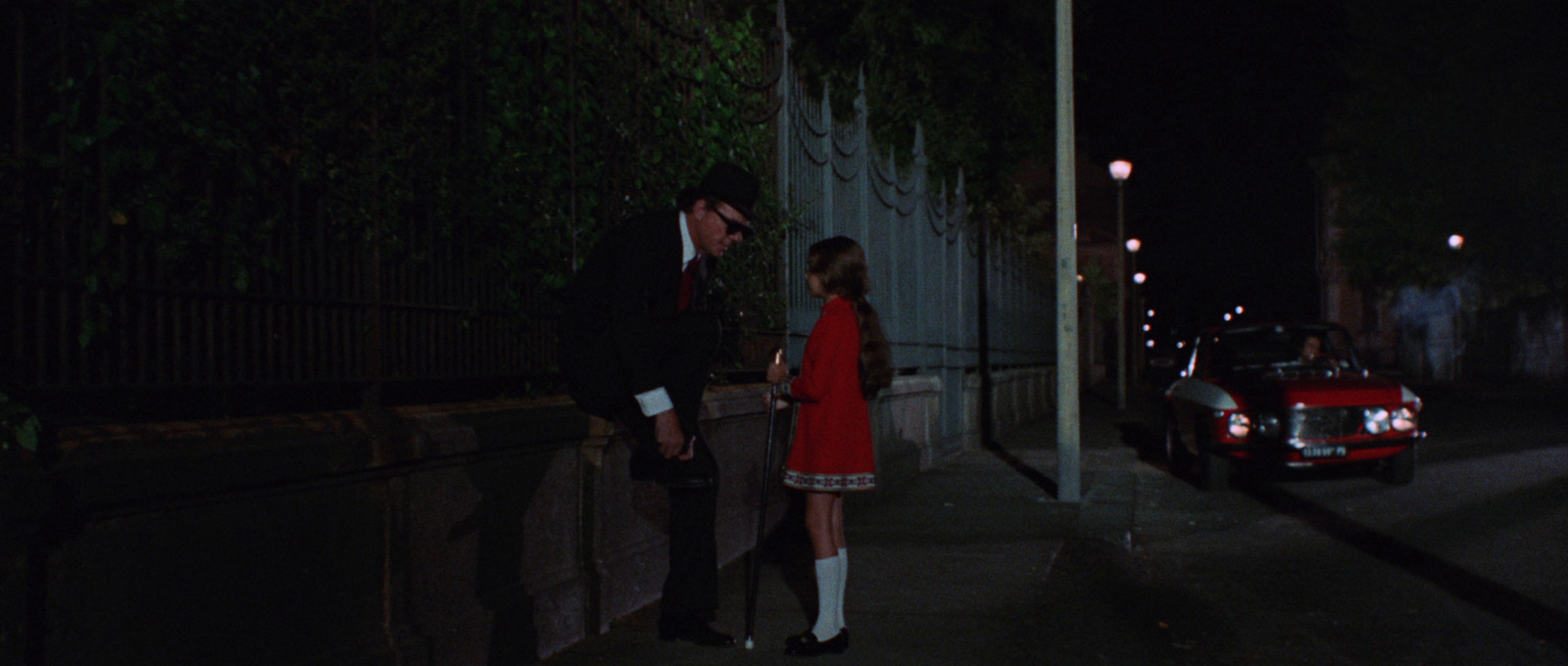
ENLARGE ↗Arnò and Lori beside the parked car.01:16–04:30
A conversation without a face
The first clue arrives as overheard speech. Arnò pauses beside a parked car and asks Lori to describe its occupants. Their partnership is established before the reporter enters the story: he listens and questions, she looks and reports. At home, the remembered words return while the crossword supplies a quieter model of how separate fragments might fit together.
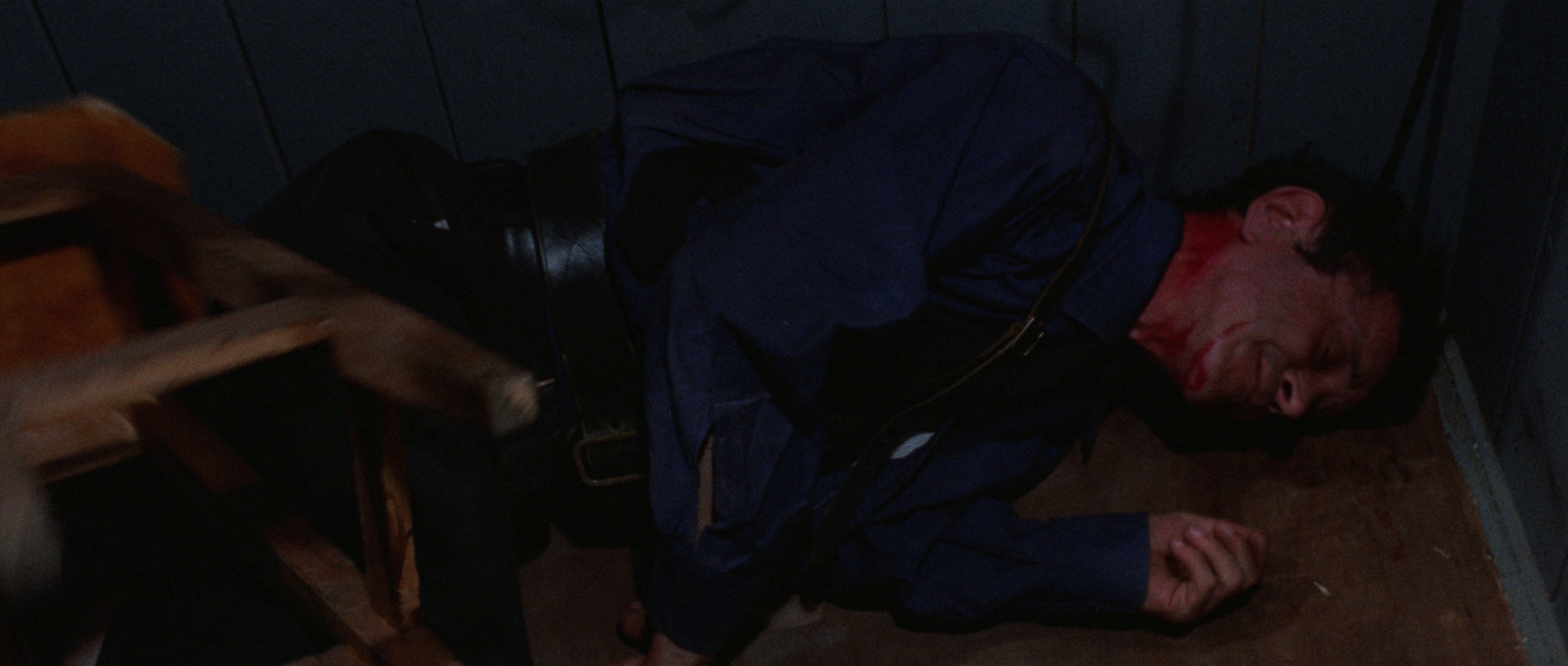
ENLARGE ↗The guard lies injured inside the institute.04:40–08:40
Inside the institute
The break-in places the camera inside a restricted space while withholding the intruder’s identity. Corridors, glass doors and the labelled cabinet turn research into something physically guarded. The following morning’s puzzle is that nothing appears to have been taken. The ending will change that premise: substitution, rather than a conspicuous theft, was the point.
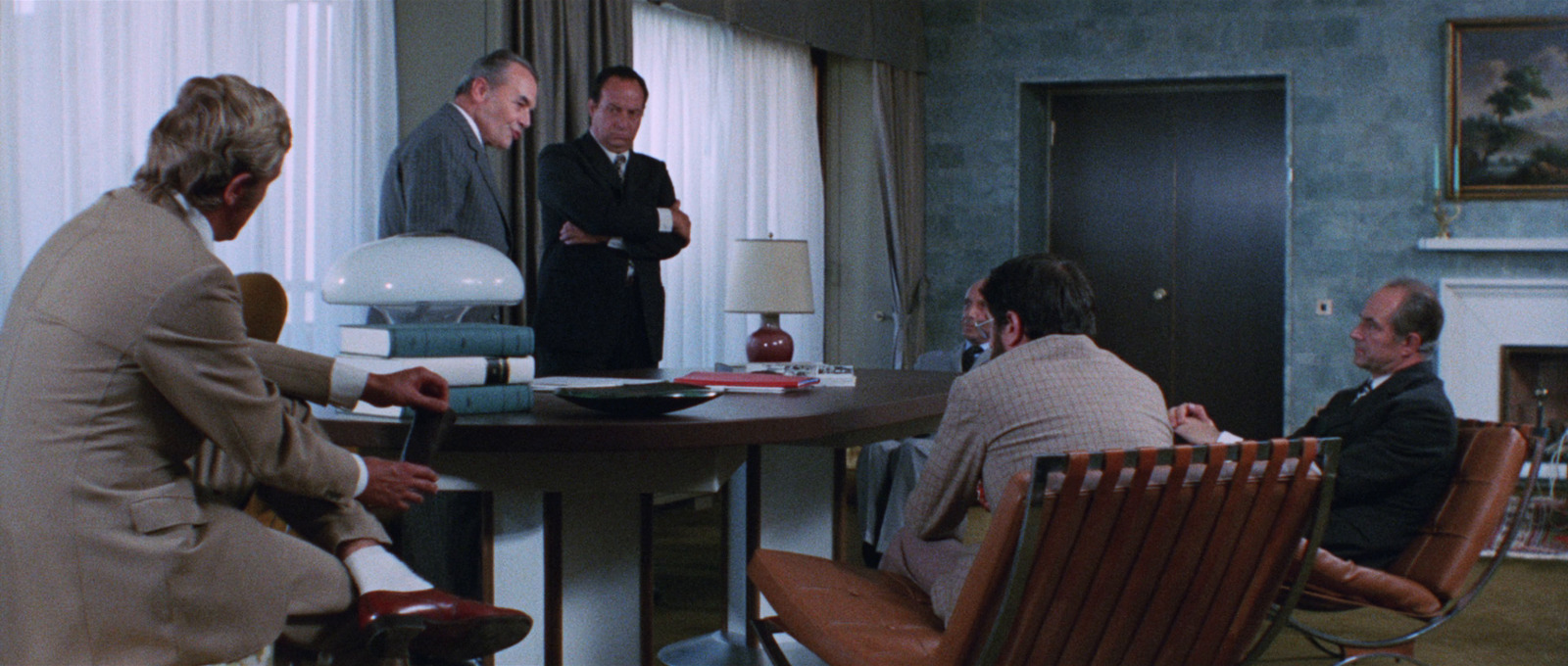
ENLARGE ↗The institute’s staff face the inquiry.09:07–16:12
The room full of suspects
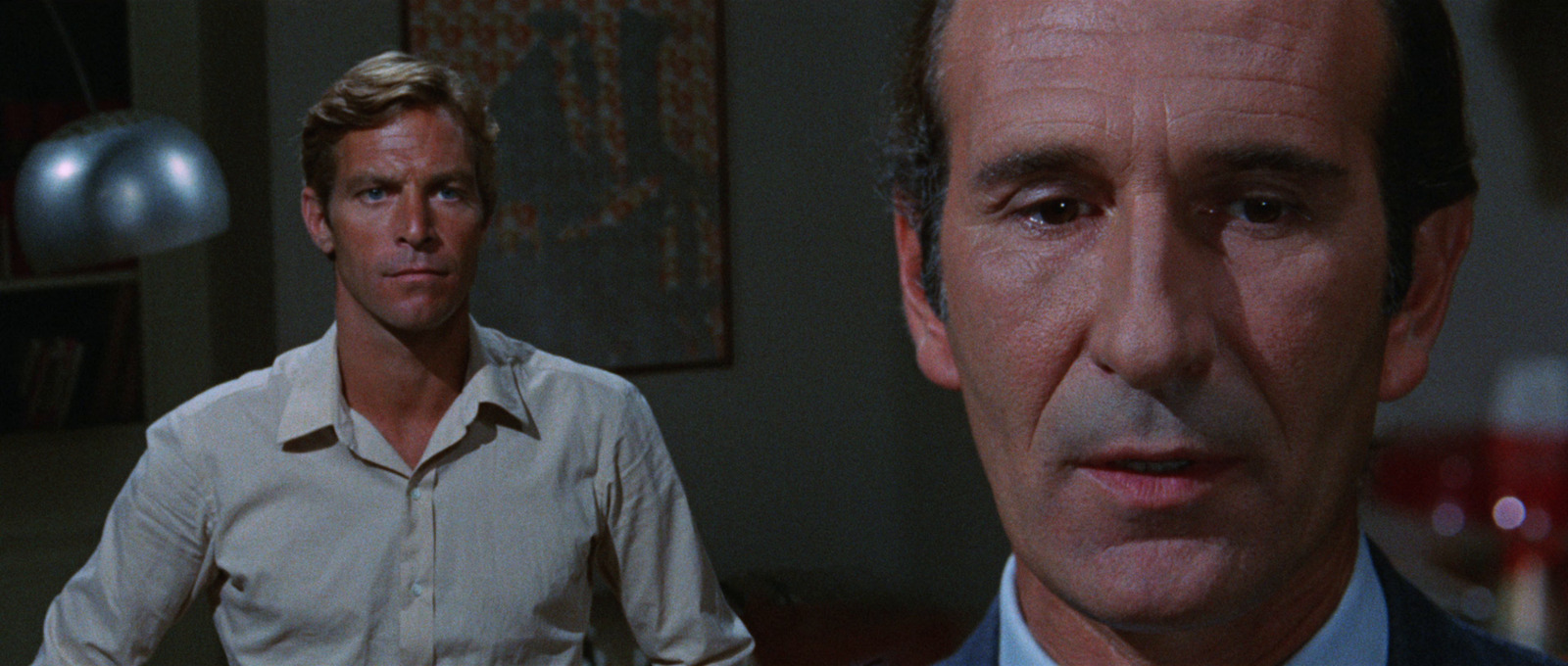
Giordani’s encounter with Arnò outside leads into a formal gathering of scientists and police. Casoni raises the possibility of documents being photographed without being removed, and Terzi rebukes him. Knowing the ending makes the exchange unusually pointed: the eventual culprit helps frame the investigation’s first theory. Calabresi’s later claim to know what was taken gives the polite meeting a concealed urgency.
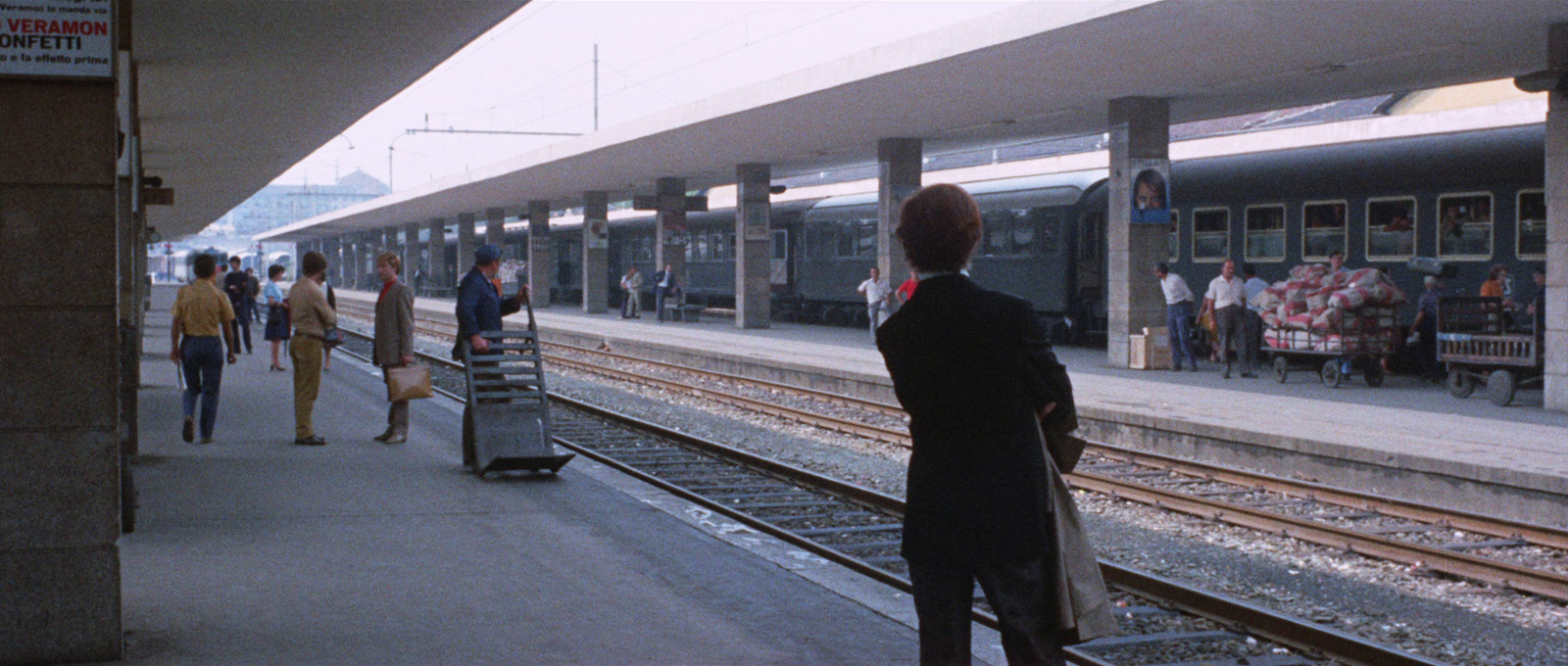
ENLARGE ↗Calabresi waits across the railway tracks.16:20–18:15
A death and a photo opportunity
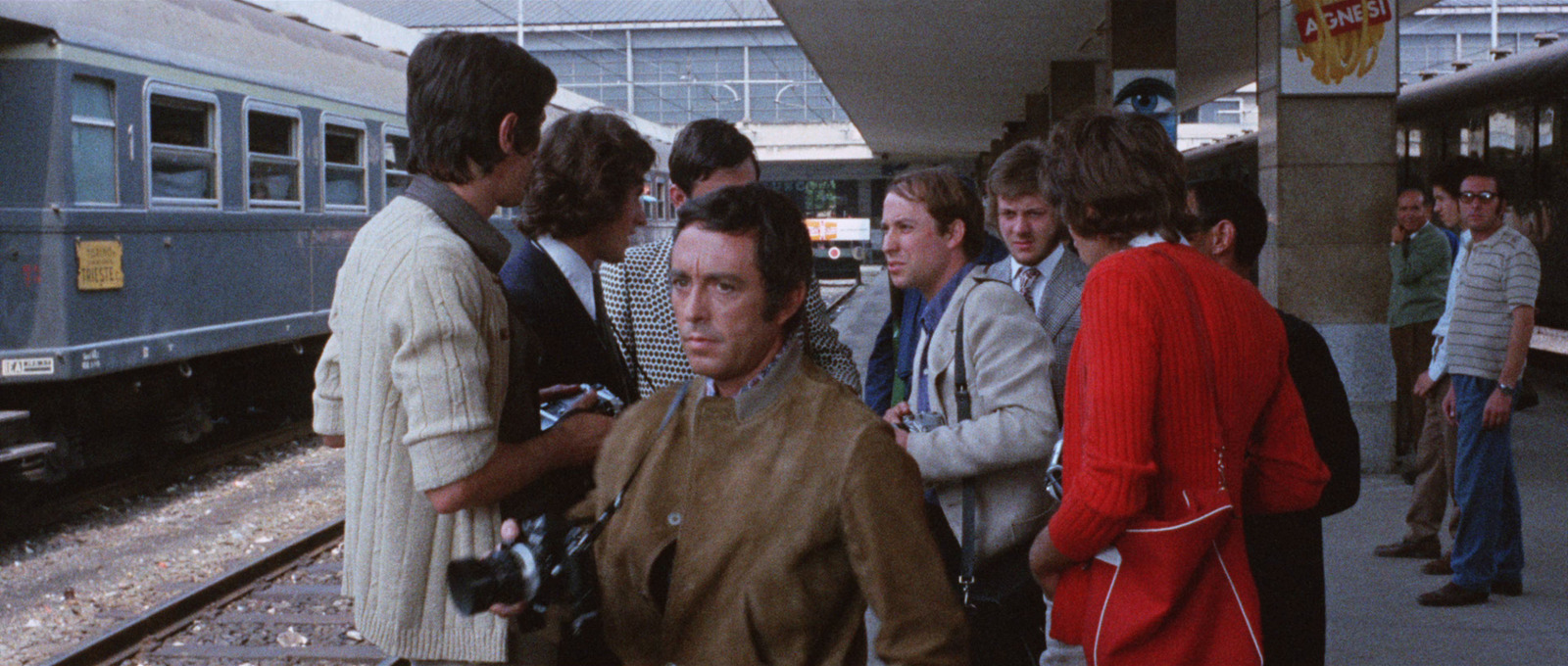
The station distributes attention between an arriving train, a waiting man and photographers expecting a starlet. Calabresi’s death briefly arrests that activity; the press then returns to its celebrity assignment. A photograph made in this crowded public space becomes the film’s most important early evidence, but only after someone asks what its published crop leaves out.
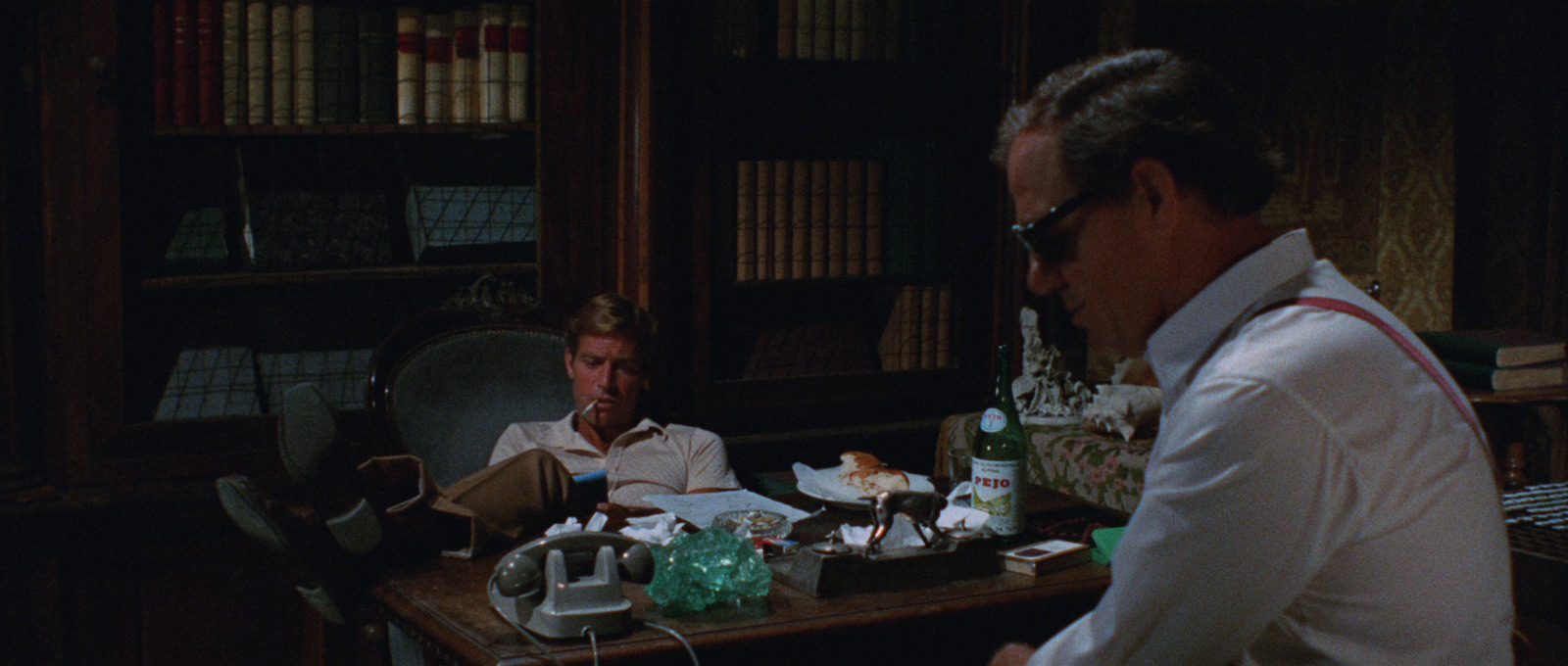
ENLARGE ↗Lori and Arnò visit Giordani’s desk.18:24–21:58
The reader who cannot see the photograph
Lori recognises Calabresi in the newspaper. Arnò’s question is more exact than the reporter’s first conclusion: is the image a complete negative or an enlarged detail? His former profession matters as much as his sharpened attention. The three-person scene gives Lori, Arnò and Giordani different tasks, so detection becomes a shared practice rather than a solitary flash of genius.
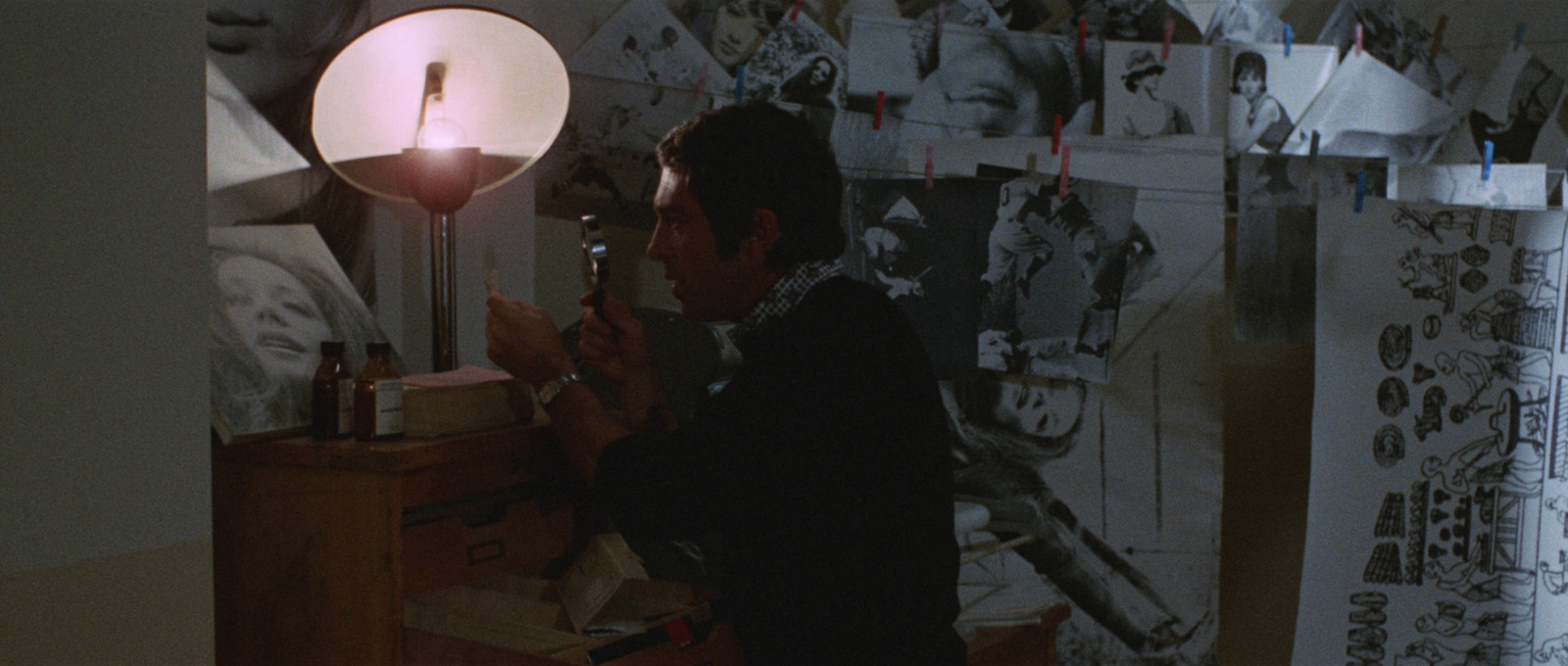
ENLARGE ↗Righetto examines the station photograph.22:00–27:10
Evidence develops too late
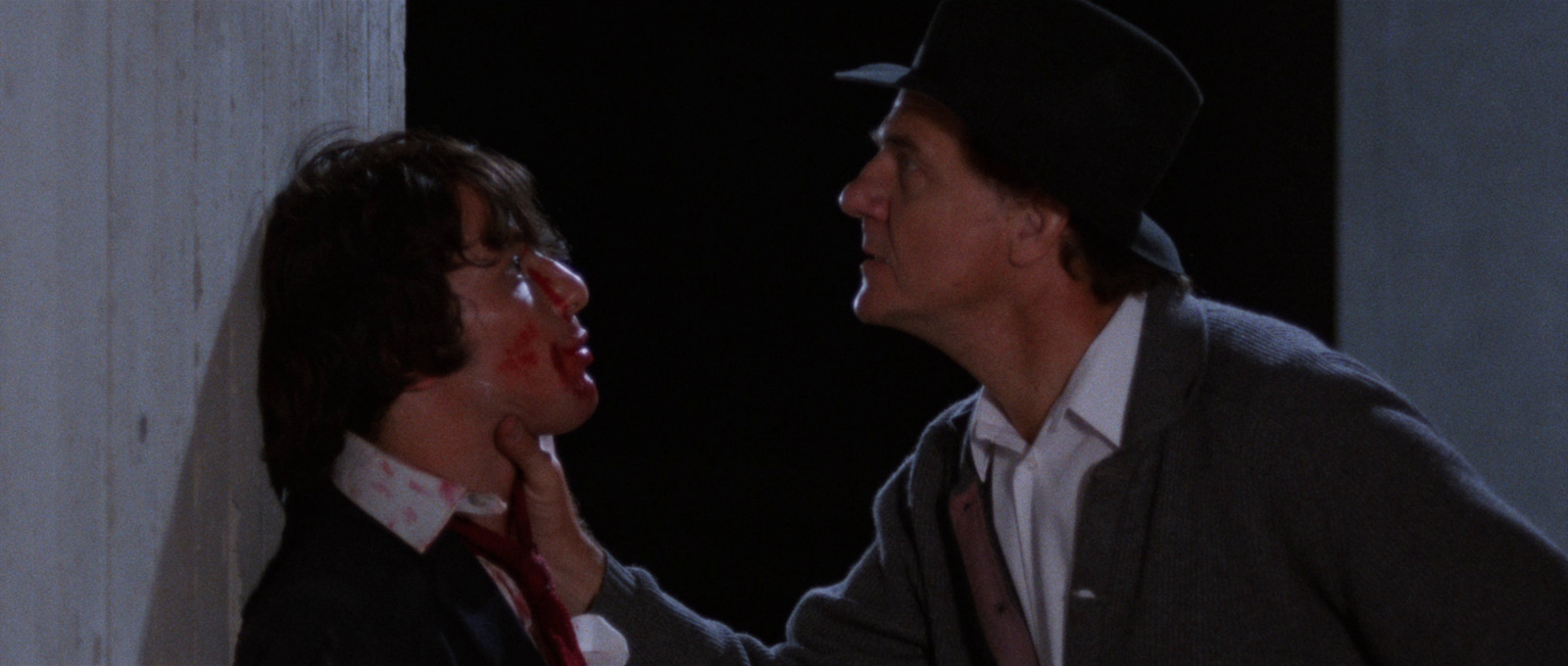
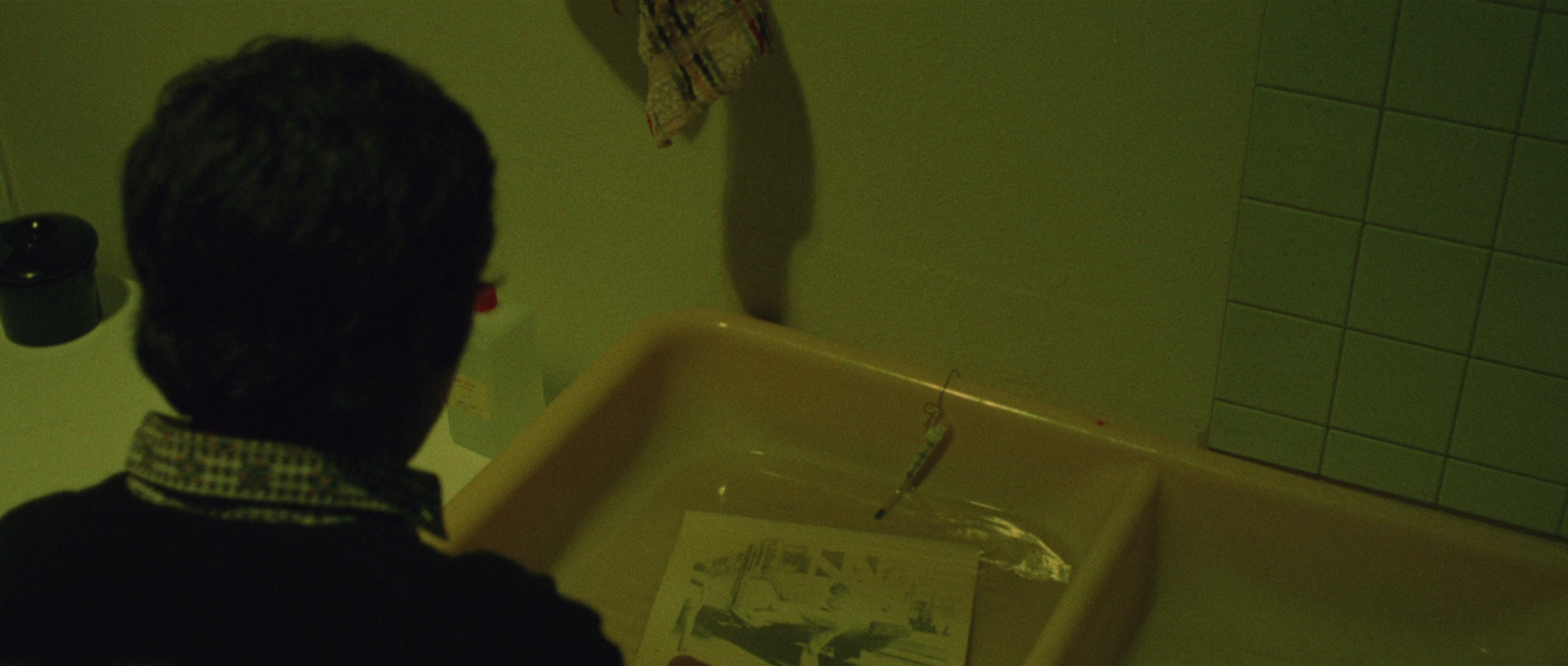
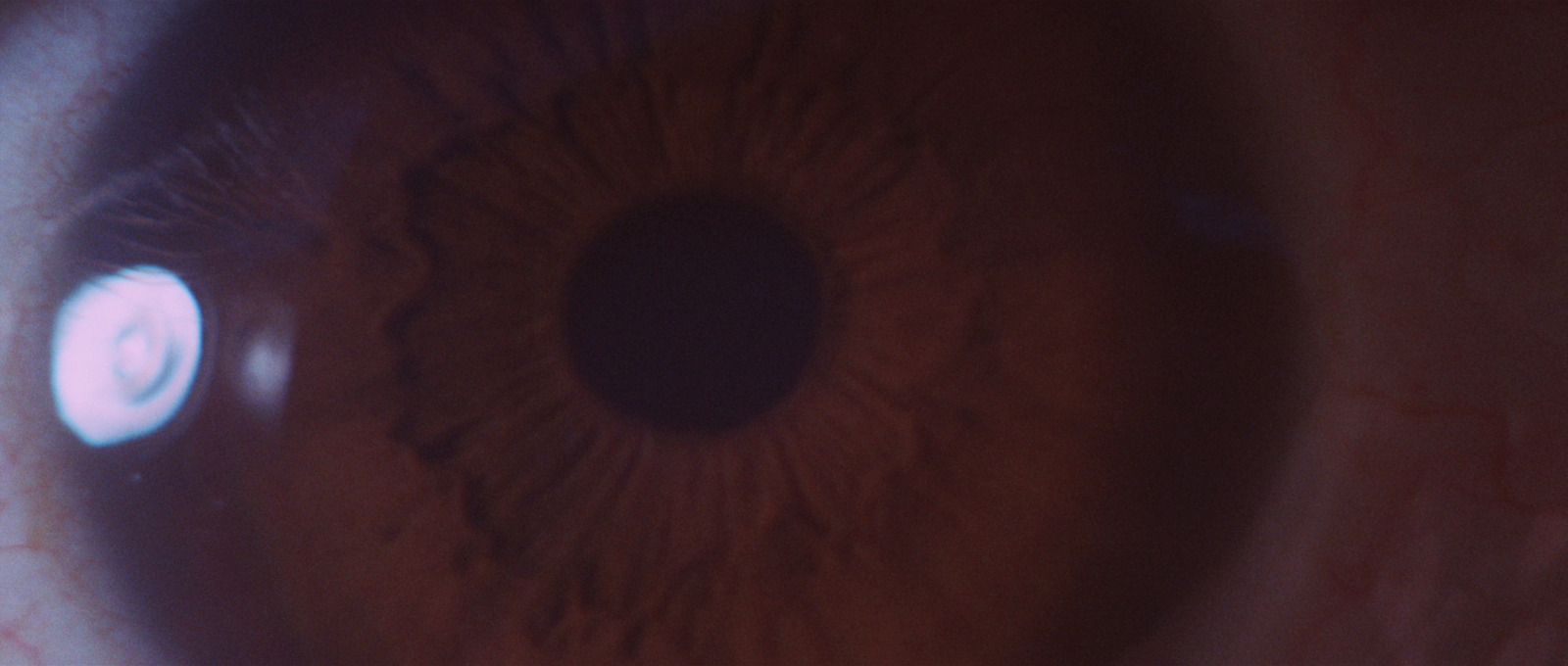
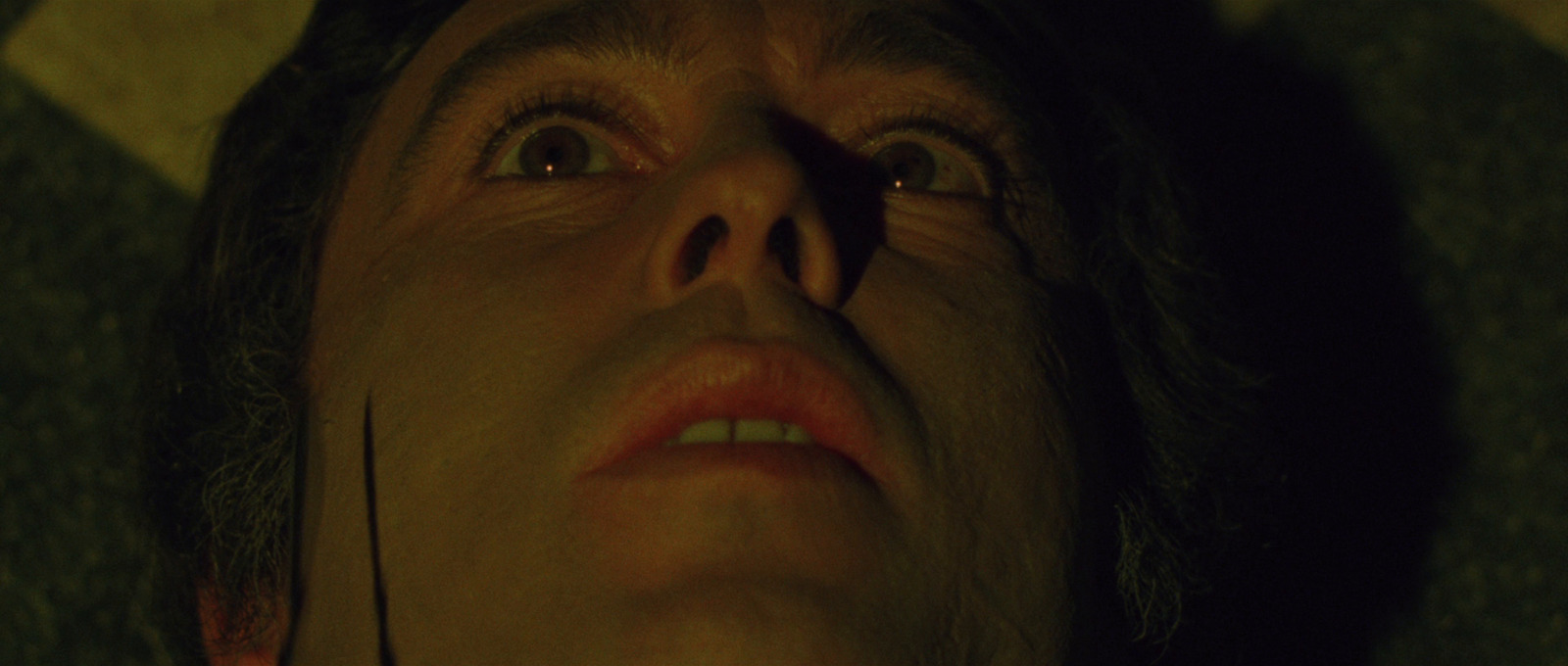
Righetto finds an arm and hand at the edge of the image and agrees to print the whole frame. The darkroom should make an obscured action legible. Instead, the photographer is killed before the investigators arrive. The enlargement, chemical trays and enlarging lens give the scene a concrete working environment, while the killer’s eye is shown in extreme isolation.
ENLARGE ↗Lori settles beside Arnò at home.29:00–31:40
A household becomes a lookout
Giordani describes the institute’s staff through binoculars while Arnò sorts the information. The scene then returns to Lori and the affectionate name she uses for him. Their relationship gives the investigation its emotional stakes. Later threats matter because this has already been shown as a functioning household, with habits, jokes and mutual dependence.
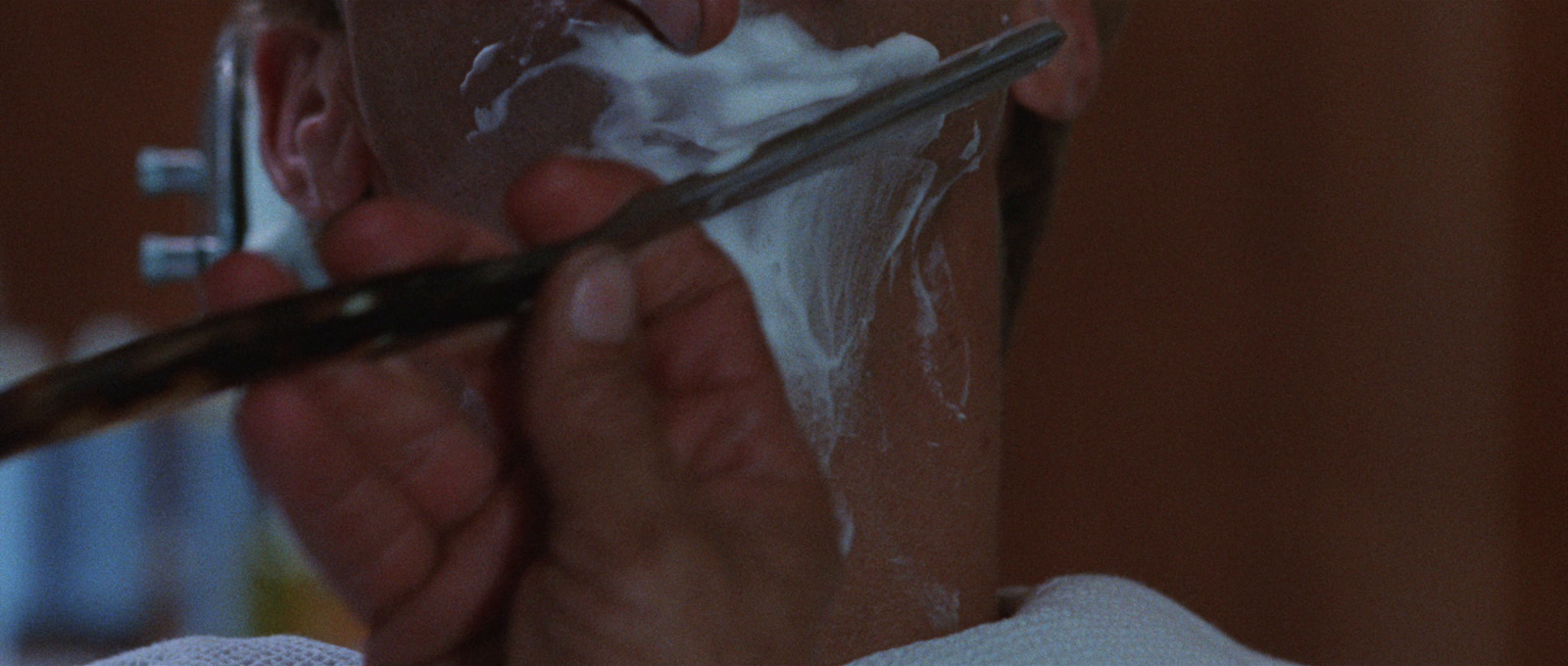
A newspaper report suggests that the murderer might be a barber. Giordani then has to listen while his own barber explains the difference between professional skill and indiscriminate cutting. The razor is ordinary and the conversation comic, but the preceding murder has changed how the object reads. Suspense comes from the customer’s imagination and the blade’s proximity, without another attack.
Nine leads
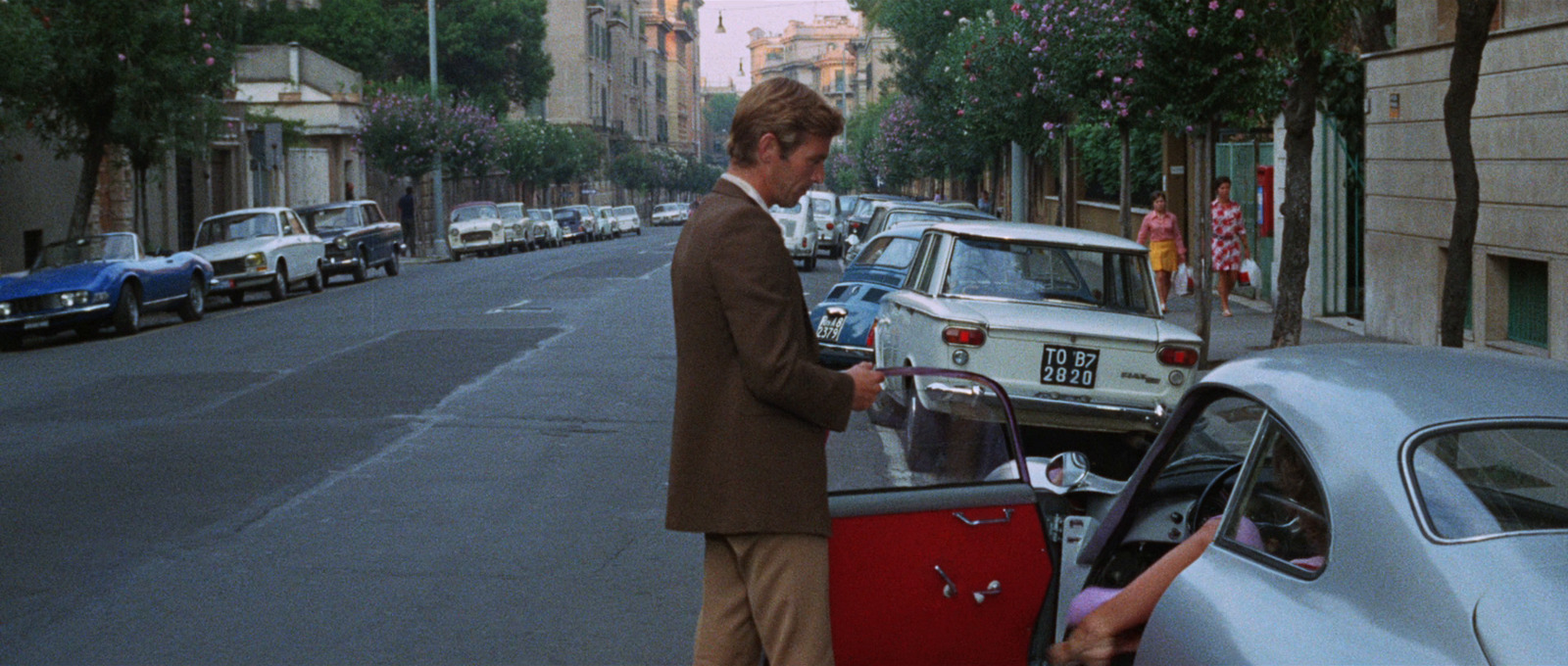
ENLARGE ↗Anna and Giordani beside her Porsche.34:00–41:15
Anna takes the wheel
The investigators split their work between Anna’s household and Bianca’s apartment. Anna then takes control of both the car and the scene, accelerating away from police surveillance while Giordani loses his composure. The dash-level views and abrupt changes of direction make the urban landscape an obstacle course. Her agency complicates the reporter’s assumption that he will conduct the interview on his own terms.
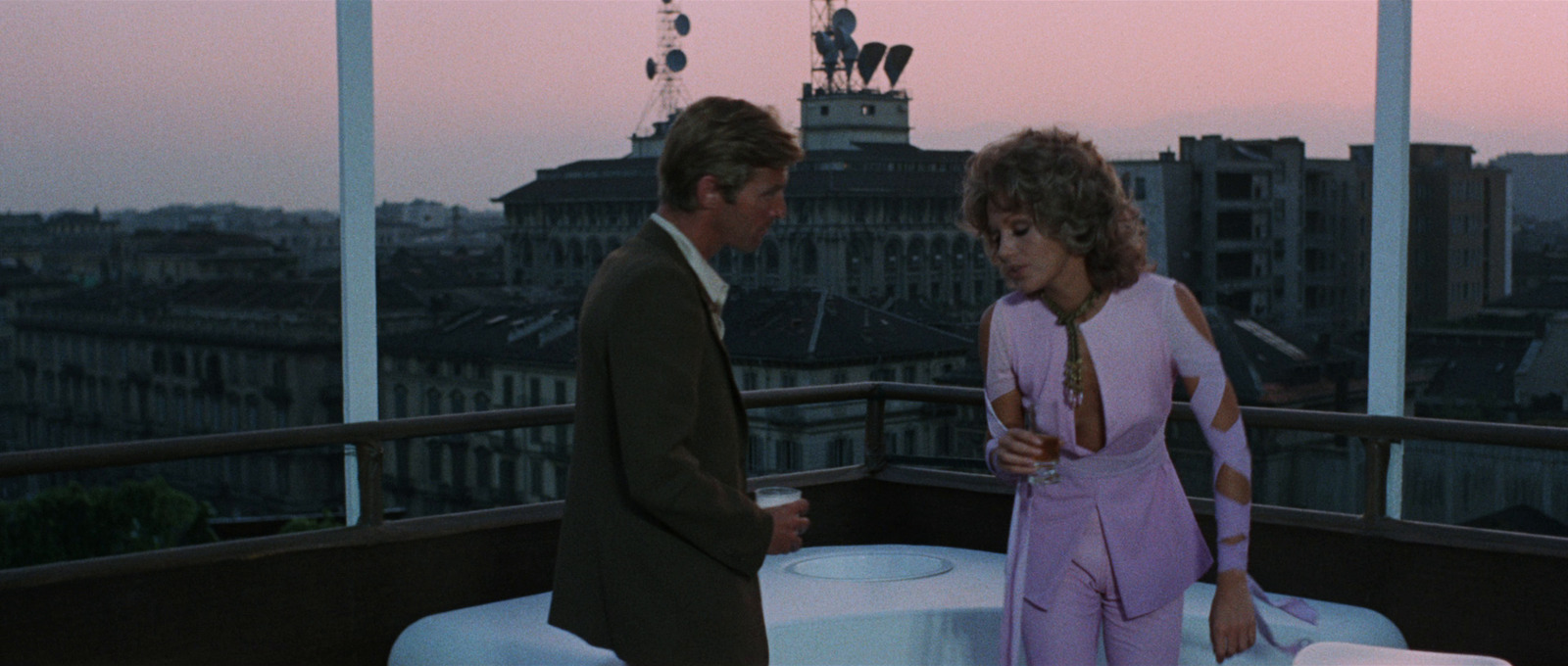
ENLARGE ↗Anna and Giordani above the city at dusk.41:20–43:11
A city spread beneath the conversation
The rooftop conversation opens the film out after the chase. Anna describes the institute’s two projects and characterises its researchers, while photographs help turn the names into suspects. The expansive view contrasts with the closed laboratory. It also gives an apparently relaxed conversation the work of organising the mystery’s next set of leads.
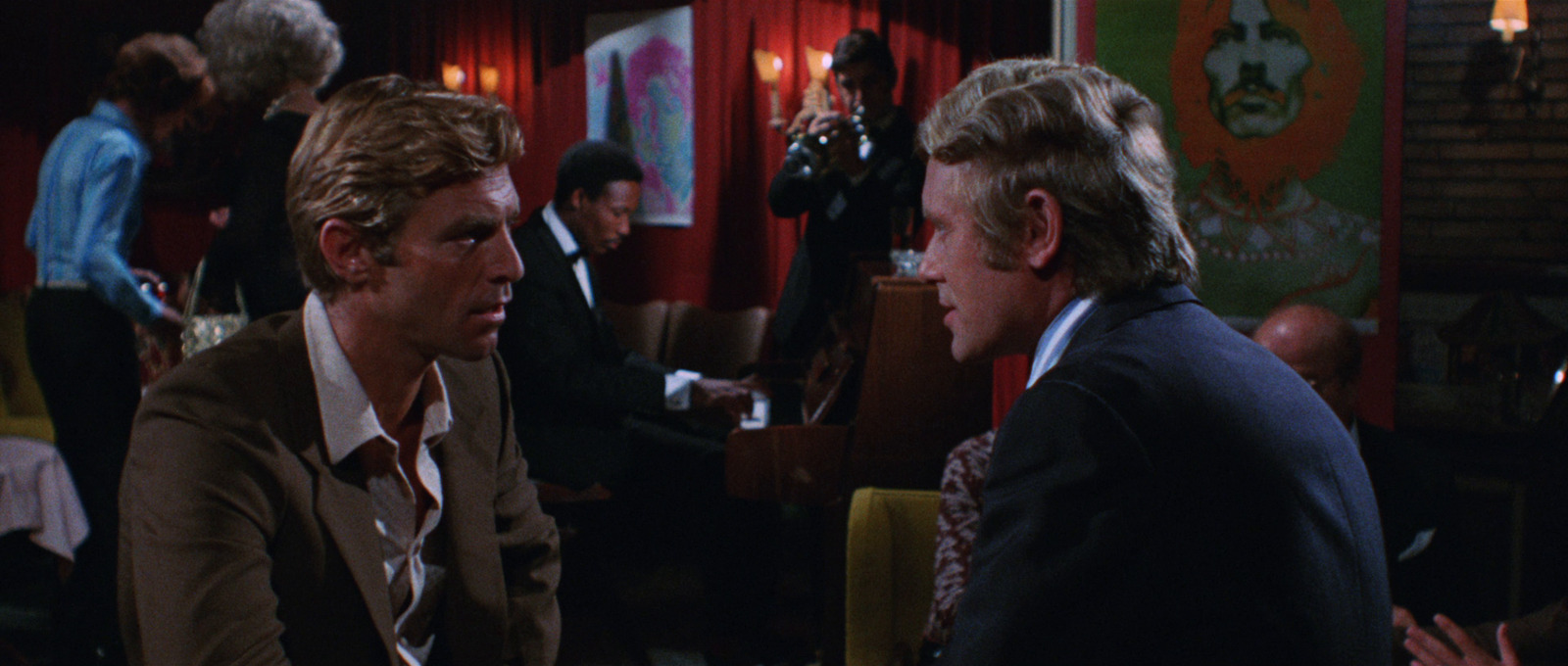
ENLARGE ↗Giordani questions Braun in the club.43:15–46:39
An interview on someone else’s ground
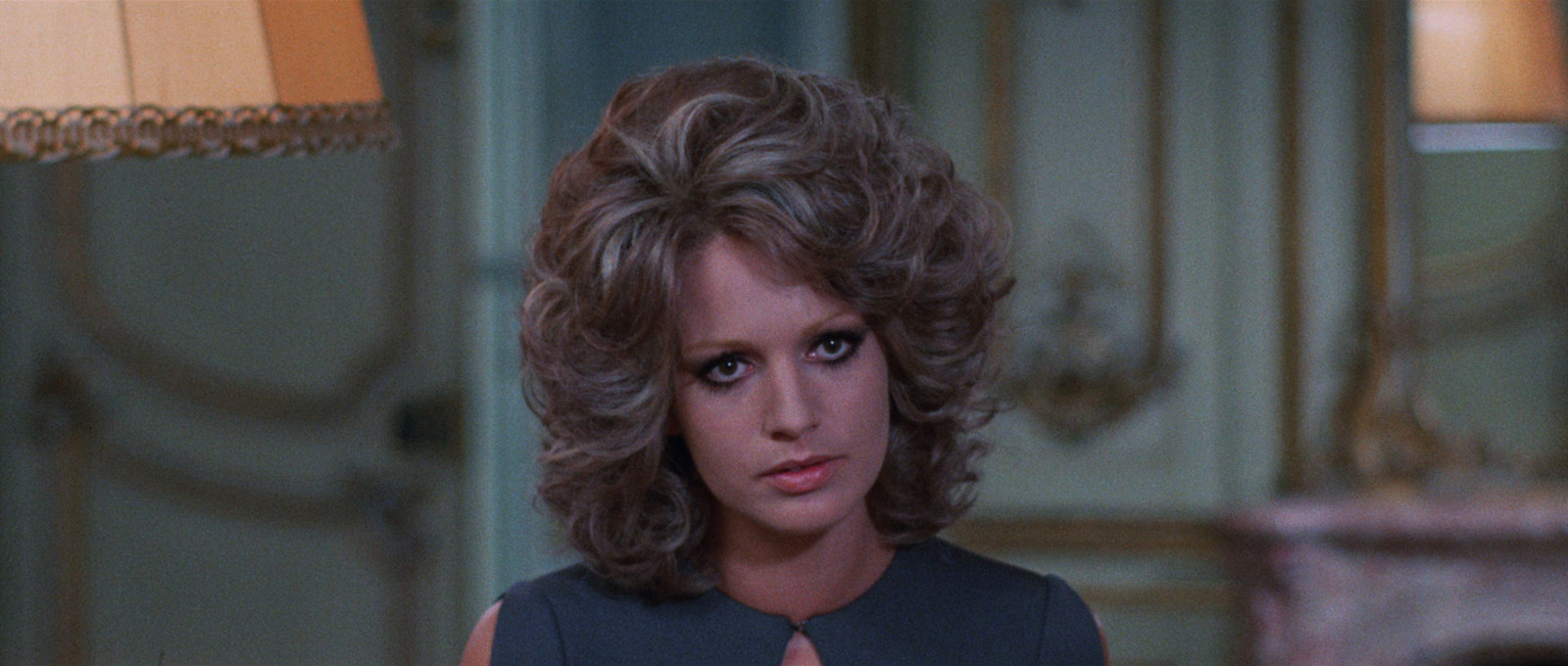
At the St Peter’s Club, Giordani tries to convert social conversation into an interrogation about industrial espionage. Braun turns the scrutiny back on the reporter, including a compliment about his eyes. The sequence belongs to the film’s network of secrets and misleading suspicions. Braun’s sexuality is part of its social setting and the characters’ prejudices; it is not an explanation for the murders.
ENLARGE ↗Giordani and Arnò count the nine leads.46:50–51:02
The title becomes a working list
Bianca searches Calabresi’s papers while the amateur investigators count their possibilities. Five scientists, Anna, Bianca, the missing photographs and the break-in make nine leads. The title’s cat is explained through the naval whip: any one strand might lead back to the same hand. The list is a provisional arrangement, and several of its apparently promising strands will prove to concern different secrets.
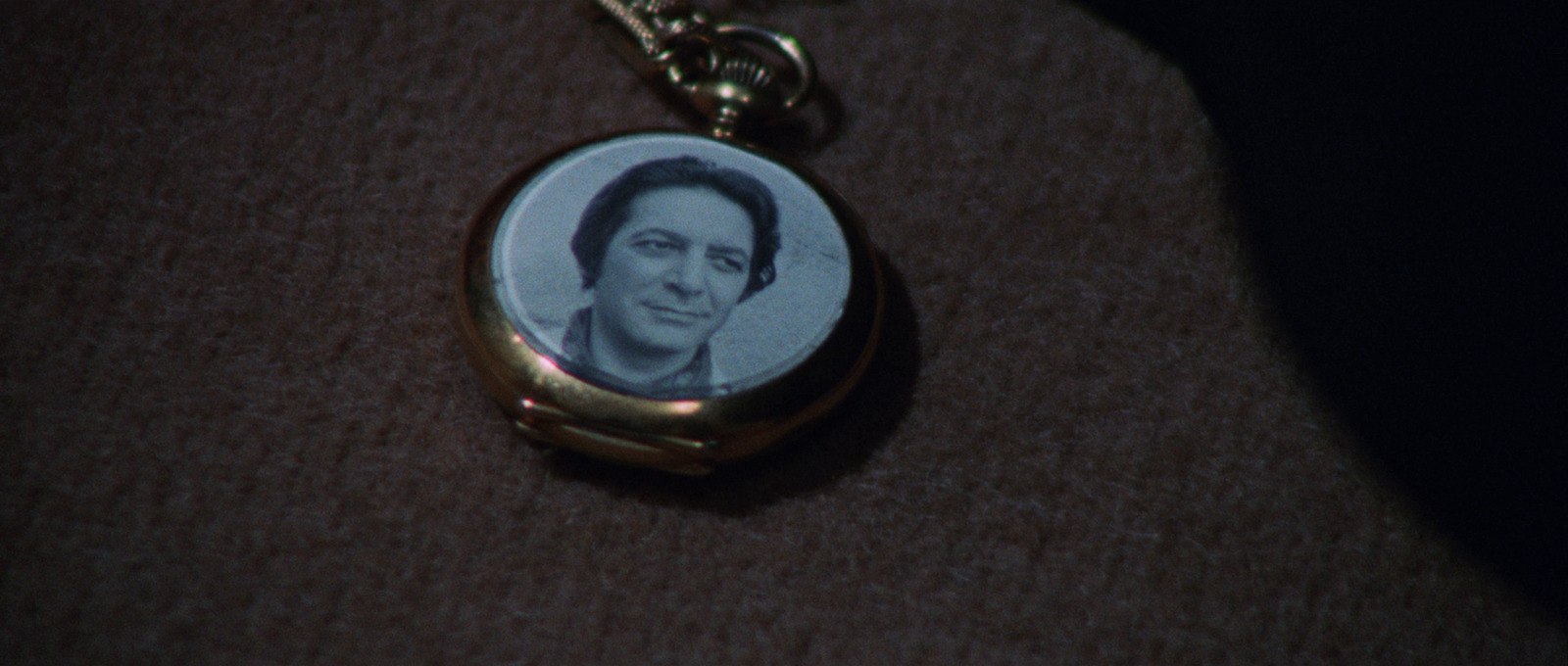
ENLARGE ↗Calabresi’s portrait on Bianca’s pendant.51:07–54:24
The witness who almost arrives
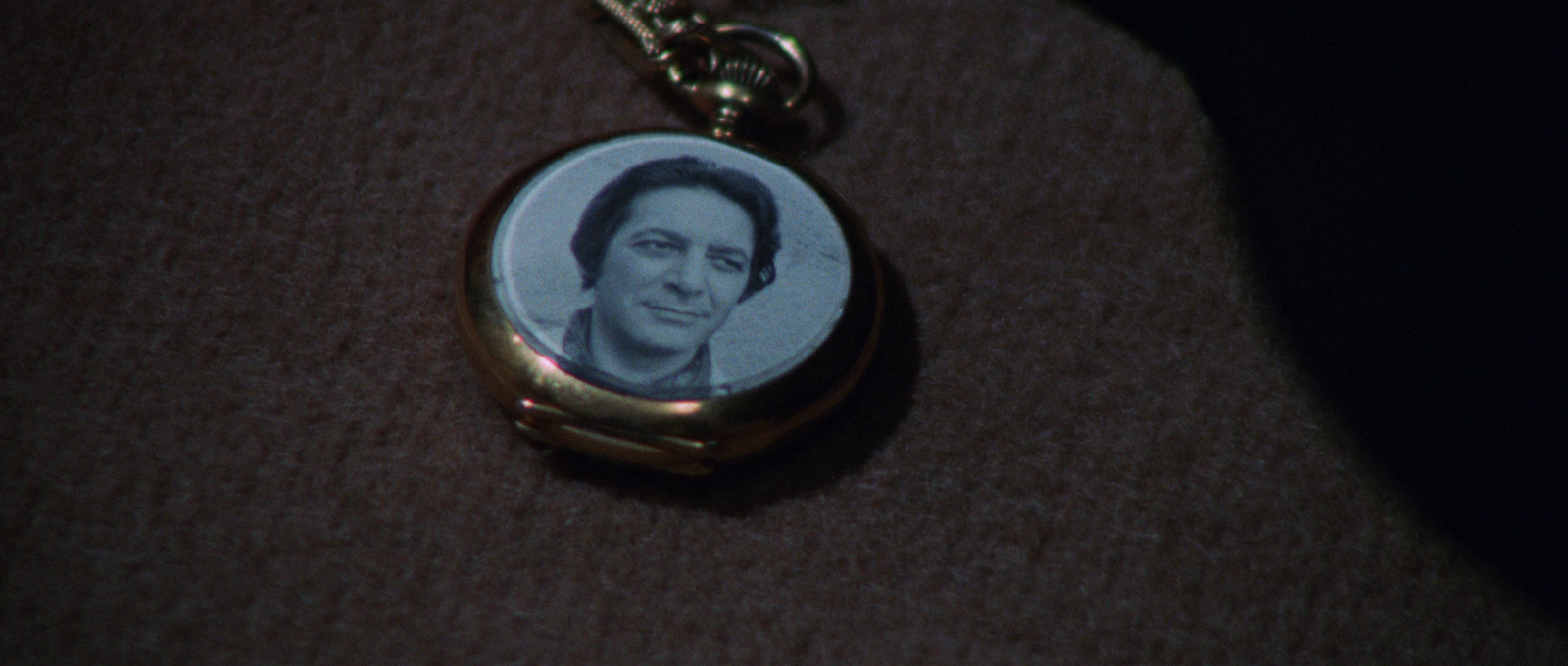
Bianca telephones to say that a note identifies the murderer. Her wish to pass it on without becoming publicly involved makes the call both valuable and vulnerable. The attack prevents her meeting with the investigators, but the pendant preserves another route to the evidence. A personal keepsake becomes a hiding place whose importance Arnò must reconstruct from Lori’s description.
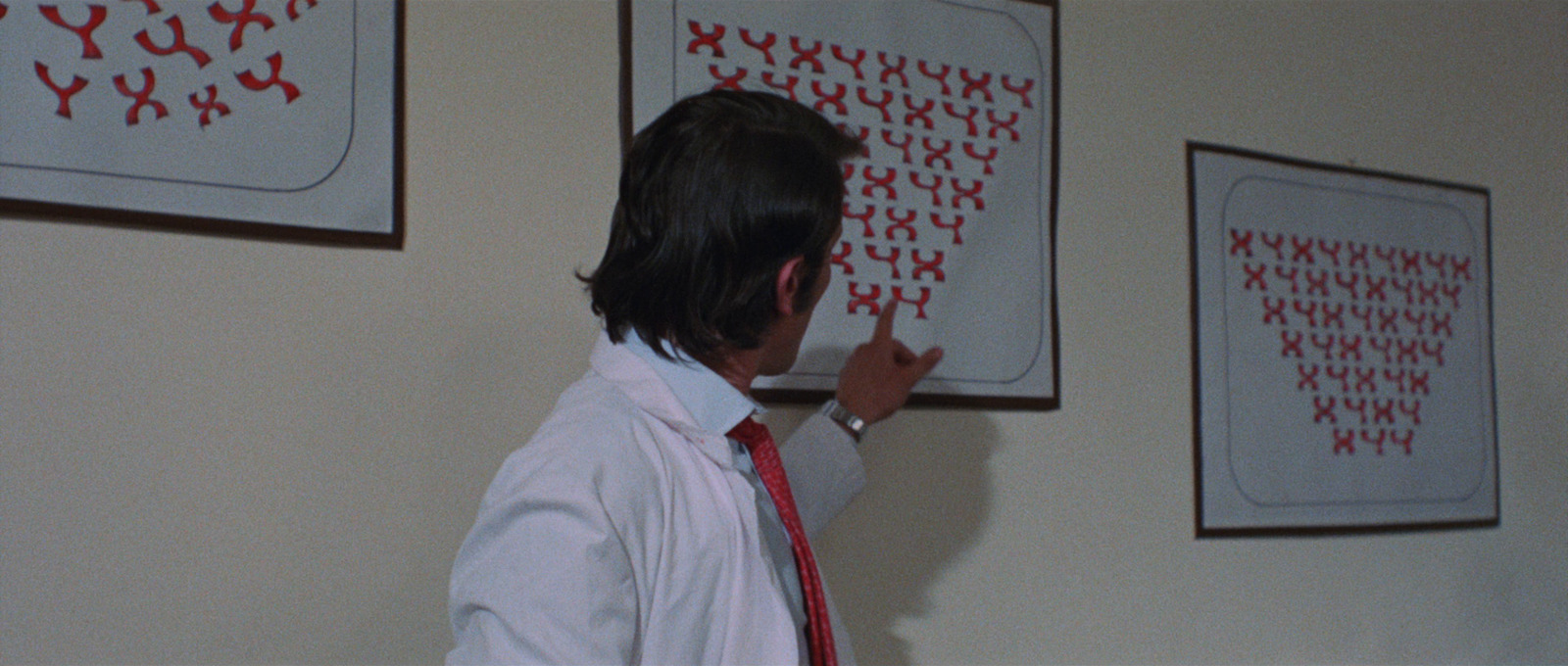
ENLARGE ↗Casoni explains the institute’s chromosome chart.54:35–59:21
A diagram that claims too much
A written threat reaches the investigators before the film offers its fullest scientific explanation. Casoni presents the chromosome chart as a key to violent behaviour. The scene gives that claim the setting and vocabulary of professional authority, then lets the ending expose his personal investment in it. It is the film’s speculative premise, not a reliable account of genetics; Sacchetti’s later interview also distances the story from the theory.
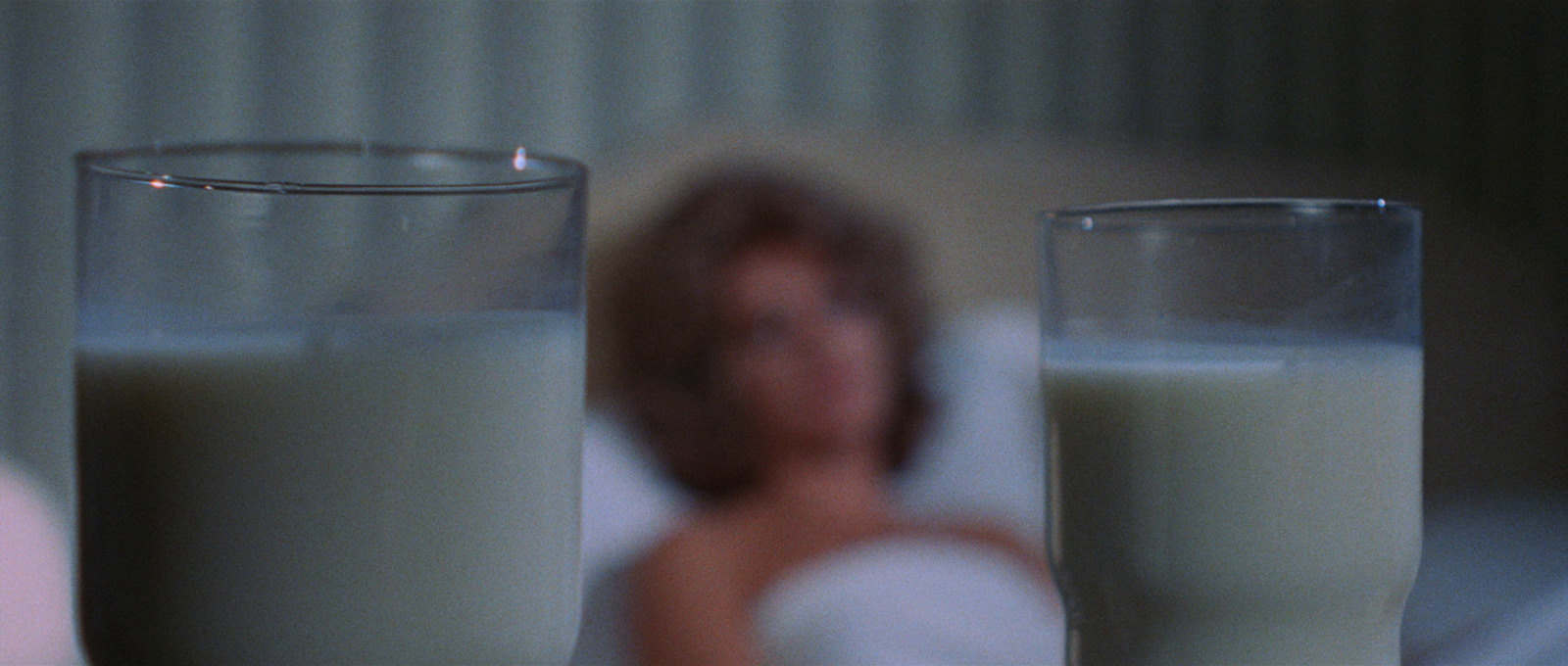
ENLARGE ↗Two glasses of milk wait on the table.59:40–67:12
The milk waits
The audience sees the cartons tampered with before Anna visits Giordani. Ordinary hospitality therefore carries a danger that the characters have not yet recognised. Arnò’s telephone warning about an attack at his own home interrupts the scene and changes the meaning of the offered drink. The suspense depends on that interval between what the viewer knows and what the characters are about to do.
ENLARGE ↗Giordani searches the opened safe.67:16–74:12
A comic break-in opens a private history
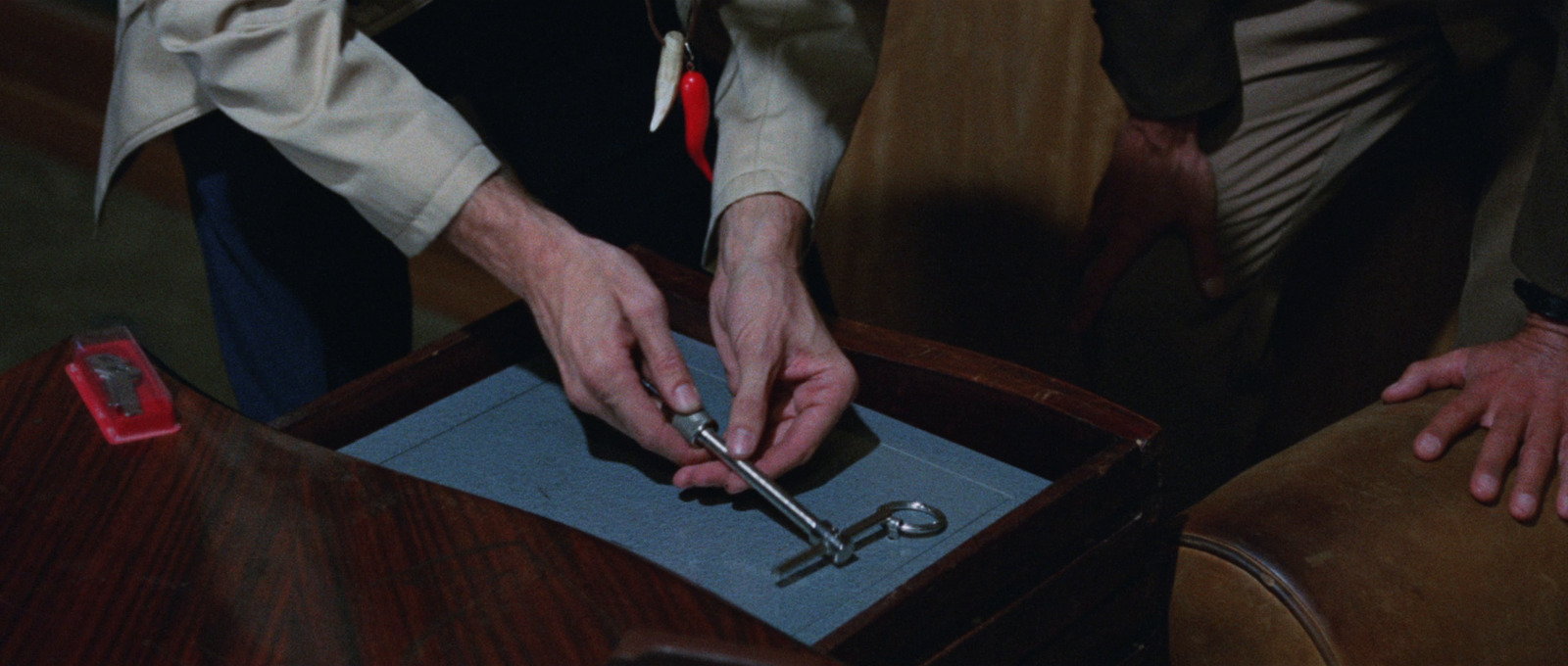
Gigi’s introduction in an insult contest gives the illicit visit a comic partner and a different tempo. His technical confidence at the safe contrasts with his fear of being caught. Inside are adoption papers and Terzi’s diary, redirecting suspicion towards Anna’s household. The documents reveal a disturbing private relationship, but the discovery does not by itself identify the killer.
The clue and the child
ENLARGE ↗An unnamed visitor brings Giordani an address.74:32–81:05
A lead offered for revenge
Spimi lets information escape through a joke about his assistant’s loose tongue. A later visitor offers Braun’s location for a much more personal reason: jealousy over Manuel. At the villa, Giordani and Manuel fight before Braun’s death ends that route through the case. Information circulates readily, but its suppliers have motives quite different from the reporter’s search for a solution.
ENLARGE ↗Arnò and Giordani pause among the tombs.81:07–86:55
Following a sound into the cemetery
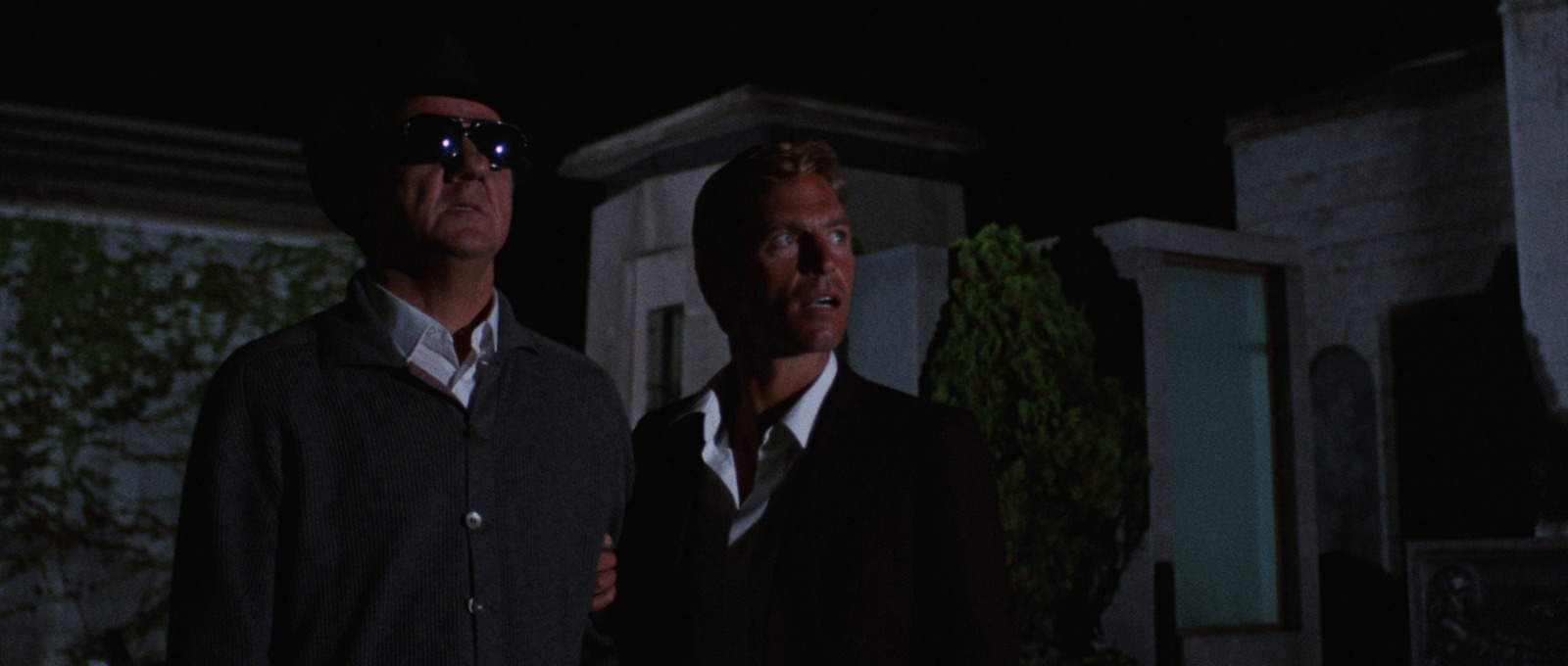
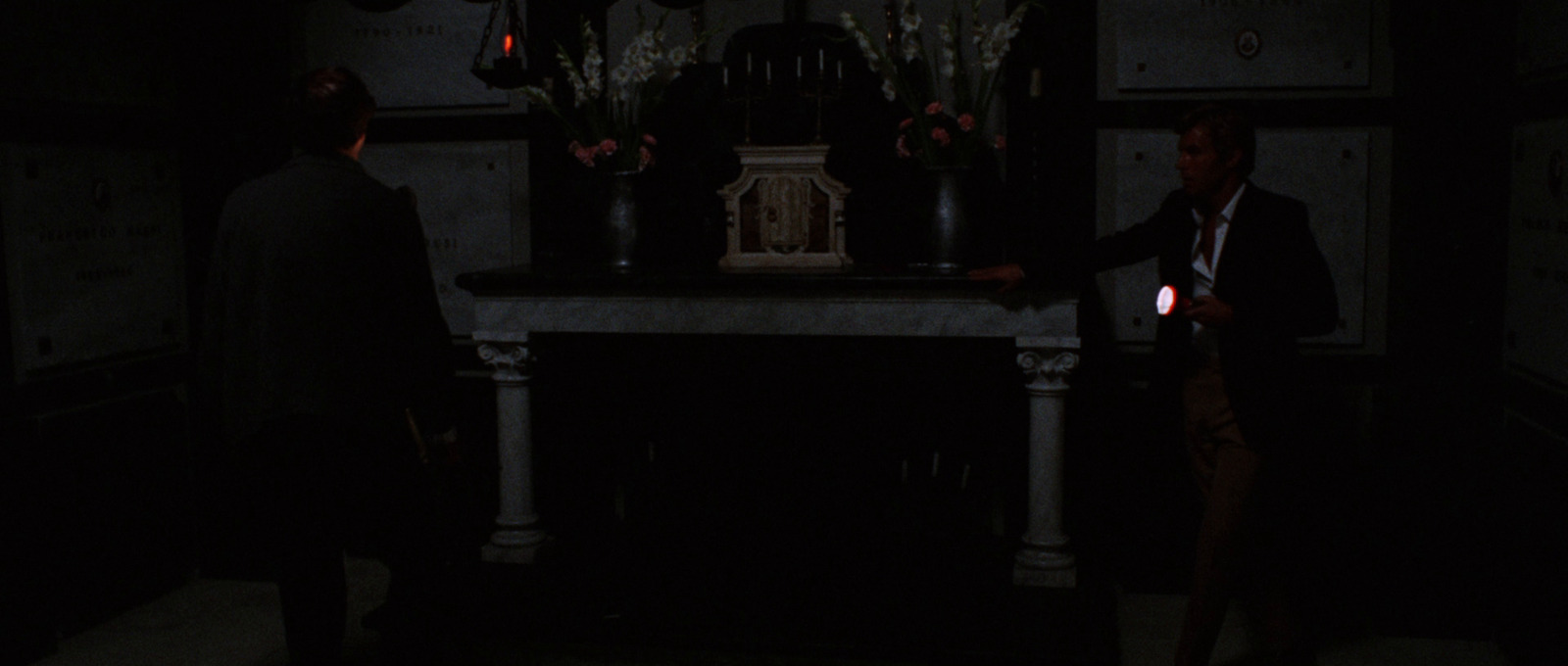
Back in the kitchen, Arnò remembers Lori’s account of the watch around Bianca’s neck. The idea sends the pair into the cemetery after dark. Their jokes coexist with cautious listening and long stretches of waiting. Giordani has to supply physical access and sight, while Arnò continually asks what has been heard and what has been overlooked.
ENLARGE ↗The pendant is opened outside Bianca’s tomb.87:00–90:54
The clue inside the clue
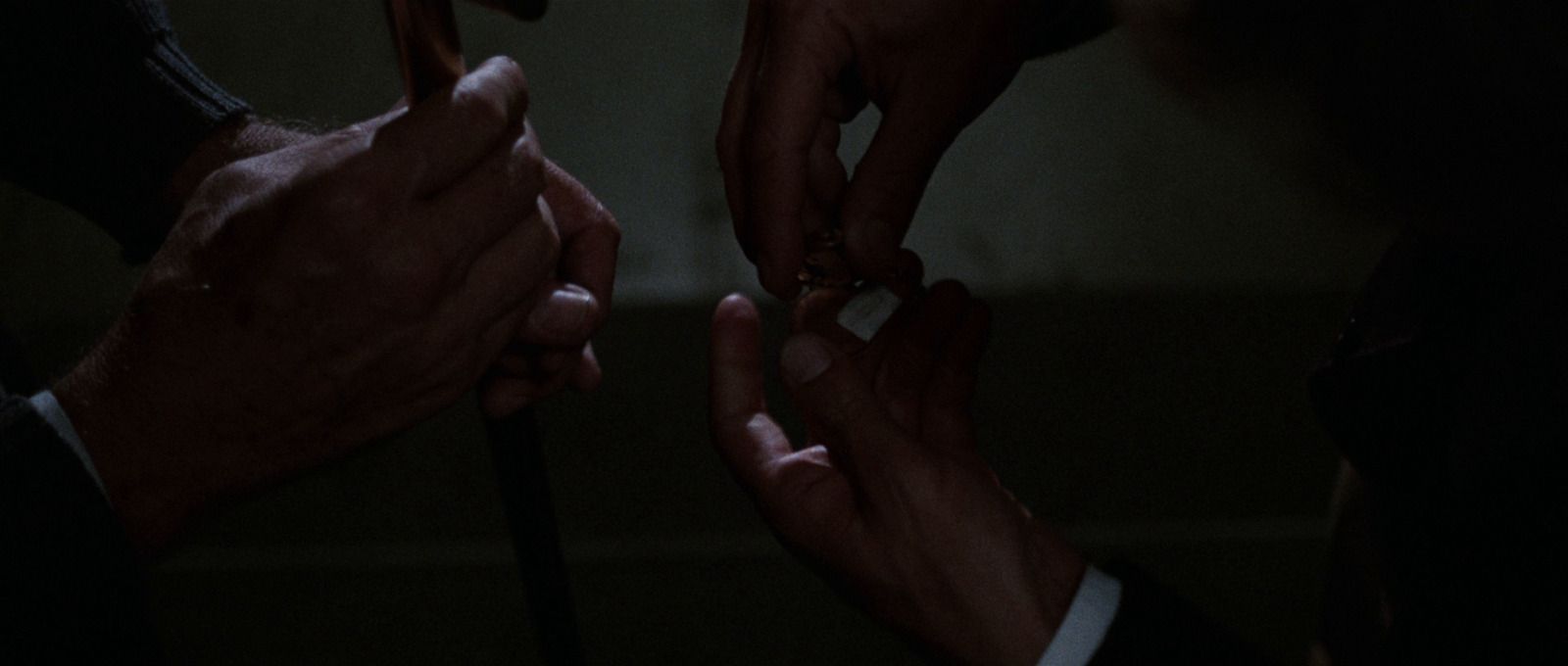
Giordani opens Bianca’s coffin and retrieves the pendant, but an initial look seems to reveal nothing. Arnò insists on examining its structure more closely. The concealed note repeats the photograph’s earlier lesson: a first view can be truthful yet incomplete. Detection requires changing the scale and the method of inspection, not simply acquiring more objects.
ENLARGE ↗Arnò returns to the locked tomb.91:08–97:27
The investigation becomes a hostage story
Left inside the tomb, Giordani cannot see what is happening to his partner outside. Arnò returns having surrendered the note under a threat to Lori, but he has wounded the attacker. The case’s evidence changes form again: the missing paper can now be replaced by a mark on a body. The subsequent telephone threat makes protecting Lori the overriding concern.
Anna’s injured hand, her earlier arrival and the untouched milk seem to form a convincing pattern. She answers that Giordani’s judgement began with her relationship to Terzi. A broken vase supplies the mundane explanation for the cut. The scene tests the reporter’s reasoning: combining suggestive facts is not enough when moral judgement has already selected the suspect.
ENLARGE ↗The search reaches the institute’s upper floors.101:00–104:50
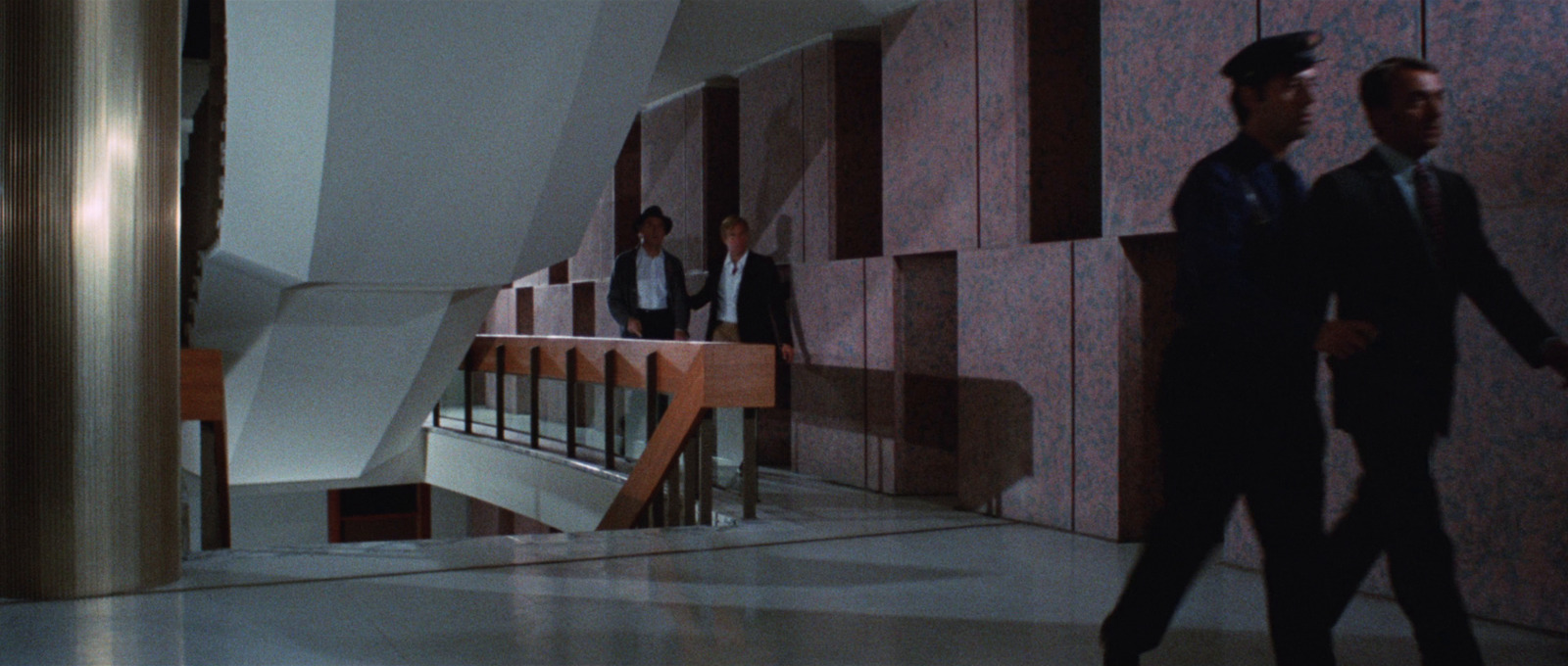
An empty building that is not empty
The police move through the institute while Lori remains concealed within it. Corridors and rooms that seem exhausted by the search still contain danger. After the officers leave to telephone headquarters, the attack on Giordani reactivates the space. The building from the opening break-in becomes the final site of concealment, pursuit and exposure.
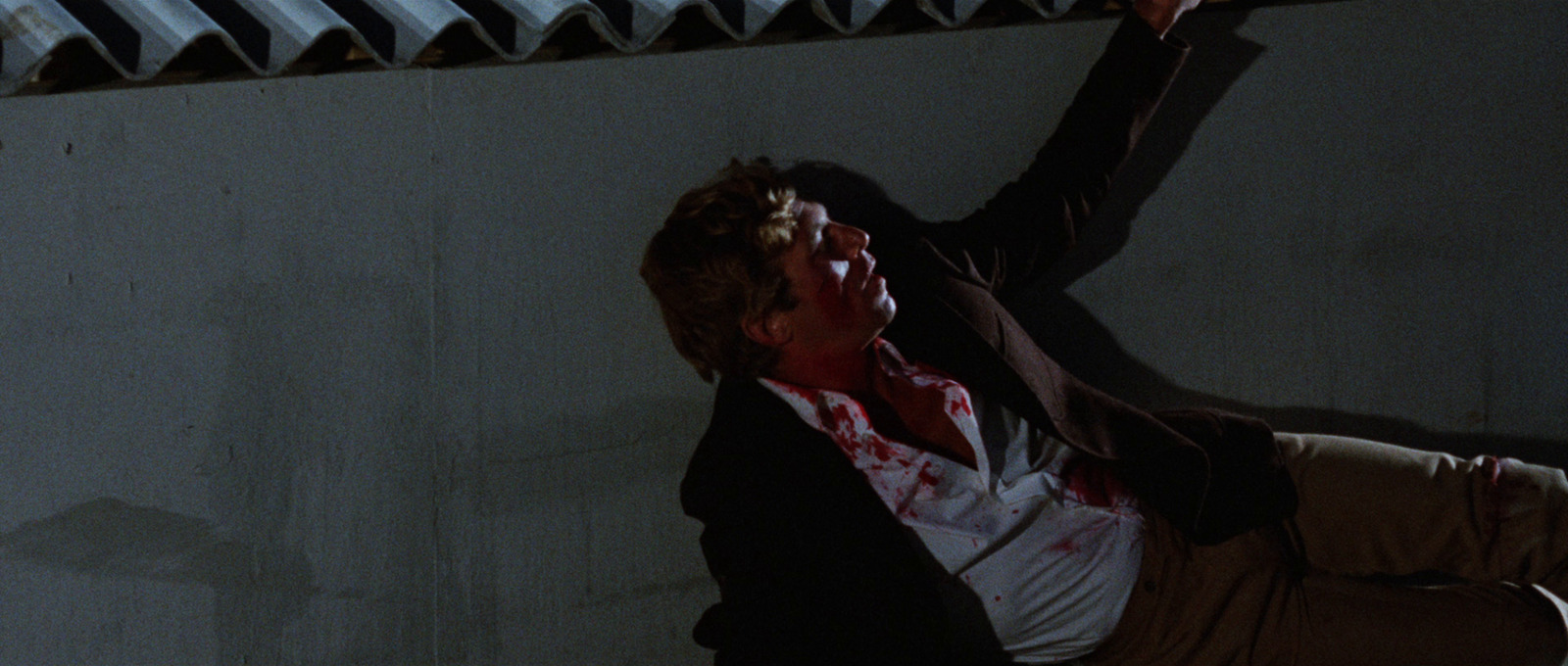
ENLARGE ↗Giordani hangs below the roof edge.105:00–108:50
Across the roof
The chase leaves the corridor’s horizontal lines for ladders, steep roofing and an exposed drop. Giordani is injured and forced down, then struggles back while the police cross the larger space. Changing angles make the roof hard to master as a single map. The danger is bodily and immediate even before the film reaches the lift shaft.
ENLARGE ↗Arnò demands that Casoni reveal Lori’s whereabouts.108:54–111:48
A voice after the fall
Casoni explains the substituted test and the killings, but Arnò wants the child. The killer’s claim that Lori is dead brings the confrontation to its violent end. Her offscreen call then carries reassurance while the image remains with the shaft. The discarded-epilogue reconstruction shows how differently the story could have closed, with a visible rescue and a return to domestic life.
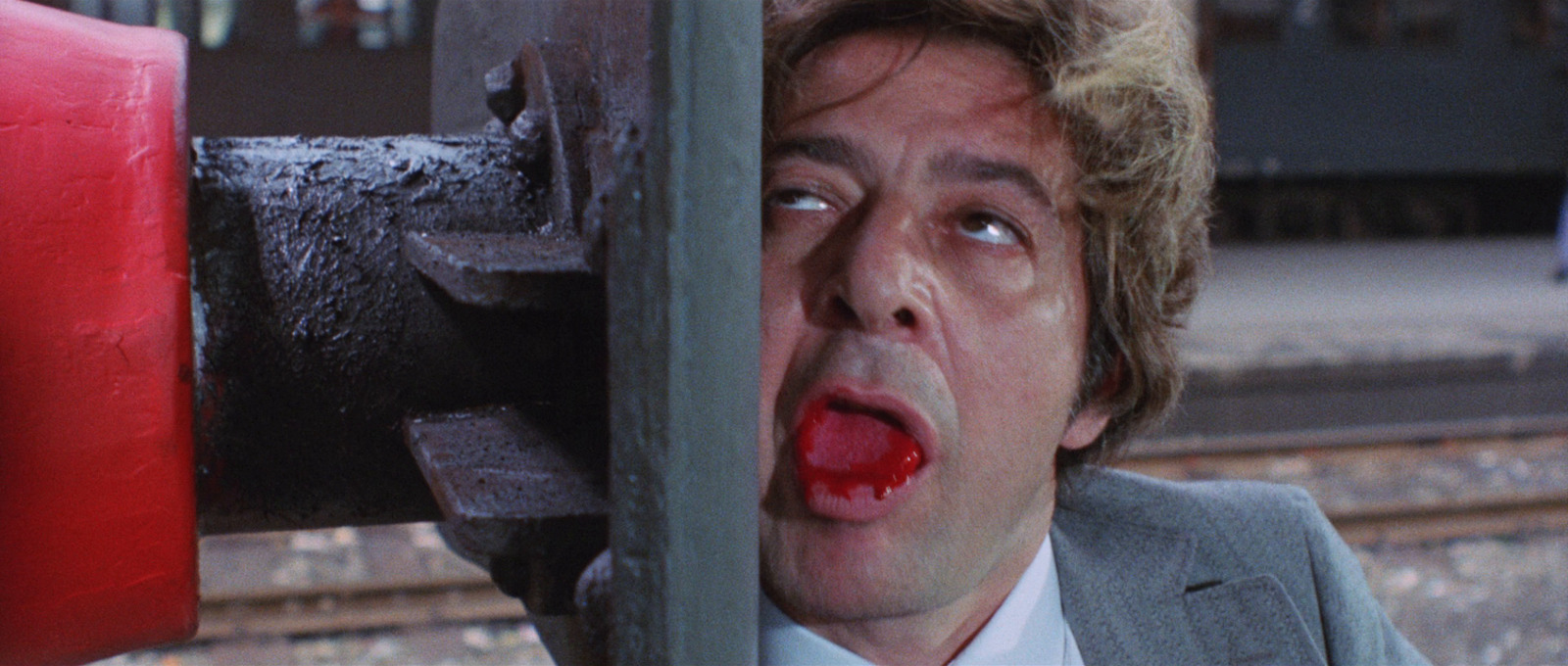
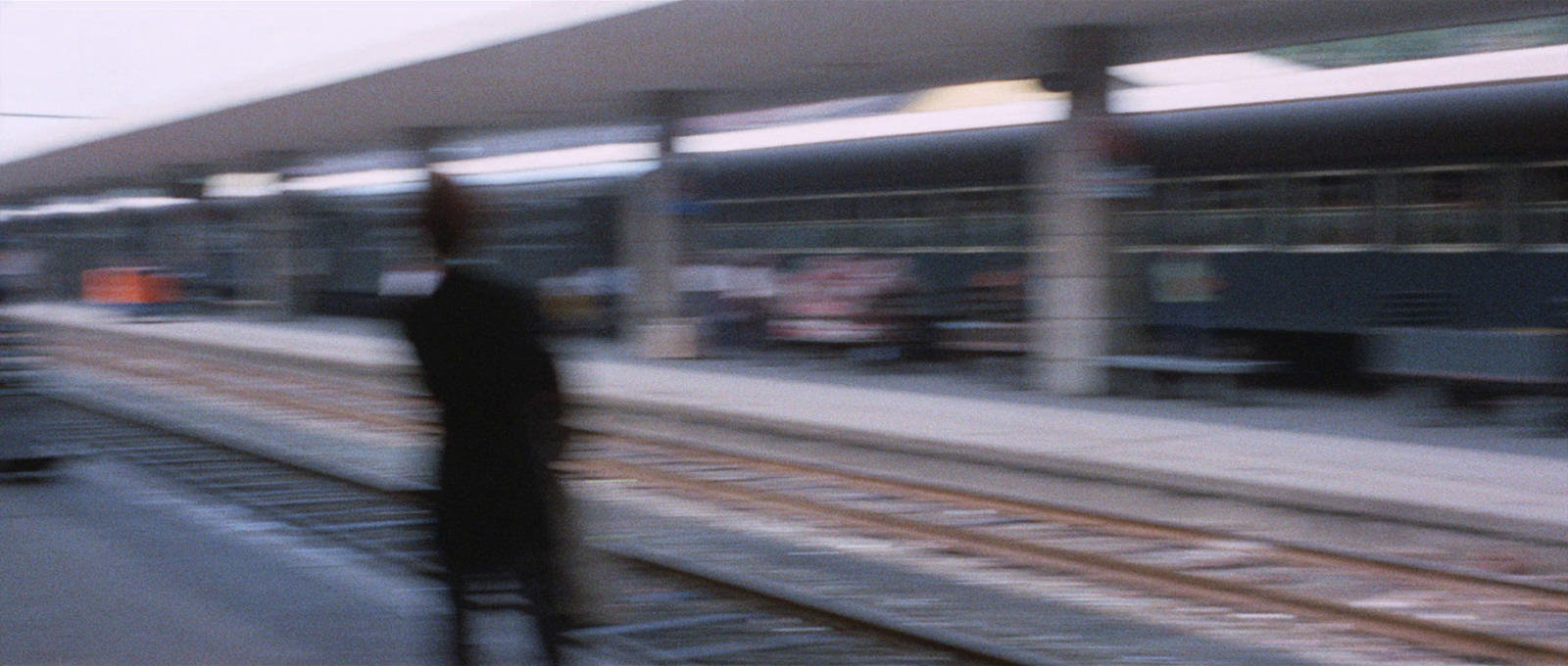
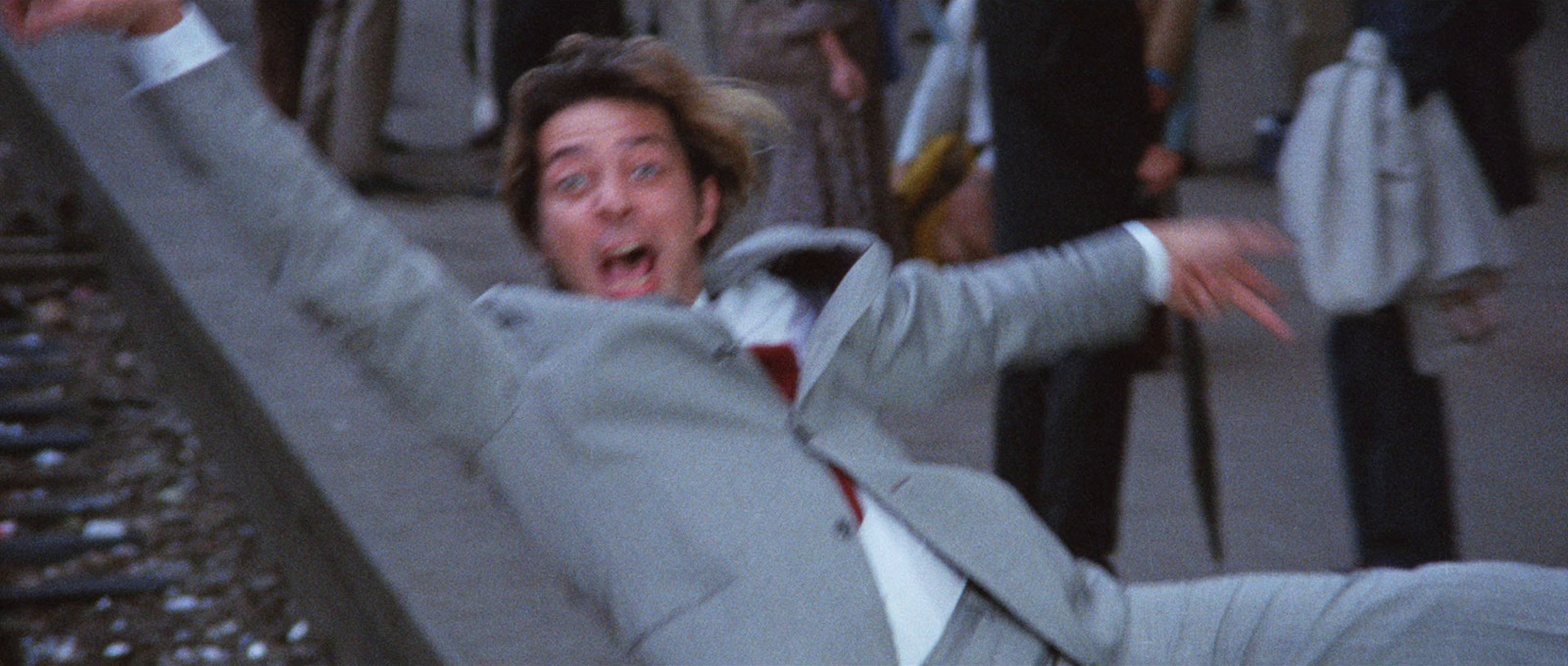
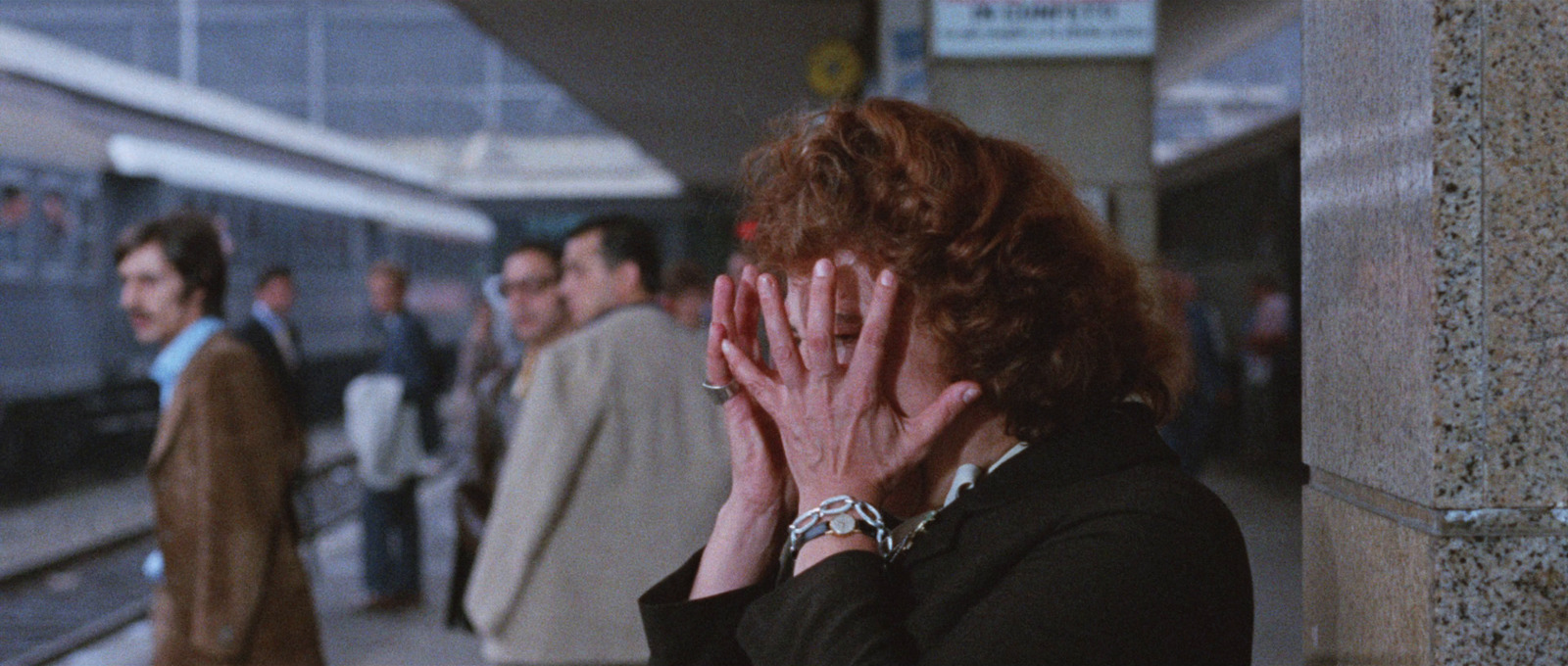
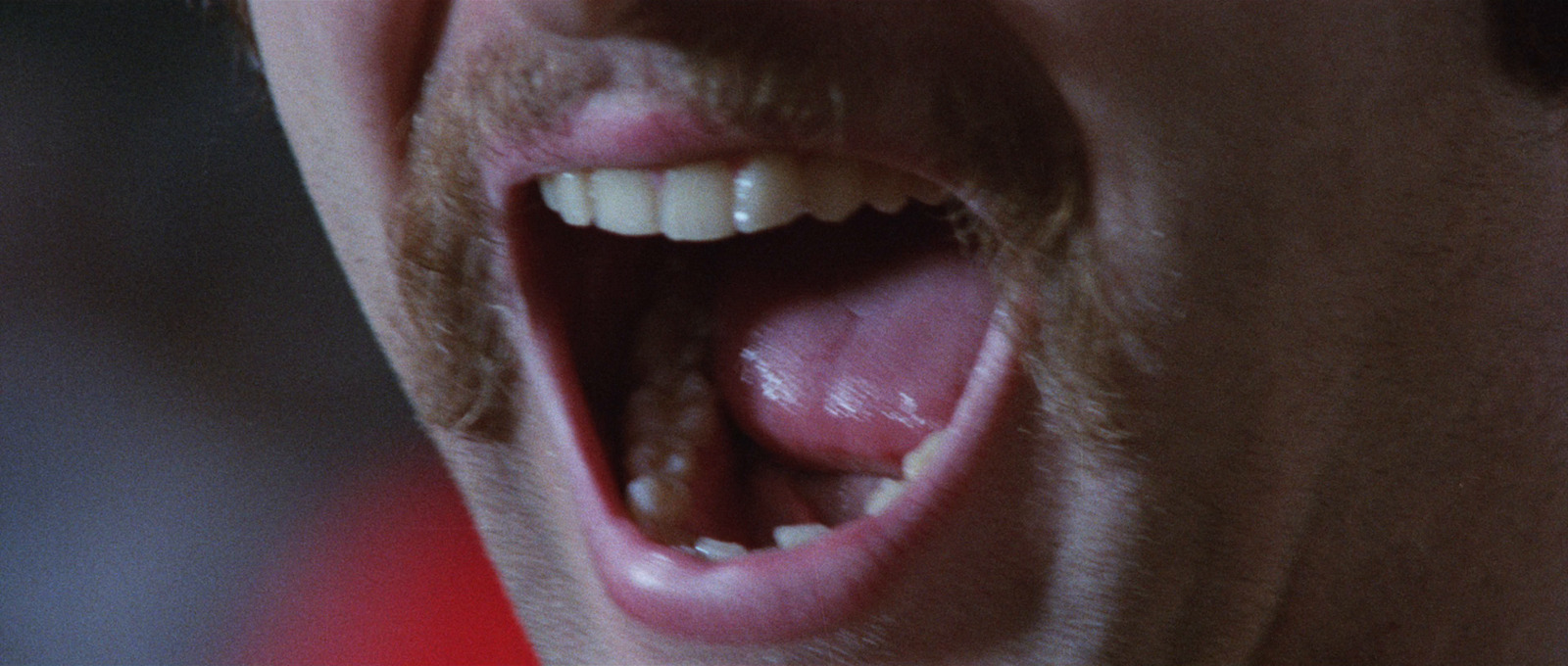
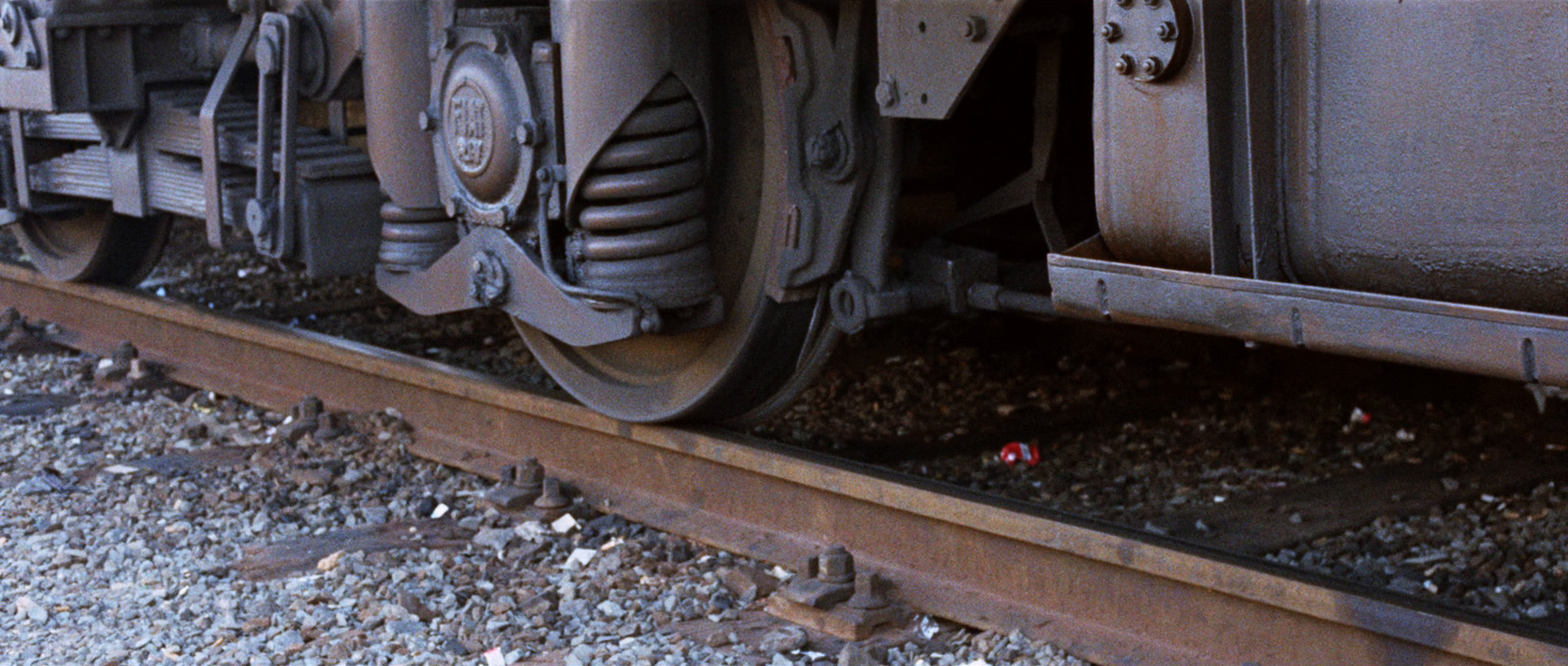
The sequence moves from the approaching train to the push, the buffer close-up, a witness’s recoil, the wounded mouth and the wheel. No single view carries the whole event. The alternation makes a brief physical encounter feel extended and gives the reaction shot a place within the impact.
Argento’s Nine Lives interview (07:53–08:45) describes a soft, foam-like substitute for the buffers and a camera angle that concealed the missing rear. That account explains the close-up; it should not be stretched into a specification for every shot. The filmmaker’s effects account →
Explore the sequence · 7 images
ENLARGE ↗The train closes on the platform.ENLARGE ↗The photographer turns.ENLARGE ↗Calabresi is pushed towards the train.ENLARGE ↗The impact in close-up.ENLARGE ↗A witness recoils.ENLARGE ↗The wounded mouth fills the frame.ENLARGE ↗A wheel completes the violent passage.
24:35–25:18
The darkroom: the evidence outlives its maker
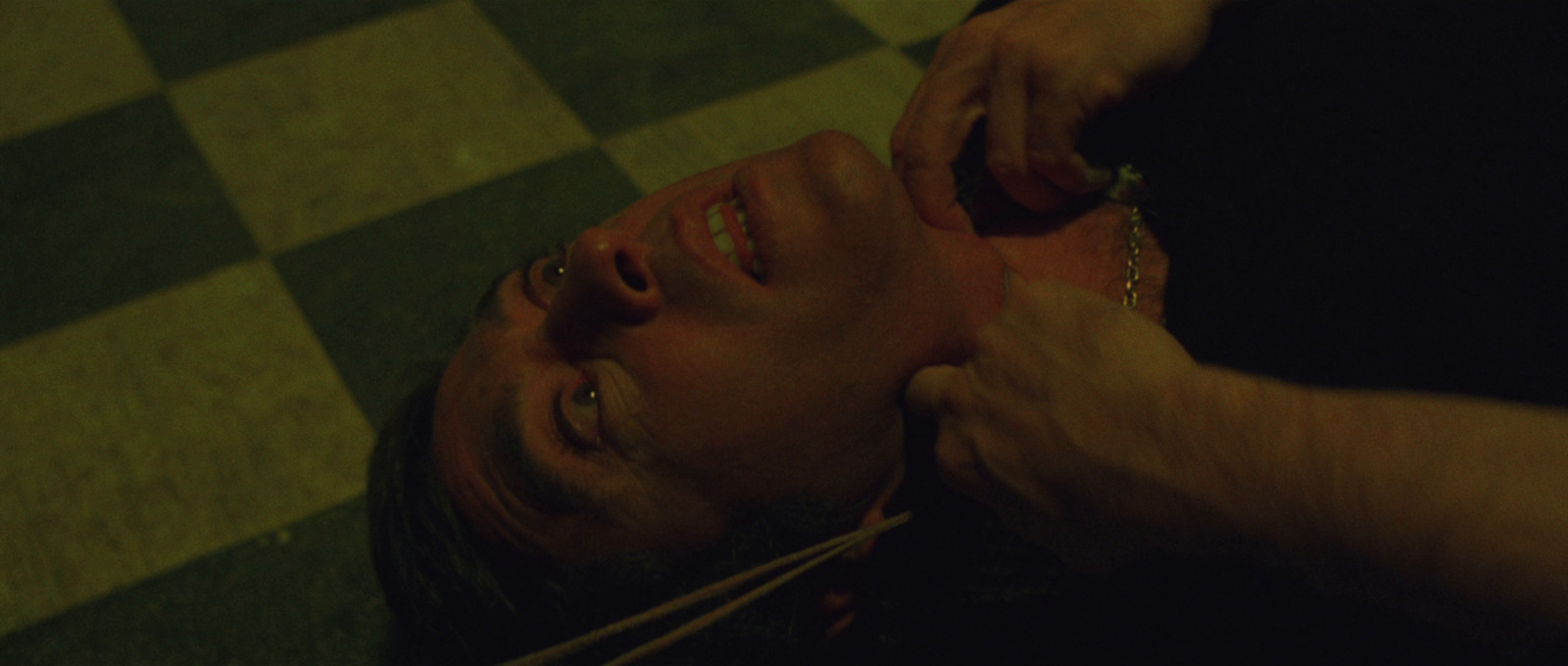
ENLARGE ↗The cord tightens around Righetto’s neck.
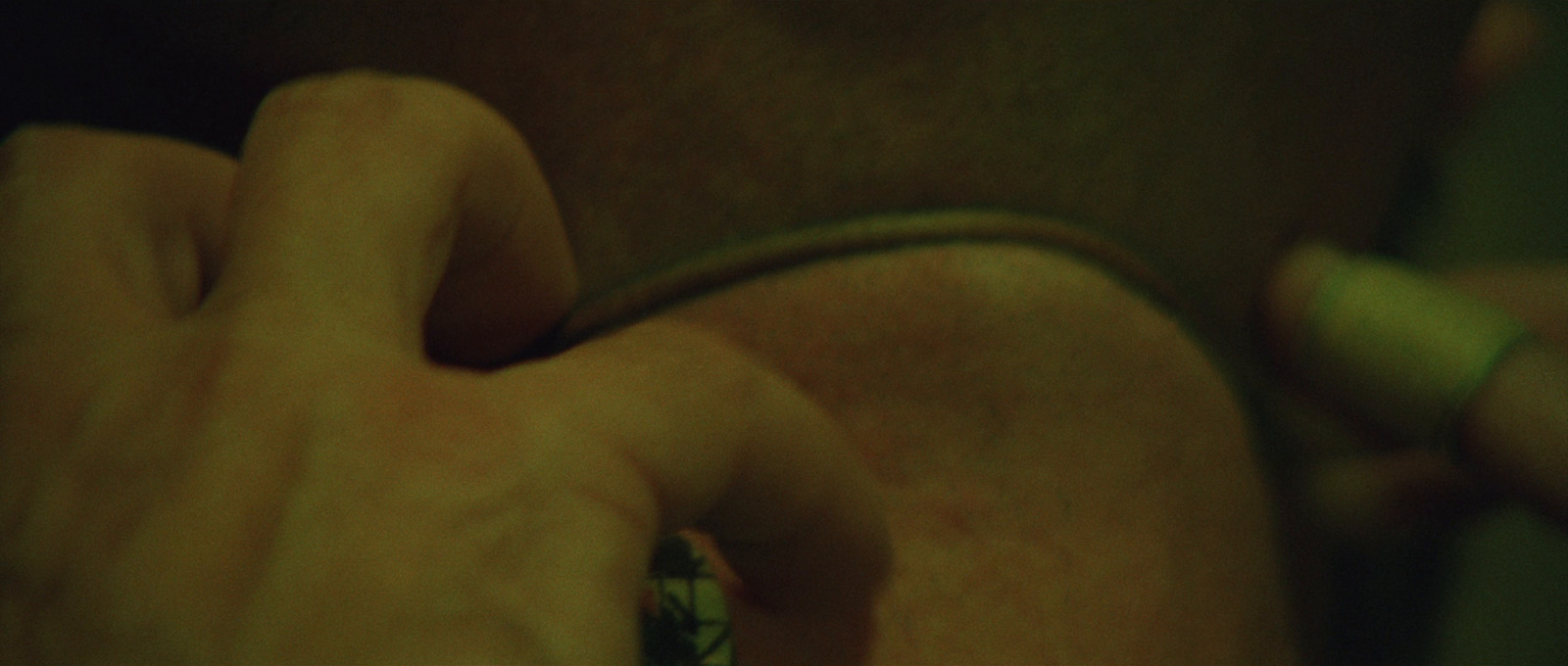
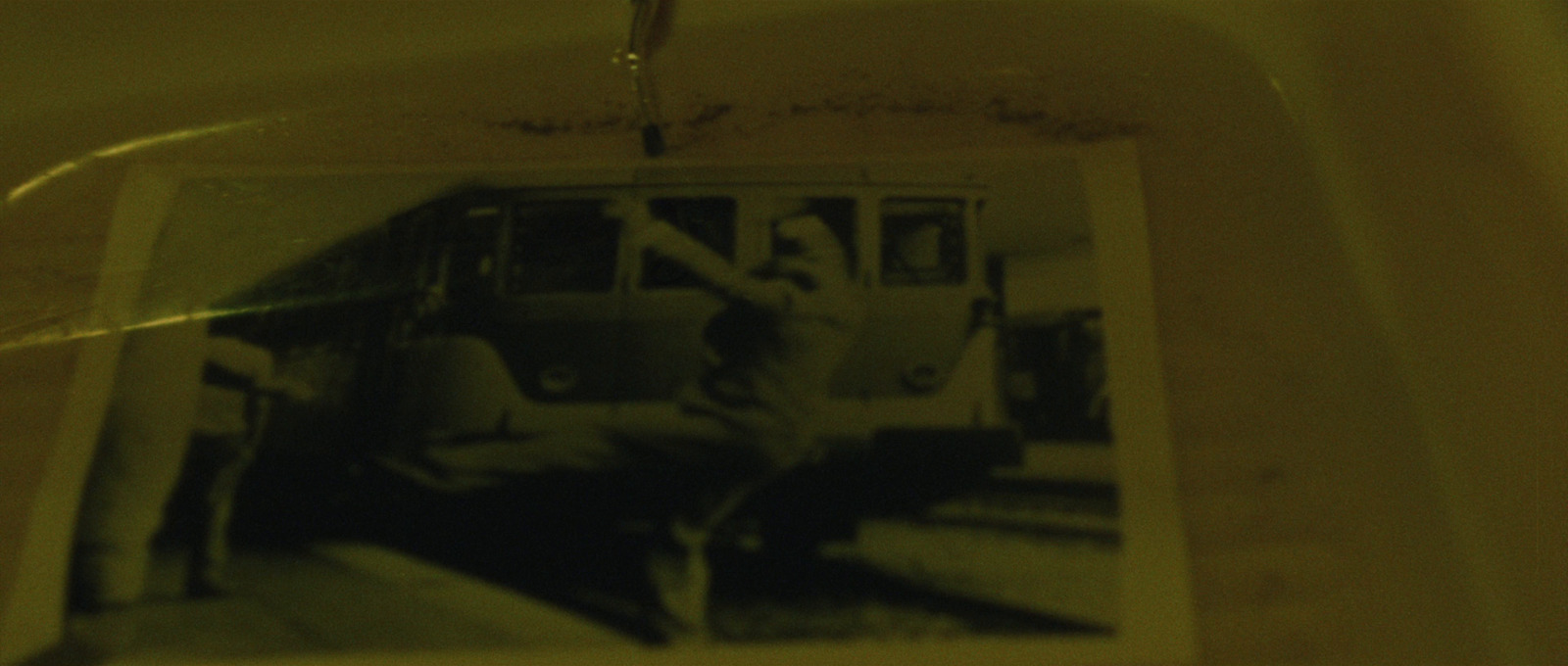
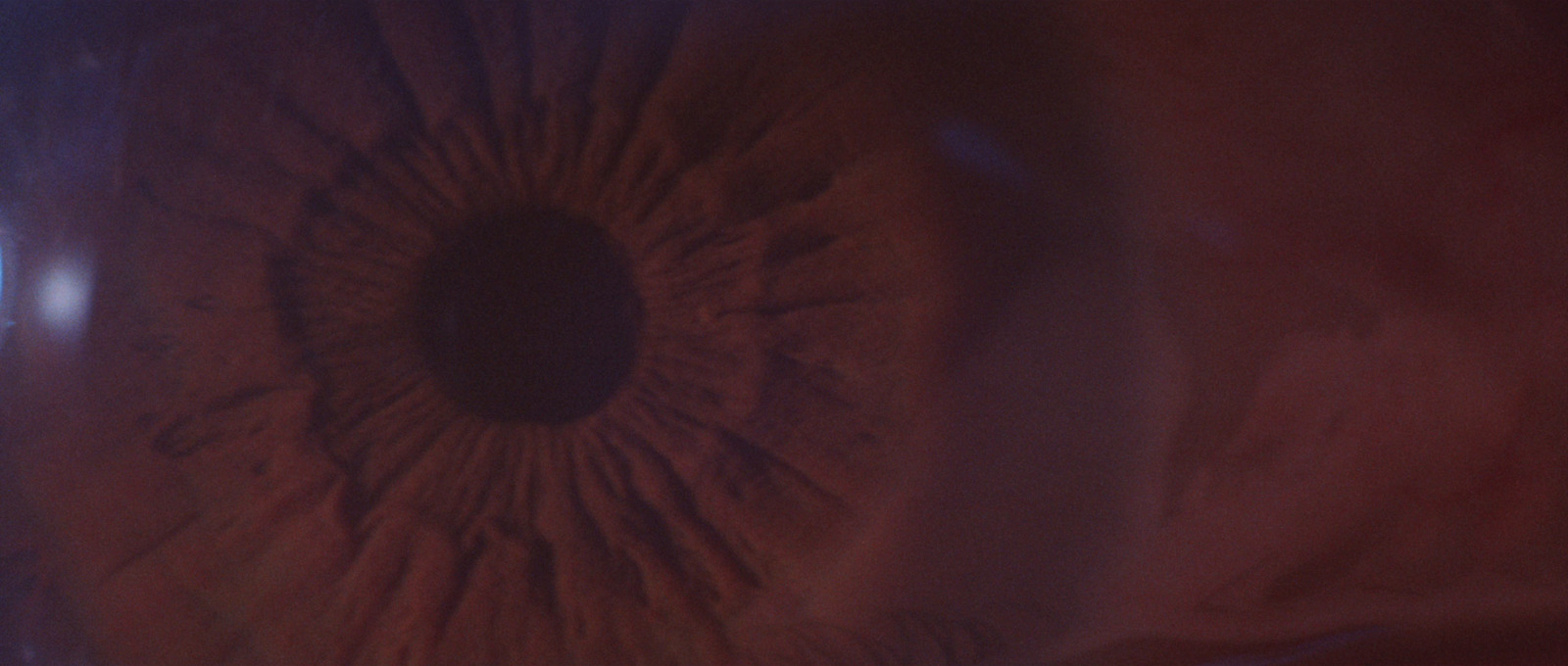
Righetto’s struggle is broken into the cord, a hand, the killer’s isolated eye, the extinguisher and the body on the floor. The blade arrives after the strangling passage. The photograph in its tray survives the person who understood it: the sequence joins an attack on a body to an attempted destruction of evidence.
The extreme eye insert is shared with Bianca’s murder. In Nine Lives (10:22–11:19), Argento recalls the special lenses used to obtain this magnification. The images also show how performance, framing and cutting distribute the violence across separate details.
Explore the sequence · 7 images
ENLARGE ↗The enlargement waits in its tray.ENLARGE ↗The cord tightens around Righetto’s neck.ENLARGE ↗The killer’s eye interrupts the struggle.ENLARGE ↗The extinguisher falls out of reach.ENLARGE ↗The struggle reaches the tiled floor.ENLARGE ↗A blade approaches the face.ENLARGE ↗The photograph remains after the attack.
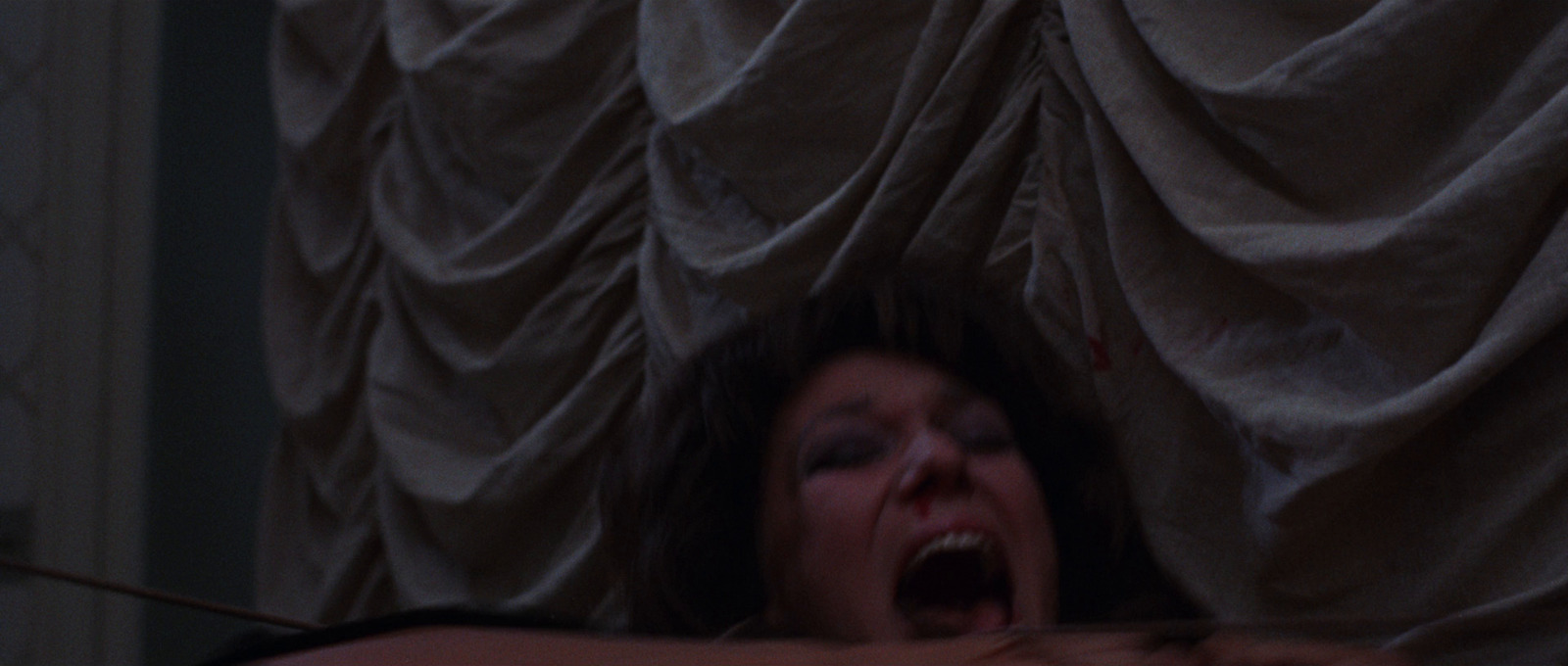
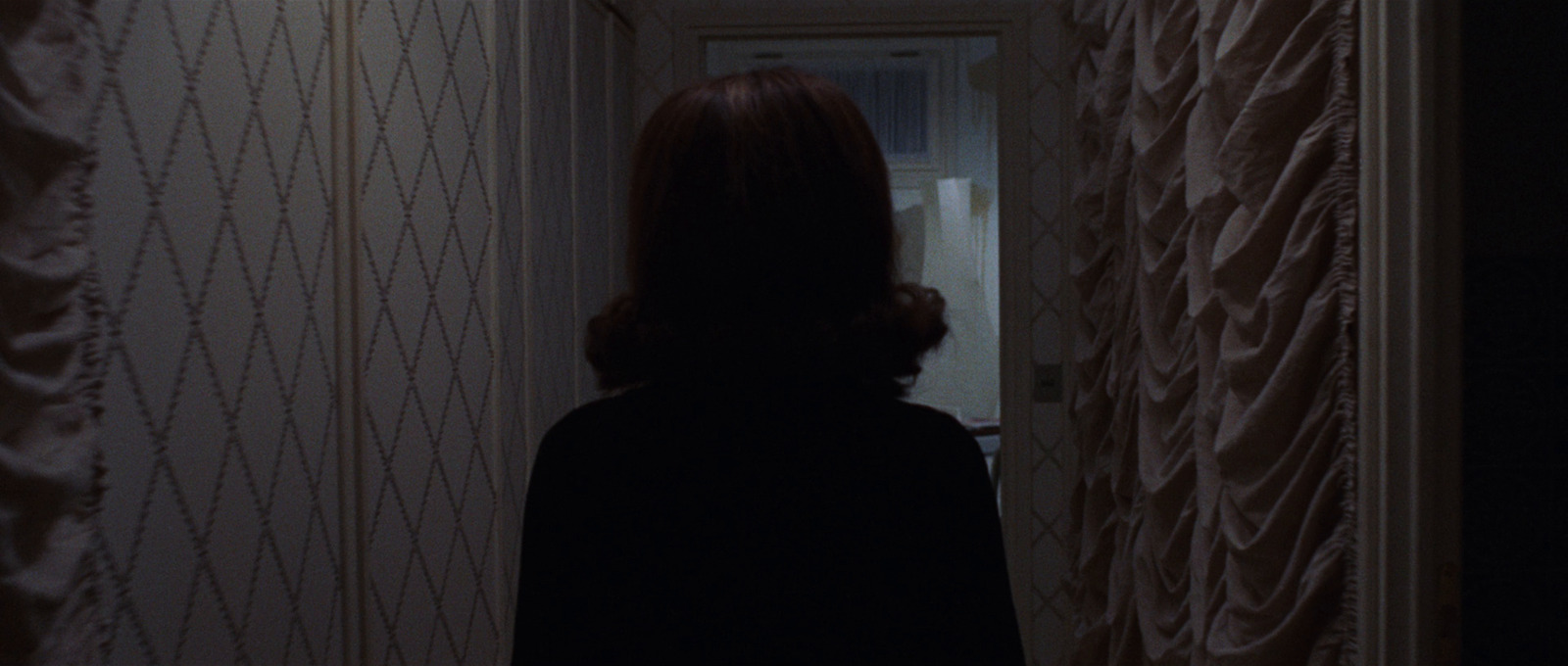
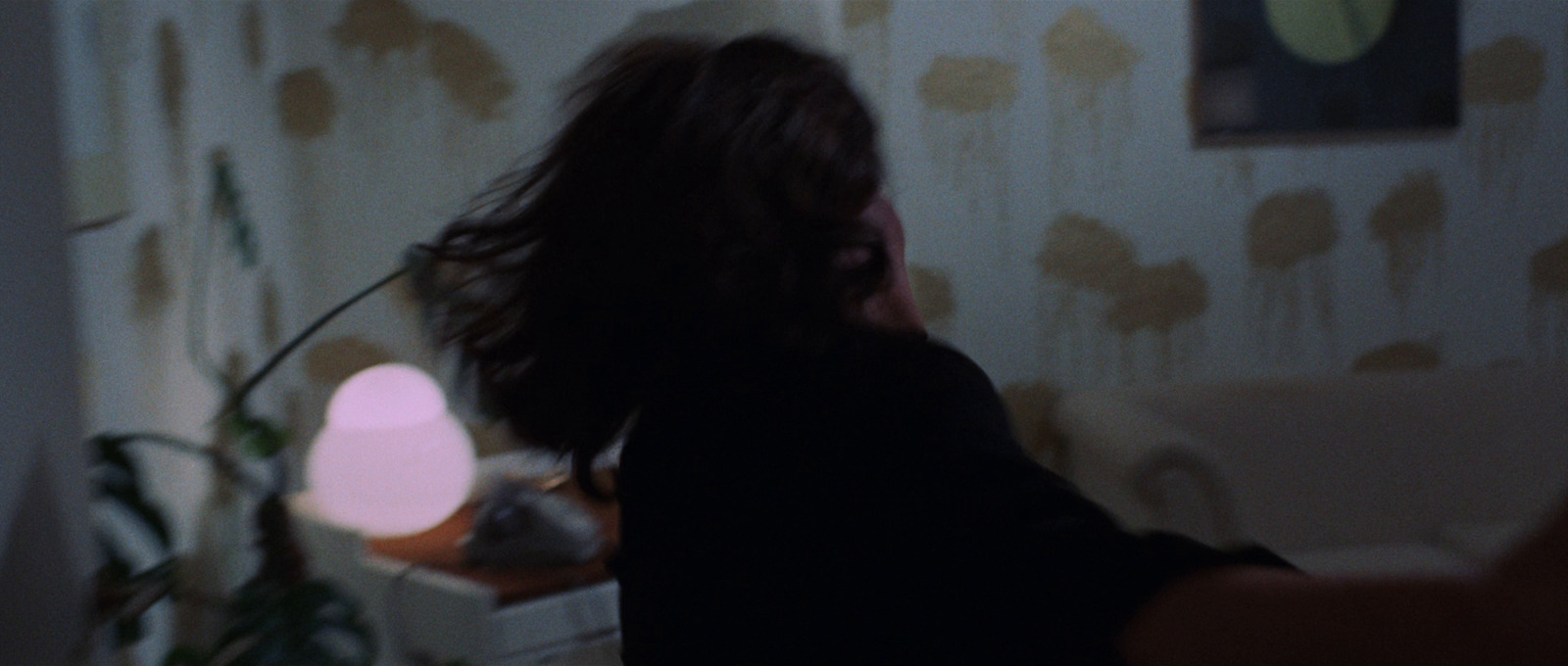
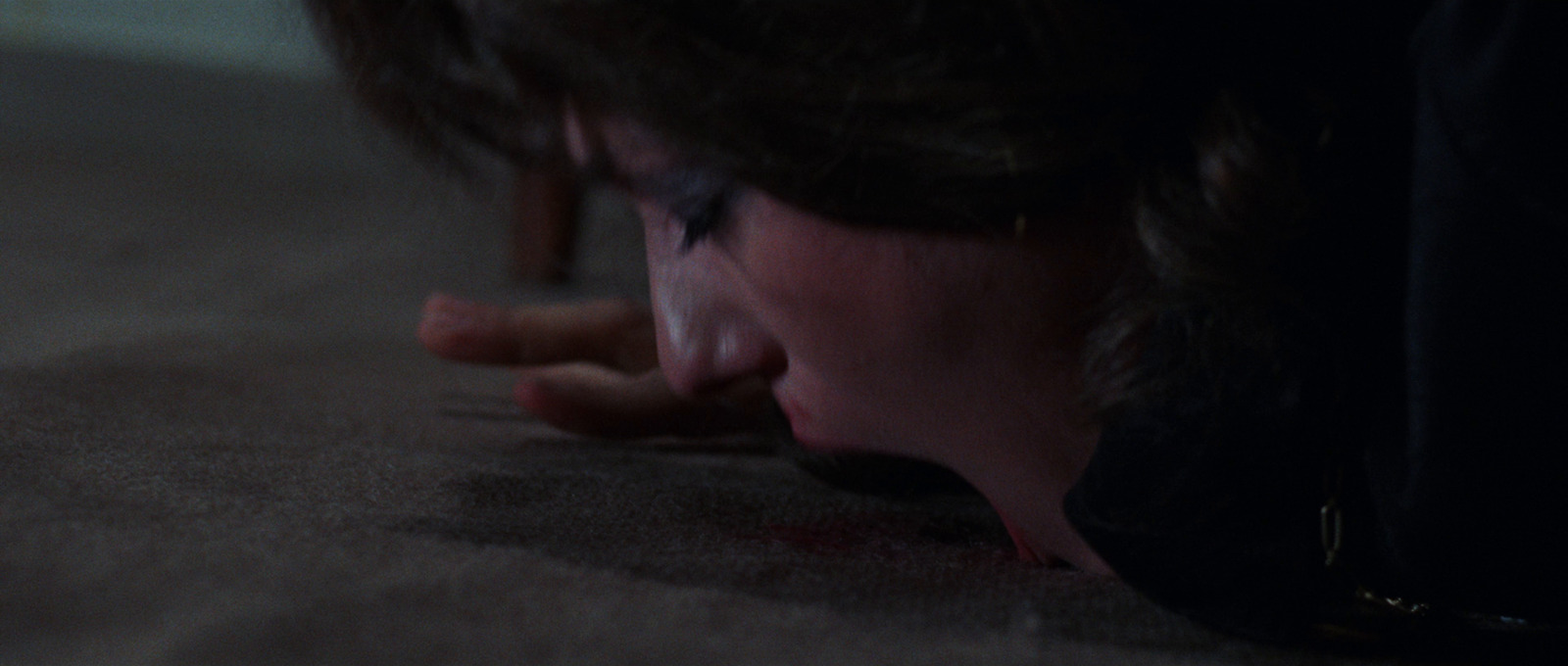
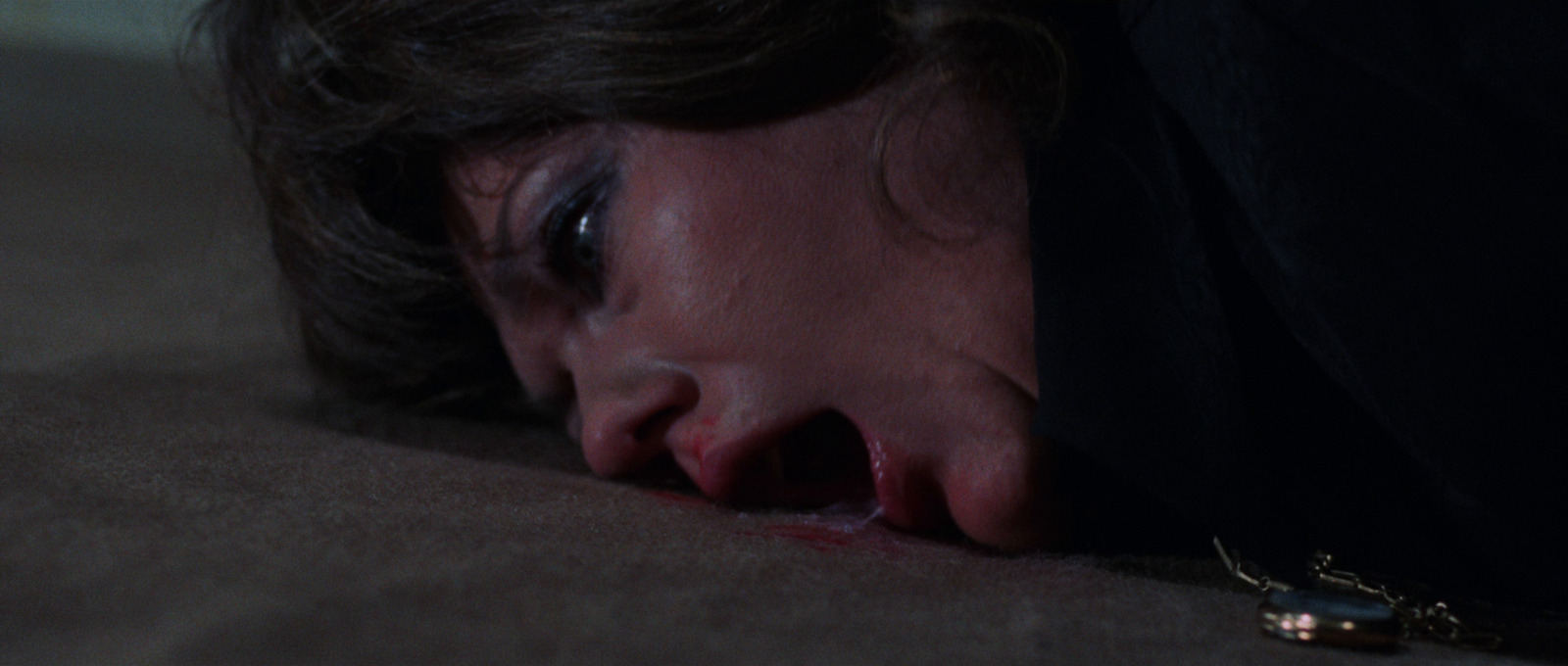
The attack begins in the curtained doorway, pulls Bianca across the room and finishes close to the floor. The eye insert interrupts the struggle without showing the killer’s face. Her pendant remains legible after movement has stopped, turning an intimate portrait into the object that will take Arnò and Giordani to the cemetery.
The gallery follows the changing position of the body, the cord and the pendant. These are visible stages of the finished sequence; the screen credits identify the make-up department, while the interviews support only the specific methods their speakers describe.
Explore the sequence · 7 images
ENLARGE ↗Bianca approaches the curtained doorway.ENLARGE ↗The cord catches her from behind.ENLARGE ↗An eye fills the image.ENLARGE ↗Bianca is pulled away from the doorway.ENLARGE ↗She struggles against the floor.ENLARGE ↗Movement subsides beside the pendant.ENLARGE ↗The portrait survives the attack.
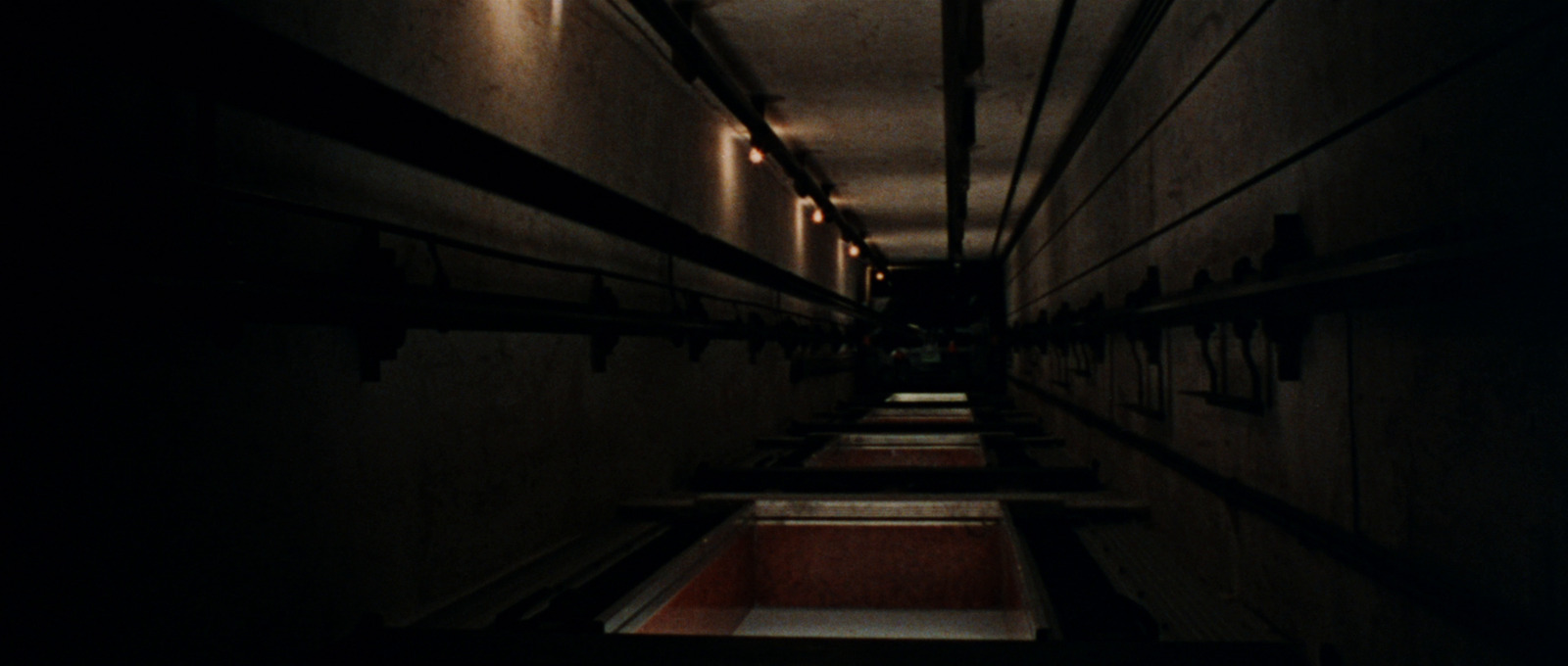
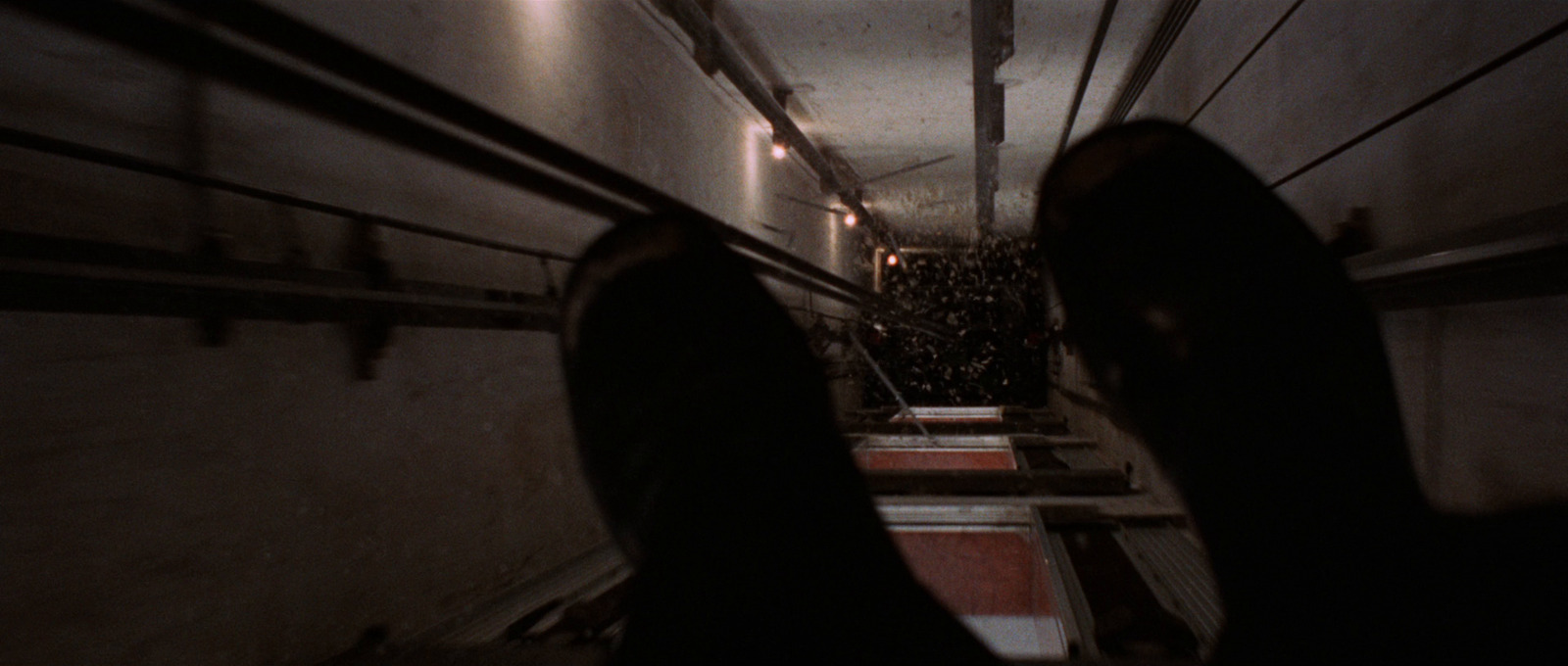
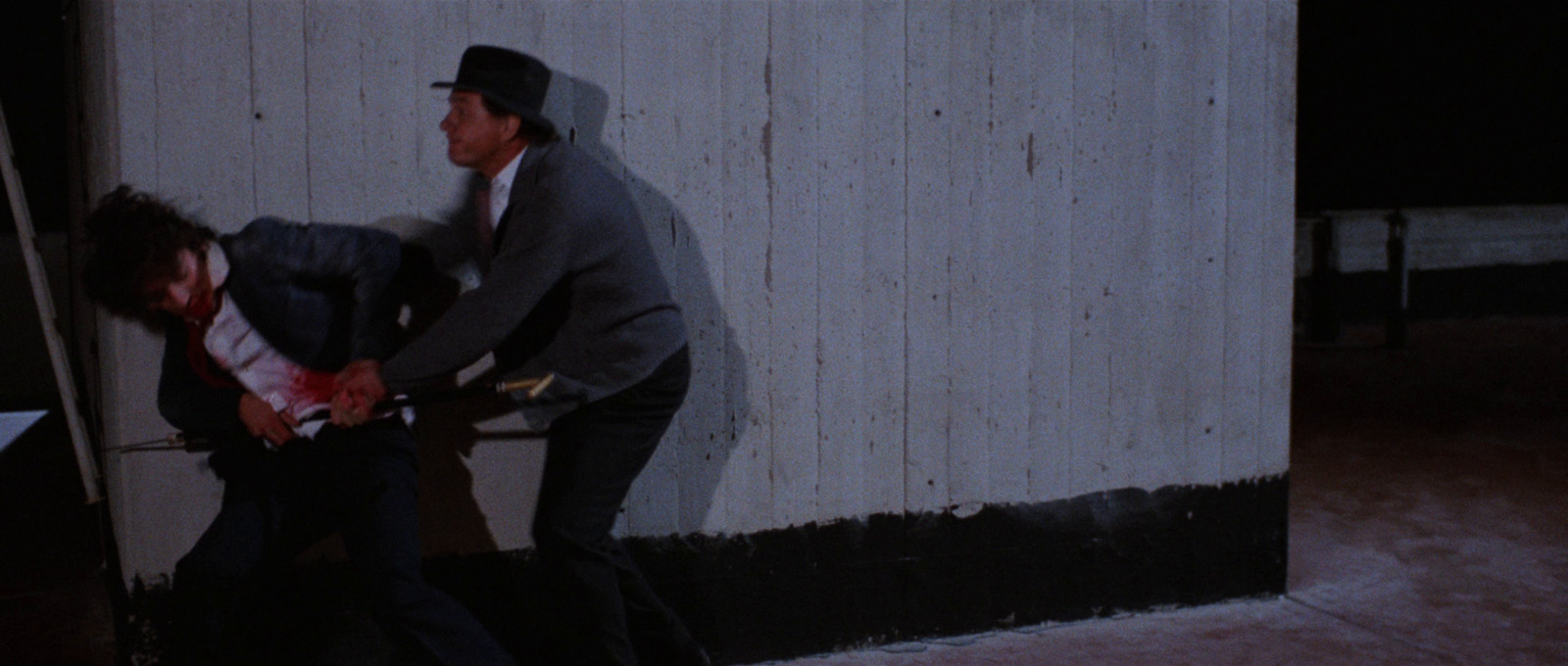
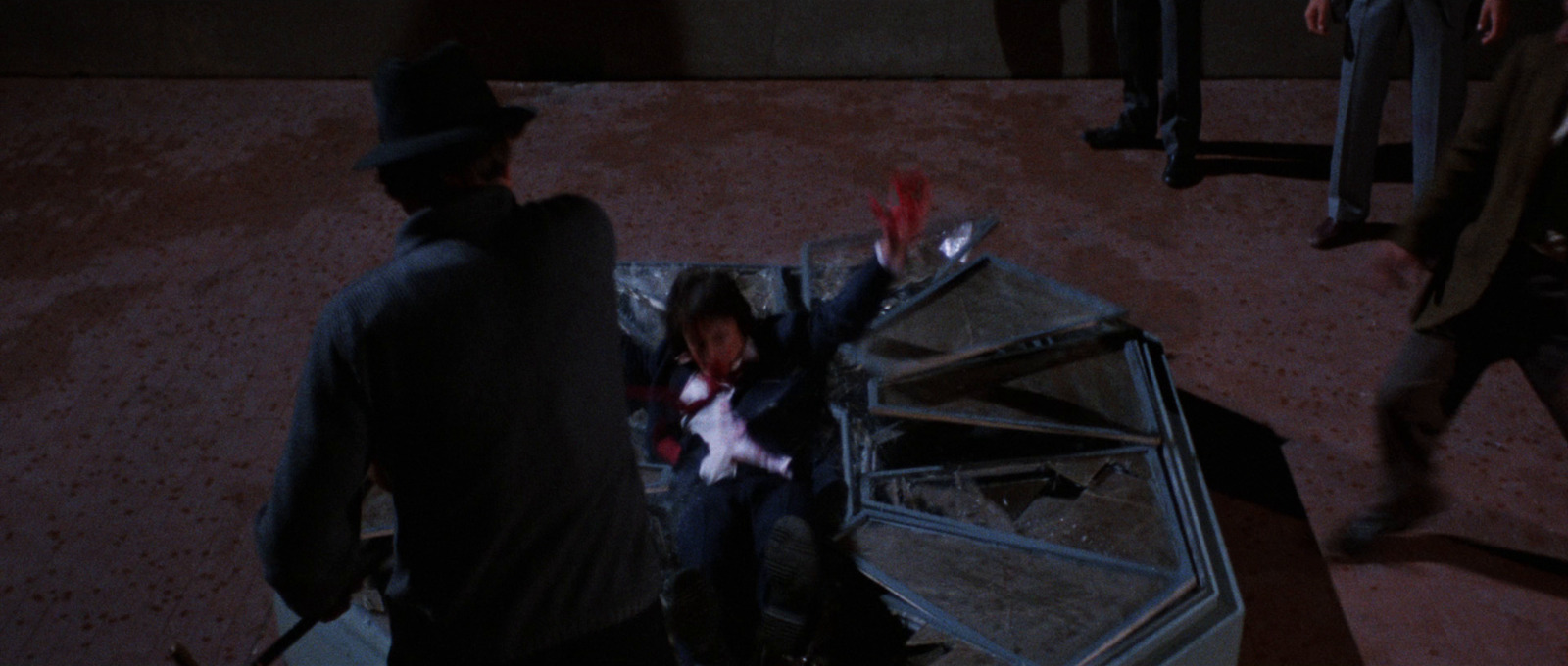
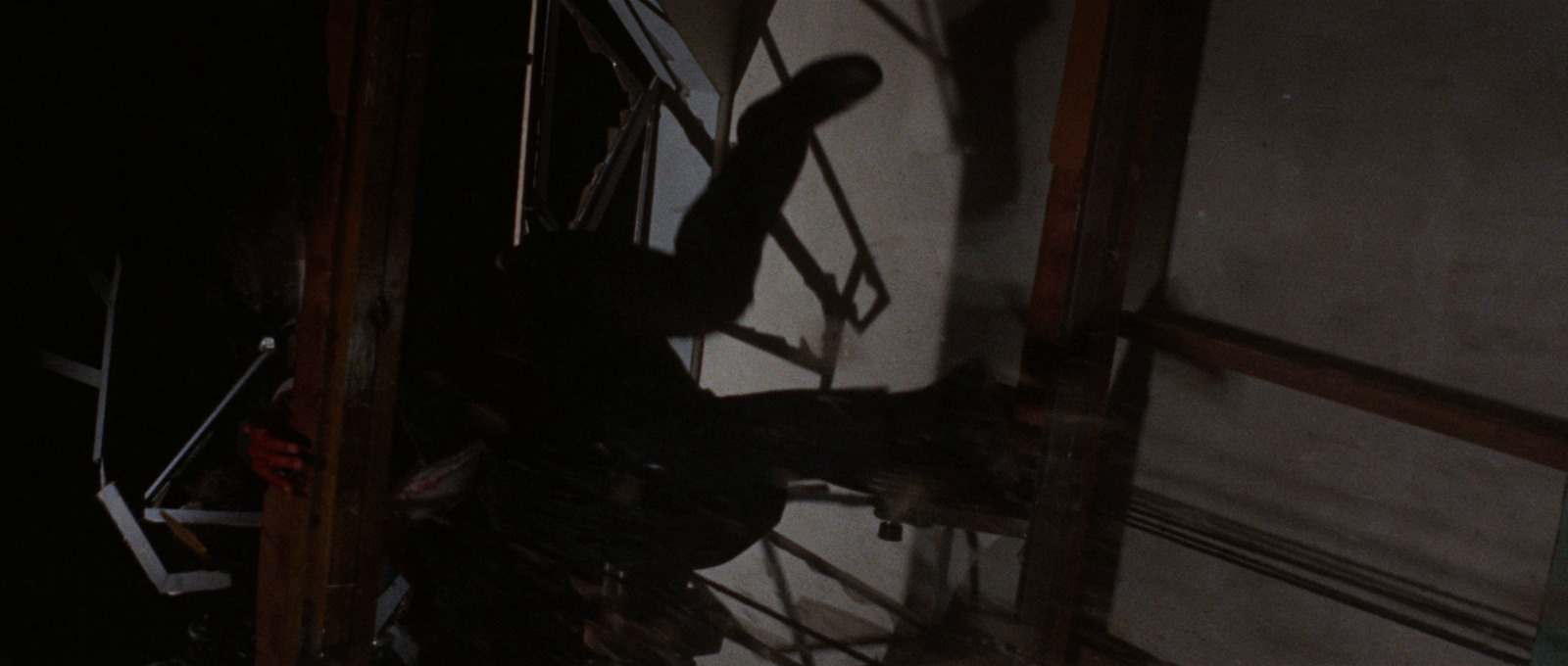
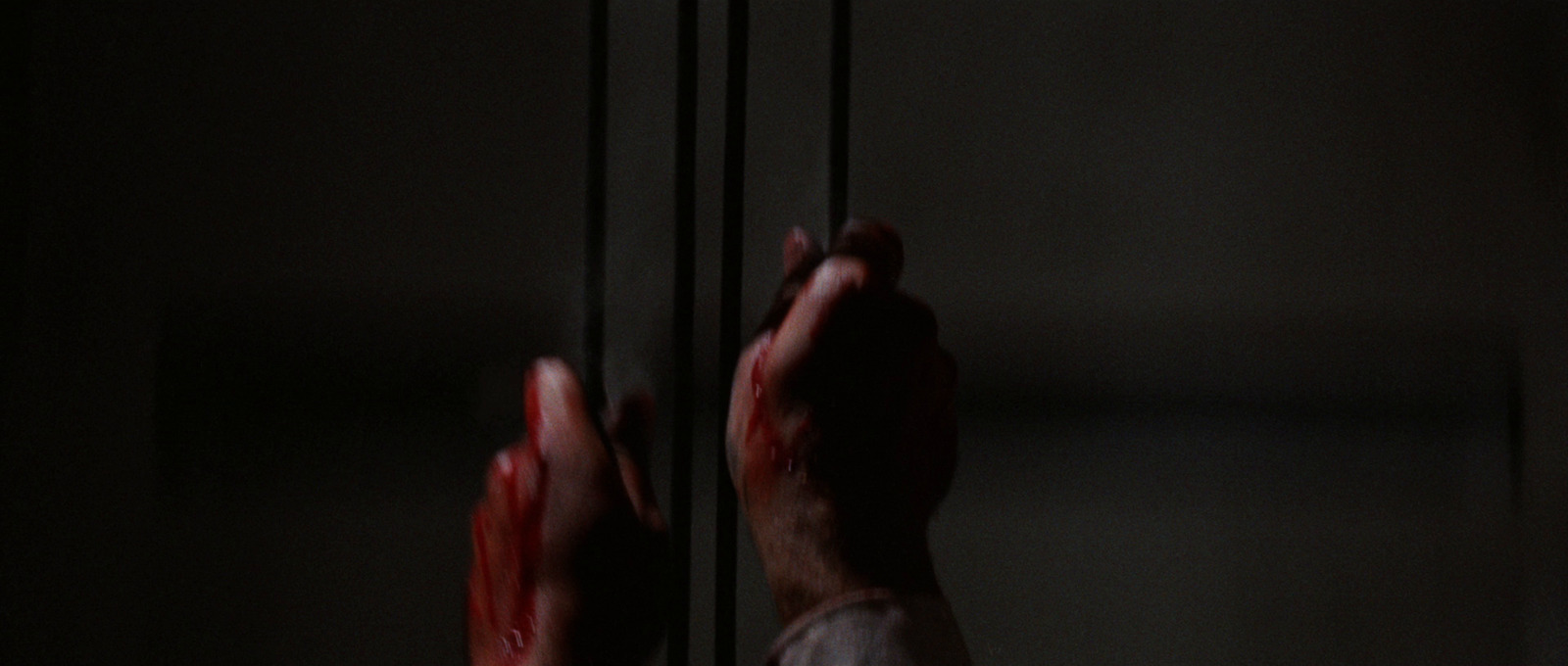
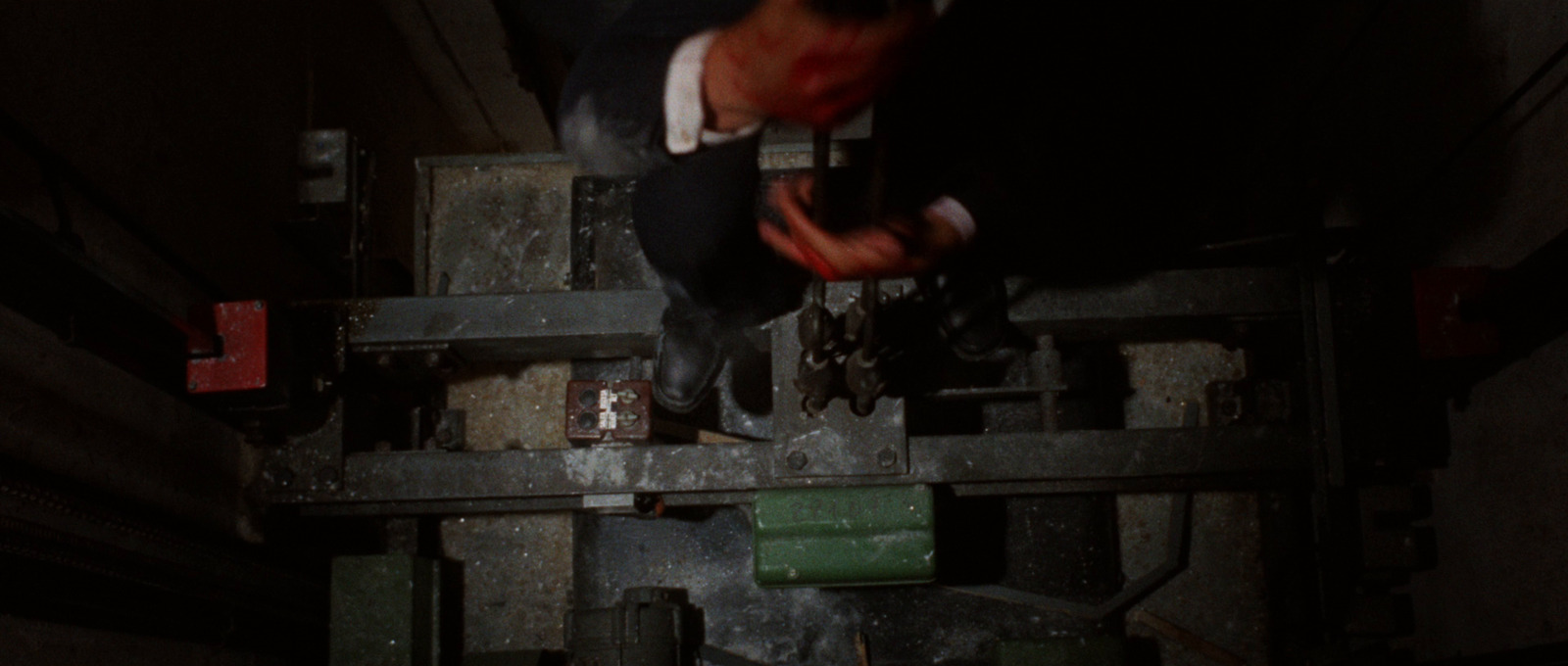
Arnò’s shove breaks the rooftop confrontation apart. A body passes through the opening; the viewpoint plunges into the shaft; hands clutch a cable; the machinery below completes the fall. The alternating angles make distance and contact separate shocks. The final empty view gives Lori’s offscreen voice a space in which to arrive.
In Nine Lives (12:20–13:19), Argento describes the falling camera, the spool and cables, and material on the hands that produced smoke. He connects the falling viewpoint to The Bird with the Crystal Plumage. The interview does not identify the hand-treatment compound. Follow the comparison →
Explore the sequence · 7 images
ENLARGE ↗Arnò forces Casoni away from the wall.ENLARGE ↗Casoni breaks through the roof opening.ENLARGE ↗The body drops into the shaft.ENLARGE ↗The descending view follows the fall.ENLARGE ↗Hands clutch the lift cable.ENLARGE ↗The fall reaches the machinery below.ENLARGE ↗The shaft remains after the fall.
SOUND & DIALOGUE
What a voice can establish.
The English and Italian versions share an investigation but do not phrase every clue or joke identically. These studies follow speech, remembered words and the relationships carried by them.
01:16–04:30
The first witness listens
Arnò’s first useful information is a conversation he cannot fully place. He asks Lori for appearances and reconstructs the words at home. The opening makes listening an active form of investigation: a fragment has to be retained, repeated and interpreted before it becomes evidence. The English dialogue also gives their exchanges a small lesson in grammar, while the translated Italian subtitles phrase the exchange more simply.
38:21–38:28; 81:07–82:35
A watch becomes a remembered sound
The English dialogue explicitly asks about a recurring sound when Lori describes Bianca’s watch. The translated Italian subtitles ask what Bianca was wearing around her neck. Both routes establish the same object, but the English wording foregrounds hearing. Later, Lori’s description returns during Arnò’s reasoning in the kitchen. The clue is an earlier conversation made newly useful.
49:45–50:32; 56:31–59:00
Counting is not solving
The nine leads make the title into an organising device: five scientists, Anna, Bianca, the photograph and the break-in. The laboratory explanation then appears to offer a shortcut from a biological test to a killer’s identity. The film builds its mystery around that claim, but the XYY–murder connection belongs to the story’s discredited premise. It is not a valid way of identifying violent people.
59:39–67:00; 97:38–100:48
The warning and the accusation
Anna’s description of a failed attempt on her life is followed by Arnò’s urgent warning about the milk. Later, Giordani treats her untouched glass and injured hand as incriminating. Her reply exposes the moral judgement beneath his inference: he has converted assumptions about her relationship with Terzi into a theory of murder. The broken vase is an ordinary explanation that his accusation has excluded.
31:43–33:39; 68:17–74:00
Jokes that keep danger nearby
The barber’s explanation of razor wounds turns an ordinary shave into a threat without changing the barber’s behaviour. Gigi’s bargaining and the investigators’ exchanges produce a different comic pressure: the case must proceed through awkward, talkative encounters. English dialogue and translated Italian subtitles sometimes change a joke’s particulars, including Gigi’s sentence and a recipe, while preserving its place in the scene.
81:07–97:27
A partnership divided by a door
In the cemetery, questions about sounds and positions keep the men dependent on one another. Once Giordani is locked inside the tomb, their conversation has to bridge a physical barrier. Arnò’s return brings a new account of events that the reporter could not witness: the note has been surrendered, Lori threatened and the attacker wounded. Spoken testimony replaces the missing document.
108:54–110:34
The explanation loses to the child’s name
Casoni’s explanation concerns the substituted test, exposure and his career. Arnò repeatedly redirects the confrontation towards Lori. After the fall, her call answers the emotional question while the image remains with the shaft. Argento’s Nine Lives interview (13:23–14:16) recalls adding her voice and abandoning the domestic epilogue. Compare the discarded conclusion →
The disc commentary offers a critical conversation rather than a single production narrative. Its strongest passages connect the film’s performances, visual contrasts and tonal changes with the wider thriller tradition.
COMMENTARY · 02:08–04:22; 85:29–85:58
A witness who hears instead of sees
Jones and Newman place Arnò within a tradition of blind detectives, then compare the film’s delayed understanding with The Bird with the Crystal Plumage. Bird begins with an image that its witness misreads; Cat begins with words that its listener cannot yet explain. Their comparison makes the two films related experiments in interpretation rather than interchangeable murder puzzles.
COMMENTARY · 23:39–24:20; 30:37–31:12
Malden gives the case a home
The commentators return to Malden’s warmth and the credibility of Arnò’s bond with Lori. Their account helps explain why the kidnapping changes the film so sharply: the child has already been established through affectionate domestic exchanges, not simply introduced as someone to rescue. The film’s emotional centre can therefore remain with Arnò even when Giordani carries much of the physical investigation.
COMMENTARY · 31:51–32:17; 87:51–88:09
Comedy inside the threat
The barber and cemetery passages prompt discussion of Argento’s black comedy. The humour does not require the danger to disappear. A razor remains beside a throat; the investigators’ banter continues among tombs. The commentary’s reading complements Sacchetti’s much less sympathetic response to comic interruptions in Argento’s films. Compare the collaborator’s account →
COMMENTARY · 40:34–42:33; 54:24–56:22
A deliberate contrast of interiors
Jones and Newman disagree over whether the photography is merely functional or classically controlled. Their discussion identifies a productive contrast: decorated domestic rooms, patterned wallpaper and Spaak’s conspicuous costumes stand against the institute’s clinical surfaces. That contrast is visible throughout the scene guide. It gives the film a coherent design even when it is less overtly extravagant than later Argento work.
COMMENTARY · 53:12–54:24
Violence as physical difficulty
During Bianca’s death, the commentators attend to the prolonged struggle and the body’s contact with the floor. They connect this uncomfortable physicality with the more elaborate violence of Deep Red. Their Hitchcock comparison is offered as a critical possibility, not a documented borrowing. The sequence’s force is in its resistance and duration as much as in the final wound. Follow Bianca’s sequence →
COMMENTARY · 64:13–64:34; 74:21–75:19
Morricone’s restraint
The commentary identifies the Ninna nanna in blu theme around Anna and Giordani’s intimate scene and remarks on the score’s relative restraint. This is useful beside the dossier’s research into the lullaby’s different contexts. Their later speculation about whether music might have been recycled does not identify a reused cue, so it cannot establish a borrowing. Read the music study →
COMMENTARY · 78:39–79:02; 104:12–104:32
Two faces, then a drop of blood
The commentators identify the newsroom’s two sharply separated planes as a split-diopter composition, relating it to the way widescreen can hold unequal distances together. Later, the blood that betrays the hidden attacker prompts a comparison with Rio Bravo. Both observations offer precise routes back to images in the film: the foreground informant with Giordani behind him, and the small trace that reveals a body overhead.
COMMENTARY · 107:27–108:38; 110:25–111:29
The ending remembered differently
Jones and Newman discuss the emotional reunion that the released ending withholds. The commentary then recalls a discarded hospital scene involving Anna, Giordani and two glasses of milk. The separately presented reconstruction instead shows script pages for Giordani at home in bed, with Anna and a telephone call from his editor. These accounts should remain distinct: the reconstructed pages provide a more specific record of that proposed epilogue than a conversational recollection. Examine the script-based reconstruction →
Argento, Dardano Sacchetti, Cinzia De Carolis and Angelo Iacono revisit the writing, performances and practical work behind the film.
The Writer O’ Many Tales · 01:22–05:34; 08:48–16:33
A short outline, an expanding treatment
ENLARGE ↗Dardano Sacchetti traces the story’s beginnings.
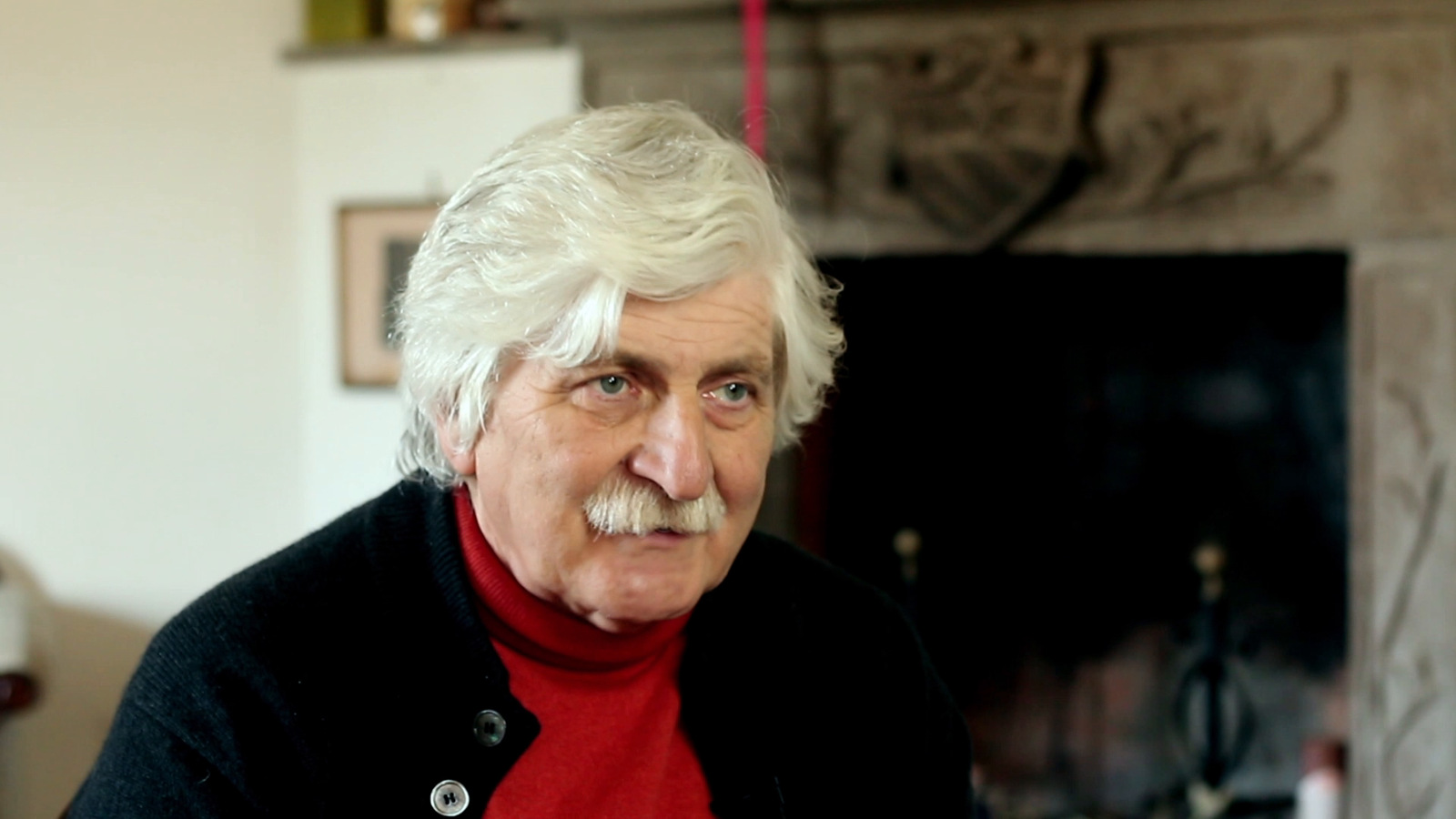
Dardano Sacchetti places the beginning of the collaboration around a viewing of The Bird with the Crystal Plumage while it was still being edited. He recalls approaching Argento with Luigi Collo, then working on several ideas before Cat: a young traveller’s journey across Europe to buy a motorcycle, a possible prehistoric comedy sequel, and a thriller linking ancient remains with modern murders. These abandoned projects make the eventual film look less inevitable than a simple account of an immediately commissioned follow-up.
In Sacchetti’s account, the decisive alternative was a five-page outline inspired by an article he remembered reading in Scientific American about chromosomes and criminality. He explicitly says that the theory was subsequently disproved. He recalls Argento enthusiastically expanding the outline into a treatment of about thirty-eight pages, annotating the typescript and discussing further possibilities. The interview describes a process of proposal, expansion and revision; it does not supply the dated drafts themselves.
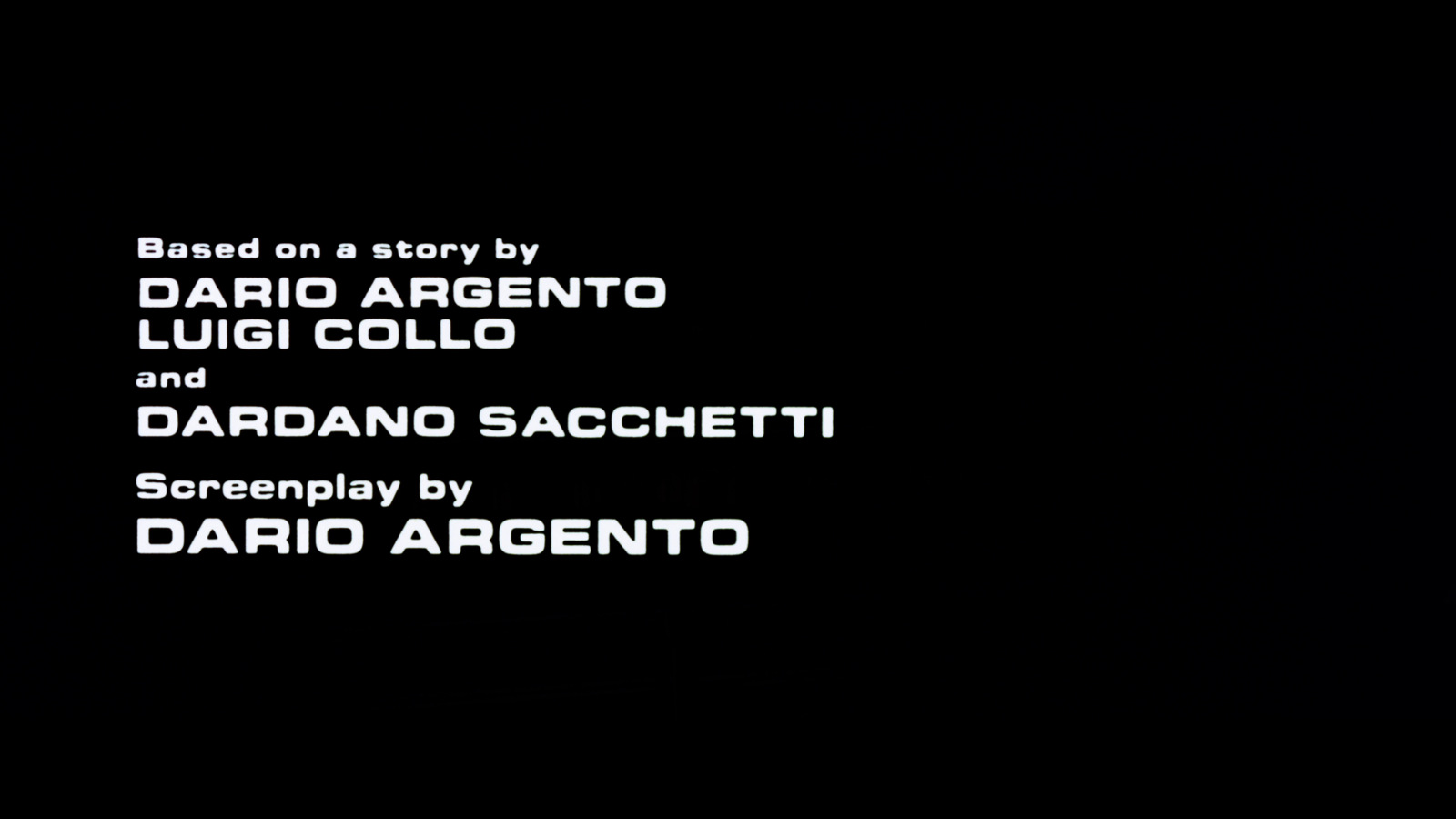
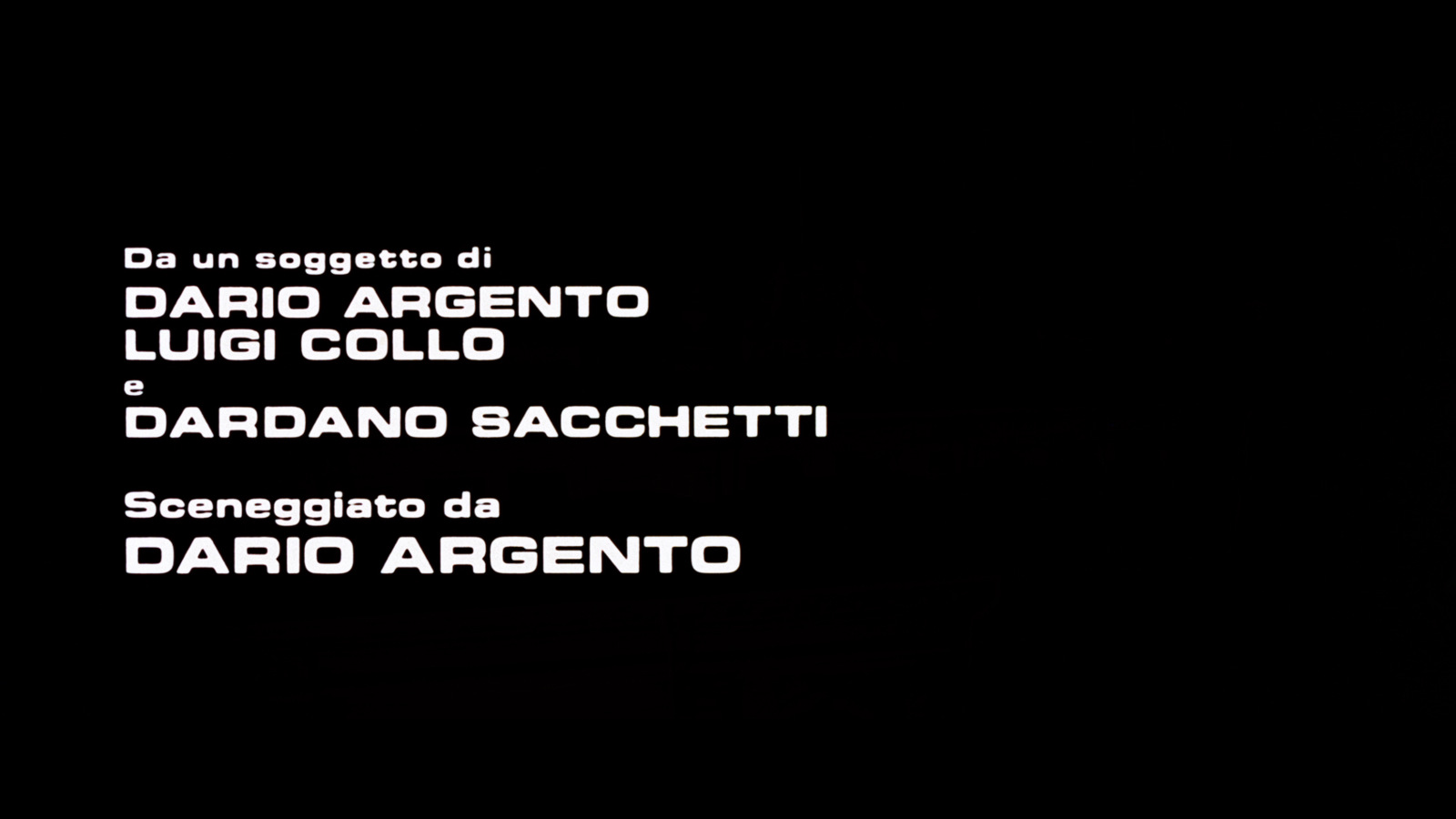
The opening credits provide the firm distinction: story by Dario Argento, Luigi Collo and Dardano Sacchetti; screenplay by Dario Argento. Sacchetti’s later description of the division of labour adds testimony to that record. His memory of the magazine article does not identify an issue or establish the scientific premise as fact.
The Writer O’ Many Tales · 16:37–22:15; 24:53–26:29; 30:09–32:00
Credit, memory and a difficult collaboration
Sacchetti remembers an argument over payment and the proposed presentation of the writing credits, followed by a dispute over a newspaper account of the story’s origins. His account is a participant’s retrospective version of those negotiations. The final screen credit is separately visible, and he describes seeing his own name there as an intensely moving moment.
His assessment is more complicated than a claim of sole authorship. He acknowledges how much Argento’s imagination and choice of scenes added to the initial material, while objecting to some of the comic interludes. He describes a working relationship that survived recurrent disagreements. That combination of admiration and resistance is valuable evidence about collaboration, without turning every remembered conversation into an independently established event.
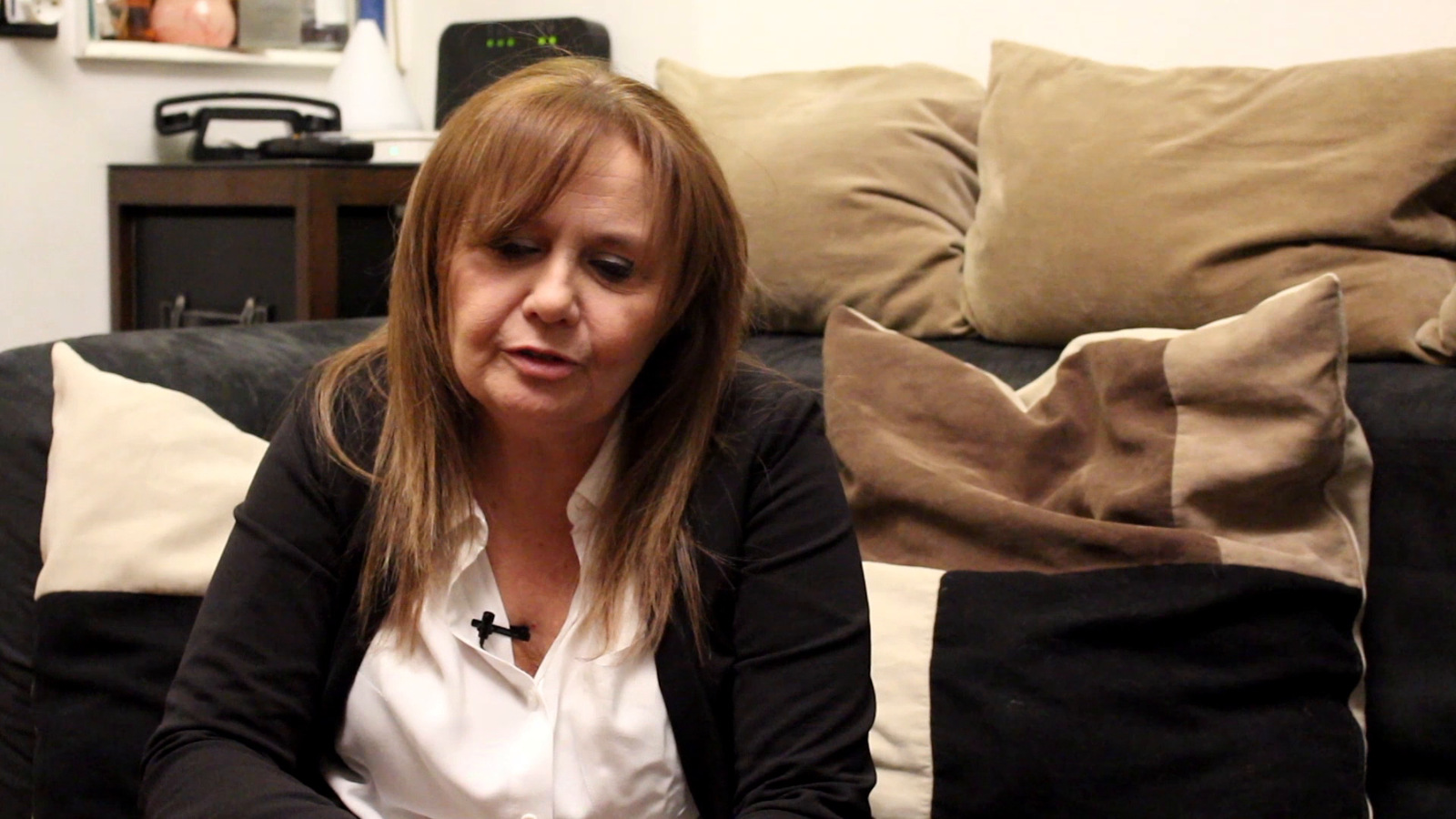
Cinzia De Carolis remembers the production as an enjoyable working environment, with her mother accompanying her and the set experienced partly as play. Her recollections of Karl Malden and Argento put the child performer’s experience beside the adult investigators’ narrative. She does not remember precisely how the casting came about.
She says the film was shot in English and subsequently dubbed. Already experienced in dubbing other performers, she nevertheless found dubbing herself more difficult. This separates the remembered performance on set from the work of giving it a finished voice—a useful distinction in a film whose central partnership repeatedly depends on hearing, describing and repeating information.
Giallo in Turin · 01:27–04:50; 04:56–06:35; 12:48–14:28
A chase needs a city—and a production office
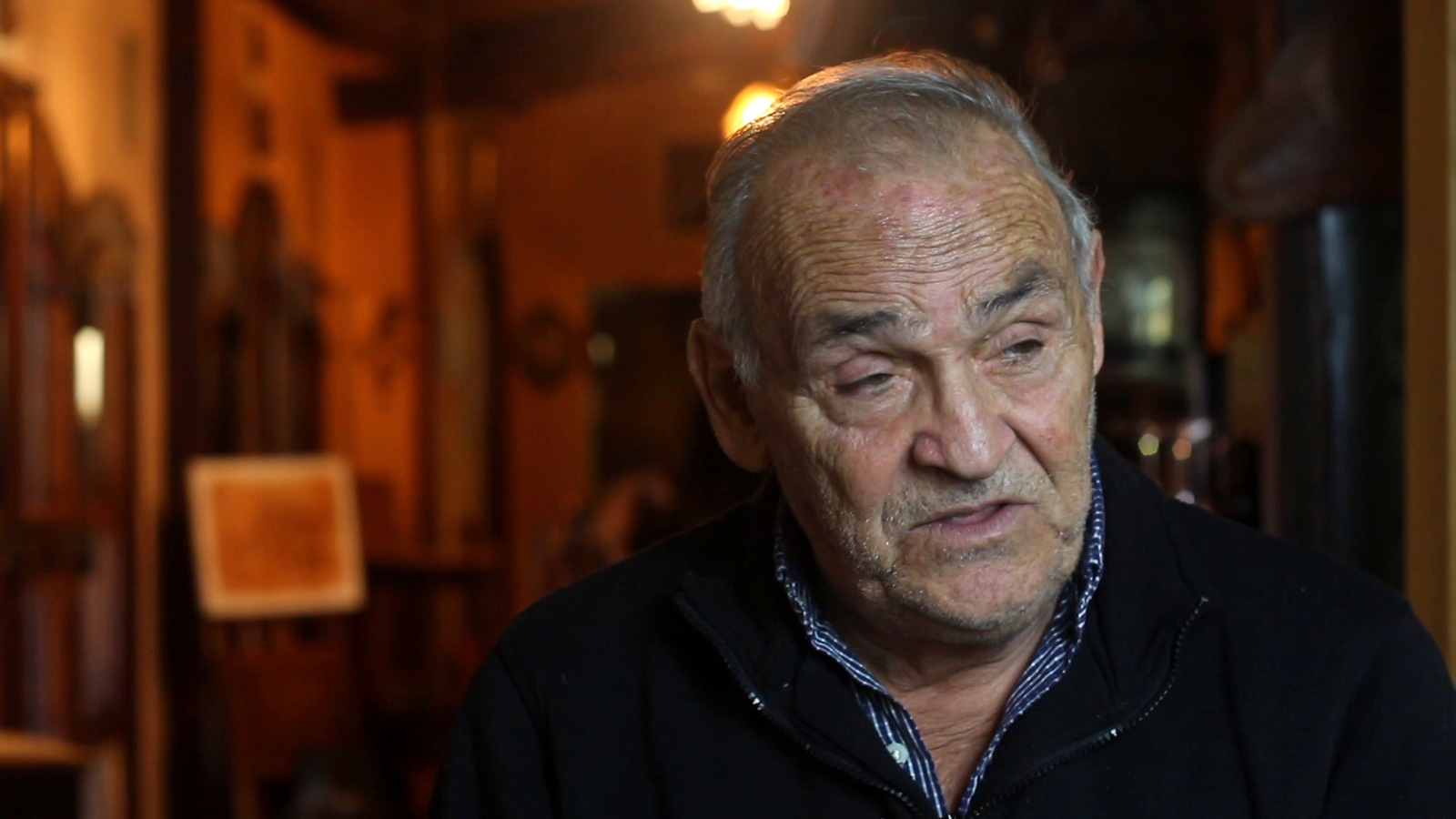
ENLARGE ↗Angelo Iacono on organising the production.
Production manager Angelo Iacono recalls roughly two months of filming in Turin and places the Porsche chase during a public holiday, when the streets could be used more freely. He describes the high-speed work as spread across several days. The recollection gives the chase a practical setting: the apparent freedom of the car depends on the organisation of the city around it.
Iacono describes himself as the link between Salvatore Argento’s production office and the director’s requirements, balancing what was wanted against what could be afforded. His account also includes meeting James Franciscus at the airport and helping the visiting actor settle into the production. Where Argento’s interview remembers creative preferences and disagreements, Iacono’s emphasises coordination and working relationships.
He recalls a crowded opening engagement in Rome and an additional late showing. This is evidence of how the film’s reception was remembered by a production participant; the trailer campaign offers a separate, contemporary record of how its success was being promised to audiences.
Nine Lives · 01:36–04:00; 11:20–12:05
Returning to the newspaper
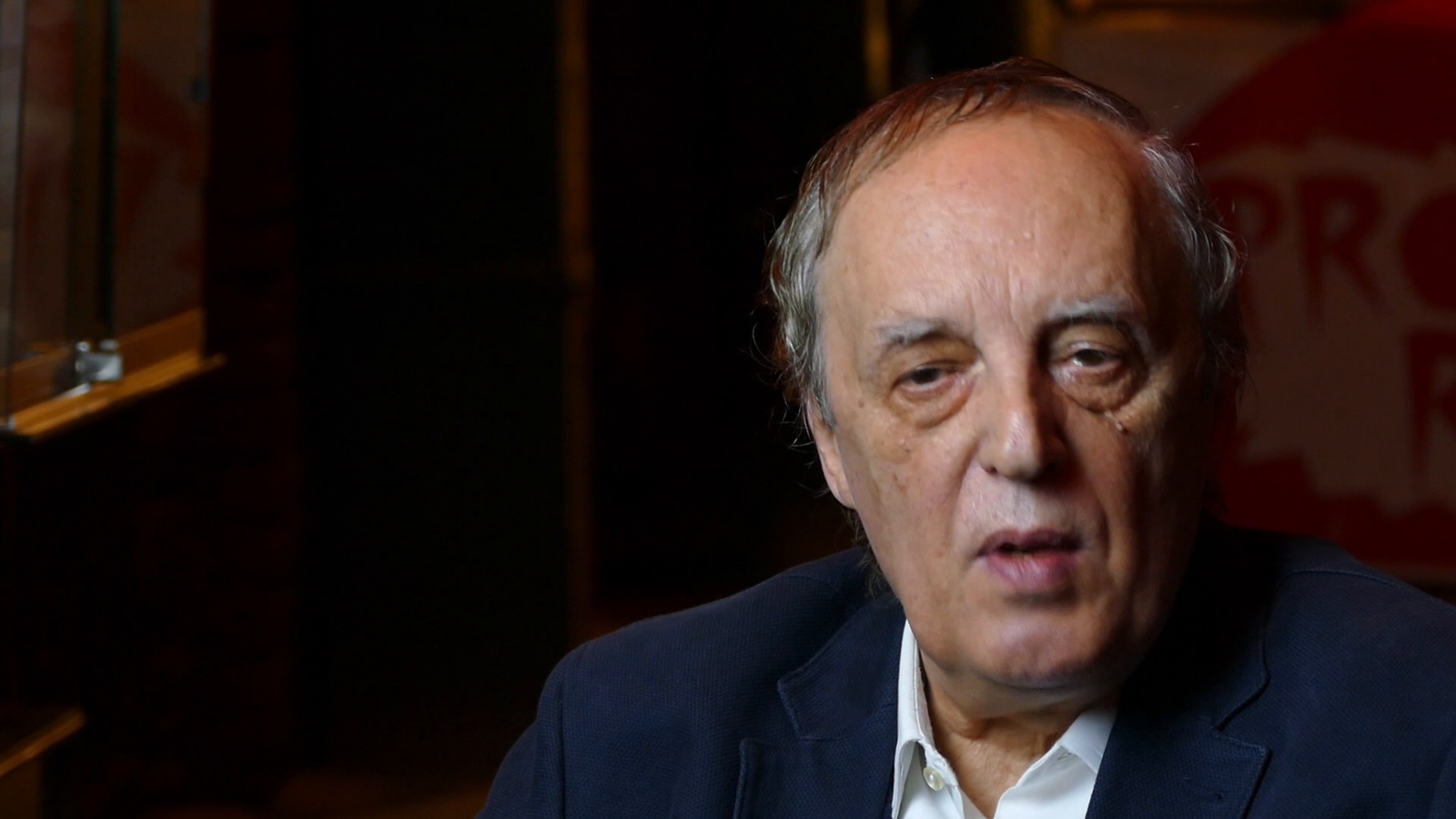
ENLARGE ↗Dario Argento revisits his second feature.
Argento connects the Turin locations with research begun for The Bird with the Crystal Plumage. He also identifies the newspaper location as Paese Sera, where he had worked before becoming a director, and remembers the emotional force of returning to his former workplace. The newsroom’s desks and production machinery consequently belong both to the fictional reporter’s environment and to a place in the director’s working life.
His account of Franco Fraticelli stresses the editor’s respect for the planned shots and the shooting list. It describes preparation and sustained labour behind the film’s apparent fluency. The later investigations of photographs, phone calls and missing information make that organisation of fragments especially important. Continue in the Fraticelli dossier →
Nine Lives · 07:53–08:45; 10:22–11:19; 12:20–13:19
A soft train front and a falling camera
Argento describes the station impact as a constructed train-front effect: the art department made a lightweight front with large soft buffers, and the camera position kept the missing remainder of the vehicle outside the image. The effect depends on what the frame allows the spectator to assume is present beyond it.
For the rooftop climax, he recalls throwing the camera to obtain the falling view, as he had done on The Bird with the Crystal Plumage. He describes rotating cables or a spool for the shots of the killer gripping the lift cables, with a material in the hands producing smoke. His testimony establishes those methods without identifying the smoking compound or assigning a particular mechanism to every cut.
He also remembers experimenting with different lenses, including magnifying lenses, for the extreme eye close-ups. These accounts place the film’s enlarged eyes, sudden impacts and vertiginous movement within a practical process of constructing a viewpoint. Follow the falling-camera connection →
Nine Lives · 13:23–14:16
Letting Lori answer from outside the frame
Argento says Lori’s offscreen call to Arnò was added later because leaving her fate unresolved felt unfair. He also recalls a scripted continuation in which the wounded Giordani was cared for by Anna. The released ending can therefore be understood as a deliberate contraction: the killer’s death supplies the image, while the child’s voice supplies the reassurance.
The separate original-ending supplement reconstructs the longer conclusion from script pages and a surviving publicity image. Read together, the two extras illuminate different decisions—whether to show the rescue, how to confirm the child’s survival, and whether to return the adults to a domestic scene. Explore the discarded epilogue →
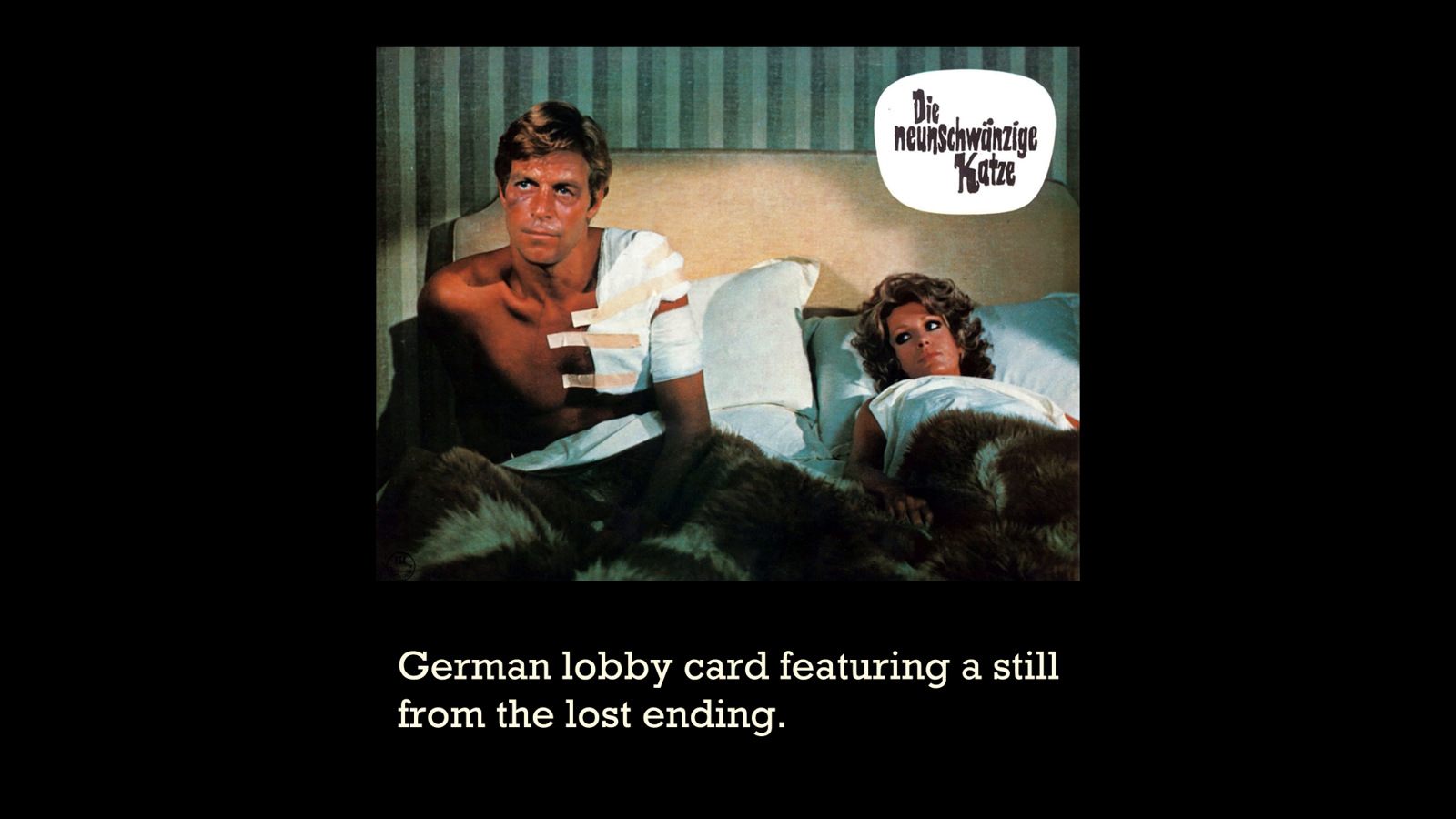
The three-minute original-ending supplement assembles translated script pages and a surviving German lobby card. It presents a reconstruction of scenes whose moving footage is described as lost.
RECONSTRUCTION · 00:30–01:25
The child returns to the image
After Casoni’s death, the proposed continuation has Spimi look down the shaft before Morello emerges with Lori. Giordani and Arnò can respond to the child’s visible rescue. This supplies the reunion that the released ending compresses into her offscreen call.
RECONSTRUCTION · 01:30–02:55
Morning in Giordani’s bedroom
The next scene moves to the injured reporter at home with Anna. An early call from his editor brings another poisoning story; a joke about cooking restores a light domestic register before Giordani returns to work. The lobby card preserves an image from this discarded ending.
ENLARGE ↗A German lobby card preserves an image from the discarded ending.
The supplement’s introductory account says the rescue and epilogue were filmed, then removed after Luigi Cozzi criticised the conclusion as too American. That production history is the supplement’s account; the surviving script pages and publicity image are the evidence it displays. Argento’s Nine Lives interview separately recalls the decision to end at the killer’s death and the later addition of Lori’s voice.
The difference is dramatic as well as structural. The longer version would return the investigators to ordinary life. The released conclusion holds on the shaft that has swallowed the killer, leaving a voice to carry the promise that someone has survived.
Reconstruction produced and edited by Michael Mackenzie; translation by Engine House. Arrow, 2018. Source details →
THE SCREEN RECORD
Who made the investigation.
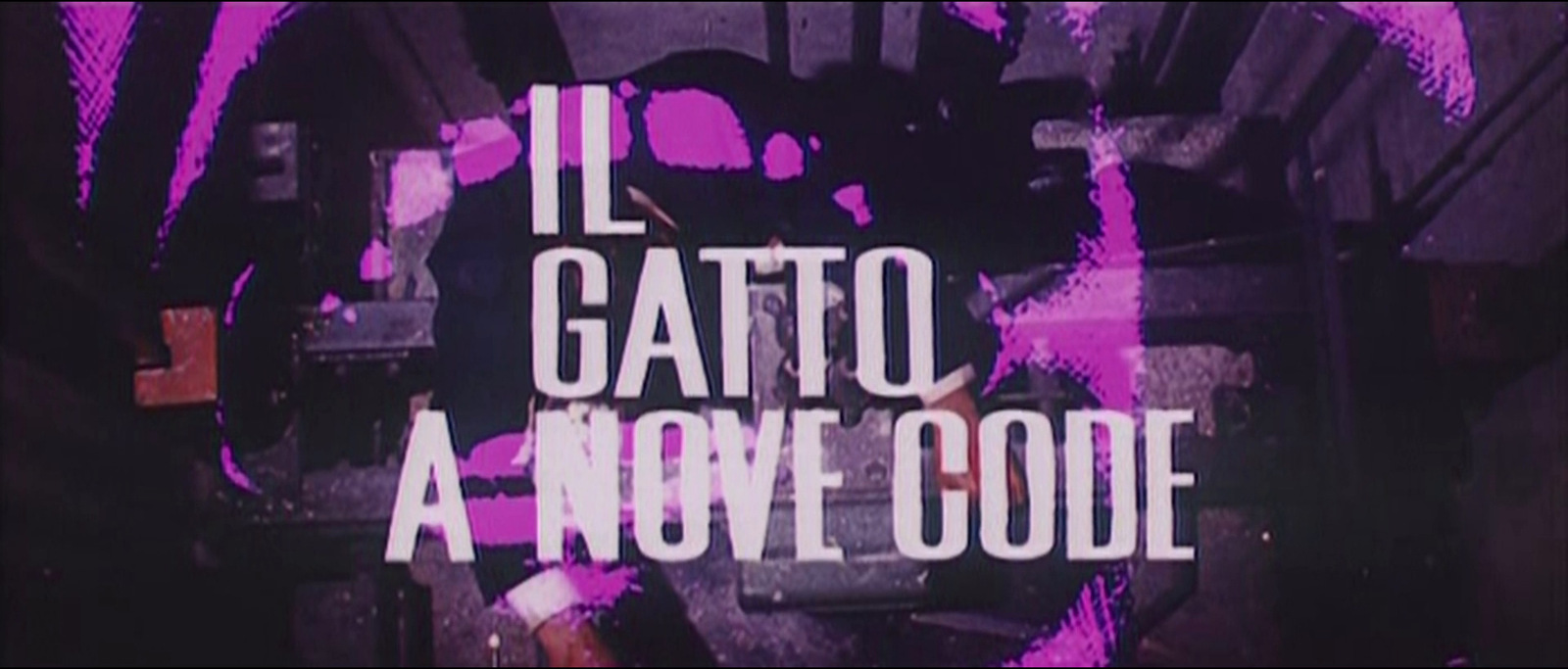
The English and Italian openings distinguish the shared story credit from the screenplay credit. Both name Luigi Collo.
ENLARGE ↗The English credits distinguish the story from Argento’s screenplay.ENLARGE ↗Luigi Collo appears in the Italian story credit.
Story
Dario Argento, Luigi Collo and Dardano Sacchetti
Screenplay and direction
Dario Argento
Producer
Salvatore Argento
Photography
Erico Menczer
Editing
Franco Fraticelli; assistant editor Cesarina Casini; second assistant Sergio Fraticelli
Art direction and wardrobe
Carlo Leva; Catherine Spaak’s dresses by Luca Sabatelli
Music
Ennio Morricone; conducted by Bruno Nicolai
Production management
Angelo Iacono
Make-up
Giuseppe Ferranti and Piero Mecacci; assistant Vincenzo Marchetti
Sound
Mario Ronchetti; boom operator Eugenio Fiori in the Italian credits (Fiore in the English credits); sound effects Luciano Anzellotti. The Italian mixage credit names Romano Pampaloni
Titles and optical effects
Luciano Vittori
The craft credits identify departments; the interviews supply particular recollections of how effects and scenes were made. They complement each other without making every credited worker responsible for every image in a sequence.
SELLING THE NEXT THRILLER
From Bird to Cat.
The English, Italian and American trailers make the previous film part of the new film’s identity. Posterised colour, enlarged faces, eyes and the cat emblem organise the sales pitch as insistently as the selected action.
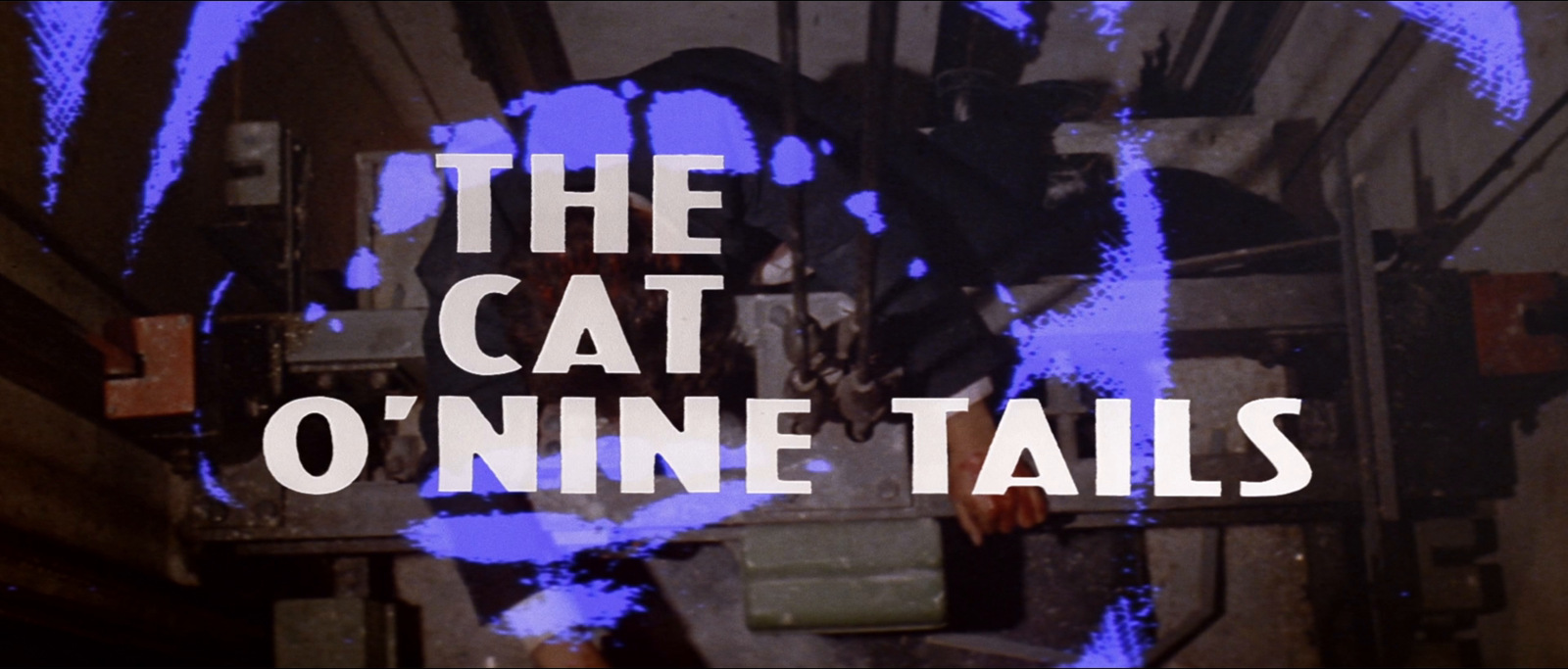
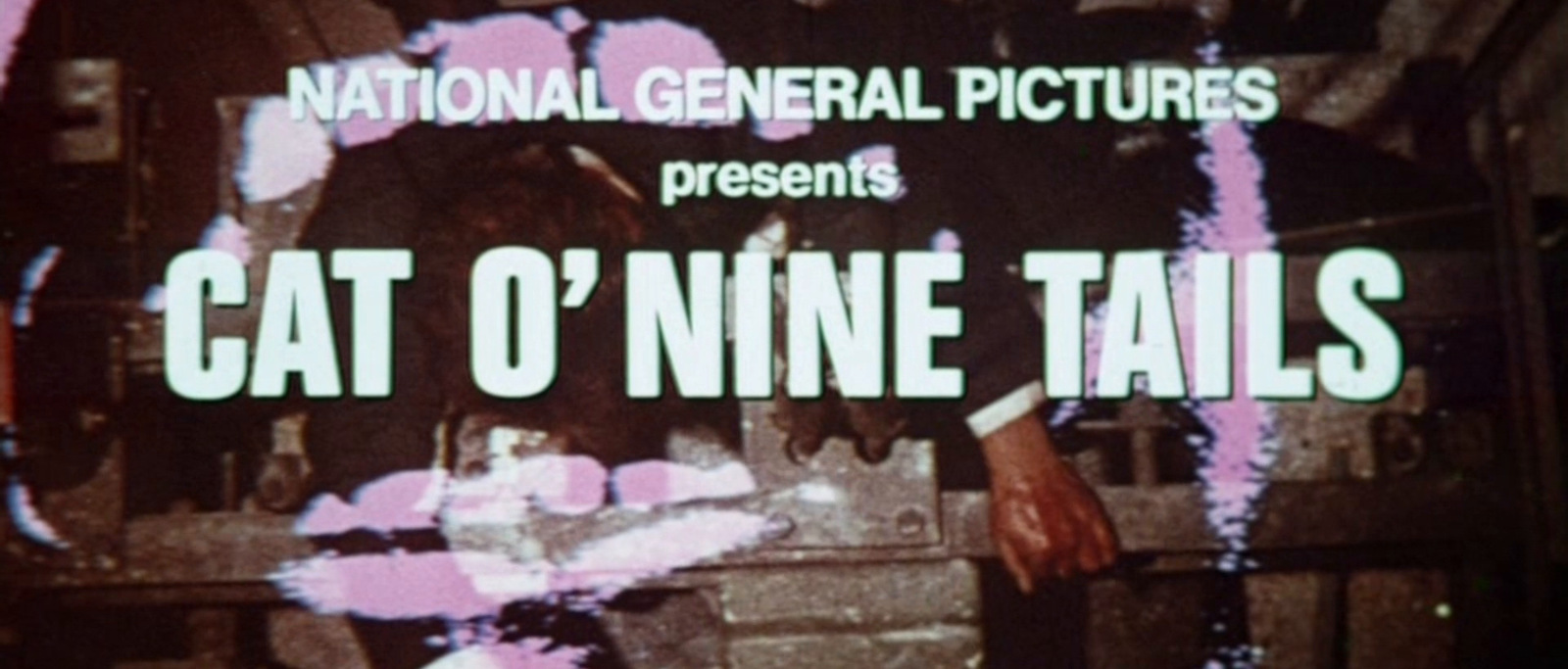
ENLARGE ↗The English trailer turns the cat emblem into a graphic overlay.ENLARGE ↗The Italian trailer’s purple title treatment.ENLARGE ↗National General presents Cat O’ Nine Tails.
The English and Italian trailers invoke The Bird with the Crystal Plumage and its American success before introducing Cat. Their box-office figures belong to the promotional voice-over, rather than serving here as independently audited receipts. The US trailer names National General Pictures, foregrounds Malden, Franciscus and Spaak, and promises an escalation of suspense from the earlier film.
These materials help explain the commercial pressure remembered in the interviews. They sell continuity with a hit even as the new film replaces the isolated eyewitness with an investigative partnership. Trailer sources →
Shared observation
No single witness owns the whole case. Argento’s second feature brings a blind puzzle-maker, a reporter and a child into a mystery where pictures, conversations and scientific explanations all need interpreting. This dossier follows their partnership through the film’s writing, collaborative craft, Morricone’s music and the records of its different presentations.
Spoilers: this study discusses the film’s story and ending.
01 / ARNÒ, GIORDANI & LORI
A case assembled between people
The investigation begins with a fragment of speech. Franco Arnò, a blind puzzle-maker played by Karl Malden, overhears a blackmail conversation near the Terzi Institute. A break-in and subsequent deaths bring him together with reporter Carlo Giordani, played by James Franciscus. Lori, the child in Arnò’s care, is drawn into the danger. Arrow’s synopsis establishes this relay between overhearing, investigation and threatened family. Arrow’s account
The partnership changes the shape of the Argento witness. Knowledge can be distributed: one person notices something, another asks a question, and another has access to the person or institution that might answer it. The useful question is consequently less “who has the best eyes?” than “who can make an observation available to someone else?” Giordani’s public occupation and Arnò’s domestic world give that exchange different places to happen.
Film at Lincoln Center foregrounds Arnò’s crossword-making and relates the title to the investigation’s branching leads. A crossword offers a productive model for this detective story: an answer must fit information arriving from another direction. Confidence in one explanation can become an obstacle when it prevents the investigator from reconsidering the surrounding clues. FLC programme
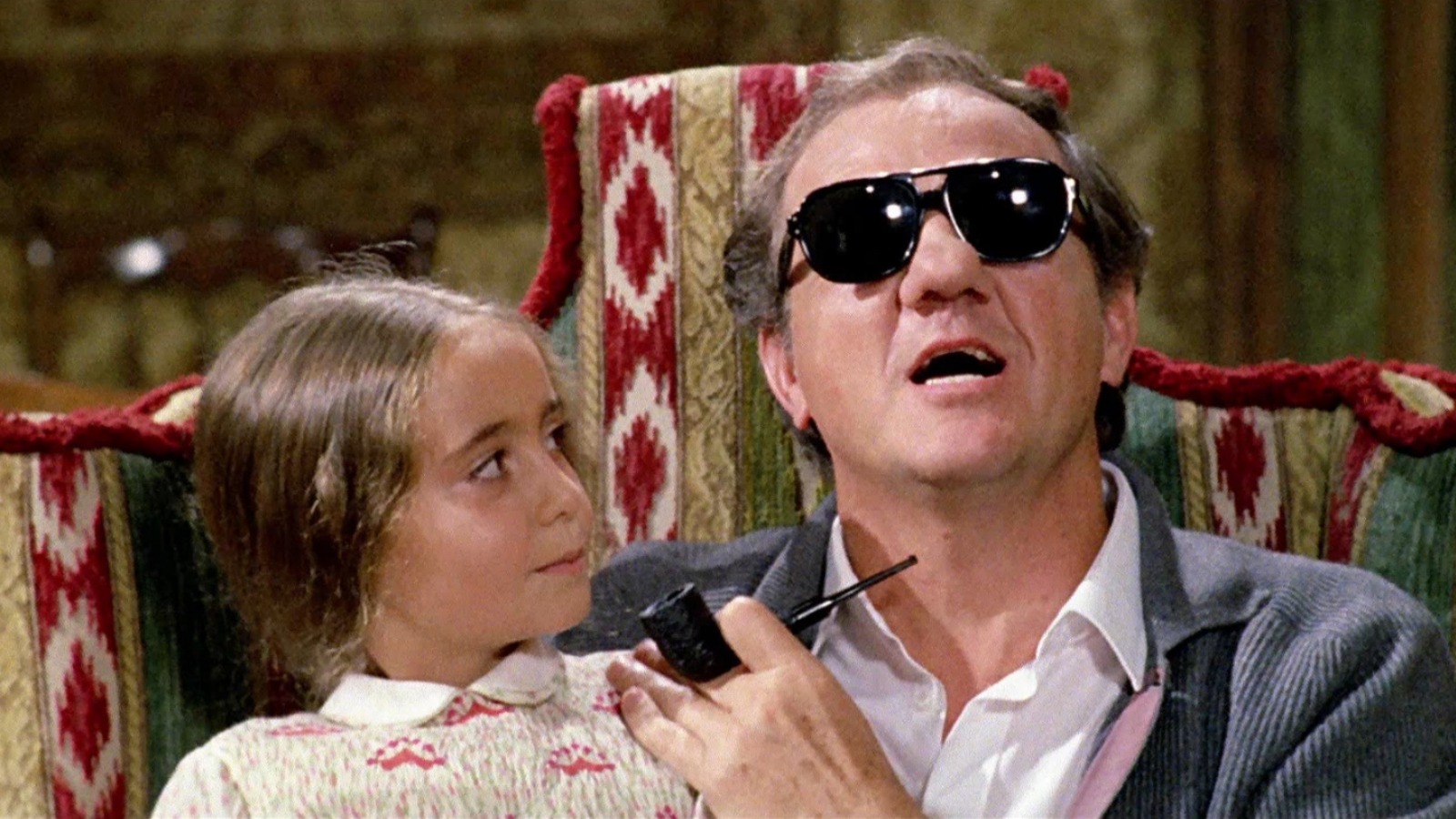
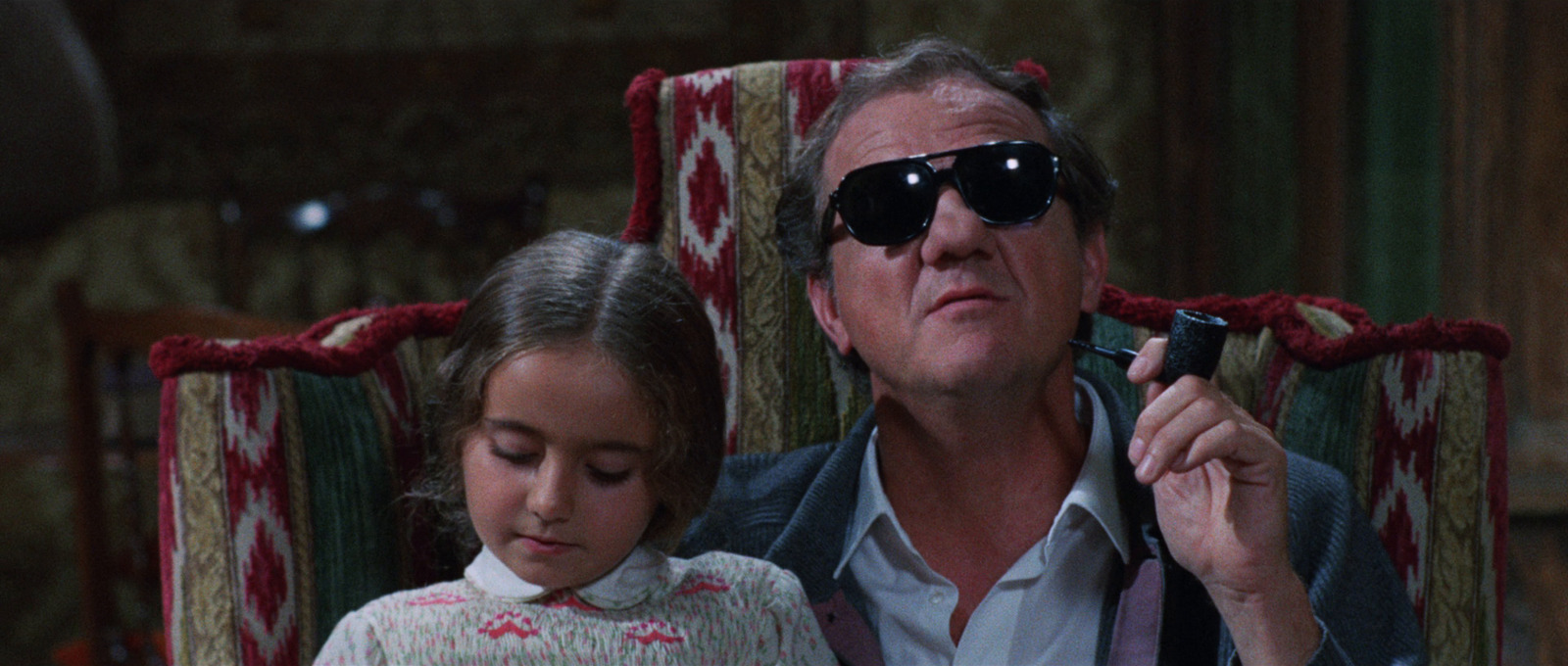
The family image above brings the stakes closer. Lori looks towards Arnò; his dark glasses interrupt any simple exchange of gazes. Their proximity, the shared chair and the repeated knitted textures make companionship visible without requiring reciprocal eye contact. To describe Lori only as his substitute eyesight would miss the relationship that the image makes its centre. Our reading concerns this supplied image, rather than an inferred sequence of gestures around it.
02 / PHOTOGRAPHY & INFORMATION
What publication leaves outside the frame
James Kendrick’s review identifies a crucial photographic mechanism: a newspaper image of the killing has been cropped so that the killer’s arm and hand fall outside the published view. The potentially useful evidence exists, but its public form withholds it. Kendrick on the photograph
This is a sharper problem than a photograph simply lying. A picture can preserve an event while a later decision changes what another person is allowed to inspect. The newspaper’s authority encourages its reader to treat the available rectangle as the whole record. Investigation therefore has to include the image’s handling: who selected it, what they removed and whether the earlier material survives.
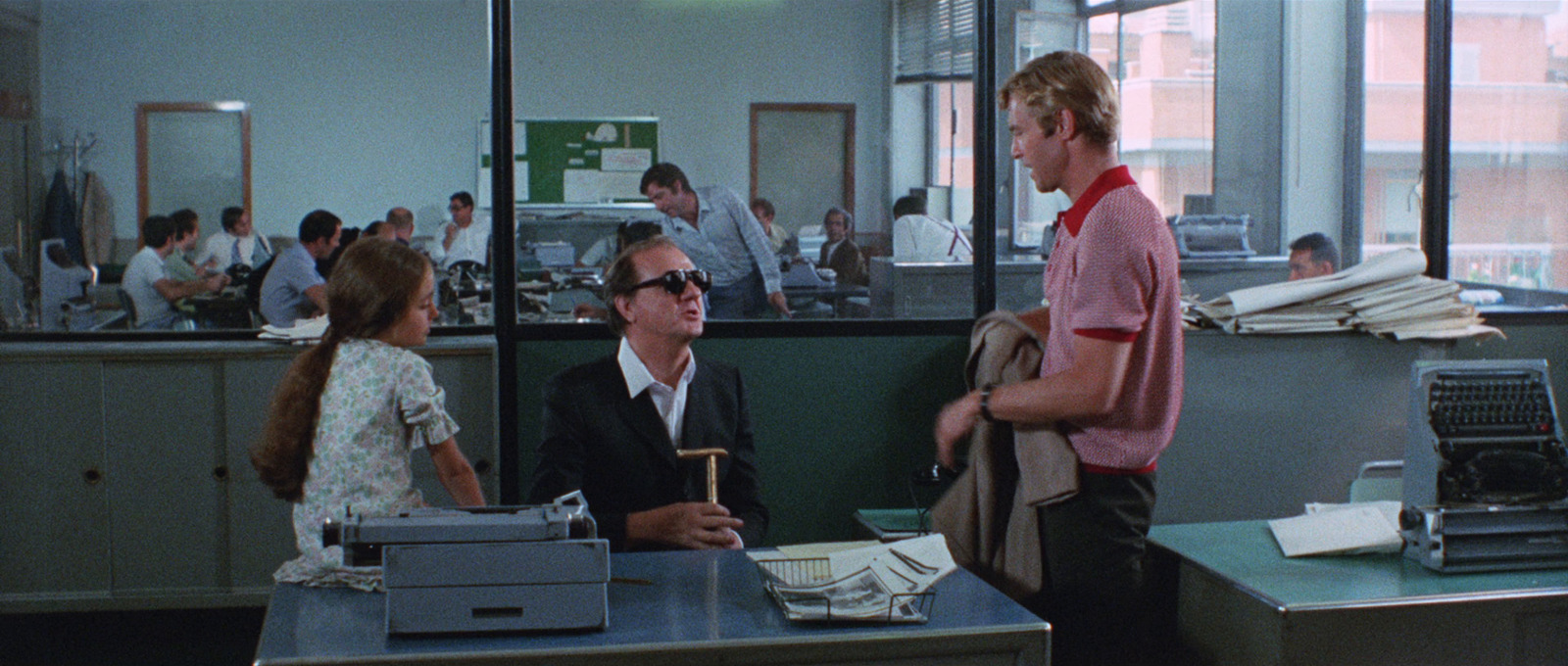
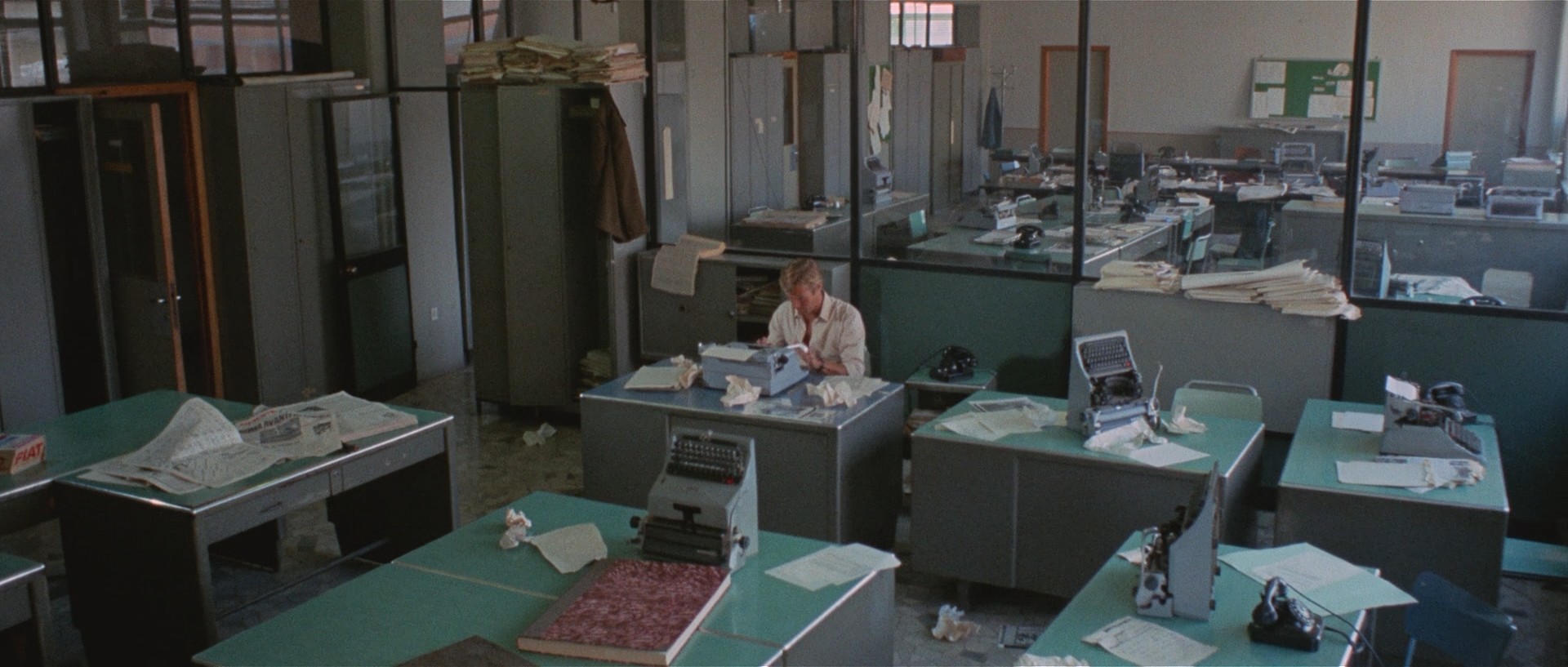
In the still, the reporter is surrounded by the physical apparatus of publication. Papers lie in heaps, telephones and typewriters occupy separate desks, and glass divides the workplace while keeping the next room visible. The high, distant viewpoint makes the person relatively small beside this accumulated information. This is our visual reading of the downloaded still; ShotDeck identifies the setting as a newspaper office. Image record
The image also complicates a familiar opposition between intuition and technology. The reporter works through a material system, just as the scientist does. Neither the printed photograph nor the laboratory report arrives without mediation. Cat’s mystery can be read as a contest over those processes of selection, explanation and circulation.
03 / THE STORY’S DEVELOPMENT
A writing credit that needs its distinctions
In Barbara Torretti’s 2004 interview, Dardano Sacchetti recalls being introduced to Argento by his friend Luigi Collo while The Bird with the Crystal Plumage was being edited. He describes supplying a short story outline that Argento expanded into a treatment. The account gives Sacchetti an originating role and distinguishes that work from the subsequent development. It remains a participant’s recollection recorded decades later, rather than a dated draft history. Sacchetti interview
The opening credits now settle the name: both the English and Italian versions name Luigi Collo, alongside Argento and Sacchetti, for the story. Argento alone receives the screenplay credit. This agrees with La Rochelle’s catalogue and corrects Cinematografo’s Cozzi attribution. Sacchetti’s filmed interview also names Collo and describes their shared work. Compare the two credit frames → · Read Sacchetti’s account → · Cinematografo · La Rochelle, p. 19
These records also organise authorship differently. A catalogue’s broad screenplay heading can flatten the distinction between originating a story, expanding a treatment and writing the shooting script. Restoring those stages makes collaboration more intelligible without allocating particular scenes to a writer on insufficient evidence. The credit frames establish the printed names and categories; surviving drafts and contractual records would be needed for a more detailed allocation of the writing.
There is already a precise archival route. Cineteca di Bologna’s Titanus inventory, page 6, lists Italian dialogue at G1 1.4, English dialogue at G1 1.5, Italian subtitles for the English version at G1 1.6, English subtitles at G1 1.7 and Spanish subtitles at G1 1.8. They could establish how the mystery was expressed across versions before any broader claims about draft development. Titanus inventory
04 / CRAFT & PERFORMANCE
An ensemble beyond the director
Cinematografo credits Erico Menczer with photography, Franco Fraticelli with editing, Carlo Leva with production design and Leva with Luca Sabatelli for costumes. These are distinct contributions to the film’s organisation of spaces and people. The newsroom image brings these collaborators’ work together in a single composition. Craft credits
The frame gives us several distances at once: the near desks, the solitary worker and the further room behind glass. Filing cabinets and vertical mullions divide the wide composition into smaller compartments. Rather than identifying a hidden detail through a close-up, this image asks us to understand a working environment. Its crowded surfaces make information look abundant; the single occupied desk makes the labour of interpreting it look lonely.
The family portrait works differently. Faces and patterned textiles fill the available space. It offers intimacy where the newsroom offers separation. Reading the images together suggests why Cat needs both domestic and institutional registers: a case is processed in offices, but its consequences enter relationships. This comparison describes the two reproductions; it does not imply that they form adjacent shots in the film.
Malden, Franciscus and Cinzia De Carolis belong in the same discussion. The two male leads carry the investigative partnership, while the child’s place in Arnò’s household changes what danger means for him. The women around the institute also occupy positions in the exchange of information: Catherine Spaak’s Anna Terzi and Rada Rassimov’s Bianca cannot usefully be reduced to an undifferentiated list of suspects. A future performance study should examine their speech and agency as carefully as the investigators’ deductions.
05 / CLASSIFICATION & DANGER
When the explanation comes from inside the institution
The Terzi Institute lends scientific authority to the mystery’s speculation about inherited criminality. The plot eventually identifies Casoni, one of its scientists, as the killer; Lori’s kidnapping brings the threat into Arnò’s household. The source of explanatory knowledge is also a source of danger. Plot record; ending spoilers
The film’s deterministic criminality premise must remain separate from medical fact. MedlinePlus describes 47,XYY syndrome as an extra Y chromosome, with variable characteristics and possible developmental and behavioural difficulties; it does not present a chromosome result as an identification of a murderer. We discuss the film’s use of that idea as thriller fiction, not as a scientific explanation of violence. Medical context
Within the mystery, classification promises a shortcut. A laboratory finding appears capable of telling the investigator what sort of person someone is. Yet the institution’s authority depends on people who can conceal information, attach consequences to a result and control its circulation. The detective work has to recover those human decisions rather than merely accept the label.
That tension connects the laboratory to the cropped photograph. Both are apparently objective forms of evidence; both arrive within a system that decides how they will be interpreted. The ethical problem is particularly sharp when an explanation seems to make a person’s actions inevitable. Even if such a mechanism efficiently closes a thriller plot, it does not remove the choices, fears and acts of coercion that brought the plot to its conclusion.
Lori’s danger gives this abstract issue an immediate cost. What began as an intellectual pursuit can no longer remain a satisfying solution to a puzzle. The investigator has a person to protect. The film’s movement between detached analysis and attachment is central to this dossier’s reading of its apparently more conventional detective form.
06 / MORRICONE & THE RECORD
A lullaby can have more than one life
Cat’s musical identity includes tenderness as well as threat. The La Rochelle programme reproduces Sébastien Schreurs’s 2011 observation that Morricone’s music expresses the bond between Arnò and the child he raises. FLC’s later programme stresses the score’s movement between smooth and abrasive jazz textures. These are published critical descriptions, not results of a new listening log. Schreurs, reprinted p. 19 · FLC on the score
Maurizio Corbella’s study supplies a different kind of evidence. His account of the 1971 General Music compilation Colori identifies “Ninna nanna in blu” from Cat as track B4, also issued as a single. He places the compilation within a publishing strategy that gathered recent film music around Morricone’s identity and offered it a life beyond the originating films. The useful locators are pages 42–44 and table 2.1 on page 43. Corbella, Colori study
This distinction changes how a soundtrack object should be used. A record can make a theme newly prominent, place it beside music from other films and encourage a listener to hear a coherent composer’s world. It cannot, by its track order alone, establish where that music enters or leaves Cat. The film and the record are connected works with different arrangements of attention.
For the dossier’s argument, the important consequence is that affection belongs inside the film’s musical reputation. A view of Morricone only as the supplier of dissonance would leave the Arnò–Lori relationship underdescribed.
07 / RELEASES & SURVIVING MATERIAL
One title, several records
A running time is meaningful when attached to an identifiable presentation. These records should be kept alongside one another rather than averaged into a supposedly definitive duration.
Record
What it establishes
Limit
German release catalogue
Filmportal records 2,476 metres / 90 minutes; FSK examination on 4 May 1971 and German premiere on 15 July 1971.
A territorial catalogue entry, not a shot comparison.
FLC, 2022
112-minute presentation, English and Italian with English subtitles; restoration credited to Cinecittà.
Does not by itself identify the source of a consumer disc.
Arrow product record
Approximately 112 minutes; English and Italian; English and English SDH subtitles.
Specifications, not a timed inspection of either language version.
Kendrick’s review of Arrow’s 2021 UHD reports a transfer from the original two-perforation 35mm negative, restoration at L’Immagine Ritrovata and HDR grading at Silver Salt. It also identifies English and Italian mono tracks.
The same review describes an extra reconstructing an earlier ending through script material and images, with the footage reported lost. That is a particularly useful return question: how might a different closing passage alter the balance between the solved crime and the family’s recovery? A reconstruction is evidence of a proposed alternative, not automatically evidence of a previously distributed cut.
The Titanus language lists give the version investigation a manageable starting point. Compare one consequential exchange across the Italian dialogue, English dialogue and subtitles, then relate it to identified copies of the film. A difference in wording, a difference in duration and a missing passage require different explanations; none should be silently substituted for another.
08 / CRITICISM & REAPPRAISAL
What counts as success for this film?
The review reprinted by Cinematografo from Segnalazioni cinematografiche, volume 70 (1971), praises the clarity and suspense of the intricate mystery while finding its characters psychologically thin. That is a contemporary critical judgement with a specific source, not a summary of everything reviewers thought in 1971. Contemporary review reprint
The later FLC retrospective presents Cat as an accessible entry point, emphasising its partnership and procedural pleasures. The change of emphasis matters: features that can be described as conventional can also be reasons to value the film. A retrospective organised around the whole career permits a different comparison from the immediate follow-up to a successful debut. 2022 retrospective
Our account places the strongest claim elsewhere than a competition for Argento’s most spectacular murder. Cat is particularly useful for thinking about shared knowledge. A blind investigator is not outside the production of evidence; a sighted reporter is not guaranteed to understand an image; scientific credentials do not guarantee an innocent explanation. These relationships connect its quieter conversational and institutional spaces to its dangers.
The two images here make that argument tangible. One compresses affection into a shared seat; the other spreads professional information across an almost empty office. The case needs both kinds of space, and its solution cannot make them interchangeable. Cat’s place in Argentochrome is therefore as a study of how observations become explanations—and of what people stand to lose while that transformation takes place.
FOLLOW THE CONNECTIONS
Another way in.
Read across films, then return to the evidence for each one.
DarkVeins, 14 October 2004; English rendering consulted. Passage on the introduction to Argento and story/treatment development. Retrospective testimony; the Collo/Cozzi parenthesis is editorial.
Printed/PDF p. 19 visually checked: credits and the excerpt attributed to Sébastien Schreurs, aVoir-aLire, 15 February 2011. Festival labels the film 1970; this dossier uses its 1971 release year.
Newsroom still 45A78CJL downloaded at 1920 × 817. Catalogue locator 01:16:24. Our image reading is distinct from catalogue metadata. Sign-in may be required.
In Anonymous Sounds: Library Music and Screen Cultures in the 1960s and 1970s (2025), pp. 42–44; table 2.1 on p. 43. Repository scan, PDF pp. 10–11; table visually. Record history, not a cue-by-cue film analysis.
Primary screen credits and supplements: Nine Lives, Dario Argento (15:58); The Writer O’ Many Tales, Dardano Sacchetti (34:46); Child Star, Cinzia De Carolis (11:02); Giallo in Turin, Angelo Iacono (15:11). Italian interviews with English subtitles. Original-ending reconstruction (3:09), produced and edited by Michael Mackenzie, with translated script pages and a German lobby card; English, Italian and US trailers. Passage locators accompany the studies.
The Cat o’ Nine Tails / Il gatto a nove code (1971), Arrow Video Blu-ray. English- and Italian-credit presentations; English and Italian mono soundtracks, English SDH and English subtitles translating the Italian dialogue. Scene locators refer to the English-credit presentation, approximately 111 minutes 49 seconds. The scene and dialogue studies distinguish the two language versions where wording changes a clue or joke.
Feature-length commentary on Arrow Video’s Blu-ray. The guide attributes critical observations to the commentators; production recollections are paired with the filmmaker interviews where those provide more specific evidence.