THE READING ROOM / 004 · EXPANDED ESSAY
Versions and restorationWhich film is in front of us?
Separate the cut, the frame, the language and the mix. Deep Red, Bird, Phenomena and Opera show why a restoration label is only the beginning of an edition’s history.
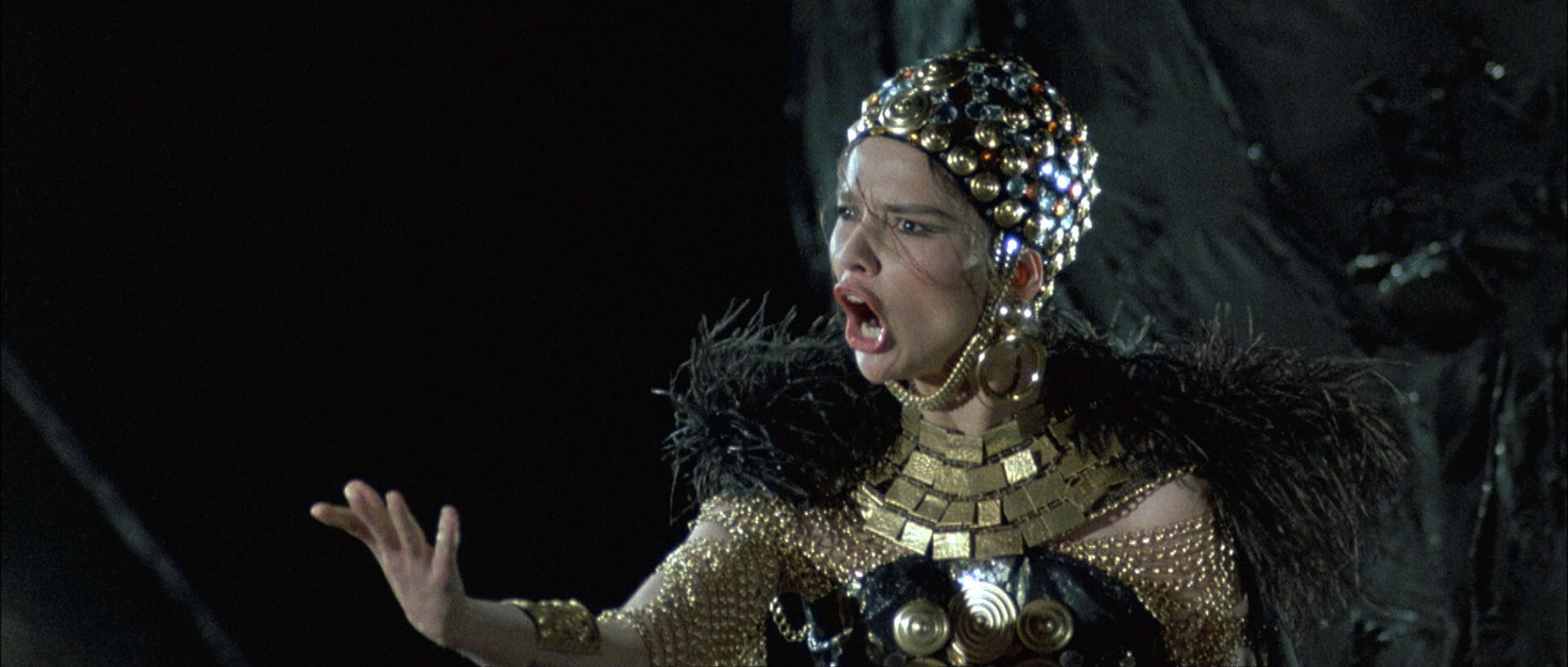
ACROSS THE FILMS
Two copies bearing the same film title may present different durations, compositions or soundtracks. A restoration can recover valuable material while also making new choices about presentation. Describing those choices lets a reader connect an interpretation to the version that supports it.
01 / The basic distinctions
A version has more than one dimension.
Begin with four separate questions. Which scenes and ordering does this cut contain? What portion of the photographed image is shown? Which language recording and mix are heard? Which source materials and restoration work produced this presentation? A label such as “restored” or “uncut” cannot answer all four.
Those questions help us avoid a common shortcut: treating the longest runtime as a complete description of the best or most original version. A duration is useful evidence, but it does not by itself identify the source of a difference. The cases below show why the accompanying release record matters.
02 / Deep Red
A longer cut can change language.
Arrow’s Deep Red booklet describes a negative that had been physically recut for the export version and was subsequently reassembled for the longer presentation. It also explains that English dialogue was not recorded for material unique to the Italian version. A hybrid language track can therefore preserve more material while changing language in passages that lack an English recording. Arrow booklet, restoration note on printed p. 56 ↗
The change is not adequately described as a playback fault. It belongs to the history of the film’s production and versions. For criticism, it also changes the experience of performance: a reader discussing the longer version should identify the language presentation instead of treating “English version” as an uncomplicated category.
The Deep Red dossier distinguishes the restoration accounts and retains the remaining material questions. A booklet’s account is evidence of the restoration’s reported method; it is not direct inspection of the underlying negative.
03 / The Bird with the Crystal Plumage
The edge of the image is part of the argument.
Filmportal catalogues a 35mm Techniscope presentation at 2.35:1 with mono sound. Argento’s 2014 interview discusses a later 2:1 presentation in connection with Vittorio Storaro. Arrow’s named UHD edition specifies 2.35:1 and Italian and English mono options. These are different kinds of records: an institutional catalogue, a participant’s later account and a publisher’s edition description. Filmportal ↗ · Argento interview ↗ · Arrow UHD specifications ↗
This matters especially for a film whose gallery scene places emphasis on partitions, figures and the distribution of information. An interpretation of those relationships should say which frame it is using.
Seeing and misremembering explores the gallery image and the witness’s changing understanding of it.
04 / Phenomena
Three durations identify three research routes.
Arrow’s edition description distinguishes the approximately 116-minute Italian version, 110-minute international version and 83-minute Creepers cut. Its language information also identifies the hybrid English/Italian presentation for the longer version. These advertised runtimes are edition identifiers, not our measurements of played copies. Arrow’s three-version record ↗
A discussion of Jennifer’s character, the insect investigation or the film’s pacing needs to know which of these routes it followed. A large difference in length is a reason to investigate the arrangement of material, not permission to supply an exact cut list from memory. The Phenomena dossier keeps the broad version history connected to the film’s collaborators and narrative.
A useful later comparison could begin with a single sequence whose treatment differs. It should identify the material and explain the consequence, rather than accumulating timestamps without a question.
05 / Opera
Cut, frame and soundtrack can vary independently.
Severin’s three-disc edition lists a 107-minute director’s cut in 2.35:1 and 1.85:1 presentations, alongside a 96-minute US cut. Its director’s-cut options include English 5.1, English stereo, Italian stereo and Cannes English mono; the US cut has its own specified options. The description demonstrates that selecting a cut does not finish the work of identifying the presentation. Severin’s disc specifications ↗
These alternatives create distinct questions. A frame comparison concerns visible composition; a mix comparison concerns the sound presentation. Neither follows automatically from the runtime. “Director’s cut” is a useful publisher label, but it should not be made to settle every question about framing, historical exhibition or audio provenance.
The BBFC’s dated Terror at the Opera records add another layer: classifications, submitted durations and cut flags. Those records document particular submissions. They do not supply a complete scene-by-scene comparison of all surviving editions. BBFC classification history ↗
06 / A useful edition record
Make the comparison repeatable.
For a future study, record the release label and date, named cut, language, selected mix, displayed aspect ratio and any restoration note. Add the relevant clock or chapter when discussing a passage. If the source is only a catalogue or publisher description, say so. That small record is enough to make many claims easier to test.
Keep availability separate. A historical release can remain valuable evidence after a particular package leaves stock, and a shop listing can identify an object without proving the provenance of its master. This Reading Room guide makes no purchase recommendation or promise about current stock.
Restoration research is most useful when it connects material history with the experience of watching. Language changes, image edges and sound options can alter the evidence on which an interpretation rests. Naming them gives readers a way to understand those differences while preserving the unresolved questions for a focused return.
FOLLOW THE CONNECTIONS
Another way in.
Follow another theme, then return to the film dossiers and collaborator studies.
DEEP CUTS / TESTIMONY & CONNECTIONS
A colour original can have a monochrome first life.
Luigi Cozzi
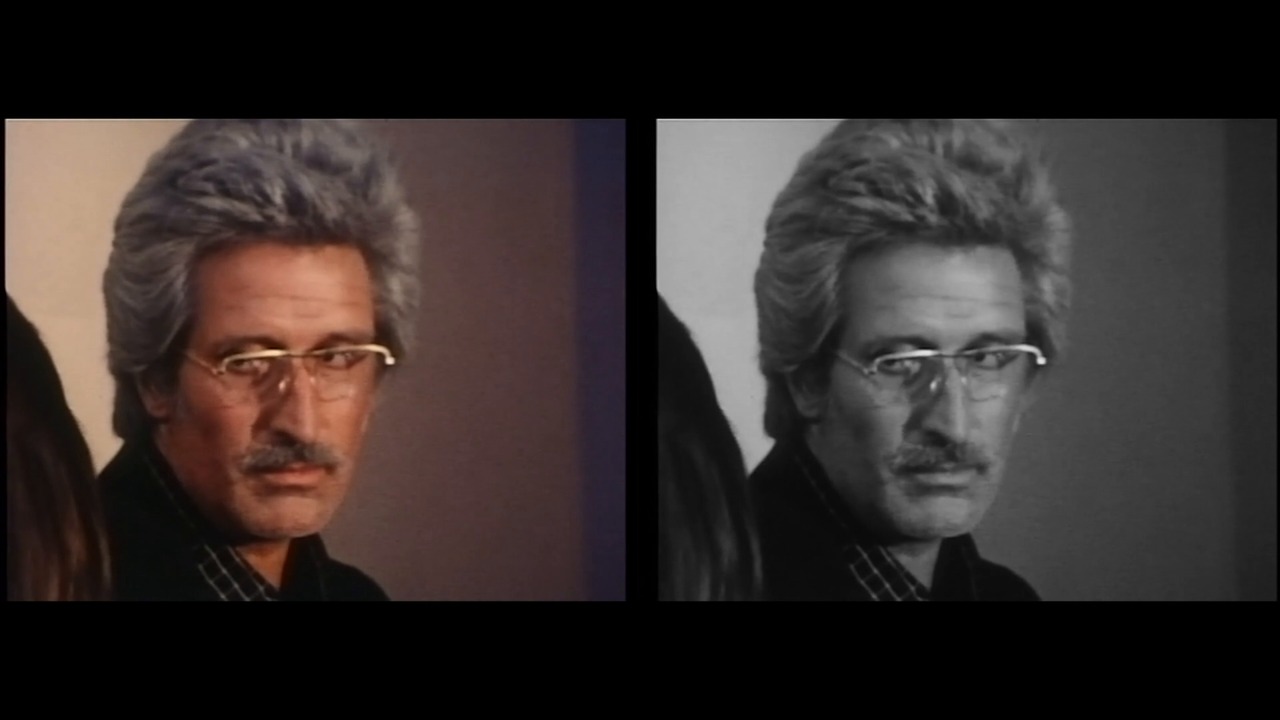
Cozzi recalls RAI requiring Door into Darkness to be photographed in colour for future use, while the filmmakers tested how those images would read on black-and-white television. He regards the monochrome presentation as closer to their initial intention. The interview’s comparisons demonstrate his argument rather than establishing a newly discovered alternate cut. Colour photography, first transmission and later colour circulation are separate parts of this programme’s history; the most colourful surviving image is not automatically the closest match to its first audience’s experience.
Source & passage
On the Other Side of the Door, 20:47–24:21. Presented on Disc 2 of Severin Films’ Dario Argento’s Deep Cuts.
Follow the source discussion → · Documentary and interview guide →
THE READING ROOM
Return to the source.
A synthesis of the completed dossier research. The notes identify the evidence and the scope of its earlier examination.
- 01
Arrow — Deep Red booklet ↗
Credits pp. 4–5; Nicolodi quoted by Alan Jones p. 17; restoration p. 56. Relevant spreads; discs and supplements unreviewed.
Return to the essay ↑ - 02
Filmportal — Das Geheimnis der schwarzen Handschuhe ↗
Production, crew, literary-source entries, filming dates and separately catalogued versions. Institutional compilation.
Return to the essay ↑ - 03
Dario Argento with Michele De Angelis / Keyframe ↗
Questions on first-day preparation, memory and colour conventions, and the later 2:1 presentation. Retrospective testimony.
Return to the essay ↑ - 04
Arrow Films — Limited Edition 4K UHD ↗
Named UHD specifications, synopsis and supplement list. This clearer record supersedes the first edition’s ambiguous product listing.
Return to the essay ↑ - 05
Arrow — Phenomena limited-edition Blu-ray ↗
Version labels, hybrid language track, restoration statement and supplement inventory.
Return to the essay ↑ - 06
Severin — Opera, three-disc UHD ↗
Label specifications for cuts, ratios, audio and scanning; supplement list.
Return to the essay ↑ - 07
BBFC — Terror at the Opera ↗
Dated UK classifications, submitted durations and displayed cut flags.
Return to the essay ↑
KEEP EXPLORING
One film opens another.
Explore the films and collaborators → · Visit the Reading Room → · Find a piece for your collection →