THE READING ROOM / 002 · EXPANDED ESSAY
Music and soundFollow the work behind the cue.
Gaslini and Goblin, Emerson’s orchestral timing, Tenebrae’s electronics and Phenomena’s many contributors: four routes beyond the familiar soundtrack name.
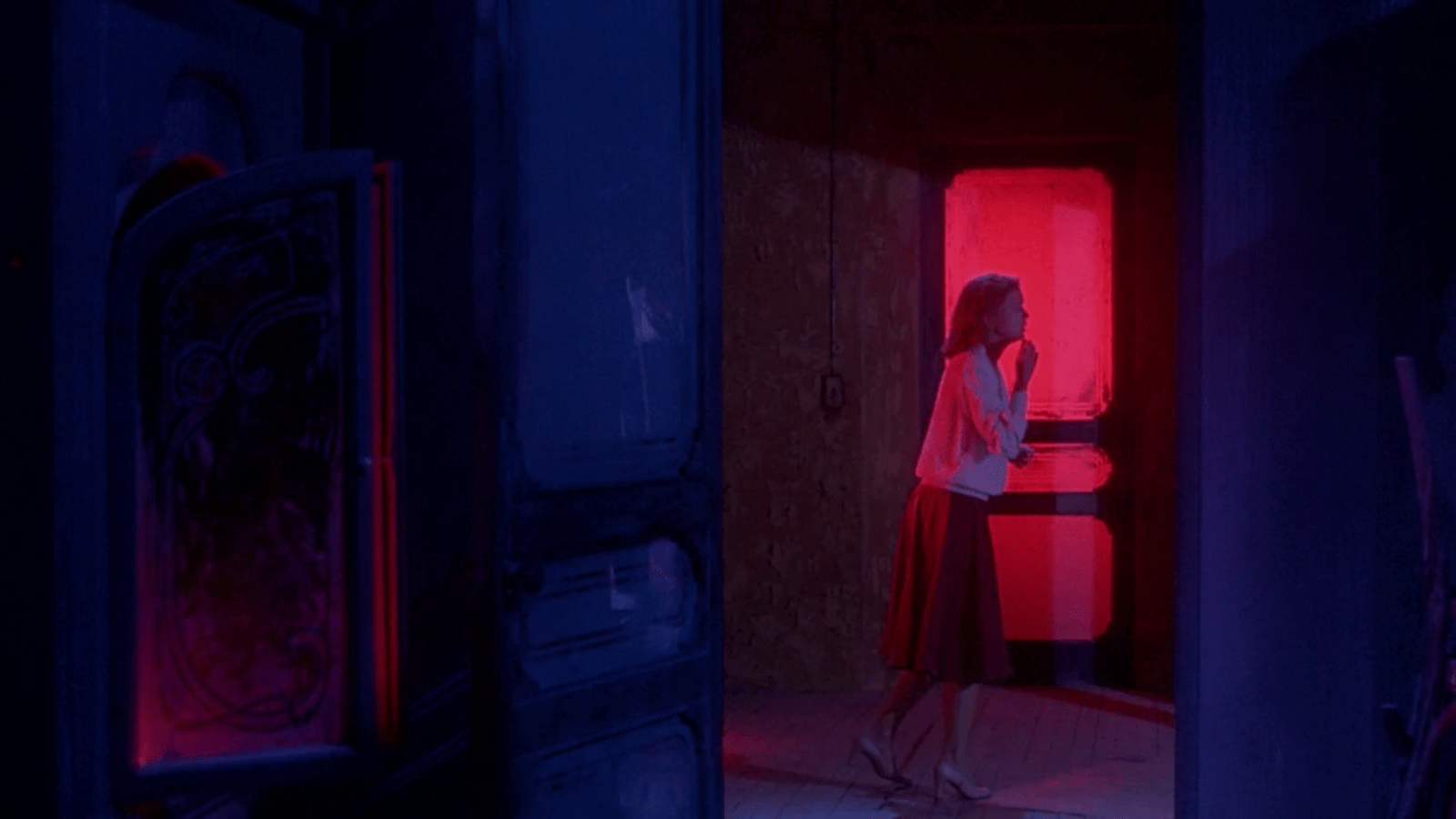
ACROSS THE FILMS
A memorable theme can become the public identity of a film’s sound. Yet the finished soundtrack joins composition, performance, selection, editing, dialogue and effects. Following those jobs makes the music more interesting: we can hear a famous name as the beginning of an investigation into how the film was assembled.
01 / Deep Red
The commission changes; earlier work remains.
Claudio Simonetti’s 2018 Rolling Stone Italia interview describes Goblin initially being asked to perform Giorgio Gaslini’s music in the group’s style. After Gaslini’s departure, earlier material remained and Goblin supplied further music. Simonetti attributes the child’s song to Gaslini. Simonetti on Gaslini and Goblin ↗
This account gives us a more useful model than a single replacement story. Work by different contributors can survive in the same finished film, with contrasting musical identities becoming part of its expressive range. Recognising Gaslini’s contribution also changes what it means to call Deep Red a Goblin score: the shorthand points to a major achievement while leaving some of the soundtrack’s authorship outside its frame.
The Deep Red dossier connects the music with the narrative’s childhood material and contested memories. This essay’s narrower concern is how a commission becomes a composite work.
02 / Inferno
Freedom still has to meet the picture.
In the September 1980 Contemporary Keyboard interview, Emerson discusses timing music against video and working without a click track. Godfrey Salmon’s orchestral role is central to the account. The original printed pages 19–20, examined for the Emerson study, preserve a near-contemporary description of practical coordination. Dominic Milano’s interview and adjacent letter ↗
A score may offer a composer considerable invention while still having to reach particular dramatic moments. That tension is productive. A phrase, a held orchestral gesture or a return to a theme must be placed within time that other departments have helped create.
It also redirects attention towards the conductor. The familiar composer credit identifies the author of music; it does not make all the labour of synchronisation visible. Following the timing problem is one way to recover collaboration without turning a collaborator’s job title into a claim about every cue.
03 / Tenebrae
A change of personnel becomes a change of sound.
Simonetti’s OndaRock interview explains the Simonetti–Morante–Pignatelli credit through the history of the Goblin name and line-up. He describes electronic drums, with orchestral timpani played by Walter Martino, and relates the approach to his dance-music experience. Simonetti on the Tenebrae project ↗
The interest of this account lies in the meeting of an administrative fact and an artistic choice. A group name has a particular history; musicians also arrive with changing interests and tools. Calling the result simply another Goblin soundtrack risks overlooking both. The Tenebrae dossier preserves the named credits and the film’s electronic musical context.
For a comparative reading, this prevents a neat opposition between rock and orchestral film music from doing too much work. Different instruments, performers and production methods can coexist inside the same career, and within a single soundtrack. What matters is the particular arrangement of work and sound.
04 / Phenomena
The soundtrack continues after composition.
Simon Boswell identifies Phenomena as his first film in his interview with Gavin Schmitt. His discussion of Argento’s musical preferences and licensed songs helps place the director’s selection of music alongside the labour of composition. It should not be used to assign Boswell every passage in a film with several contributors. Boswell on working with Argento ↗
The BFI programme’s compiled credits make further work visible: Piero Bozza is listed for music editing, Nick Alexander for sound editing, Danilo Sterbini for re-recording and Studio Anzellotti for stereo effects. A credit establishes a named responsibility, without telling us who made each individual audible decision. Phenomena’s compiled credits ↗
These distinctions matter because the soundtrack encountered during a film is an arrangement of relationships. Music has to share time and attention with speech, physical action and atmosphere. A soundtrack album presents a different arrangement for a different purpose. Its track titles and sequence can guide research, but they cannot by themselves establish the placement or duration of music in the film.
05 / Hear the collaboration
More than a soundtrack name.
Across these films, music emerges from changing combinations of composition, performance, selection, editing and mixing. Gaslini’s child’s song, Goblin’s group identity, Emerson and Salmon’s coordination, and Boswell’s entry into film music make those different forms of work audible in the history of the scores.
The soundtrack album gives that music a second life, with its own sequence and emphasis. The film places it among voices, movement and atmosphere. Following both leads to a richer understanding of the collaborators and the worlds they create.
Continue with Versions and restoration to explore the languages and mixes that carry those worlds from one edition to another.
FOLLOW THE CONNECTIONS
Another way in.
Follow another theme, then return to the film dossiers and collaborator studies.
DEEP CUTS / TESTIMONY & CONNECTIONS
Before the picture, during it, or after it.
Dario Argento; the documentary’s Foley workshop
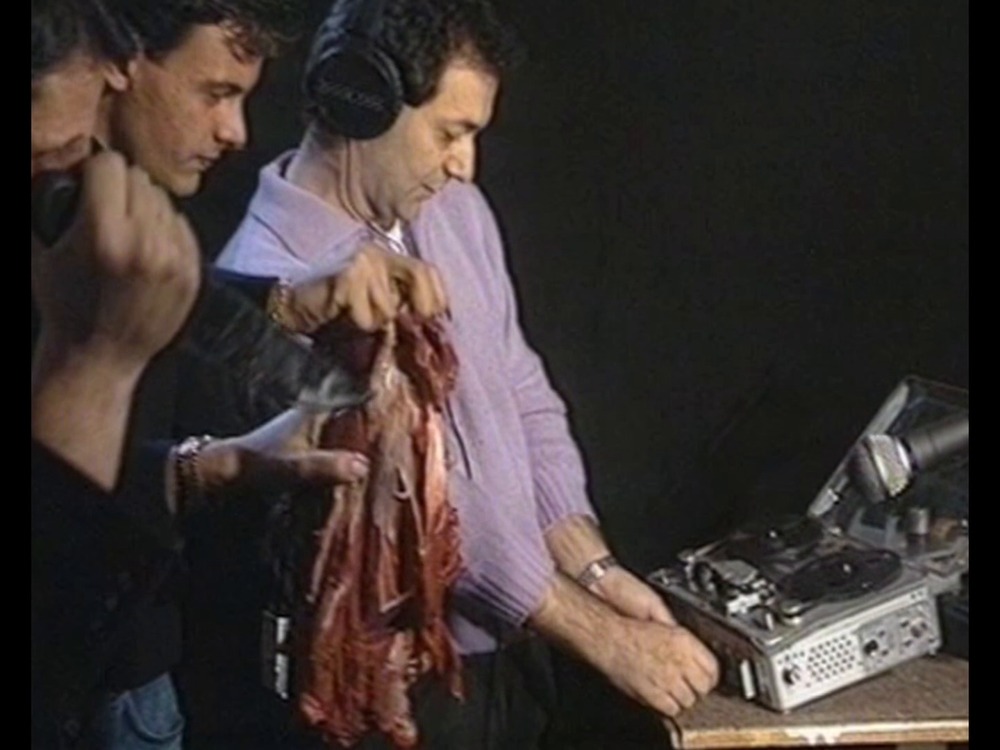
The Foley workshop turns physical materials into recorded actions: handling, cutting and impact become work performed near a microphone. Argento then distinguishes music composed before filming, during production and after the images are complete. He favours the first two because music can help form an image or give the work its musicality, rather than simply arrive to accompany it. The sequence places score and effects beside one another as different kinds of construction, each able to change how a visible action is experienced. A further link emerges in Cozzi’s television interview: he says he suggested Gaslini for Door into Darkness after hearing The Sisters. Argento’s own interview follows that collaboration into The Five Days and Deep Red. These accounts extend the story of the Deep Red commission backwards into the series.
Source & passage
Dario Argento: Master of Horror, 47:19–52:26; On the Other Side of the Door, 20:02–20:46; A Streetcar Named Fear, 10:45–11:38. Presented on Disc 2 of Severin Films’ Dario Argento’s Deep Cuts.
Follow the source discussion → · Documentary and interview guide →
THE READING ROOM
Return to the source.
A synthesis of the completed dossier research. The notes identify the evidence and the scope of its earlier examination.
- 01
Rolling Stone Italia — Claudio Simonetti interview, 17 July 2018 ↗
Gaslini, commission, rhythm and timetable answers. Participant recollections remain attributed; no recording-session documents examined.
Return to the essay ↑ - 02
Dominic Milano / Contemporary Keyboard — Keith Emerson ↗
September 1980. Original scanned cover and printed pp. 19–20 visually inspected (PDF pp. 1, 5–6). Interview and adjacent open letter distinguish timing, orchestration and instruments. A contemporary participant account, not session paperwork.
Return to the essay ↑ - 03
Michele Savoldi / OndaRock — Claudio Simonetti ↗
Passages on solo work and early computer use inspected in Italian. Working recollections; not a session log or direct listening study.
Return to the essay ↑ - 04
Gavin Schmitt — interview with Simon Boswell ↗
Passages identifying Phenomena as his first film and discussing Argento’s musical preferences and licensed songs. General practice is not treated as a film-specific contract.
Return to the essay ↑ - 05
BFI Southbank — Phenomena programme and compiled credits ↗
May 2023 programme, credit compilation and Kevin Lyons’s essay dated 27 October 2018. Credit roles and selected narrative/critical passages; not a new screen-credit transcription or contemporary review.
Return to the essay ↑
KEEP EXPLORING
One film opens another.
Explore the films and collaborators → · Visit the Reading Room → · Find a piece for your collection →