COLLABORATORS / 005 · EXPANDED STUDY
Keith EmersonThe picture sets the time.
Inside the making of Inferno’s score: musical freedom, orchestral timing, transformed sounds and the difference between an album and a film.
THE COLLABORATOR STUDY
A film composer works with another kind of clock. A phrase must find a shape of its own while meeting an event already taking place on screen. Keith Emerson’s accounts of Inferno make that negotiation unusually tangible: freedom in choosing the music, discipline in bringing it to the picture.
01 / The commission
A new problem to compose.
Emerson’s account to Malcolm Dome begins with a desire to write for film, rather than a particular commitment to horror. He remembers receiving Argento’s difficult script and being caught by the episode involving cats and rats. The anecdote makes a useful distinction: accepting the job did not require fully explaining the story. A forceful incident could already suggest a musical problem. The composer’s recollection ↗
The collaboration matters because it puts a recognisable musician inside a work whose organising intelligence is shared. Emerson’s name helps a soundtrack circulate independently, but the film also gives the music its situations, pressures and interruptions. Following him into Inferno means following the decisions that connect those two forms of authorship.
The testimony is strongest when treated at its actual scale. It tells us how Emerson later understood his invitation and response. Return to the film’s Emerson chapter →
02 / Orchestration and timing
Freedom still has a deadline.
In Dominic Milano’s September 1980 interview, Emerson says the score was recorded without a click track. Godfrey Salmon conducted; Emerson had composed with video and knew the points the music needed to meet. The accompanying open letter describes working with Salmon on orchestration after preparing rough music against the film. Contemporary Keyboard, p. 19 ↗
His 2015 conversation with Anil Prasad again describes rehearsing the orchestra and adjusting pace to meet the picture. Salmon remains central to that account. The repeated description supports a collaborative timing method, although it does not identify the takes used in the final mix. The later recording account ↗
This makes the conductor part of the dramatic mechanism. Timing is not just a deadline imposed after composition: it is a relationship negotiated in performance. A musical line can move toward a visual event, and the event can determine how much room the line has. That is our reading of the described process, rather than a measured account of any one synchronisation.
03 / Instruments and intention
The sound is not the object.
Milano also asks about particular sounds. Emerson identifies the Korg 3100 as the bell-like voice in “Taxi Ride” and describes the organ sound in “Mater Tenebrarum” as a Korg routed through chorus and echo. He says he wanted a romantic approach associated with earlier Dracula films, and found a female choir effective in horror. The instrument and intention answers, pp. 19–20 ↗
Those details complicate the shortcut of calling the score simply electronic or orchestral. A keyboard can suggest a bell or an organ without being either acoustic object; processing changes its apparent size and setting. The research question becomes how a sound is made to function, not merely which instrument is named on a sleeve.
Cinevox’s CD description separately names Linda Lee as the performer of “Mater Tenebrarum”. That is a useful performer credit, but it does not by itself supply the complete vocal or orchestral personnel. The label’s credit ↗ Credits and the composer’s technical testimony answer different parts of the question.
04 / Quotation and memory
A melody with two accounts.
Emerson’s 2013 Hit Channel answer says Argento queried the presence of Verdi; he pointed to “Taxi Ride” and its 5/4 treatment. The page supplies “Va, pensiero” in an editorial parenthesis. In Prasad’s 2015 interview, Emerson instead names Verdi’s Requiem while telling a similar story. The 2013 wording ↗ The 2015 wording ↗
The shared point is an account of transforming borrowed material until its source was less immediately recognisable. The differing title is worth retaining. A vivid story can survive while a detail changes, and an editor’s identification can enter circulation as though it were the musician’s own statement.
The next useful step is small: compare the relevant written music, film cue and identified recording. It does not turn either interview into a conclusive musical identification.
05 / Beyond the finished score
Composed, used, released.
Cinevox describes its 1997 Inferno CD as adding a previously unpublished track. An album can therefore expose material beyond an earlier release without proving how it functioned in the film. The reissue description ↗ An expanded track list is a release history, not a cue sheet.
A later commission makes the distinction explicit. In the short Homenick interview, Emerson says he had about two weeks for his contribution to Godzilla: Final Wars, did not compose the entire score and wrote more music than the final cut used. A composer’s account of selection ↗
The useful route through Emerson’s work follows three objects: what was composed, what the film used and what listeners could buy separately. Each can preserve something the others omit. On Argentochrome, the Inferno dossier supplies the larger narrative and production context; the Fraticelli study follows another craft through which duration becomes dramatic form.
FOLLOW THE CONNECTIONS
Another way in.
Follow the people across films, then return to the evidence for each contribution.
Ferdinando Armati
A world at another scale.
Read the study →WRITING & PERFORMANCEDaria Nicolodi
A voice inside the work.
Read the study →CINEMATOGRAPHYLuciano Tovoli
Colour is a decision.
Read the study →PRODUCTION DESIGNGiuseppe Bassan
The room is part of the story.
Read the study →EDITINGFranco Fraticelli
Time becomes a point of view.
Read the study →THE READING ROOM
Return to the source.
Source record reviewed 18 October 2026. Credits, recollections, criticism and material evidence retain their different scopes.
- 01
Dominic Milano / Contemporary Keyboard — Keith Emerson ↗
September 1980. Original scanned cover and printed pp. 19–20 visually inspected (PDF pp. 1, 5–6). Interview and adjacent open letter distinguish timing, orchestration and instruments. A contemporary participant account, not session paperwork.
Return to the study ↑ - 02
Anil Prasad / Innerviews — Meshing Sonorities ↗
Copyright 2015. Written Inferno answers and film-composition discussion. Later recollection: the Verdi title differs from the 2013 account.
Return to the study ↑ - 03
Hit Channel — Keith Emerson interview ↗
28 December 2013, by thodoris. Inferno answer. Emerson names Taxi Ride and 5/4; the identification of the Verdi melody is an editorial parenthesis, not his quoted title.
Return to the study ↑ - 04
Malcolm Dome / Louder — Emerson remembers Inferno ↗
Inferno questions read in the film-dossier research; web republication dated 7 July 2026. The original interview date is not established. Script and premiere stories remain recollections.
Return to the study ↑ - 05
Cinevox — Inferno, CDMDF306 ↗
Label description preserved in the Inferno research: 1997 CD, composer credit, Linda Lee and a previously unpublished track.
Return to the study ↑ - 06
Brett and Erik Homenick — Keith Emerson interview ↗
Published by Brett Homenick, 25 May 2010, who dates the interview approximately three years earlier. Answers on Godzilla: Final Wars. Emerson explicitly limits his contribution to part of the score.
Return to the study ↑ - 07
Film at Lincoln Center — Inferno ↗
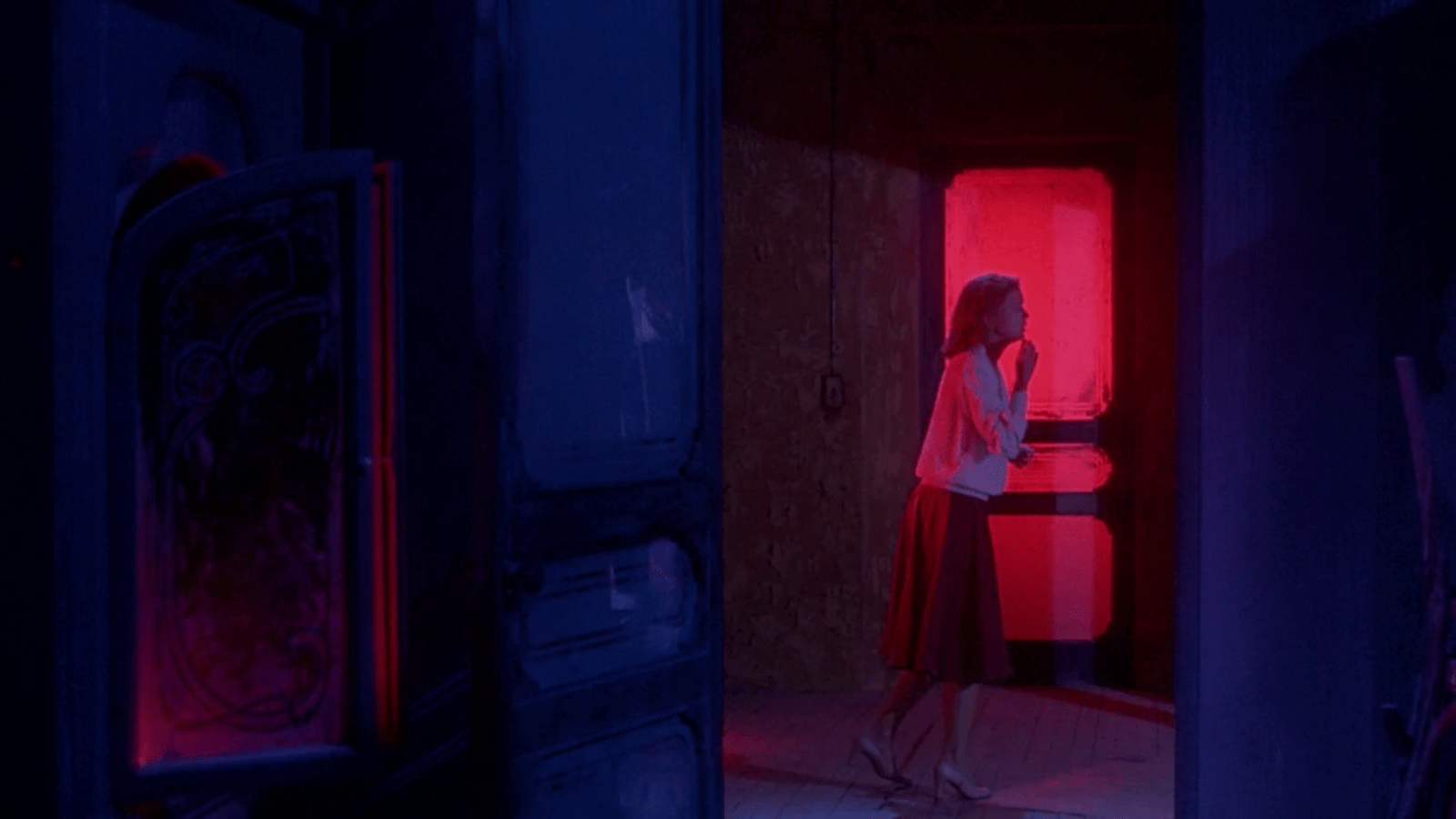
2022 retrospective programme and existing 1600 × 900 film image. Image; no mastering edition, cue placement or sound evidence inferred from it.
Return to the study ↑
KEEP EXPLORING
One film opens another.
Explore the films and collaborators → · Visit the Reading Room → · Find a piece for your collection →