COLLABORATORS / 006 · EXPANDED STUDY
Ferdinando ArmatiA world at another scale.
Phenomena’s insect photography, the scientific-film connection and the specialist work hidden inside a seemingly impossible image.
THE COLLABORATOR STUDY
A small creature can occupy the centre of a film. In Phenomena, insects become evidence, companions and a collective force. The special entomological photography credit opens a route into the practical work that makes this change of scale possible—and into a production with several distinct kinds of expertise.
01 / Reading the credit
Begin with a specific job.
The BFI’s compiled Phenomena credits name Ferdinando Armati for special entomological photography. Romano Albani is the director of photography; Enrico Stella is the entomology consultant. The distinction gives specialist image-making its own place within the larger camera and scientific work. The separate credits ↗ It does not identify every insect insert as Armati’s personal work.
The name also appears as Fernando Armati in the indexed credit text of the first-edition censorship file. The BFI uses Ferdinando for the special entomological photography credit.
The two published name forms help connect the film credit with the wider documentary record.
02 / The scientific-film connection
An image made to reveal.
Enrico Stella’s publisher biography names Fernando Armati as director of RAI’s Pan: i nostri animali visti da vicino, for which Stella supplied scientific work and texts. The same biography records Stella’s consultancy on Phenomena. This is a concrete published connection between scientific television and the film’s specialist circle. Stella’s professional biography ↗
Other records broaden the route under the Fernando spelling. Cinematografo lists him among the photographers of L’incanto della foresta. Anna Osellame’s 2007 tribute describes his collaboration with Alberto Ancilotto and names entomological documentaries. The catalogue credit ↗ The documentary context ↗
The connection suggests a productive question: what changes when an image intended to reveal animal behaviour enters a supernatural fiction? The same attention to small movements can serve explanation, suspense or wonder.
03 / Working with insects
Behaviour cannot follow a script.
In Jamie Graham’s interview, Argento distinguishes waiting for insect behaviour from working with a trained chimpanzee. Argento’s account of filming animals ↗ The recollection identifies a practical constraint without documenting the handling of every creature. It leaves room for the expertise of people who understand what can be photographed, when it may occur and how to make it legible.
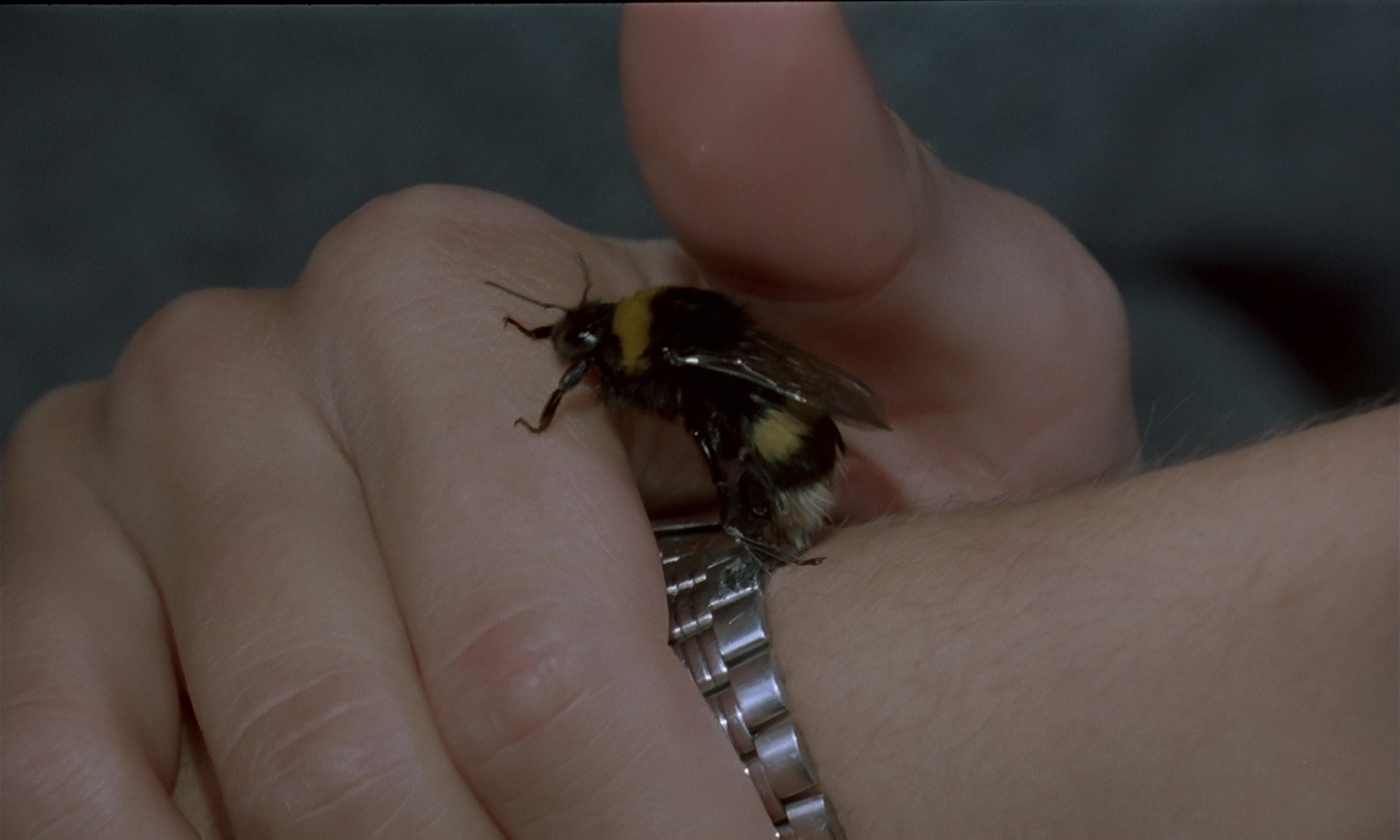
Our reading of the published frame above begins with what it actually shows. Fingers and a ring provide an immediately recognisable scale; the insect’s body becomes large enough to study. The proximity can feel intimate before the wider fiction tells us what that intimacy means.
That change in attention is central to this collaborator study. A specialist credit asks us to notice the work needed to bring a small subject into the viewer’s field of concern. The effect is dramatic even when the photographed creature is doing nothing supernatural.
04 / Several kinds of image-making
A creature is not a swarm.
Armati’s photography credit sits alongside Luigi Cozzi’s special optical effects and Sergio Stivaletti’s special makeup effects. The other departments ↗ Those categories should remain visible when the finished film appears to present a single impossible event.
Stivaletti’s 2015 account describes washed coffee particles in a narrow aquarium, photographed at high contrast and combined through optical work to create moving swarms. His 2017 interview again describes the technique alongside real flies. The two accounts differ about how the idea arose. The 2015 method ↗ The 2017 recollection ↗ The repeated process is more secure than a single tidy invention story.
Specialist photography and optical effects address different problems: an individual insect, a crowd of living creatures and a manufactured swarm. Together, their results build the illusion.
05 / From evidence to fantasy
What the small image can carry.
In Phenomena, insects do not have one stable narrative function. They belong to an investigation and to Jennifer’s extraordinary affinity with the natural world. Our critical reading sees a tension between those uses: a creature can help make the world intelligible and also draw it beyond ordinary explanation. Specialist photography provides a material presence within that fantasy; it does not certify the fantasy as science.
The hand-and-insect frame concentrates the study on scale, touch and attention. A small creature becomes the centre of the image and a direct partner to the performer.
Continue through Phenomena’s specialists chapter for the surrounding effects accounts, the full dossier for versions and narrative context, and Franco Fraticelli’s study for another stage in the construction of screen relationships.
FOLLOW THE CONNECTIONS
Another way in.
Follow the people across films, then return to the evidence for each contribution.
Keith Emerson
The picture sets the time.
Read the study →WRITING & PERFORMANCEDaria Nicolodi
A voice inside the work.
Read the study →CINEMATOGRAPHYLuciano Tovoli
Colour is a decision.
Read the study →PRODUCTION DESIGNGiuseppe Bassan
The room is part of the story.
Read the study →EDITINGFranco Fraticelli
Time becomes a point of view.
Read the study →THE READING ROOM
Return to the source.
Source record reviewed 18 October 2026. Credits, recollections, criticism and material evidence retain their different scopes.
- 01
BFI Southbank — Phenomena credits ↗
19 May 2023 programme. Compiled credits distinguish specialist photography, consultation, optical effects, makeup and editing. It uses Ferdinando Armati. The adjacent Kevin Lyons essay is separate critical material.
Return to the study ↑ - 02
Cinecensura — Phenomena, first-edition file ↗
Indexed credit text gives FERNANDO ARMATI under riprese speciali entomologiche. Used only as a flagged name lead, not as a fully verified scan or production history.
Return to the study ↑ - 03
Susil Edizioni — Enrico Stella, author biography ↗
Publisher biography. Describes Stella’s Phenomena consultancy and work on RAI’s Pan with director Fernando Armati. This establishes the published connection.
Return to the study ↑ - 04
Cinematografo — L’incanto della foresta ↗
Catalogue credit list read: Fernando Armati is one of several credited photographers. This is a route into the documentary career, not proof of which sequences he photographed or a conclusive personal authority record.
Return to the study ↑ - 05
Anna Osellame — Alberto Ancilotto: the spectacle of nature ↗
Text of the 24 May 2007 tribute read through the accessible web record. Describes Fernando Armati’s collaboration with Ancilotto and names documentary projects. Retrospective local research, not camera reports or newly viewed films.
Return to the study ↑ - 06
Jamie Graham / Total Film — Dario Argento: life in pictures ↗
Phenomena answer reread from the preserved film research: the reported forensic inspiration and the distinction between waiting for insects and training an animal. Not independent confirmation of the news story or conditions on every setup.
Return to the study ↑ - 07
Nocturno — Sergio Stivaletti interview ↗
17 April 2015 interview at Cartoons on the Bay. Coffee particles, narrow aquarium and optical-printing passage reread in Italian.
Return to the study ↑ - 08
Valentina D’Amico / Movieplayer — Sergio Stivaletti ↗
26 April 2017. Account of live flies and the simulated swarm compared with the 2015 interview. The technique recurs; its discovery anecdote differs.
Return to the study ↑ - 09
ShotDeck — Phenomena frame catalogue ↗
Existing frame CEST9S8X, catalogue timecode 00:13:35, 1800 × 1080. Visually.
Return to the study ↑
KEEP EXPLORING
One film opens another.
Explore the films and collaborators → · Visit the Reading Room → · Find a piece for your collection →