THE ARGENTO ARCHIVEFILM / COLOUR / SOUND / OBJECTS
ARGENTOCHROME

FILM & TELEVISION / 024 · FILM DOSSIER

Door into DarknessThe familiar room becomes uncertain.

Four mysteries made for television: explore all four episodes through illustrated scene studies and suspense galleries, then explore the anthology’s collaborators, broadcasts, music and rediscovery.

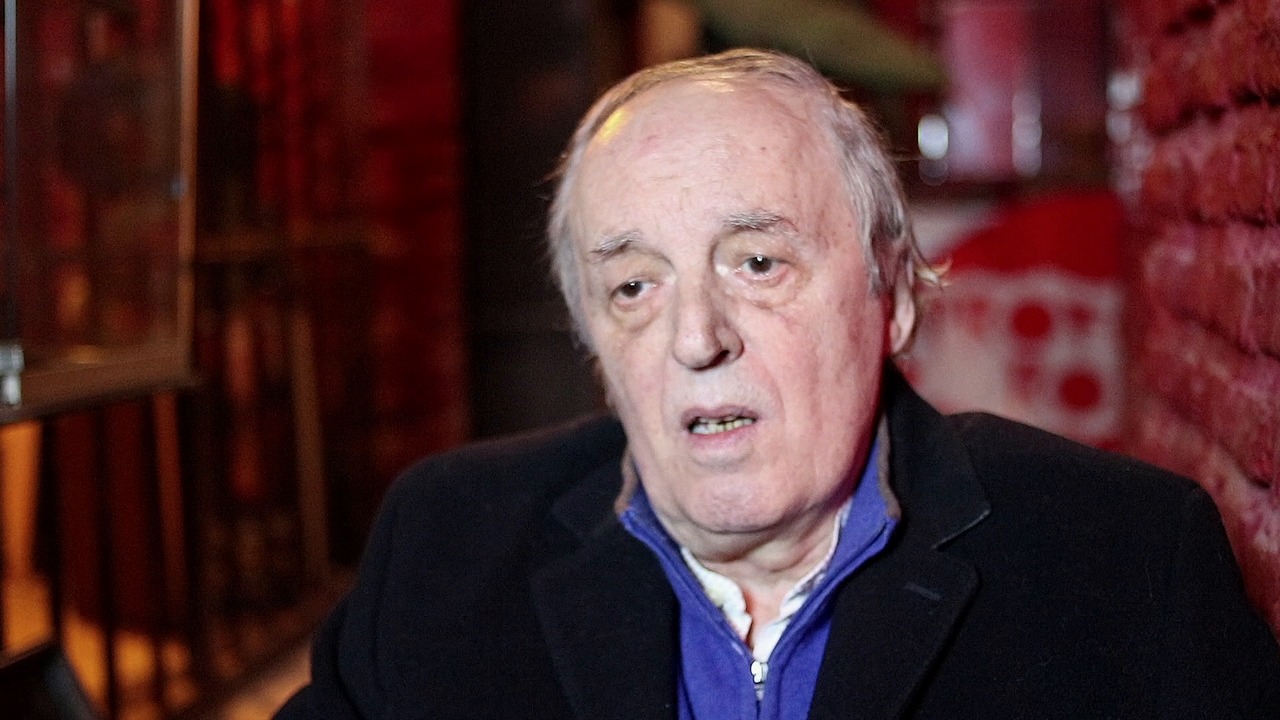
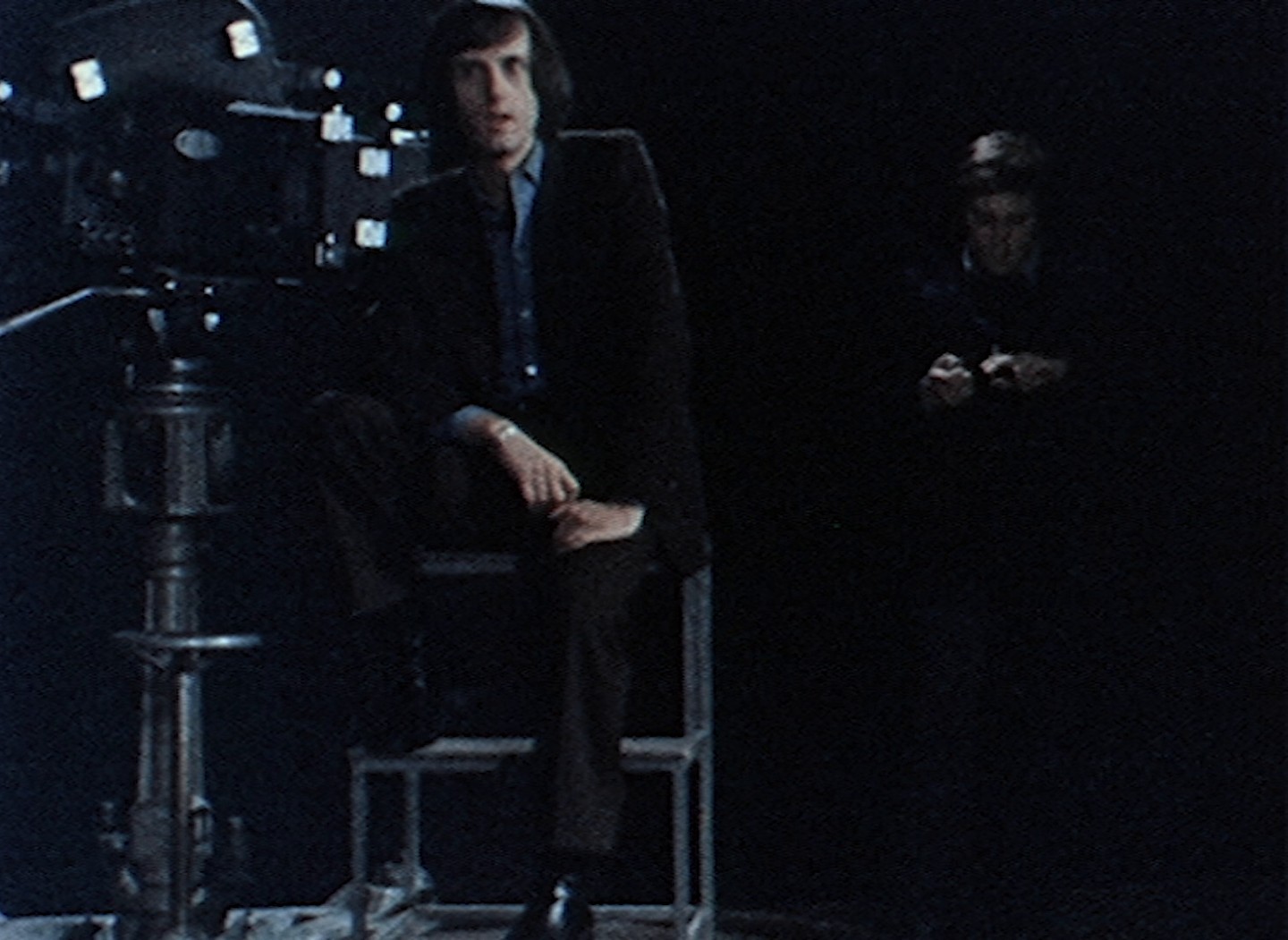
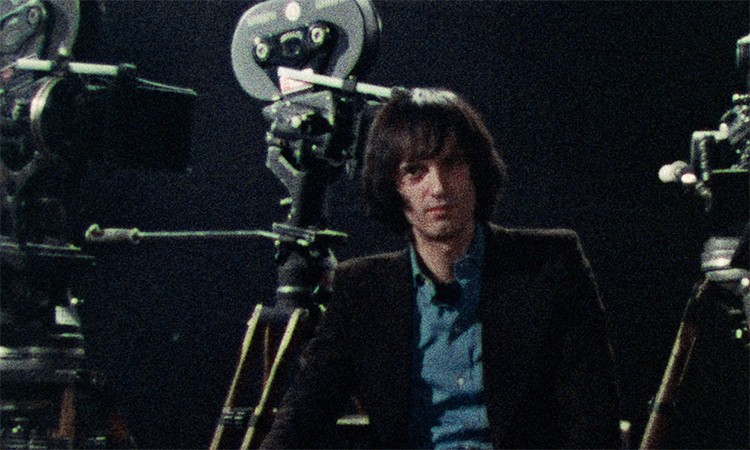
Dario Argento sits in a blue shirt and dark jacket among film cameras, with a large reel and tripod beside him against a dark background.ENLARGE ↗
Published programme image · American Genre Film Archive · original supplied 750 × 450 JPEG, served locally without alteration.American Genre Film Archive ↗
1973 · RAI TELEVISION ANTHOLOGYLa porta sul buio · television anthologyEXPANDED EDITION · 11 NOVEMBER 2026

ENTER THE ANTHOLOGY

Four doors into darkness.

SCENE STUDIES / IL VICINO DI CASA

A home becomes a trap.

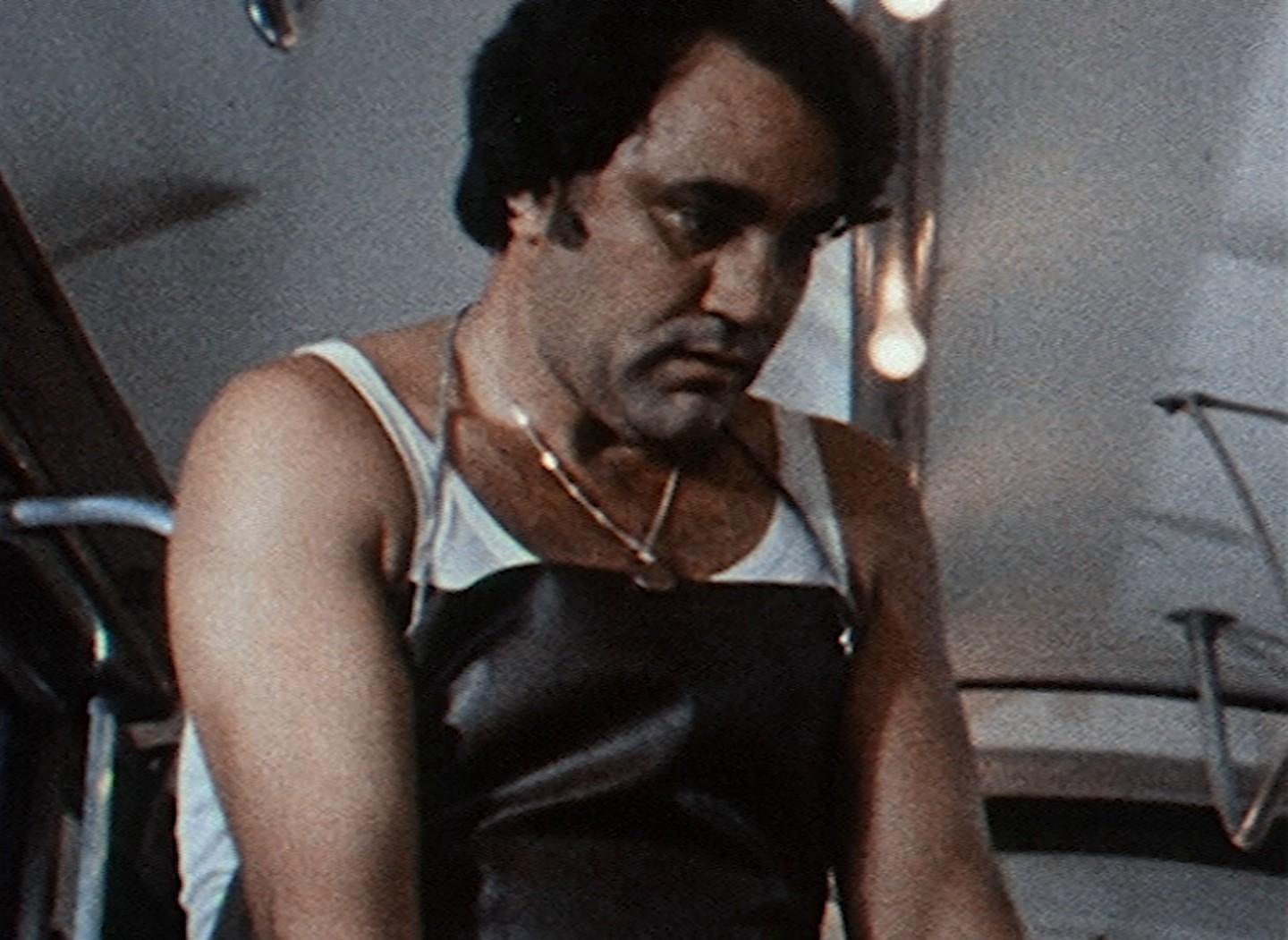
Luigi Cozzi turns a couple’s first night in their new home into a test of floors, doors, windows and the apparently helpful man upstairs. Episode and stills source ↗

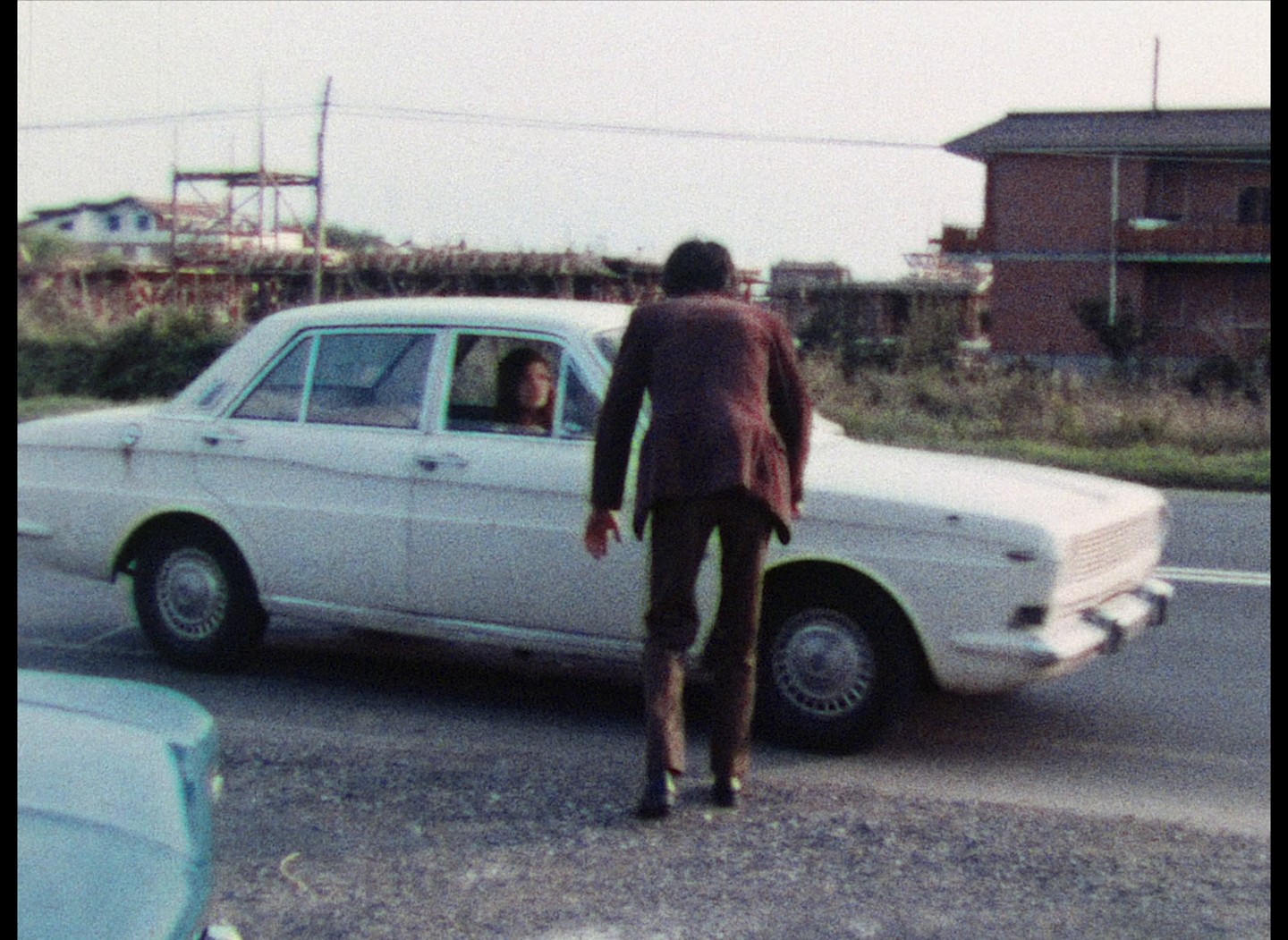
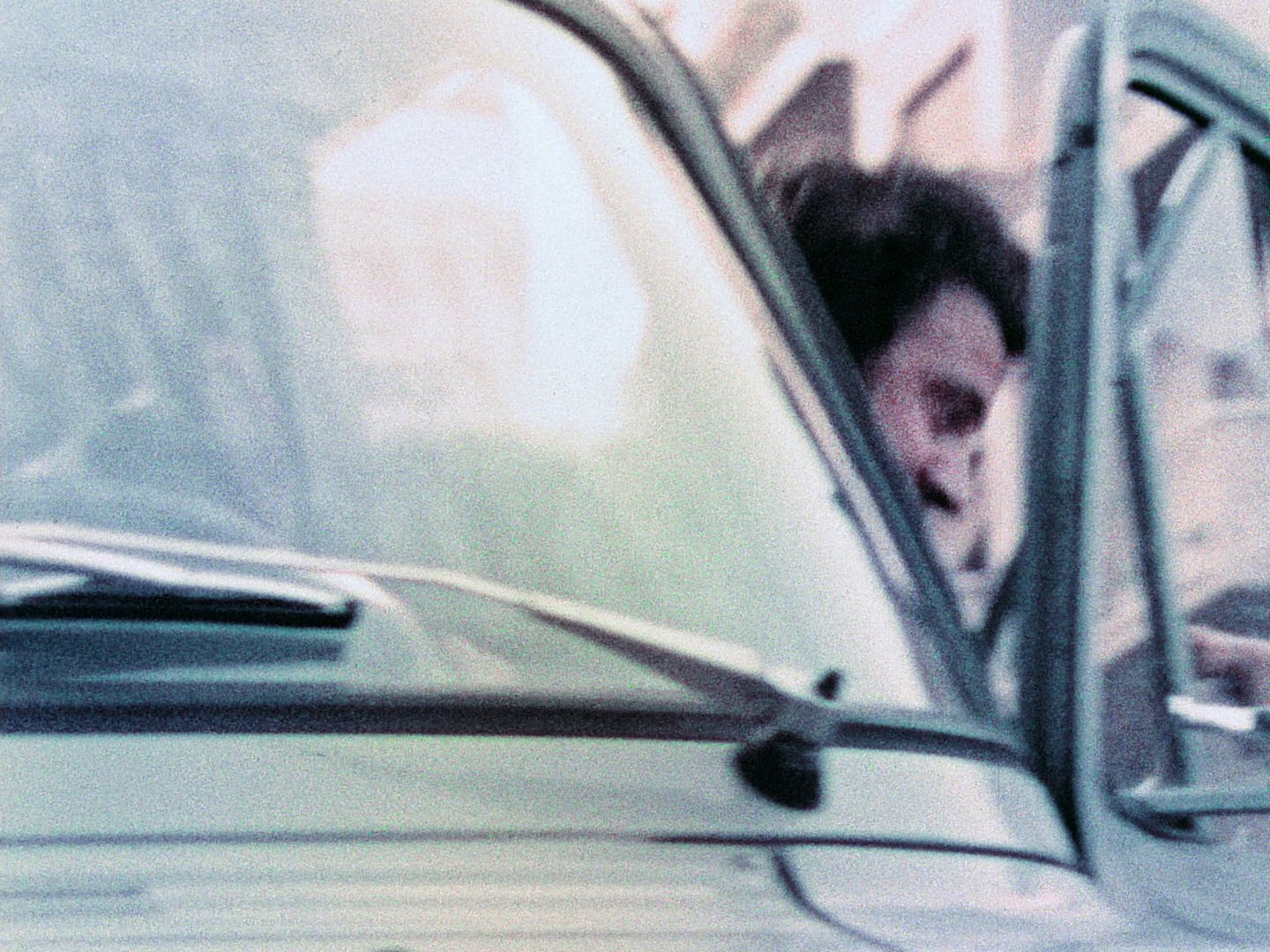
Argento waits beside the country road.

01 / 03:10

The presenter enters the story

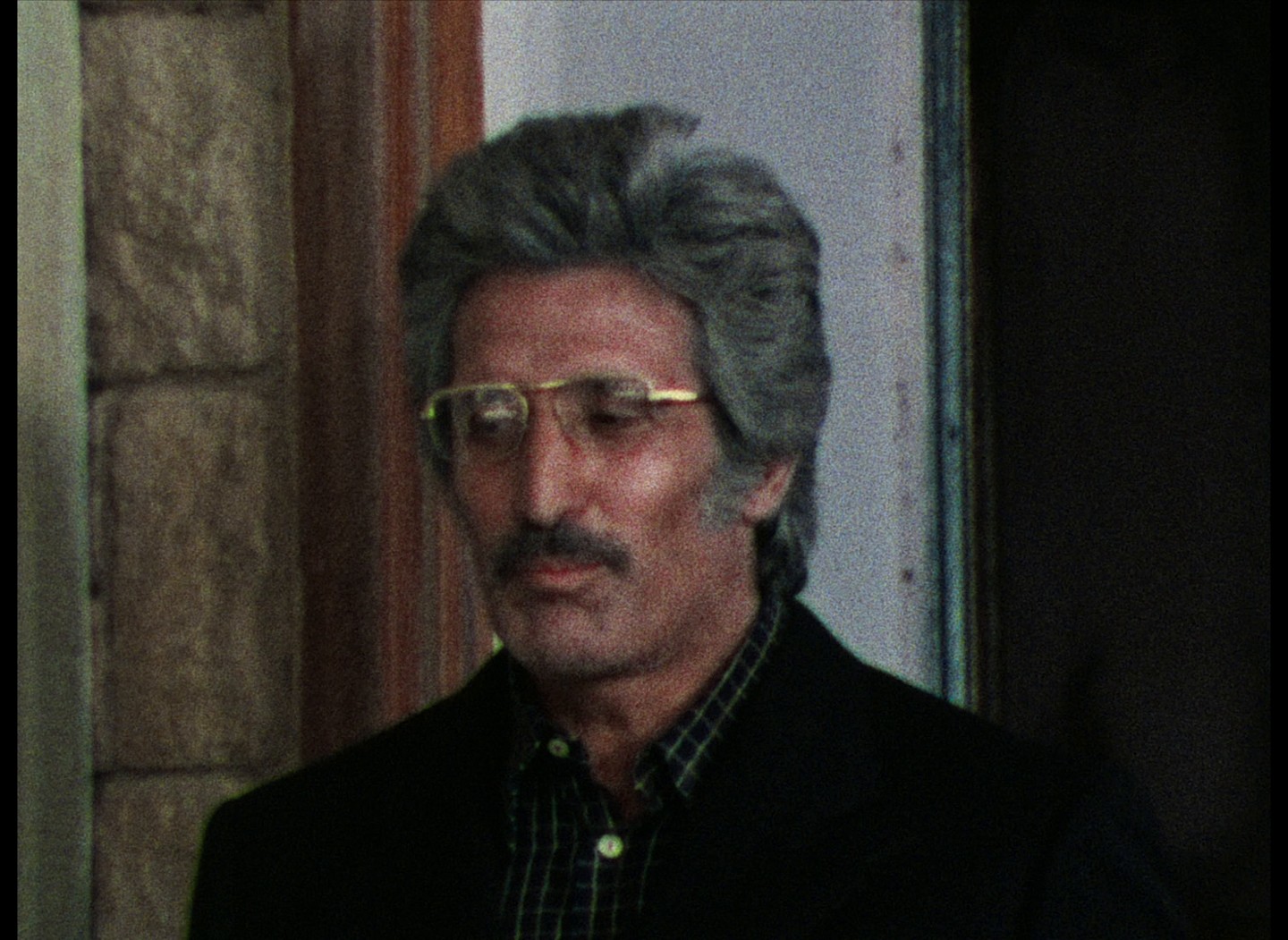
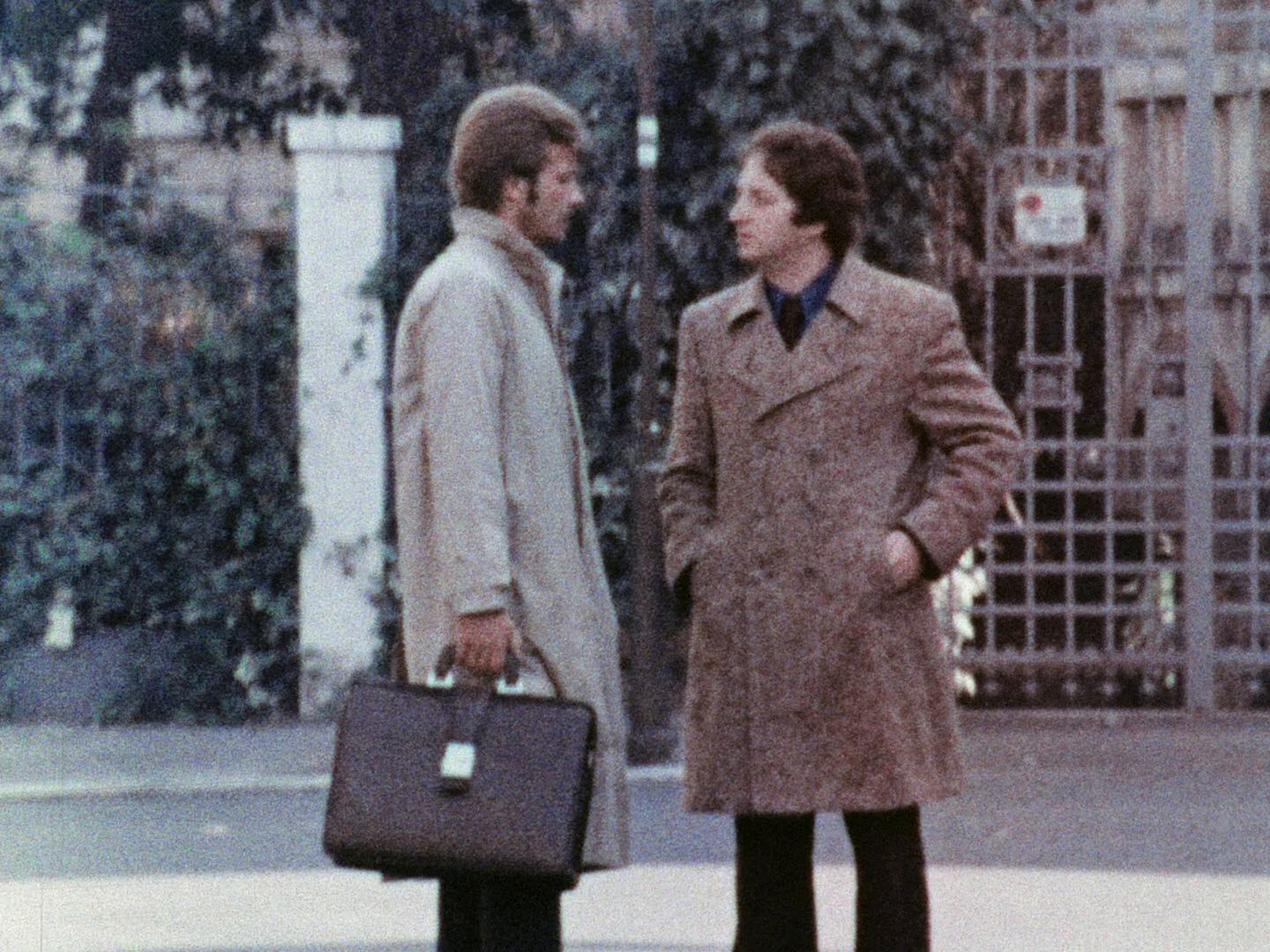
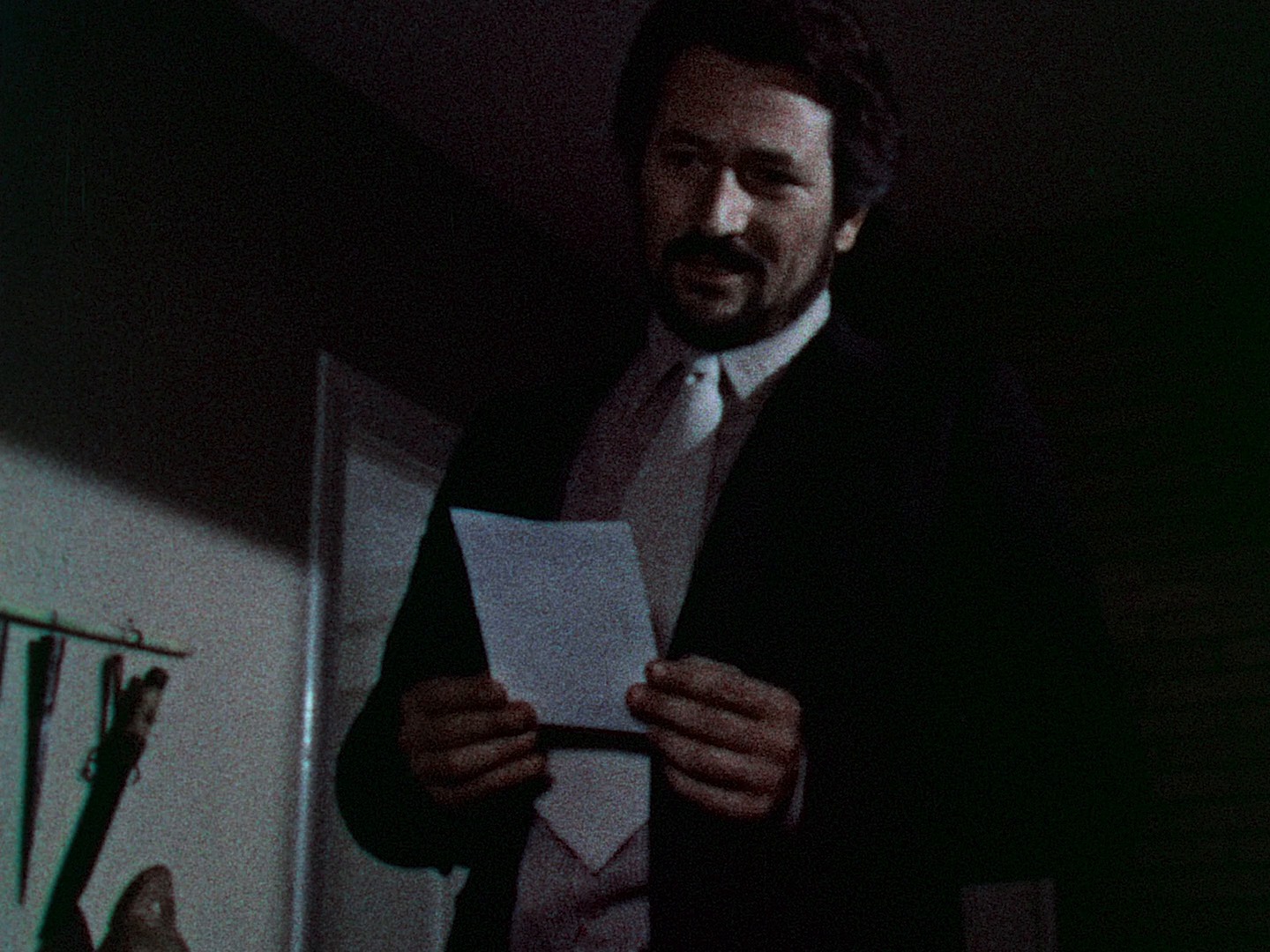
Argento’s introduction leads into a roadside encounter. The young couple give the stranded presenter a lift, allowing the reassuring public face of the anthology to occupy the same landscape as the danger. The crossing from address to fiction makes his departure significant: once the couple reach their new home, they must interpret the place for themselves.

Alberto stands inside the upstairs apartment.

02 / 05:10

The audience arrives before the victims

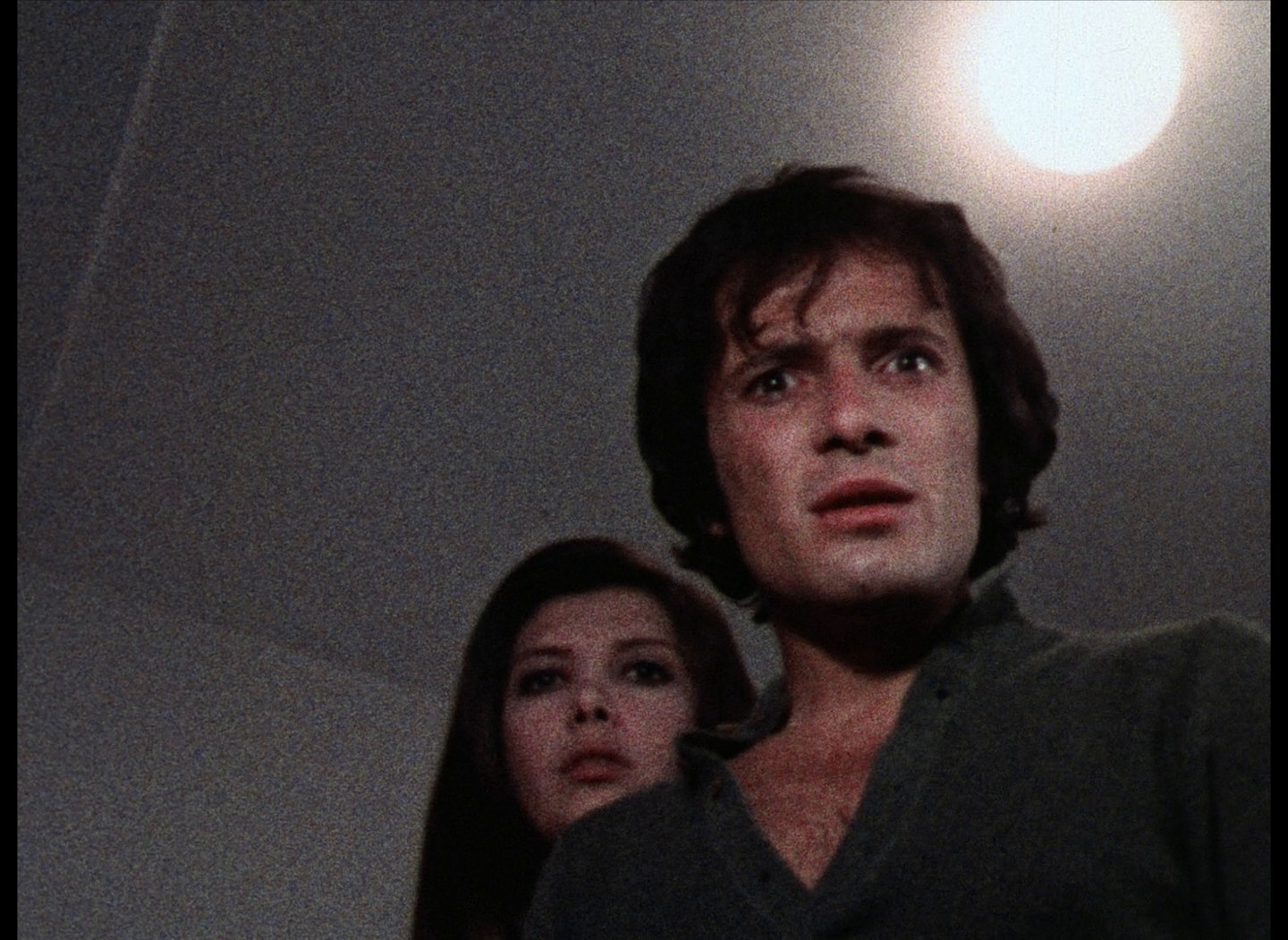
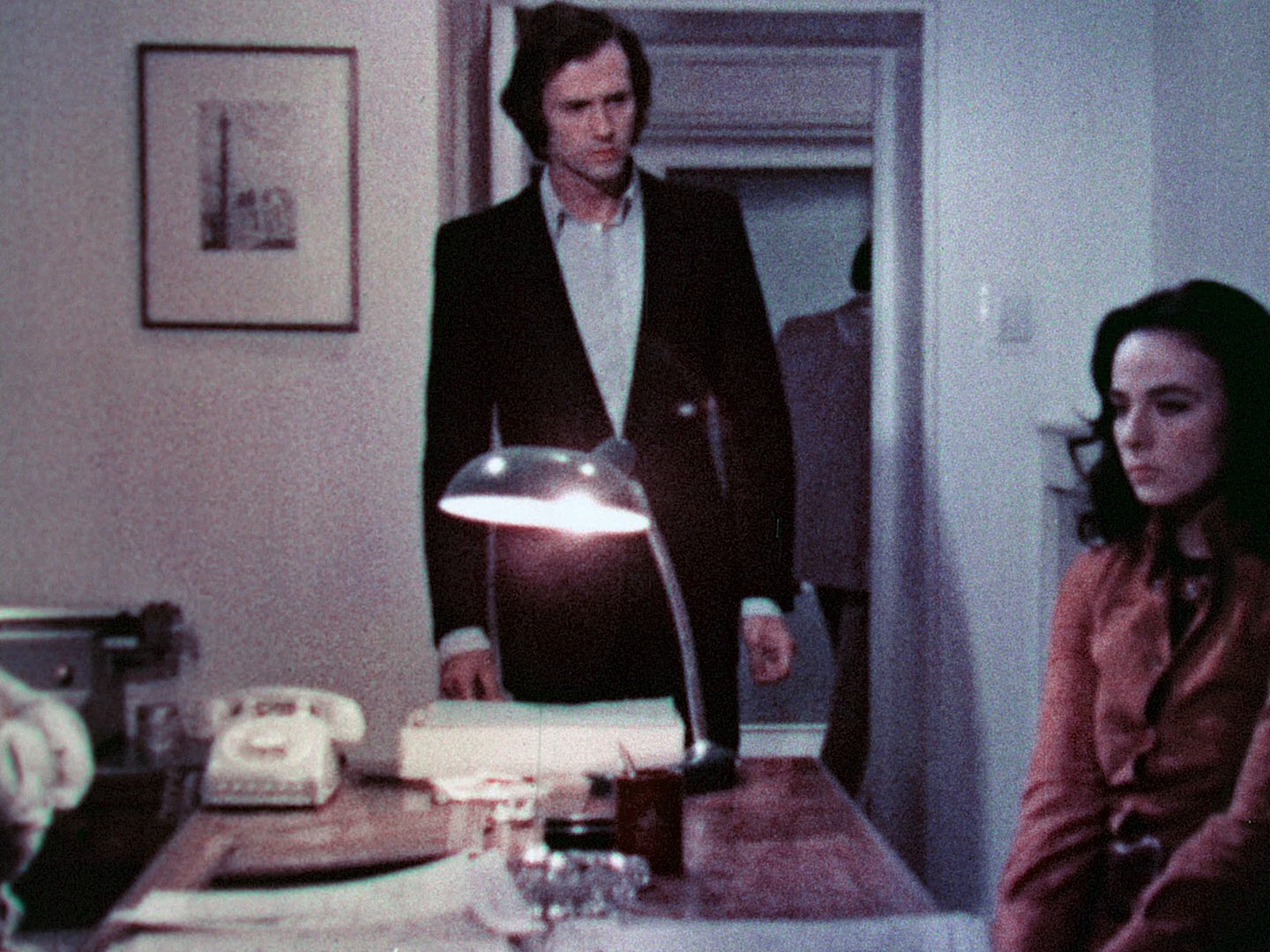
The upstairs neighbour is introduced before Luca and Stefania settle in. A domestic confrontation gives way to images that withhold the violence rather than display its full action. We carry knowledge of a threat into the couple’s arrival. Their ordinary questions about the building therefore have a second meaning for the viewer.

The couple settle into the isolated house.

03 / 09:00

A new home with no easy exit

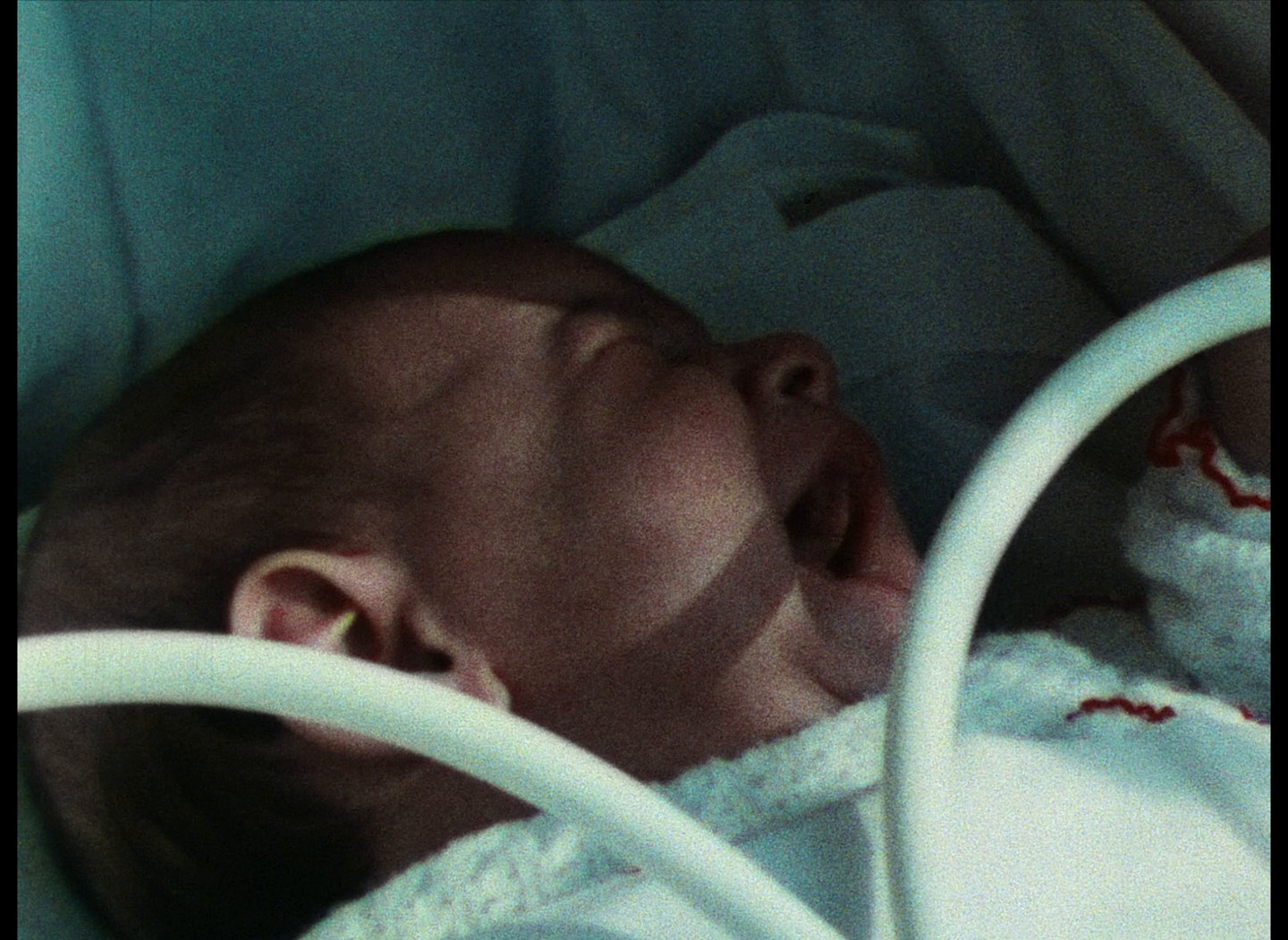
The car becomes stuck in the sand, the furniture has yet to arrive and the baby needs somewhere to sleep. These practical difficulties establish the couple’s limited options before they recognise a crime. The house is not merely remote scenery: its missing conveniences will repeatedly determine what they can do.

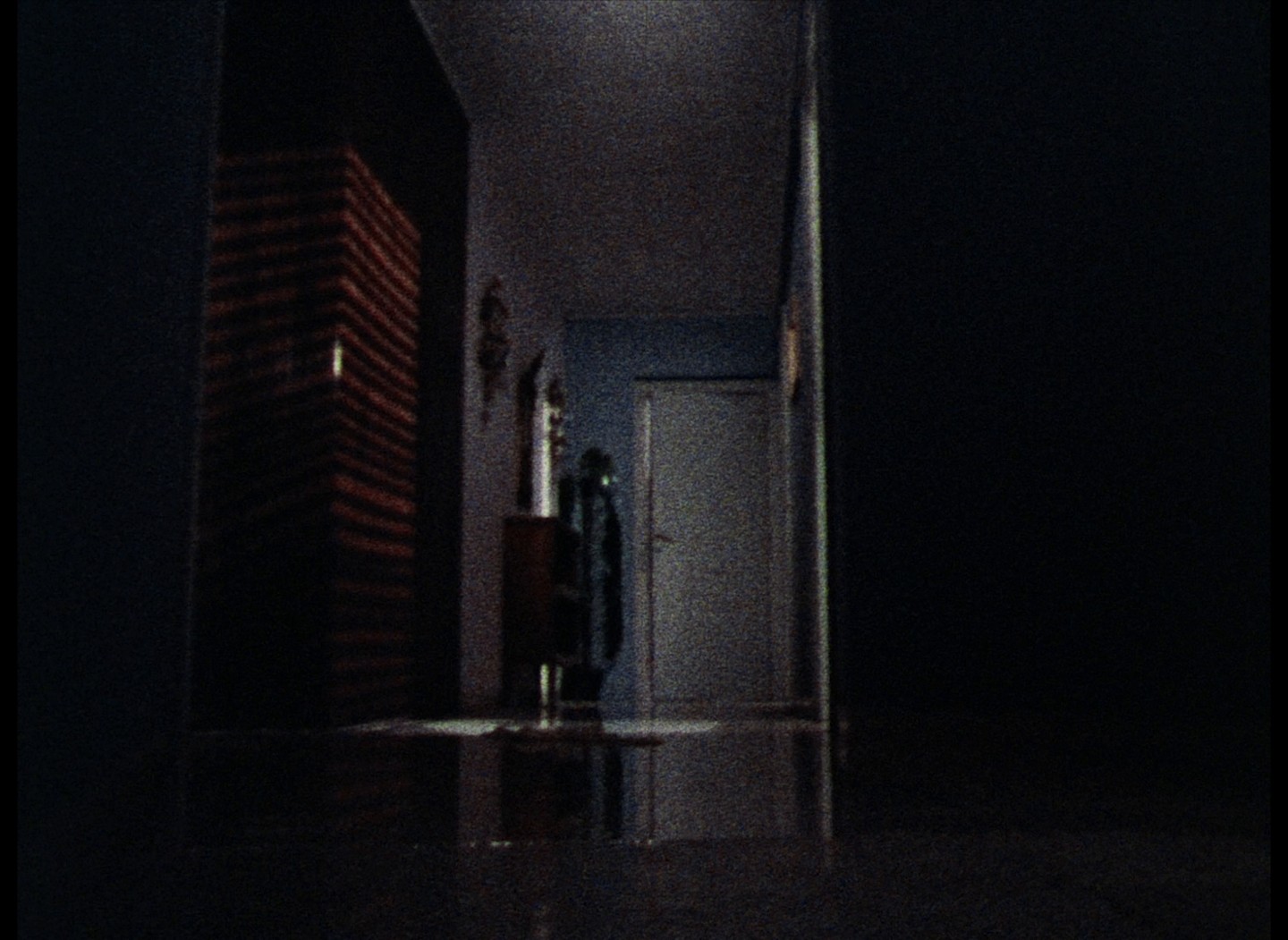
The staircase connects the two apartments.

04 / 10:20

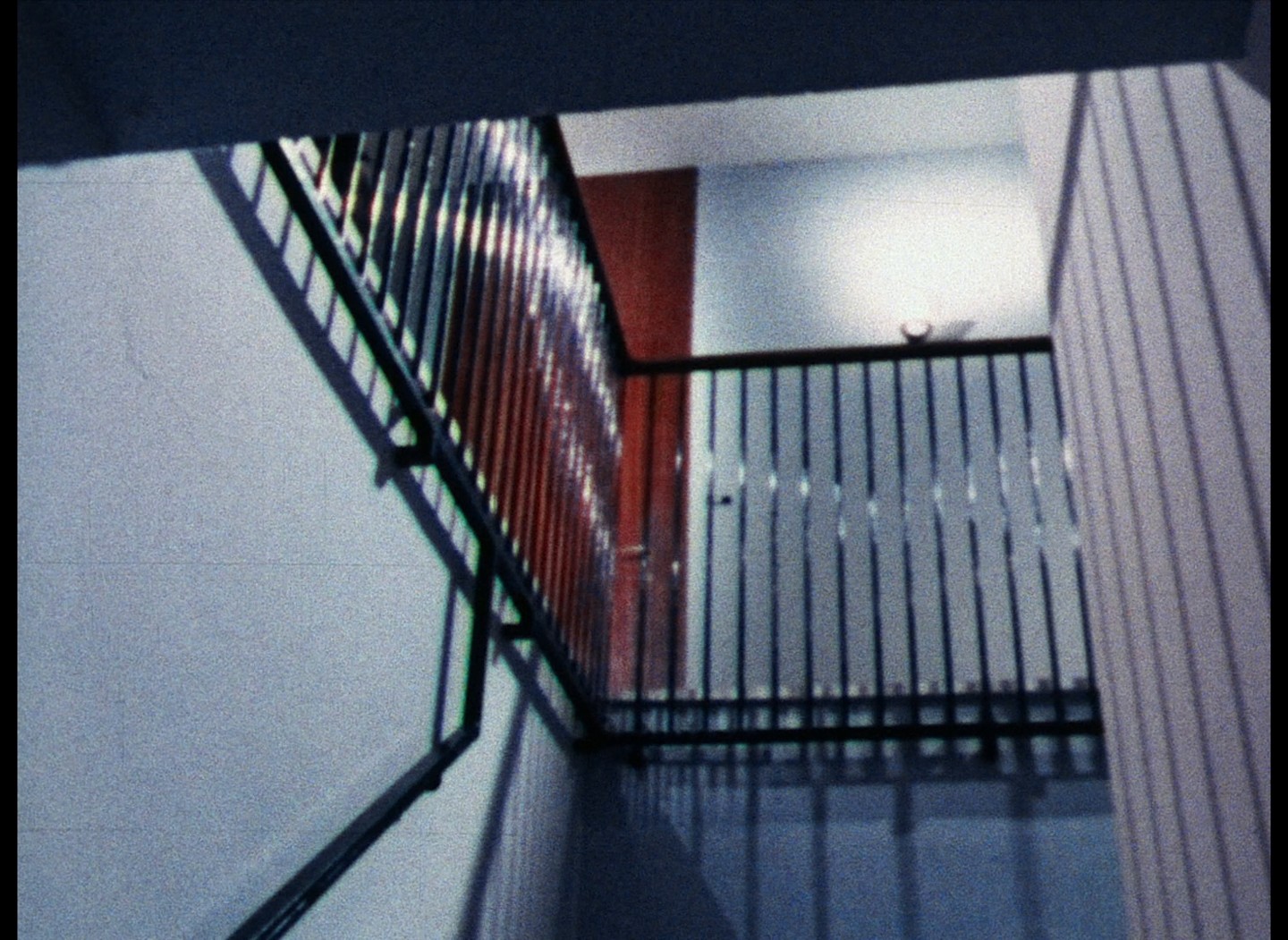
Two households, one staircase

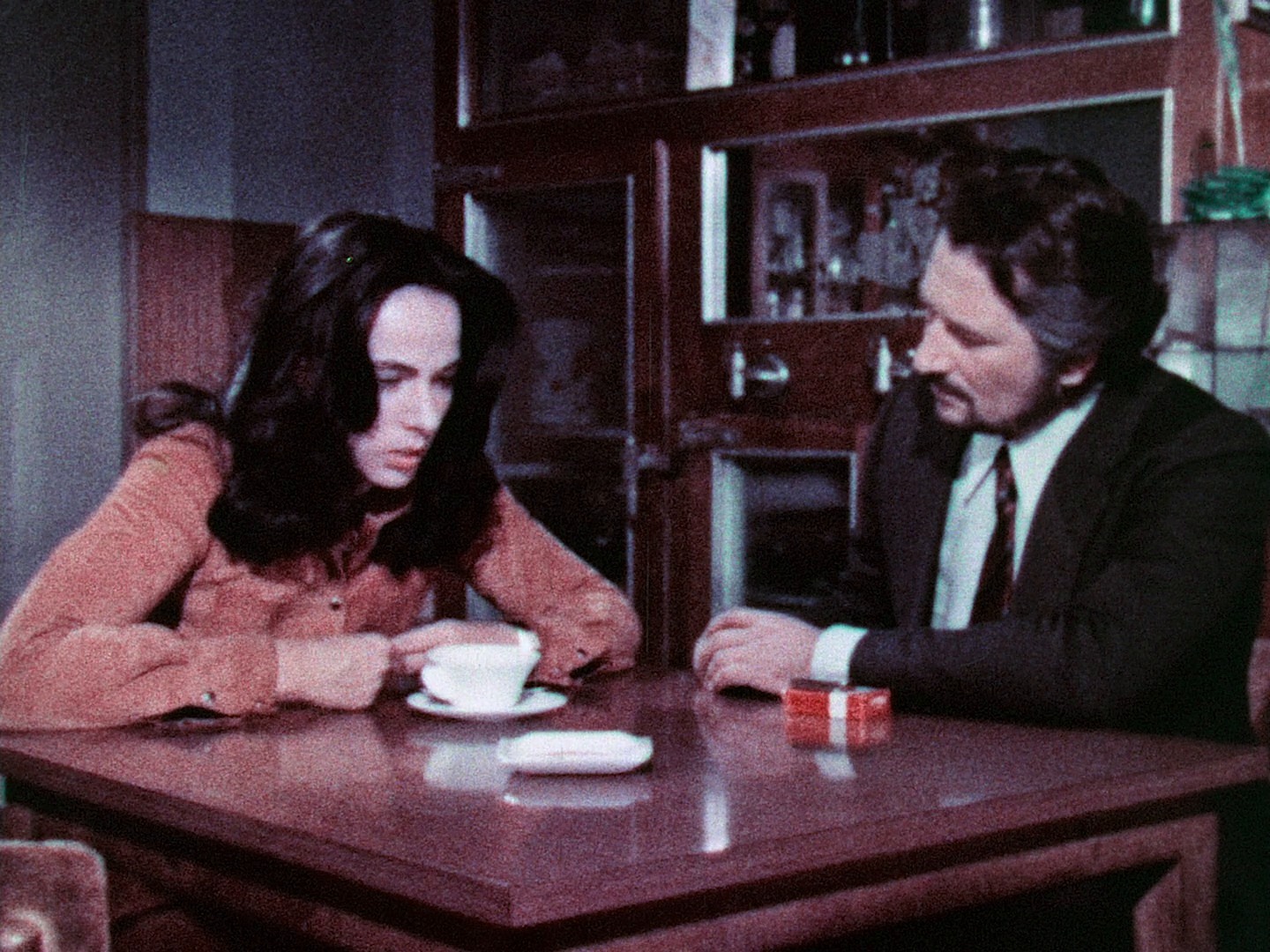
The stairs organise the episode’s geography. Going upstairs means entering someone else’s space; remaining below means living beneath events the couple cannot see. Cozzi makes the shared building a system of partial knowledge. A helpful visit and a dangerous investigation can follow exactly the same route.

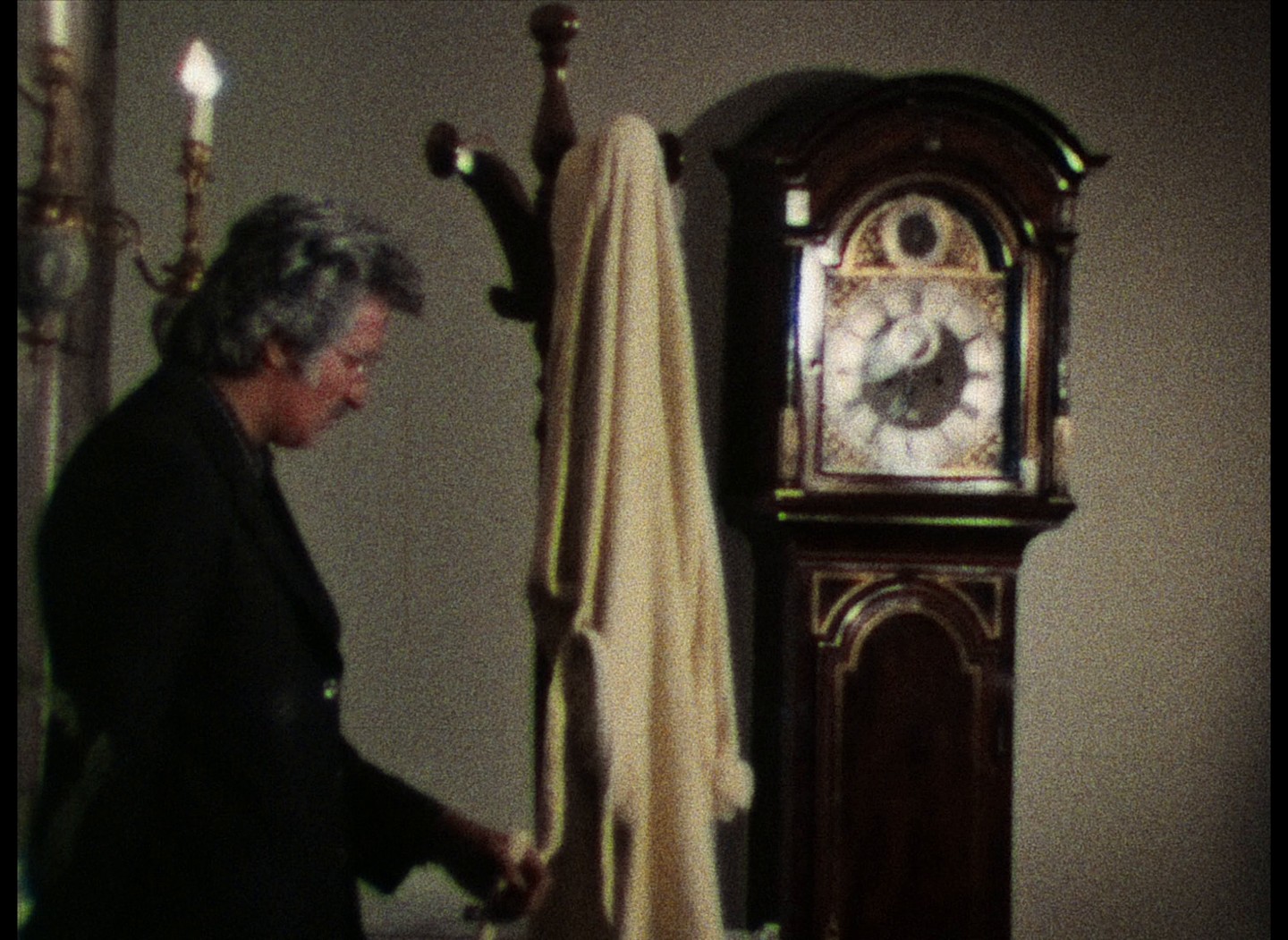
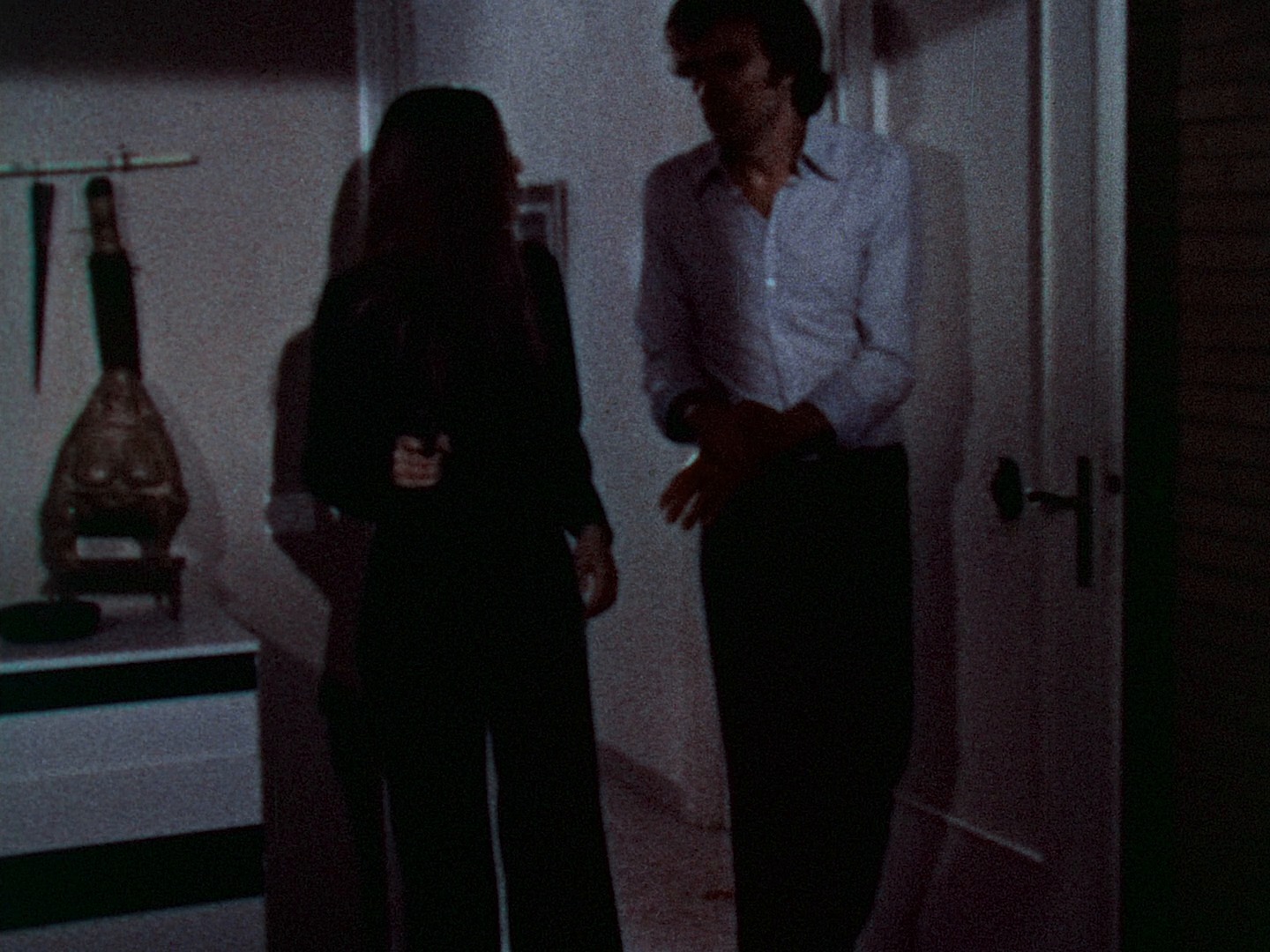
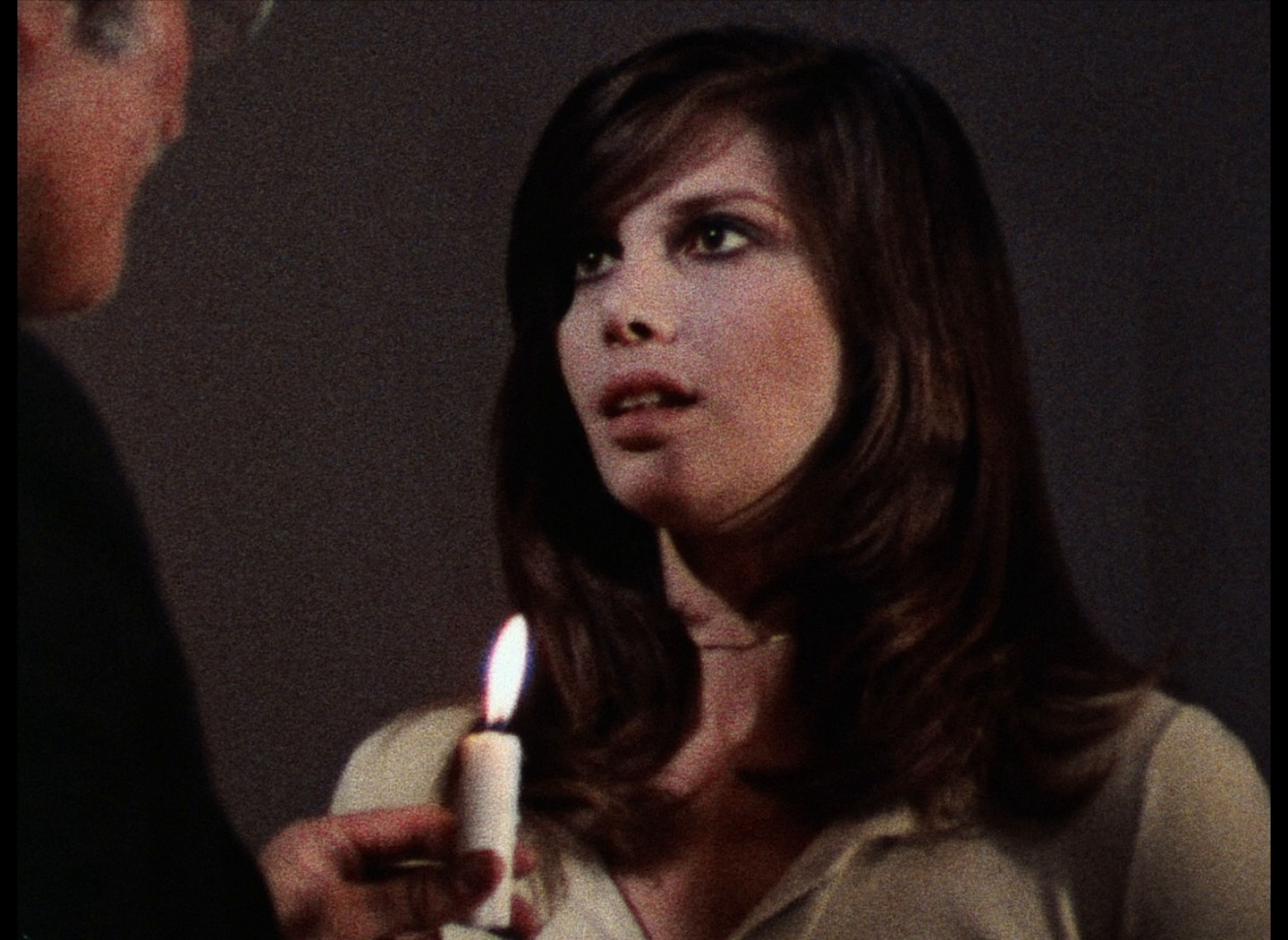
Candlelight gives the unfinished room a centre.

05 / 15:00

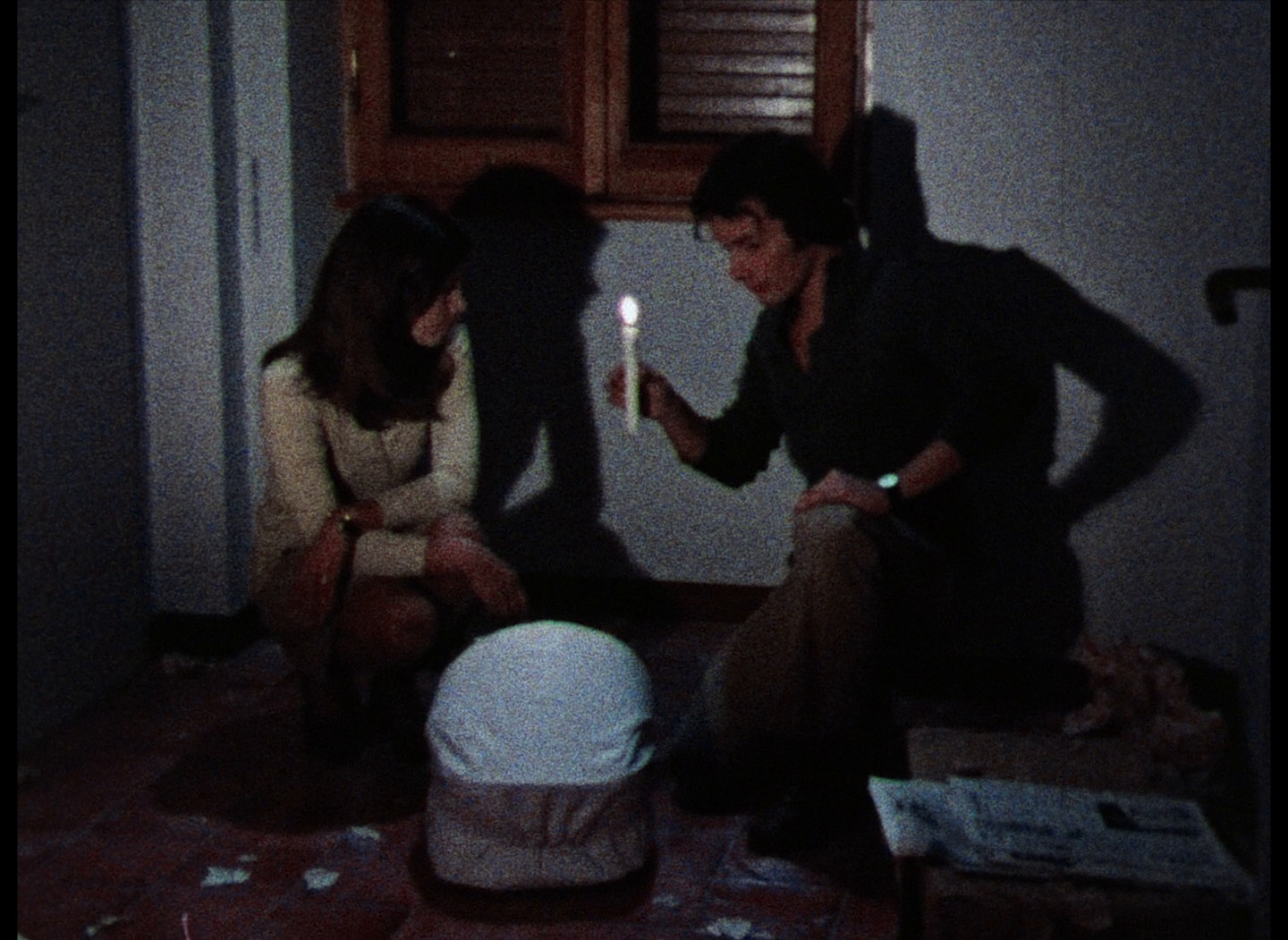
The room depends on borrowed light

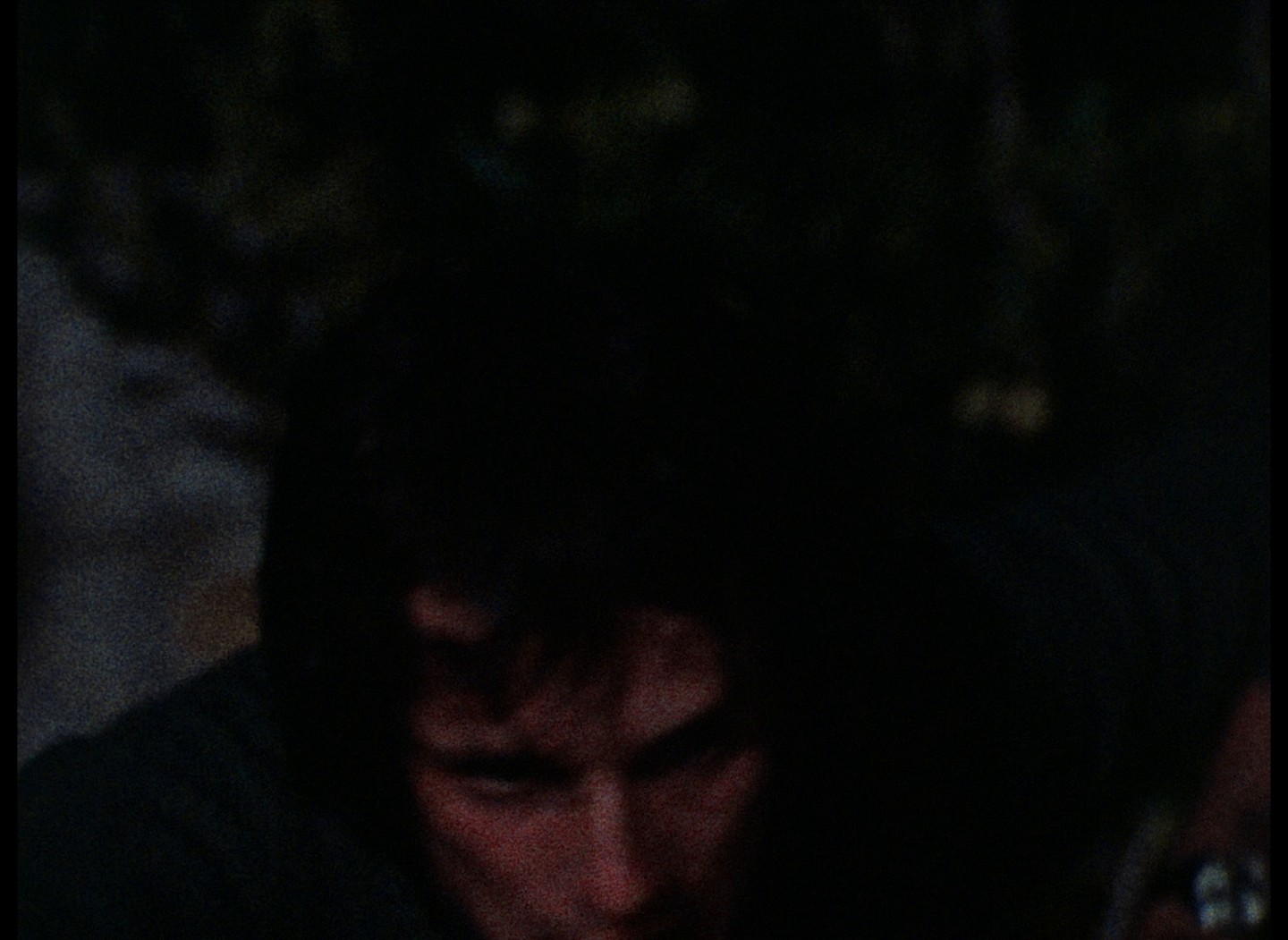
Without the expected electricity and comforts of a finished home, the couple improvise. Candlelight isolates faces and makes movement beyond its reach difficult to read. The domestic objects they have brought promise normality, but the room never becomes securely theirs.

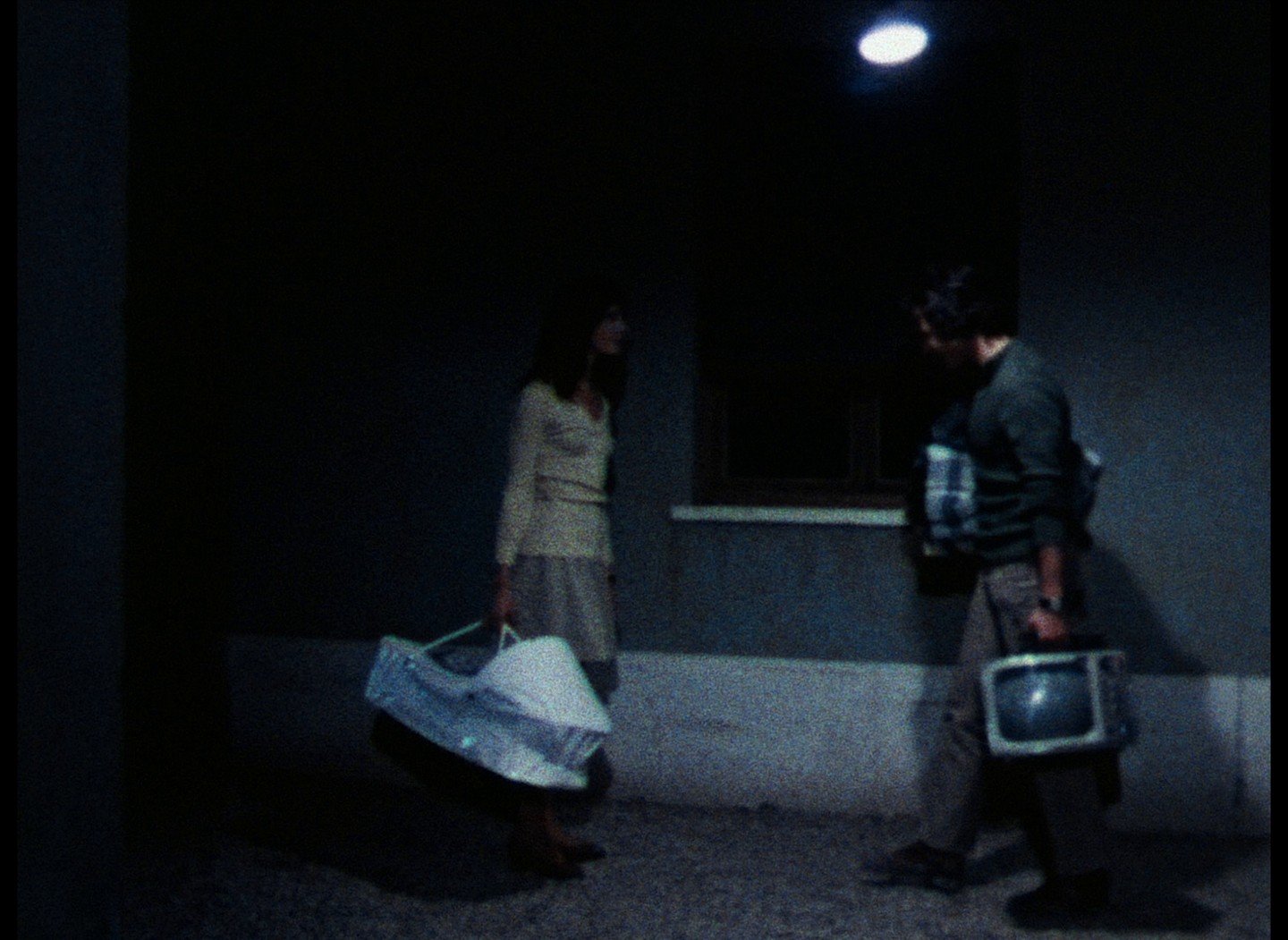
The television supplies the evening’s entertainment.

06 / 20:00

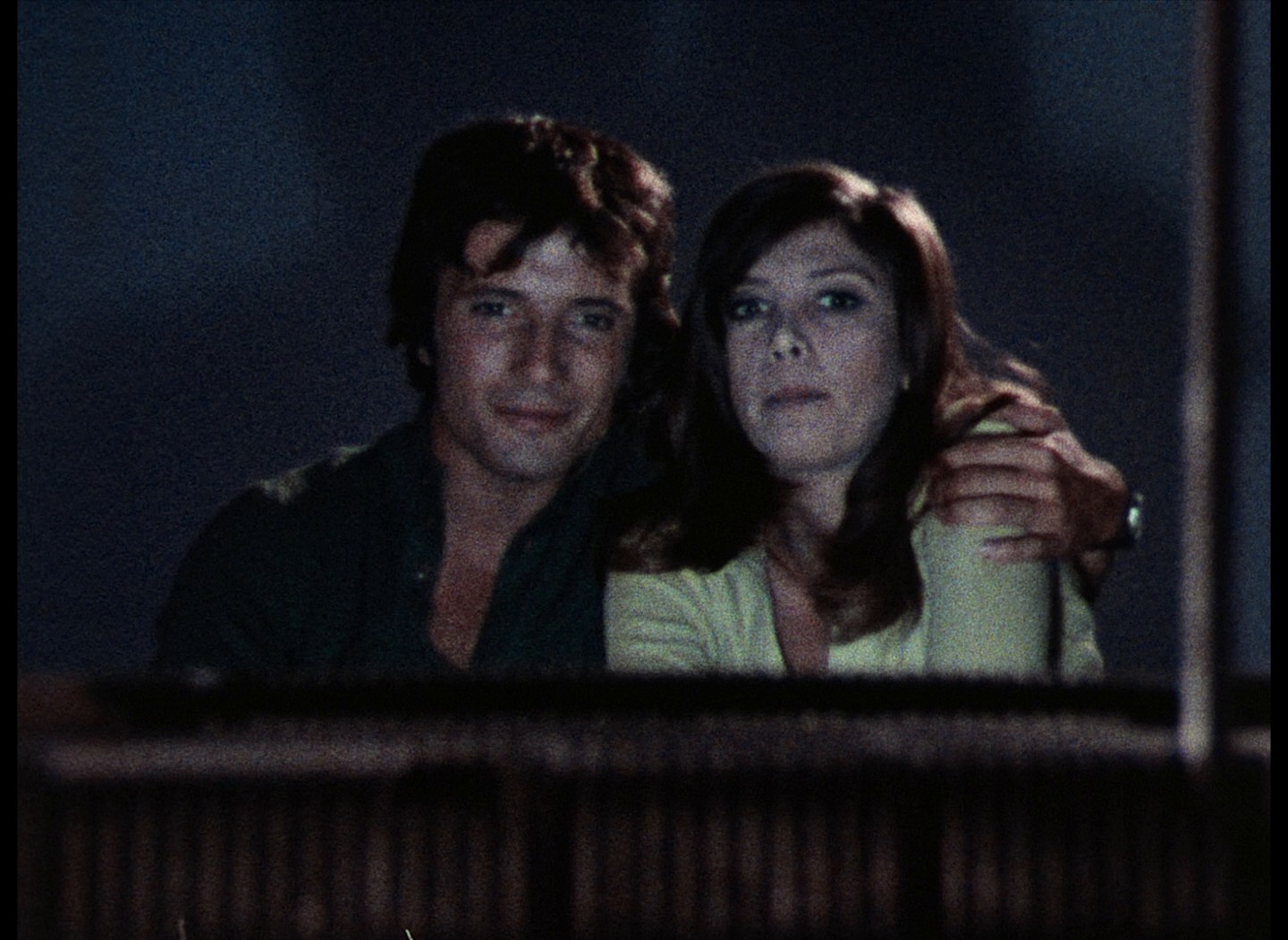
A monster on television seems harmless

The couple watch Abbott and Costello Meet Frankenstein. Their discussion separates film monsters from the violence reported in newspapers, while the episode has already placed danger upstairs. The television creates a smaller, apparently containable horror story inside the one we are watching. Switching attention back to the room does not restore safety.

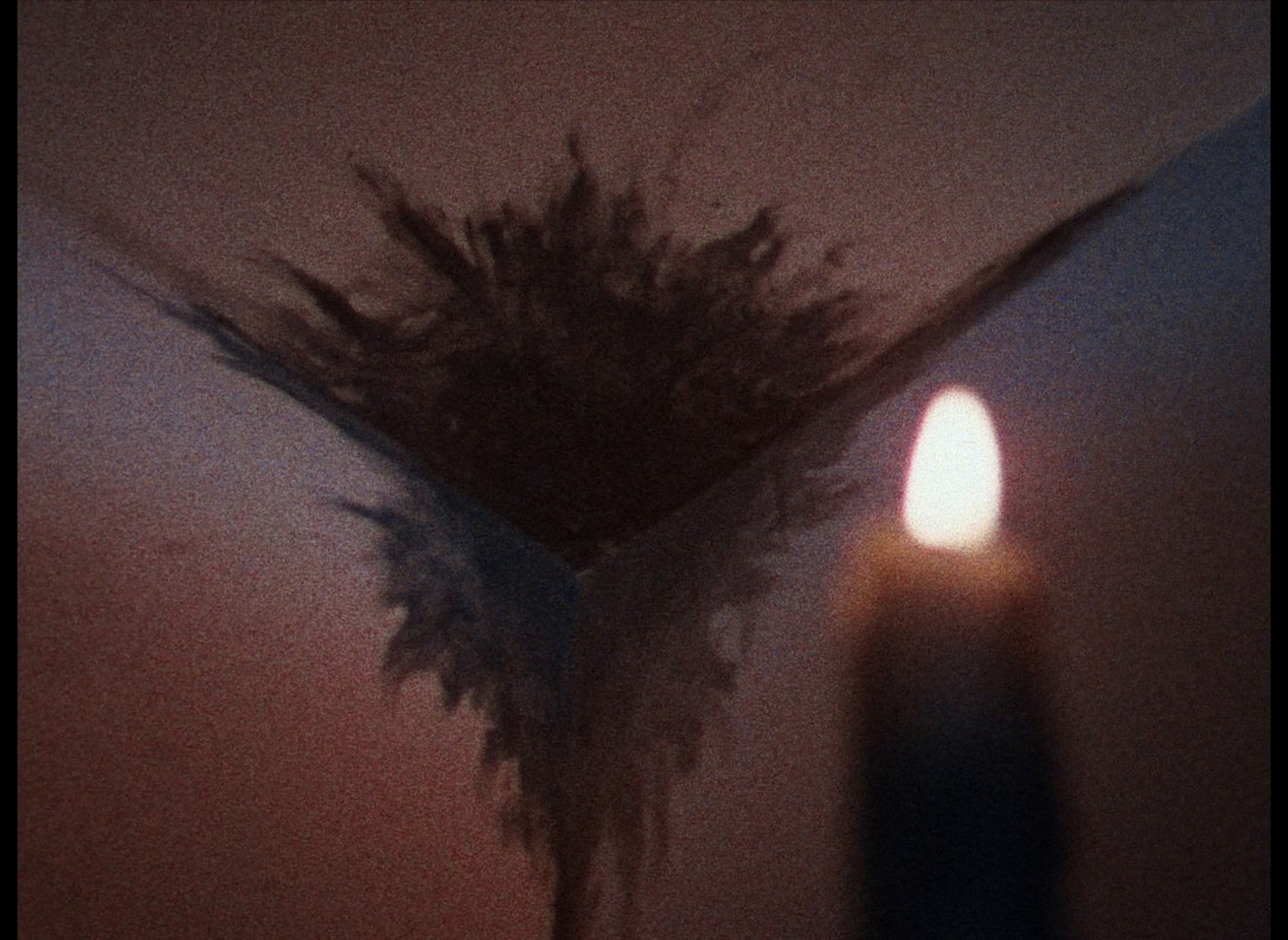
A dark stain spreads above the candle.

07 / 21:40

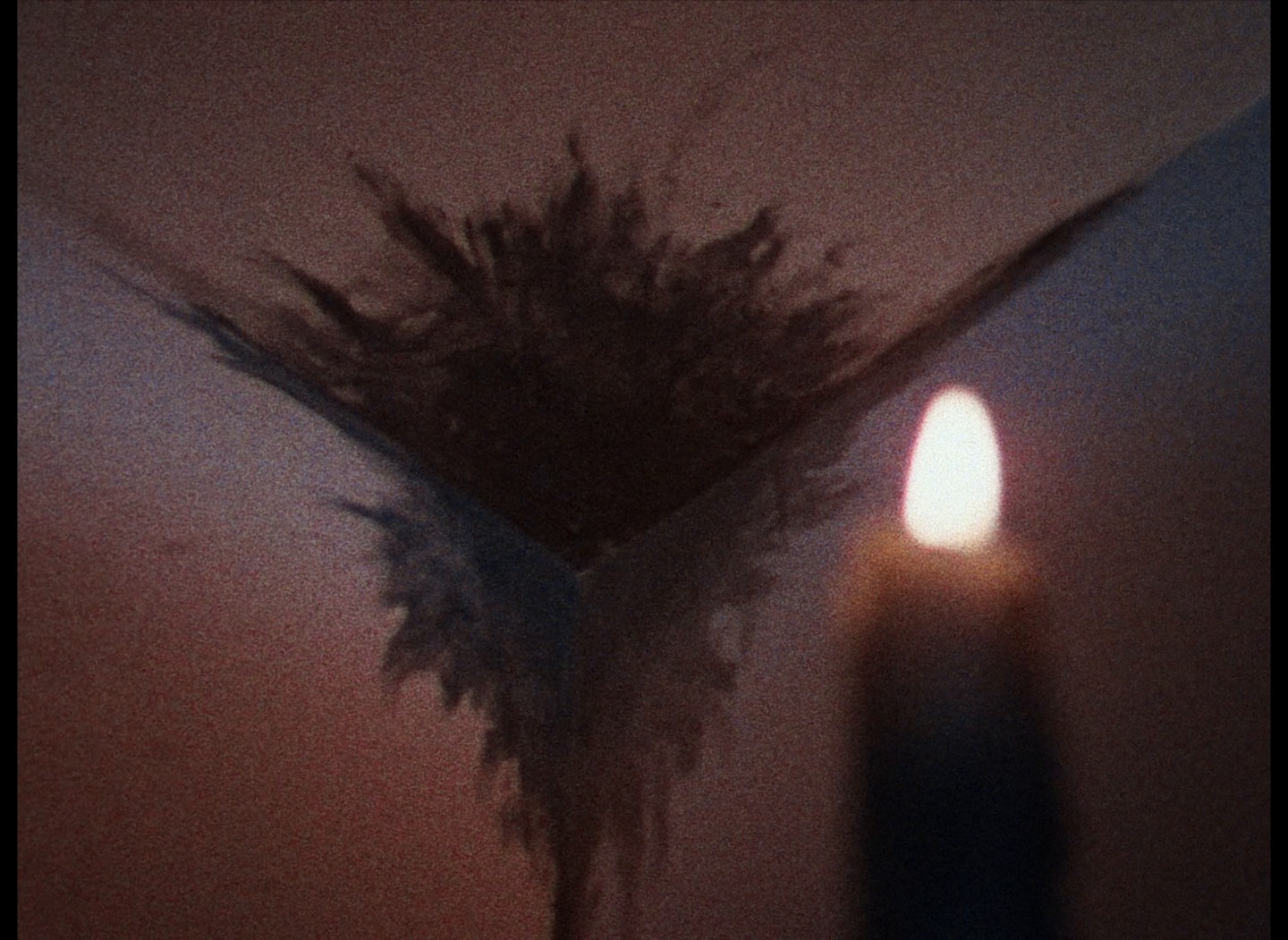
The ceiling gives the secret away

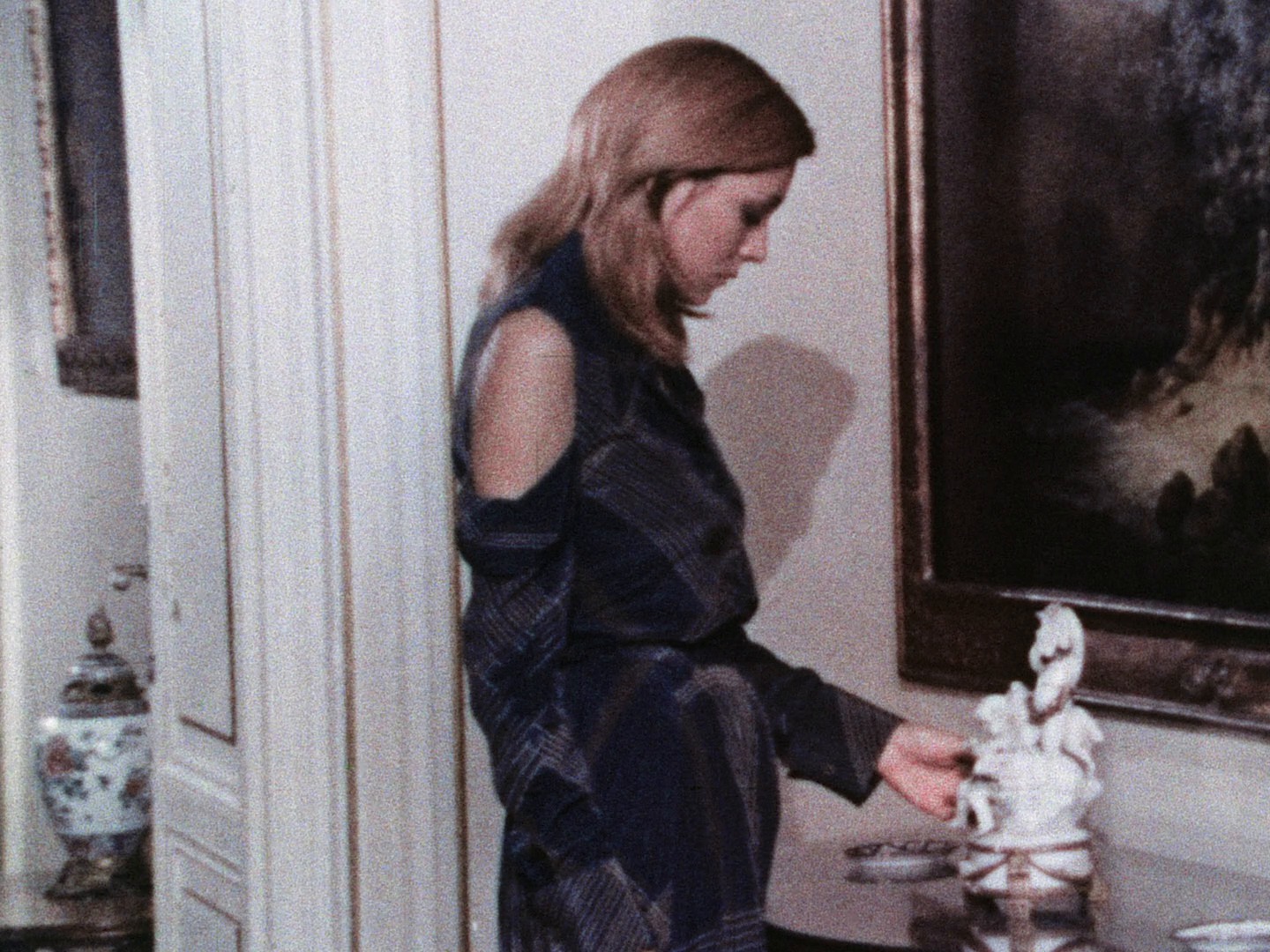
Water damage makes the upstairs apartment impossible to ignore. The stain travels across the ceiling before the couple understand its source, turning a household repair into an investigation. Its position also joins the two floors in a single image: something happening above has begun to enter the room below.

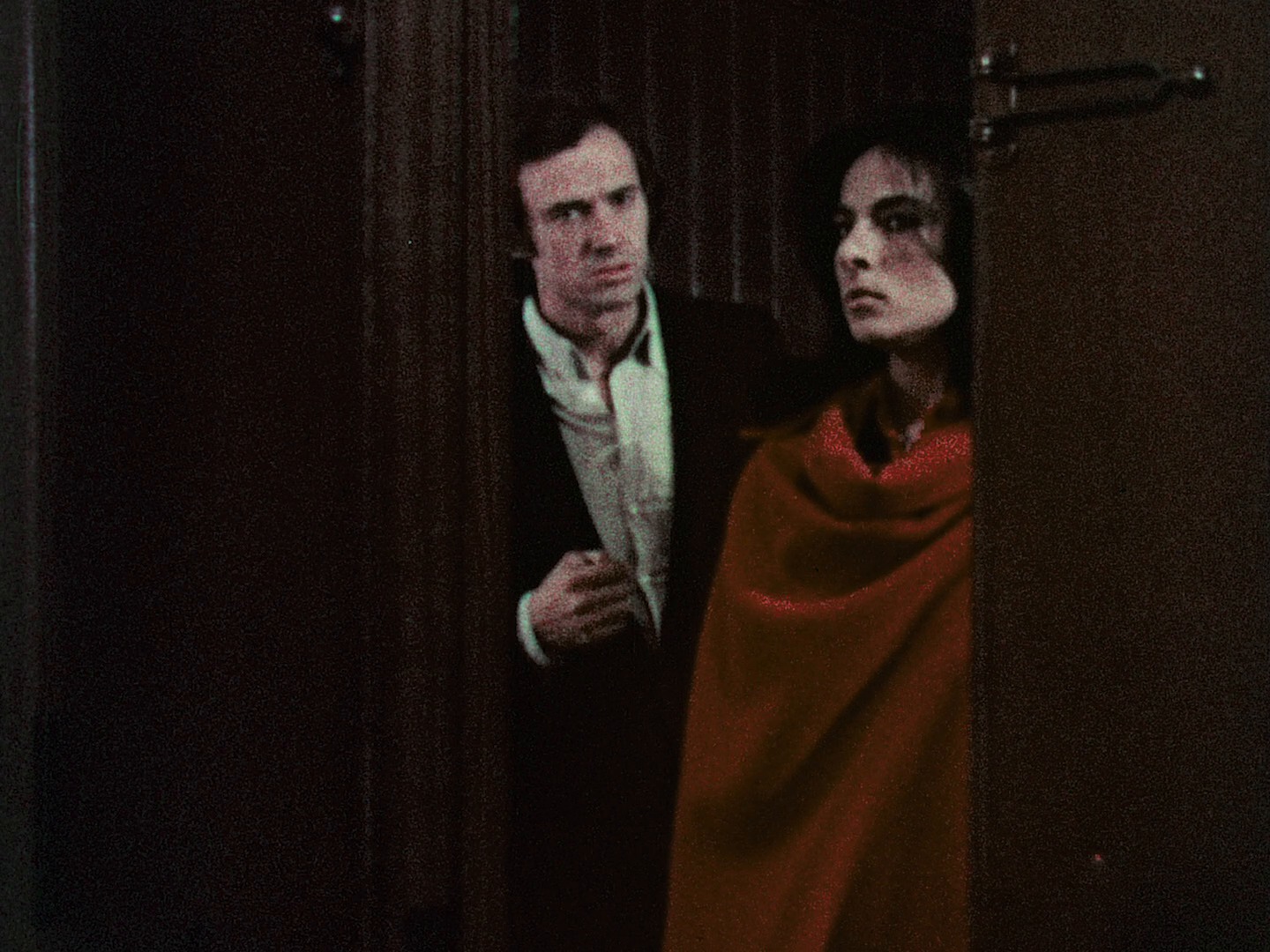
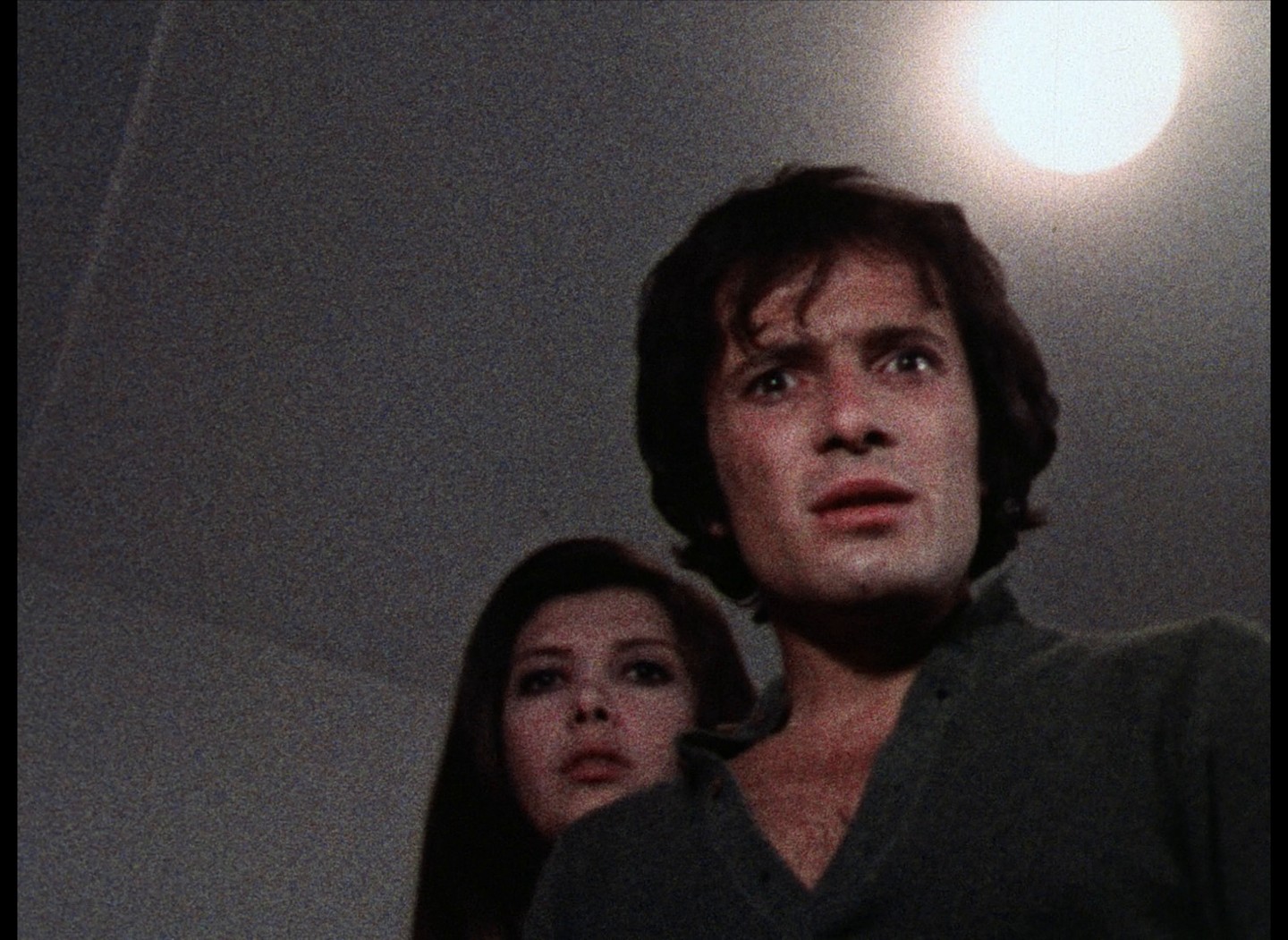
Luca and Stefania look into the bathroom.

08 / 24:45

The discovery is assembled in pieces

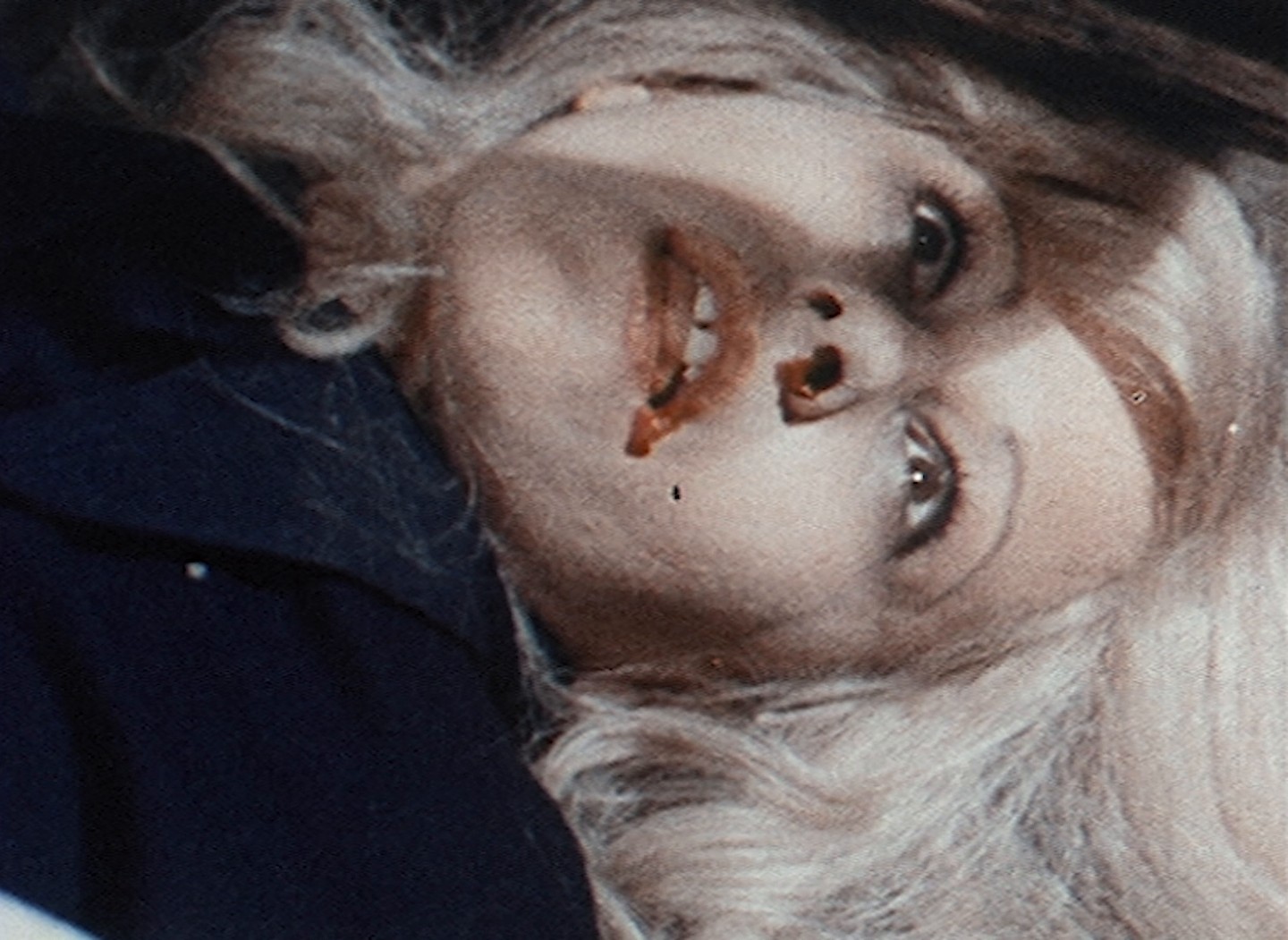
The wet floor draws Luca and Stefania along the corridor. The running water, an arm, their reactions and the woman’s face accumulate into recognition. The body is not introduced as a single explanatory tableau. Each new detail removes another possibility of an innocent explanation, while the couple’s faces measure the change.

Luca searches for a way out.

09 / 25:40

An escape route becomes a closed circuit

After the discovery, the car’s earlier inconvenience becomes a barrier to flight. The couple must also account for their baby and the expected arrival of their friend with the furniture. The story returns them to the house through obligations established before the threat was understood, rather than through an unexplained decision to remain.

The couple wait in the uncertain light.

10 / 29:00

Waiting becomes an action

The room’s pauses now carry the possibility that the neighbour will return. A forgotten lighter means that the upstairs visit has left a trace. An object too small to matter during the move becomes evidence of where they have been. The interval before a new encounter is filled with the effort to anticipate what Alberto might notice.

Stefania keeps Alberto talking by candlelight.

11 / 36:20

Polite conversation conceals an escape

Stefania tries to hold Alberto’s attention while Luca makes his way outside. The conversation must sound ordinary even though its purpose is to gain time. Looks toward the ceiling and the stain threaten that performance. The suspense depends on how long a familiar social exchange can continue after its participants have begun concealing different kinds of knowledge.

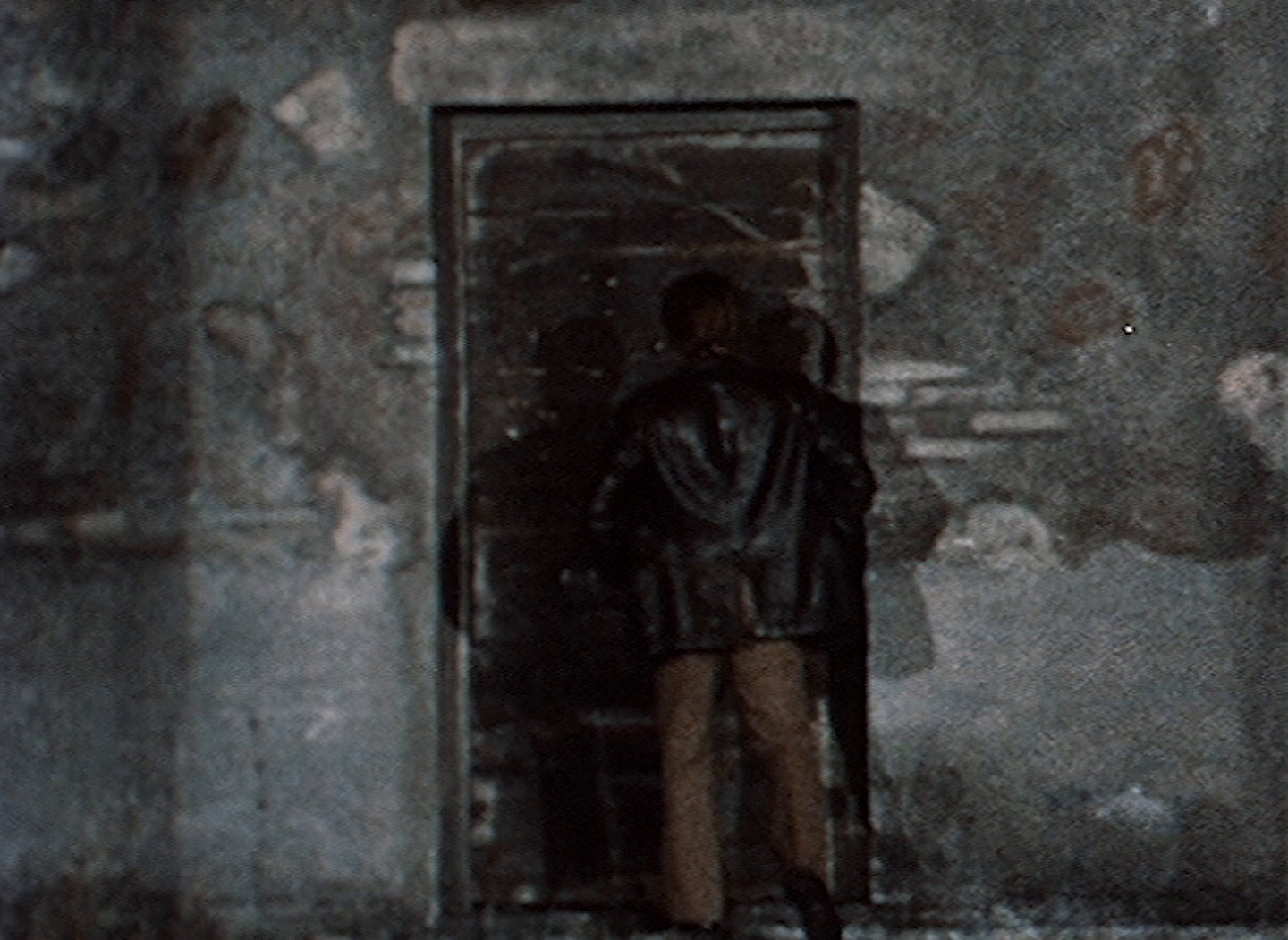
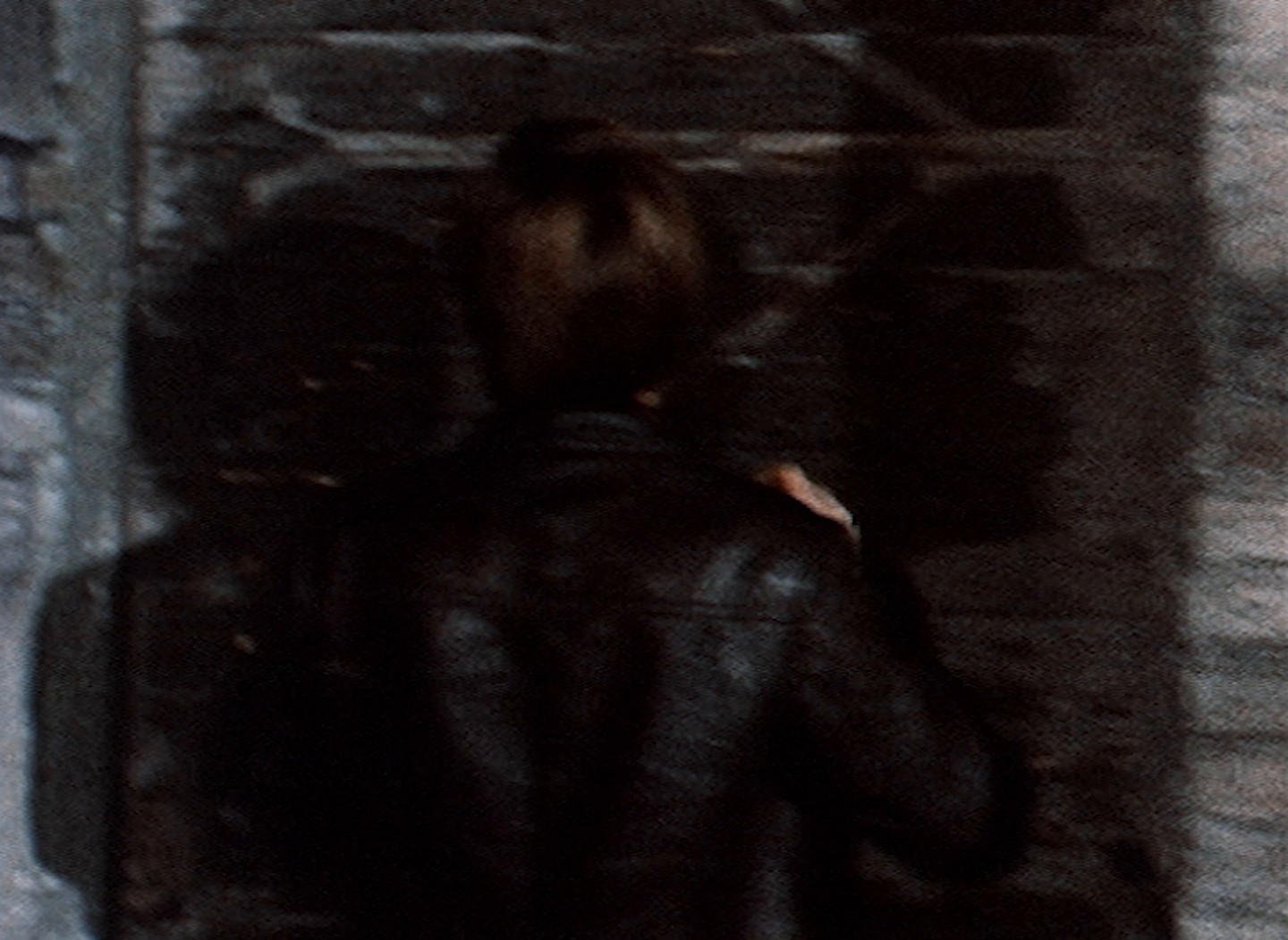
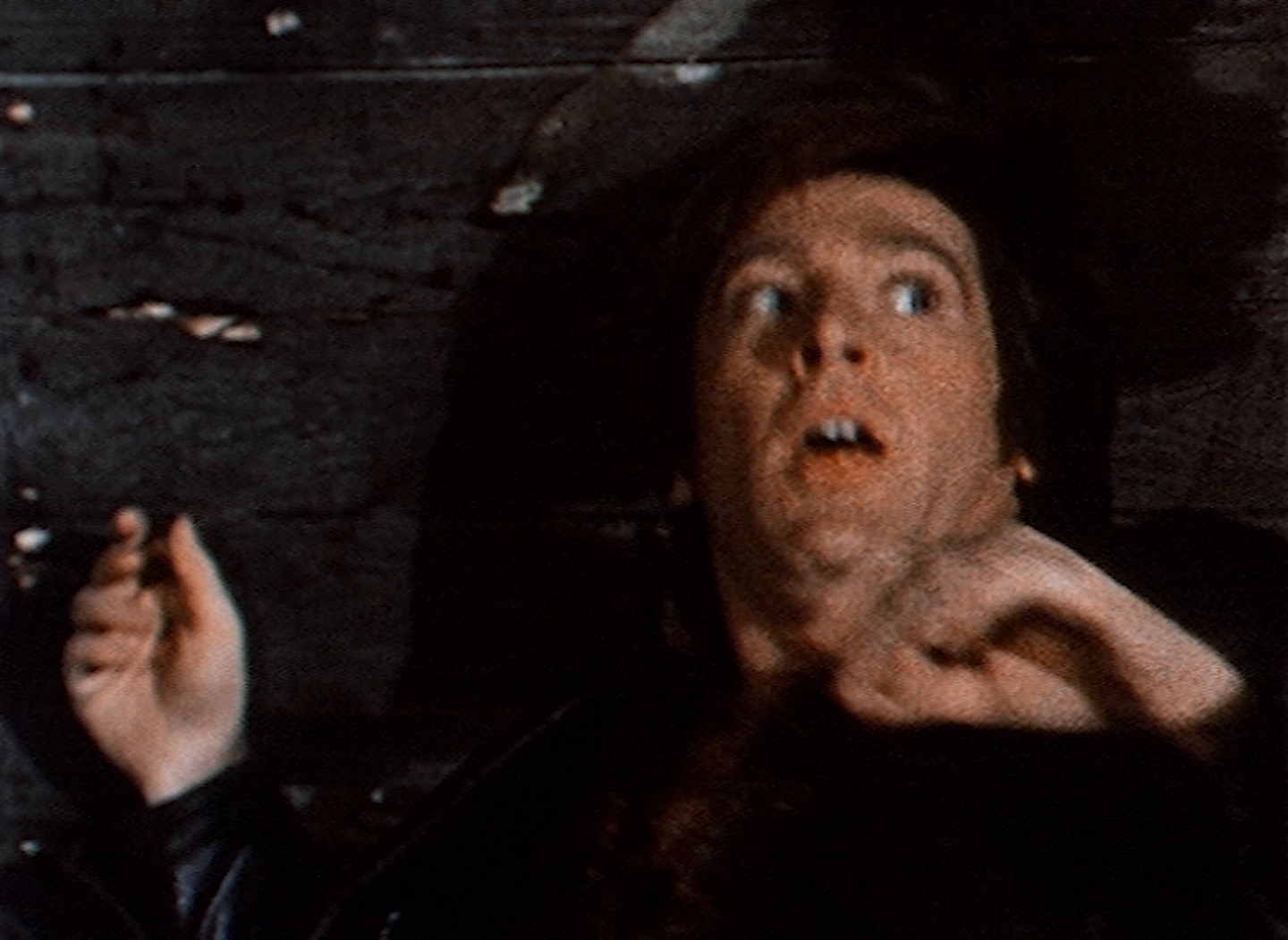
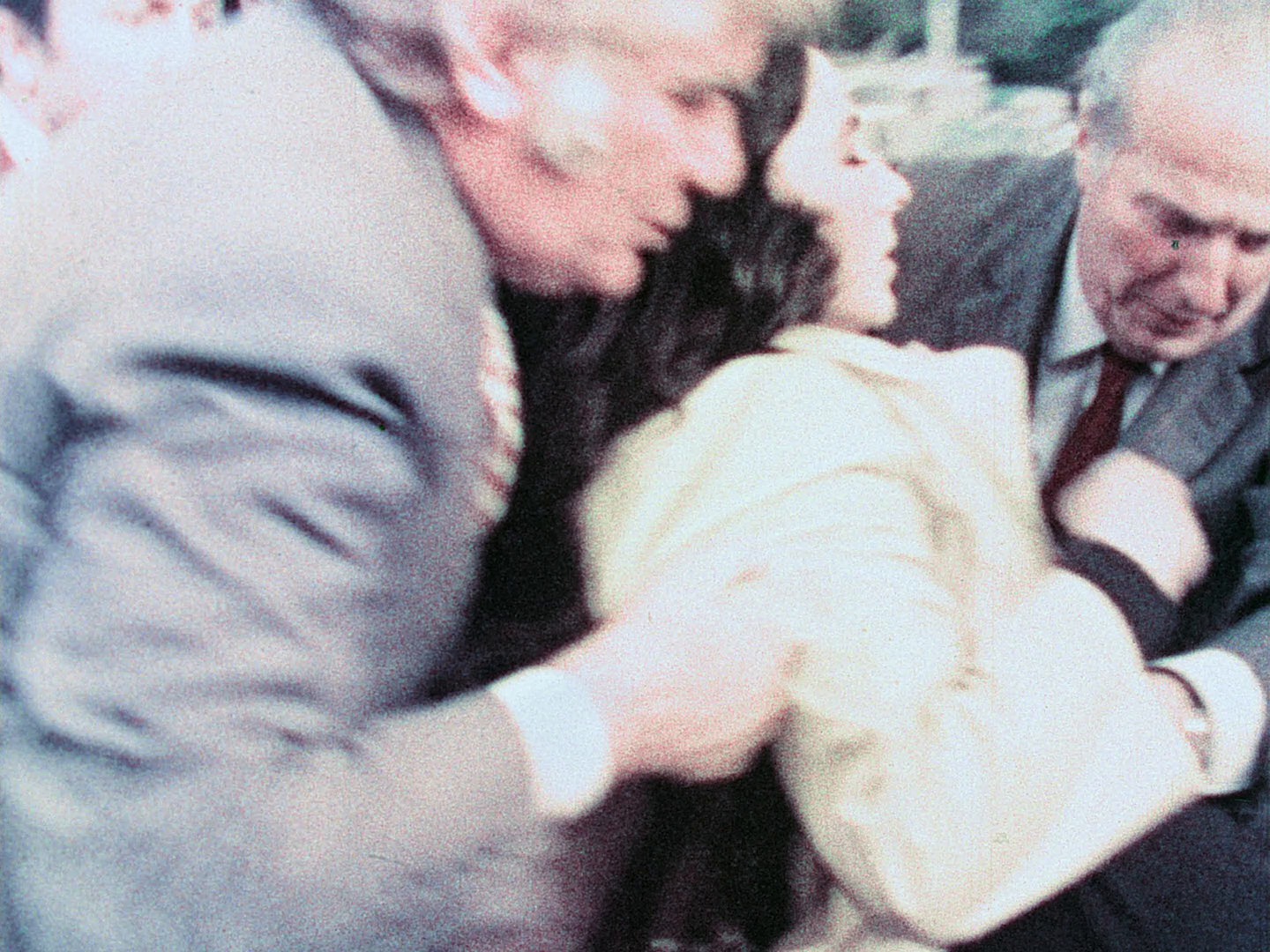
The doorway becomes the site of the attack.

12 / 38:50

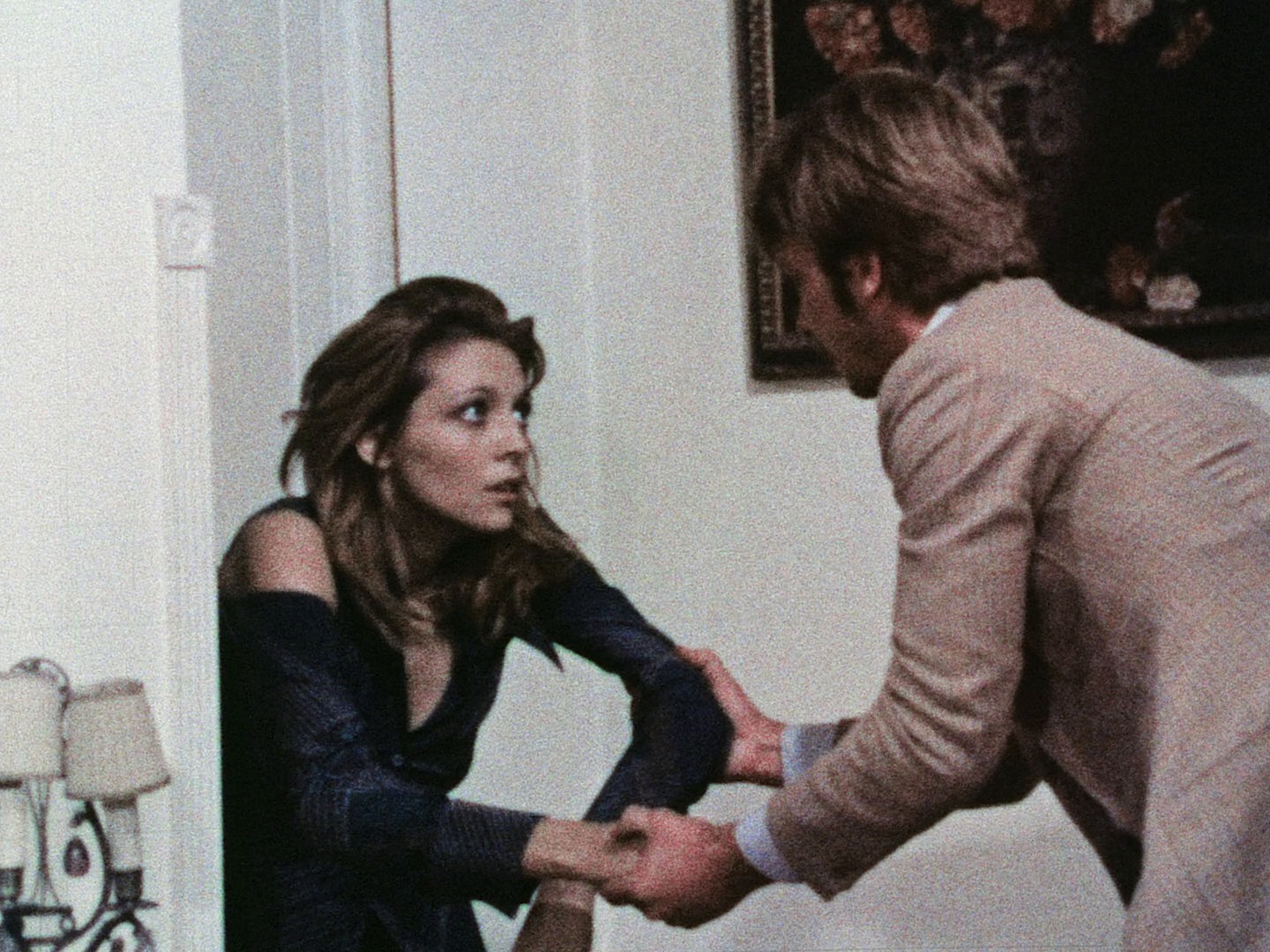
A homecoming turns into a capture

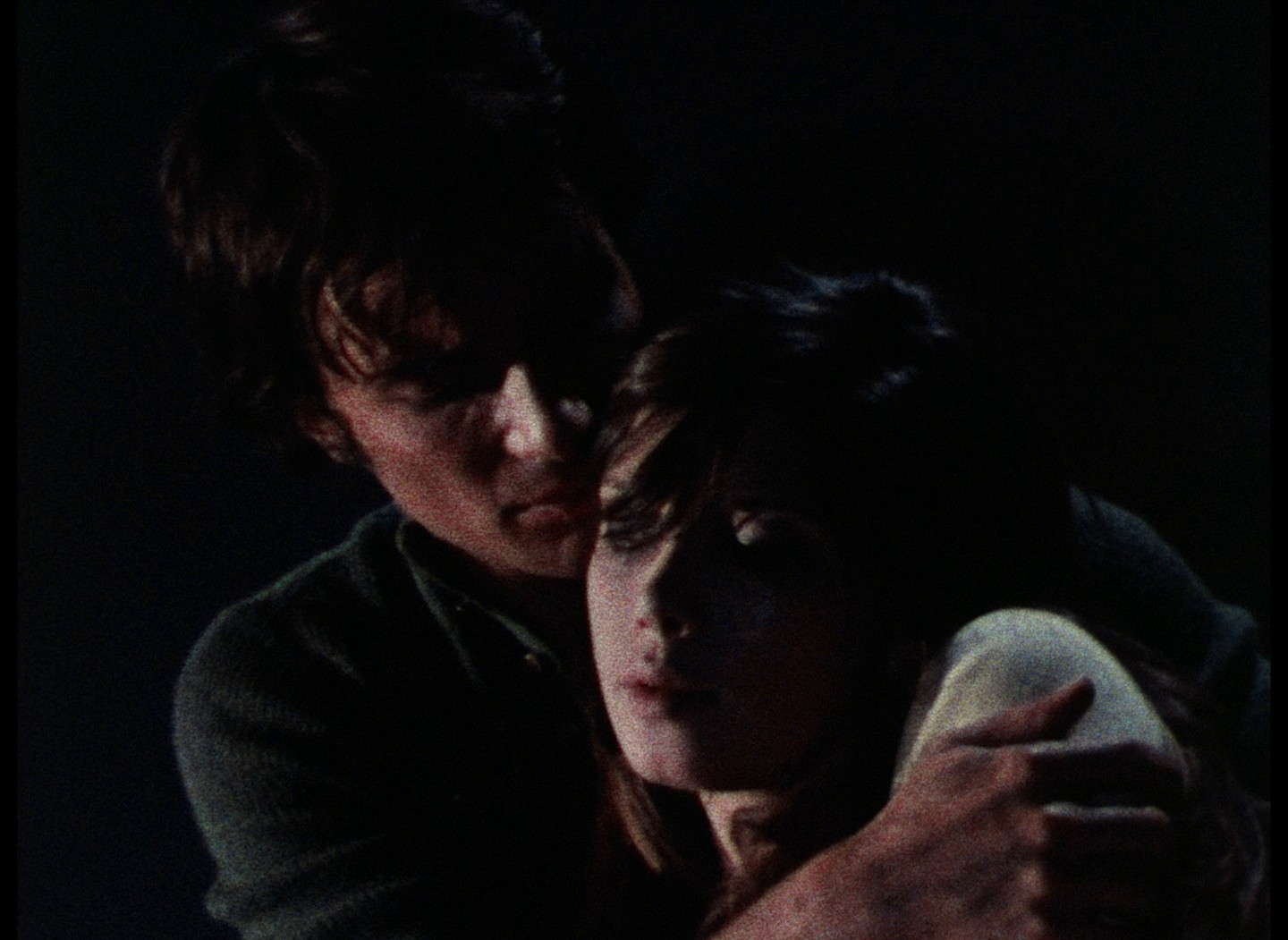
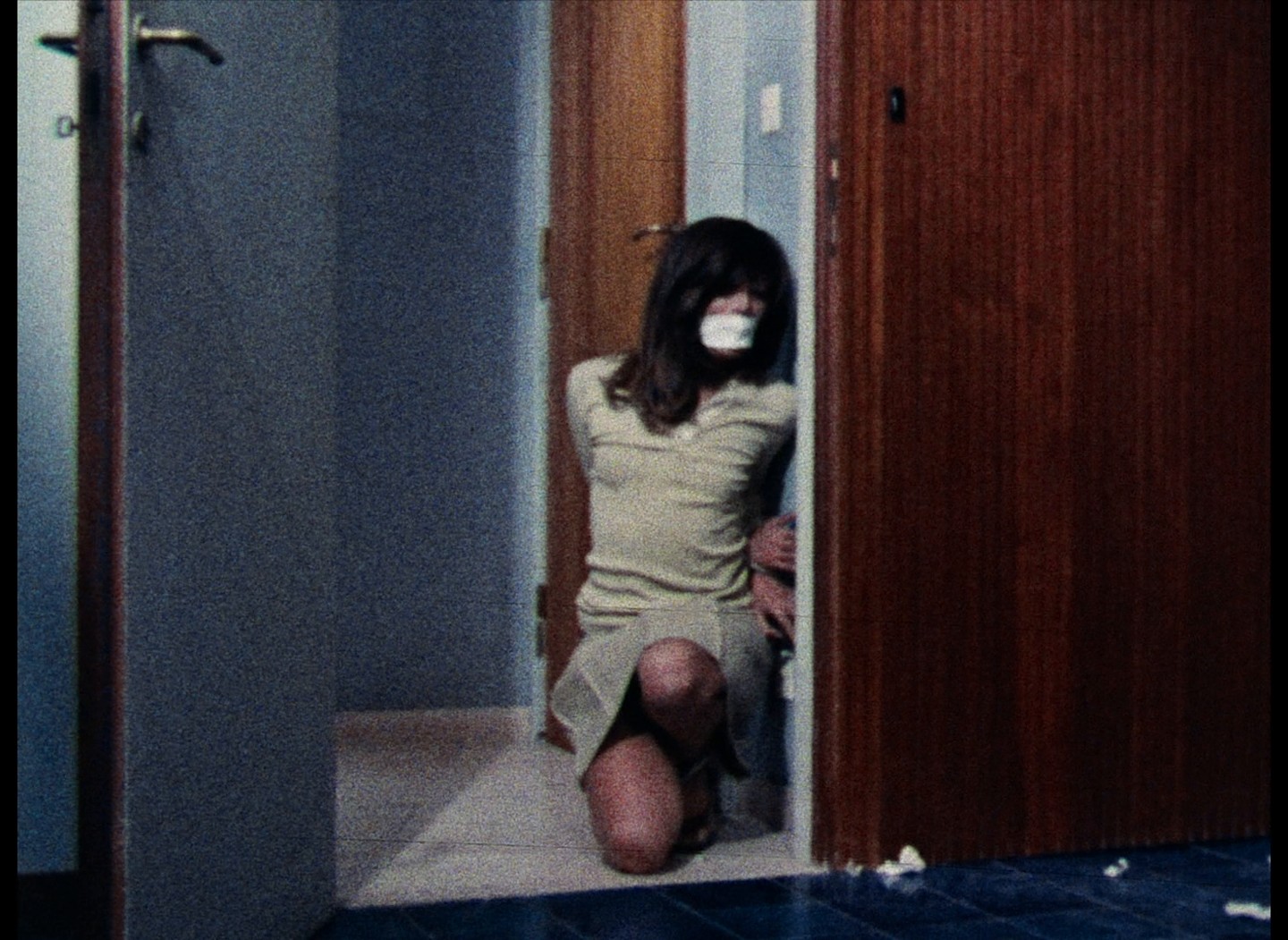
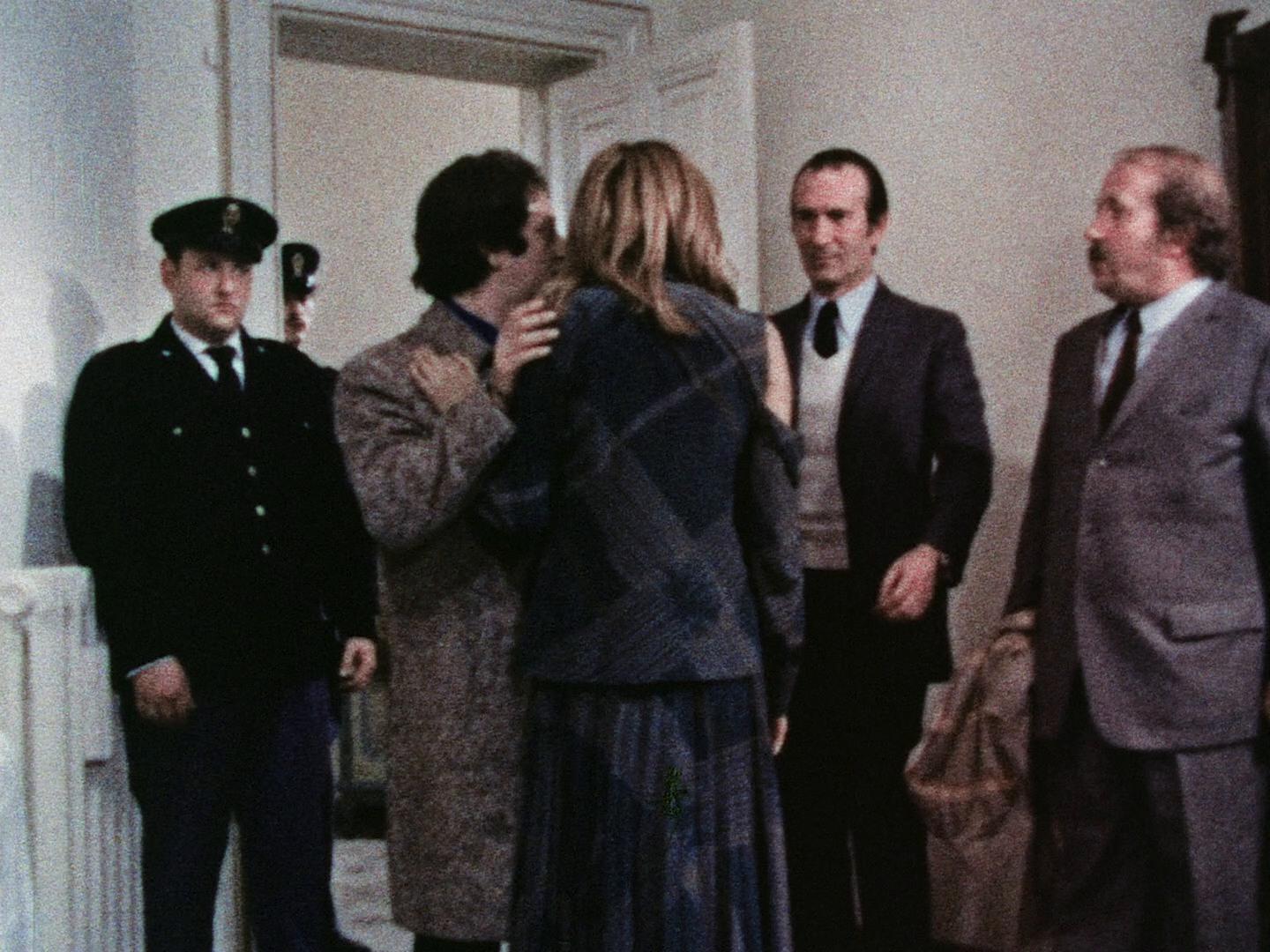
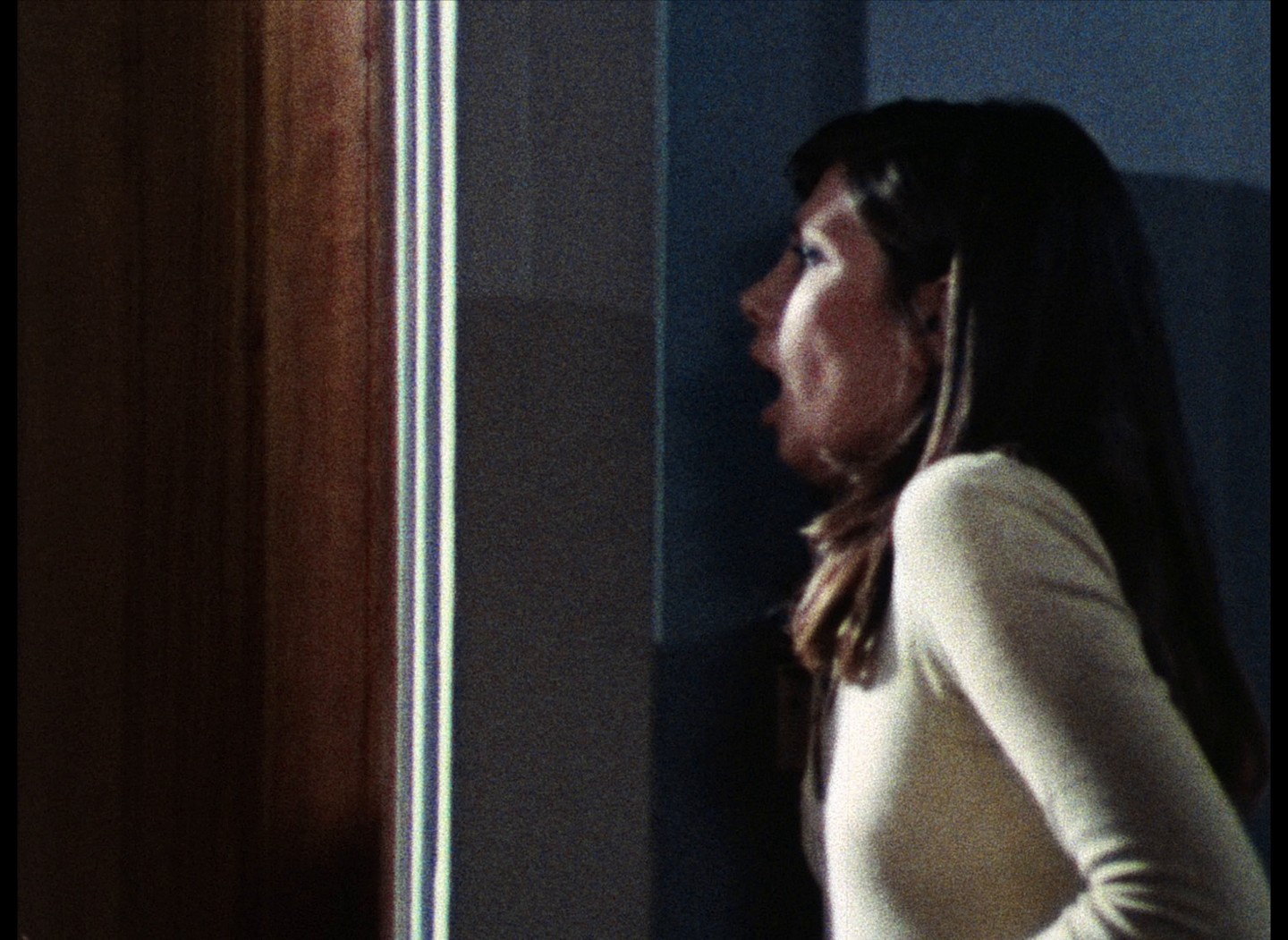
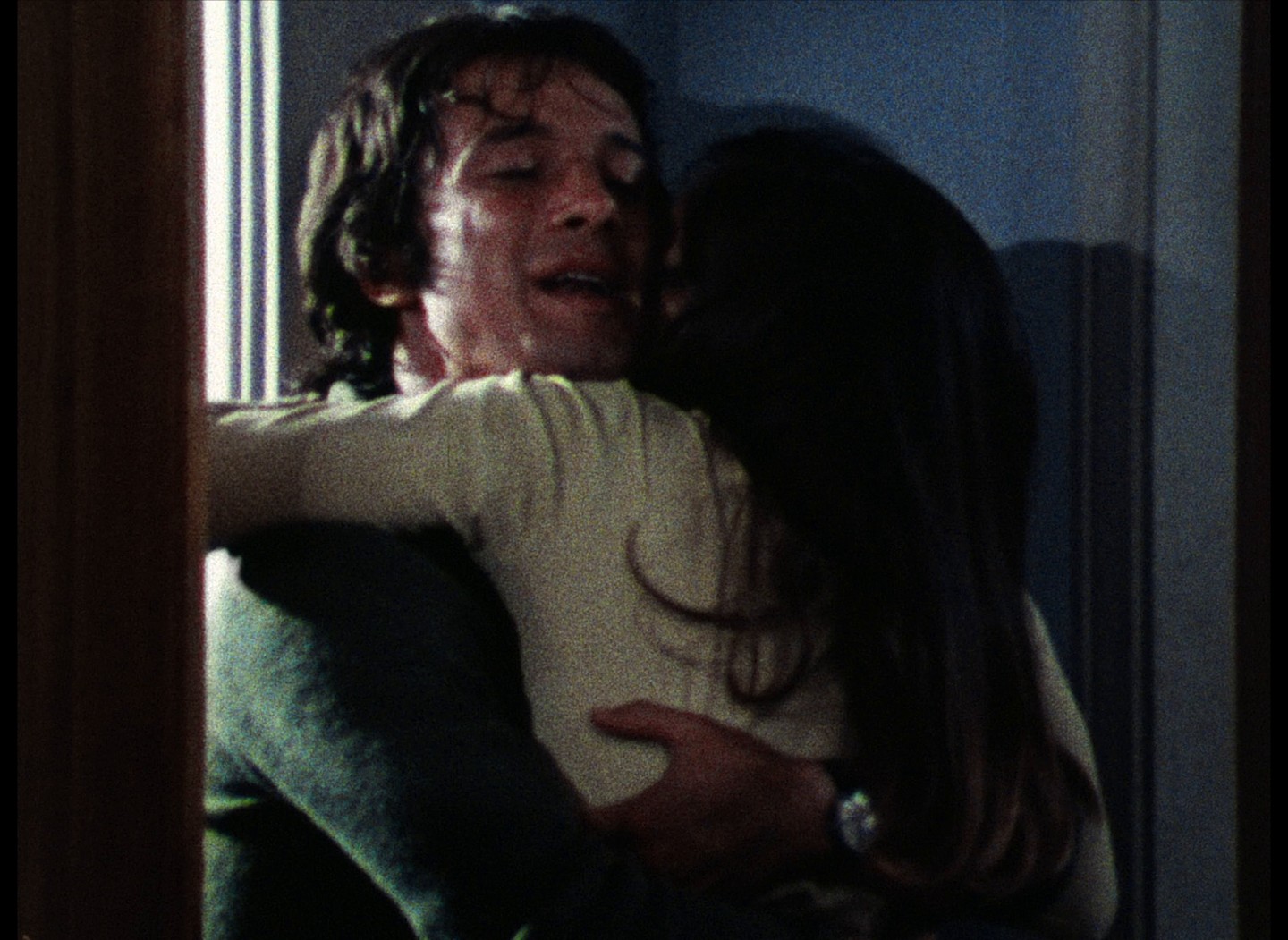
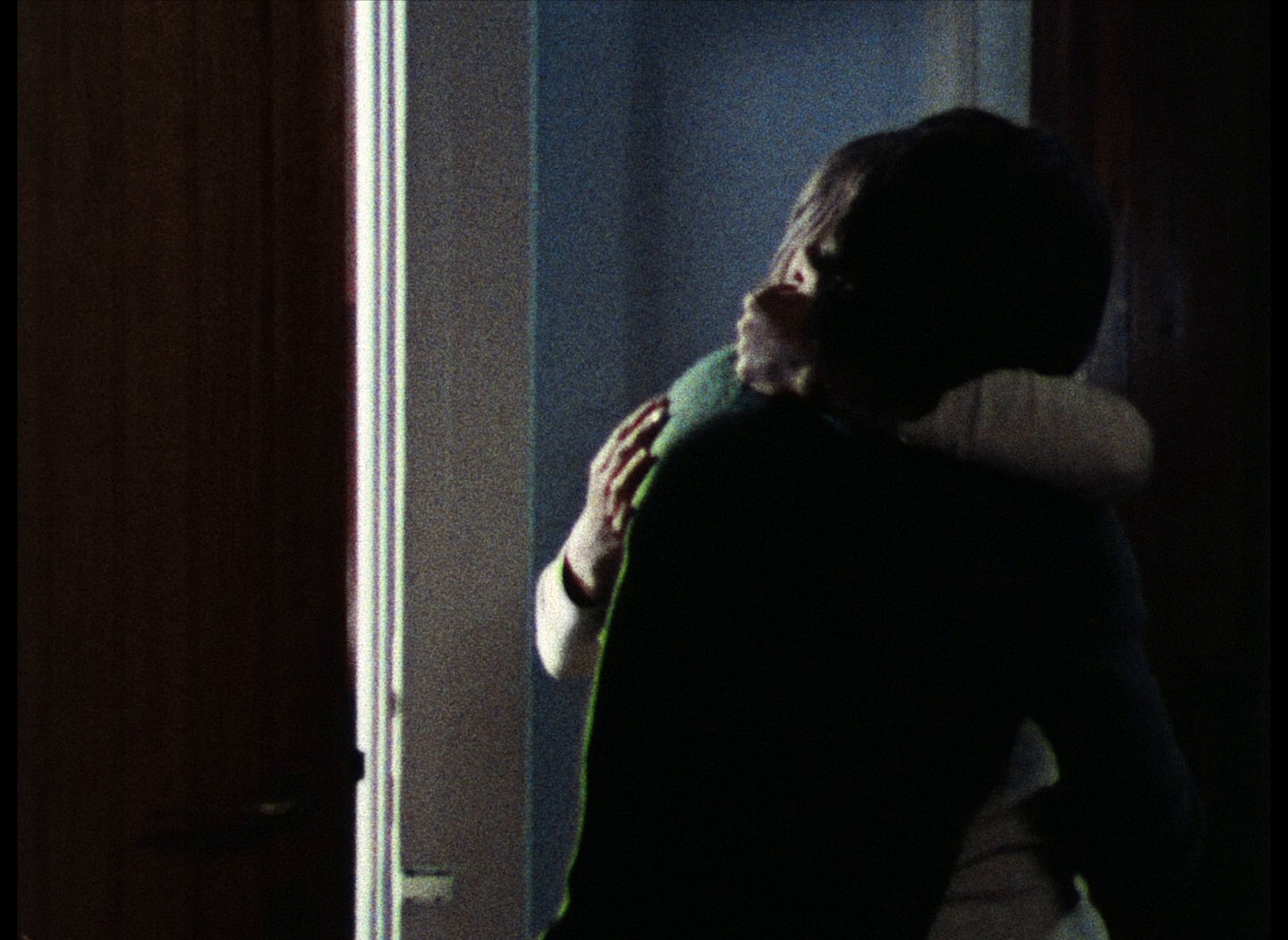
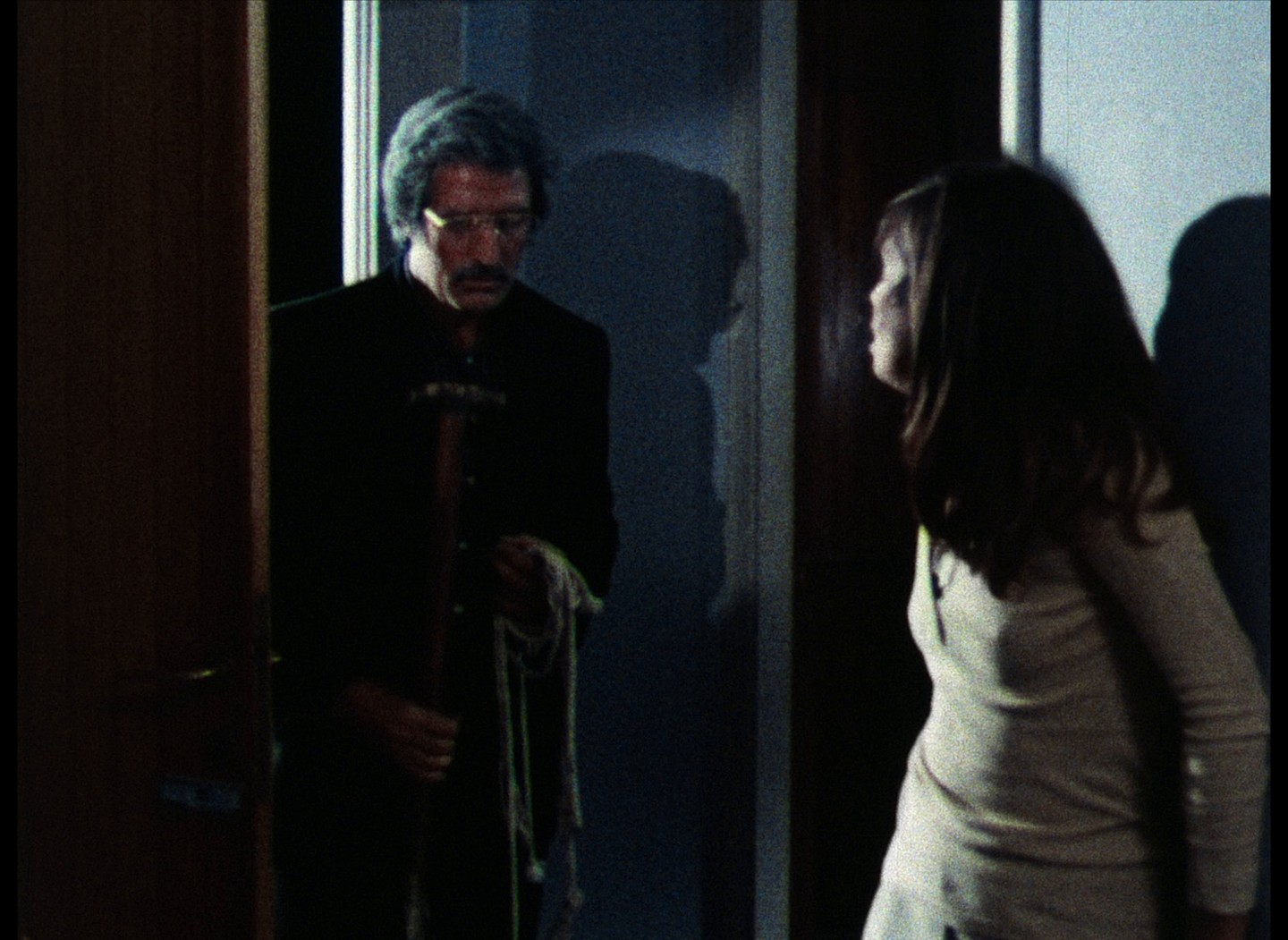
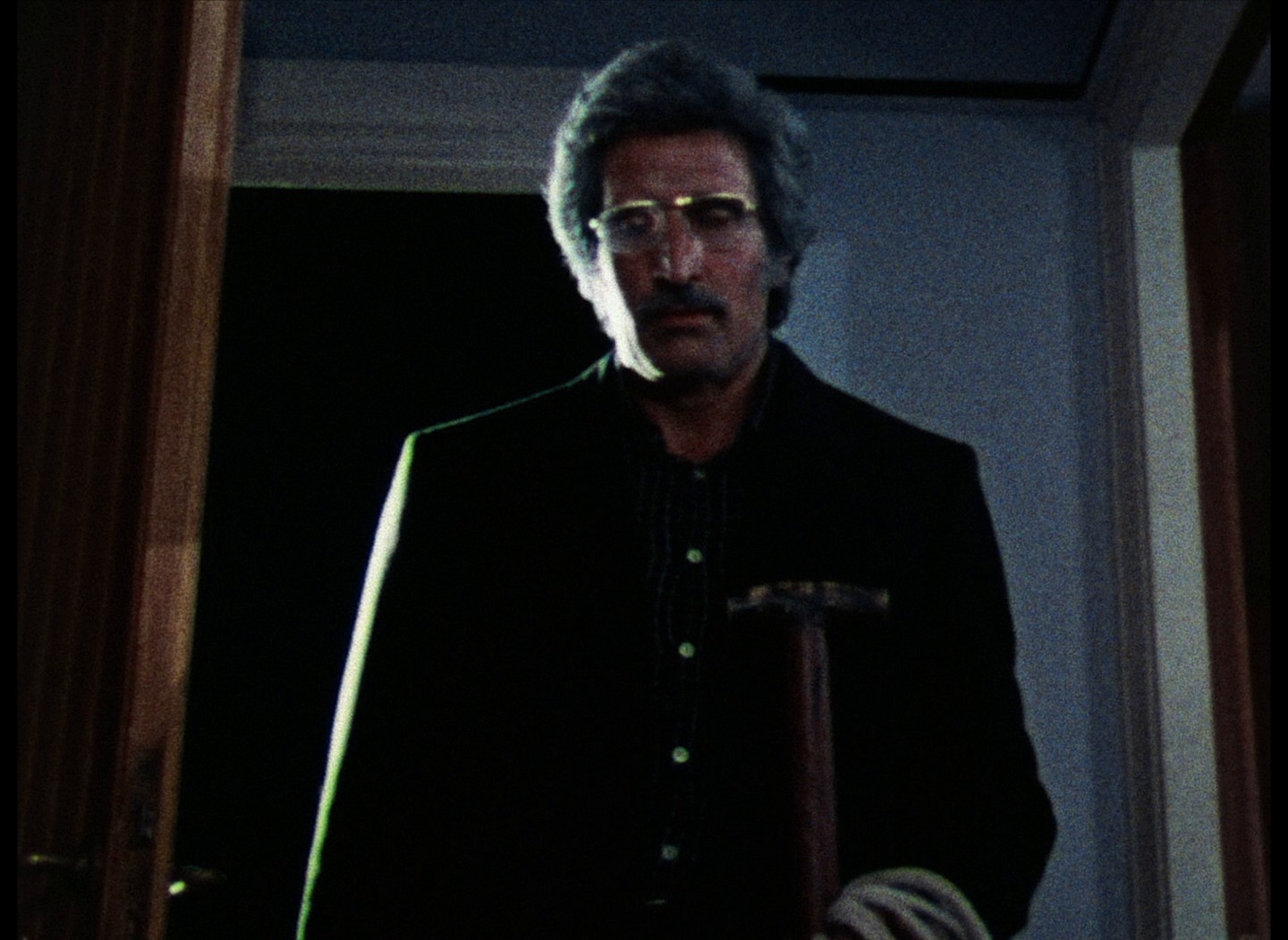
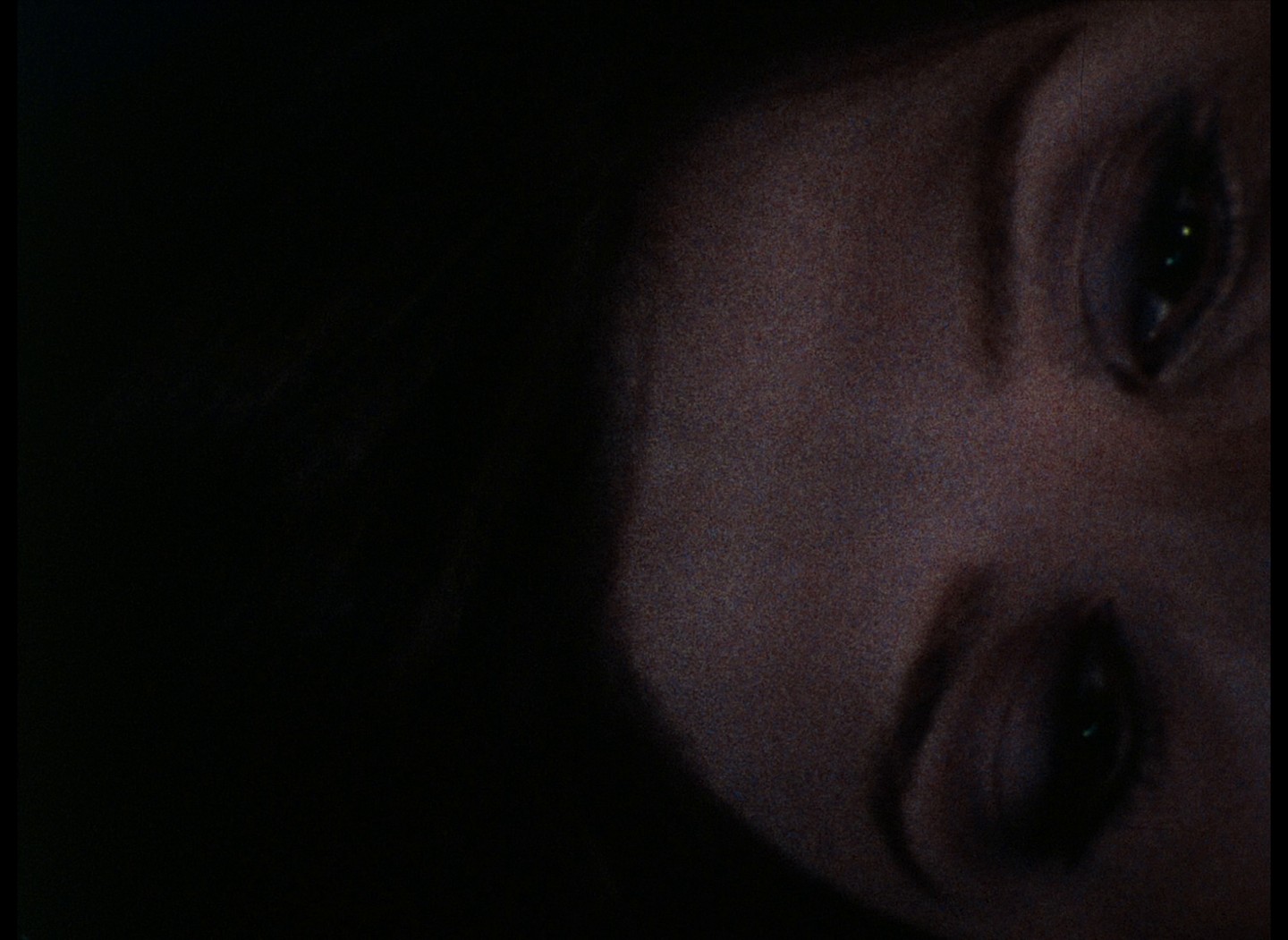
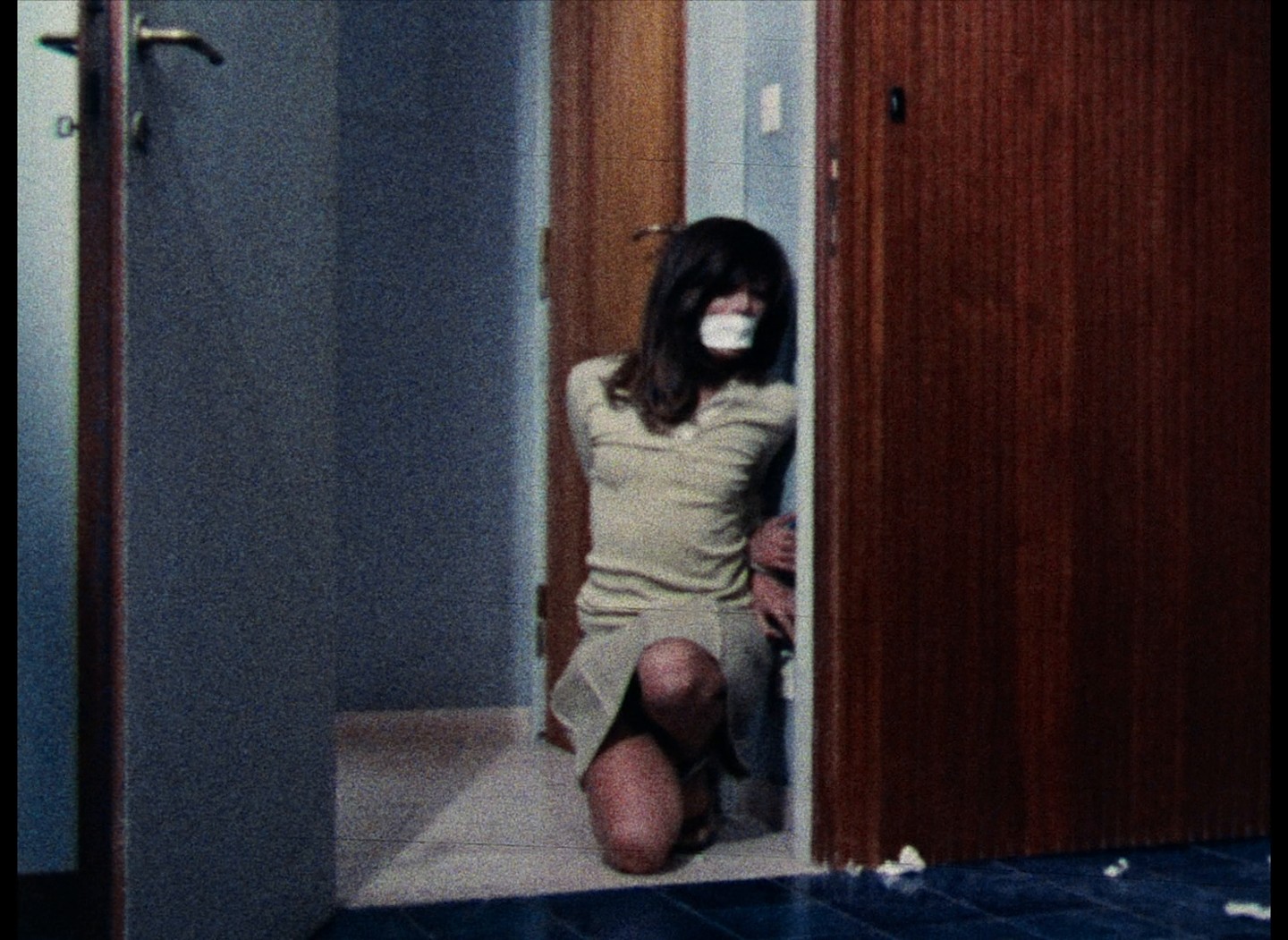
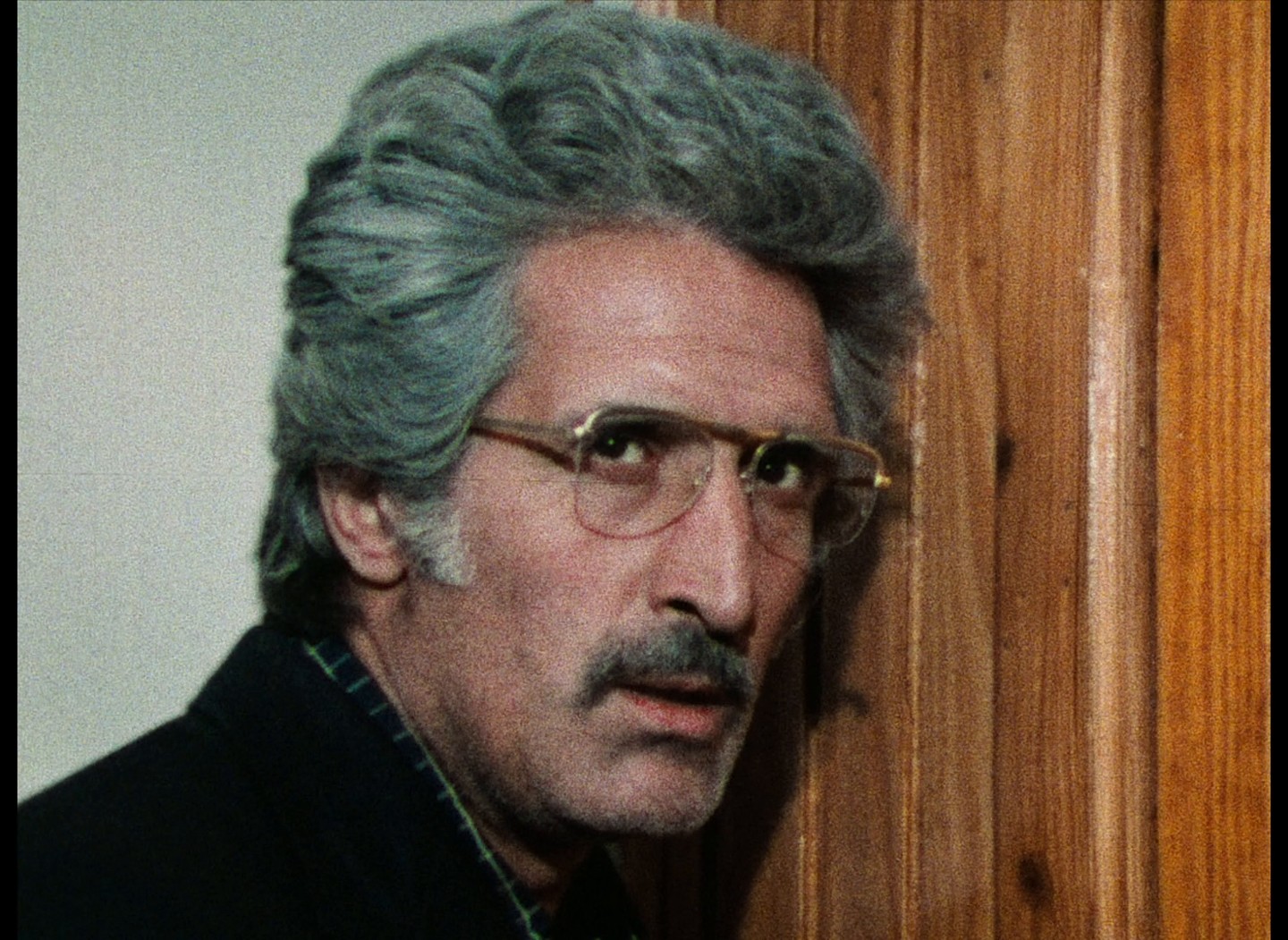
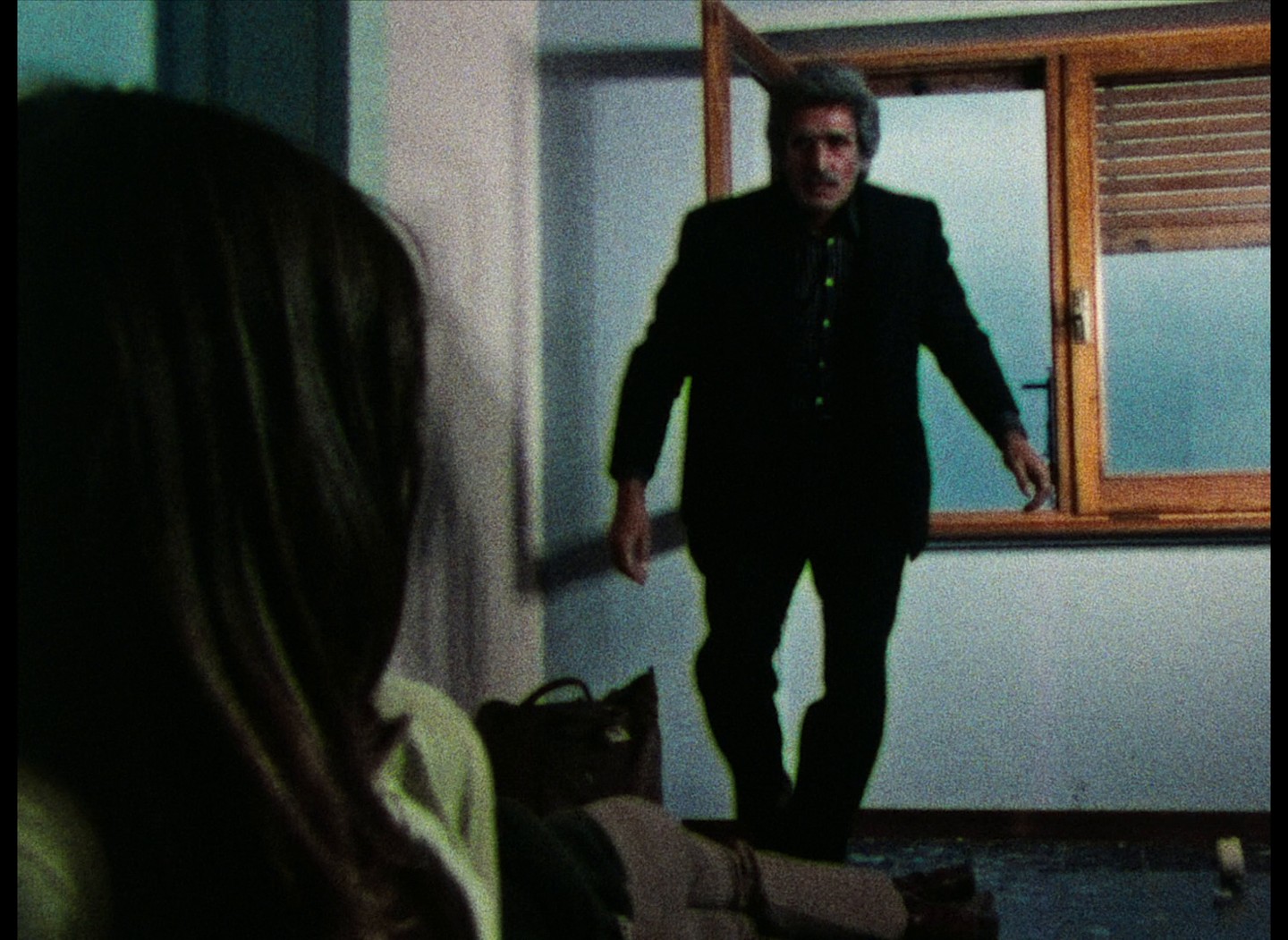
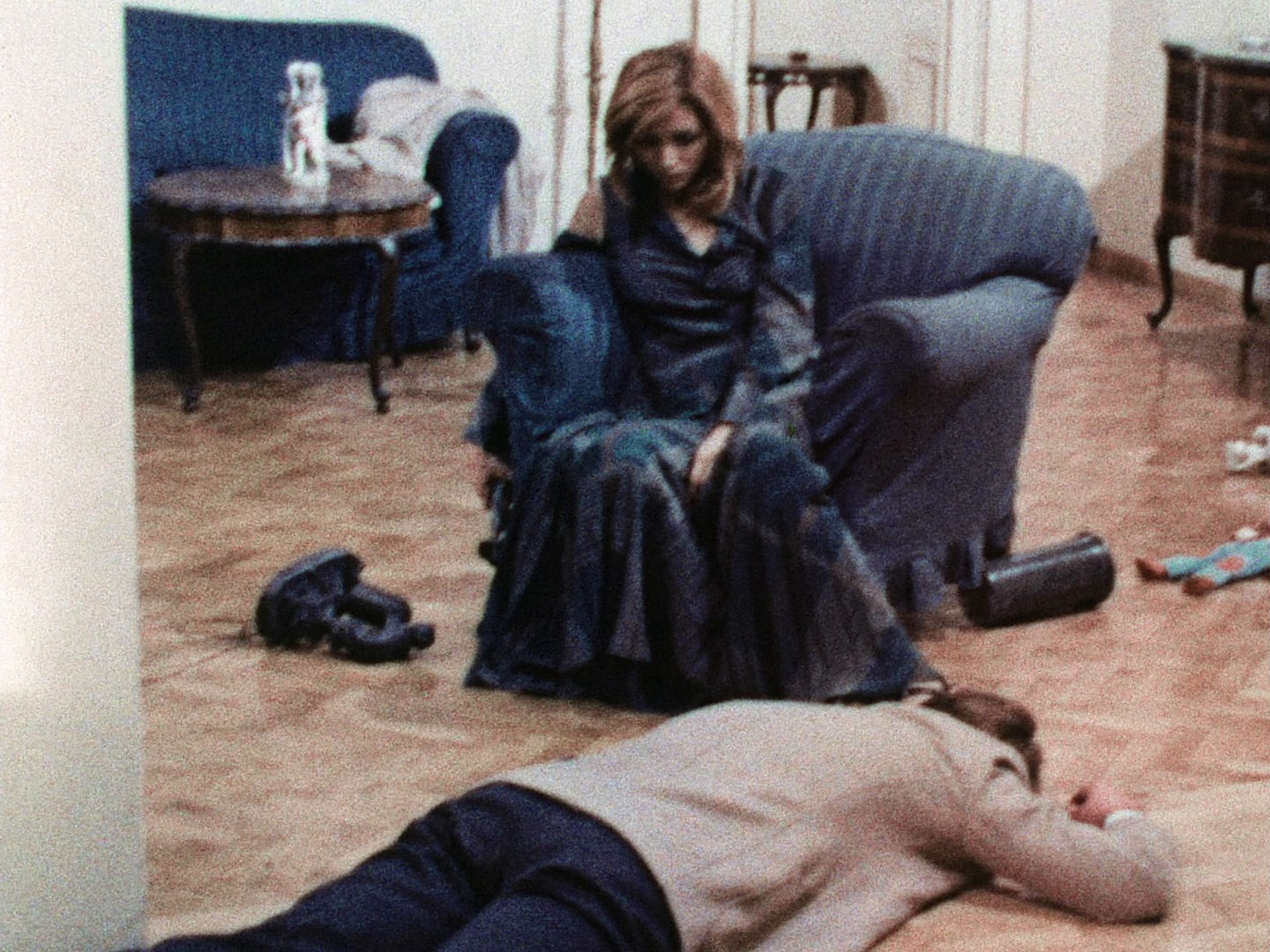
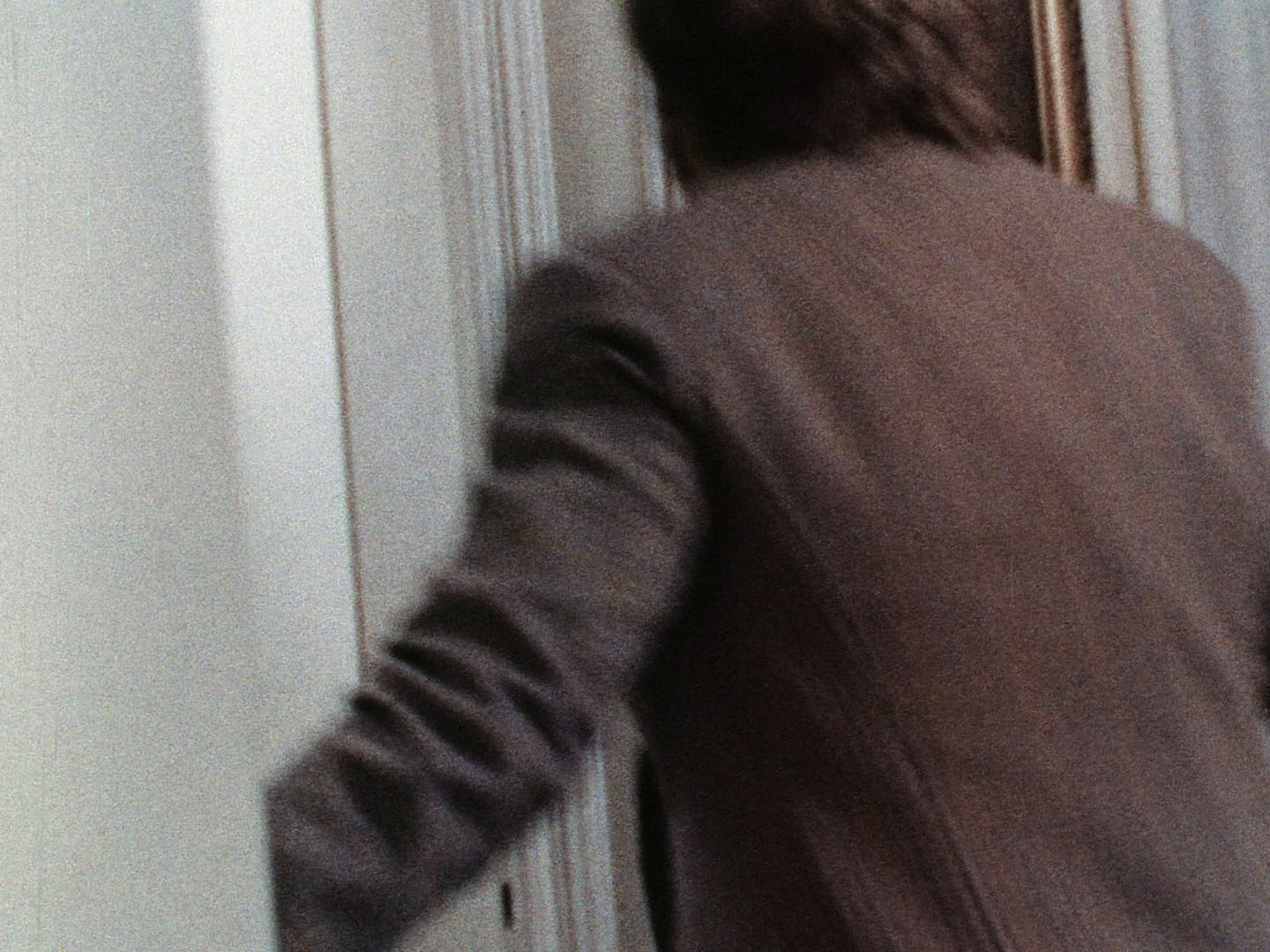
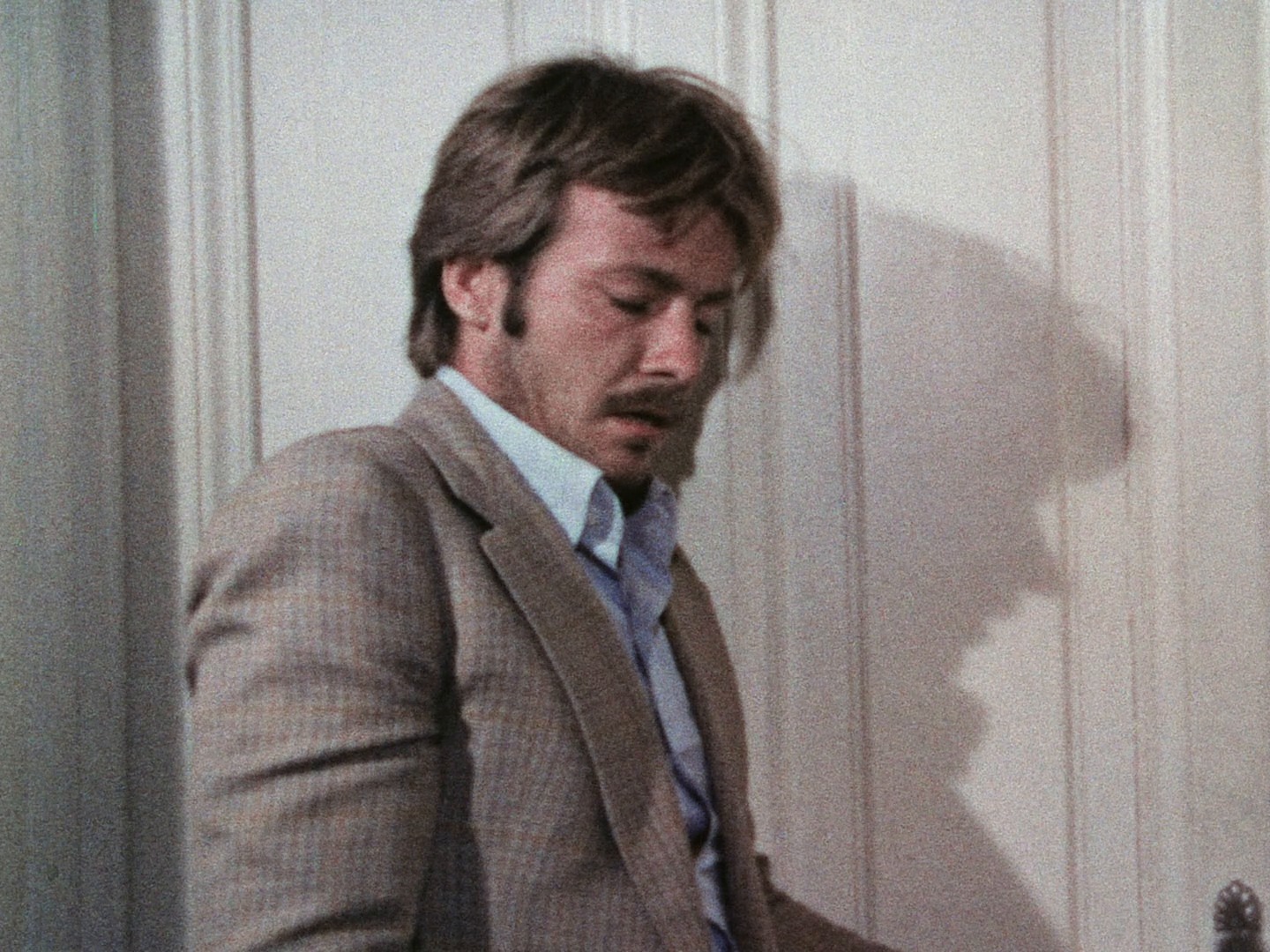
Luca’s return briefly promises that the couple have regained control. The doorway reverses that promise: Alberto appears, violence interrupts the reunion, and the image moves toward the aftermath of confinement. The threshold that should separate the couple from danger instead admits it.

Stefania works her way toward the door.

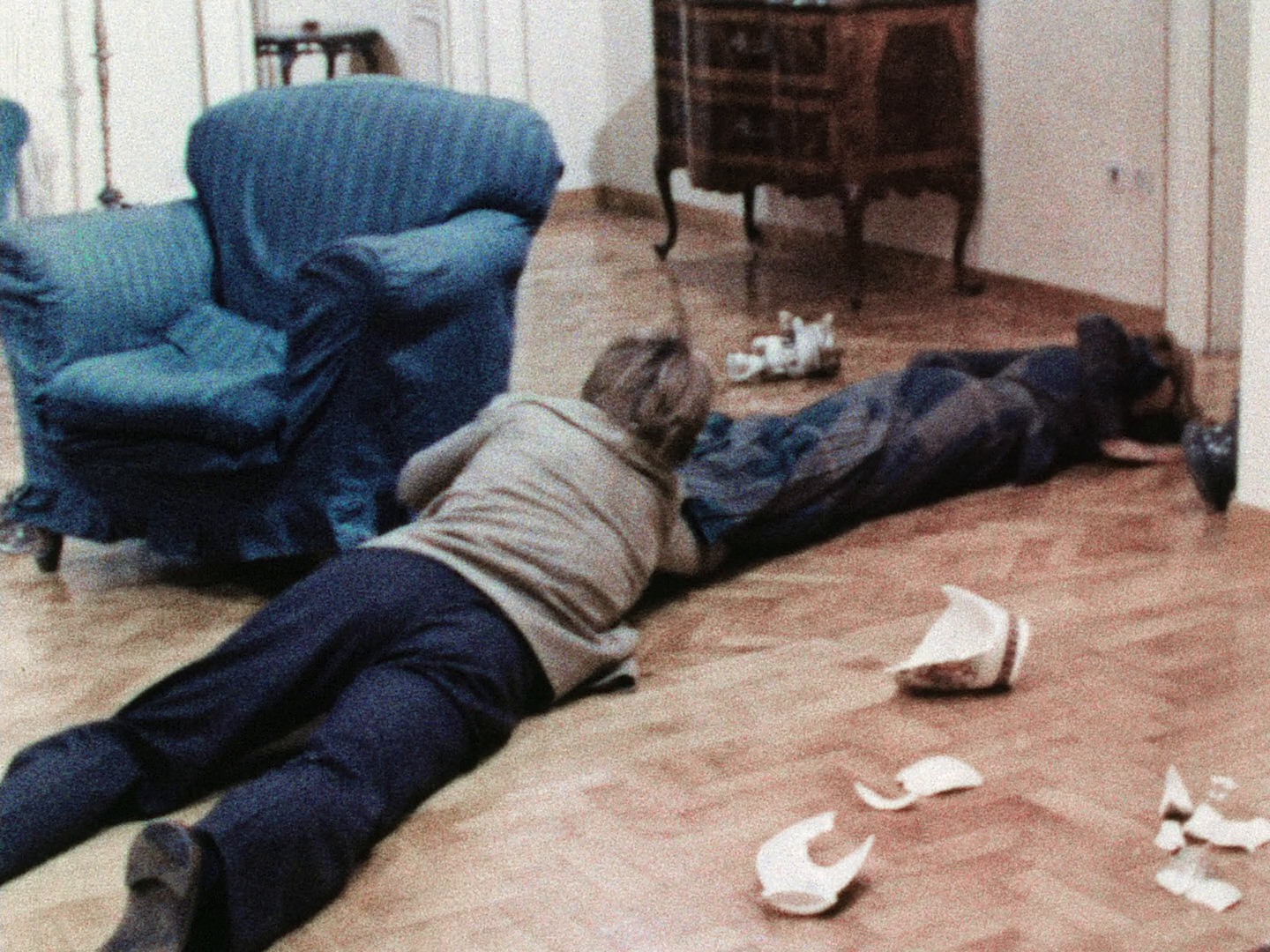
13 / 47:10

The floor becomes an escape route

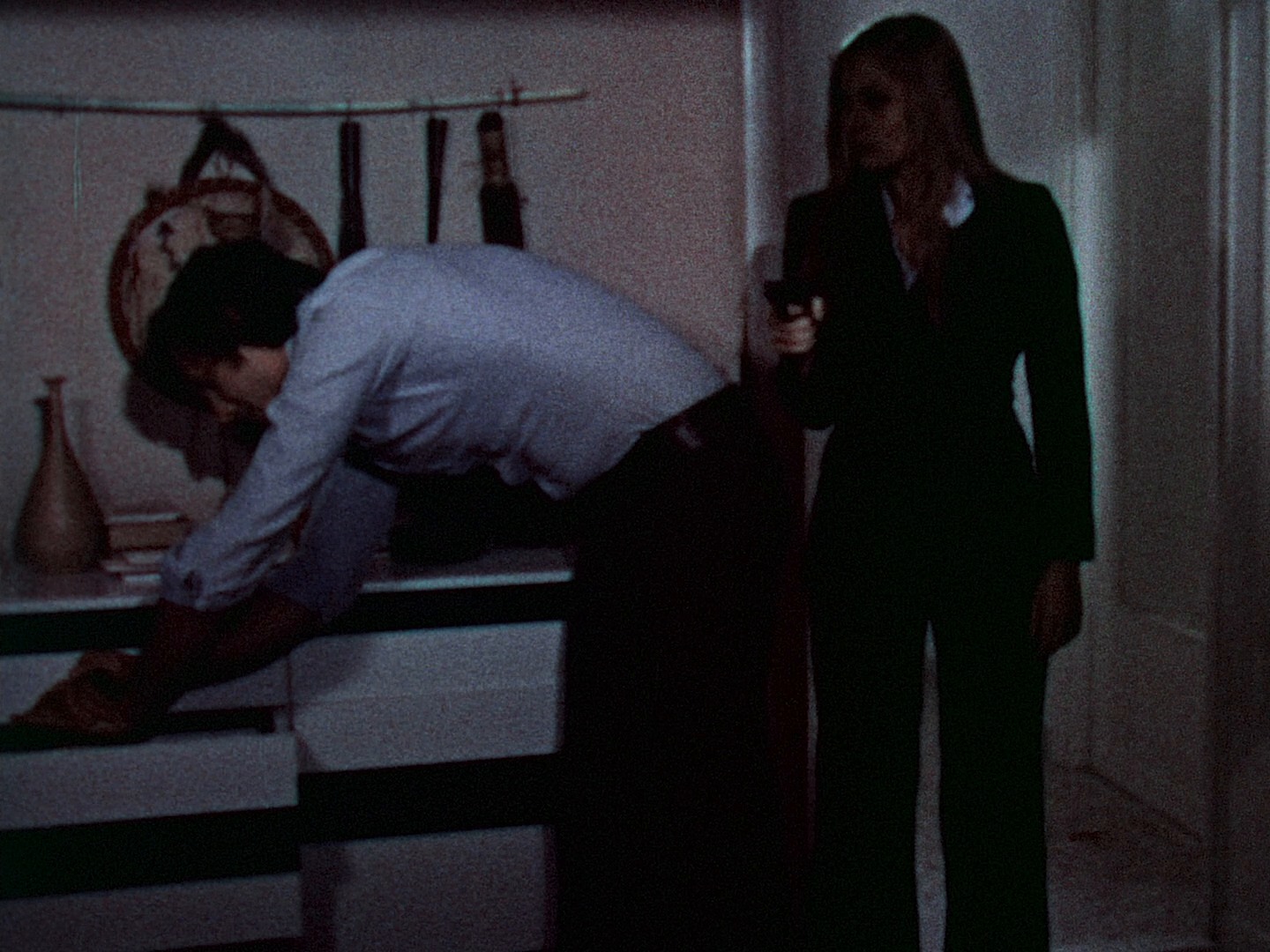
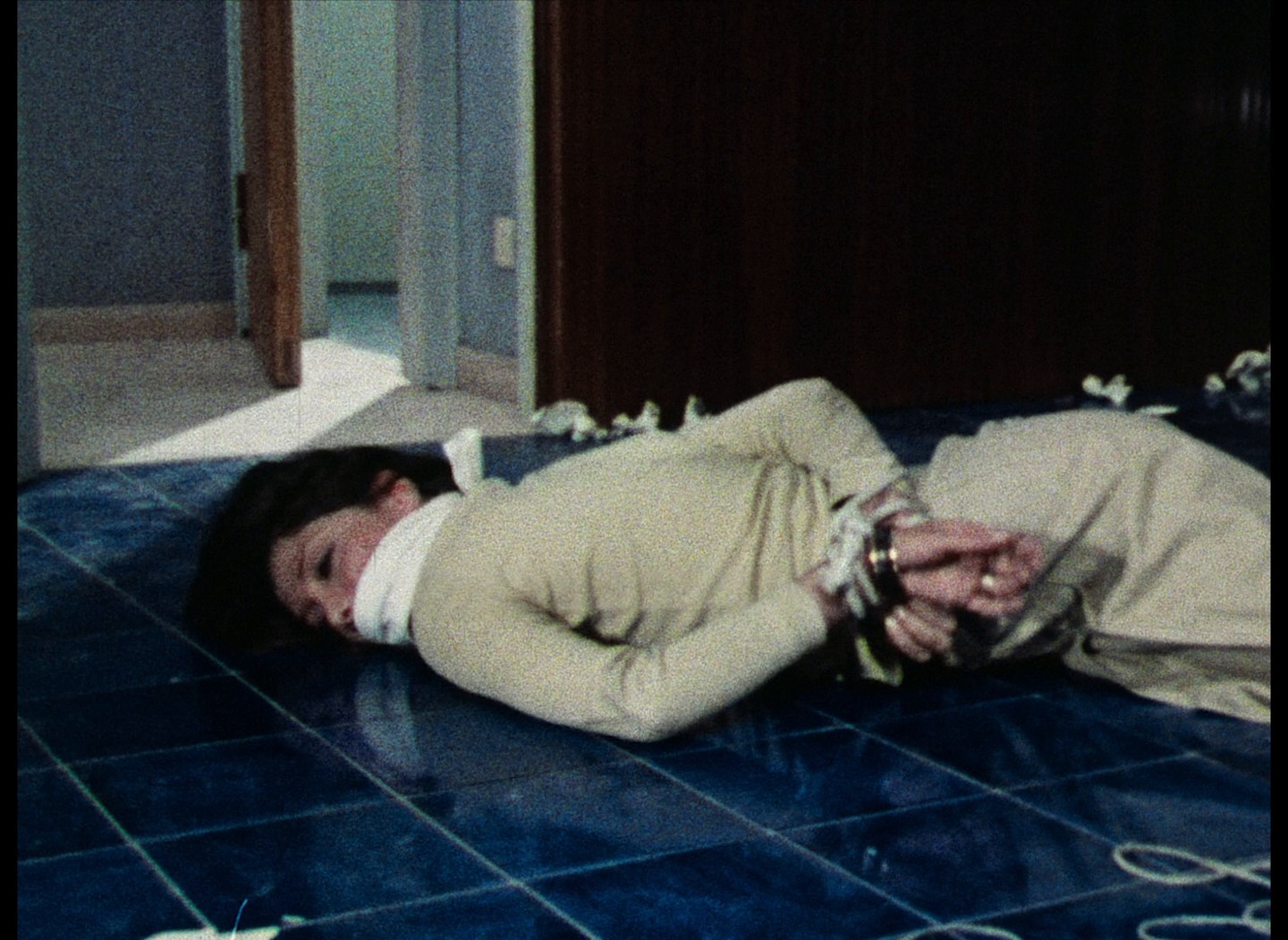
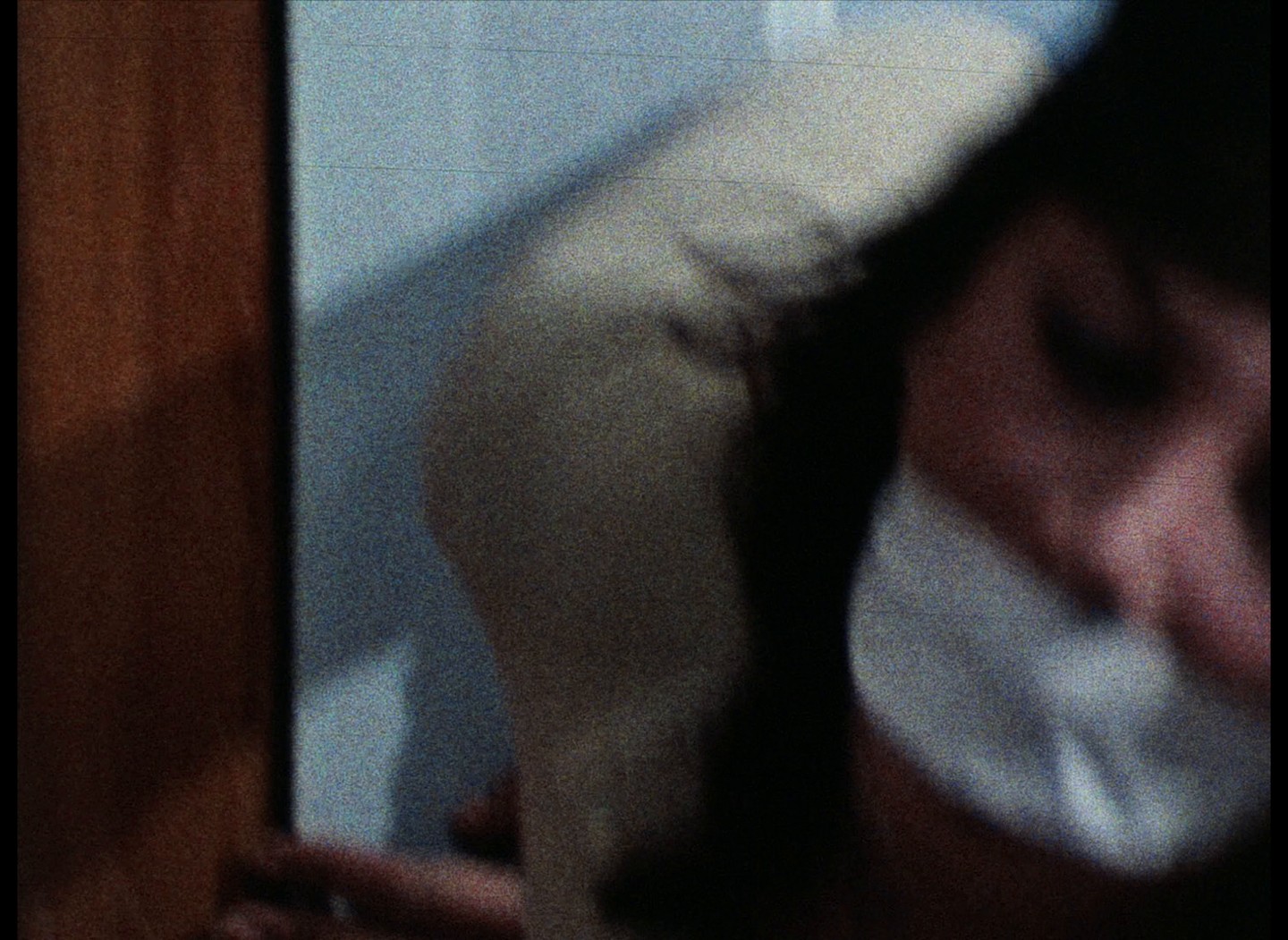
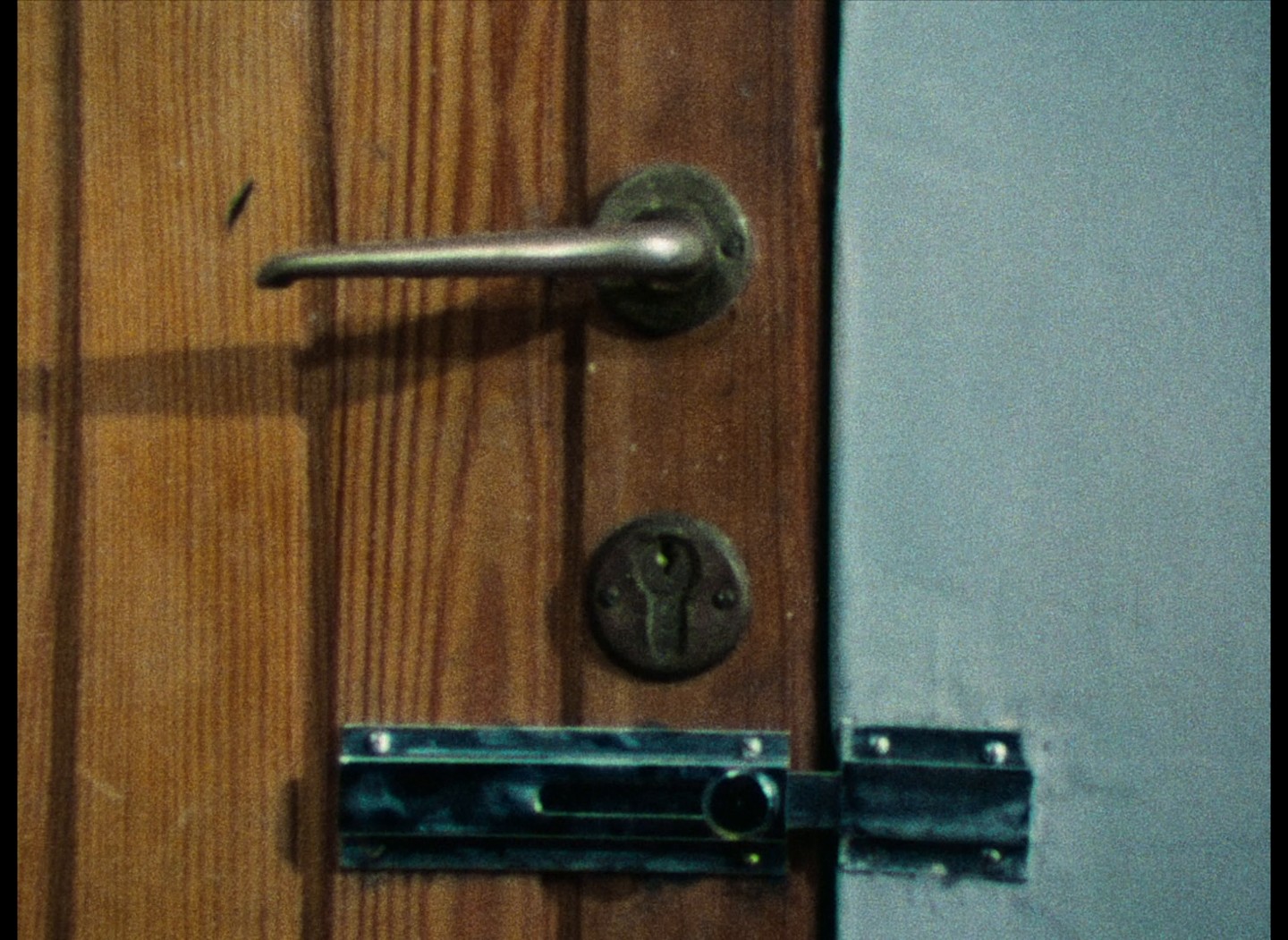
Bound and gagged, Stefania must negotiate the room at floor level. The episode alternates her slow progress with Alberto’s movements outside, giving small distances and ordinary fittings unusual importance. A door that can be secured buys time; a window offers the assailant another way back. The struggle is organised through the house’s practical layout.

Alberto answers the visitors at the doorway.

14 / 54:20

Help arrives at the wrong door

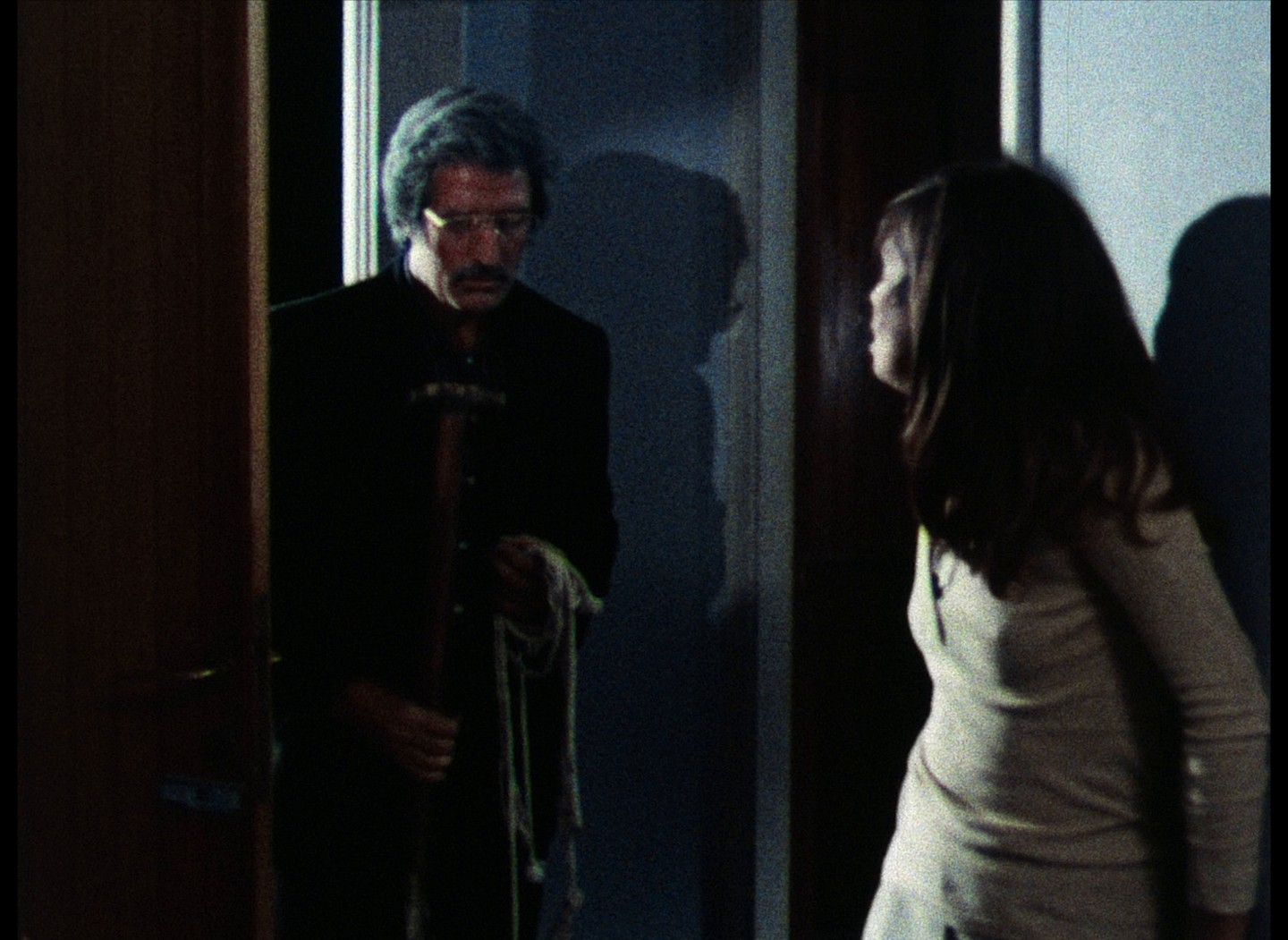
The arriving men have a reason to expect the couple, but Alberto supplies a plausible account of their absence. When the conversation reveals that a baby is also in the house, his reaction introduces information he had not controlled. The potential rescuers remain close enough to intervene and insufficiently informed to know that they should.

The baby cries while help remains outside.

15 / 56:20

The ending leaves an alarm in the house

The final movement cuts between the trapped mother, the baby, Alberto and the men outside. The child’s cry creates the possibility that the house will betray its occupant again, just as the ceiling stain did. The episode stops without turning that possibility into a completed rescue. Its last images keep the viewer between imminent discovery and renewed danger.

Explore the effects and suspense galleries →

SCENE STUDIES / IL TRAM

Looking again changes the journey.

A murder hidden in a public vehicle becomes an inquiry into observation, memory and the danger of a persuasive explanation. Episode and stills source ↗

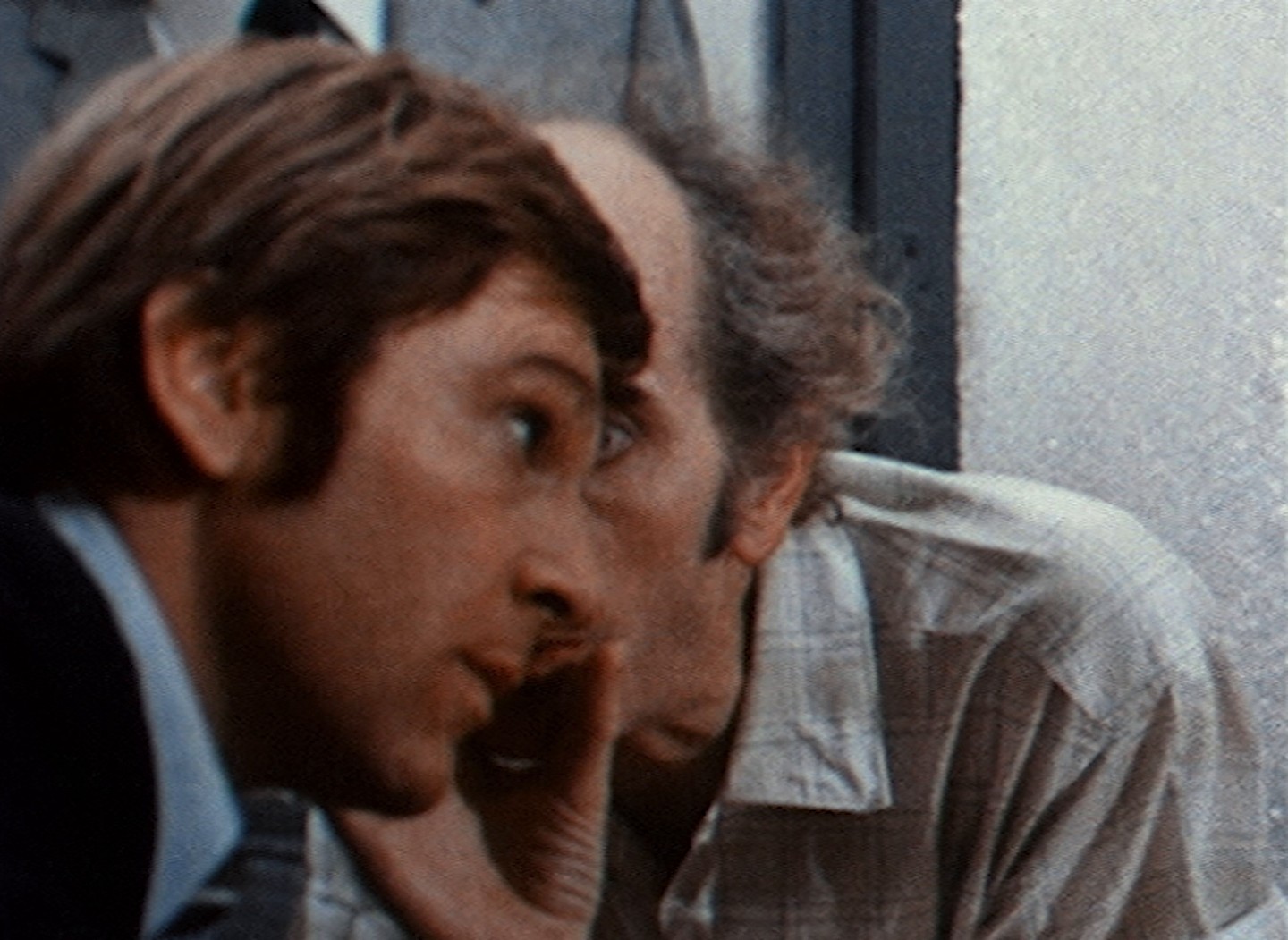
Argento introduces Cerusico beside the camera.

01 / 01:40

The host hands over to his detective

Argento begins among film equipment, describing a murder committed in full view of passengers who notice nothing. Enzo Cerusico then enters the same space as the presenter. The introduction makes the mystery an invitation to reason with the film, while the actor’s appearance briefly joins the world of production to the fiction about to begin.

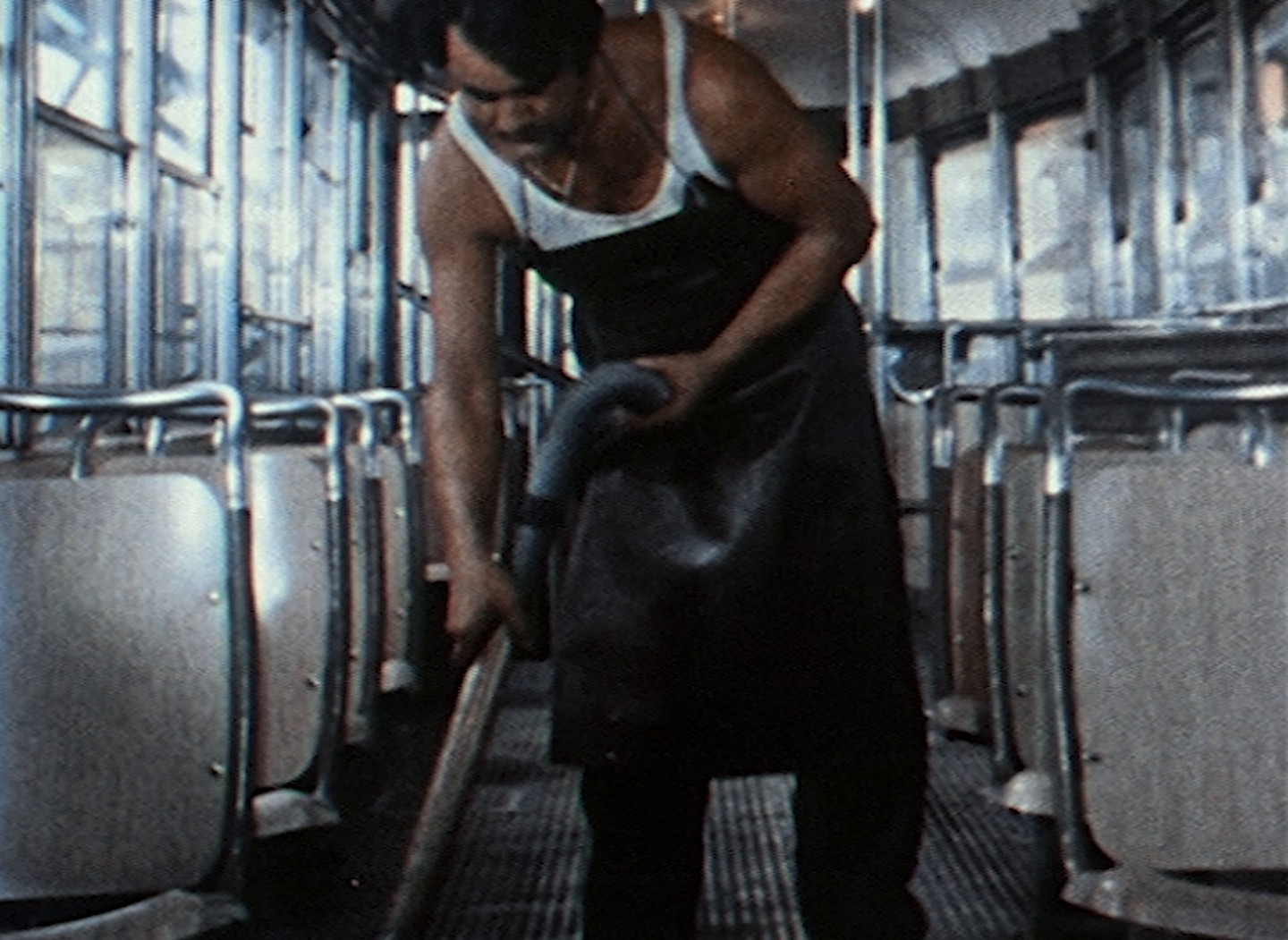
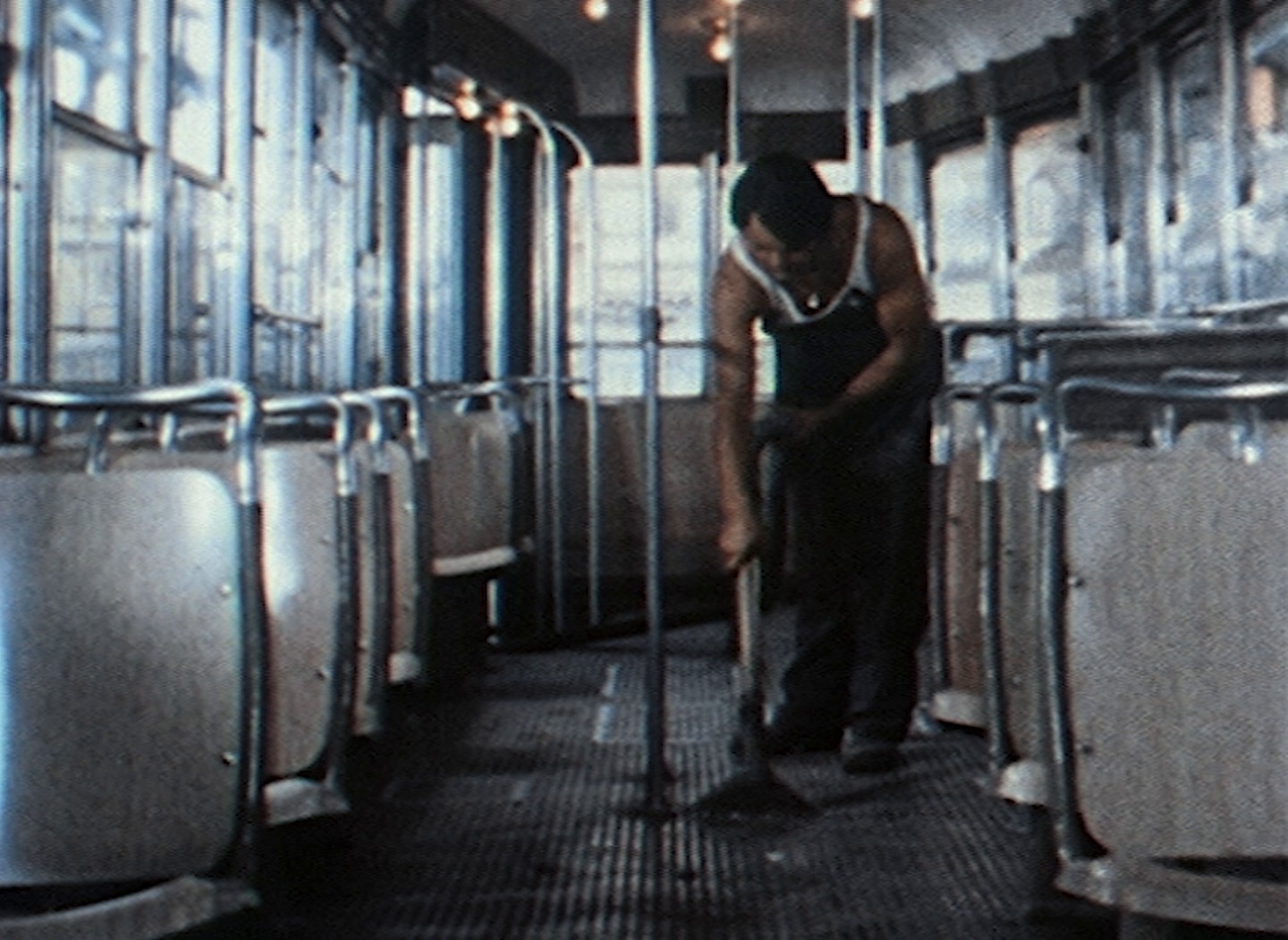
The cleaner approaches the hidden body.

02 / 03:46

A working floor conceals a body

The depot first appears as a place of routine work. A cleaner advances down the aisle, and the view follows the area his brush must reach. The discovery changes the meaning of the rows of seats: an ordinary arrangement for passengers has also provided concealment. The close view of Monica’s face establishes the death before the investigation begins. Nothing in the surrounding daylight explains how it happened.

Giordani questions the man who claims the murder.

03 / 11:40

A confession that supplies no knowledge

The man who walks into the police station offers an apparently convenient solution, then changes the number of stab wounds as Giordani questions him. The scene separates certainty of delivery from knowledge of the crime. Its comic performance also prepares a darker variation: the authorities will soon produce another convincing account that fails to establish the truth.

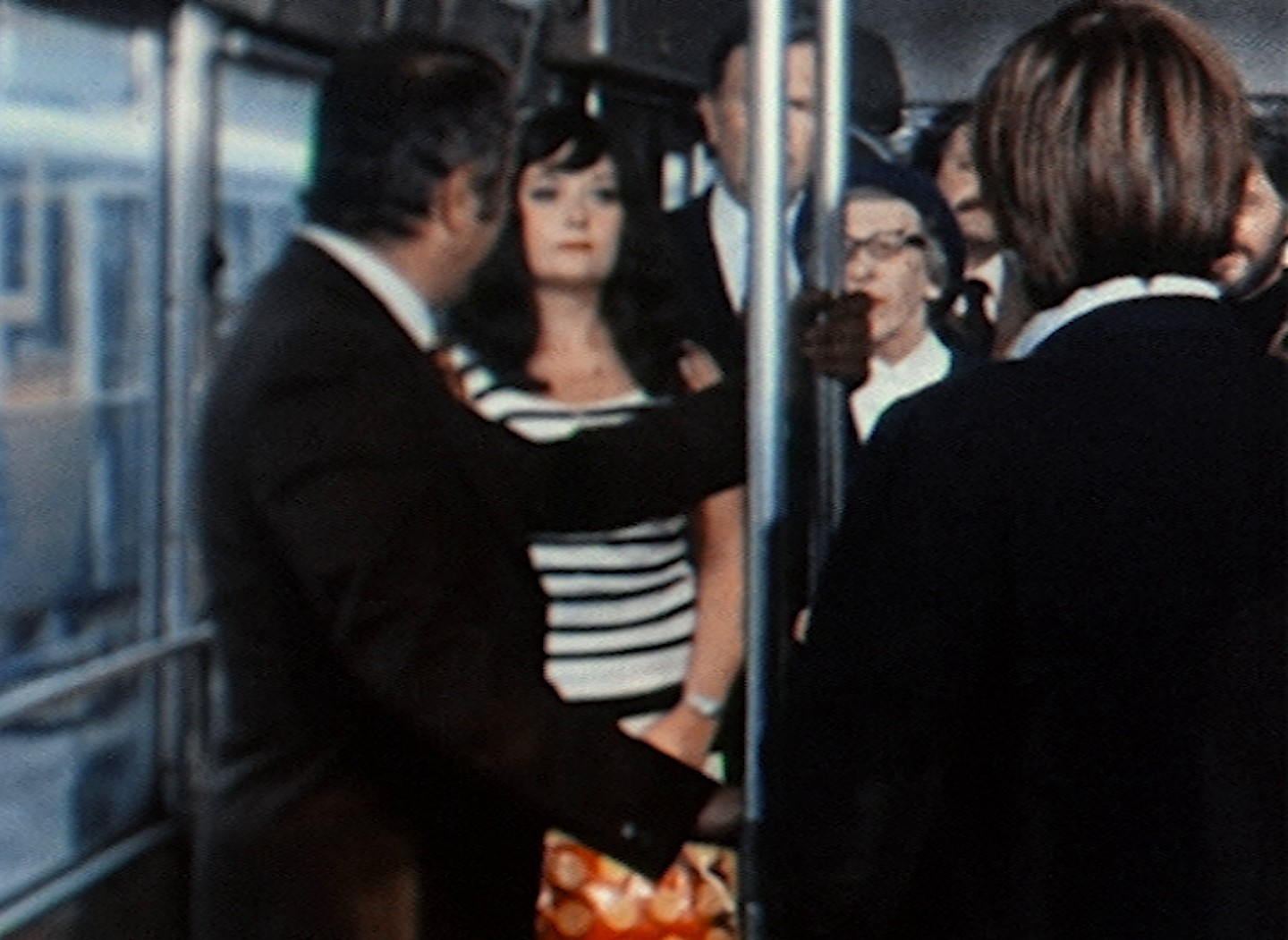
Giordani gathers the passengers for a reconstruction.

04 / 16:40

The passengers become a cast

The reconstruction turns the tram into a small stage. Passengers repeat their entrances, choose their seats and dispute one another’s recollections while the police take notes. The aisle and vertical poles divide the group without separating them into different locations. The journey is being performed again, but agreement about who sat where does not yet explain what anyone could actually see.

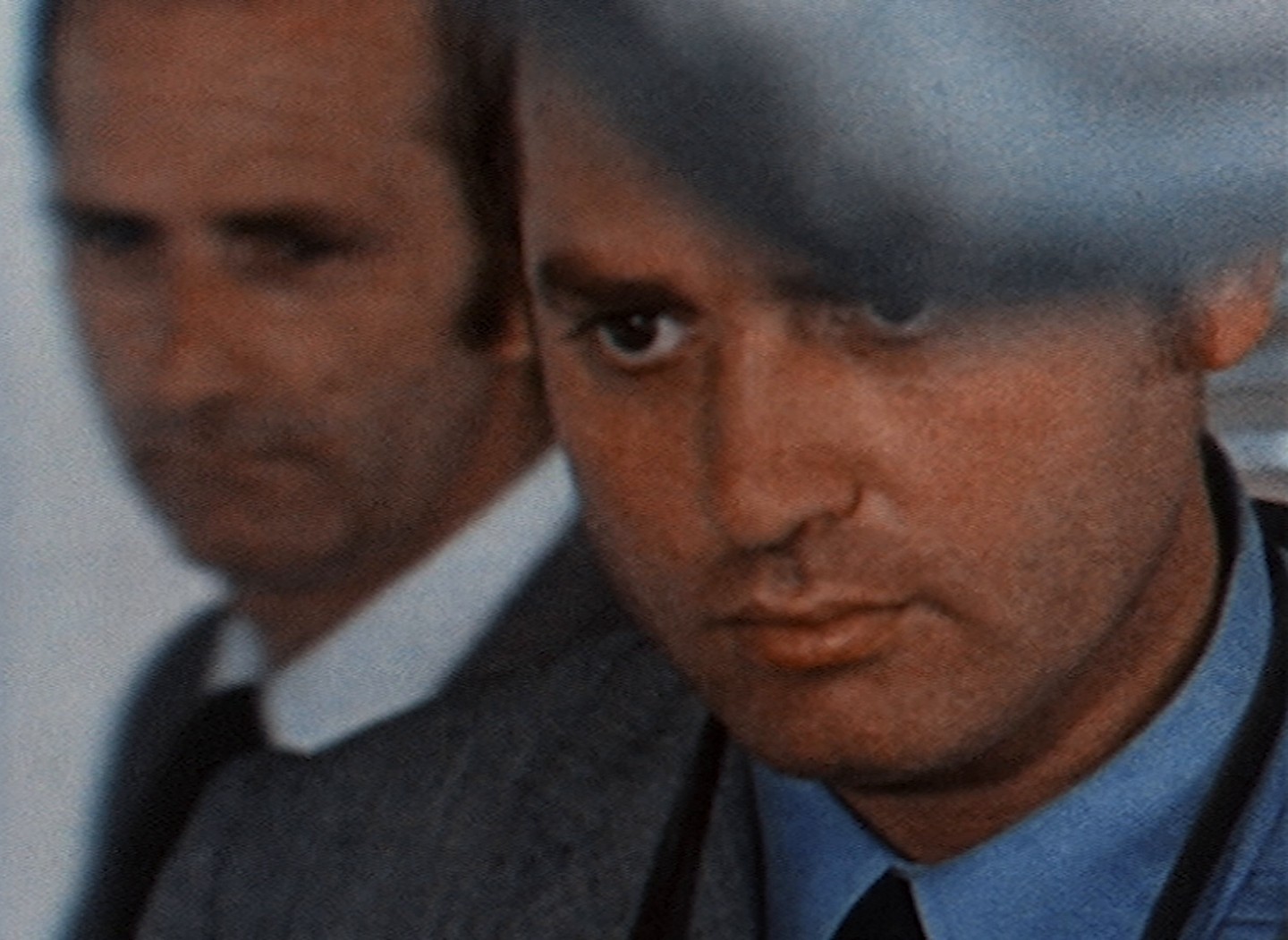
Reflections cross a passenger’s face.

05 / 18:40

Windows complicate the witness’s face

During the reconstruction, faces, windows and passing streets occupy the same view. Reflections interrupt the clean separation between a person giving evidence and the environment being described. The film keeps the witnesses physically present while making their image less straightforward. It is an apt visual form for a group that remembers details confidently but cannot assemble the event.

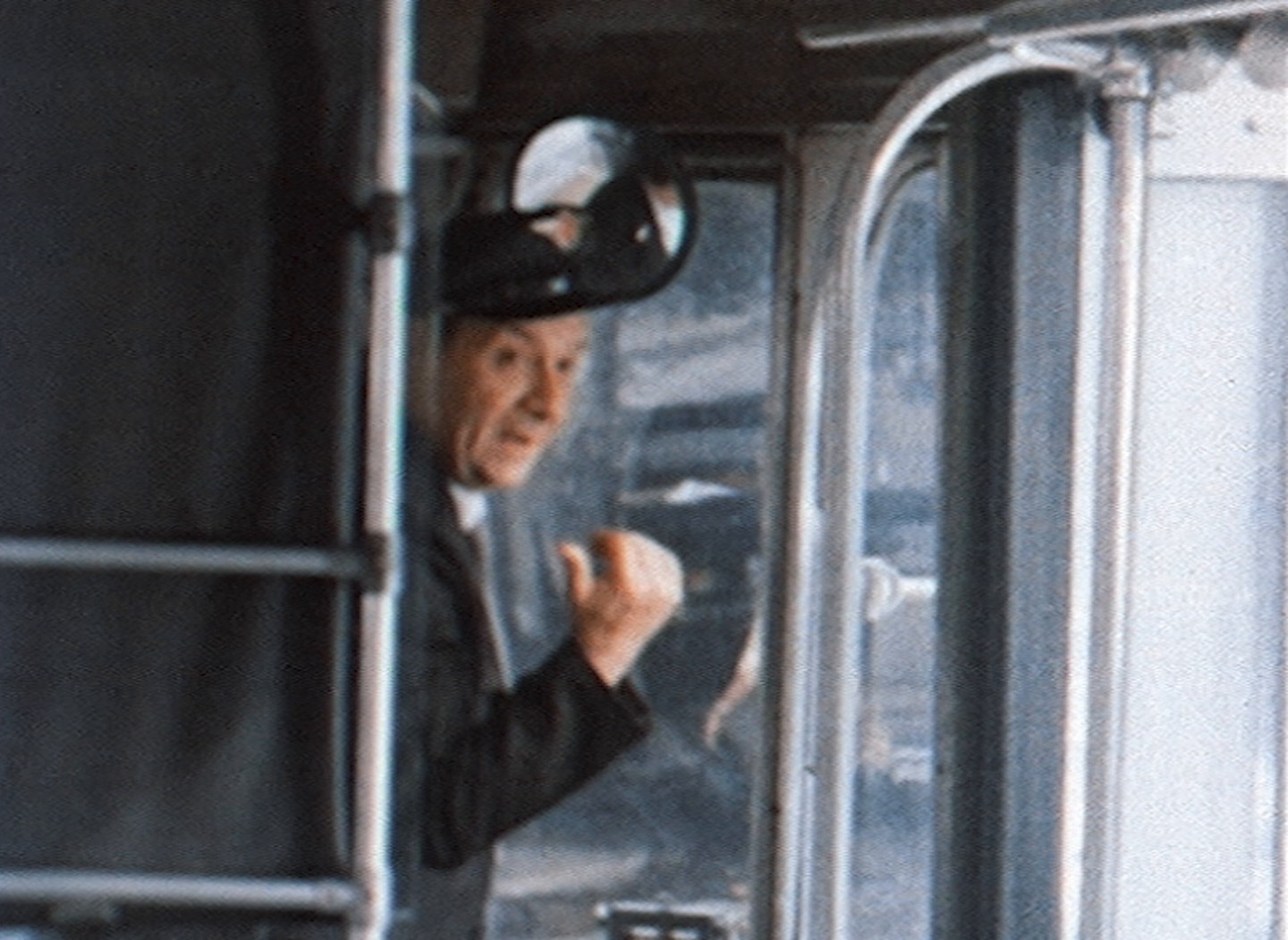
The driver’s mirror leaves part of the tram unseen.

06 / 26:40

A mirror is only a partial witness

Giordani’s questions expose the limit of the driver’s mirror: it does not cover the entire passenger space or keep the collector under observation. The mirror therefore supplies less security than the detective initially assumes. This exchange advances the accusation against Magli, but the later night journey will show why establishing one blind spot is not the same as understanding the whole moving vehicle.

Two investigators confront Magli across the table.

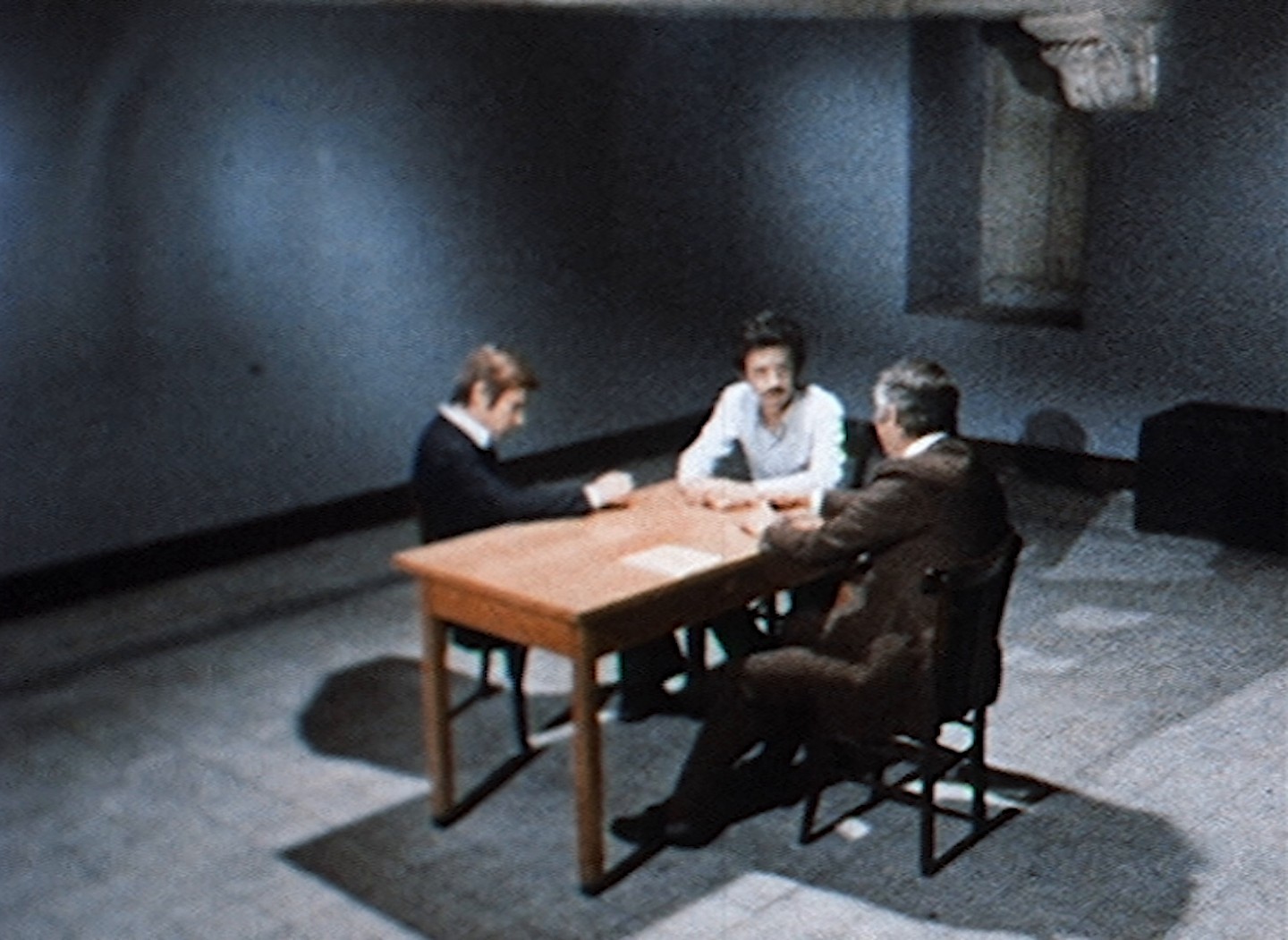
07 / 28:00

Pressure makes a theory look complete

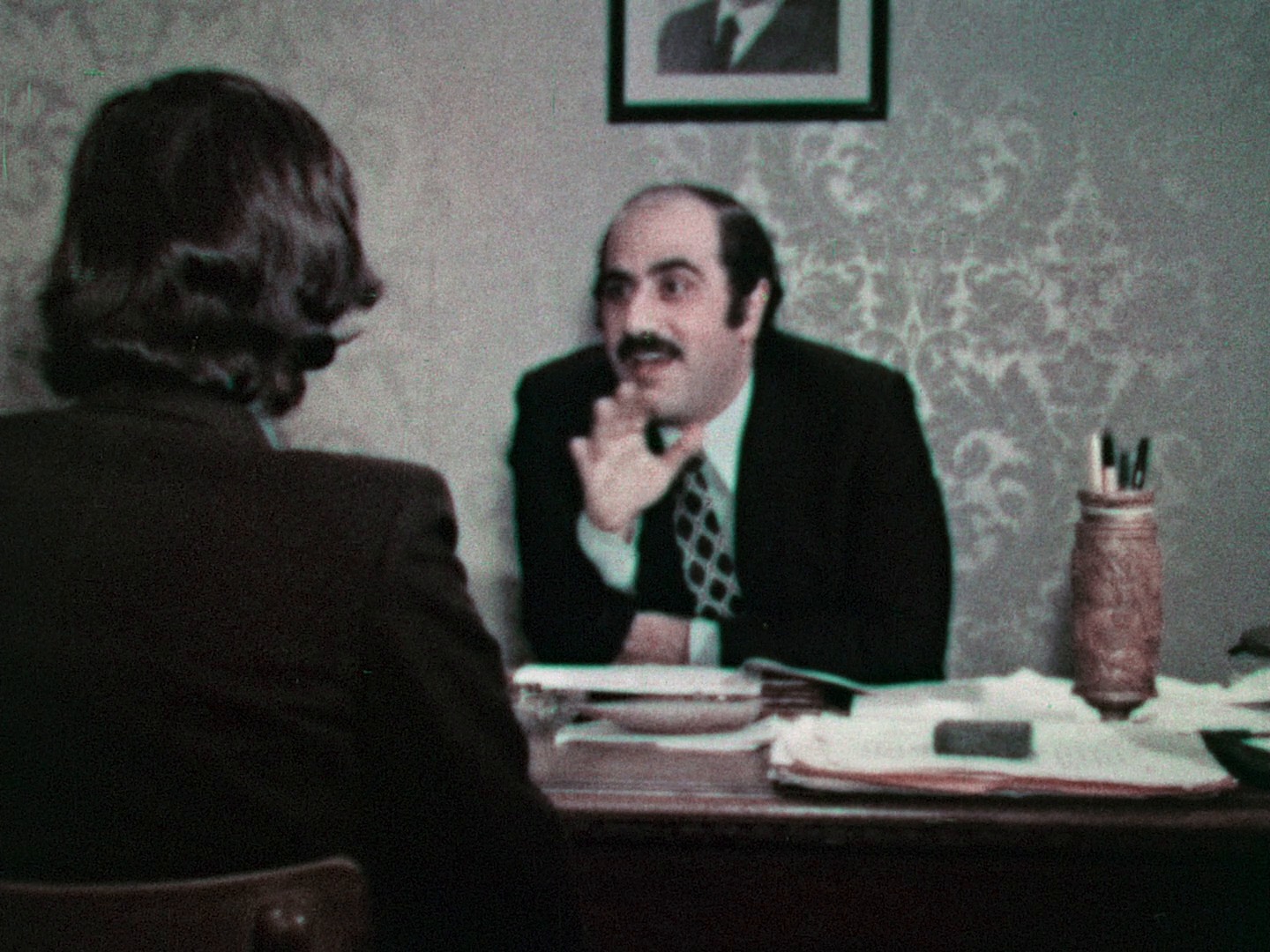
The interrogation reduces the spacious tram to a bare room and a table. Giordani and his colleague press Magli with the harassment complaint, his attraction to Monica and the knife found in his locker. Their questions increasingly contain the answers they want. The high, distant view exposes the imbalance between the seated suspect and the two investigators. The scene’s force comes from watching circumstances harden into a story before the geometry of the crime has been solved.

Magli protests between the uniformed guards.

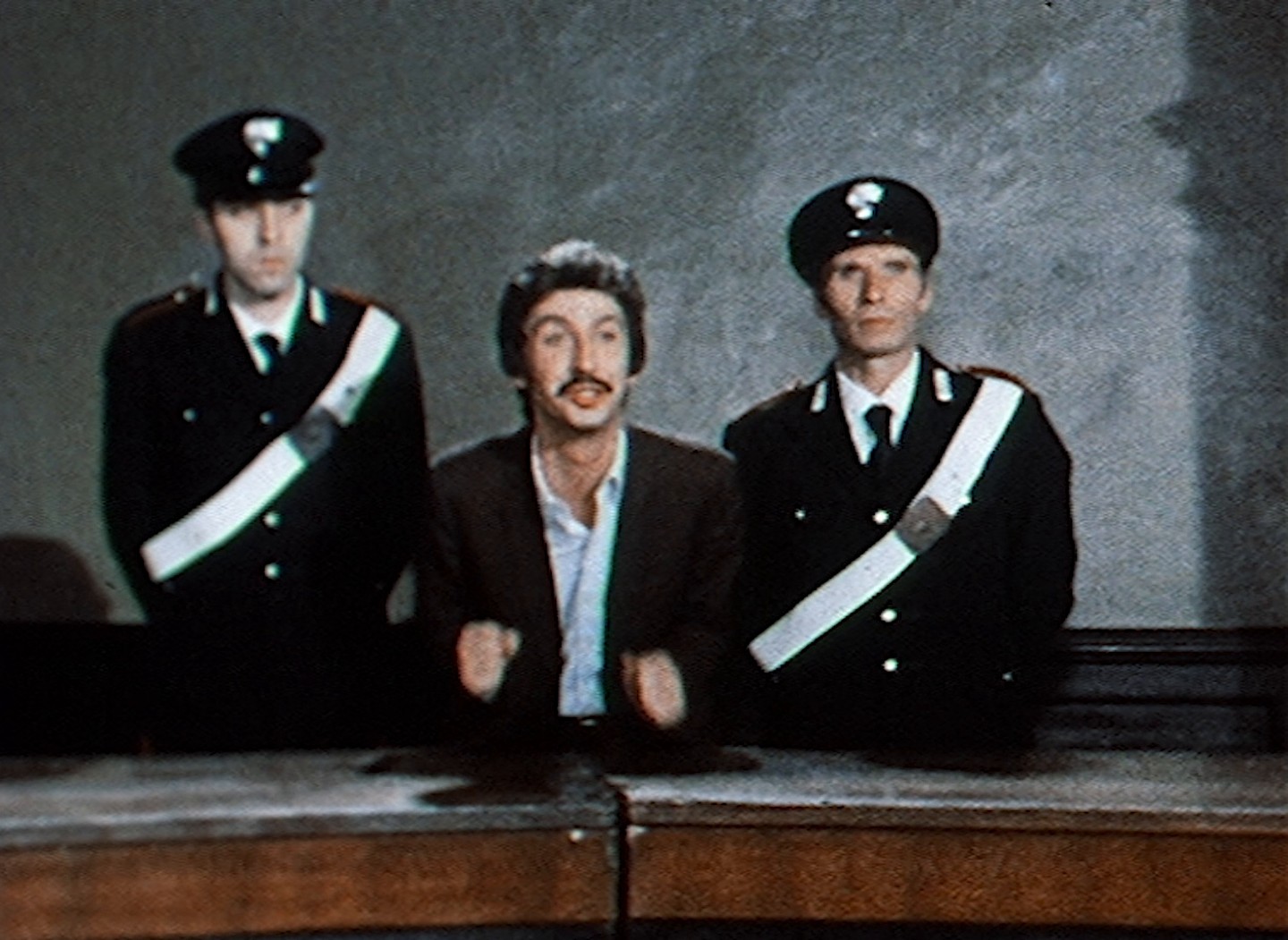
08 / 32:00

The suspect refuses the story told for him

The courtroom passage makes Magli’s vulnerability explicit. His lawyer asks for mercy while he demands to be believed. The guards’ symmetrical positions frame a man whose words no longer control his own case. His protests continue to trouble Giordani after the hearing; institutional agreement has not removed the detective’s uncertainty.

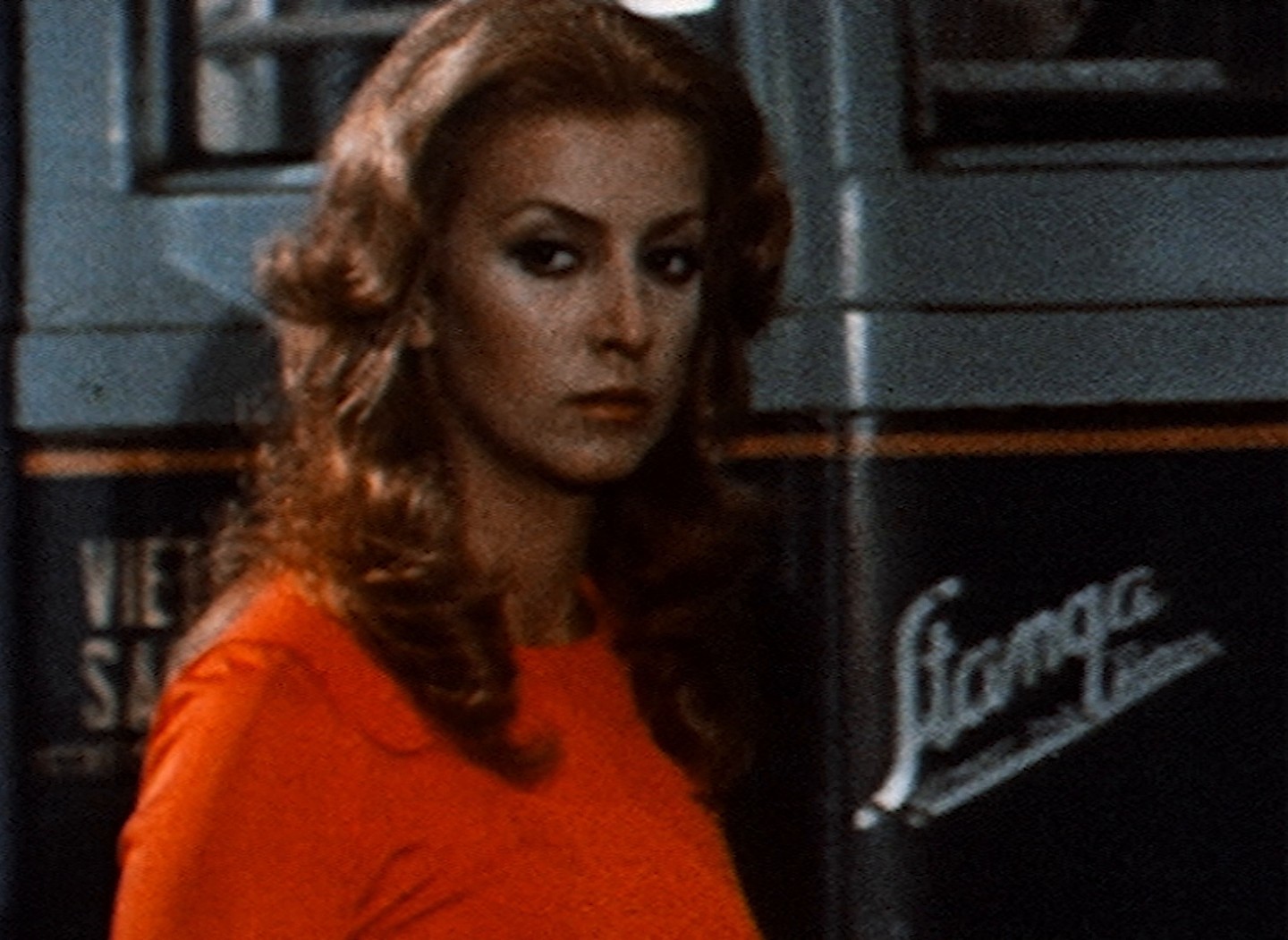
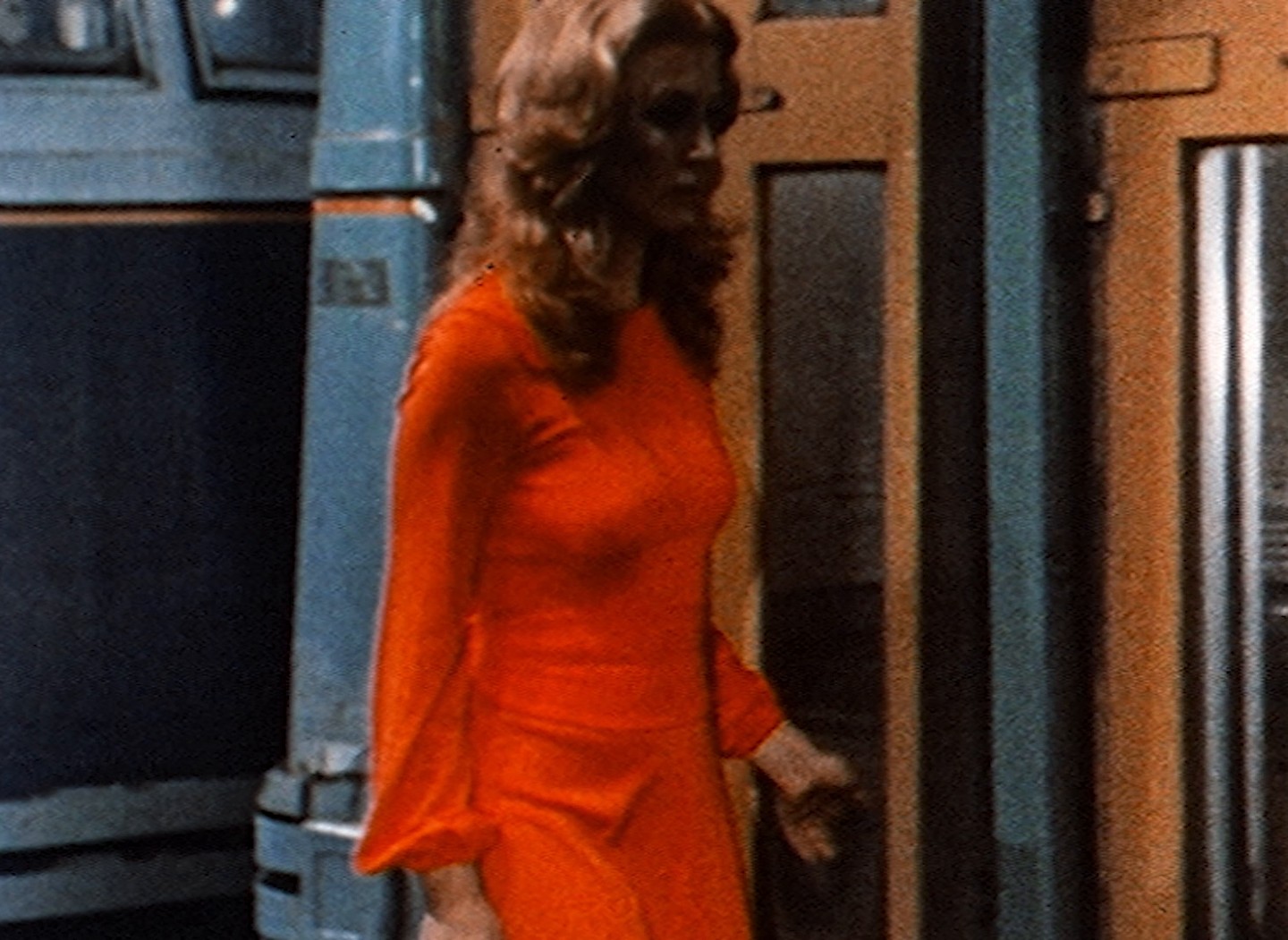
Giulia and Giordani wait for the night tram.

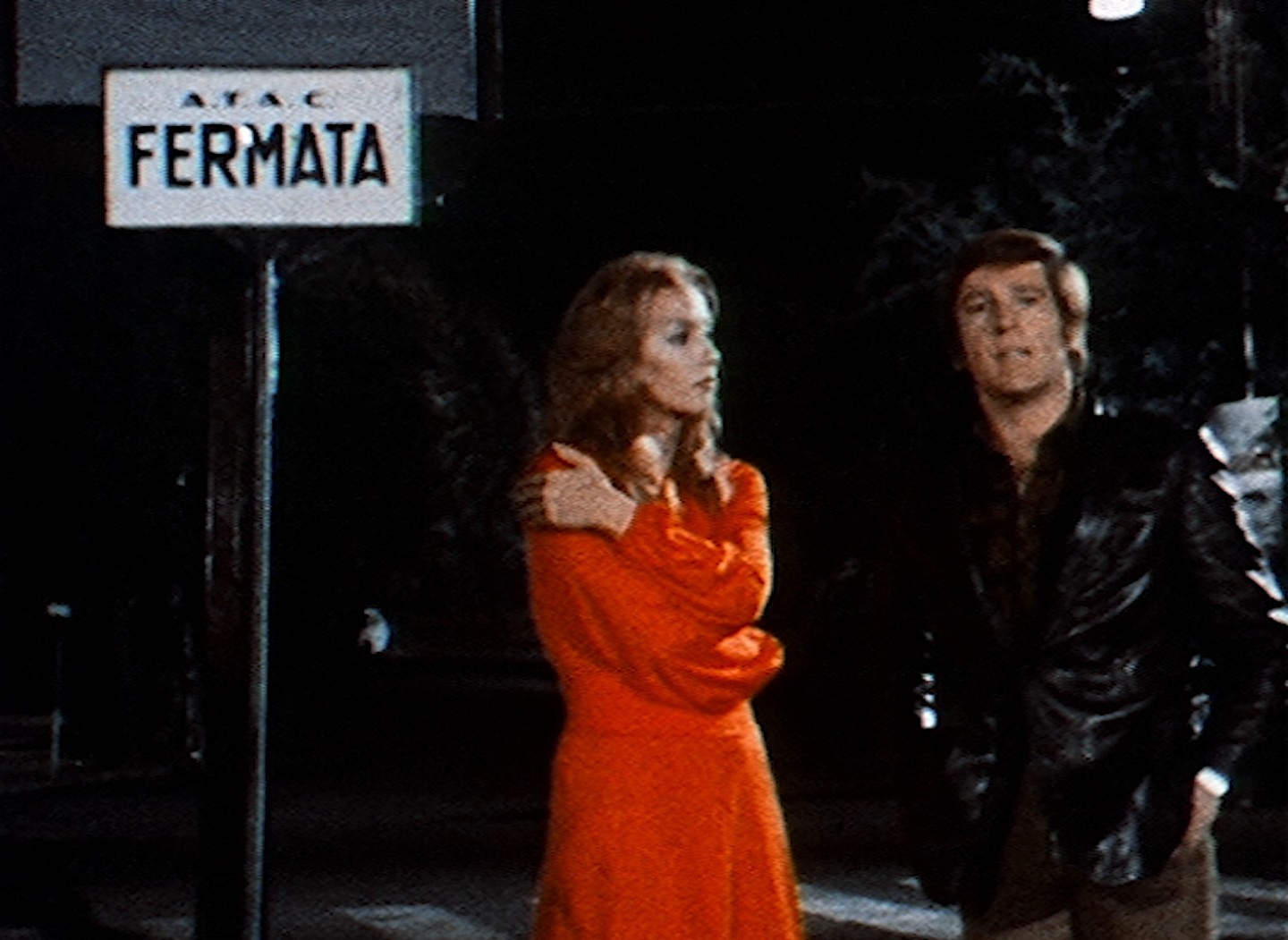
09 / 36:20

The reconstruction returns to the night

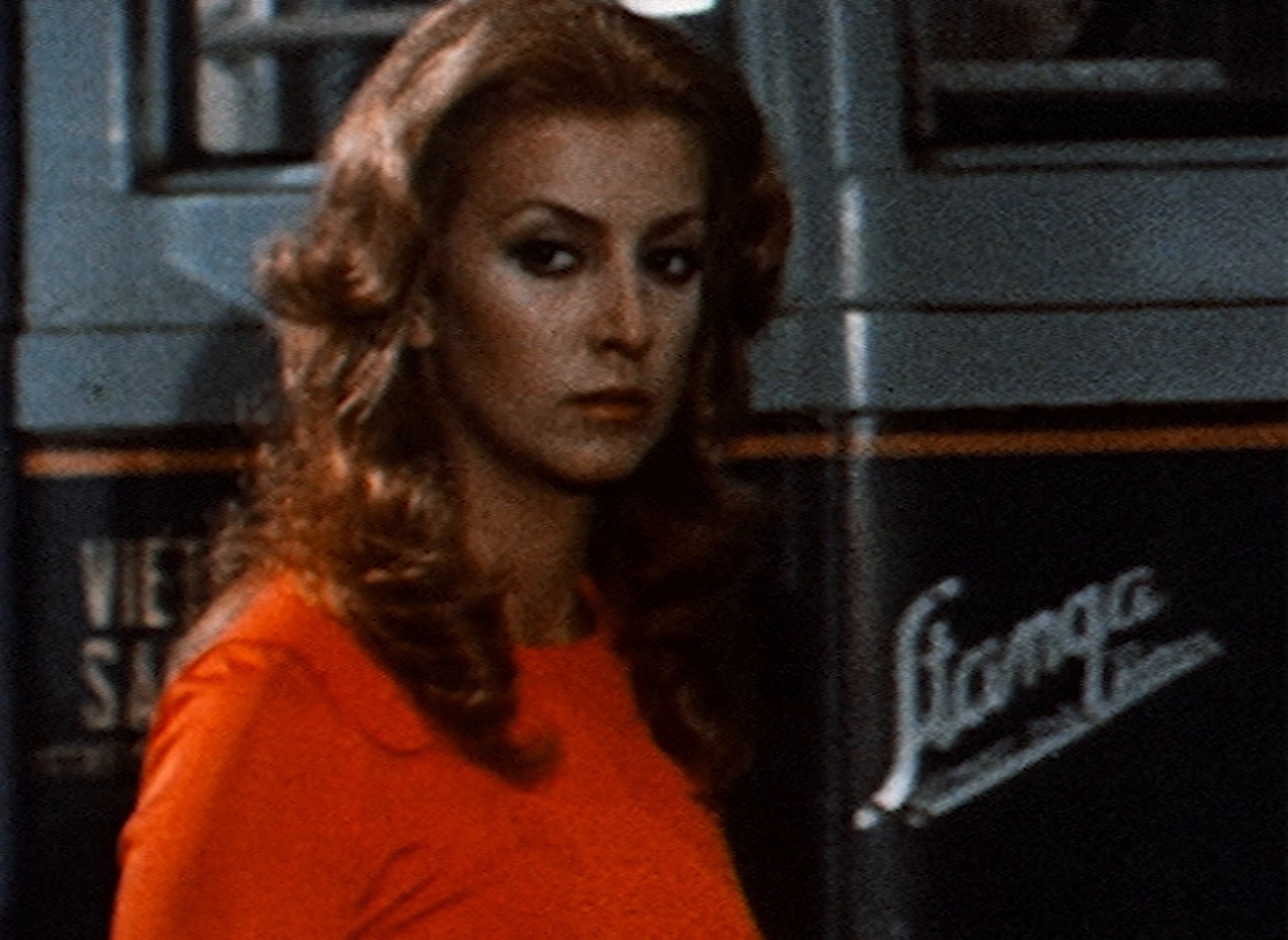
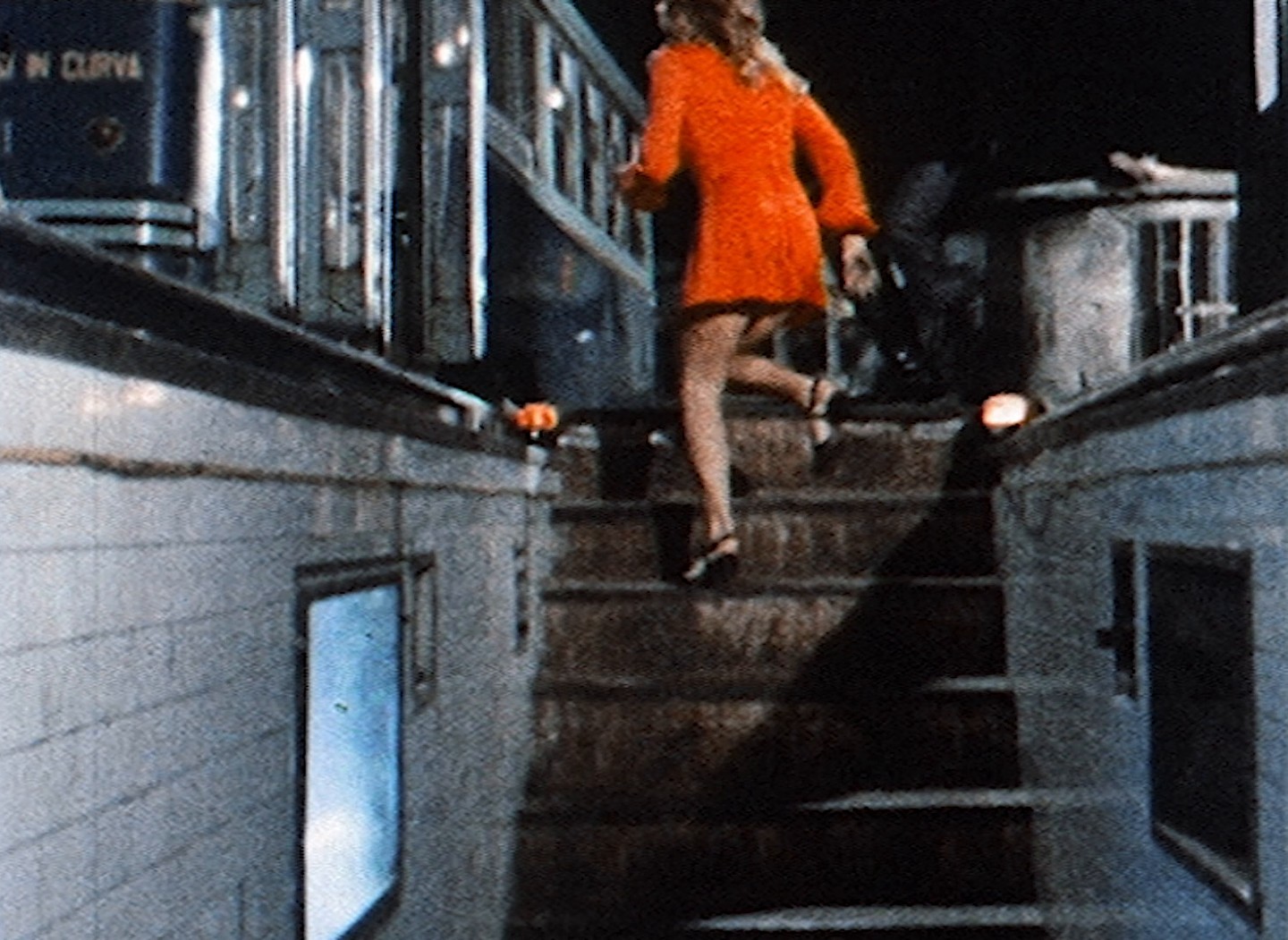
The second journey restores the conditions omitted by the daylight exercise. Giulia’s orange dress makes her conspicuous against the dark street and the tram’s cold metal interior. She occupies the victim’s place while Giordani studies the movement of the carriage. This is a more useful experiment, but it also exposes the person helping him to a danger he has not contained.

Giordani times the interval with his watch.

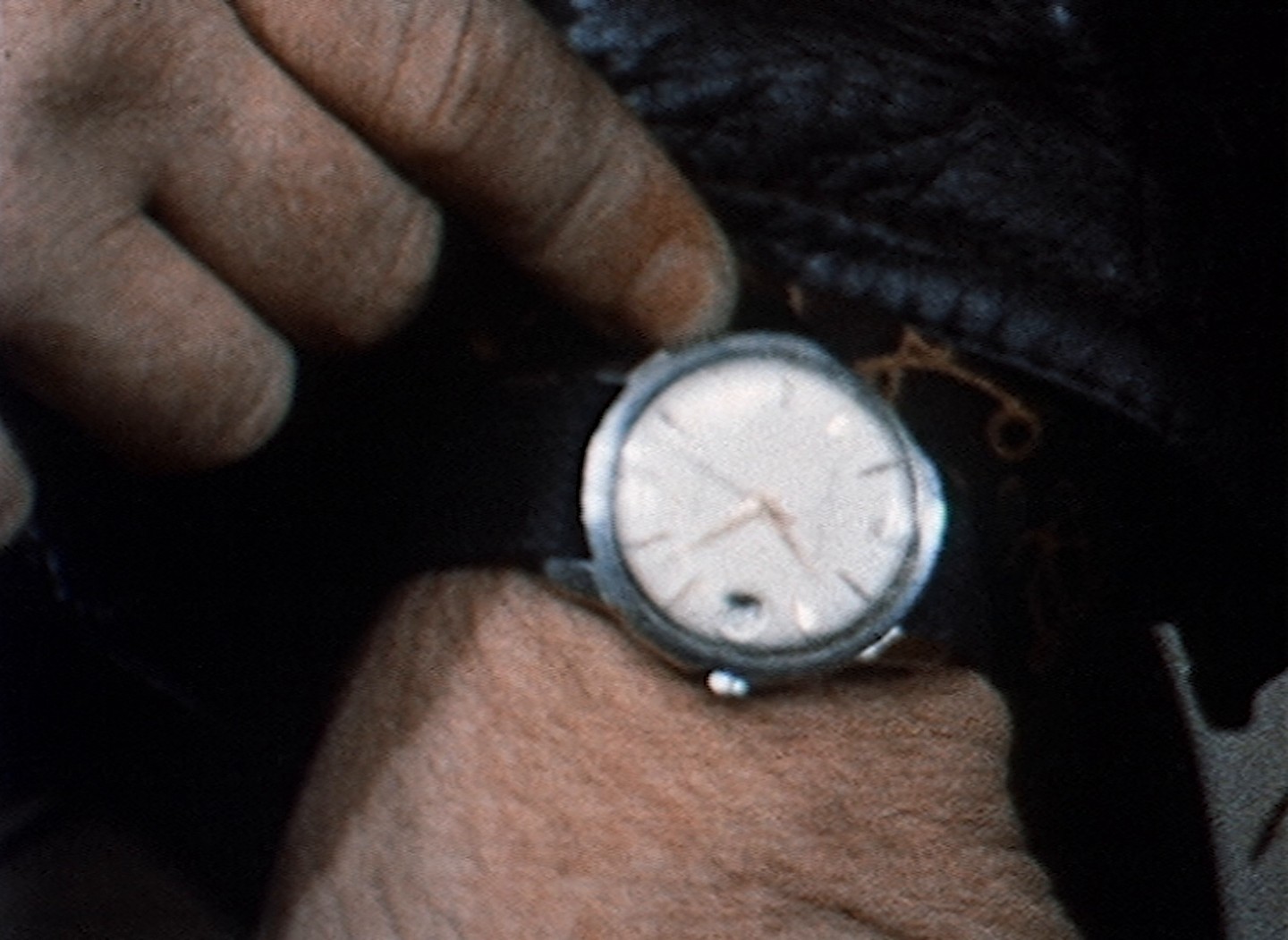
10 / 42:30

Fourteen seconds change the case

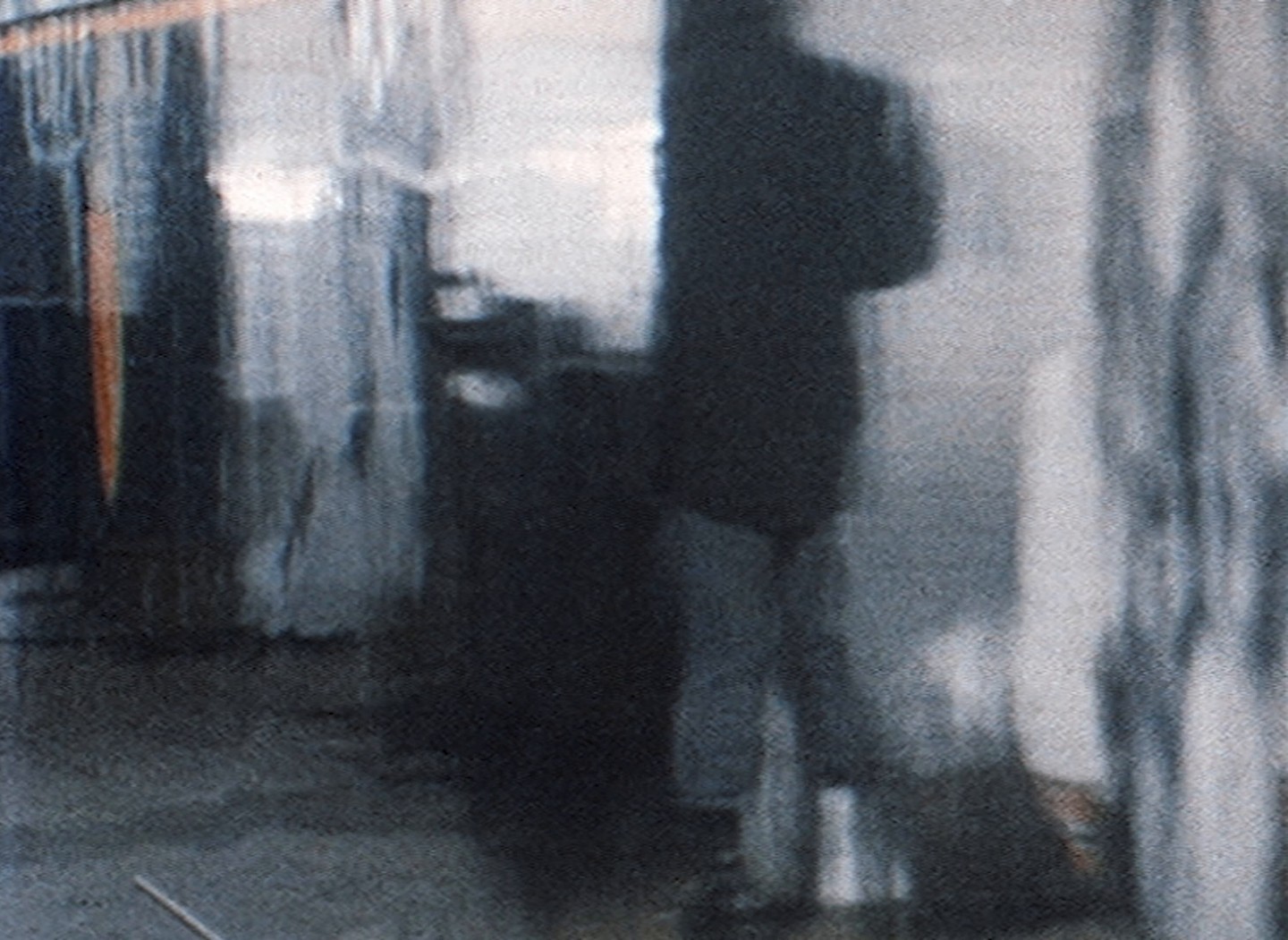
The turning carriage briefly blocks the collector’s view; the lights also go out at the points. Giordani asks Giulia to hide beneath the seat and measures the interval. The solution depends on a sequence of conditions rather than a single overlooked object. His watch turns that sequence into a duration within which the murder and concealment become possible.

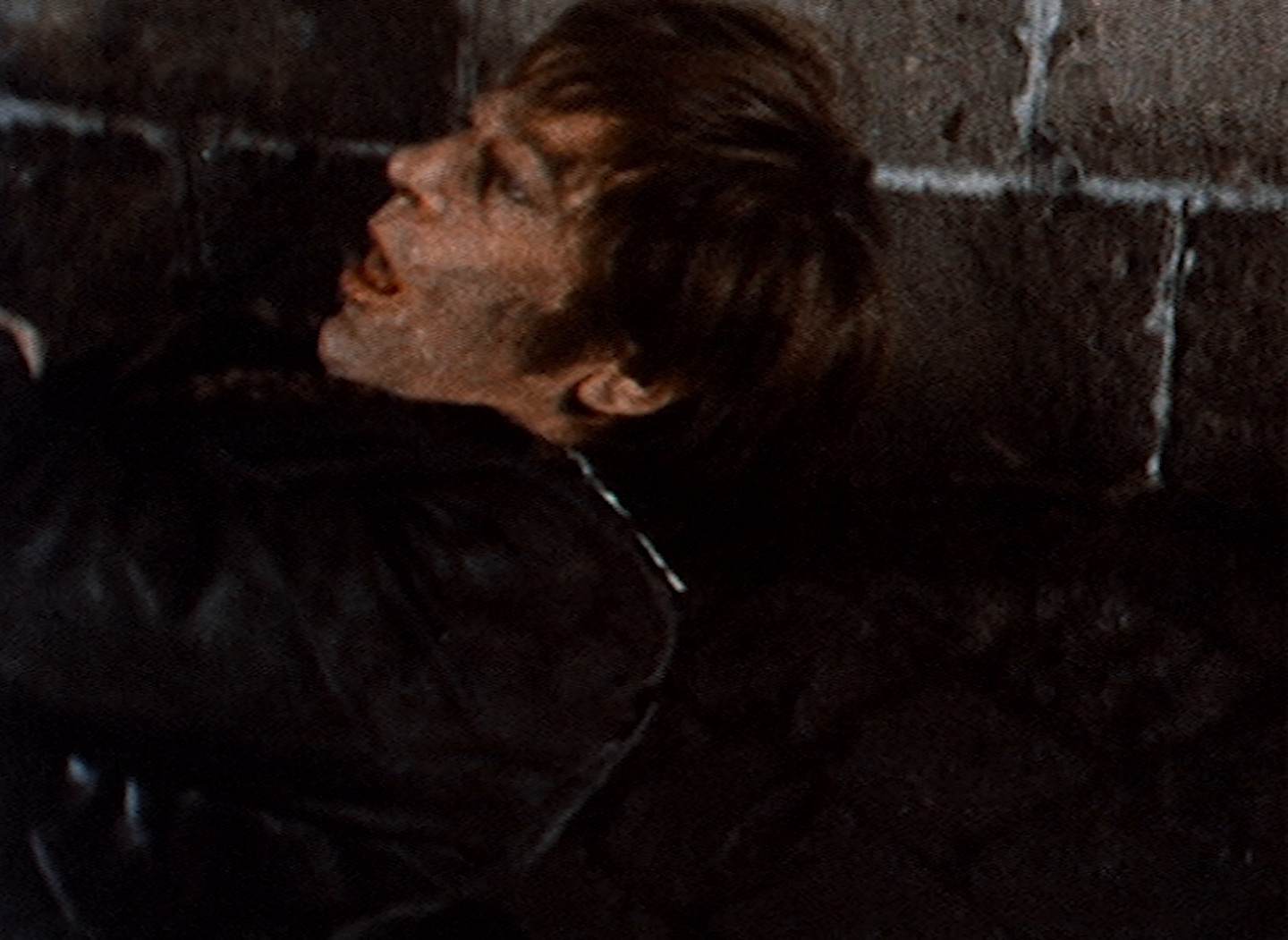
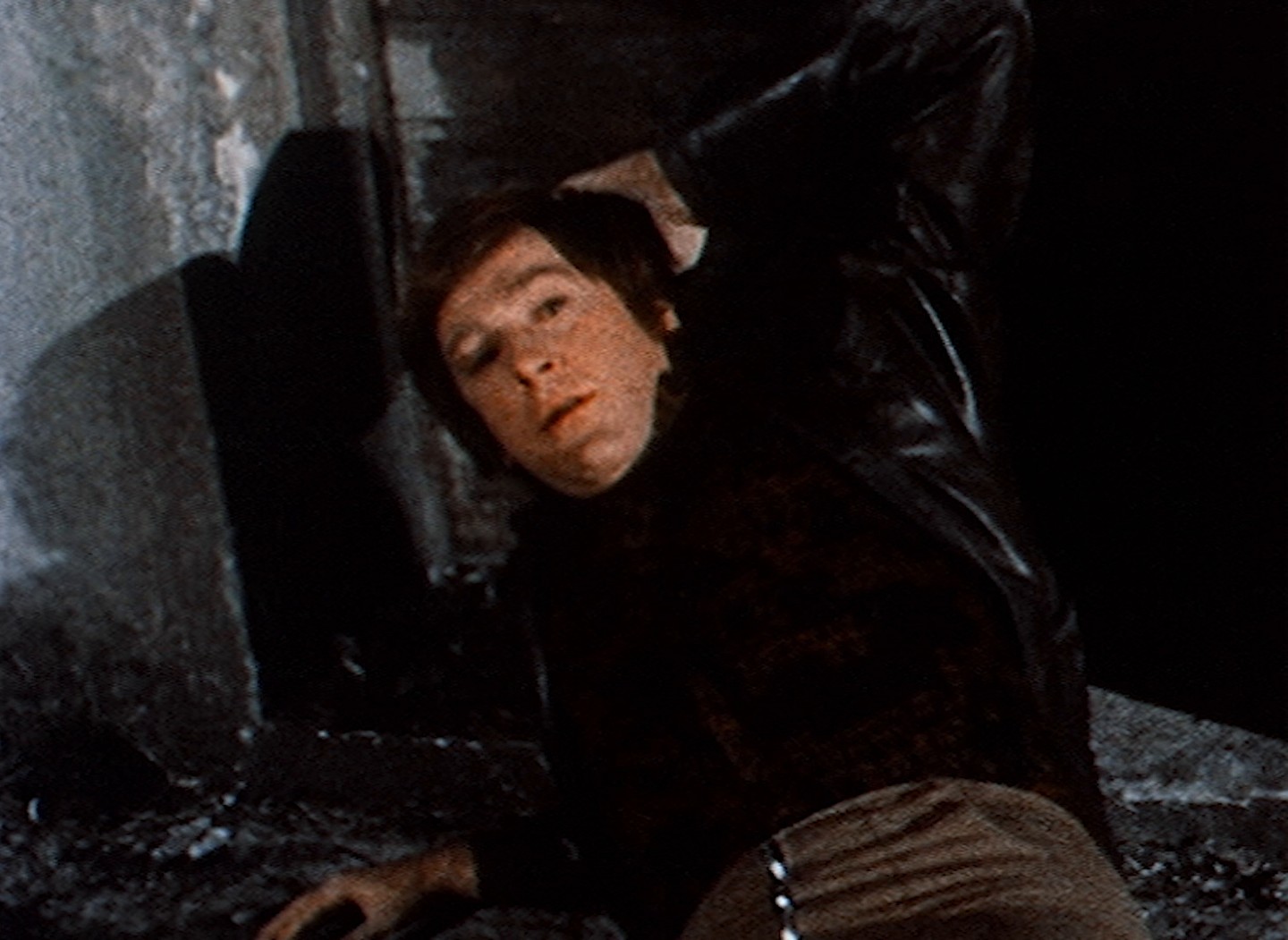
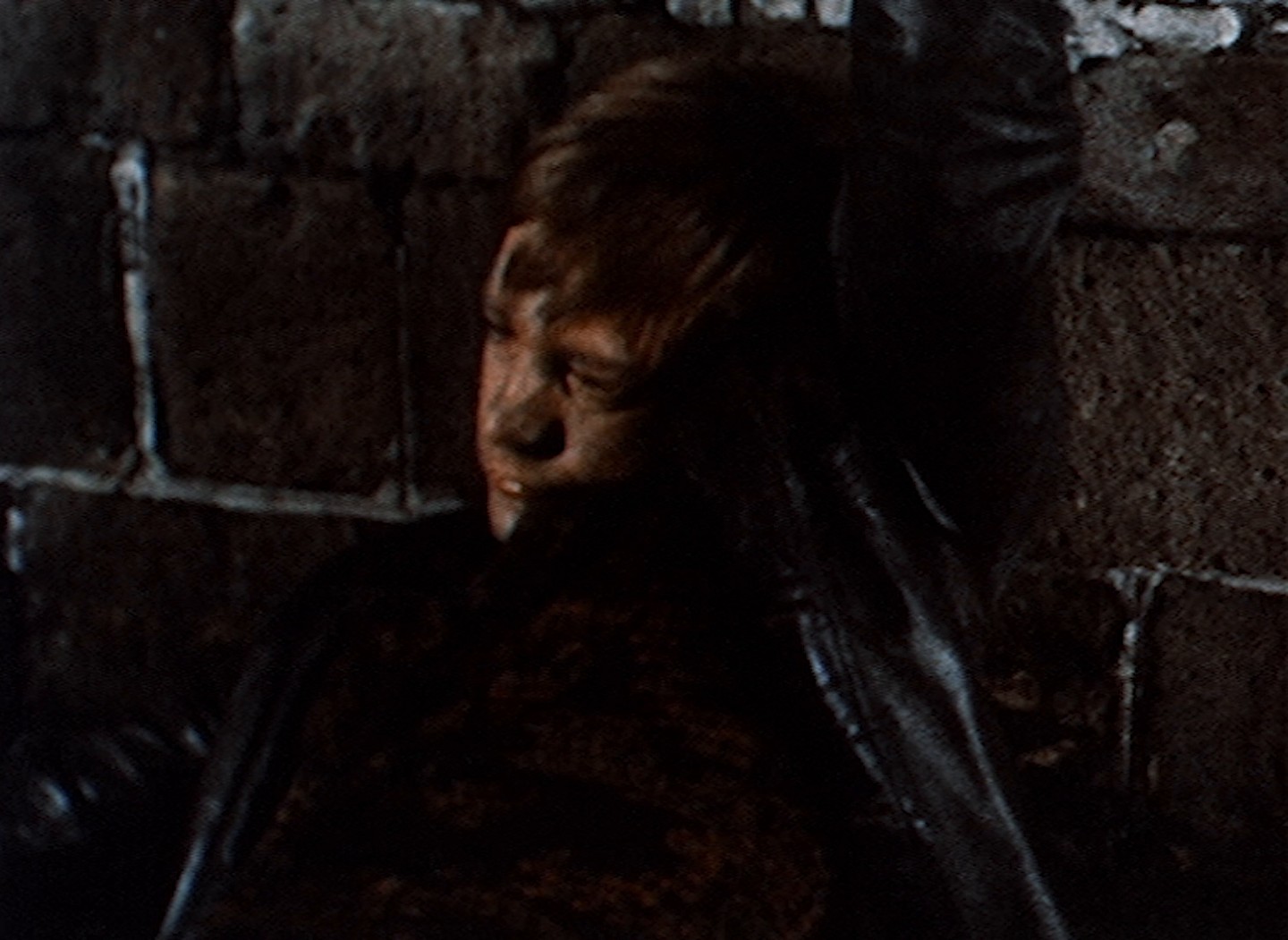
Giordani lies injured against the depot wall.

11 / 45:40

The detective becomes another vulnerable body

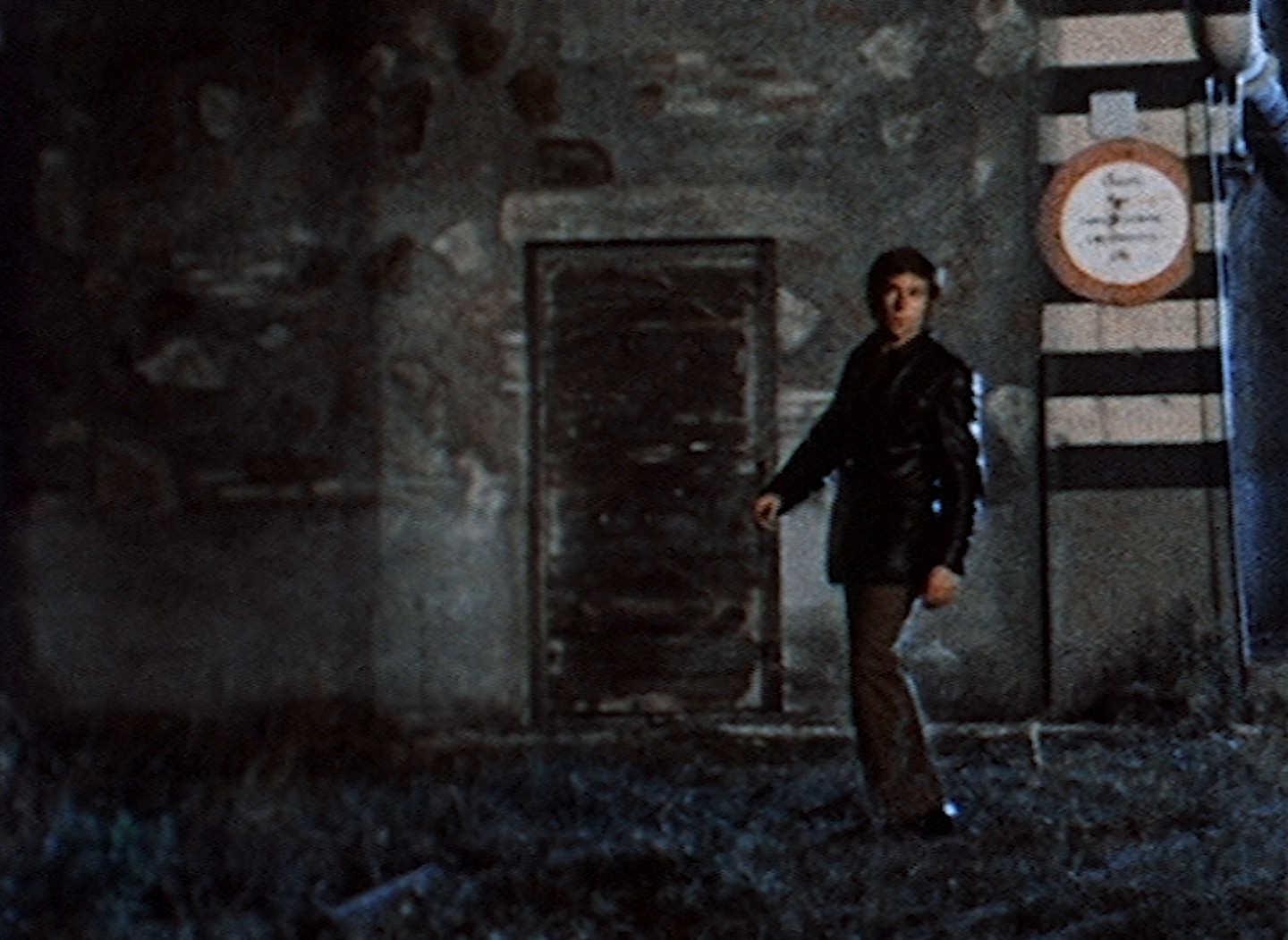
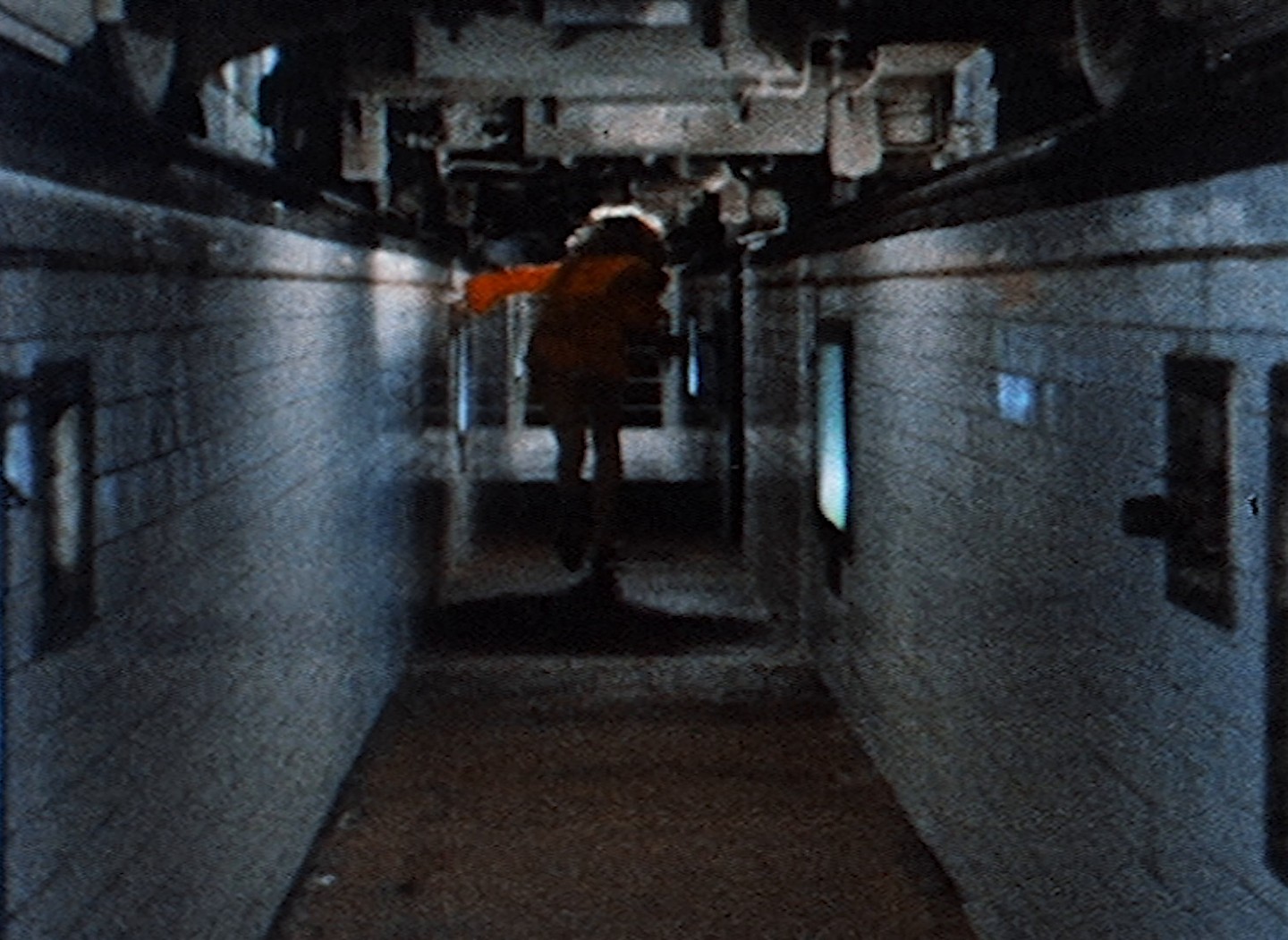
The return to the depot removes Giordani from the protected setting of an interrogation. Darkness and the long exterior wall limit his awareness of the approach. After the attack, the injury is concentrated on the face and his body lies against the brickwork. The change of position is decisive: the investigator who arranged other people’s movements can no longer return to collect Giulia.

Giulia searches beside the empty tram.

12 / 49:50

The passenger space becomes a trap

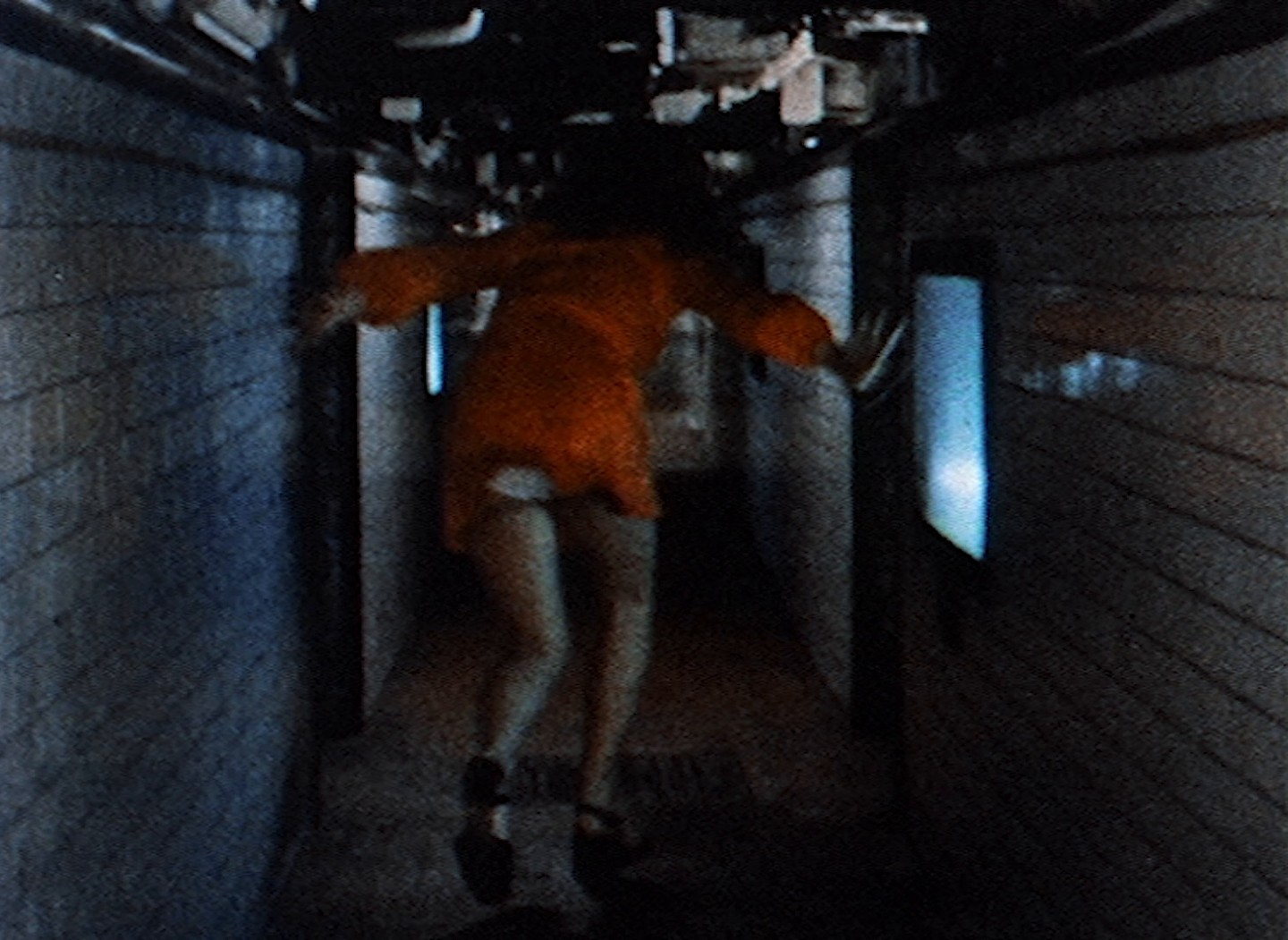
Giulia emerges into a depot that no longer contains the companion she expects. The episode returns to seats, windows and the floor from her exposed position. Her orange dress remains a clear point of orientation as the setting expands into the service pit and the spaces around the carriage. The geometry that solved the murder now organizes a pursuit.

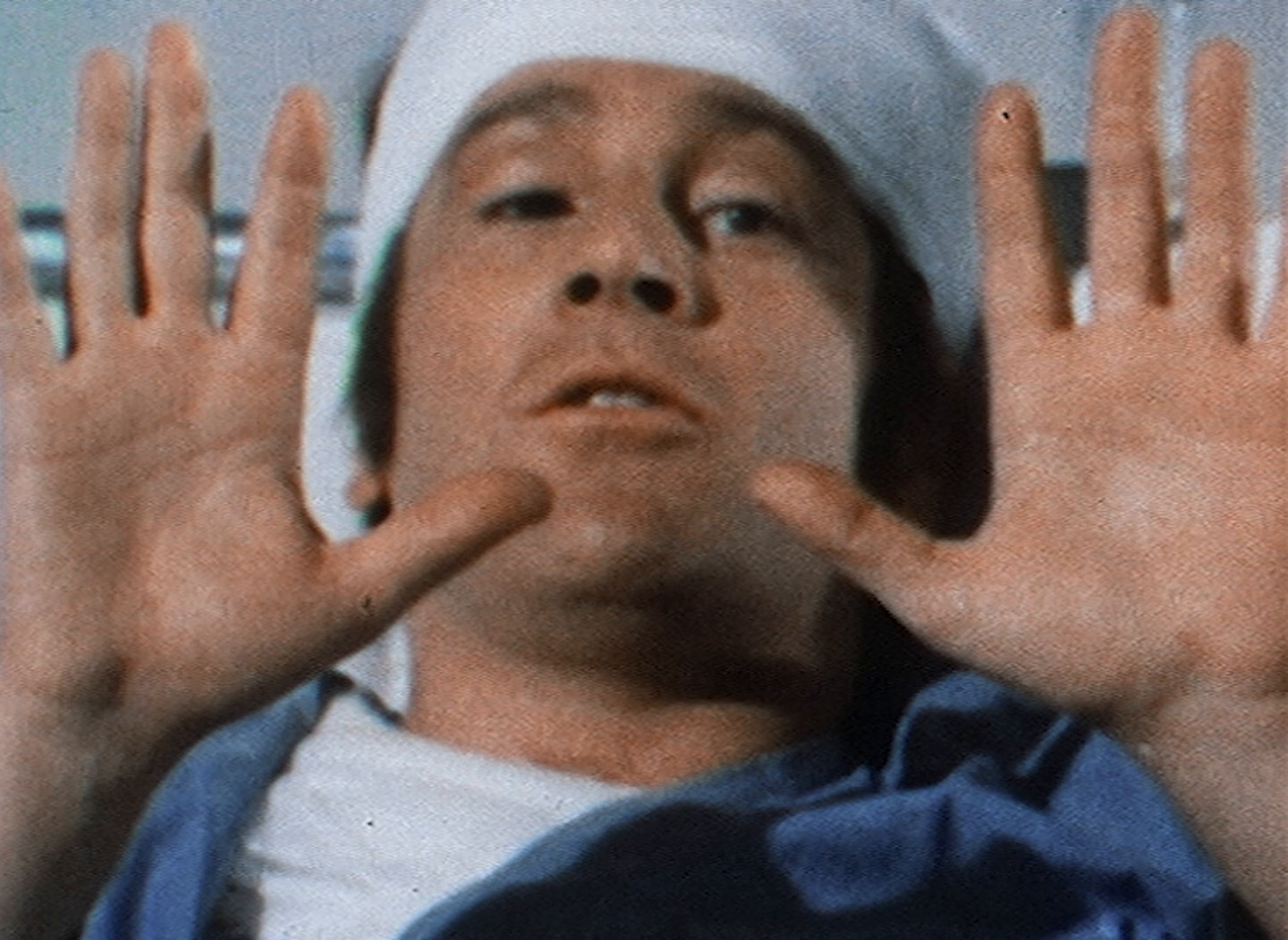
Giordani raises his hands from the hospital bed.

13 / 53:00

The ending refuses an entirely reassuring solution

The hospital scene explains Rovetti’s motive and restores the detective to speech, but Giulia questions her use as bait. The final exchange then moves beyond the captured murderer to criminals whose hands remain outwardly clean. Giordani raises his own palms. The closing image returns to the problem of appearances: a solved case does not make respectable surfaces trustworthy.

Explore the effects and suspense galleries →

SCENE STUDIES / LA BAMBOLA

The room becomes a stage.

Mario Foglietti’s episode builds a mystery from a stranger’s movements, a doll, a briefcase and a house full of memories. Each seems to identify the danger; the ending asks us to reconsider the roles we have assigned. Episode and stills source ↗

Argento challenges the viewer to identify the killer.

01 / 02:00

The host makes guessing part of the story

Argento’s introduction moves from the anonymity of a crowd to a direct challenge: follow the plot carefully and distrust the conclusion that seems obvious. His address establishes the episode as a contest over interpretation. The later reversal therefore concerns the viewer’s habits as well as the characters’ secrets.

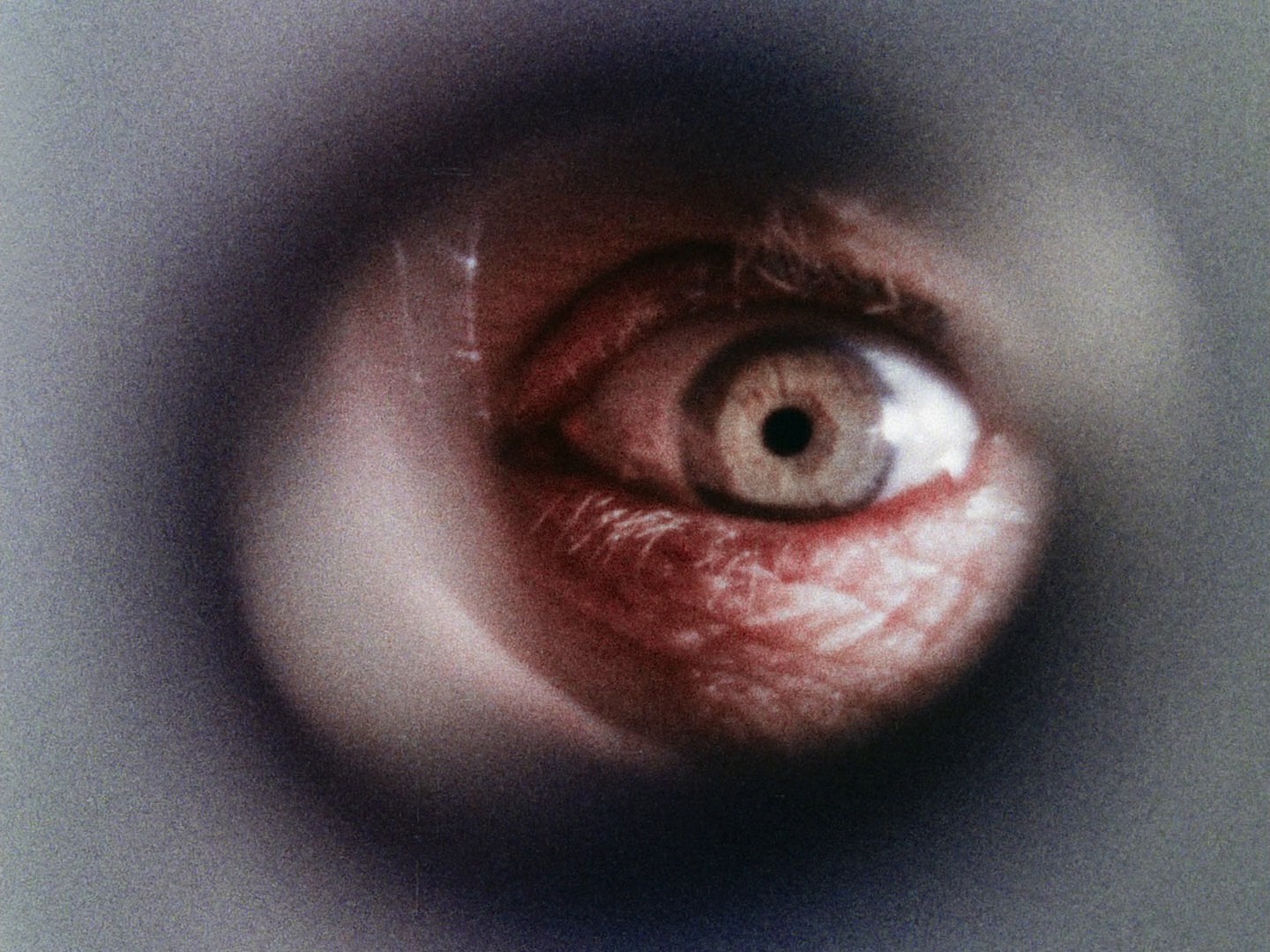
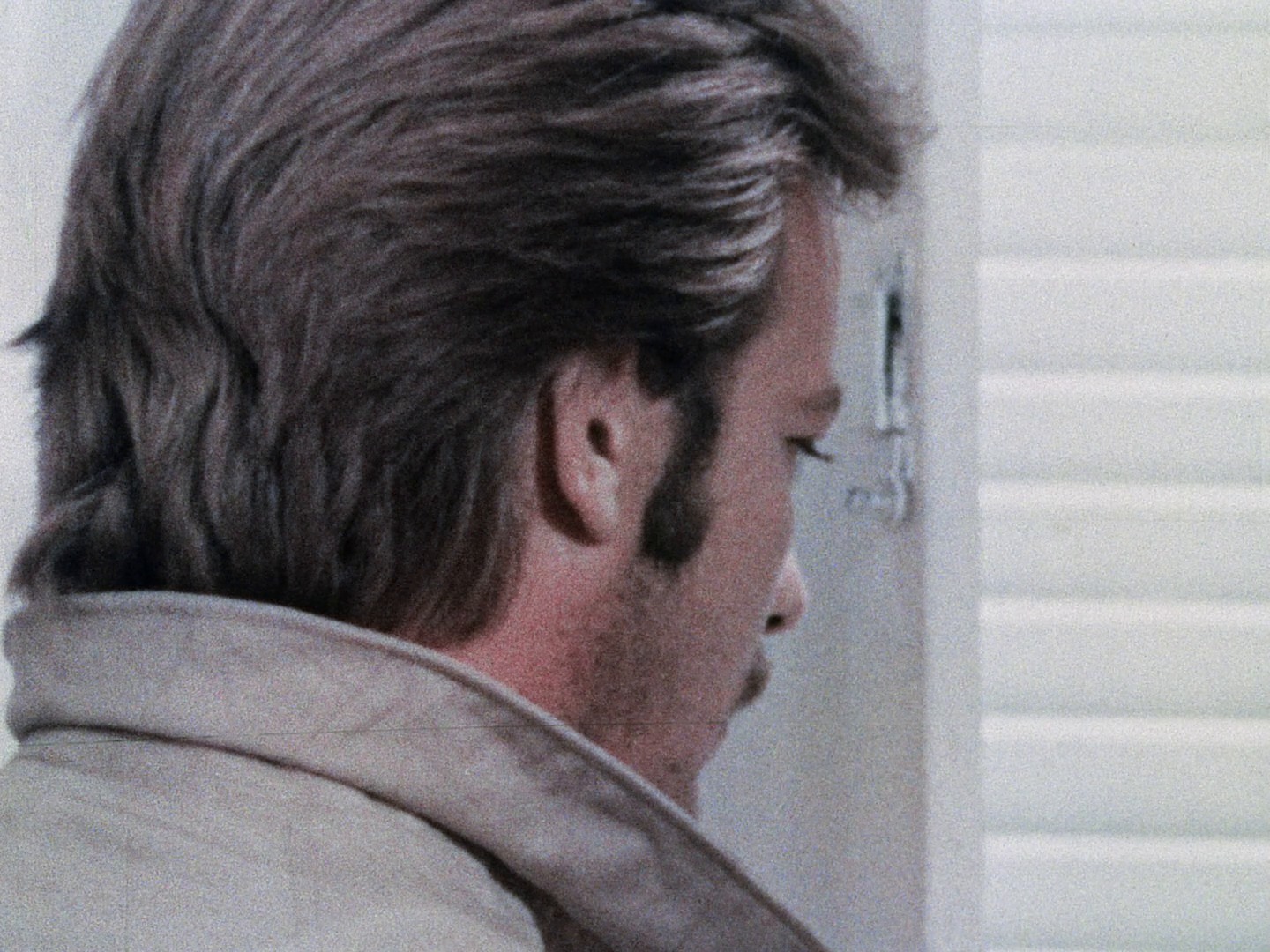
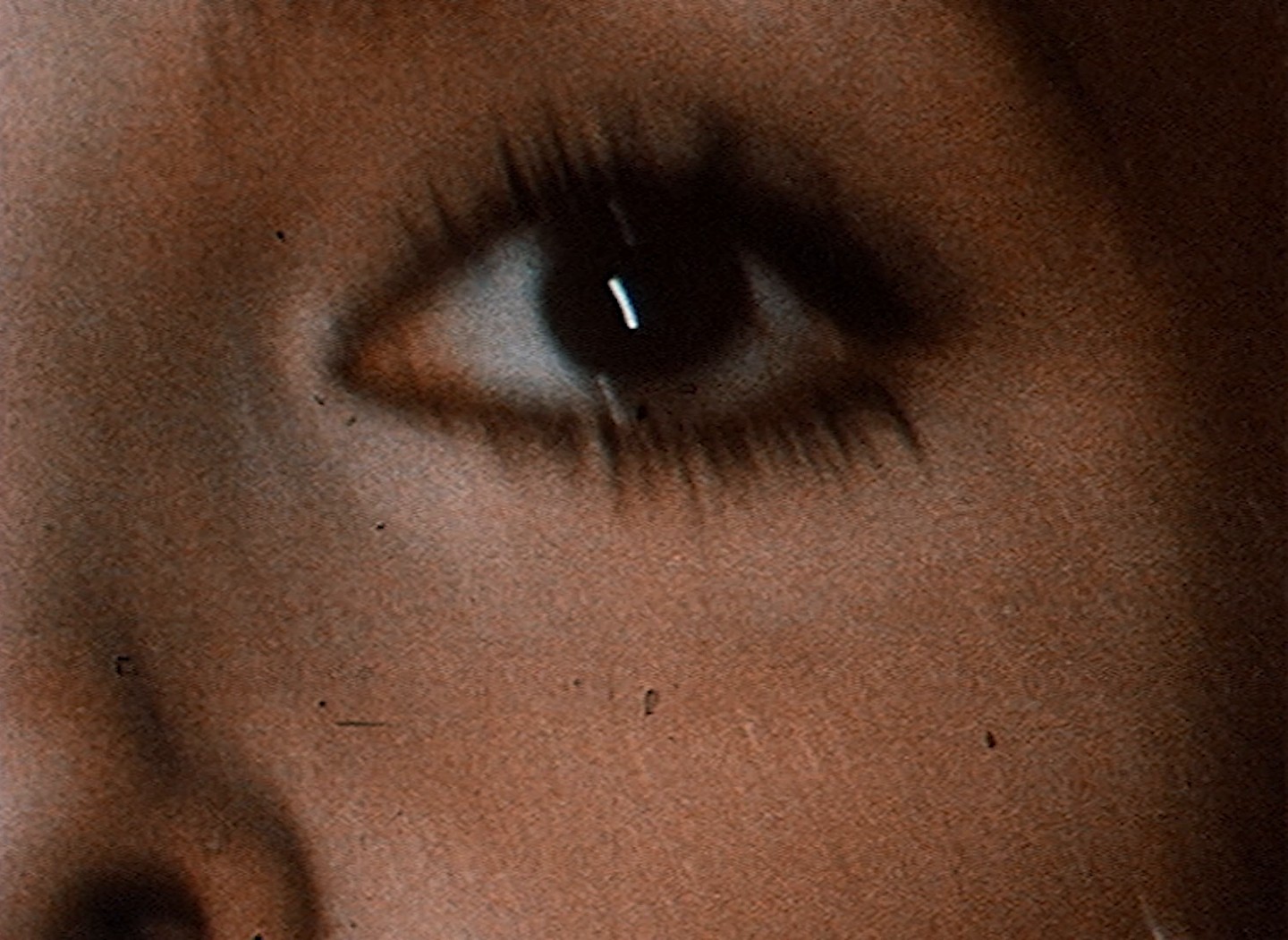
An eye watches through the door’s peephole.

02 / 03:20

An eye opens an empty corridor

The long institutional corridor under the credits gives way to a peephole, a handle and a door. Restricted views prevent us from identifying the person moving through the building. The apparent escape is assembled from spaces and objects before it supplies a face.

The inspector listens to the professor.

03 / 07:40

Two kinds of authority negotiate the search

The professor asks for cooperation and the inspector insists on his own professional territory. The conversation supplies a medical explanation inside the fiction while withholding the identity to which it applies. Their disagreement also establishes a second source of suspense: whether the proposed method will expose someone else to danger.

The visitor watches from his hotel window.

04 / 13:00

The stranger selects his viewpoint

The man arriving with a briefcase rejects one room in favour of another. The landlady’s stream of guesses about his profession meets his refusal to explain himself. Once the window becomes a vantage point over the street, the seemingly minor room choice becomes part of a deliberate arrangement of looking.

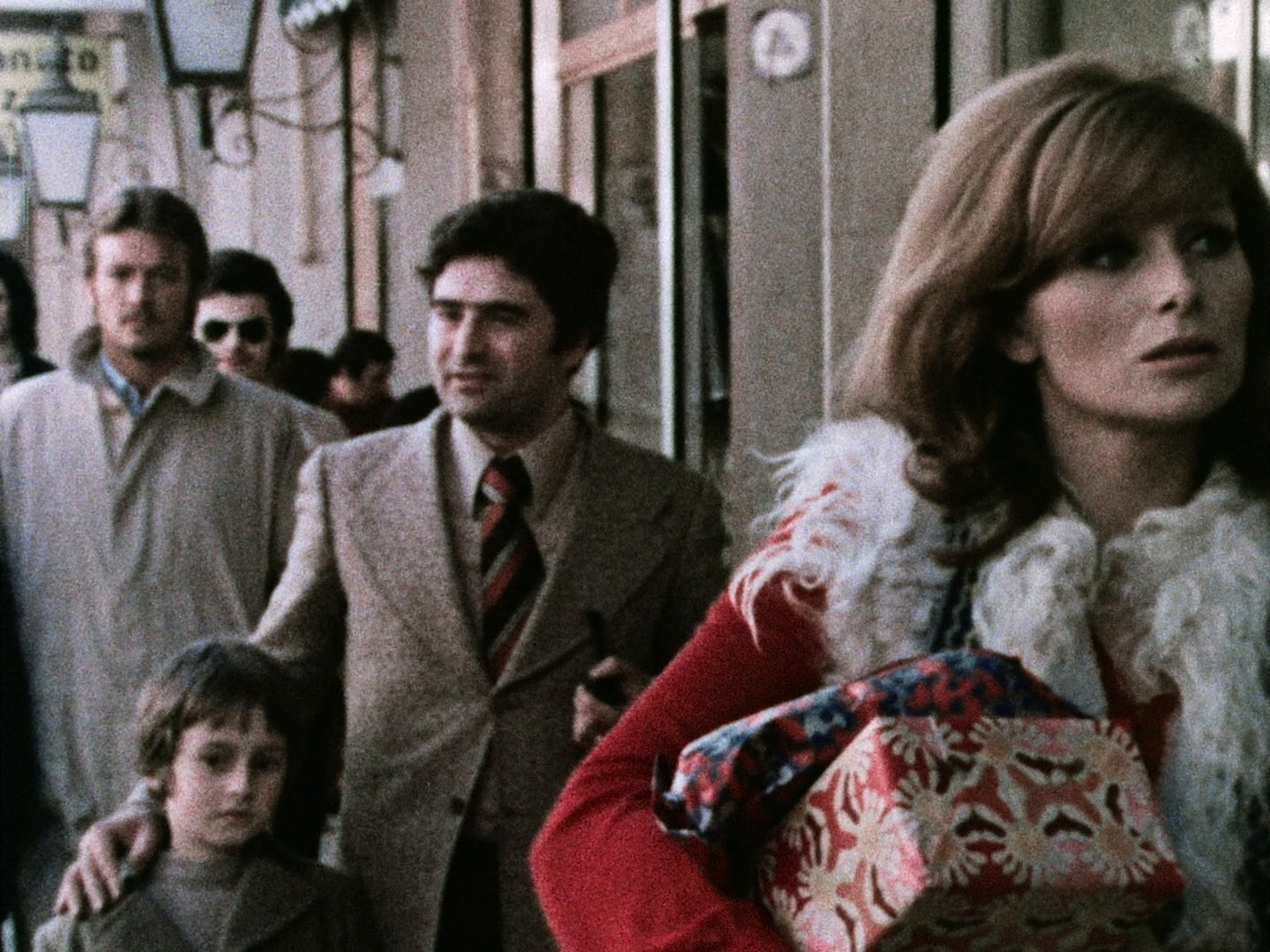
The stranger follows through the crowded street.

05 / 16:00

Following can look like ordinary movement

Pedestrians repeatedly share the frame with the man and the women ahead of him. The street supplies cover rather than emptiness. A look held across the crowd begins to feel purposeful, even though the episode has not yet established what kind of pursuit we are seeing.

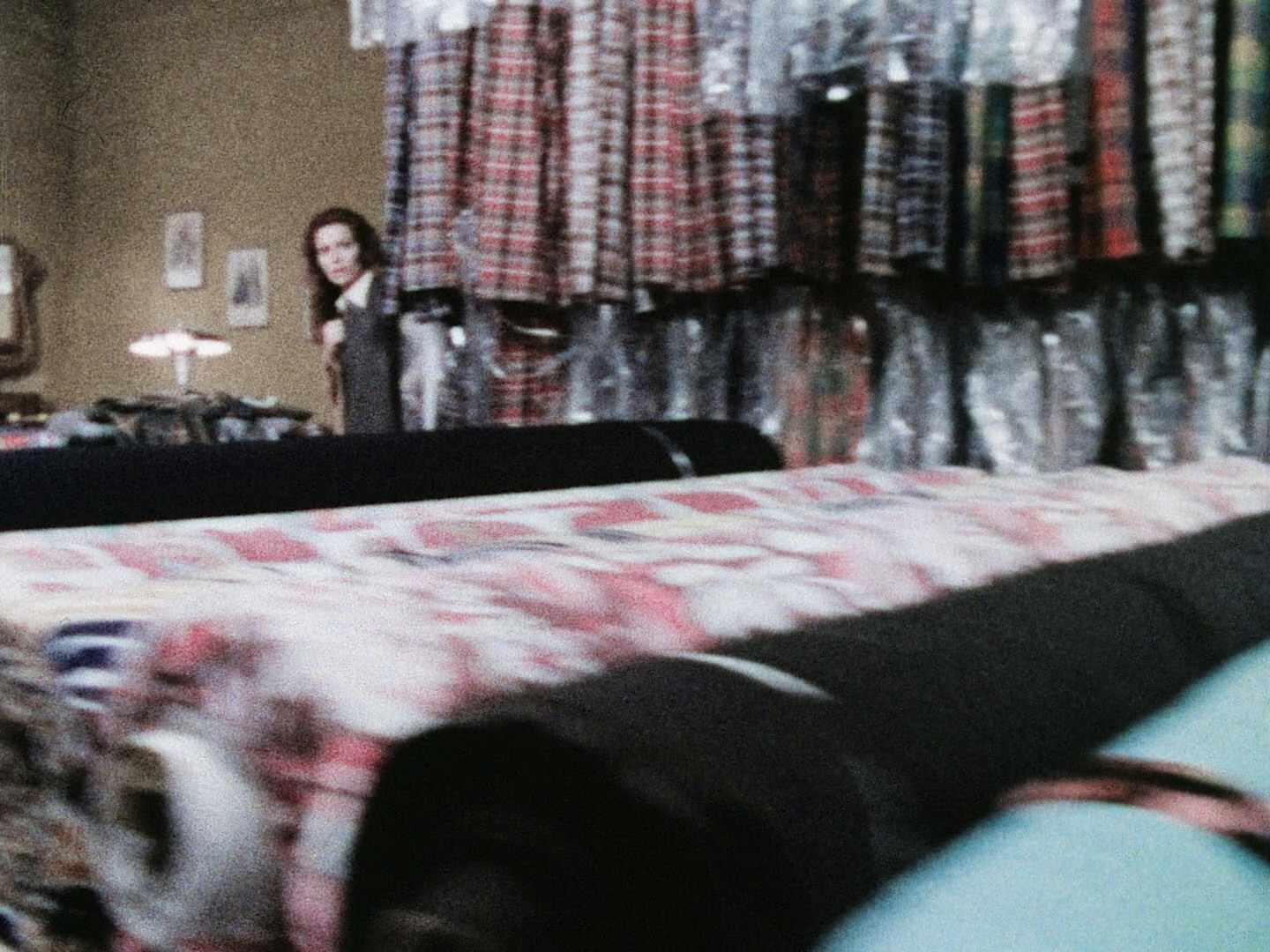
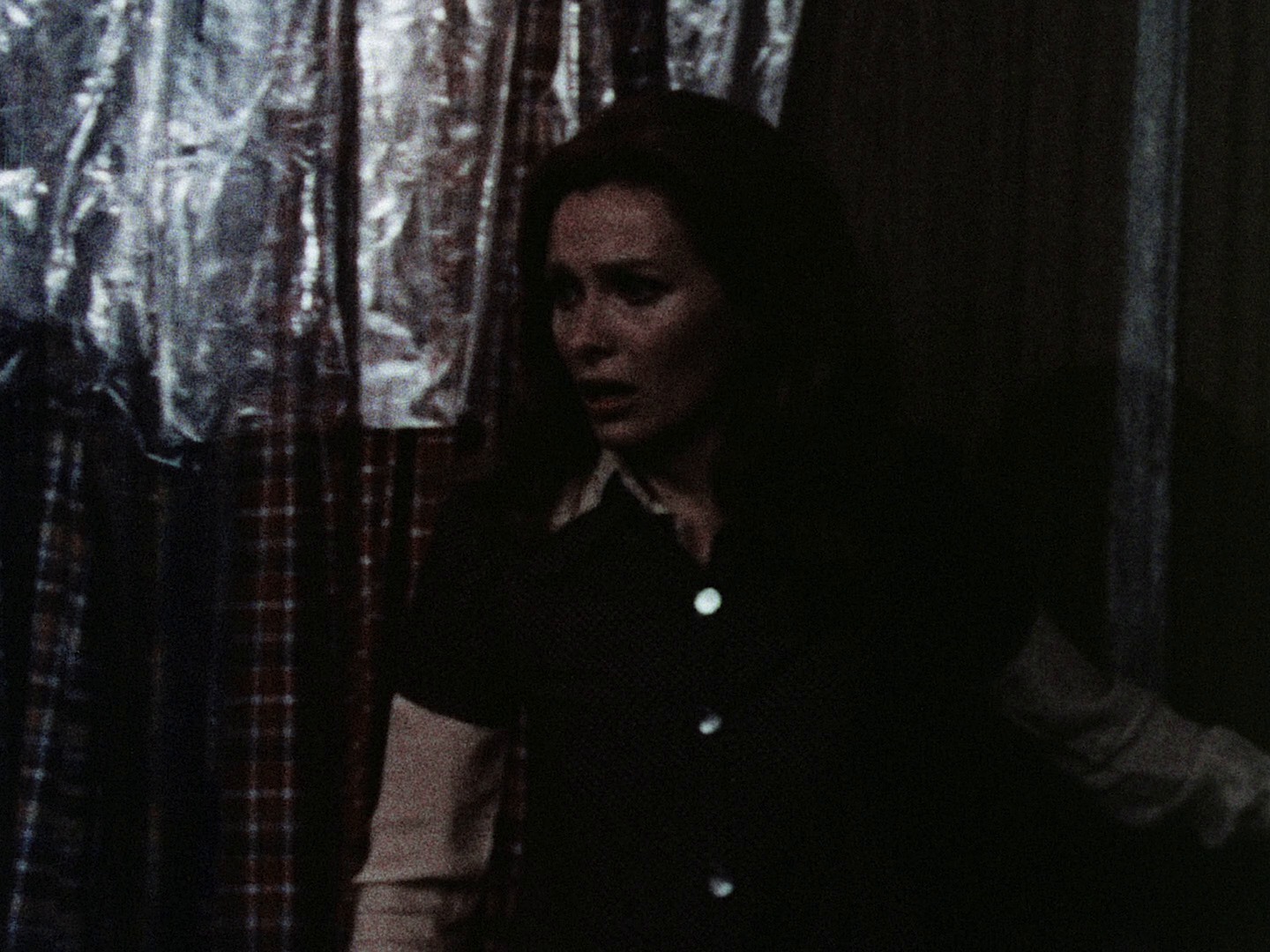
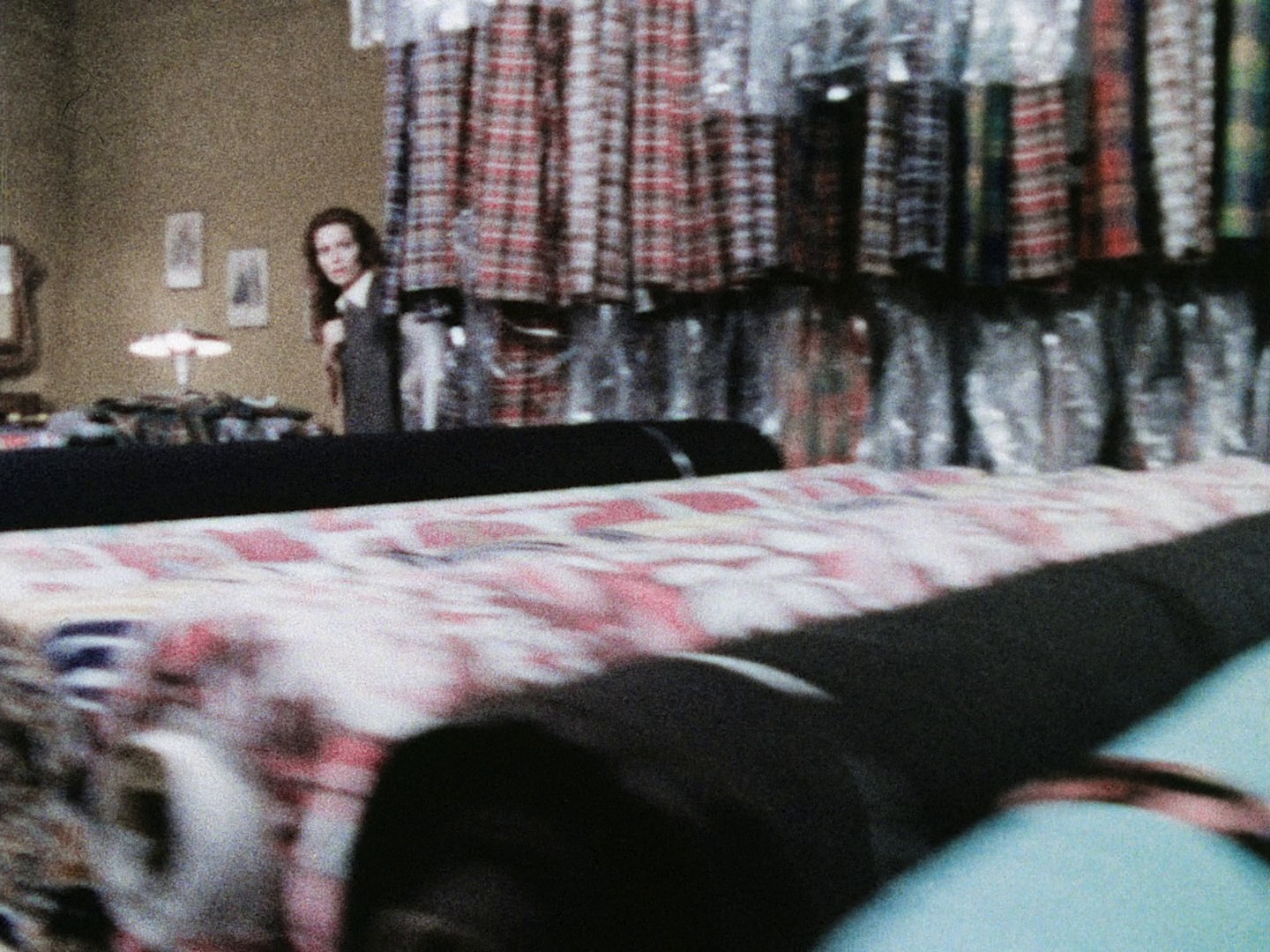
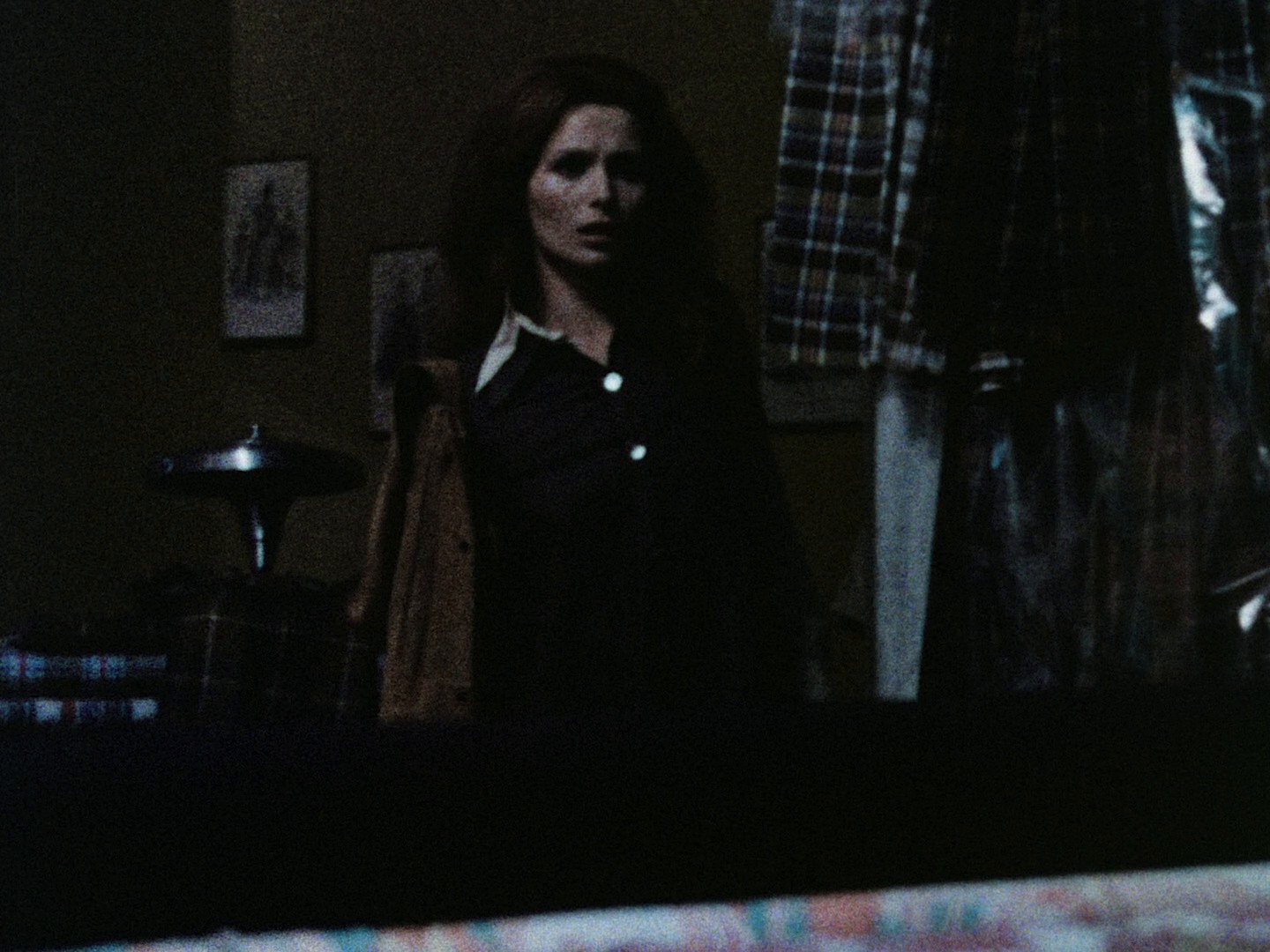
Elena looks between the hanging fabrics.

06 / 19:40

A workroom becomes a field of hiding places

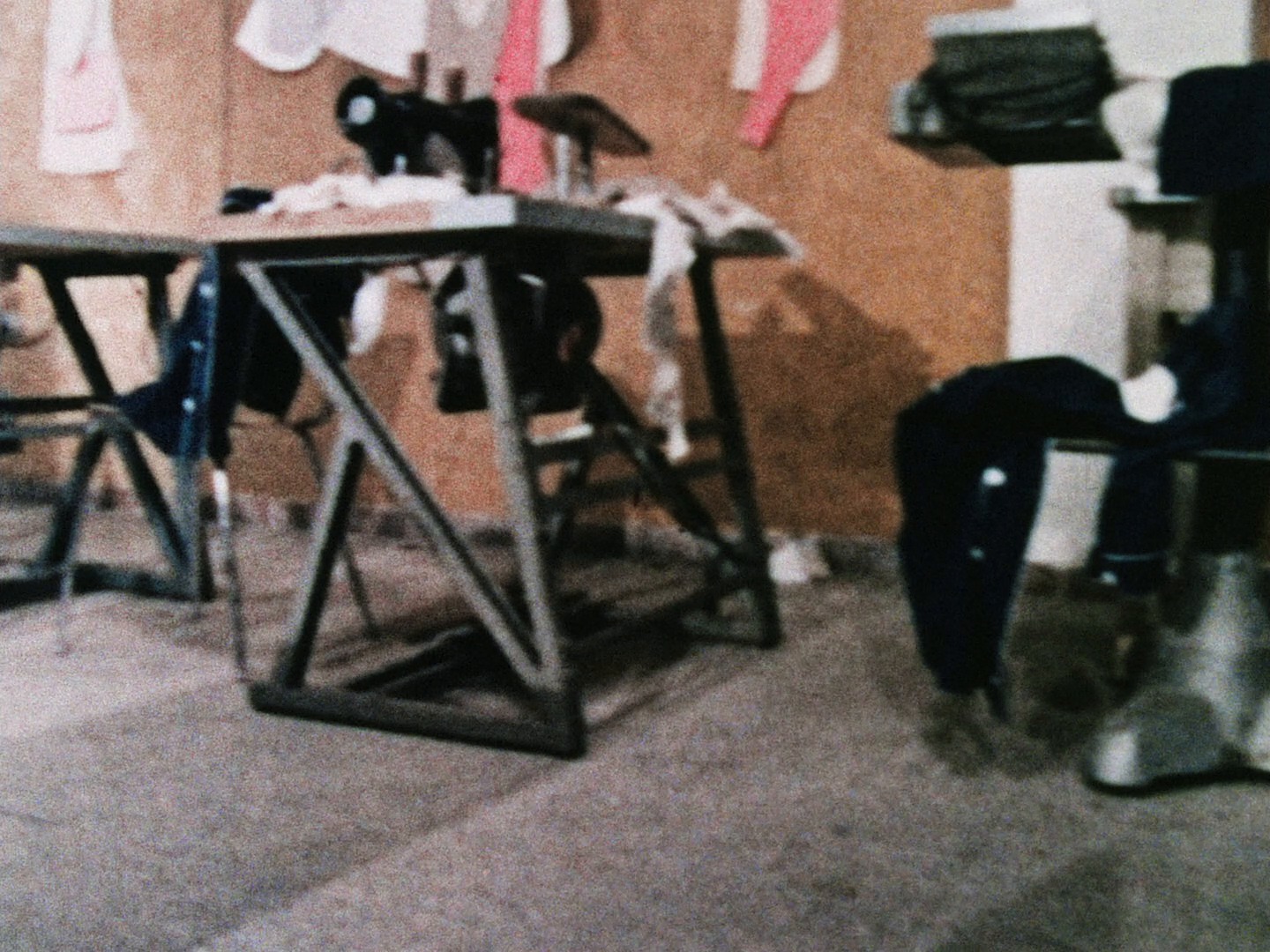
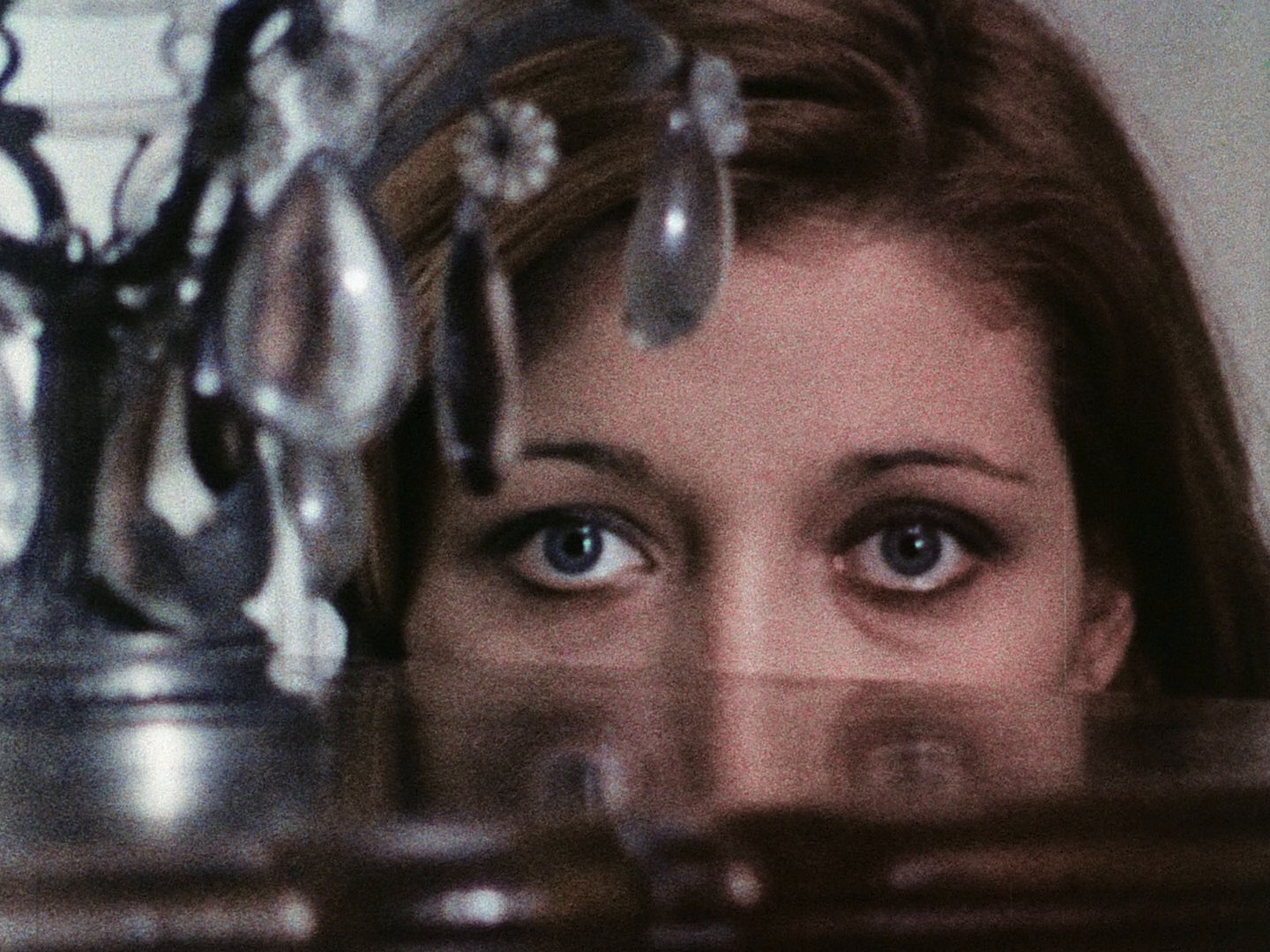
Once the employees leave, Elena’s fashion house is reorganised by curtains, cloth and dress forms. Familiar working materials interrupt sightlines. Her calls into the room receive no useful answer, and the sequence makes the unoccupied parts of the frame as significant as the woman searching them.

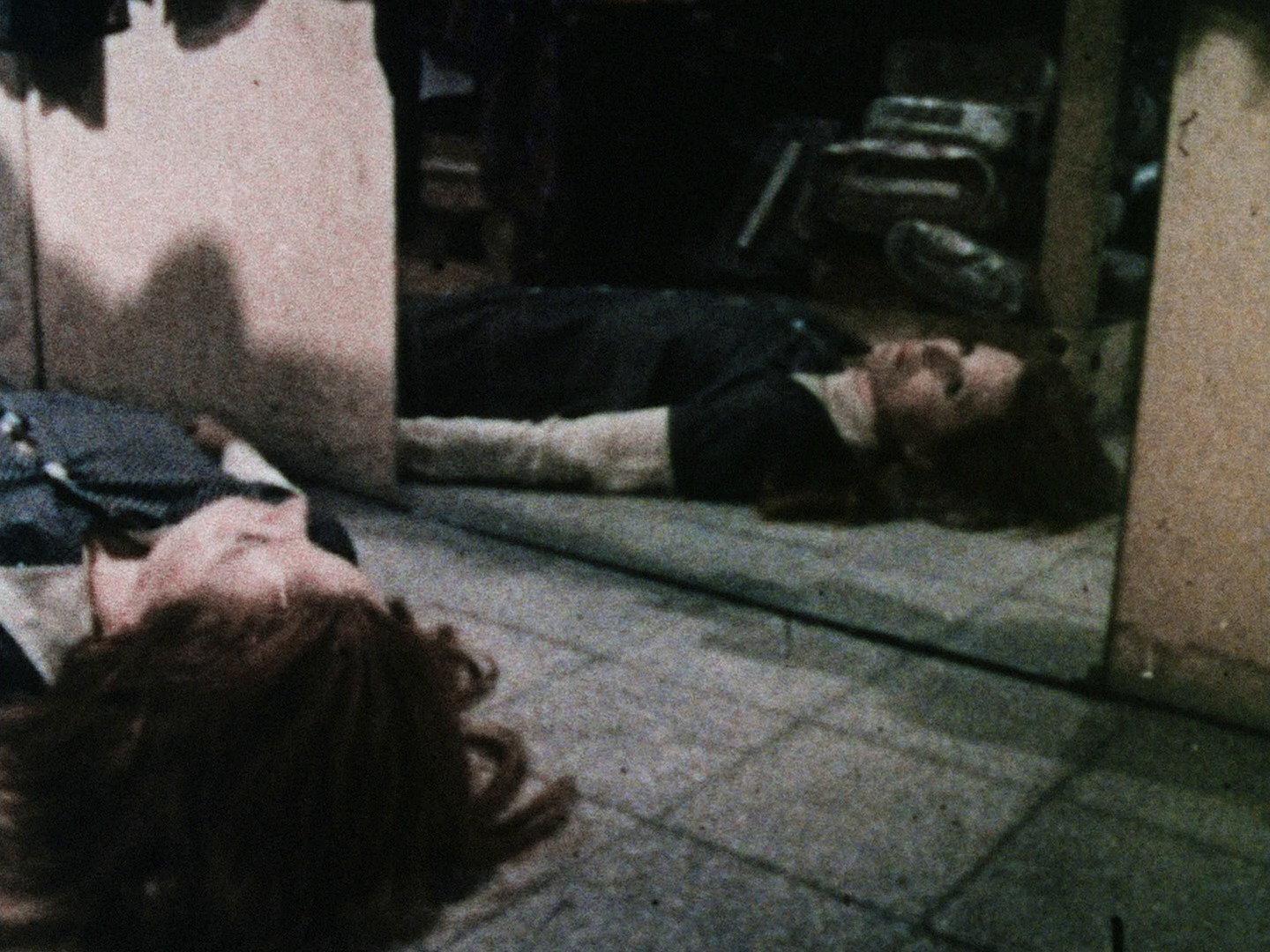
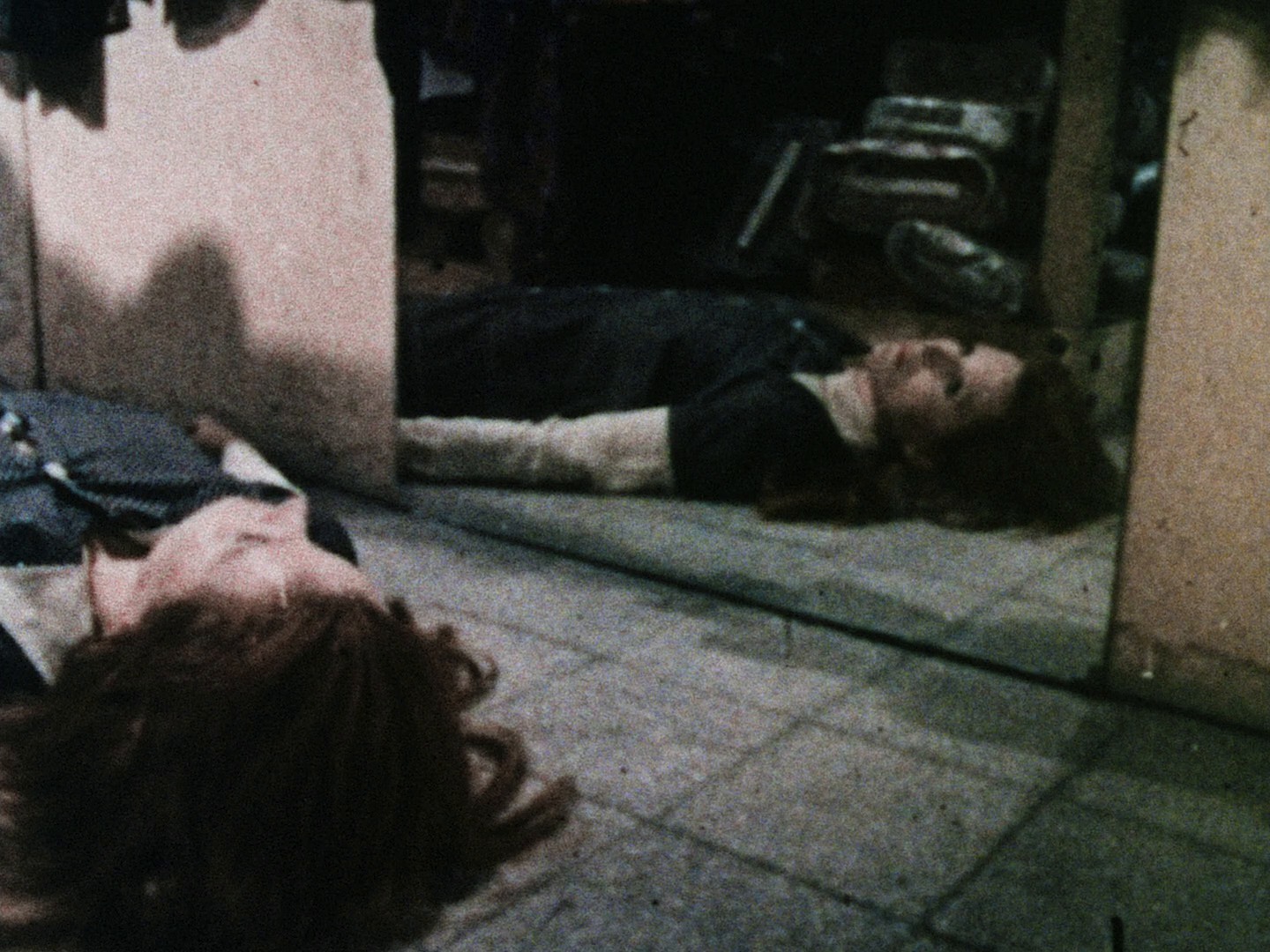
Elena’s body is reflected in the mirror.

07 / 22:00

The mirror gives the murder a second image

The discovery holds the body near a mirror rather than turning the killing into an extended display. The reflected view makes an ordinary fitting-room object part of the evidence. The subsequent argument between the inspector and the professor changes the investigation’s moral stakes: their plan has failed to prevent a death.

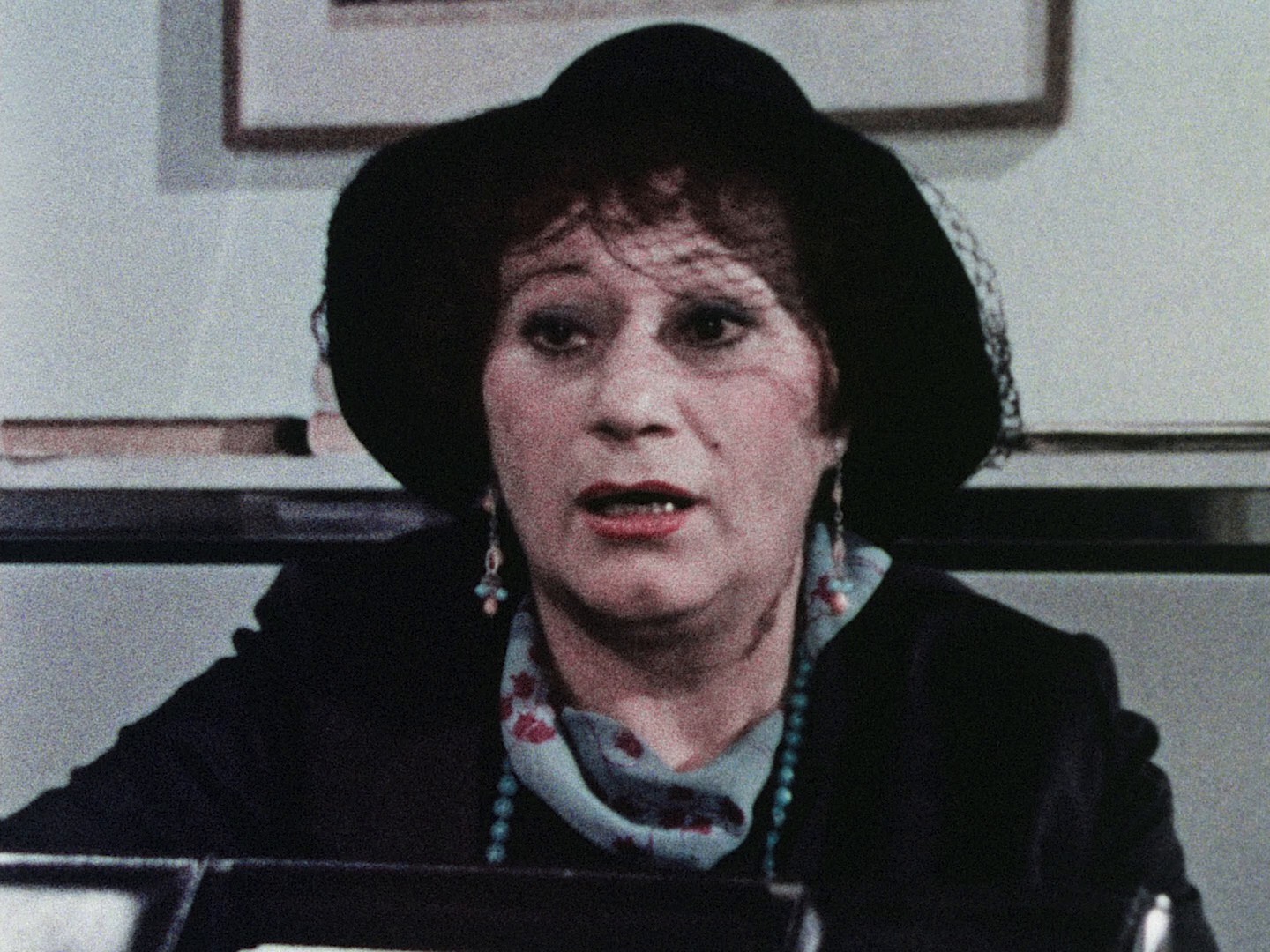
The landlady identifies the photographed man.

08 / 26:00

A talkative witness finally meets a photograph

The landlady’s elaborate description repeatedly wanders into impressions of manners and character. A photograph abruptly narrows the exchange. The inspector’s demand that she return to the facts echoes Argento’s opening challenge: certainty has been accumulating faster than reliable knowledge.

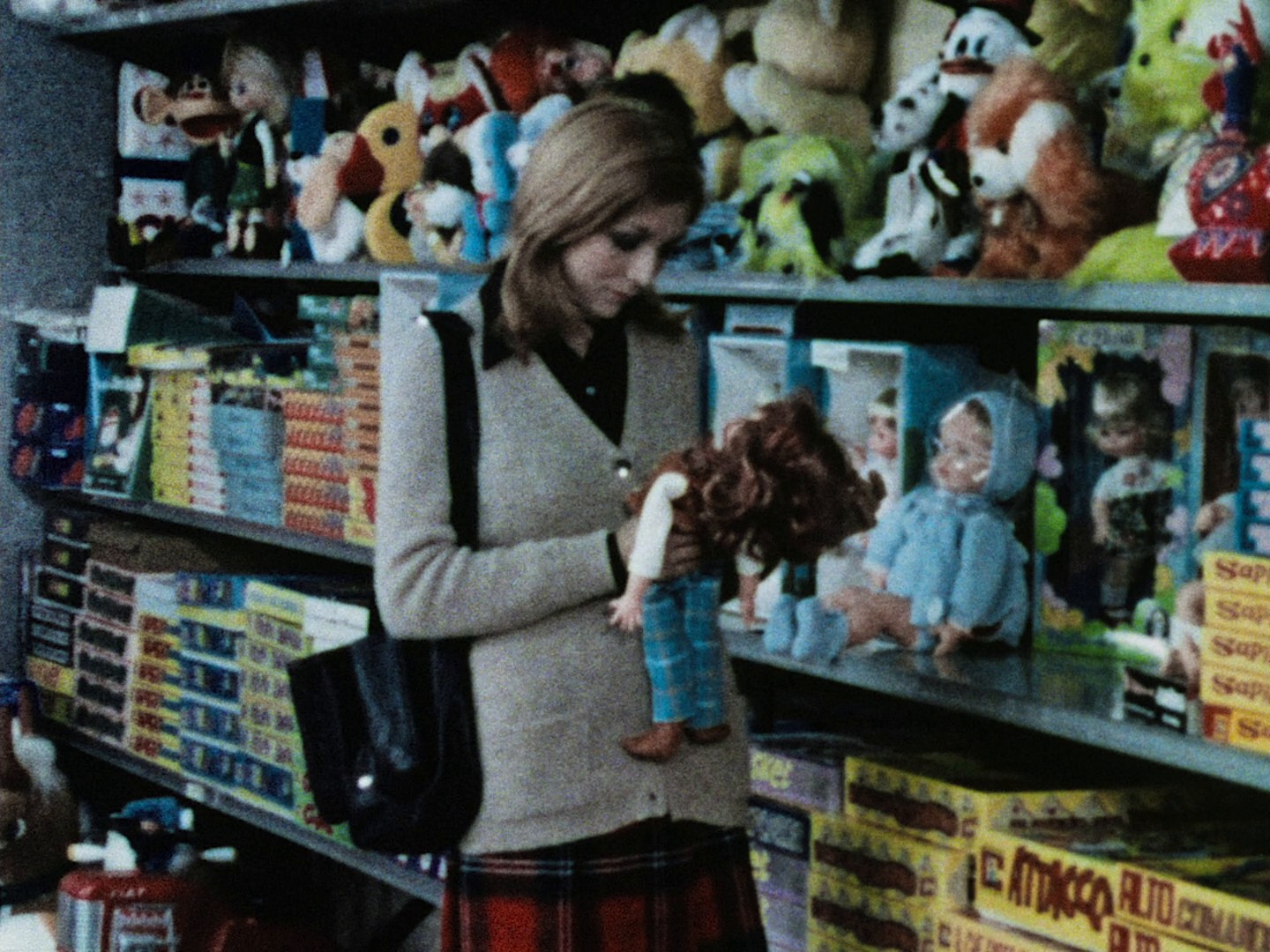
Daniela examines a doll in the shop.

09 / 30:00

The doll creates an apparently helpful encounter

The man watches Daniela among the toys and intervenes when she is challenged about a receipt. His help provides a reason for the pair to speak outside. The object named by the title enters as something small and portable, yet it will carry the story’s larger questions of ownership, childhood and substitution.

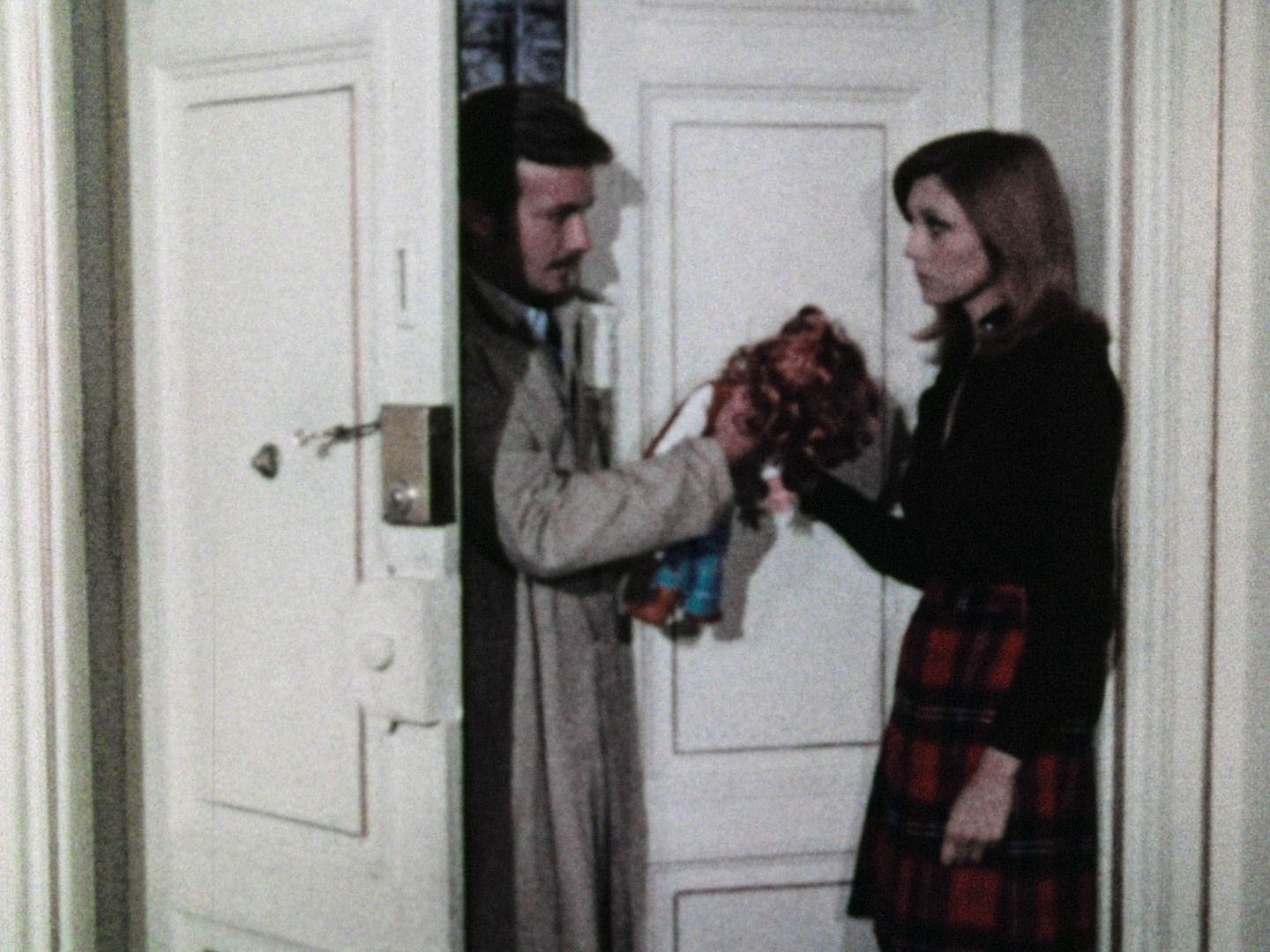
The visitor returns Daniela’s doll at the door.

10 / 35:20

Returning the doll opens a private room

The doll offers the visitor a second pretext for contact. He presses past the formalities of returning an object and examines the house while Daniela hesitates. The threshold marks a change from following in public to directing events inside a room associated with her past.

Daniela listens to the story of a stolen doll.

11 / 36:40

A childhood story is spoken by the wrong person

The visitor speaks of a girl who took his doll, then of playing with larger dolls. Initially the account sounds like an ominous confession. After the ending, the scene can be read again as a performance built from Daniela’s history: the speaker’s identity and the ownership of the memory no longer coincide.

Daniela recoils after her dress is torn.

12 / 43:20

The costume becomes the point of attack

Preparing to go out involves a mirror, makeup and a change of clothes. The visitor abruptly rejects the plan, attacks the dress and accuses the house’s occupant of living in a borrowed world. His control now operates through appearance and humiliation as well as physical space. The later explanation does not erase the cruelty of the encounter.

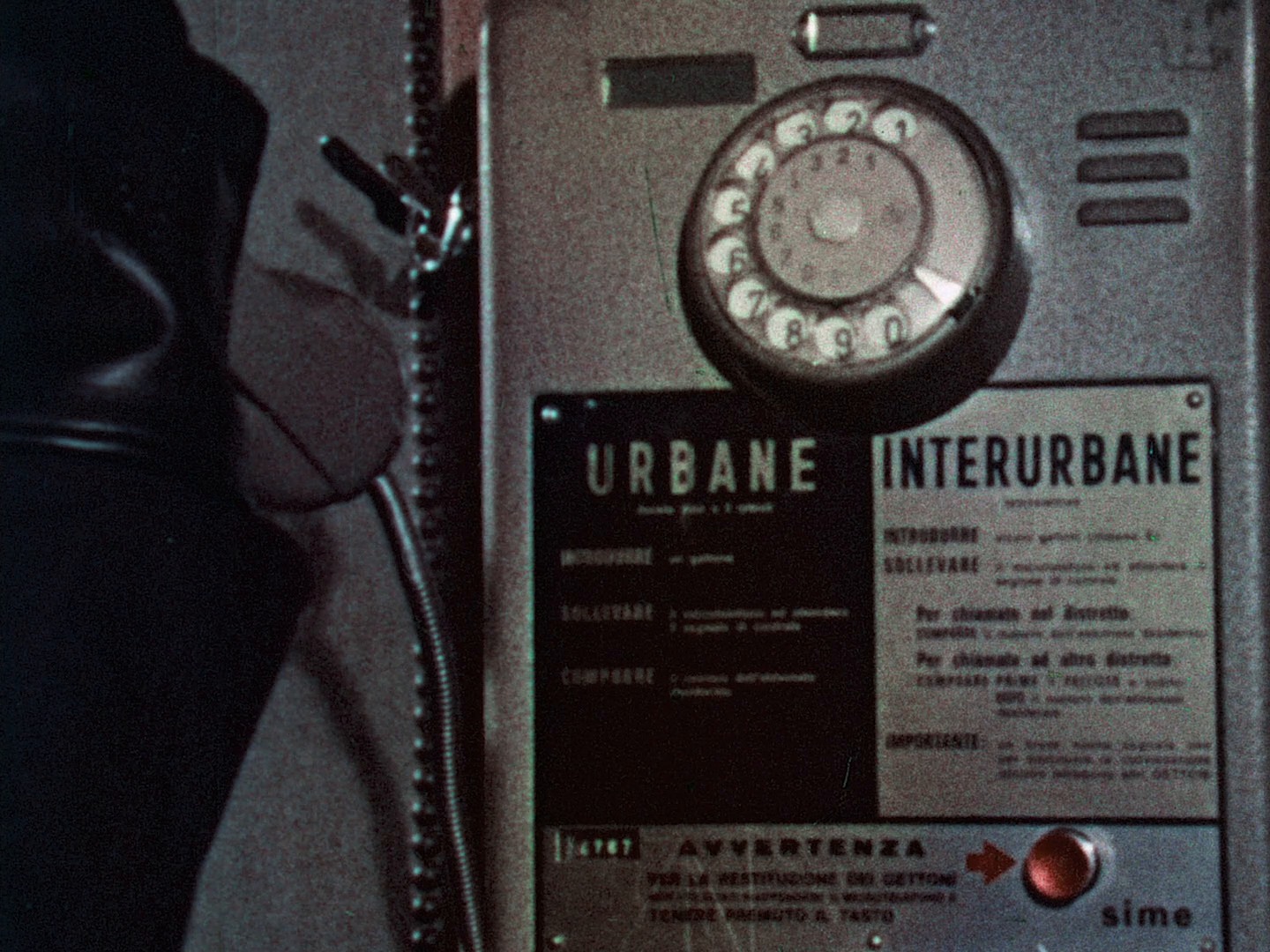
Daniela reaches for the telephone.

13 / 48:20

The radio threatens to join the two stories

A news bulletin connects Elena’s murder to an escape from a psychiatric clinic. Information circulating outside the house nearly brings the parallel investigation into the room. The scene returns immediately to food, a bath and the visitor’s decisions, keeping everyday domestic actions under pressure.

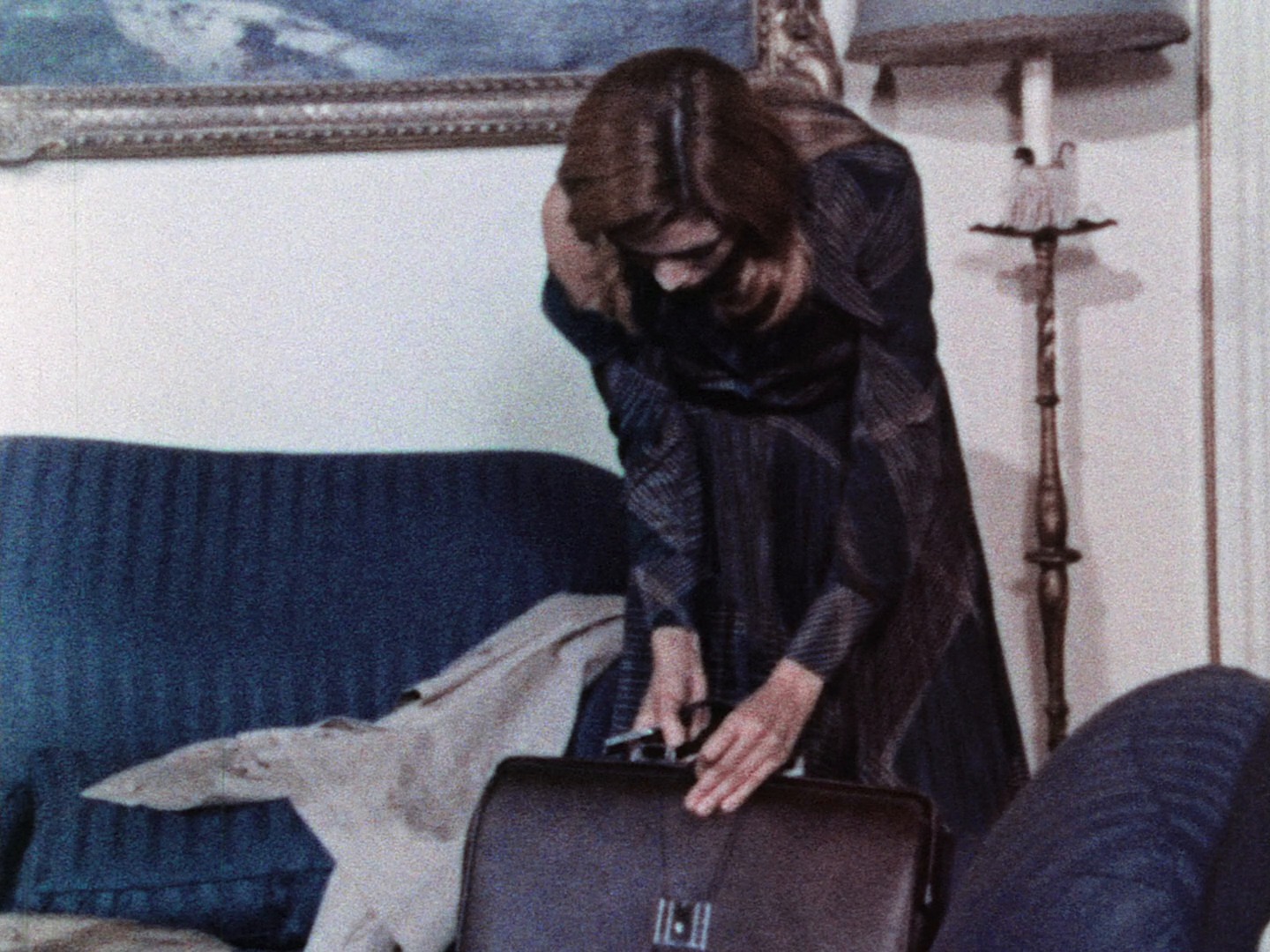
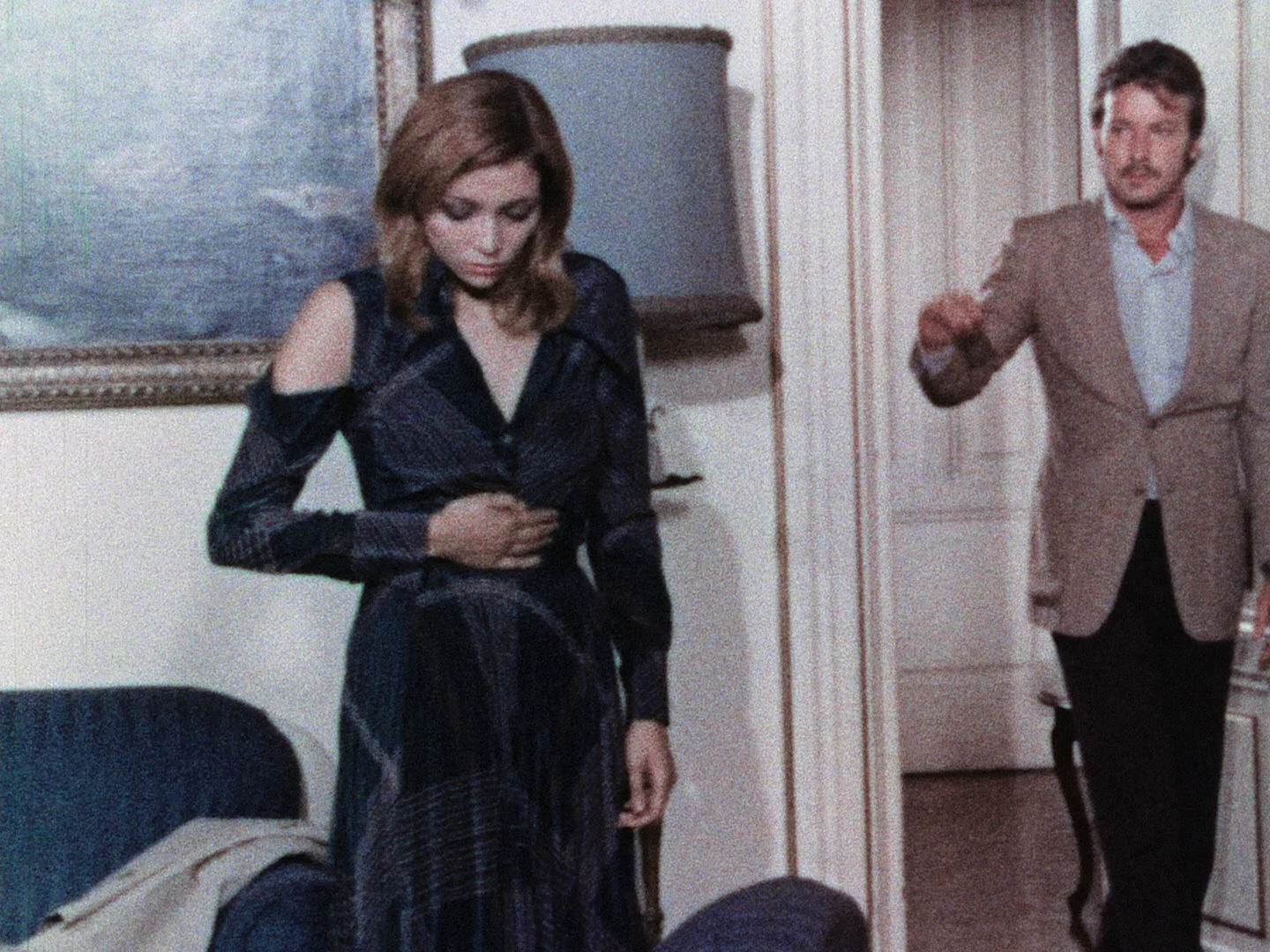
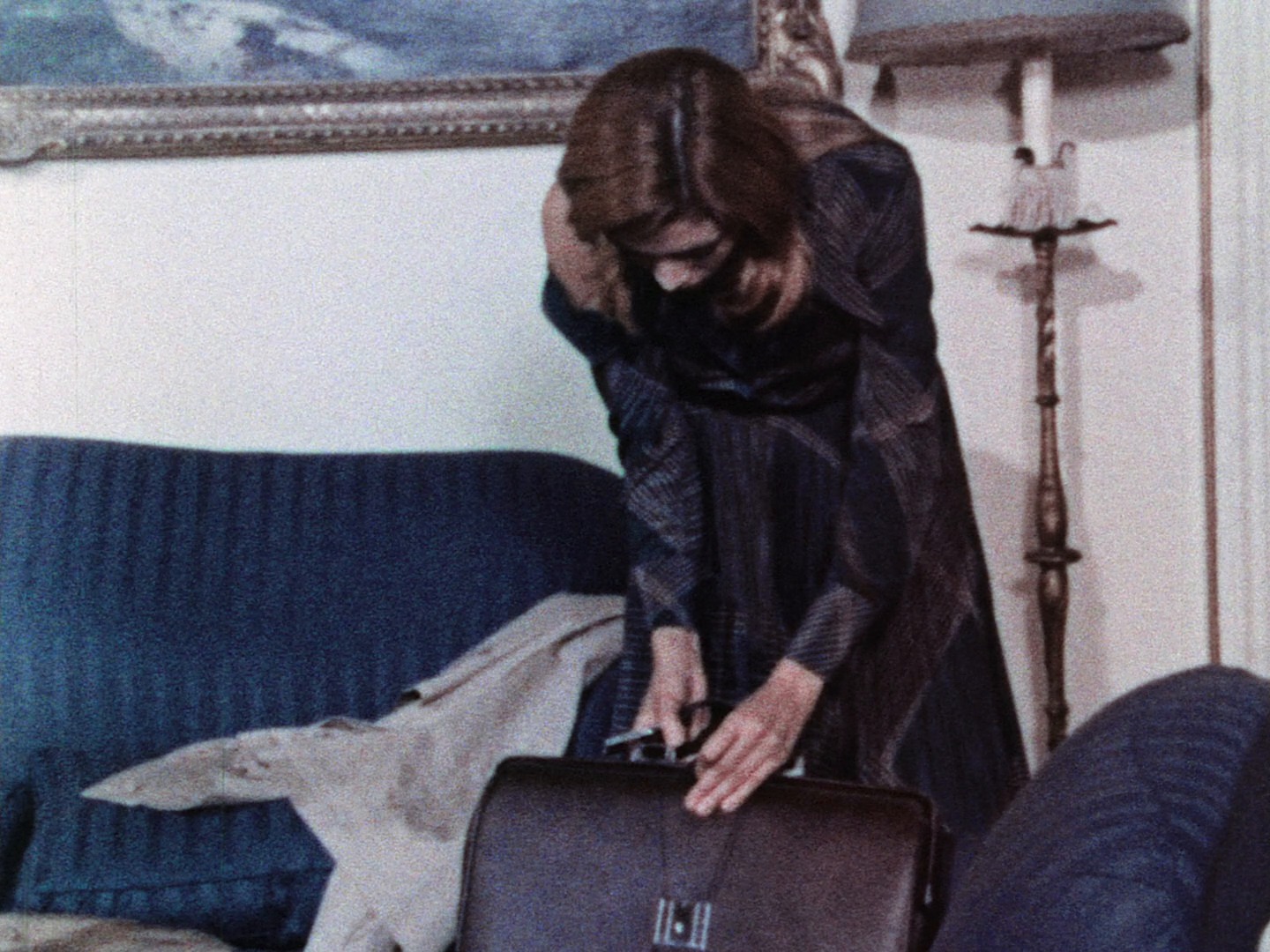
Daniela opens the visitor’s briefcase.

14 / 50:00

The briefcase contains a different identity

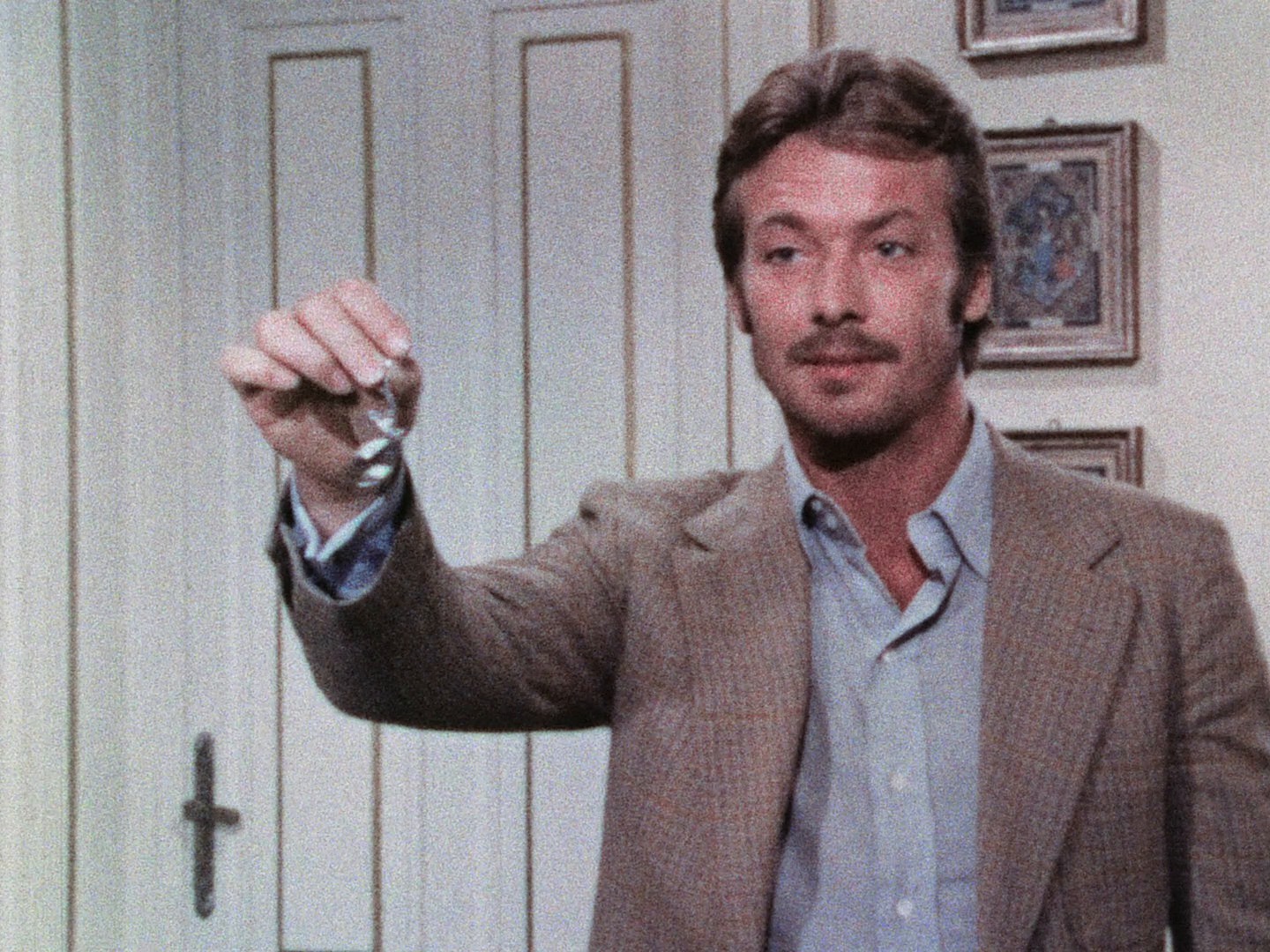
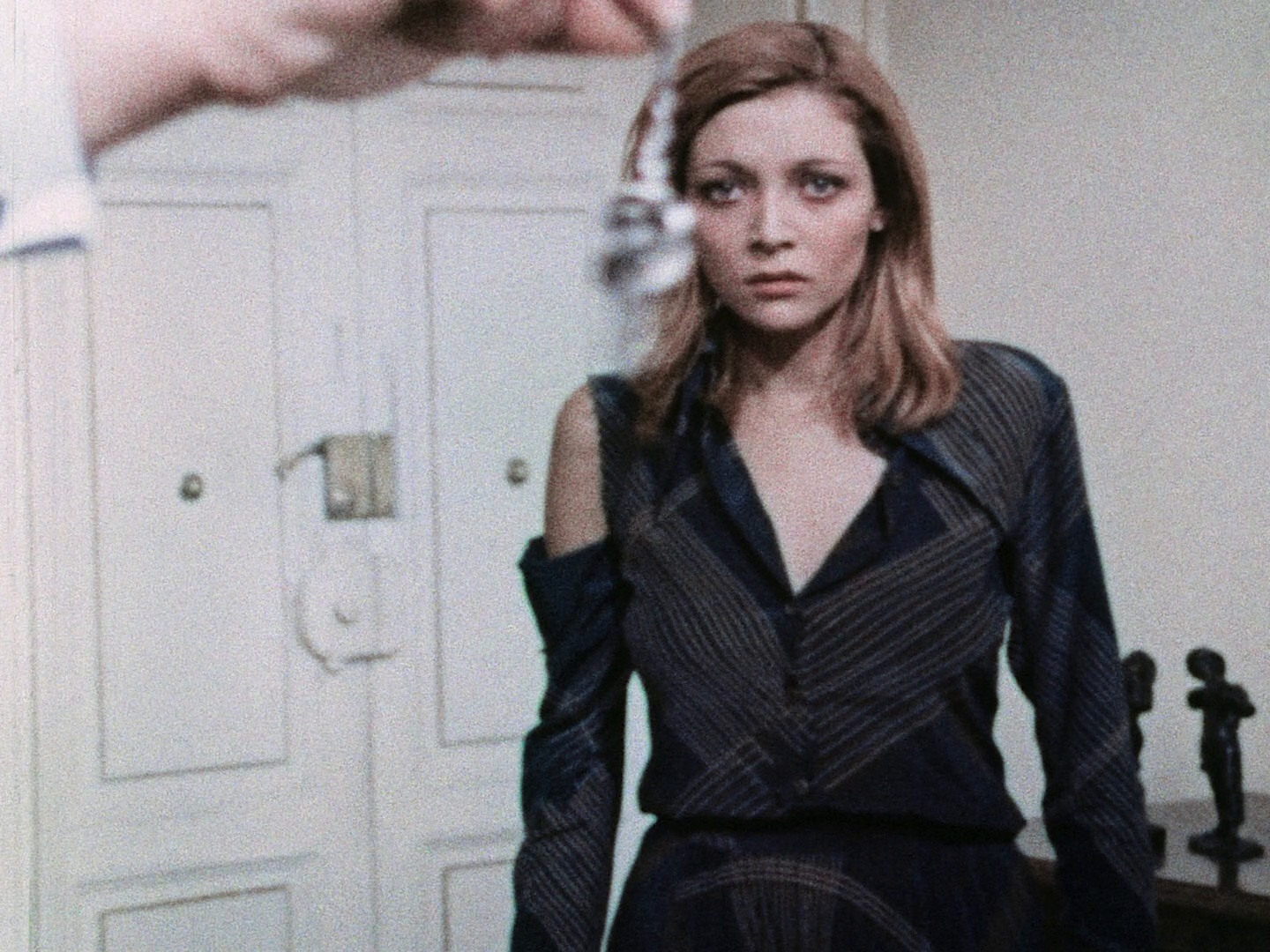
A carried object which has helped make the man look suspicious becomes the means by which Daniela recognises his profession. His sharp intervention keeps the discovery from resolving the scene for the audience. The keys that follow turn the possibility of leaving into another performance of control.

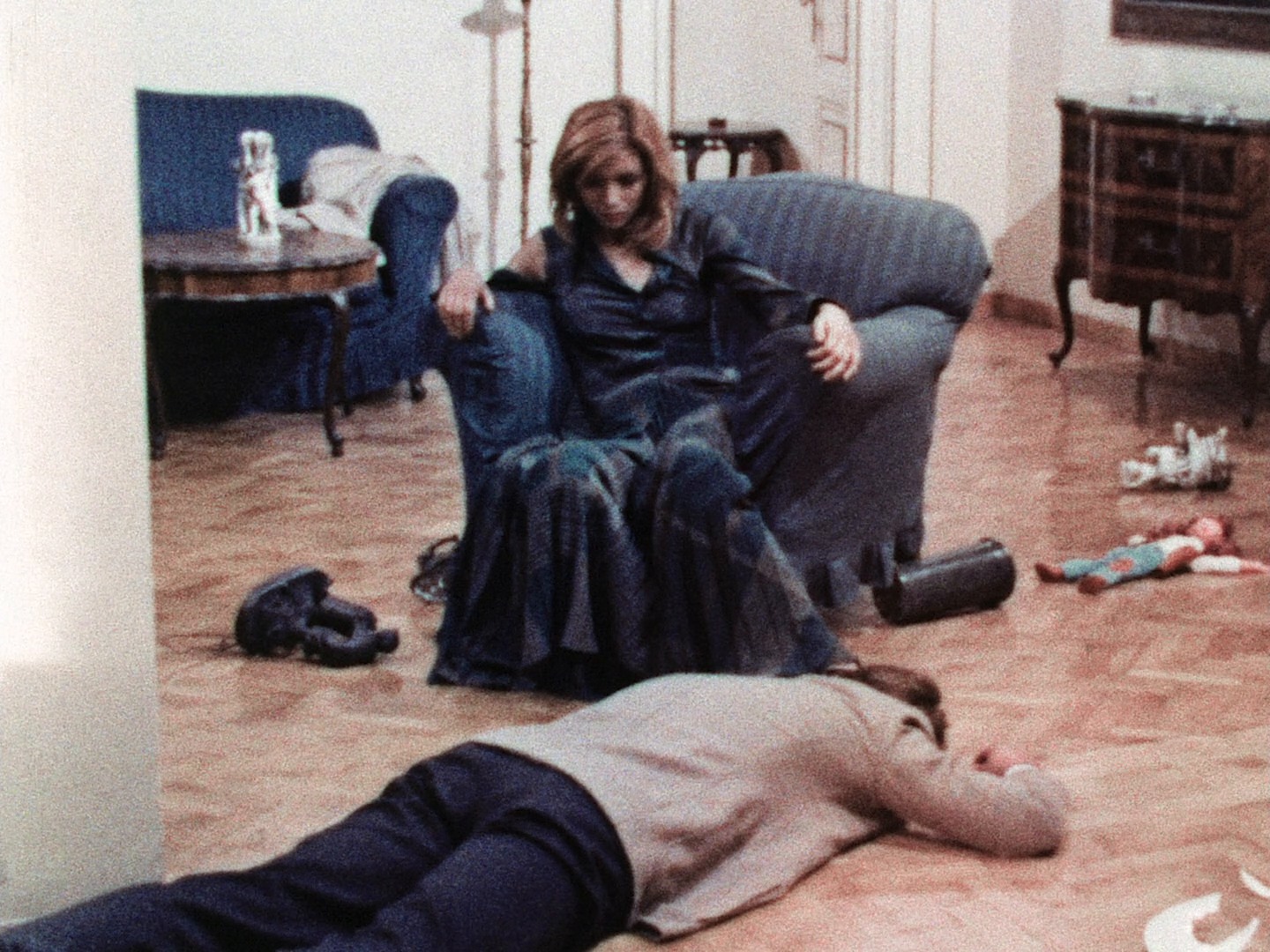
Daniela sits among the scattered toys.

15 / 53:40

Broken toys expose the room’s hidden history

The room’s objects no longer form a reassuring domestic arrangement. Daniela’s agitation and the damaged toys bring the childhood material out of the visitor’s story and into the visible space. The episode delays an explanatory overview, maintaining close attention to her actions and the room around her.

The police and medical staff reach Daniela.

16 / 56:00

The arrival changes everyone’s role

When the officials arrive, the threatening visitor is addressed as a doctor. Daniela’s fear and the police search are suddenly assigned a different relation. The reversal is built from the return of the institutional figures introduced at the beginning, rather than from a newly introduced culprit.

The doctor and inspector discuss what happened.

17 / 58:20

The explanation walks back through the clues

The doctor explains the sister’s murder, the assumed place in the house, the closed blinds and cut cords, and the attempt to provoke a revelation through a staged confrontation. Calling it a psychodrama supplies the mystery’s retrospective key. The inspector’s question about whether all this was necessary keeps the method itself open to scrutiny after the puzzle has been solved.

Explore the effects and suspense galleries →

SCENE STUDIES / TESTIMONE OCULARE

A witness without a body.

A woman sees what seems to be a murder, but the evidence disappears before the police arrive. The episode turns roads, telephones, shutters and doors into instruments for controlling what Roberta can know—and what she can persuade others to believe. Episode and stills source ↗

Argento listens to the detective’s story.

01 / 02:30

The presenter borrows a detective’s authority

The introduction makes official experience into a performance. A detective tries out gruesome anecdotes before settling on Roberta Leoni’s case; Argento presents it as the final story of the quartet and calls it a true one. The exchange prepares an episode in which the authority of a policeman, and the credibility of someone telling a story, will become central problems.

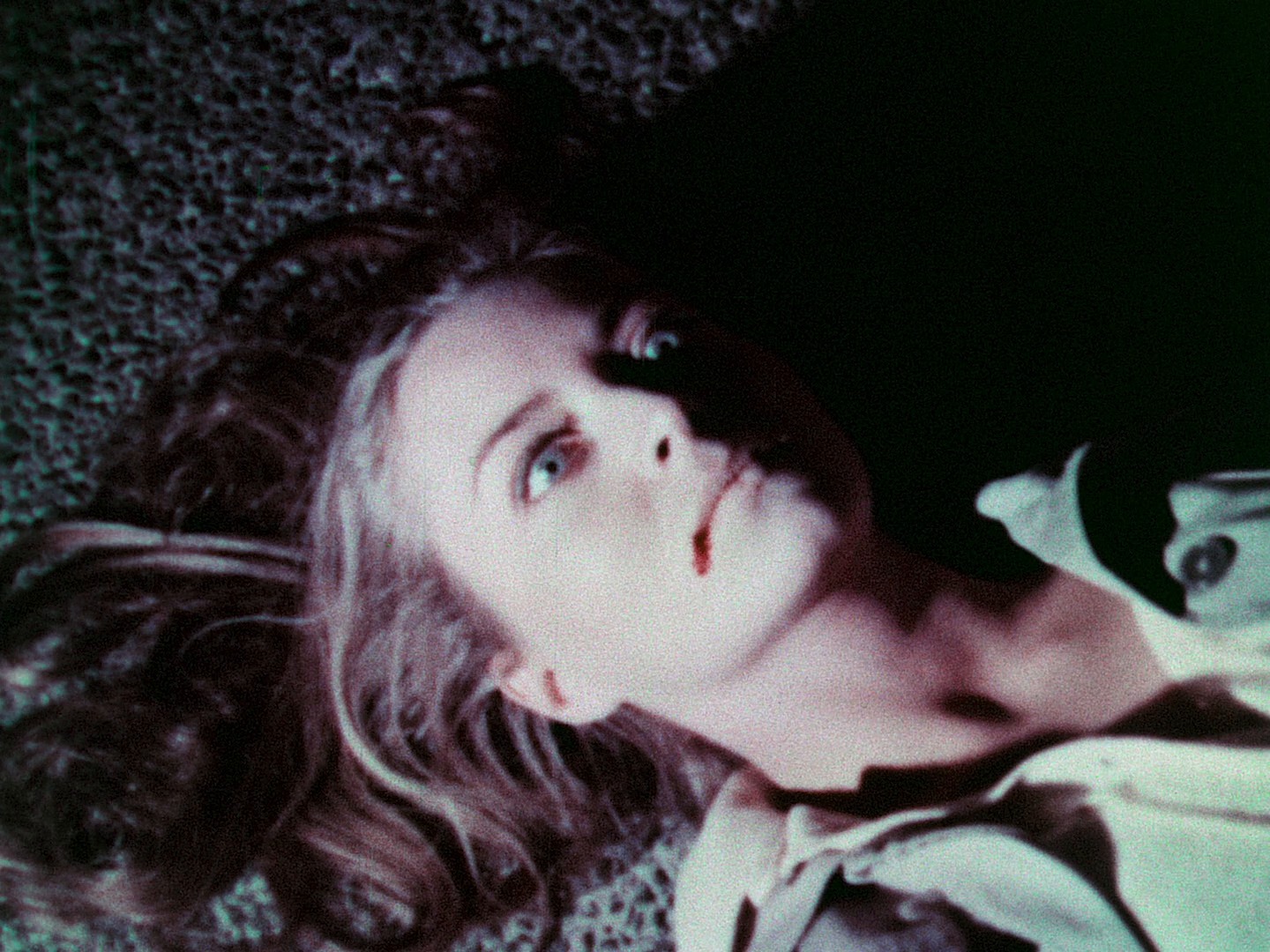
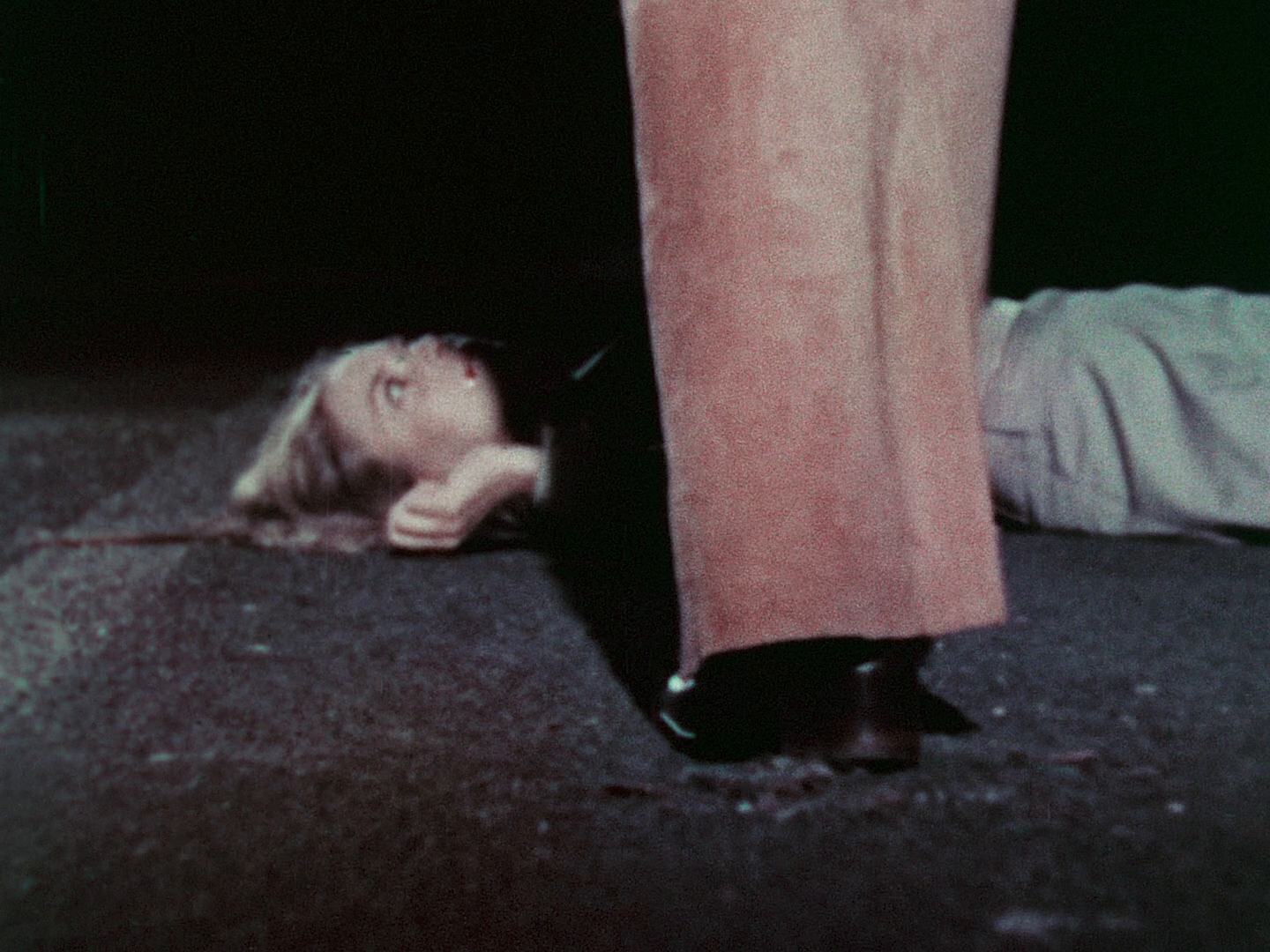
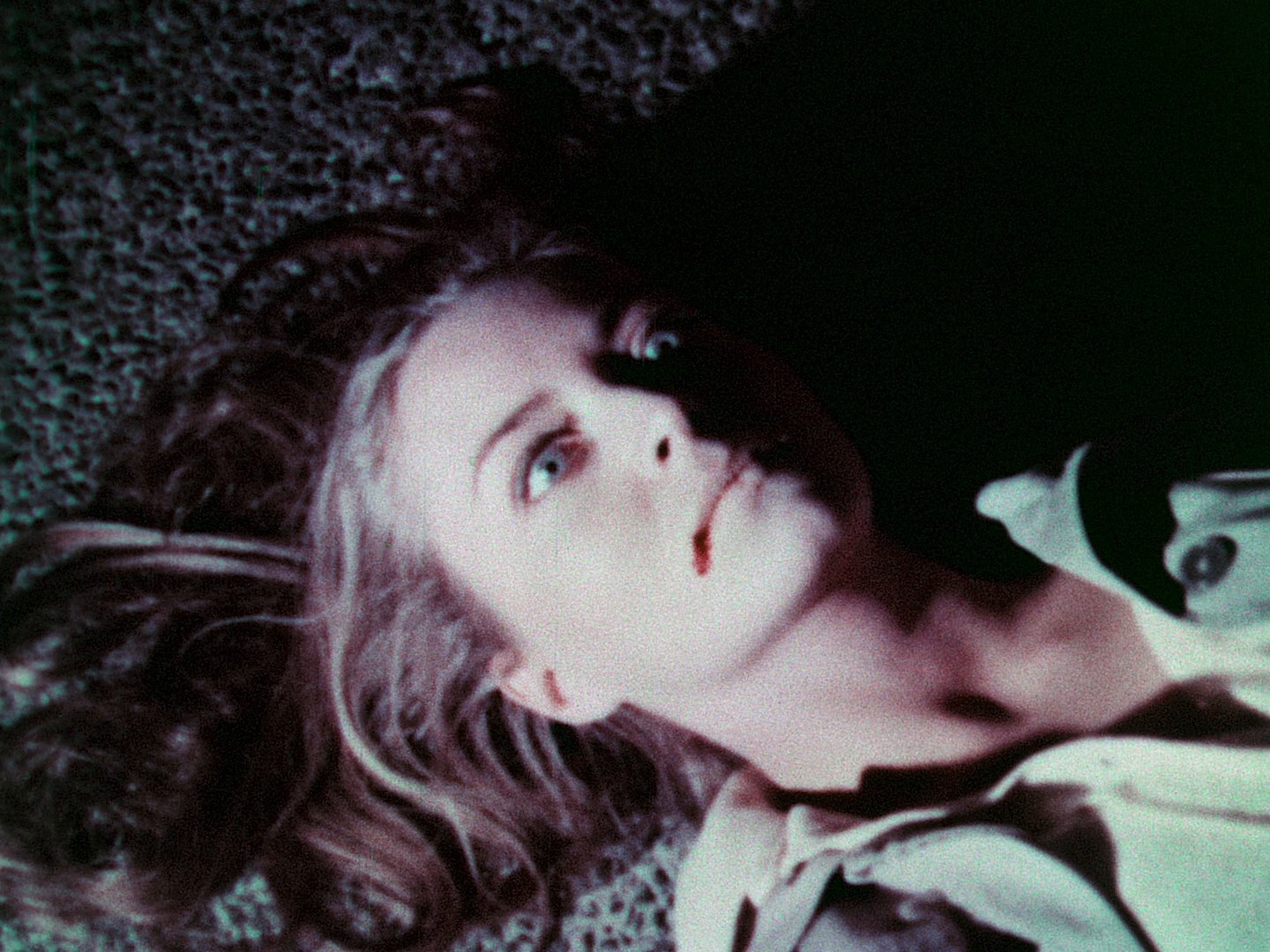
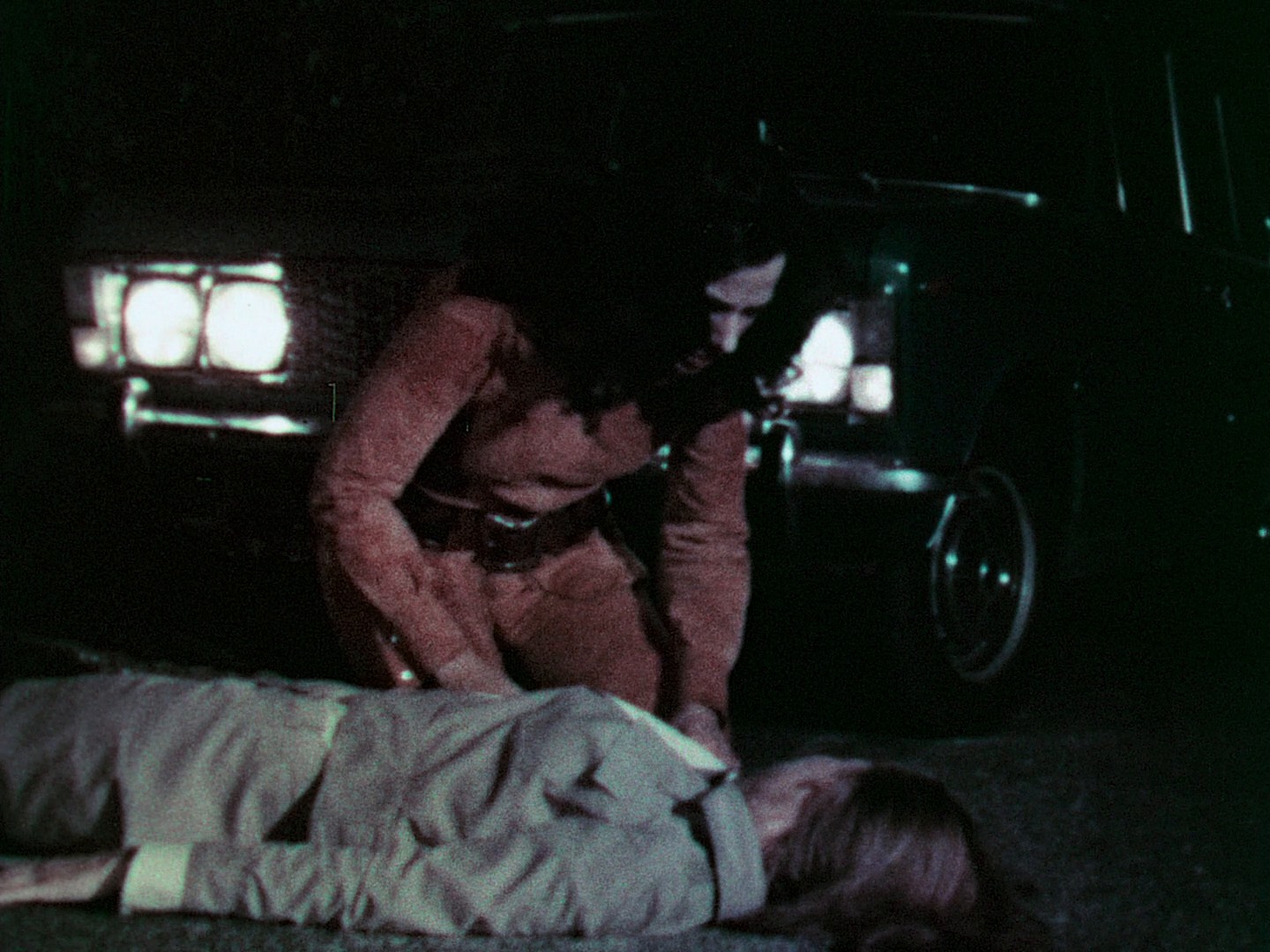
A woman lies in the headlights.

02 / 05:18

The road supplies an apparently unmistakable image

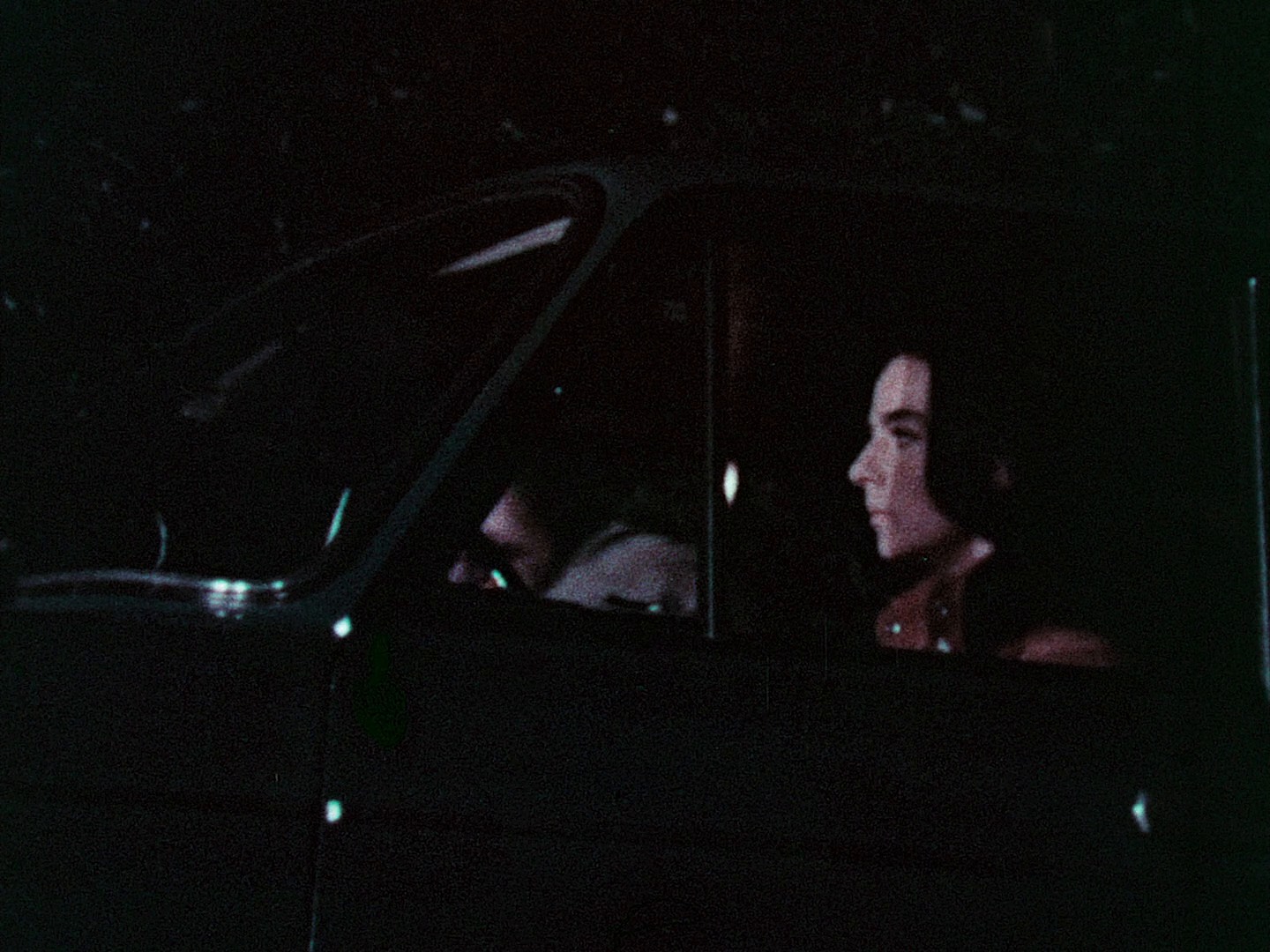
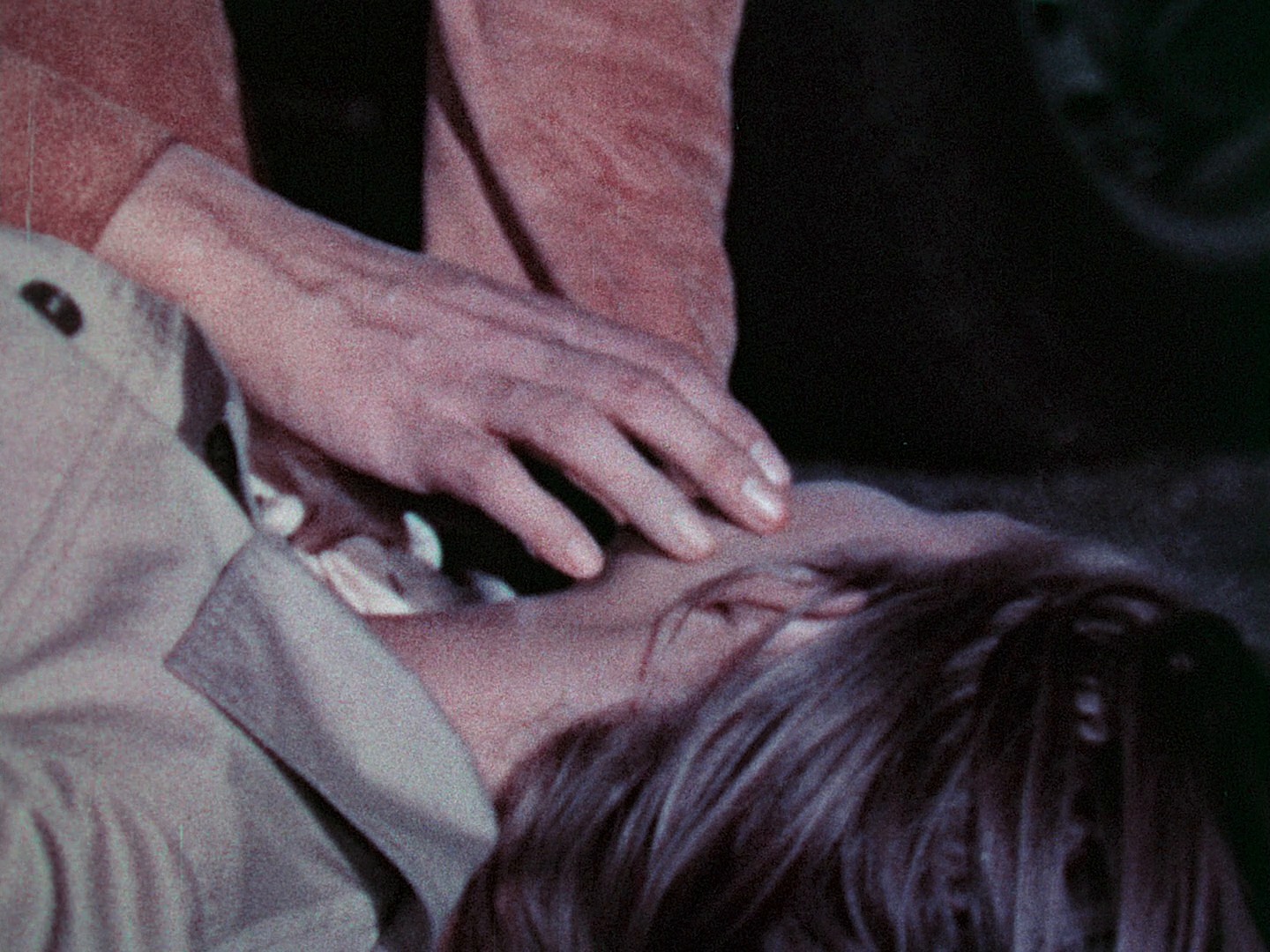
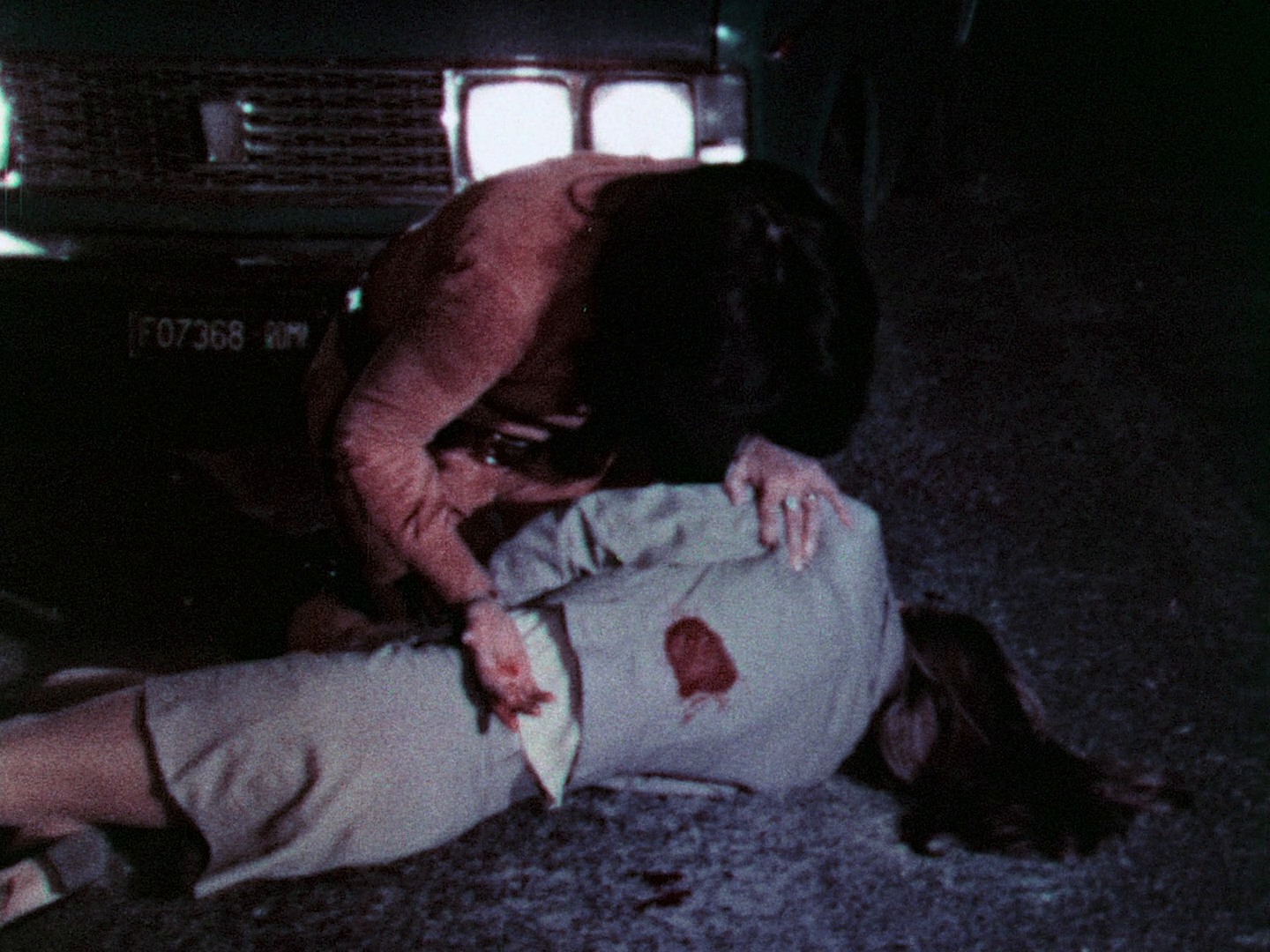
The night drive breaks into a sequence of close observations: a fallen woman, Roberta bending over her, a hand testing for life, and blood on the clothing. The headlights make the body unusually clear while the surrounding landscape remains unreadable. The image seems conclusive before the investigation has even begun.

Roberta describes the encounter in the tavern.

03 / 10:40

A witnessed event becomes an account to be tested

At the tavern, the inspector breaks Roberta’s experience into questions about speed, position, appearance and recognition. The return to the bloodied clothing inside her account gives the audience an image to hold onto. His questions reduce that vivid encounter to a dark figure and an uncertain identification: observation and usable evidence are already parting company.

Roberta returns to the bend with the inspector.

04 / 13:20

Returning to the bend does not restore the evidence

Roberta is taken back to the place where she stopped. The position of the car can be reconstructed precisely, but neither the woman nor the blood remains. Her distress grows as the test is repeated. The missing body turns a location that seemed to prove a crime into a setting where the witness herself can be doubted.

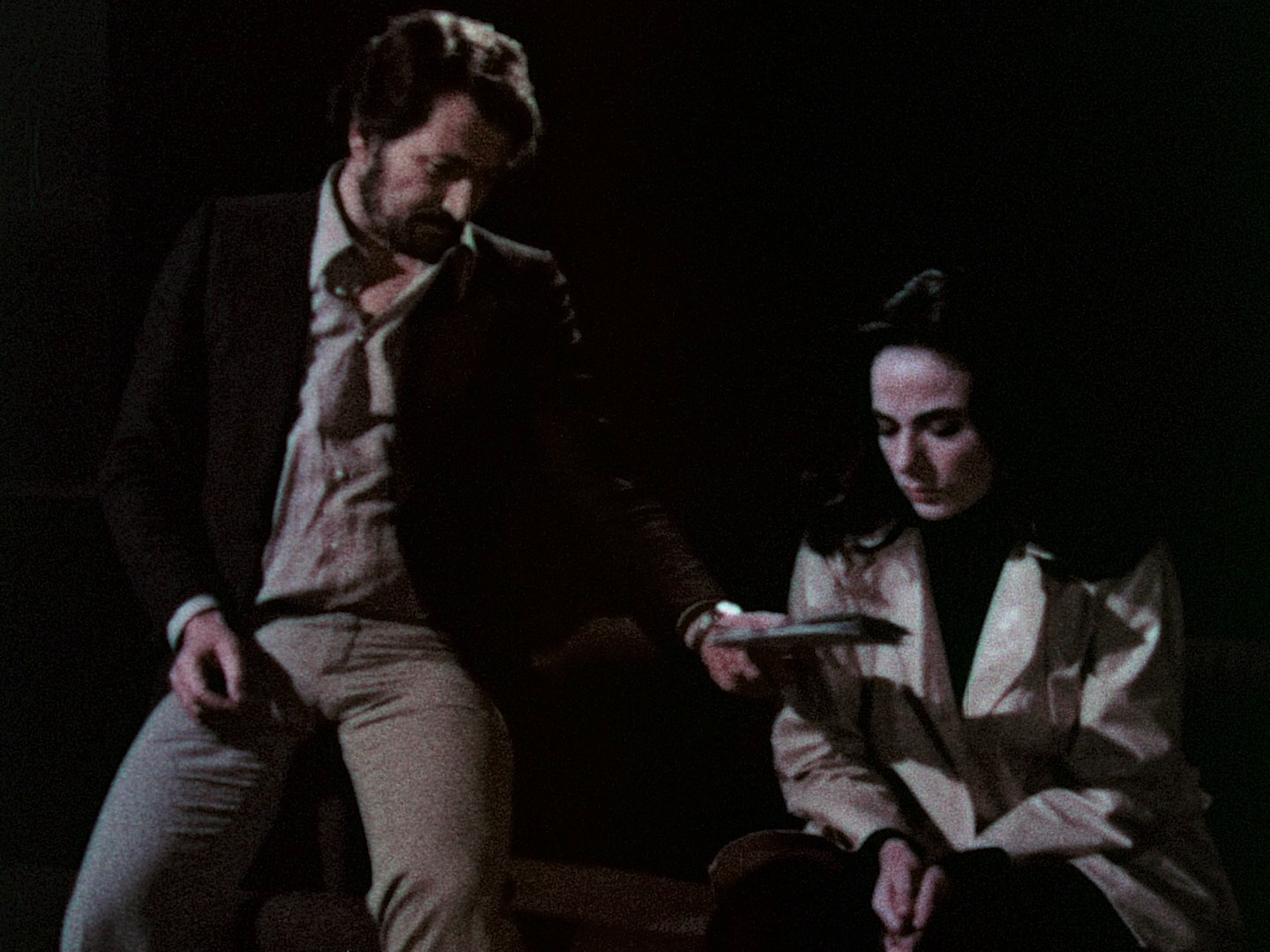
Guido joins Roberta at the police station.

05 / 15:00

Protection is assigned to the husband

The inspector asks Guido to stay close to his wife: she may be threatened by a murderer, or she may need help because of what she has imagined. Both alternatives place her under someone else’s supervision. Guido’s apparent concern introduces the relationship on which the later trap will depend.

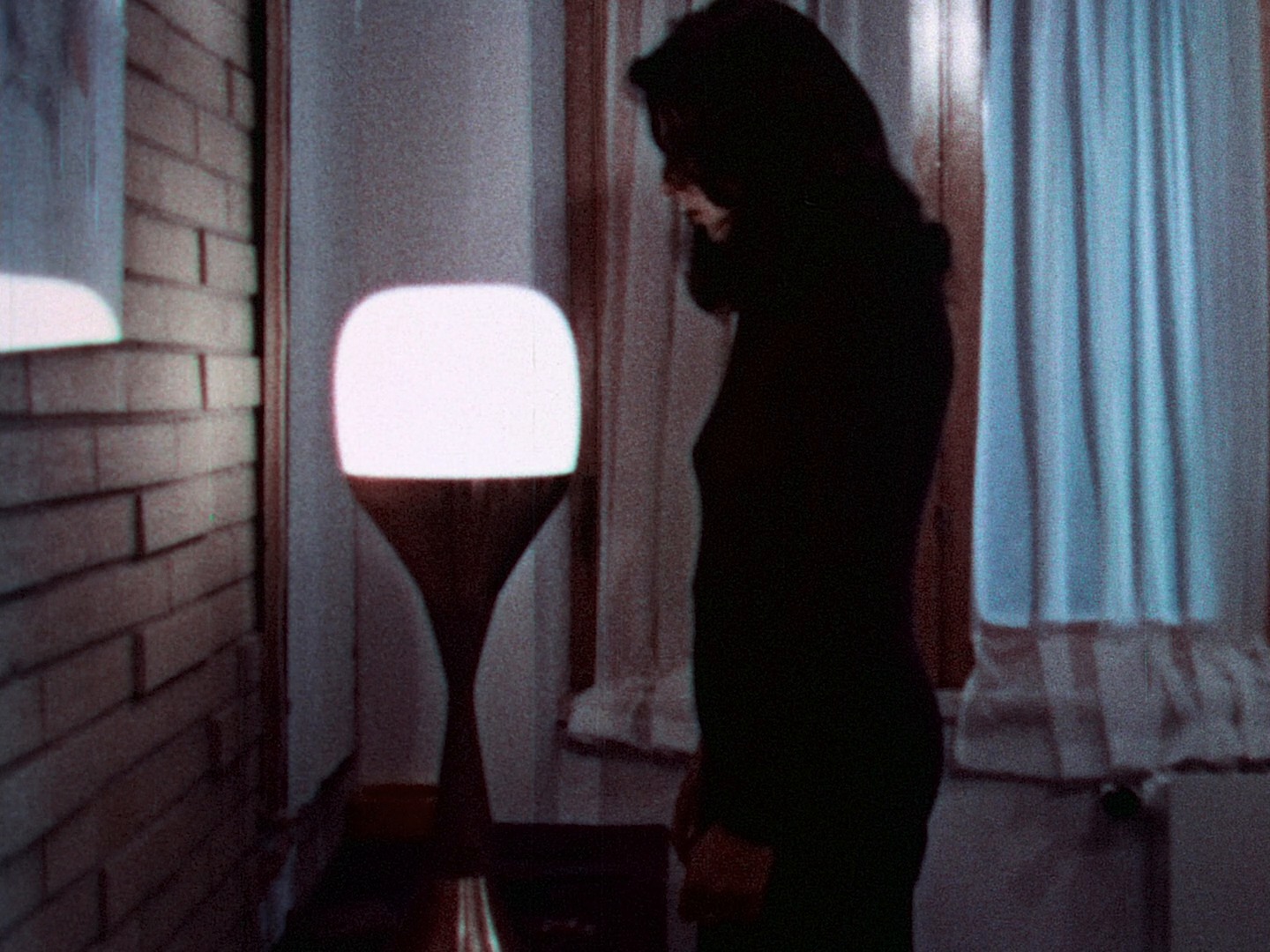
Roberta stands alone beside the telephone.

06 / 19:00

An ordinary room acquires an unseen listener

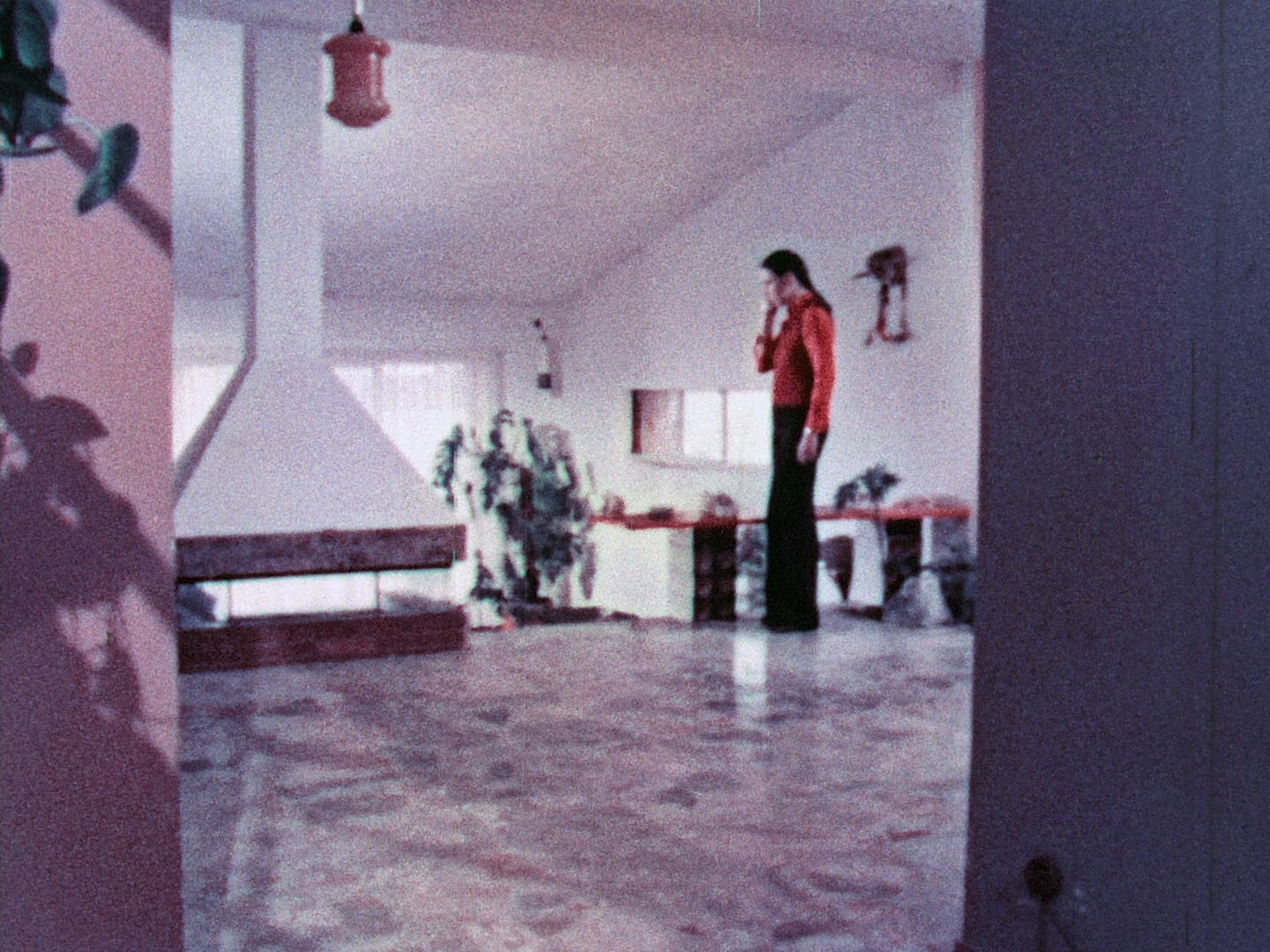
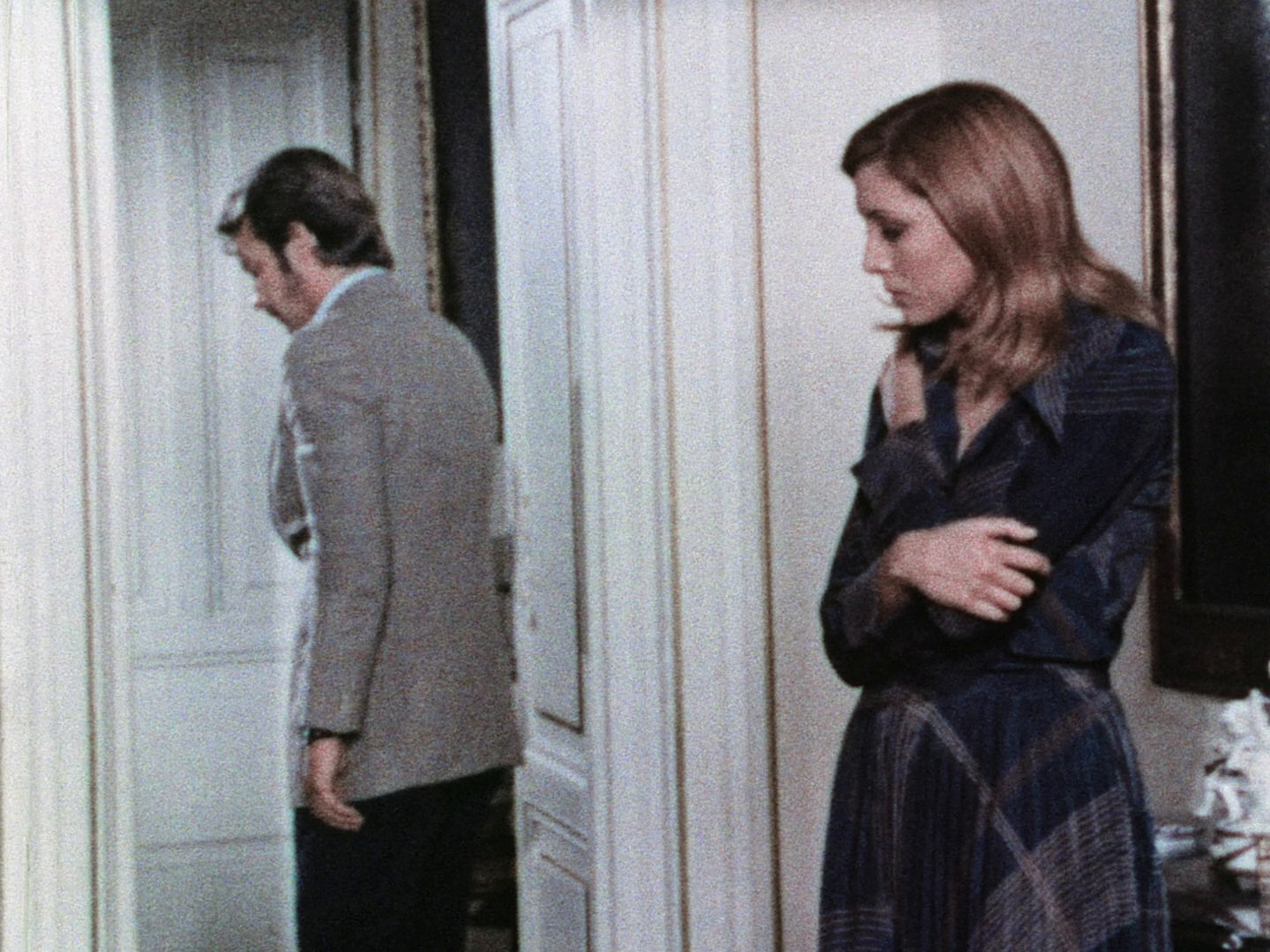
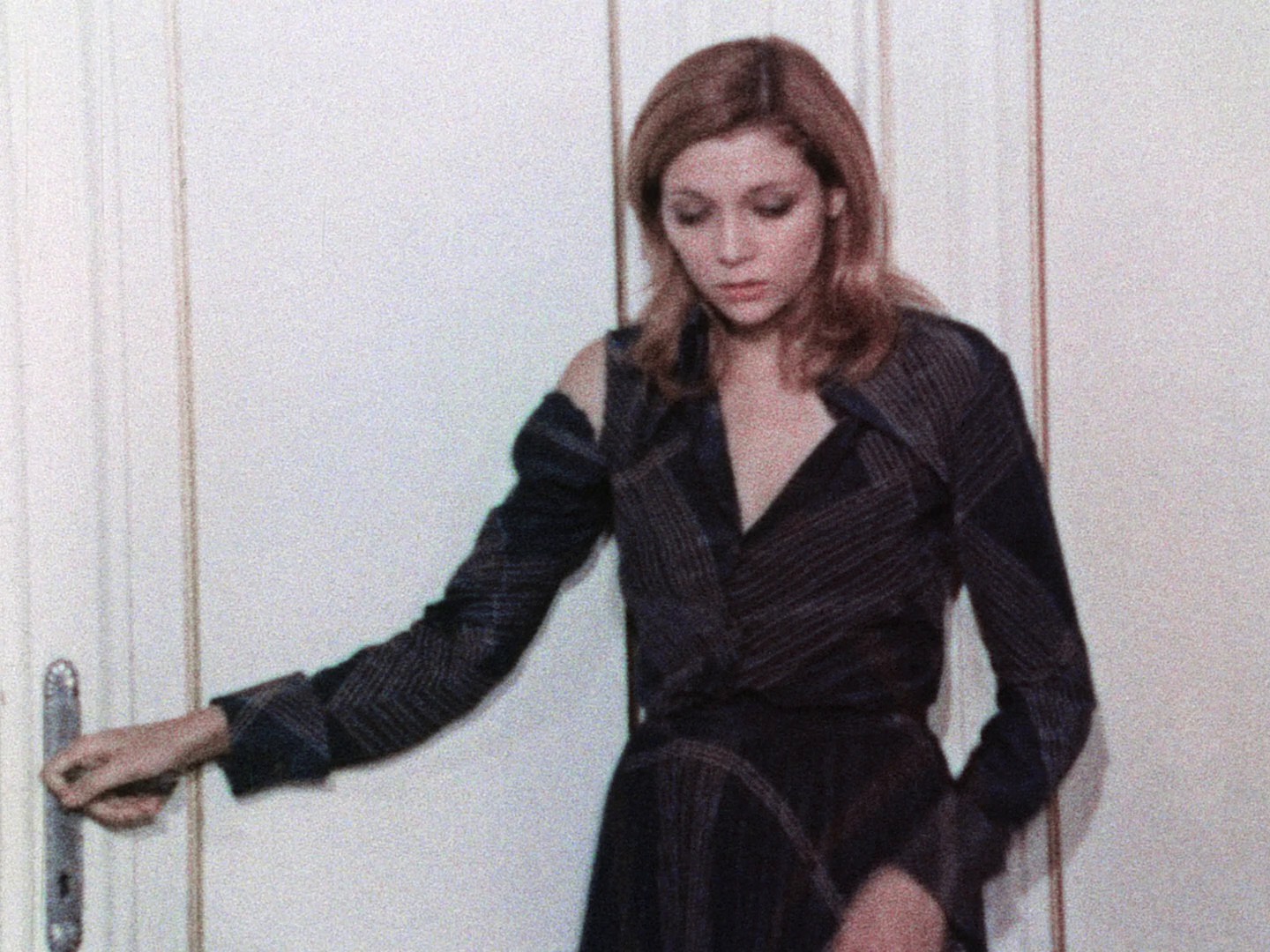
The bright, modern interior contrasts with the road’s darkness. Yet the silent telephone call brings the same uncertainty indoors. Long views across the living room and staircase make the house legible, establishing the routes that will become dangerous when its windows and doors have to be watched.

Guido and Roberta find the front door open.

07 / 25:00

A second event leaves almost nothing to report

After their anniversary outing, the couple return to an open door and a house without power. Nothing appears to have been stolen. Roberta now anticipates the response she received before: an event without physical confirmation will be treated as a mistake. The discussion makes the earlier disappearance a pressure on her willingness to seek help.

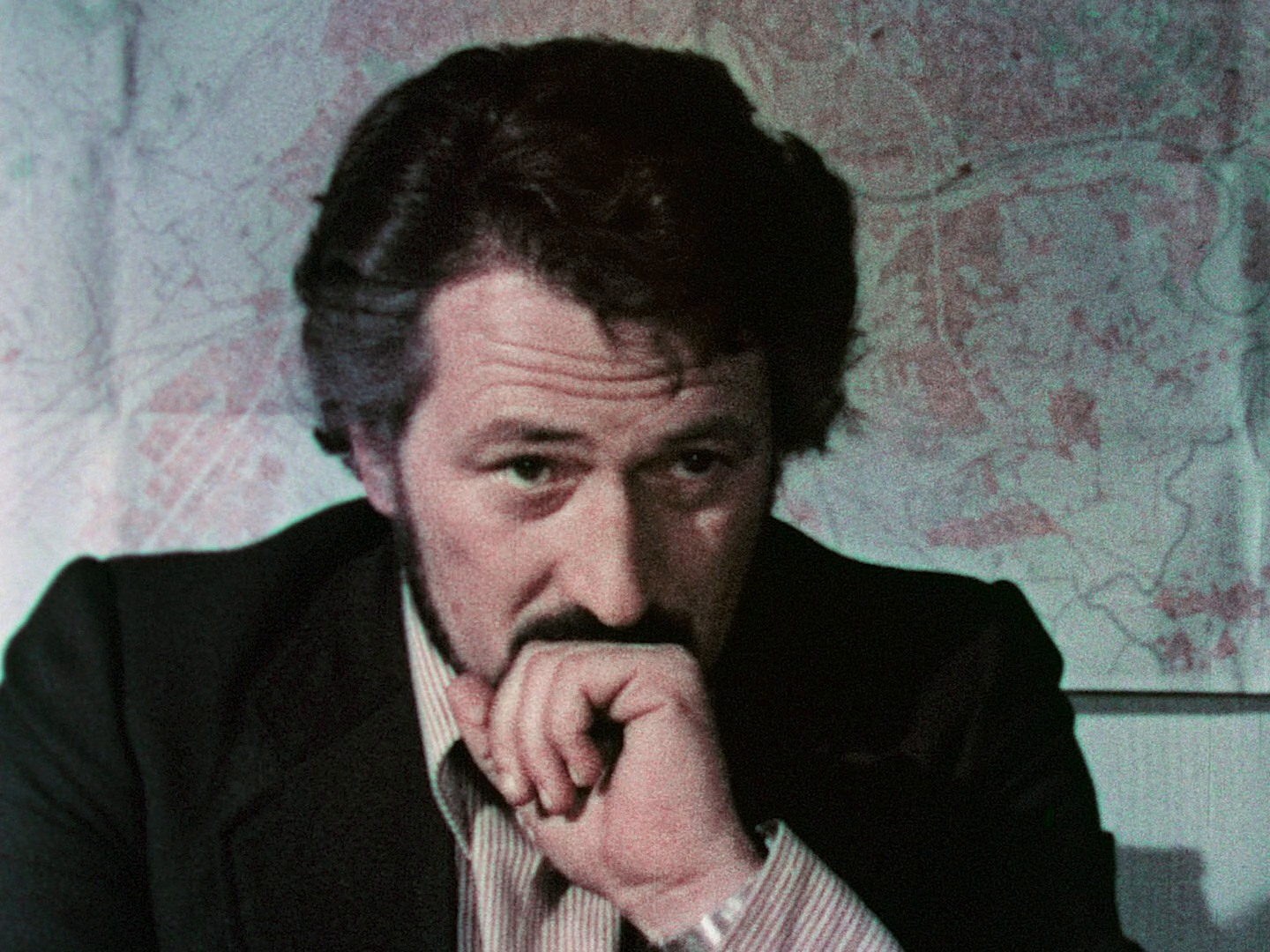
The inspector searches through photographs.

08 / 29:20

The archive of faces cannot identify her memory

Missing-person photographs and pictures of recovered bodies offer a possible route back to the woman on the road. Roberta rejects them. The inspector describes the limits of his resources, but the scene also plants the form of the final rescue: an image of a dead stranger will eventually bring the police to her house.

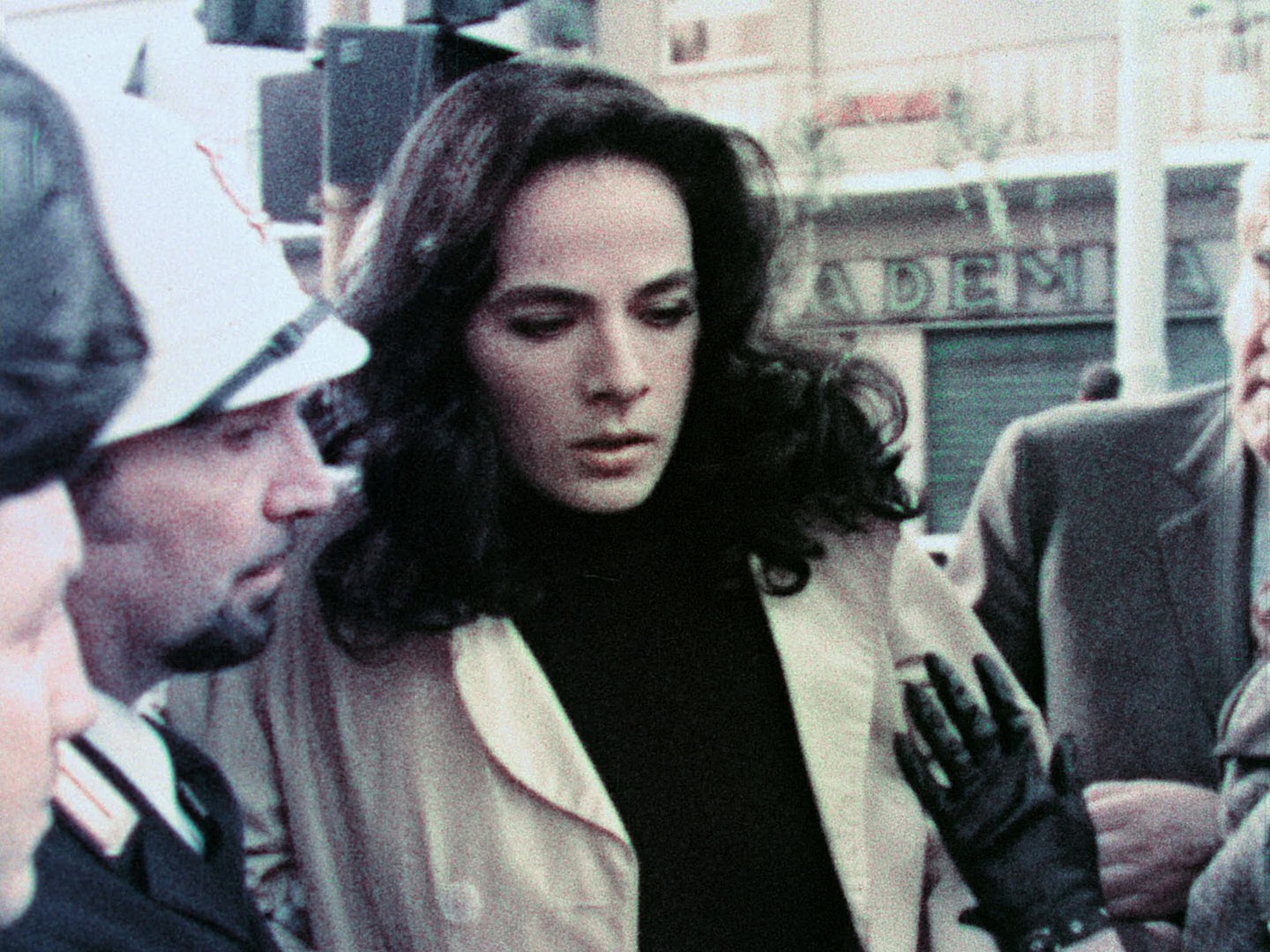
Roberta describes the attack to a policeman.

09 / 31:58

The crowd supplies witnesses without an answer

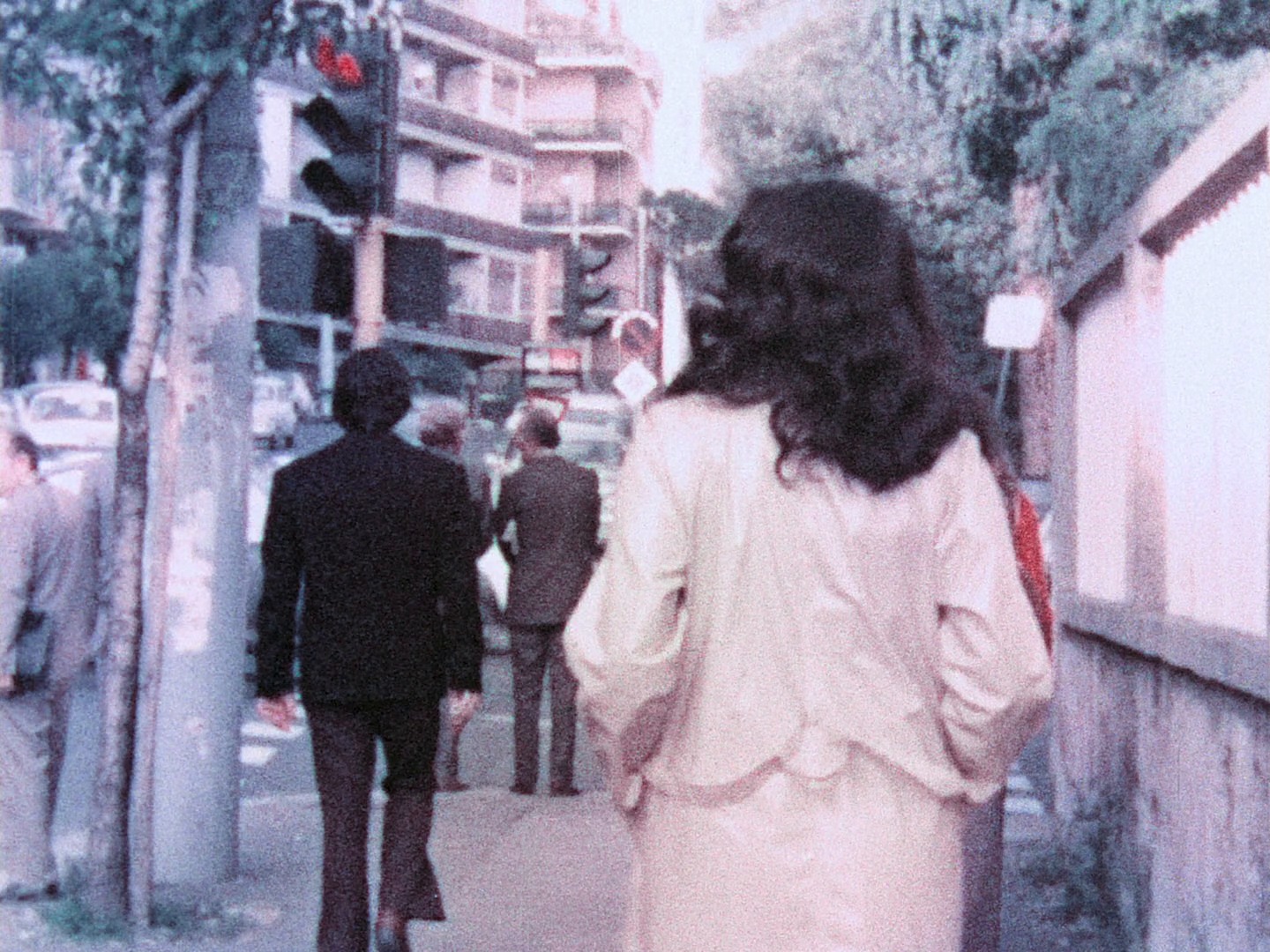
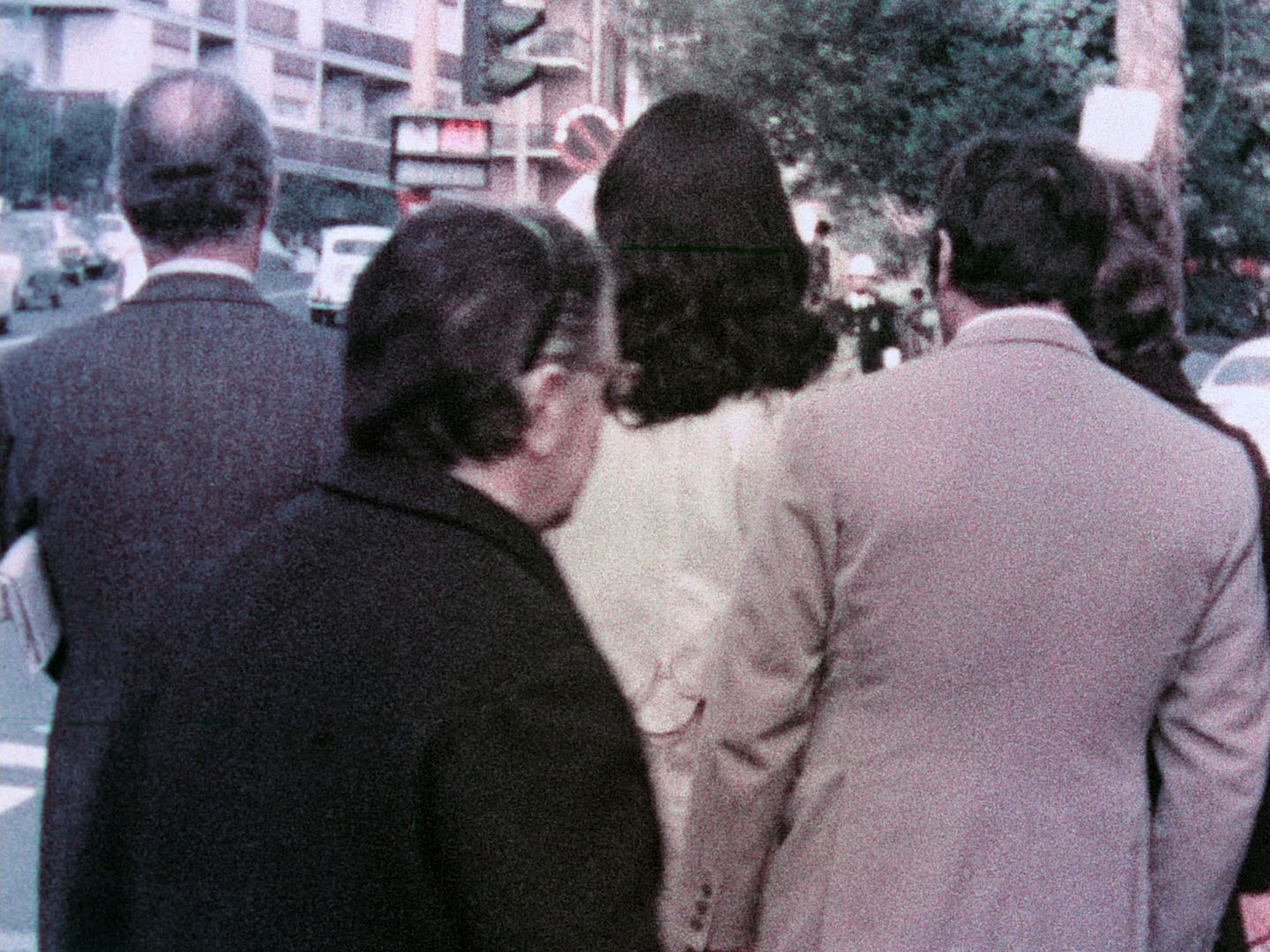
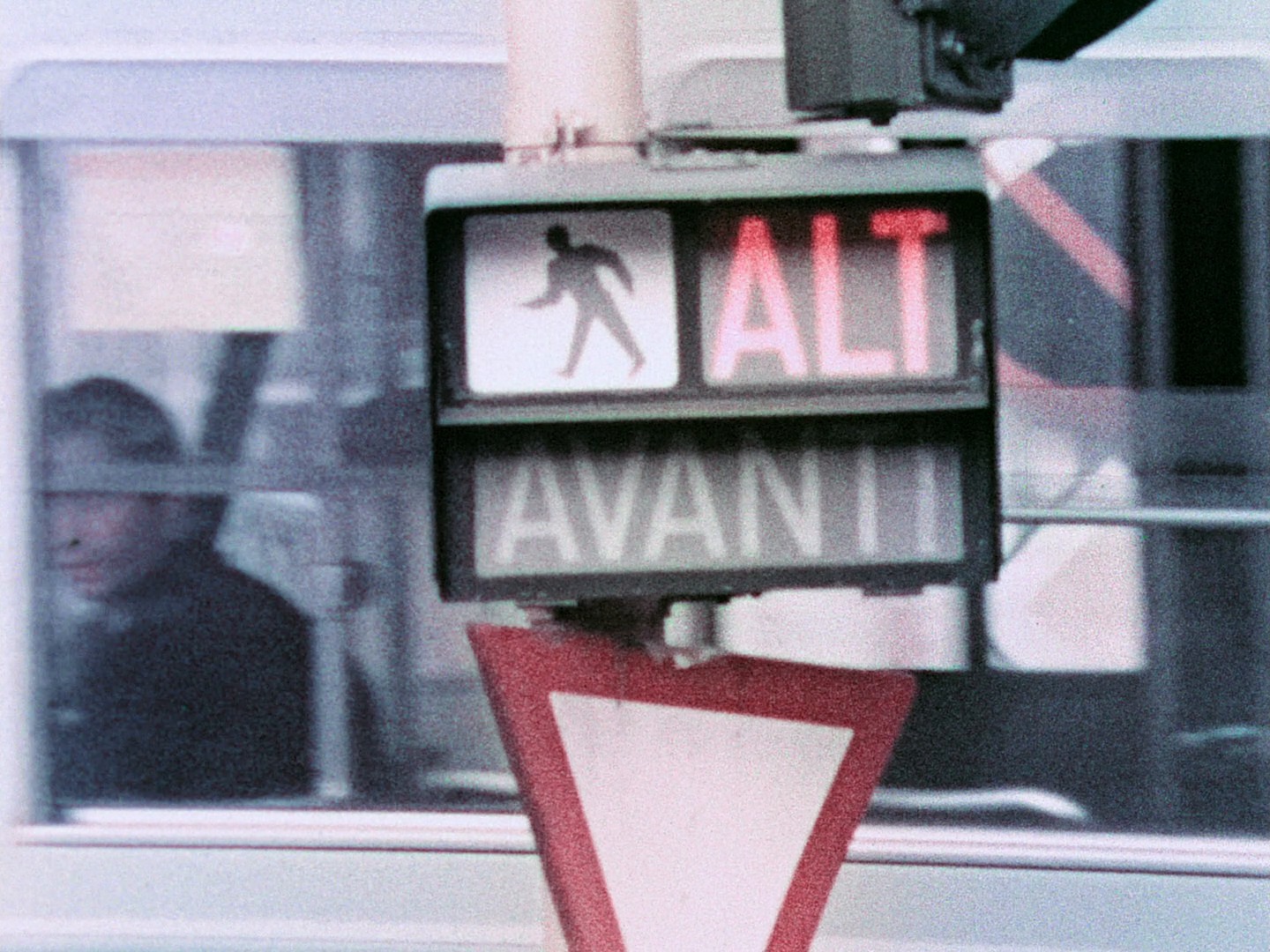
A crowded pavement and traffic signals give the street attack a different visual texture from the isolated road. Roberta insists that a hand pushed her in front of a car; the people around her report a slip or an uncertain view. More witnesses do not produce better evidence. Their statements repeat her original problem from the opposite side.

The inspector changes his approach to Roberta.

10 / 33:20

Belief arrives before proof

After the street incident, the inspector finally says that he believes her. He gives her his personal number and asks her to remain at home, close to her husband. The change matters emotionally, but it does not yet reveal the plot. The advice is protective in intention while unknowingly directing her toward the people and place of danger.

The threatening call comes from a public telephone.

11 / 35:40

The voice knows the household’s timetable

The threat is precise about Roberta being alone and Guido returning late. Cutting between the home telephone and a public call box gives the voice a physical source without supplying a reassuring identity. Knowledge of the couple’s movements makes the caller seem to be watching the house from outside; the ending will change the meaning of that knowledge.

Guido explains his plan beside the closed window.

12 / 40:10

Guido directs the performance he needs her to give

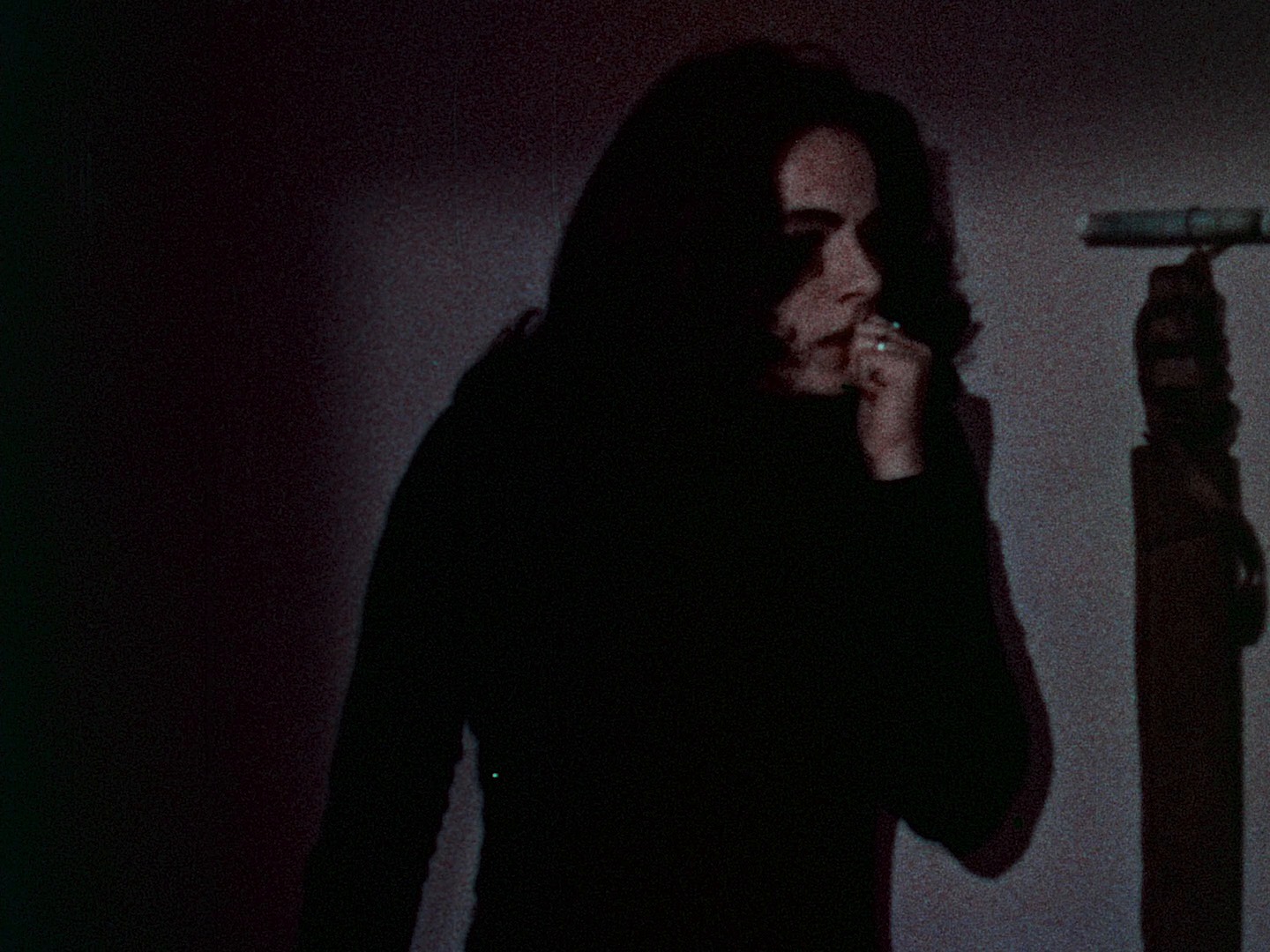
Guido tells Roberta that he will conceal his car, hide outside and shoot the intruder. She must go upstairs and behave as though she is preparing for bed. What sounds like a defence is also an instruction about where to stand, what to do and whom to trust. The episode turns the husband into a director of her visible actions.

Roberta waits at the bedroom window.

13 / 43:00

The promised guard remains outside the frame

The upstairs room, its window and the dark garden divide Roberta from the man supposedly protecting her. She calls down for reassurance, then listens closely enough to recognise that the replying voice is wrong. Sound overturns the security of the arrangement before she can see the person below. Her retreat down the staircase transforms the familiar house into an obstacle course.

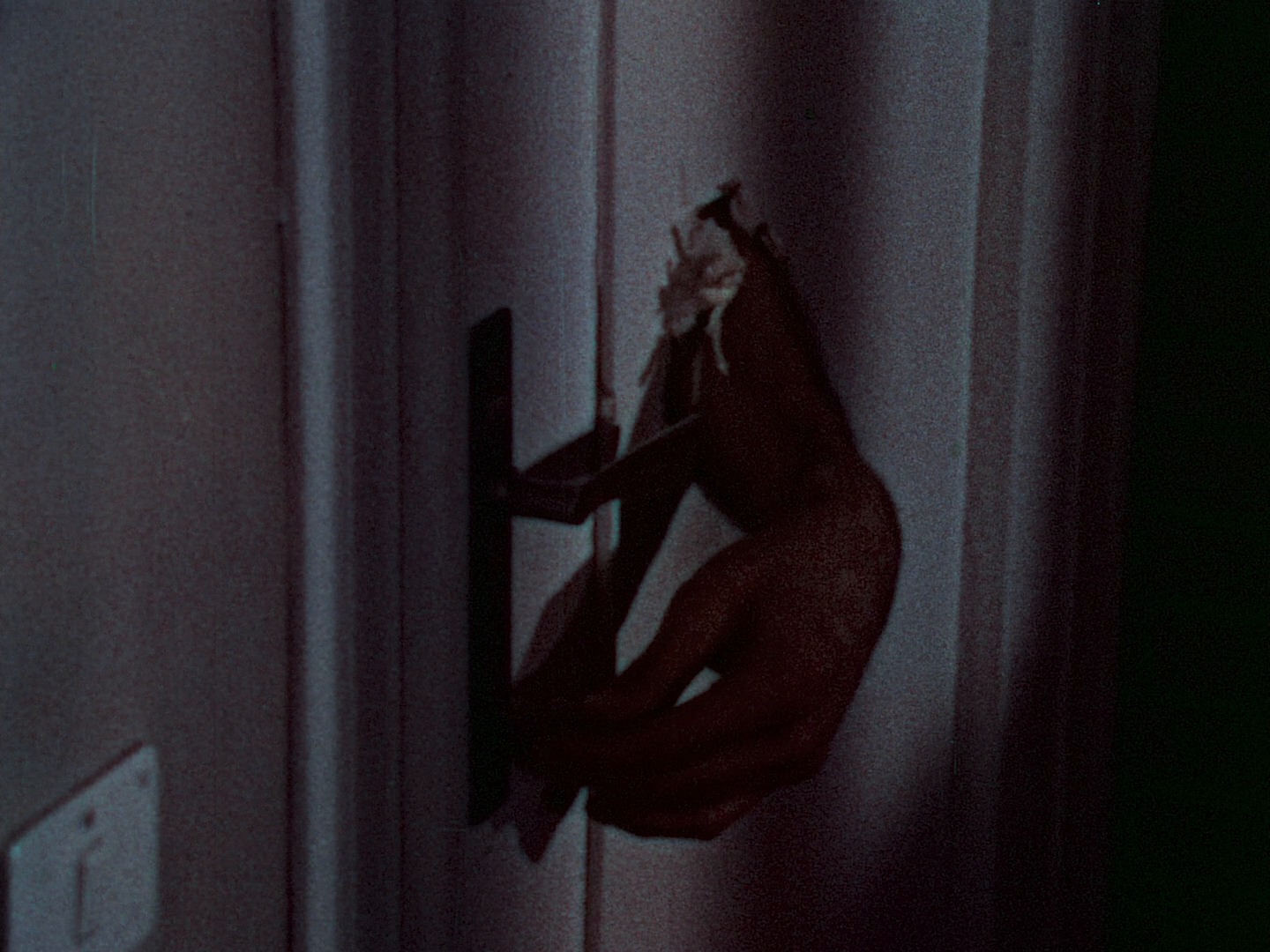
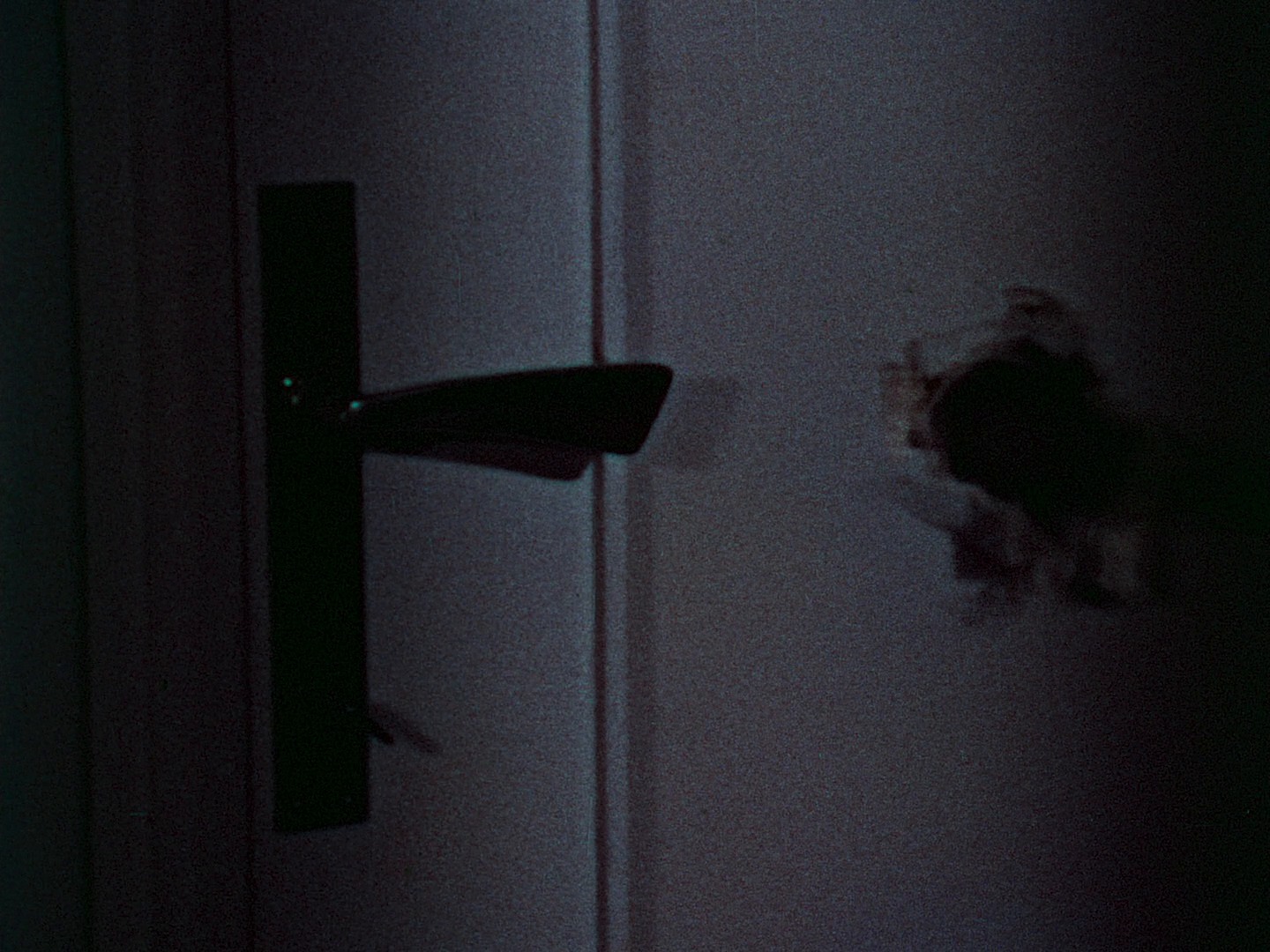
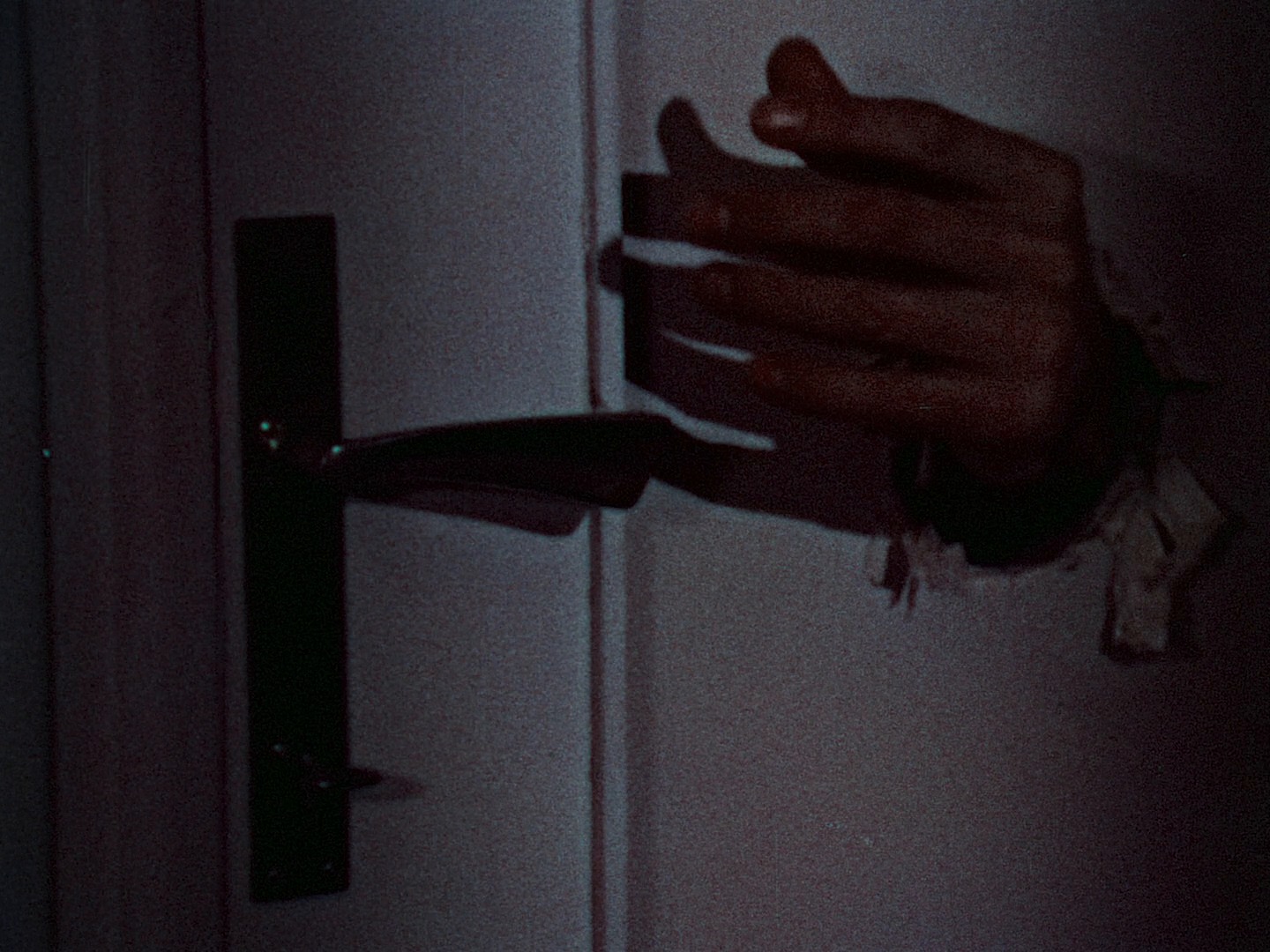
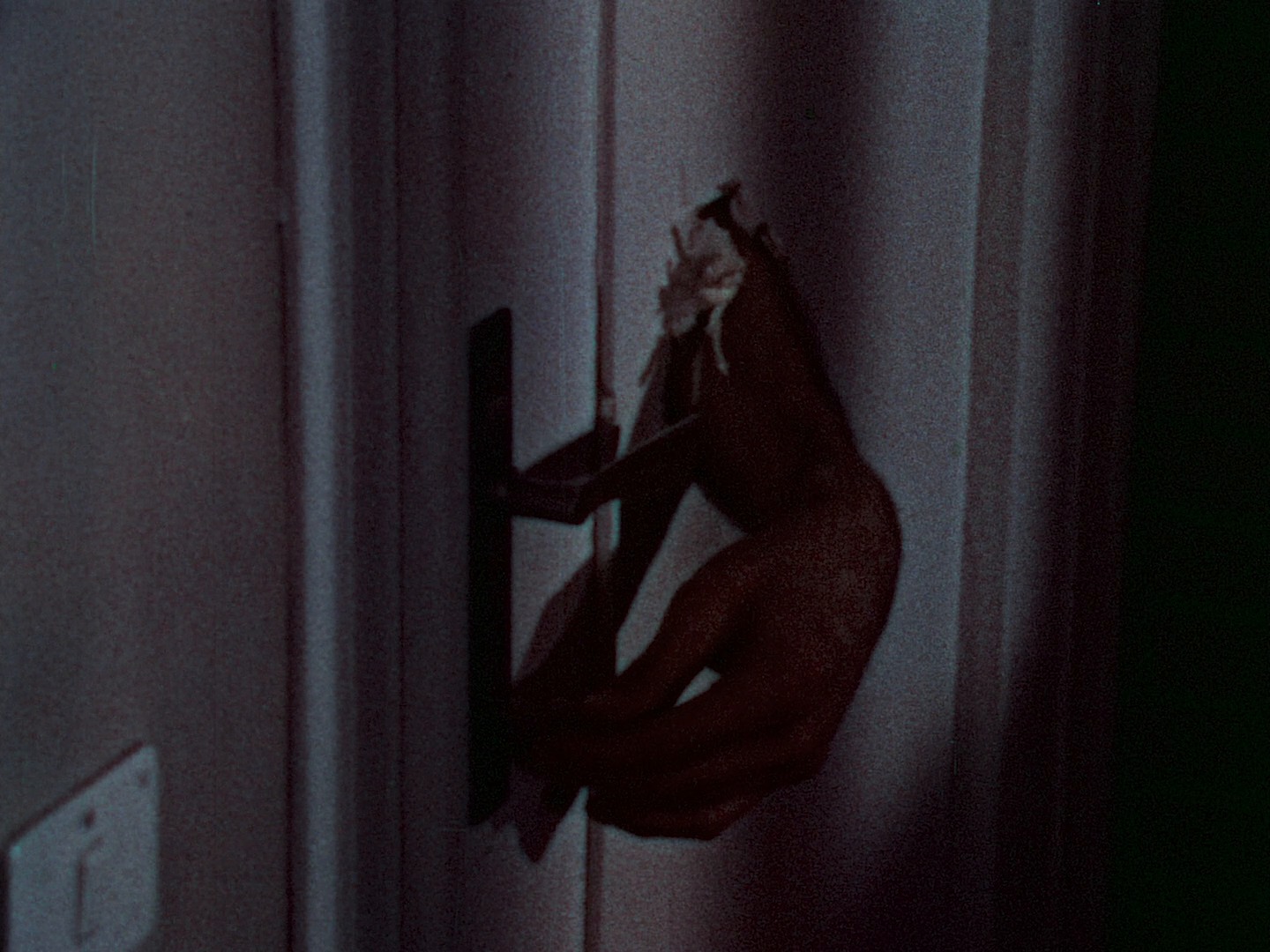
The intruder’s hand reaches past the knife.

14 / 49:45

A door becomes a point of contact

Roberta’s last barrier concentrates the attack into a small area: a damaged door panel, the lock and a reaching hand. The blade and the wounded hand turn the threatened entry into a physical event. The injury also survives the reveal as evidence Guido must explain, linking the effect to the mechanics of the conspiracy.

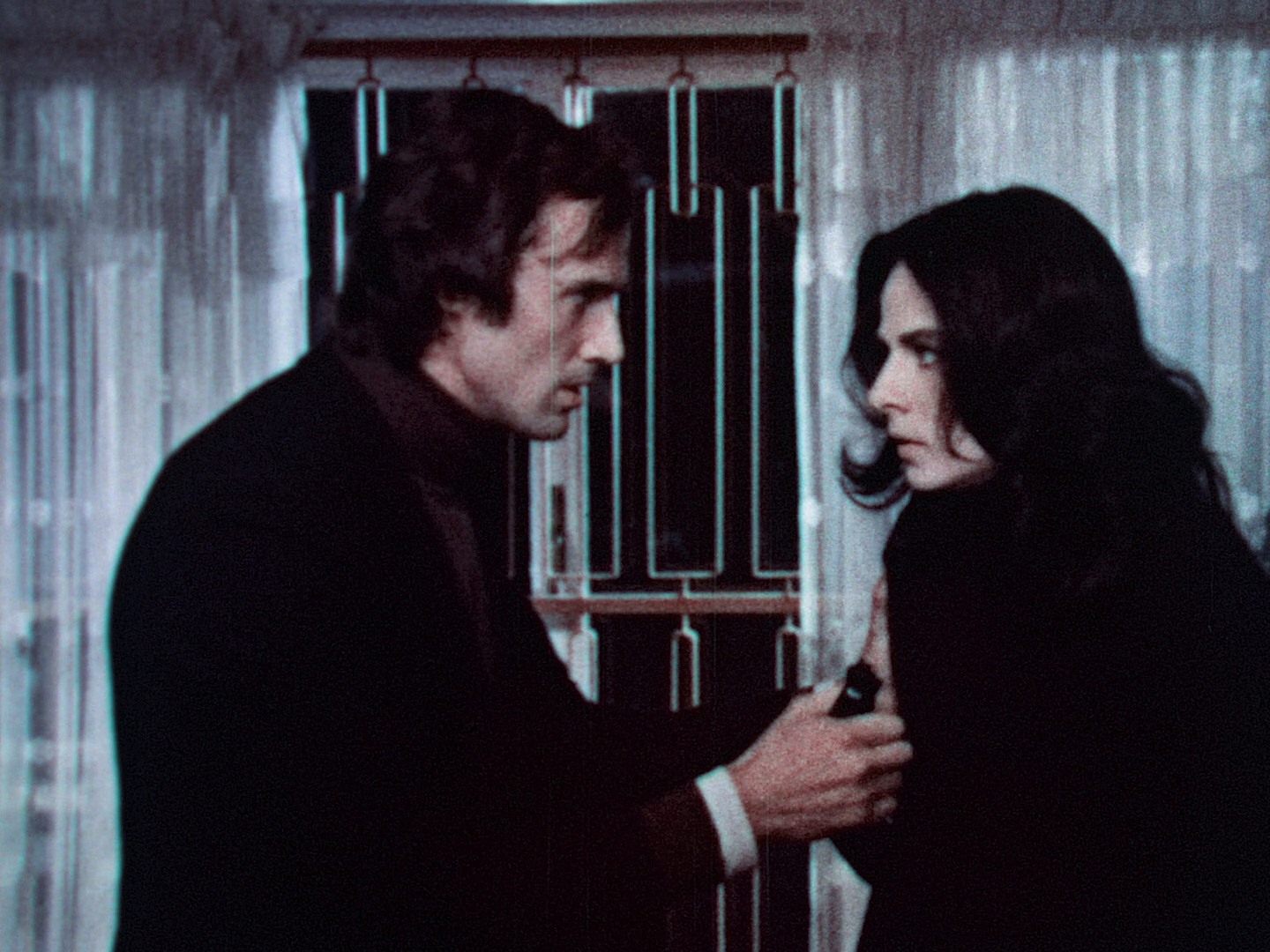
Anna and Guido confront Roberta together.

15 / 50:30

The victim returns as an accomplice

Anna, the woman who appeared dead on the road, stands beside Guido. Their account recasts the roadside discovery, the apparent attempts on Roberta’s life and the forced entry as preparation for her murder. Guido expects the police to accept the loving husband and the mysterious attacker as separate roles. The revelation exposes a manipulation of appearances rather than an error in Roberta’s capacity to see.

The inspector holds the drowned woman’s photograph.

16 / 54:00

A stranger’s photograph interrupts the plot

The inspector first confronts the conspirators with professional confidence, then admits to Roberta that his arrival was accidental. A recovered body seemed to fit her description, so he came to show her its photograph. It is a different woman. The ending gives rescue to an anonymous stranger and chance, complicating the impression that the police have solved everything through deduction.

Explore the effects and suspense galleries →

EFFECTS & SUSPENSE

How the danger takes shape.

Follow the reveals, injuries and changes of viewpoint in expandable image sequences. Select any image to enlarge it and move through the gallery.

IL VICINO DI CASA

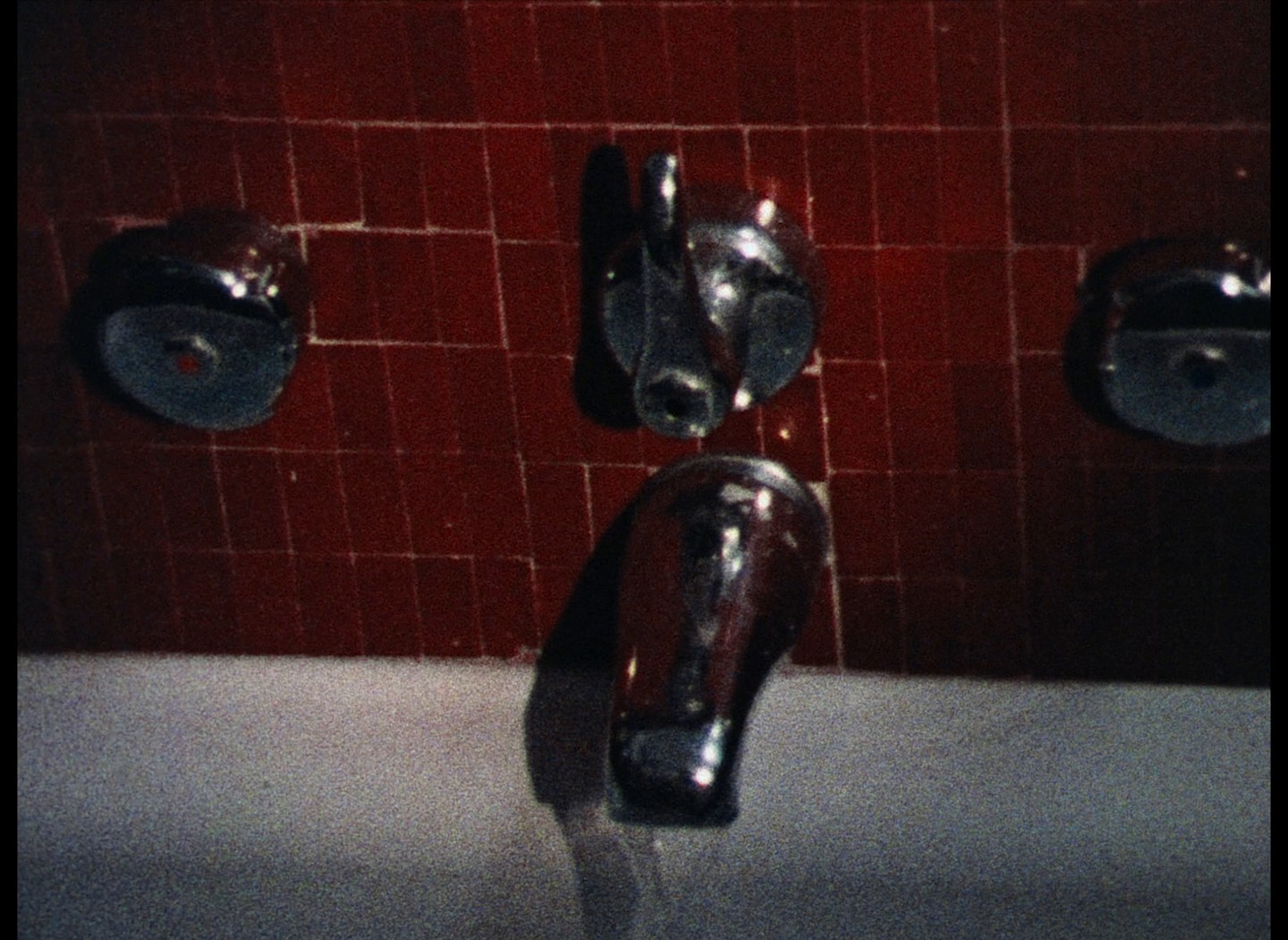
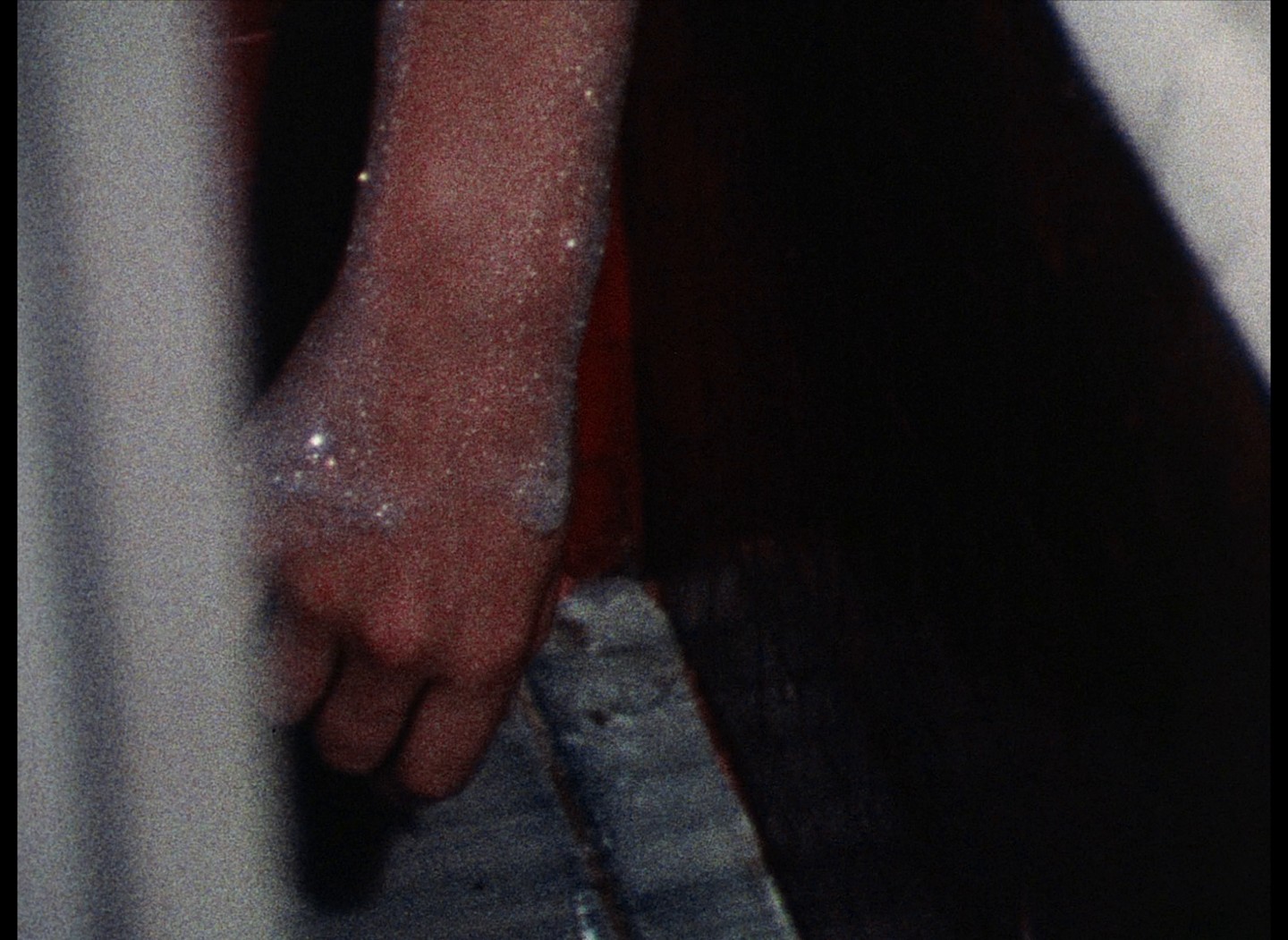
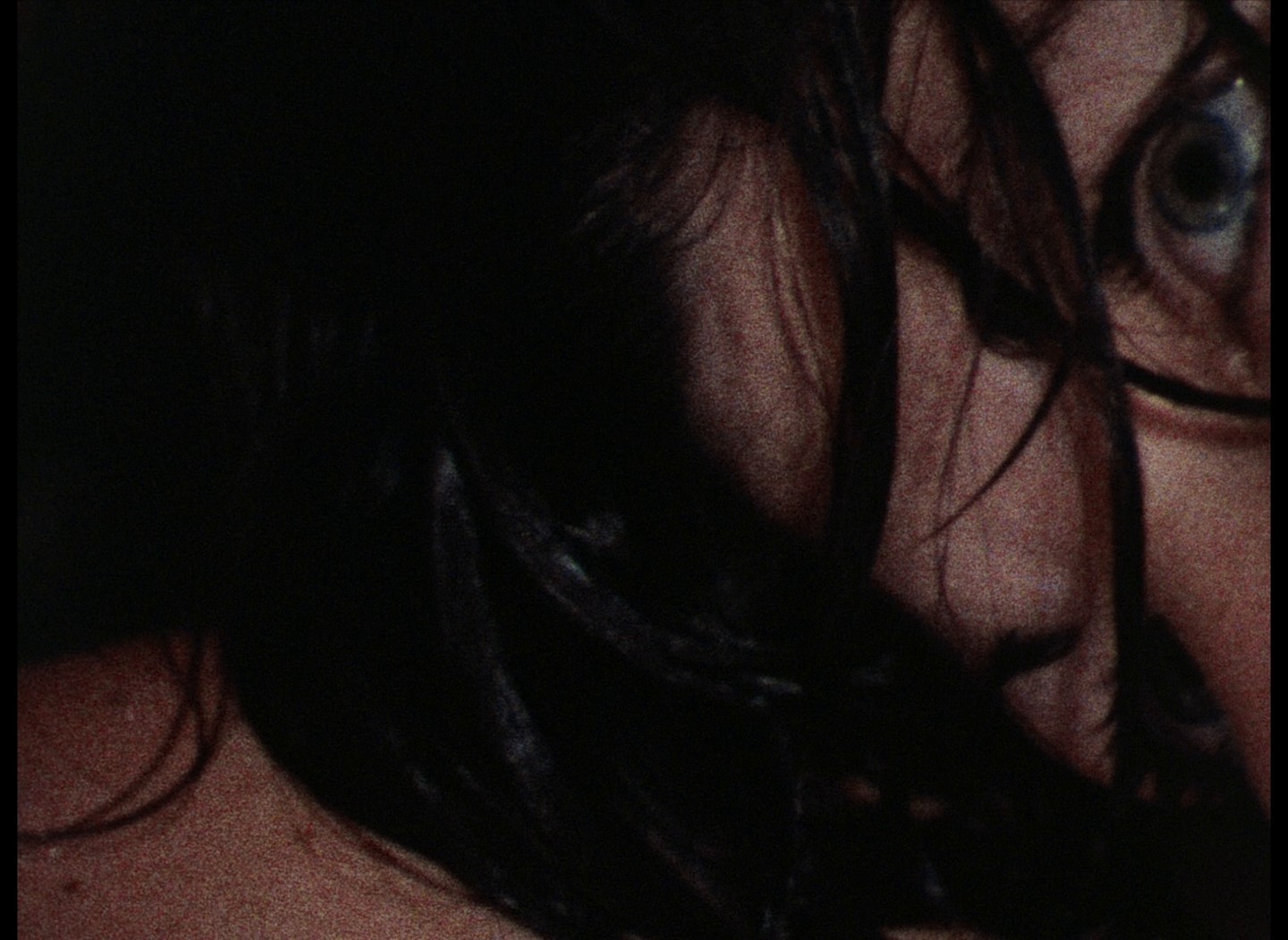
The bathroom: from a stain to a body

The sequence lets water lead the investigation. The ceiling, corridor and bath are connected before the woman’s face completes the discovery. Blood and the still body provide the physical evidence; the couple’s reactions establish its emotional force. Follow the progression from a domestic fault to a murder scene.

Luca and Stefania look into the bathroom.
Open the sequence gallery · 6 images
The ceiling stain draws attention upstairs.
Water marks the route along the corridor.
The running tap becomes a clue.
An arm enters the discovery.
The couple look into the bath.
The woman’s face completes the reveal.

IL VICINO DI CASA

The doorway: reunion, attack, aftermath

The return to the apartment is staged as an abrupt reversal. A greeting places the couple together, then Alberto’s presence transforms the doorway. The sequence moves from the attack to confinement instead of prolonging a display of injury. These stages show how position, interruption and aftermath carry the violence.

The doorway becomes the site of the attack.
Open the sequence gallery · 6 images
Stefania approaches the returning Luca.
The couple meet at the doorway.
The reunion breaks apart.
Alberto controls the threshold.
The attack gives way to a pause.
Stefania wakes into confinement.

IL TRAM

The hidden body: an ordinary task turns into a discovery

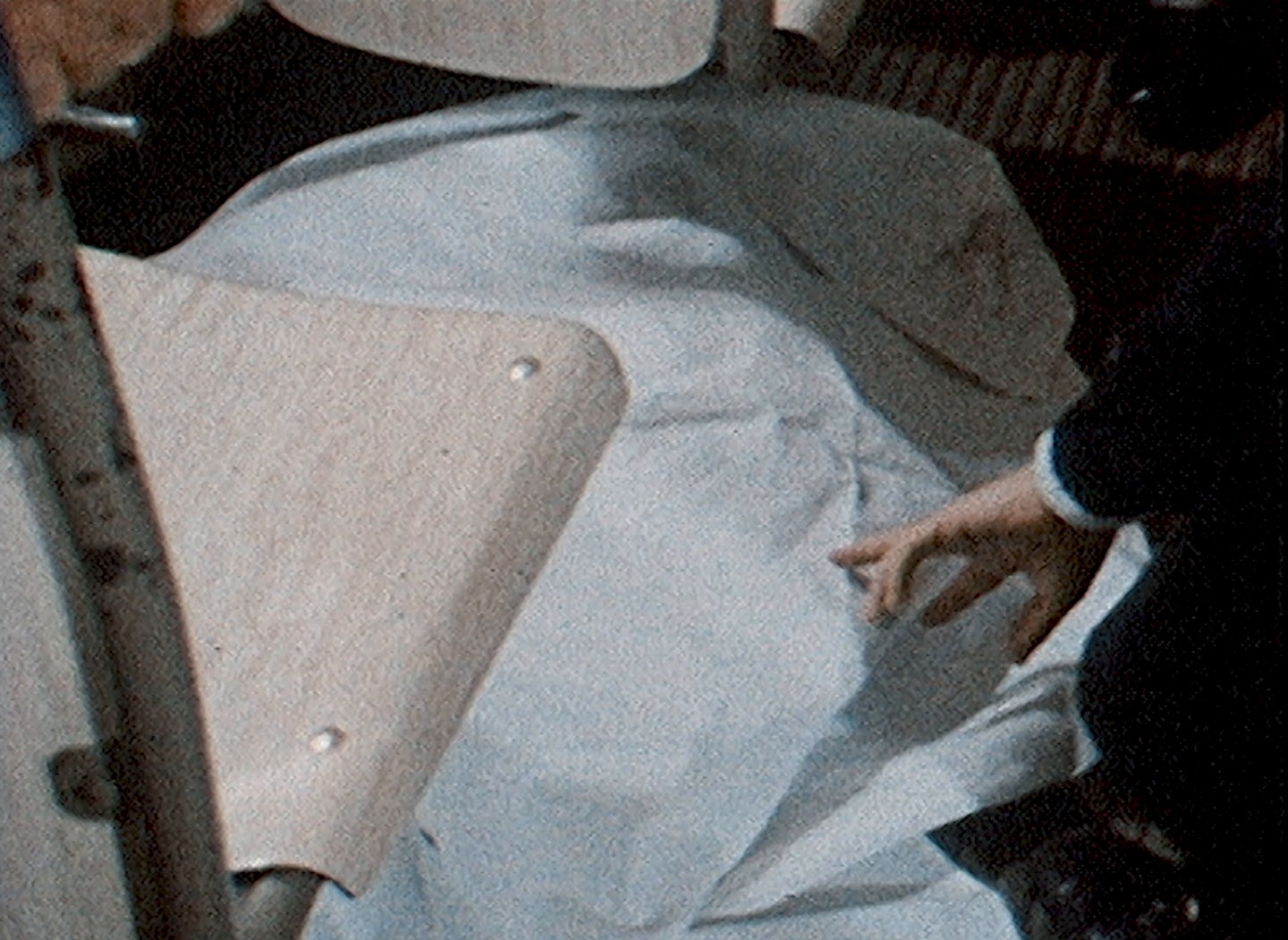
The reveal moves from the undercarriage and the cleaner’s route to the space beneath a seat, then isolates Monica’s face. Her stillness and the visible blood provide the immediate evidence of death. The following covered body returns the scene to police procedure. The gallery follows the changes of scale and viewpoint that make the discovery effective.

The cleaner approaches the hidden body.
Open the sequence gallery · 6 images
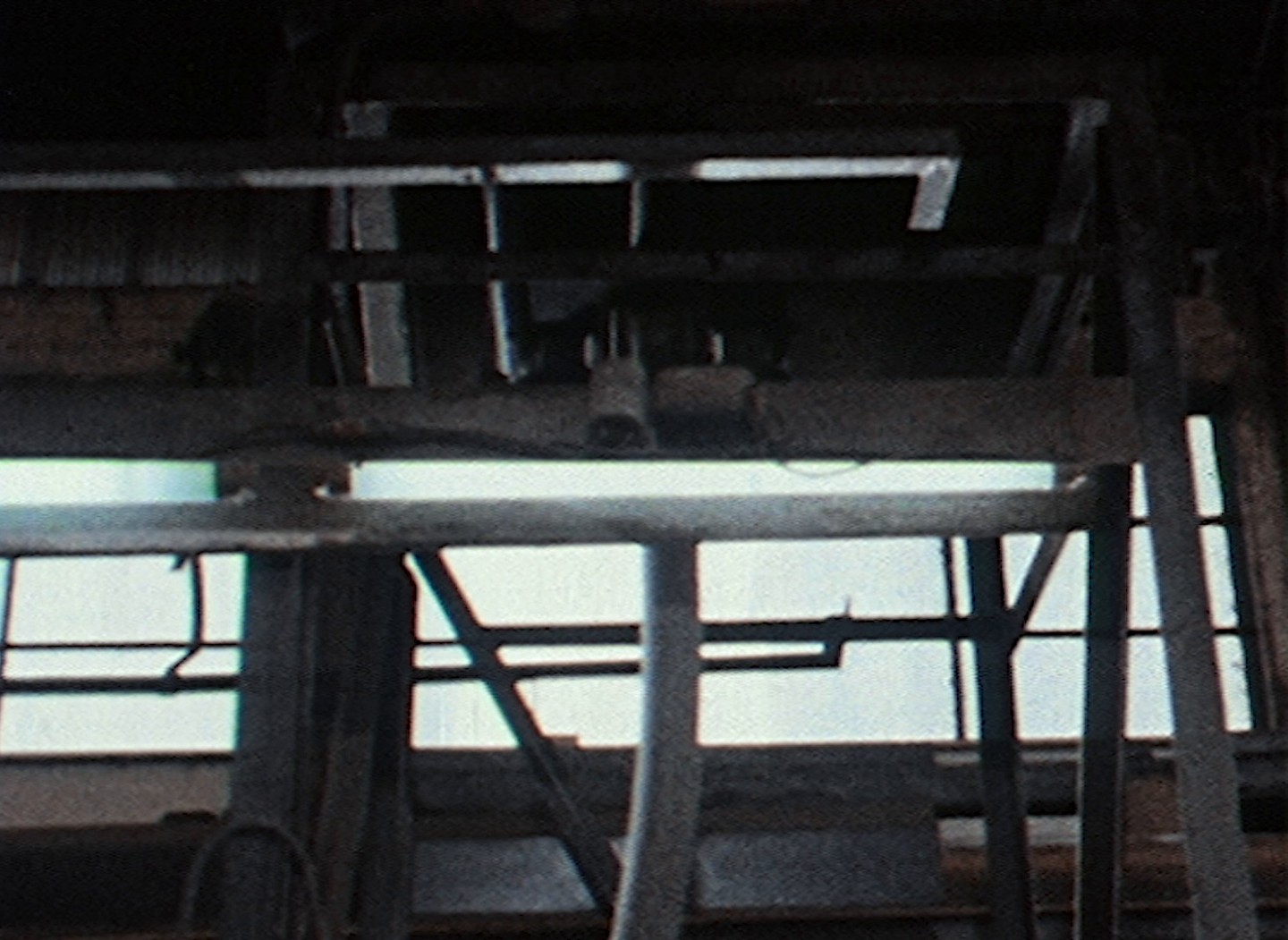
The carriage is first seen from below.
The cleaner advances along the aisle.
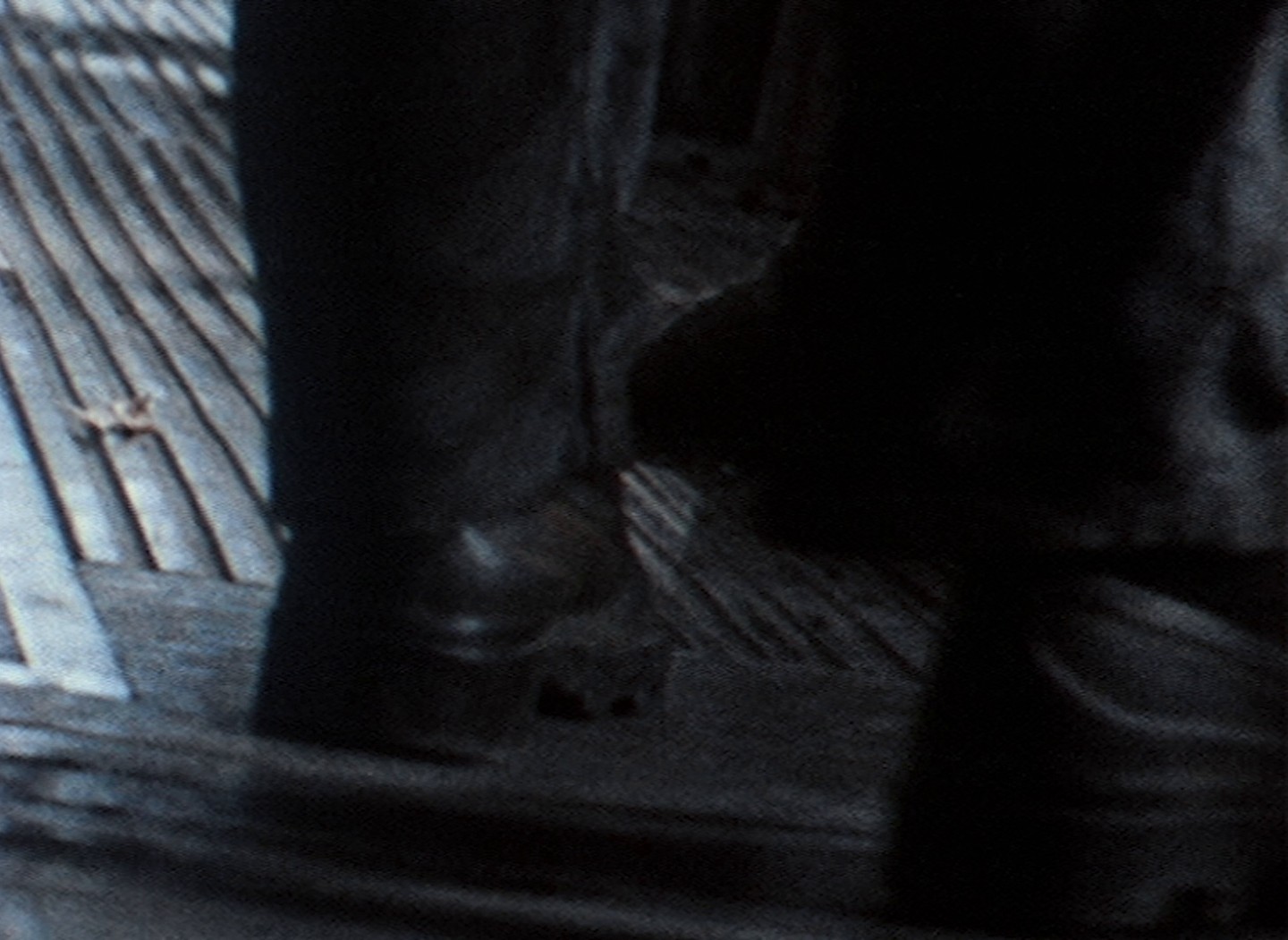
The brush reaches the space beneath the seat.
The cleaner looks down.
Monica’s face completes the reveal.
A sheet covers the body.

IL TRAM

The depot assault: the investigator loses control

The approach is held against the depot wall before the framing closes around Giordani’s head and raised arms. His defensive gestures, the impact and the blood on his face carry the violence. The episode then leaves him on the ground while Giulia remains inside the tram. These stages make the attack a turning point in the suspense as well as a physical injury.

Giordani lies injured against the depot wall.
Open the sequence gallery · 7 images
Giordani reaches the doorway.
He turns towards the depot door.
The attack interrupts his movement.
He looks up from the ground.
An arm rises to protect his head.
Blood marks his face against the brickwork.
He remains slumped beside the wall.

LA BAMBOLA

The fashion house: hiding a body in plain materials

Fabric, a dress form and the narrow spaces between work surfaces delay the discovery. The sequence passes from Elena’s search to the room after the attack, ending with the body and its reflected image. The ordinary tools of displaying clothes become a machinery of concealment.

Elena’s body is reflected in the mirror.
Open the sequence gallery · 6 images
Elena searches beyond the worktable.
Hanging fabric divides the room.
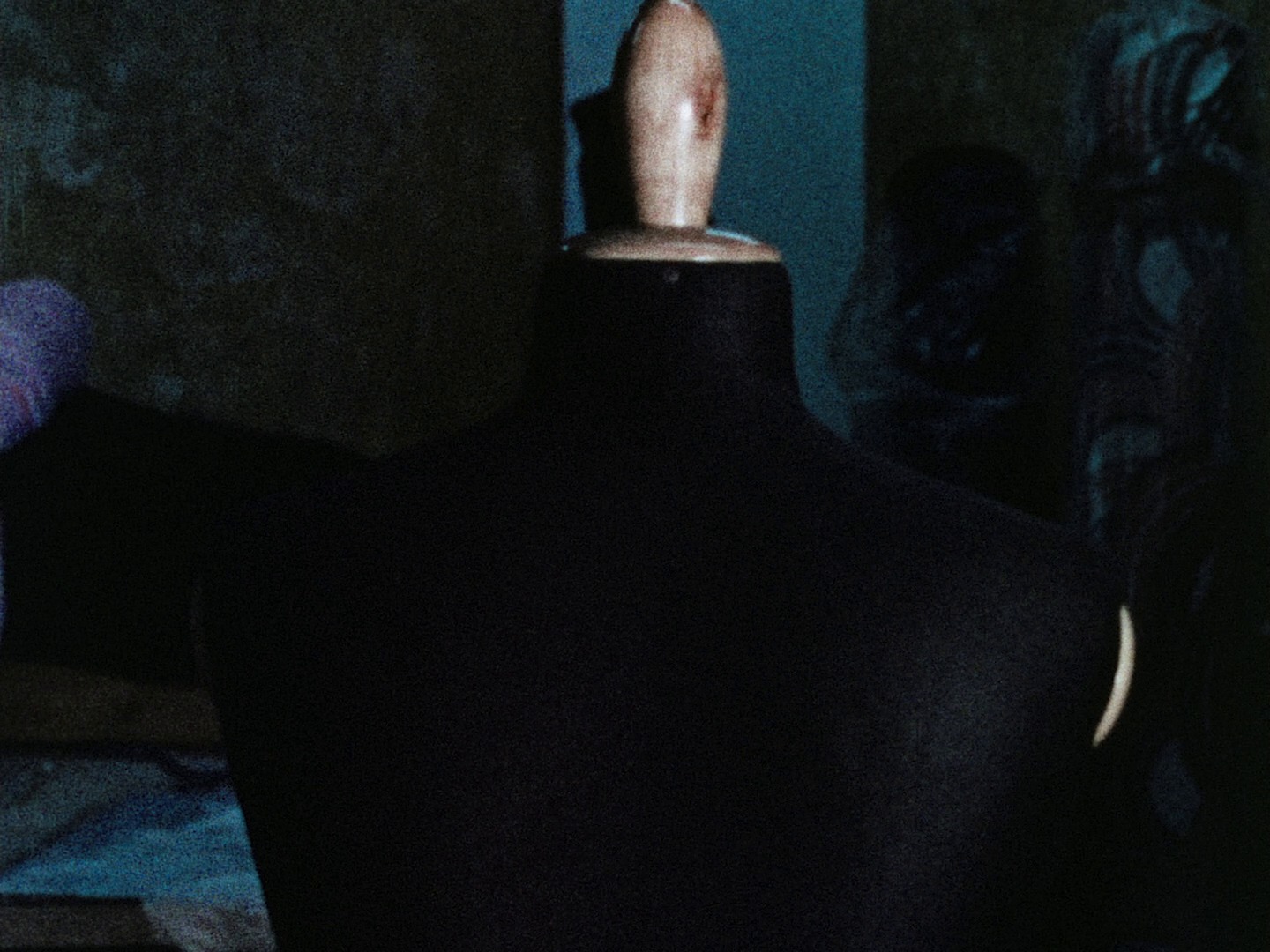
A dress form occupies the foreground.
Elena pauses beside the curtains.
The workroom after the attack.
The mirror repeats the fallen body.

LA BAMBOLA

The briefcase and keys: control passes between objects

The visitor’s departure from the room offers an opportunity to investigate. Door handles, the case and the keys then organise the exchange: the object which reveals a profession is followed by an object which controls an exit. The gallery follows the control exercised through these everyday props.

Daniela opens the visitor’s briefcase.
Open the sequence gallery · 6 images
The visitor leaves Daniela beside the door.
Daniela tests the door handle.
She opens the briefcase.
The visitor returns behind her.
He holds out the keys.
The keys remain just beyond her reach.

LA BAMBOLA

The final room: broken objects and returning roles

The apparent attacker on the floor, the damaged room and Daniela’s low hiding place extend the episode’s misleading arrangement of bodies. When he returns to the doorway and reaches towards her, the threatening gestures still belong to the scene’s immediate experience. The arrival of the officials changes their explanation, not the images we have just seen.

Daniela sits among the scattered toys.
Open the sequence gallery · 6 images
Daniela sits above the fallen visitor.
Broken objects surround the body.
The visitor reaches the door again.
He listens beside the closed door.
Daniela watches from behind the table.
He approaches as Daniela recoils.

TESTIMONE OCULARE

The roadside body: a staged certainty

The opening builds belief through successive details rather than a single reveal. A face in the headlights is followed by the check for life, the clothing and the blood. Revisited after Anna’s return, the sequence becomes a study of a performance constructed for Roberta’s eyes.

A woman lies in the headlights.
Open the sequence gallery · 6 images
Roberta reaches the fallen woman.
The headlights isolate the woman’s face.
Roberta kneels beside the body.
A hand searches for signs of life.
Blood becomes visible on the clothing.
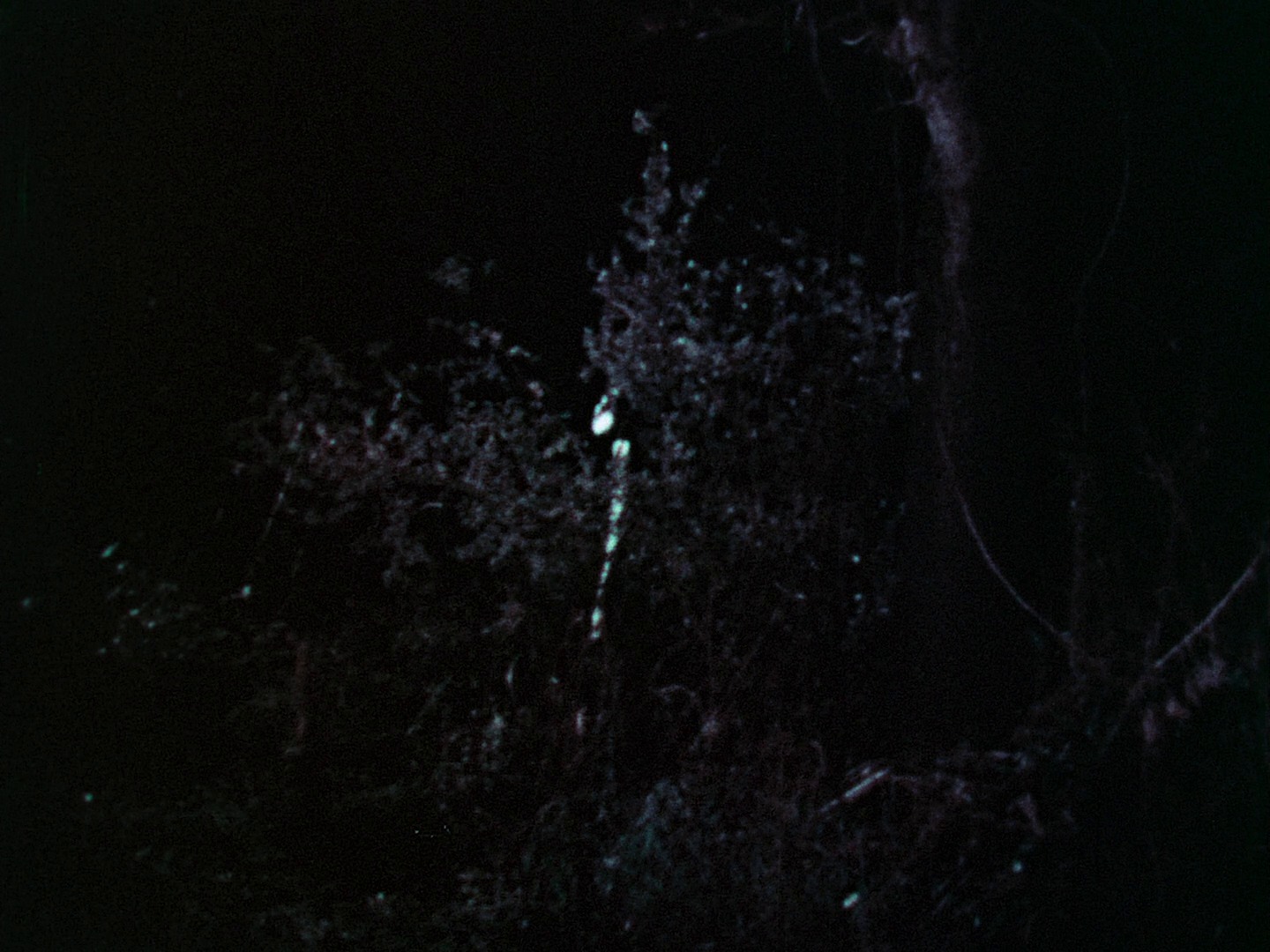
A figure waits among the trees.

TESTIMONE OCULARE

The crossing: a threat inside ordinary traffic

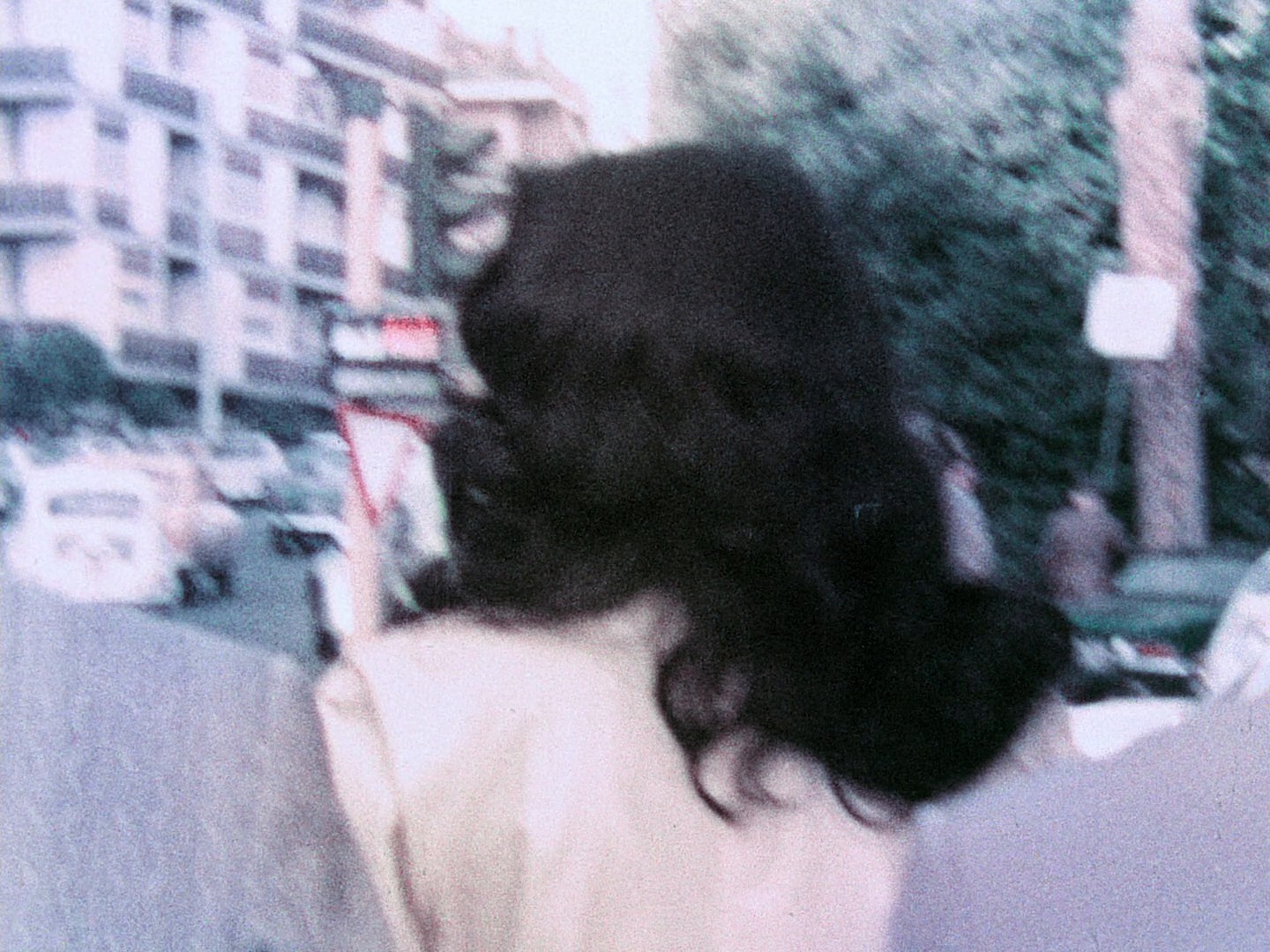
The sequence connects the approaching crowd, the pedestrian signal, a sudden fall and the car’s close proximity. The surrounding people see fragments of the incident. Its aftermath returns the episode to testimony: the same public space can support conflicting accounts.

Roberta describes the attack to a policeman.
Open the sequence gallery · 6 images
Roberta approaches the crossing.
The crowd closes around her.
The crossing signal reads ALT.
A figure presses in behind Roberta.
The car fills the frame beside her.
Bystanders help her from the road.

TESTIMONE OCULARE

The door and the wounded hand

A sequence of narrow views makes the barrier tangible. The door’s damaged surface and projecting blade prepare the hand’s entry, while close-ups of Roberta hold her reaction in the same confined space. The resulting wound carries into the next scene, where the attacker is identified.

The intruder’s hand reaches past the knife.
Open the sequence gallery · 7 images
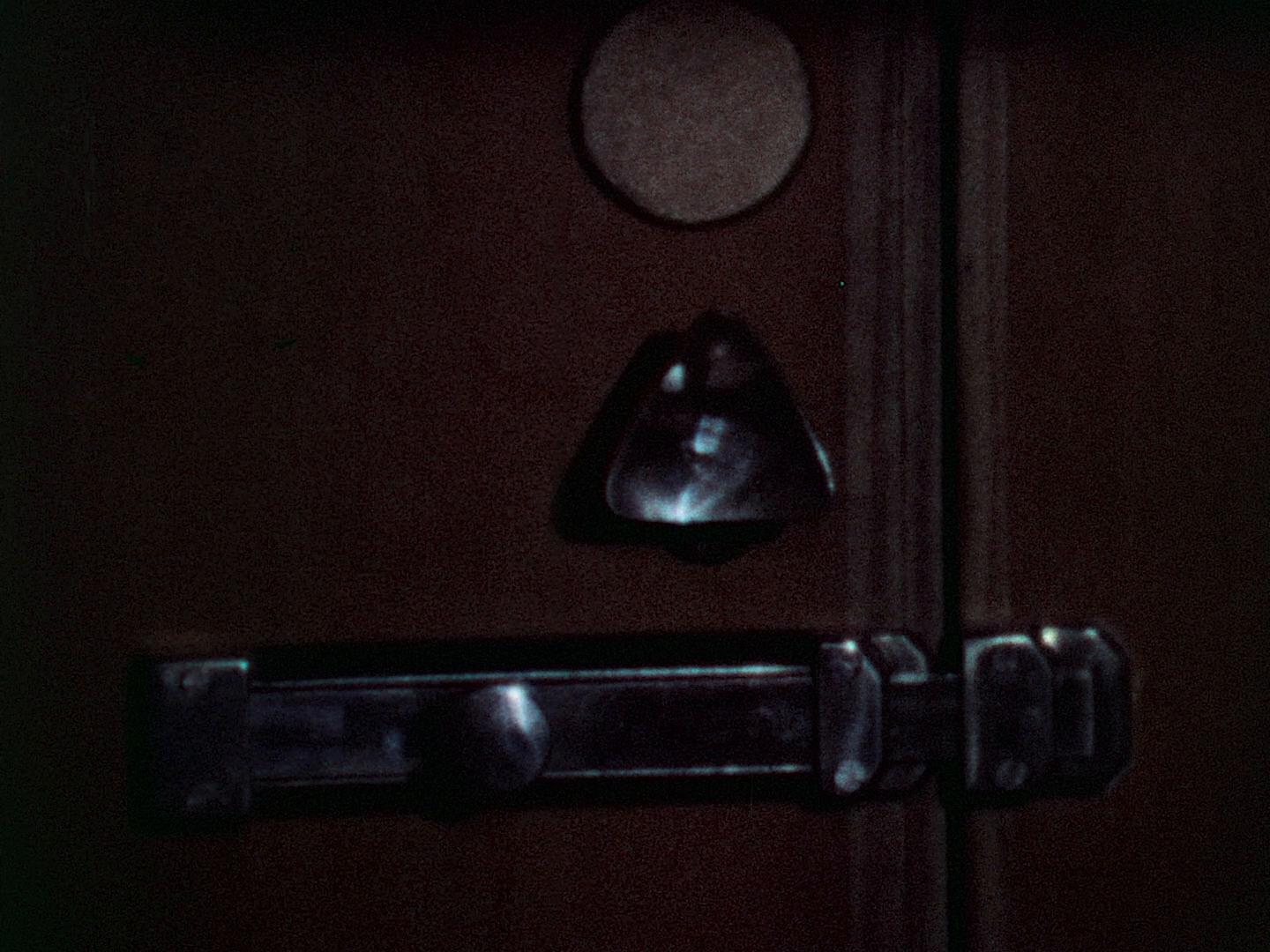
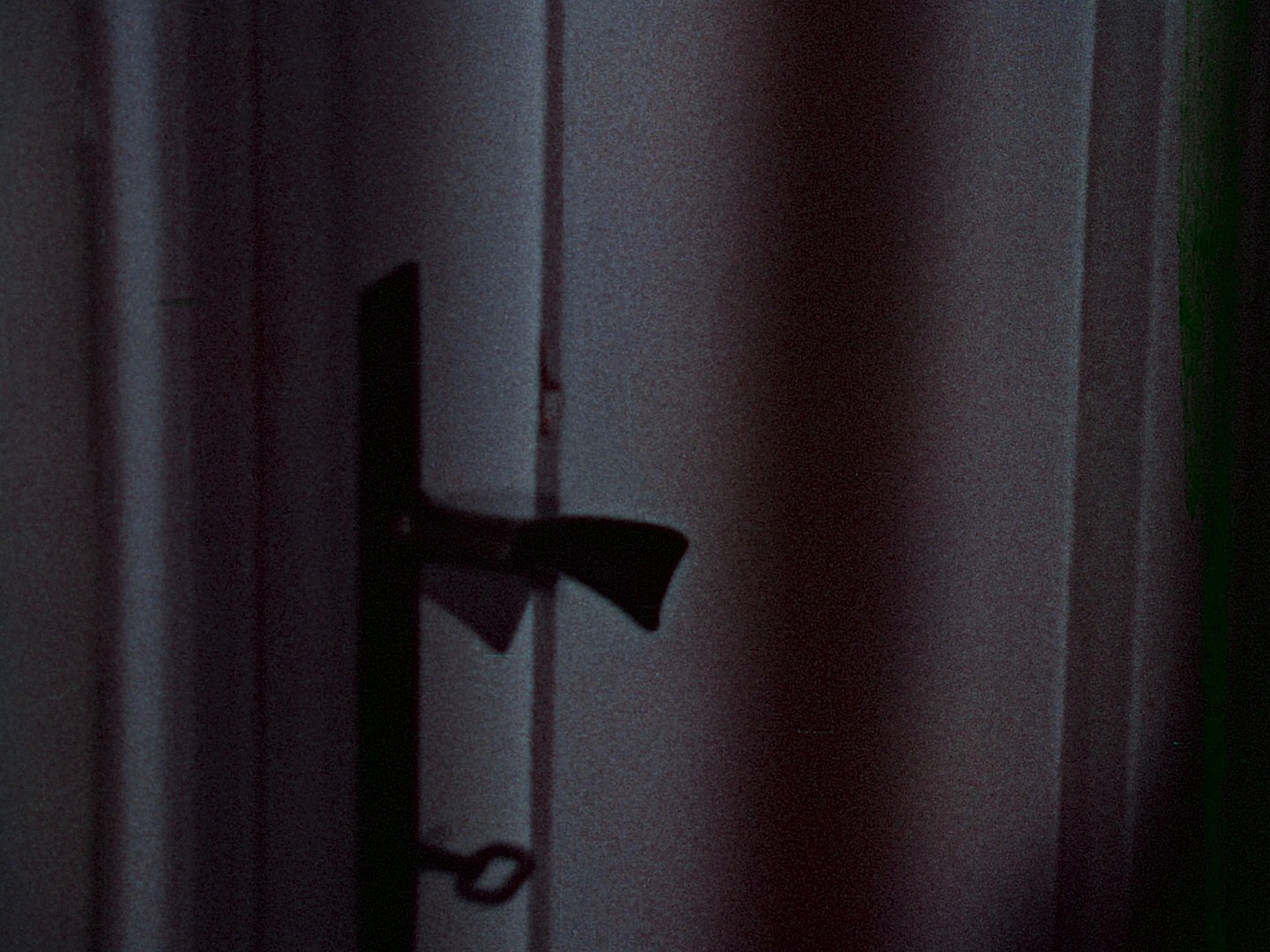
The outer door’s bolt offers a first barrier.
A knife projects beside the inner door handle.
Roberta waits against the door.
The panel breaks beside the lock.
A hand reaches through the opening.
Blood runs from the injured hand.
Guido appears with his wounded hand.

IL TRAM / NATHANIEL THOMPSON & TROY HOWARTH

A television episode inside a larger body of work.

The commentary by Nathaniel Thompson and Troy Howarth follows Il tram through Argento’s recurring ways of arranging space, withholding information and unsettling his investigators. Their comparisons offer several useful routes out of the episode. Commentary and passage guide ↗

The floor as a field of discovery

At 03:41–04:16, the commentators connect the low view of the cleaner’s route with the floor-level tracking in Sleepless. The comparison draws attention to a durable compositional interest: the camera gives apparently subordinate space an importance the standing characters have not yet recognised.

Solving the puzzle does not guarantee control

At 45:22–46:59, Thompson and Howarth discuss the investigator being disabled near the climax, relating the device to The Bird with the Crystal Plumage and Four Flies on Grey Velvet. Giordani understands the tram’s blind interval but learns the final outcome from a hospital bed. The discovery leaves a gap between intellectual success and physical command.

Gaslini at the depot

At 46:59–48:04, the discussion singles out the extended, discordant depot cue, particularly its percussion and horn writing. The commentators distinguish this passage from the music represented in the commercially released suite. Their emphasis directs attention to the climax’s musical construction without treating an album selection as a complete record of the episode’s soundtrack.

The clean hands at the end

At 51:54–52:31, the commentators read Giordani’s final remarks as a social criticism of respectable, affluent criminals. That reading gives the raised palms a force beyond the solution of Monica’s murder: visible cleanliness offers no reliable measure of innocence.

NATHANIEL THOMPSON & TROY HOWARTH / EYEWITNESS COMMENTARY

The witness, the performance and the returning image.

Thompson and Howarth place Testimone oculare beside the early features while examining its uneasy mixture of domestic drama and suspense. Their discussion is especially useful when it connects a particular formal choice to another film. Commentary and passage guide ↗

03:53–07:10 / DIRECTION & CREDIT

A credit is firmer evidence than a stylistic hunch.

The opening titles name Roberto Pariante as director and Argento and Luigi Cozzi as screenwriters. The commentators discuss Argento taking over, then try to distinguish contributions through camera movement, editing and dialogue synchronisation. They explicitly present the division of individual scenes as an interpretation. That distinction matters: the takeover history and the attempt to assign every shot are different kinds of claim.

19:35–20:05 / FOUR FLIES

A staged murder changes its target.

The commentary identifies a reversal of Four Flies on Grey Velvet: a spouse’s concealed hostility and a fabricated murder are now organised around a woman who cannot get others to accept what she has seen. The comparison directs attention beyond the surprise ending to the elaborate work needed to manufacture a witness’s experience.

30:00–30:58 / THE TRAM

Two opposite failures of witnessing.

Thompson and Howarth contrast the public space of Il tram with this episode’s isolation. In the tram, a group fails to notice an actual murder; here, one person is certain of a crime which leaves no supporting evidence. Read together, the episodes make looking a social problem: who is present, what they notice and whose account will be believed.

42:45–45:19 / VOICE & SUSPENSE

The wrong reply breaks the protective arrangement.

The commentators single out the changed voice below the window as a particularly effective moment. It works through the expectation established by Guido’s plan: Roberta should hear her husband keeping watch. The same passage connects her isolated waiting to Four Flies and the threatened apartment in The Card Player. A familiar voice becomes a structural part of the room’s defences.

49:25–50:06 / THE INJURED HAND

An effect has consequences after the attack.

The discussion connects the tight door close-ups to The Bird with the Crystal Plumage, then notices how insistently Guido complains about his hand. The wound is more than a punctuation mark: pain interrupts the conspirators’ explanation, and its visibility creates another problem for the alibi they have prepared.

53:35–54:18 / THE FINAL PHOTOGRAPH

The rescue leaves an uncomfortable object behind.

Thompson and Howarth question the inspector’s gift of the drowned woman’s photograph. It expresses gratitude to the stranger whose discovery saved Roberta, but it also turns another death into a private keepsake. Their discomfort opens a useful way back into the ending: relief does not entirely settle the episode’s treatment of bodies as evidence.

Return to the Eyewitness scene studies → · Follow the door sequence →

DARIO ARGENTO & LUIGI COZZI / MAKING TELEVISION

On the other side of the production.

A Streetcar Named Fear and On the Other Side of the Door return to the series through Argento and Cozzi’s memories of writing, casting, shooting and dealing with RAI. Their accounts connect the finished episodes to decisions made under pressure, sometimes remembering the same decision differently. Interviews and edition ↗

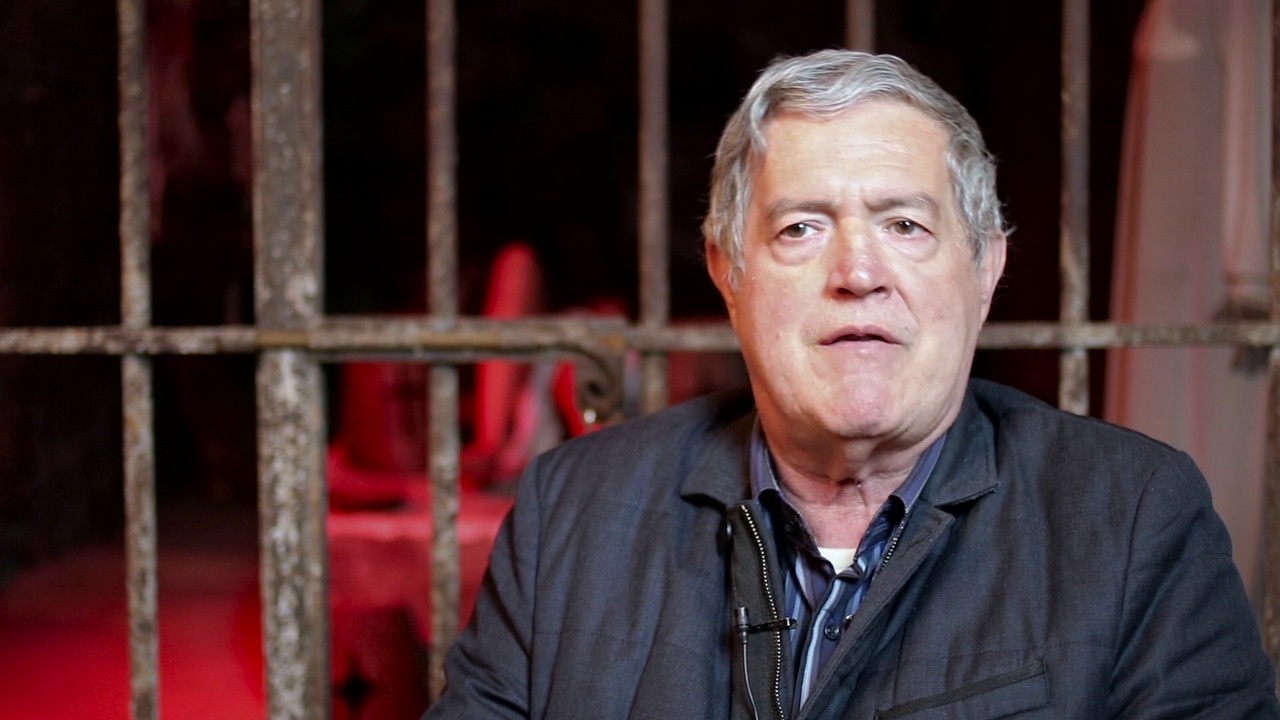
Argento revisits Door into Darkness.
Cozzi recalls the television production.

A new kind of thriller for television.

Cozzi describes RAI approaching Argento to modernise its thrillers, alongside a separate, unrealised proposal to Sergio Leone for westerns. He remembers Salvatore Argento managing the negotiations and the network reserving one episode for Mario Foglietti and collaborators already working in television. Argento recalls the ambition to give younger directors opportunities. These are complementary views of a series made between a filmmaker’s company and a public broadcaster.

Cozzi, 00:25–03:14; Argento, 00:13–01:02.

A discarded investigation becomes Il tram.

Both men connect the premise to a sequence removed from The Bird with the Crystal Plumage. Cozzi describes Inspector Morosini investigating a murder committed among passengers who noticed nothing. The television episode gave that unused material a beginning and an ending of its own.

Argento recalls night work aboard a real tram, with the crew riding together and passengers sometimes trying to board. Its movements had to fit around other services. He also identifies the concluding monologue as a deliberate political statement. The investigation’s failure to produce a neat moral therefore belongs to his stated intention, as well as to what the finished episode leaves unresolved.

Cozzi, 04:25–05:31; Argento, 07:26–08:48 and 13:21–13:45.

The hook and the limits of acceptable violence.

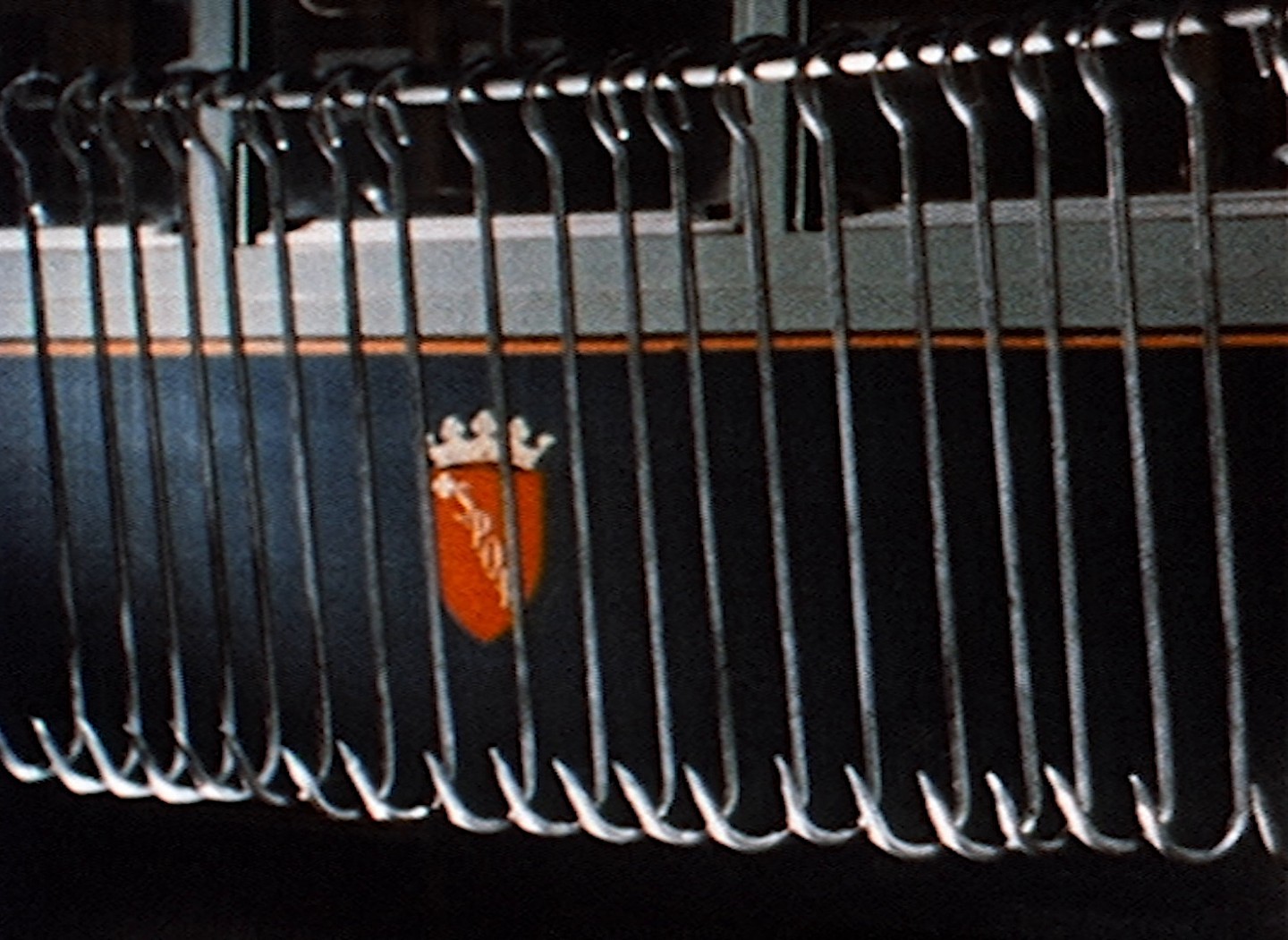
Cozzi remembers RAI rejecting the knife in an early version of Il tram, then accepting a hook. He contrasts that objection with the approval of the live-burial threat in Il vicino di casa, which he had deliberately written without a stabbing. In his account, censorship turned on the symbolism of particular weapons rather than a consistent measure of terror. Argento separately remembers disputes over knives and renewed scrutiny after complaints. Their interviews describe negotiations; an exact list of mandated cuts would require the original paperwork.

Cozzi, 07:37–11:42; Argento, 01:10–03:17.

Eyewitness: writing, reshooting and the surviving credit.

The episode credits Roberto Pariante as director and Argento and Cozzi as screenwriters. Cozzi recalls an earlier script by Vincenzo Ungari being replaced: he says he wrote roughly the first three quarters, with Argento writing the final siege of the house. He then describes Argento restarting the production after seeing Pariante’s footage. To recover lost time, Cozzi says they worked simultaneously in different locations; he specifically claims much of the opening road incident and the conversation with the inspector about the missing body.

Argento’s account emphasises complaints from the performers and his decision to take over. Both men say Pariante’s directing credit was retained to spare him humiliation. Their recollections support a production history more complicated than the title card, while Cozzi’s specific sequence claims remain his testimony rather than a complete allocation of every shot.

Cozzi, 06:39–07:34 and 24:22–27:59; Argento, 15:26–17:36. Compare the Thompson–Howarth commentary.

A second unit inside La bambola.

Cozzi says Salvatore Argento asked him to help Foglietti finish within the schedule. Working with a small crew, he recalls street scenes, material with Mara Venier in the house, and the toy-store sequence. He describes four or five days of assistance, while stressing that Foglietti remained responsible for the main unit. This gives the apparently simple purchase of a doll a further production history without replacing Foglietti’s on-screen directing credit.

Cozzi, 27:59–30:07. Return to the toy shop →

Colour photography for a monochrome audience.

Cozzi explains that RAI requested colour photography for possible later broadcasts, although the first audience would watch in black and white. He recalls tests intended to preserve the thriller’s tonal effect when the colour image was shown in monochrome, and considers the later colour presentations less representative of that original aim. The interview illustrates his argument with colour and monochrome comparisons. His account adds a distinction between the colour of the photographed material and the conditions under which the series was first designed to be seen.

Cozzi, 20:47–24:21. Follow the edition history →

The crew and score form a bridge to the features.

Cozzi remembers Luigi Kuveiller recommending Elio Polacchi for the photography, with Nellita Zampieri as script supervisor. He also recalls insisting on Alberto Moro as editor for his own episode, while Amedeo Giomini handled other instalments. For the music, he says he proposed Giorgio Gaslini after admiring The Sisters. Argento follows the collaboration from the series into The Five Days and Deep Red.

The interviews also locate later ideas in rejected work: Cozzi recalls Ungari proposing an expensive story involving a submerged house and a search underwater, then connects that idea to Inferno. A television commission could generate material whose eventual form belonged elsewhere.

Cozzi, 05:37–06:39, 17:47–20:46; Argento, 10:45–12:54.

Two memories of Sirio Bernadotte.

Argento says the pseudonym kept his name from overshadowing the younger directors. Cozzi offers a different explanation: the prestige gap then separating cinema from television. The screen credit establishes the name used; these later accounts explain its motivation differently. Keeping both voices visible is more revealing than choosing one unqualified explanation.

Argento, 08:59–09:10; Cozzi, 03:20–04:25.

Return to the four episodes → · Explore Master of Horror →

Television, authorship & reconstruction

A new home, a tram journey, a suspicious stranger, a vanished body: Door into Darkness finds uncertainty inside everyday life. This expanded dossier follows all four episodes through their announced broadcasts, different authorships, narrative problems, musical documentation and later rediscovery.

Spoilers: this study discusses the film’s story and ending.

01 / ARGENTO ENTERS THE TELEVISION HOME

A familiar face opens the door

The image above puts the maker inside the machinery. Argento sits among cameras, wearing a blue shirt beneath a dark jacket. A large reel and tripod interrupt the space beside him; more equipment occupies the edges. The background offers little sense of an ordinary room. This is a public image of someone who can introduce a fiction because he belongs to the world that constructs it. The inspected AGFA reproduction ↗

That arrangement gives the television host a double function. He can make fear approachable, offering the viewer a person to accompany the experience. He can also turn a routine evening’s entertainment into an invitation to distrust familiar places. A neighbouring flat, a tram and a road become sufficient settings for danger. The series’ premise does not require a distant supernatural world.

RAI records a four-part anthology curated and produced by Argento. Its historical exhibition identifies The Tram’s Sirio Bernadotte as Argento himself. Broadcaster’s programme record ↗ RAI’s historical attribution ↗ The pseudonym and the visible presenter therefore coexist: a directing name can conceal an identity while a hosting role makes the same person conspicuous.

Roberto Pugliese’s account, republished by Il Cinema Ritrovato, describes a reassuring, Hitchcock-like presenter and reads the television format as a negotiation with Argento’s existing interests. Pugliese’s retrospective reading ↗ That is criticism, not a transcript of the introductions.

The director becomes a familiar face.

Luigi Cozzi recalls in Panico that they conceived the series with Alfred Hitchcock’s television work in mind. He says he encouraged Argento to introduce the episodes, having often seen the director perform in everyday life. Cozzi remembers the result as an unusual kind of recognition: a film director whose face became widely familiar to viewers. Panico: testimony and passage locators ↗

This adds a participant’s account to Pugliese’s comparison with Hitchcock. The host was part of the programme’s construction, connecting the separate stories through a recurring person. Argento’s public identity became something the audience could recognise before the next mystery began.

02 / FOUR TUESDAYS, SEVERAL AUTHORS

The programme has a sequence and a company

The original l’Unità listings place the series at 21:00 on the national television channel across four Tuesdays in September 1973. Each relevant page has been inspected, including the date, programme column and accompanying preview. This is evidence of the announced schedule; a transmission log would be needed to establish last-minute changes.

The four announced broadcasts · l’Unità, page 7 on each date
EpisodeScheduled dateDirector named in the previewPerformers named there
Il vicino di casa / The Neighbour4 September 1973Luigi CozziLaura Belli, Aldo Reggiani, Mimmo Palmara
Il tram / The Tram11 September 1973Sirio Bernadotte, with Argento supervisingEnzo Cerusico, Paola Tedesco, Corrado Olmi and ensemble
La bambola / The Doll18 September 1973Mario FogliettiErika Blanc, Robert Hoffmann, Mara Venier and ensemble
Testimone oculare / Eyewitness25 September 1973Roberto ParianteMarilù Tolo, Riccardo Salvino, Glauco Onorato, Altea De Nicola

4 September ↗ 11 September ↗ 18 September ↗ 25 September ↗

The table preserves the published attributions instead of silently modernising them. RAIPlay now explicitly says that Argento replaced Pariante. Severin identifies Argento and Cozzi as the writers of Eyewitness, while AGFA presents two episodes as Argento-directed work. RAI’s replacement statement ↗ Writing attribution ↗ Later theatrical framing ↗ This supports distinguishing the contemporary public credit from the later account of practical direction. It does not identify which scenes each person shot. Cozzi’s later production interview supplies specific claims about his work on the opening sequence.

A series organised around a director’s name can still be a workshop. Cozzi and Foglietti have their own episodes; the four casts supply different dramatic centres; Gaslini gives the collection a musical connection. Keeping those contributions visible makes the anthology more interesting than treating it as four miniature films of identical authorship.

03 / IL VICINO DI CASA / LUIGI COZZI

The danger is already inside the building

The Neighbour begins with an ordinary investment in the future: a couple and their infant entering a new home. K. H. Brown’s 2006 account identifies Luca and Stefania, the seafront house and a spreading ceiling stain that leads upstairs to a body. The documented narrative situation ↗ The 4 September listing names Belli, Reggiani and Palmara and identifies Cozzi as director. Contemporary cast and direction ↗

The stain is an economical suspense object. It crosses a domestic boundary before the people do. Something from a supposedly separate space enters the couple’s room, making the ceiling a surface that must be interpreted. Investigating a household defect becomes investigating another person’s life. The neighbour’s proximity, normally a source of help, instead makes separation impossible.

There is also a difference between moving into a place and understanding it. Possession of a room does not provide knowledge of its surroundings. The couple’s family unit gives the situation a further pressure: an escape is not simply an individual decision. These are implications of the documented setup, rather than claims about a particular camera movement or the timing of the ending.

Cozzi later told Terra di Goblin that this was the only episode to avoid trouble with RAI’s advance censorship, because it lacked the blood, violence and knives he recalled as prohibited. The director’s retrospective testimony ↗ His account makes suspense under restriction a practical production question. The absence of a prohibited object need not remove dread; anticipation and restricted knowledge can carry it. A broadcaster’s written notes would be needed to reconstruct the actual approval process.

04 / IL TRAM / DARIO ARGENTO

Reconstruction gives looking a second chance

A woman has been killed on a tram. The crime poses a problem of observation before it offers an explanation: a shared public space has failed to produce a reliable shared account. The contemporary preview describes suspicion shifting from the conductor to a passenger and a reconstruction leading to the solution. The 1973 preview ↗

Reconstruction gives the same space a new purpose. Positions and movements which belonged to an everyday journey become possible evidence. Repeating an action does not automatically recover its meaning; the investigator must decide which relationships matter. The tram is therefore both a means of transport and a provisional model of the crime.

AGFA connects the premise to a sequence conceived for The Bird with the Crystal Plumage. The archive’s development account ↗ That is a useful connection without being a substitute for the missing draft. Both projects make the gap between seeing and understanding central, but the television episode places an official investigator at the centre of the inquiry.

Pugliese describes Cerusico’s Inspector Giordani as unusually grounded and locates the episode’s anxiety in repeated attempts to recover an elusive clue. The critical account ↗ Our reading follows the consequence: authority does not remove uncertainty. A reconstruction is valuable because the first understanding may be inadequate, including the investigator’s own.

The next exact comparison would separate what the original journey shows from what later reconstruction supplies. The supported argument concerns the episode’s investigative structure.

05 / LA BAMBOLA / MARIO FOGLIETTI

Who looks dangerous, and who decides?

The Doll has often been discussed as a game of mistaken identification. Brown’s account follows an apparent escape from a psychiatric institution and a man’s suspicious association with a woman after a murder. The retrospective synopsis ↗ The 18 September newspaper preview names Foglietti and a cast including Hoffmann, Venier, Blanc and Umberto Raho. It also objects to the episode’s use of the familiar psychiatric-patient-as-killer stereotype. The contemporary preview and objection ↗

That objection is part of the episode’s history, not a concern invented by later viewers. The preview refuses to treat a psychiatric setting as sufficient psychological explanation. Its impatience is useful even for a reader who ultimately values the film: a twist can redistribute suspicion without escaping the assumptions that made the suspicion plausible.

The episode therefore opens a different question from The Tram. There, actions must be reconstructed. Here, the meaning assigned to a person becomes unstable. A viewer’s expectation of who is threatening may do as much work as any positive evidence. The distinction between patient, doctor, pursuer and possible victim demands attention to the information supplied at each stage.

This is a reading of the documented premise and its reception. Foglietti’s contribution belongs in the anthology’s argument because it changes the kind of uncertainty under examination. Describing the programme only through Argento’s two associated episodes would miss that difference.

06 / TESTIMONE OCULARE / CREDIT & CONTROL

A witness can lose the evidence without losing the memory

The final episode’s newspaper preview gives Roberta a brutally simple problem. She witnesses a killing, runs home and returns with the police, but the body has disappeared. Marilù Tolo leads the listed cast. The original public synopsis ↗ A statement which was urgent and concrete has become difficult to verify.

That disappearance shifts the burden of the story. The question is no longer only what happened to the victim. It is also what happens to a witness whose account has lost its physical support. Her memory must compete with the apparently empty scene. Returning to a place does not guarantee returning to the evidence.

Placed after The Tram, the premise creates an instructive reversal. Giordani can organise people around a reconstruction; Roberta needs others to accept that there is a crime to reconstruct. The asymmetry concerns institutional authority as well as perception. Being sure that one has seen something is not the same as being able to make it count.

The production history adds a separate uncertainty which should not be confused with the plot. Pariante is named in the 1973 preview; RAI’s present record reports Argento taking over; Severin credits the writing to Argento and Cozzi. Broadcaster’s account of the change ↗ Publisher’s writing credit ↗ These can coexist. Cozzi’s account of the parallel units and opening scenes adds detail to the practical division of the shoot, alongside the retained public credit.

07 / GIORGIO GASLINI & THE RECORDING TRAIL

The series has a musical identity beyond its host

RAI’s programme description singles out Giorgio Gaslini’s music. Cozzi recalls introducing the composer to Argento and connects the collaboration with Door into Darkness, The Five Days and Deep Red. RAI’s music attribution ↗ Cozzi’s account of the introduction ↗ This places the score within a continuing working relationship, rather than treating it as anonymous television accompaniment.

Radio X’s CinematiCA playlist of 2 July 2020 supplies a more specific recording trail. It identifies Una cosa nuova, credits Gaslini with composition, arrangement, orchestration, conducting and piano, and names the Grande Orchestra. It links the selection to a Produttori Associati single, PA/NP 3217, and the later Argento Vivo compilation, Cinevox CD MDF 602. The broadcaster’s track documentation ↗

A circulating recording and a television soundtrack are different objects. A track listing establishes a title and a credit; it does not reveal where that recording enters an episode, whether it is shortened, or how it sits against speech and effects. Severin advertises Italian mono for the collection. The edition’s audio specification ↗

The useful connection across this archive is consequently a collaborator and a documented body of work. It would be premature to describe every suspense cue as a rehearsal for Deep Red, or to transfer that film’s later musical identity back onto this series. Gaslini’s own contribution deserves to be heard on its own terms.

The crew connections continue into The Five Days

In The Battle for Freedom (23:59–25:51), the Luigi Cozzi interview on Severin’s The Five Days Blu-ray, Cozzi recalls requesting editor Alberto Moro and composer Giorgio Gaslini for his own television episode. He distinguishes their assignments: Moro edited that episode, while Gaslini scored all four. His account carries the musical collaboration forward into The Five Days and then Deep Red, connecting the television project to the feature-film workshop. Read Cozzi’s interview study →

08 / 1973 REACTION & LATER REASSESSMENT

Popularity and approval are different histories

Later distribution copy calls the anthology highly successful. Cozzi remembers frightened viewers overwhelming RAI with complaints after The Neighbour, followed by extensive newspaper attention. Publisher’s retrospective framing ↗ Participant recollection ↗ Those claims are evidence of how the programme has been remembered and sold. They do not supply audience totals, a complaints register or a representative press survey.

The inspected newspaper pages provide a contemporary counterweight. On 18 September, l’Unità dismisses the series and objects to The Doll’s stereotyped psychiatric explanation. The following week’s notice again gives the collection a low assessment before outlining Eyewitness. 18 September’s critical notice ↗ 25 September’s closing assessment ↗ These are short programme-column judgements, not extended reviews, but they establish that an unbroken story of admiration would be misleading.

The later retrospective asks different questions. Pugliese’s discussion draws attention to looking and reconstruction, while Bologna’s restoration programme makes The Tram available as a work deserving preservation and renewed examination. The critical and archival reframing ↗ An episode can acquire historical importance without the original objections disappearing.

The series’ interest lies partly in that tension. Television made a filmmaker into a recurring presence in the home; the format also exposed his work and his collaborators to expectations different from those attached to a cinema ticket. Audience reach, remembered fear, critical approval and later archival value should remain four separate questions.

09 / BROADCAST, RESTORATION & REPACKAGING

A restored episode is not the whole series

The title now circulates across several presentations. Their running times and source descriptions refer to different objects. Keeping those objects apart prevents a useful restoration note from becoming a misleading claim about every surviving copy.

Three documented presentations
PresentationWhat is specifiedWhat it does not establish
Il Cinema Ritrovato, 2023The Tram, 55 minutes; 4K restoration by RAI Teche at L’Immagine Ritrovata from a 16mm positive print, funded by the Ministry of Culture.The source element of every other edition or episode.
Severin’s Deep Cuts collectionThree of four Door into Darkness episodes sourced from original 16mm negatives; Italian mono, English subtitles, 1.33:1. The four-disc collection includes additional television work.Which three negatives, or a single runtime for this four-episode series.
AGFA theatrical programmeTwo episodes; 120 minutes, colour, 1.33:1, 4K DCP availability.A four-episode runtime or proof of an alternate cut of The Tram.

Bologna restoration record ↗ Disc publisher’s specifications ↗ Theatrical booking record ↗

A positive print and an original negative are different restoration starting points. The two descriptions need not contradict each other; they may describe separate work. Without matched copies or fuller restoration notes, neither image superiority nor an identical master can be established.

Repackaging also changes the viewing occasion. Four weekly appointments become a disc sequence or a two-episode evening at the cinema. The host, credits and boundaries between stories become important evidence in their own right. The expanded dossier closes with those distinctions intact, leaving exact audiovisual and edition comparisons as named return investigations.
THE READING ROOM

Return to the source.

Historical sources checked 17 October 2026; episode, commentary and disc-interview studies added 11 November 2026. Original newspaper pages, broadcaster and restoration records, participant recollection, criticism and music documentation retain their distinct scopes.

  1. 01

    RAI Teche — Sulle tracce del crimine ↗

    Broadcaster’s historical exhibition: the four-part programme and Sirio Bernadotte attribution. Relevant text; embedded compilation unviewed. Existing first-edition source retained.

    Return to the dossier ↑
  2. 02

    RAIPlay — La porta sul buio ↗

    Current programme synopsis inspected: anthology, producer/curator, cast, Gaslini and Argento replacing Pariante. No episode playback or complete credit transcription claimed.

    Return to the dossier ↑
  3. 03

    l’Unità — 4 September 1973, page 7 ↗

    Original page and enlarged programme column. First episode, 21:00 national-channel listing, Cozzi and three performers. This is the announced schedule, not a transmission log.

    Return to the dossier ↑
  4. 04

    l’Unità — 11 September 1973, page 7 ↗

    Original page and enlarged column inspected: second episode, 21:00, cast, Bernadotte attribution and brief reconstruction synopsis. Single-page PDF; printed page number 7.

    Return to the dossier ↑
  5. 05

    l’Unità — 18 September 1973, page 7 ↗

    Original page and enlarged column inspected: third episode, Foglietti, performers and contemporary criticism of the psychiatric stereotype. A short programme notice, not a complete reception survey.

    Return to the dossier ↑
  6. 06

    l’Unità — 25 September 1973, page 7 ↗

    Original page and enlarged column inspected: fourth/final episode, Pariante attribution, cast, missing-body synopsis and negative appraisal of the series.

    Return to the dossier ↑
  7. 07

    American Genre Film Archive — Door into Darkness ↗

    Current two-episode booking page, synopsis, development claim and supplied 750 × 450 image. Programme length and format belong to this presentation.

    Return to the dossier ↑
  8. 08

    Terra di Goblin — Luigi Cozzi interview ↗

    Written answers to the questions on Il vicino di casa and soundtrack preferences. Cozzi recalls RAI restrictions, complaints and introducing Gaslini. Retrospective testimony; no approval files or audience statistics.

    Return to the dossier ↑
  9. 09

    K. H. Brown — La Porta sul buio / Door into Darkness ↗

    24 December 2006 retrospective article. Used for the Neighbour and Doll narrative premises. Its discussion order is not the original broadcast order.

    Return to the dossier ↑
  10. 10

    Radio X — CinematiCA episode 220 ↗

    2 July 2020 playlist prepared with Paolo Fazzini: Una cosa nuova, Gaslini and release identifiers. Written track metadata.

    Return to the dossier ↑
  11. 11

    Il Cinema Ritrovato — Il tram, 2023 ↗

    Official entry for 24 June 2023: 55 minutes, RAI Teche/L’Immagine Ritrovata 4K restoration from a 16mm positive print. Republished excerpt credited to Roberto Pugliese, Dario Argento, Il Castoro, 2011.

    Return to the dossier ↑
  12. 12

    Severin Films — Dario Argento’s Deep Cuts ↗

    Publisher page inspected: three-of-four negative-source claim, programme grouping, writing credit, Italian mono and 1.33:1 specifications. The 594-minute total covers the wider collection.

    Return to the dossier ↑
  13. 13

    Dario Argento Panico — Simone Scafidi, 2023 ↗

    Luigi Cozzi: 27:47–28:16. Retrospective documentary testimony, paraphrased from the interview and checked against the English subtitles. Source and review method ↗

    Return to the testimony ↑
  14. 14

    Door into Darkness · Severin Films, Deep Cuts, Disc 1

    Il vicino di casa and Il tram, Italian-language episodes with English subtitles. Source for the illustrated scene studies and sequence galleries; passage times refer to each episode, including its introduction. The stills retain the episode image proportions.
    Return to the studies ↑
  15. 15

    Il tram · Nathaniel Thompson and Troy Howarth

    English audio commentary, Severin Films, Dario Argento’s Deep Cuts, Disc 1. Passage guide: 03:41–04:16, low camera and Sleepless; 45:22–46:59, the sidelined investigator; 46:59–48:04, Gaslini’s depot cue; 51:54–52:31, the closing social criticism. Commentary observations are attributed to the two critics jointly.
    Return to the commentary study ↑
  16. 16

    La bambola & Testimone oculare — episodes, images and screen credits

    Severin Films’ Dario Argento’s Deep Cuts, Disc 2, Door into Darkness, Part 2. The scene studies draw on the episodes, their English subtitles and close inspection of the illustrated sequences. The 4:3 picture is retained in the selected stills; time locators identify the passages under discussion.

    La bambola credits Marcella Elsberger and Mario Foglietti with story and screenplay (02:15), Amedeo Giomini with editing (02:45) and Foglietti with direction (02:50). Testimone oculare credits Dario Argento with the story, Argento and Luigi Cozzi with the screenplay (03:05–03:10), Giomini with editing (03:25) and Roberto Pariante with direction (03:30). The distinction between screen credits and later accounts of the production is maintained in the commentary and interview sections.

    Severin Films — edition and supplement listing ↗

    Return to the new episode studies ↑
  17. 17

    Nathaniel Thompson & Troy Howarth — Eyewitness commentary

    English commentary accompanying Testimone oculare on the same Disc 2. Passages are located in the six commentary studies. Critical comparisons and proposed shot attributions remain attributed to the speakers rather than treated as production records.

    Return to the commentary studies ↑
  18. 18

    Dario Argento & Luigi Cozzi — Door into Darkness interviews

    A Streetcar Named Fear, interview with Dario Argento, and On the Other Side of the Door, interview with Luigi Cozzi, presented on Severin’s Disc 2. The studies paraphrase their subtitled recollections and identify individual passages.

    Return to the interviews ↑

Corrections, contributions and enquiries: argentochrome@rareprintsandposters.com