01 / THE KILLER’S INTERFACE
Information arrives with conditions attached
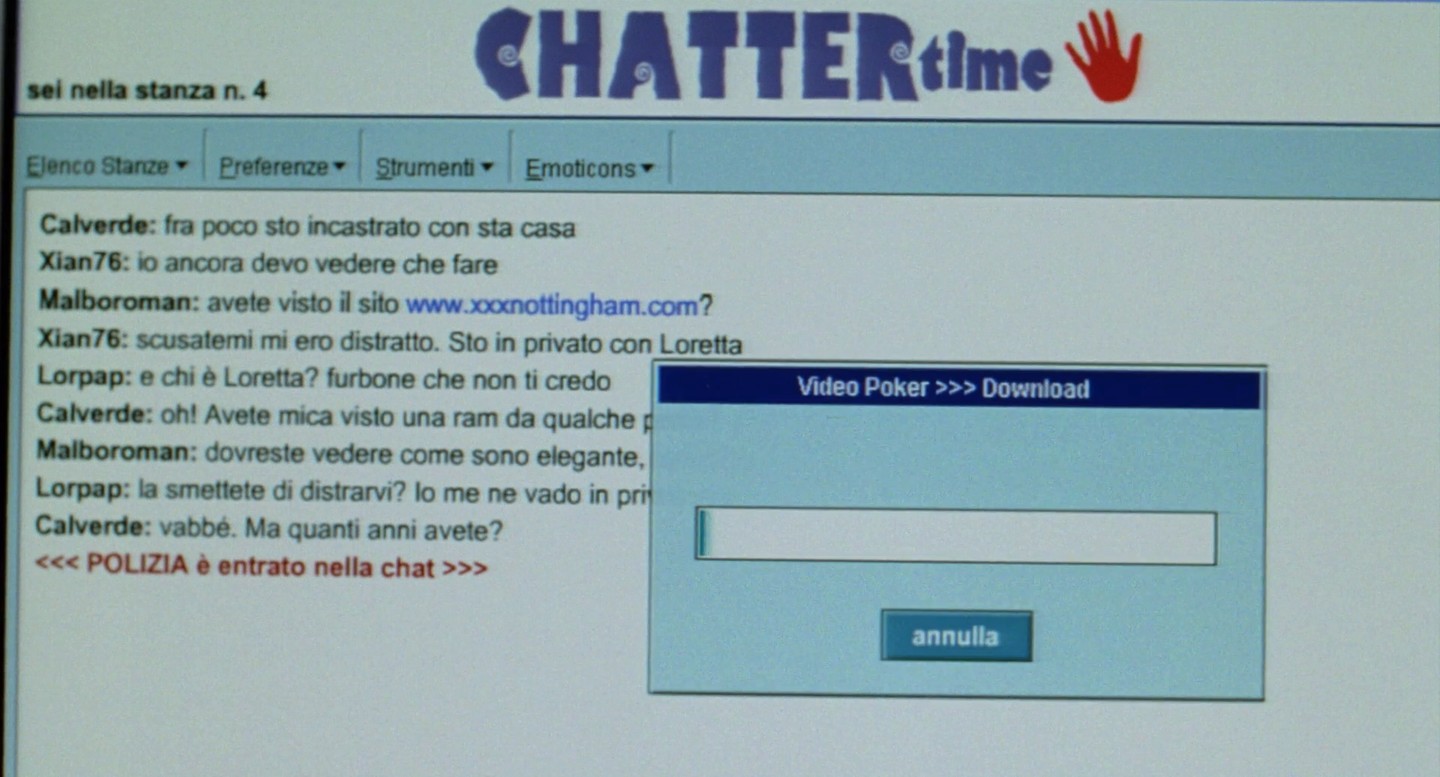
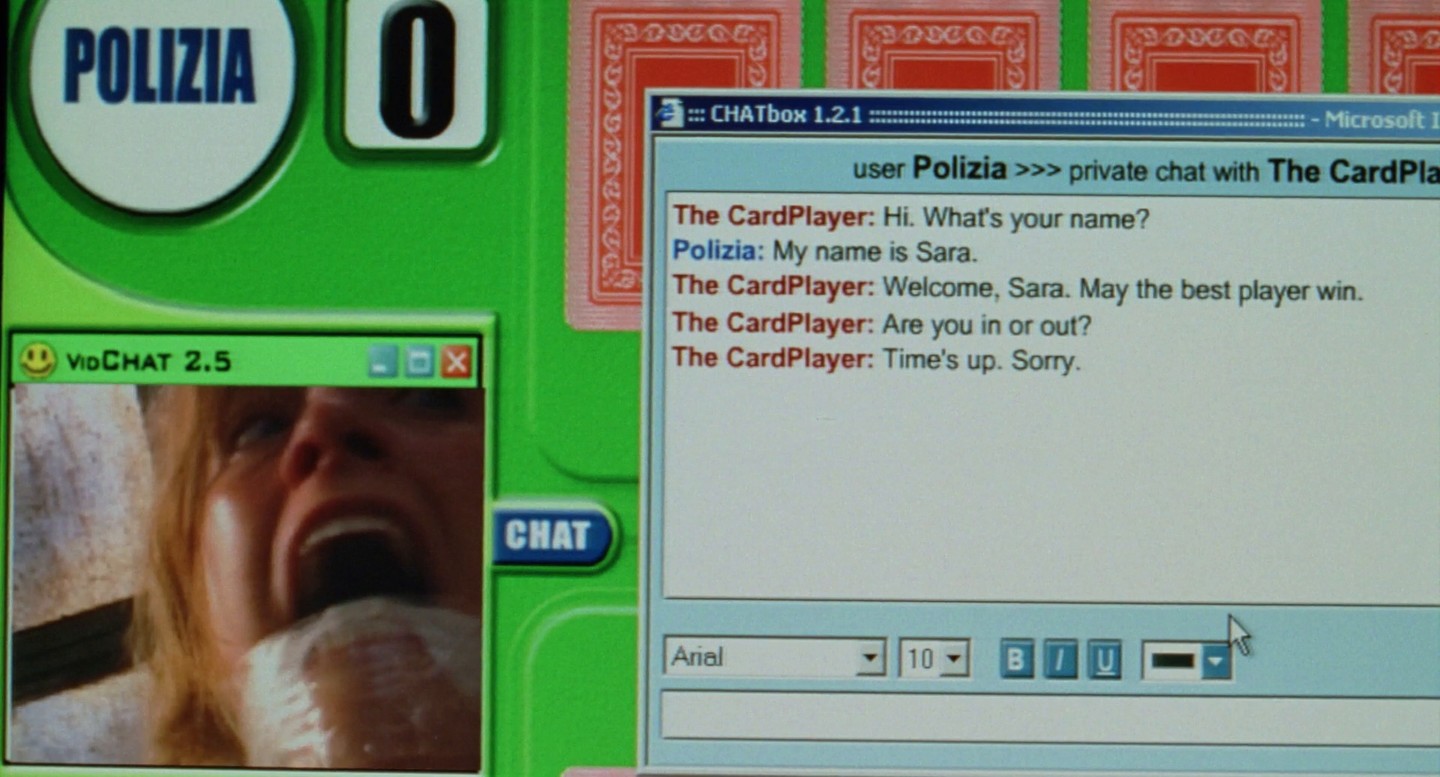
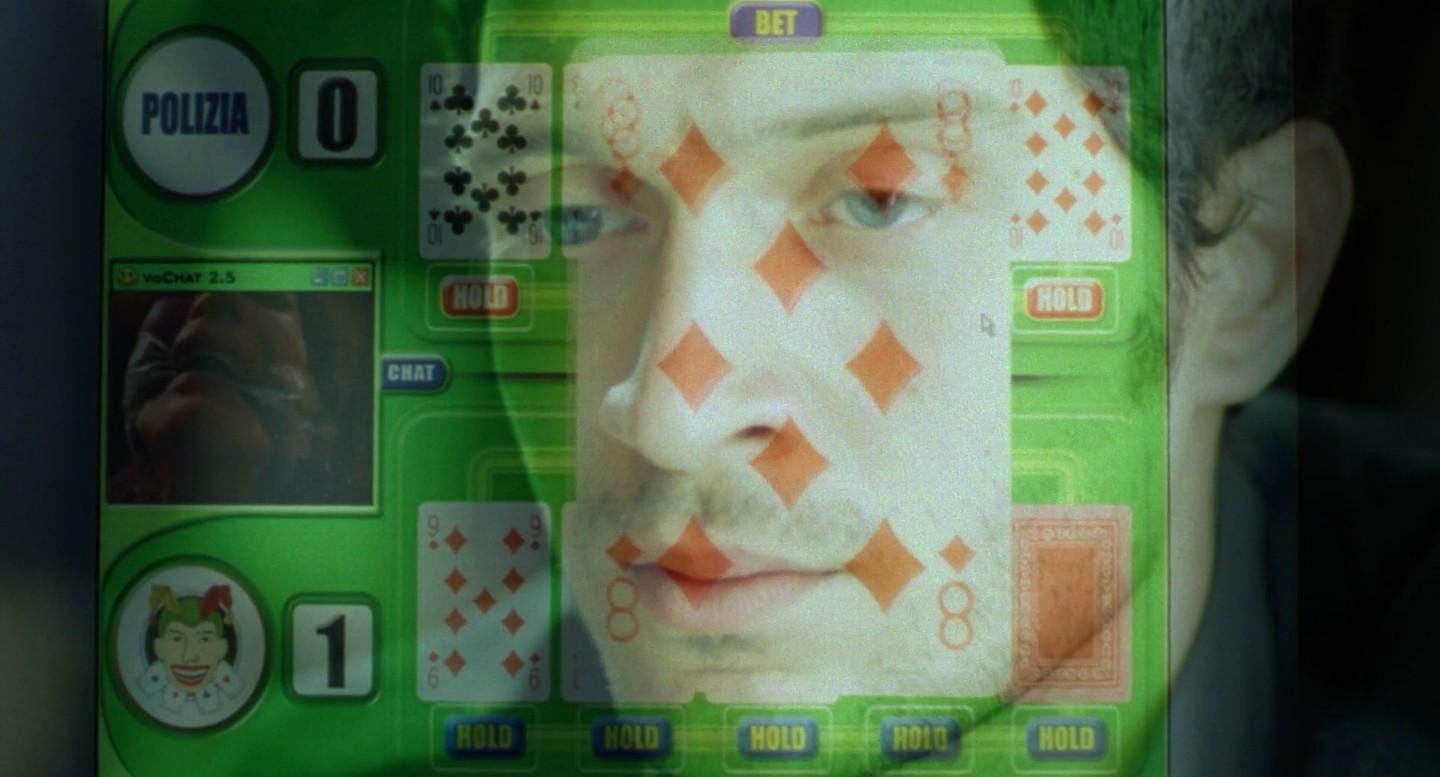
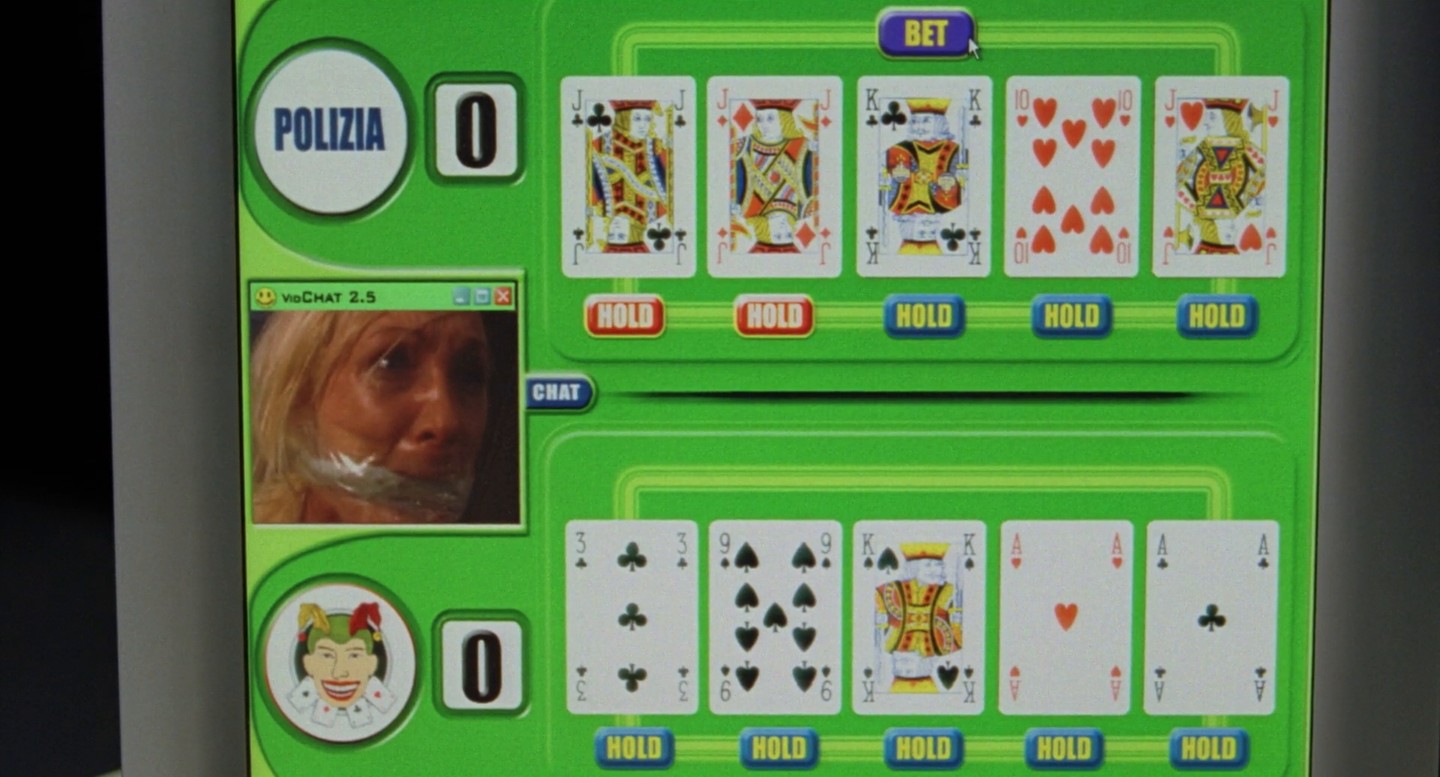
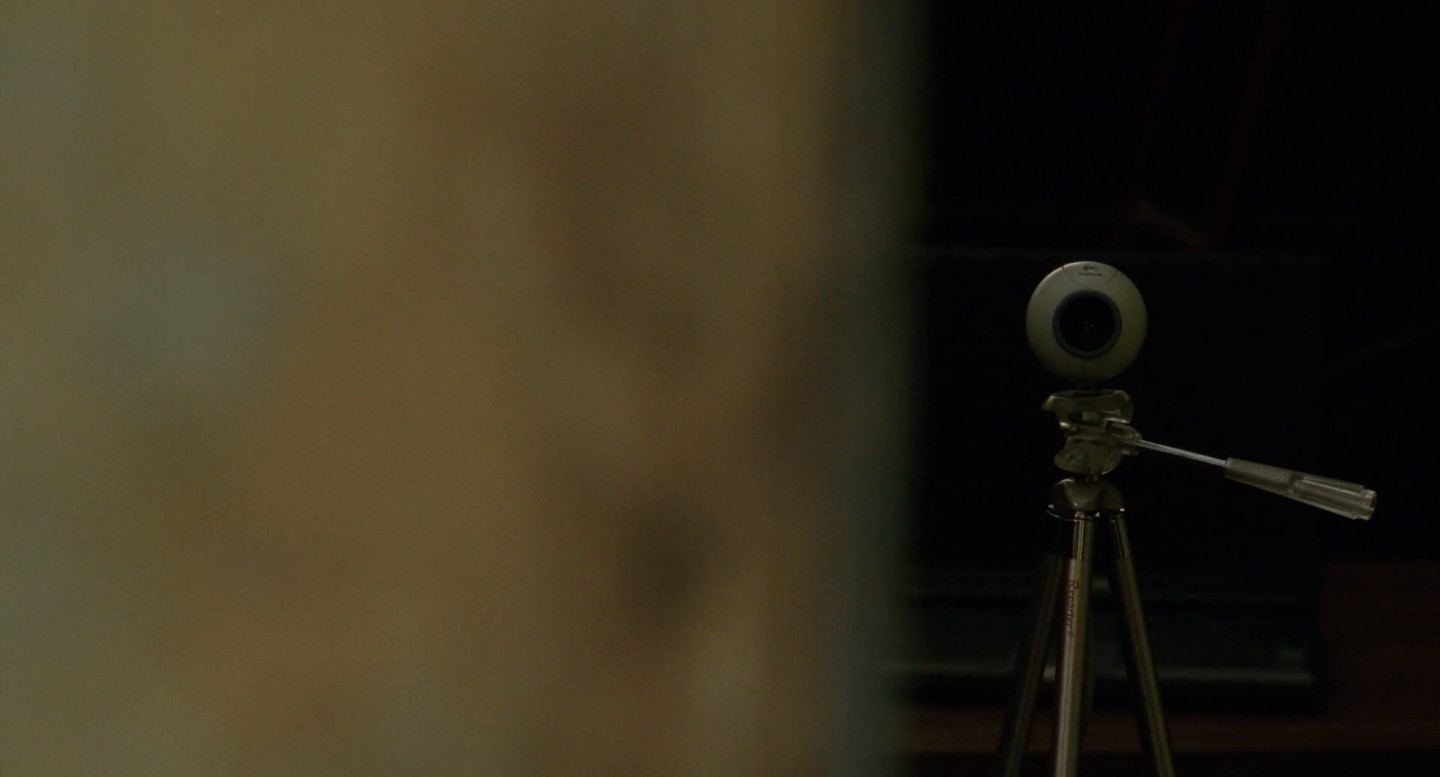
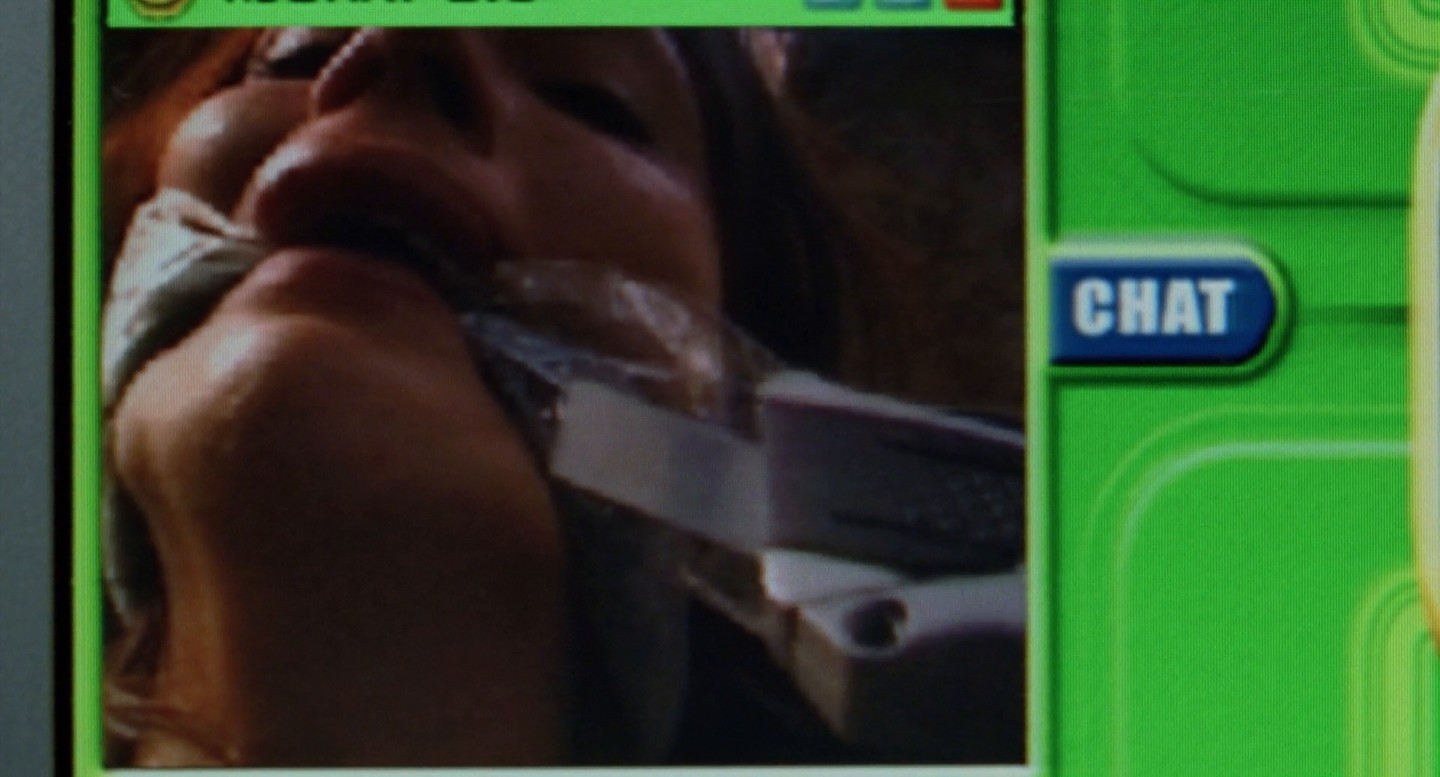
The Card Player makes an offer that is already an act of violence. The killer demands an online poker game in which a captive’s life is the stake. Police can see a person they cannot reach; the connection provides access while withholding rescue. The published premise gives the investigation a particular imbalance: the criminal supplies both the emergency and the procedure for responding to it. Italian catalogue synopsis ↗
An ordinary evidence image is something investigators obtain and interpret. This image arrives as a demand. Looking carries an obligation to act, but acting means entering rules imposed by the person being pursued. The question is no longer simply whether an image contains a clue. It is whether the conditions under which the image is offered can be trusted.
Vinegar Syndrome’s synopsis describes an initial refusal by the commissioner, followed by the killing of a captive on the webcam. Refusal does not restore control. The police confront a trap in which participating and declining can both be made to serve the killer’s performance. The opening challenge ↗
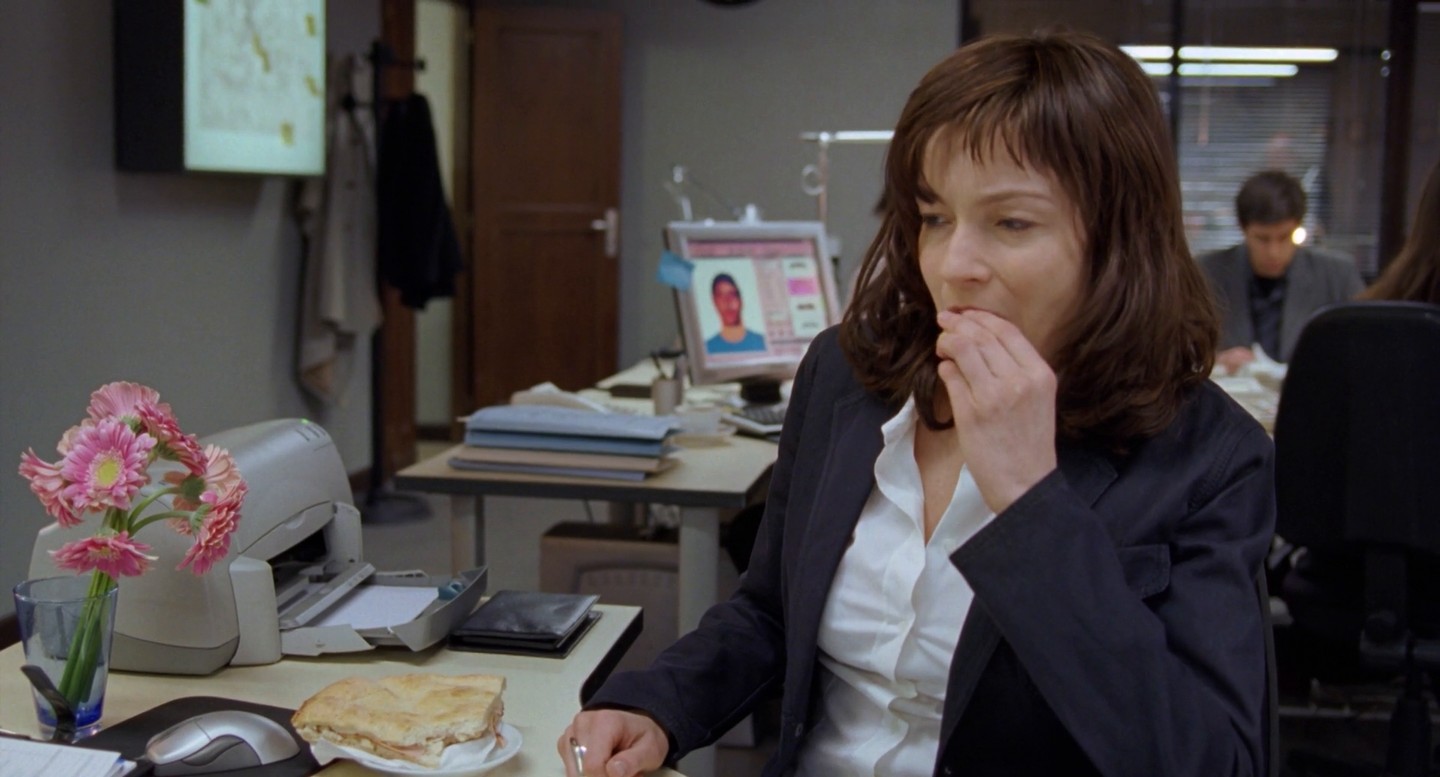
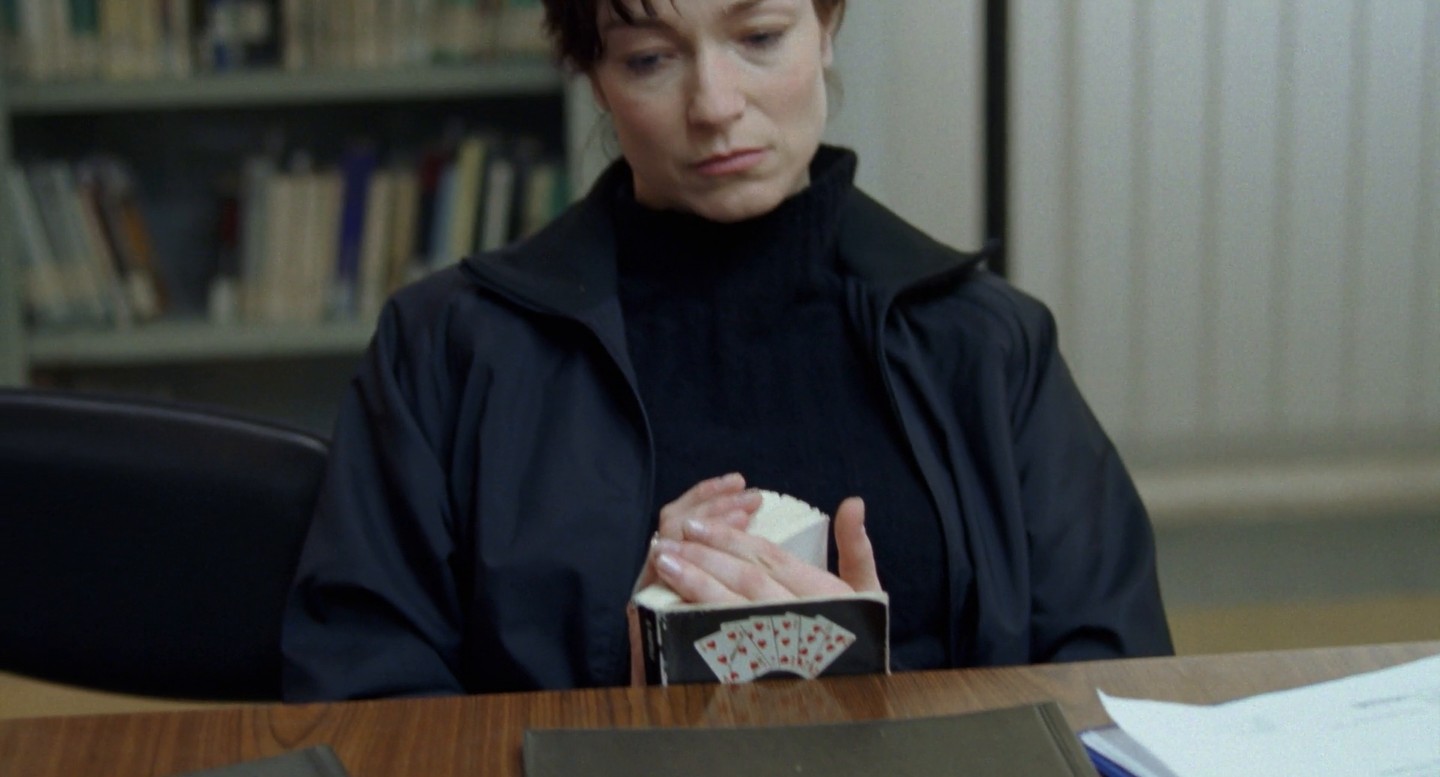
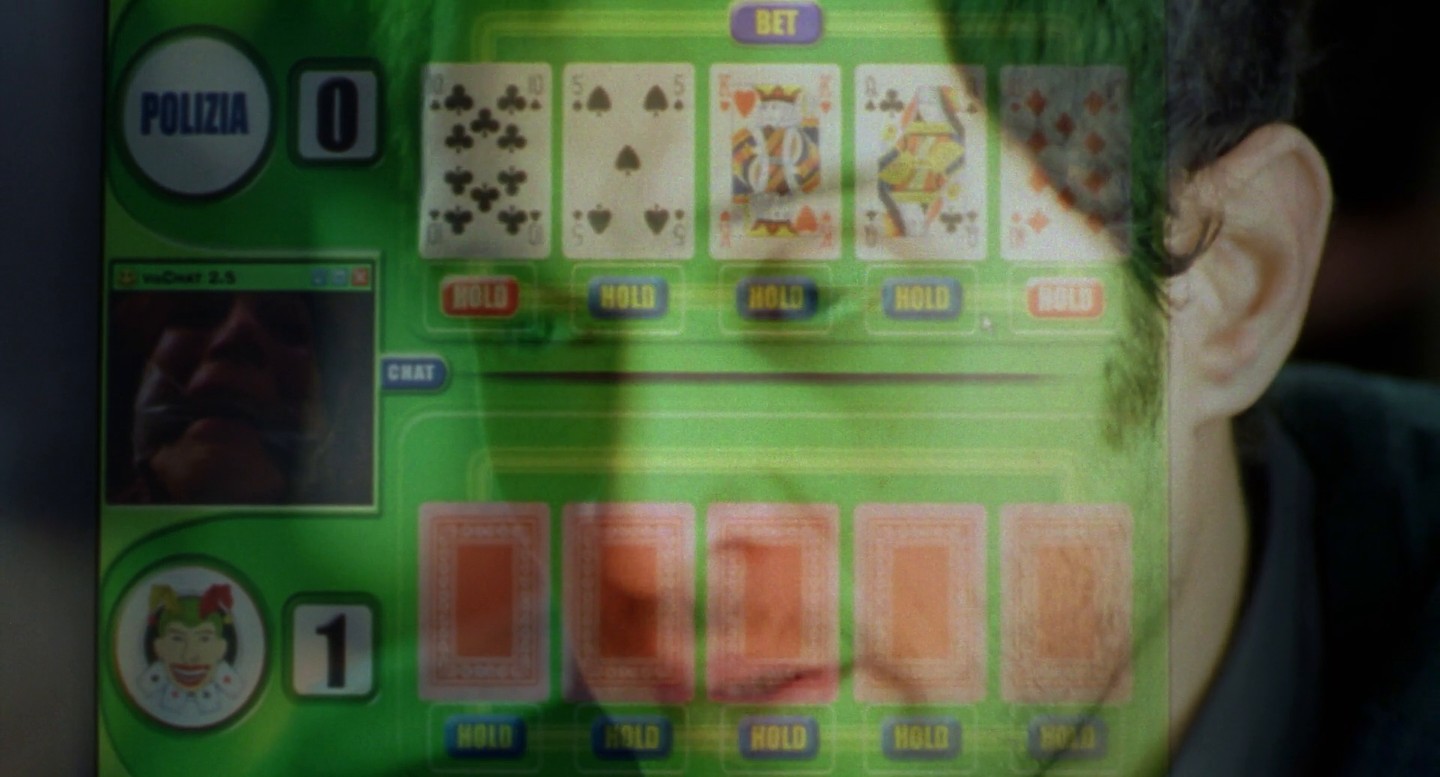
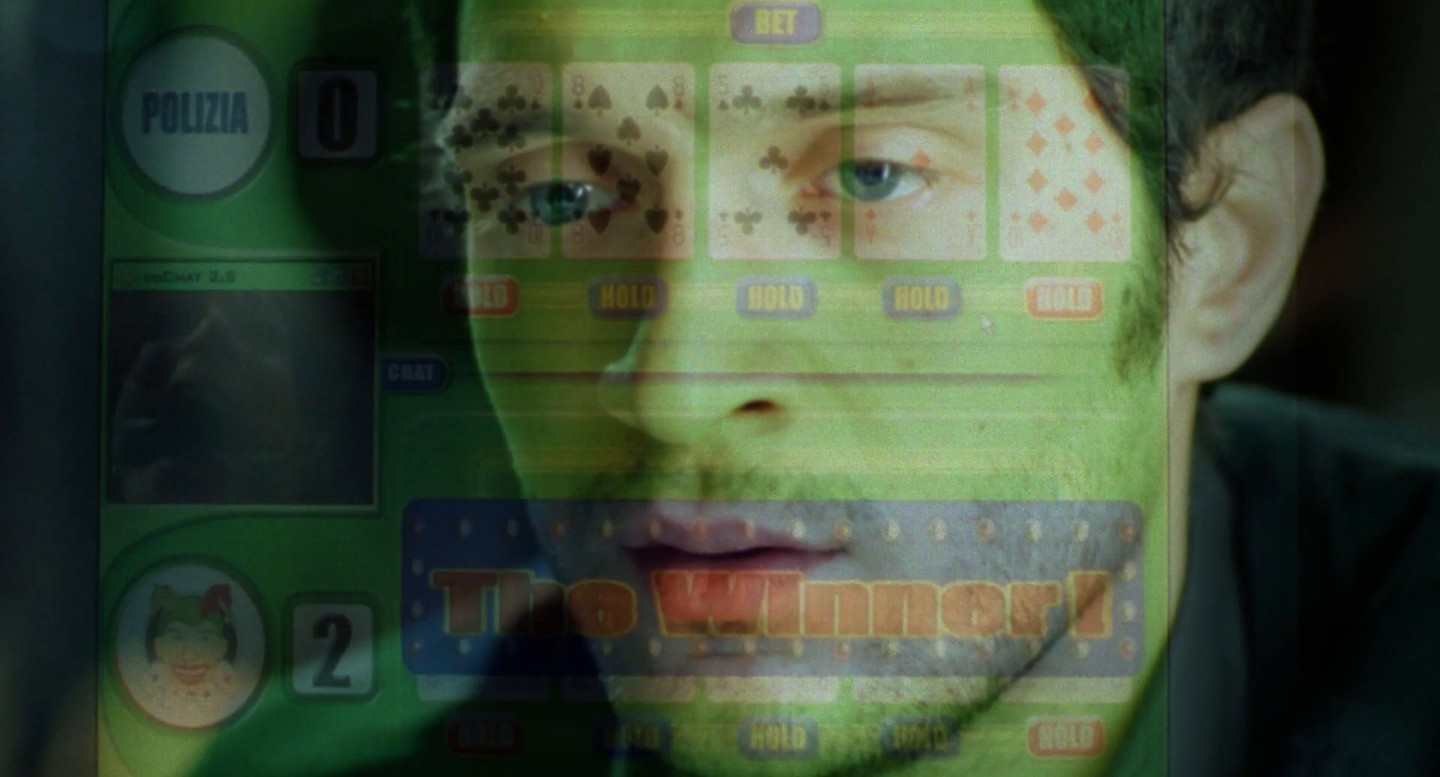
The screen also changes the relation between authority and competence. Rank does not necessarily confer the relevant skill; a game has to be played as well as a crime investigated. That distinction makes the premise more specific than a general warning about dangerous technology. The police possess an institution, while the killer determines the immediate encounter.
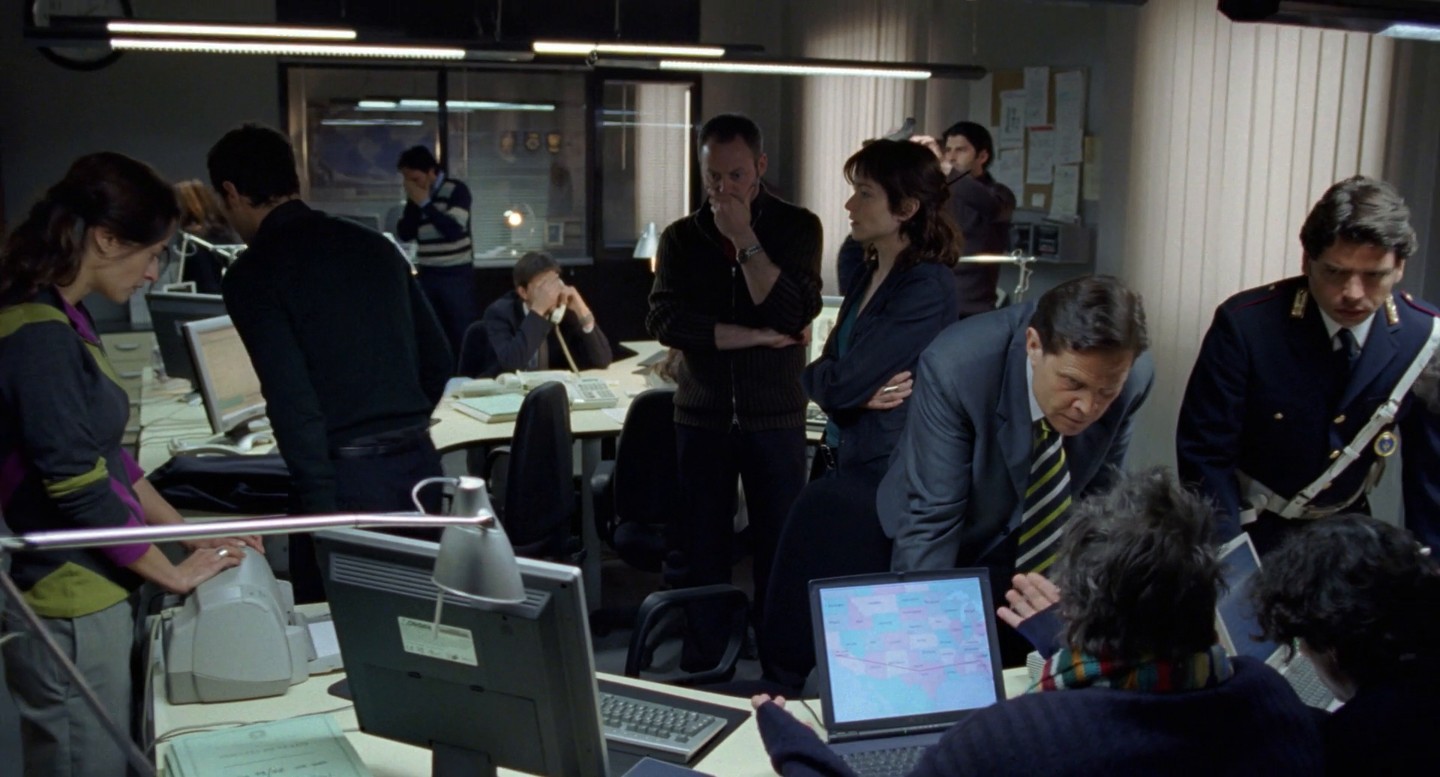
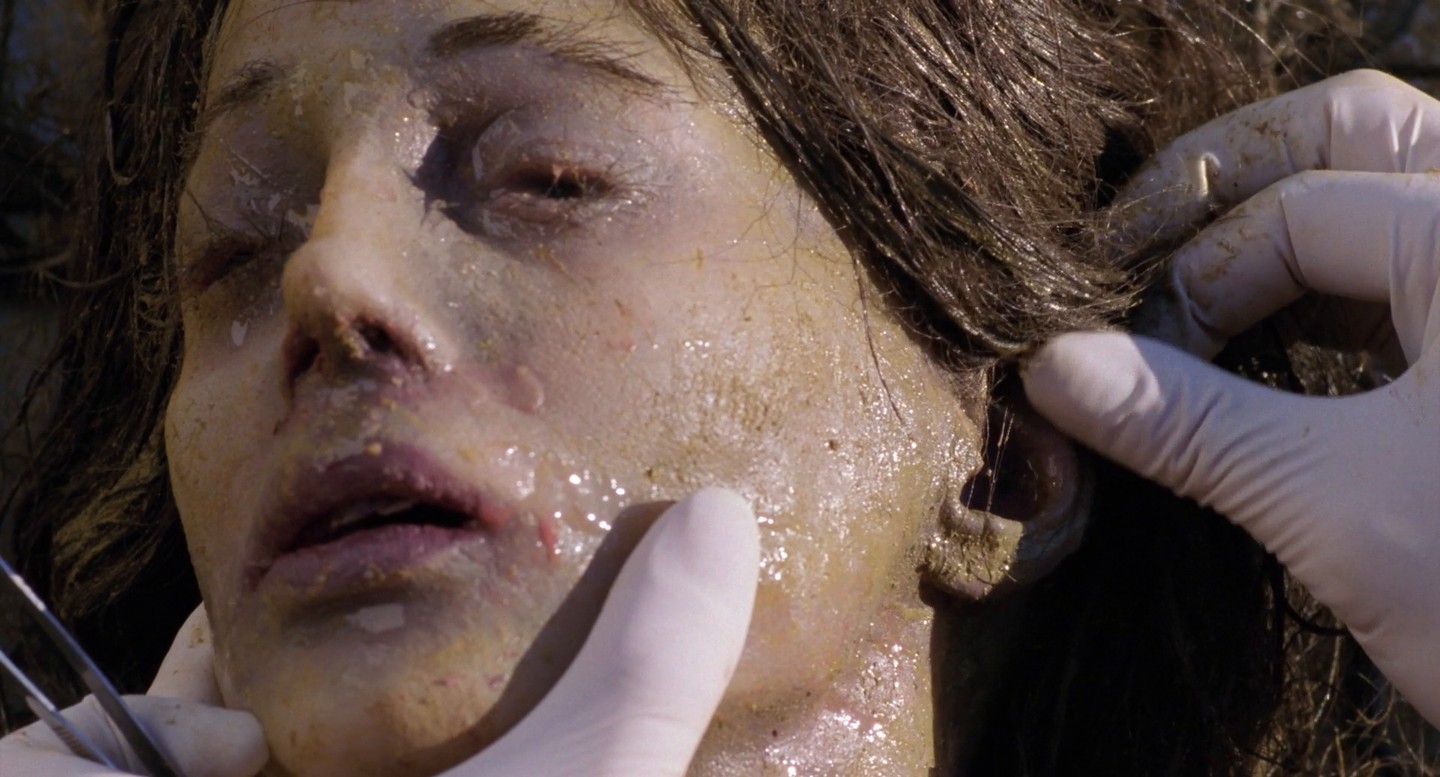
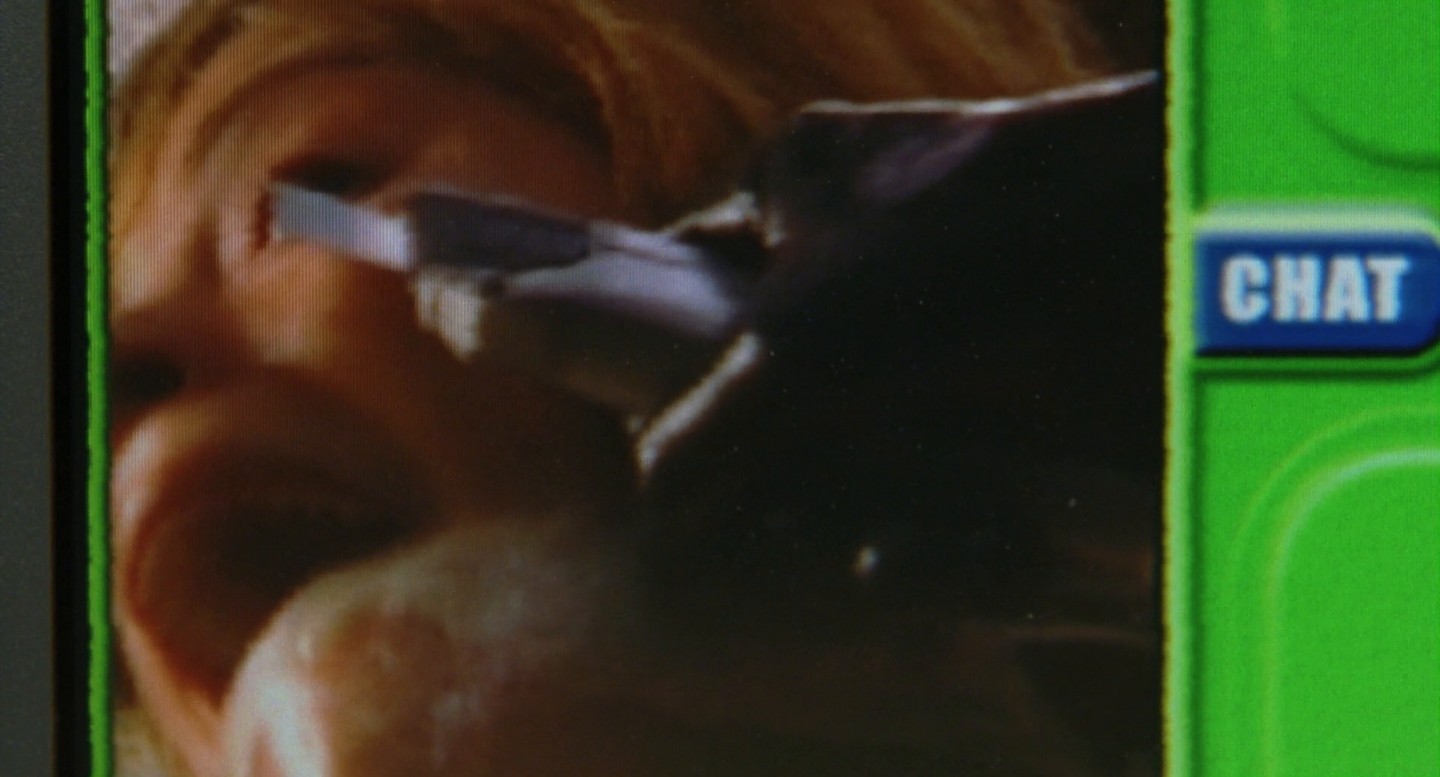
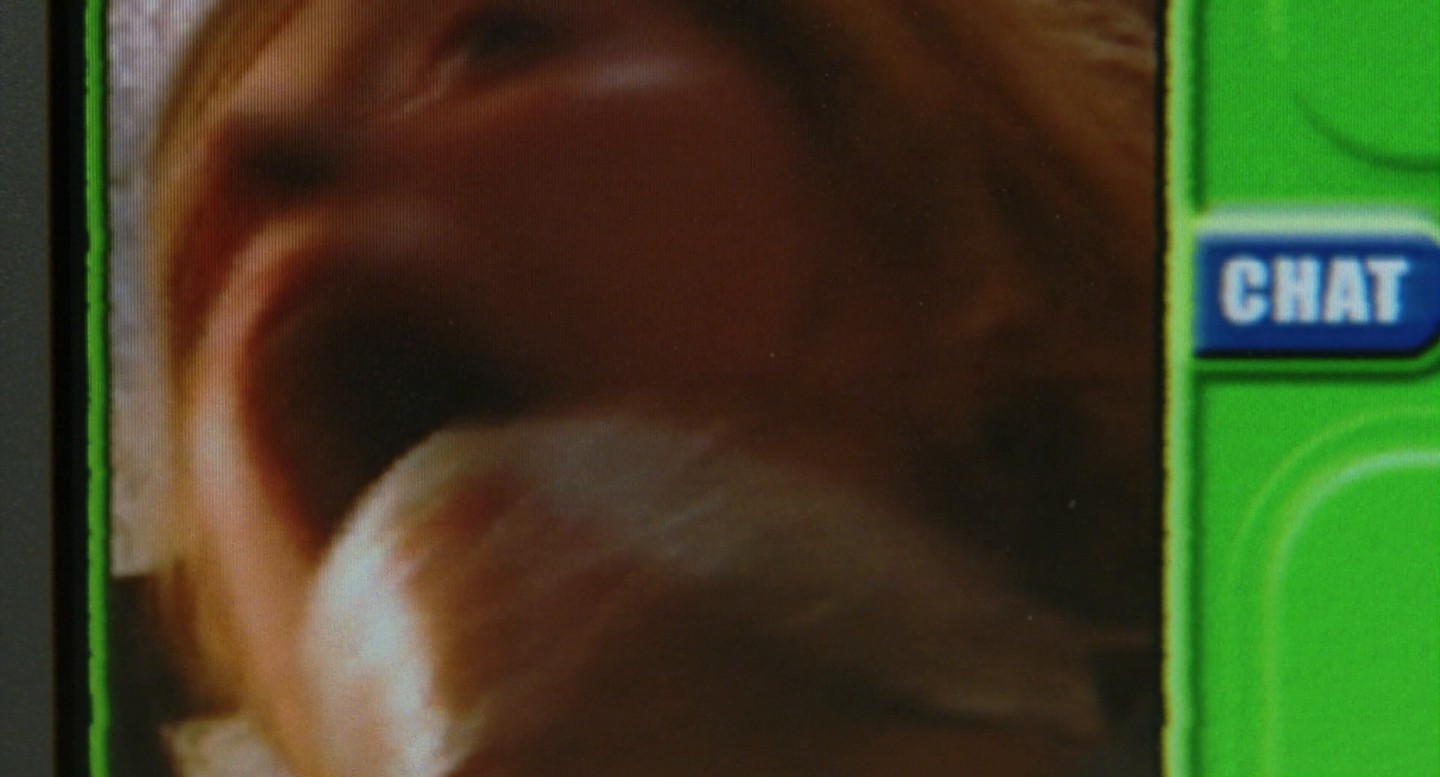
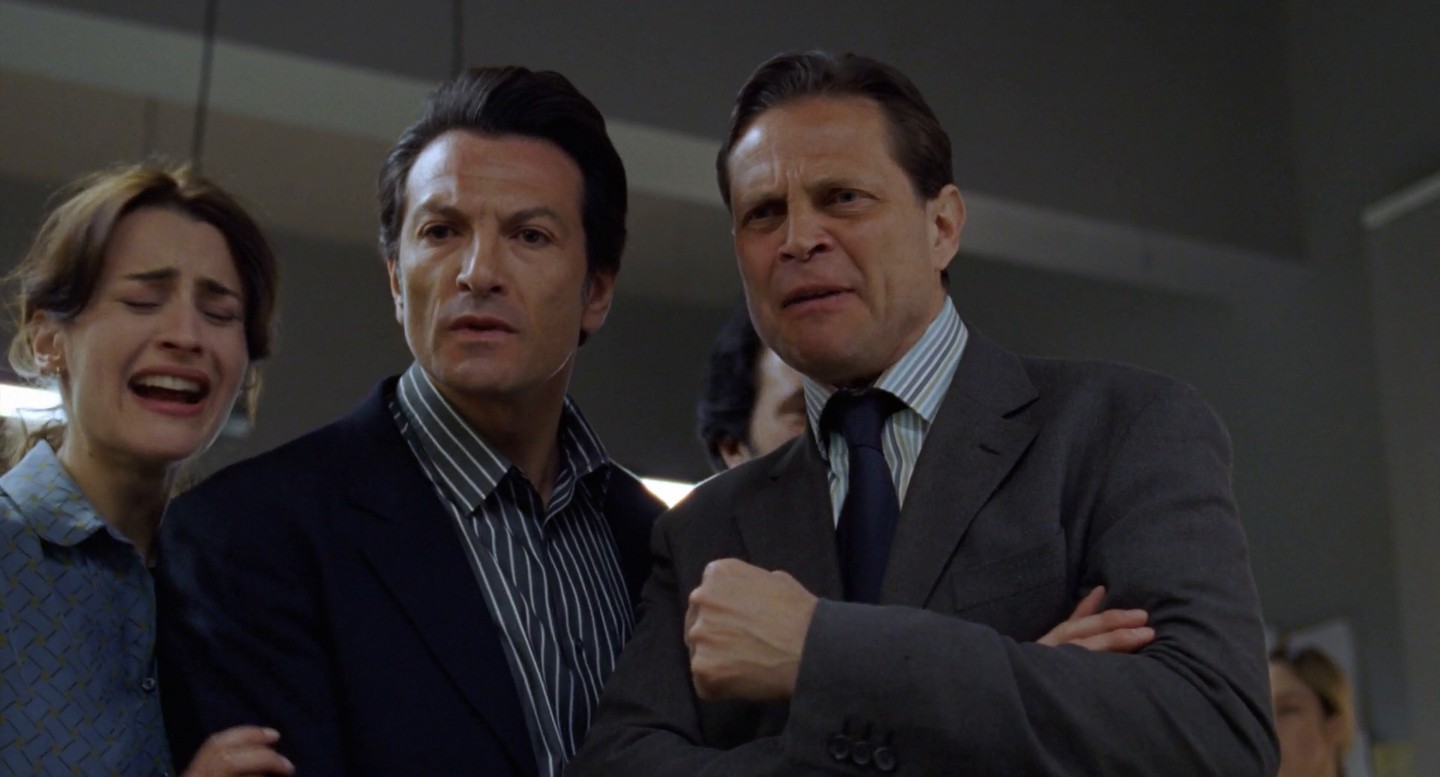
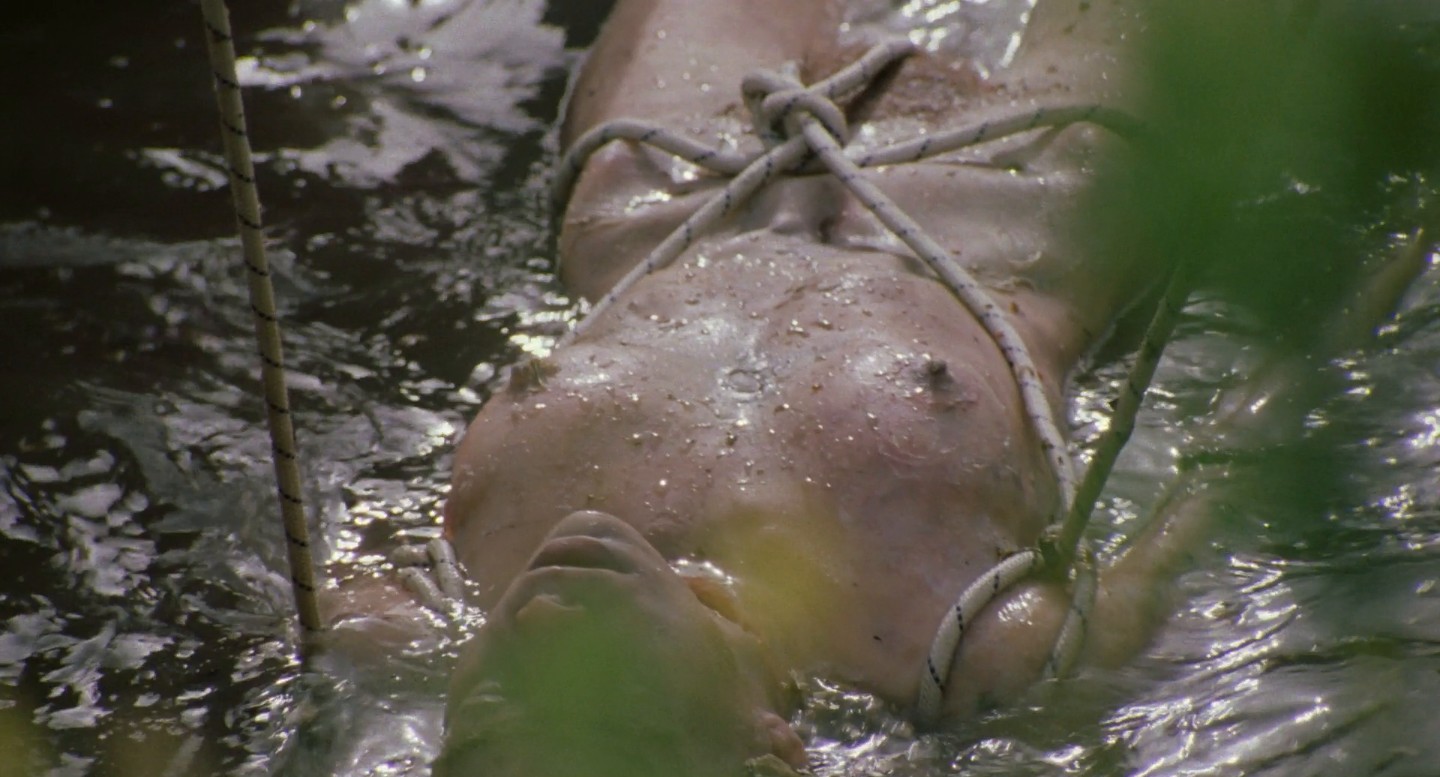
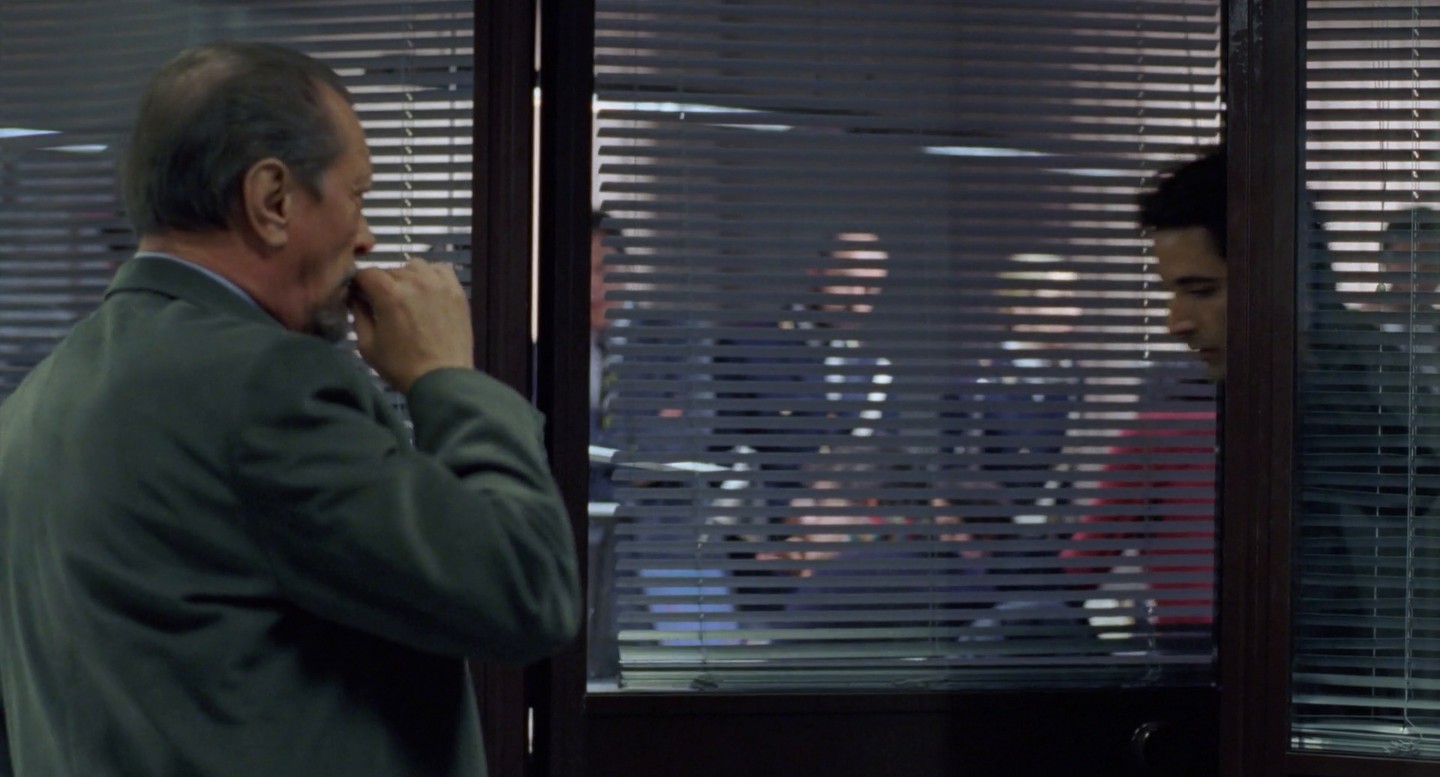
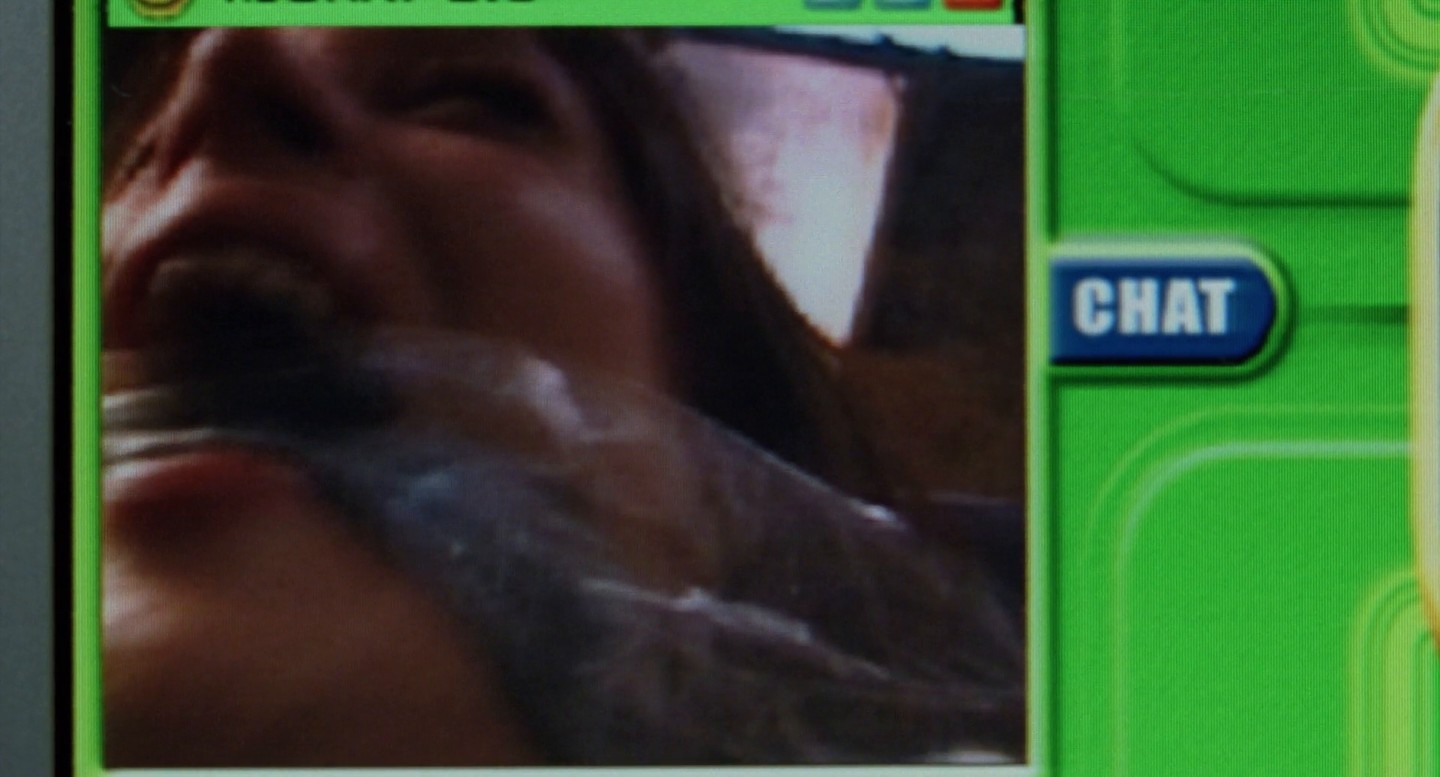
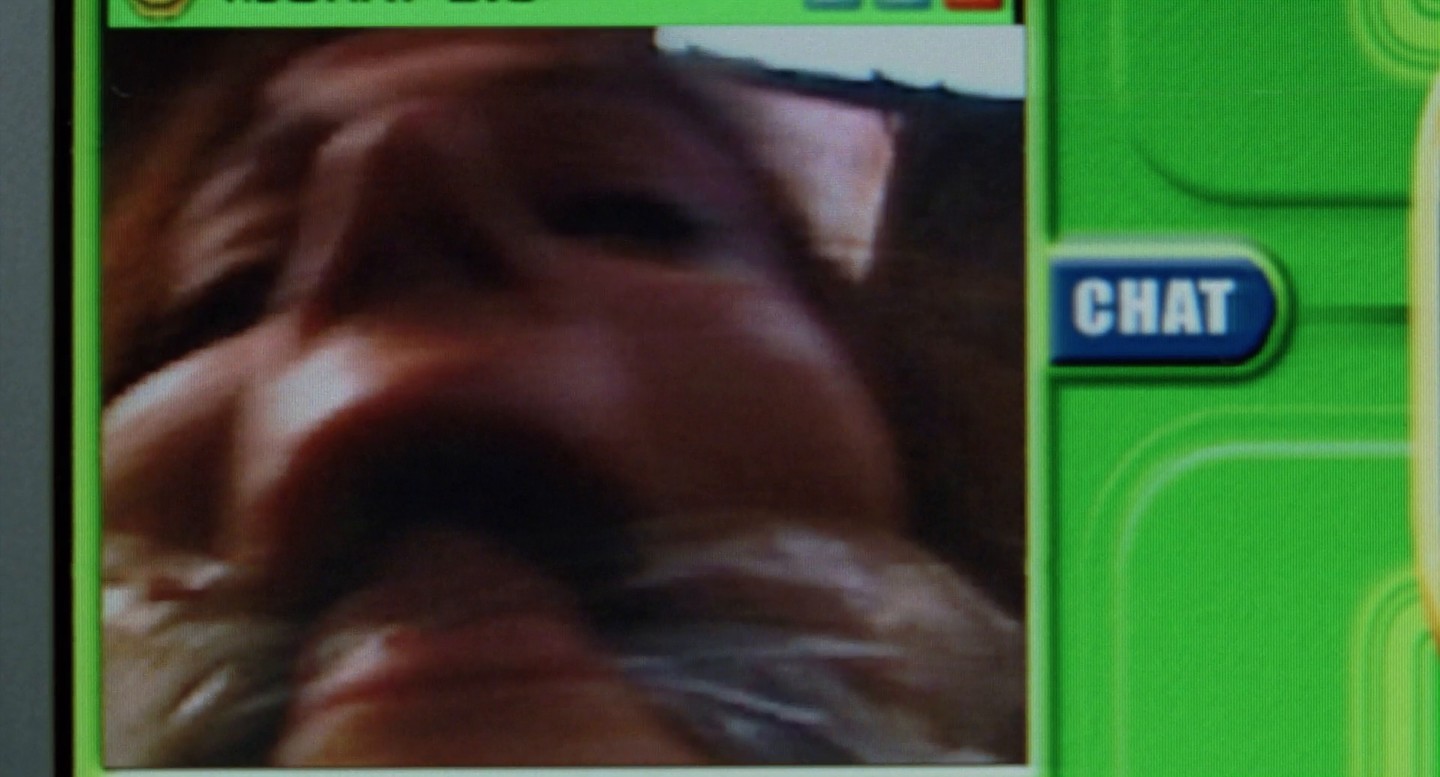
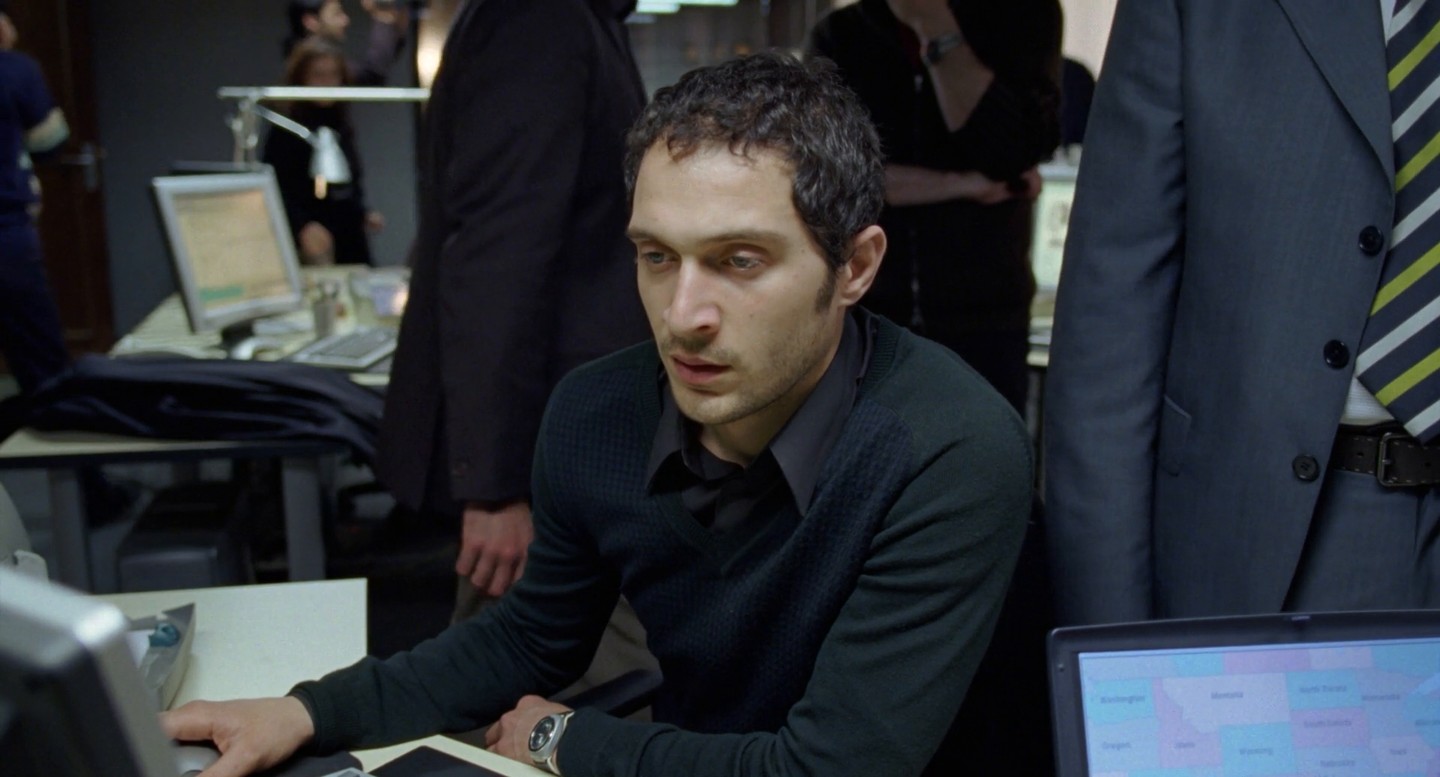
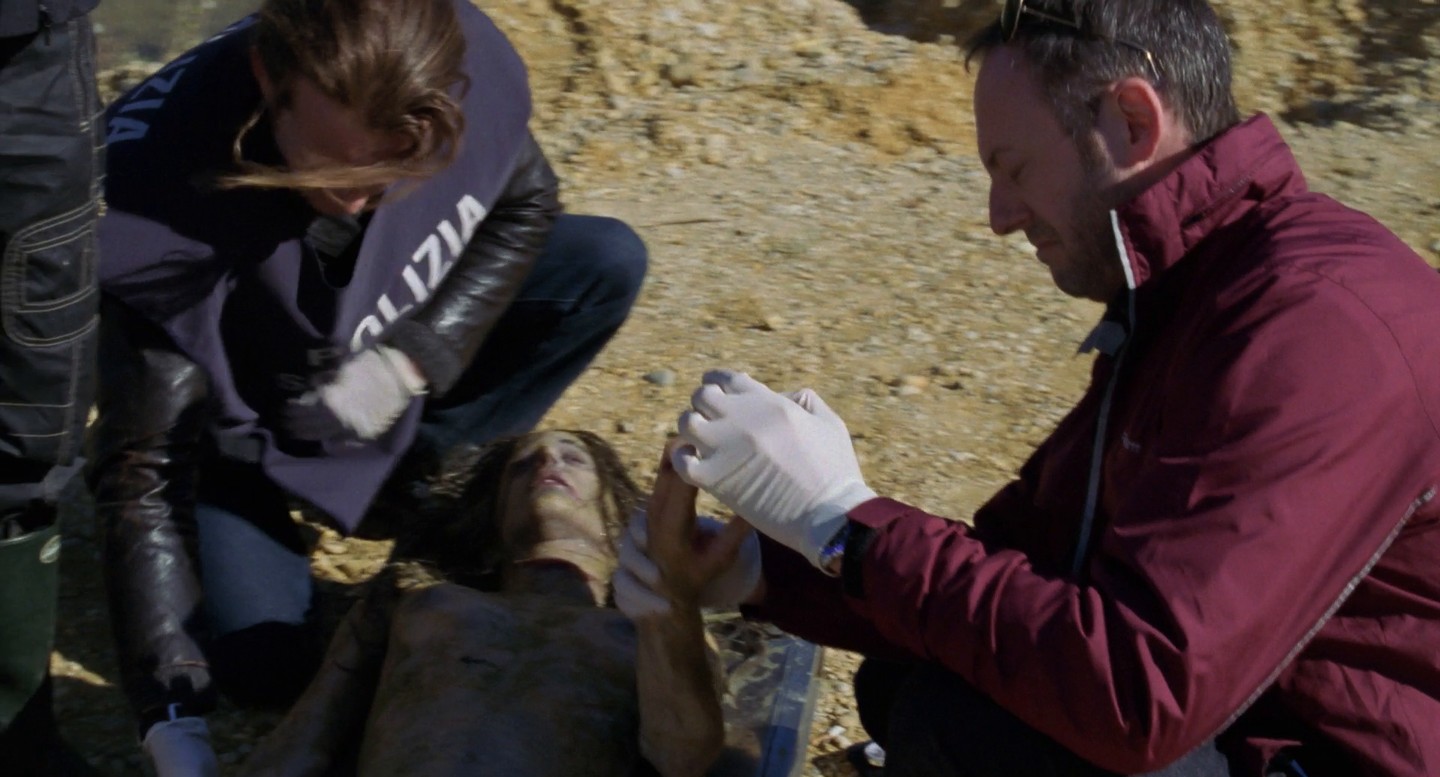
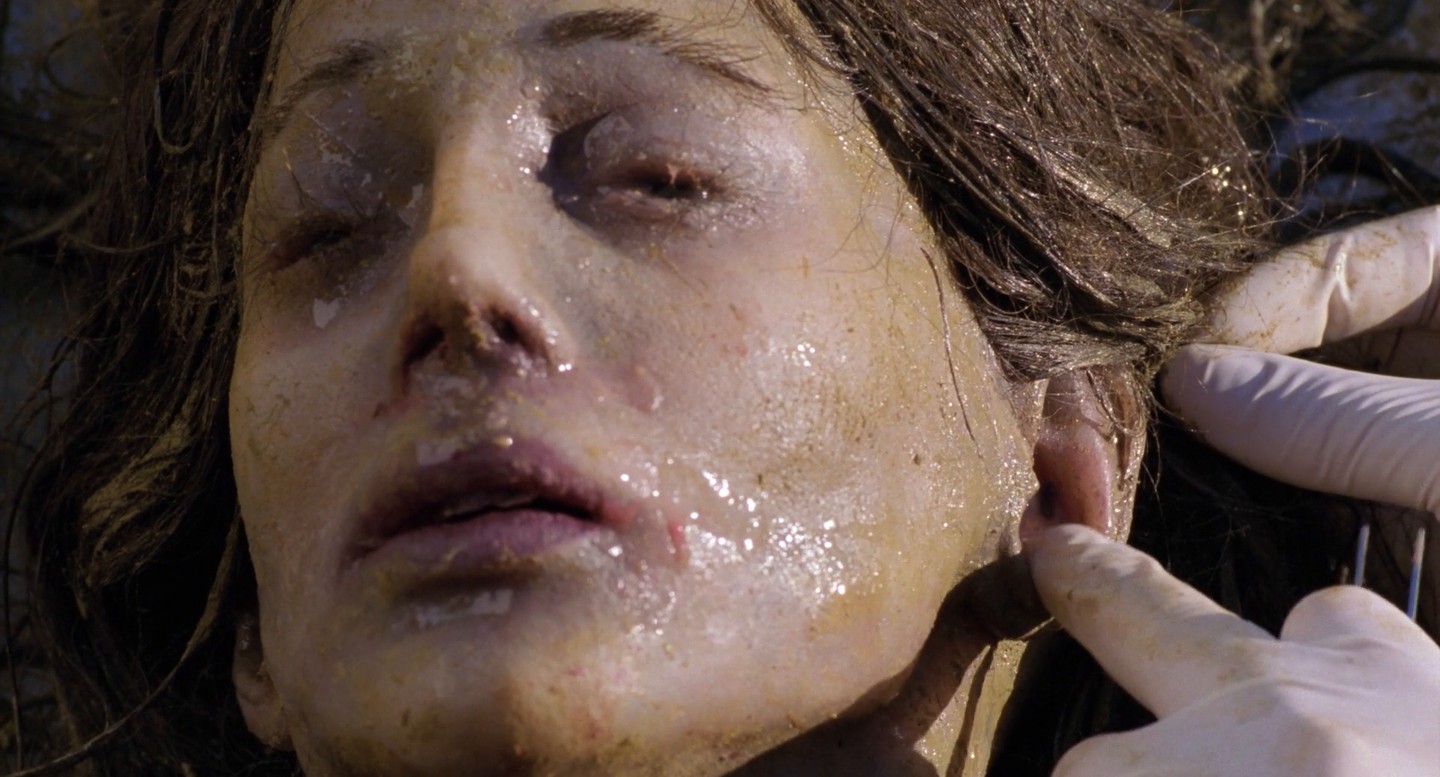
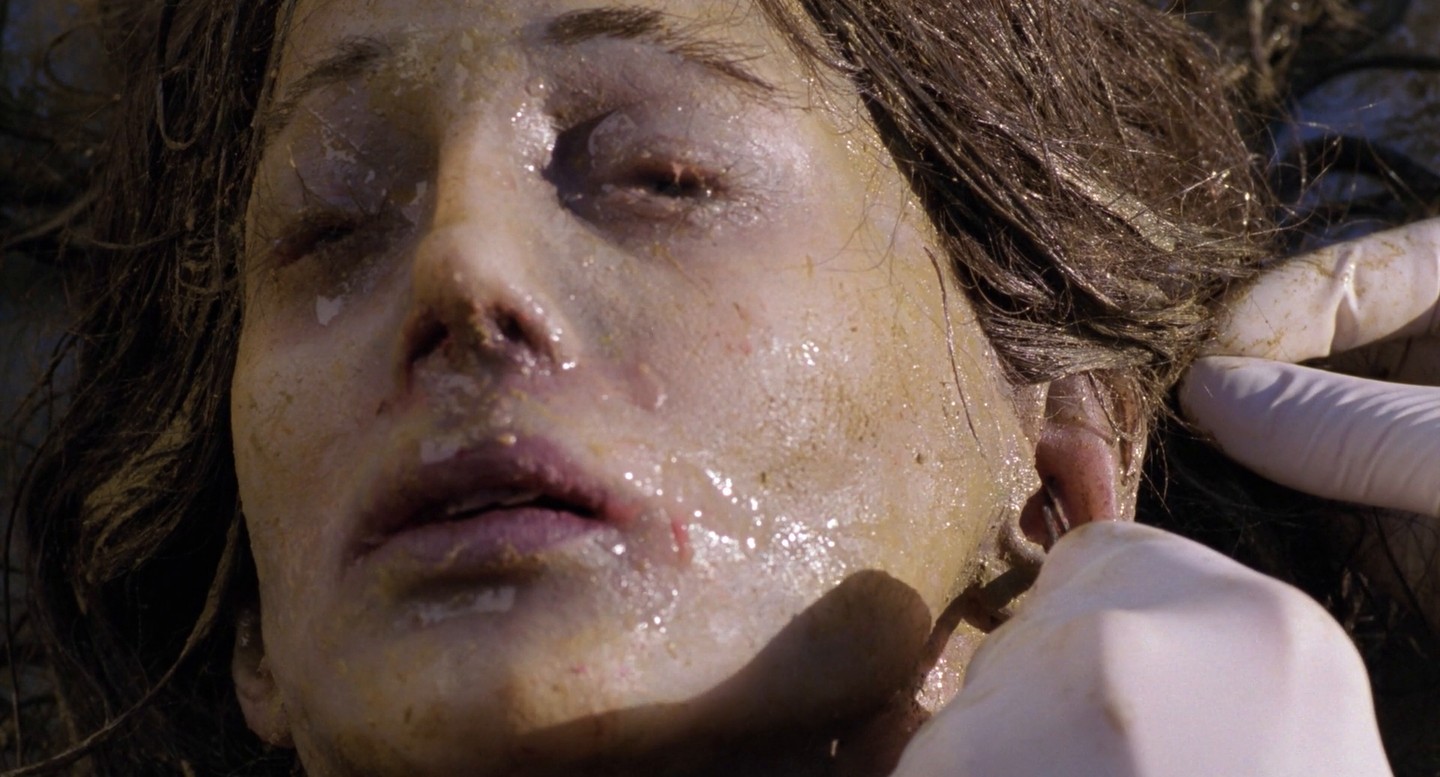
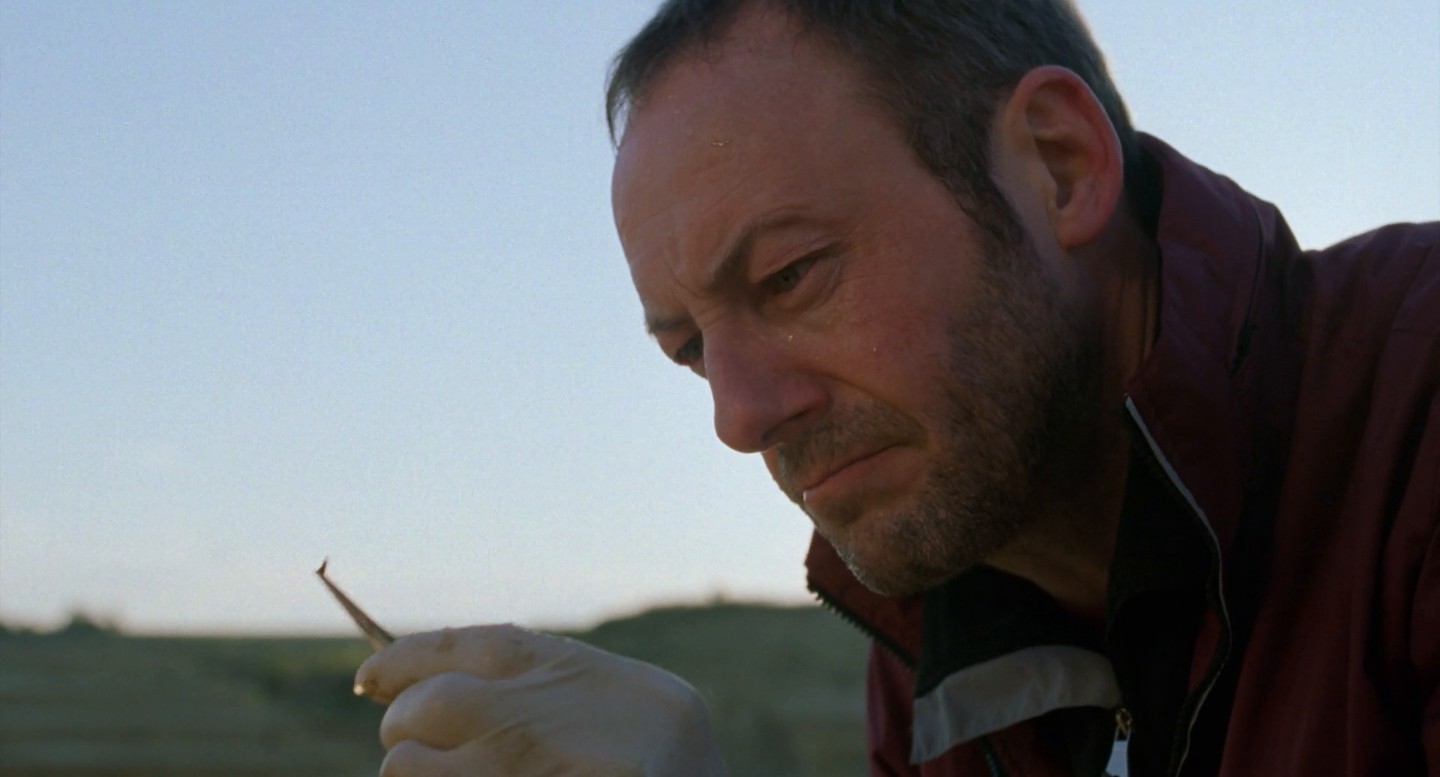
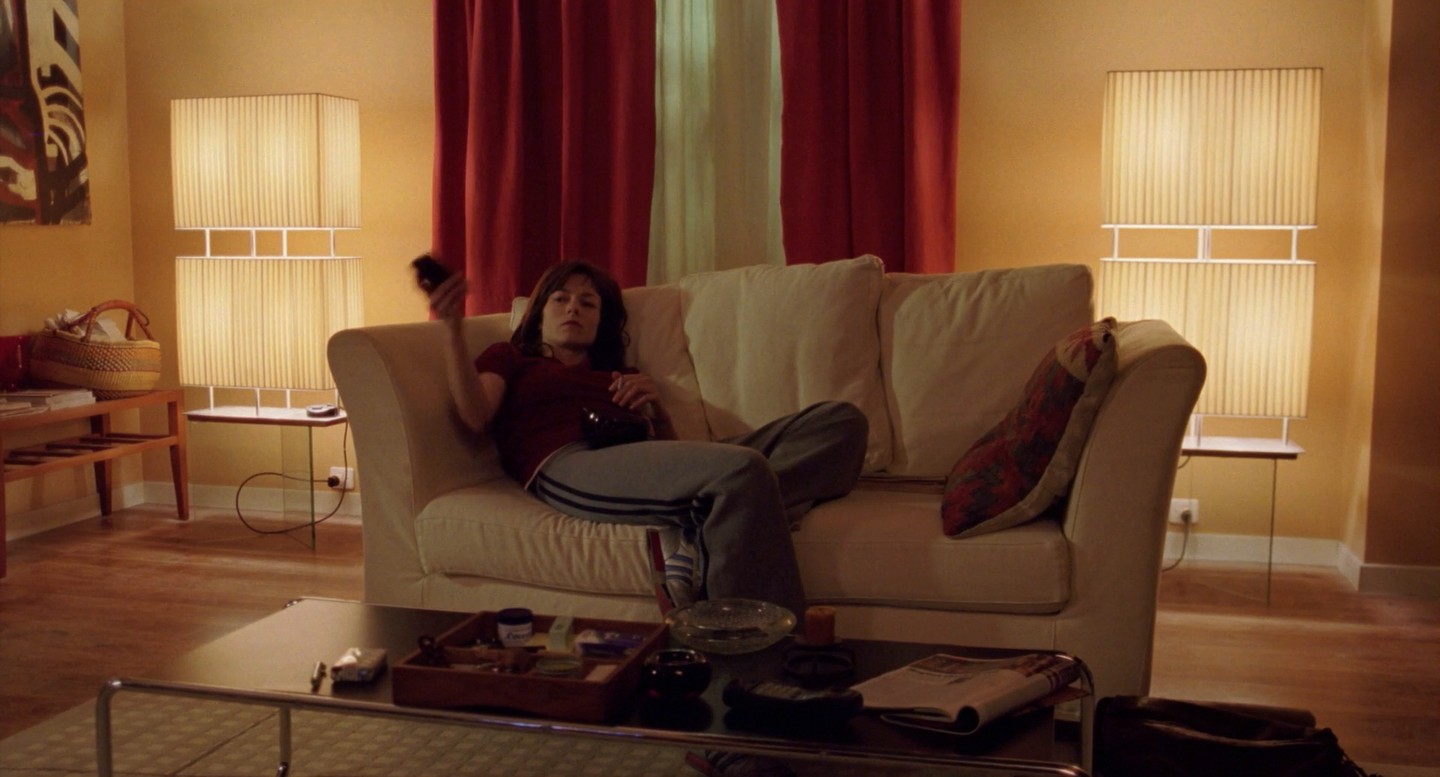
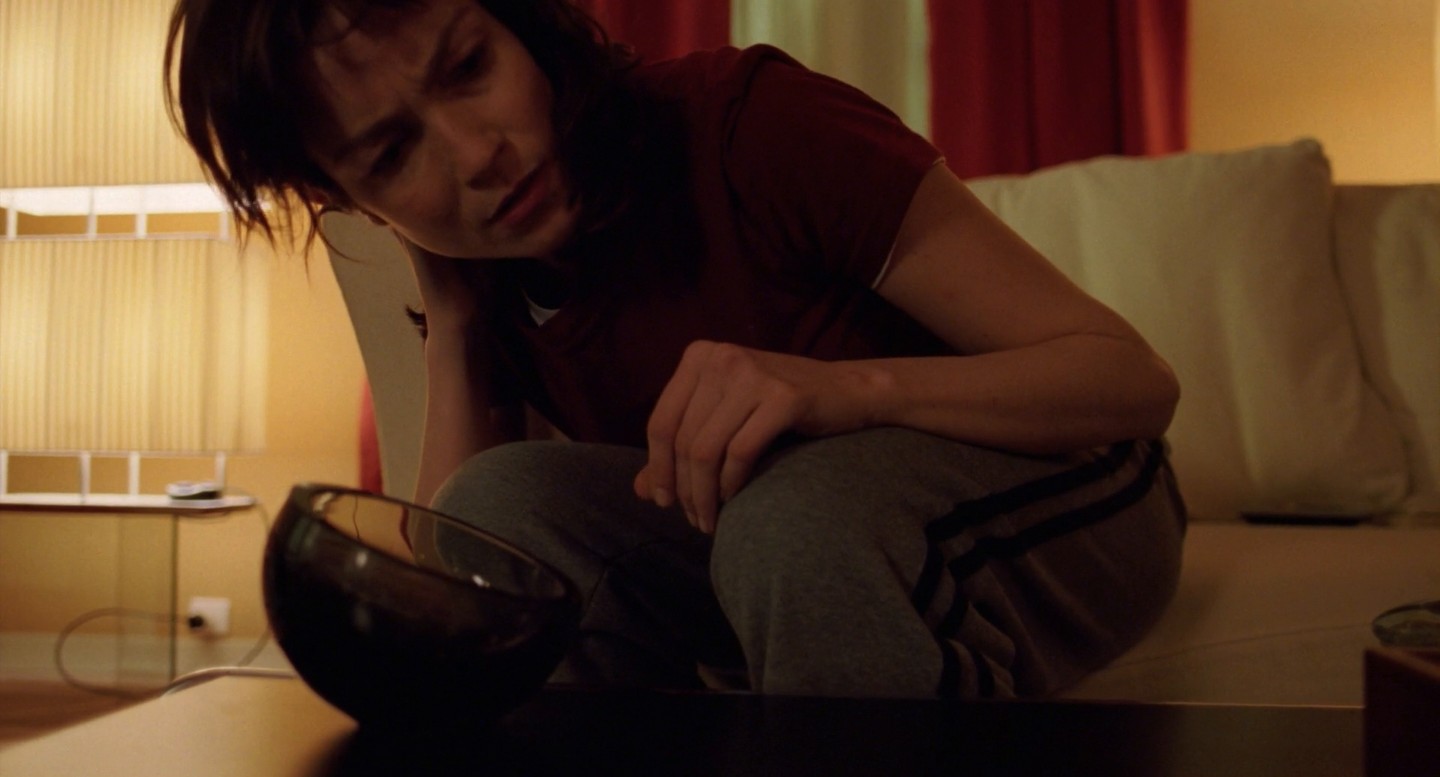
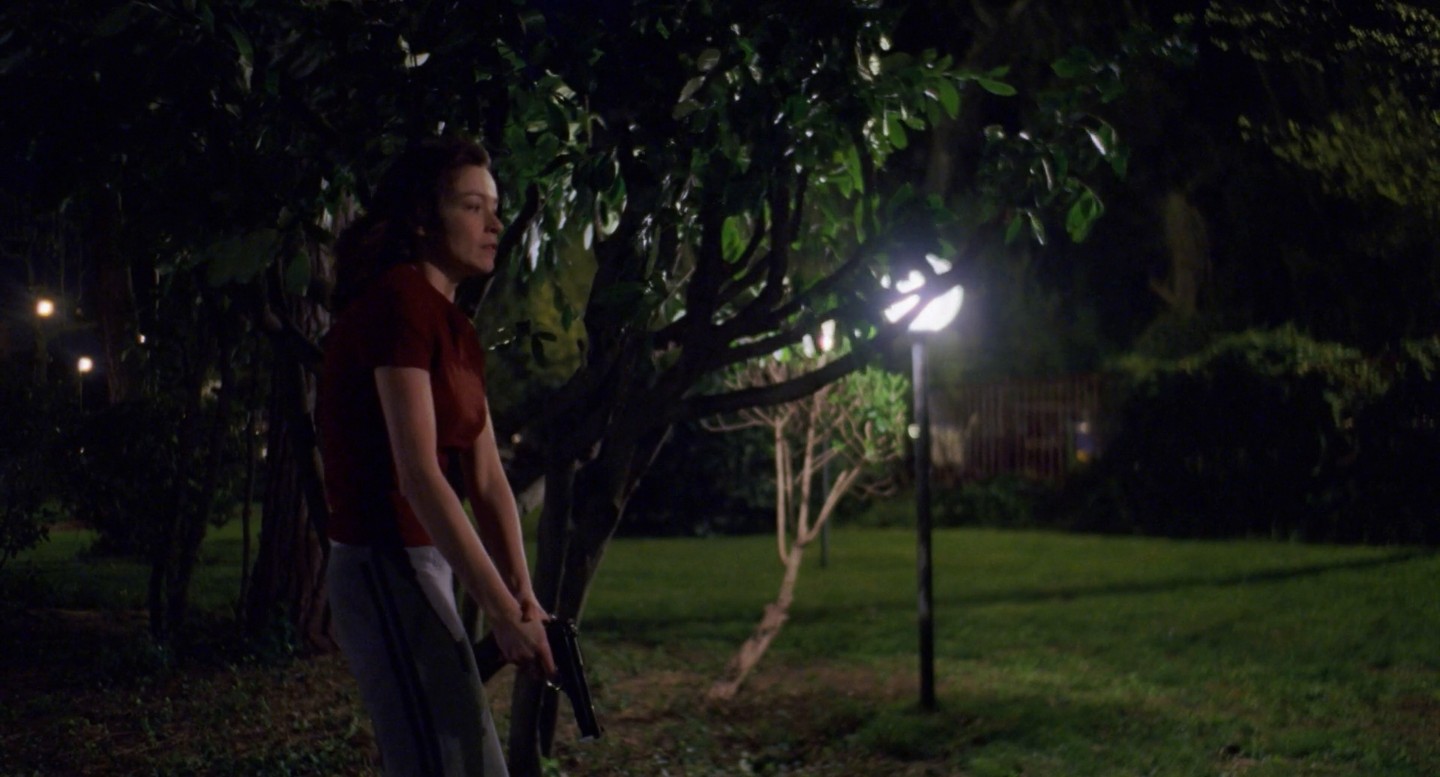
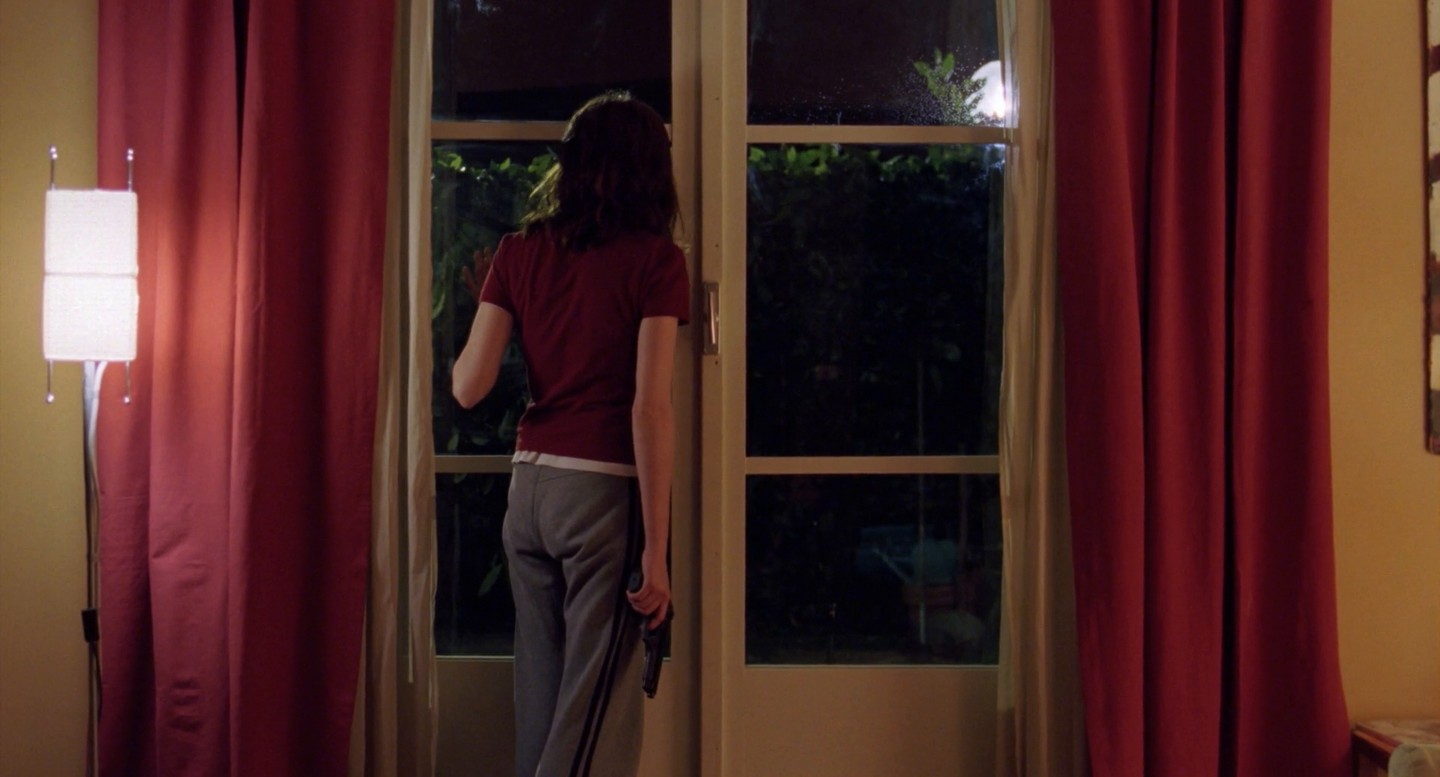
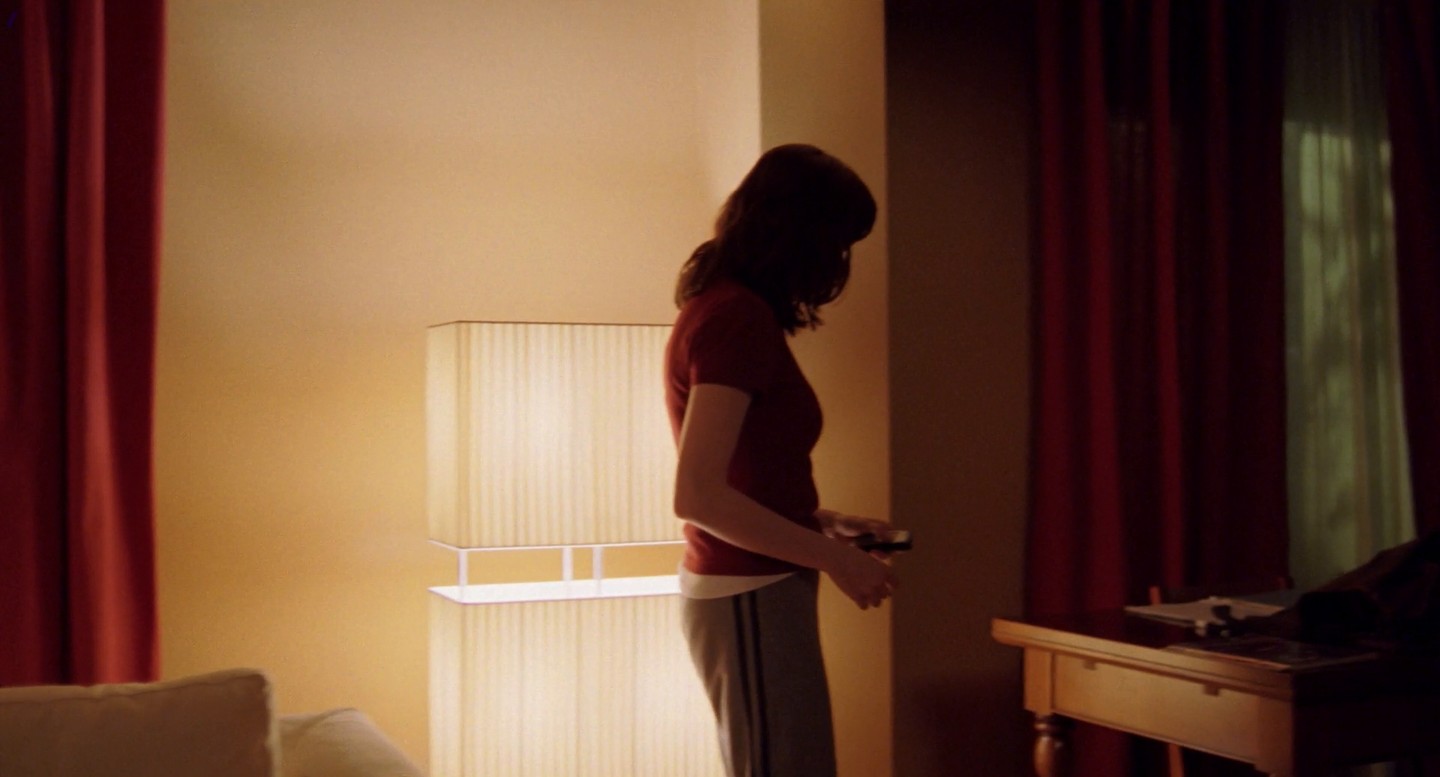
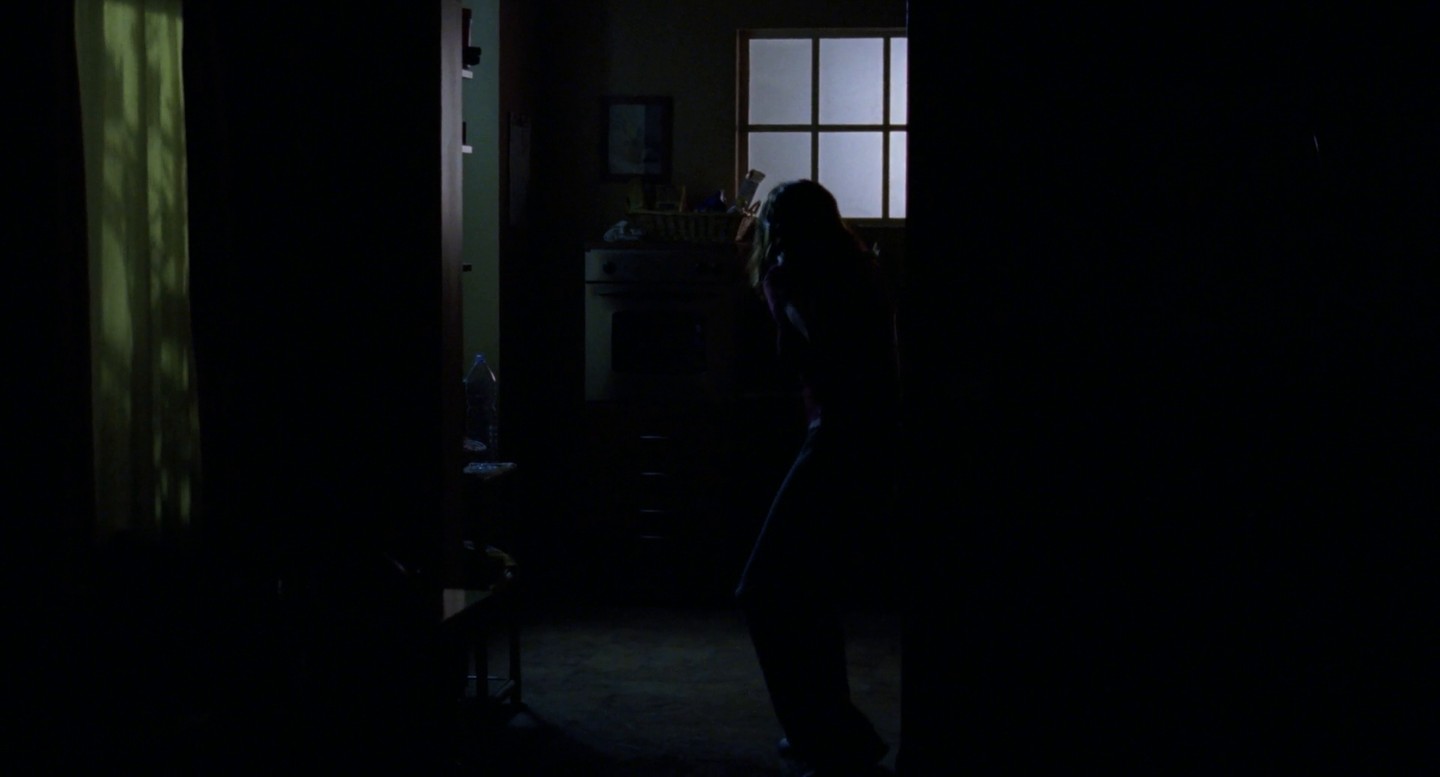
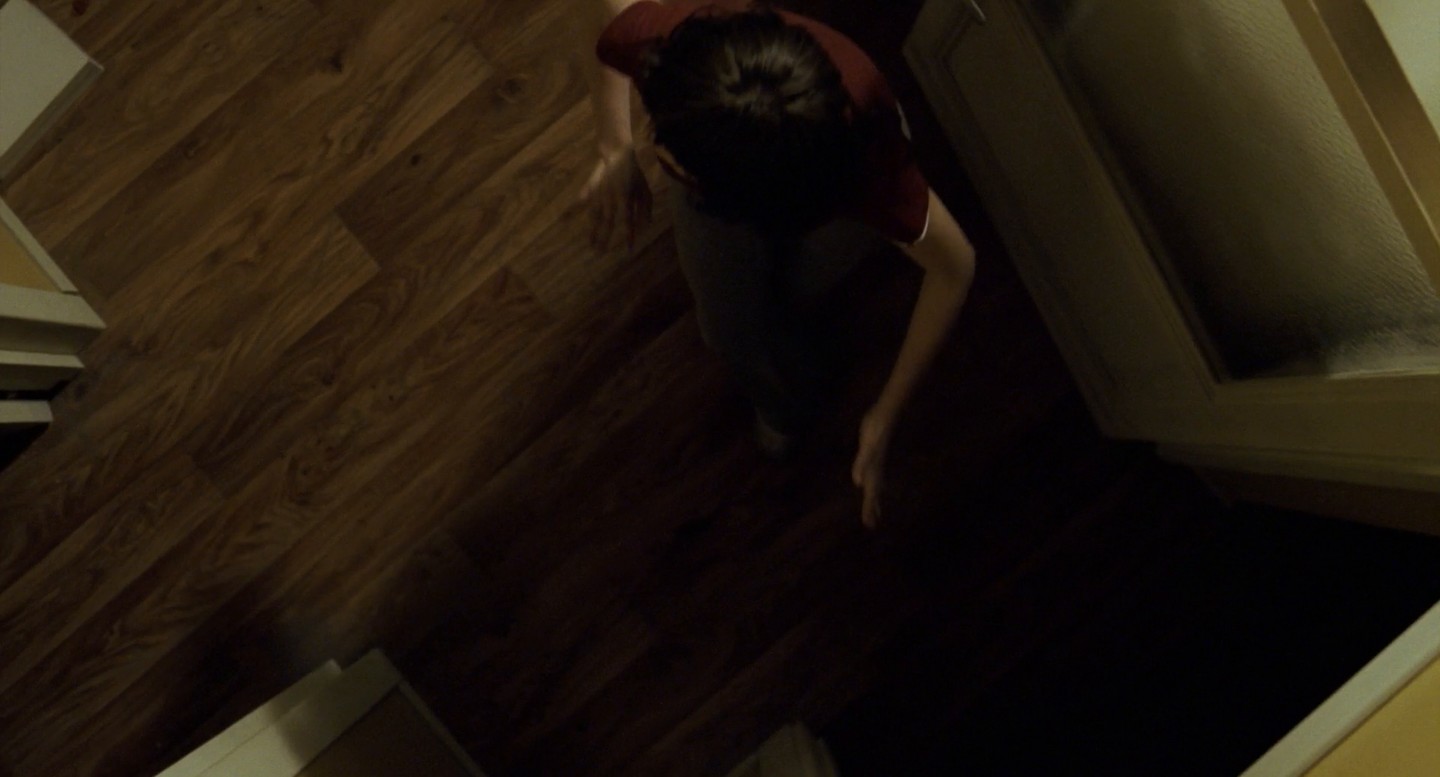
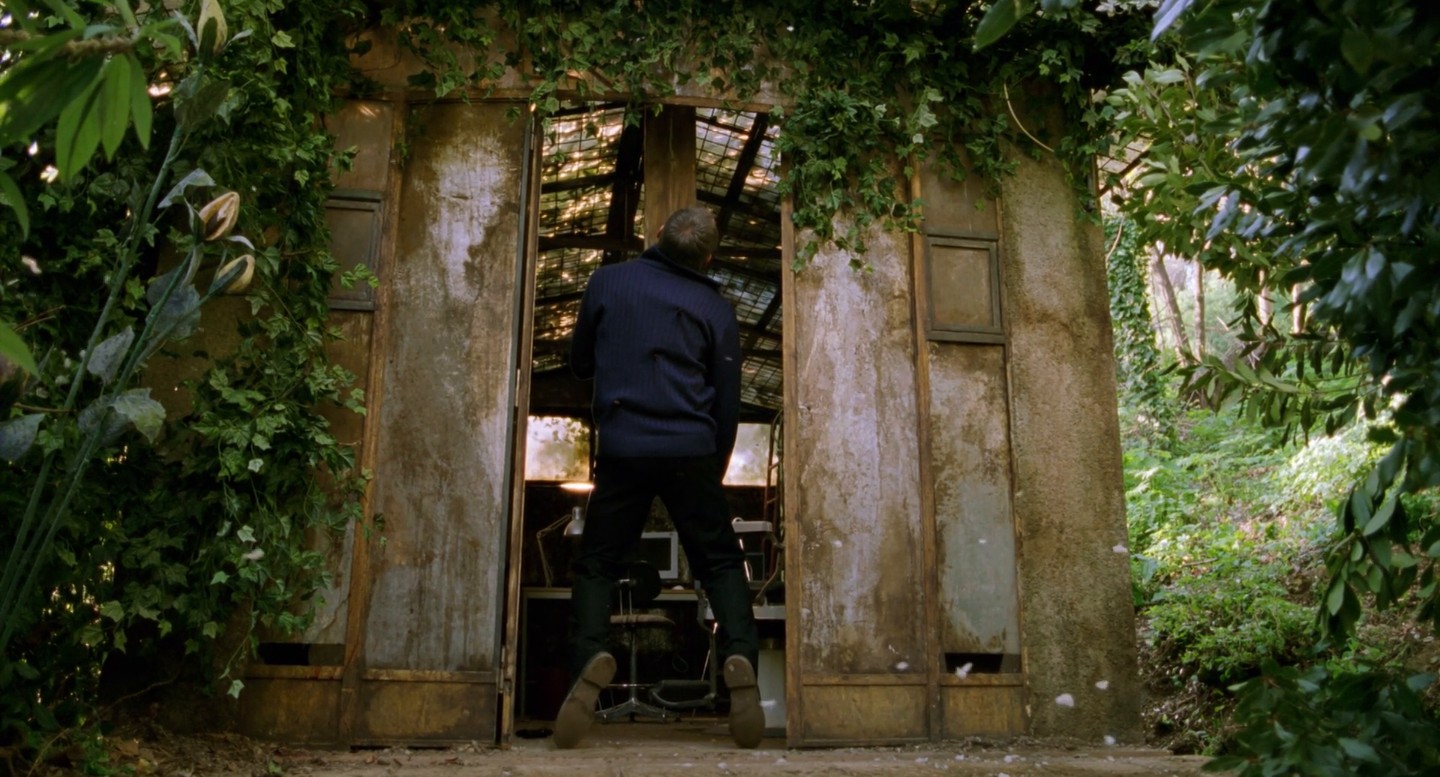
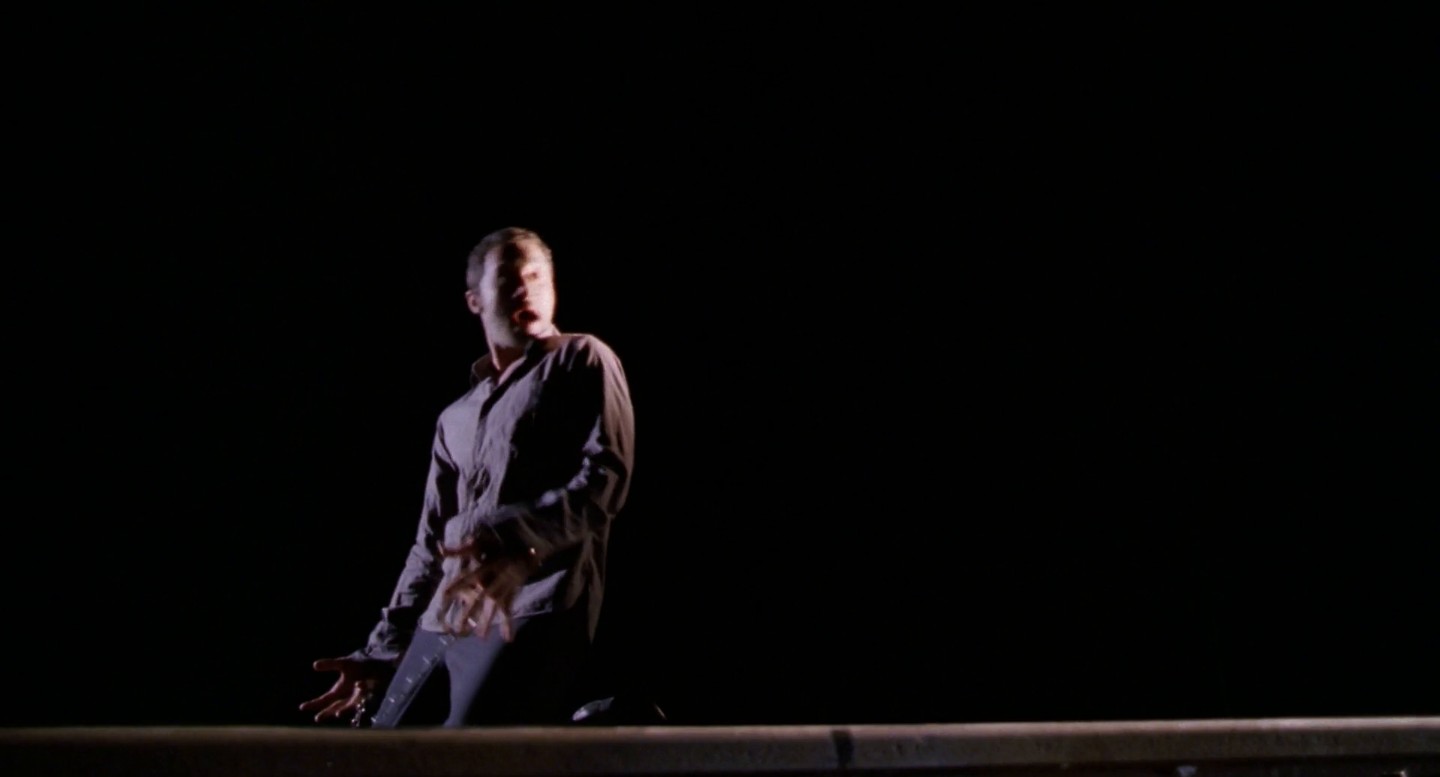
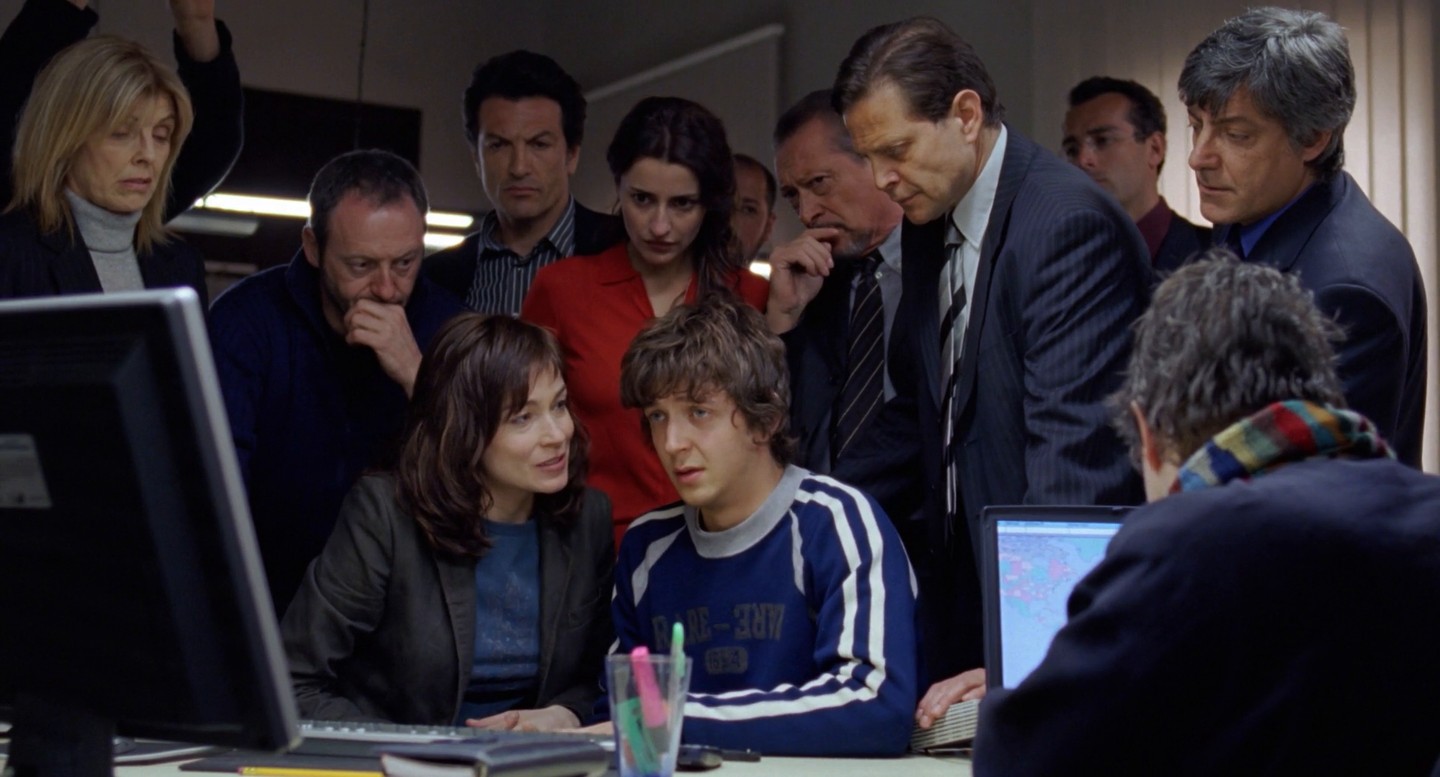
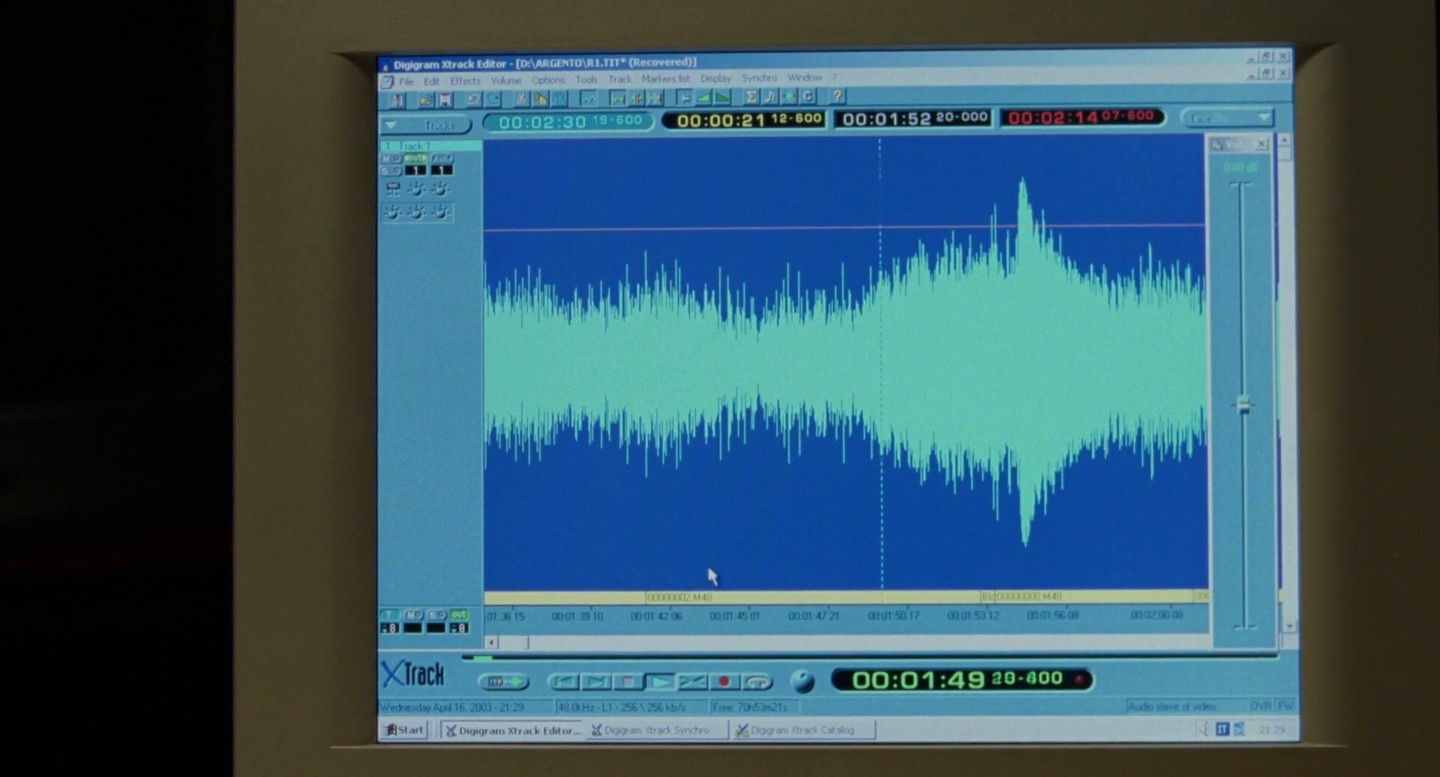
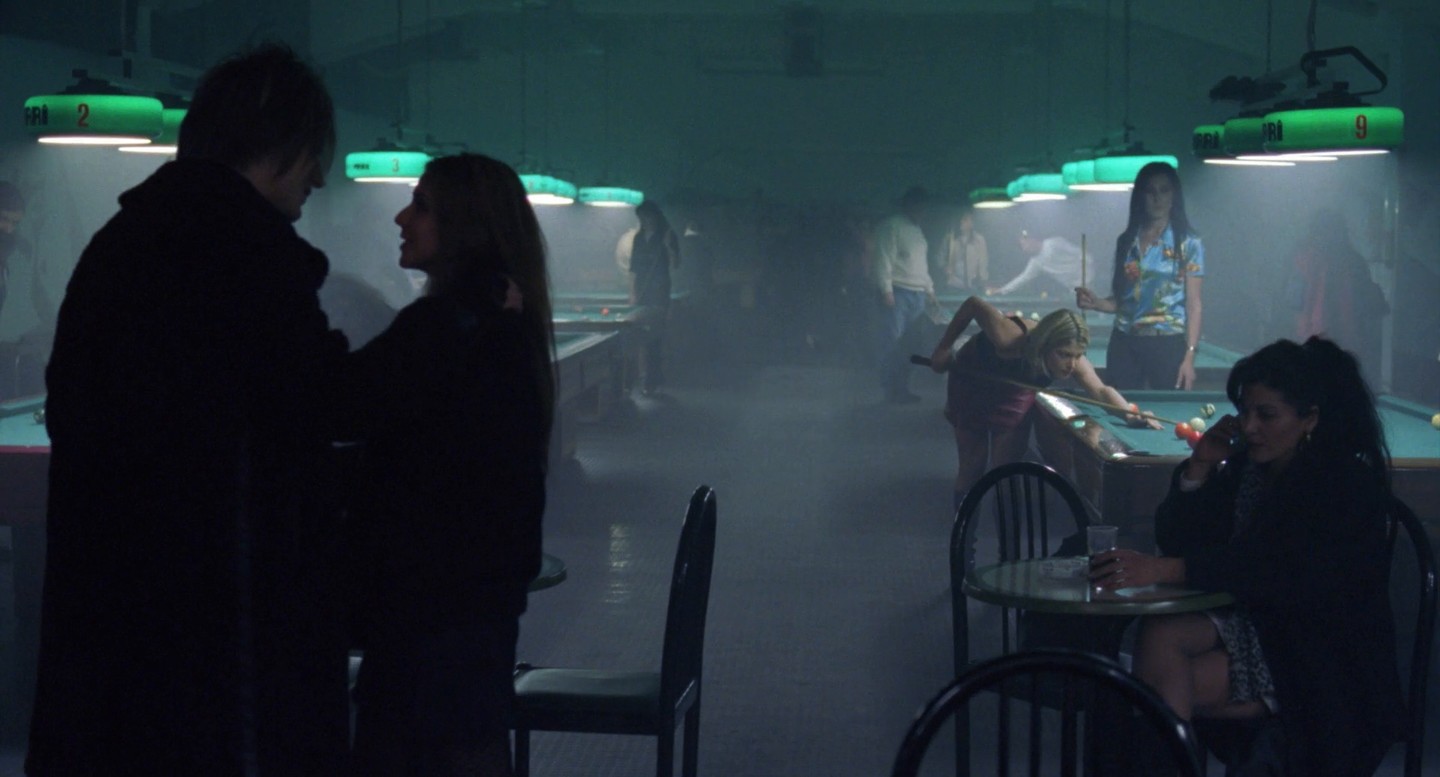
For the spectator, there are two frames to consider: the film image and the image presented within it. The latter is selected by an adversary. Its apparent immediacy need not establish its completeness or reliability. The second transmission gallery follows one such exchange: the hand, the surrounding reactions, the captive and the room after defeat. The later recording clue challenges the image’s apparent simultaneity.
02 / ANNA, JOHN & REMO
An investigation needs more than official expertise
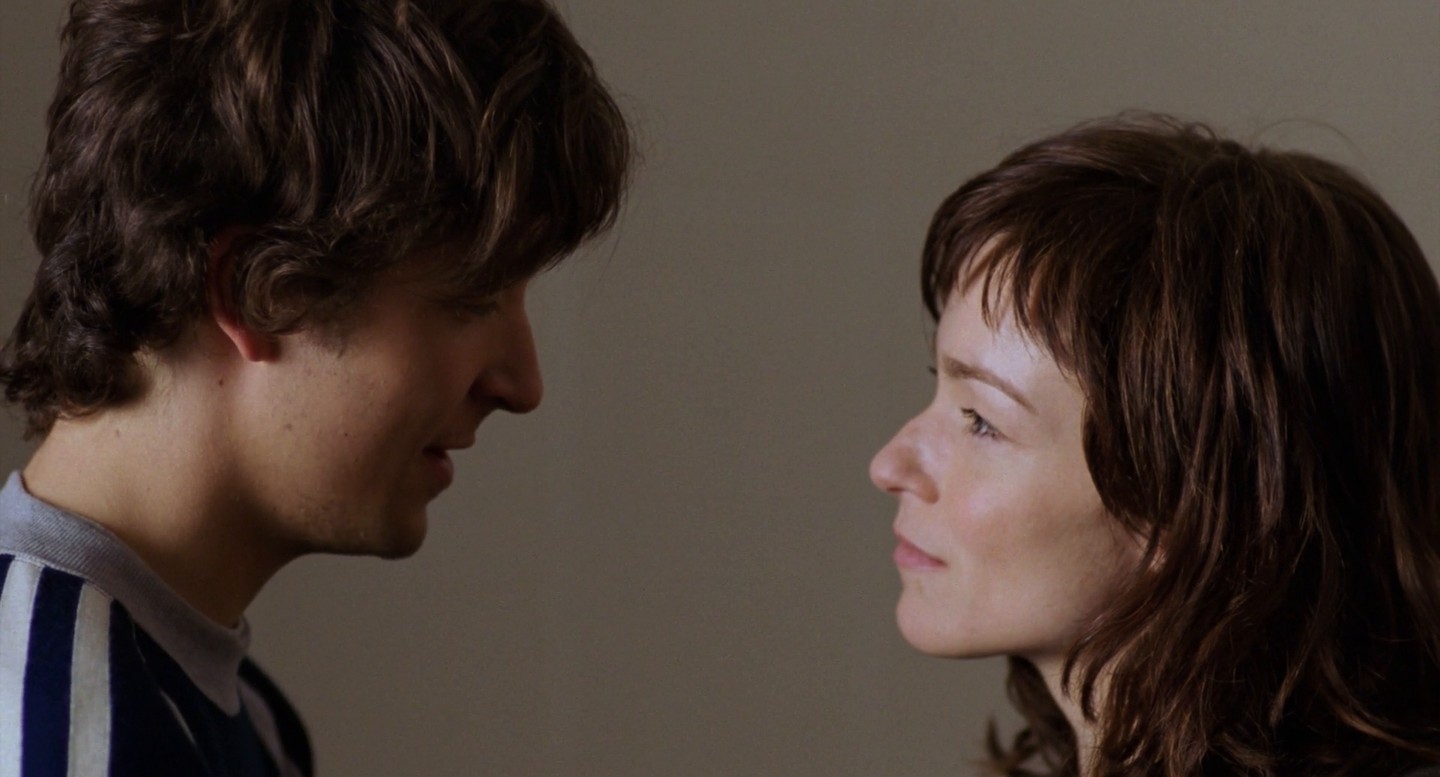
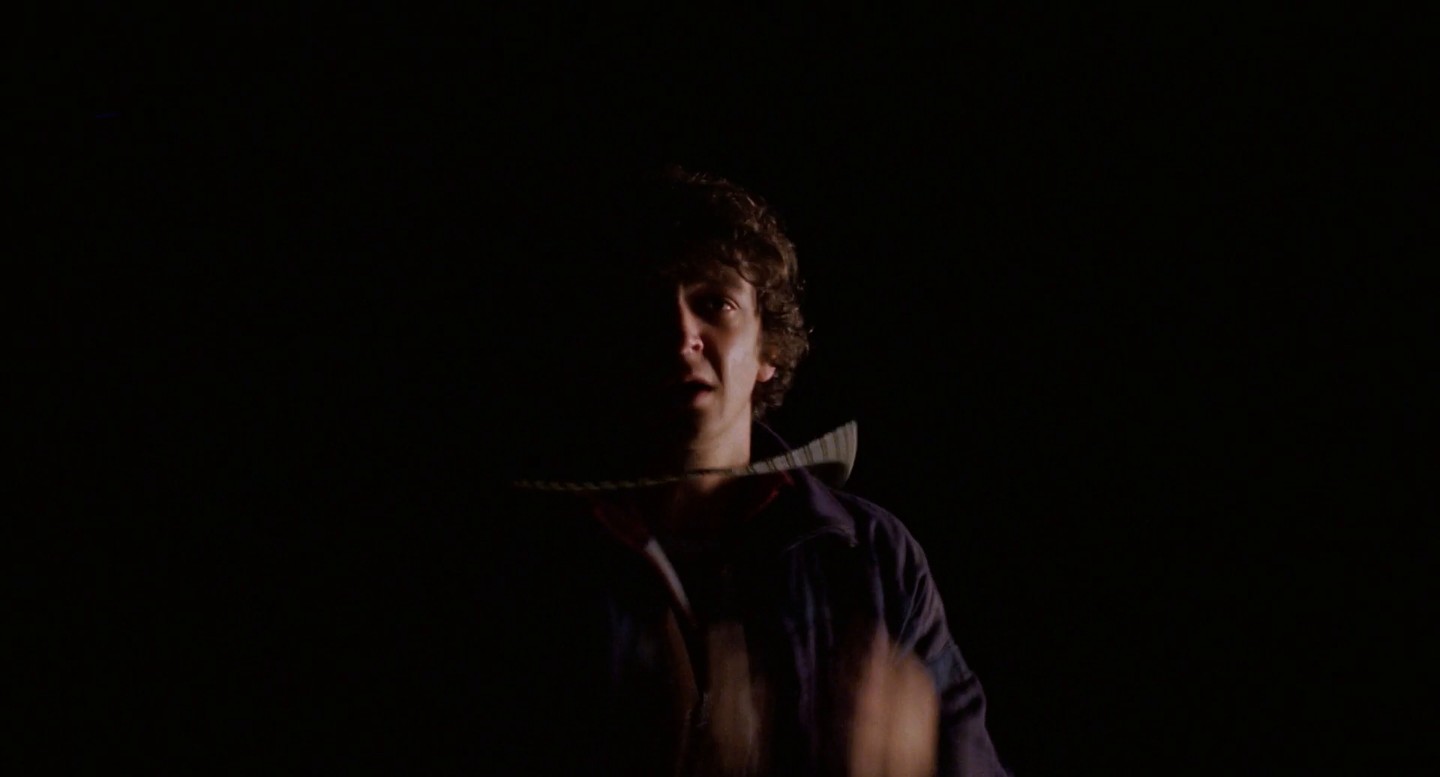
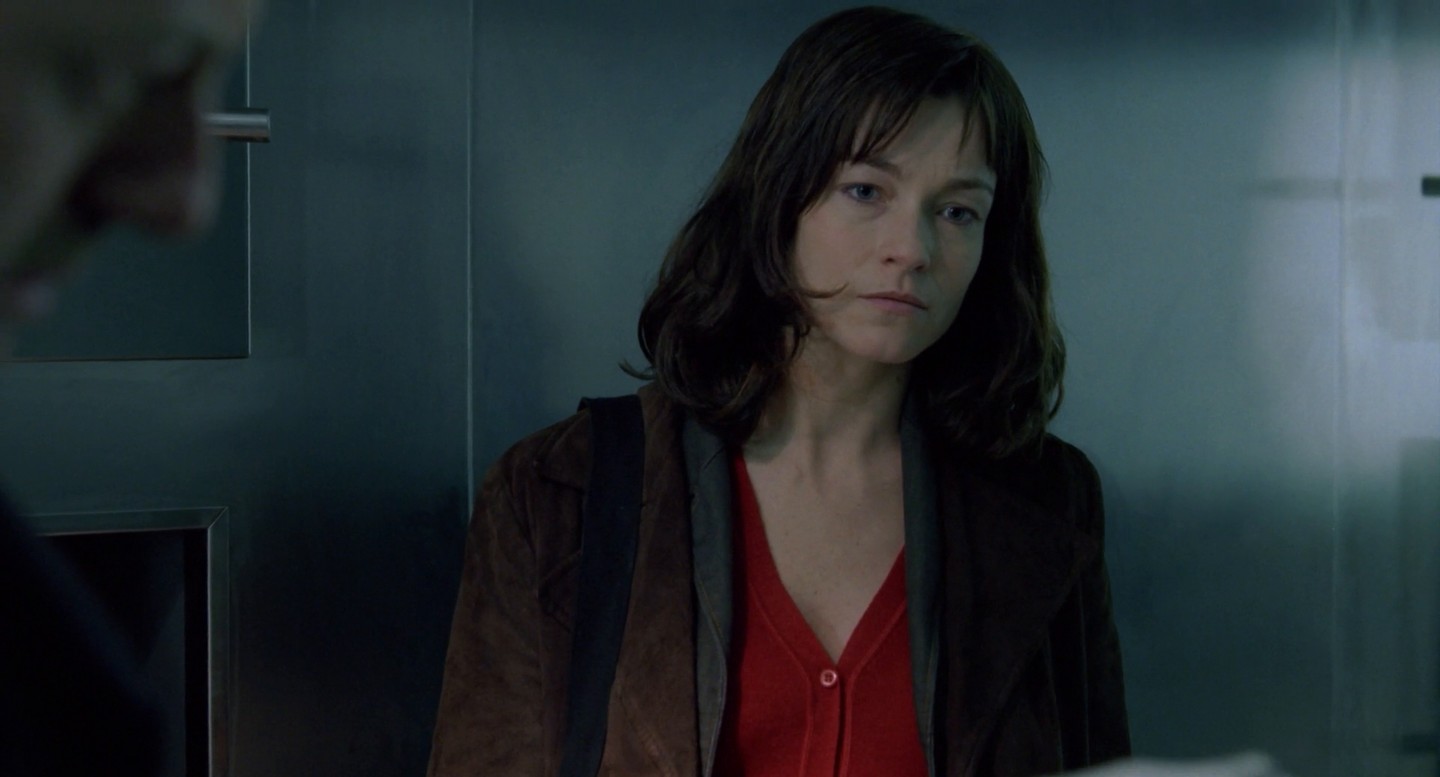
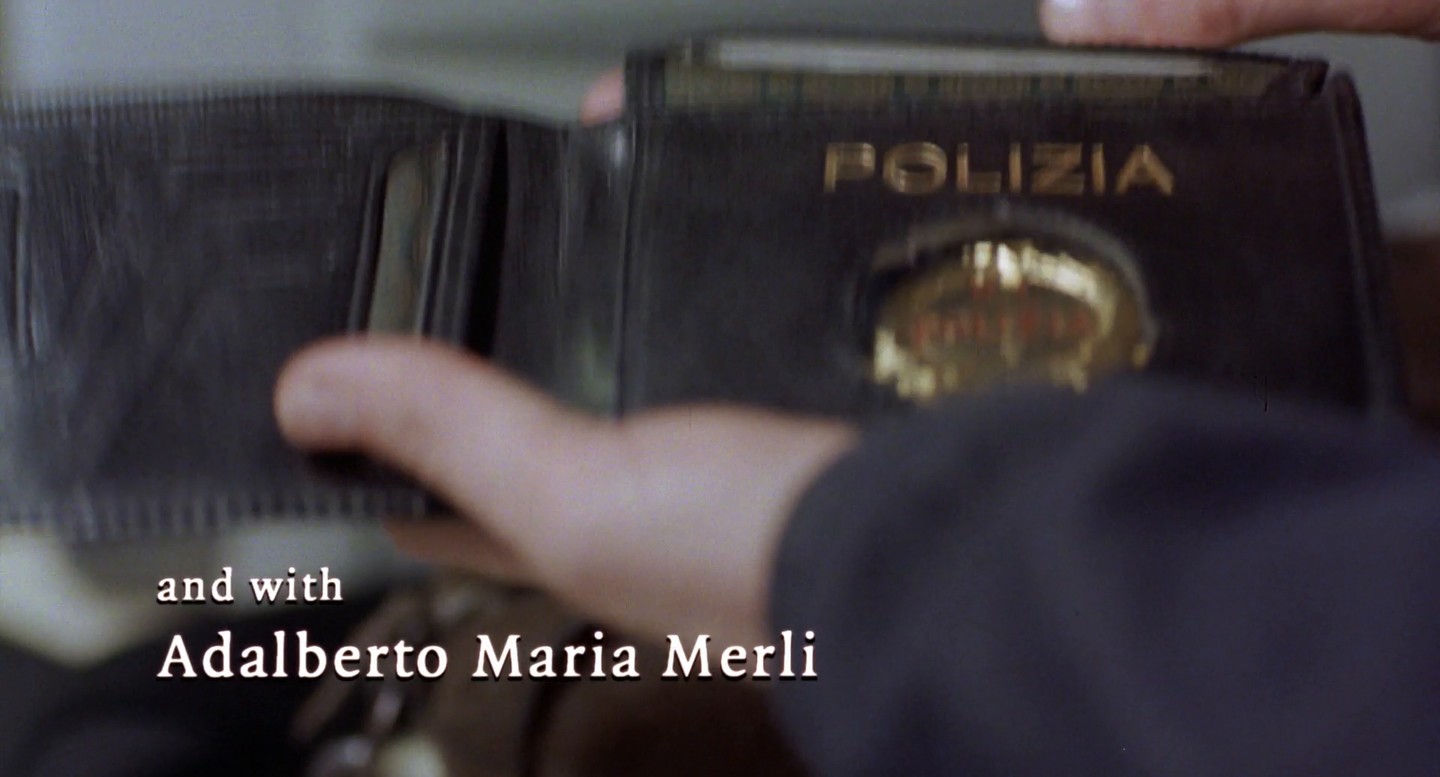
Stefania Rocca’s Anna Mari and Liam Cunningham’s John Brennan lead the investigation, while Silvio Muccino plays Remo. The Catholic film commission’s synopsis describes the recruitment of this skilled young player and his success in securing Lucia’s release. Its later account of his murder makes expertise a source of danger as well as usefulness. Cast and characters ↗ Remo’s role in the investigation ↗
Recruiting a player changes who can act effectively. The police seek a skill acquired beyond their professional structure, but drawing someone into an investigation does not give him the protection or authority of the institution. The premise makes the distance between competence and security unusually visible. Winning a round is not the same as escaping the person who arranged it.
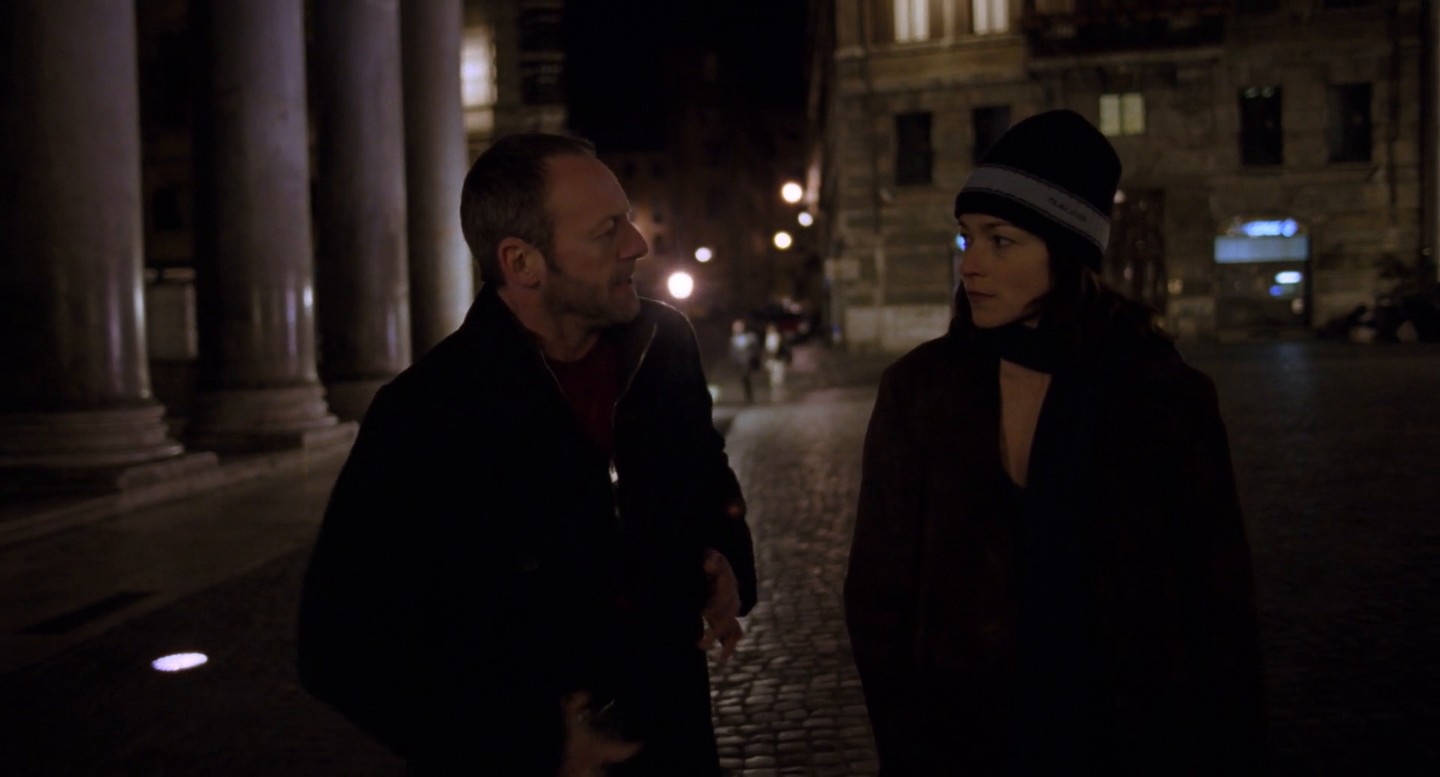
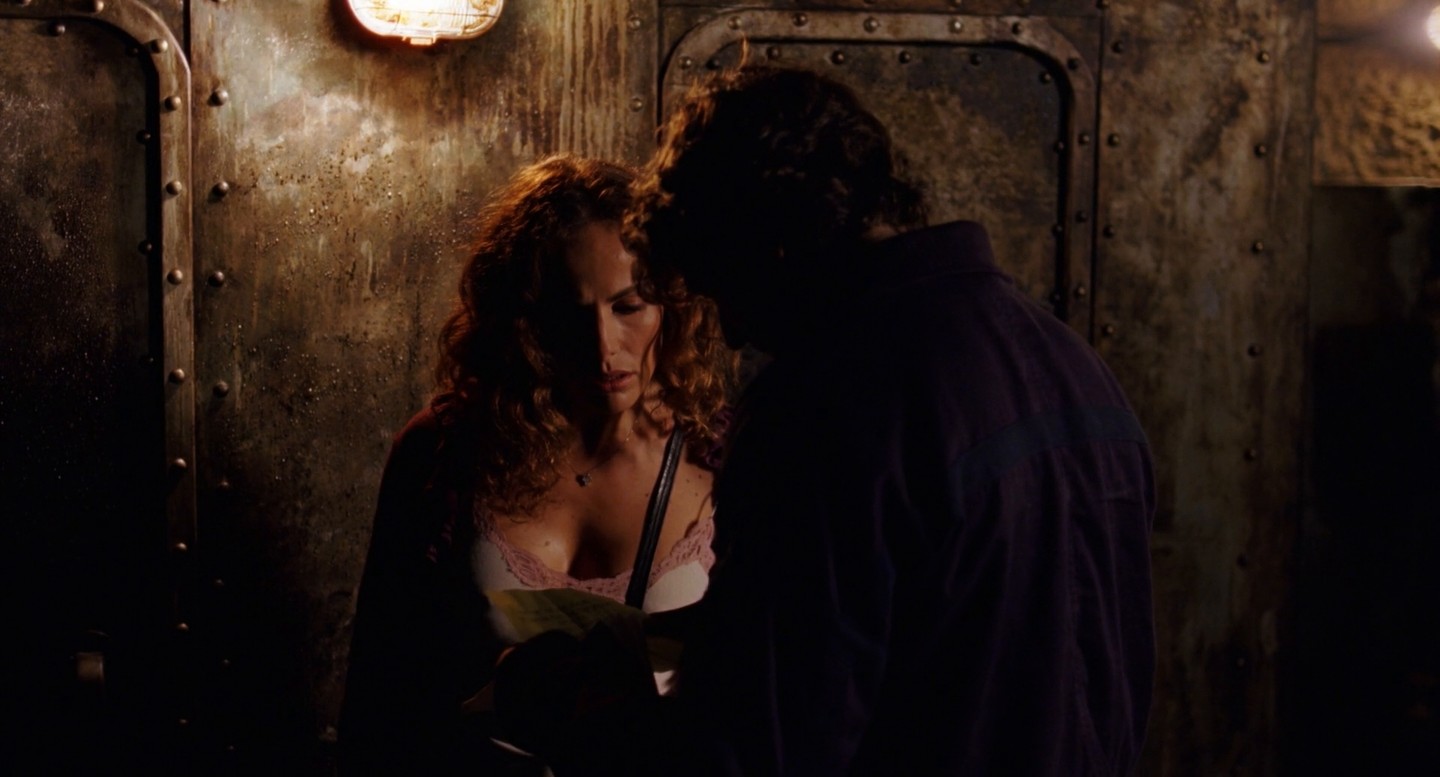
Cunningham’s recollection supplies a different register. At Comicon in 2017, he remembered Argento inviting him to work in Rome and a scene with Rocca in Piazza del Pantheon: he was playing drunkenness, walking and singing. His account identifies a performance situation and a remembered filming location. Cunningham’s Roman memory ↗
The recollection matters because these investigators must also inhabit a city outside the immediate business of solving the case. Singing, walking and accompanying another person offer forms of interaction that a police briefing cannot. Their dramatic value lies in the possibility of companionship amid a narrative governed by coercive exchanges. The anecdote does not, by itself, establish how the completed scene is cut or mixed.
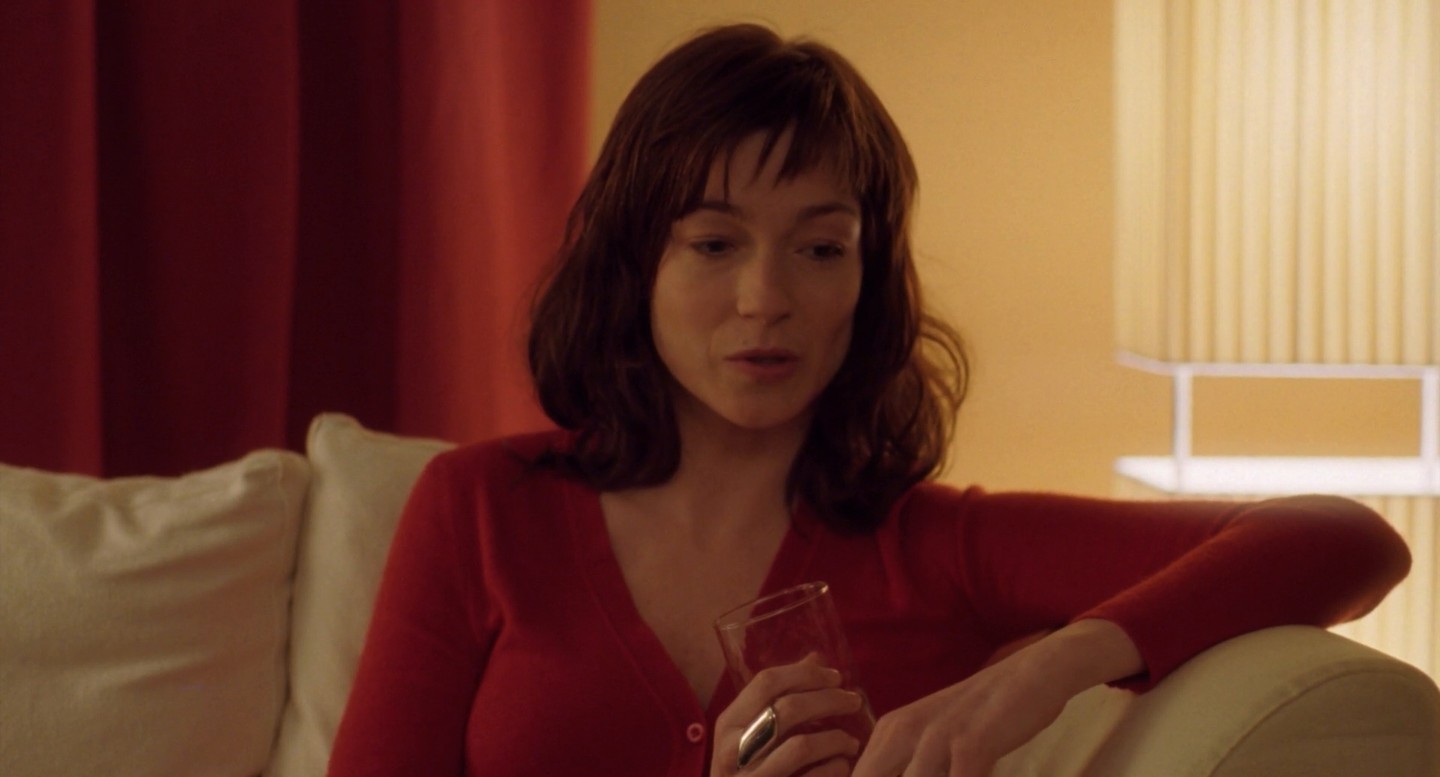
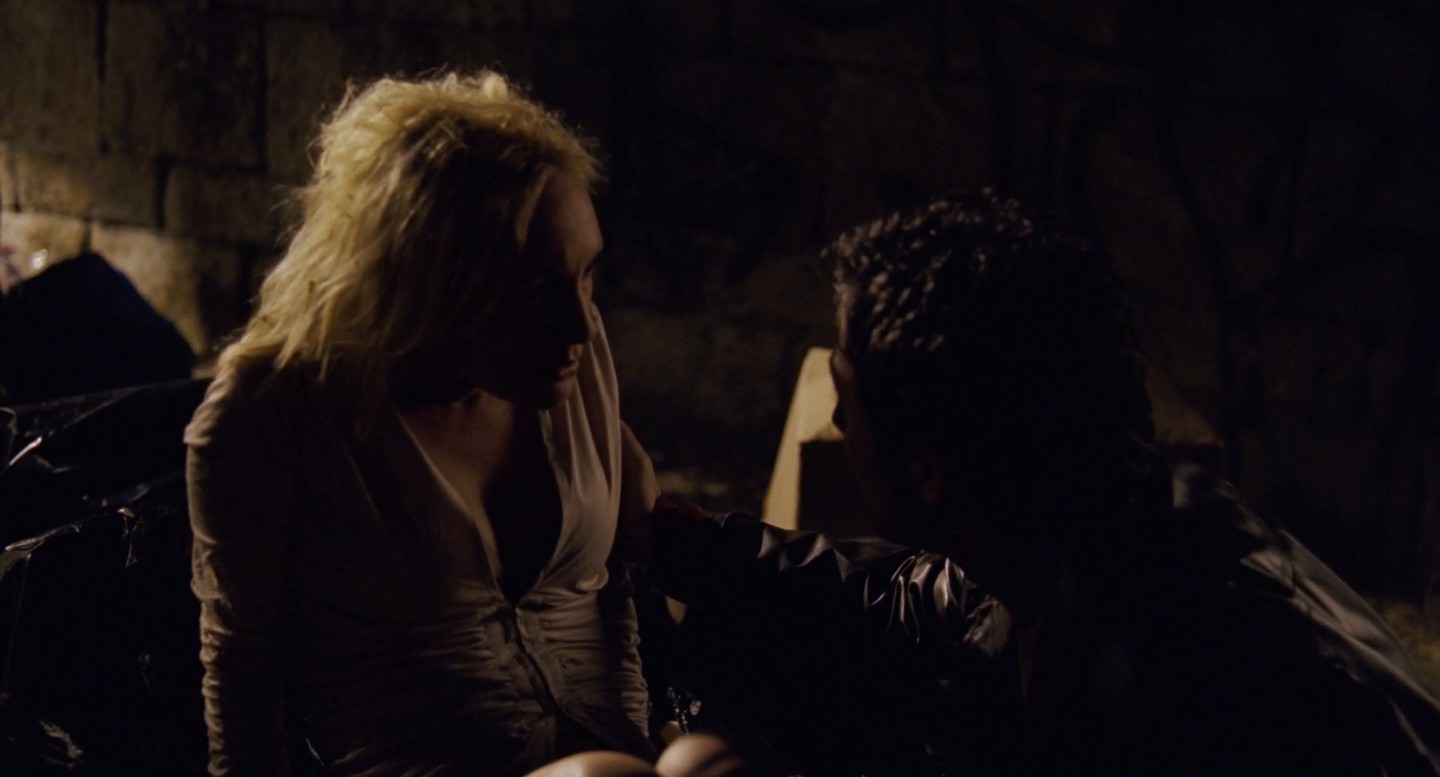
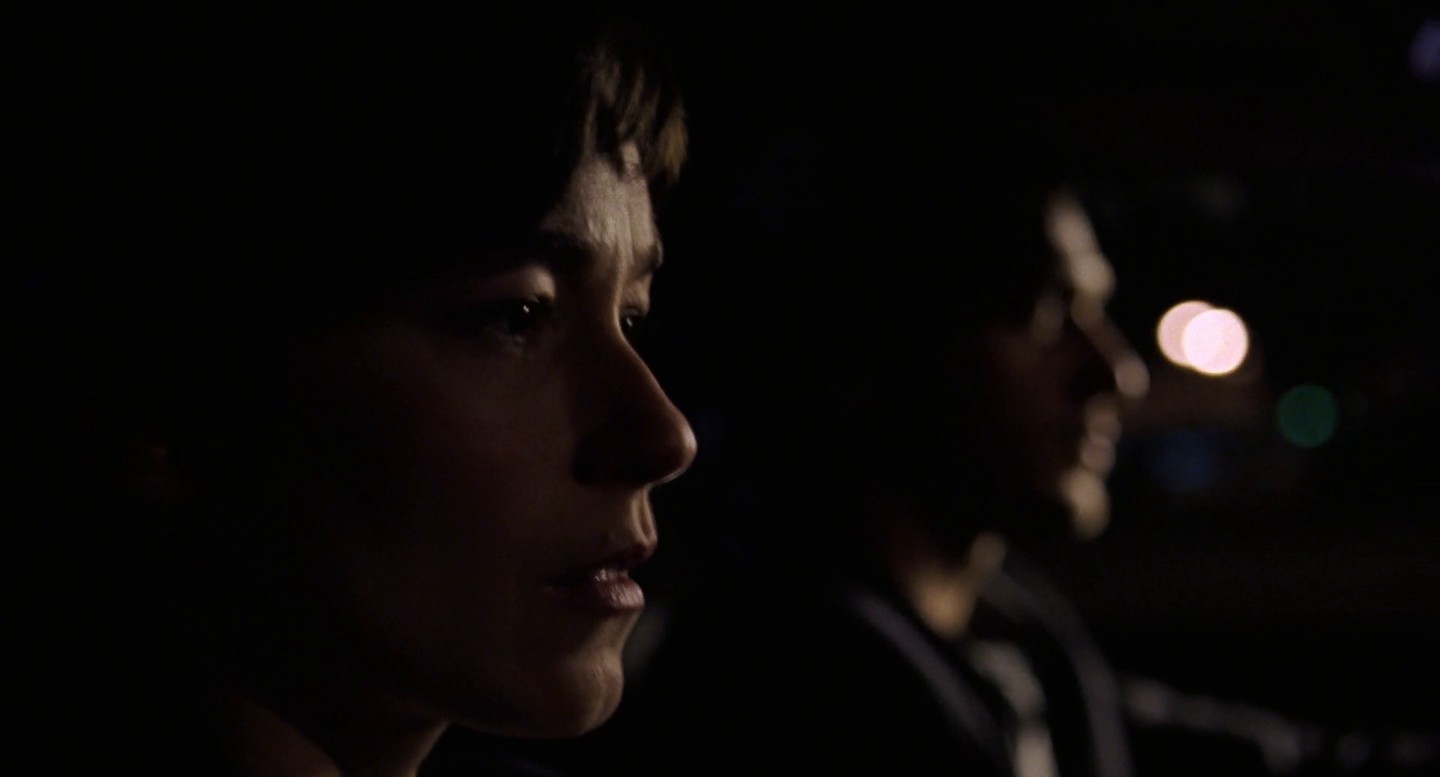
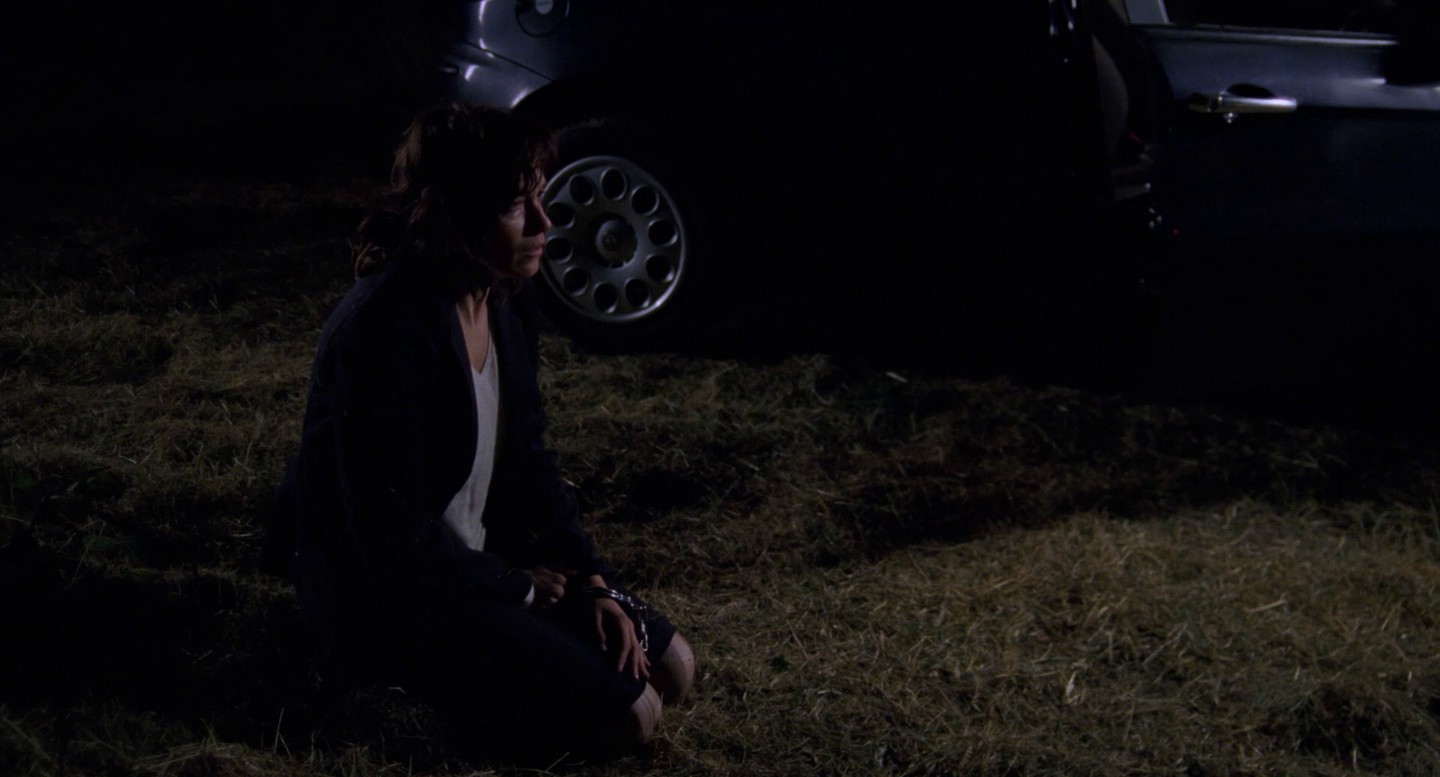
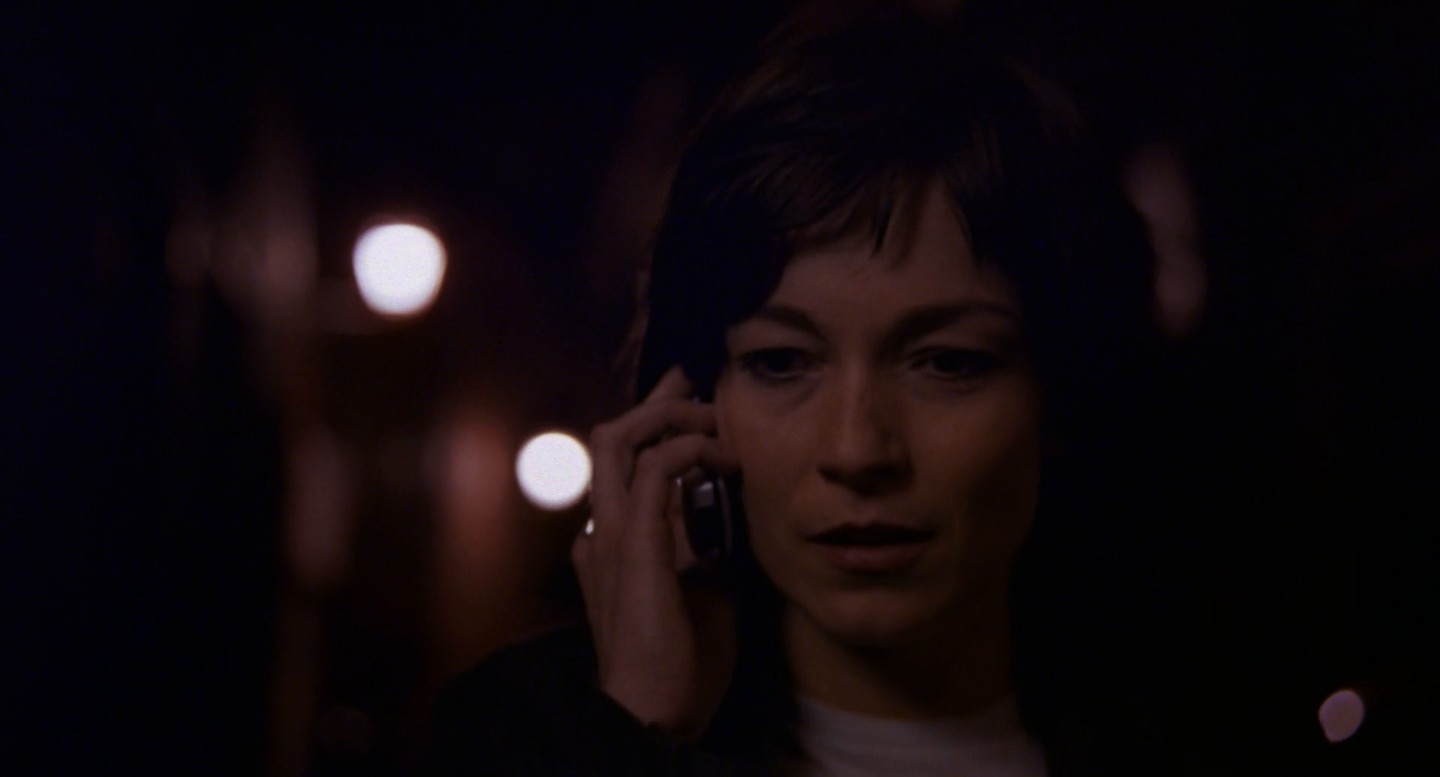
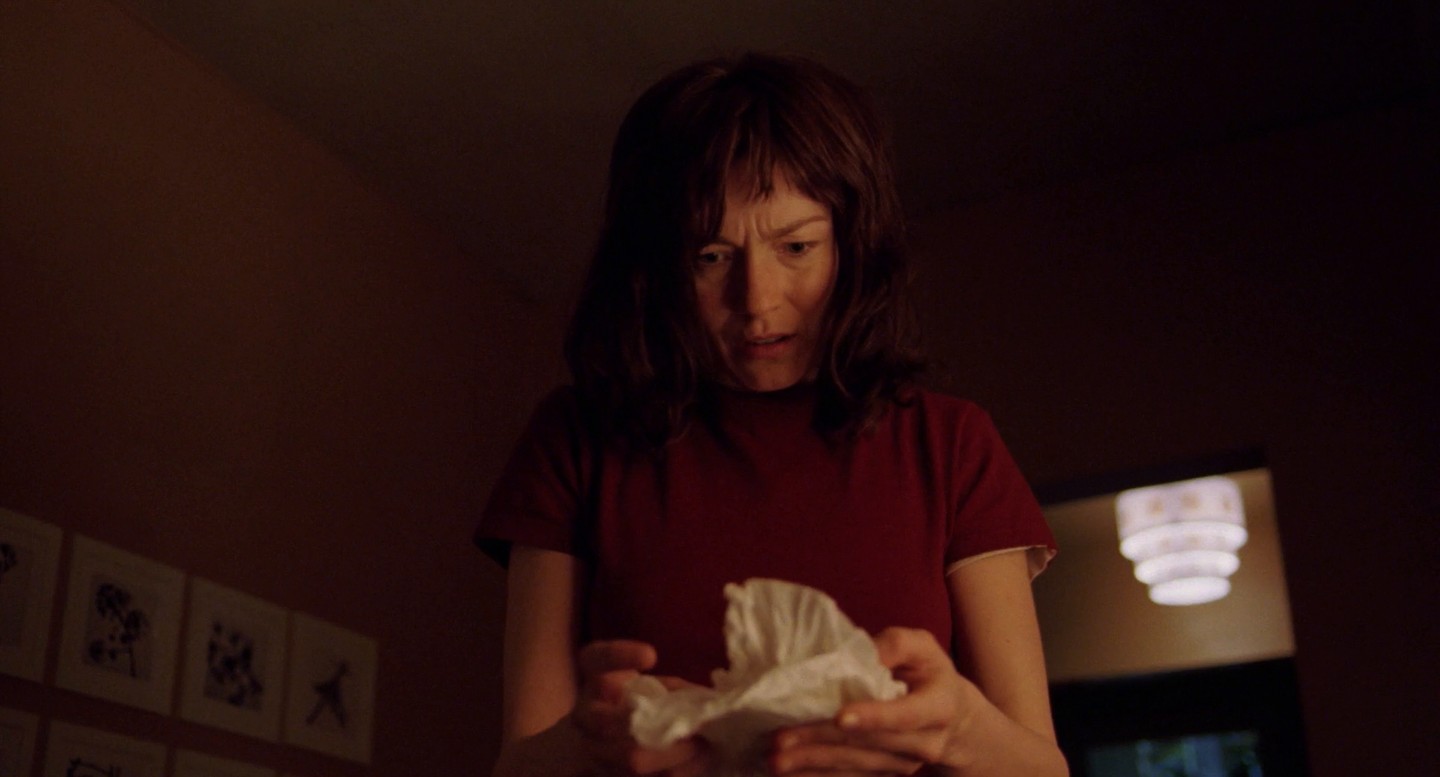
The commission’s ending synopsis reports Anna’s pregnancy after John’s death. In that account, the conclusion carries a private future beyond the solved crime. It complicates a simple victory structure: identifying and defeating the killer cannot restore a lost relationship. The final illustrated study follows that change across Anna’s face as the cast roll begins. The reported ending ↗
A casting plan meets another filmmaking career.
Asia Argento recalls in Panico that she had been expected to make The Card Player, but the rapid start of her own American directing project, The Heart Is Deceitful Above All Things, prevented her return to Italy. Her account supplies a performer-director’s explanation of her unavailability. Panico: testimony and passage locators ↗
This earlier plan belongs beside the finished film’s performance history. It does not establish a signed casting contract or reveal which screenplay changes, if any, followed. Stefania Rocca’s Anna remains the character whose gestures, conversations and decisions the scene and dialogue studies examine.
03 / DEBIE, ARGENTO & ROME
Renewal does not have a single colour
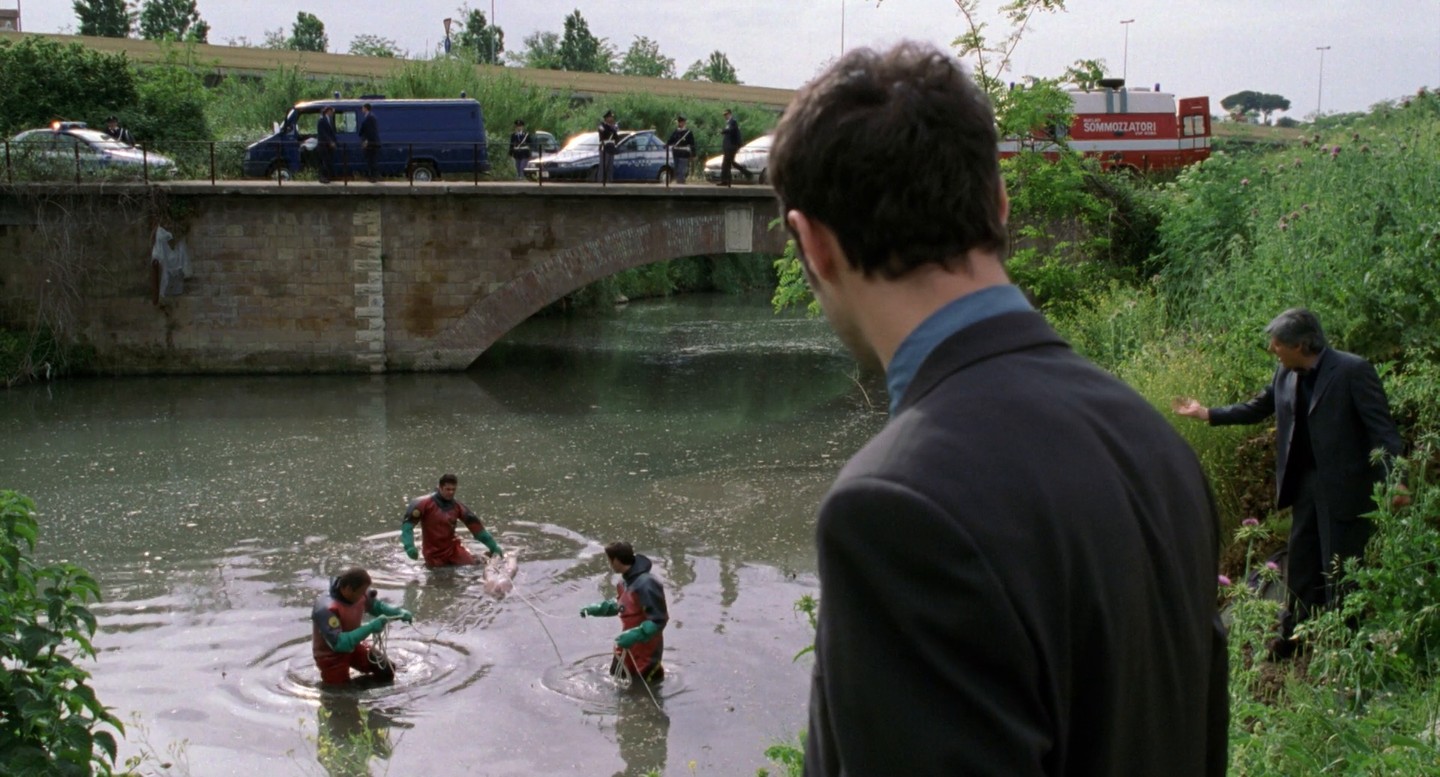
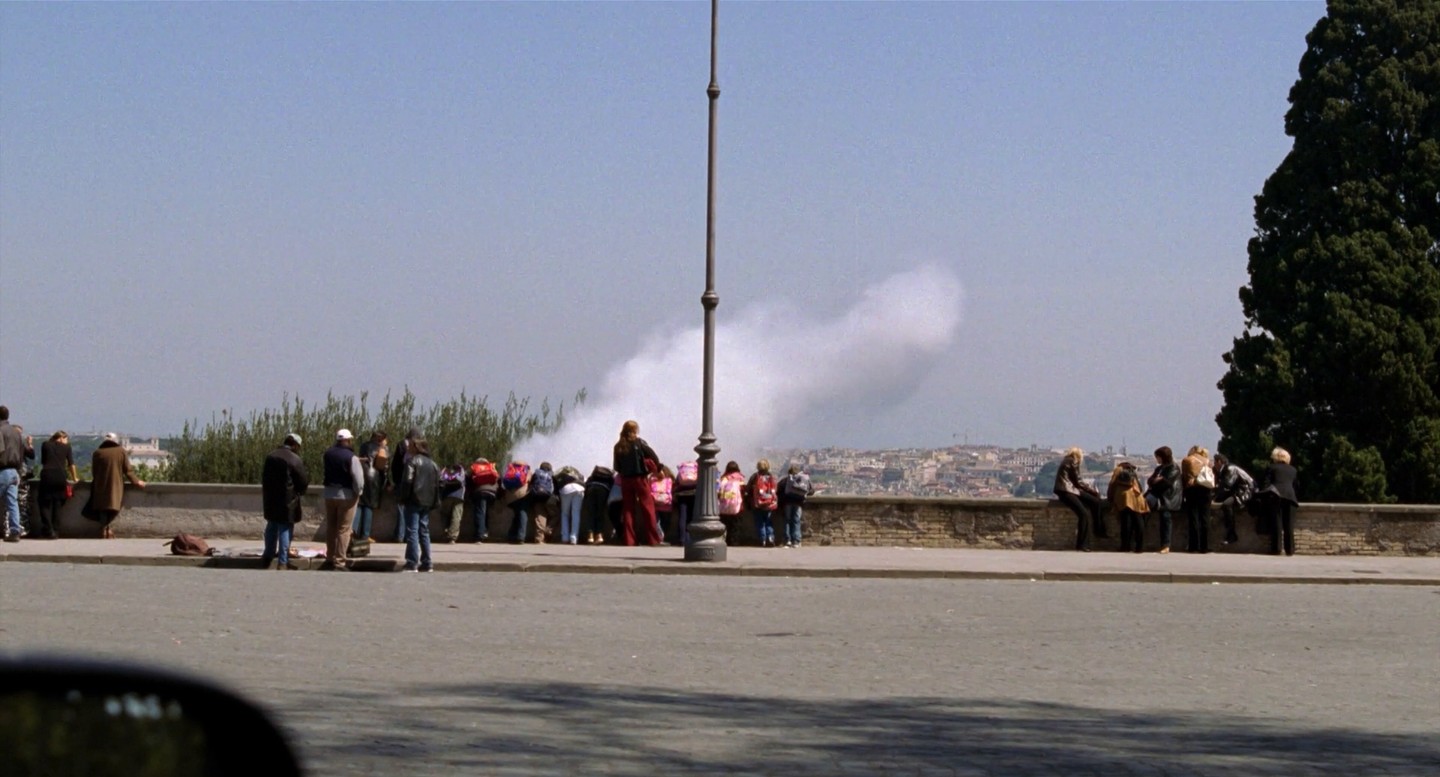
Asked by L. Andrew Cooper about his later work, Argento singled out The Card Player for a different vision of Rome, especially its periphery. The claim gives the city a specific creative function: familiar territory could become unfamiliar without relocating the story to an invented world. Argento on the city’s edges ↗
Benoît Debie’s 2009 career interview adds a collaborator’s perspective. He remembers Argento wanting a younger, more contemporary image and describes an appetite for colour and vitality. He also recalls feeling intimidated by the distinguished cinematographers who had preceded him. Renewal here concerns a working relationship as well as a visual result. Debie on joining Argento ↗
Film at Lincoln Center’s retrospective instead emphasises natural light and a desaturated Rome, relating the film to Dogme 95. These descriptions should remain attached to their speakers. Debie recalls the brief; the programme characterises the finished film. A request for vitality and a later perception of desaturation need not be identical accounts of colour. Nor does a programme’s comparison establish Dogme certification. The retrospective’s visual framing ↗
This difference is useful rather than embarrassing. Colour can be present in a city’s surfaces while its overall effect remains subdued. A lively image can refer to movement, changes of exposure or an approach to location as much as to high saturation. The sources invite these possibilities, but they do not license a technical reconstruction of lighting setups.
Cunningham’s memory of the Pantheon also keeps the geography from becoming a slogan. Argento’s emphasis on the periphery does not mean every scene avoids recognisable Rome. A city can contain both the monumental and the marginal; their relationship is more revealing than either label alone. A later location study should connect named scenes to verified shooting places and examine how the film moves between them.
04 / THE LAPTOP, THE CHAIN & THE TRACK
The screen has physical consequences
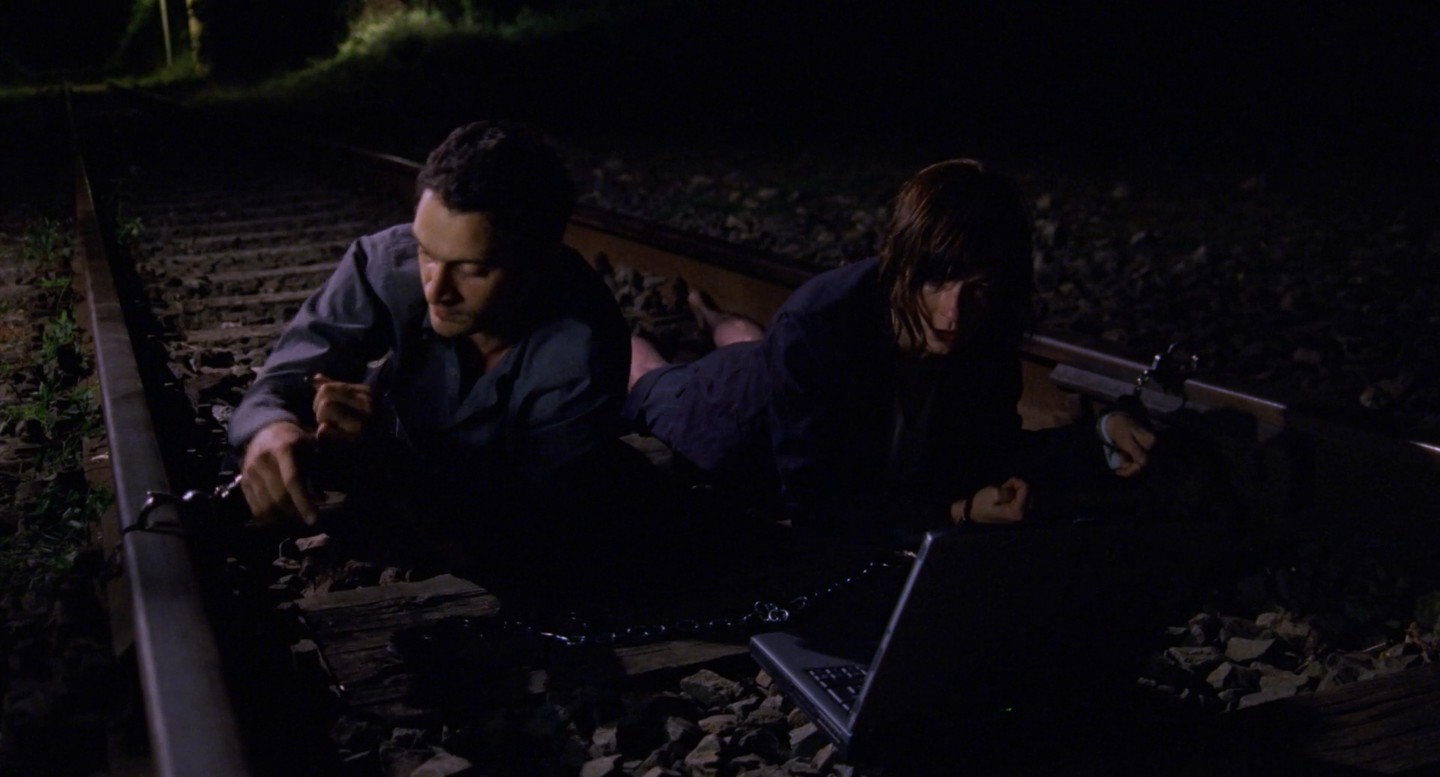
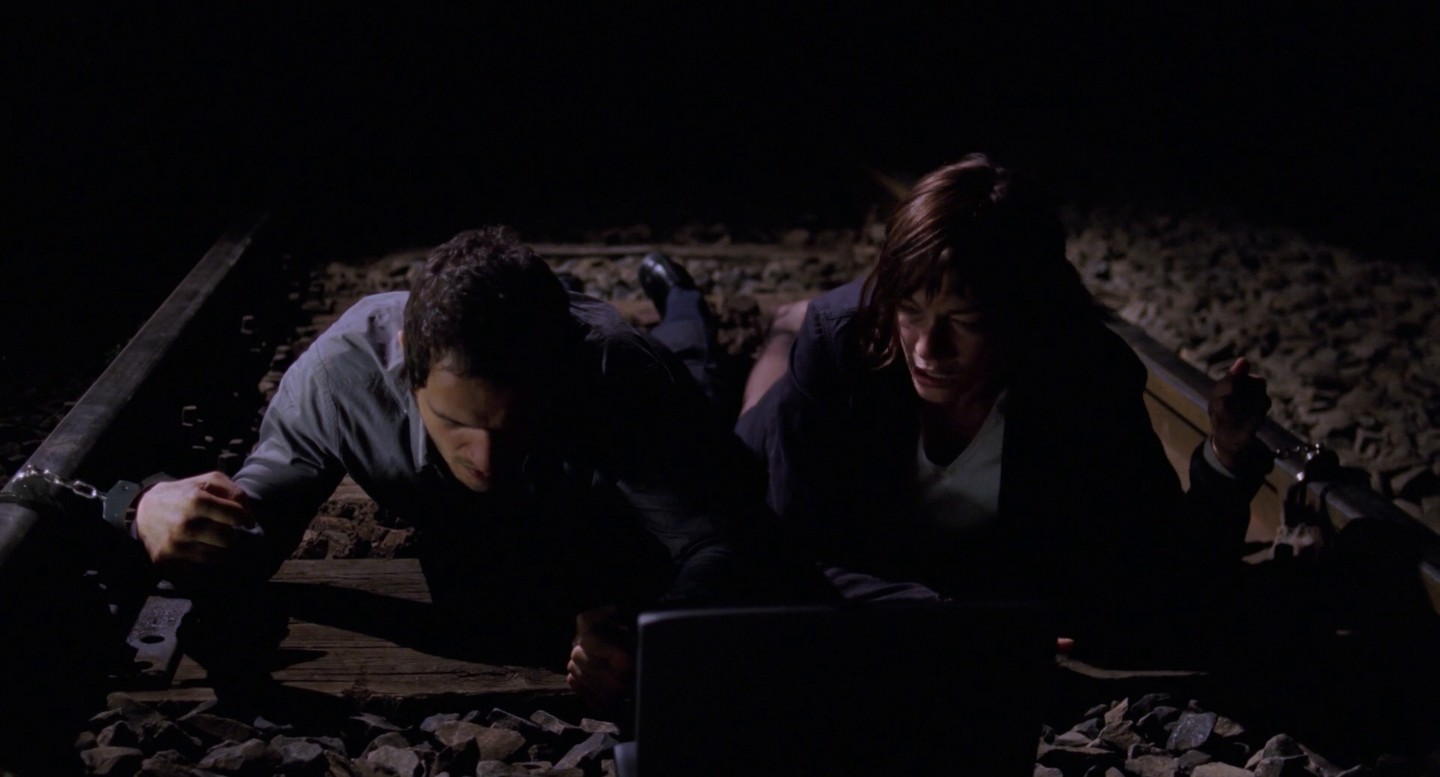
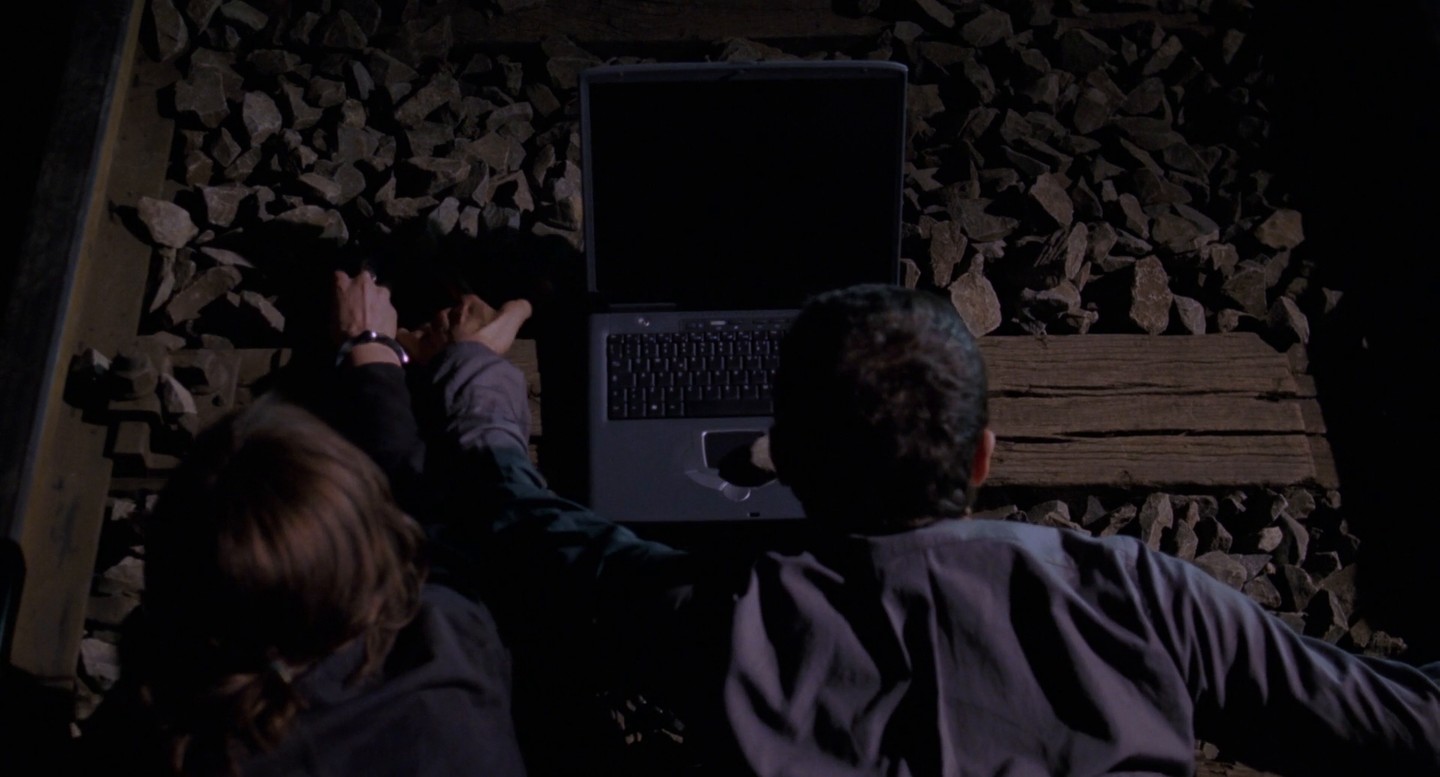
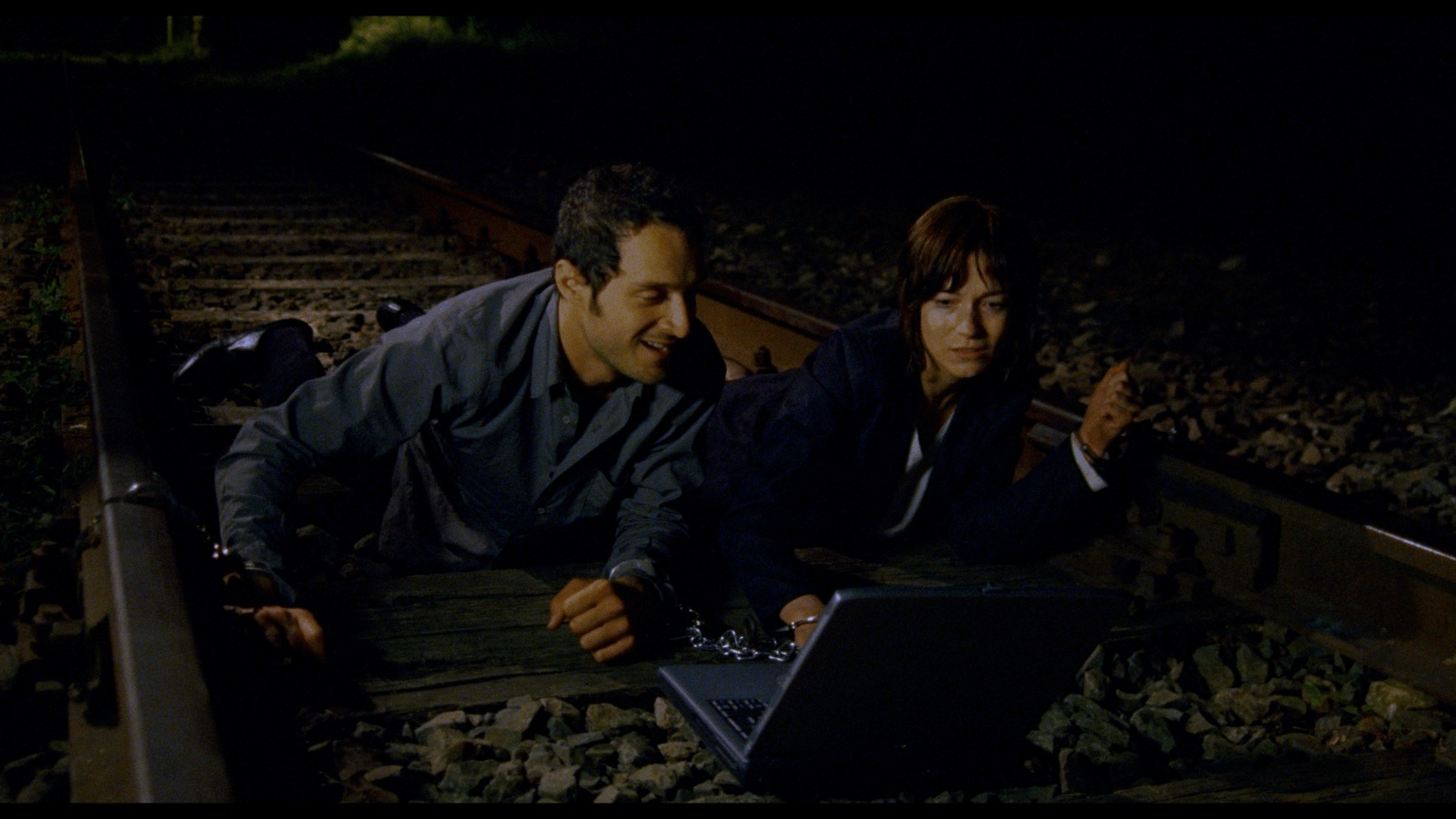
In the supplied FLC image, two people lie low between railway rails, facing an open laptop near the bottom of the composition. A visible chain crosses the space between their arms. The man’s face is animated; the woman looks toward the computer. Gravel, sleepers and rails occupy much of the image. These observations refer to the inspected reproduction, retained at its supplied 1600 × 900 dimensions. The programme image and climax description ↗
The arrangement makes the computer a physical object among other objects. It has weight, an angle and a position that bodies must accommodate. The railway gives those bodies a narrow corridor. Unlike a screen’s apparently expandable field of information, the track offers a severe restriction of movement.
That contrast concentrates the film’s governing problem. A remote connection can seem to separate action from consequence. Here the interface sits directly beside vulnerable bodies. Looking at the computer and attending to the surrounding space become competing demands. The device does not remove the material world; it occupies the place from which the characters must confront it.
The image also complicates the idea that everyone looking at one screen necessarily shares a position. Proximity does not establish agreement. The chain makes connection visible while refusing to make it reassuring. A common object of attention can coexist with radically different intentions.
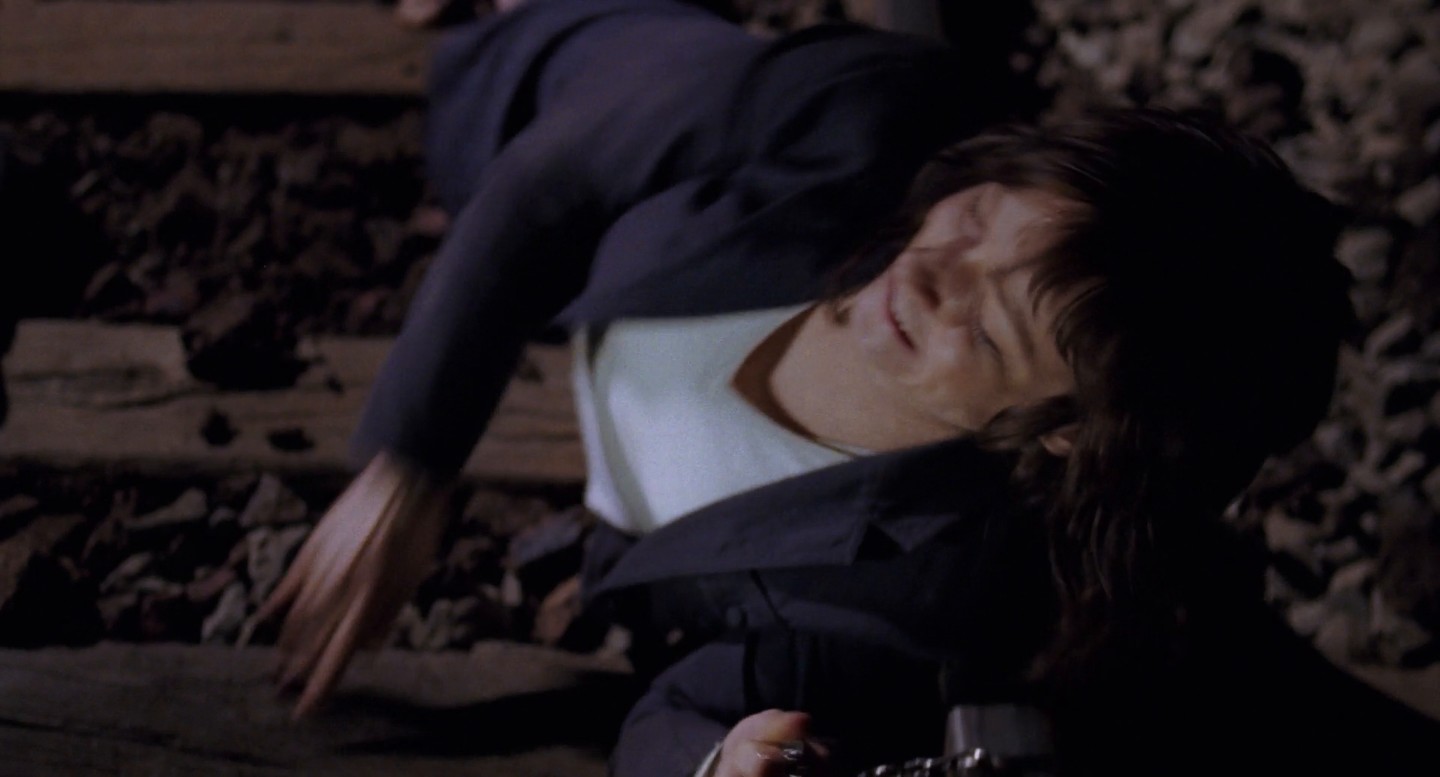
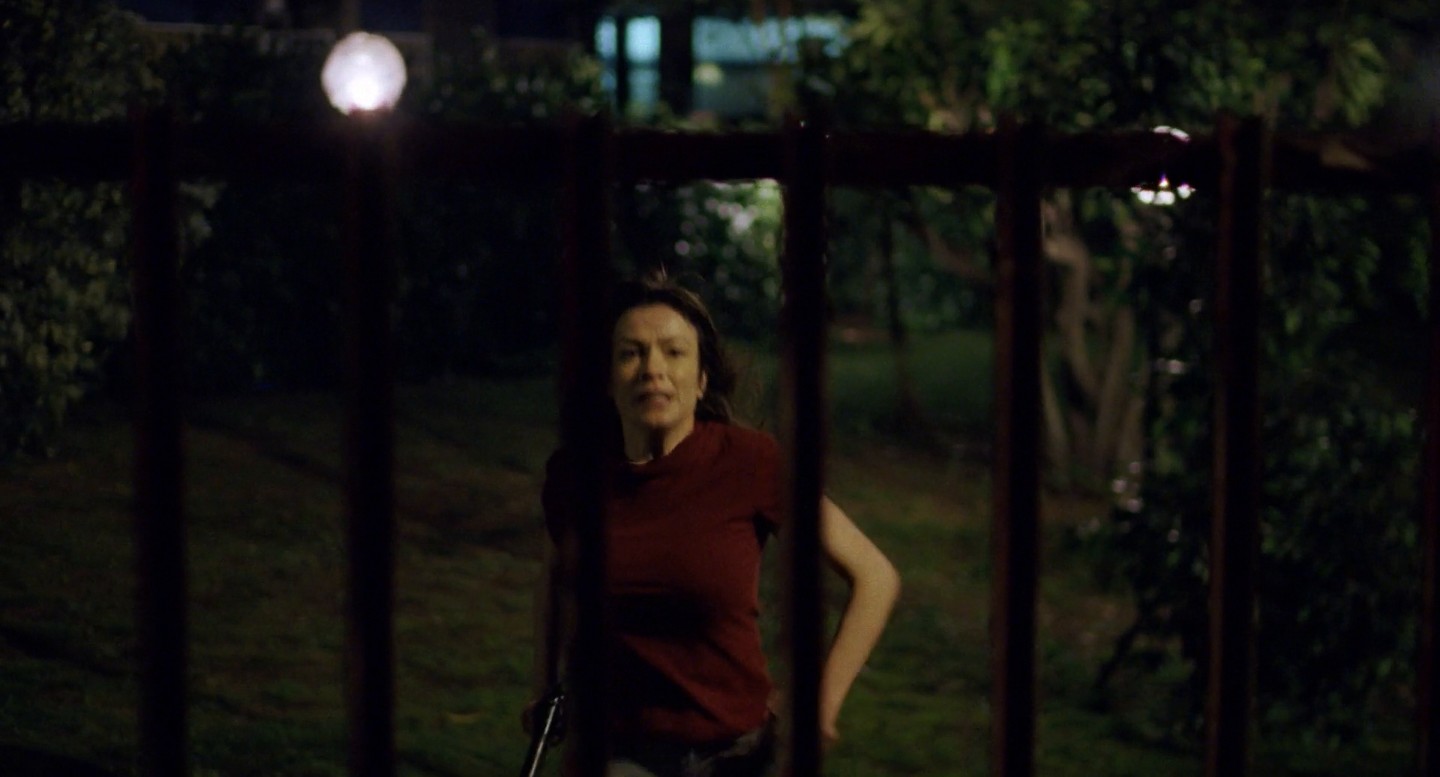
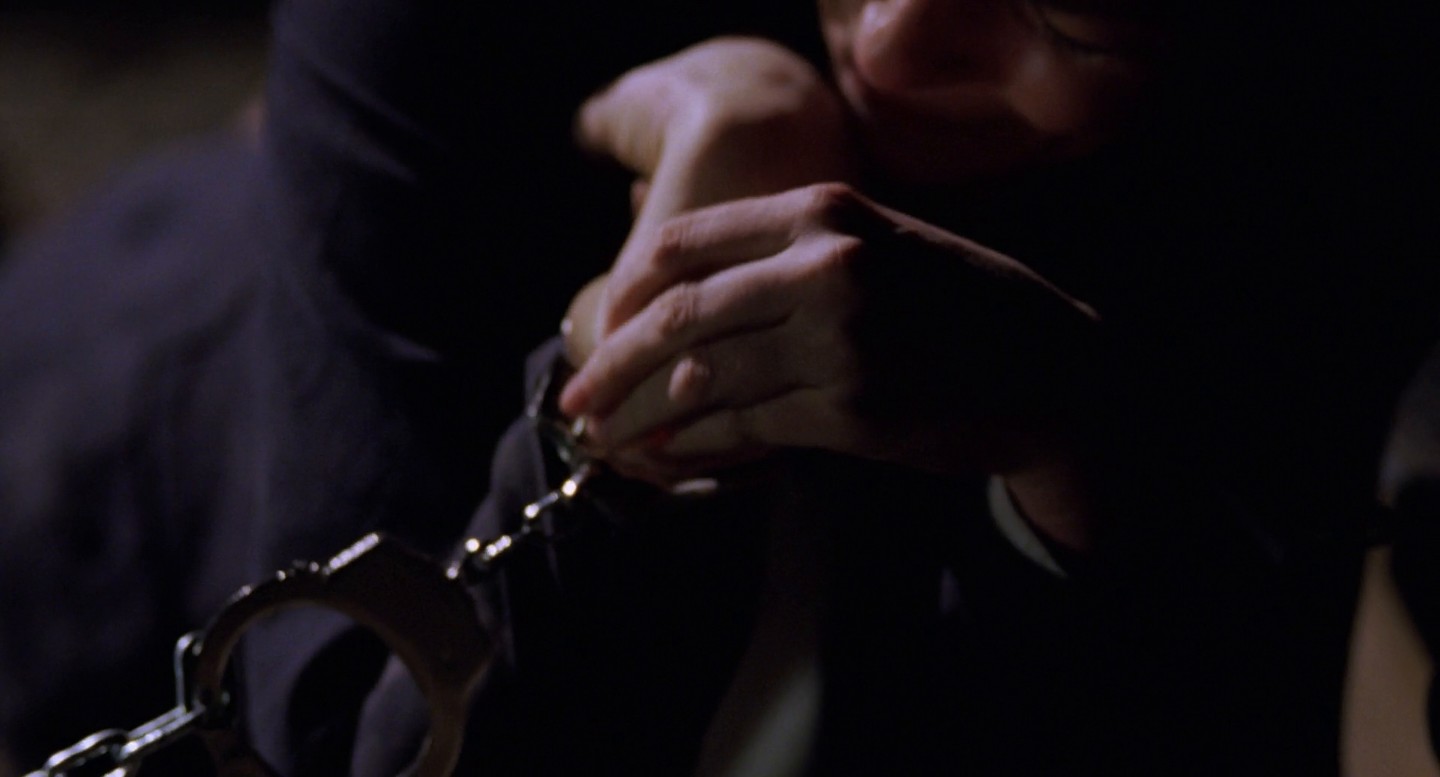
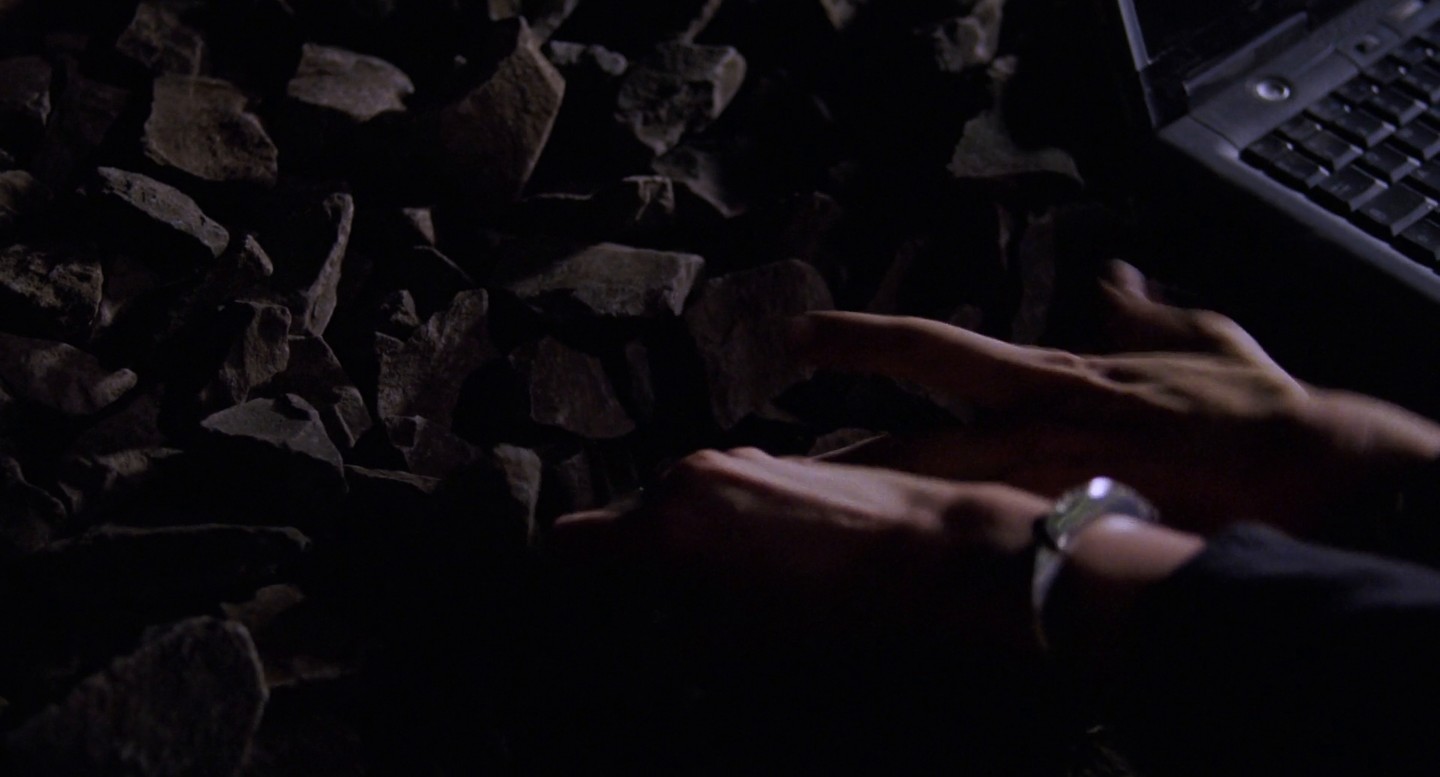
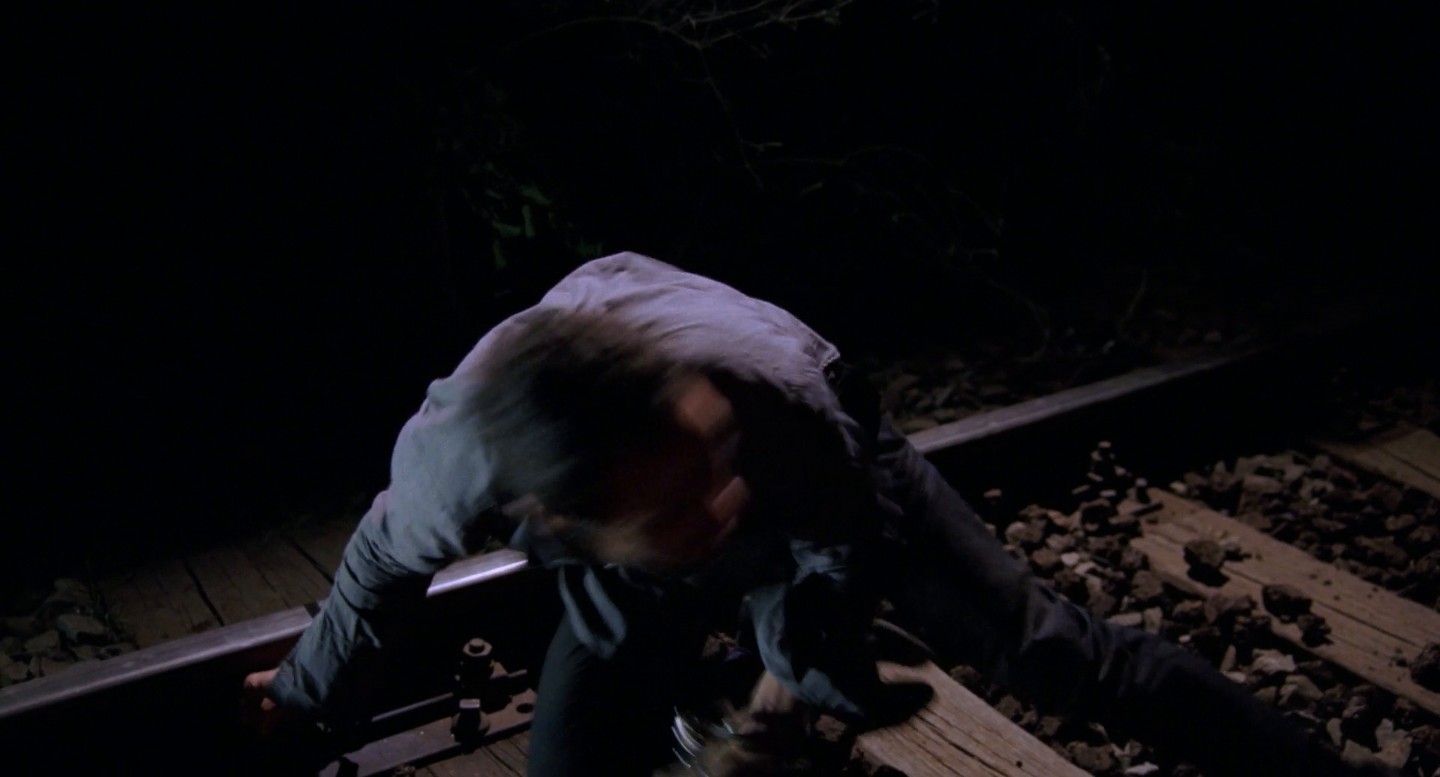
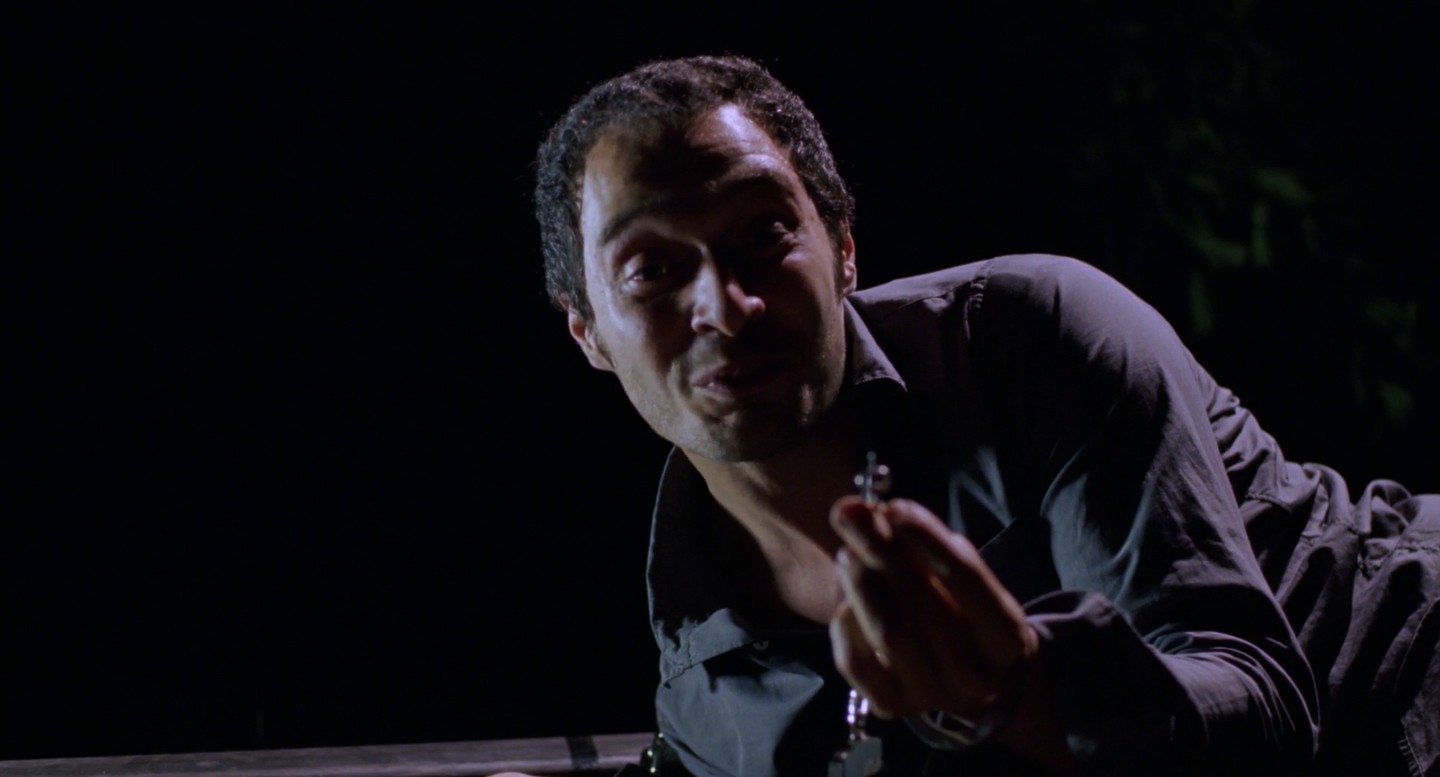
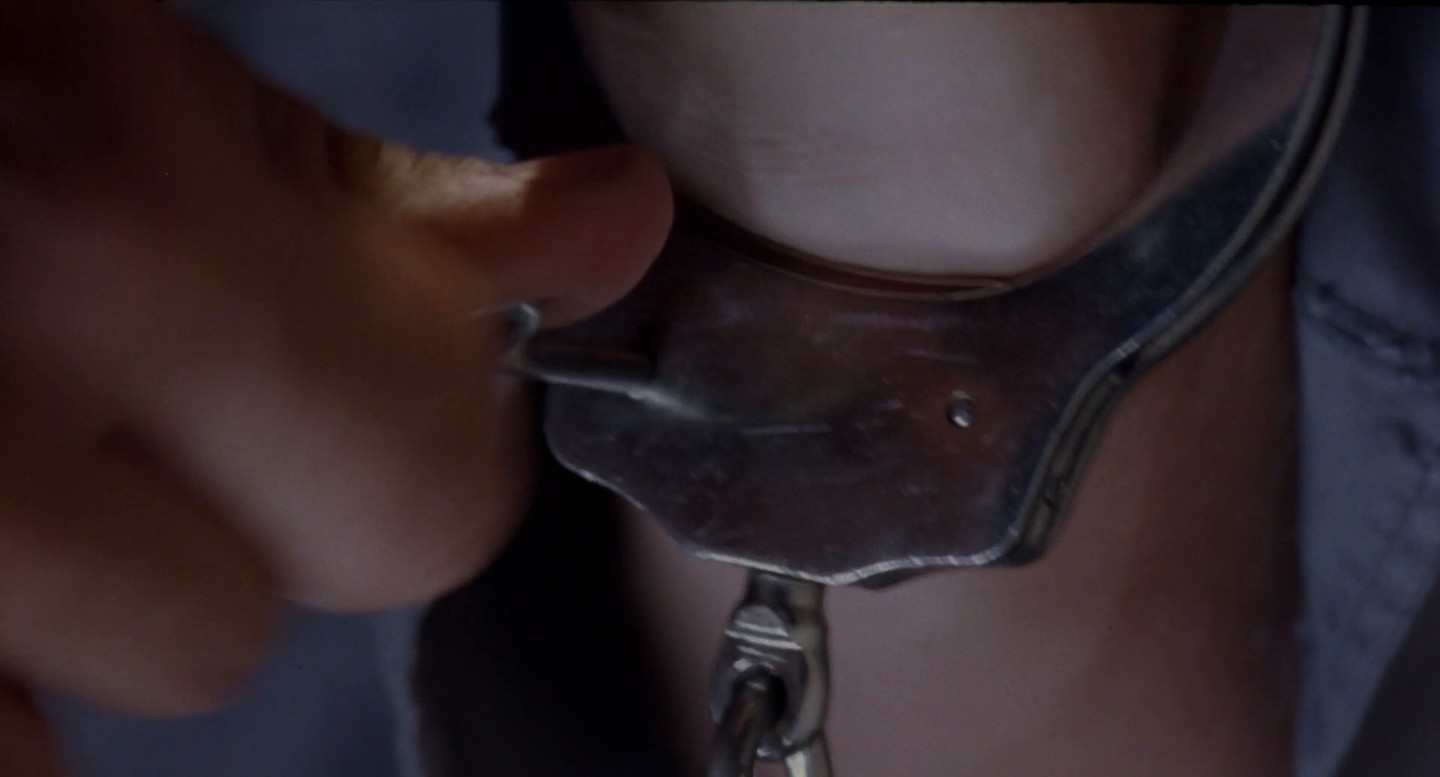
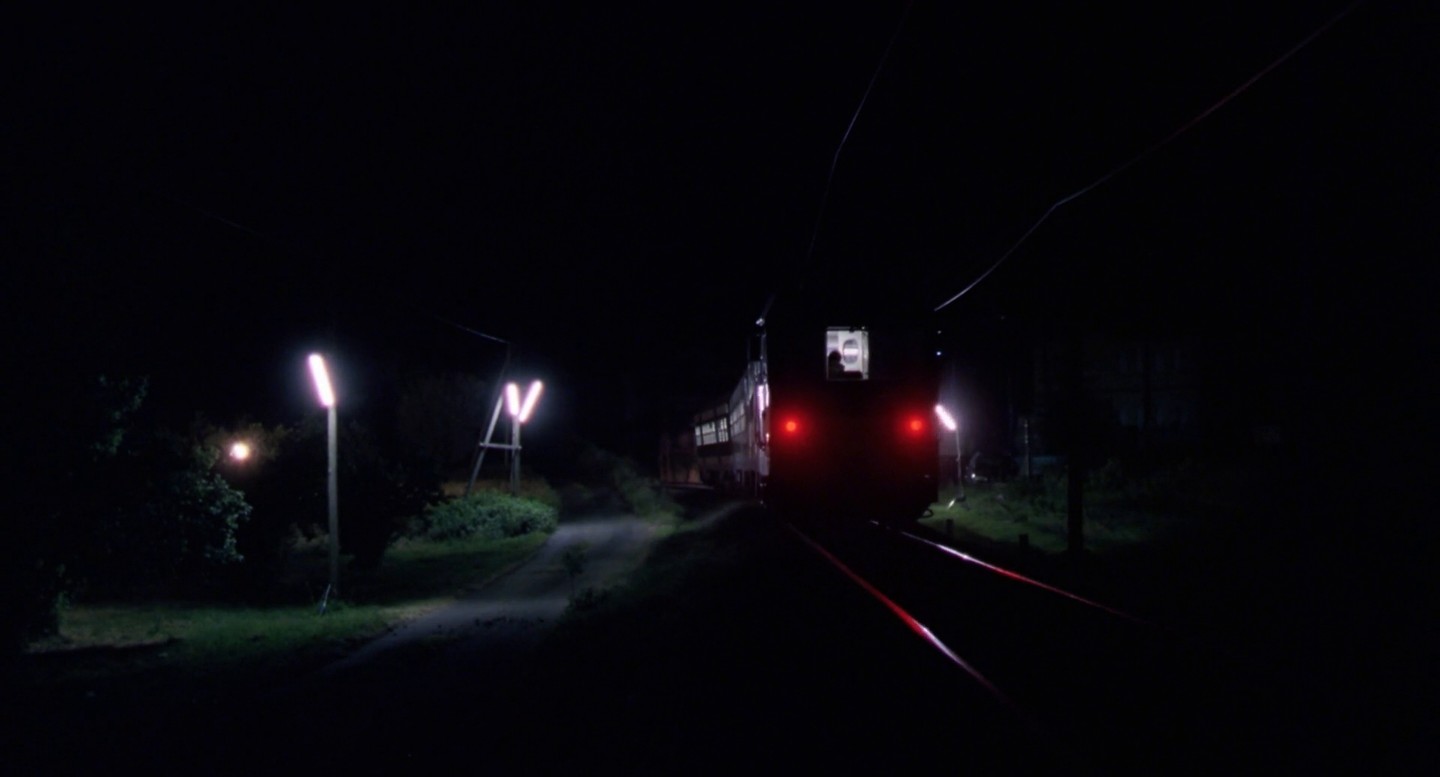
The railway sequence gallery follows the image into action: the struggle, cuffs and keys, the darkened laptop and the passing train. The return to hands and restraints gives immediate physical form to the control previously exercised through a screen. Anna’s move beyond the track finally separates her position from Carlo’s.
05 / SIMONETTI, FASANO & THE ELECTRONIC SCORE
Music was being tested while the film took shape
In Gabrielle Lucantonio’s release-period interview, Simonetti says Argento explicitly requested electronic instruments because the story concerned the Internet and computer poker. They listened to electronic recordings together, after which Simonetti sought a less cold result than the examples. The brief linked the musical palette to the subject without dictating emotional neutrality. Colonne Sonore, January–February 2004, p. 17 ↗
He also describes access to the screenplay and the filming, and frequent visits to the editing room to try developing pieces against scenes. Walter Fasano supplied ideas; Simonetti says he dedicated “Fasan Techno” to him. This is unusually useful evidence of music and editing influencing each other during the work. It does not identify every cue’s final placement. The collaboration with Fasano ↗
Argento’s 2009 Electric Sheep interview recalls hearing Simonetti’s new material at the end of each day. His account supports the picture of an ongoing exchange, while leaving the precise production calendar unspecified. Argento on the electronic collaboration ↗
The distinction changes how an electronic score can be discussed. Calling it electronic identifies a means of making sound. It does not settle what the sound does to a face, a room or a spectator’s expectation. Simonetti’s wish to avoid coldness suggests that the score’s relationship to the computer was not simply imitation. A technological subject could still demand warmth, unease, propulsion or contrast.
Working with an editor also creates more than one route to a musical accent. A cue can be changed to suit a cut, or a cut can be reconsidered in relation to music. The interview establishes collaboration but not which direction prevailed at any particular moment. The sound-credit record identifies the credited departments, while the dialogue studies trace how verbal instructions and recorded evidence change the investigation. A cue-by-cue listening comparison remains a separate task.
06 / RELEASE-PERIOD DISAGREEMENT
Does watching become an action?
Cinematografo preserves sharply different Italian responses. Lietta Tornabuoni’s 30 December 2003 La Stampa notice objects to groups gathered around computer displays and the difficulty for viewers unfamiliar with poker. Dario Zonta’s 2 January 2004 l’Unità notice singles out the home ambush and its audiovisual construction. These are reprinted excerpts, not the original newspaper pages. Tornabuoni and Zonta excerpts ↗
The disagreement exposes a real problem posed by the premise. A character can be intensely involved in a game while a viewer sees only people attending to a screen. The film must communicate stakes, changes of advantage and reactions. Suspense depends partly on how effectively that attention becomes an event in its own right.
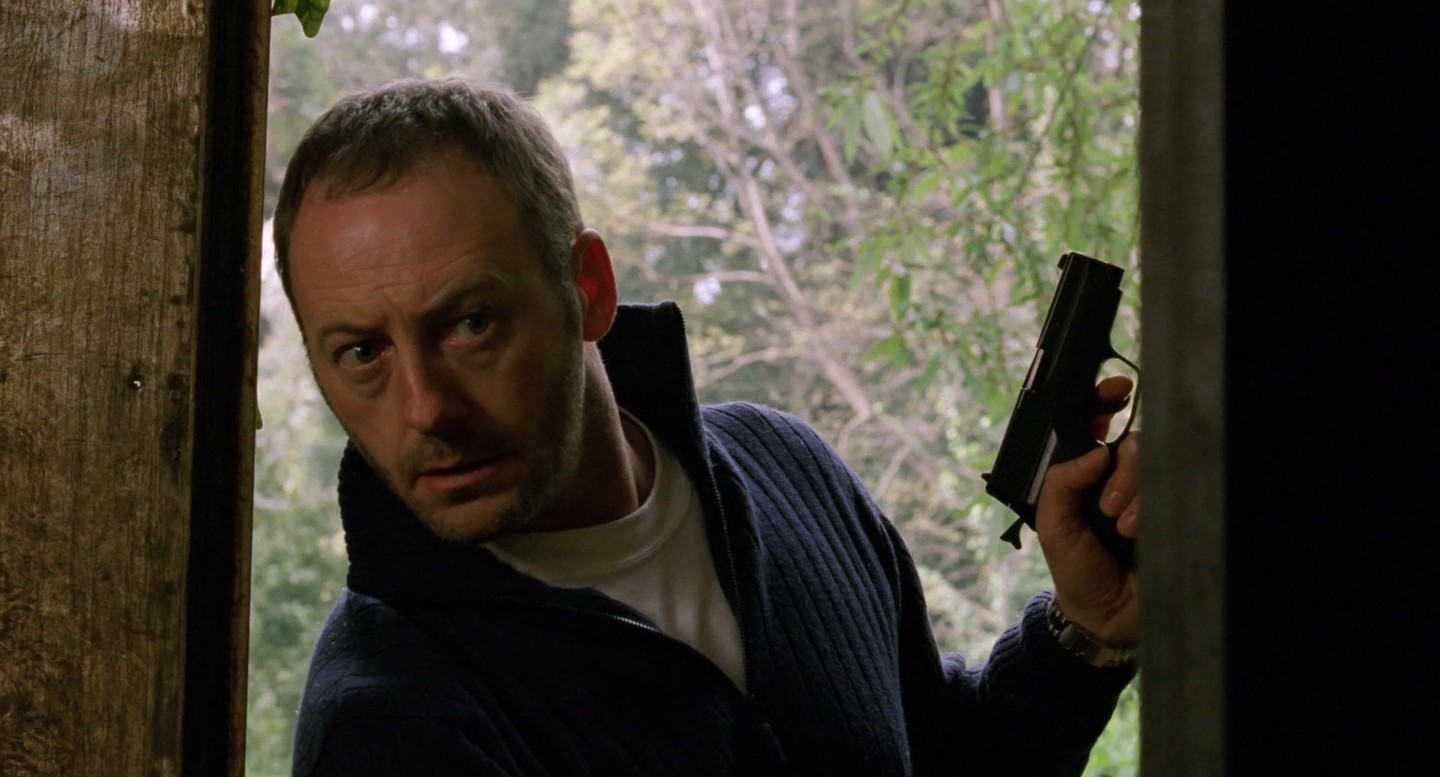
Zonta’s chosen example moves the discussion away from the computer gathering. An intrusion gives space, concealment and bodily movement a different role. His praise suggests a question about the relation between kinds of suspense: do the game passages and physical attacks intensify each other, or does one chiefly provide relief from the other?
Tullio Kezich’s 3 January Corriere della Sera excerpt praises atmosphere despite conventional characters and implausibilities. The commission, by contrast, finds the dramatic and performance work wanting while recognising the unusual nocturnal Rome. The divide is more informative than a single approval score: visual interest and narrative conviction are being evaluated separately. Kezich excerpt ↗ The commission’s assessment ↗
The first-edition reception note is clarified here: the specific home-ambush discussion belongs to Zonta’s excerpt. Roberto Silvestri’s separate notice discusses photography, bodies, editing and atmosphere. Keeping those voices distinct gives future readers a usable route back to the argument. A complete reception history would require original reviews and their release contexts; this selection establishes a contemporary disagreement, not a consensus.
07 / RELEASE, RESTORATION & ACCESS
A catalogue number is not a cut list
The film’s dates describe different stages of release. Cinematografo catalogues the production as 2003 and records its Italian opening on 2 January 2004. Argentochrome retains 2004 in its public title while recording the earlier production year. The difference need not imply two films or an incorrect title. Production and Italian release dates ↗
The later 103-minute records agree, but they do not identify the reason for the earlier 106-minute figure. An estimate, a catalogue mistake, playback differences and an actual edit are separate possibilities. No deletion can be named from these numbers alone.
Vinegar Syndrome describes a new 4K restoration from the 35mm camera negative, with Dolby Vision and DTS-HD Master Audio 5.1. These are publisher specifications, not results of our own disc inspection. The relationship between that restoration and the Cinecittà presentation also remains unestablished. Restoration and technical listing ↗
The presentation used for the illustrated studies runs 1:43:39. It is recorded separately from the published edition specifications.
Explore the 2025 edition’s interviews and commentary
The publisher lists a commentary by Troy Howarth and Nathaniel Thompson. New interviews pair Stefania Rocca’s Playing the Game (27 minutes), Claudio Simonetti’s Digital Nightmare (19), Sergio Stivaletti’s Like in War (10) and Walter Fasano’s Sharp Cuts (20).
Archival interviews include Dario Argento’s Watch Me When I Kill (18 minutes), Franco Ferrini’s Taking Risks (9), Antonello Geleng’s A Chip and a Chair (12) and Fiore Argento’s Game Over (8), alongside nine minutes of behind-the-scenes footage. These are the publisher’s contents and running times; they provide routes into the production rather than testimony quoted without listening. Official edition contents ↗
The same edition offers a concrete route back to production testimony: interviews with Rocca, Simonetti, Stivaletti, Fasano, Argento, Ferrini and Geleng are listed among its supplements.
The illustrated studies can be read alongside the production testimony and contemporary criticism. Edition comparison remains a question of identified copies and documented differences; a runtime discrepancy alone cannot resolve it.
 ENLARGE ↗