A fatal arrival at the hotel
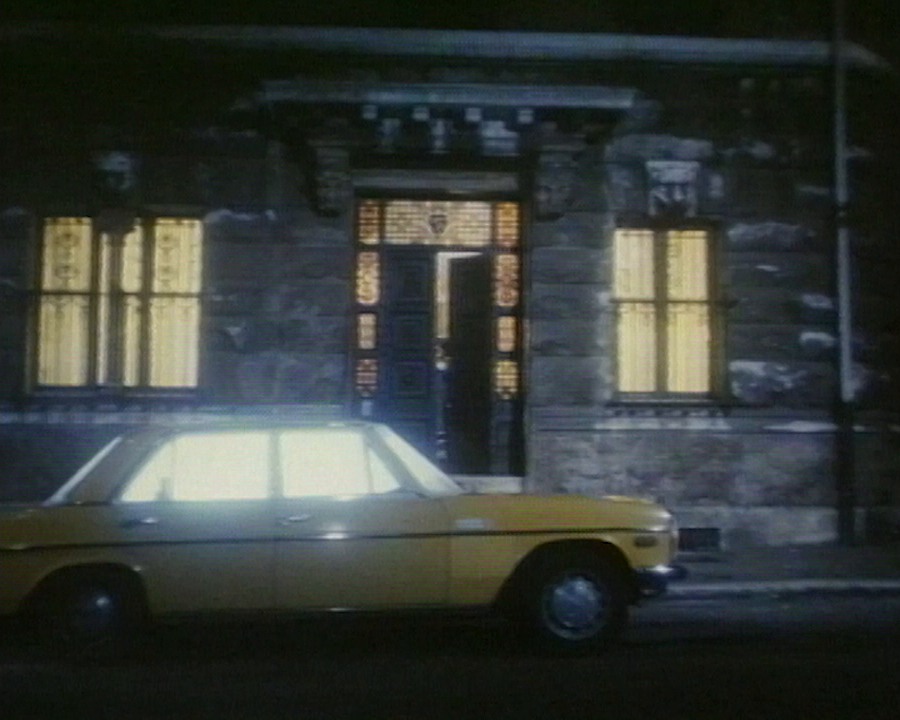
The hotel facade gives the fall a vertical axis; the taxi appointment turns Red into an accidental witness. A small object descending after the body will change the interpretation of the death.
Television · 1987–1988 · Turno di notte
A taxi, a passenger, a clue. Fifteen nocturnal mysteries turn Rome into a moving detective story.
Explore the complete series through scene studies, expandable image galleries and the recollections of its writers, directors and leading performer.
Enter the series
Start with a single mystery or follow the series from Bava’s six episodes into Cozzi’s nine. The scene and clue studies discuss the solutions.
 È di moda la morteLamberto Bava · scenes & gallery →
 Heavy MetalLamberto Bava · scenes & gallery →
 Buona fine e miglior principioLamberto Bava · scenes & gallery →
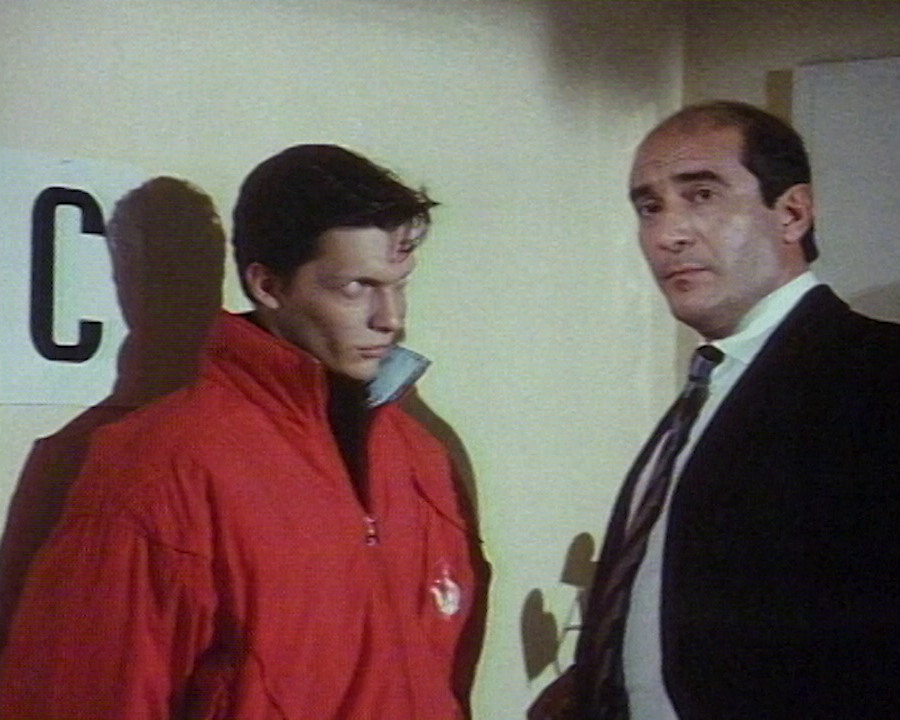 Giubbetto rossoLamberto Bava · scenes & gallery →
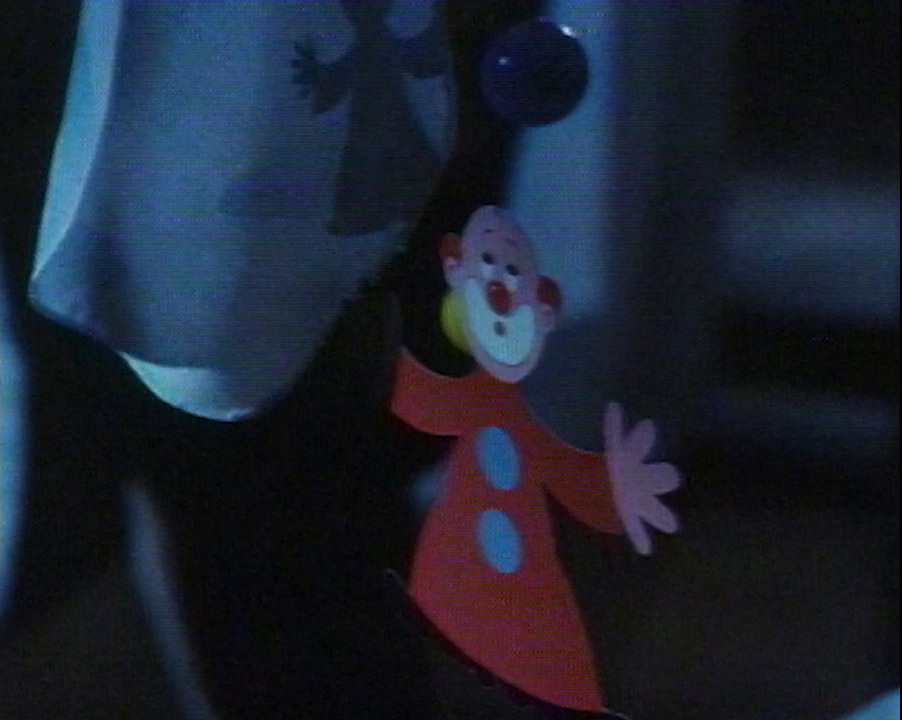 Il bambino rapitoLamberto Bava · scenes & gallery →
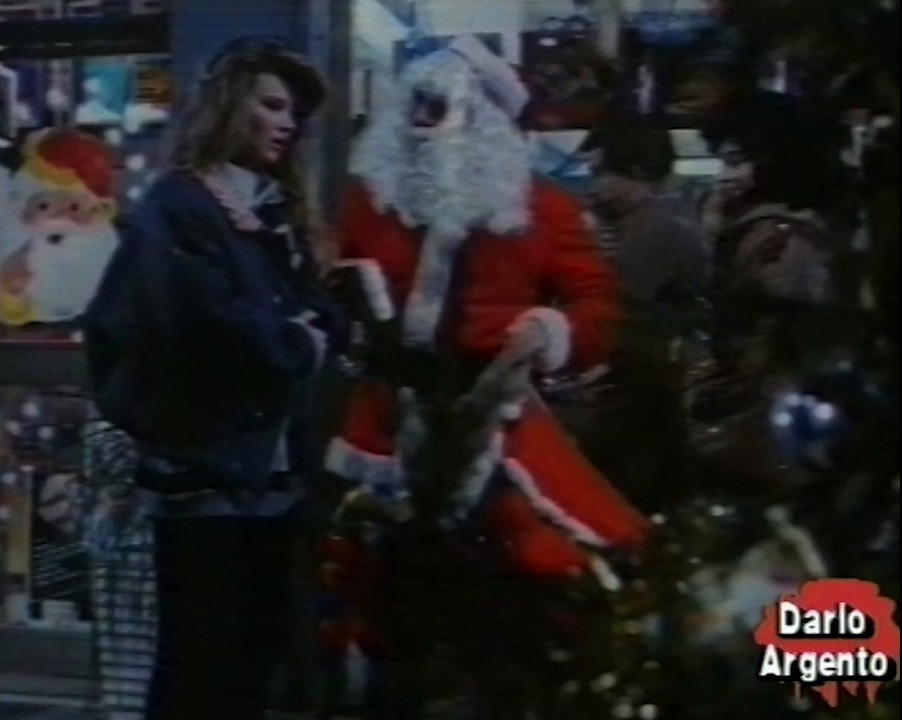 Babbo NataleLamberto Bava · scenes & gallery →
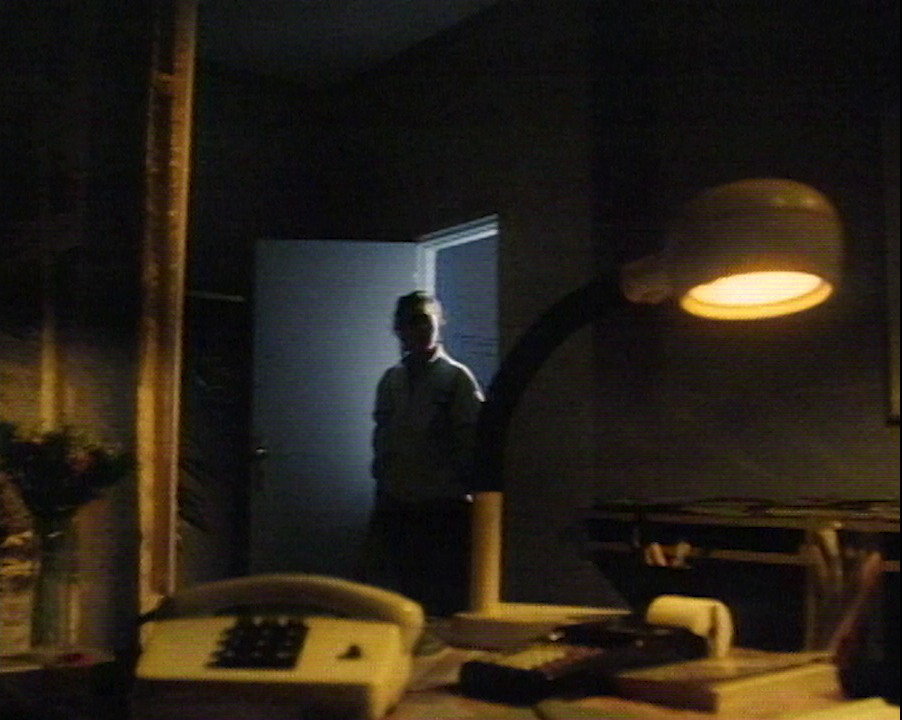 L’impronta dell’assassinoLuigi Cozzi · scenes & gallery →
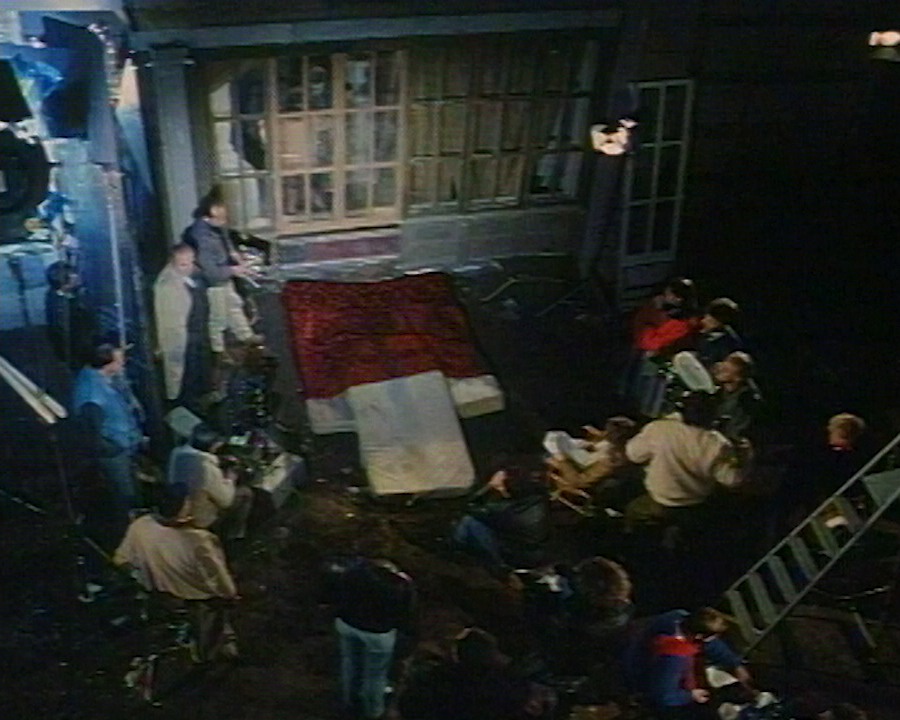 Ciak si muoreLuigi Cozzi · scenes & gallery →
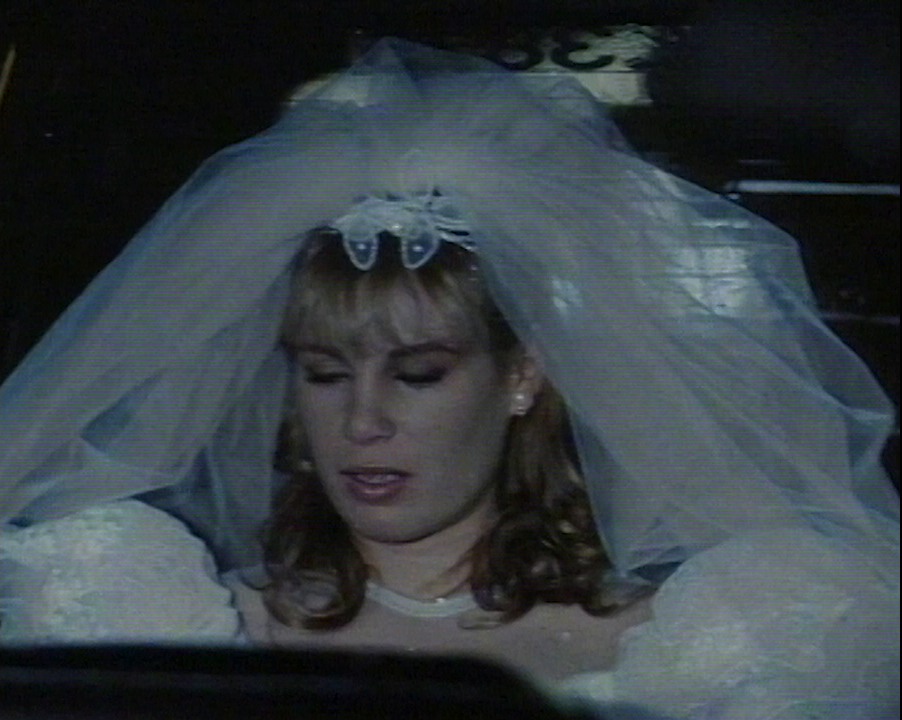 Sposarsi è un po’ morireLuigi Cozzi · scenes & gallery →
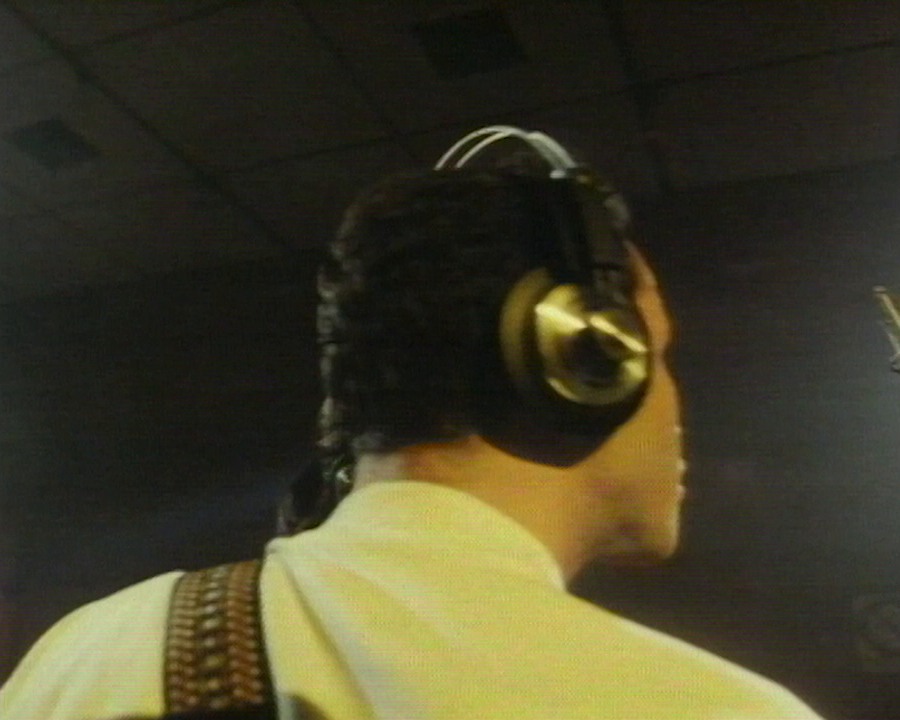 Delitto in rockLuigi Cozzi · scenes & gallery →
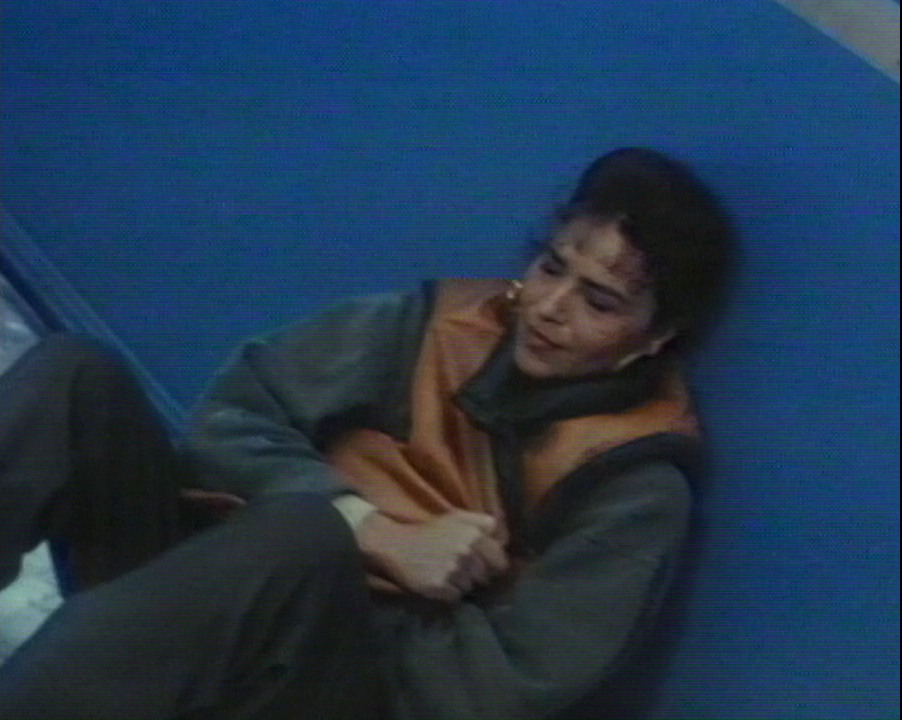 L’evasaLuigi Cozzi · scenes & gallery →
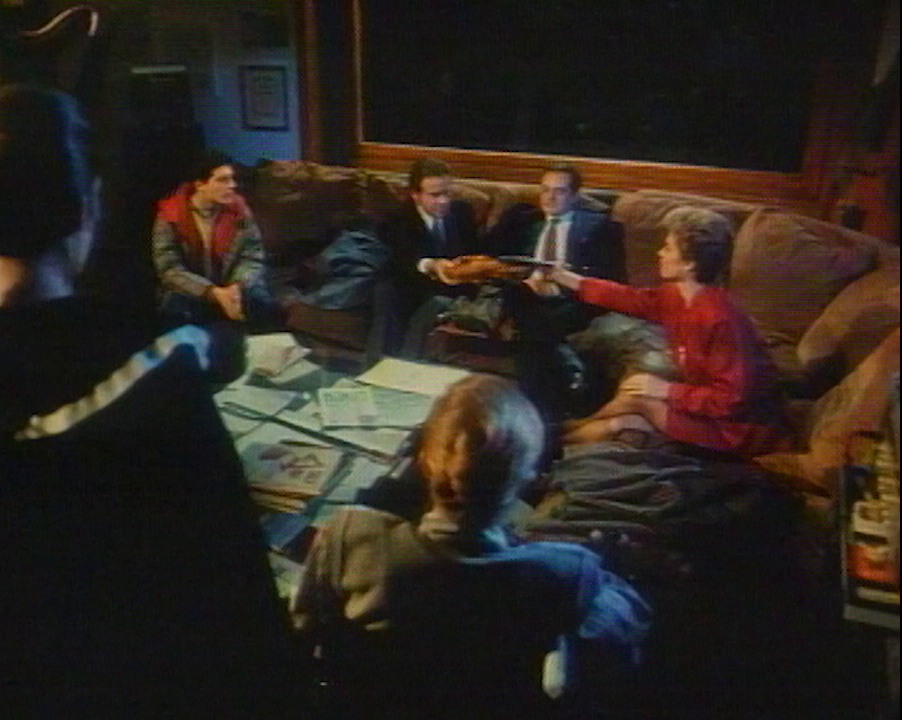 La casa dello StradivariLuigi Cozzi · scenes & gallery →
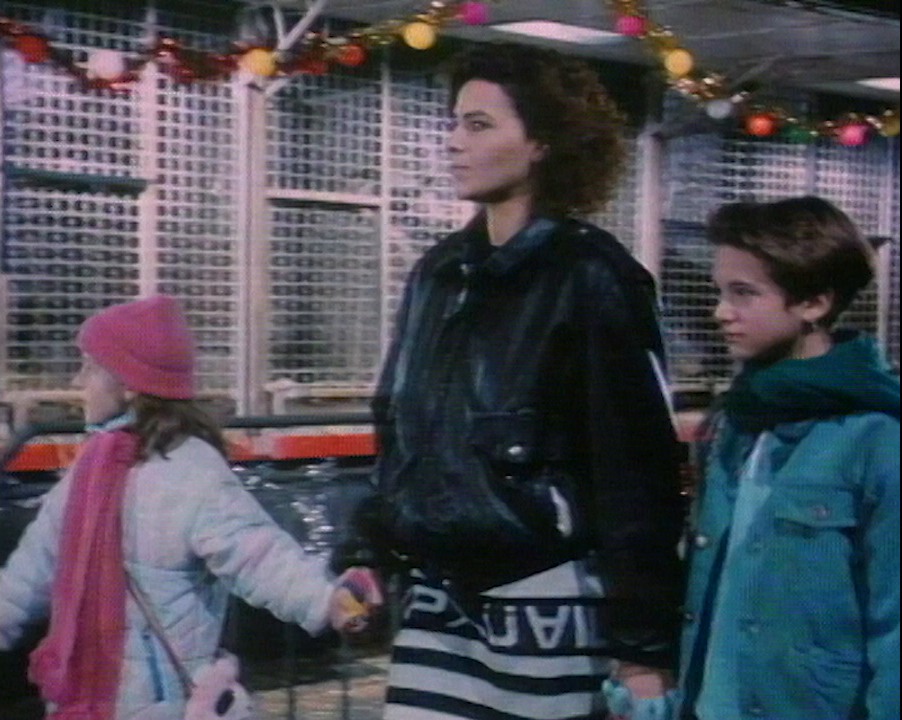 Giallo NataleLuigi Cozzi · scenes & gallery →
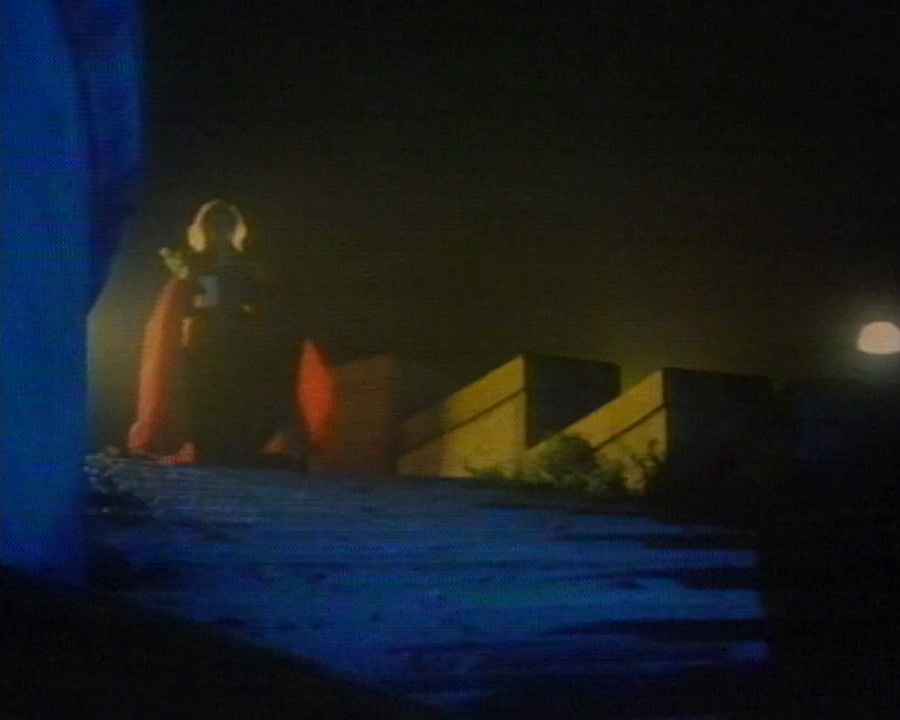 Via delle StregheLuigi Cozzi · scenes & gallery →
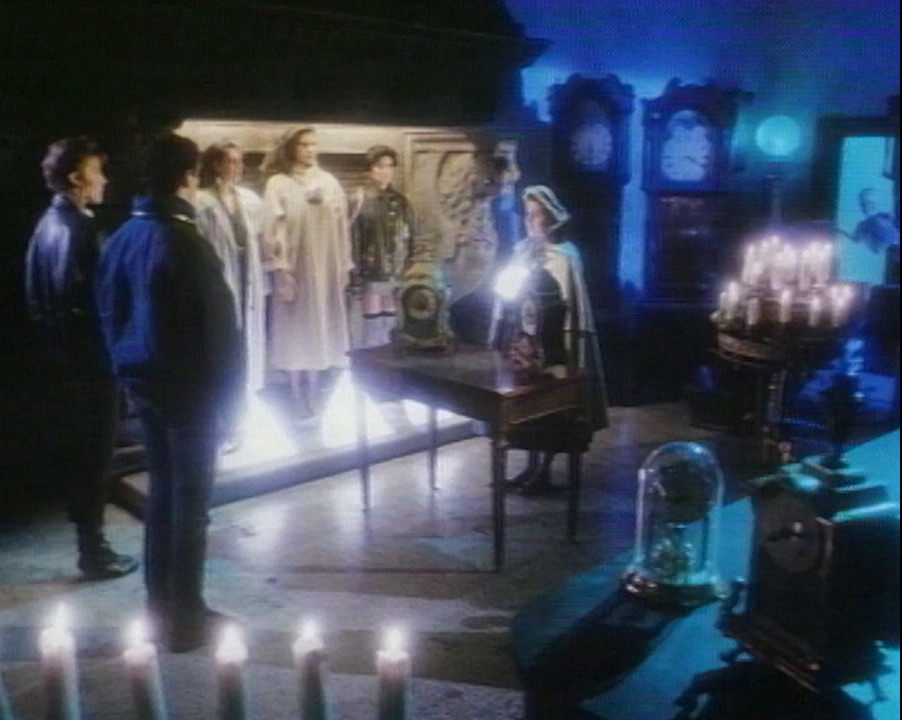 Il taxi fantasmaLuigi Cozzi · scenes & gallery →
A mystery inside the television evening
Turno di notte was the recurring taxi-mystery strand of Enzo Tortora’s Giallo. Its working community gives each short story a point of entry: Calypso 9 (Antonella Vitale), Red 27 (Matteo Gazzolo) and Tango 28 (Franco Cerri) encounter passengers whose ordinary journeys lead into crimes.
The directing credits belong to Lamberto Bava and Luigi Cozzi. In TV Nightmares, Argento explicitly distinguishes his presenting role from directing the taxi episodes. Cozzi identifies the division as six episodes by Bava and nine by himself. Argento’s account → · Cozzi’s account →
Cozzi remembers the story pausing before its solution so that the studio audience could identify the culprit and explain the clue; the ending then resumed. Bava recalls the solution’s scheduling differently. The interviews agree on the central invitation to detect, but do not supply an identical account of every broadcast. The films’ pointed explanations and direct appeals to the viewer make that participatory design visible.
Cozzi describes shooting on 35mm, sometimes finishing at dawn on Tuesday for Friday transmission. Processing, editing, dubbing, effects, music and mixing had to follow before the programme could be delivered. He recalls working with the editor by telephone while the next shoot continued, and says Argento handled the mixing. Bava likewise remembers prolonged night work and scripts arriving immediately before shooting. These are the filmmakers’ retrospective accounts of the work, not a reason to assume the images were casually made.
Sources: Giallo on the TV, 06:44–08:07, 09:08–12:17; Taxi Drivers, 02:12–03:40 and 07:51–08:35; TV Nightmares, 05:14–06:54.
Scene studies · Lamberto Bava
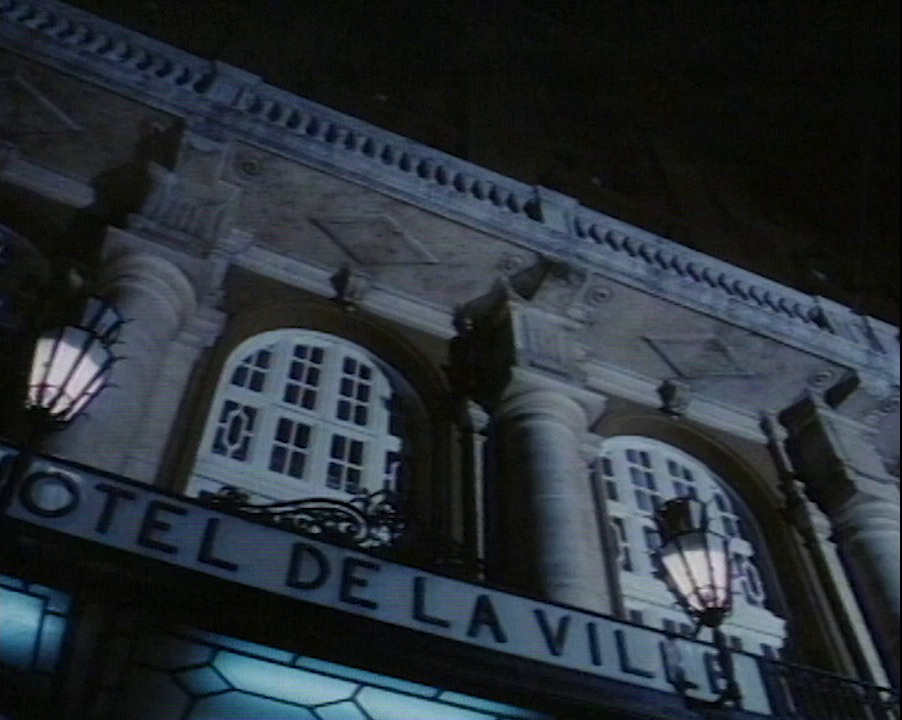
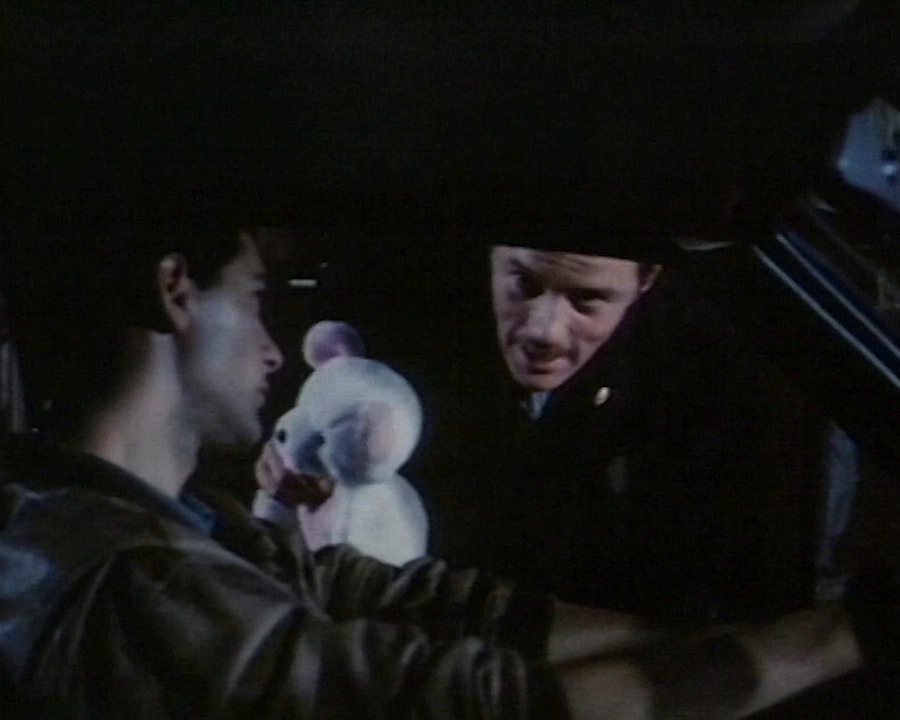
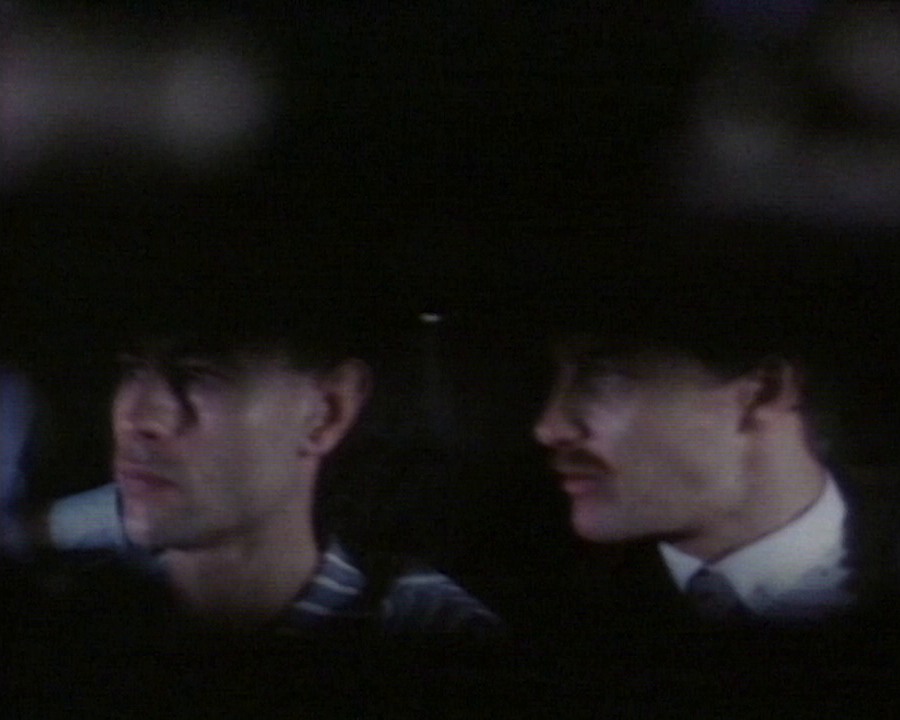
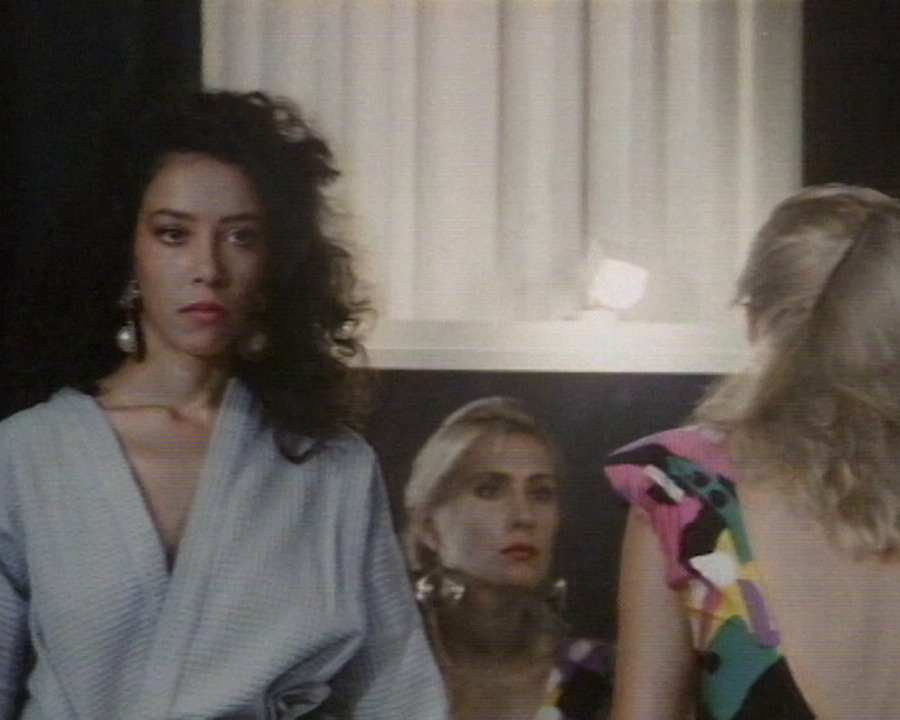
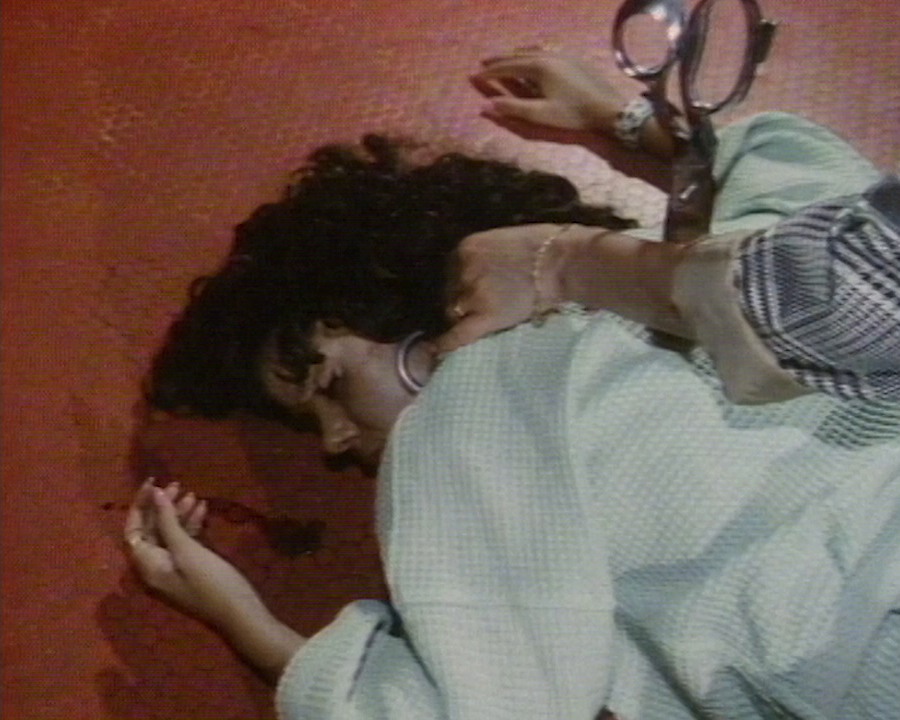
Red arrives at a hotel as a model falls to her death. Another model asks him to retrieve a lucky teddy bear, bringing a threatening manager and photographer into his taxi. A second backstage murder involves mistaken identity. Red recalls that the bear fell after the first woman and that a passenger identified her too confidently in the darkness. These contradictions expose the manager's attempt to silence models who planned to report his blackmail.
The hotel facade gives the fall a vertical axis; the taxi appointment turns Red into an accidental witness. A small object descending after the body will change the interpretation of the death.
The teddy bear is both an errand and a clue. It links the hotel, the cab and the fashion venue while keeping the driver close to people who reveal too much.
The rear-view mirror and passenger views make the cab a confined conversation. The manager's account of recognition later proves more revealing than the open argument about money.
Costumes, mirrors and similar hairstyles prepare a mistaken identification. The discovery of a body with scissors is followed by the recognition that the intended victim is still alive.
Scene studies · Lamberto Bava
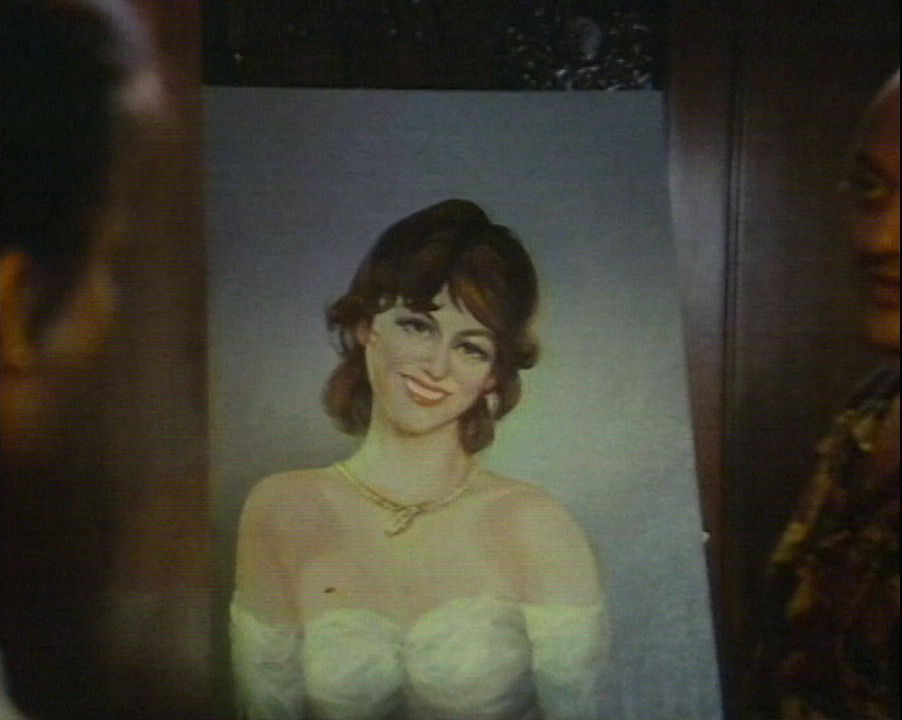
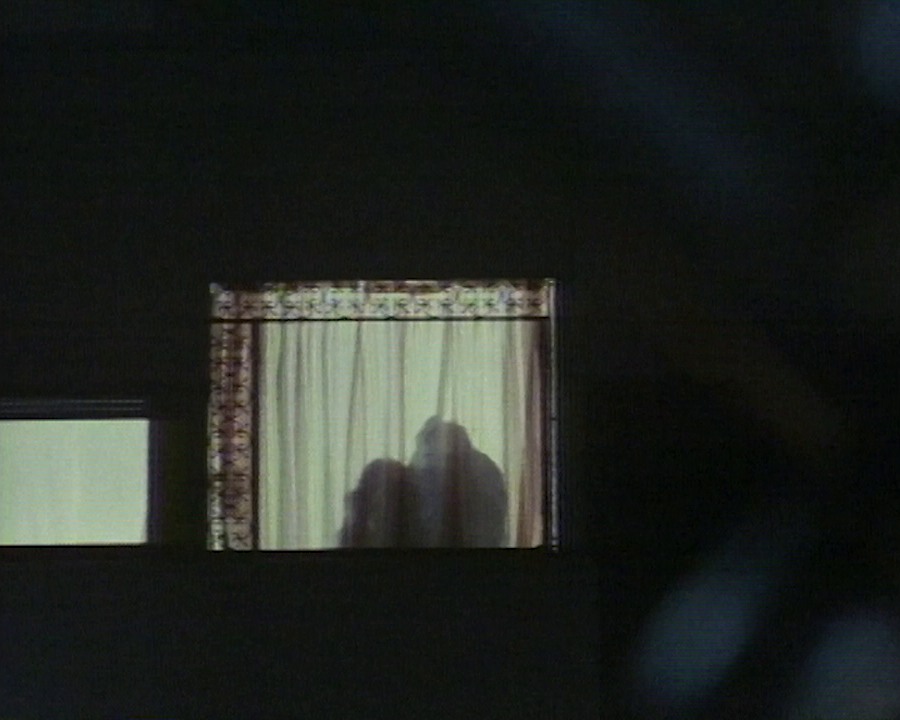
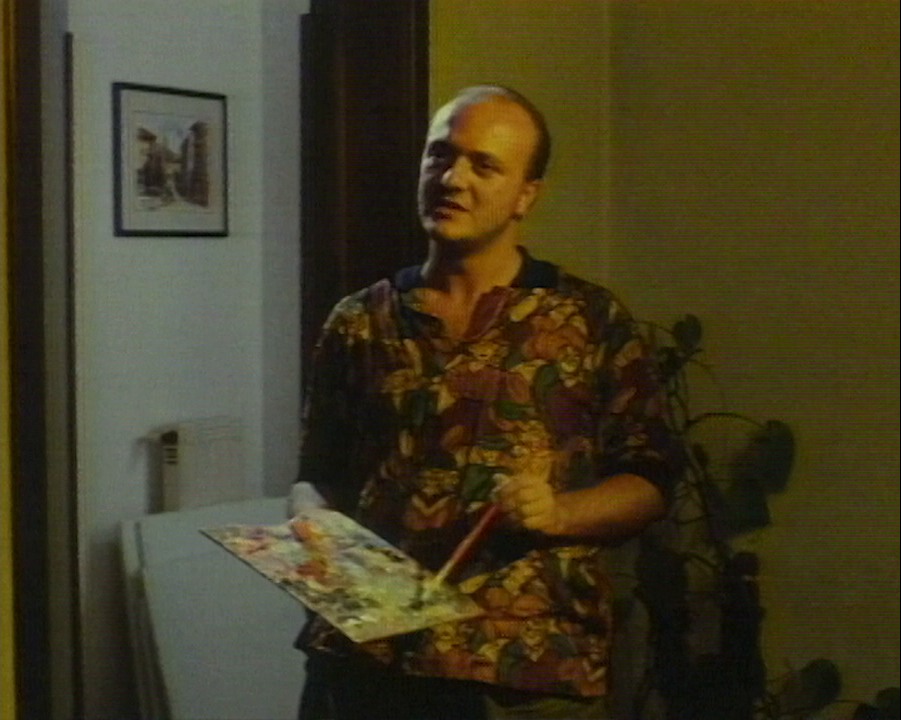
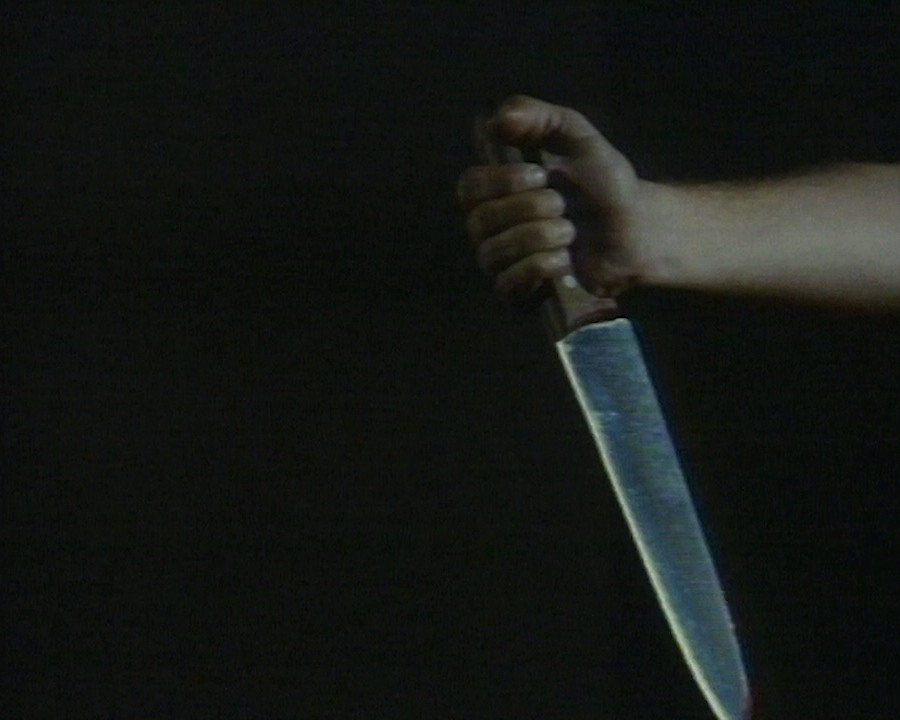
Calypso drives an aggressive young man who takes jewelry from a woman and has a hostile exchange at a bar. Red 27 follows after a radio request for help. The passenger disappears into his apartment without paying. Calypso searches the building, meets an older woman caring for kittens and a painter, then finds the passenger dead and is pursued. She recognizes the attacker as the left-handed painter. His portrait of a woman wearing the same necklace reveals his connection to the woman exploited by the dead man.
A lit window and silhouetted figures give Calypso evidence of distress without a complete explanation. Her passenger's aggressive behavior carries that uncertainty into the cab.
The passenger leans forward into Calypso's space while the windscreen view confines both faces. The radio request for Red 27 makes the drivers' working network a practical defence.
The kitten keeper's grievance and the painter's hostility give ordinary neighborly encounters a second function. Hands and objects matter before Calypso knows what they will explain.
The apartment is divided by shelving, doorframes and reflections. Knife inserts isolate the threatening hand. The eventual solution asks the viewer to reconsider handedness and the portrait's necklace.
Scene studies · Lamberto Bava
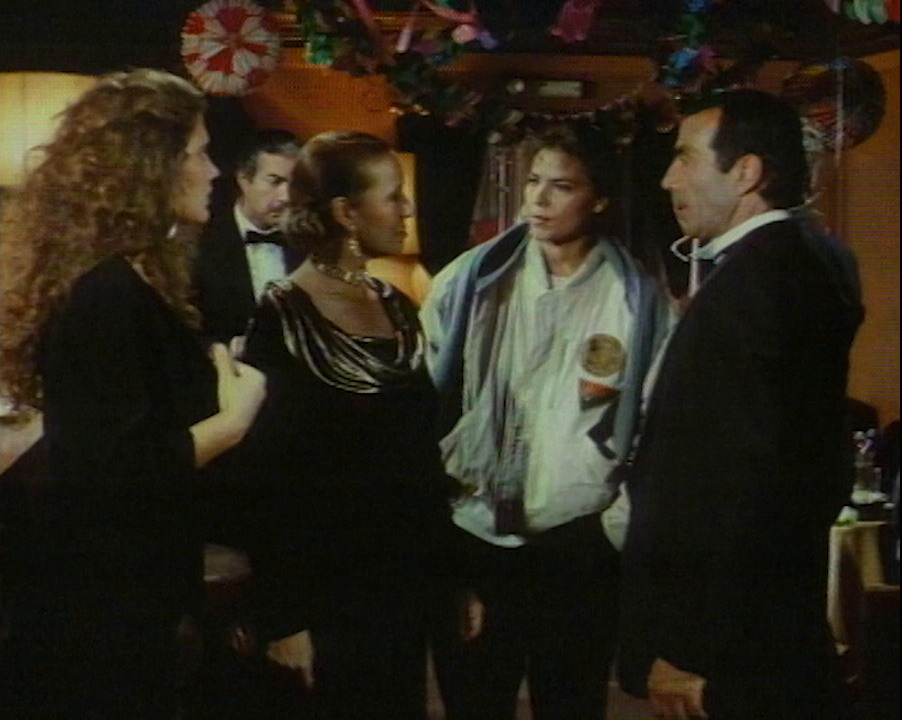
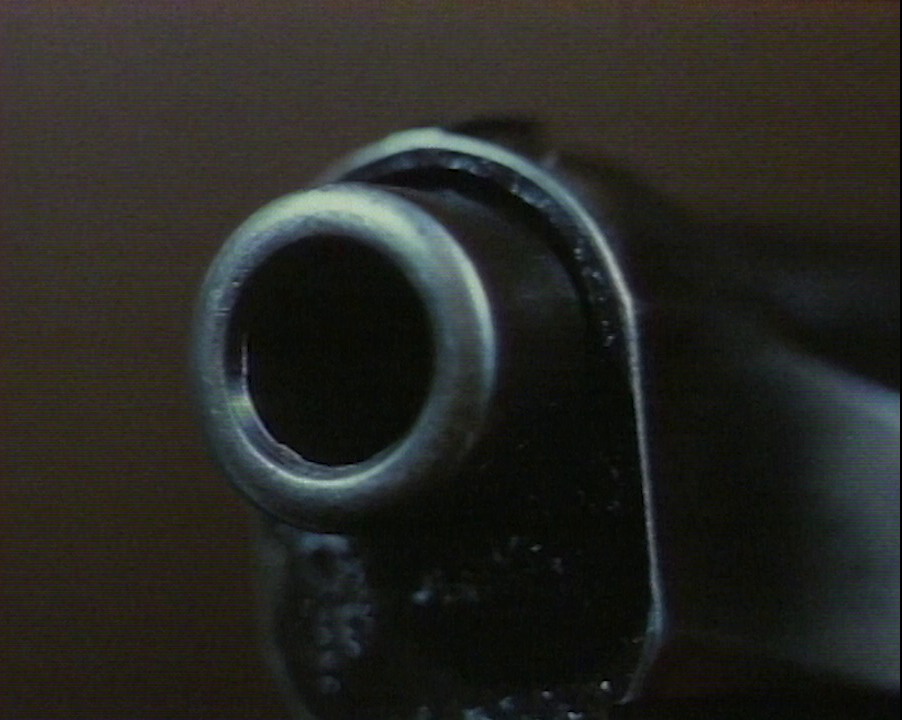
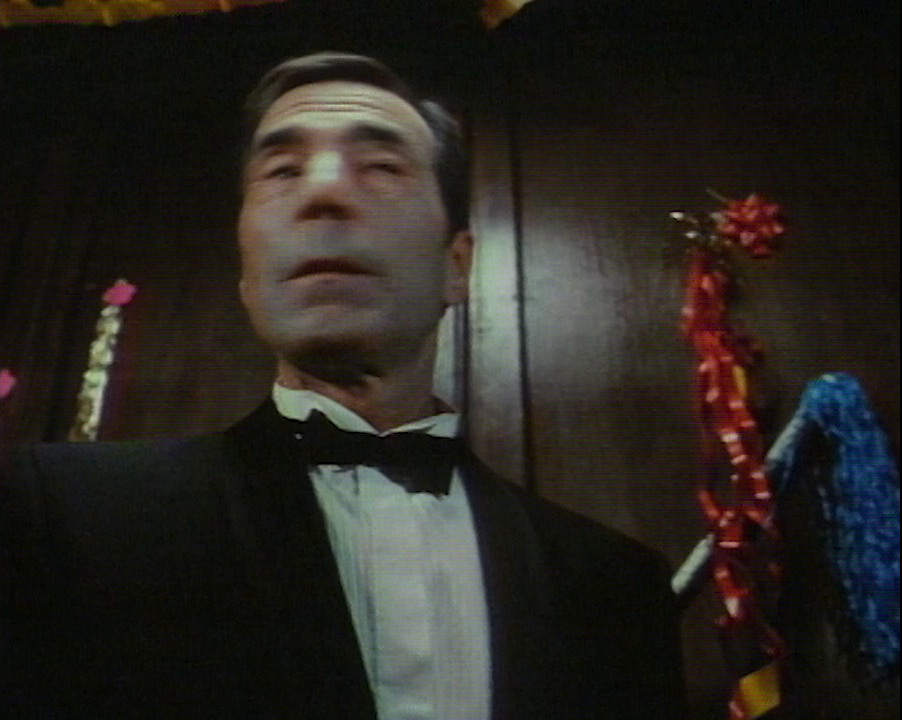
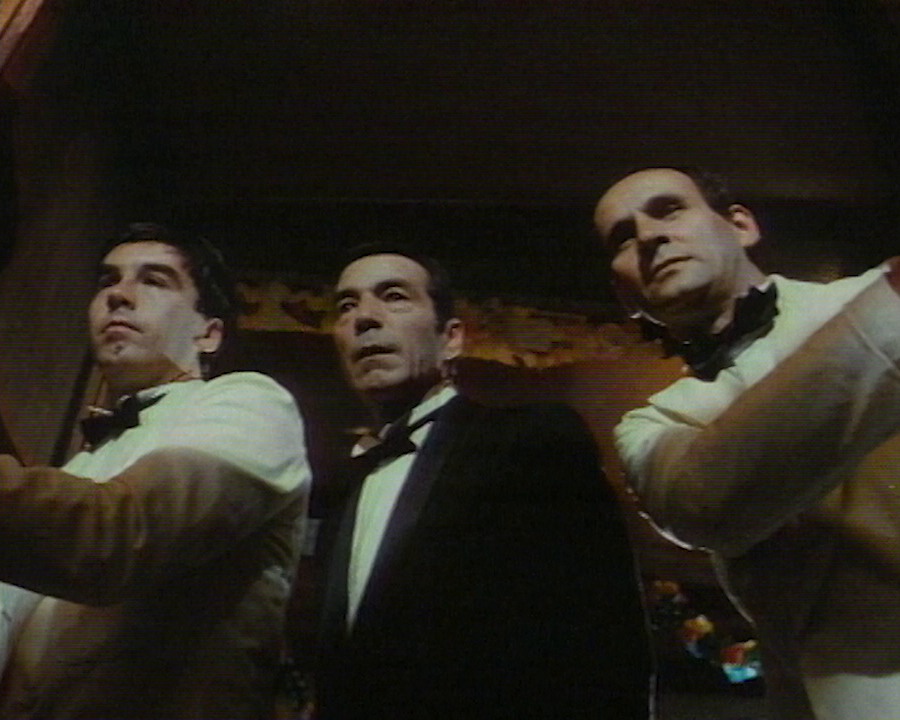
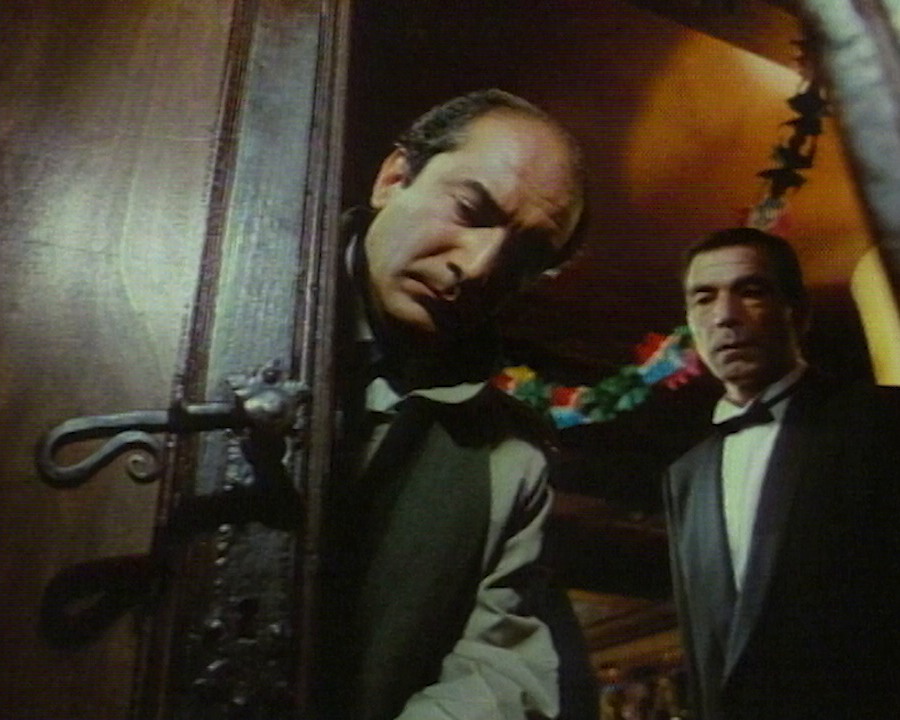
On New Year's Eve Calypso is called to a nightclub where a wealthy diner has been shot in a locked private room. The revelry continues around an exchange of accusations. She solves the apparent impossibility by recognizing that the murderer, first to enter after the door was forced, could plant the key inside.
The opening cuts the festive evening down to a threatening object and a slumped diner. Decorations remain present when the body is discovered; the party does not simply stop for the mystery.
The broken door and the order in which people enter matter more than the lock alone. Low angles at the threshold make the discovery itself a sequence worth revisiting.
The club's counter and party crowd hold the potential culprits in a shared space. Casual cruelty and financial motives emerge through their conversation.
The ending reinterprets the first entry into the room: the key need not have been there before discovery. The drivers' own New Year toast returns the episode to their working community.
Scene studies · Lamberto Bava
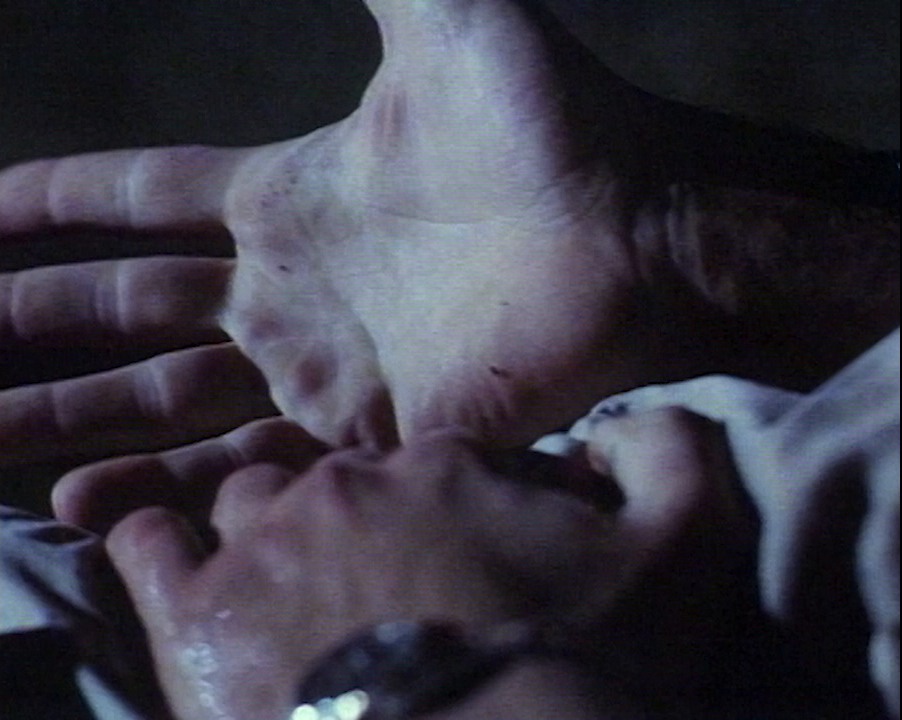
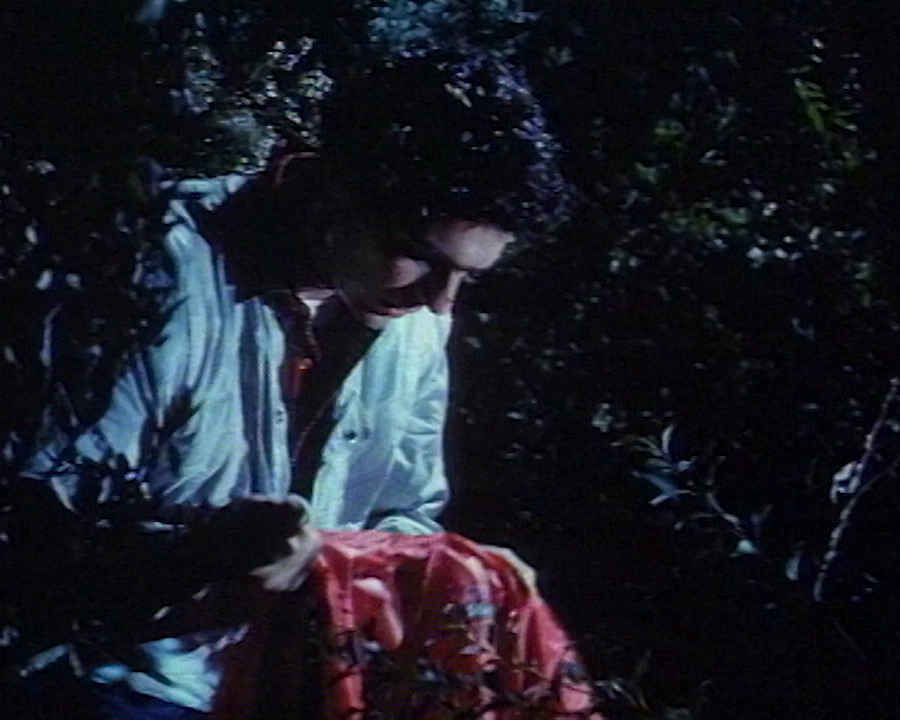
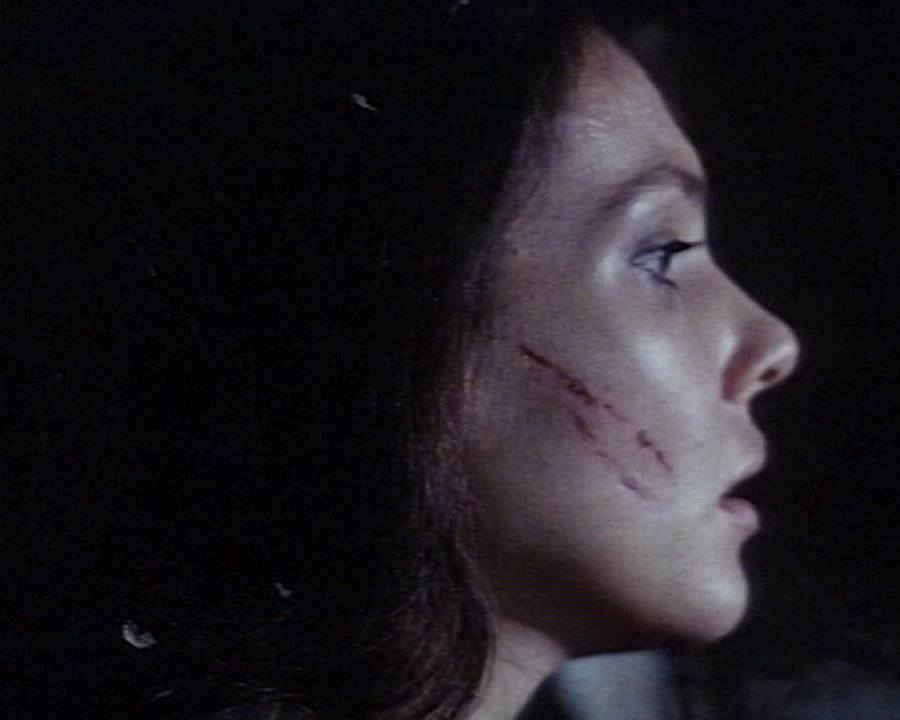
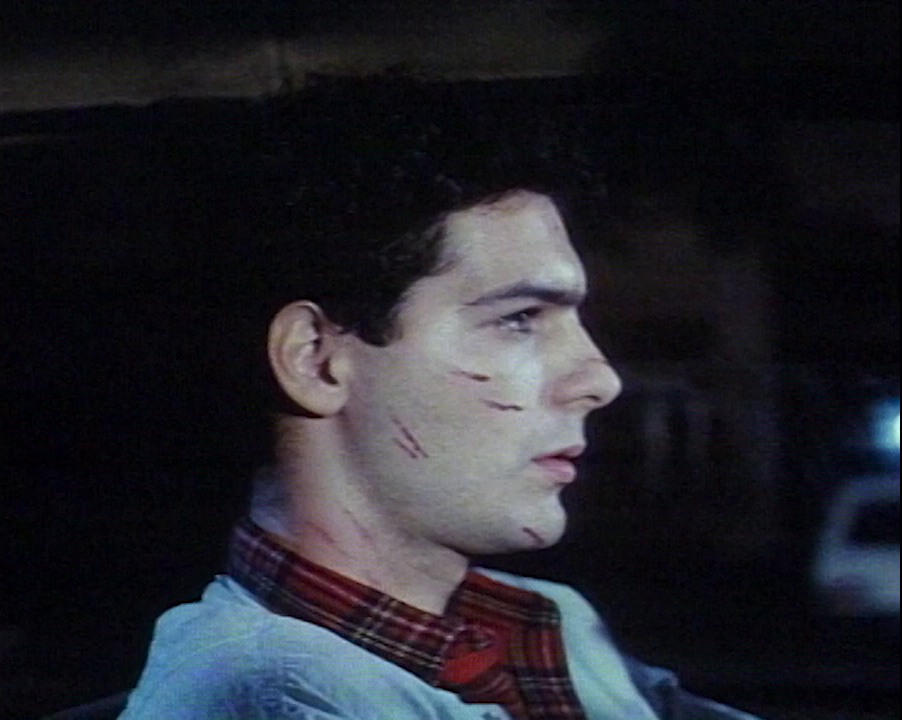
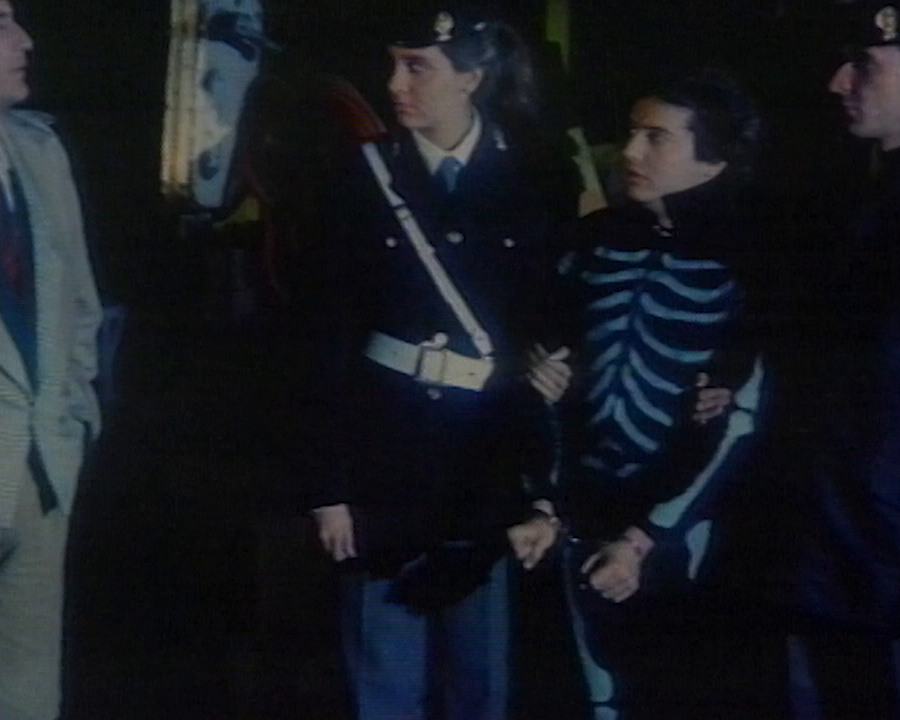
Red postpones a normal fare to pursue the ghost taxi, then helps a woman claiming that the red-jacket killer attacked her boyfriend in a park. Three suspicious men enter a police lineup. The abandoned red jacket, a receipt, scratches, wet clothing and a wedding ring allow Red to reject the obvious suspect and identify the woman as the killer.
An early warning about the red-jacket killer supplies the ready-made explanation the real murderer exploits. The blue moon and empty street give that public story a visual atmosphere.
The close view of the victim's hand makes the wedding ring available before Red explains it. Sprinklers and wet clothing later establish when another man approached the body.
Letters and repeated head-on views encourage selection among three men. The witness, outside that arrangement, is the person who should be questioned.
Red's own scratches give him a comparison for the woman's explanation. The final reconstruction connects the discarded jacket and store receipt with the route through the bushes.
Scene studies · Lamberto Bava
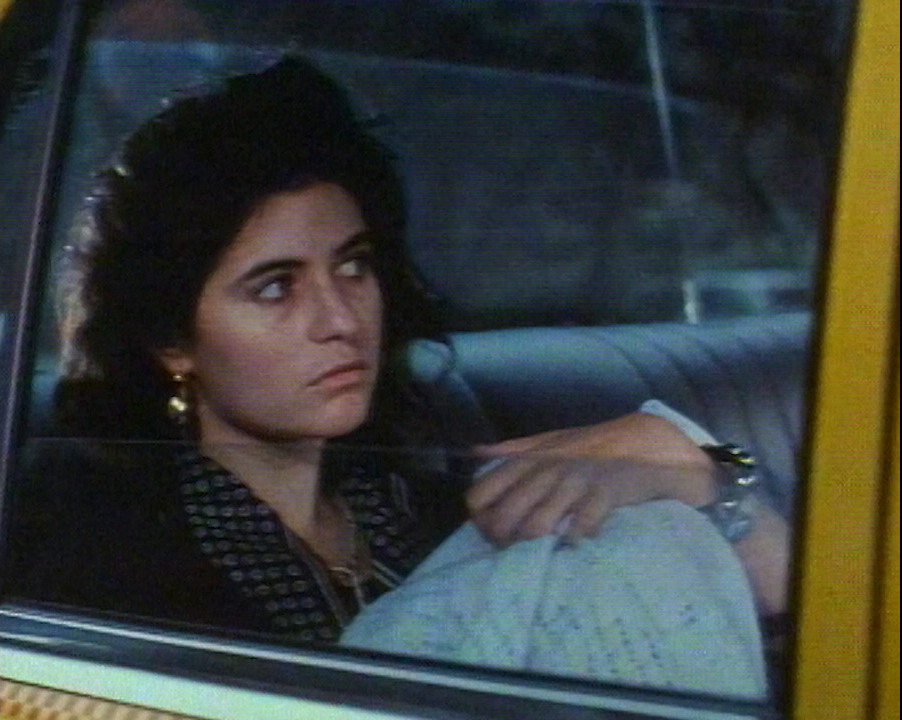
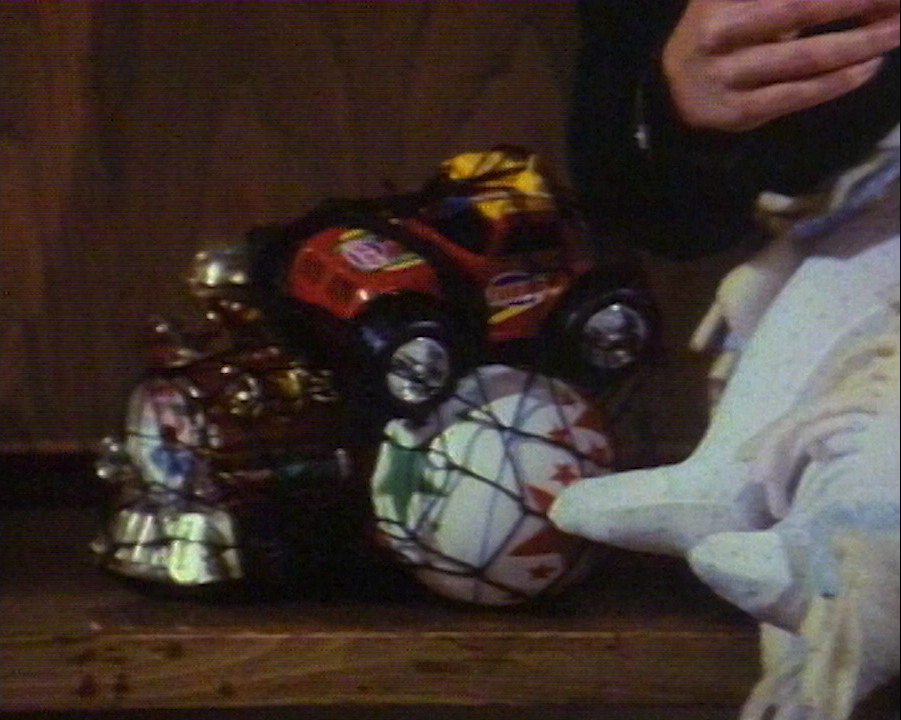
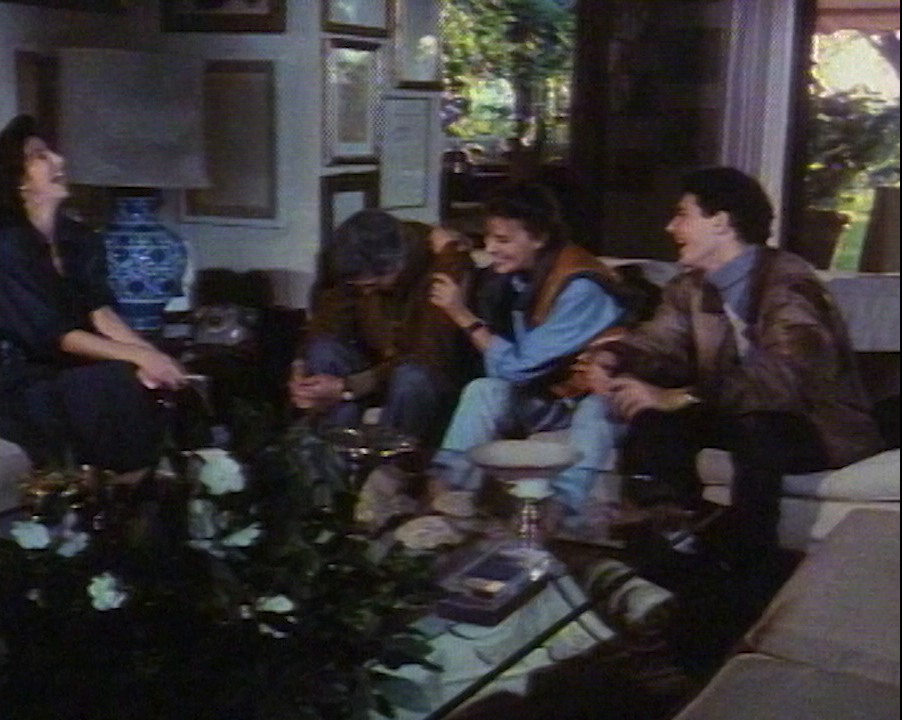
An unseen intruder takes a baby from a crib. A distraught mother's search brings Tango 28 into a police investigation. Three women with infants are detained; the driver's observations of their behavior expose the abductor through unsuitable toys. The closing explanation links the abduction to the woman’s bereavement.
Bava isolates crib decorations, hands and curtains before the mother's discovery. This can be compared directly with the script pages shown in Sacchetti's interview, which require the intruder's face to remain unrecognizable.
Tango 28's pursuit of the glowing taxi runs alongside the morning domestic routine. The uncanny series motif briefly shares a film with an entirely human crime.
The driver's repeated view of passengers and their babies becomes a comparison exercise. The apparently respectable woman attracts less overt suspicion, but her bag of inappropriate toys is the visual clue.
The closing reconstruction returns to the bag of toy vehicles and weapons. An ordinary mistake in gift-giving lets the driver recognize a consequential mismatch.
Scene studies · Lamberto Bava
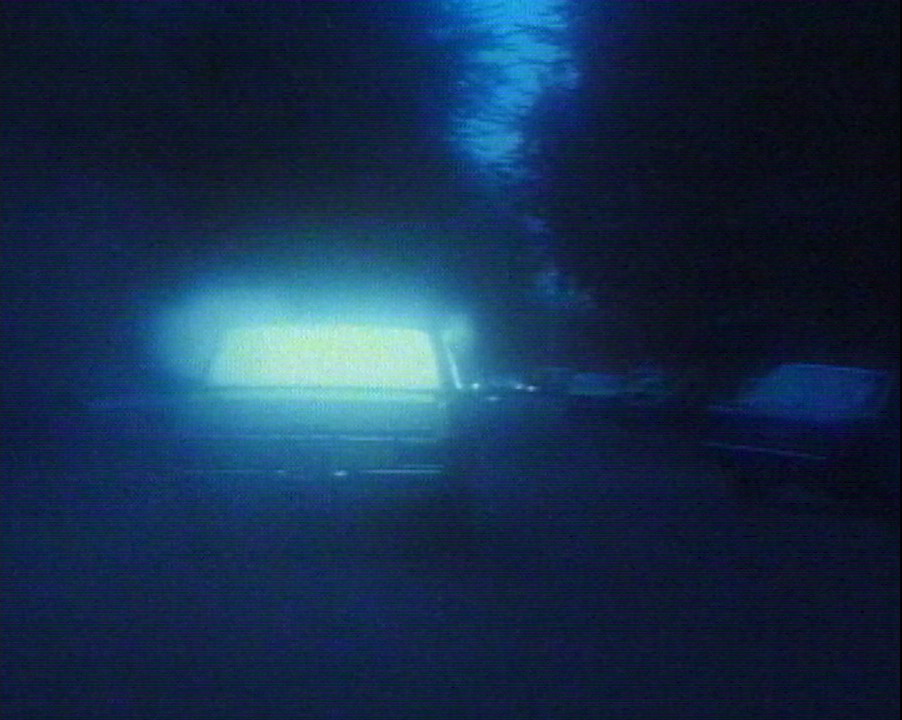
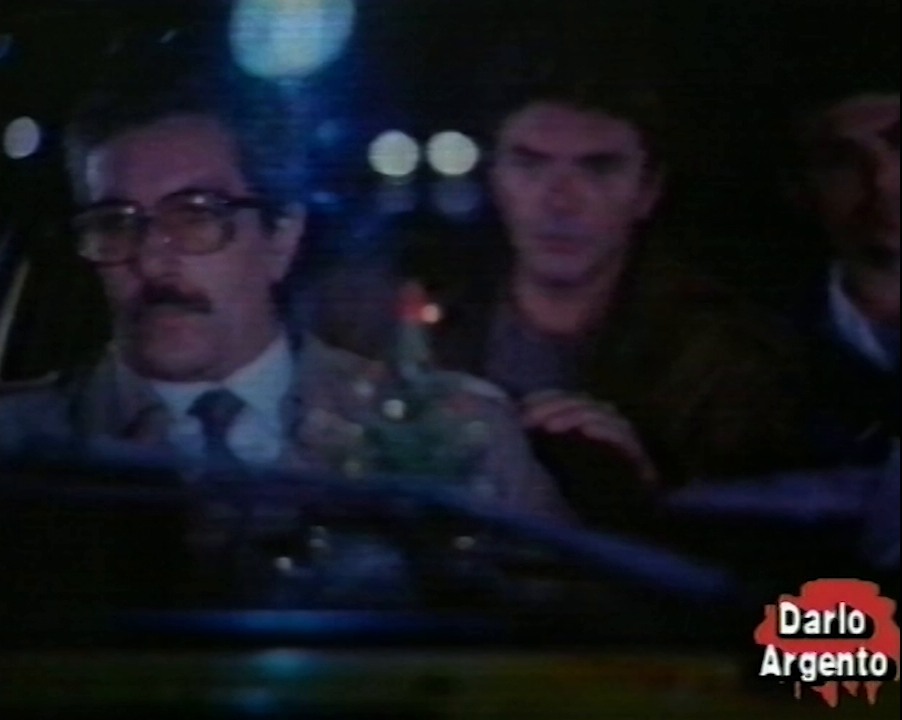
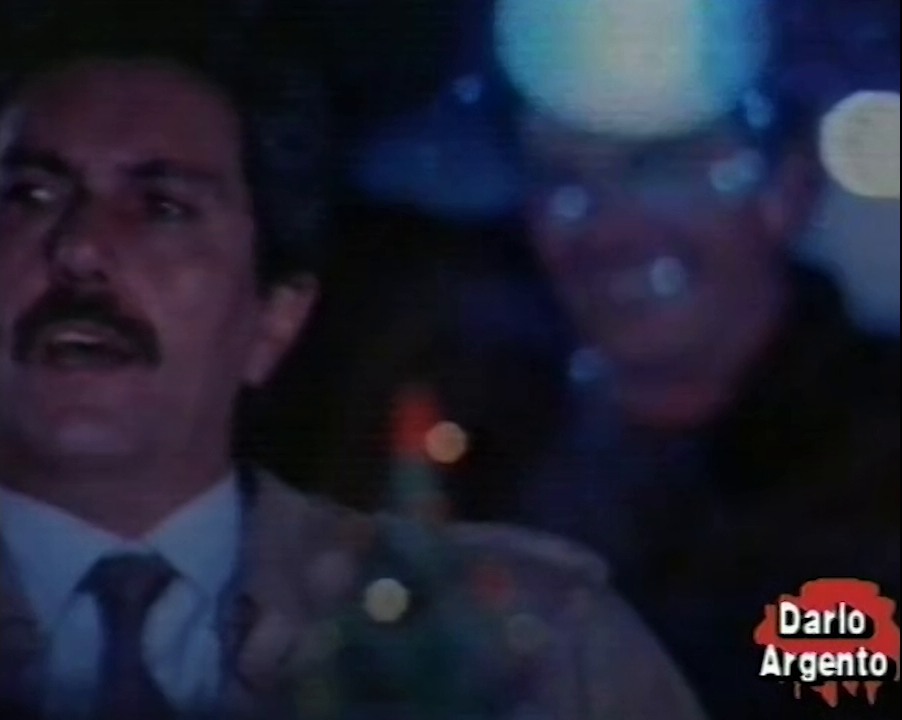
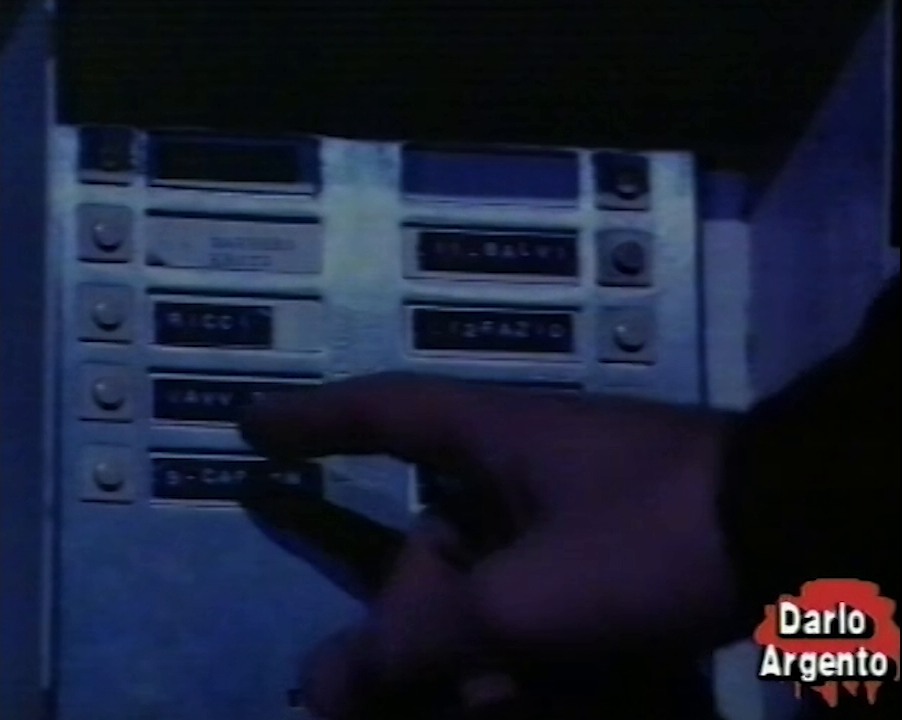
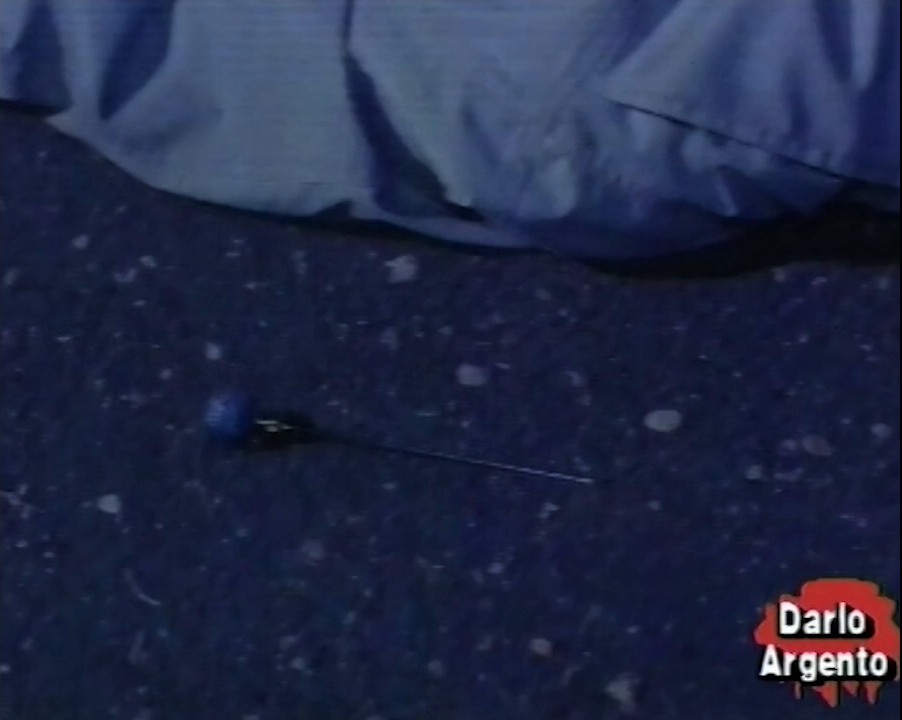
A man dressed as Santa gives out sweets, intervenes in a street drug deal and objects to the exploitation of his young niece. After his murder, Red drives three suspects released by police. One betrays his claim to be new in town by knowing a late-opening bar. A later taxi booking draws Red into an attack, but his remembered conversation supplies the decisive clue.
The Santa costume makes a conspicuous target in the blue night. The seasonal figure's encounters with crime establish several possible motives.
The suspects' release places their conversation inside Red's working space. The windscreen composition gives the driver access to all three men.
Knowledge of an all-night bar contradicts the claim to have just arrived. The solution depends on remembering conversation rather than discovering a hidden weapon.
Doorbells, a waiting taxi and blue exterior light turn an ordinary collection into vulnerability. The discarded pointed weapon is isolated after the struggle.
Scene studies · Luigi Cozzi
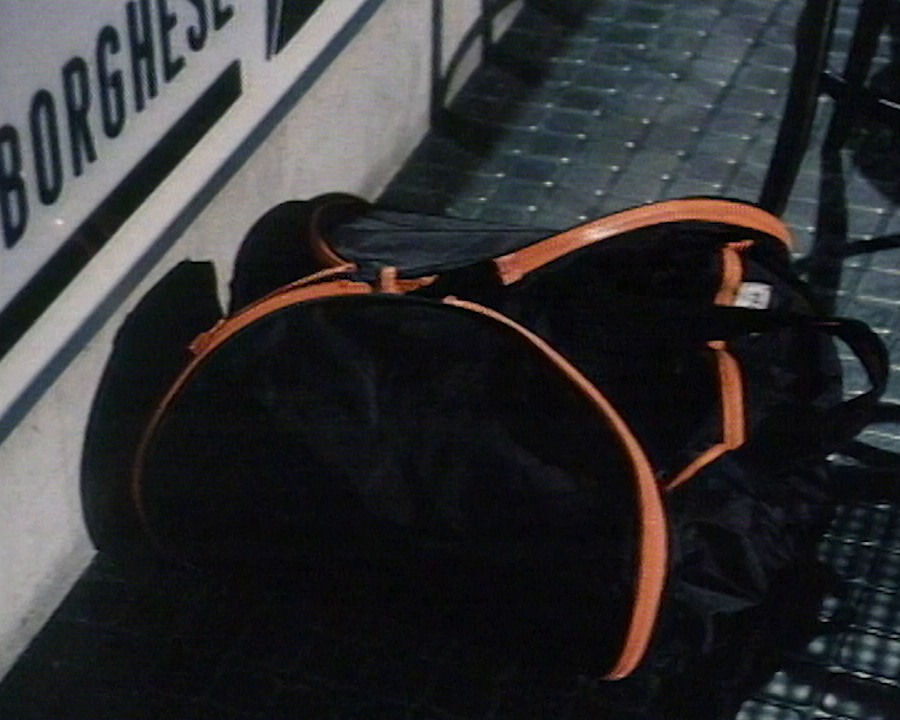
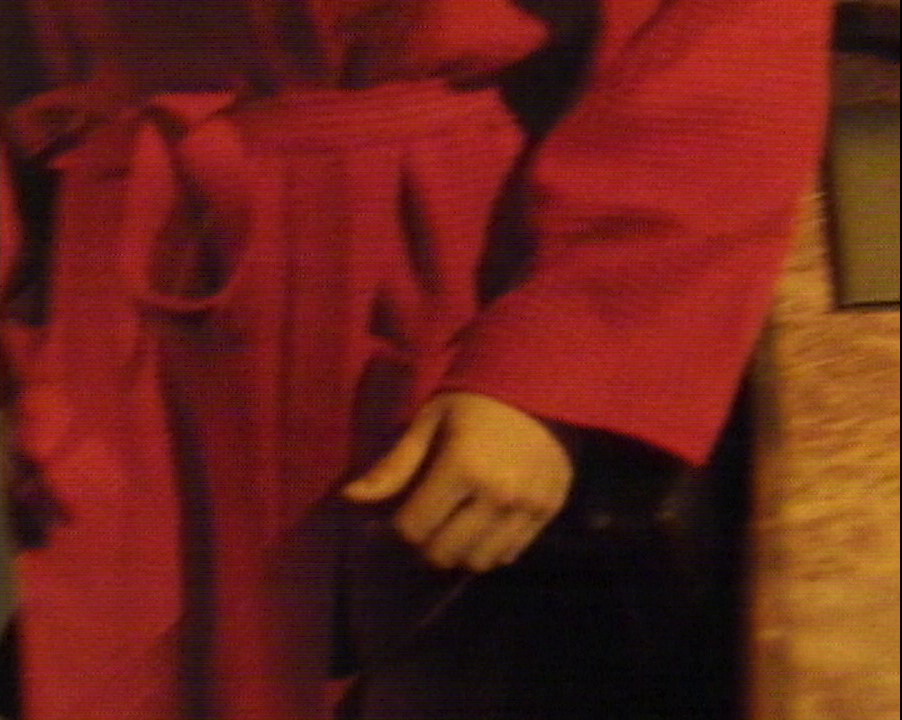
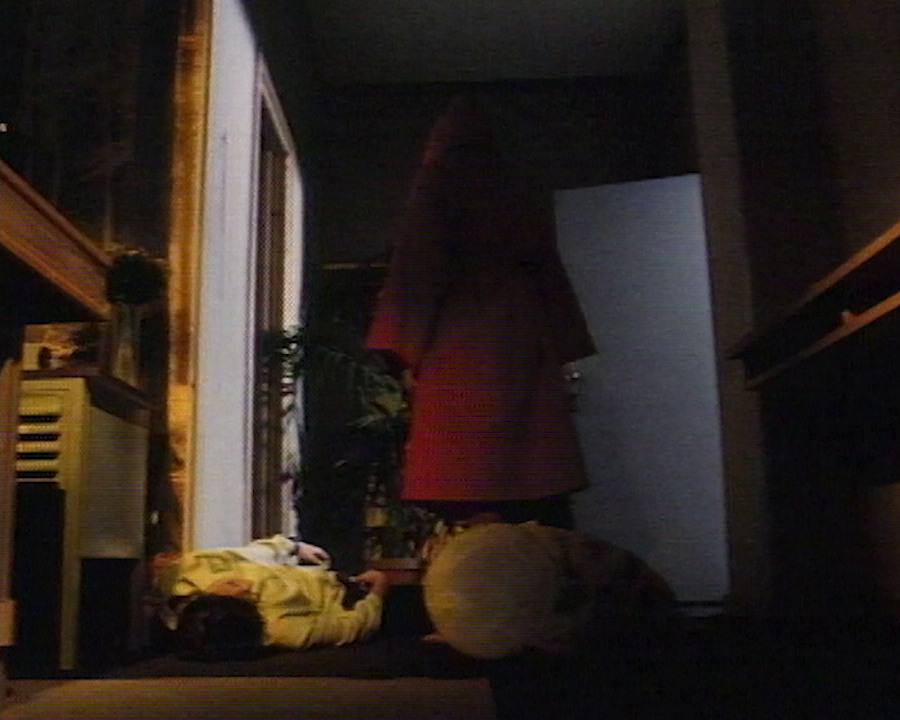
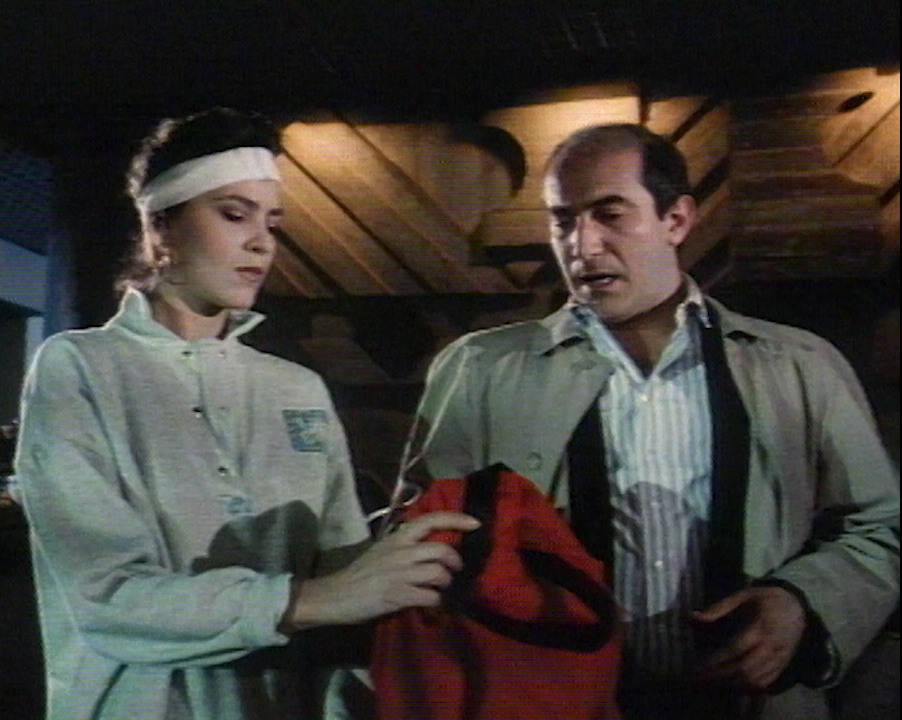
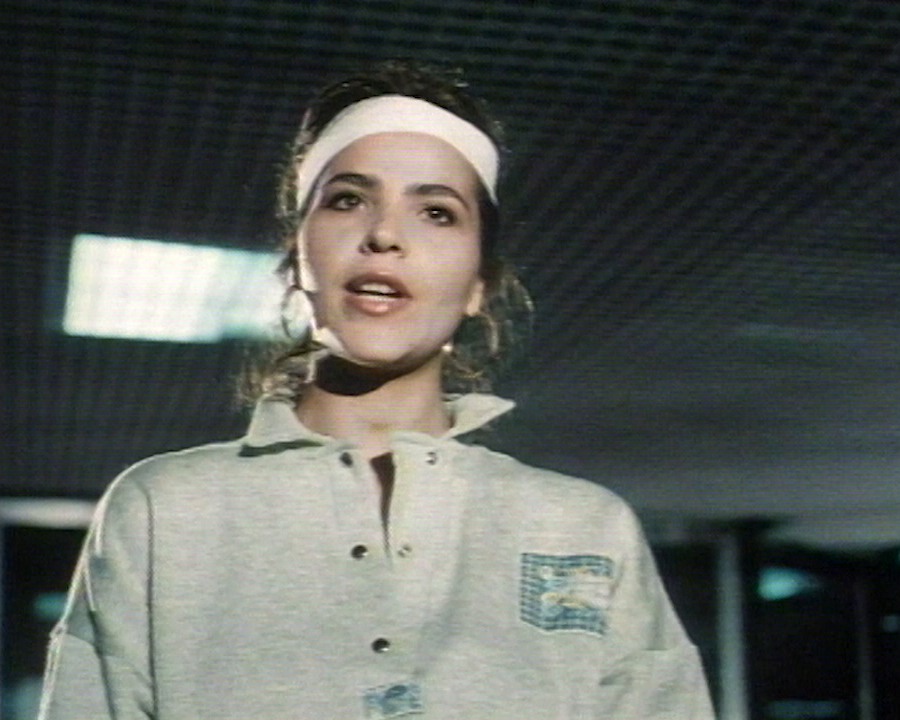
Two deaths at a sports centre surround Roberto Peters with suspicion. Calypso is attacked after entering an office. A borrowed bathrobe creates false evidence; its fastening and the absence of fingerprints expose the attempt to frame Peters.
The empty sports bag and the returned bathrobe are introduced as ordinary objects. Their later reuse as incriminating evidence depends on this early, unforced attention.
The telephone draws Calypso into the office. The lit desk, doorway and low view of her fallen body make the room legible while withholding the assailant’s face.
The robe points toward its owner, but Calypso separates ownership from use. She notices that the borrowed garment has been fastened on the opposite side, and returns attention to the person wearing it.
A claimed later entry into the office should have left prints after the killer wiped the door. Calypso tests the statement against an absence, turning forensic cleanup into the clue that breaks the alibi.
Scene studies · Luigi Cozzi
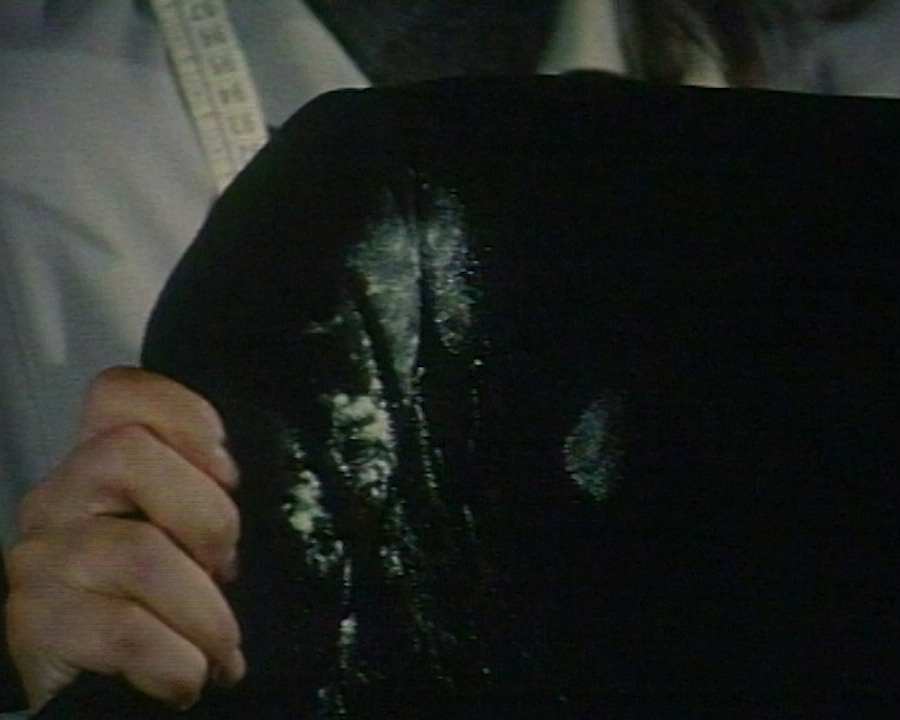
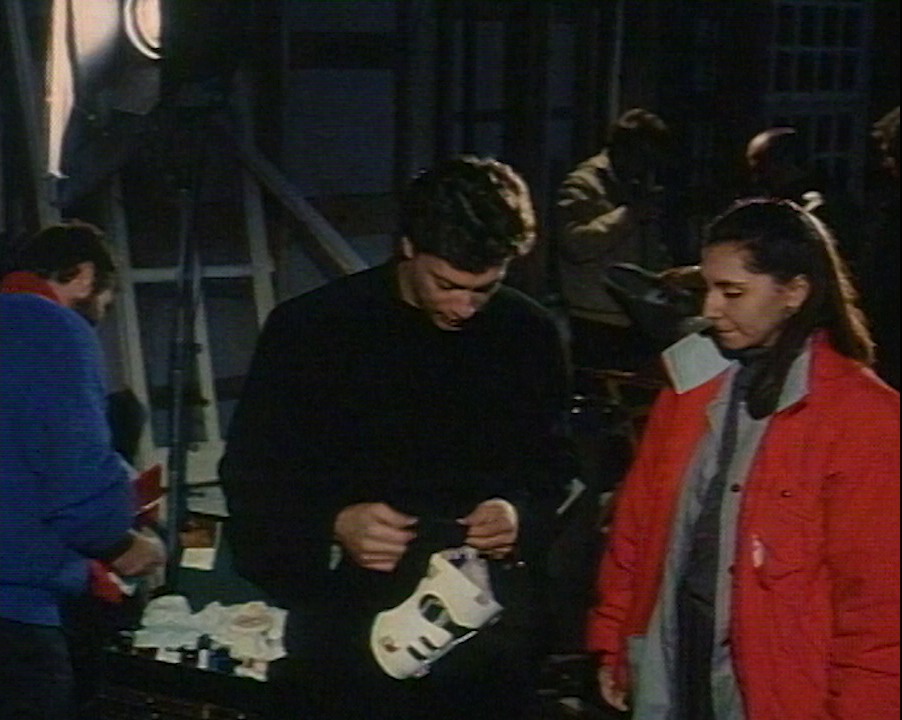
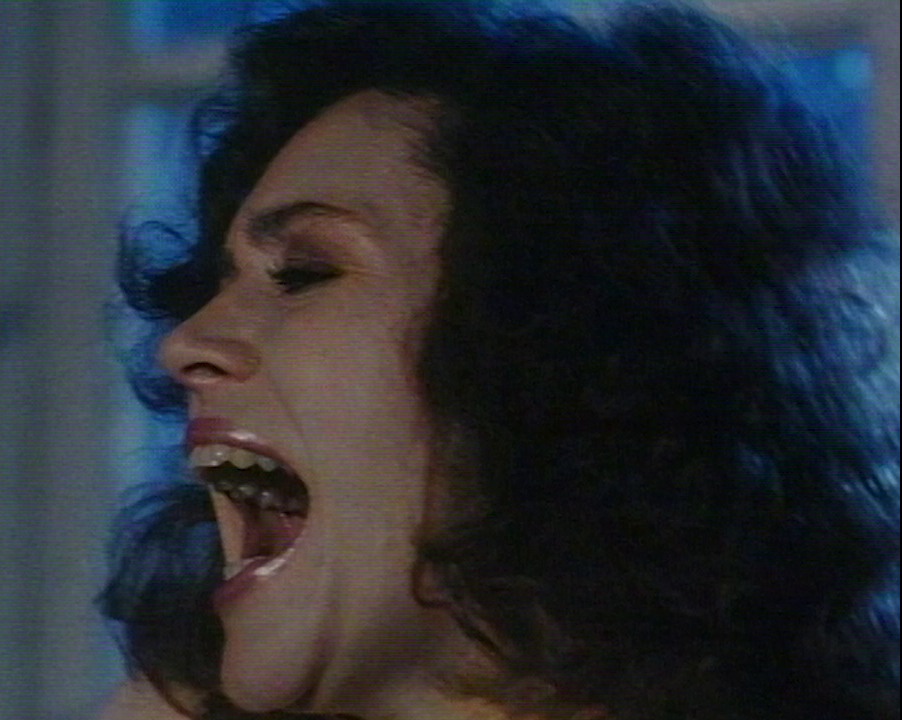
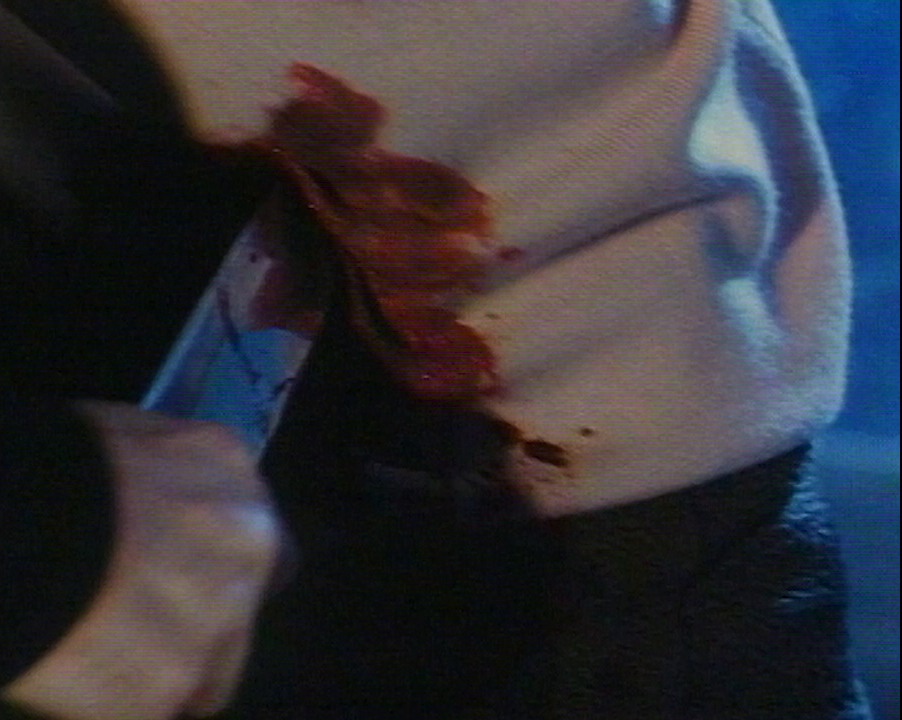
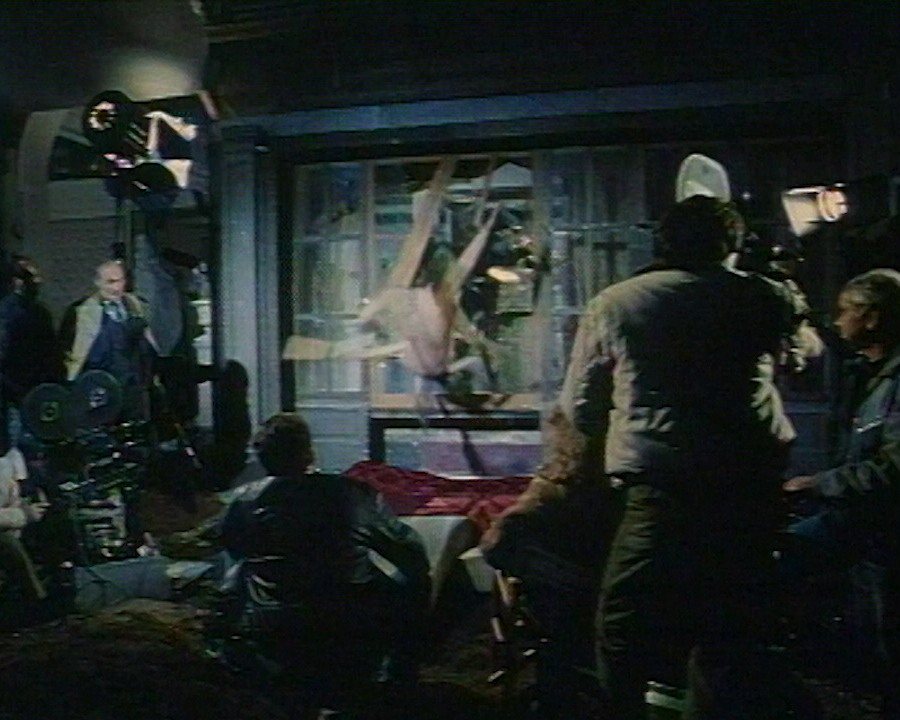
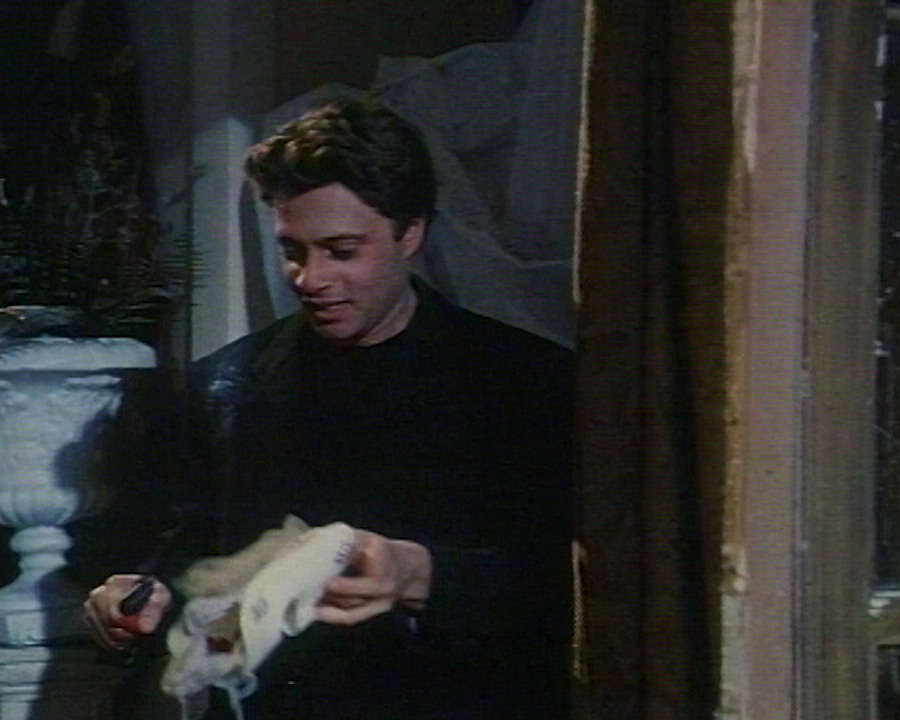
Calypso drives Corinne Clery, playing a version of herself, to Cinecittà and is invited to watch a shoot. She mistakes a masked attack for a real murder. After a costume break, the actor's prop blade is replaced and Clery is killed during a take. Calypso identifies the wardrobe worker through chalk accidentally transferred to a duplicate jacket. The wardrobe worker confesses jealousy over a man and a film role.
Corinne Clery, playing a fictional version of herself, turns an ordinary taxi fare into a studio visit. Calypso’s excitement at meeting a performer prepares her uncertainty about what is real on the set.
Calypso crosses a store of mannequins and theatrical objects before reaching the set. The film places fabricated bodies around a visitor who will struggle to tell simulated violence from an actual death.
A masked attacker and blue-lit window initially occupy Calypso's field of view without enough context. The director's interruption widens the situation to include the crew, camera and a rehearsed action.
The second take is applauded as a convincing death before the crew realizes Clery is dead. The director's confidence becomes part of the delay in recognizing injury.
Calypso reconstructs the substitution through a chalk mark, two similar jackets and a missing-button excuse. The film's mystery turns continuity between takes into forensic evidence.
Scene studies · Luigi Cozzi
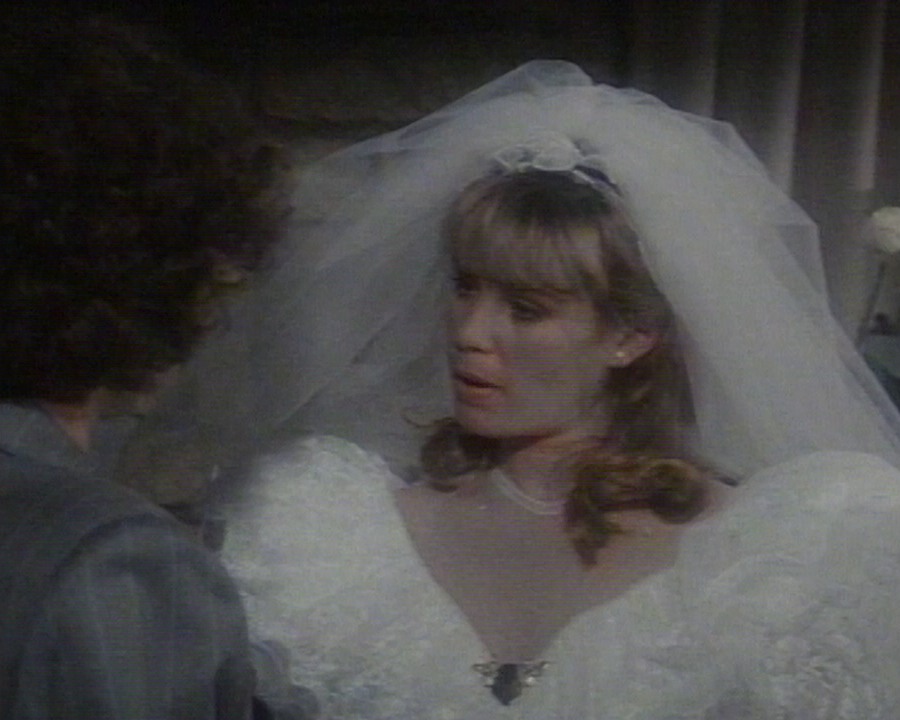
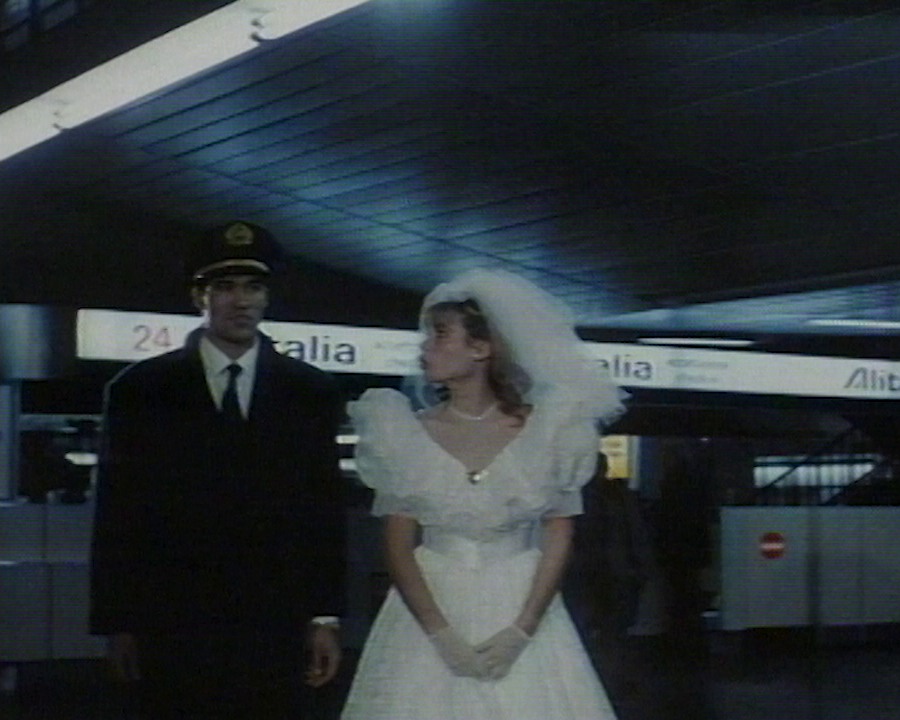
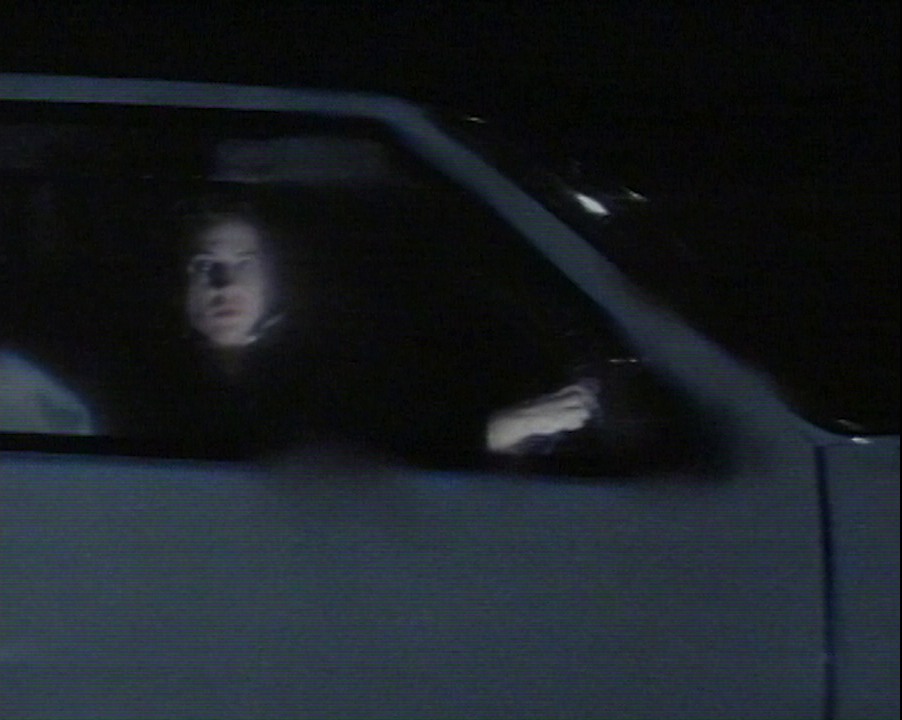
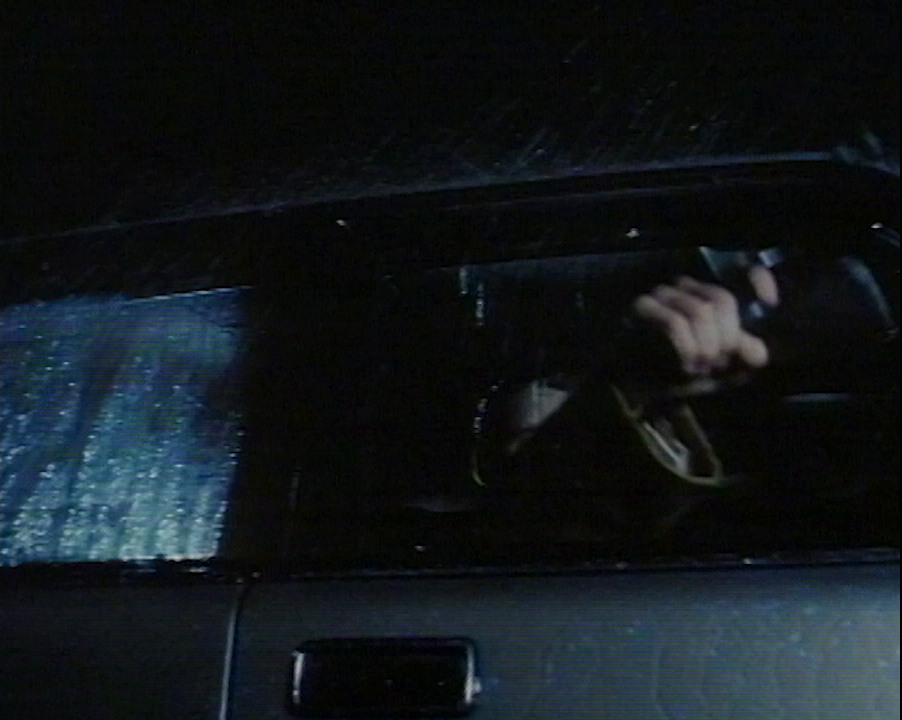
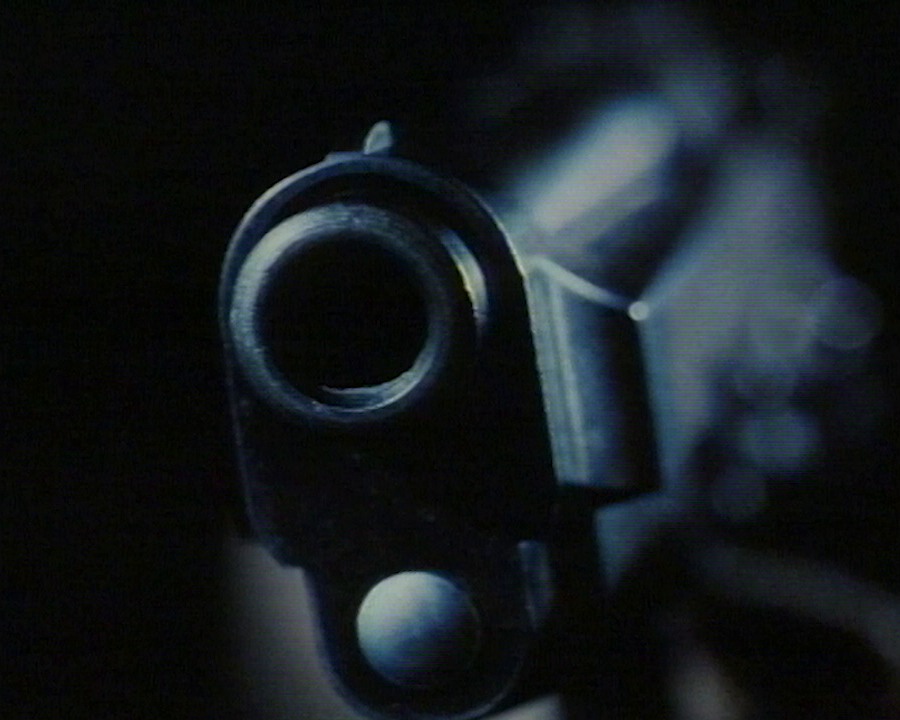
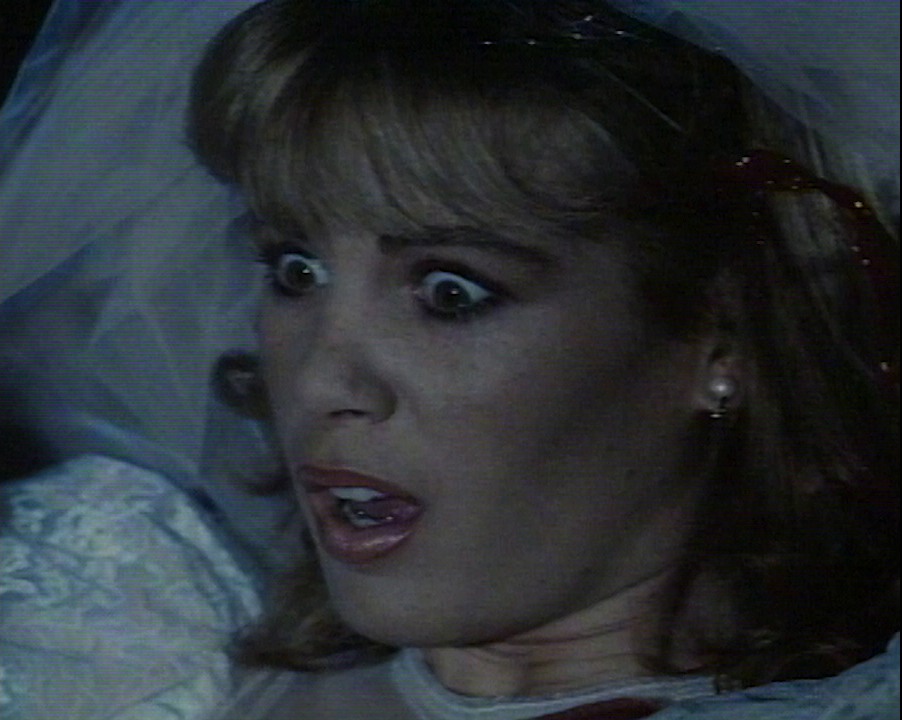
Mara leaves preparations for a midnight wedding to meet her former lover Carlo, an airline pilot, at the airport. Her new fiancé James and cousin Clara follow separately. Red 27 becomes her driver and confidant. During a storm, someone fires into the back of the taxi and kills her. Police stop the three pursuing cars. The solution identifies the British fiancé through the right-hand-drive car and his wet sleeve; Red explains that thunder concealed the gunshot.
Mara's bright veil and dress remain conspicuous inside rooms, the cab and the airport. What begins as bridal preparation becomes the visual continuity through a nocturnal pursuit.
The argument with Carlo introduces an explicit threat. The cousin's resentment and James's pursuit distribute suspicion across three separate vehicles.
Front-facing cab views and rear-view-mirror images separate driver and passenger while allowing an intimate conversation. Red offers help but cannot undo the relationships she describes.
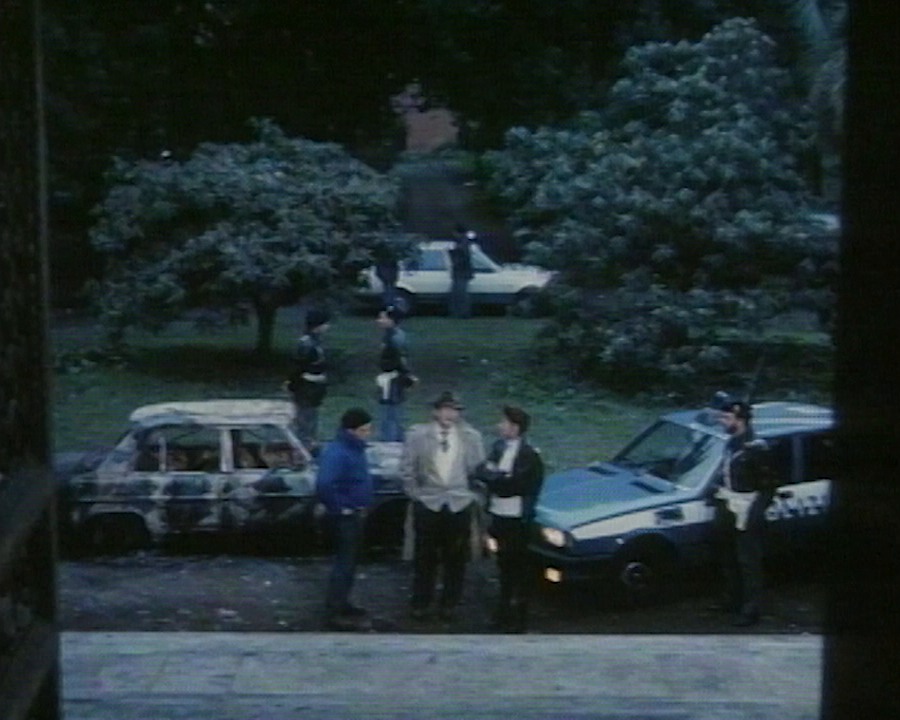
The storm obstructs visibility and, in the final spoken explanation, masks the shot. The same rain leaves evidence on a sleeve. The solution returns to the physical relation between two passing cars.
Scene studies · Luigi Cozzi
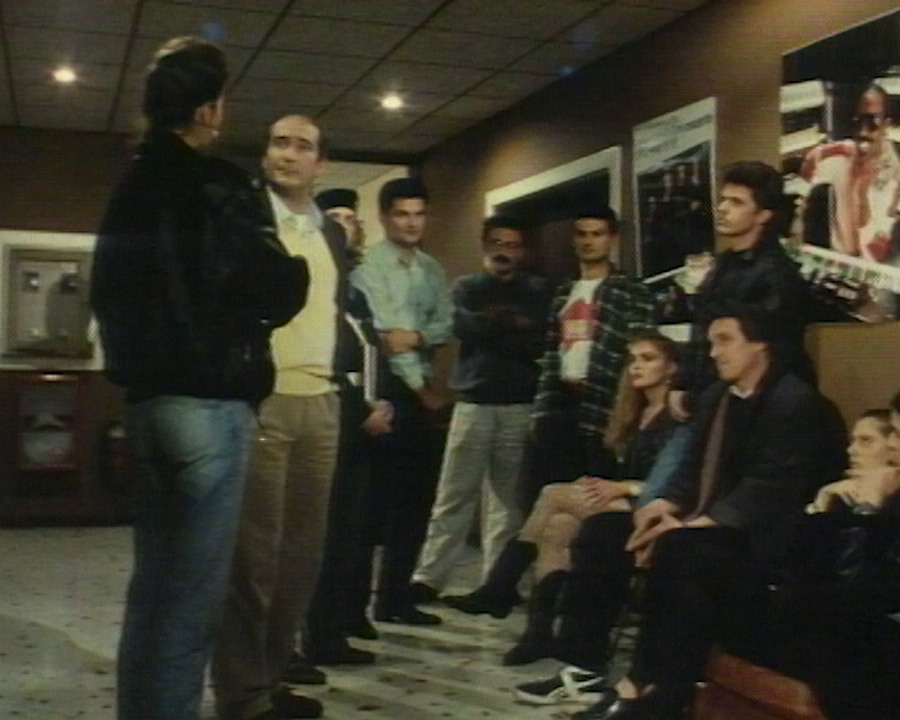
Cinzia wants a cassette recovered from Calypso's taxi. It is said within the fiction to contain unreleased Jim Morrison material. A producer and band are seeking new songs. An extortion demand claims half the royalties. Cinzia is murdered near the studio's corridor telephones. Calypso disproves the mixer's telephone alibi because one phone was broken and the other occupied by Cinzia. A parallel ghost-cab incident connects the episode to the series' continuing supernatural thread.
Microphones, headphones and the mixing desk establish the recording studio before the cassette becomes contested evidence. The mystery is organized around who possesses a recording and who might profit from it.
The abandoned garage and driverless cab form a parallel mystery. Radio dispatch carries the incident between Calypso and Red 27; it does not provide the solution to the studio murder.
The corridor's broken telephone is established before the murder. When the mixer claims to have called his wife, a small practical inconvenience becomes decisive evidence.
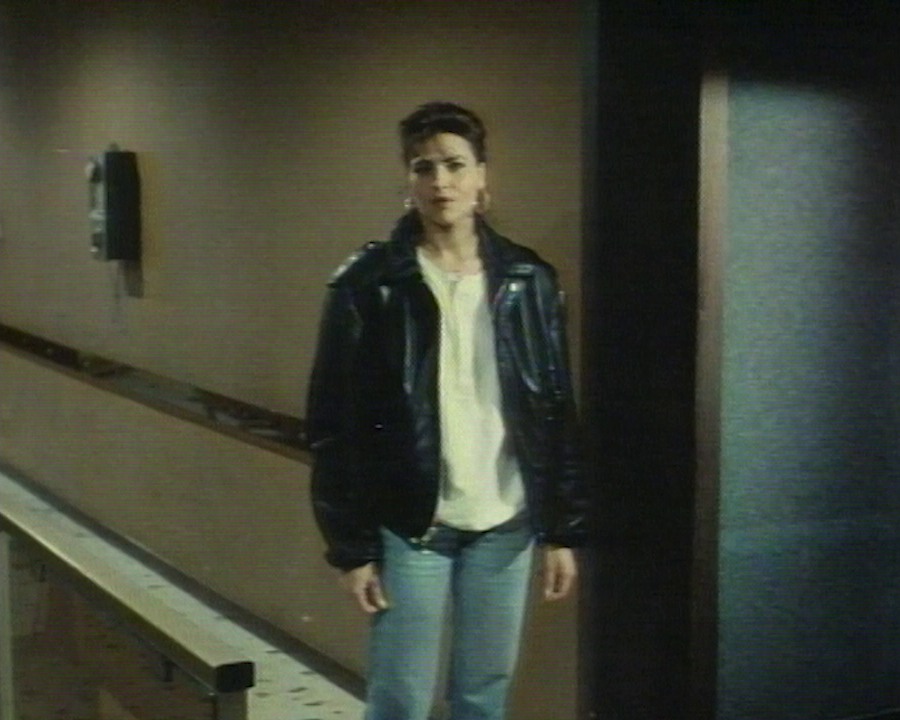
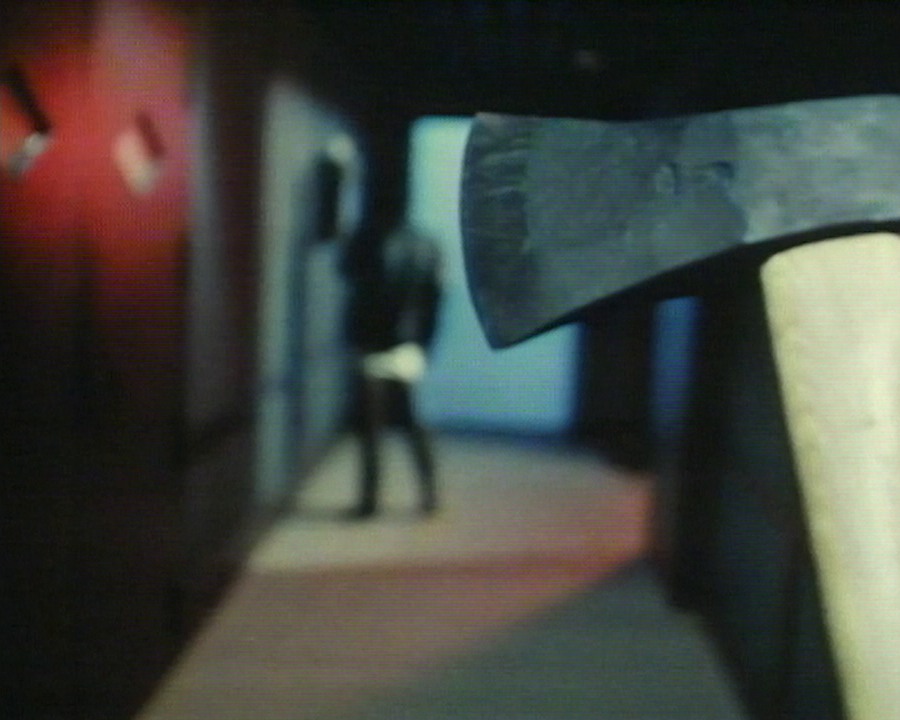
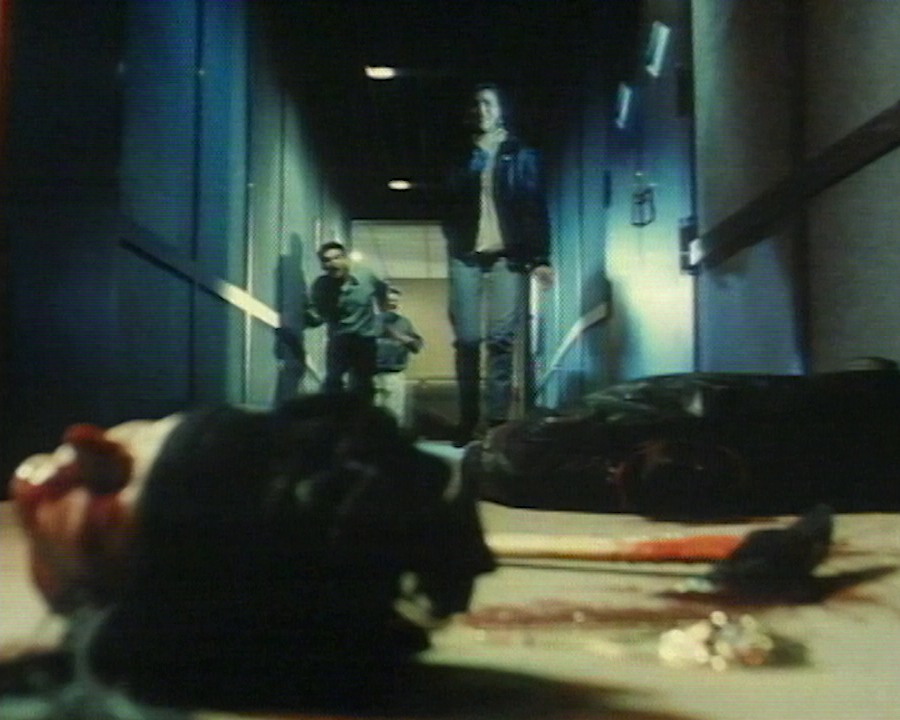
A low view isolates the axe in the foreground while Cinzia remains distant at the phone. Corridor depth separates the threat from the person who cannot see it. The body is later held low in the image as Calypso and police approach.
Scene studies · Luigi Cozzi
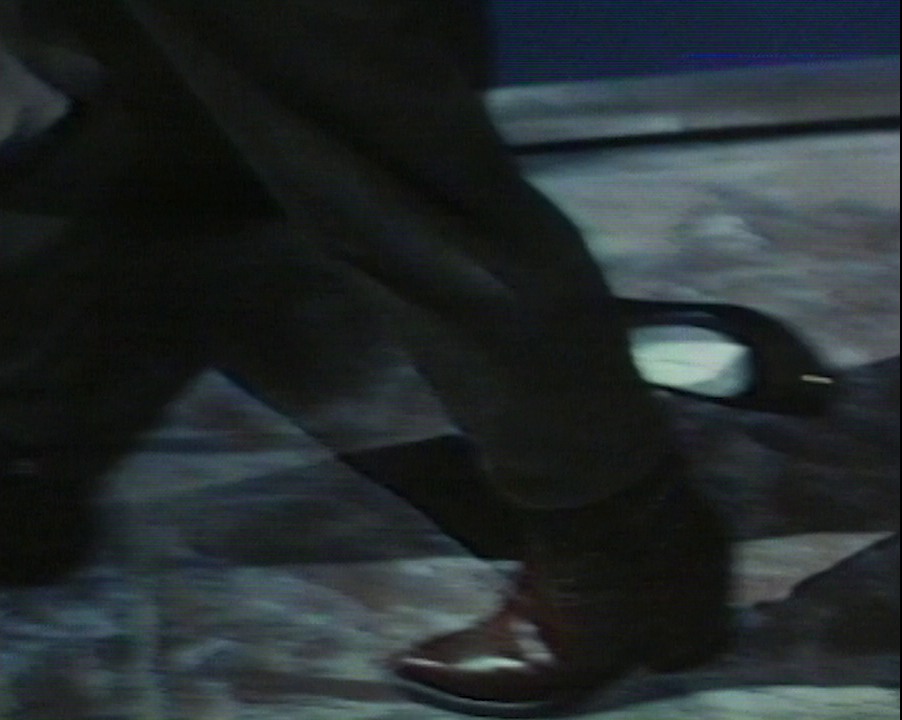
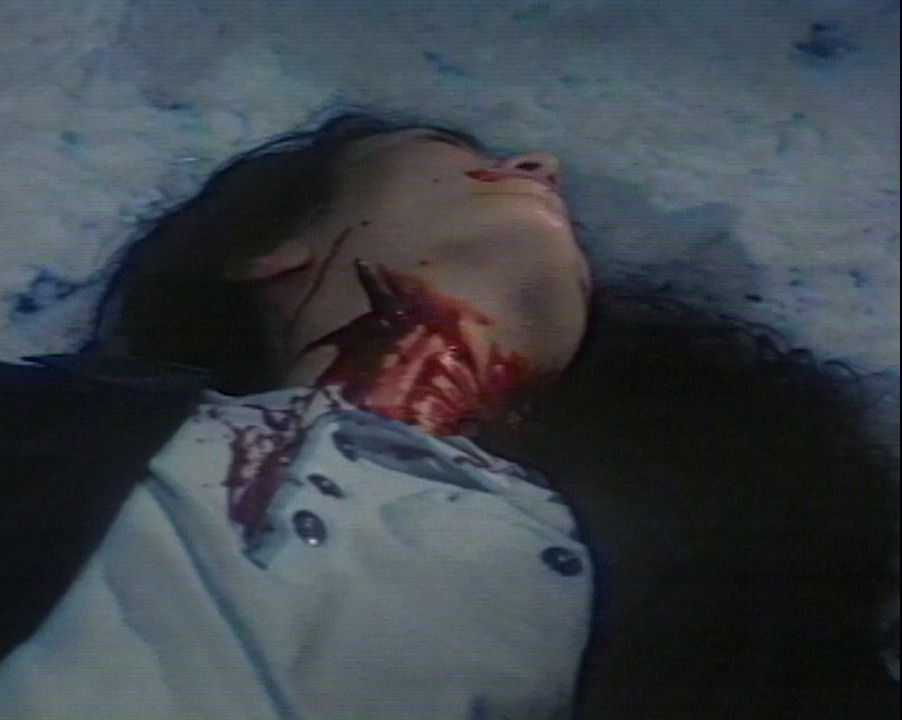
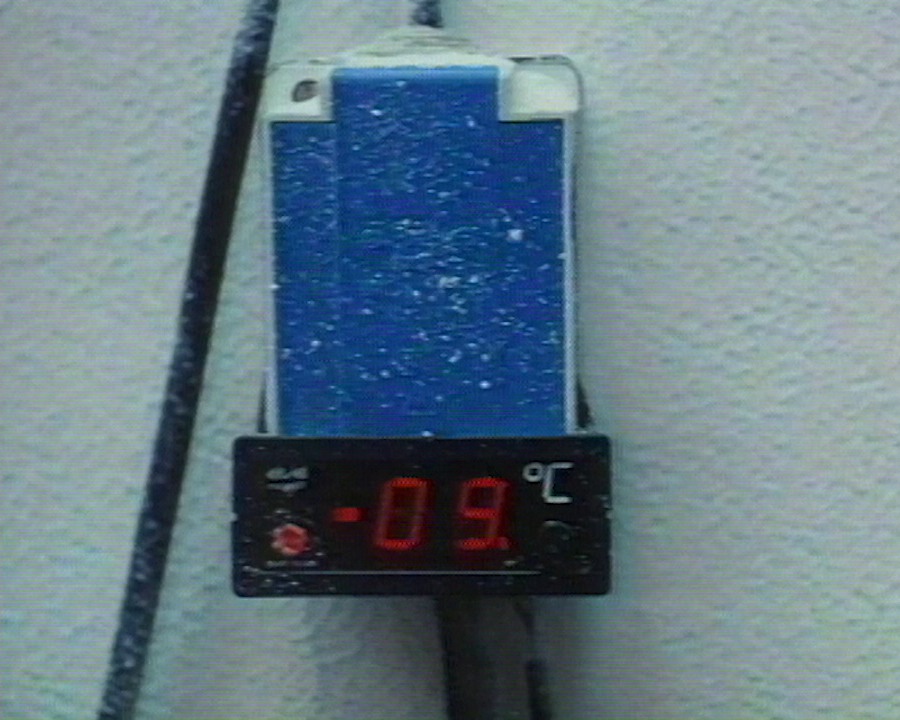
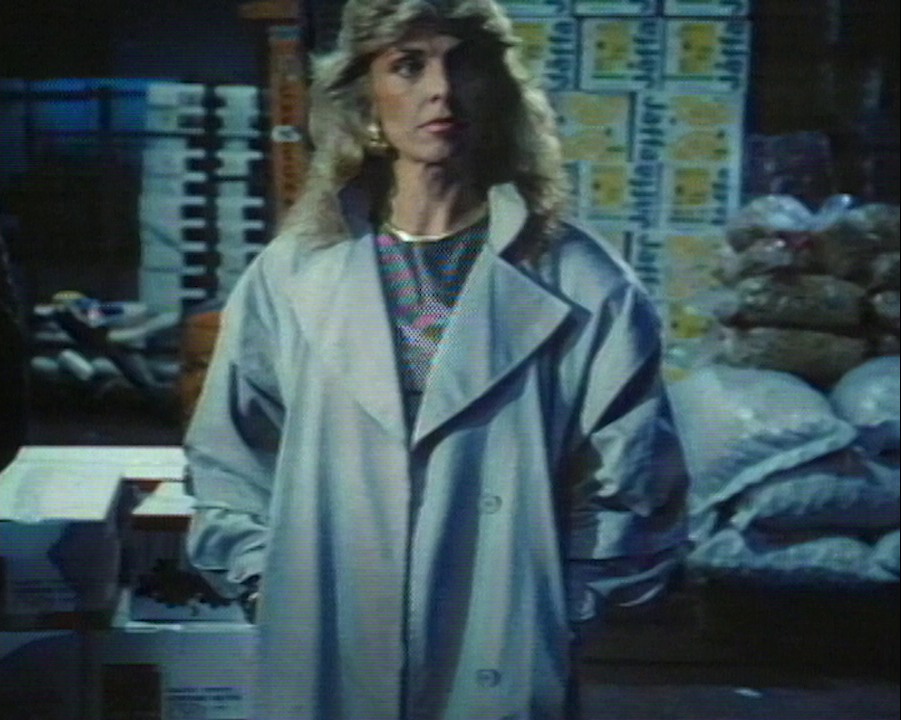
An escaped woman commandeers Calypso 9 with a gun she says is empty, seeking proof of innocence in a warehouse. Calypso follows, finds her dead in the cold room and is locked in. Red 27 locates the abandoned taxi and rescues her. The warehouse fronts cocaine distribution. The shoe she briefly saw identifies owner Perla Ramati, who takes her hostage before being overpowered.
The male customer's wait for change permits the escaped woman's entrance. The mundane money dispute later supplies the first radio alarm.
Cozzi stages the pursuit around pallets, sacks and blue-lit gaps. The long search directs attention toward movement and concealed figures before the cold room closes off escape.
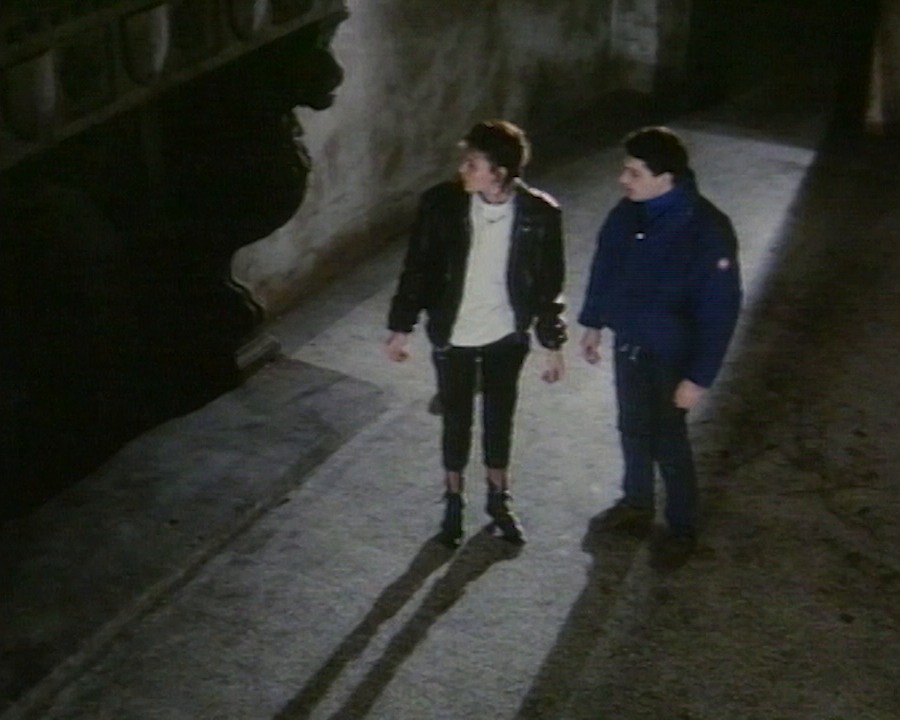
The sealed room makes time bodily: blue light, visible breath and falling temperature extend danger after the killer withdraws. The discarded shoe is already available for the later explanation.
The solution returns to an object glimpsed at the threshold. Ramati's hostage-taking interrupts the apparently settled explanation and restores physical jeopardy.
Scene studies · Luigi Cozzi
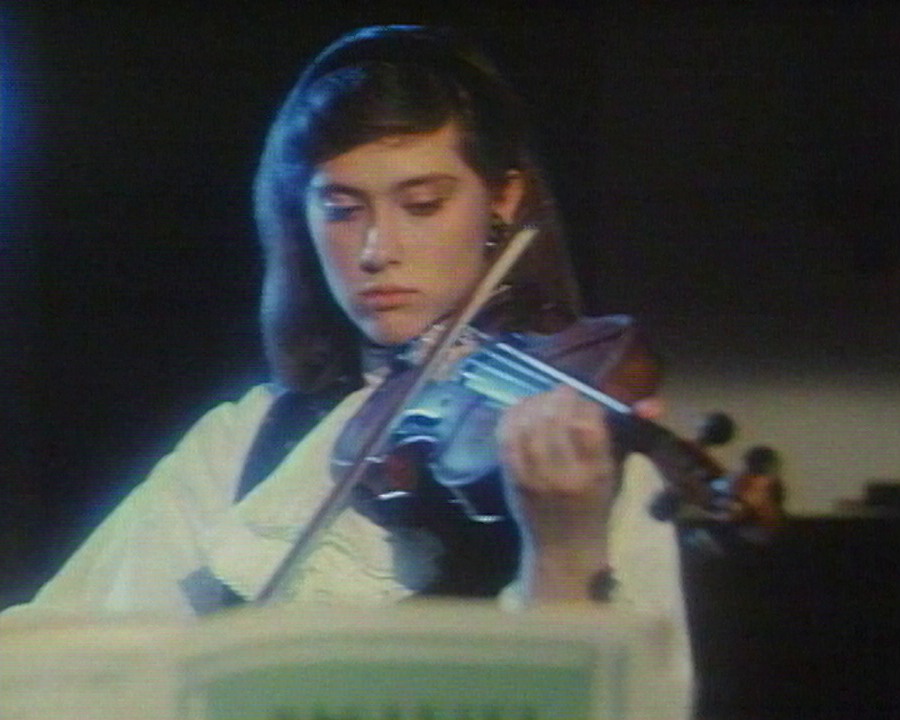
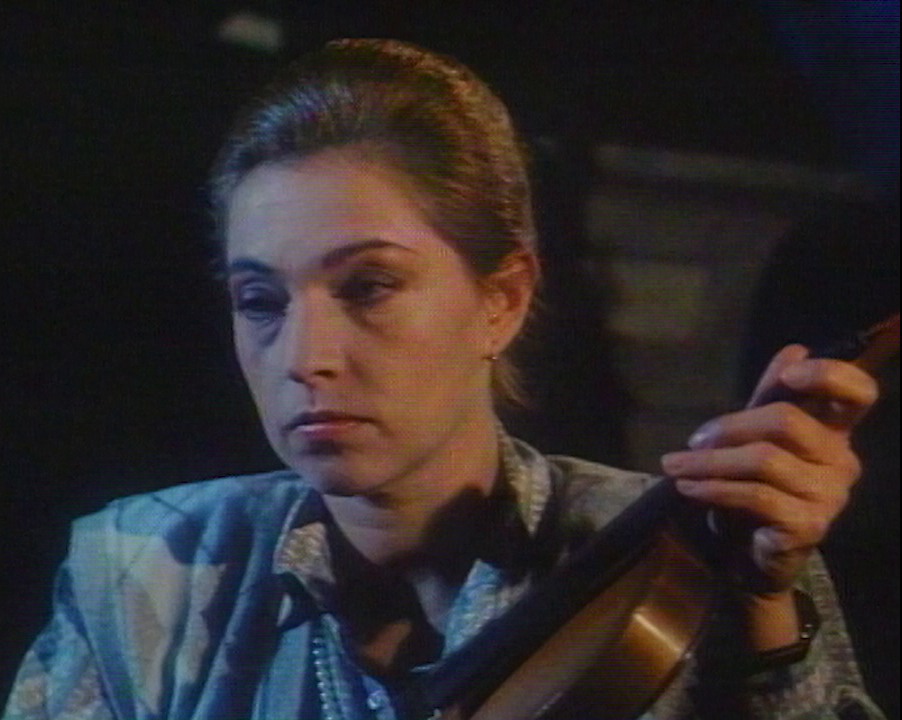
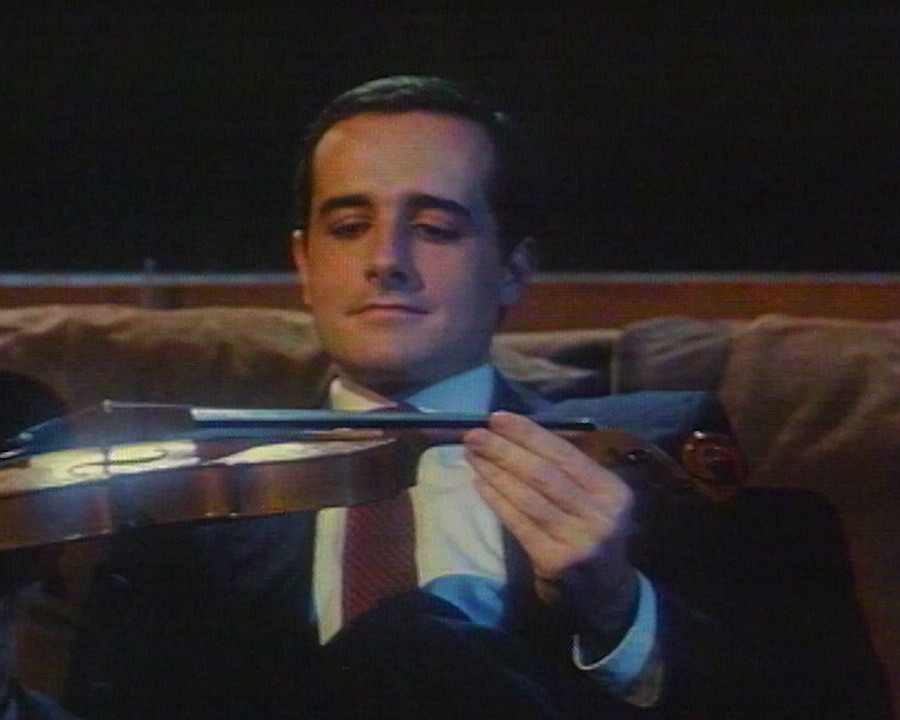
After the ghost taxi leaves Red stranded, he seeks a telephone in a music teacher's house. Anna Dotti makes him a neutral witness to an auction of a supposedly priceless violin. One collector calls it a fake; another still wishes to buy. Anna is murdered with the instrument. Red recognizes that the purchaser wanted to legitimize possession of the real violin stolen seven years earlier.
A search for a telephone leads Red into a private salon. The hostess’s Poe references announce a Gothic space within an ordinary taxi route.
A student plays before the gathering turns to price and ownership. Cozzi separates music as activity from the violin's value as a collectible.
Collectors face Anna across the room as the violin passes between them. Their reactions to the alleged forgery are the evidence Red will later interpret.
The broken instrument seems to suggest an intruder who did not understand its value. The solution reverses that inference: the collector knew precisely why the copy needed to disappear.
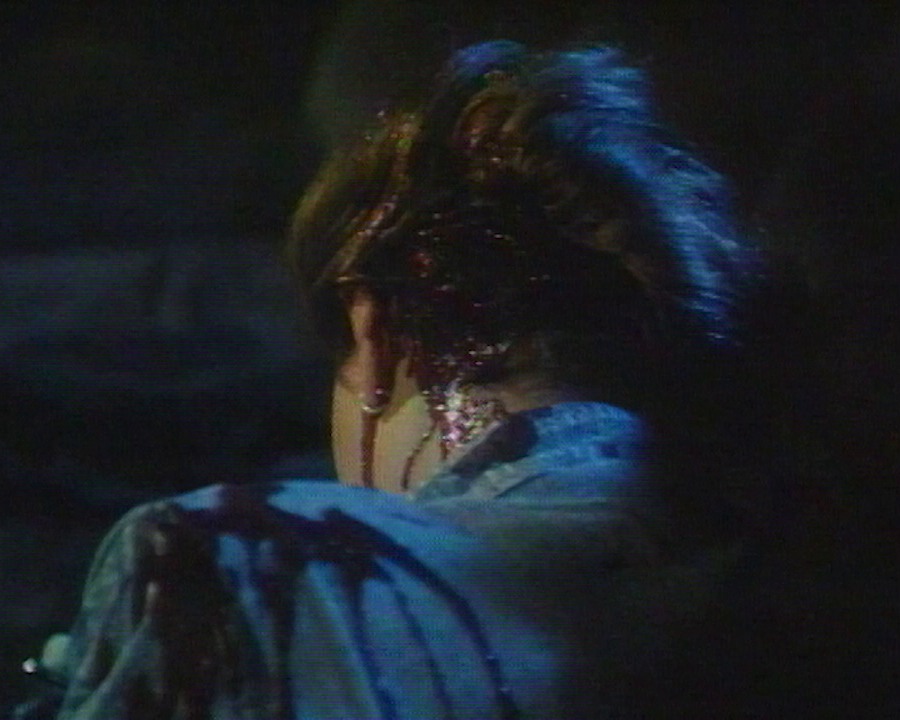
Scene studies · Luigi Cozzi
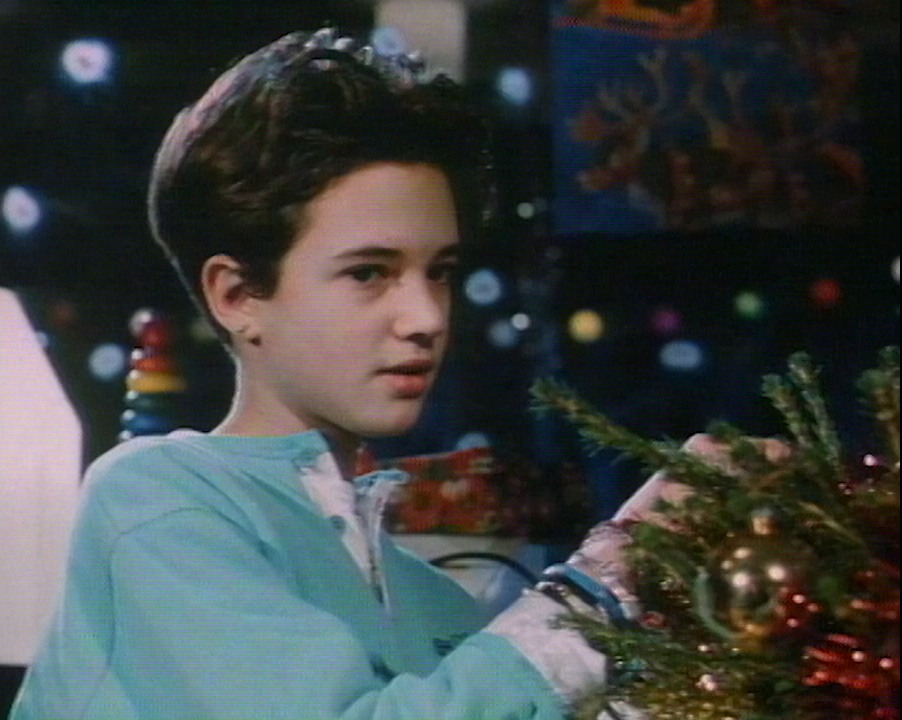
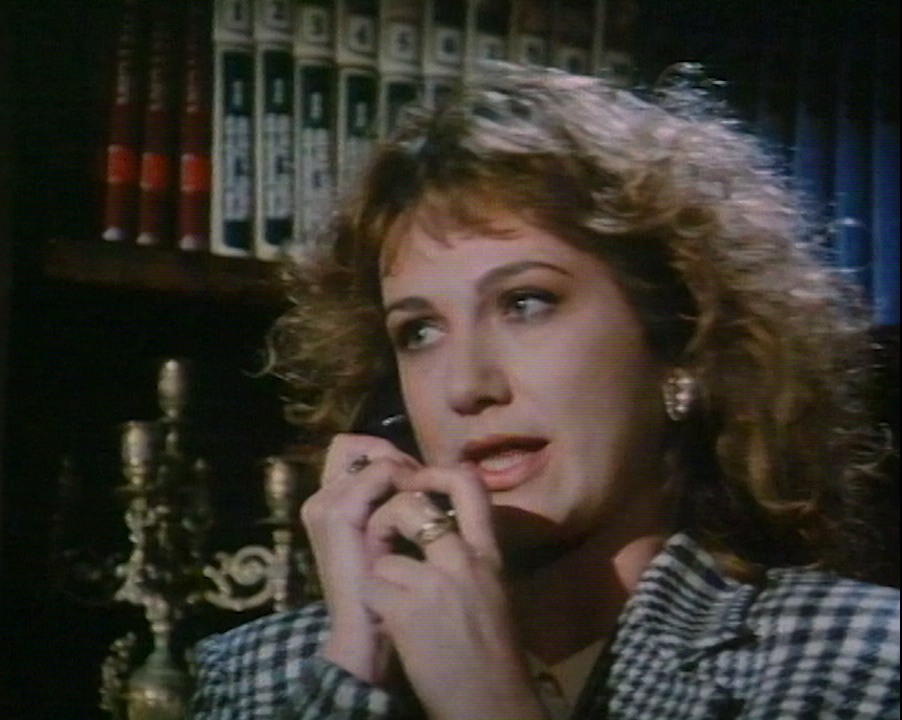
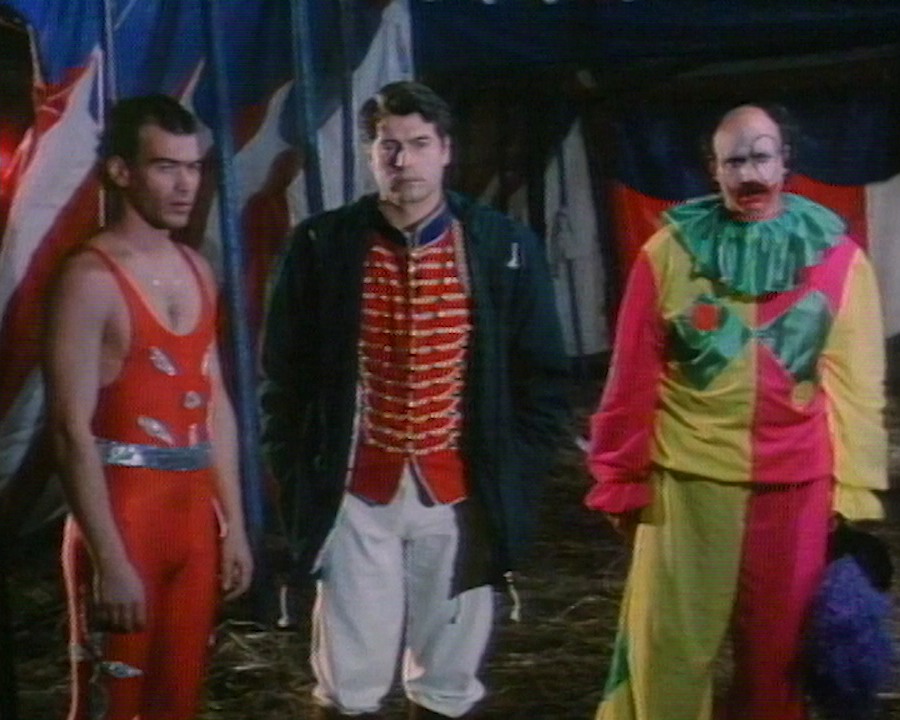
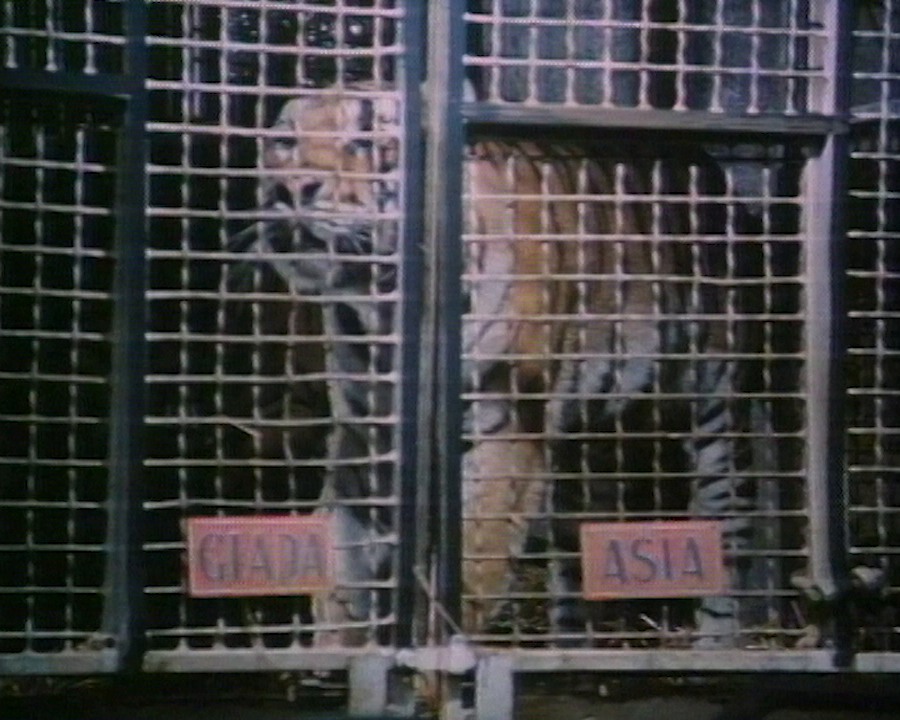
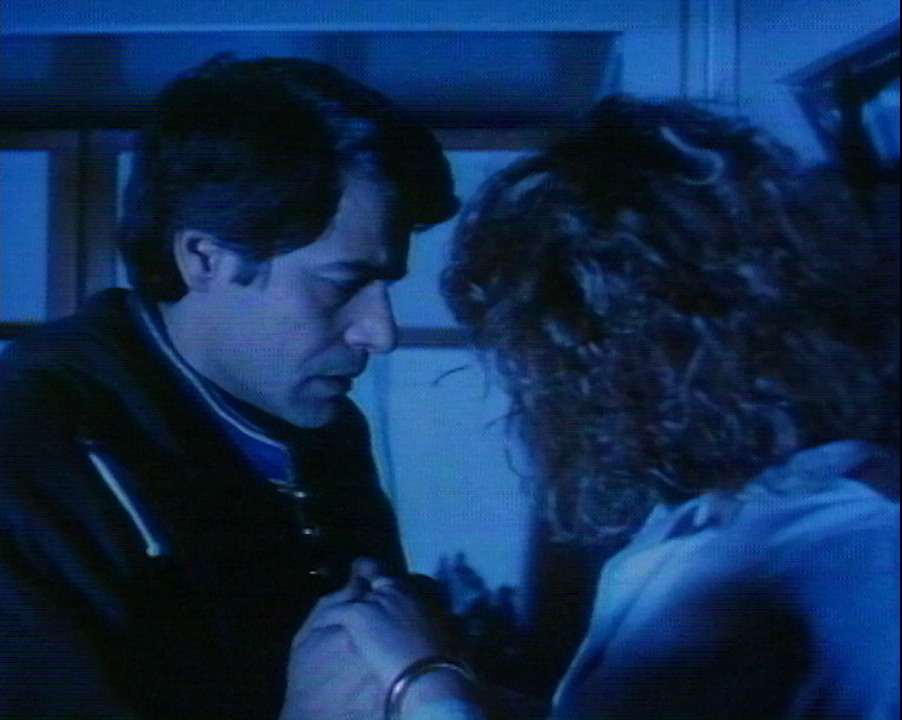
Two girls interpret their mother’s threats literally and enlist Calypso to find their absent father at a circus. Several performers could be the missing parent; the names on two tiger cages provide the clue. The family reunites without a murder.
Adult anger is heard through children’s fear. The telephone conversation borrows the language of a murder setup, while the Christmas decorations keep another possible ending in view.
Calypso and the children move between performers, animals and spectators. Each attraction expands the search while offering a new candidate for the missing father.
The names Giada and Asia on the tiger cages connect the circus to the girls. A small written detail settles what the spectacle has kept open.
The investigation restores a family rather than identifying a corpse’s killer. Cozzi’s account of deliberately making a Christmas episode for children supports this tonal change.
Scene studies · Luigi Cozzi
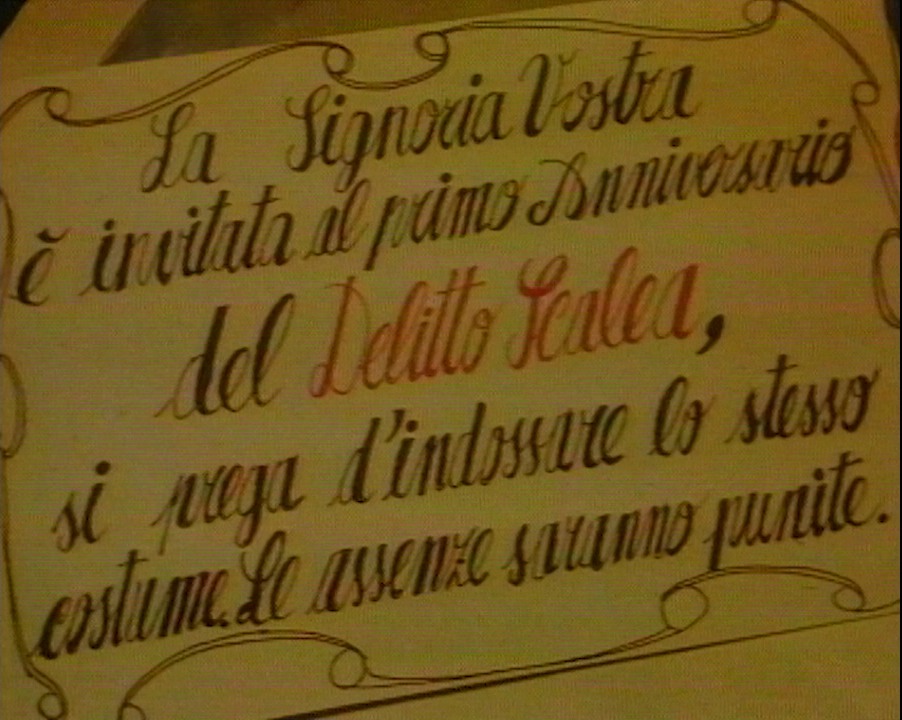
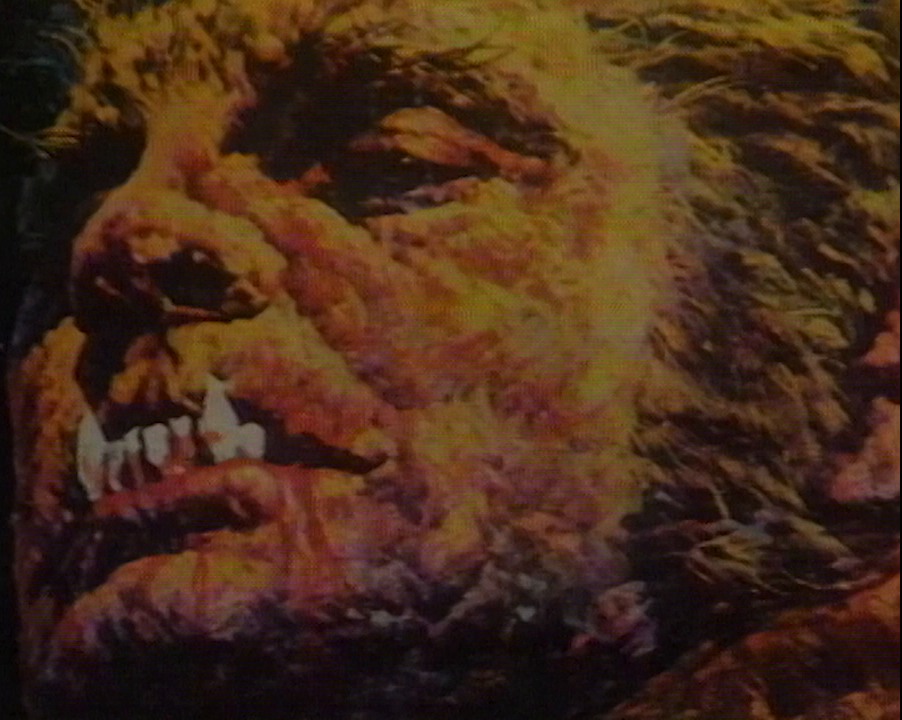
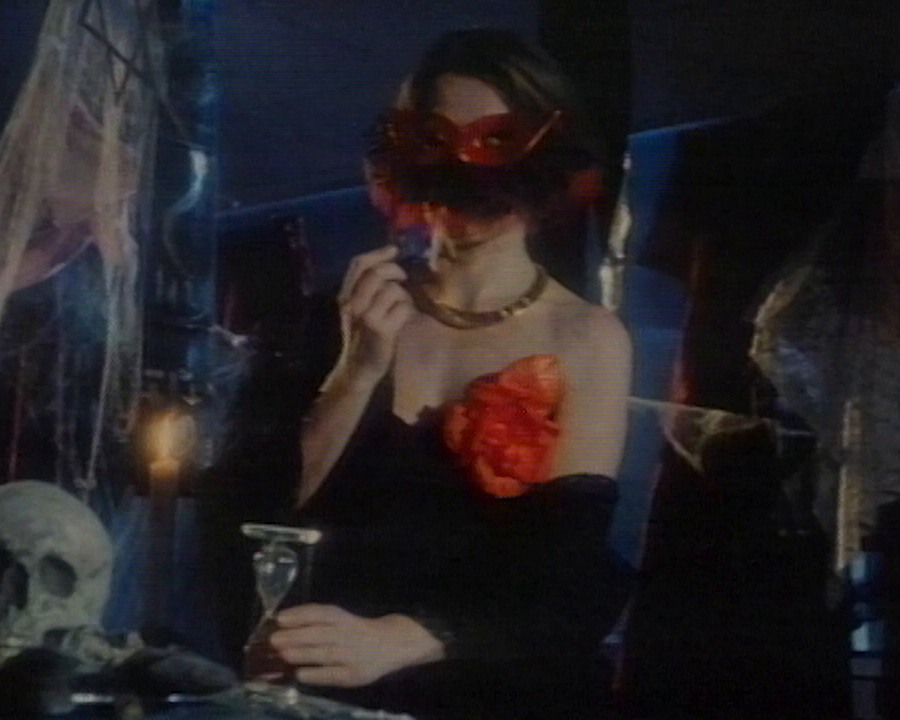
Calypso follows a masked fare into an abandoned venue. Four horror writers have been summoned on the anniversary of Eliana Scalea’s murder. Her sister Maria stages an accusation, then is killed. A dropped flower supplies the clue that identifies Ranieri, the jealous former mentor.
Blue light and steep steps introduce the masked visitors before the taxi explains their journey. The built space makes an ordinary fare look like an approach to a ritual.
The invitation orders the guests to wear last year’s costumes. Repetition turns clothing into a system for identifying four suspects, while the flowers supply a second, quieter set of distinctions.
Maria attacks the writers’ greed from behind her red mask. Her speech explicitly invokes The Masque of the Red Death; the episode makes genre costumes the cover for a publishing-world grievance.
The solution abandons the spectacular masks for a small dropped object. Ranieri’s confession recasts artistic mentorship as possessiveness; Calypso’s investigation ends with the inspector’s reconstruction.
Scene studies · Luigi Cozzi
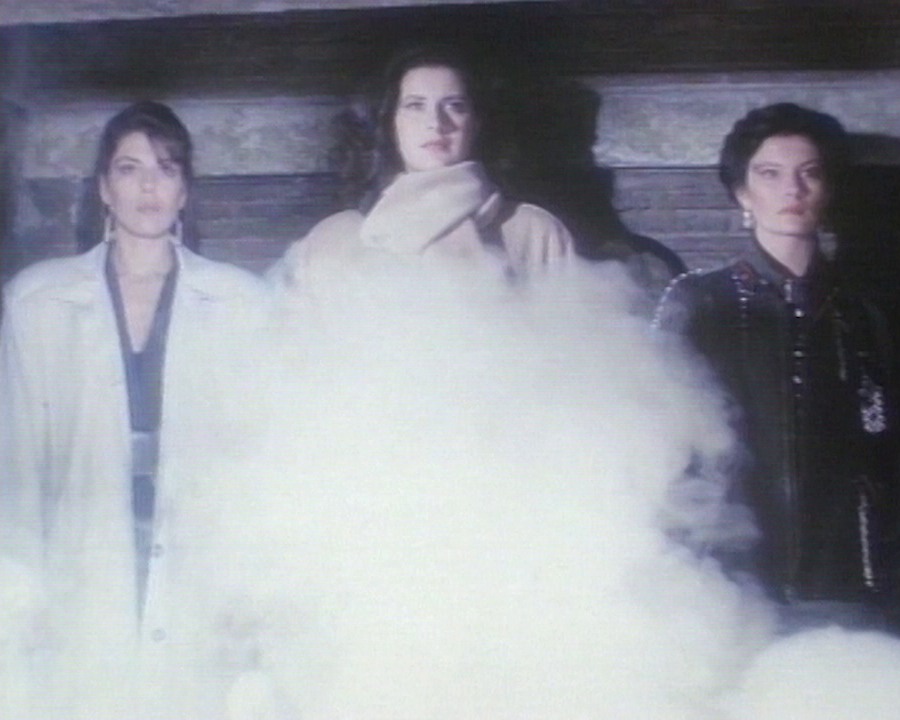
A luminous taxi leads Calypso and Red to a mansion where a childlike visitor asks them to expose a disguised extraterrestrial. A shadow test identifies the impostor. The empty house and old wreck leave the encounter unresolved.
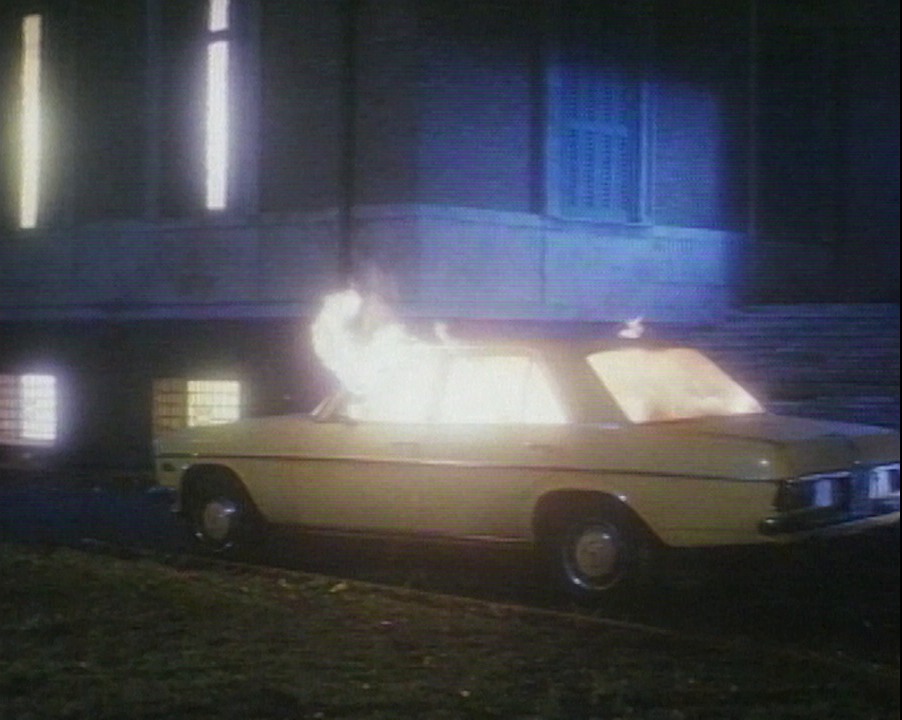
The recurring driverless cab becomes the centre of the episode. Its luminous arrival turns a familiar vehicle into an impossible object.
Clocks, candles and the glowing sphere make the mansion a theatrical space. The burning cab and planetary imagery expand a taxi investigation into science fiction.
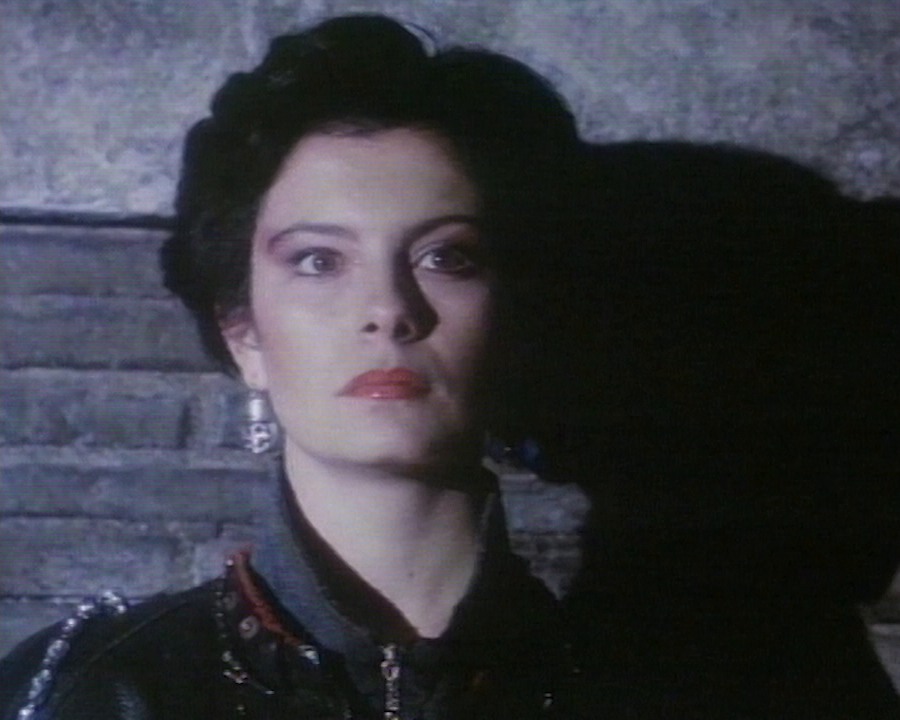
The opening conversation about beings without shadows prepares the final test. The solution depends on comparing the figures and their shadows, rather than accepting the most spectacular appearance as proof.
The drivers awaken in a bare hall; daylight and the apparently long-abandoned wreck undermine the elaborate nocturnal scene. The retained sphere keeps the experience from closing as a simple dream.

Effects & suspense
Each sequence has a lead image and an optional gallery. Open a still to move through the enlarged images.
The shoe, the body and the thermometer form three different kinds of evidence. The room first conceals a killing, then threatens Calypso without requiring the killer to remain in view. Blue light and the sealed door turn a search into an endurance scene.
Ciak si muore places the crew around a convincing performance of injury. The blade insert and the actor’s reaction are followed by the crew watching the take; their mistaken approval delays recognition. The mystery concerns the substitution of a prop within the fiction. The images alone do not identify the fabrication method used by the actual effects crew.
Sposarsi è un po’ morire separates the weapon, Mara’s recoil and the blood on her white dress. The rain is both concealment and evidence: the final explanation returns to the shooter’s wet sleeve and the cars’ relative positions. Red’s dialogue identifies thunder as masking the shot.
Il taxi fantasma moves from a luminous vehicle and burning car to a room arranged around a glowing sphere. Smoke briefly dissolves the group before the film returns to daylight and an empty hall. The sequence is discussed through its visible changes, without assigning undocumented miniature, optical or mechanical techniques.
The people behind the night shift
The interviews are presented as attributed recollections. Episode images and photographed pages provide a separate record to compare with what the speakers remember.
Dario Argento · TV Nightmares
Argento says the compact detective stories were not the work he wanted to direct himself. He was occupied with the audio postproduction of Opera, his Nightmares shorts and the demands of Giallo, including travel between Rome and Milan. He describes giving the directing work to Bava and Cozzi. This account separates authorship, presentation and production involvement instead of merging them into a single “Argento television series” credit.
Passage: 05:14–06:54
He distinguishes the audience-detection puzzles from his own nightmares and effects demonstrations. His recollection of resistance to cuts belongs to that broader television context.
Passage: 03:09–04:01 · Interview source
Luigi Cozzi · Giallo on the TV
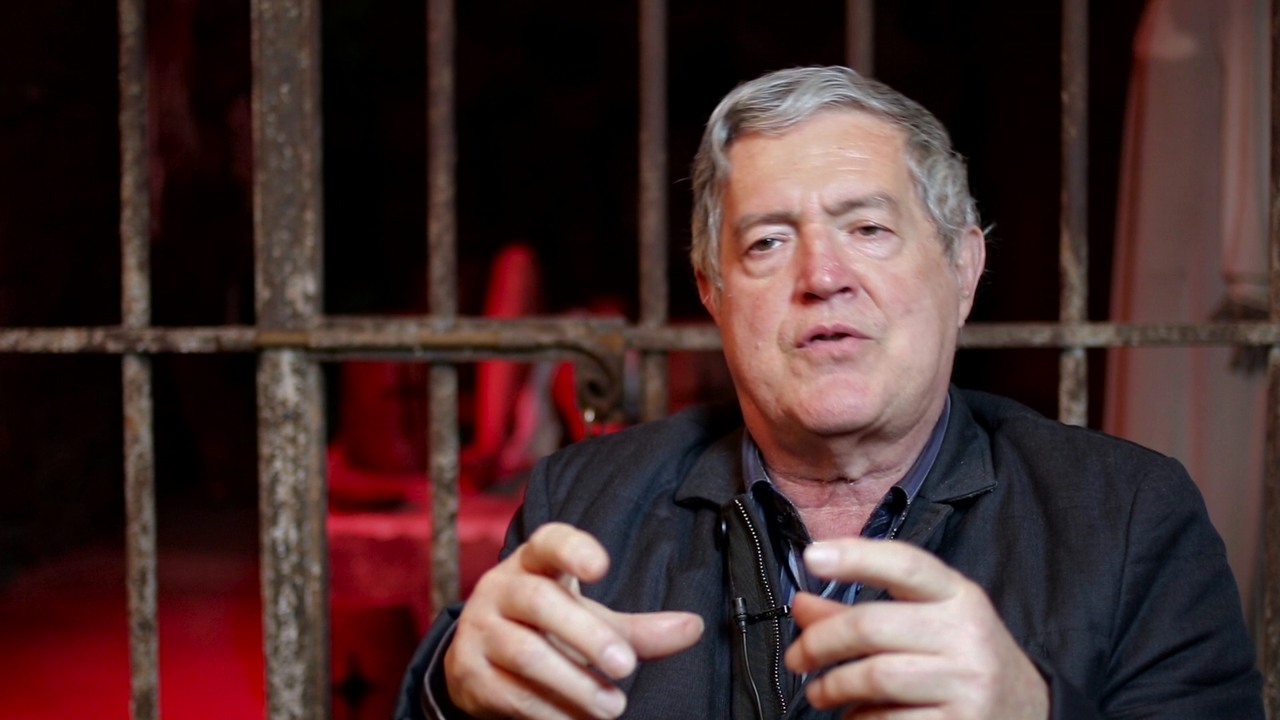
Cozzi’s account follows the change of director, the 35mm workflow, late-arriving scripts and the compressed journey from night shooting to broadcast. He credits the available equipment and crew while describing severe time pressure. His recollection that Argento handled mixing adds a specific production role without turning Argento into the episodes’ director.
Passage: 09:08–14:46
He says Delitto in rock drew on his already-written Paganini Horror screenplay, replacing Paganini with Jim Morrison. He also describes Giallo Natale as a deliberate family story, bringing Asia Argento and Daria Nicolodi into an episode without the usual killing.
Passage: 14:54–18:17 · Interview source
Dardano Sacchetti · Big Giallo Taxi
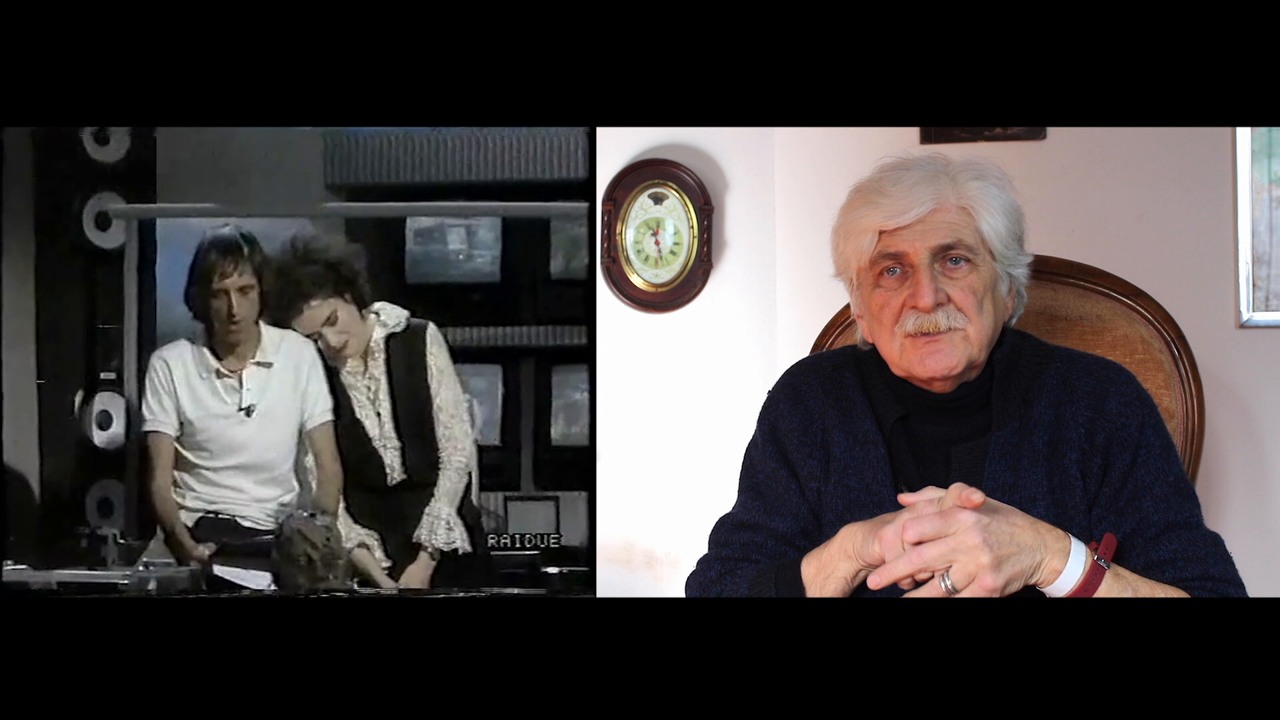
Sacchetti remembers proposing the recurring taxi drivers as a flexible framework: a passenger can bring an unfamiliar world into the same vehicle each week. His account stresses concise construction and clues that the viewer can see. The constraints of a short slot become a writing discipline rather than simply a reduced feature-film plot.
Passage: 01:37–05:20
He recalls Argento commenting on footage without visiting the Night Shift set. That is a description of feedback and collaboration, not evidence of uncredited direction. The interview’s photographed script pages offer a more tangible trace of the writing process.
Passage: 08:18–08:55 · Interview source
Lamberto Bava · Taxi Drivers
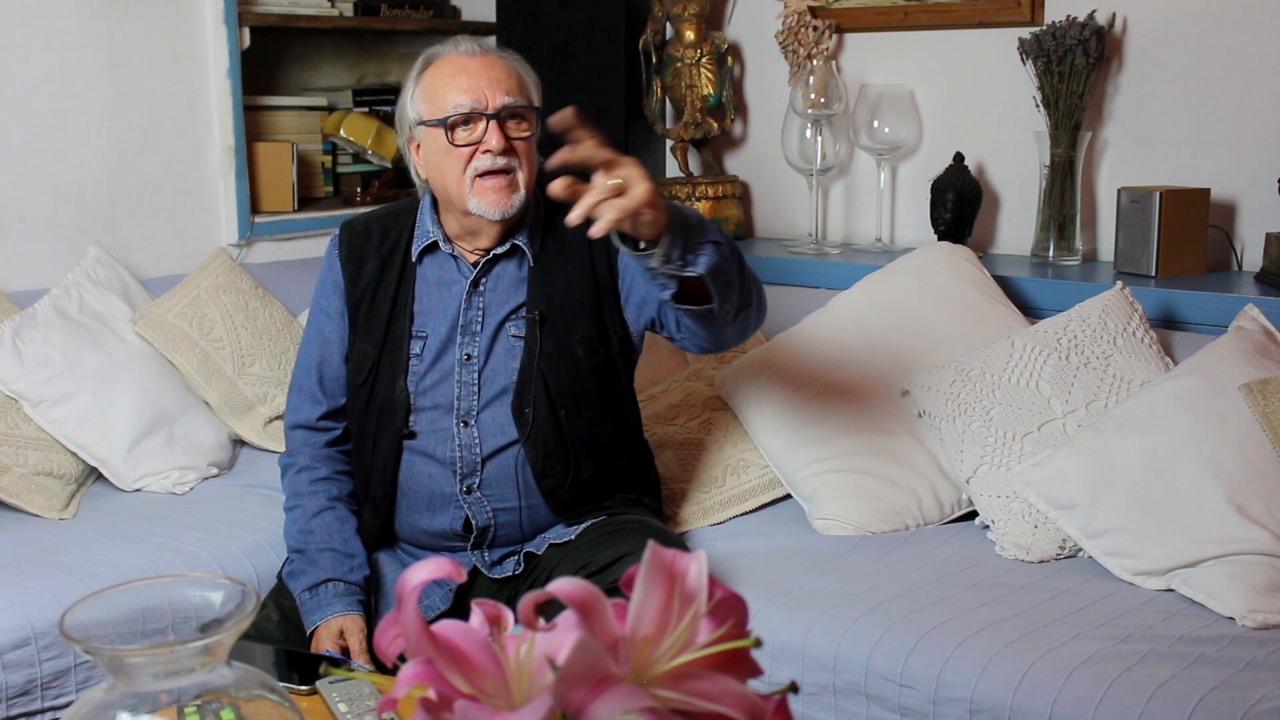
Bava remembers the difficulties of night lighting, a prolonged run of nocturnal shooting and a capable, well-equipped crew. His recollections of Vitale, Cerri and Gazzolo locate the recurring characters within a working company. His estimate of five or six episodes is less precise than Cozzi’s explicit six-and-nine division.
Passage: 02:12–05:27
He recalls scripts arriving close to filming. He also traces his friendship with Argento back to the period of Mario Bava’s Shock, before later assistant-directing and producing collaborations. This is Bava’s account of a professional relationship, distinct from a formal film credit.
Passage: 07:51–09:40 · Interview source
Antonella Vitale · Calypso 9
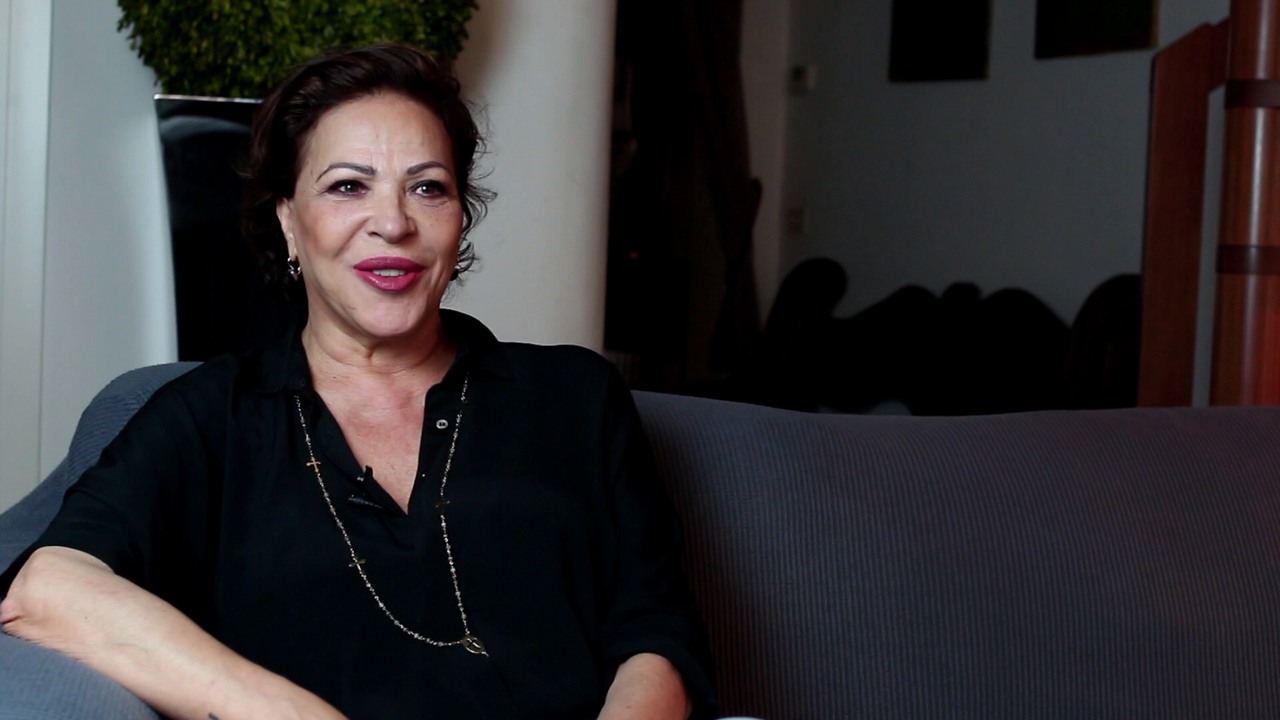
Vitale connects Calypso to her preceding small part in Opera. She describes the character as a student paying for her studies by driving at night: intelligent, practical and able to help the police. Her account gives the recurring investigator a life beyond the succession of crimes.
Passage: 00:14–02:22
She remembers different but supportive working relationships with Cozzi and Bava, long nights in Rome and being recognized by taxi drivers after the broadcasts. Her memories describe a performer’s experience of the series without supplying independently verified audience figures.
Passage: 02:25–05:15 · Interview source
From page to screen
Big Giallo Taxi shows a working script headed Turno di notte — Il bambino rapito, marked as a provisional title and dated Milan, 23 September 1987. The photographed opening places the dispatch routine beside the kidnapping; an instruction in the subsequent pages requires the intruder’s face to remain unrecognizable.
This can be compared with the episode’s nursery sequence, which isolates ornaments, hands and curtains before the mother discovers the disappearance. The pages are a surviving extract, not a complete screenplay.
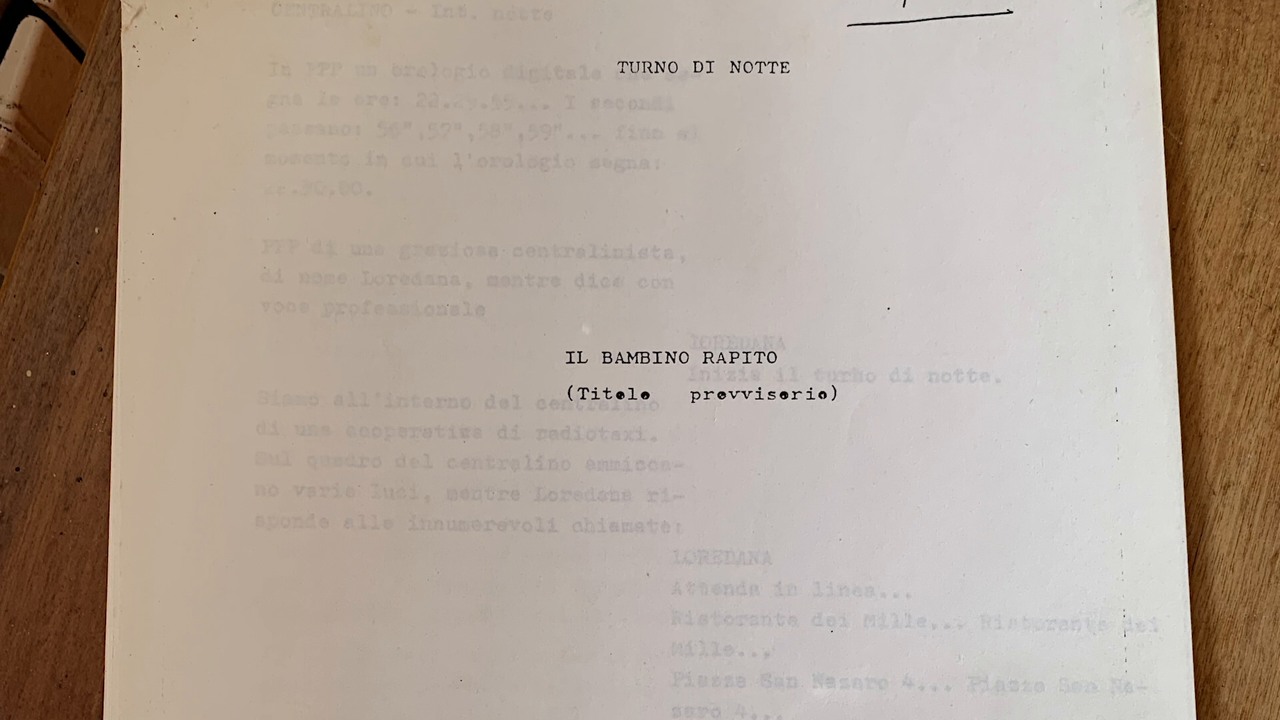
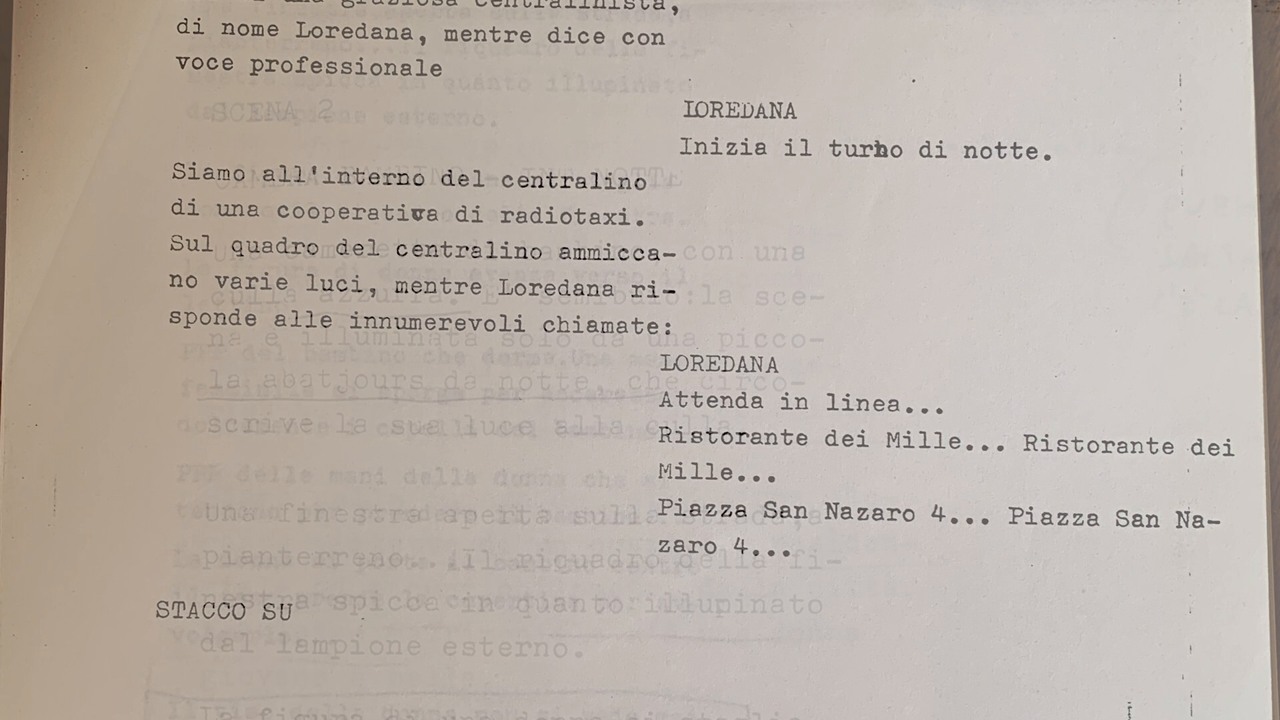
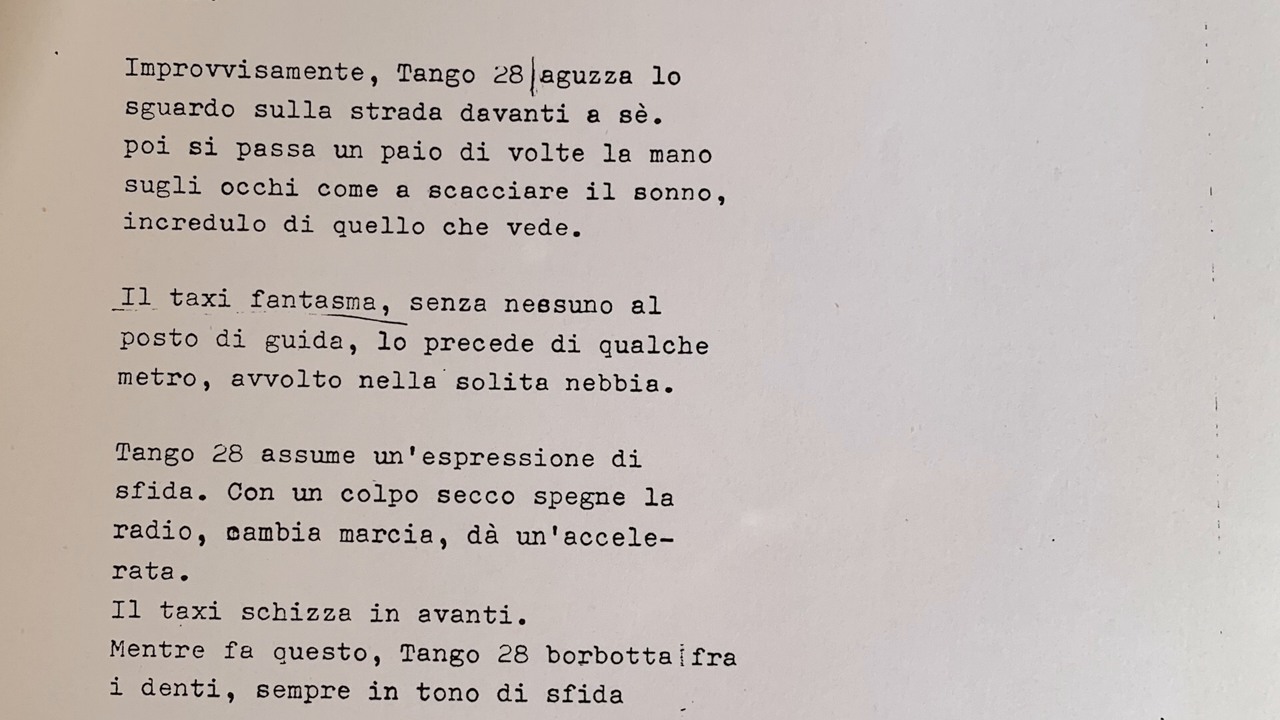
A further page shown in Taxi Drivers describes Tango 28 noticing a taxi with nobody at the wheel, switching off his radio and accelerating after it. The recurring ghost cab was therefore also planned as action on the page, not merely a background curiosity in the finished episodes.
Photographed pages: Big Giallo Taxi, 10:53–11:14; Taxi Drivers, around 08:20. Compare Il bambino rapito →
Continue through the archive
Argento’s account of concurrent sound work and Vitale’s move into a leading television role.
Different fictional strands within Giallo, with different directors and relationships to the audience.
Earlier television mysteries, including Il tram’s reconstruction of an apparently impossible crime.
Find the five interviews alongside My Cinema, Master of Horror and Panico.
Giallo Argento / the team in 1987
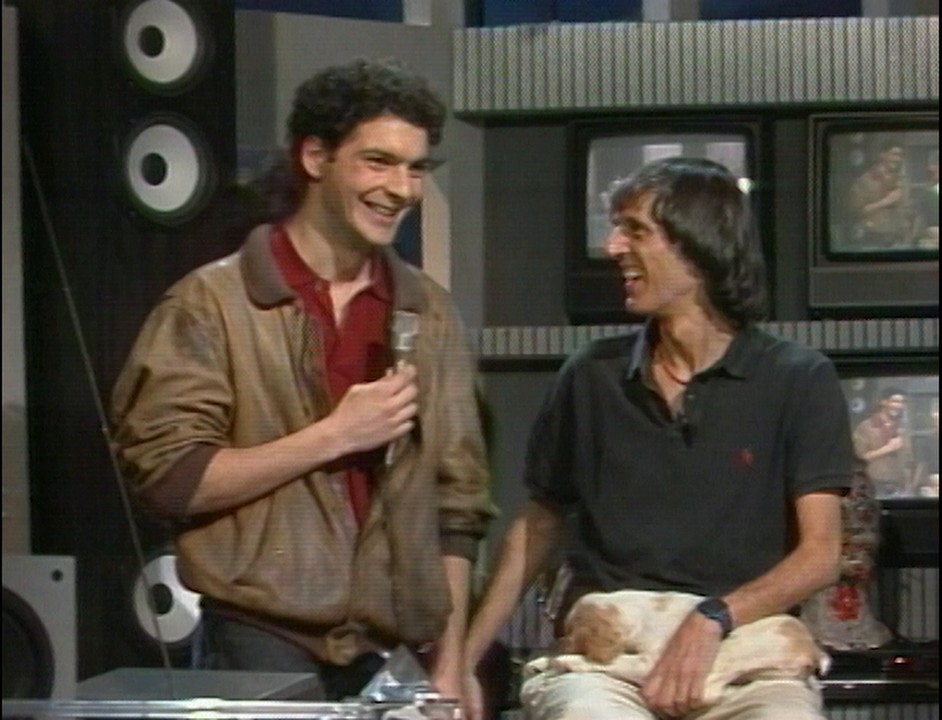
The final chapter of Giallo Argento adds a contemporary layer to the later interviews. Bava discusses the difficulty and pleasure of shooting night stories; Cozzi distinguishes his more fantastic approach from Bava’s crime emphasis. Their comments are made within the programme that carried the episodes.
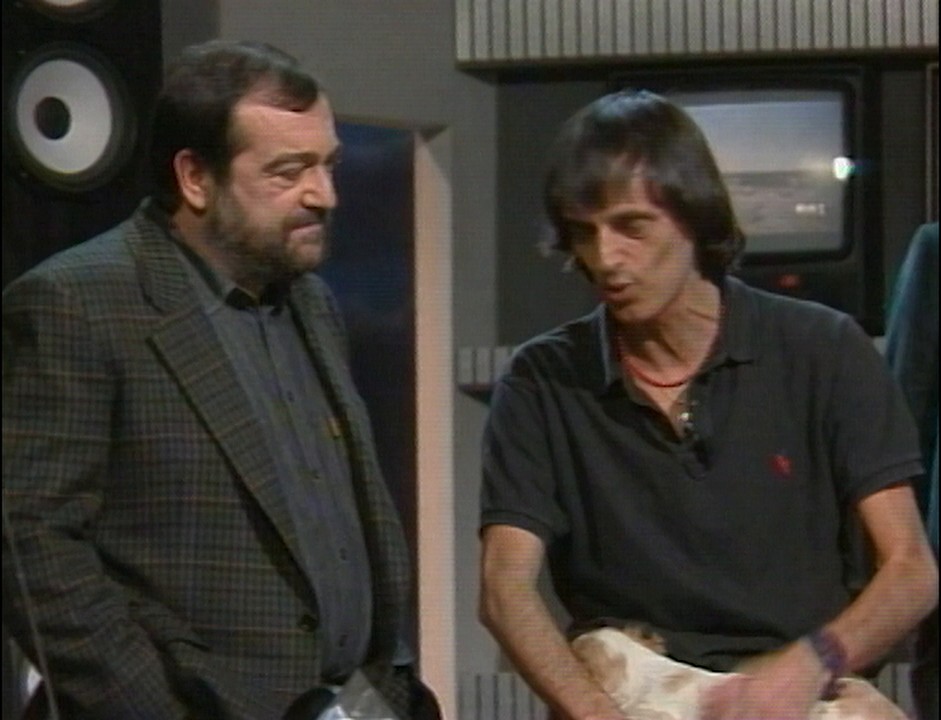
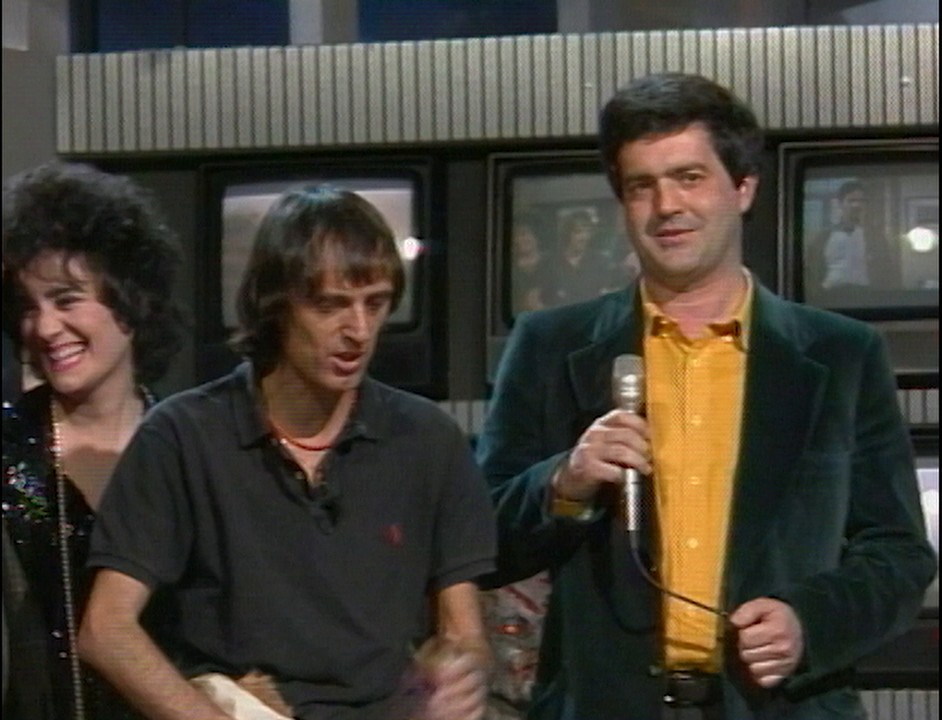
Antonella Vitale remembers night work as an adventure. Matteo Gazzolo makes a more particular point: seeing the episodes go out week by week let the performers look at their work and adjust. Stefano De Sando’s discussion of theatrical experience and familiar television detectives shows the range of references surrounding the series without establishing a single character as a direct imitation.
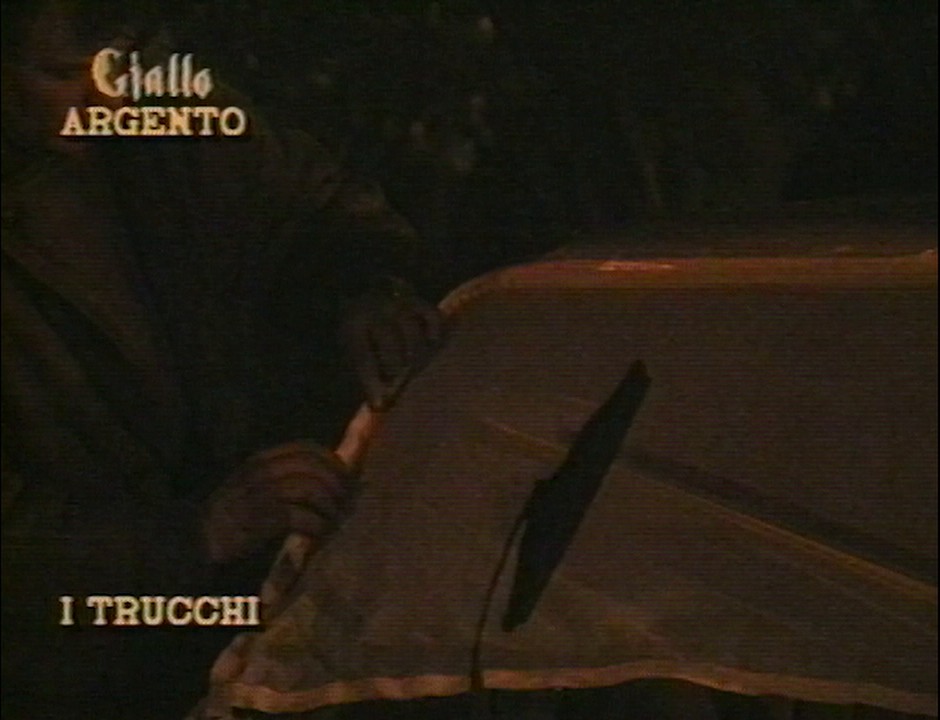
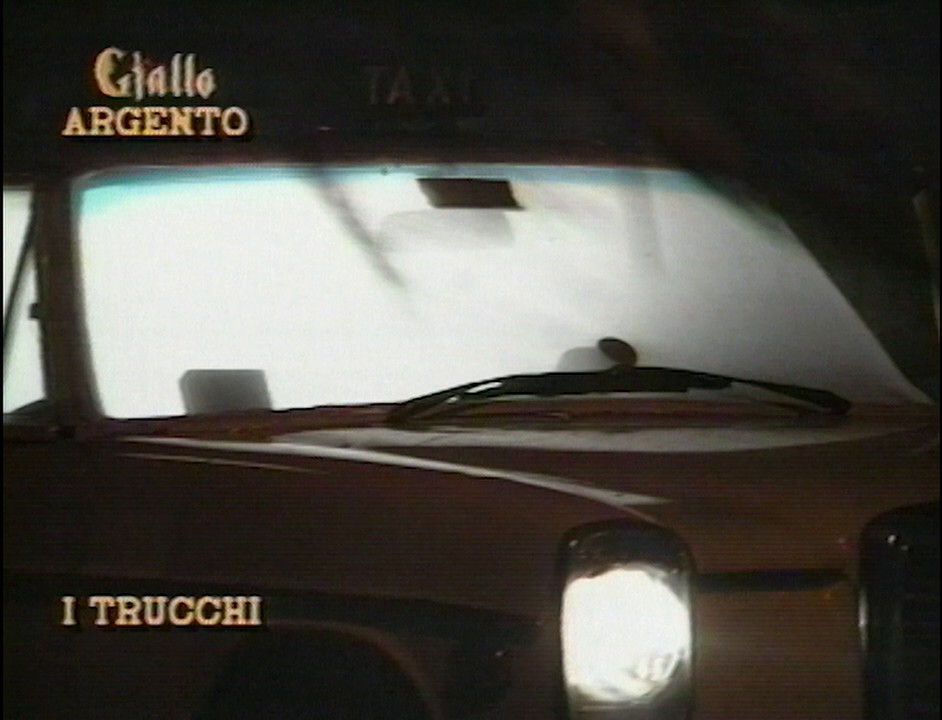
The workshop footage shows preparation at the taxi windshield and a bright, misted image that obscures the driver’s space. The car’s transformation is built in the physical setup before the story gives it a supernatural meaning.
Source: Giallo Argento, 69:00–70:20 and 75:40–85:10; Severin Films, Dario Argento’s Deep Cuts, Disc 4. Explore the complete programme guide →
Sources & passages
Corrections, contributions and enquiries: argentochrome@rareprintsandposters.com