THE ARGENTO ARCHIVEFILM / COLOUR / SOUND / OBJECTS
ARGENTOCHROME

FILM & TELEVISION / 022 · FILM DOSSIER

JeniferRescue does not end the story.

A rescue becomes an attachment. A face conceals an actor’s work. A short comic becomes a story about desire and responsibility.

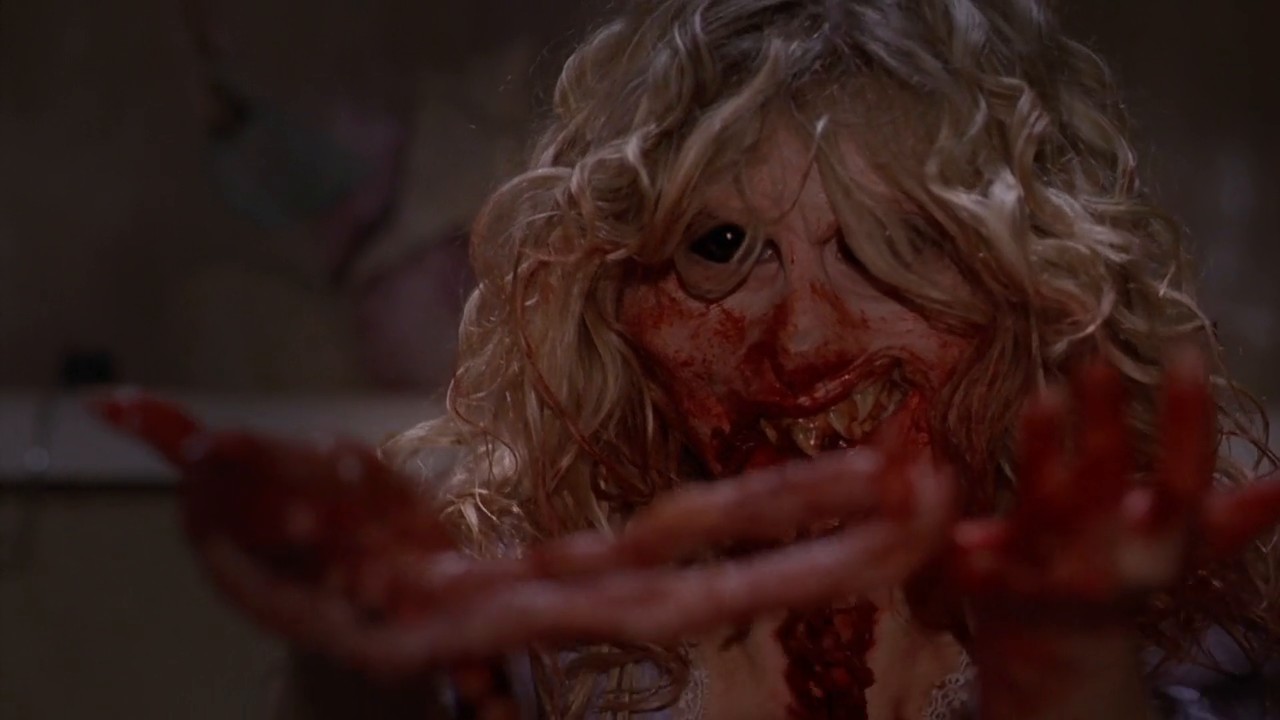
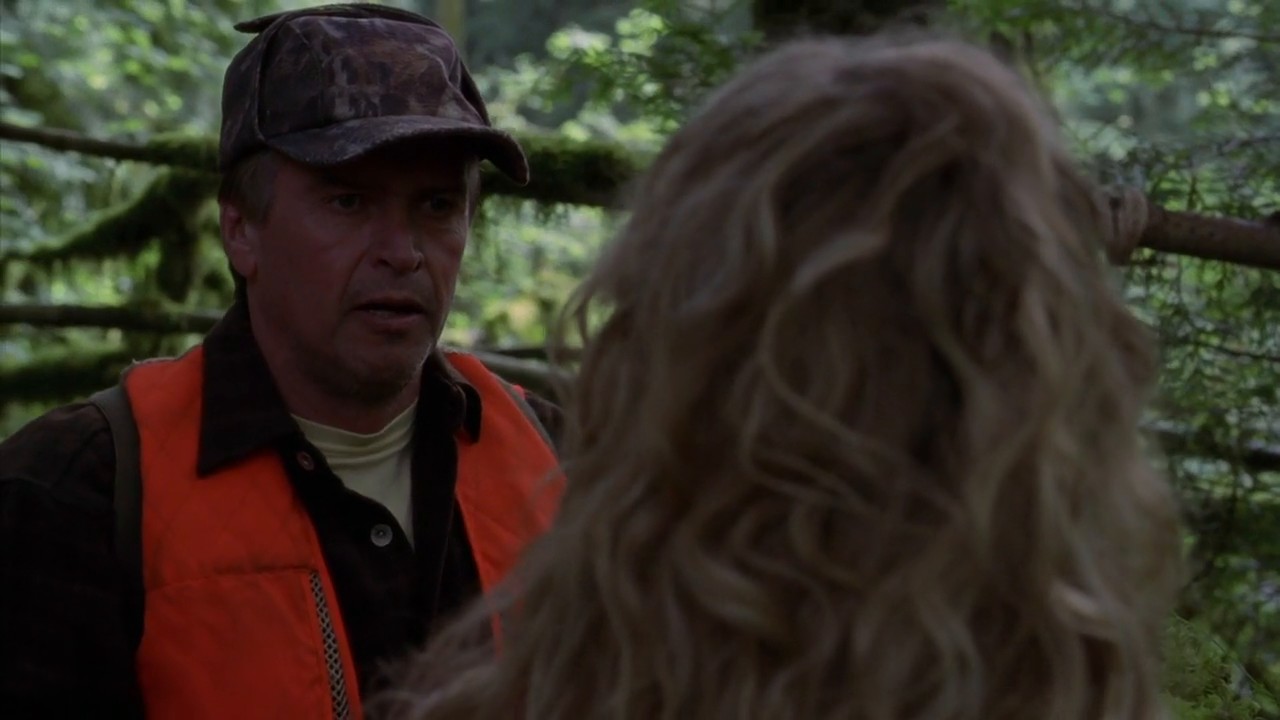
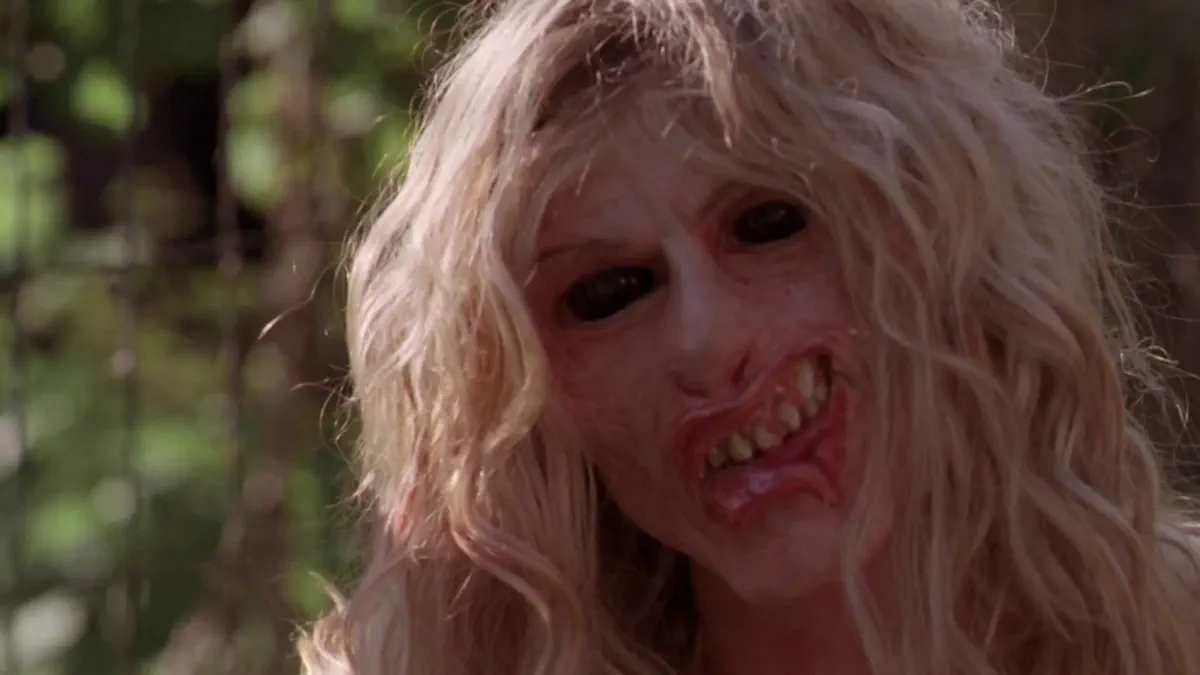
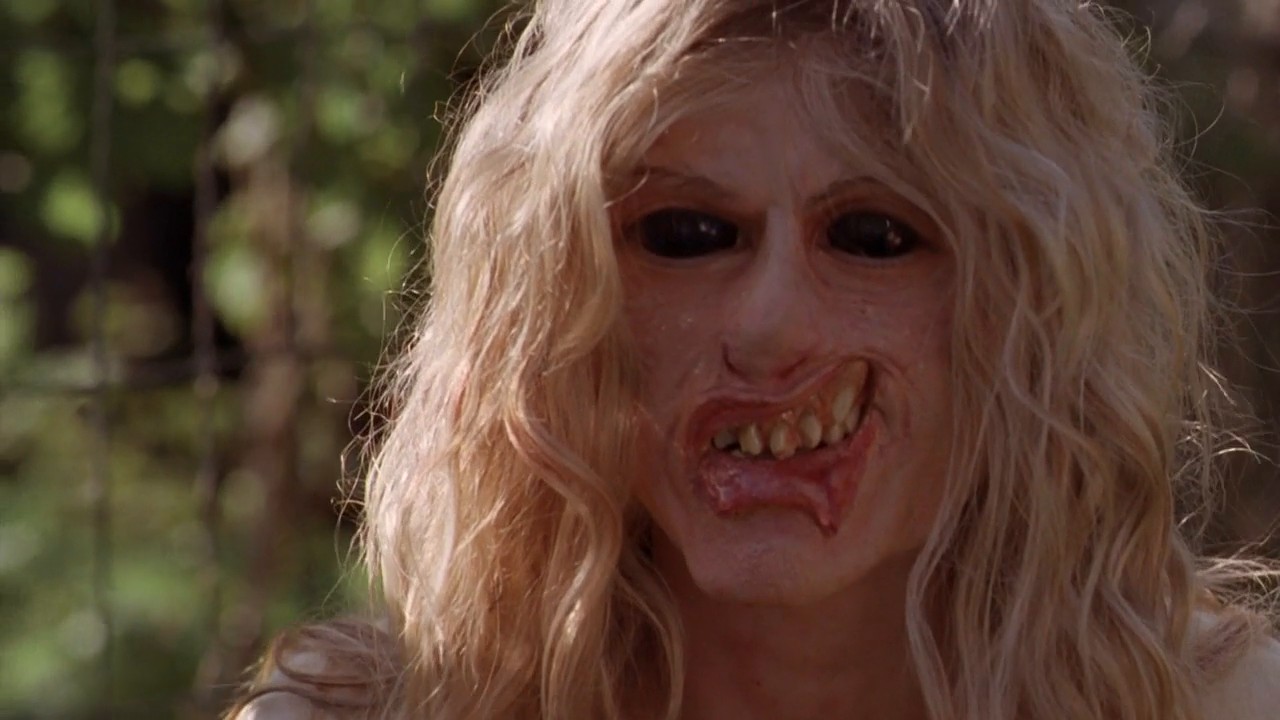
Jenifer’s tilted face in close view, with dark eyes, exposed teeth and long blonde hair against a blurred green and brown woodland background.ENLARGE ↗
Jenifer against the woodland. Published episode image · Apple TV US.Apple TV image source ↗
2005 · DARIO ARGENTOMasters of Horror · Season 1, episode 4SCENES, DIALOGUE & EFFECTS · 6 NOVEMBER 2026
Jenifer in the sunlit garden.

THE FILM IN IMAGES

Follow the circle

From the waterfront rescue to the final embrace.

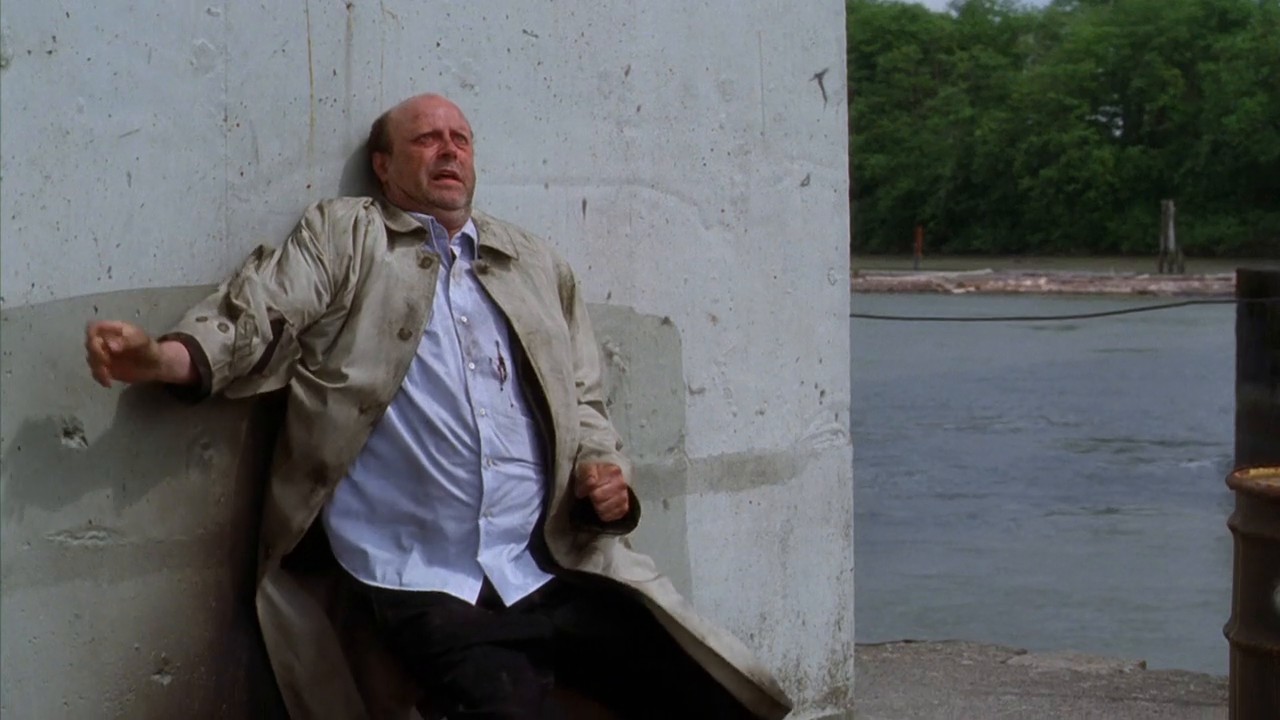
He slides down the wall.

GORE & EFFECTS

Behind the door

Six sequences, with optional stage galleries.

Frank pauses among trees and discarded tyres.

LOOK CLOSER

A view without a history

Rescue, thresholds and the changing face.

Frank meets Rose behind the counter.

DIALOGUE & RESPONSIBILITY

The stories Frank tells

Ten exchanges, from the police office to the final reassurance.

Simonetti and the child’s voice.

MUSIC & THE CRAFT RECORD

Behind the voice

Simonetti, the child’s voice and the sound department.

Frank negotiates outside the circus trailer.

THE RESEARCH DOSSIER

Read the evidence

Performance, comic adaptation, music and editions.

JENIFER / THE SCENE GUIDE

Every rescue has a history.

Thirty-two illustrated studies follow Frank from the waterfront into the home, the cabin and a final encounter that changes the meaning of the beginning.

Includes the ending and graphic violence. Image and presentation notes →

02:30

An appetite before the horror

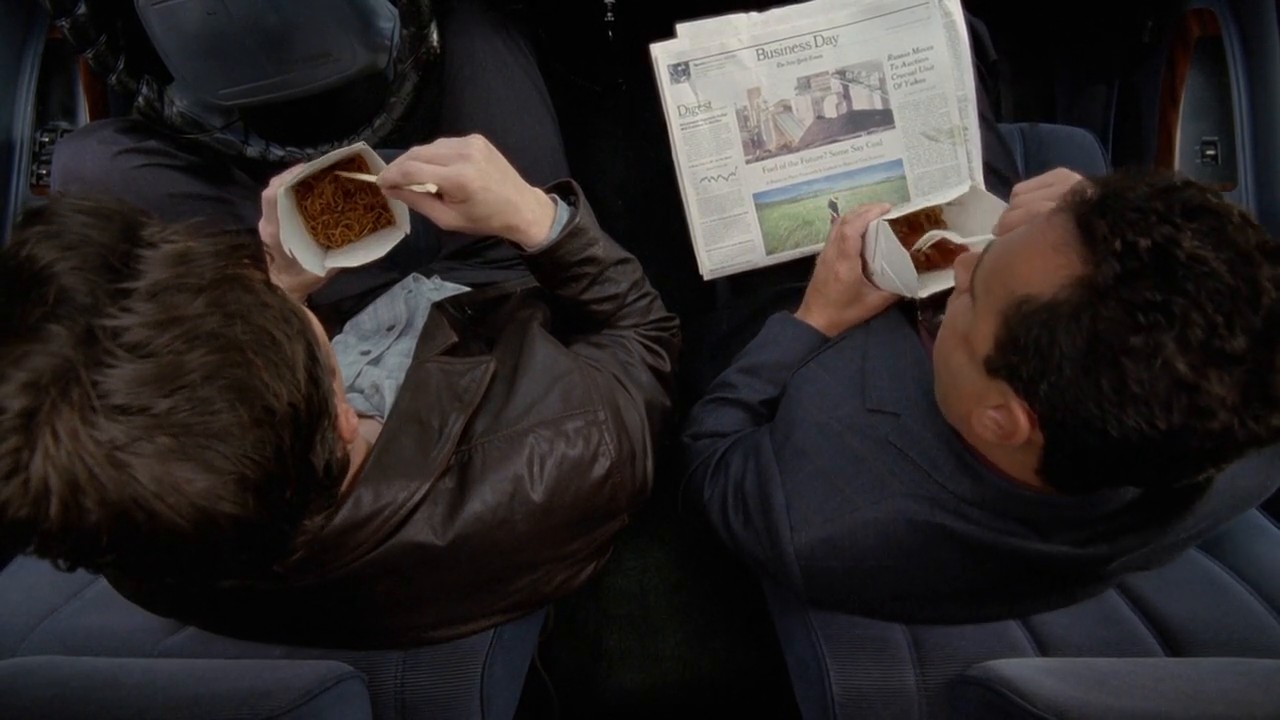
Lunch inside the patrol car.ENLARGE ↗
Lunch inside the patrol car.

The opening looks down into the car, turning the two officers and their food into a compact arrangement. Eating begins as ordinary business. Later mouths, hands and meals will make the same bodily activity difficult to separate from violence. The everyday setting gives that change something concrete to disturb.

04:38

A situation that appears readable

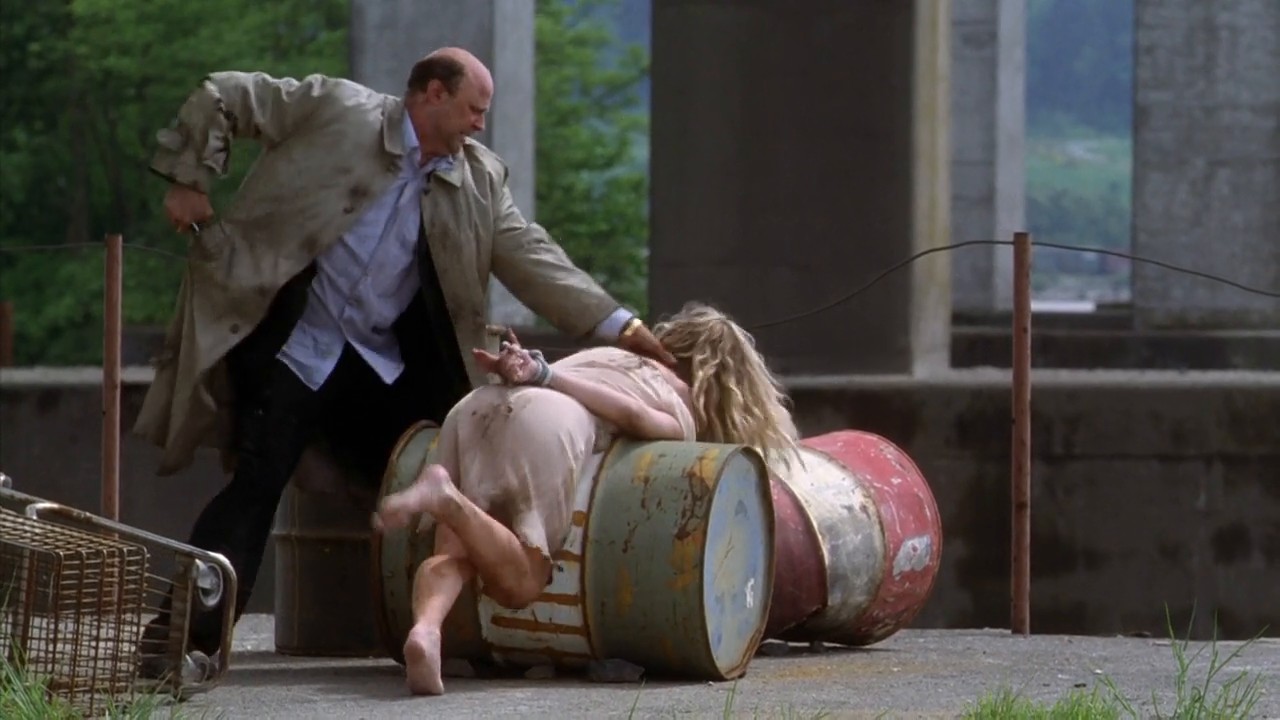
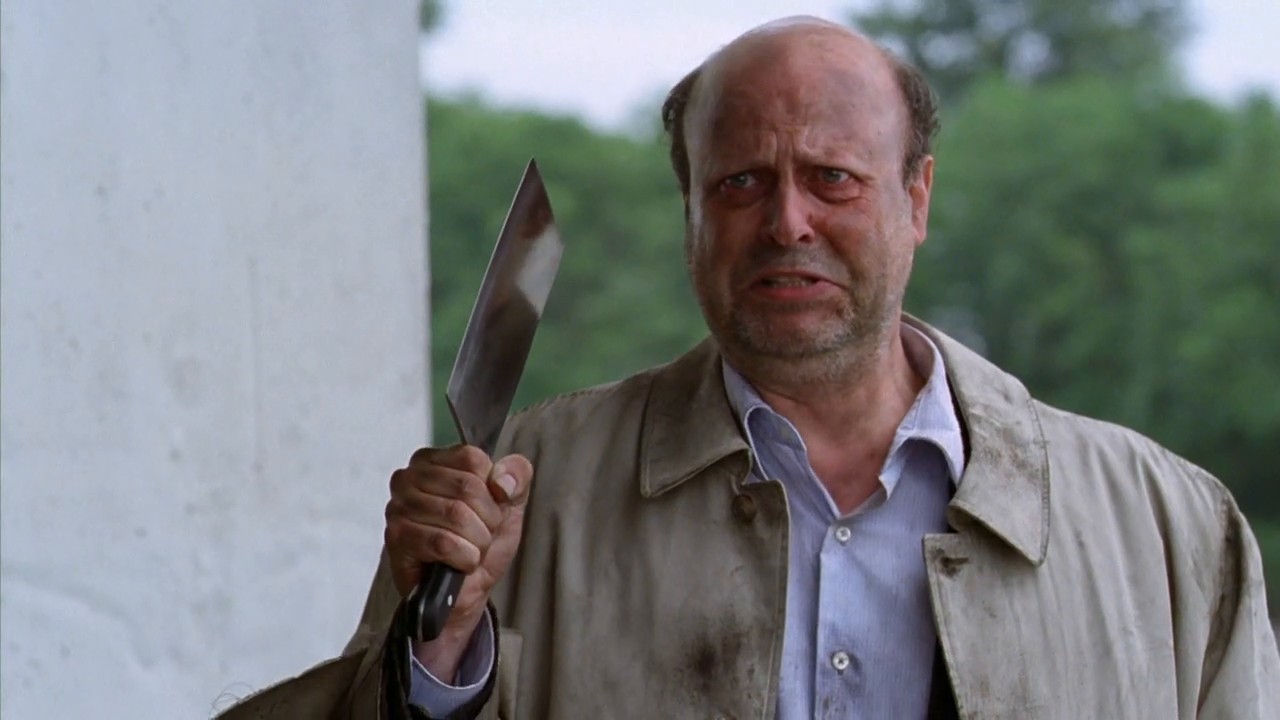
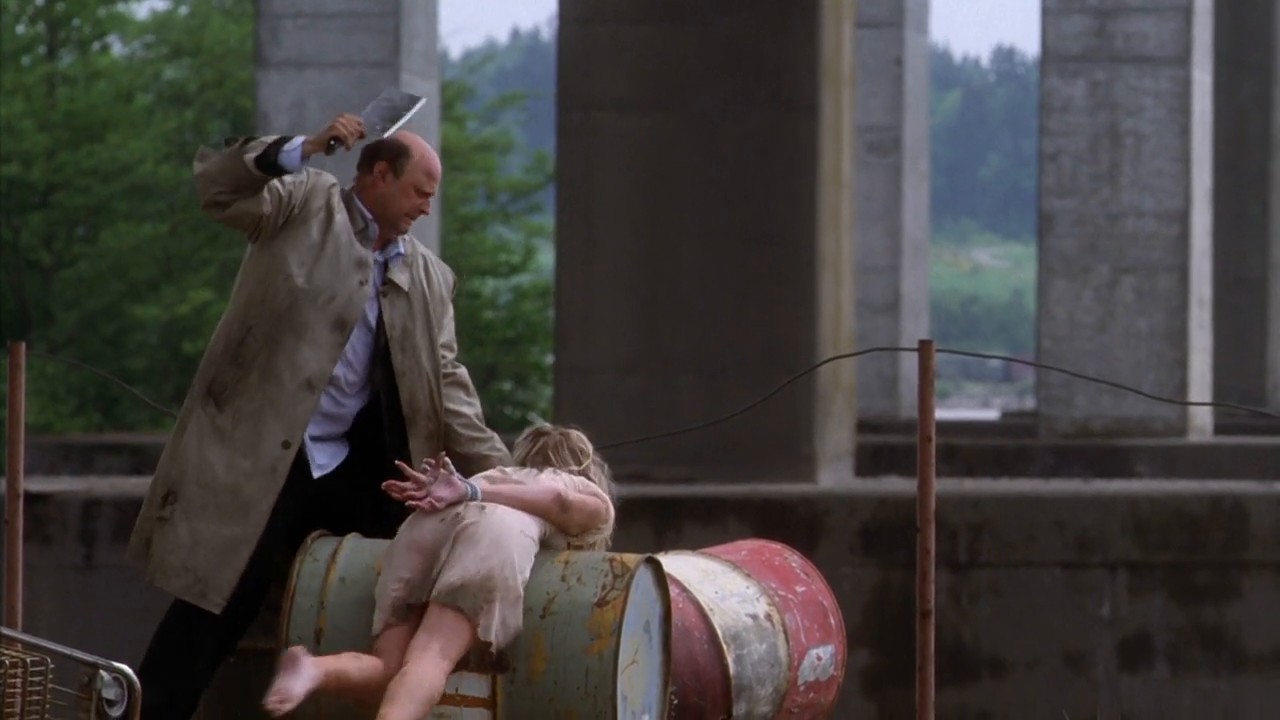
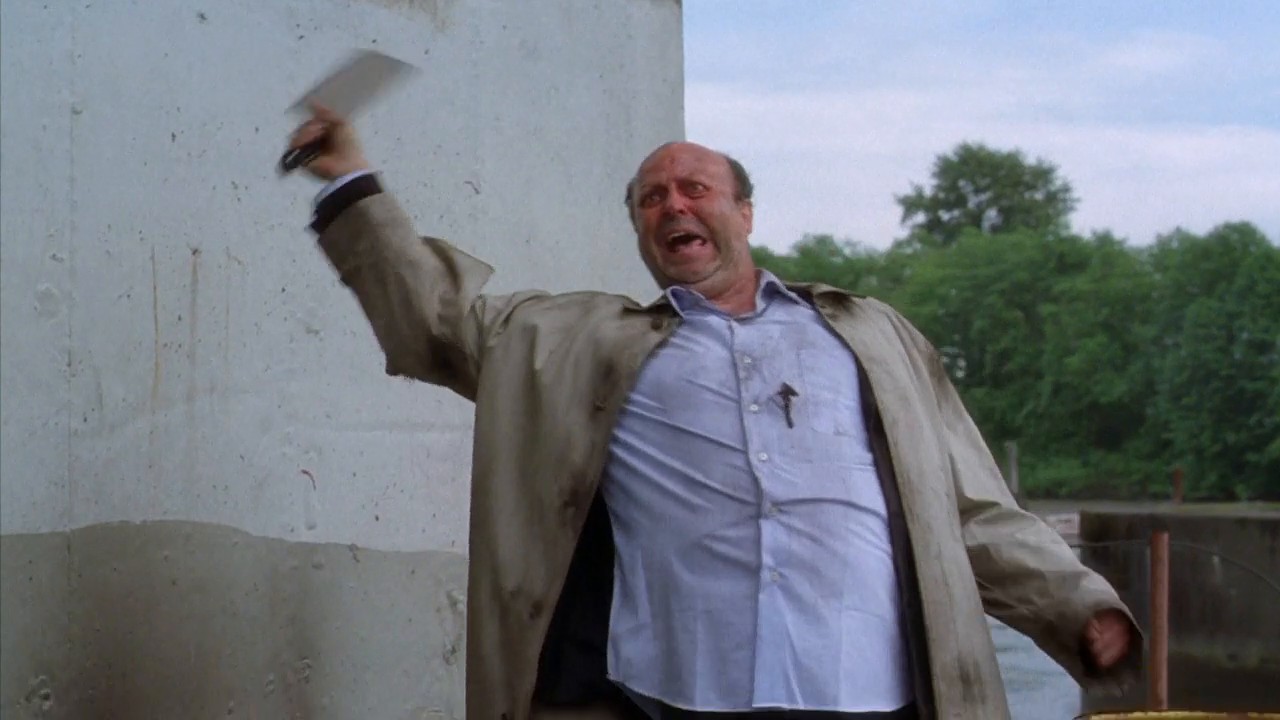
The cleaver rises beside the barrel.ENLARGE ↗
The cleaver rises beside the barrel.

The threatened woman, raised weapon and approaching officer form an apparently clear moral diagram. The open air offers Frank a view of the immediate danger, but no history of the people involved. His intervention rests on what can be seen in this instant.

Explore the sequence →

05:06

The cost of intervention

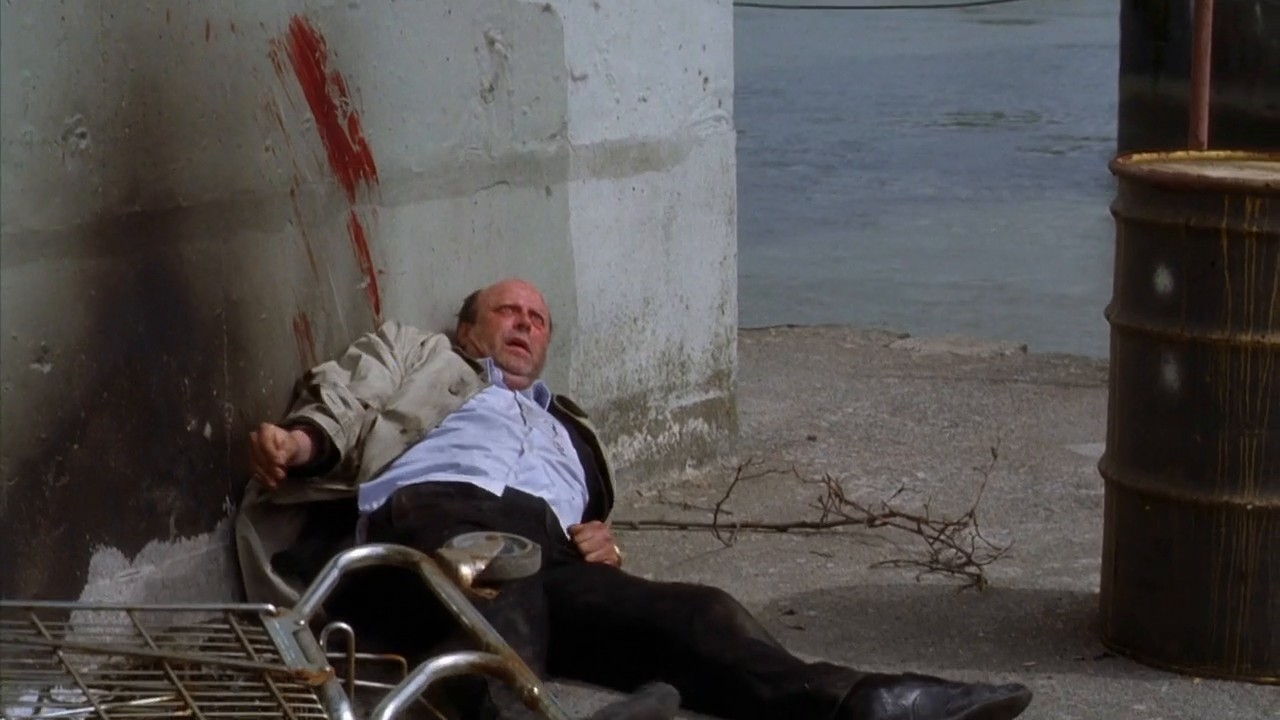
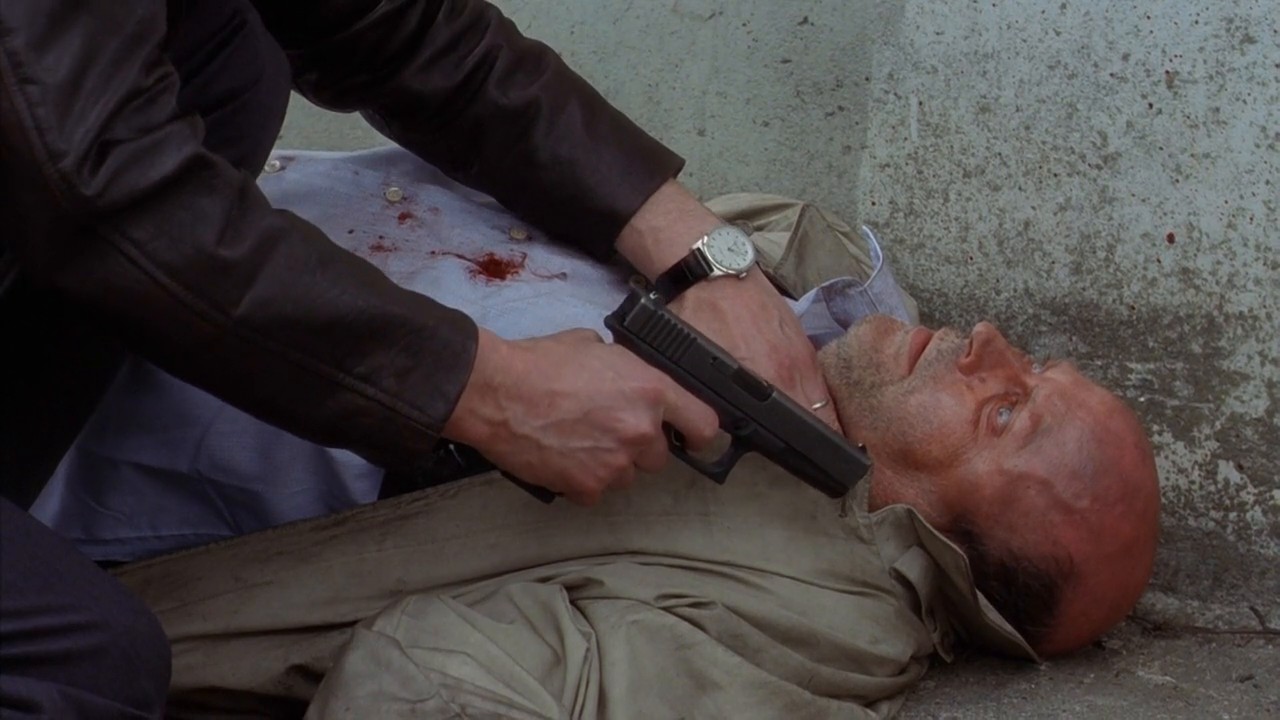
Blood marks the wall behind the fallen man.ENLARGE ↗
Blood marks the wall behind the fallen man.

The aftermath is held against a pale wall. Its blood trace remains legible while Frank moves toward the man he has shot. The scene refuses to make rescue a clean exchange: the body and the unanswered encounter remain beside the person he has saved.

Explore the sequence →

07:15

Closeness replaces distance

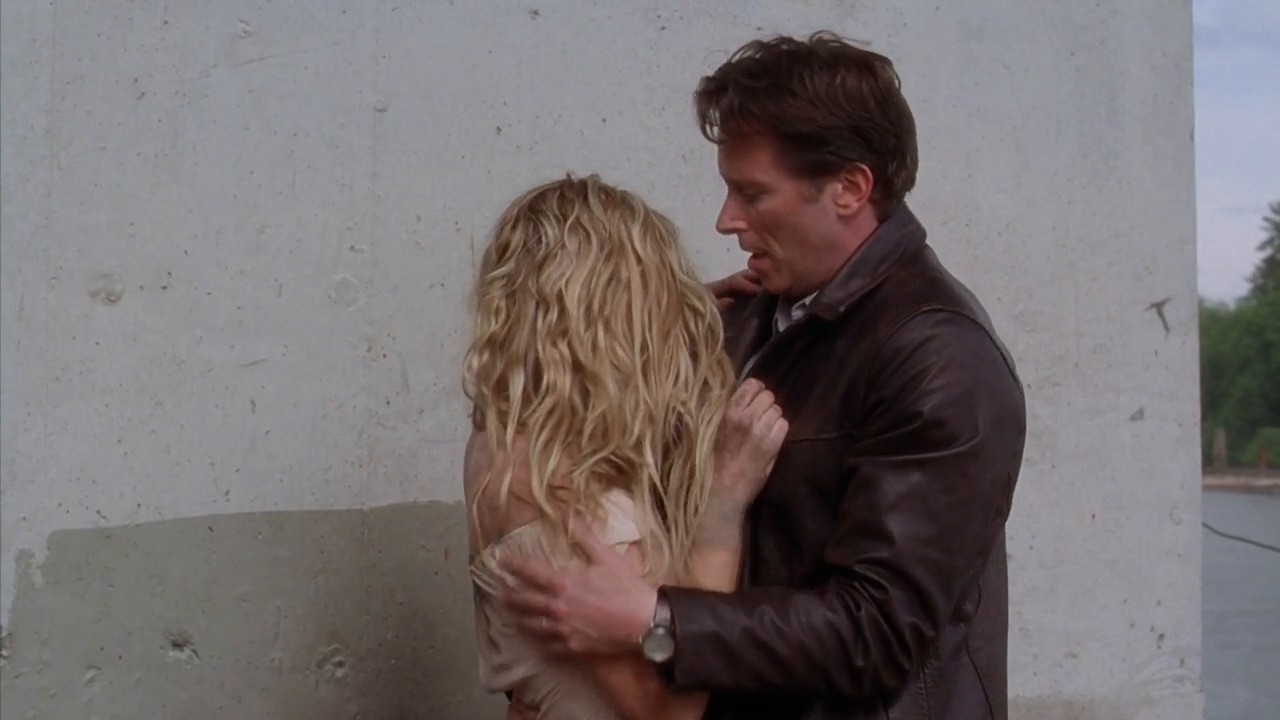
Frank supports Jenifer against the wall.ENLARGE ↗
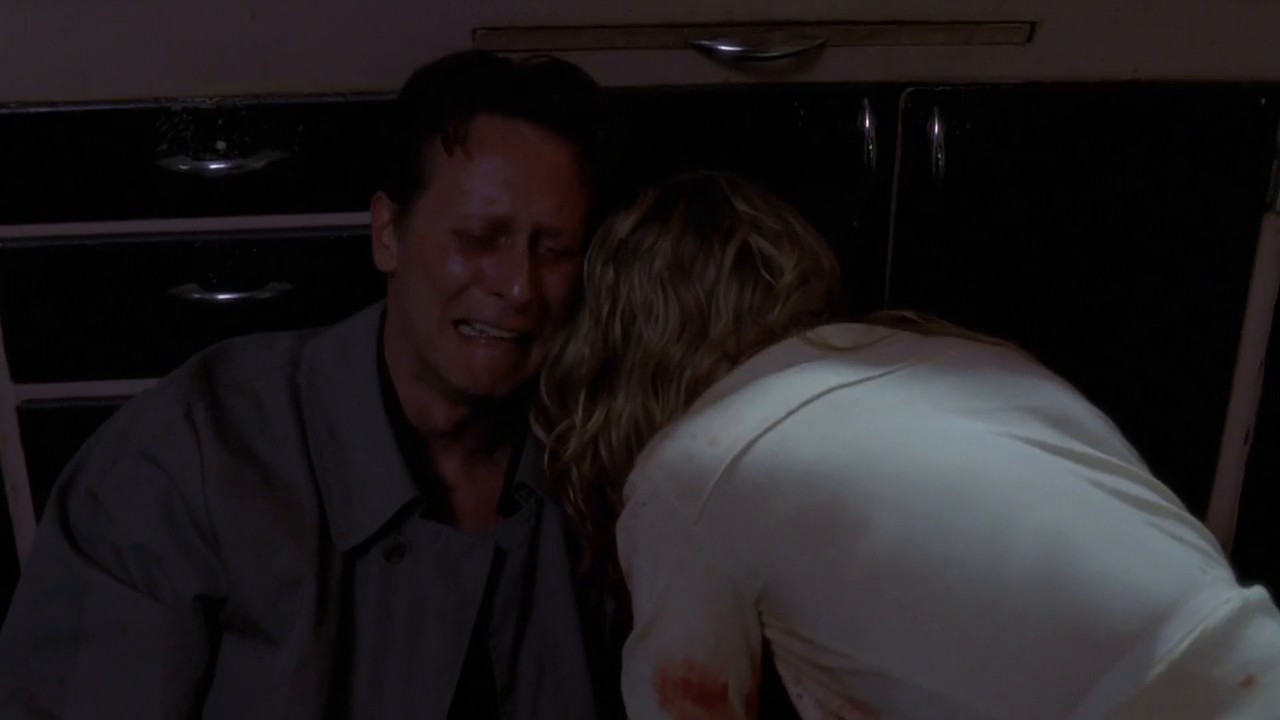
Frank supports Jenifer against the wall.

After the distant approach and armed confrontation, the frame contracts around an embrace. Jenifer’s hair screens her face while Frank holds her shoulders. Physical proximity arrives before understanding; this arrangement will recur when another man takes Frank’s place.

09:15

The public account

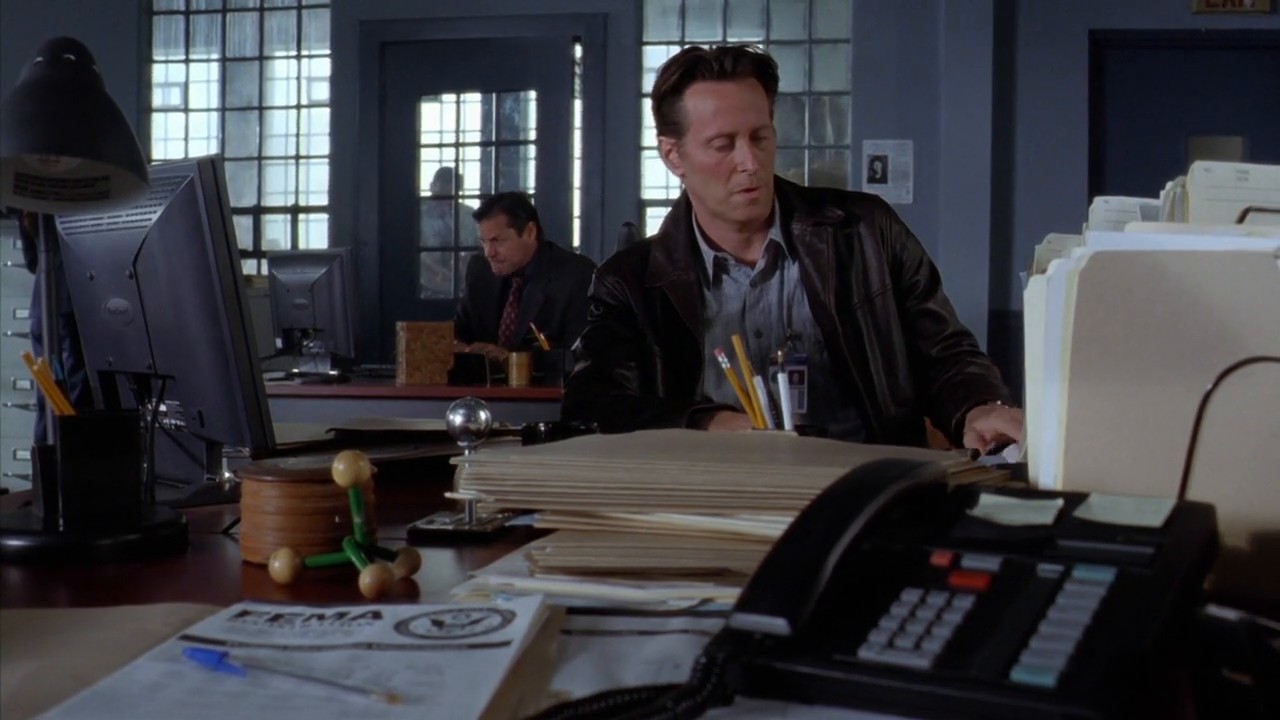
Frank at his desk in the police office.ENLARGE ↗
Frank at his desk in the police office.

Desks, files and other officers put Frank back inside a professional setting. The rescue now belongs to a world of questions and responsibilities. The film’s later isolation is measured against this space, where his actions are still visible to colleagues.

10:15

A barrier between them

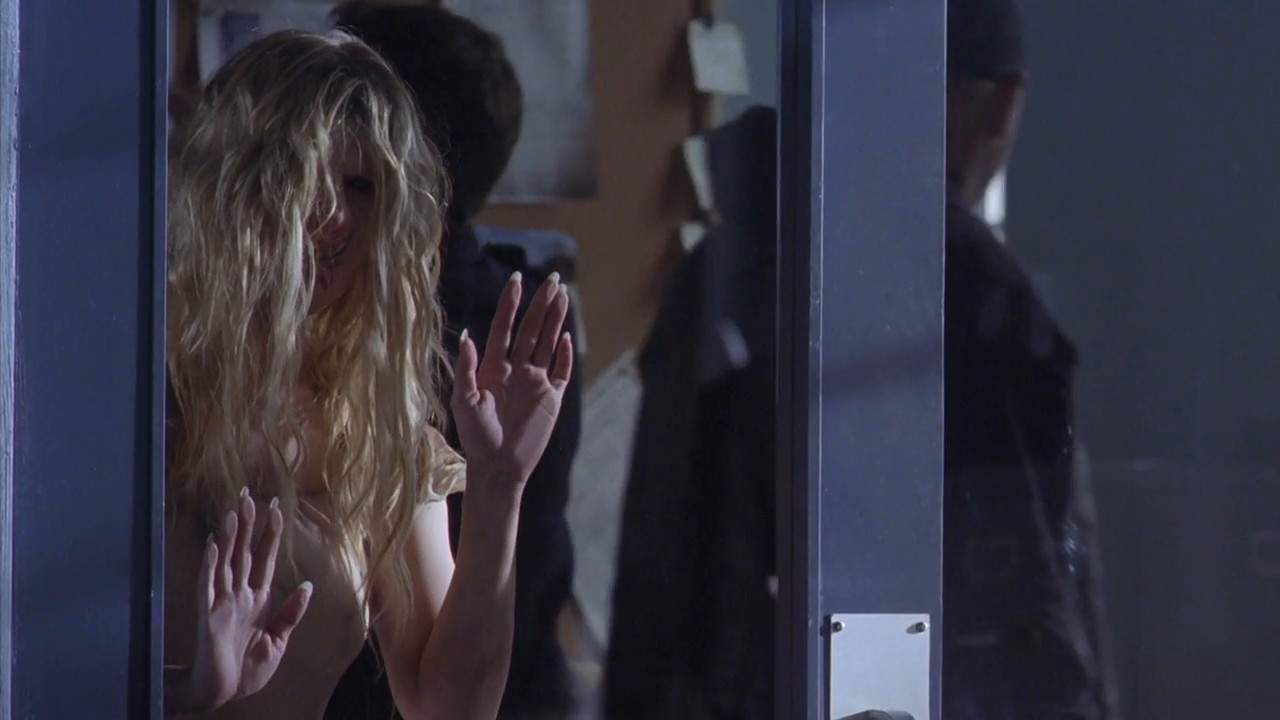
Jenifer presses her hands against the glass.ENLARGE ↗
Jenifer presses her hands against the glass.

Hands and a partially obscured face meet a transparent partition. The glass allows Frank to see her while keeping their bodies apart. Her reaching gesture makes the barrier feel emotional as well as institutional, preparing the decision to bring her into his home.

12:15

A meal without ease

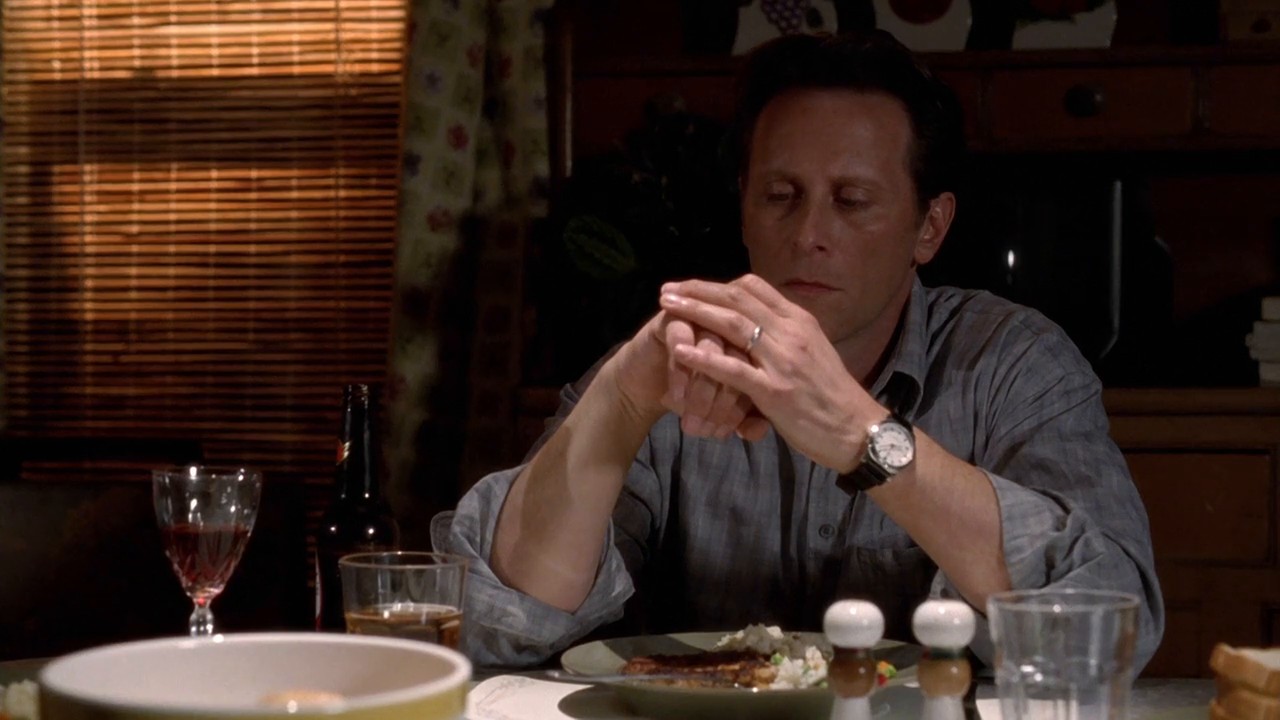
Frank sits over his dinner.ENLARGE ↗
Frank sits over his dinner.

The warm table setting cannot restore the relaxed appetite of the patrol-car opening. Weber’s lowered attention makes a familiar family ritual feel interrupted. The episode builds its domestic disturbance through small failures to occupy a room normally.

12:45

The face Frank can examine

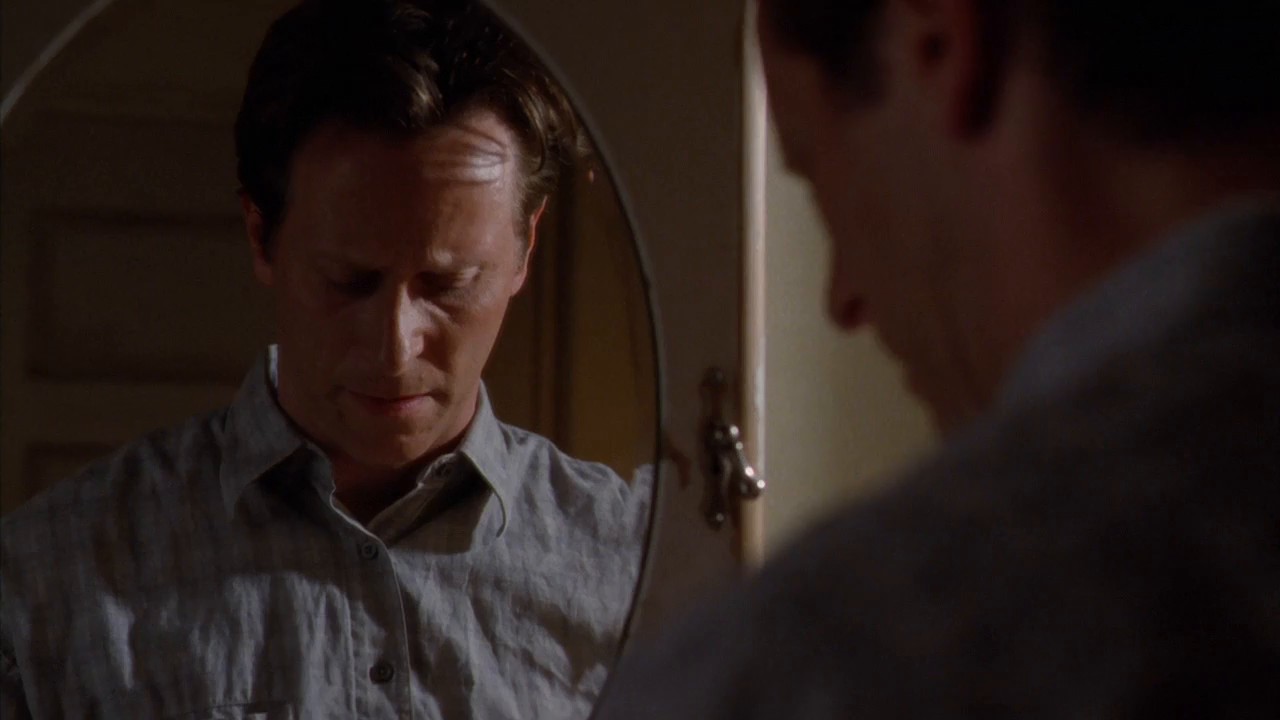
Frank studies himself in the mirror.ENLARGE ↗
Frank studies himself in the mirror.

A reflective surface turns the investigation back toward Frank. The image offers him his own face rather than an explanation of Jenifer. Placed between public duty and private intimacy, the mirror makes his disturbance visible without requiring an account of its cause.

16:45

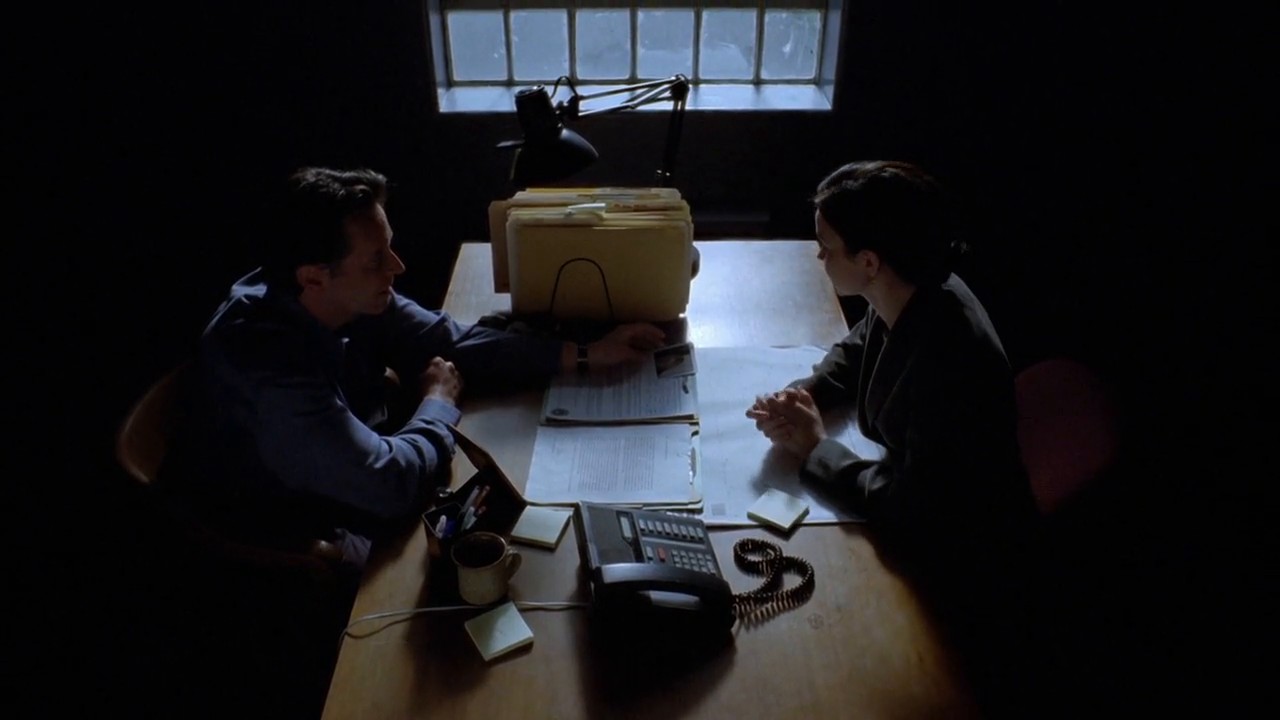
Across the desk

Two officers face one another across a desk.ENLARGE ↗
Two officers face one another across a desk.

The table separates the men and gives their exchange a stable geometry. Compared with the close embraces and unsettled bedroom images, the office still supplies boundaries. Frank’s difficulty is not a lack of places to speak; it is the distance between those places and what he keeps doing.

18:10

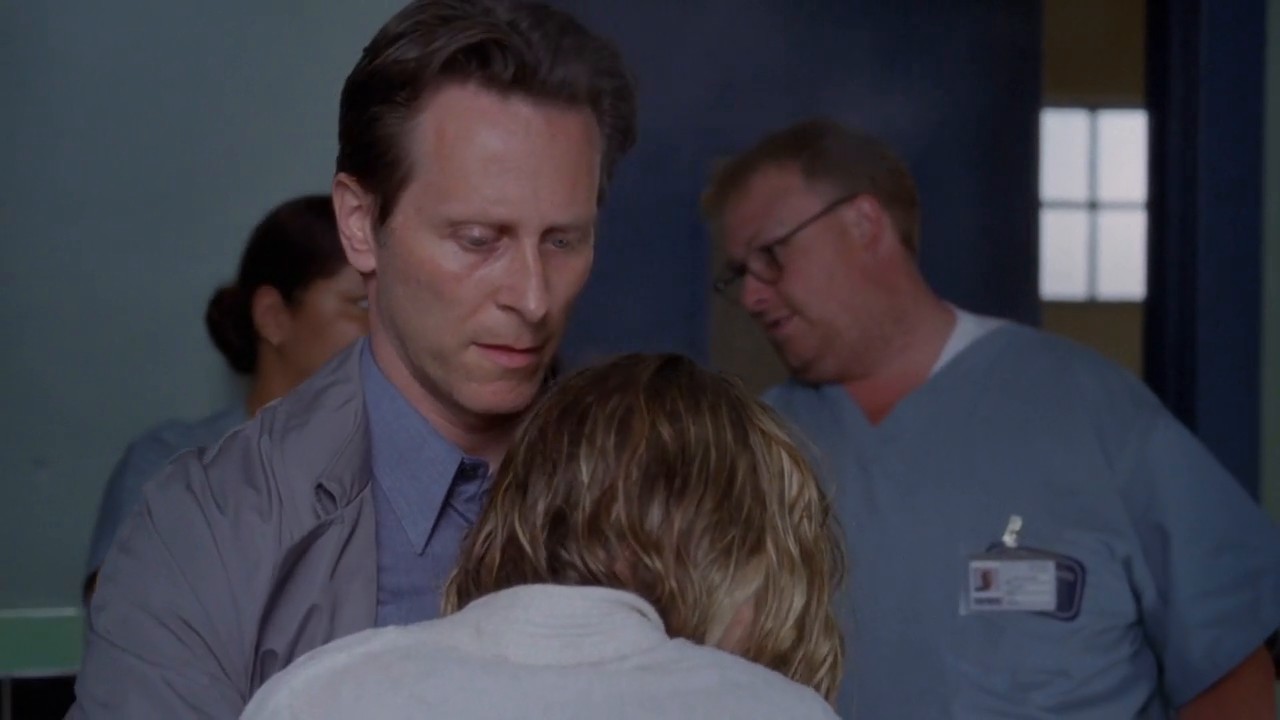
Leaving the institution

Jenifer clings to Frank in the corridor.ENLARGE ↗
Jenifer clings to Frank in the corridor.

Staff remain behind the pair while Jenifer presses against Frank. The composition makes his personal attachment the foreground event and institutional care the background. This is the visual hinge between visiting someone and assuming responsibility for where she will live.

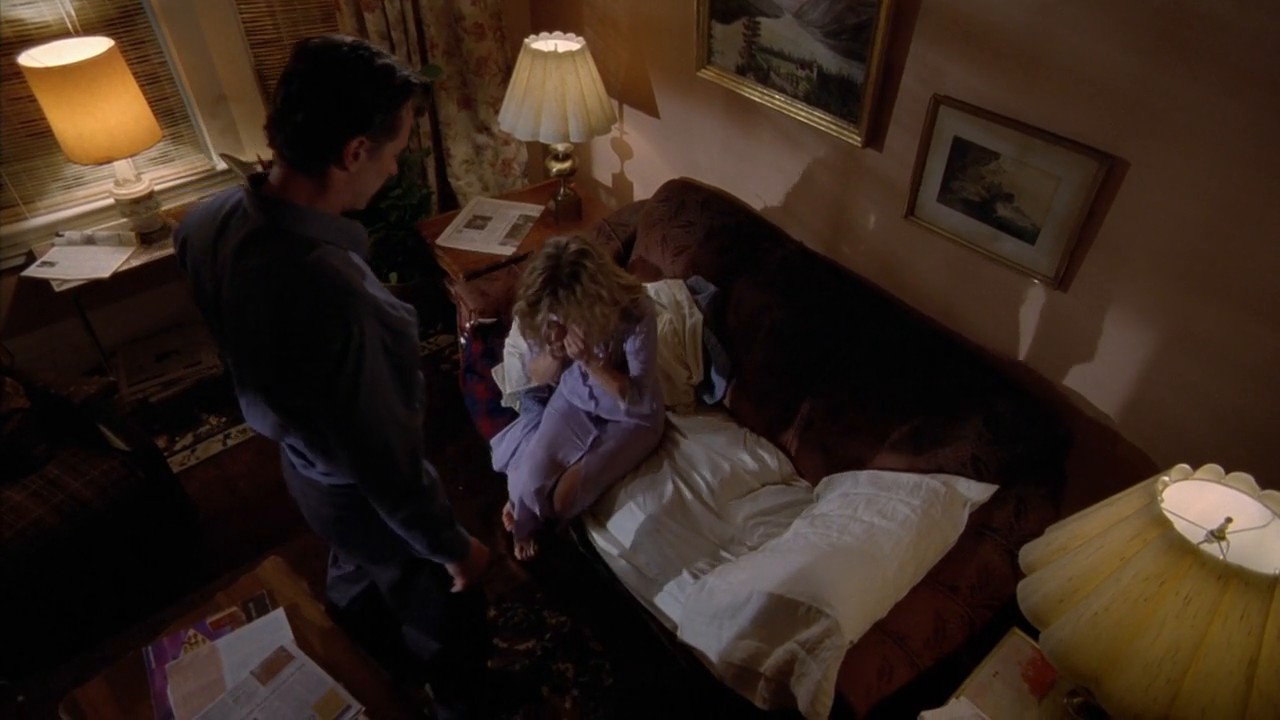
20:15

A room already occupied

Frank stands beside the shared bed.ENLARGE ↗
Frank stands beside the shared bed.

The high angle maps several bodies into a cramped domestic space. The bed, lamps and framed wall decoration make the room unmistakably someone’s home. Jenifer’s arrival does not happen in a vacuum: it changes an existing relationship and its physical territory.

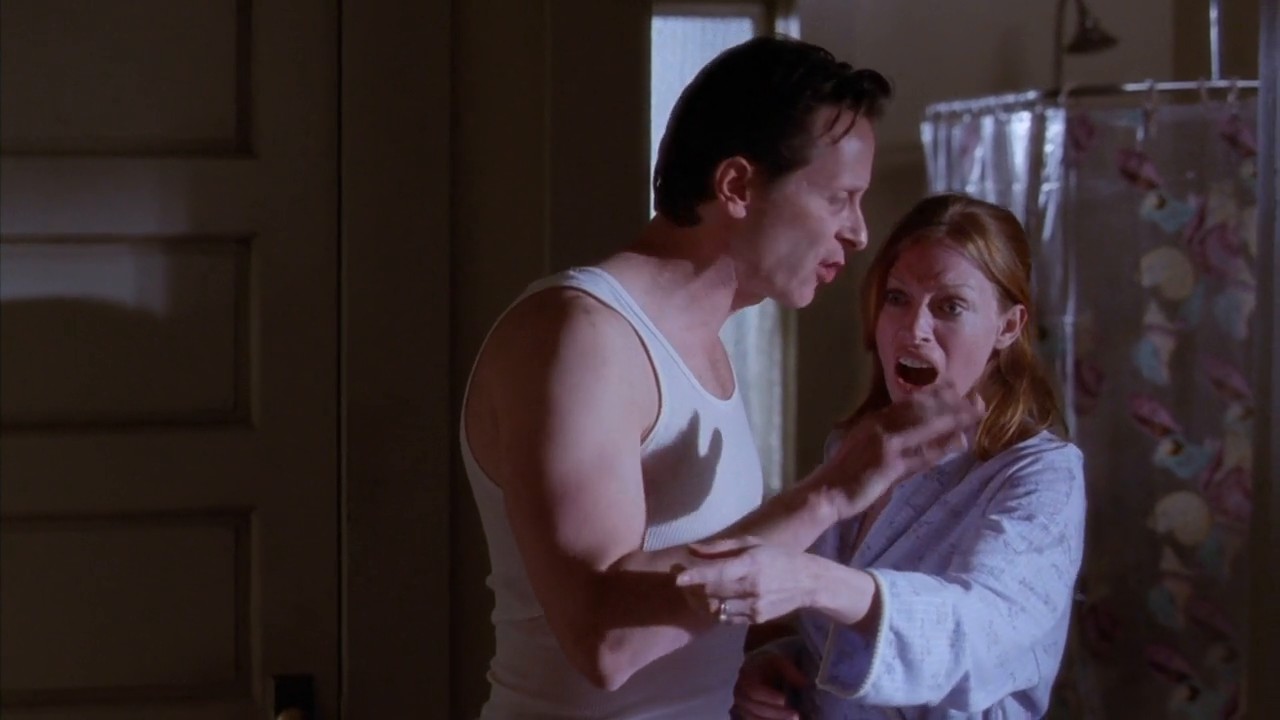
22:45

The household looks back

Frank and his wife react together.ENLARGE ↗
Frank and his wife react together.

The couple briefly share the same direction of attention. Their proximity contrasts with the new figure at the threshold and makes the household’s disturbance collective. The scene gives the wife a visible response rather than leaving the relationship entirely inside Frank’s perspective.

24:15

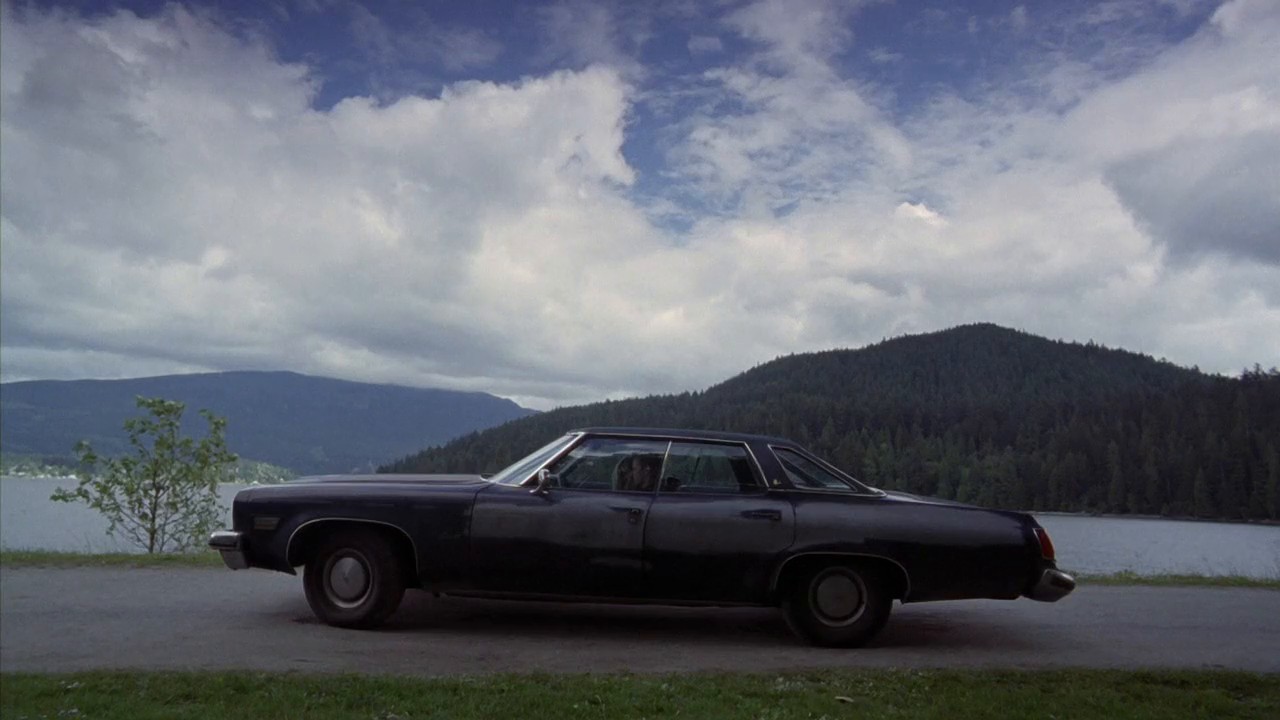
Isolation made picturesque

The car waits beside the lake.ENLARGE ↗
The car waits beside the lake.

The broad landscape leaves the car small and enclosed. Scenic openness surrounds a private interior in which Frank’s professional distance collapses. The beauty of the setting offers no moral reassurance; it isolates the pair from the people affected by their attachment.

27:20

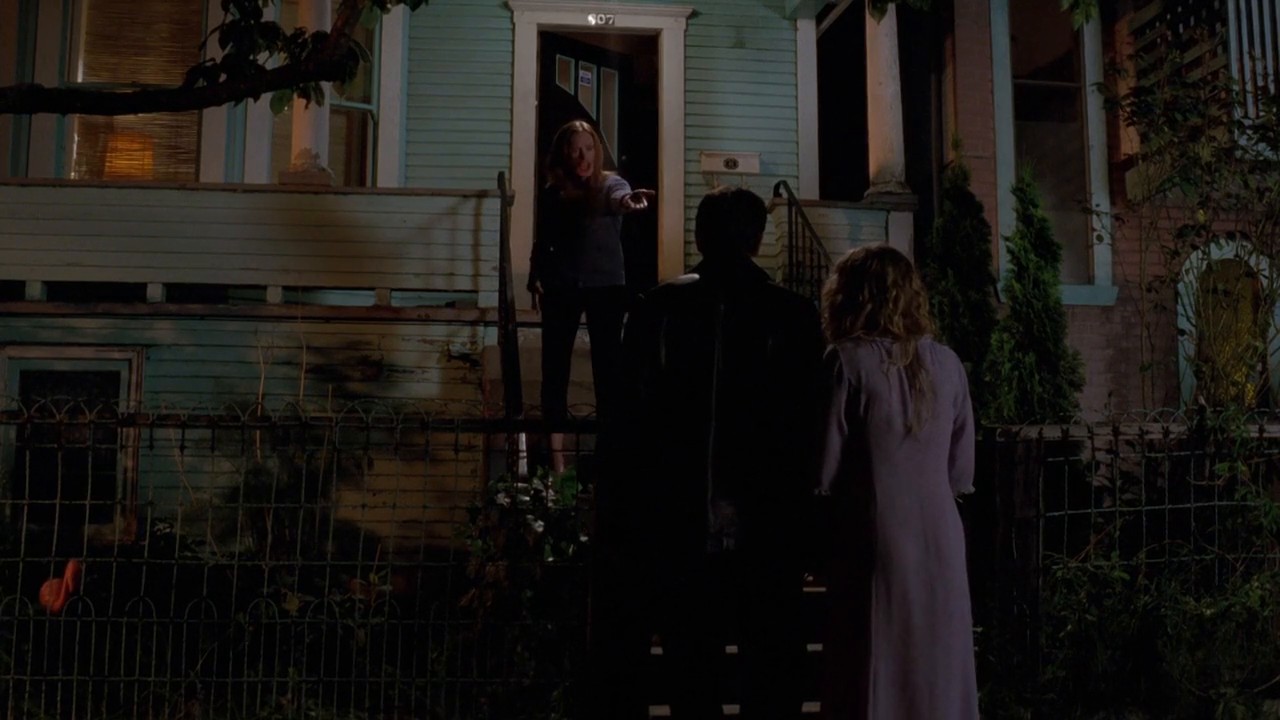
Bringing the problem home

The family meets Frank and Jenifer outside.ENLARGE ↗
The family meets Frank and Jenifer outside.

The house’s steps and gate make a boundary that Frank crosses again with Jenifer. The arrangement places his family opposite the returning pair. Protection has become a decision imposed on the household rather than an action completed at the waterfront.

28:24

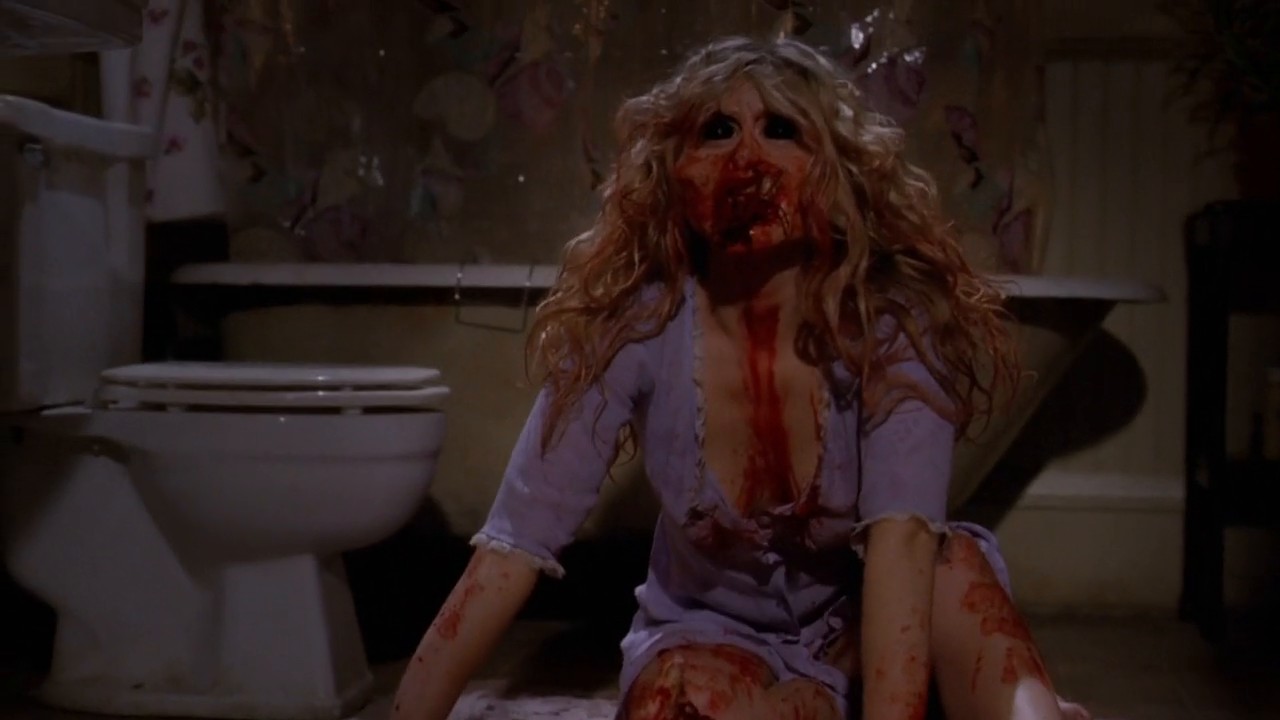
The bathroom revelation

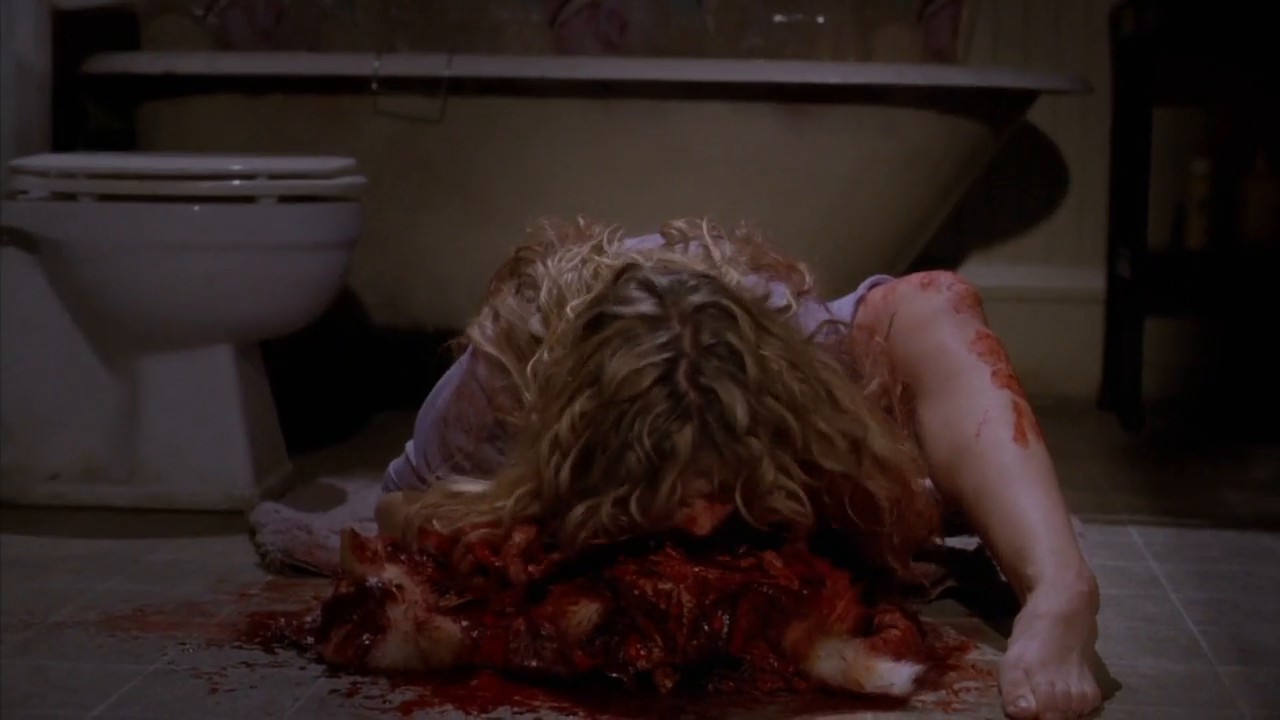
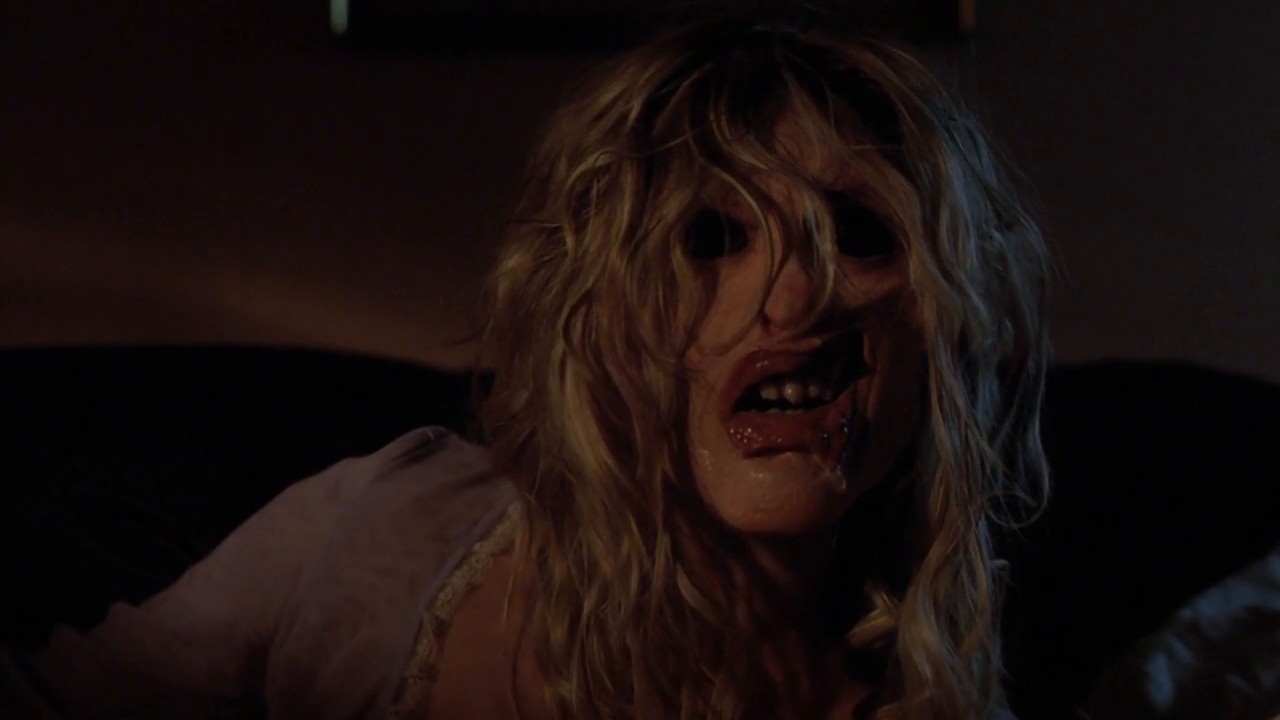
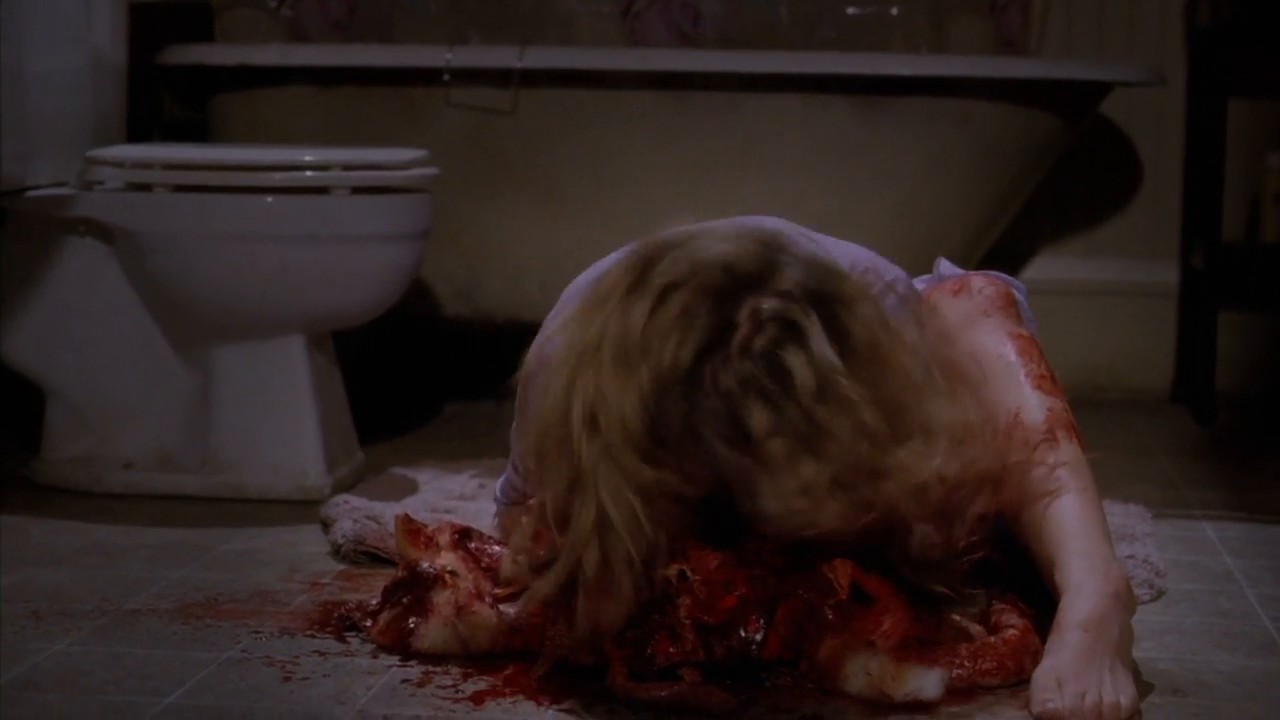
Jenifer looks up from the bathroom floor.ENLARGE ↗
Jenifer looks up from the bathroom floor.

The small room makes the aftermath of the cat’s killing impossible to keep at a distance. Her raised face connects the prosthetic design to the blood and remains below it. The revelation depends as much on the door opening and the family’s reactions as on the effects insert.

Explore the sequence →

28:40

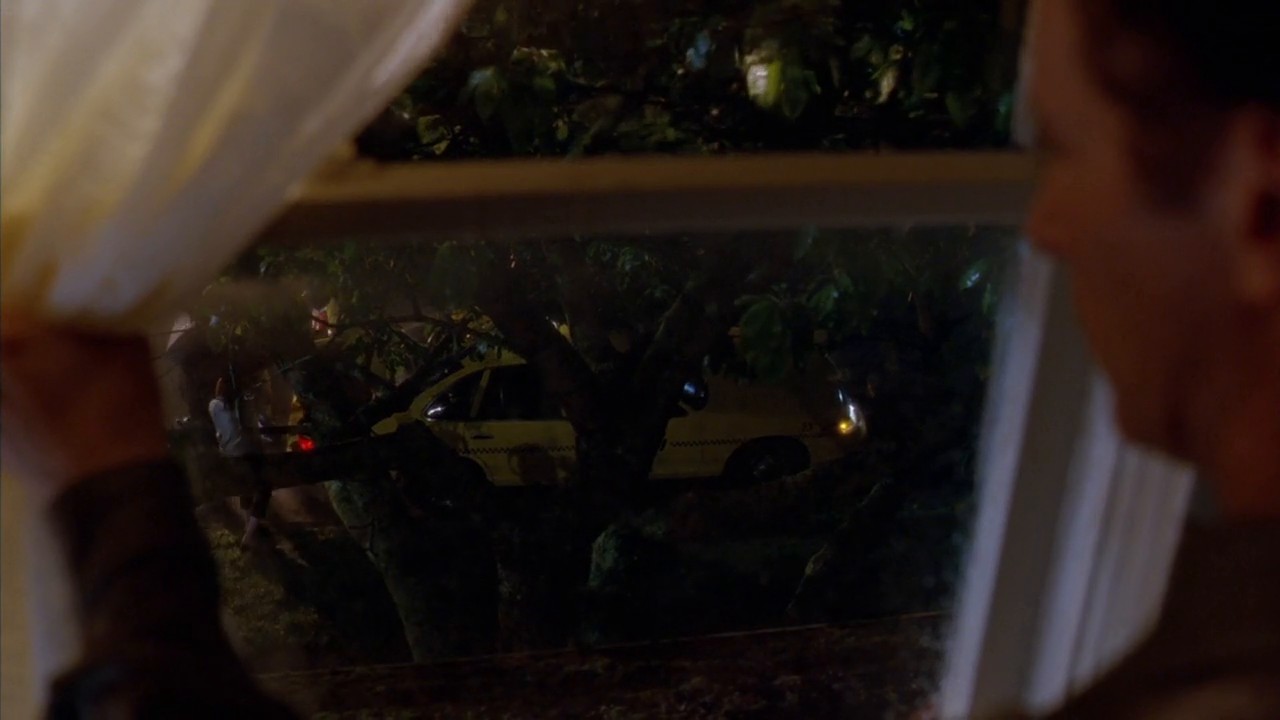
A view of the consequences

Frank watches the car through the curtains.ENLARGE ↗
Frank watches the car through the curtains.

The window divides Frank from the family leaving outside. He remains indoors with the situation he brought home. The departing car is a quiet counter-image to the earlier rescue: another movement of people, now away from him.

31:40

Daylight does not settle the face

Jenifer in the sunlit garden.ENLARGE ↗
Jenifer in the sunlit garden.

Bright outdoor light exposes the face more clearly than the bedroom or bathroom. Fleming’s head position and attention remain active within the makeup. The calm garden setting sharpens the uncertainty: the same face can occupy a moment of social approach or a scene of violence.

33:10

The house after everyone leaves

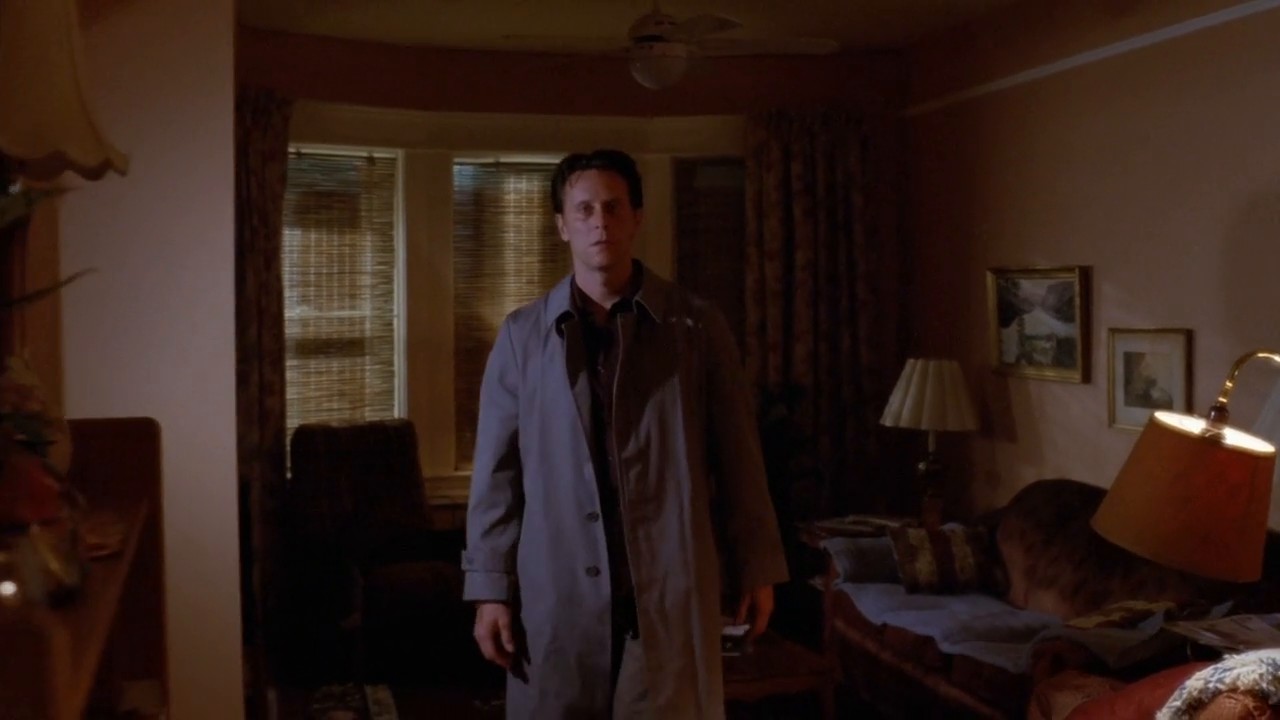
Frank stands in the disordered living room.ENLARGE ↗
Frank stands in the disordered living room.

Furniture and personal belongings remain, but the household has lost its familiar activity. The room gives Frank’s isolation a material form. His next discovery emerges from this ordinary interior rather than from a separate Gothic world.

33:54

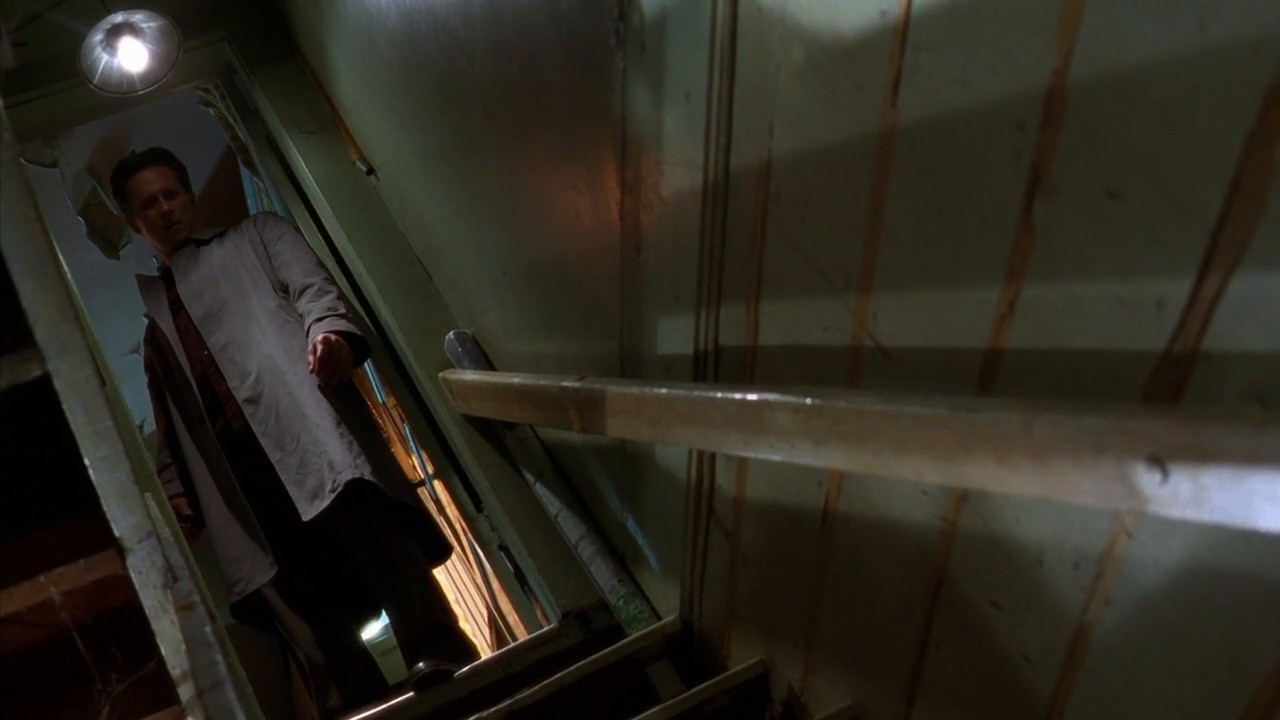
Looking down into the house

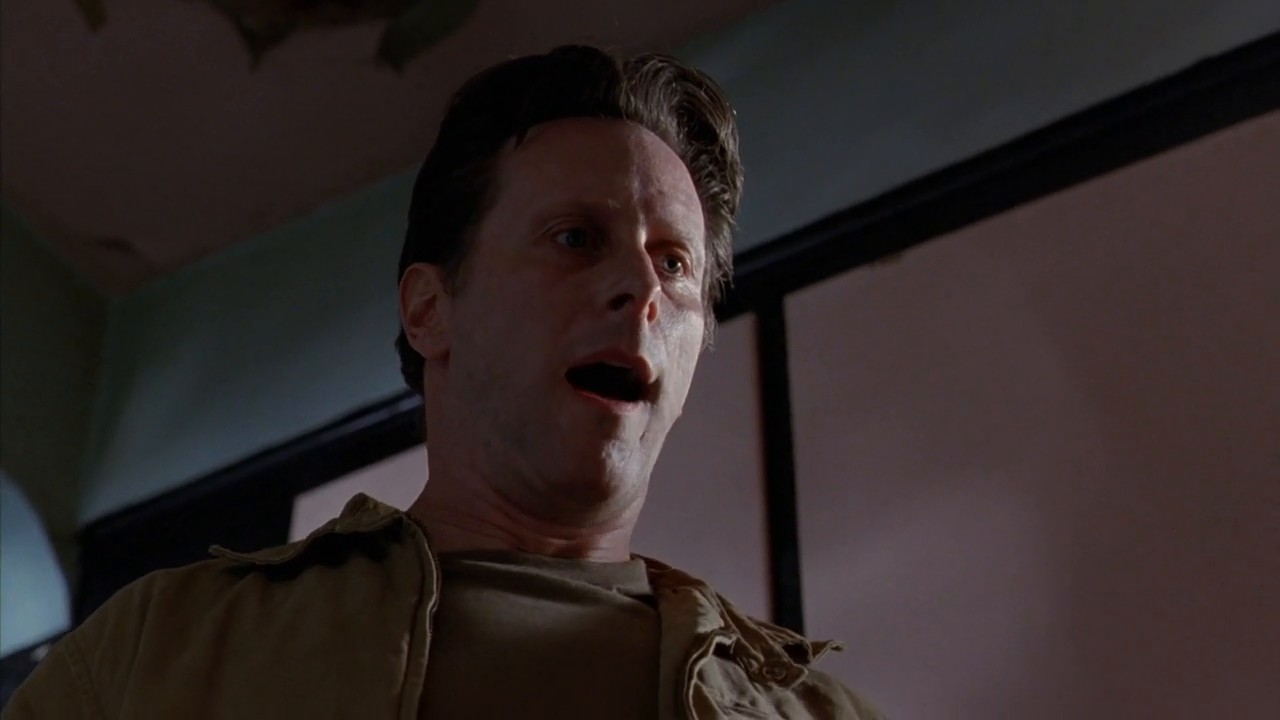
Frank at the top of the basement stairs.ENLARGE ↗
Frank at the top of the basement stairs.

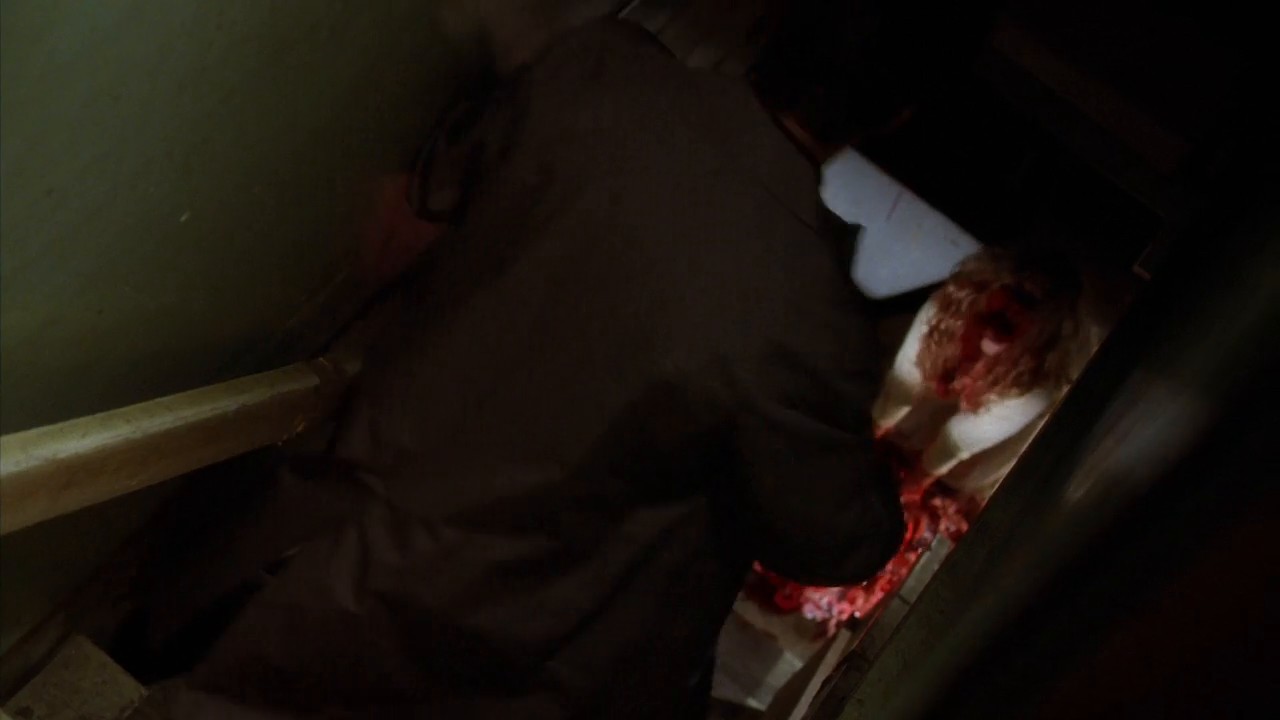
The steep angle separates the man at the door from the space below. The discovery of the neighbour’s child makes the basement another chamber of delayed recognition. Frank sees the consequences only after the danger has crossed the boundaries he was supposed to maintain.

Explore the sequence →

35:30

Turning a person into an exhibit

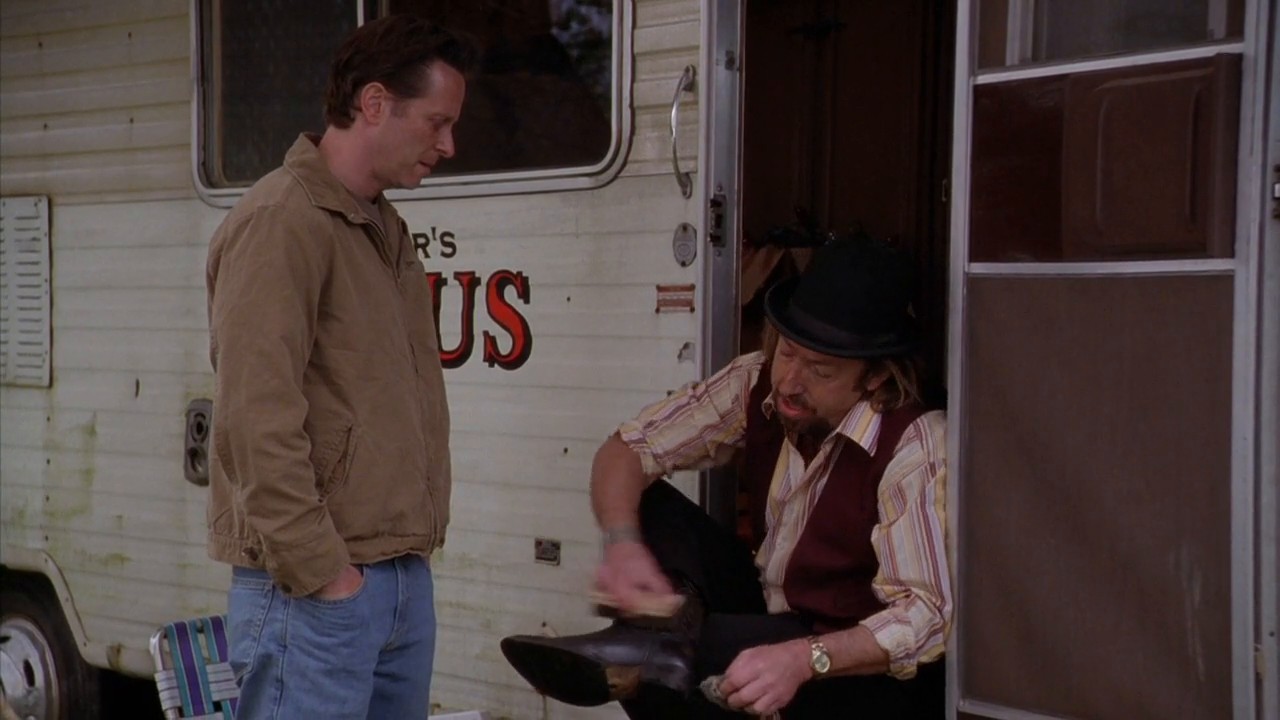
Frank negotiates outside the circus trailer.ENLARGE ↗
Frank negotiates outside the circus trailer.

The sideshow offers a different way of assigning Jenifer a place. Advertising and the proprietor’s trailer put commerce around the conversation. Frank’s attempt to hand her over changes the form of his responsibility without making its consequences disappear.

38:00

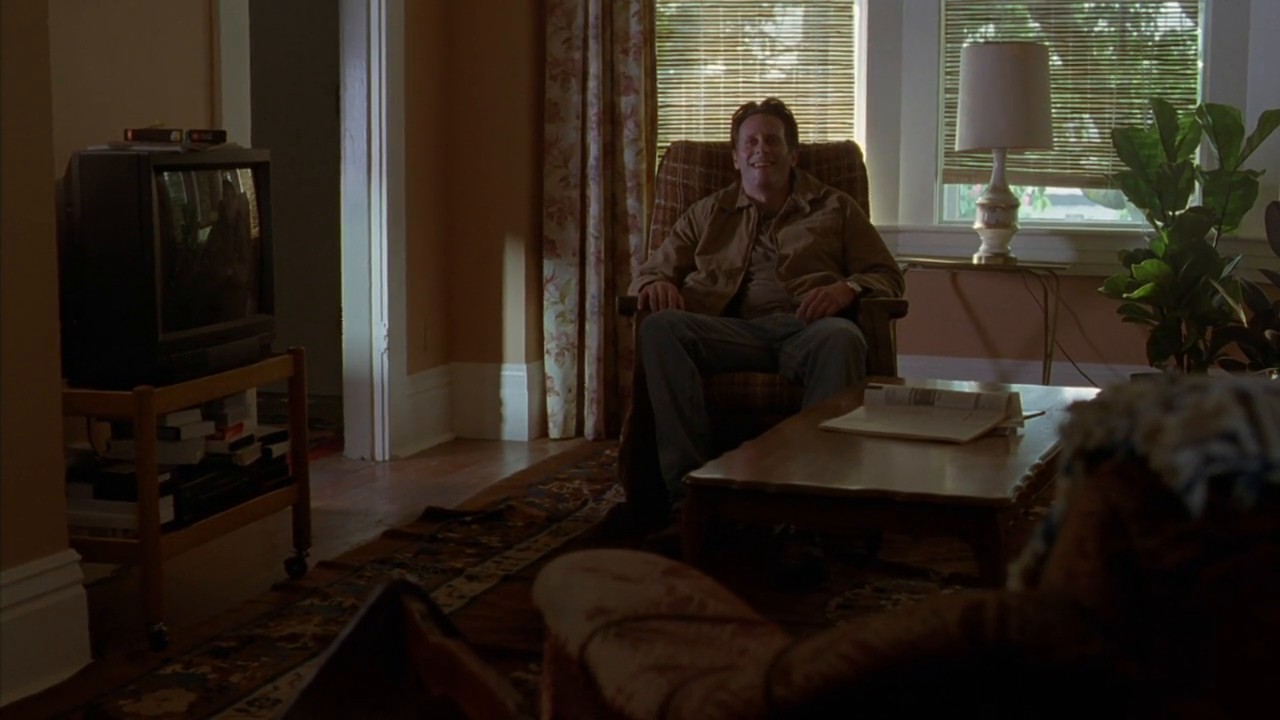
An uneasy return to normality

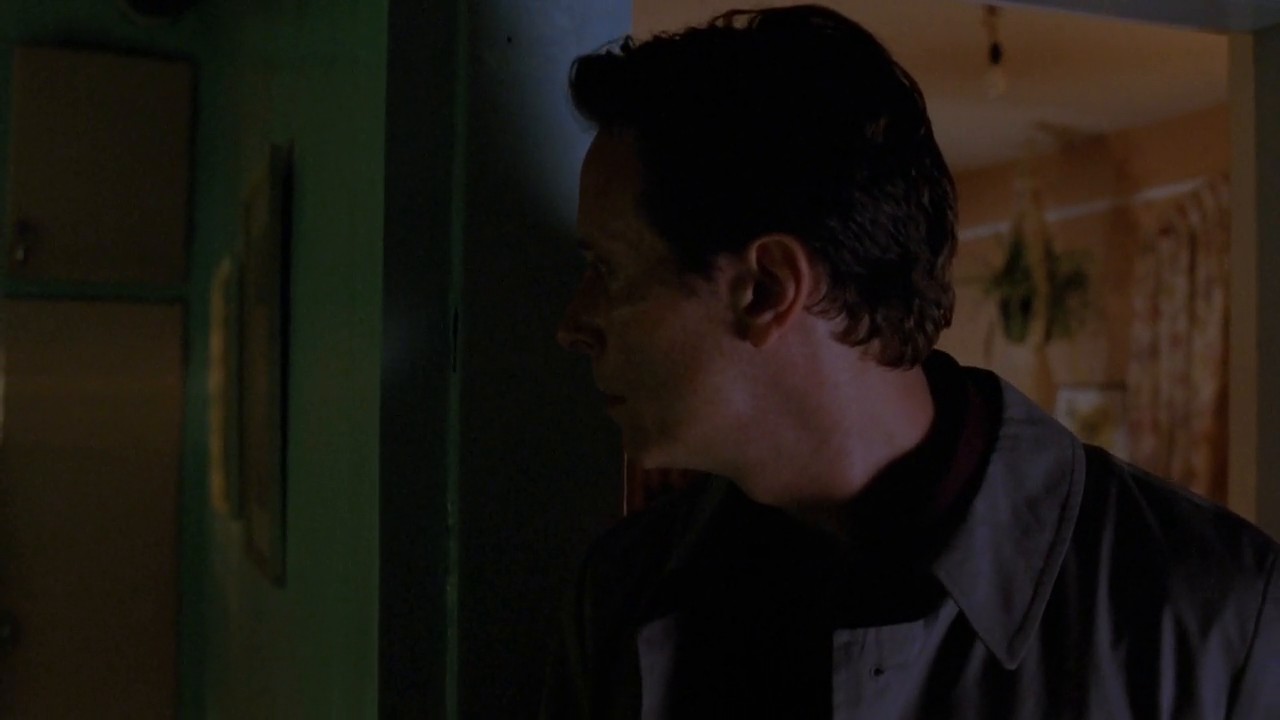
Frank waits in the living-room chair.ENLARGE ↗
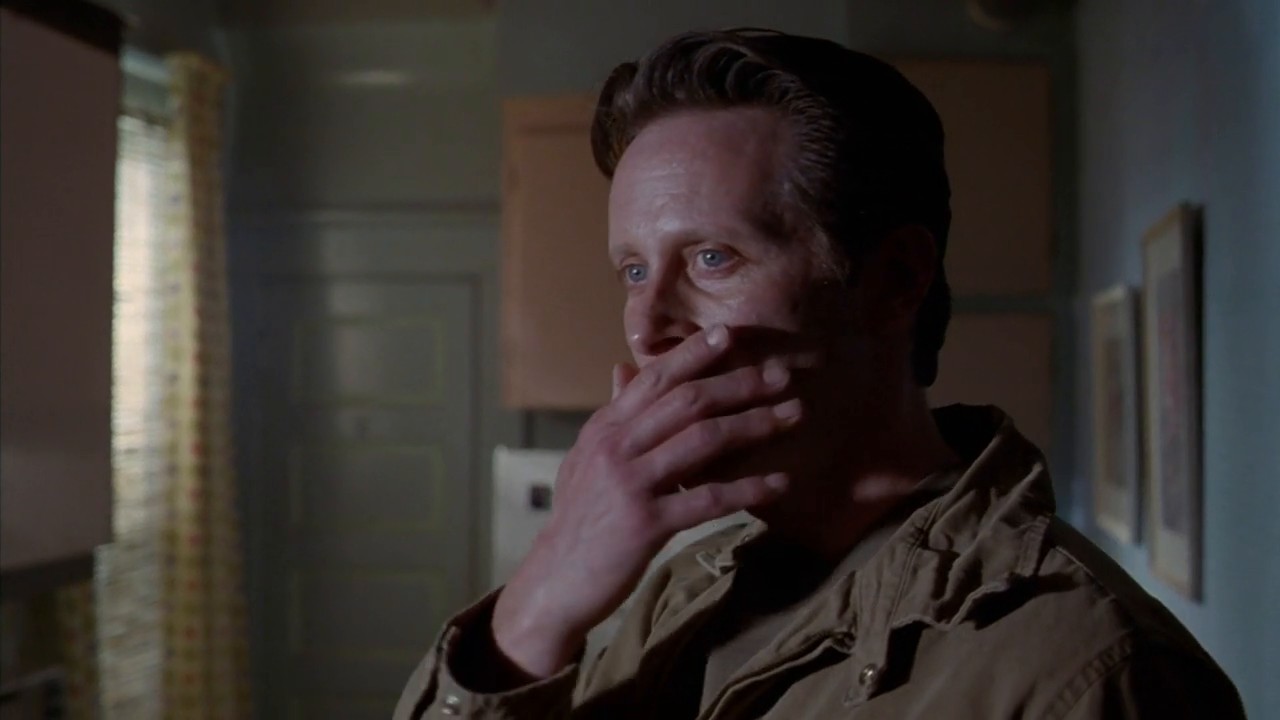
Frank waits in the living-room chair.

The familiar furniture briefly suggests a settled arrangement. The room holds that possibility long enough for a routine movement toward the kitchen to overturn it. Domestic suspense here depends on what can be concealed within the most ordinary objects.

38:12

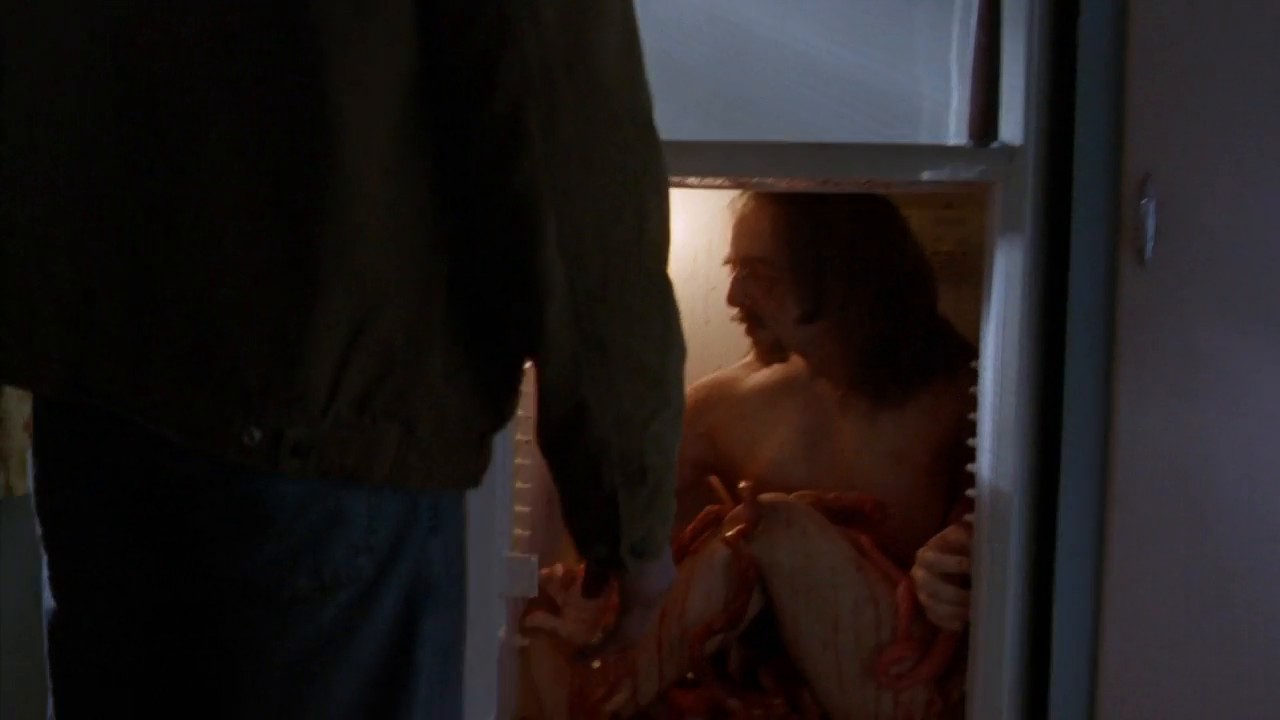
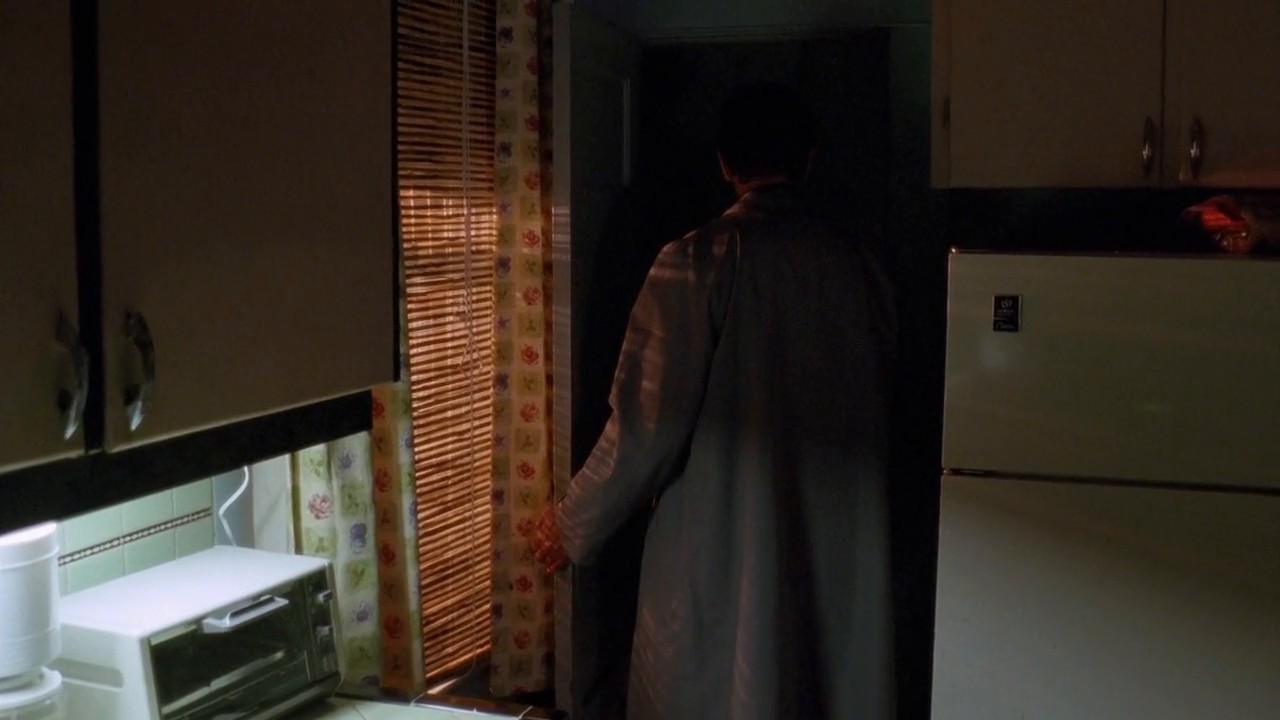
The cupboard becomes a frame

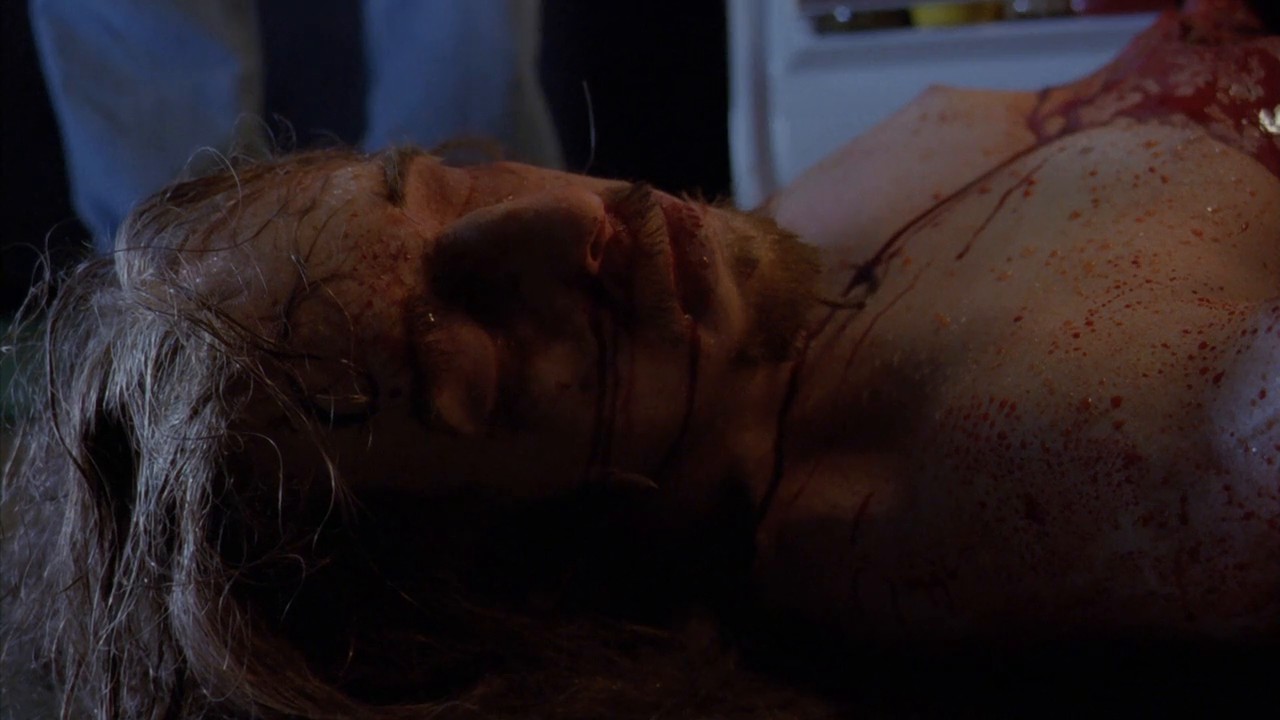
The refrigerator opens on the sideshow owner.ENLARGE ↗
The refrigerator opens on the sideshow owner.

The appliance supplies a narrow, brightly lit compartment inside the darker kitchen. The body is revealed as a stored object; the reaction then returns the horror to Frank’s face. A mundane act of opening becomes another failure to anticipate what is already in the house.

Explore the sequence →

40:45

Withdrawal into the woods

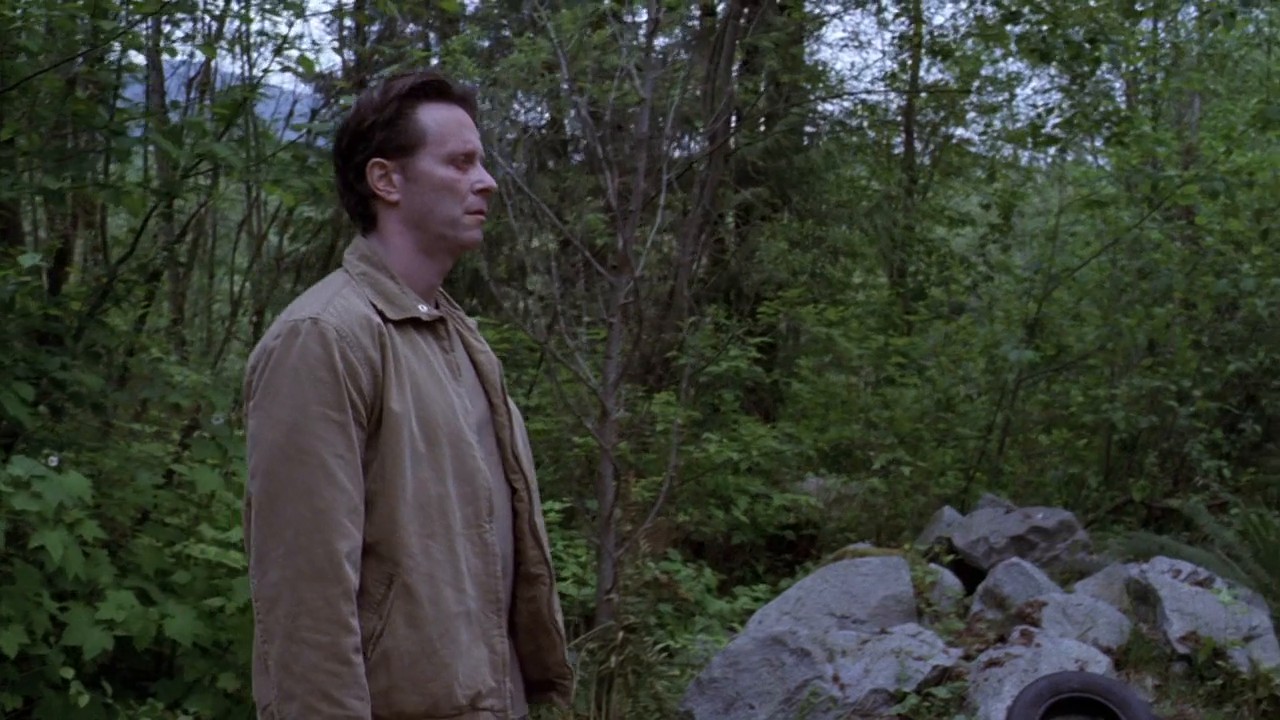
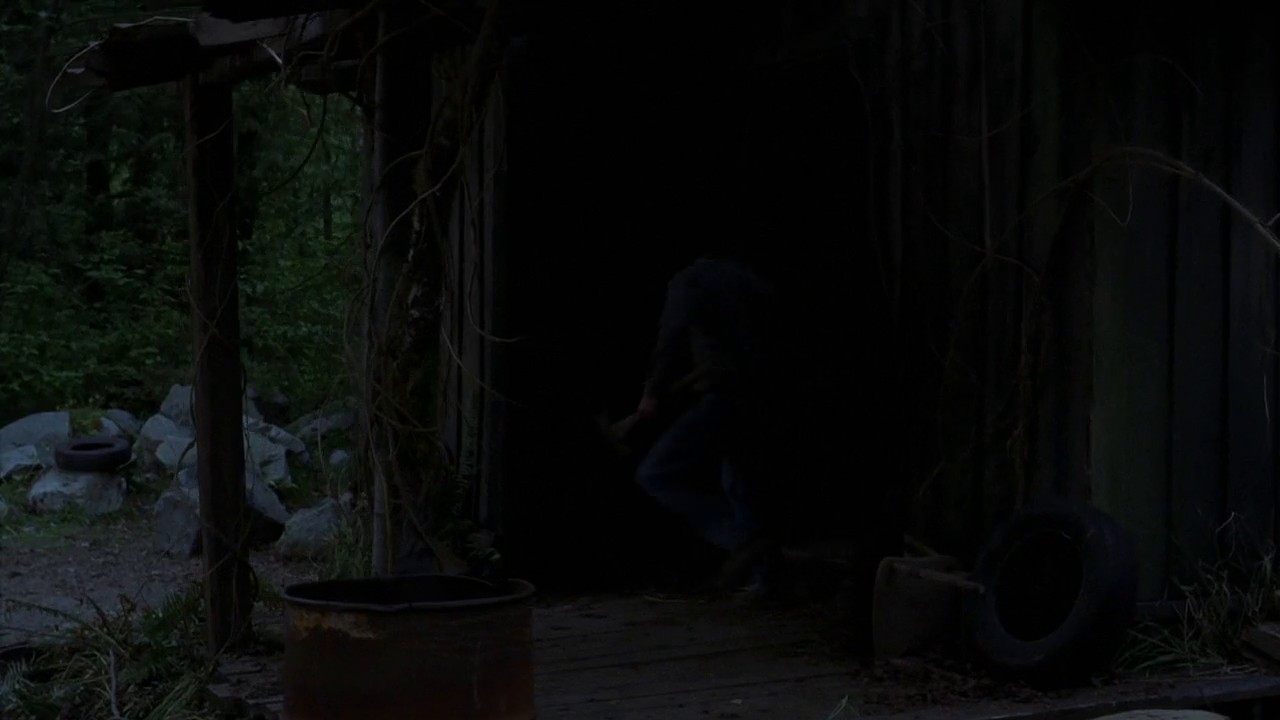
Frank pauses among trees and discarded tyres.ENLARGE ↗
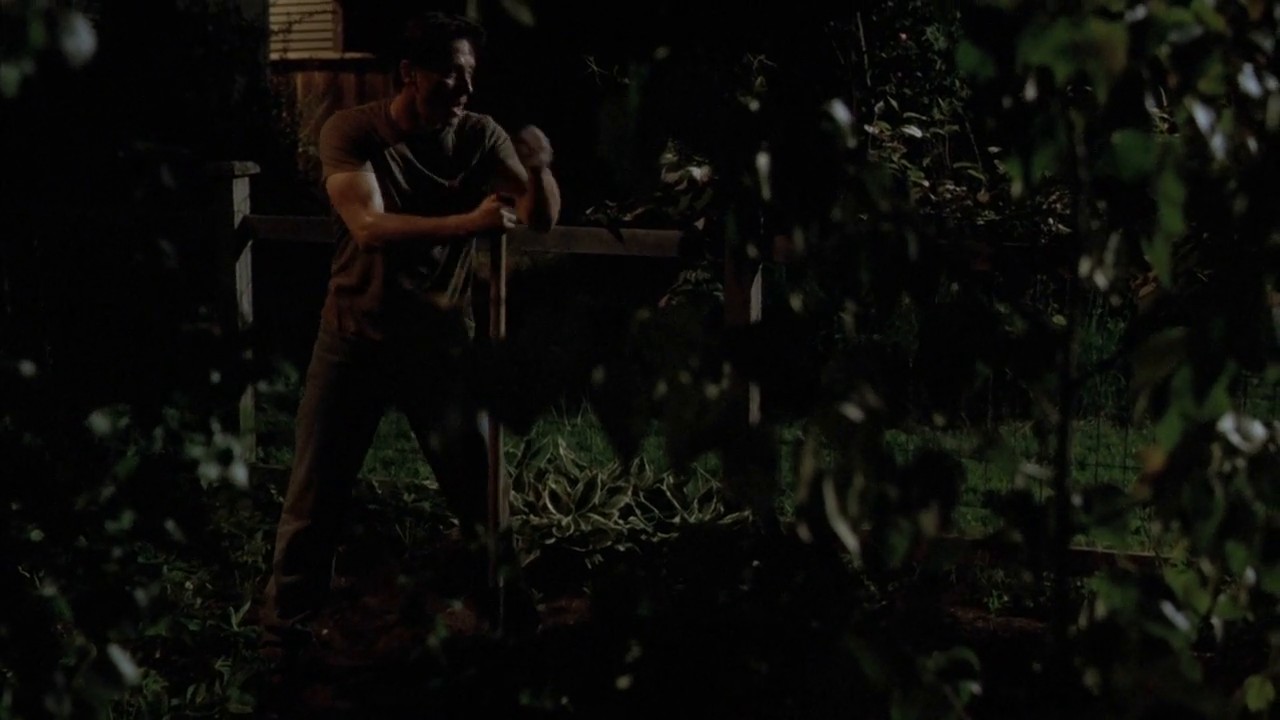
Frank pauses among trees and discarded tyres.

Leaving town does not create an untouched refuge. The route to the cabin passes through vegetation and abandoned objects, carrying traces of other lives. The change of address reduces witnesses while leaving the central attachment intact.

41:45

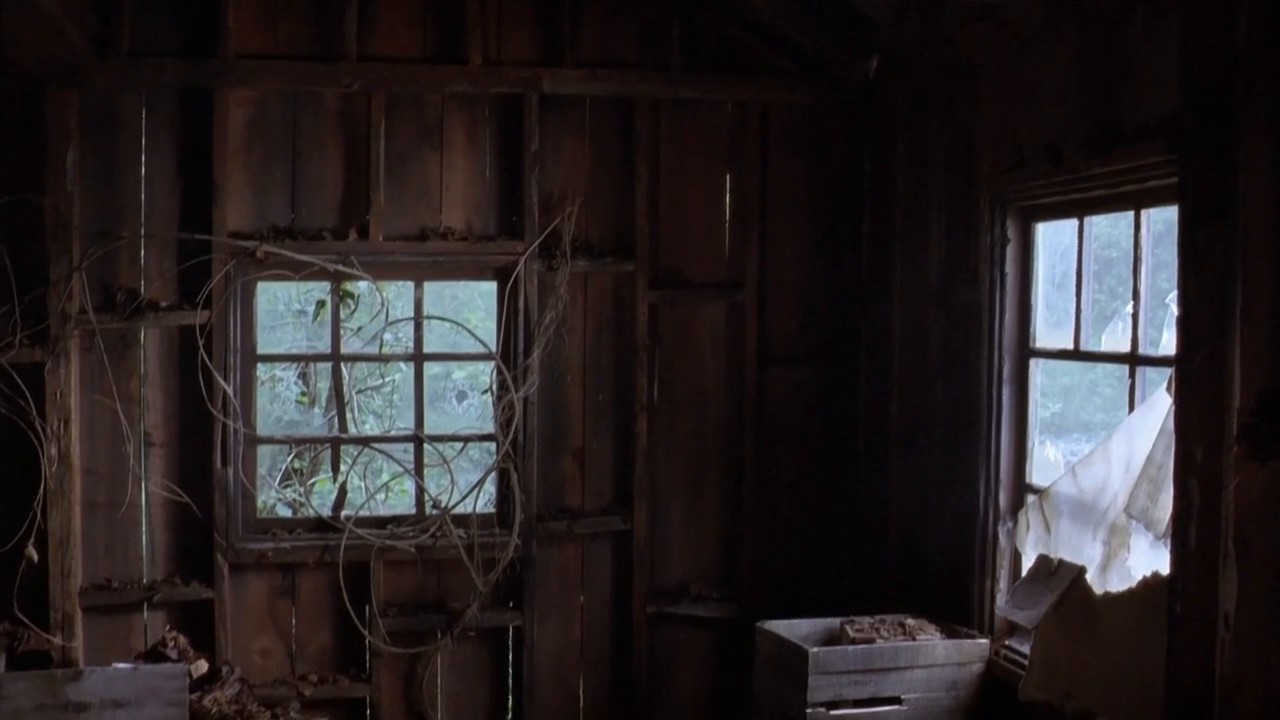
A house stripped to its frame

Window light enters the abandoned cabin.ENLARGE ↗
Window light enters the abandoned cabin.

Bare boards, exposed framing and a small window replace the furnished home. The interior promises little separation between living, hiding and imprisonment. Its openings will matter as much as its walls when the story returns to concealed violence.

44:15

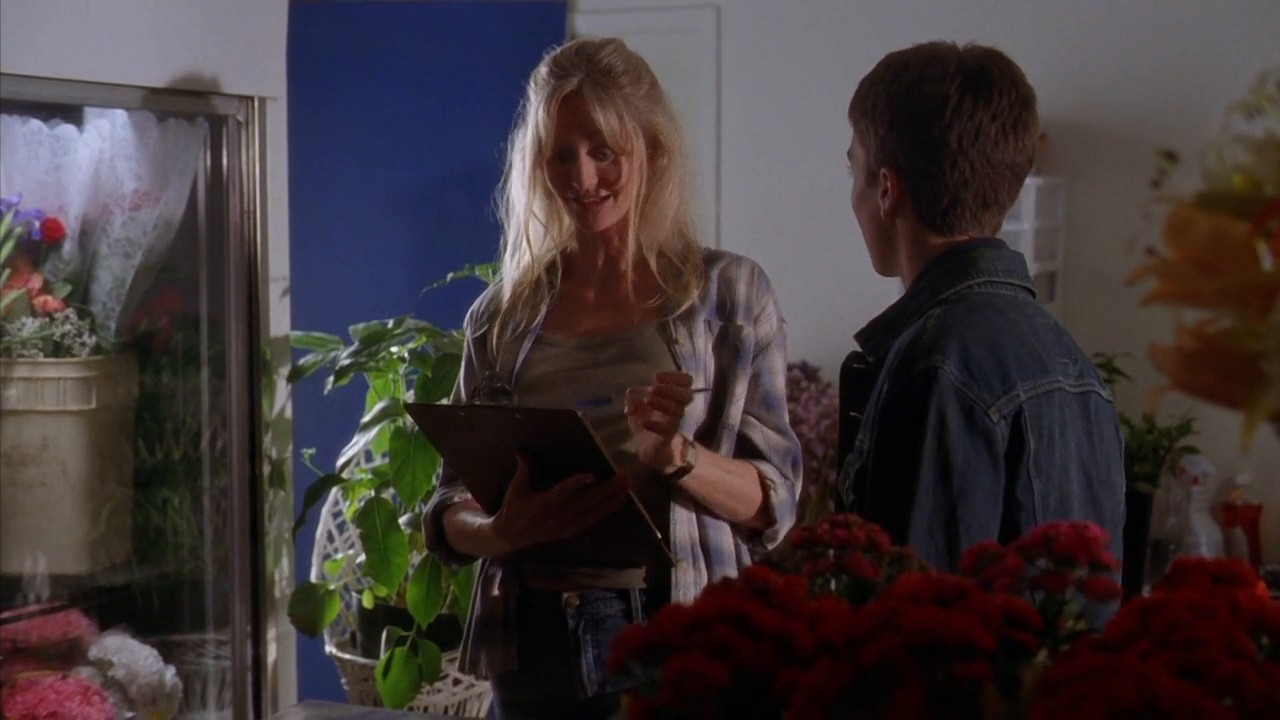
Another possible social life

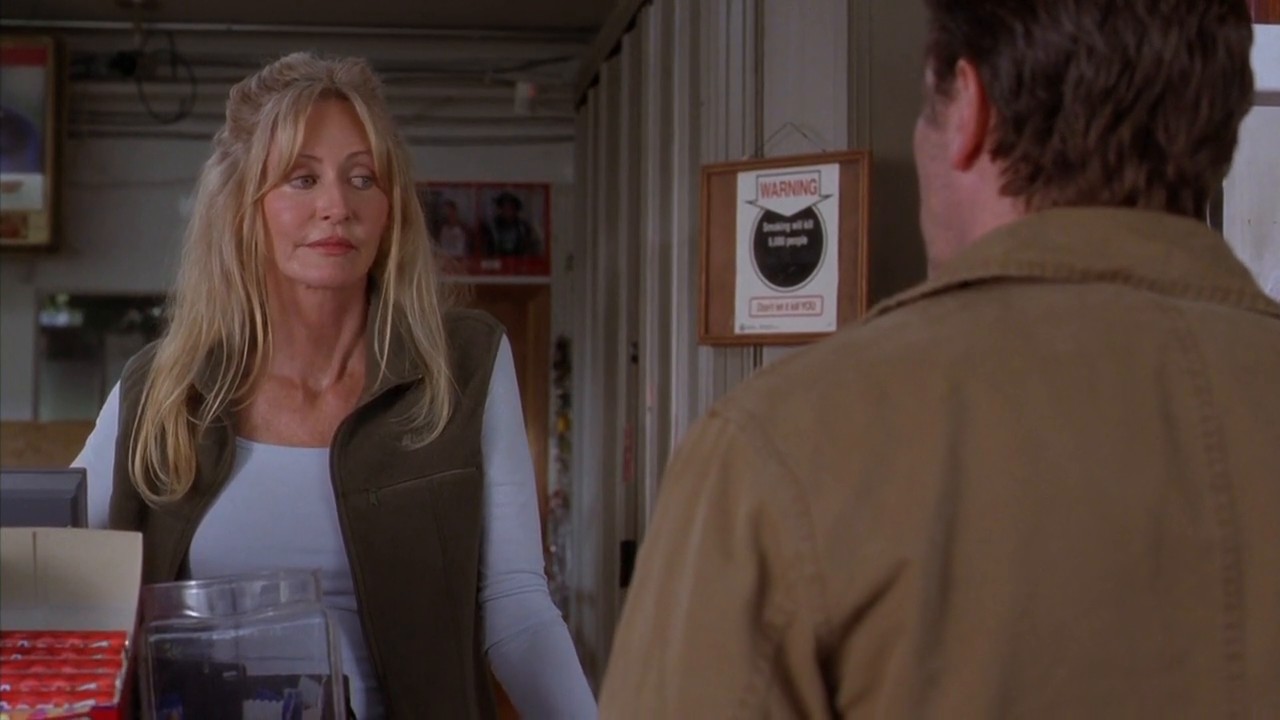
Frank meets the woman behind the counter.ENLARGE ↗
Frank meets the woman behind the counter.

A counter again gives an encounter a clear social arrangement, as the police desks did earlier. Here work and ordinary conversation offer another point of contact outside the couple. The brighter shop makes the cabin’s concealment more pronounced.

46:45

Colour outside the cabin

Flowers surround the shop counter.ENLARGE ↗
Flowers surround the shop counter.

The colourful display gives the new workplace a public, welcoming surface. Frank can appear to resume an ordinary life here. The contrast is spatial rather than explanatory: the shop does not show the private world he returns to.

49:15

A look through the window

A young man looks through the shop window.ENLARGE ↗
A young man looks through the shop window.

The window creates another incomplete view. Attention crosses the glass, but recognition remains uncertain. Like Frank’s first sight of the waterfront struggle, this look begins a relationship from an image whose history is missing.

50:30

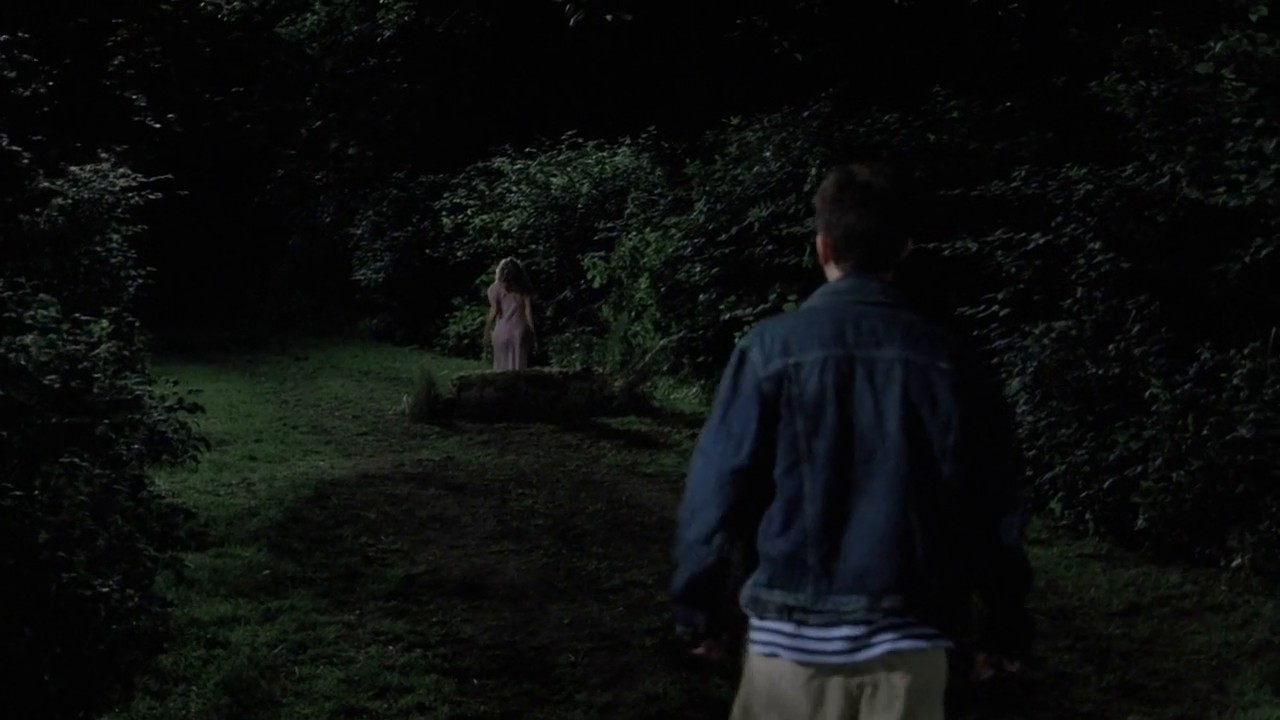
A figure beyond the party

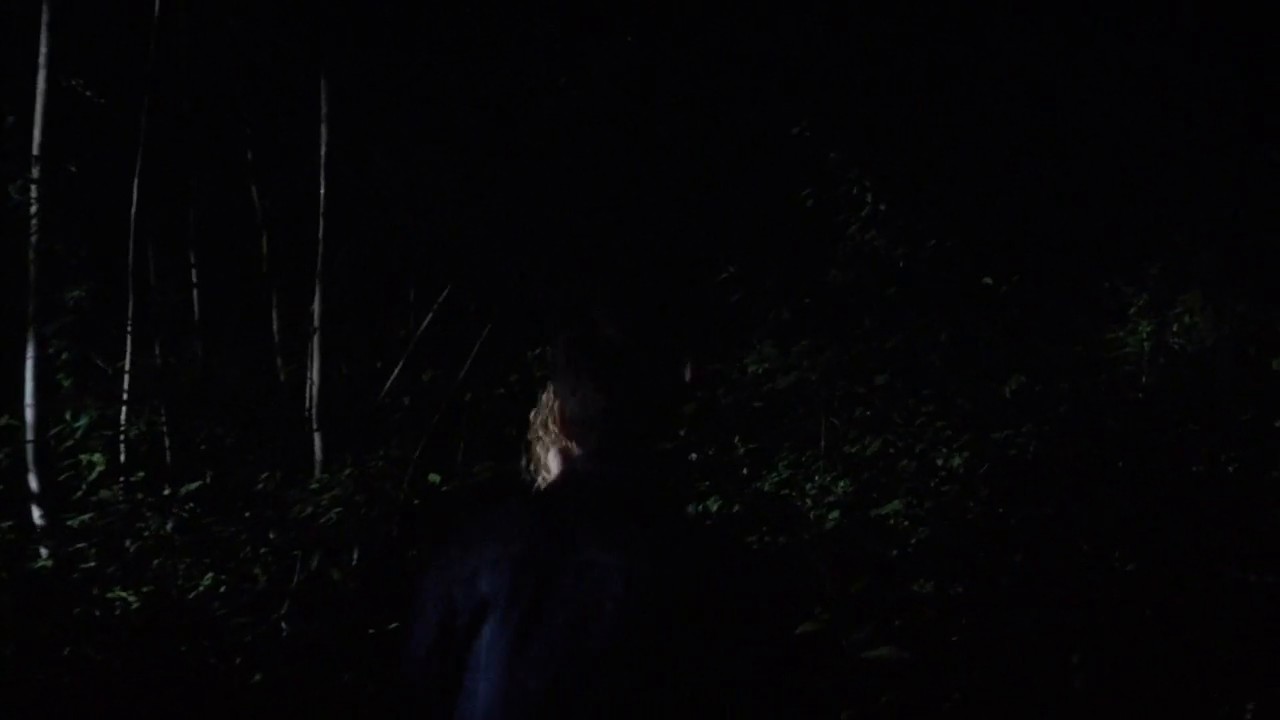
Jenifer waits alone in the clearing.ENLARGE ↗
Jenifer waits alone in the clearing.

The lit gathering gives way to a solitary figure against dark trees. Her distance invites an approach. The episode again makes a person legible as someone to follow before showing what that movement will lead to.

53:48

The hidden space opens again

Frank discovers Jenifer beneath the cabin.ENLARGE ↗
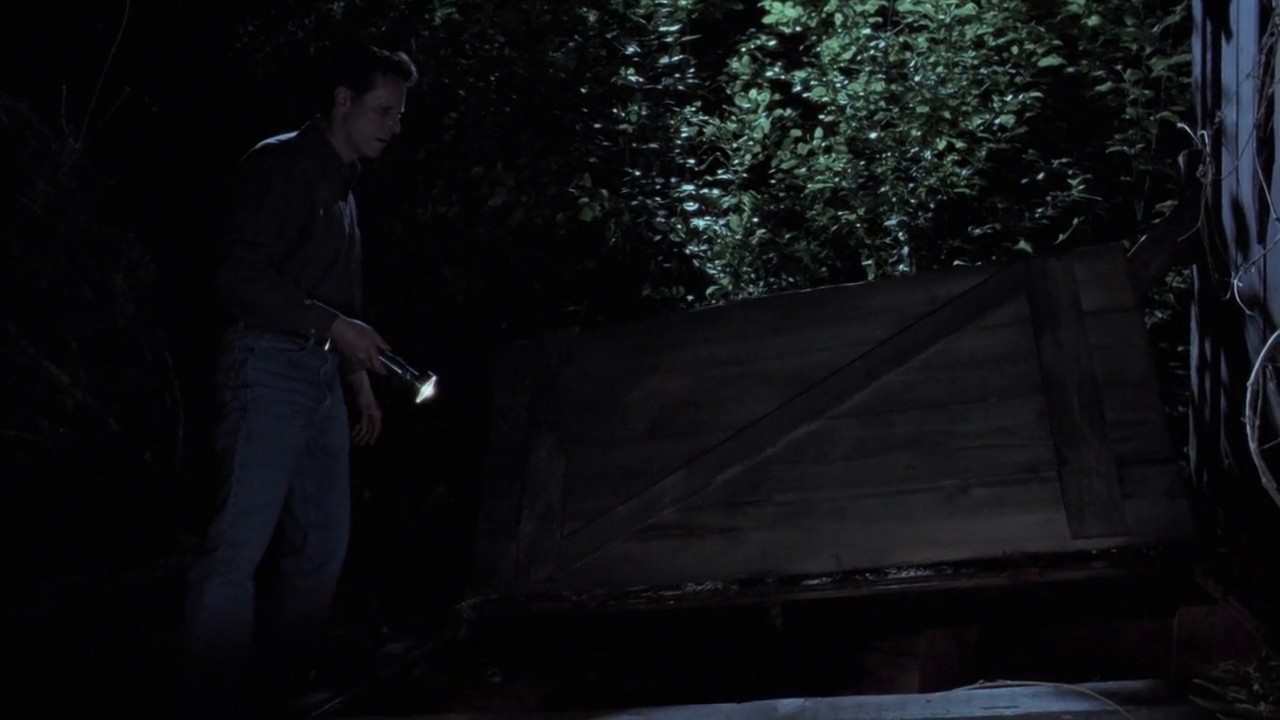
Frank discovers Jenifer beneath the cabin.

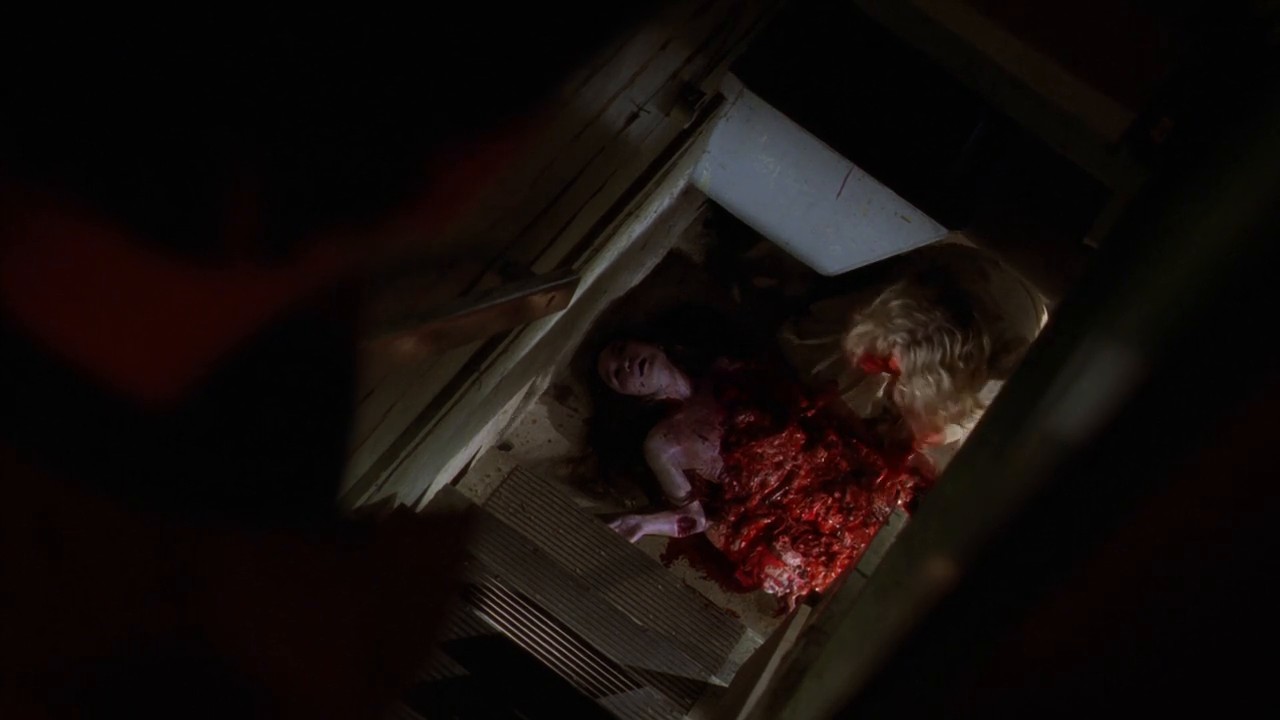
The cellar hatch repeats the domestic pattern on a new site: a threshold opens, a body is revealed, and Frank arrives too late. The young man’s striped shirt anchors the discovery to the preceding encounter. Moving into the woods has changed the setting, not the pattern.

Explore the sequence →

54:30

A path back to the beginning

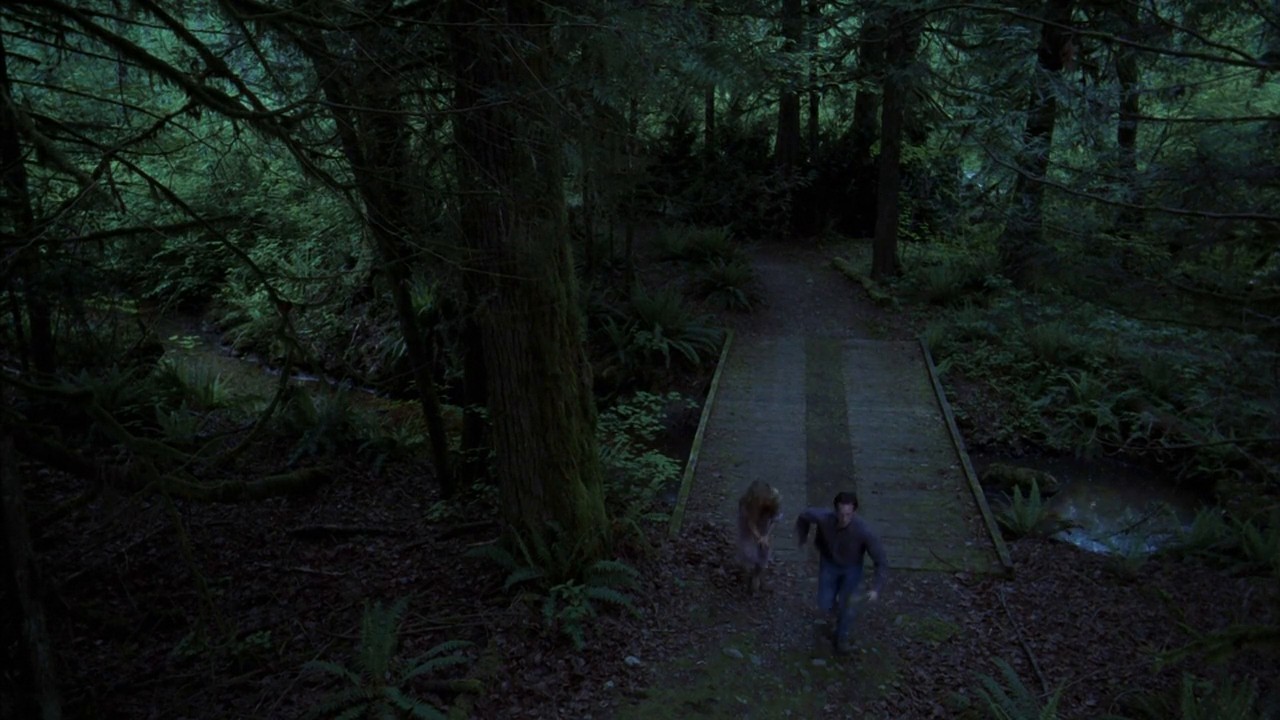
Frank leads Jenifer through the woods.ENLARGE ↗
Frank leads Jenifer through the woods.

The elevated view briefly lays out the route around the wooden crossing. Frank’s urgent movement turns care into coercion. The path leads toward a composition the audience has already learned to read, but he now occupies a different position within it.

55:12

The rescue changes owners

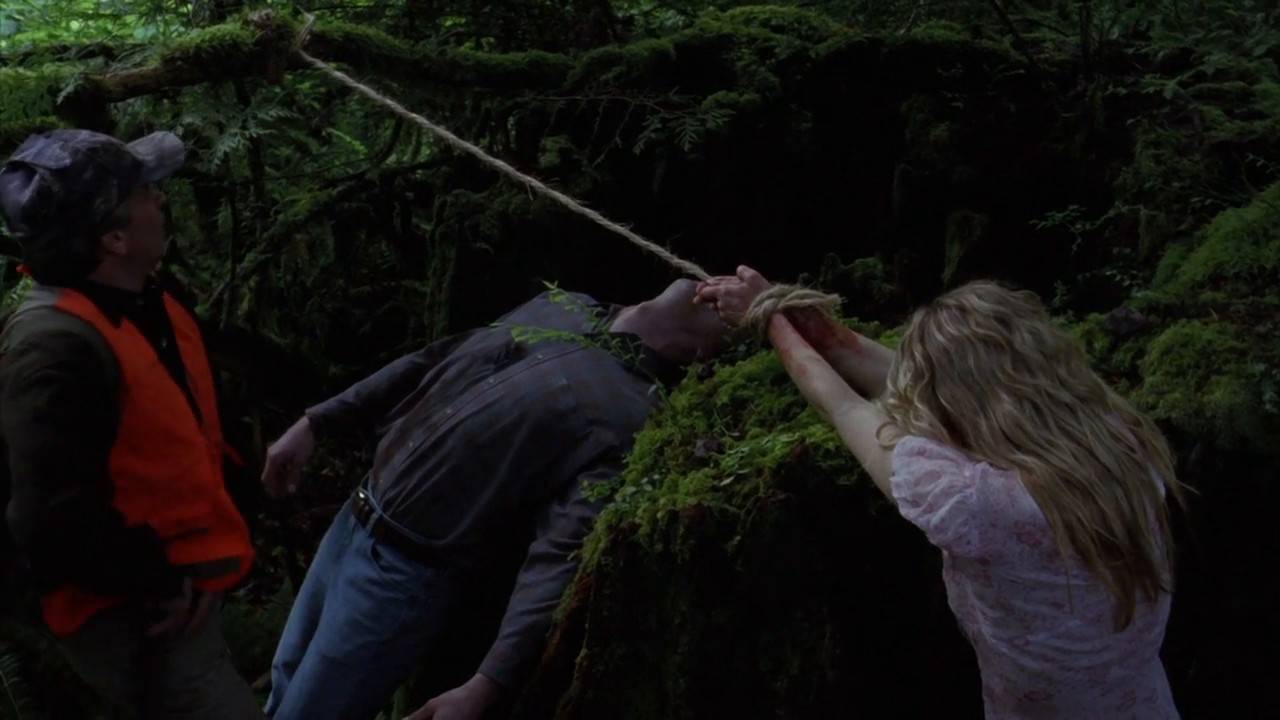
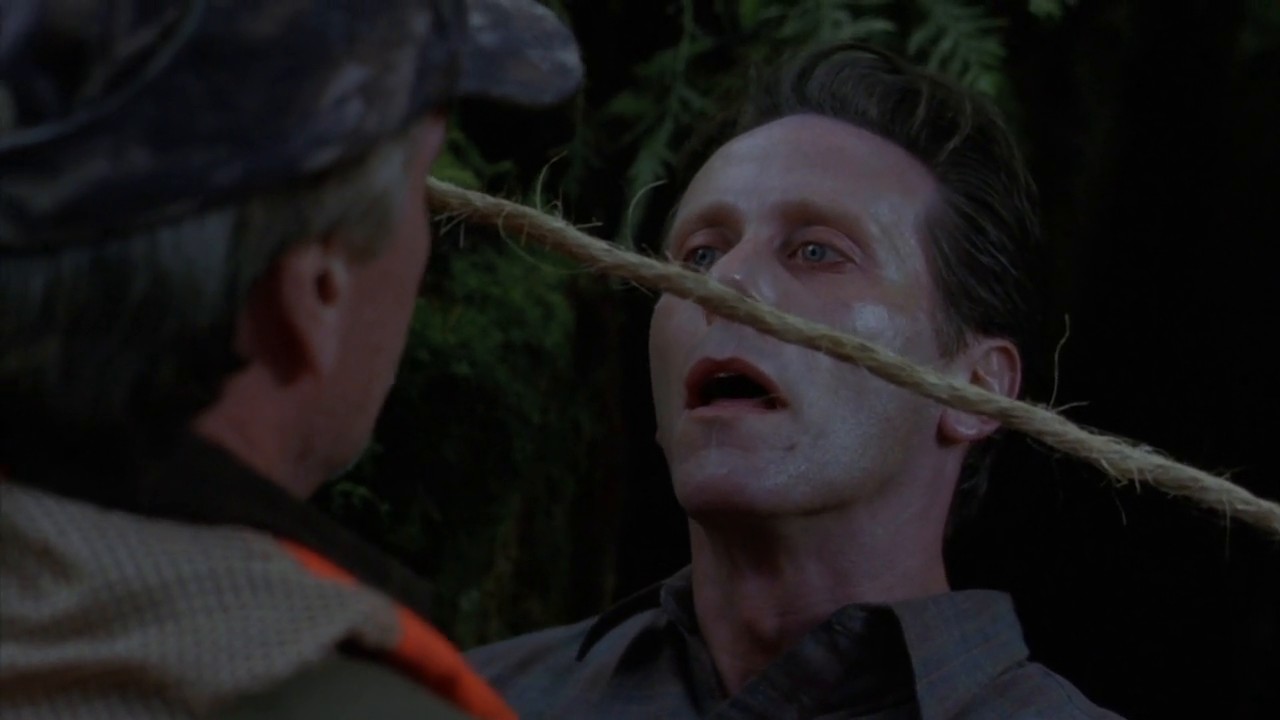
The hunter reaches Frank and Jenifer.ENLARGE ↗
The hunter reaches Frank and Jenifer.

Rope, a raised blade and an intervening gun reconstruct the opening situation. Frank has become the threatening man visible to a newcomer. The spectator’s accumulated knowledge makes the intervention tragic: the hunter can read the immediate danger while missing its history.

Explore the sequence →

56:12

The last image makes contact

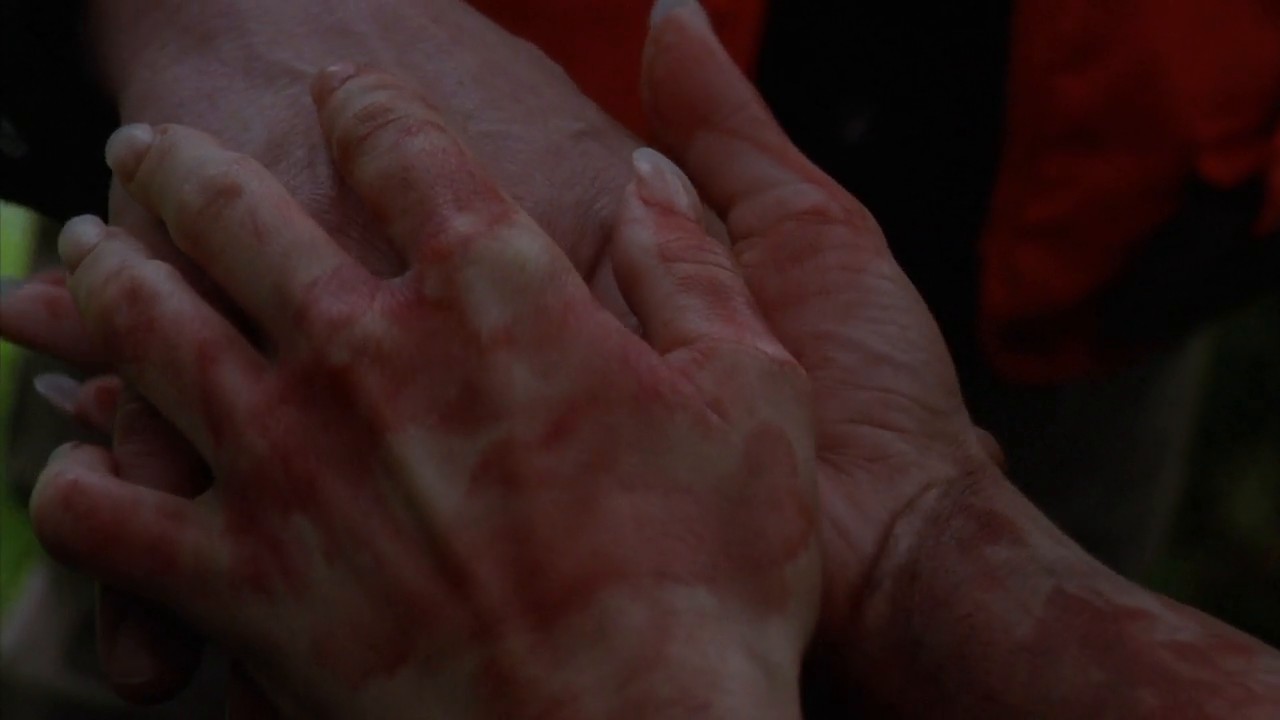
Jenifer’s hand closes around the hunter’s.ENLARGE ↗
Jenifer’s hand closes around the hunter’s.

The ending rests on hands rather than a final anatomical revelation. Their joined movement makes the transfer of attachment tangible. The circle closes through an intimate gesture, leaving the next rescuer inside the story he believes he has ended.

Explore the sequence →
Back to the dossier entrance ↑

GORE & EFFECTS

What the room conceals.

A main image opens each study. Expand the gallery to follow the setup, revelation and aftermath, then enlarge any stage to move through the sequence.

04:38–05:32

The waterfront shooting

He slides down the wall.ENLARGE ↗
He slides down the wall.

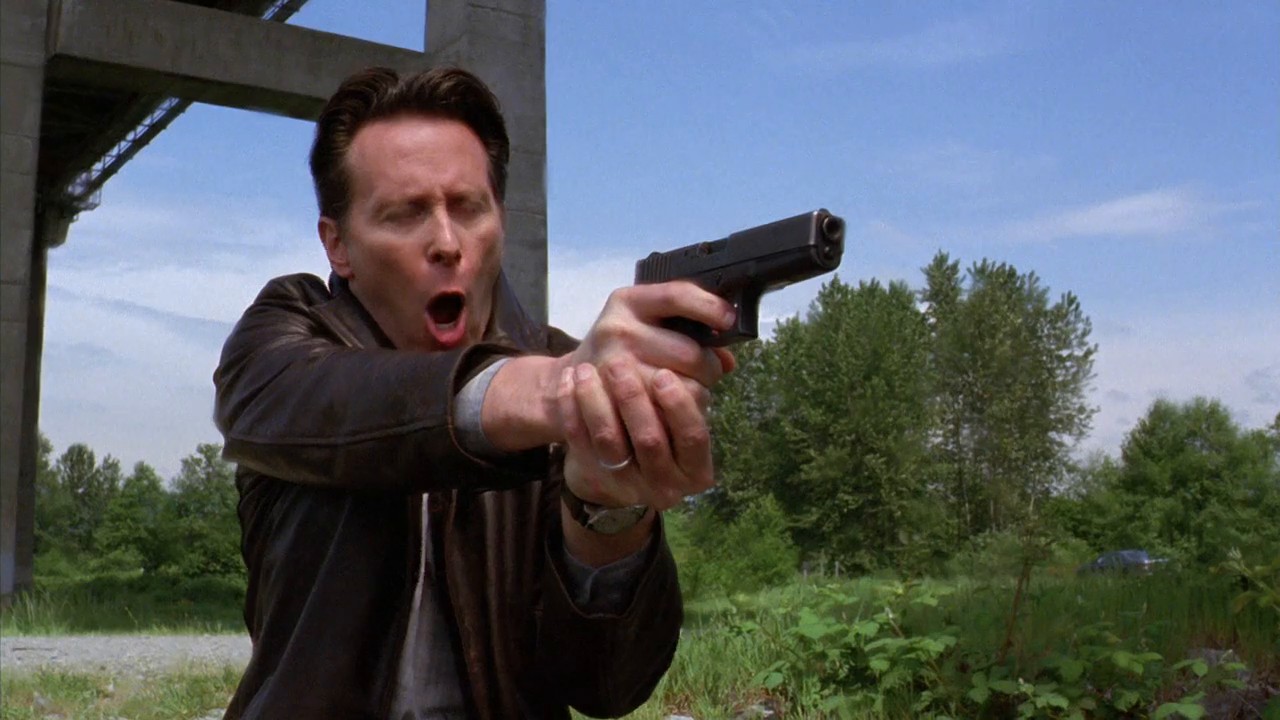
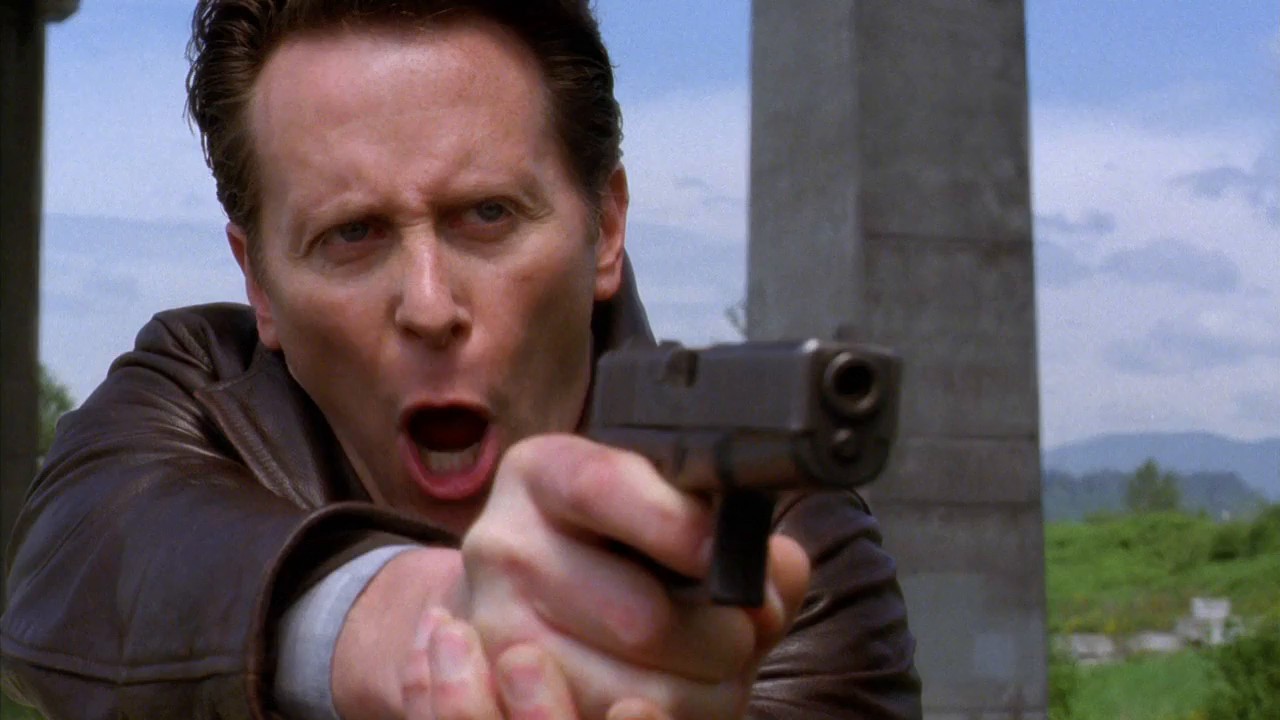
The sequence establishes a raised blade, Frank’s firearm and the threatened woman before displaying the impact against a pale wall. Its violence is distributed across gesture, the falling weapon, the blood trace and the wounded man’s grip.

The following embrace does not erase the body beside them. Compare this arrangement with the final woodland intervention: the later scene changes the positions within a familiar design.

Explore the sequence 9 stages

01 · 04:38

The cleaver rises beside the barrel.ENLARGE ↗
The cleaver rises beside the barrel.

02 · 04:44

The armed man faces Frank.ENLARGE ↗
The armed man faces Frank.

03 · 04:50

Frank takes aim.ENLARGE ↗
Frank takes aim.

04 · 04:56

The blade is raised again.ENLARGE ↗
The blade is raised again.

05 · 04:58

Frank holds his aim.ENLARGE ↗
Frank holds his aim.

06 · 05:01

The man recoils against the wall.ENLARGE ↗
The man recoils against the wall.

07 · 05:03

His arm falls beside the blood mark.ENLARGE ↗
His arm falls beside the blood mark.

08 · 05:06

He slides down the wall.ENLARGE ↗
He slides down the wall.

09 · 05:32

Frank kneels beside the wounded man.ENLARGE ↗
Frank kneels beside the wounded man.
Back to the effects guide ↑

27:50–28:40

Behind the bathroom door

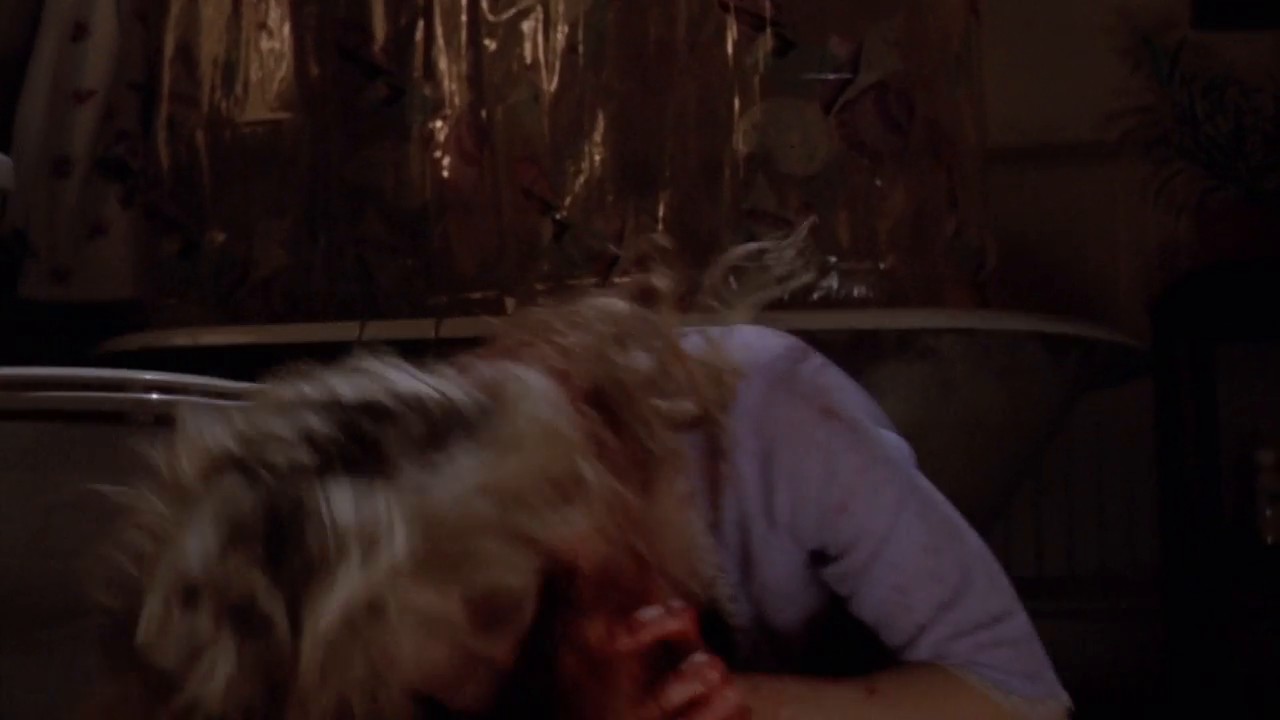
Jenifer raises her face.ENLARGE ↗
Jenifer raises her face.

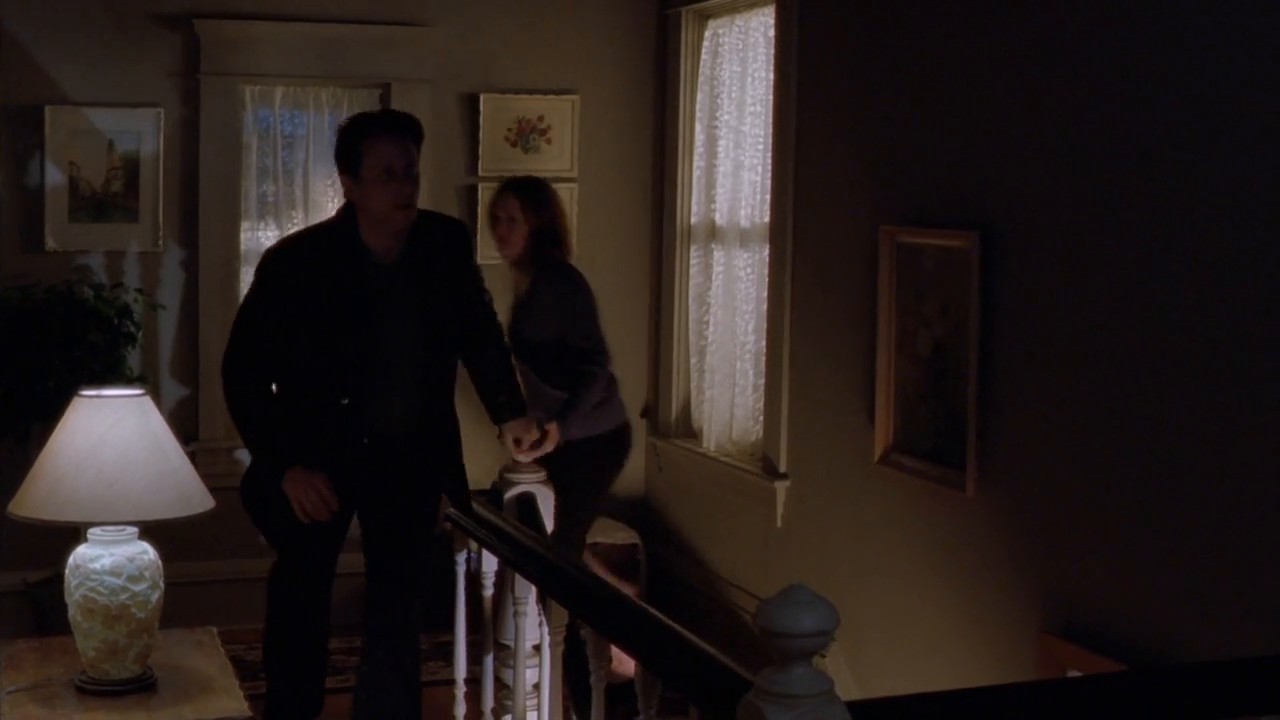
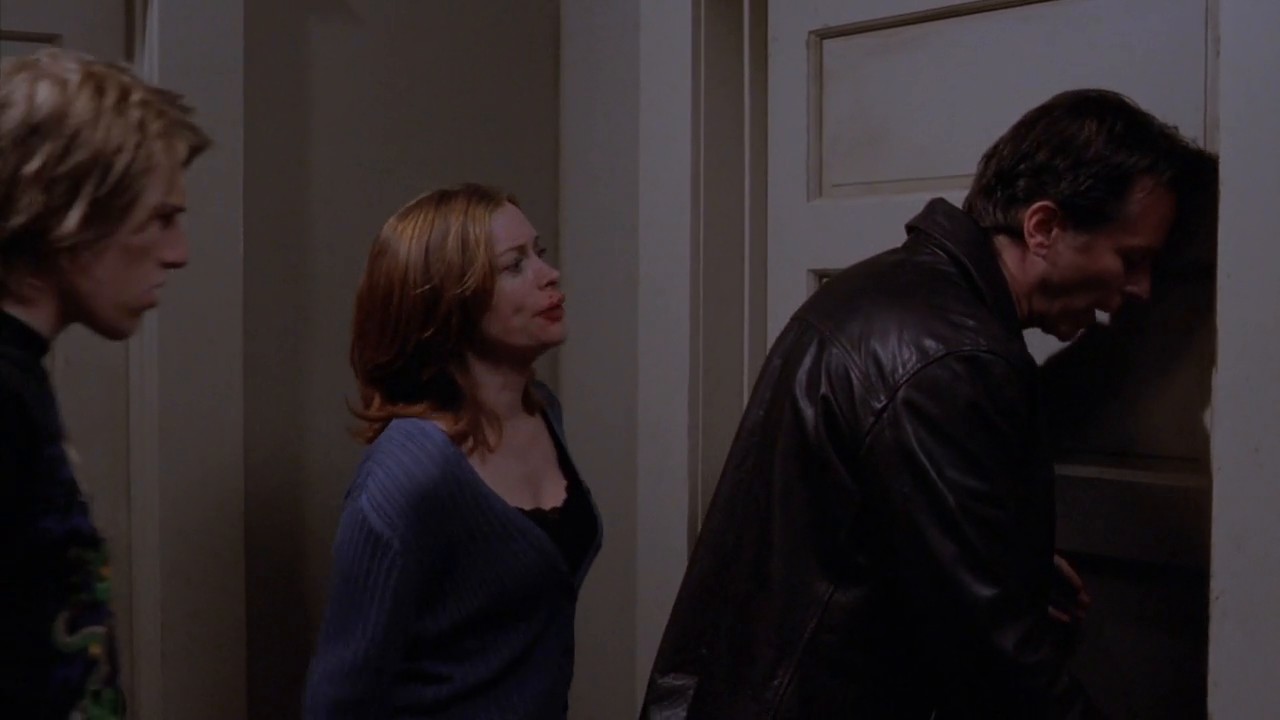
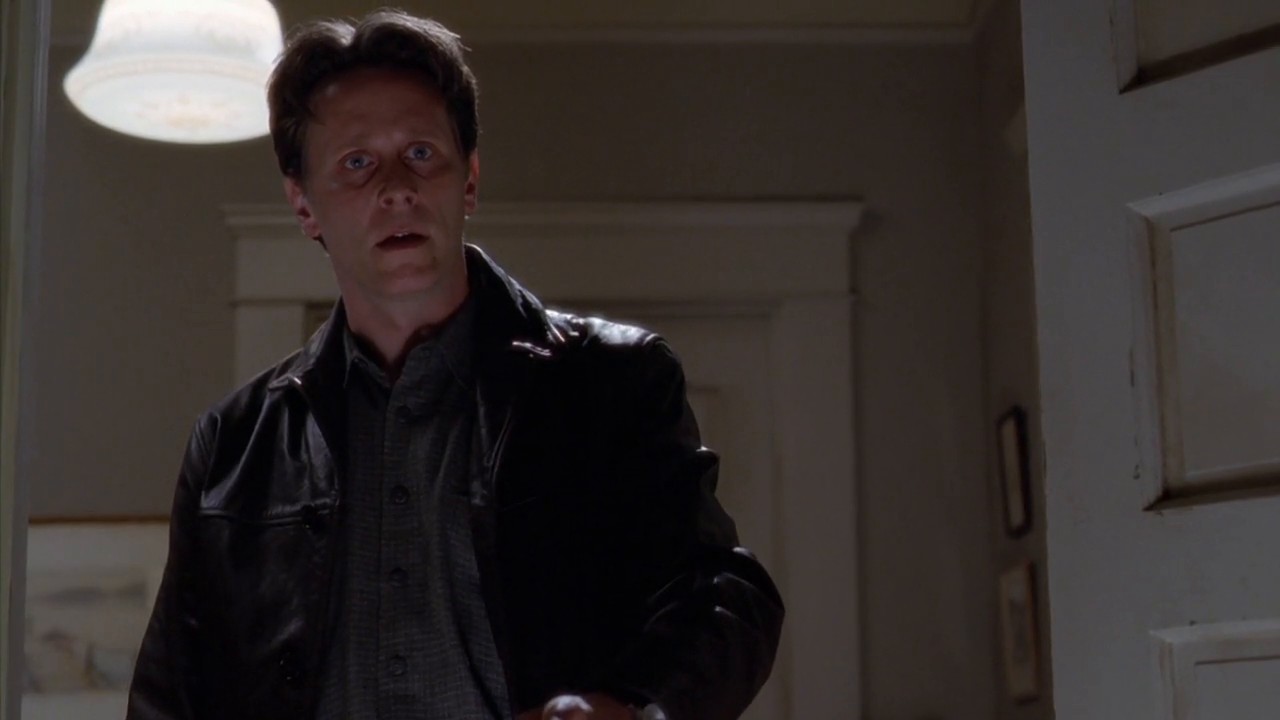
The cat sequence alternates the household’s approach with Jenifer on the bathroom floor. The partially withheld space creates anticipation; opening the door turns a private enclosure into a sight the family must confront.

The stages reveal a practical relationship between mouth, hands and remains, then return to the witnesses. This is a study of the completed screen effect. The credits identify the effects team but do not assign each insert to a named technician.

Explore the sequence 11 stages

01 · 27:50

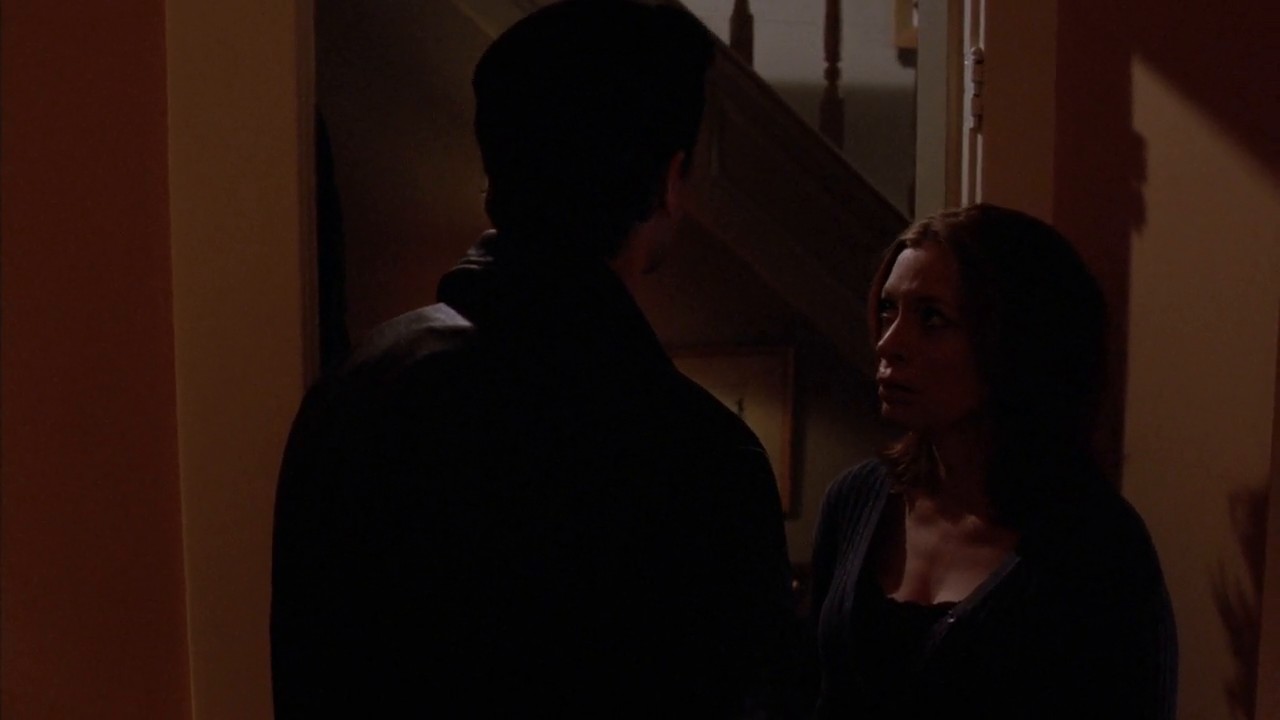
Frank meets his wife in the hall.ENLARGE ↗
Frank meets his wife in the hall.

02 · 28:00

Jenifer bends over the remains.ENLARGE ↗
Jenifer bends over the remains.

03 · 28:04

The couple reaches the landing.ENLARGE ↗
The couple reaches the landing.

04 · 28:12

The family gathers outside the door.ENLARGE ↗
The family gathers outside the door.

05 · 28:16

The bathroom door opens.ENLARGE ↗
The bathroom door opens.

06 · 28:20

The floor-level view reveals the aftermath.ENLARGE ↗
The floor-level view reveals the aftermath.

07 · 28:24

Jenifer raises her face.ENLARGE ↗
Jenifer raises her face.

08 · 28:28

Frank takes in the sight.ENLARGE ↗
Frank takes in the sight.

09 · 28:32

She lifts the remains toward her mouth.ENLARGE ↗
She lifts the remains toward her mouth.

10 · 28:36

She returns to the floor.ENLARGE ↗
She returns to the floor.

11 · 28:40

Frank watches the family leave.ENLARGE ↗
Frank watches the family leave.
Back to the effects guide ↑

33:30–34:50

The basement discovery

Frank looks down from the landing.ENLARGE ↗
Frank looks down from the landing.

The neighbour’s child is discovered below the kitchen. A steep view down the staircase is answered by a low view up toward Frank, making the height difference part of the shock. He can see the violence without having prevented it.

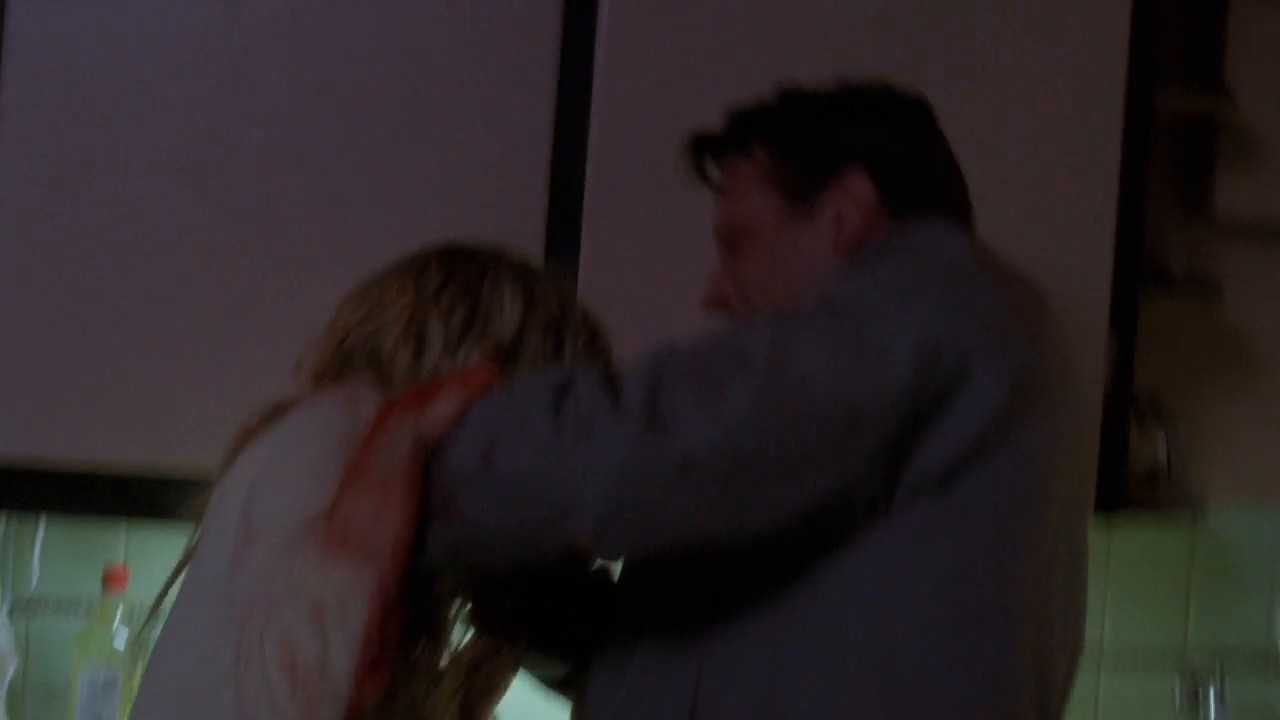
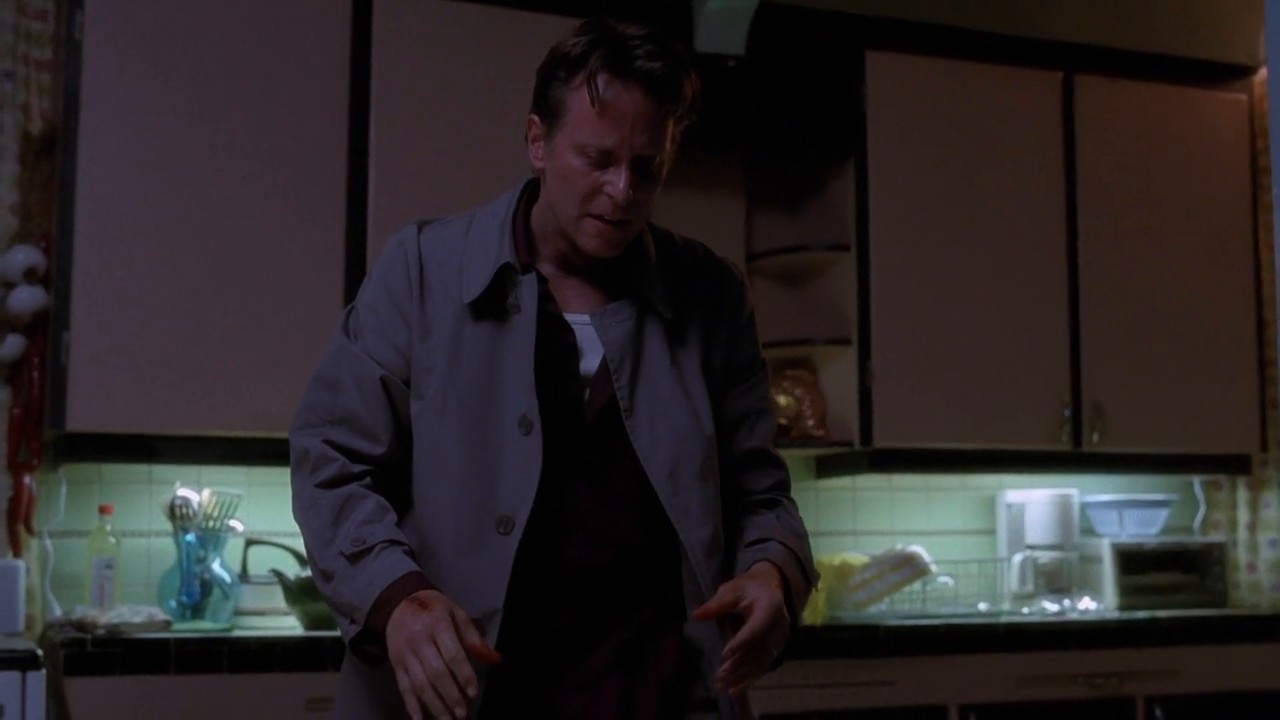
The gallery follows the doorway, the distant tableau and Frank’s response. The climb out of the basement brings Jenifer back into his immediate space; her approach converts a witnessed crime into another personal encounter he fails to resolve.

Explore the sequence 8 stages

01 · 33:30

Frank turns toward the kitchen.ENLARGE ↗
Frank turns toward the kitchen.

02 · 33:42

He reaches the basement doorway.ENLARGE ↗
He reaches the basement doorway.

03 · 33:48

The stairs frame the discovery below.ENLARGE ↗
The stairs frame the discovery below.

04 · 33:54

Frank looks down from the landing.ENLARGE ↗
Frank looks down from the landing.

05 · 34:03

Jenifer approaches the steps.ENLARGE ↗
Jenifer approaches the steps.

06 · 34:20

Frank recoils as she reaches him.ENLARGE ↗
Frank recoils as she reaches him.

07 · 34:30

He stands against the kitchen counter.ENLARGE ↗
He stands against the kitchen counter.

08 · 34:50

Jenifer presses against him again.ENLARGE ↗
Jenifer presses against him again.
Back to the effects guide ↑

37:30–38:50

The sideshow owner in the refrigerator

The refrigerator reveals the body.ENLARGE ↗
The refrigerator reveals the body.

A bright compartment interrupts the warm domestic interior. The body is packed into an appliance associated with food, turning concealment and appetite into the same visual arrangement.

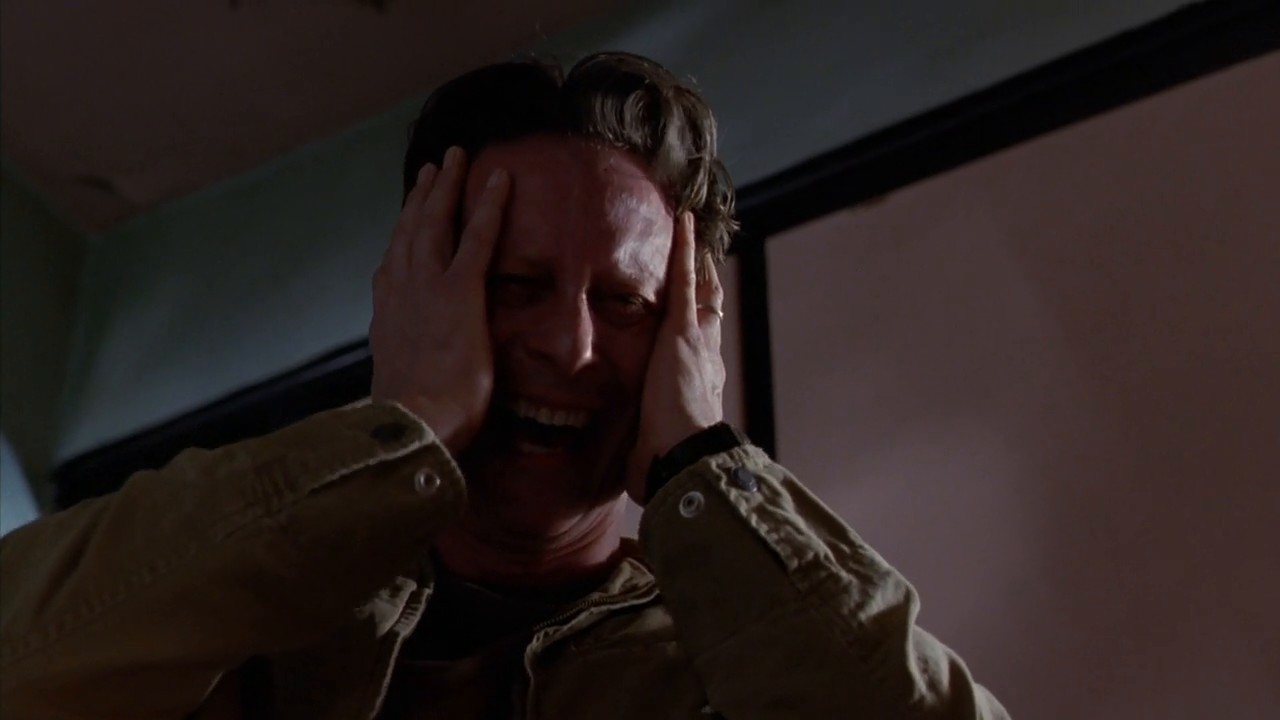
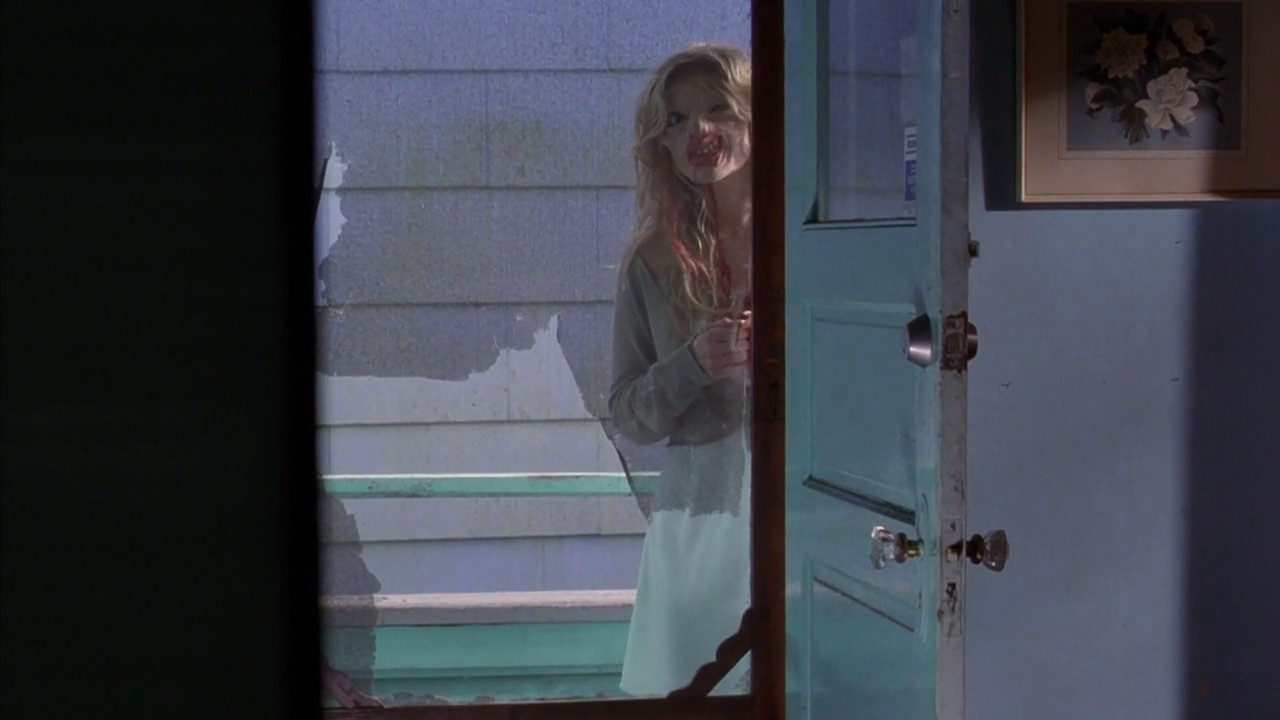
The scene delays the revelation with Frank moving through the living room. Once the door opens, the closer body view and his recoiling hands complete the progression. Jenifer’s appearance at the entrance connects this concealed aftermath back to the person he thought he had transferred elsewhere.

Explore the sequence 10 stages

01 · 37:30

The clown figure lies among the cushions.ENLARGE ↗
The clown figure lies among the cushions.

02 · 38:00

Frank waits in the chair.ENLARGE ↗
Frank waits in the chair.

03 · 38:04

His hand rises to his mouth.ENLARGE ↗
His hand rises to his mouth.

04 · 38:08

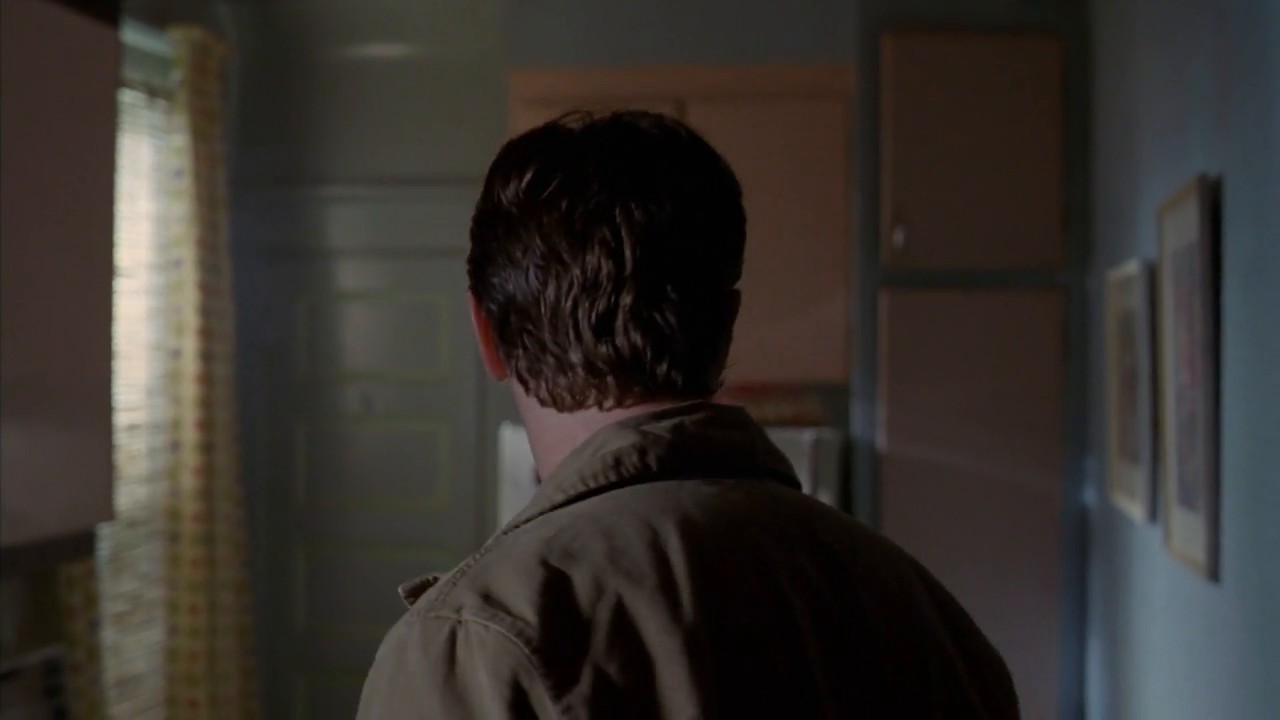
He turns toward the kitchen.ENLARGE ↗
He turns toward the kitchen.

05 · 38:12

The refrigerator reveals the body.ENLARGE ↗
The refrigerator reveals the body.

06 · 38:16

Frank recoils.ENLARGE ↗
Frank recoils.

07 · 38:24

A closer view isolates the injured head.ENLARGE ↗
A closer view isolates the injured head.

08 · 38:28

Frank holds his face.ENLARGE ↗
Frank holds his face.

09 · 38:32

Jenifer appears at the door.ENLARGE ↗
Jenifer appears at the door.

10 · 38:50

Frank digs outside after dark.ENLARGE ↗
Frank digs outside after dark.
Back to the effects guide ↑

50:30–54:00

The cabin’s hidden chamber

The wider view reveals the suspended body.ENLARGE ↗
The wider view reveals the suspended body.

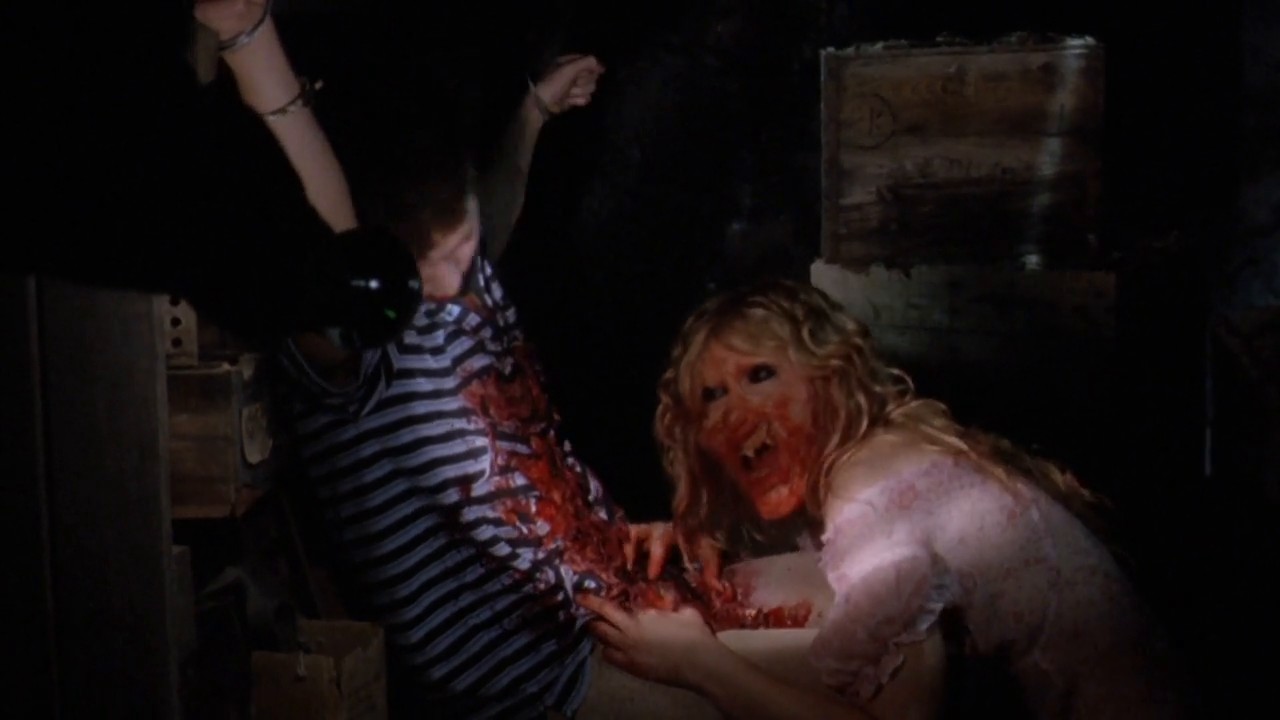
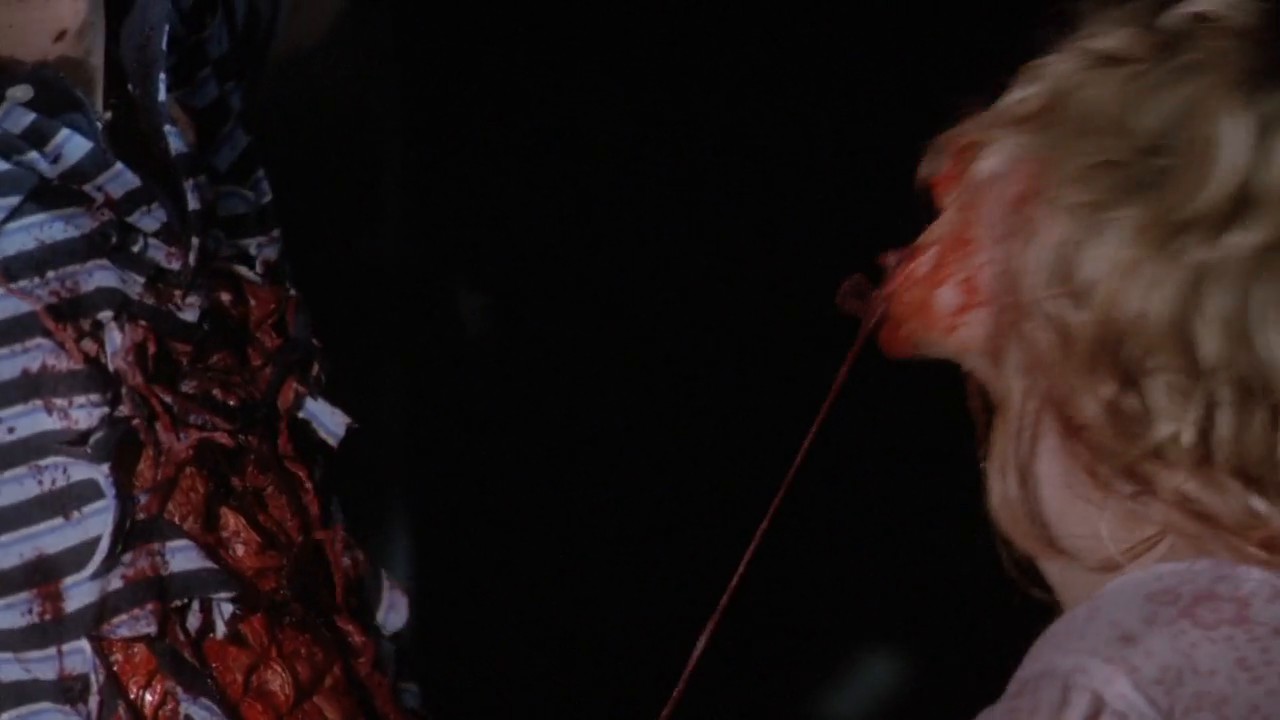
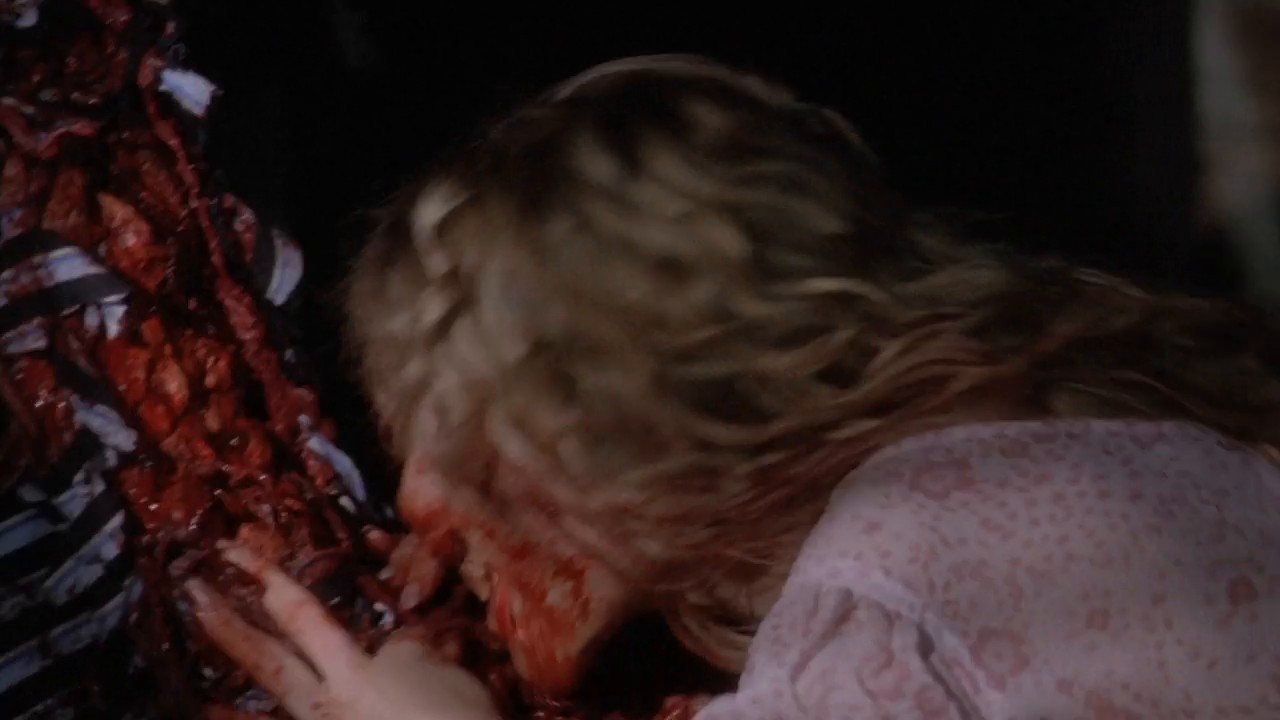
The late attack begins away from Frank, with a figure followed from the party into the trees. Its aftermath is then discovered through the cabin’s external hatch. The victim’s striped shirt provides continuity across the change of space.

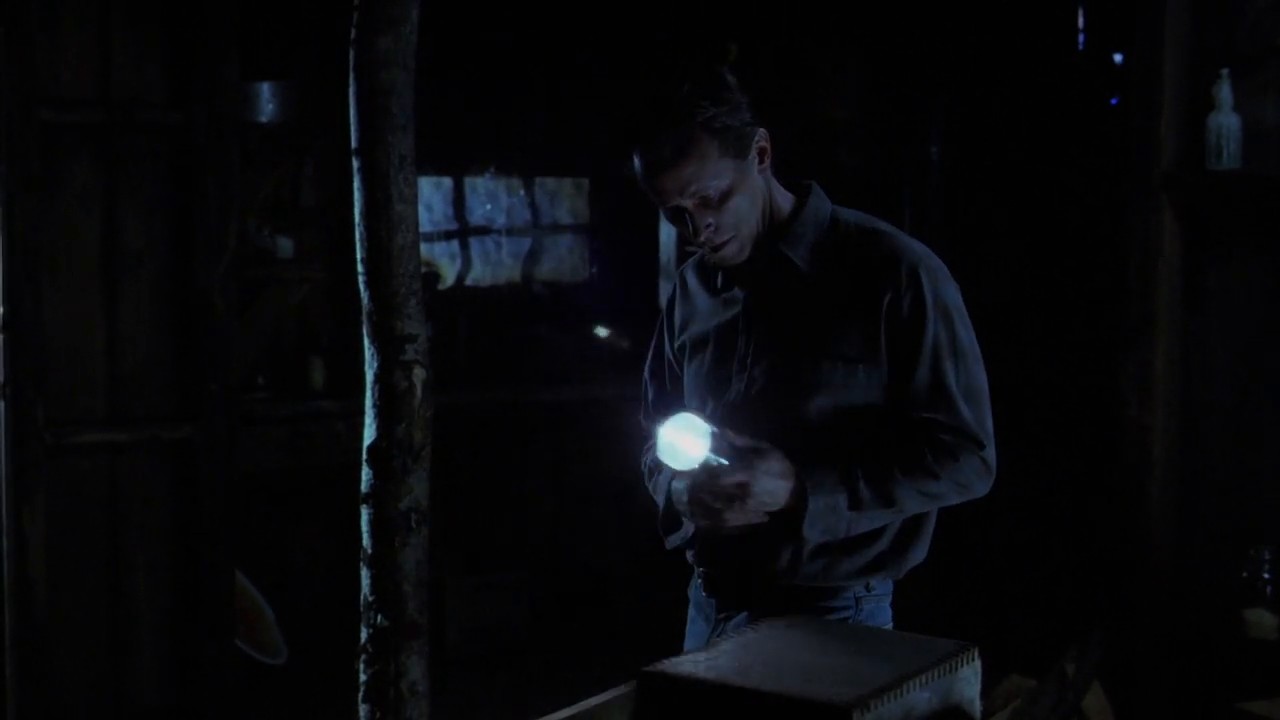
The effect combines an exposed torso, suspended arms and Jenifer’s feeding gesture. Frank’s torch and the hatch concentrate attention on the chamber, while the return to daylight begins the attempted execution that completes the story’s circle.

Explore the sequence 10 stages

01 · 50:30

Jenifer waits beyond the party.ENLARGE ↗
Jenifer waits beyond the party.

02 · 51:00

The route narrows into the trees.ENLARGE ↗
The route narrows into the trees.

03 · 52:00

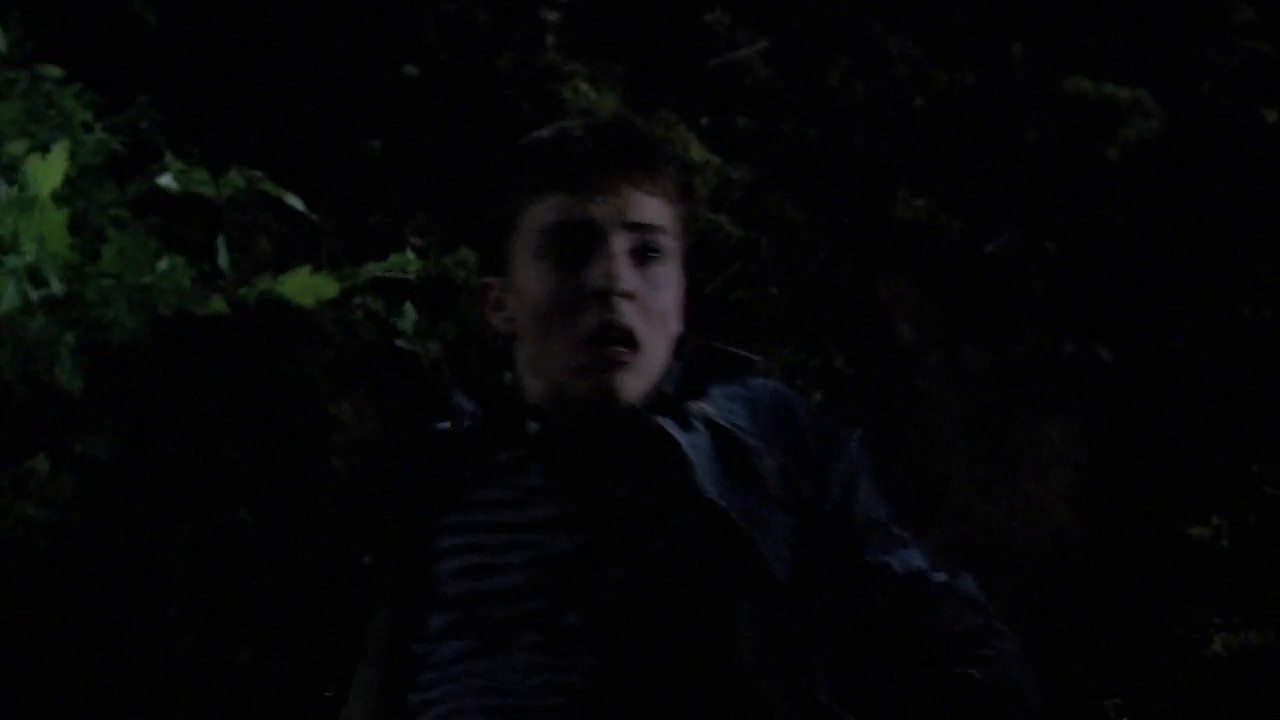
The young man turns in alarm.ENLARGE ↗
The young man turns in alarm.

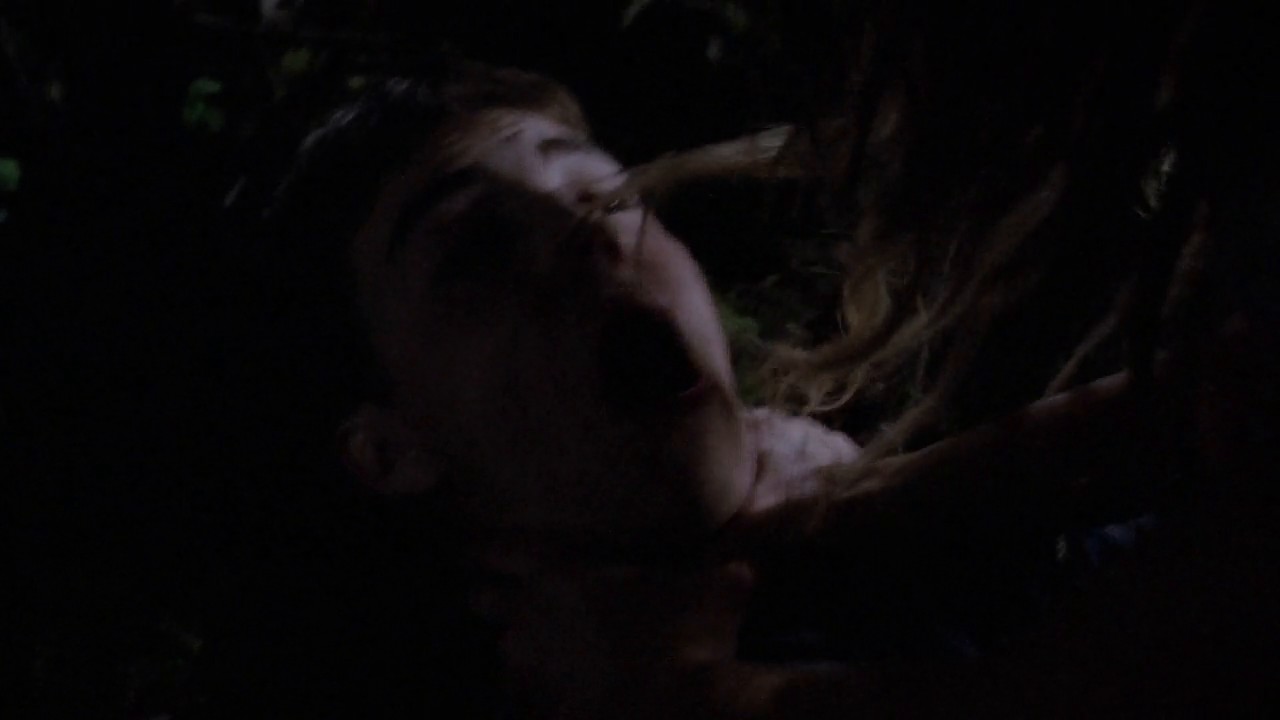
04 · 52:06

His face is caught in close view.ENLARGE ↗
His face is caught in close view.

05 · 53:00

Frank takes up the torch.ENLARGE ↗
Frank takes up the torch.

06 · 53:18

The cellar hatch swings upward.ENLARGE ↗
The cellar hatch swings upward.

07 · 53:40

The torso effect fills the frame.ENLARGE ↗
The torso effect fills the frame.

08 · 53:42

Jenifer leans toward the wound.ENLARGE ↗
Jenifer leans toward the wound.

09 · 53:48

The wider view reveals the suspended body.ENLARGE ↗
The wider view reveals the suspended body.

10 · 54:00

Frank brings Jenifer out of the cabin.ENLARGE ↗
Frank brings Jenifer out of the cabin.
Back to the effects guide ↑

54:42–56:12

The final intervention

The hunter reaches the pair.ENLARGE ↗
The hunter reaches the pair.

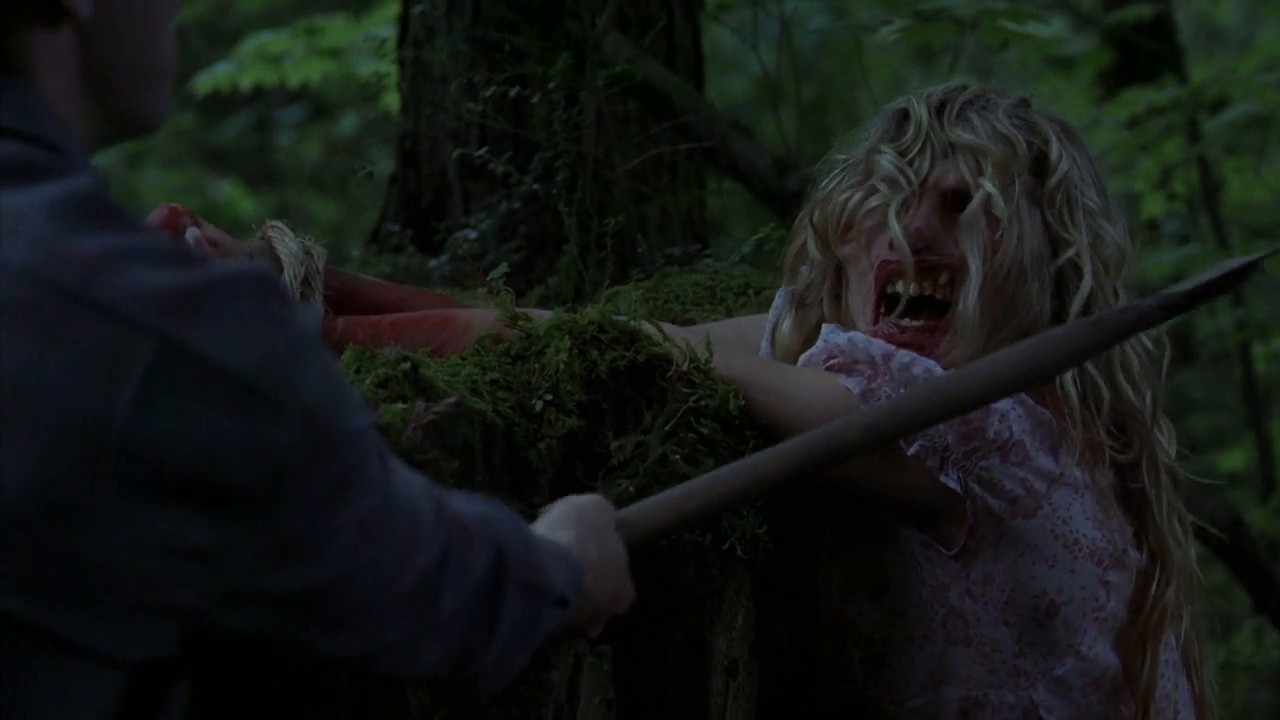
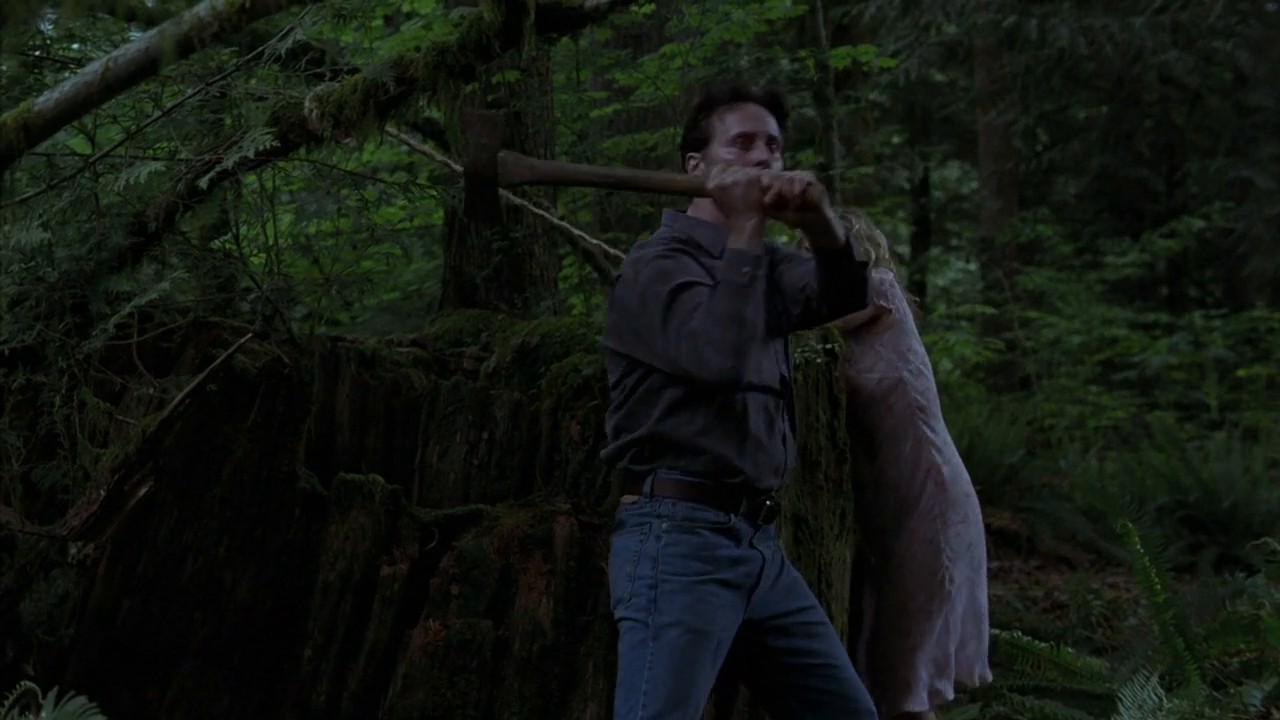
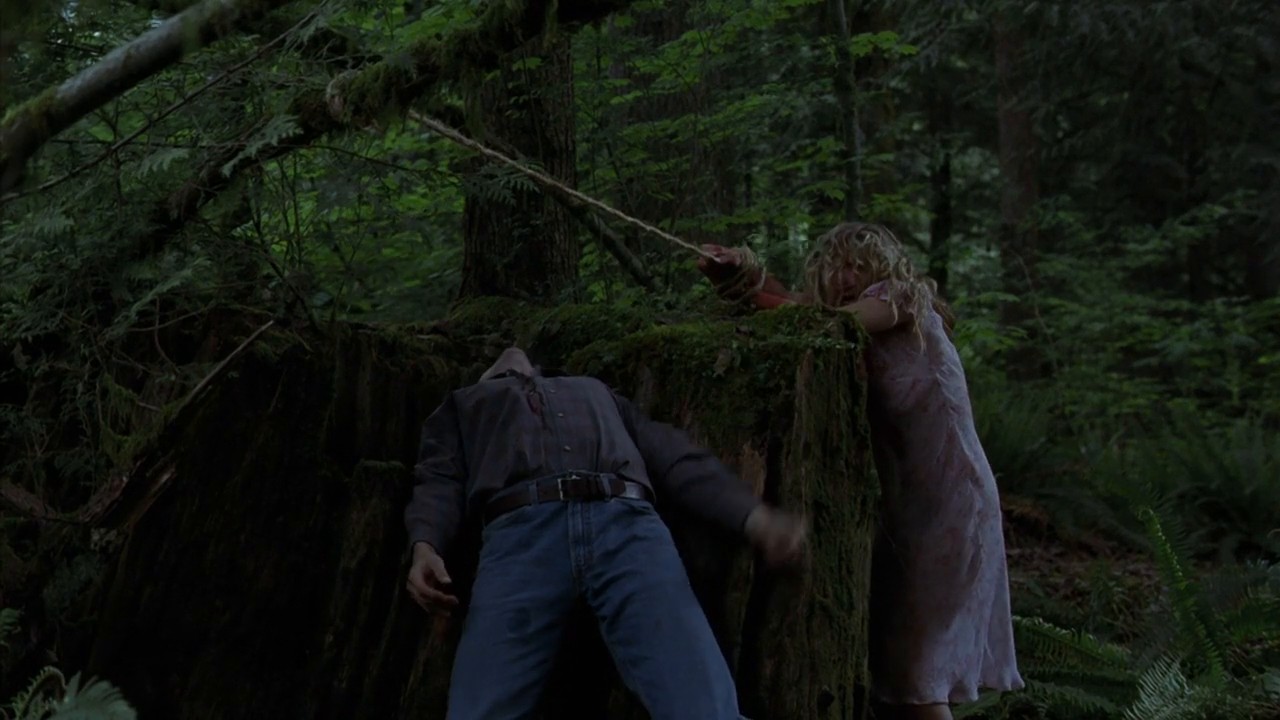
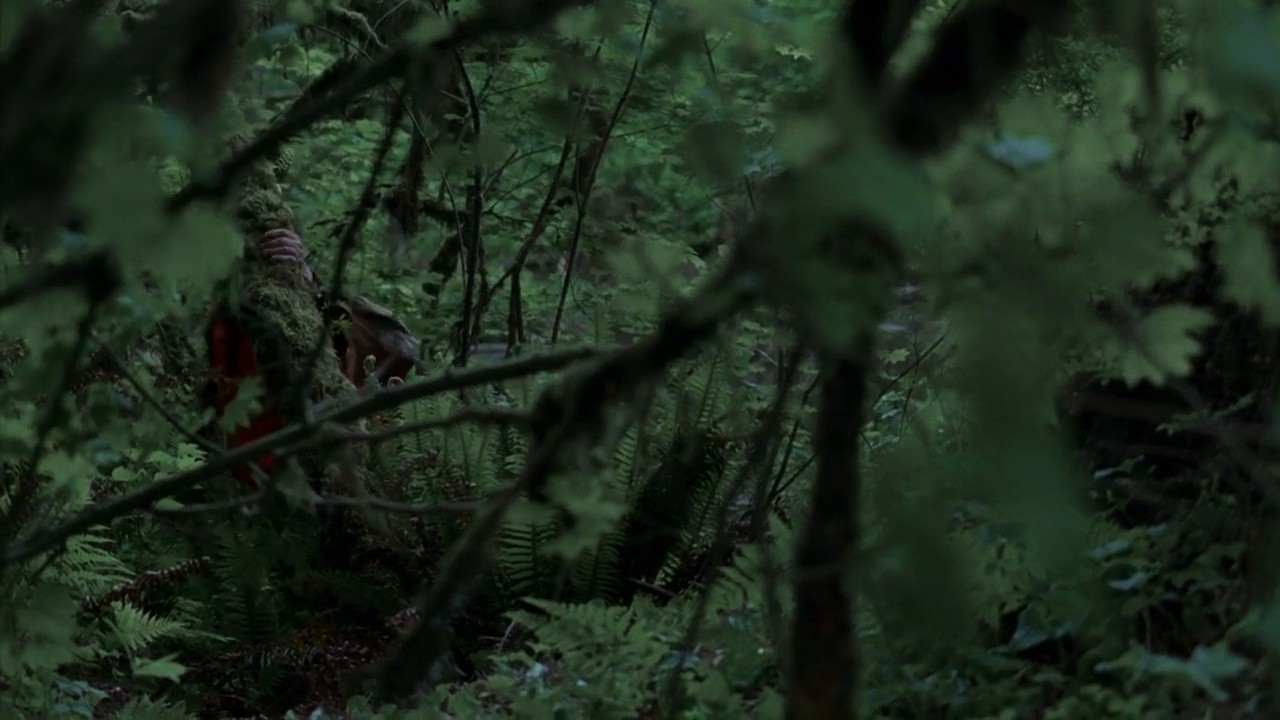
The rope and raised blade place Frank in the role occupied by the man he shot at the beginning. His recoil interrupts the attempt, and an armed hunter emerges through foliage to take charge of the scene.

The closing sequence moves from the wounded man to Jenifer’s embrace and finally to joined hands. The last stages matter as much as the impact: they show how an act of intervention becomes the beginning of another attachment.

Explore the sequence 10 stages

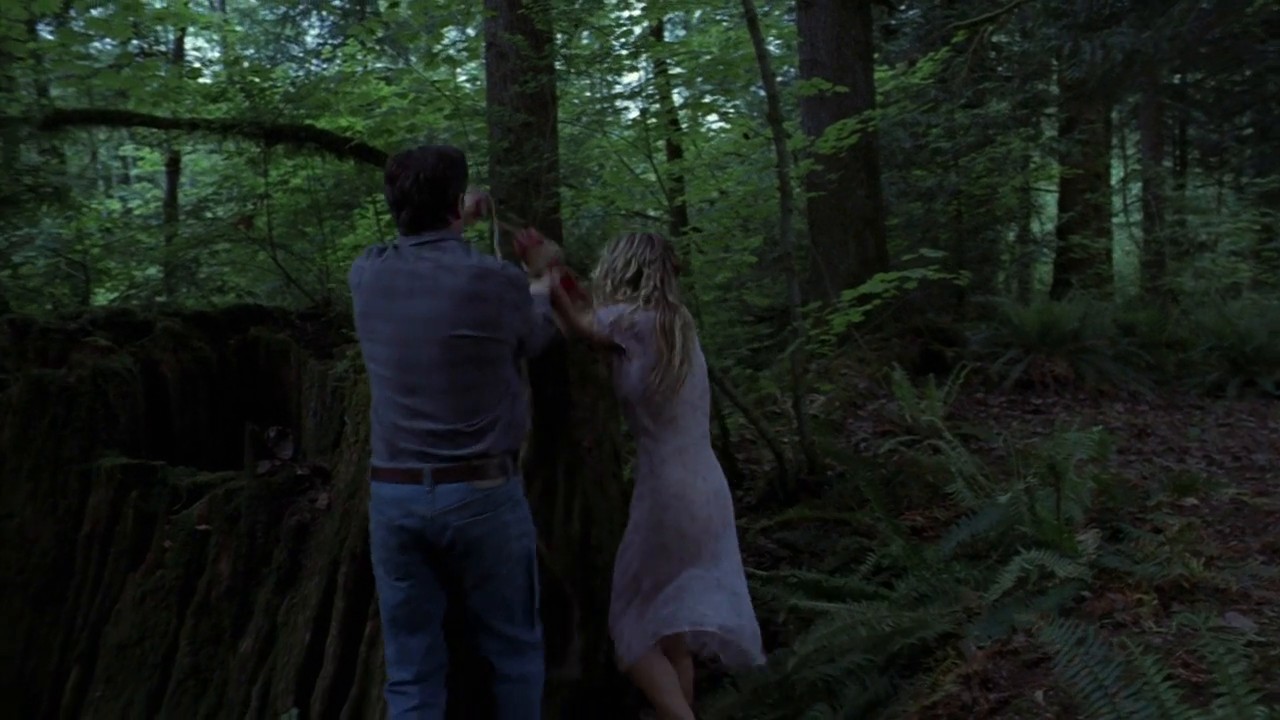
01 · 54:42

Frank holds Jenifer beside the tree.ENLARGE ↗
Frank holds Jenifer beside the tree.

02 · 54:56

She faces the raised blade.ENLARGE ↗
She faces the raised blade.

03 · 54:58

Frank prepares the blow.ENLARGE ↗
Frank prepares the blow.

04 · 55:02

His body recoils.ENLARGE ↗
His body recoils.

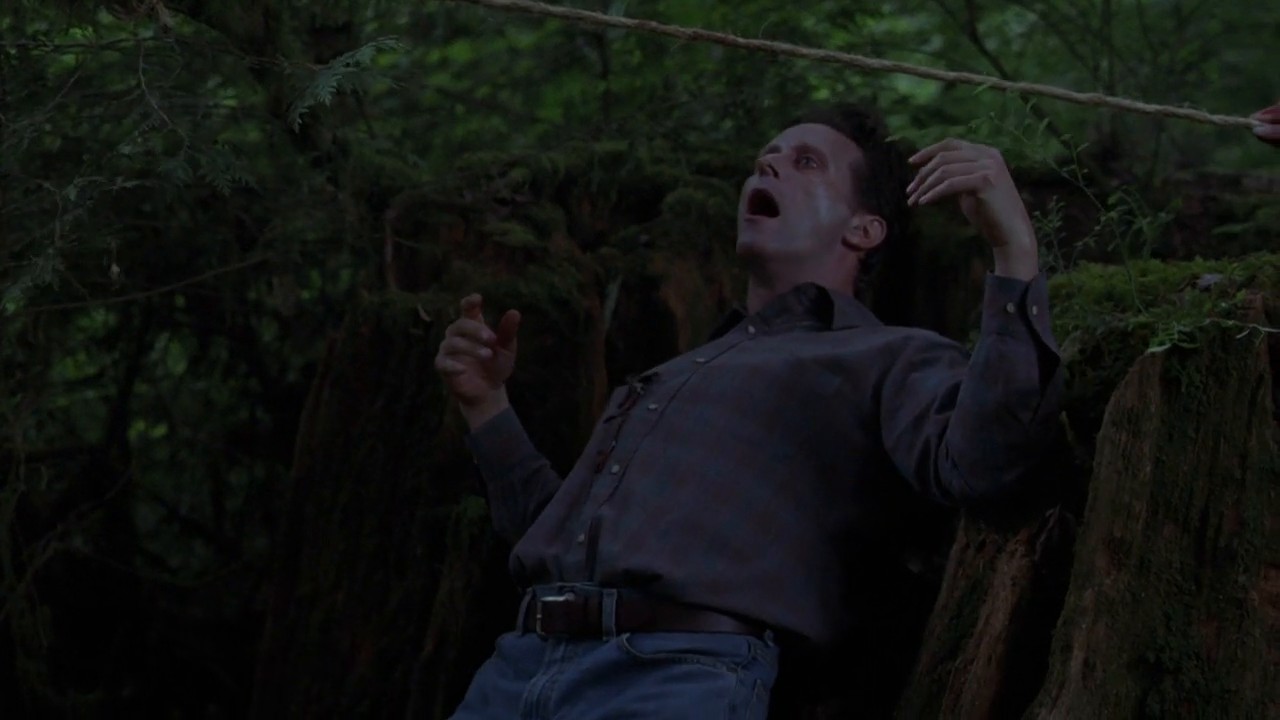
05 · 55:04

He falls back against the tree.ENLARGE ↗
He falls back against the tree.

06 · 55:06

The hunter appears through the leaves.ENLARGE ↗
The hunter appears through the leaves.

07 · 55:12

The hunter reaches the pair.ENLARGE ↗
The hunter reaches the pair.

08 · 55:24

Frank faces the new rescuer.ENLARGE ↗
Frank faces the new rescuer.

09 · 55:48

The hunter attends to Jenifer.ENLARGE ↗
The hunter attends to Jenifer.

10 · 56:12

Their hands close together.ENLARGE ↗
Their hands close together.
Back to the effects guide ↑

CLOSE VISUAL STUDIES

The image knows less than the story.

Follow three patterns through the episode: the repeated rescue, the threshold that delays discovery, and a face shaped by performance and setting.

The same rescue, a different viewpoint

The hunter reaches the pair.ENLARGE ↗
The hunter reaches the pair.

The beginning supplies an apparently self-contained emergency. The ending reconstructs its essential positions after giving the viewer the history that the new witness lacks. The repetition is not simply a twist in the story; it tests what a visible arrangement can tell an observer.

Follow the visual progression 7 observations
  1. 04:38
    A restrained woman and a raised weapon establish the first emergency.
  2. 04:50
    Frank’s gun gives the approaching witness the power to intervene.
  3. 05:32
    The wounded man reaches toward the person who shot him.
  4. 07:15
    An embrace joins rescuer and rescued.
  5. 54:58
    Frank takes the place of the first aggressor.
  6. 55:12
    The hunter occupies the intervening position.
  7. 56:12
    The concluding hands make a new attachment visible.

Doors organise the discoveries

Frank looks down from the landing.ENLARGE ↗
Frank looks down from the landing.

The episode repeatedly turns an opening into an act of recognition. Glass allows sight without contact; a bathroom door withholds a violent scene; stairs and a cellar hatch place the discovery below the witness. The house and cabin are connected by these spatial habits, despite their different appearances.

Follow the visual progression 6 observations
  1. 10:15
    A transparent partition keeps the pair apart.
  2. 28:16
    The bathroom door converts concealment into exposure.
  3. 33:54
    The stairs separate Frank’s position from the tableau below.
  4. 38:12
    A refrigerator becomes a bright frame around a body.
  5. 41:45
    The cabin’s bare interior makes its openings conspicuous.
  6. 53:18
    The external hatch opens another hidden chamber.

A face changes with its setting

Jenifer in the sunlit garden.ENLARGE ↗
Jenifer in the sunlit garden.

The makeup does not supply a single expression independent of performance. Hair, head angle, the direction of attention and distance from another person alter the face’s effect. Reading these arrangements beside Fleming’s interview brings the actor back into an image often discussed only as a prosthetic.

Follow the visual progression 6 observations
  1. 07:15
    Hair and an embrace initially shelter the face.
  2. 10:15
    Hands against glass give the approach a barrier.
  3. 21:15
    The bedroom places the face within an intimate space.
  4. 28:24
    The raised, blood-marked face answers the witnesses at the bathroom door.
  5. 31:40
    Daylight makes the garden encounter sharply visible.
  6. 55:48
    The final encounter places the face opposite a new protector.
Jenifer turns toward Frank in the bedroom.ENLARGE ↗
Jenifer turns toward Frank in the bedroom.
Jenifer in the sunlit garden.ENLARGE ↗
Jenifer in the sunlit garden.

DIALOGUE & RESPONSIBILITY

What Frank tells other people.

Ten illustrated studies follow the changing account of Jenifer: a person rescued, a temporary guest, a private problem and a daughter invented for a stranger.

07:45–09:00

The account that closes too quickly

Frank at his desk in the police office.ENLARGE ↗
Frank at his desk in the police office.

The first police conversation turns an alarming encounter into a reassuring explanation. Frank notices evidence that does not quite fit: the dead man’s expensive watch and clothes suggest a different recent life. His colleague nevertheless settles on a familiar category of criminal. The exchange gives the audience a reason to keep the question open after the authorities have effectively closed it.

Follow the exchange 3 observations
  1. 07:45–08:15
    The woman’s inability to give an account leaves the officers speaking for both people involved. The watch and clothing complicate their assumptions about the dead man.
  2. 08:15–08:30
    The joke about the cleaver converts an uncertain history into an apparently obvious identity. It is the colleague’s explanation, not a diagnosis supplied by the film.
  3. 08:30–09:00
    The required psychological consultation acknowledges that a justified shooting can still disturb the officer who carried it out. Institutional certainty and personal unease coexist.

11:15–11:50 / 15:50–16:05

Being told he had no choice

Frank sits over his dinner.ENLARGE ↗
Frank sits over his dinner.

At home, Frank’s wife answers his admission that he killed a man by assuring him that he acted as he had to. A later colleague makes the same correction when Frank describes the shooting. His reply points out how often he has heard it. Reassurance becomes a repeated social response that fails to end his preoccupation.

Follow the exchange 3 observations
  1. 11:15–11:50
    The domestic exchange starts with a question about what is wrong and moves immediately to the shooting. The family sees its effect before Jenifer enters the house.
  2. 15:50–16:05
    The colleague replaces Frank’s plain description of shooting someone with the language of necessity. The distinction separates what happened from the judgment placed on it.
  3. Across the two scenes
    Frank’s return to the subject keeps the killing unresolved. The episode does not need to make his intervention unlawful to show that its consequences continue.

16:05–16:43

A name without a biography

Two officers face one another across a desk.ENLARGE ↗
Two officers face one another across a desk.

A note supplies Jenifer’s name but no explanation. The same conversation revises the story of the man Frank shot: he was once a prosperous businessman, has lost everything, and is no longer claimed by his family. These details anticipate the losses Frank will undergo. The circular ending is prepared in dialogue long before it is reconstructed in images.

Follow the exchange 3 observations
  1. 16:05–16:22
    The note identifies Jenifer without establishing her origin, relationship to the dead man, or ability to understand the people around her.
  2. 16:22–16:43
    The description of a formerly comfortable man abandoned by his family introduces a history of decline. It changes the meaning of the watch noticed earlier.
  3. At the ending
    Frank eventually occupies the same outward position: isolated, armed and apparently threatening her. The later resemblance gives the earlier biographical fragment its force.

16:43–18:21

People speak in her place

Jenifer clings to Frank in the corridor.ENLARGE ↗
Jenifer clings to Frank in the corridor.

The office exchange moves from the fact that Jenifer is not talking to guesses about her comprehension. The speakers’ derogatory labels and uncertain explanations reveal their limitations; they do not establish a medical account of the character. Frank objects to the institution where she has been sent and then decides that she cannot remain there. His intervention supplies a destination without supplying understanding.

Follow the exchange 3 observations
  1. 16:43–17:10
    The official account admits uncertainty about what she understands. The explanation of her placement shifts responsibility to the system.
  2. 17:15–18:15
    The institution treats her as a troubling presence, while her physical attachment to Frank makes the encounter personal.
  3. 18:15–18:21
    Frank’s decision to remove her is expressed as a conclusion. The film has not shown him establishing a workable arrangement for her care.

22:45–24:20 / 27:15–27:45

A temporary stay that keeps returning

Frank and his wife react together.ENLARGE ↗
Frank and his wife react together.

Frank describes the invitation as one night of shelter. His wife hears a decision imposed on their home, while his son’s remarks turn Jenifer into a sexual spectacle. Frank insists on her humanity and lack of anyone to care for her. The conflict is not resolved by that defence: he still cannot say where she can safely live, and the promise of another temporary stay returns.

Follow the exchange 3 observations
  1. 22:45–23:05
    Frank offers the rescue as the reason for bringing her home. His wife asks why that responsibility has been transferred to their household.
  2. 23:05–23:30
    His son’s sexualised appraisal is answered by Frank’s insistence that she is a person. The exchange makes desire and care competing ways of describing her.
  3. 27:15–27:45
    The renewed request for one more night repeats the original assurance. A phrase meant to limit the obligation becomes the means by which it continues.

35:20–35:55

Care becomes a private arrangement

Frank negotiates outside the circus trailer.ENLARGE ↗
Frank negotiates outside the circus trailer.

The sideshow conversation reduces the problem to practical arrangements: Frank will be away, keys can be supplied, and the proprietor wants an incentive. The man recognises that the proposed removal amounts to breaking and entering. Frank is now arranging a secret intervention rather than seeking help through the police or an institution.

Follow the exchange 3 observations
  1. 35:20–35:38
    The proprietor questions the description he has been given. Frank insists on it and explains that he will be absent for several days.
  2. 35:38–35:50
    Keys and an incentive turn the discussion into the logistics of removing her. Jenifer is the subject of a transaction conducted in her absence.
  3. 35:50–35:55
    The objection about breaking and entering exposes the arrangement’s character. Frank’s reassurance does not remove that objection or reveal the danger.

41:50–42:10

A question cannot make a refuge safe

Window light enters the abandoned cabin.ENLARGE ↗
Window light enters the abandoned cabin.

At the cabin, Frank proposes finding work and asks Jenifer to remain there. He also asks for reassurance about what she will do while he is away. The scene gives concealment the language of an ordinary domestic arrangement. Its weakness is the same uncertainty raised at the police office: Frank has never established what Jenifer understands or what his instructions can accomplish.

Follow the exchange 3 observations
  1. 41:50–42:00
    The plan to find a job introduces a recognisable routine into the isolated cabin.
  2. 42:00–42:10
    The request that she stay behind makes safety depend on an agreement the scene does not establish.
  3. Beside the later cellar scene
    The concealed chamber beneath the cabin defeats the promise of a new beginning. The place changes while the unresolved responsibility persists.

44:00–47:57

Rose offers Frank the rescue he wanted to give

Frank meets Rose behind the counter.ENLARGE ↗
Frank meets Rose behind the counter.

Rose’s shop supplies a second form of care. Frank asks for work, accepts its modest terms and begins to regain a social role. When her son dismisses him, Rose describes a man in trouble who is willing to work his way out. Her generosity echoes Frank’s earlier defence of Jenifer, but this time the person whose history is only partly known is Frank.

Follow the exchange 3 observations
  1. 44:00–45:05
    The job begins with practical terms: cleaning, stock work, limited pay and an immediate start. Help has an ordinary structure here.
  2. 46:30–47:20
    Rose defends Frank’s dignity while insisting that the evening’s work be completed. His offer to stay late allows her son to leave for the party.
  3. 47:20–47:57
    Introductions and encouragement restore his place in a small community. The son’s departure also connects this scene of apparent recovery to the later woodland encounter.

48:38–49:20

The daughter he invents

Flowers surround the shop counter.ENLARGE ↗
Flowers surround the shop counter.

When Rose asks where he lives, Frank describes the house in the woods and then explains that his sick daughter is with him. The account gives his secret life a socially acceptable form. He retains the role of carer while concealing the sexual relationship and violence. Rose’s decision not to press for details lets the explanation stand.

Follow the exchange 3 observations
  1. 48:38–48:58
    Praise for his work opens a personal conversation. Frank admits how long it has been since he felt competent.
  2. 48:58–49:10
    Rose notices that his description includes another person. His answer recasts Jenifer as his daughter and her presence as an illness requiring care.
  3. 49:10–49:20
    Rose withdraws her question about the illness. Her tact creates a privacy that Frank uses to keep the dangerous history outside their conversation.

06:40–07:00 / 55:30–55:40

Reassurance changes hands

The hunter holds Jenifer.ENLARGE ↗
The hunter holds Jenifer.

After the waterfront shooting, Frank promises safety and tells Jenifer that the dead man can no longer hurt her. Near the ending, the hunter offers his own reassurance. The words do not have to match exactly to repeat the action: each man understands himself as the person who has ended her danger. The spectator now knows how incomplete that understanding is.

Follow the exchange 3 observations
  1. 06:40–07:00
    Frank’s reassurance defines the dead man as the threat and his own intervention as its end.
  2. 55:30–55:40
    The hunter’s promise of safety restarts the same relationship after Frank has taken the first man’s place.
  3. Beside the final embrace
    The repeated language joins the repeated body positions. Rescue becomes a transferable role, and the ending leaves another man occupying it.

Dialogue sources and review method →

Back to the dossier entrance ↑

THE CRAFT RECORD

Names behind the images.

Makeup, on-set work and visual effects

Makeup, on-set work and visual effects.ENLARGE ↗
Makeup, on-set work and visual effects.

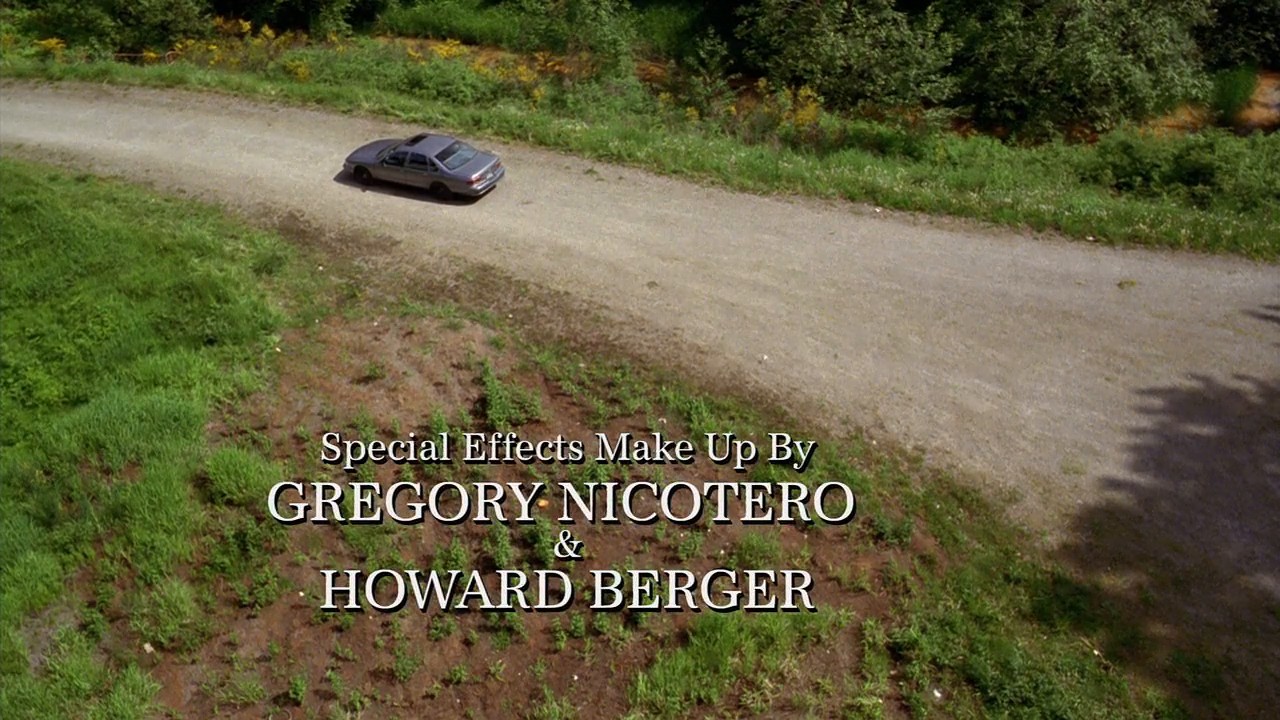
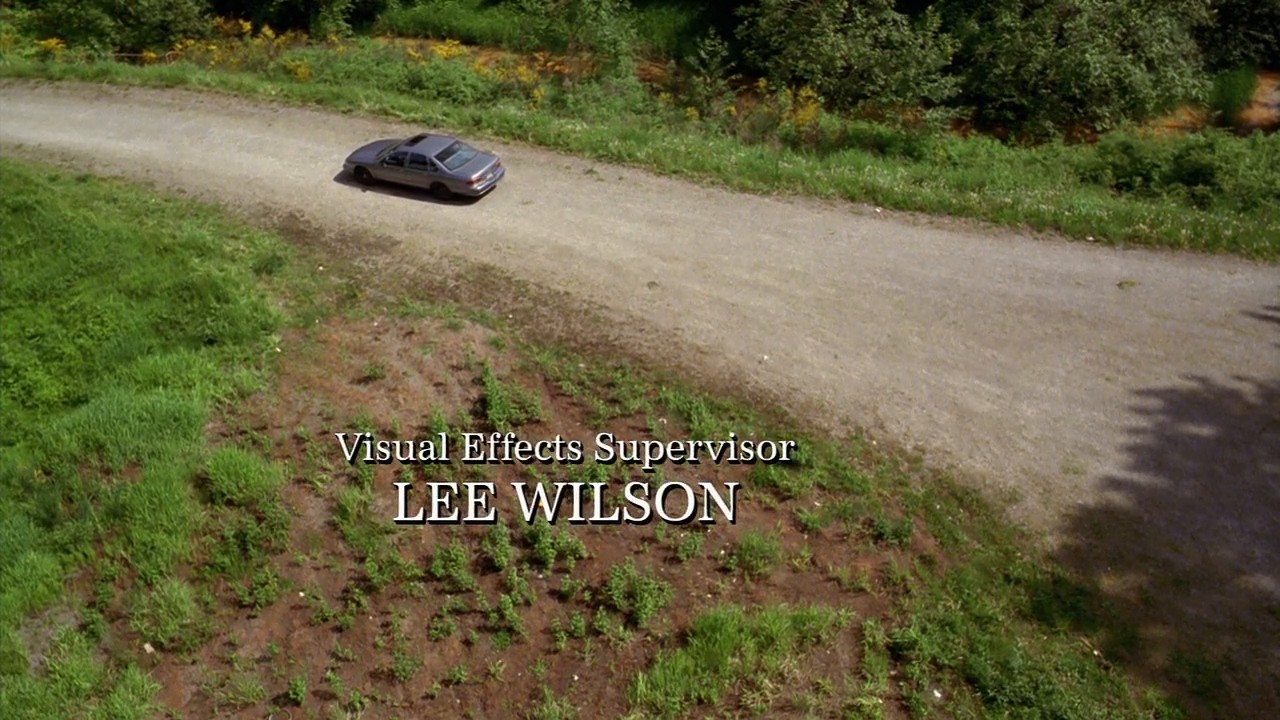
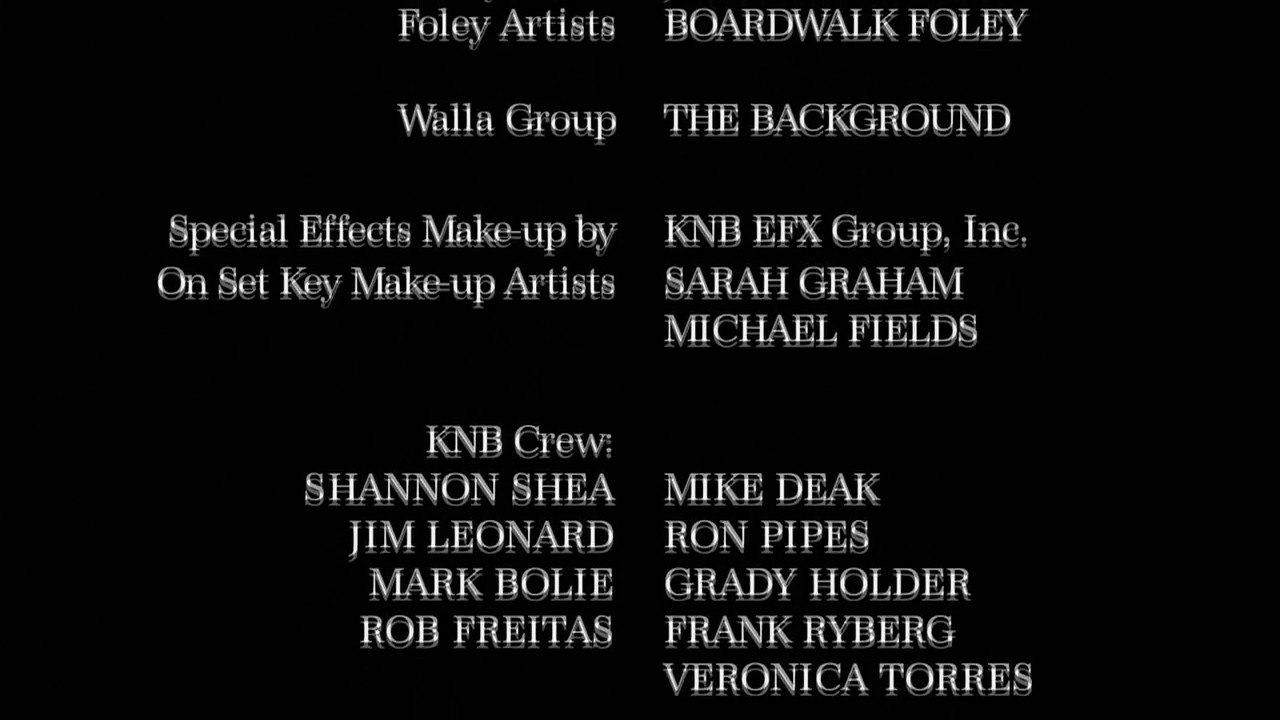
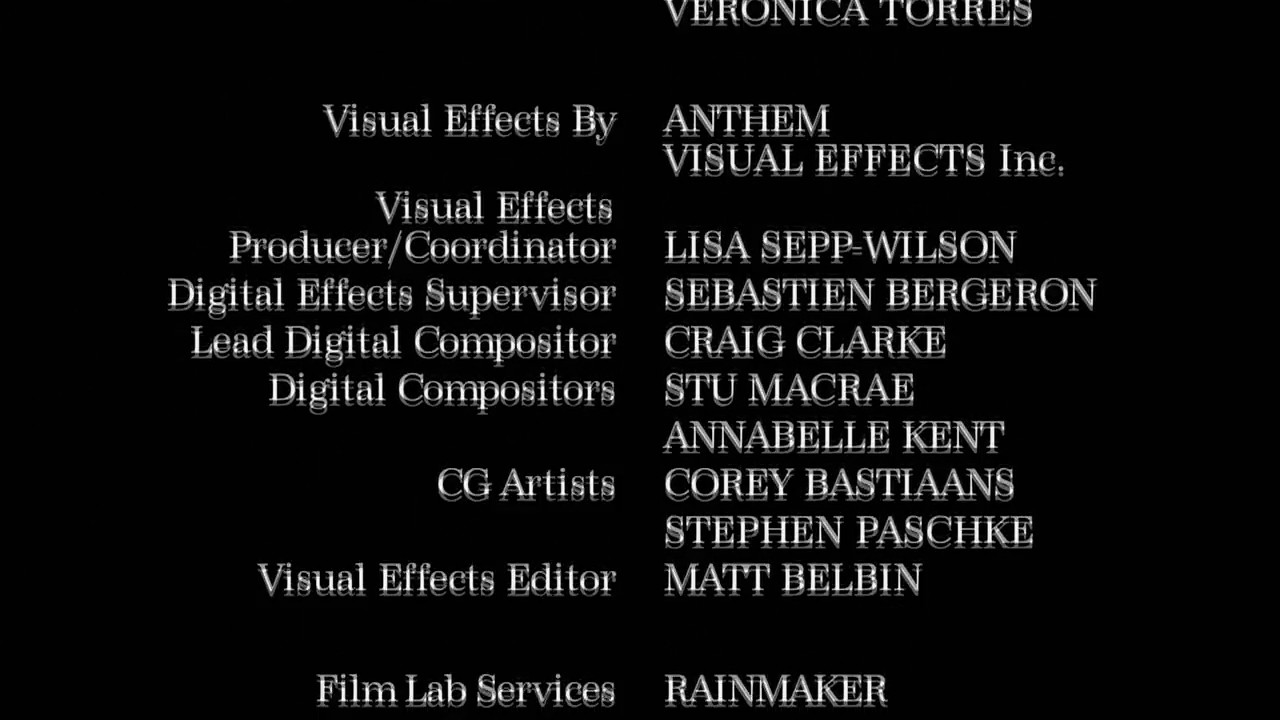
The opening credits name Gregory Nicotero and Howard Berger for special effects makeup. The closing roll credits KNB EFX Group, with Sarah Graham and Michael Fields as on-set key makeup artists. Lee Wilson’s opening visual-effects supervision credit and Anthem’s closing credit describe another part of the production; these categories should not be collapsed into a single claim about who made each shot.

View the related credits
Lee Wilson’s visual-effects supervision credit.ENLARGE ↗
Lee Wilson’s visual-effects supervision credit.
KNB EFX Group and the on-set makeup artists.ENLARGE ↗
KNB EFX Group and the on-set makeup artists.
Anthem’s visual-effects credit.ENLARGE ↗
Anthem’s visual-effects credit.

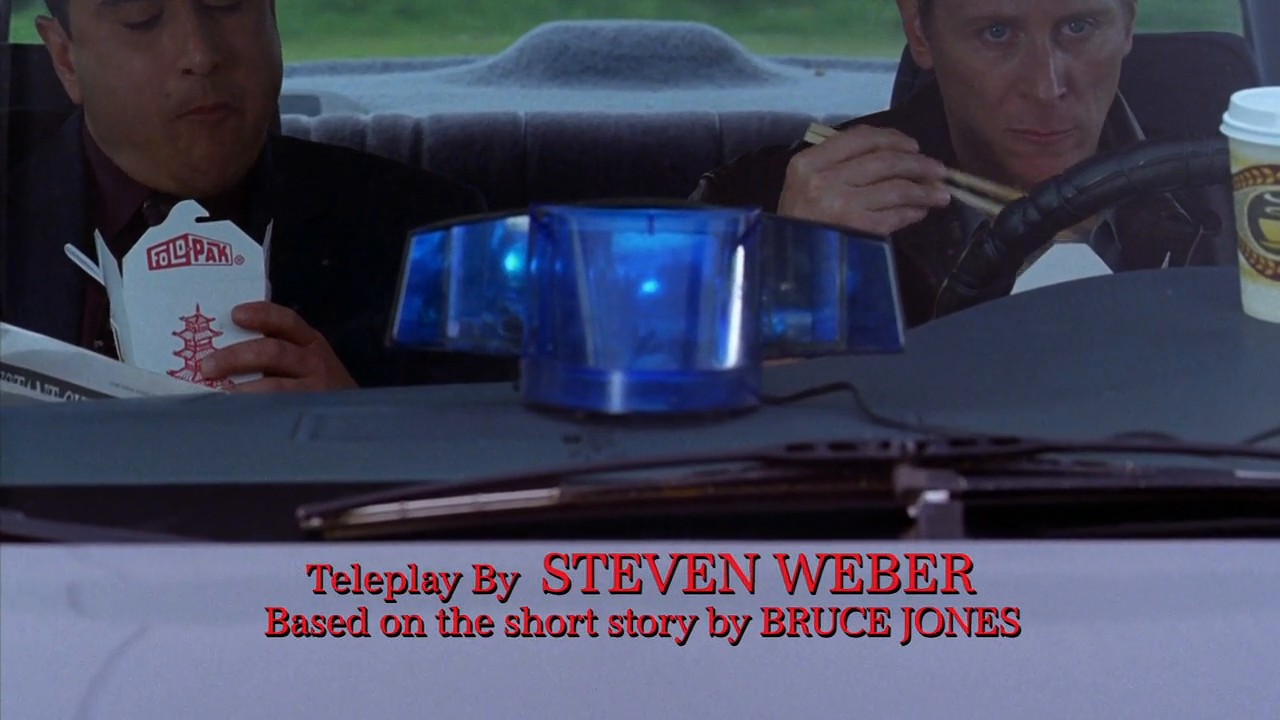
Weber’s teleplay and Jones’s story

Weber’s teleplay and Jones’s story.ENLARGE ↗
Weber’s teleplay and Jones’s story.

The opening explicitly credits Steven Weber’s teleplay and Bruce Jones’s short story. The existing comic research identifies Bernie Wrightson’s contribution to the printed source. The wording on screen and the comic’s bibliographic record answer different attribution questions.

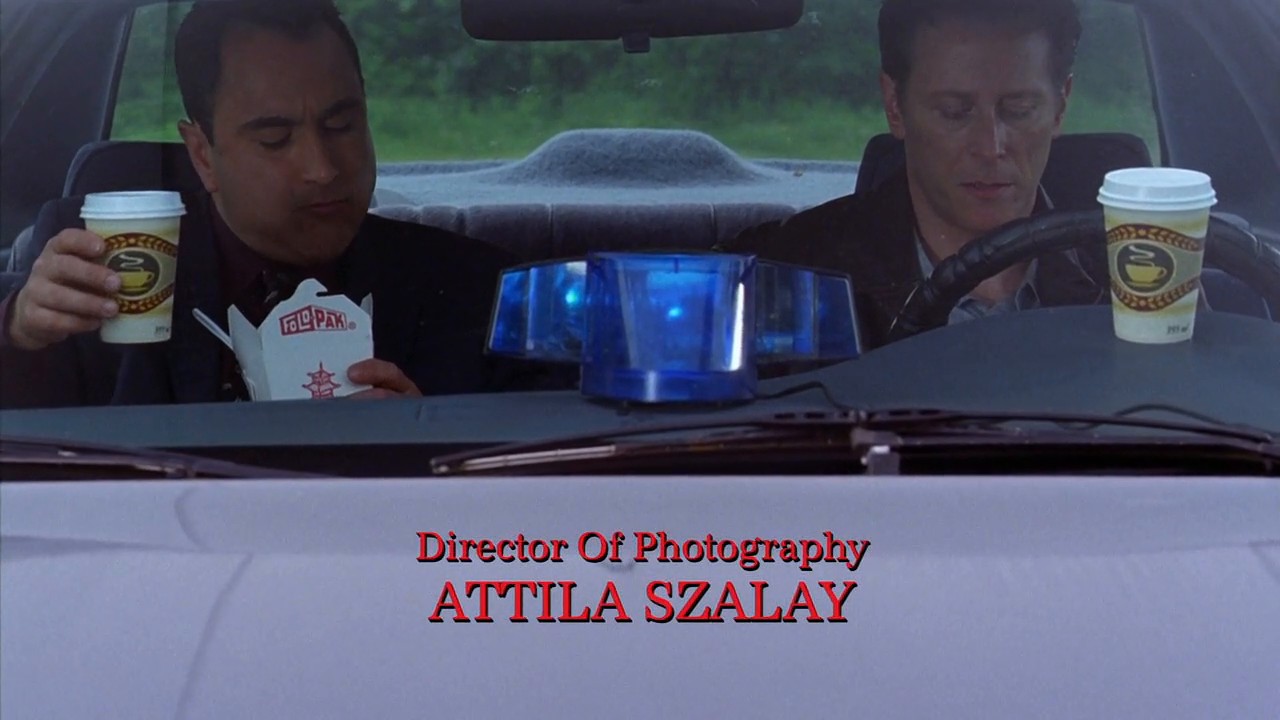
Camera, editing and production design

Camera, editing and production design.ENLARGE ↗
Camera, editing and production design.

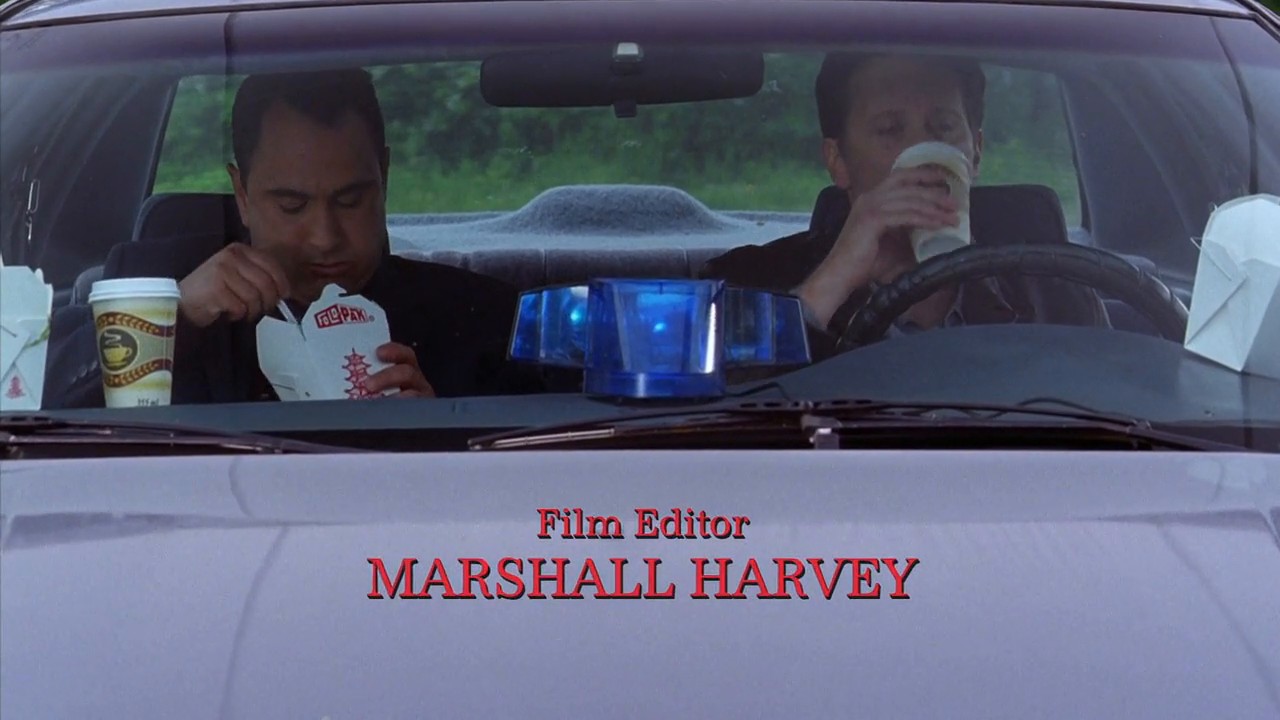
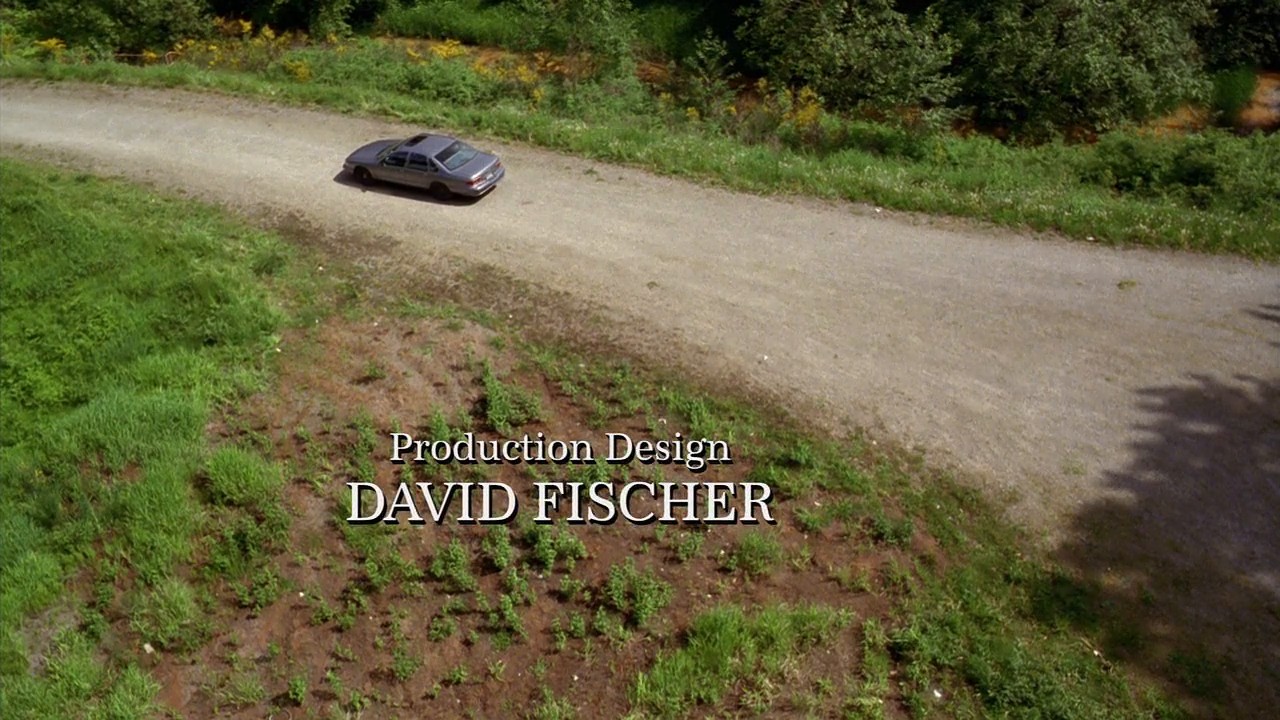
Attila Szalay receives the photography credit, Marshall Harvey the editing credit and David Fischer the production-design credit. The visible architecture, lighting and shot relationships can be studied alongside those names without assigning an undocumented invention to one collaborator.

View the related credits
Marshall Harvey’s editing credit.ENLARGE ↗
Marshall Harvey’s editing credit.
David Fischer’s production-design credit.ENLARGE ↗
David Fischer’s production-design credit.

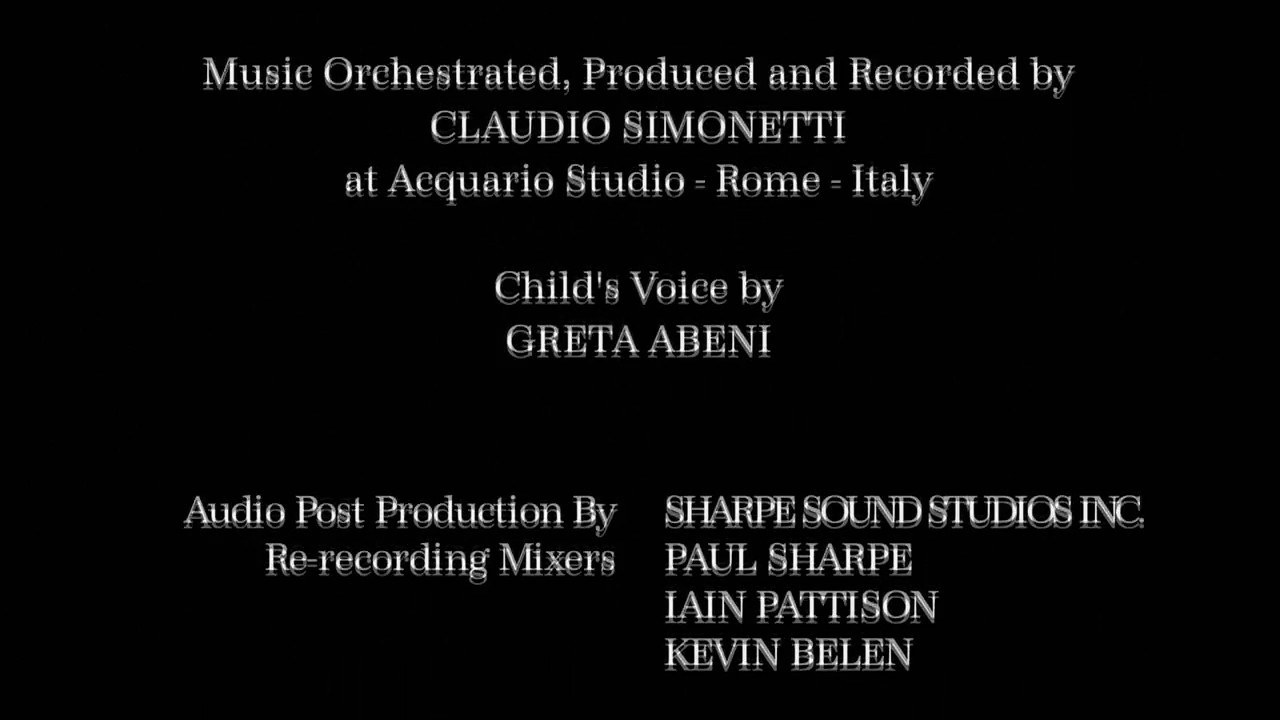
Simonetti and the child’s voice

Simonetti and the child’s voice.ENLARGE ↗
Simonetti and the child’s voice.

The closing roll identifies Claudio Simonetti’s orchestration, production and recording at Acquario Studio in Rome, and credits Greta Abeni for the child’s voice. This corroborates a specific performance attribution in the soundtrack research; locating every cue or distinguishing voice from instrumentation requires a separate listening pass.

The sound department has several roles

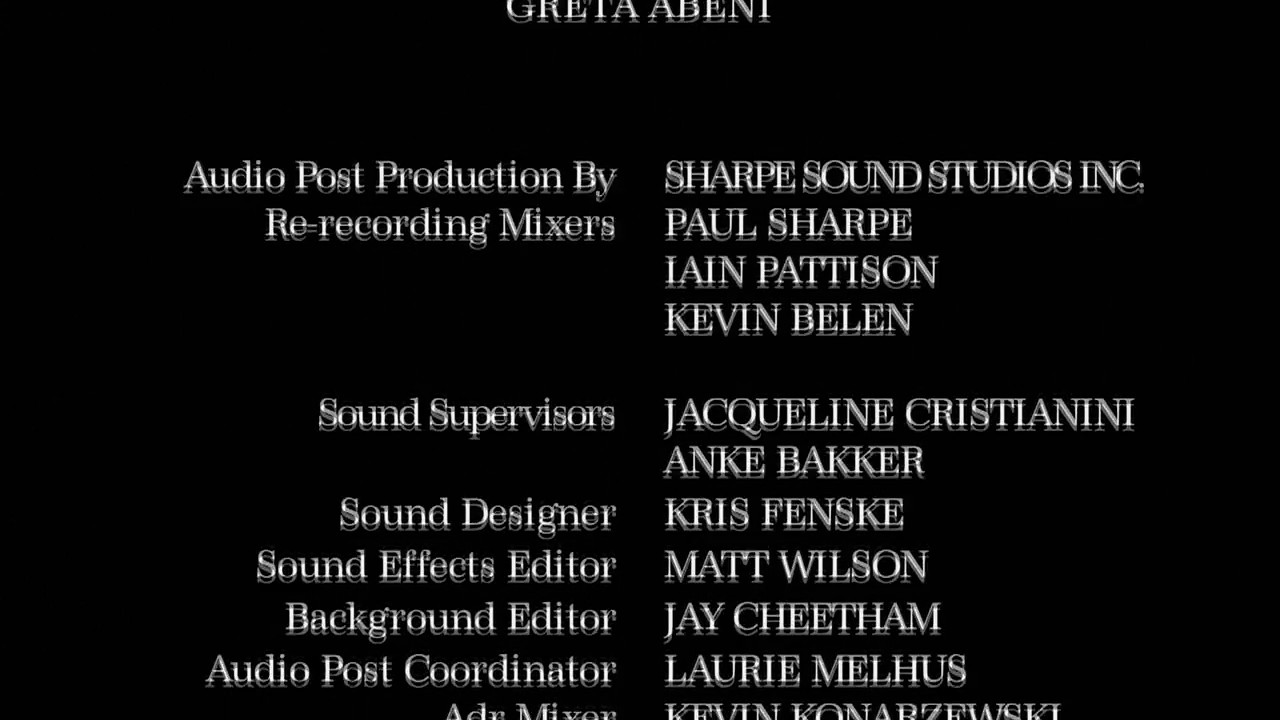
The sound department has several roles.ENLARGE ↗
The sound department has several roles.

The roll credits Sharpe Sound Studios for audio post-production; Paul Sharpe, Iain Pattison and Kevin Belen for re-recording; Jacqueline Cristianini and Anke Bakker for sound supervision; and Kris Fenske for sound design. The festival’s broader sound listing can now be read beside these more specific screen credits.

The same credit image identifies Matt Wilson as sound-effects editor and Jay Cheetham as background editor, with Laurie Melhus coordinating audio post-production. Those distinctions matter when discussing the episode’s constructed spaces: music, effects and backgrounds have separate credits, even though the finished soundtrack brings them together.

Soundtrack review scope →

Performance, prosthetics & adaptation

Jenifer begins with the apparent certainty of a rescue, then unsettles the person who believes he understands it. This expanded dossier follows Frank’s responsibility, Carrie Anne Fleming’s performance, the comic adaptation, the television production, Simonetti’s music and the episode’s different public lives.

Spoilers: this study discusses the film’s story and ending.

01 / FRANK SPIVEY & THE PROTECTOR’S STORY

Rescue creates a responsibility, not an explanation

Frank Spivey’s intervention gives Jenifer its troubling point of departure. In the published accounts, the police officer stops an armed man from killing a woman, then takes an increasingly personal interest in her welfare. His rescue is an action he can explain. The relationship that follows is much harder to contain within the language of duty. Viennale’s programme describes the movement from taking her home to attempting to stop her in the woods. Festival account ↗

The distinction matters. Helping someone does not establish that you understand them, and being needed does not make every subsequent decision benevolent. Frank’s authority initially supplies a legible arrangement: a threatened person and the man who protects her. Once he takes that arrangement into his private life, protection becomes entangled with attraction and with his need to remain the person who can manage the situation.

Matteo Marescalco’s Bietti essay identifies the ending’s return to the opening situation. Read through that circular structure, rescue becomes an unstable viewpoint: the apparently self-evident positions of victim, aggressor and saviour can be occupied again without the newcomer understanding what preceded them. The circular account ↗ The opening-and-ending study now follows the visible exchange of positions, weapons and embraces.

The ethical difficulty survives the horror premise. Frank can be responsible for decisions that expose others to danger even if he cannot fully explain his attachment. To treat desire as a complete excuse would remove the central tension: he keeps acting, and those actions have consequences beyond the couple.

02 / CARRIE ANNE FLEMING & EMBODIED PERFORMANCE

The face is also a working condition

Fleming’s November 2005 interview with Staci Layne Wilson supplies a different account from the usual description of a creature. She recalls prosthetics and dentures, an application process revised so that the piece was painted before being fitted, and communication with Argento assisted by an interpreter. She also invented a private family background, while stressing that the film does not explain Jenifer’s origin. Fleming’s production recollections ↗

Private preparation and screen information perform different jobs. An actor can use an imagined history to sustain attention and intention without supplying the audience with a biographical answer. The absence of an explanation does not mean the performance began with an empty character.

In the same interview, Fleming emphasises the role’s aggressive energy and her pleasure in playing someone who was not simply a victim. That account complicates the rescue story without settling whether the finished episode gives Jenifer an independent perspective. The actress’s approach, Frank’s understanding and the audience’s judgment need not coincide.

A prosthetic supplies visible form; the performance makes it responsive. Posture, the direction of attention and the timing of an approach can make an apparently fixed face seem inviting, impatient or threatening. The performance study follows those choices through the embrace, glass partition, bedroom, bathroom and garden. The makeup’s visible form changes with her posture and the frame around her.

The transcript prints the makeup artist’s name as “Howard Barker.” The disc documentation instead identifies Howard Berger’s dedicated featurette. The screen credits explicitly name Gregory Nicotero and Howard Berger, then KNB EFX Group and its on-set team. The interview’s wording remains a transcription discrepancy, separate from the verified credit. Makeup documentation route ↗

03 / A PUBLISHED IMAGE & THE LIMITS OF RECOGNITION

The close-up gives us a face, not an origin

The Apple-supplied image at the head of this dossier places a tilted face against soft green and brown woodland shapes. Blonde hair reaches across the forehead and into the edges of the frame. The eyes read as dark surfaces; exposed teeth draw attention toward the mouth. Those are features visible in this reproduction.

The tilt prevents the face from becoming a straightforward specimen. It suggests attention directed toward someone beyond the frame, yet the missing reverse view leaves that relationship open. A still can make us feel addressed while withholding who is being addressed and what has just happened.

That uncertainty is useful here. Assigning innocence, intelligence or intent from appearance alone would reproduce the shortcut the rescue narrative unsettles. The fictional design is arranged to provoke a response; it is not evidence that visible difference explains violence. The reading belongs to this particular image and story.

The Apple image retains its original source link. The new scene studies place other views of the face within their surrounding action; they do not change the provenance of this published image.

04 / JONES, WRIGHTSON & WEBER’S ADAPTATION

A short comic becomes a lived duration

The Grand Comics Database indexes “Jenifer” as a ten-page Bruce Jones/Bernie Wrightson story from Creepy no. 63, July 1974. Ian Jane’s release-period review independently identifies the 1974 issue. Bietti’s 1973 date is therefore retained as a disagreement rather than adopted. Bibliographic record ↗ Release-period source identification ↗

The adaptation makes Steven Weber both a writer and the man through whom the situation is experienced. That is a productive double position: arranging the story’s information is different from playing someone whose understanding is limited. A performance must make the next decision plausible in the moment even when the larger design points toward catastrophe.

Jane describes added attention to Frank’s police work and family, while arguing that the extra detail slightly reduces the comic’s mystery. His comparison gives us a specific critical proposition, not permission to invent a panel-to-shot history. Jane on the adaptation ↗ The issue is what expansion does to the rescue. The more social obligations the film gives Frank, the less his attachment can be considered a private problem affecting only himself.

There is now a clear route back to the source. Dark Horse’s Creepy Presents: Bernie Wrightson, listed by its distributor in a 2026 paperback edition, includes “Jenifer.” The Anchor Bay disc reviews identify a screenplay in the DVD-ROM material. These are two concrete objects for a later comparison; neither has been read here. Publisher’s collection record ↗

05 / ARGENTO, THE ANTHOLOGY & COLLABORATIVE CRAFT

A television commission is still a negotiation

In Romain Le Vern’s interview, Argento describes the appeal of ordinary people in rural America confronting an encounter they cannot control. He frames the central attraction as a reversal of Beauty and the Beast, and says he altered the script, including a conscious connection between the cat scene and Inferno. These are the director’s explanations of his approach, not substitutes for dated drafts. Argento on the project ↗

The same interview complicates the publicity idea of unrestricted television authorship. Asked whether he had complete freedom, he describes creative freedom as something continually negotiated. The page is dated 2013, but its introductory and production references concern an earlier encounter; it should not be treated as a freshly conducted 2013 production report.

The “master” label can make a collaborative production disappear behind a signature. Viennale’s record identifies Attila Szalay for camera, Marshall Harvey for editing, Kris Fenske for sound, David Fischer for decoration, Lyn Kelly for costume and Claudio Simonetti for music. Festival credits ↗ These departments create the conditions under which a body, room or approach becomes legible. Their credits do not, by themselves, establish who devised a particular effect or camera movement.

The episode also travelled beyond a television slot. Brive’s June 2006 press dossier places Jenifer beside Carpenter’s Cigarette Burns and Dante’s Homecoming in a proposed Masters of Horror presentation. The page explicitly marks the programme as provisional. Original festival document, PDF p. 7 ↗ It records a curatorial intention: these short television works could be encountered together as cinema.

06 / SIMONETTI, STRINGS & THE LULLABY

The musical record extends beyond a familiar signature

Speaking to Marco Serra for SUONO, Simonetti describes Jenifer as an earlier step toward the orchestral approach he developed for Mother of Tears. This film-specific recollection describes the musical direction behind Jenifer. Simonetti on the orchestral direction ↗

Massimo Privitera’s 2026 review of the Rustblade album identifies Greta Abeni’s voice and string players Giancarlo Apostoli, Michelangelo Pietroniro, Pierluigi Pietroniro and Maurizio Tarsitani. The review discusses “Jenifer’s Lullaby” as a childlike melodic idea and contrasts it with the darker tension of “Saving Jenifer.” Album review and contributor record ↗

The lullaby is a useful interpretive problem precisely because its usual function is reassurance. In a story where caring becomes dangerous, a musical sign associated with care can make the listener’s response unstable. That proposition needs testing against a named film track before we assign it to a particular glance, cut or act of violence.

The record also offers a route beyond the episode’s reputation. An album isolates music that a film mixes with breathing, movement, dialogue and effects. The later sound investigation will compare a few decisive passages with the documented musical material, preserving the distinction between an album and the final mix.

The album as a separate object

Rustblade identifies RBL099LP as the soundtrack’s first vinyl edition, limited to 400 coloured copies. Its description places orchestral strings alongside electronic material. MVD’s distributor record gives a 35-minute programme and a US release date of 6 February 2026. These are specifications for the album, distinct from the episode’s running time and final sound mix. Label record ↗ Distributor record ↗

The repeated assurances of safety provide a verbal counterpart to the lullaby question raised above. Both place care at the centre of the episode’s uncertainty. This is a connection between the dialogue and the documented musical idea; it does not assign an album track to either rescue scene.

07 / ADMIRATION, REPETITION & THE ARGENTO EXPECTATION

The disagreement is about what repetition achieves

Ian Jane recommends the episode as an effective combination of horror, humour and sexuality, and values both lead performances. Shawn McLoughlin’s contemporary disc review is more resistant: he finds the repeated sexual situations monotonous and hears the score as unhelpful to the pacing. Jane’s assessment ↗ McLoughlin’s counter-reading ↗

Both responses can be understood through the episode’s central pattern. If repetition makes Frank’s inability to act differently increasingly painful, it can become the mechanism of the horror. If each return merely confirms a relationship already understood, it can feel like a short premise being prolonged. The disagreement concerns how experience accumulates, not simply whether the material is shocking.

The director’s earlier films also shape the terms of judgment. McLoughlin explicitly measures the result against his expectations of the maker of Suspiria. That comparison can identify a lost intensity, but it can also obscure the demands of a shorter television commission and an adaptation written by its lead actor. A useful account keeps both possibilities available rather than announcing a triumphant comeback or a terminal decline.

Fleming’s testimony supplies a further perspective on the reception language. Discussion built entirely around a desirable body and an alarming face can erase the actor’s choices. Bringing performance and production into the account does not require approving the story’s sexual politics. It gives us more precise grounds on which to examine them.

08 / BROADCAST, FESTIVAL & HOME VIDEO

A running time is a lead, not a verdict

The presentation used for the illustrated studies runs 57:54, including the anthology opening and closing credits. Its duration is recorded separately from the edition specifications below.

Apple’s US listing dates the episode to 18 November 2005 and describes a 55-minute presentation. Viennale’s V’06 archive lists 57 minutes. The Anchor Bay reviews give 58; Brive’s provisional programme gives 60. These records identify different contexts, but the numbers alone cannot tell us whether material was removed, whether credits were included or whether a duration was rounded.

Published presentation records; copies not directly compared
RecordDurationWhat it establishes
Apple TV US55 minutesEpisode 4; 18 November 2005 date; English audio and English CC. Listing ↗
Viennale V’0657 minutesFestival archive; HD format listing. Record ↗
Anchor Bay / 2006 reviews58 minutesWidescreen DVD; English 2.0 and 5.1, no subtitles listed. Reviewed edition ↗
Brive / June 200660 minutesProvisional festival presentation. Press dossier ↗

The disc offers a particularly useful research route: Weber’s commentary with Perry Martin, separate actor interviews, Argento’s So Hideous, My Love, a makeup featurette and DVD-ROM screenplay. Jane also reports deleted clips within the Argento interview. Supplement inventory ↗

McLoughlin explicitly reviewed a pre-release copy, a limit worth retaining when using its specifications. His 1.77:1 description and Jane’s 1.78:1 should not be inflated into evidence of distinct compositions. A meaningful comparison requires identified copies and matching scene landmarks. Until then, the dossier preserves the differences without manufacturing a “complete version.”
THE READING ROOM

Return to the source.

Research sources checked 17 October 2026; scenes, credits, dialogue and soundtrack release records updated 6 November 2026. Participant testimony, published criticism, festival and edition records, bibliography and an inspected image retain their different evidential roles.

  1. 01

    Staci Layne Wilson — Carrie Anne Fleming interview, 19 November 2005 ↗
    Relevant performance, prosthetic, communication and preparation answers. Private backstory is not film evidence; apparent makeup-name transcription problem retained.

    Return to the dossier ↑
  2. 02
  3. 03

    Dark Horse / PRH — Creepy Presents: Bernie Wrightson, 2026 ↗
    Publisher/distributor description confirms Jenifer in the 144-page collection, ISBN 9781506753218.

    Return to the dossier ↑
  4. 04

    Romain Le Vern — Argento on Jenifer, CHAOS ↗

    Film-specific answers on setting, reversed fairy tale, script changes and creative freedom. Page dated 21 September 2013; interview describes earlier production circumstances.

    Return to the dossier ↑
  5. 05

    Viennale V’06 — Masters of Horror: Jenifer ↗

    Festival synopsis, contributor credits, 57-minute and HD listing read through web.

    Return to the dossier ↑
  6. 06

    Festival du cinéma de Brive — 2006 press dossier, PDF p. 7 ↗

    Original press-dossier page inspected. Provisional Masters of Horror programme and 60-minute record; not proof of completed screening or a longer cut.

    Return to the dossier ↑
  7. 07

    Marco Serra — Claudio Simonetti interview, SUONO, 3 May 2008 ↗

    Relevant orchestral-direction answer read through web. No session documents.

    Return to the dossier ↑
  8. 08

    Massimo Privitera — Jenifer album review, 9 April 2026 ↗

    Published contributor names and selected cue discussion.

    Return to the dossier ↑
  9. 09

    Matteo Marescalco — Masters of Horror, Bietti, 15/2022 ↗

    Jenifer narrative/critical discussion and compiled credits.

    Return to the dossier ↑
  10. 10

    Apple TV US — Jenifer ↗

    Episode date, 55-minute listing, language/accessibility information and supplied image. No playback.

    Return to the dossier ↑
  11. 11

    Ian Jane — DVD Talk, 10 August 2006 ↗

    Contemporary criticism, adaptation observations and Anchor Bay specifications/supplement inventory.

    Return to the dossier ↑
  12. 12

    Shawn McLoughlin — DVD in My Pants, Anchor Bay release review ↗

    Counter-reading, specifications and supplement record. Reviewer identifies a pre-release copy; this is not an independent technical inspection.

    Return to the dossier ↑
  13. 13

    Jenifer — selected scenes, effects and screen credits

    Selected frames were examined across a 57:54 presentation, with closer sampling of the six illustrated effects passages. Time labels locate the views; this is a scene guide rather than an inventory of every cut. Stills retain the source’s 16:9 picture without added bars.

    Opening and closing credits supply the new craft attributions. The Viennale record and Fleming interview were rechecked on 6 November 2026. The presentation has no subtitle stream. The dialogue review documents the separate soundtrack work and its limits. A named retail-edition comparison, the comic pages, DVD-ROM screenplay and commentary remain separate research routes.

    Return to the scene guide ↑
  14. 14

    Jenifer — English dialogue and soundtrack review

    The complete 57:54 English-language soundtrack was processed in two local speech-recognition passes, with selected exchanges rechecked in shorter excerpts and related to the visual studies. The guide paraphrases the consistently recoverable dialogue; uncertain words and speaker assignments are omitted. Time ranges locate scenes, not a word-accurate transcript.

    This is a machine-assisted dialogue review, not a direct listening assessment of vocal delivery, effects, cue placement or the mix. The presentation contains one stereo soundtrack and no commentary track. Retail surround mixes, the Weber–Perry Martin commentary and the DVD-ROM screenplay have not been compared.

    Return to the dialogue guide ↑
  15. 15

    Rustblade — Claudio Simonetti: Jenifer soundtrack

    The label’s RBL099LP record identifies the first vinyl edition, a 400-copy coloured pressing, and describes its electronic and orchestral elements. Checked 6 November 2026.

    Read the label record ↗Return to the soundtrack study ↑
  16. 16

    MVD — Jenifer soundtrack distribution record

    The distributor lists RBL099LP, a 35-minute running time and a US release date of 6 February 2026. This describes the record release, not a film edition or cue sheet. Checked 6 November 2026.

    Read the distributor record ↗Return to the soundtrack study ↑

Corrections, contributions and enquiries: argentochrome@rareprintsandposters.com