THE ARGENTO ARCHIVEFILM / COLOUR / SOUND / OBJECTS
ARGENTOCHROME

FILM & TELEVISION / 025 · FILM DOSSIER

Dario Argento’s NightmaresFear enters the programme.

Nine nightmares, a television workshop and the films behind the tricks. Explore the shorts through scene studies, effects galleries and contemporary production testimony.

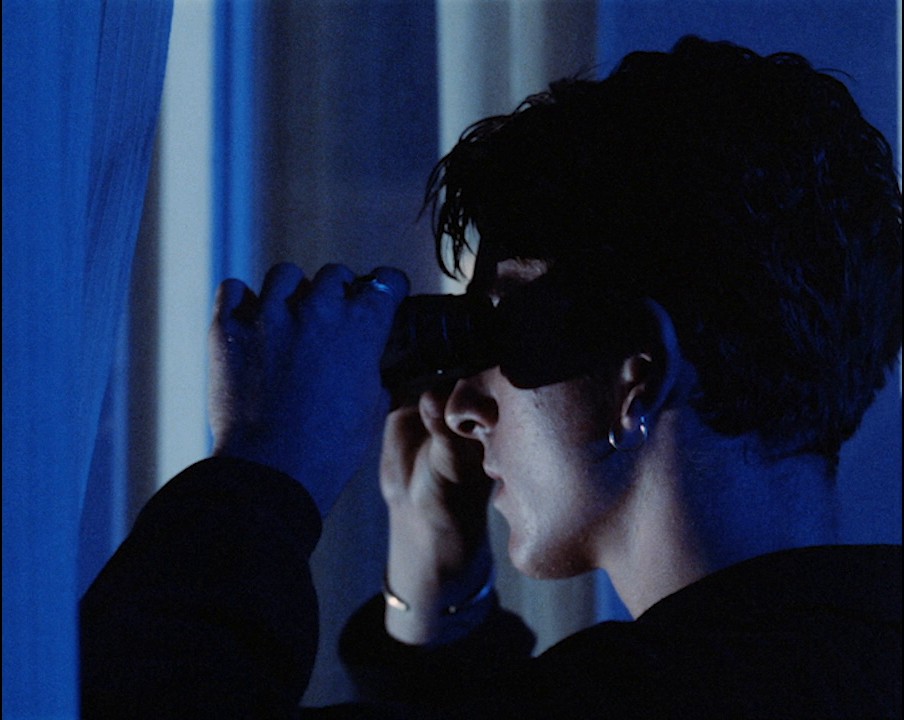
Massimo watches the courtyard.
1987 · TELEVISION SHORTSGli incubi di Dario Argento · shorts from GialloSCENES & WORKSHOP · 11 NOVEMBER 2026

Nine ways into the nightmare

Choose a short.

Windows, mirrors, dinner tables and bedroom doors become traps. Follow each story, then open its sequence gallery for a closer look. The studies discuss endings and practical effects.

Rear Window / 04:07

La finestra sul cortile

Massimo watches the courtyard.

A viewer crosses the courtyard and loses control of the picture.

Back to the nine shorts ↑

01:10–02:20

The bedroom as a viewing machine

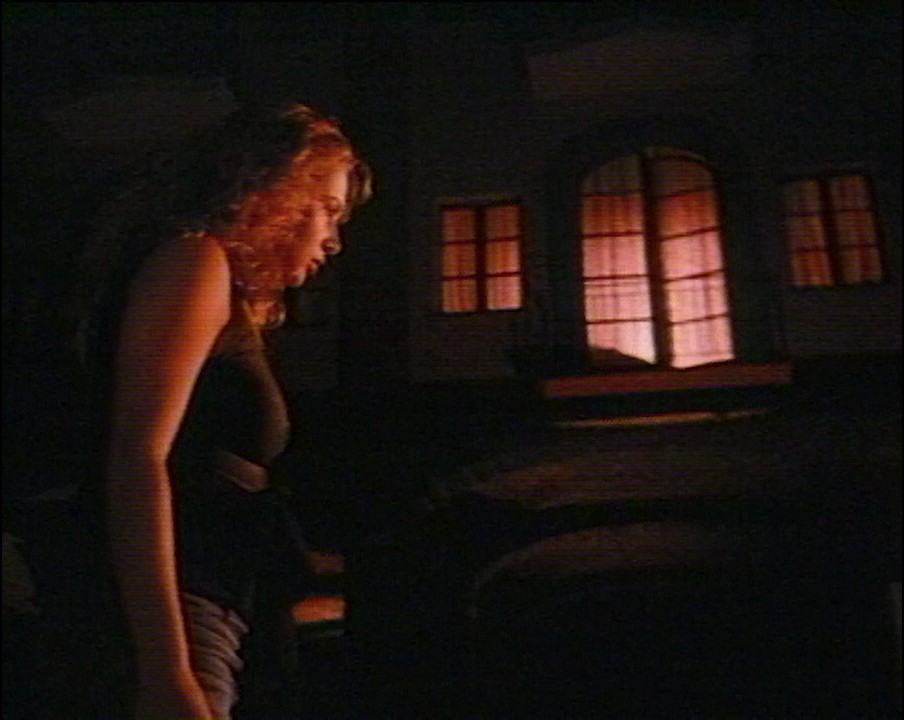
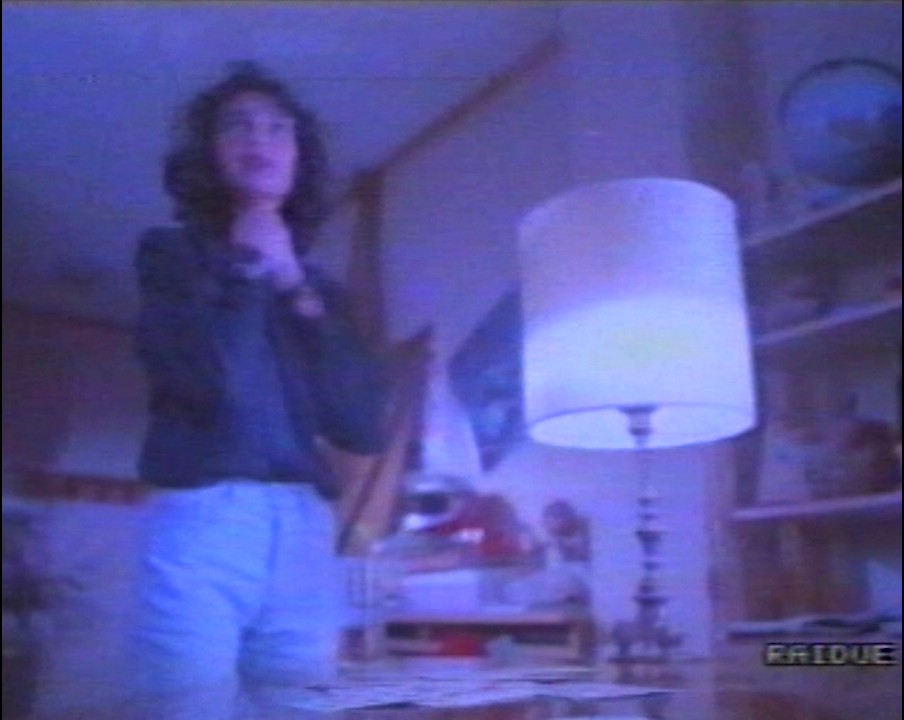
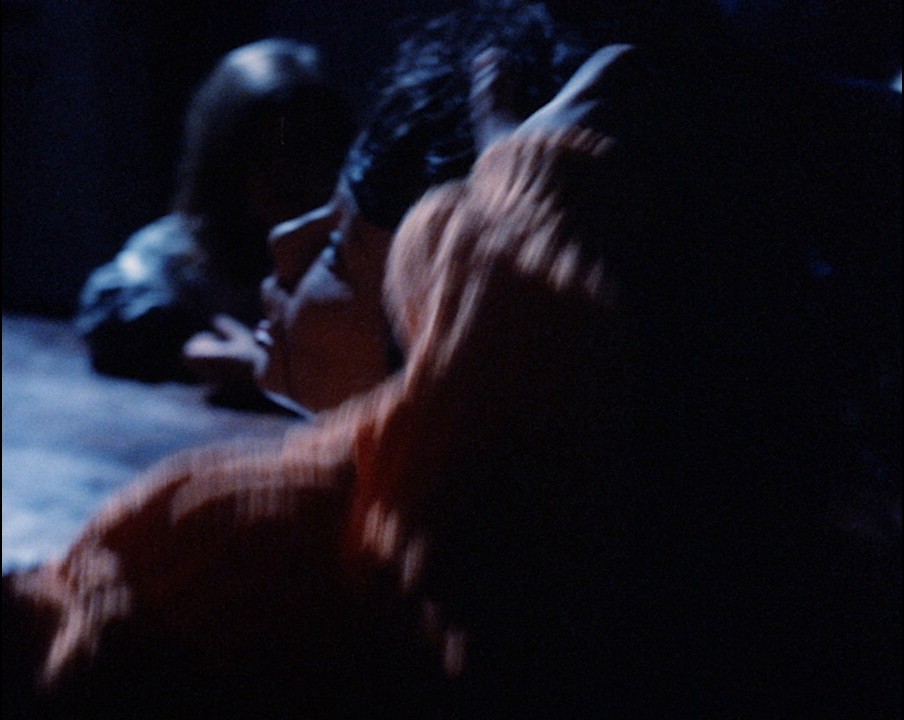
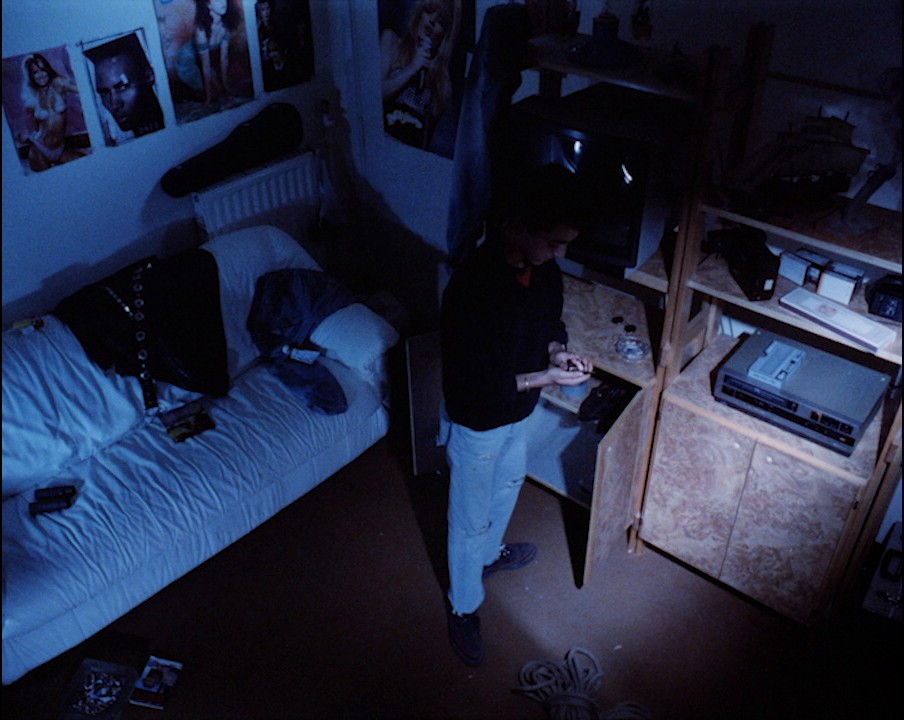
A television showing Hitchcock’s Rear Window shares the blue room with film images, a window and binoculars. Massimo moves from one apparatus to another: the short makes his cinephilia visible before the narration turns looking into an obligation to intervene.

02:20–03:20

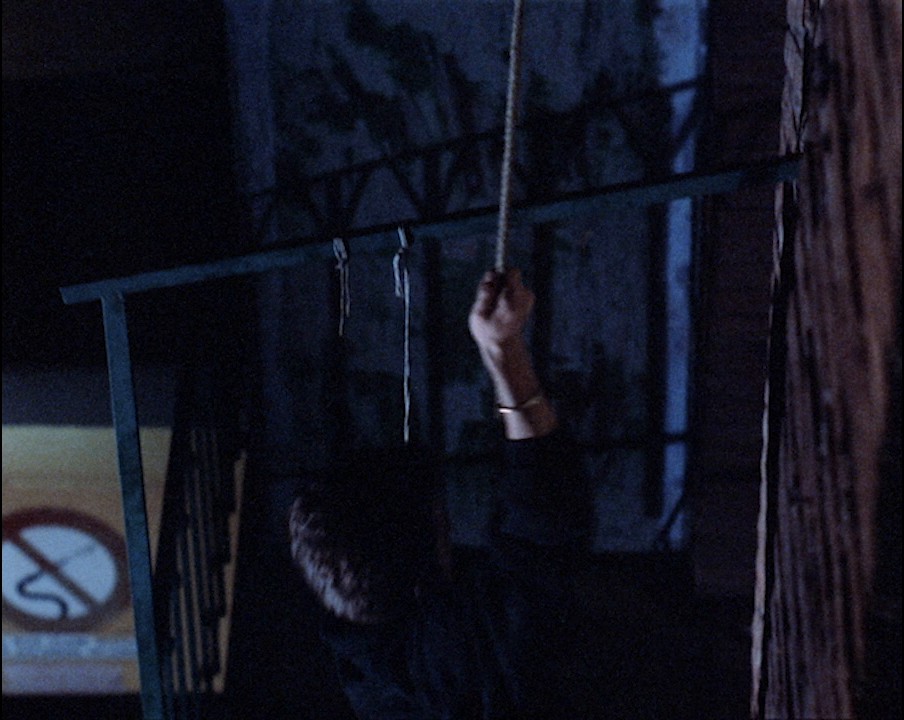
Crossing the image

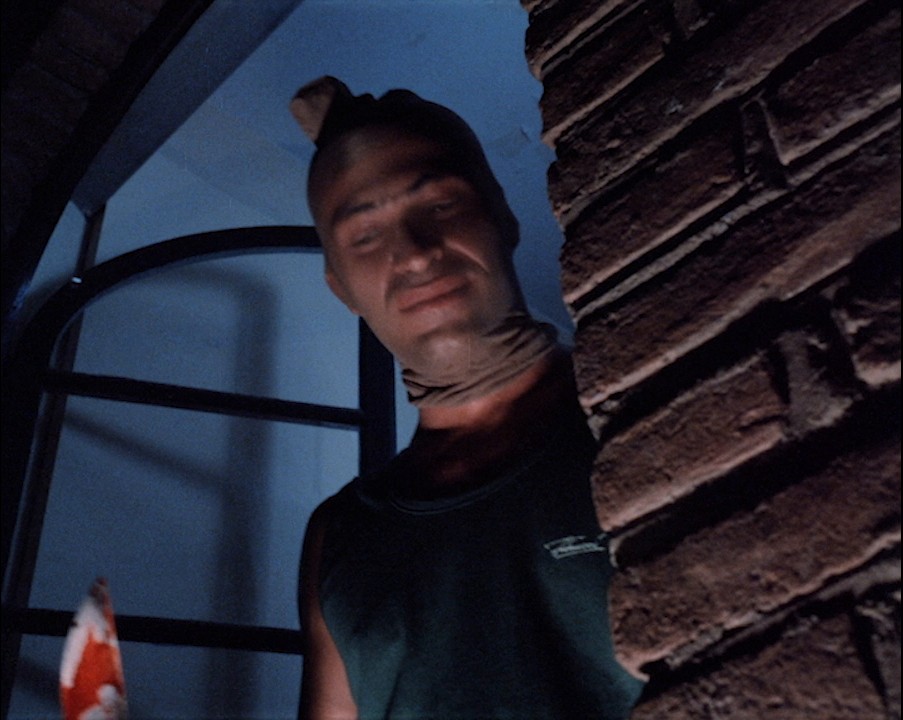
The knife and rope promise an escape from the position of the seated spectator. High views of the bedroom and close views of the improvised crossing break that confidence. The rescue fantasy produces a fall and a wound instead of mastery.

03:20–04:07

Rescue does not end the nightmare

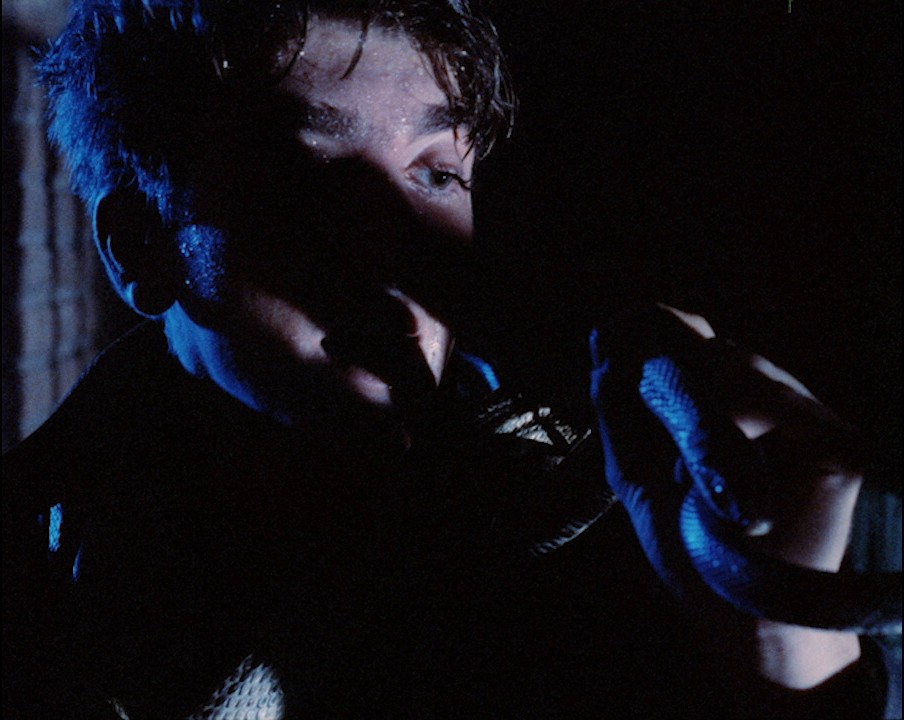
A helper appears, but the snakes bring the threat back onto Massimo’s body and face. The short refuses the clean distance between a frightening spectacle and the person safely watching it. Its return to the television frame makes the reversal a compact punchline.

Nocturnal Rites / 03:23

Riti notturni

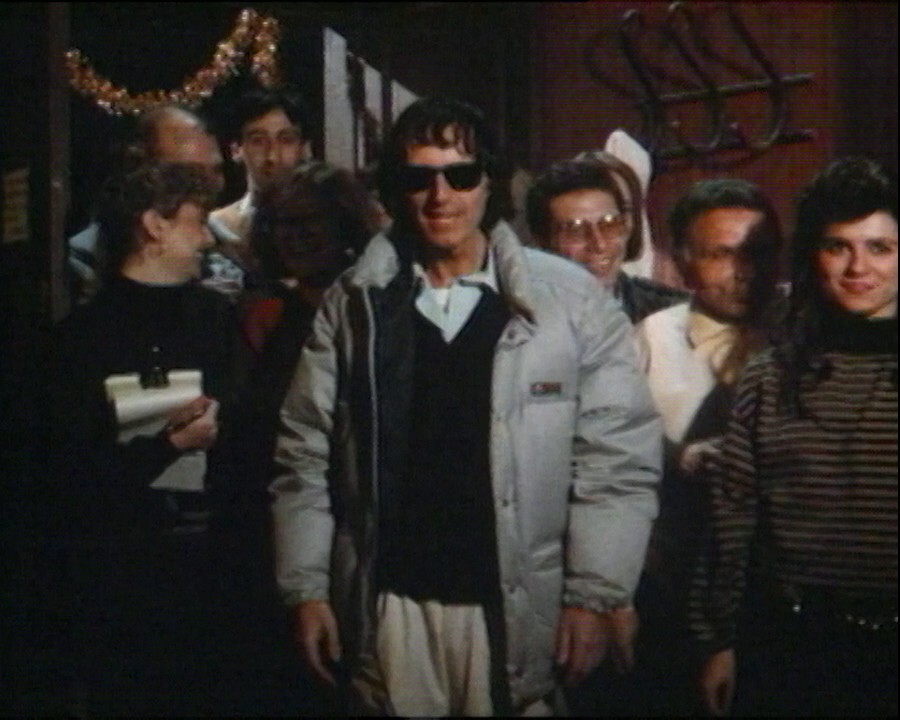
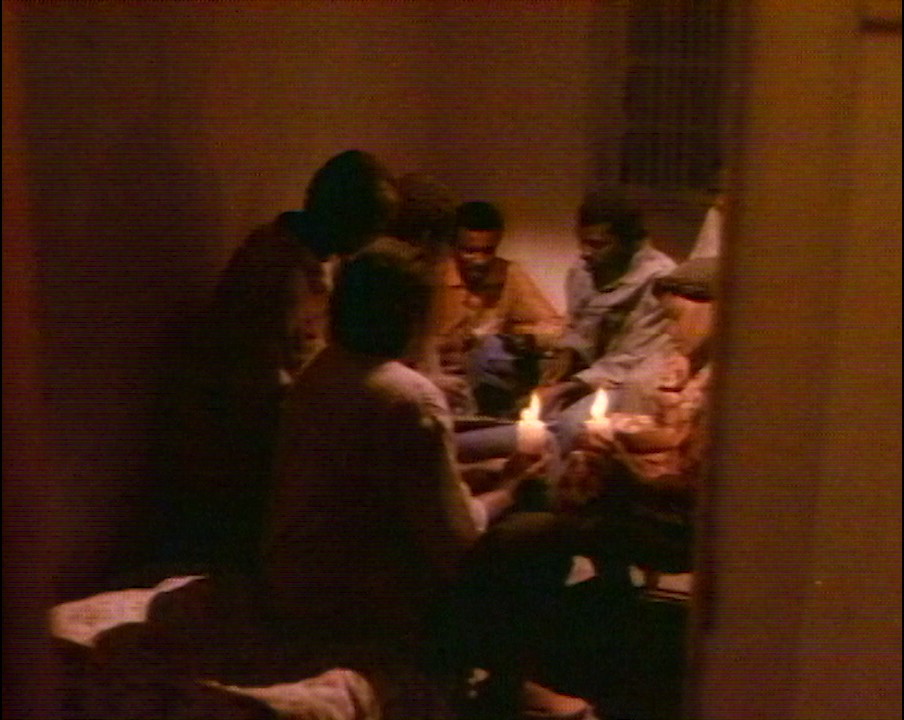
A gathering beyond the doorway.

A domestic arrangement becomes a corridor of imagined threats.

Back to the nine shorts ↑

00:35–01:25

Hospitality and discomfort

Argento’s narration introduces a couple, their domestic worker and a visiting friend. The opening plays awkwardness as a domestic comedy; the later peeking through doorways changes the meaning of the same shared home.

01:25–02:29

The television supplies the fear

A glimpse of a gathering and a television report encourage the protagonist to interpret unfamiliar people as a cannibal threat. The short draws on racialized ideas about outsiders; that stereotype is part of its construction, not a neutral account of the people or cultures it invokes.

02:29–03:23

The house looks back

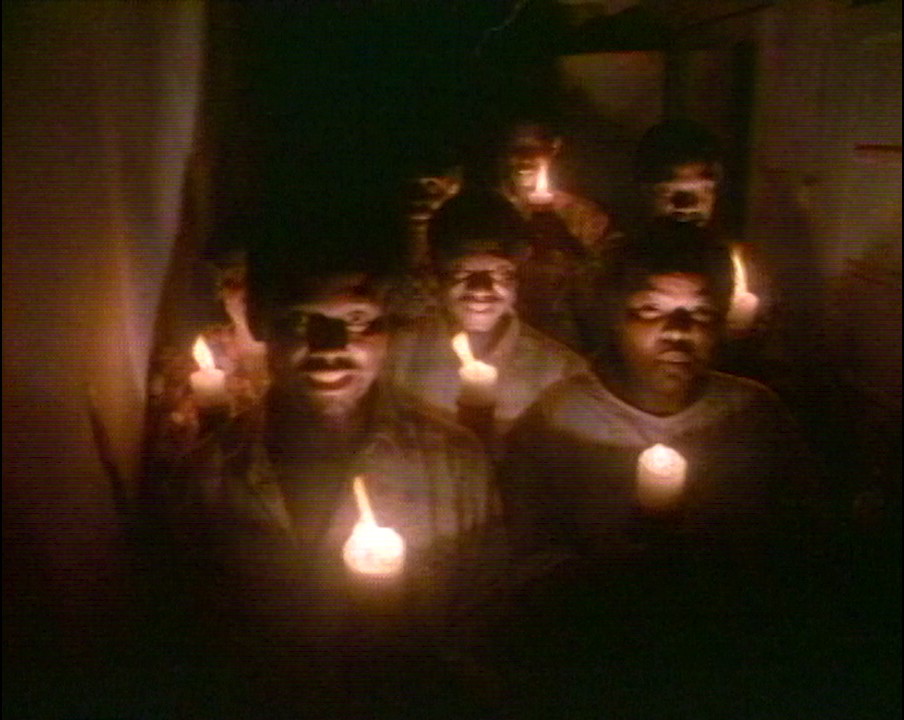
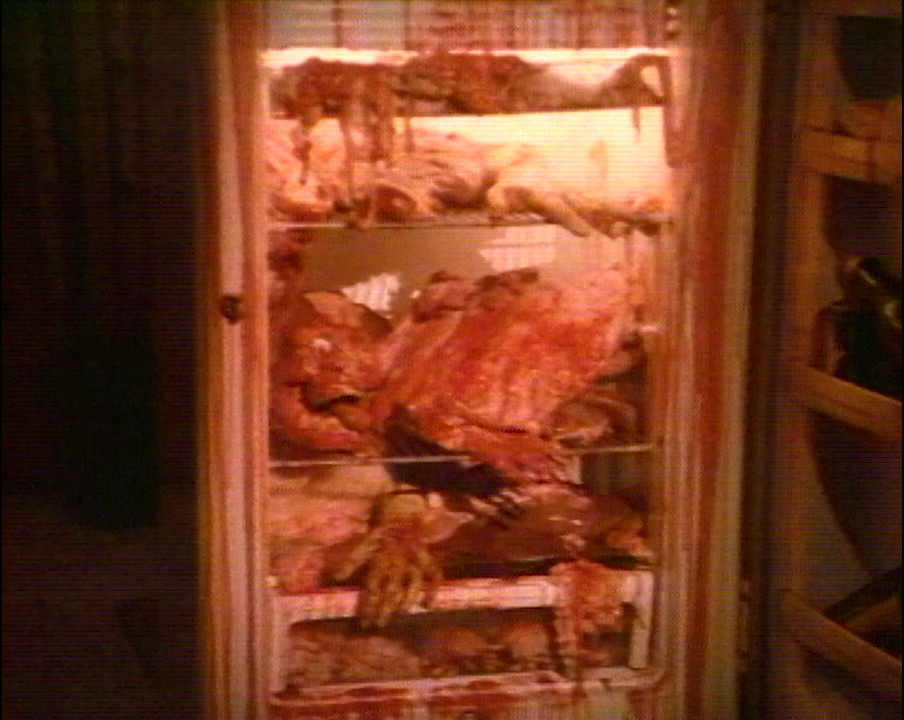
The candlelit group faces the camera, turning the observer into the person being approached. The refrigerator supplies the grotesque confirmation. Back in the studio, the invitation to submit photographs immediately converts private fear into a possible television role.

The Worm / 03:30

Il verme

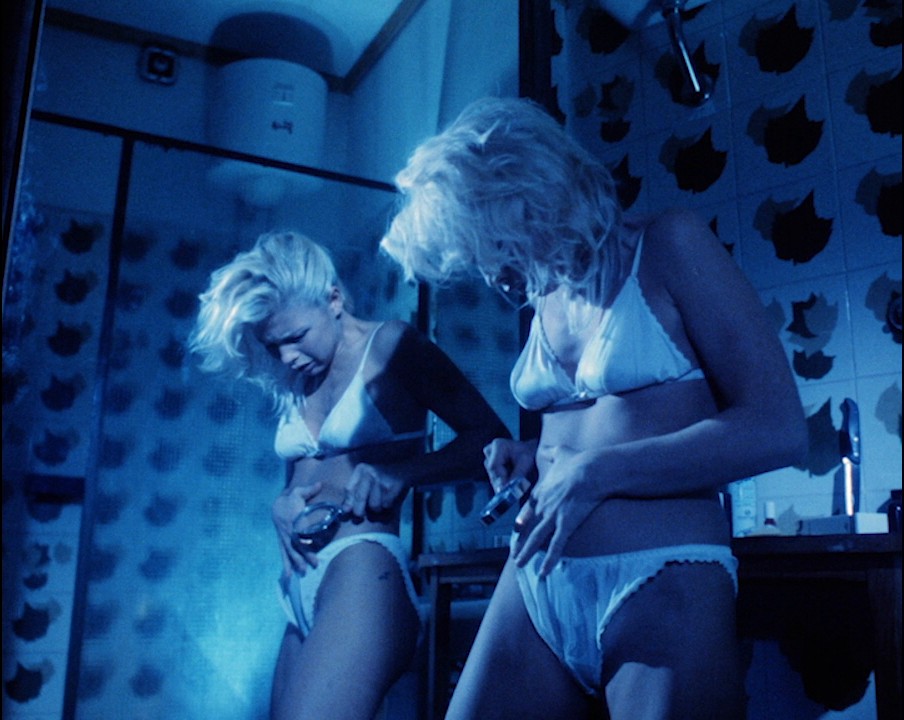
The mirror doubles her anxiety.

A broadcast warning makes the familiar body impossible to trust.

Back to the nine shorts ↑

00:12–01:30

A report enters the room

Argento introduces the piece as a nightmare. Within it, a television bulletin links cats to an alarming human infection. The woman and her cat make the report intimate: information from a screen is redirected toward the body beside it.

01:30–02:31

Inspection creates another image

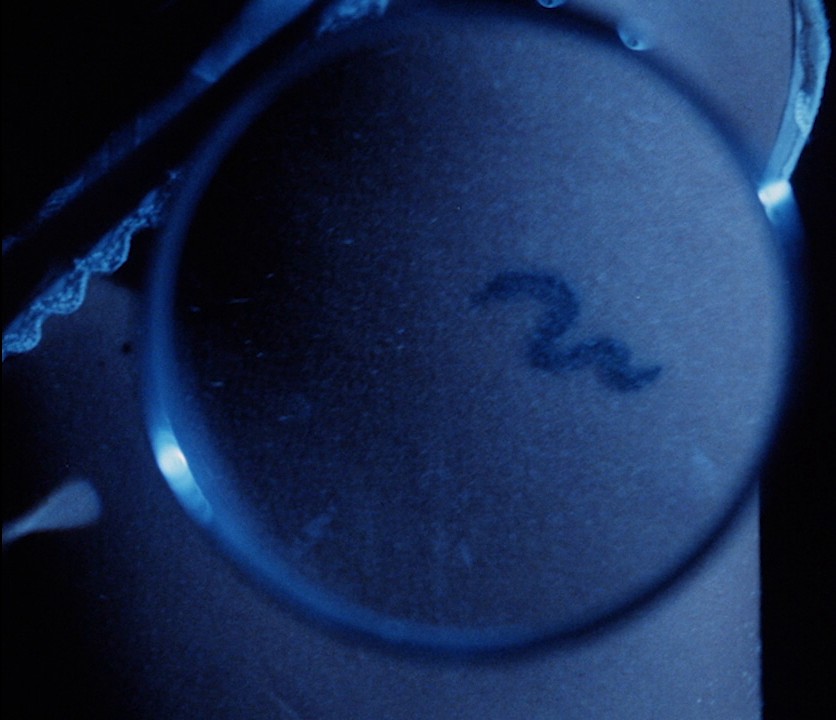
The mirror doubles the woman while the magnifying glass isolates a mark. Blue light and the repeated cat motif bind the bathroom to the bulletin. Each attempt to inspect the danger creates a more invasive view.

02:31–03:30

From eye to object

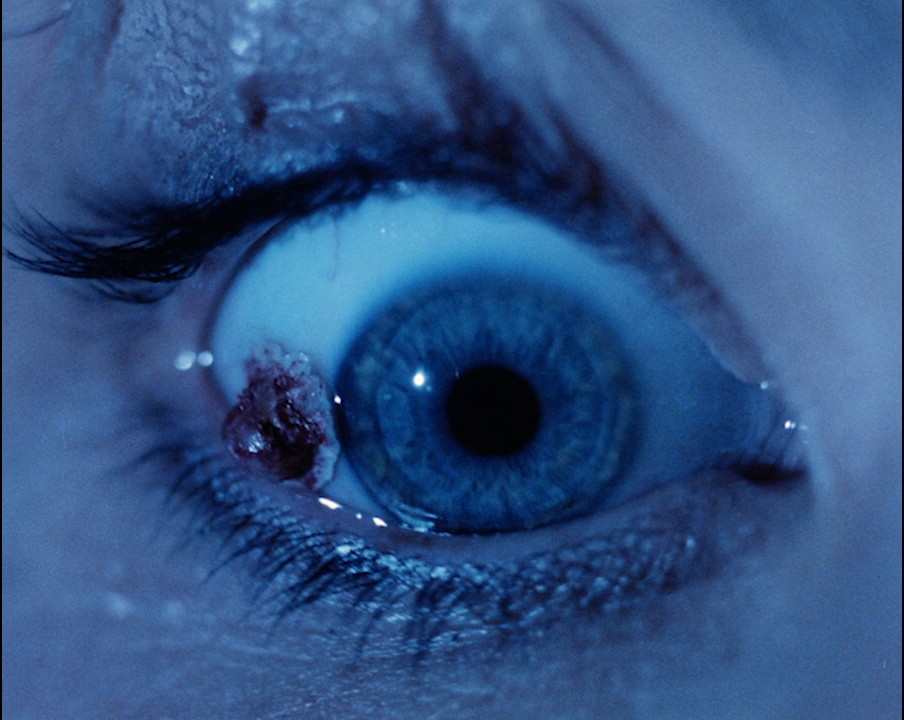
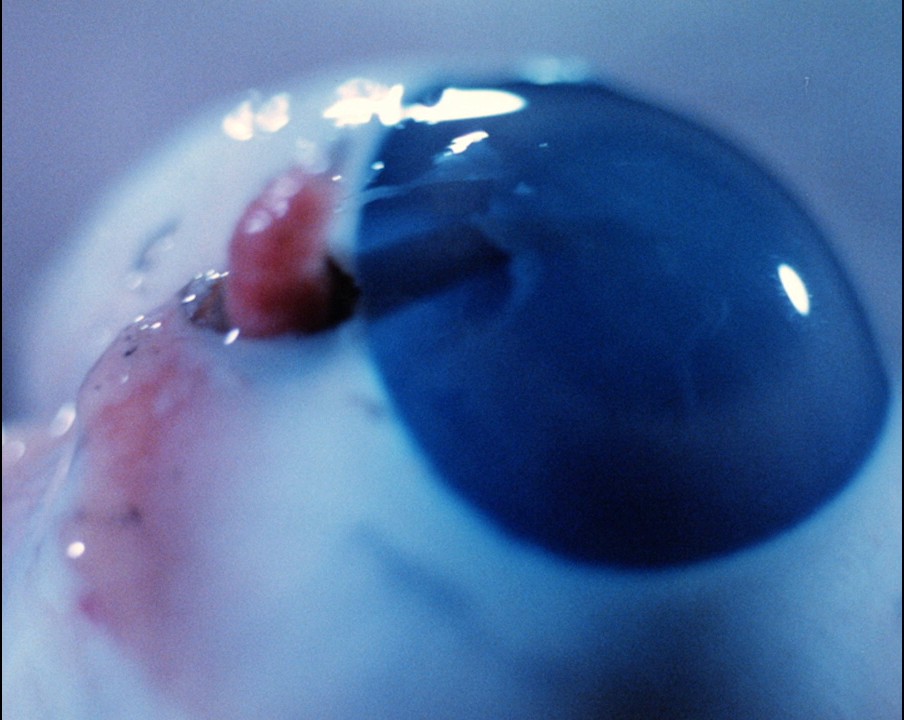
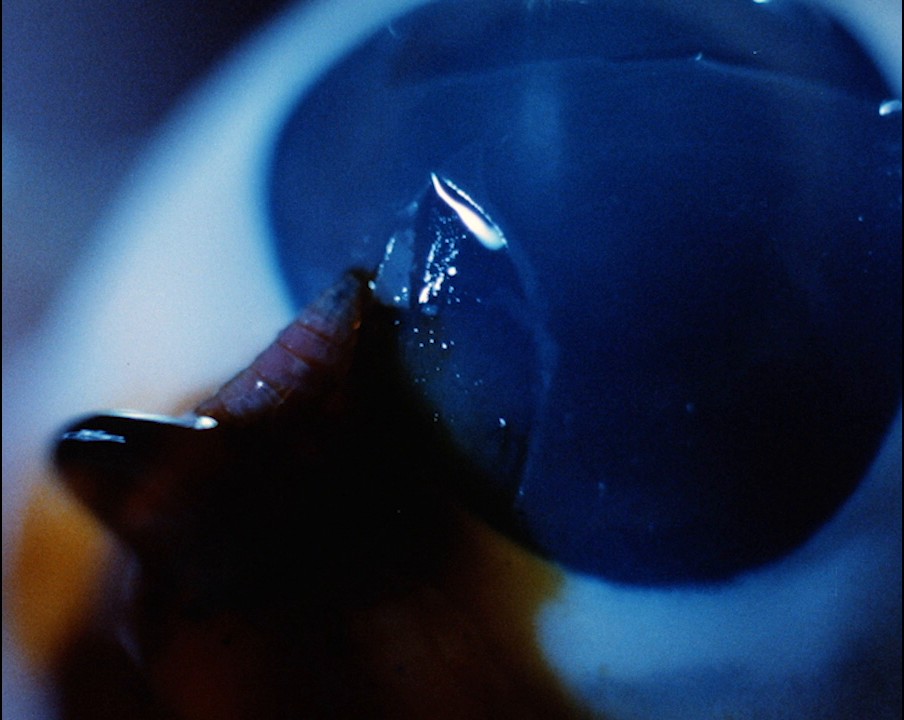
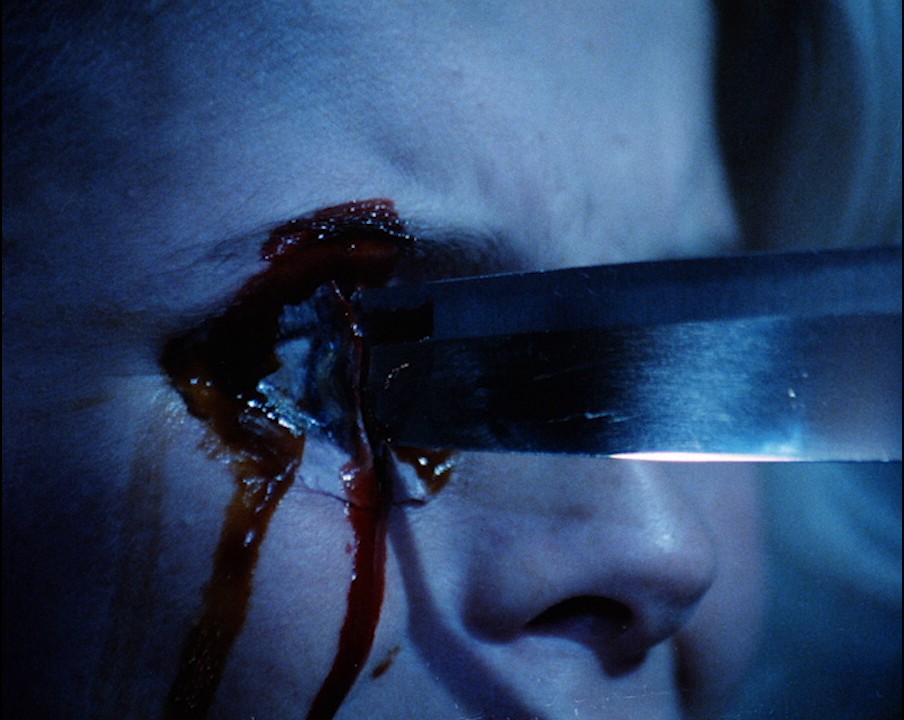
An eye close-up gives way to the spoon-held eyeball and the blade at the socket. The sequence changes scale to let the prosthetic object dominate the image. The studio return then presents Coralina Tassoni and the effects context as an explanation after the shock.

To Love and to Die / 04:14

Amare e morire

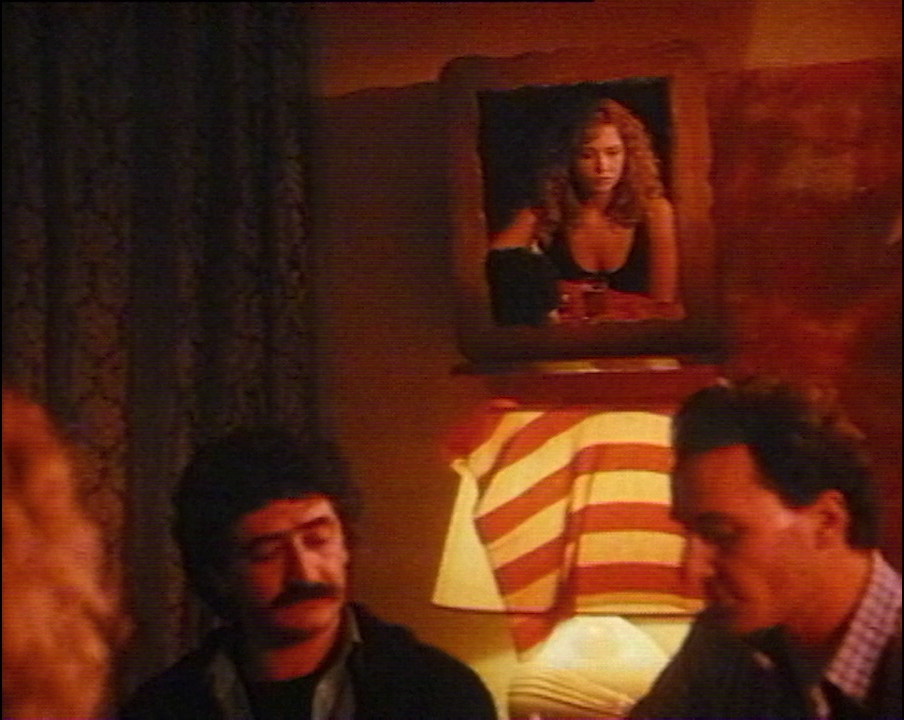
Gloria studies the men at dinner.

Gloria’s search turns the narrator’s story into a revenge mechanism.

Back to the nine shorts ↑

00:35–01:30

An assault reduced to a premise

The opening attack is followed by Argento’s direct narration. The short’s compressed form makes sexual violence the premise for a subsequent identification game. That compression is also its limitation: Gloria’s experience is rapidly subordinated to the mechanics of recognition and revenge.

01:30–02:40

A house of suspects

The domestic interior and dinner table gather the possible assailants into one space. Gloria watches them, while the narrator supplies the reasoning that connects her investigation to the earlier attack. The framed portrait above the table gives another face a place in the composition.

02:40–04:14

Recognition and the host’s return

The final encounter turns recognition into a knife attack. The programme then returns to conversational commentary and viewer photographs. The abrupt change in tone exposes the uneasy fit between the story’s sexual violence and the studio’s entertainment rhythm.

Punk Nostalgia / 02:58

Nostalgia punk

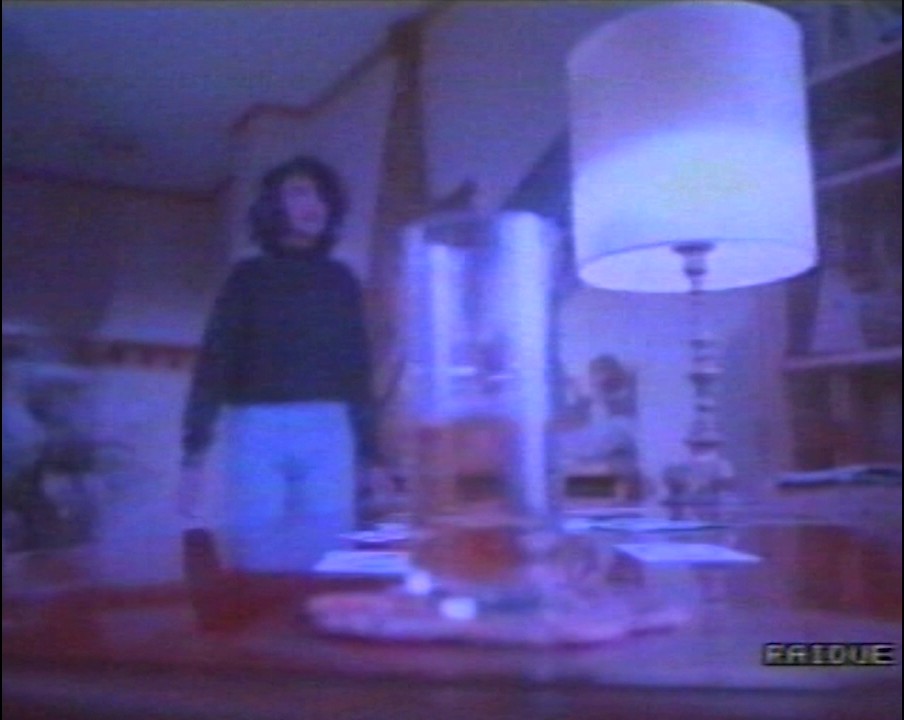
The glass waits on the table.

A drink starts a transformation that the programme later takes apart.

Back to the nine shorts ↑

00:20–01:23

The glass as a delayed threat

A quarrel follows the tarot reading. The glass remains prominent on the table, giving the viewer a concrete object to anticipate while the characters’ hostility develops around it.

01:23–02:25

A chain of bodily effects

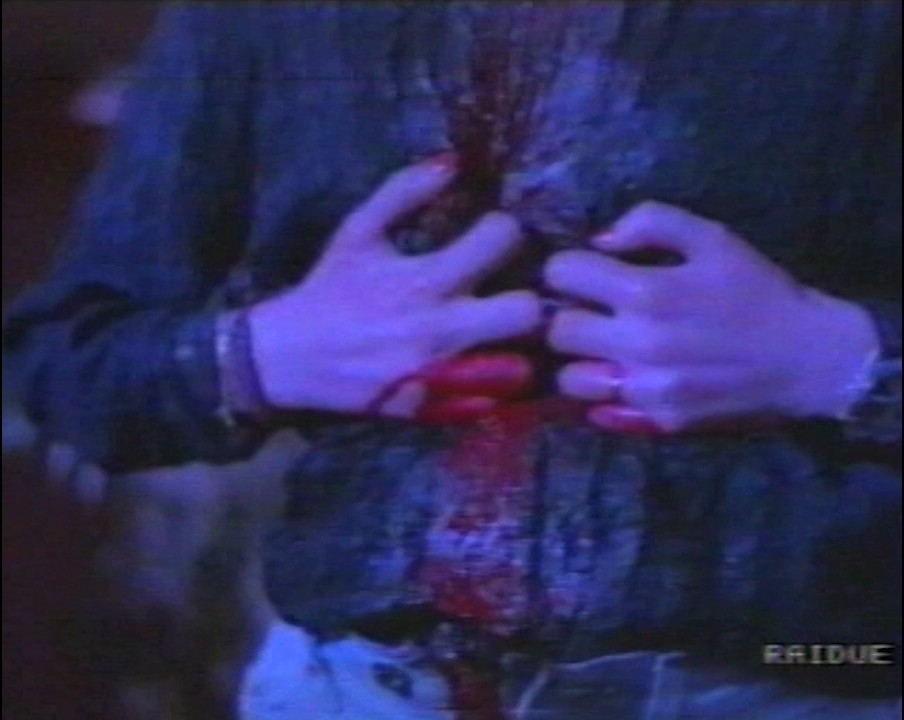
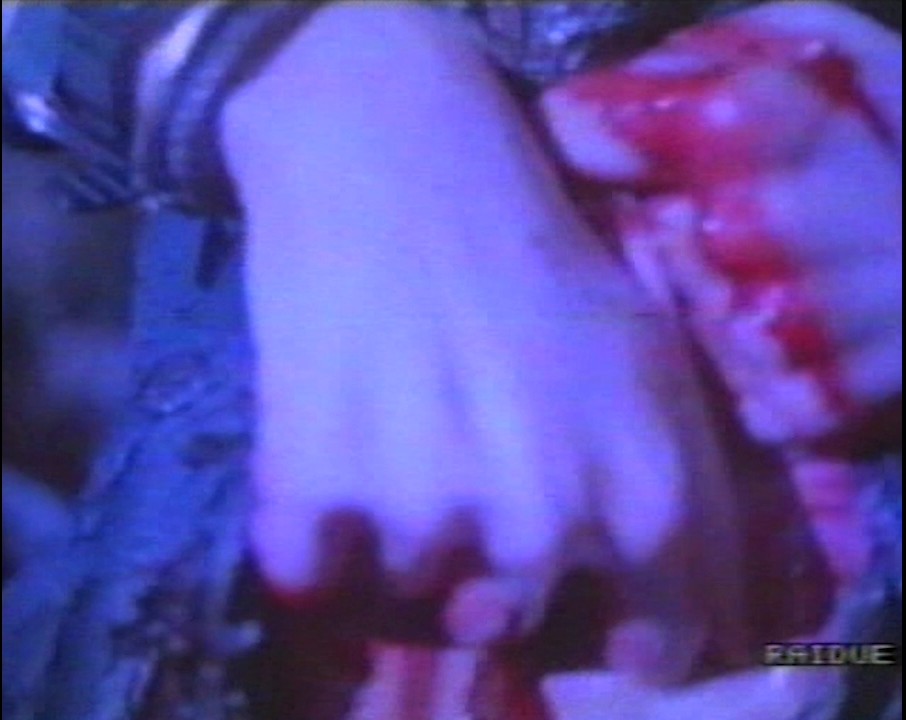
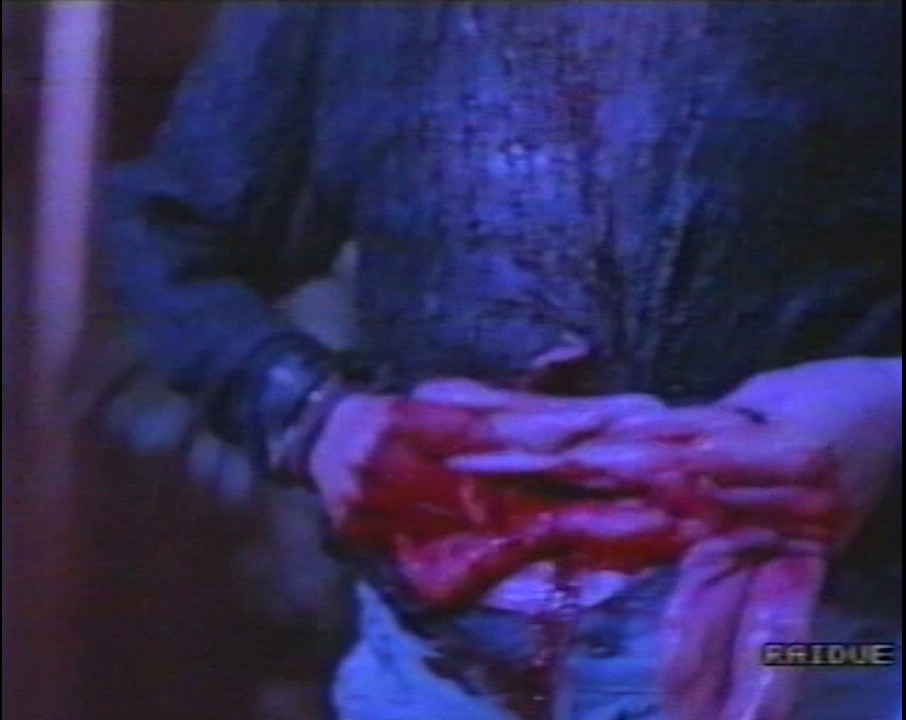
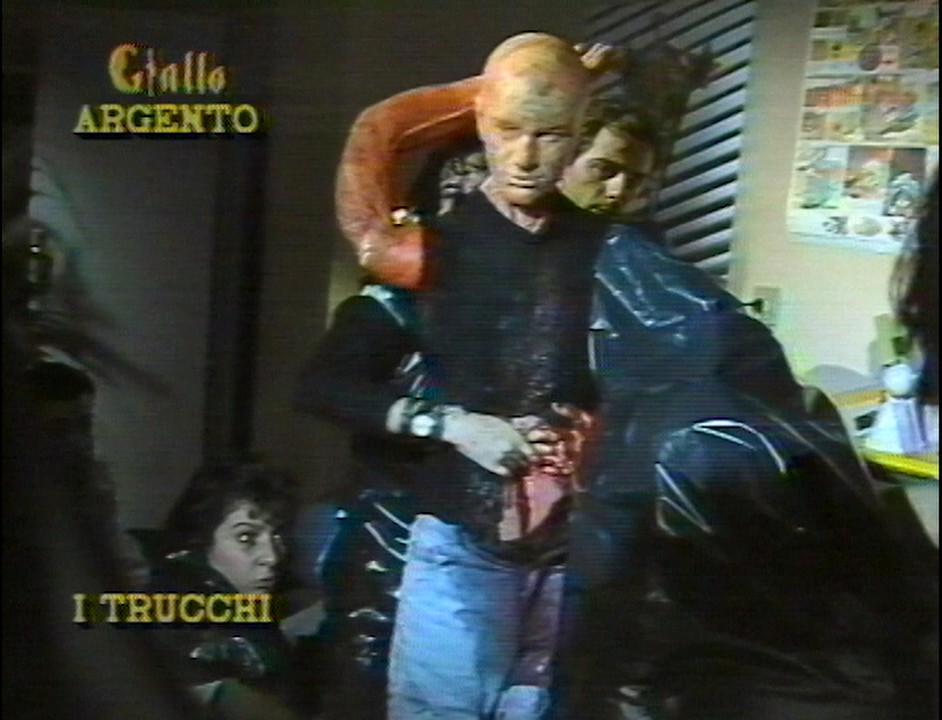
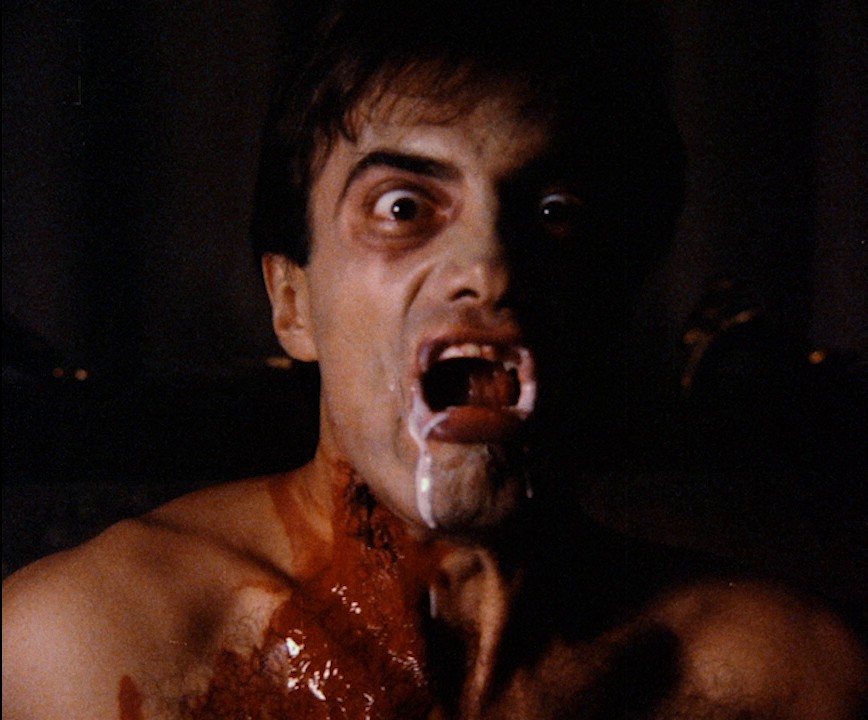
Drinking leads through red abstraction, blood at the mouth, the opening shirt and the exposed torso. The progression matters more than a single shock image: the body is changed in successive stages, with each close-up preparing the next.

02:25–02:58

Returning to ordinary space

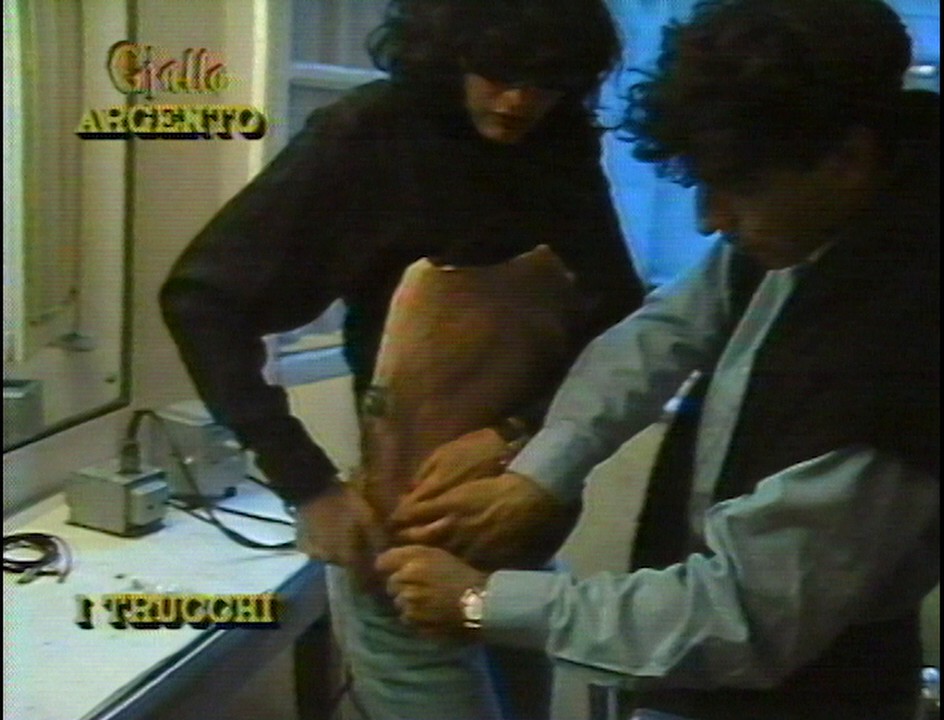
The short leaves its violent climax for the hosts and the surrounding production world. Giallo Argento later revisits the torso appliance and the shooting setup. In that programme Argento acknowledges both complaints and favourable responses; this is contemporary evidence of audience reaction, without establishing a particular censorship order.

The Witch / 03:03

La strega

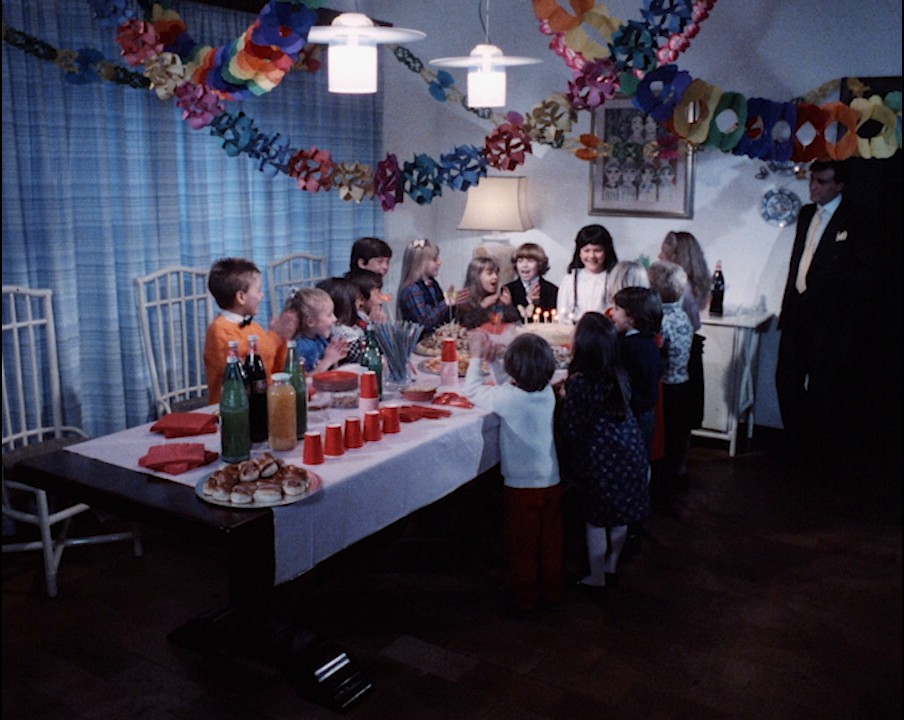
A birthday table before the game.

A birthday game separates what the children touch from what we can see.

Back to the nine shorts ↑

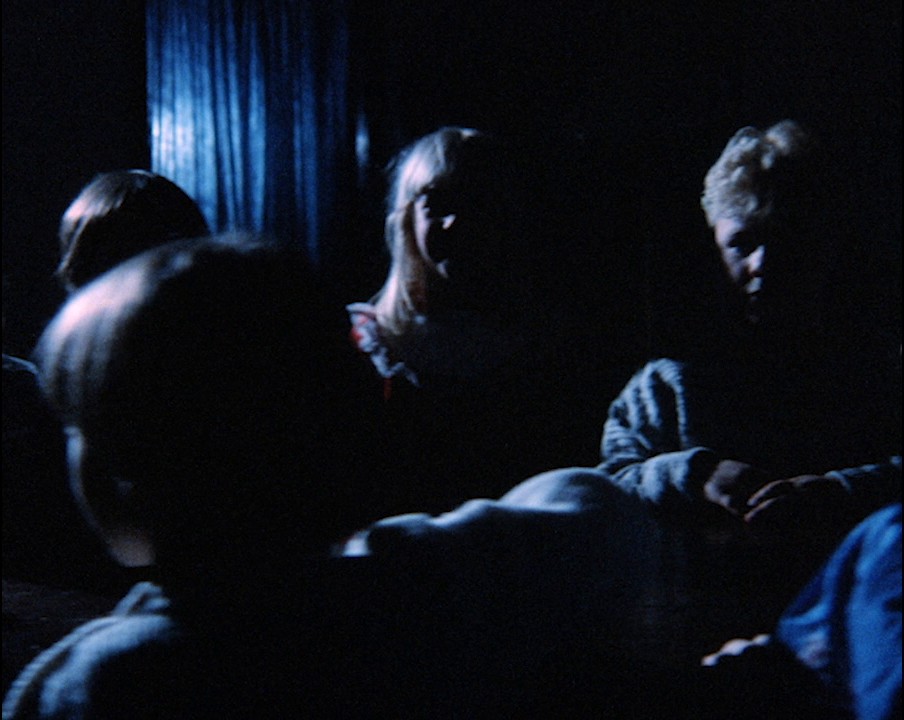
00:30–01:15

The parent as master of ceremonies

A bright birthday table gives way to a proposed game. The father’s familiar authority supplies the reason for following him into a much darker space.

01:15–02:13

Touch takes over

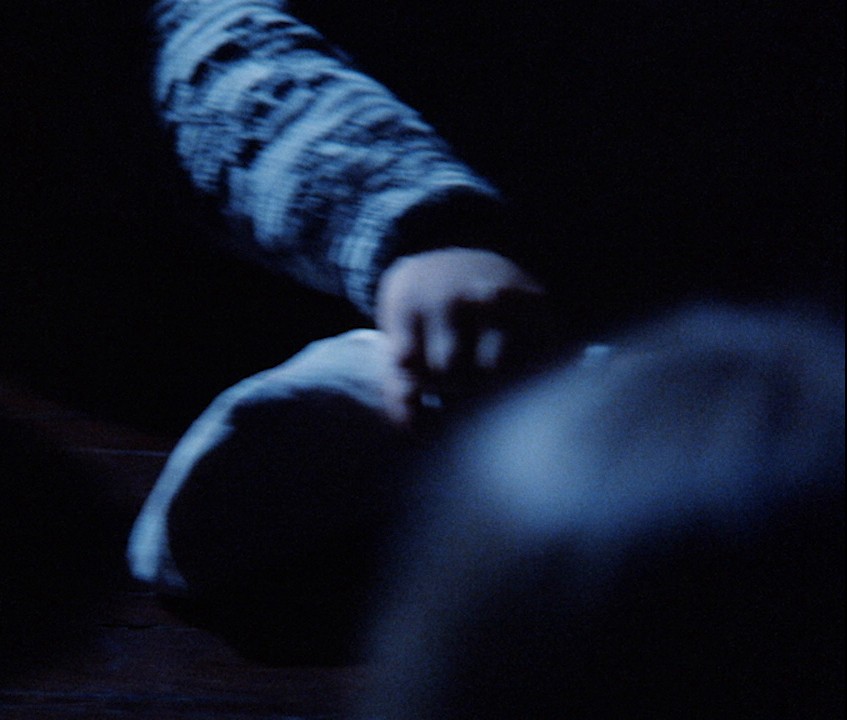
The circle, the passed objects and the restricted light make the game depend on trust. Close views of hands break up the group into gestures. The spectator sees enough to doubt the game before its participants can make sense of everything being handed around.

02:13–03:03

A prop becomes a body

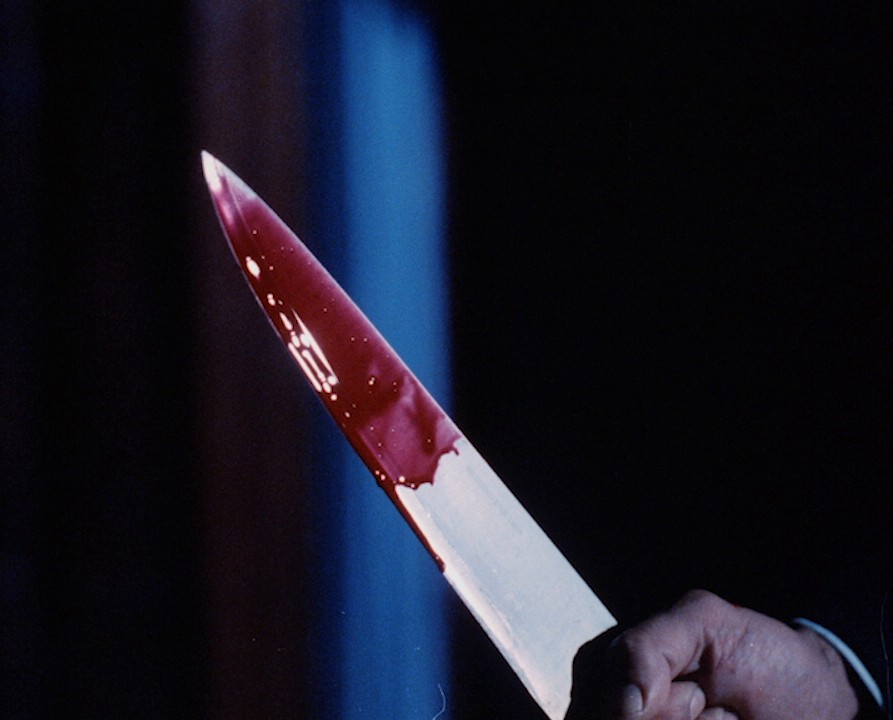
The head reveal turns the tactile exercise into an image of dismemberment. Reaction faces and the father’s bloodied knife bring the threat back to the person who organized the game. The birthday celebration has been reorganized as a demonstration of adult control.

Falling Asleep / 02:26

Addormentarsi

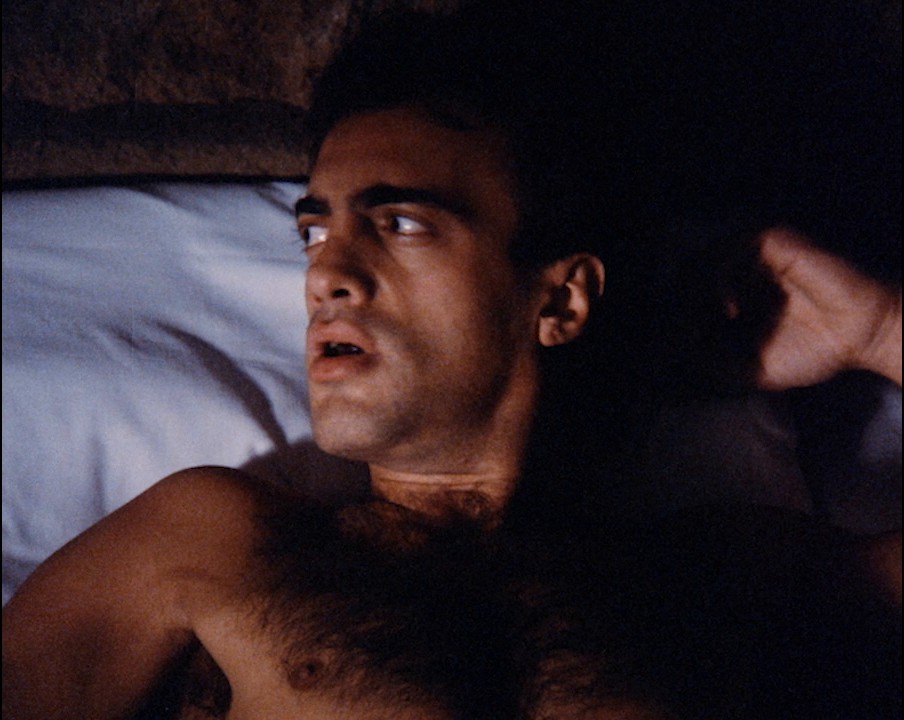
Lino watches the bedroom shadows.

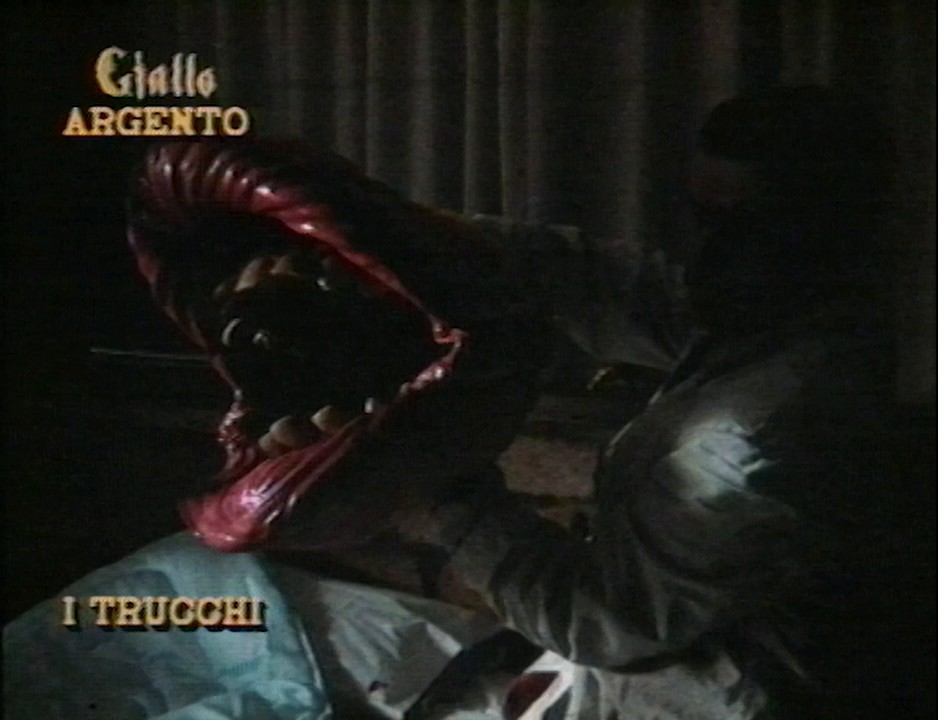
A restless bedroom ends with a mouth at an impossible scale.

Back to the nine shorts ↑

00:25–01:35

The bedroom will not settle

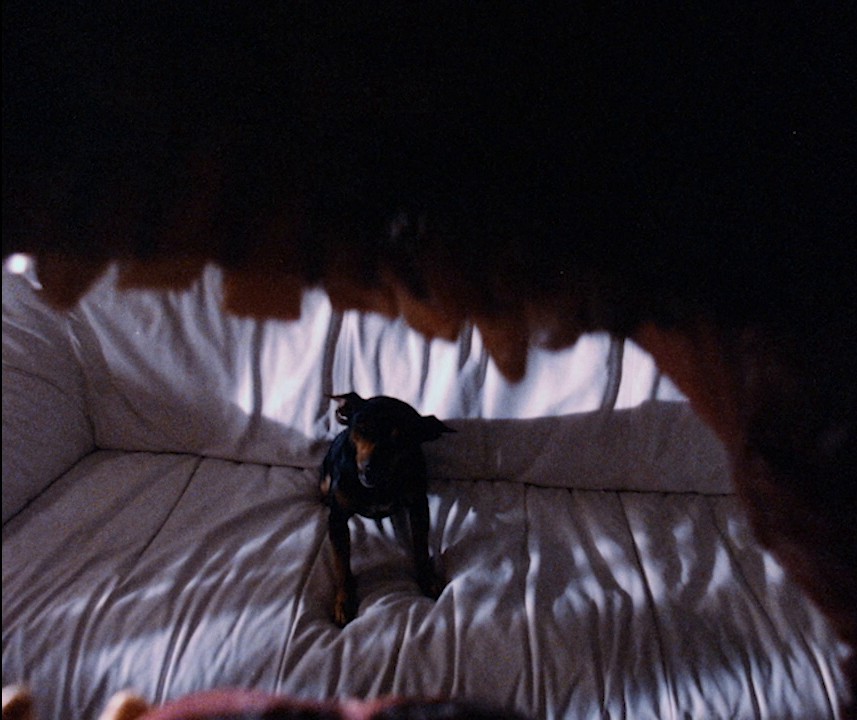
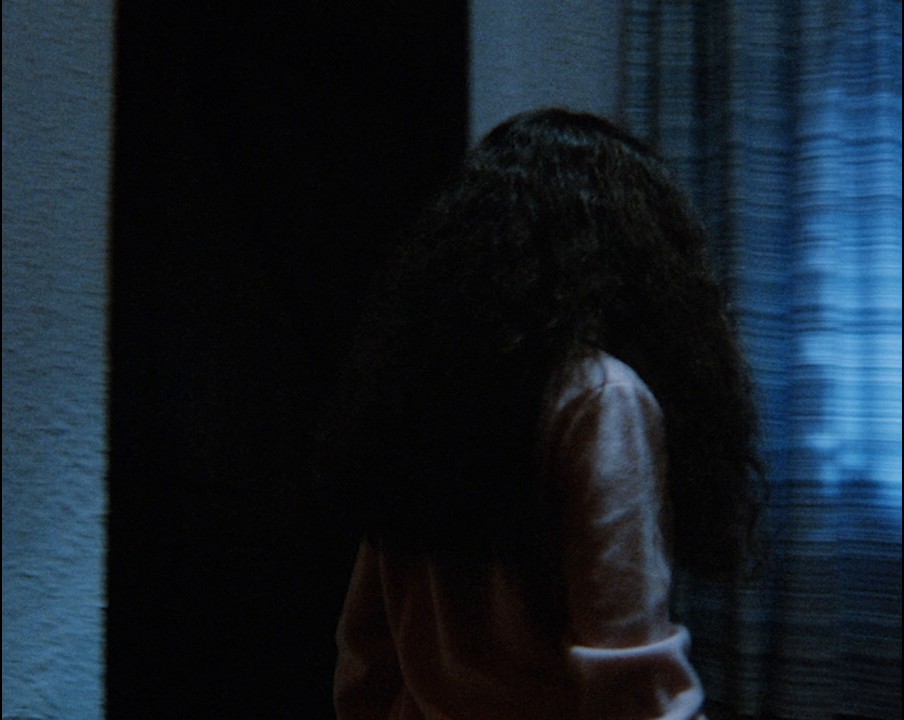
Lino watches the shadows from bed. The window pattern and the unstable relation between body and shadow turn a small room into a space that cannot be read securely. The dog initially belongs to its ordinary domestic scale.

01:35–02:03

The face changes function

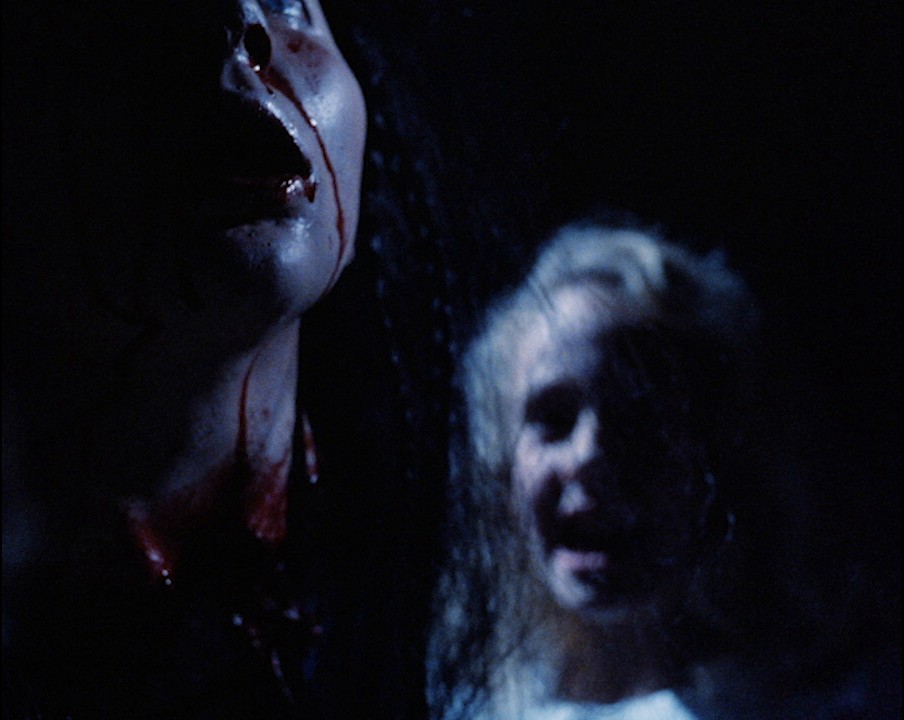
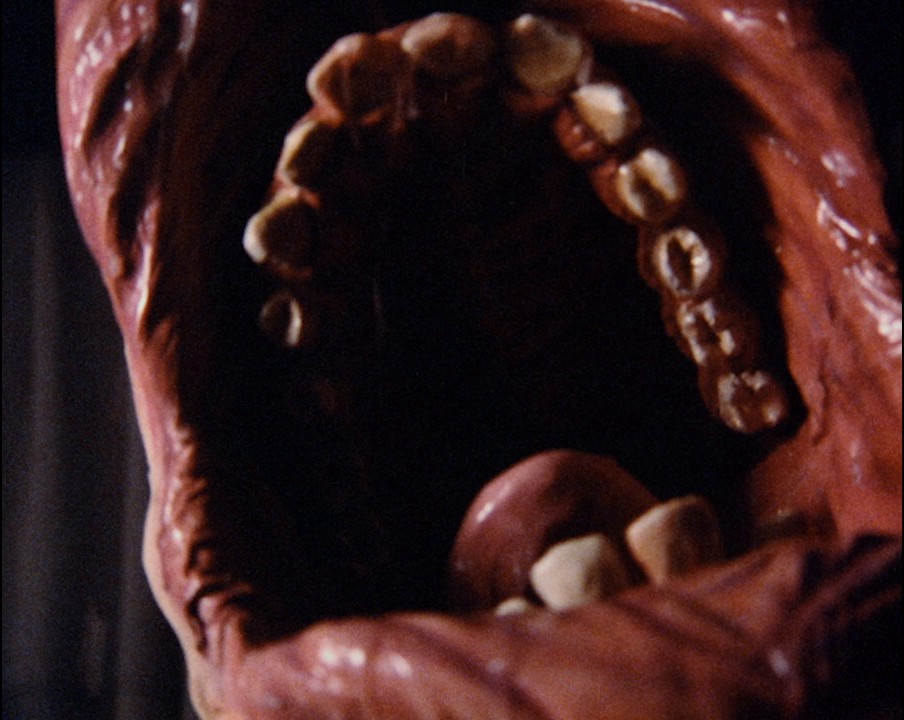
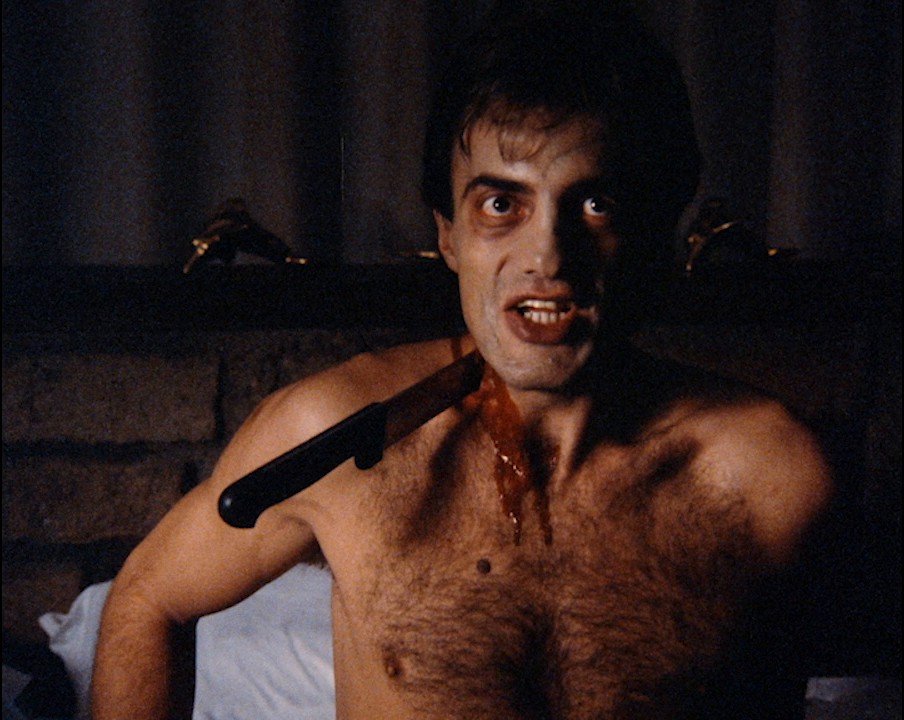
The throat wound, drooling mouth and exaggerated expression carry the body away from ordinary vulnerability. Close framing prepares a transformation in which the mouth stops being one detail of a face and becomes the whole environment.

02:03–02:26

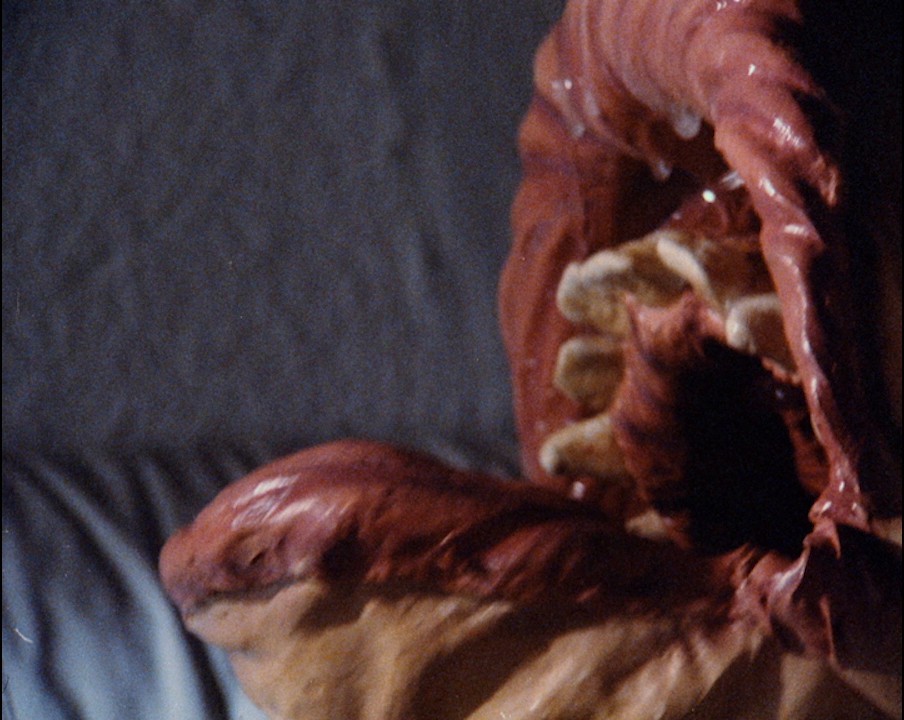
Inside the jaws

A view through the giant teeth places the dog within an engulfing frame. Subsequent images complete the swallowing illusion with a substitute animal and mouth apparatus. The Giallo workshop reveals the large practical construction beyond the finished composition.

See the practical mouth in the workshop →

A Christmas nightmare / 04:56

Sammy

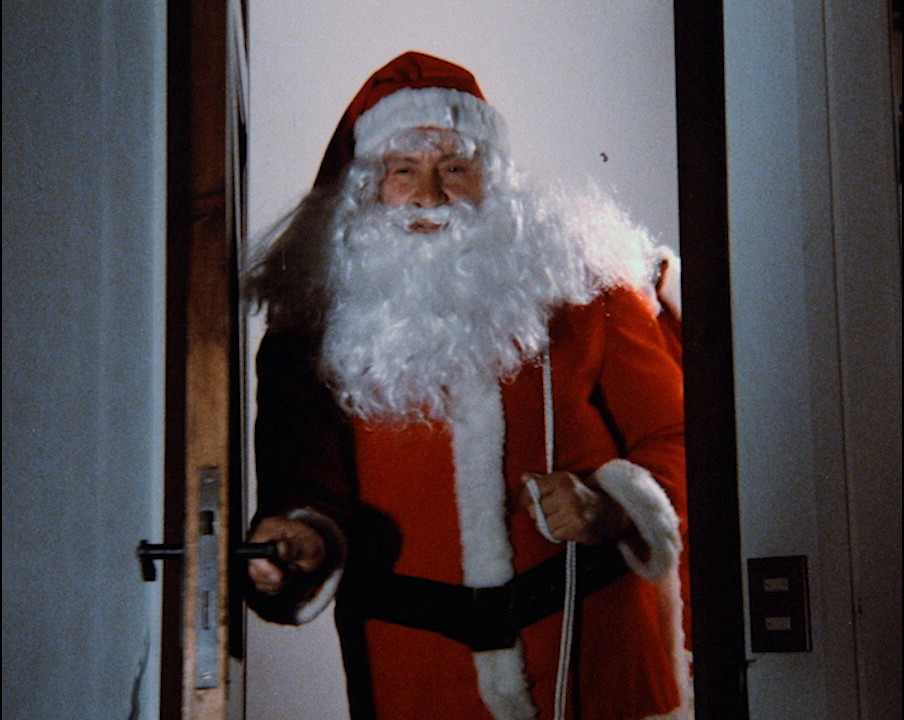
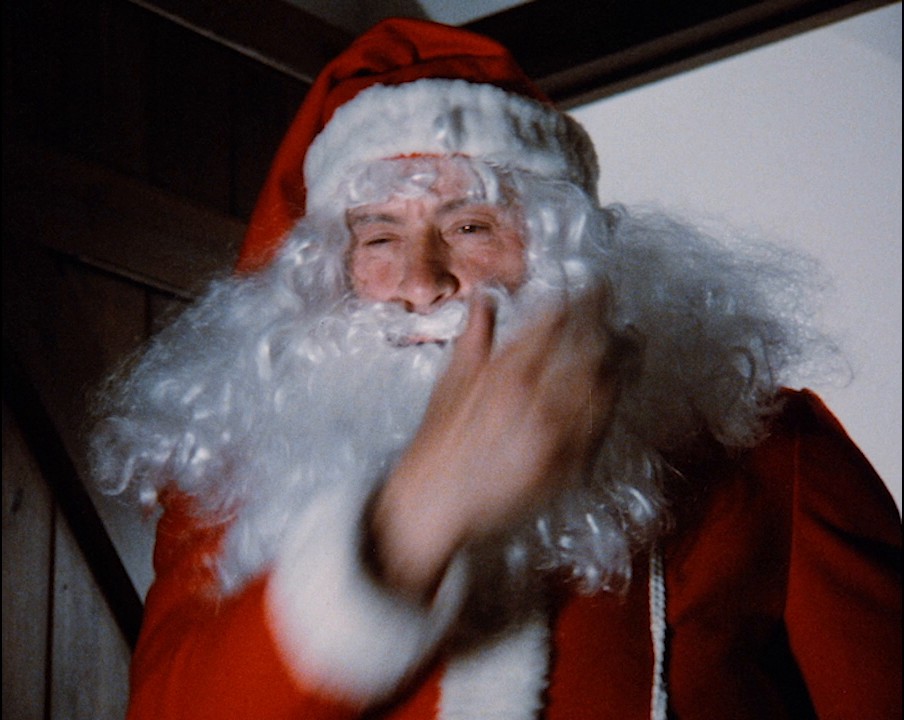
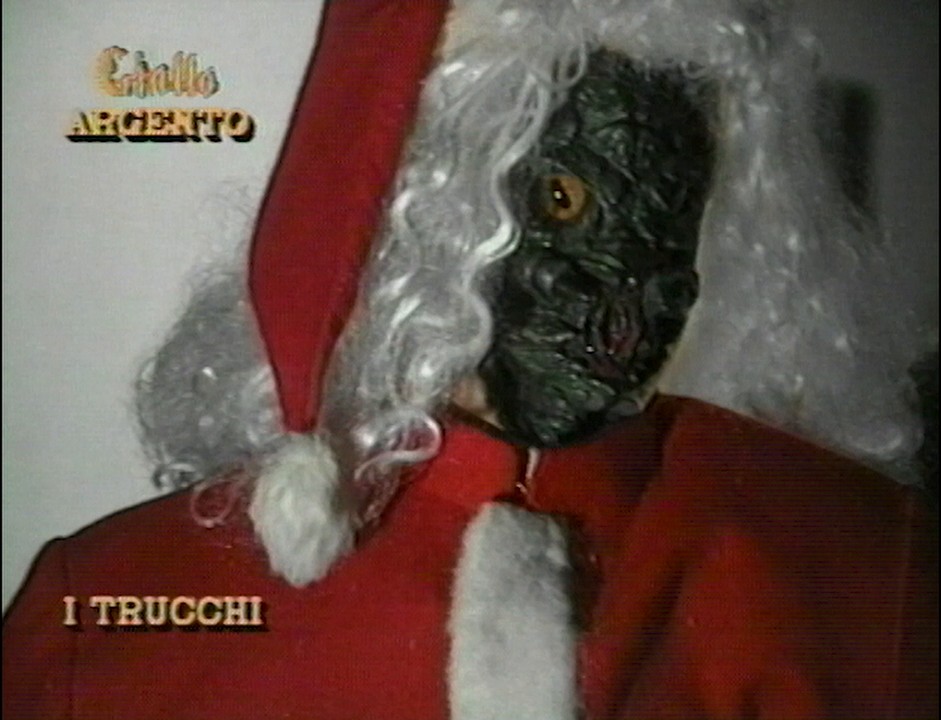
Santa appears at the door.

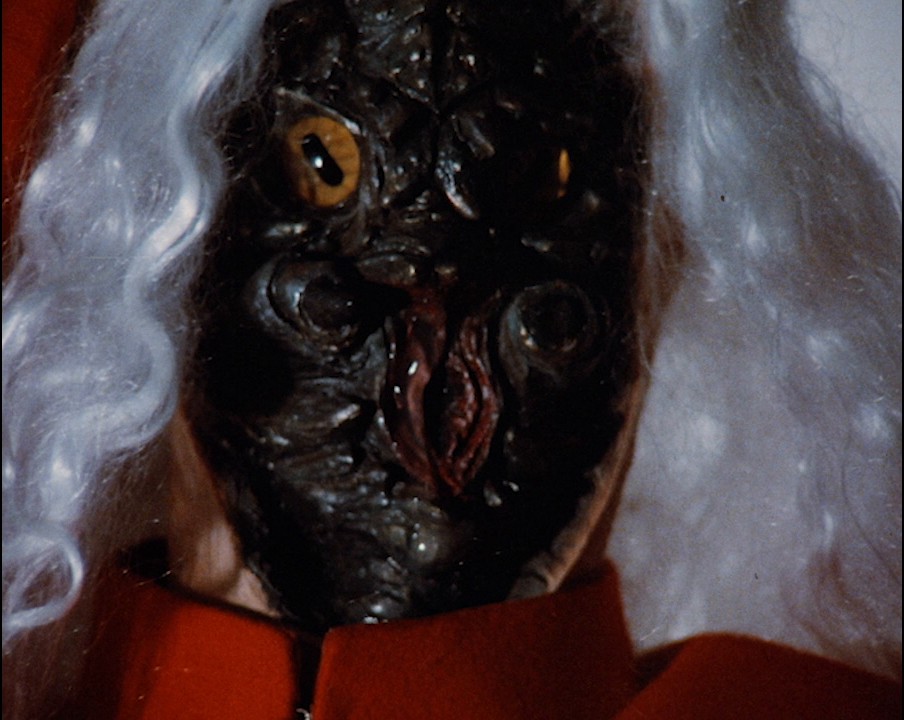
A familiar costume conceals another face.

Back to the nine shorts ↑

00:00–02:15

A child’s performance is introduced

The programme links the Christmas nightmare to an audition and Argento’s account of its conception. Showing the performer before the fiction lets the audience move between an ordinary child and a character waiting in fear.

02:15–04:09

Waiting at the door

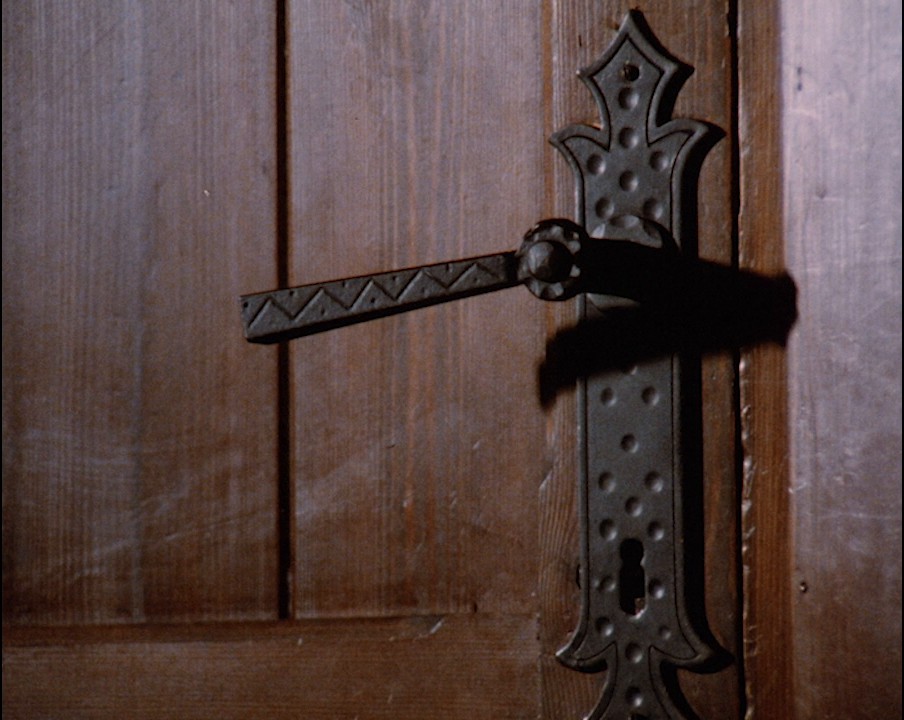
The child, the approaching shadow and the slowly moving handle divide the bedroom into watched and unseen areas. Santa’s arrival briefly supplies an explanation that seems safer than the suspense preceding it.

04:09–04:56

The reassuring face comes away

The hand crosses the face and exposes the creature beneath the beard. The short builds its reversal around a costume associated with trust. Workshop footage later shows Argento coaching the bedroom performance and the monster face outside the final scare.

See the bedroom scene being directed →

The would-be performer’s nightmare / 06:49

L’incubo di chi voleva interpretare l’incubo di Dario Argento

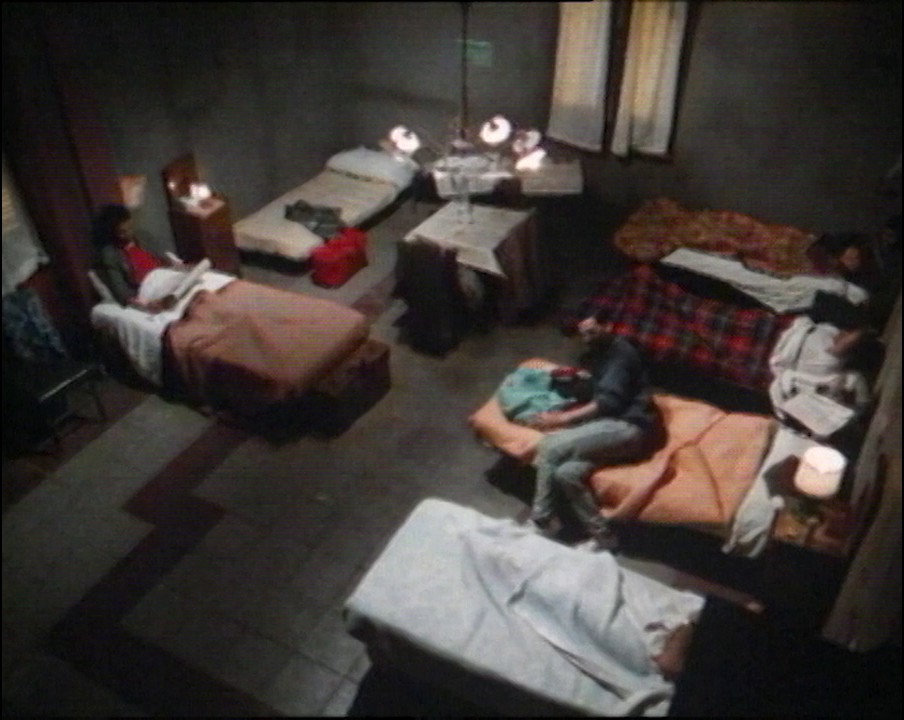
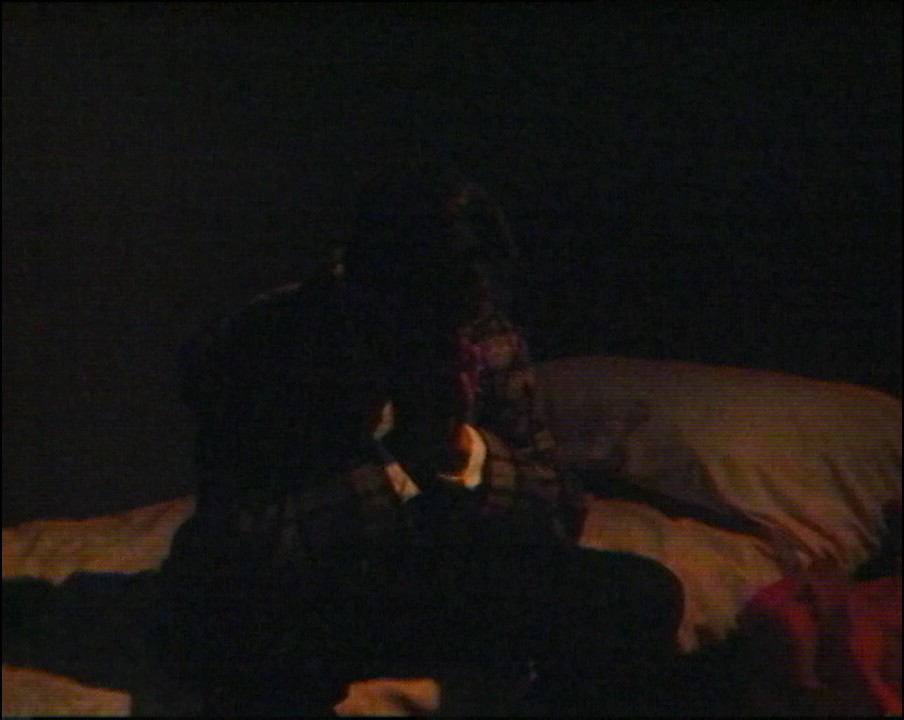
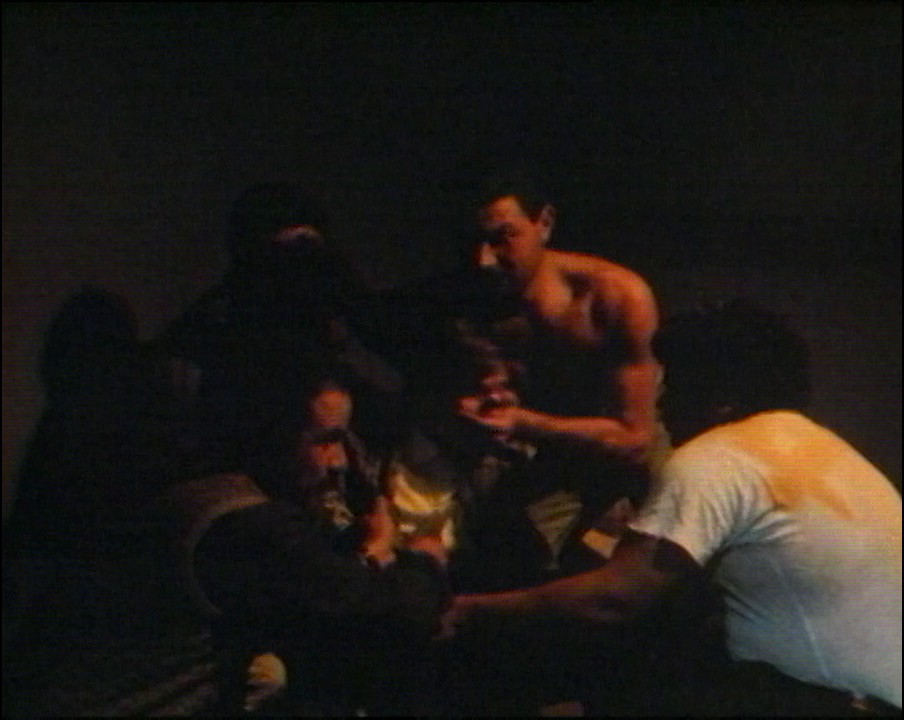
Enrico enters the crowded room.

The invitation to enter a nightmare becomes the nightmare itself.

Back to the nine shorts ↑

00:00–02:45

From viewer photograph to screen role

The studio introduces Enrico Giuliano before the short takes him through the production’s offices and its promise of accommodation. The programme’s repeated invitation to viewers is now material for a story about entering the film world.

02:45–05:29

The room converts hospitality into danger

The crowded lodging, the missing wallet and the unsuccessful telephone complaint progressively remove his confidence. High views compress the beds into a shared trap. The episode again uses fear of unfamiliar lodgers; the prejudice belongs to the staging of his anxiety.

05:29–06:49

The crew breaks the frame

Argento’s entrance interrupts the threat and exposes the performers and crew. The revelation completes a story about a manufactured experience. It does not, by itself, establish that the production secretly endangered an unsuspecting participant. The final studio farewell reconnects the fiction to the audience’s wish to appear.

NIGHTMARES / TESTIMONY FROM GIALLO ARGENTO

Inside the making of the shorts.

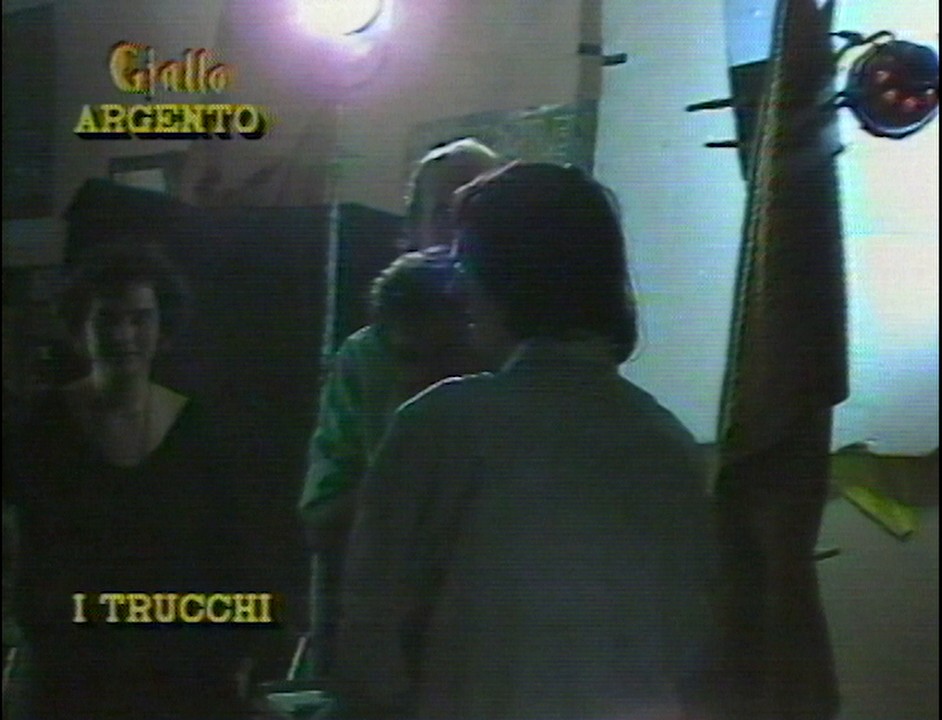
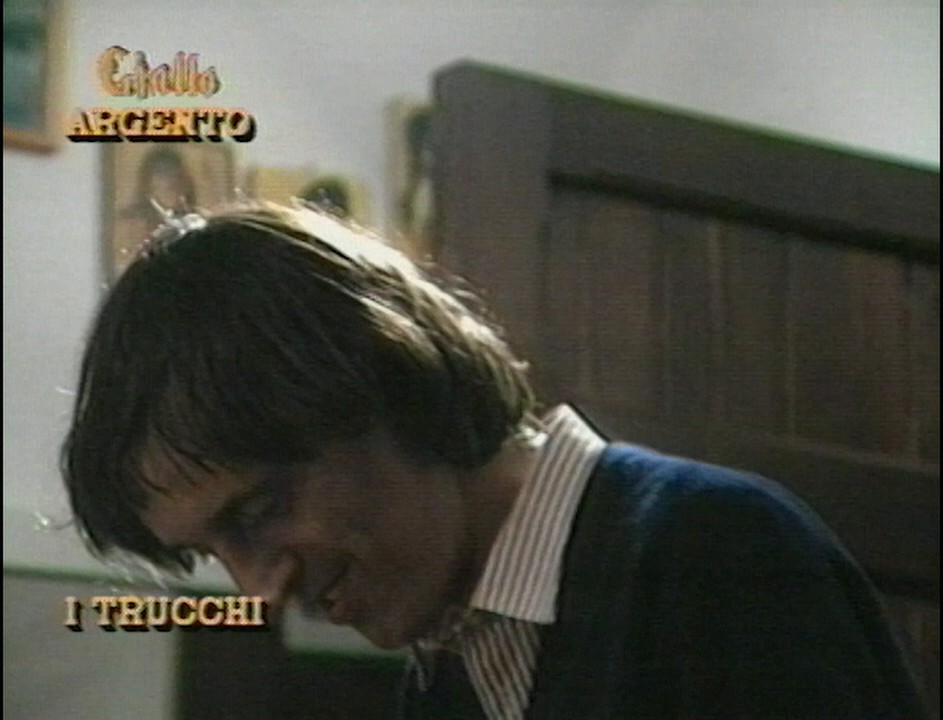
The companion compilation Giallo Argento preserves production demonstrations and interviews from the larger 1987 television programme. Its passages on Nightmares reveal how several of the shorts were staged and how their audience responded.

Nostalgia punk: the effect and its reception

At 53:50–56:30, Argento discusses both complaints and favourable responses, apologizing to viewers who were upset. The behind-the-scenes material shows the torso appliance. Together, the testimony and demonstration connect the short’s bodily illusion to its reception on television.

Sammy and Addormentarsi: directing the illusion

At 70:30–73:30, the workshop follows the bedroom performance and the creature beneath the Santa costume, then the giant mouth and dog substitute used for Addormentarsi. The filming setups expose the objects and direction behind the finished shocks.

Source: Giallo Argento, 53:50–56:30 and 70:30–73:30; Severin Films, Dario Argento’s Deep Cuts, Disc 4.

Explore Giallo Argento in the Reading Room →

Follow the wider compilation

The complete chapter guide and its feature-film findings are in the Reading Room.

Edition, passages & related material

The nine shorts and the 85-minute Giallo Argento compilation are presented on Disc 4 of Severin Films’ Dario Argento’s Deep Cuts. The scene studies draw on the images and English subtitles; the locators identify passages within each presentation. The catalogue is an exploration order, not a claim to have reconstructed every original transmission date.

The disc also contains a brief Fiat car advertisement built around an apparently unoccupied moving vehicle. The copy carries no visible directing credit, so it is not used here to establish a new directorial attribution.

Publisher’s collection listing ↗ · Mondo Digital’s disc-by-disc review ↗

Short form & broadcast context

A murder across the courtyard, an infection announced on television, the dangerous wish to appear in a film: these miniatures make spectatorship part of the nightmare. This expanded dossier follows the shorts through their programme context, documented story situations, collaborators, music and later presentations.

Spoilers: this study discusses the film’s story and ending.

01 / FRIDAY EVENING / RAI DUE

A nightmare inside a larger evening

The original television page of l’Unità for Friday 2 October 1987 lists Giallo, with Enzo Tortora, at 20:30 on Rai Due. Its preview places Argento’s imagination beside crime reporting, mystery and a fiction whose ending the audience must guess. The page has been visually inspected. It establishes the announced launch context, rather than an individual nightmare’s exact transmission time. Launch-day listing and preview, page 20 ↗

That mixture matters. The same evening could invite viewers to understand a crime, solve a fictional puzzle and surrender to a disturbing image. A short nightmare occupied a different contract with its audience from a quiz: its force need not depend on supplying enough evidence for a fair solution. It could end at the point when explanation became least comforting.

In a 2011 written interview, programme writers Laura Grimaldi and Marco Tropea recall an ensemble of contributors, with Oreste del Buono involved in the writing team. Grimaldi remembers Argento arriving with his effects and managing his own space. Tropea distinguishes their mystery-writing work from the programme’s other components. The writers’ retrospective testimony ↗

This is a useful limit on the possessive title. Argento’s name organises the nightmares, but it does not make every part of Giallo his work. Nor should the series be confused with his later feature Giallo. The television setting supplies both collaborators and a rhythm of interruption: an individual short belongs to a programme that continues after it.

02 / THE NINE-TITLE WORKING INDEX

What belongs to the collection?

Davinotti’s programme history catalogues nine nightmares and distinguishes them from Turno di notte / Night Shift, the longer mysteries directed by Luigi Cozzi and Lamberto Bava. The following is a working index in that source’s order, not a reconstructed broadcast schedule or a transcription of opening titles. Catalogue and programme distinctions ↗

Italian catalogue titles · order and spelling follow the retrospective index
IndexTitleRoute through this dossier
01La finestra sul cortileLooking across a boundary
02Riti notturniTelevision catalogue entry
03Il vermeInformation and bodily fear
04Amare e morireTelevision catalogue entry
05Nostalgia punkA dispute becomes bodily catastrophe
06La stregaReported musical reuse
07AddormentarsiTelevision catalogue entry
08SammyTelevision catalogue entry
09L’incubo di chi voleva interpretare l’incubo di Dario ArgentoThe performer enters the trap

The index brings the nine shorts together. The illustrated guide above follows their scenes and effects; the chapters below retain the programme history and earlier source research.

A collection also needs boundaries. Severin places Night Shift on its third disc and Nightmares on its fourth, with Giallo Argento as a separate supplement. Publisher’s disc contents ↗ Those distinctions prevent studio material, quizzes and individual shorts from being counted interchangeably.

03 / LA FINESTRA SUL CORTILE

The screen teaches the viewer to look

Davinotti’s account describes a young man watching Hitchcock’s Rear Window, then witnessing a murder across the way. When he goes to investigate, snakes attack him upstairs. The documented premise and ending ↗ The direct scene study above follows the bedroom, the crossing and the return of the snakes in the short itself.

The premise places one act of viewing inside another. A television spectator watches someone who is himself watching a film, then encounters a situation that appears to answer it. Cinema becomes a model for interpreting the world beyond the screen. The question is whether recognising the model makes the observer any safer.

Crossing the space between observation and investigation changes the spectator’s role. What seemed available at a distance becomes a physical risk. The nightmare does not need the elaborate reconstruction of a feature-length mystery: the transition from looking to entering can supply its organising movement.

The comparison also gives this miniature a place beside The Bird with the Crystal Plumage and Do You Like Hitchcock?. Across these dossiers, a useful shared question is what spectators think an image permits them to know. Here, the Hitchcock reference is already part of the documented situation; claims of matching shots would require direct comparison.

04 / IL VERME / NOSTALGIA PUNK

A domestic space becomes a bodily emergency

Accounts of Il verme describe a televised warning about infection, a girl and her cat, and a worm emerging at her eye. Episode accounts ↗ The movement is from information received at home to a feared invasion of the body. A public announcement becomes personally, horribly applicable.

This makes television more than a container for the short. Within the documented premise, it delivers the warning through which the character understands danger. A familiar source of information can therefore intensify rather than contain fear. The distance between a report about something happening elsewhere and an event happening to oneself collapses.

In Nostalgia punk, Davinotti describes an encounter with a fortune-teller leading to poisoned water and destructive bodily consequences. The review also reports viewer complaints and pressure from RAI to curb the gore. Synopsis and retrospective controversy claim ↗

The two premises move along different routes. Infection can spread without an individual antagonist; the fortune-teller story makes harm retaliatory. Both turn an apparently manageable situation into an emergency that exceeds ordinary remedies. Their brevity concentrates that reversal. It also makes the balance between character and spectacle an especially sharp critical question: how much of a person’s experience survives when the short is remembered chiefly for the injury?

The later review’s censorship account deserves preservation without inflation. It is evidence that a controversy is reported in the short’s reception history. It is not enough to establish how many people complained, the wording of any instruction, or which subsequent creative decisions it caused.

05 / THE FINAL CATALOGUED NIGHTMARE

Wanting a part can become the story

The long final title turns desire to perform in an Argento nightmare into a nightmare of its own. Davinotti describes an aspiring participant sent to an alarming boarding house; Argento and the crew eventually appear, revealing the experience as part of the performance. The retrospective synopsis ↗

Argento’s position changes here. A director who elsewhere introduces or explains frightening events becomes a figure inside the event’s arrangement. His arrival can offer release, but it also reveals that the reassuring authority helped organise the uncertainty. The distinction between being frightened and acting frightened becomes the joke’s central problem.

Casting records and participant testimony would answer that different question.

Read beside the window story, the final miniature closes a conceptual loop. One protagonist recognises a film situation and enters it; another wants to enter film and finds the surrounding world becoming a performance. In each case, the attraction of images brings a person closer to a danger whose terms someone else controls.

06 / THE HOST AND THE WORKSHOP

Knowing the trick need not end the fear

RAI Teche’s description of a surviving Giallo excerpt identifies Argento demonstrating effects from Phenomena and Tenebre, followed by an interview with Anthony Perkins. Broadcaster’s archive description ↗

Demonstration and fiction ask for different kinds of attention. An effect presented as a mechanism can invite curiosity about fabrication. An effect inside a story can make the viewer anticipate injury. Explaining the first does not necessarily cancel the second: knowledge of how a screen event might be made can coexist with discomfort at what it depicts.

The programme history also identifies Coralina Cataldi Tassoni alongside Argento in his television space. The collaborative studio context ↗ Her presence belongs in this account even where the collection’s title gives priority to the director. A television personality is produced through exchanges, appearances and demonstrations as well as through an individual name.

The most productive comparison with Door into Darkness concerns the host’s changing function. A presenter can open a story; a demonstrator can open the process by which stories produce sensations. These roles make authorship visible in different ways. Neither role supplies, on its own, a complete account of the craftspeople behind the effects.

07 / BORROWED MUSIC / VERSION QUESTIONS

A familiar cue carries a memory

Davinotti’s review identifies reused music including Simon Boswell’s The Maggots, Ennio Morricone’s Piume di cristallo in La strega, Claudio Simonetti’s Opera and Goblin’s Jennifer. These are the critic’s identifications, not results of our listening. The published musical account ↗

Reuse gives a very short work access to a longer musical memory. For a listener who recognises a cue, its earlier association may arrive before the new story has had time to establish much context. For someone who does not recognise it, the same recording still has its immediate dramatic function. Recognition and effect should not be treated as identical experiences.

That distinction matters especially when a series gathers material under a filmmaker’s name. A returning cue can make different productions feel connected, but the composer and recording remain specific contributions. Identifying the earlier film is only the beginning of proper attribution.

A later user report on the Il verme page alleges a music replacement in the Severin edition. It is retained as a comparison lead, not a verified alteration. Edition-specific listening lead ↗ The useful next step is a matched comparison of named copies, rather than a single soundtrack list assumed to describe every presentation. No cue positions, mix differences or dialogue-to-music balances are asserted here.

08 / FROM BROADCAST SEGMENT TO COLLECTED WORK

The collection changes the frame

Two reports from Locarno in August 2014 place Gli incubi di Dario Argento in the festival context alongside The Bird with the Crystal Plumage. Marco Triolo’s Film.it report also records Argento discussing dreams, imagination and his relationship with his darker material. Film.it, 10 August 2014 ↗ RaiNews, 11 August 2014 ↗

A festival presentation lets television miniatures be approached as works within a career. The original programme’s surrounding flow becomes less immediately available, while comparison with the features becomes easier. The change is valuable, but it can also encourage viewers to forget the public-service broadcaster, studio contributors and mixed entertainment format that first gave the shorts their setting.

Severin describes Nightmares as scanned from rediscovered film elements and distinguishes this from broadcast-master material used for other Giallo content. Its listing assigns 100 minutes to the Giallo Argento supplement and 594 minutes to the overall collection; neither is a runtime for the nine shorts. Source-material and running-time scopes ↗

The modern package reproduced above is another frame. An illustrated Argento sits between skeletons; Cozzi and Bava are named along the lower edge. This is visibly collection artwork, not a 1987 still. Its concentration on a recognisable filmmaker makes the set approachable while the smaller names remind us that the collection extends beyond his individual directing work.

A collector report specifically questions the source of Nostalgia punk. The unresolved presentation lead ↗ The inspected presentation has a visibly softer, broadcast-marked image than several neighbouring shorts. That observation does not establish the provenance of the element or settle the collector’s claim.

09 / THE TELEVISION EXPERIMENT

A short work can sustain a substantial history

The useful account now has several connected levels: the launch evening, the working catalogue, recurring situations, the host’s explanatory role, reported musical reuse and the movement into festivals and a modern collection. Together they show why these shorts deserve attention beyond their place as footnotes between features.

Their interest lies partly in the proximity of incompatible promises. A mystery invites understanding; a nightmare can deny it. A demonstration exposes a mechanism; a fiction asks us to feel its consequences. A director welcomes someone into the world of film; a story can make that invitation threatening. The scene studies and workshop passages above develop these connections through the films and the surviving programme material.

The source trail preserves the distinction between an original newspaper page, a broadcaster’s description, writers’ later recollections, criticism and a publisher’s release claims. They keep the record open without presenting the current dossier as unfinished navigation or requiring exhaustive audiovisual work before readers can explore it.
MY CINEMA / PRODUCTION TESTIMONY

Two different ways of interrupting the television evening

Luigi Cozzi and the documentary narration

My Cinema preserves the distinction between two contributions to Giallo. Cozzi describes the longer Night Shift mysteries as a game in which viewers were invited to identify the culprit before the solution was disclosed. The documentary then turns separately to Argento’s hosted Nightmares, ending Part One with a Christmas-set example. Their shared television setting does not make them interchangeable series.

Casagni’s interview in Part Two places his work on the Nightmares after Opera and before The Stendhal Syndrome. His account treats the short television pieces as opportunities for effects invention. Together, the programme description, the excerpt and the makeup artist’s recollection give the shorts a place in both broadcasting practice and the continuing work of Argento’s collaborators.

Source & passage

Dario Argento: My Cinema / Il mio cinema, two-part documentary presented on Severin Films’ Dario Argento’s Deep Cuts, Disc 1. Part One, 52:06–58:04; Part Two, 14:46–15:18.

The discussion paraphrases the English subtitles and distinguishes participant recollections from the documentary’s narration and production footage.

Explore both documentaries and follow the related dossiers →

GIALLO / TWO FICTIONAL STRANDS

The nightmares and the taxi mysteries have different authorships.

Argento’s TV Nightmares interview separates the shorts he directed from the audience-detection stories he presented. He says he did not direct Night Shift, assigning those episodes to Bava and Cozzi while working on his own television contributions and Opera’s sound postproduction.

Cozzi gives a complementary account of the larger programme: a taxi mystery could pause before the solution to let the audience identify the culprit. The nightmare clips, the detective puzzles and demonstrations of screen effects should therefore be followed as distinct components of the same television evening. Their shared presenter does not erase their different forms or directors.

Sources: TV Nightmares, Dario Argento, 03:09–04:01 and 05:14–06:54; Giallo on the TV, Luigi Cozzi, 03:08–08:07. Severin Films, Dario Argento’s Deep Cuts, Disc 3.

Read the Night Shift production study → · Explore all fifteen mysteries →

THE READING ROOM

Return to the source.

Research expanded 11 November 2026. Original scheduling evidence, broadcaster descriptions, participant testimony, criticism and publisher claims retain their distinct scopes.

  1. 01

    l’Unità, 2 October 1987, page 20 ↗

    Original page visually inspected: date, Rai Due 20:30 Giallo listing and launch preview. Supports announced scheduling and programme framing, not individual short transmission dates.

    Return to the dossier ↑
  2. 02

    Zender: “Giallo”, Enzo Tortora e Dario Argento in TV!, with Grimaldi and Tropea interview ↗

    10 January 2011. Retrospective programme history and nine-title index; written participant testimony at the end. Catalogue order is not certified transmission order.

    Return to the dossier ↑
  3. 03

    Davinotti: La finestra sul cortile ↗

    Retrospective narrative and music account. The named recordings remain attributed to this review. The direct visual study is linked separately above.

    Return to the dossier ↑
  4. 04

    Davinotti: Il verme ↗

    Retrospective episode accounts. A dated user comment alleges a music substitution on Blu-ray.

    Return to the dossier ↑
  5. 05

    Davinotti: Nostalgia punk ↗

    Retrospective synopsis and claim of complaints/RAI intervention; no underlying directive. A 2024 user report raises a source-material question, not proof of a restoration failure.

    Return to the dossier ↑
  6. 06

    Davinotti: L’incubo di chi voleva interpretare l’incubo di Dario Argento ↗
    Retrospective account of the final catalogued short. Supports the described performer/crew situation.

    Return to the dossier ↑
  7. 07

    RAI Teche: Dario Argento, i trucchi del terrore ↗

    Broadcaster’s description of a 1987 Giallo excerpt, published 7 September 2016. Effects examples and Perkins interview identified in text. The related programme material is now studied in the Disc 4 Giallo Argento guide above.

    Return to the dossier ↑
  8. 08

    Marco Triolo: Locarno, a scuola di cinema con Dario Argento ↗
    10 August 2014. Contemporary festival reporting and attributed Argento remarks. Not a 1987 production document or a certified screening inventory.

    Return to the dossier ↑
  9. 09

    Laura Squillaci: Locarno festival report, RaiNews ↗

    11 August 2014. Contemporary report placing the shorts in the festival context.

    Return to the dossier ↑
  10. 10

    Severin Films: Dario Argento’s Deep Cuts ↗

    Publisher’s current collection description, disc contents and restoration claims. The inspected 720 × 792 product image is modern packaging. Disc 4’s nine shorts and Giallo Argento compilation are studied above; the other discs’ documentary and television material is linked through the Reading Room.
    Return to the dossier ↑
Corrections, contributions and enquiries: argentochrome@rareprintsandposters.com