THE ARGENTO ARCHIVEFILM / COLOUR / SOUND / OBJECTS
ARGENTOCHROME

THE FILM DOSSIERS / 008 · FILM DOSSIER

Four Flies on Grey VelvetThe photograph accuses.

A staged crime, a threatening photograph and a final image that still needs to be understood.
Explore the dossier ↓

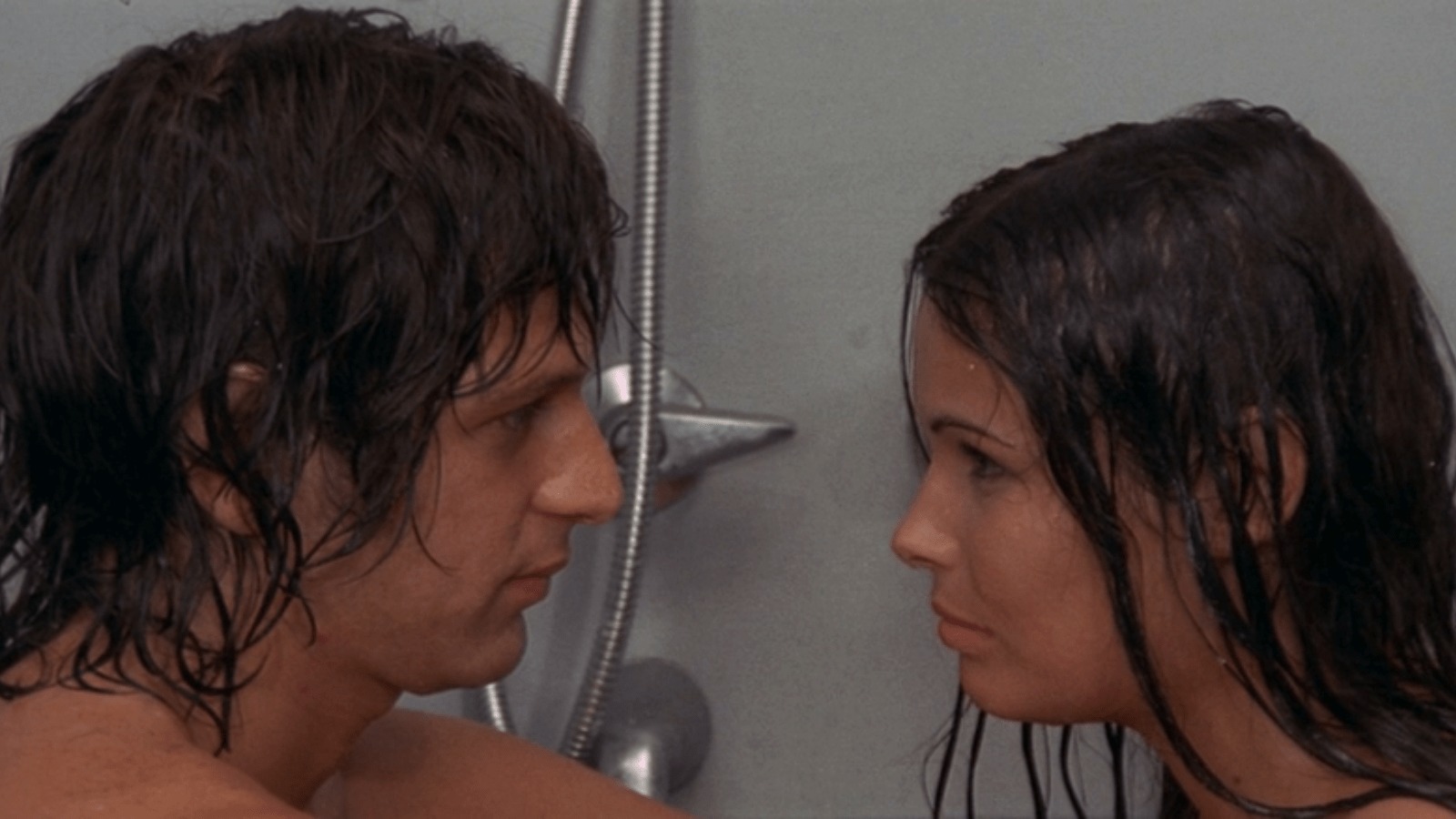
A wet-haired man and woman face one another closely, their profiles separated by a shower hose and fittings.ENLARGE ↗
Roberto and Dalia. Published by Film at Lincoln Center ↗
1971 · DARIO ARGENTO4 mosche di velluto grigioVISUAL STUDIES · 4 NOVEMBER 2026
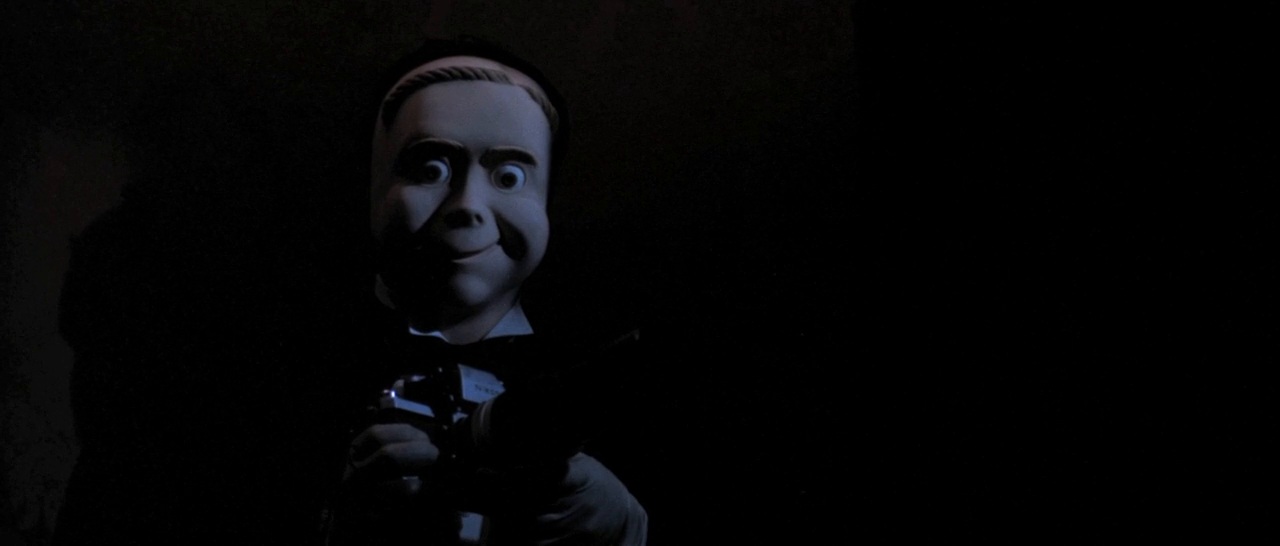
The masked photographer takes aim.
Scene studies

Follow the deception

Twenty-eight illustrated studies, from the rehearsal to the final collision.

Glass moves between the camera and Nina.
Effects & suspense

Inside the sequence

Eight expandable galleries follow the attacks, their preparation and their aftermath.

The apparent crime is repeated on film.
Close studies

Read the changing image

Follow selected cuts, optical clues and the shifting relation between a picture and its meaning.

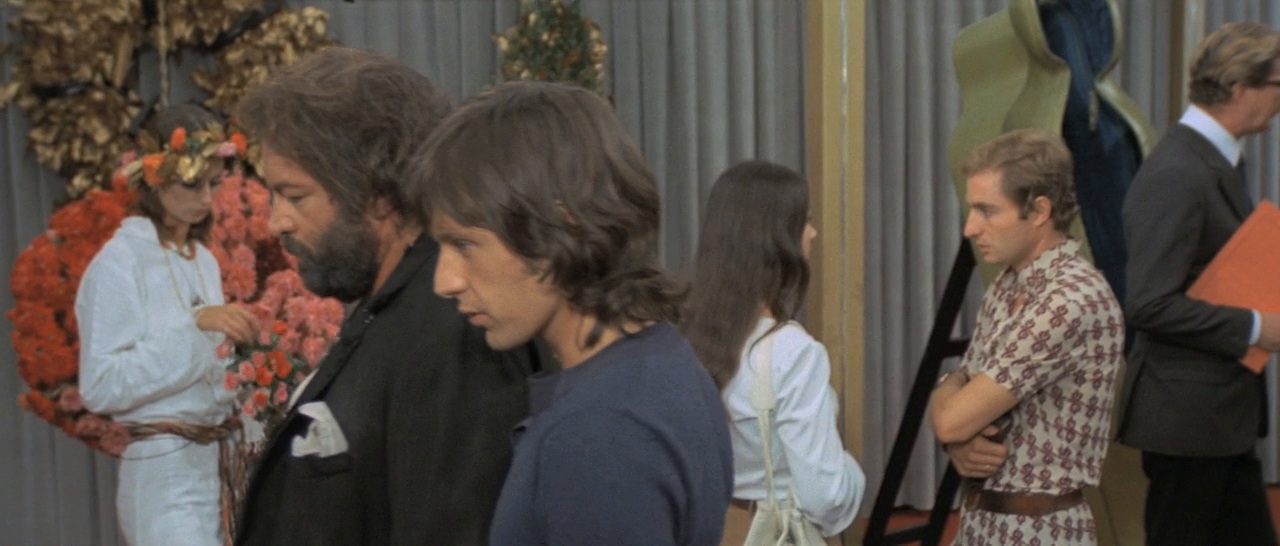
Images & accusation

A musician becomes the frightened spectator of his own life. Argento’s third feature turns a photograph into an accusation, a marriage into a mystery and the recovery of an image into another problem of interpretation. This dossier follows those ideas through the writing, performances, craft work, music and changing editions.

Spoilers: this study discusses the film’s story and ending.

01 / THE STAGED CRIME

Evidence can be manufactured before the shutter opens.

Roberto Tobias, a rock drummer played by Michael Brandon, follows a watcher into a theatre and apparently kills him. A masked photographer records the encounter from above. Kevin Lyons’s account identifies the essential deception: the killing is staged. The photograph becomes a threat because Roberto does not know how the scene was arranged. Lyons: the theatre encounter ↗

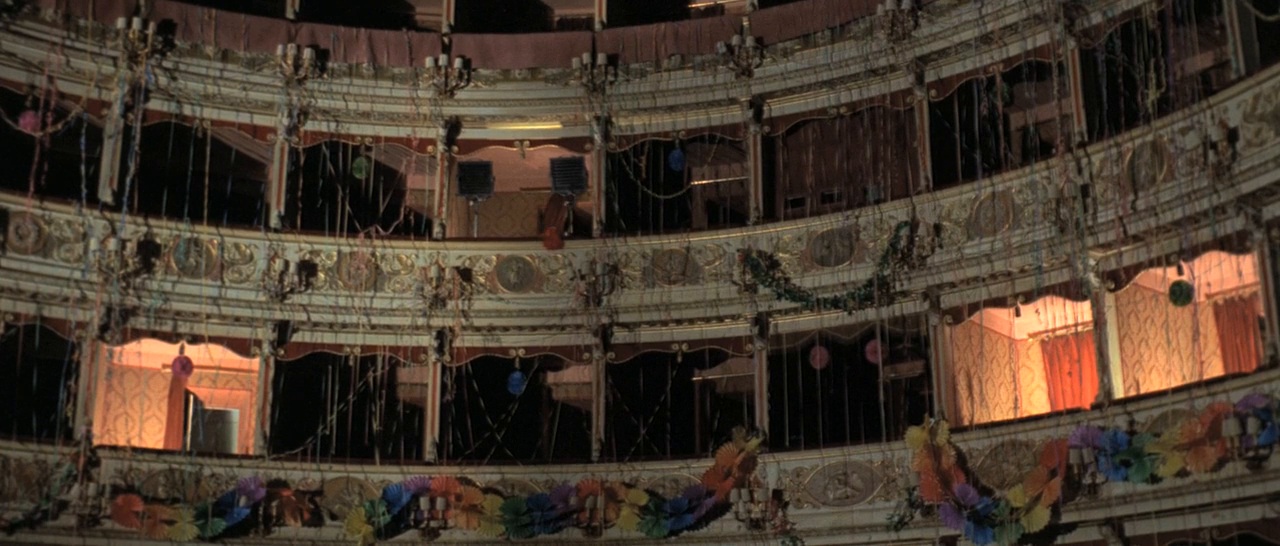
The image need not be retouched to mislead. Its border excludes the preparation that would change its meaning. That makes the theatre an exact setting for the trap: an event has been performed for a spectator who thinks he is its author. Roberto remembers acting; the person with the camera controls how his action can be understood.

Compare The Bird with the Crystal Plumage. Sam’s difficulty begins with an event he witnesses; Roberto’s begins with an event in which he participates. Being closer to the action has not made him more reliable. The incriminating photograph also gives his fear a portable form. A moment that should have ended can be returned to him as an object.

Our reading separates three kinds of power: arranging an event, recording it and explaining the record. Four Flies makes their unequal distribution the engine of its mystery. The camera can preserve an appearance perfectly while leaving its victim with the wrong account of what happened.

02 / A MYSTERY BUILT BACKWARDS

The murders came before the murderer.

At his 2013 Macabro master class, Luigi Cozzi recalled being approached while Argento was editing The Cat o’ Nine Tails. Argento had a title, but no story. Cozzi said they began with murder ideas drawn from books and did not yet know the killer’s identity. Eric Ortiz Garcia’s report preserves this as a participant’s recollection, more than forty years after production. Cozzi: the writing process ↗

That account offers a useful way into the film’s uneven pressures. A detective plot promises that every passage will help explain the mystery. A murder sequence can pursue a different ambition: to make a space frightening, to stretch an approach or to give a bodily threat a startling visual form. Cozzi’s recollection suggests that such scenes were creative starting points, not merely illustrations of a solution already settled.

A dated treatment would be needed to reconstruct the changes. What it does establish is a collaborator’s account of invention. Beside Argento’s name, Cozzi and Mario Foglietti’s story credits leave room for a working process that the familiar image of a solitary horror auteur can conceal.

The treatment before the screenplay

In The Battle for Freedom (14:48–15:55), the interview accompanying Severin’s The Five Days, Luigi Cozzi recalls that the treatments for both Four Flies on Grey Velvet and The Five Days ran to roughly eighty pages and already contained most of each story. He describes the subsequent screenplay as an expansion of that substantial narrative plan. This is a collaborator’s memory of the working process; it does not establish the date, contents or survival of a particular manuscript. Follow the account of the two treatments →

03 / COLLABORATION

A style made by several kinds of work.

The BFI’s compiled credits and the Cinematografo record identify Françoise Bonnot as editor, Franco di Giacomo for photography, Enrico Sabbatini for design, Ennio Morricone for music, Mario Ronchetti for sound and Cataldo Galiano for special effects. Cinematografo additionally lists Giuseppe Lanci as camera operator and Sabbatini for costumes. Salvatore Argento produced the film, with Seda and Universal Productions France named in the BFI record. Compiled credits ↗ Craft and production credits ↗

These credits matter to the interpretation. A sudden revelation is partly a matter of editing; a threatening room combines design with lighting and camera position; a close view of a face gives performance a different weight from a distant figure. Naming the work does not allocate individual shots to people without evidence. It makes clear which kinds of labour a production history must account for.

Bonnot is particularly important to keep in the discussion. The photograph’s arrival is an editorial event as well as a plot event: it interrupts Roberto’s understanding of his own actions. Its impact belongs to the order of information. The relevant later question is how the finished sequence emerged from available material and competing choices, rather than whether a credit alone allows us to assign a specific cut.

The record also helps separate two photographic histories. Di Giacomo’s production credit concerns the original film. Luciano Tovoli’s later colour-supervision credit, discussed below, concerns its restoration. They describe different contributions, separated by decades.

04 / INTIMACY & THE IMAGE

Two faces close together. Two lives kept apart.

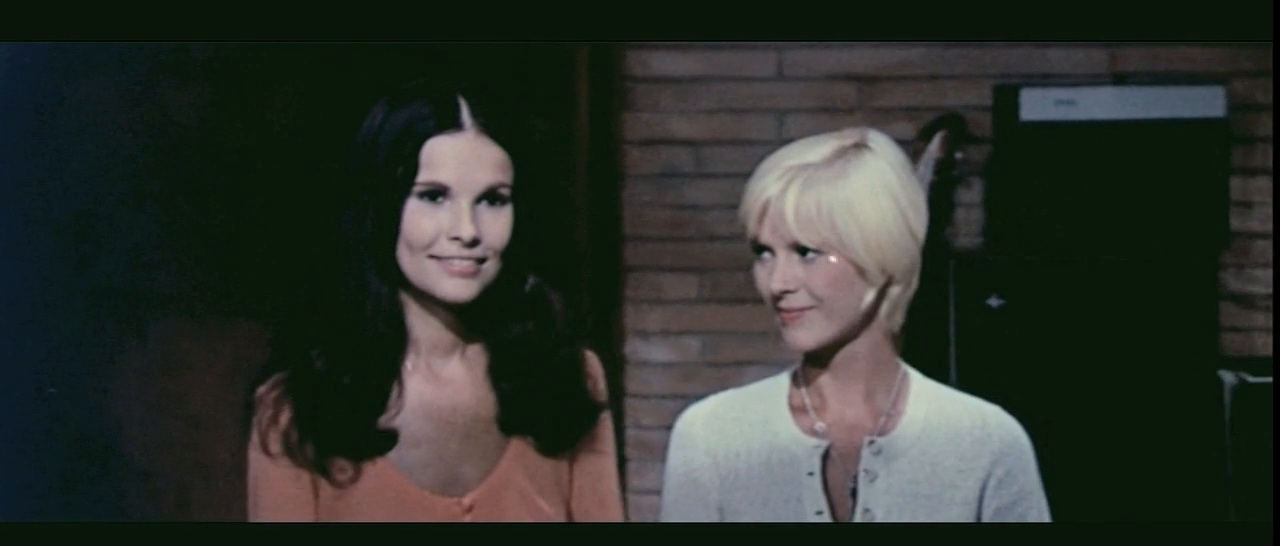
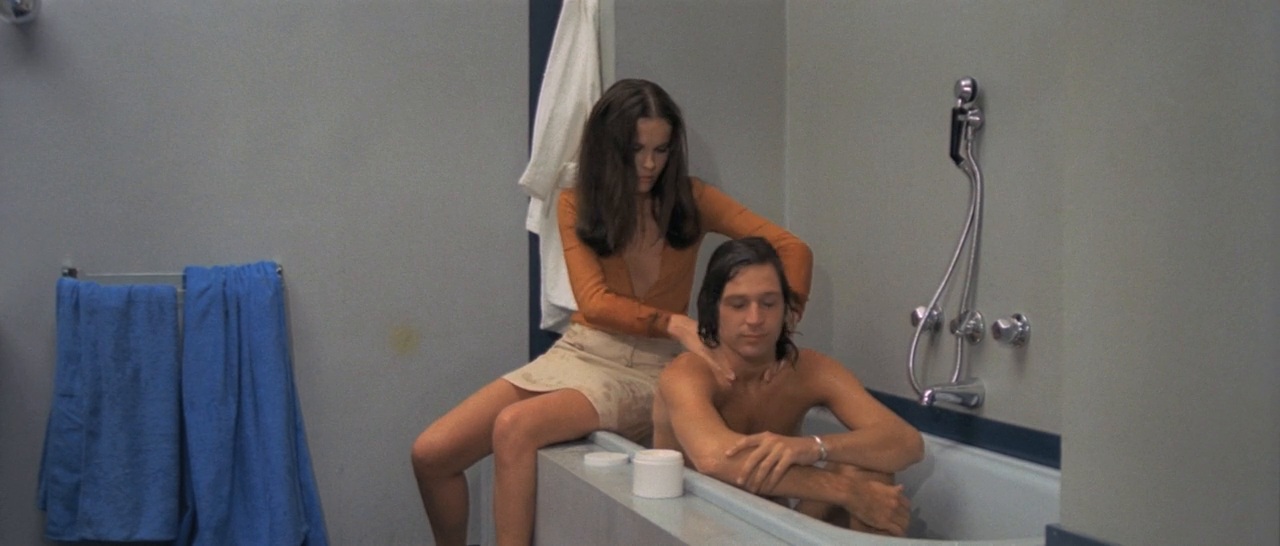
The published image above shows Roberto with Dalia, Nina’s cousin. Their affair gives the accusation a private counterpoint. Wet hair, bare shoulders and the shower fittings place two people in intimate proximity. Their faces occupy opposite sides of the reproduction; the hose divides the small space between them. Nothing in the still alone identifies a threat. Its force for this dossier is the difference between access to a face and knowledge of a person. Published image and programme ↗

In an interview excerpt credited to Fabio Maiello’s L’occhio che uccide (1996), Argento describes his interest in spouses who share a home while knowing little about one another. He also qualifies the autobiographical element as something greatly exaggerated in the fiction. Cinematografo reproduces this interview passage. Argento: the marriage and its secrets ↗

Xavier Mendik’s analysis identifies the final reversal: Nina, played by Mimsy Farmer, is the killer, and Roberto resembles the father she wishes to punish. The retinal image resolves into the amulet she wears. Mendik reads Roberto’s failed interpretation as another failure of the male investigator’s supposed authority. Printed pp. 112–113 ↗

The interpretation does not require us to accept the story’s psychological explanation as a convincing account of real people. Nina is given a motive through a family history, but that explanation also compresses her into the mechanism of a twist. The reversal is worth examining for both effects: it overturns Roberto’s assumptions while asking how much of Nina remains beyond the reason supplied for her violence. Argento’s qualified recollection should likewise not be converted into a literal portrait of his marriage.

A resemblance remembered by two people.

In Simone Scafidi’s Dario Argento Panico, Argento recalls being drawn to Michael Brandon’s resemblance to himself. Marisa Casale, his former wife, separately remembers recognising both of them in the film’s central couple. Argento says that he only recognised Mimsy Farmer’s resemblance to Casale after her reaction to the first screening. The two accounts give the autobiographical discussion a second participant’s perspective. Panico: testimony and passage locators ↗

Casale’s recognition and Argento’s account of an initially unconscious likeness describe different experiences of the same film. Read beside his earlier qualification that the fiction greatly exaggerates its autobiographical material, they make resemblance a subject for interpretation rather than a key that converts Roberto and Nina into literal portraits.

05 / MUSIC & CONTROL

The drummer is not the whole soundtrack.

Lyons describes Roberto stopping while the drums continue, an interior view of a guitar, and musical interruptions at the title cards. They nevertheless give the sound question a precise shape: what happens when a visible performer no longer seems to control the music? Lyons: the opening ↗

A drummer’s gesture encourages us to attach a sound to a body. A continuation can loosen that attachment, making the rhythm belong to the film as well as to its musician. This is the audible counterpart proposed by our reading of the photograph: a sign seems securely tied to an event until its relationship to that event becomes uncertain.

AMS describes Morricone’s score as unusually oriented toward rock. Its AMSLP38 programme contains suites, a shake, alternate title music and two versions of Come un madrigale. The label also distinguishes the original single from the later recovery of a fuller score programme. That release history opens a second listening context: music reorganised for an album. AMSLP38: label account and programme ↗

An album sequence cannot locate a cue in the film or establish what shares its soundtrack with dialogue and effects. Morricone, Ronchetti and Bonnot belong in that investigation together. The sound and dialogue studies below separate selected English-dialogue checks from the musical observations attributed to Lyons.

The comedy divided collaborators too

In The Writer O’ Many Tales (30:38–32:00), Dardano Sacchetti objects to some of Argento’s comic interludes and singles out Bud Spencer’s Diomede in Four Flies on Grey Velvet. He nevertheless describes a deliberate alternation between laughter and fear. His criticism supplies a collaborator’s view of the tonal shifts discussed here; it is not evidence that Sacchetti wrote this film. Read the broader account of their collaboration →

06 / DREAMS & SLOW MOTION

A solution does not restore ordinary time.

In the Paura excerpts reprinted by Cinematografo, Argento recalls wanting to mix genres and shift from the everyday toward dream. He groups threatening messages, premonition and failed communication with an idea suspended between fantasy and science. This is his later description of an artistic ambition, not a contemporary production diary. Argento: genre and dream ↗

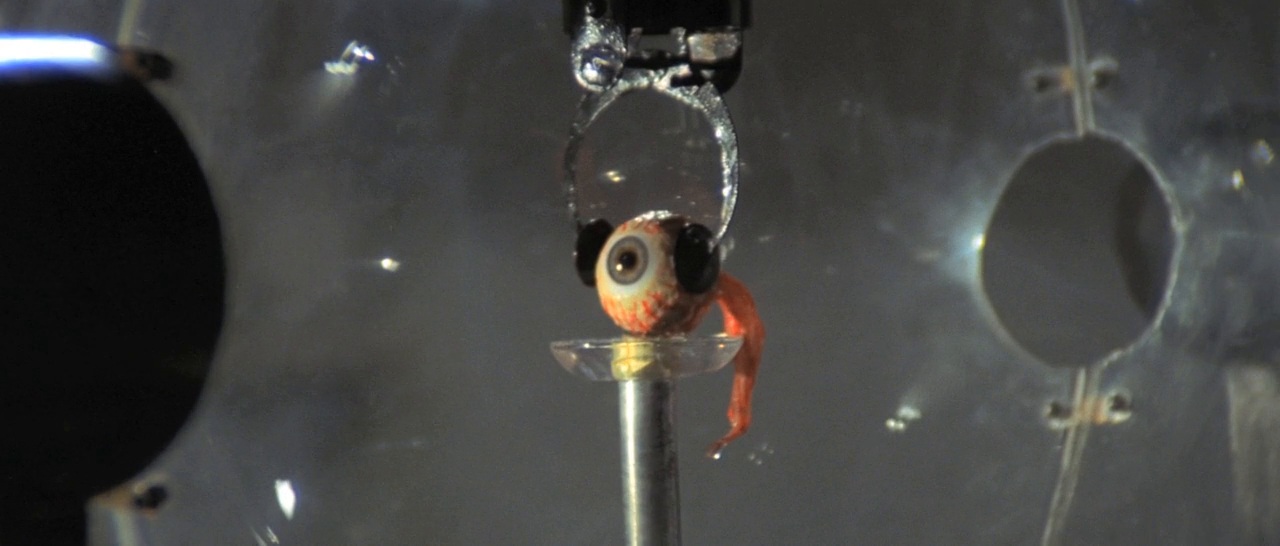
The retinal device makes an especially revealing promise: even a dead witness might leave a recoverable picture. But obtaining the picture does not supply its meaning. Mendik’s account of the amulet shows how the mechanical record still depends on recognition. The mystery transfers its difficulty from acquiring evidence to reading it. The device is treated here as a fictional invention, not an effective forensic procedure. The retinal image ↗

Lyons describes the recurring beheading dream and the finale’s slow-motion shattering windscreen followed by an abrupt explosion. Our reading is that this ending gives the spectator two incompatible experiences of time: an instant prolonged for contemplation and a destructive event that seems to close everything at once. Knowing the answer has not restored a stable world. Dream and finale ↗

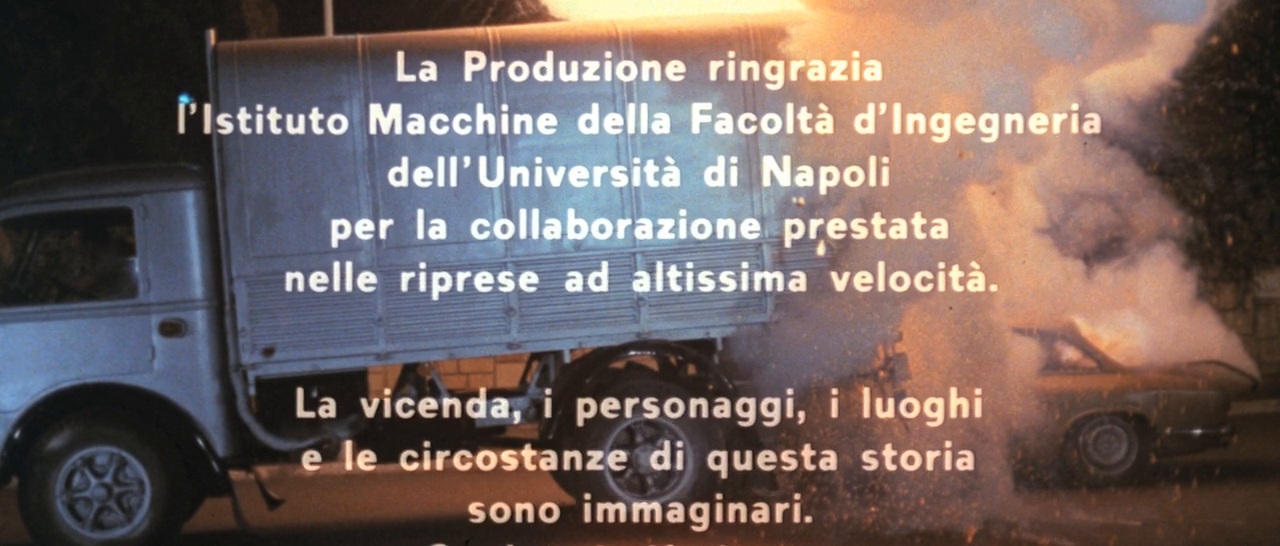
The end titles acknowledge high-speed photography assistance from the University of Naples engineering faculty. The credit and frame are reproduced below. The precise camera model, speed and practical construction are not established by that acknowledgement. Mondo Digital identifies a focused interview with assistant cameraman Roberto Forges Davanzati, Death in Slo-Mo, among the Severin supplements. It is a concrete route for the return pass, not an interview we claim to have watched. Located camera testimony ↗

07 / RESTORATION & VERSIONS

A restored negative is the start of a comparison.

CG Entertainment’s restoration notice identifies the original Techniscope camera negative and Italian sound negative, supplied by Reel One for Surf Film. It credits Fondazione Cineteca di Bologna with Surf Film, work at L’Immagine Ritrovata in 2020 and colour correction supervised by Luciano Tovoli. These details establish a material starting point and named restoration labour. They do not make every later disc identical. Restoration materials and team ↗

RecordWhat it documentsLimit
FLC, 2022 retrospective104-minute programme; Italian with English subtitles; Cineteca / Surf restoration.A programme listing, not a measured print comparison.
Shameless SHAM801, 2025103-minute listing; 4K UHD, HDR / Dolby Vision; English and Italian options, English subtitles and SDH.Publisher specifications.
Mondo Digital’s Severin reviewReports European and shorter US presentations, with different treatment of the final speech.A reviewer’s comparison; not our own frame or soundtrack audit.
Presentation used for these visual studies1:43:19; 1280 × 546 picture; Italian titles; English and Italian AC-3 tracks and English subtitles.The commercial release and restoration master are not identified. The two labelled stereo tracks carry near-identical left and right channels. See the signal comparison.

Shameless advertises separate English opening and closing credits and interviews with Argento, Brandon and Cozzi. Its 28 April 2025 release listing supplies a clearly identified edition for later work. Film at Lincoln Center’s 104 minutes and Shameless’s 103 cannot, by themselves, prove a cut. SHAM801 specifications and extras ↗ 2022 programme ↗

Mondo Digital reports missing fragments and sound problems on earlier releases, then describes the Severin edition as offering complete European and shorter US versions. The account also distinguishes later releases made from the restoration. Edition history ↗

Explore the commentaries, interviews and audio comparison →

The practical lesson is to name the release, language, titles and actual passage being compared. A broad label such as “restored” cannot tell us whether two viewers heard the same performance or saw the same material.

08 / 1972 & AFTER

The argument over style was there from the beginning.

A review in Segnalazioni Cinematografiche, volume 72 (1972), reproduced by Cinematografo, praises technical skill and suspense but objects to the screenplay and finds the psychological explanation for the female killer familiar. That is one contemporary response, not a consensus. Its value is the distinction it makes between the force of a sequence and the persuasiveness of its explanation. Reprinted 1972 review ↗

Film at Lincoln Center’s 2022 retrospective frames the set pieces positively and places the film on a path toward Deep Red. This later institutional presentation offers a different way to value the same tension: the mystery’s unruliness can become evidence of an emerging style. It records how the film was presented in that retrospective, not what its original audience thought. Retrospective framing ↗

Cozzi’s murder-first recollection gives these judgements a productive point of contact. A viewer can find an individual sequence compelling and the explanation that connects it to others inadequate. A mature account should be able to hold both reactions without dismissing narrative criticism as a failure to appreciate the images.

Four Flies consequently earns its place here through more than its position between other titles. It makes evidence coercive, intimacy uncertain and the recovery of an image insufficient. Read alongside Opera, its photographer introduces a further question about spectatorship: who can force another person to live under the authority of a picture? That question remains compelling even after the identity of the killer is known.
FOUR FLIES ON GREY VELVET / VISUAL STUDIES

A picture is never the whole event.

Twenty-eight ways into the film.
Follow a face, an object, a change of view.

The theatre manufactures a crime. The photograph detaches it from its setting. The final optical clue still needs someone to recognise what it shows. These illustrated studies follow the film’s spaces and recurring images from the opening rehearsal to the crash.

Spoilers and graphic effects imagery.

Explore the sequence galleries →

01 / 01:25

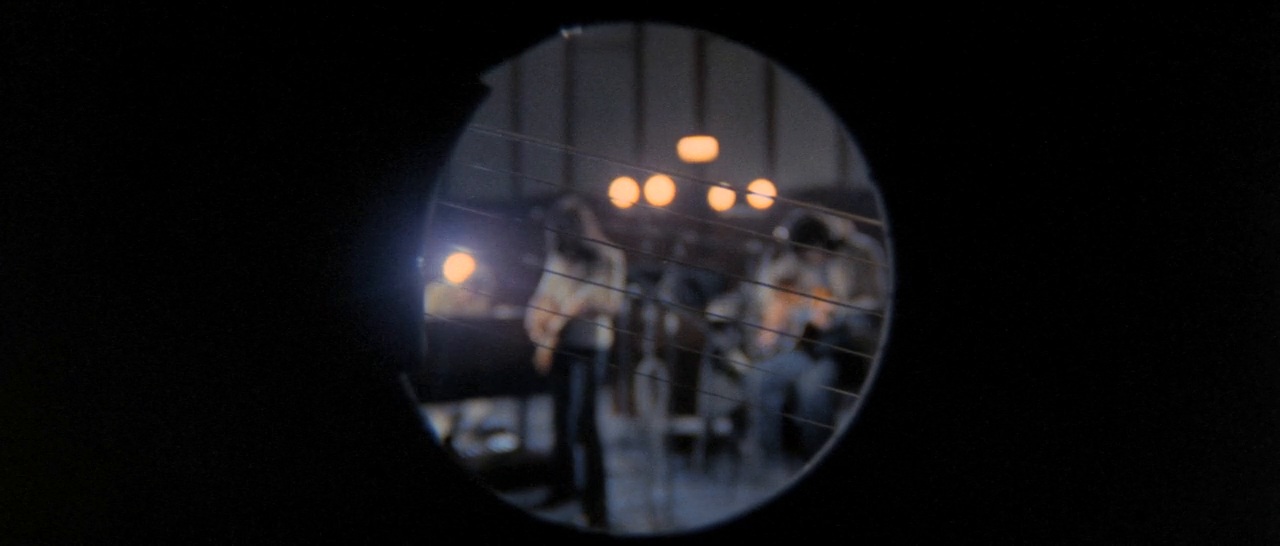
A drummer inside the frame

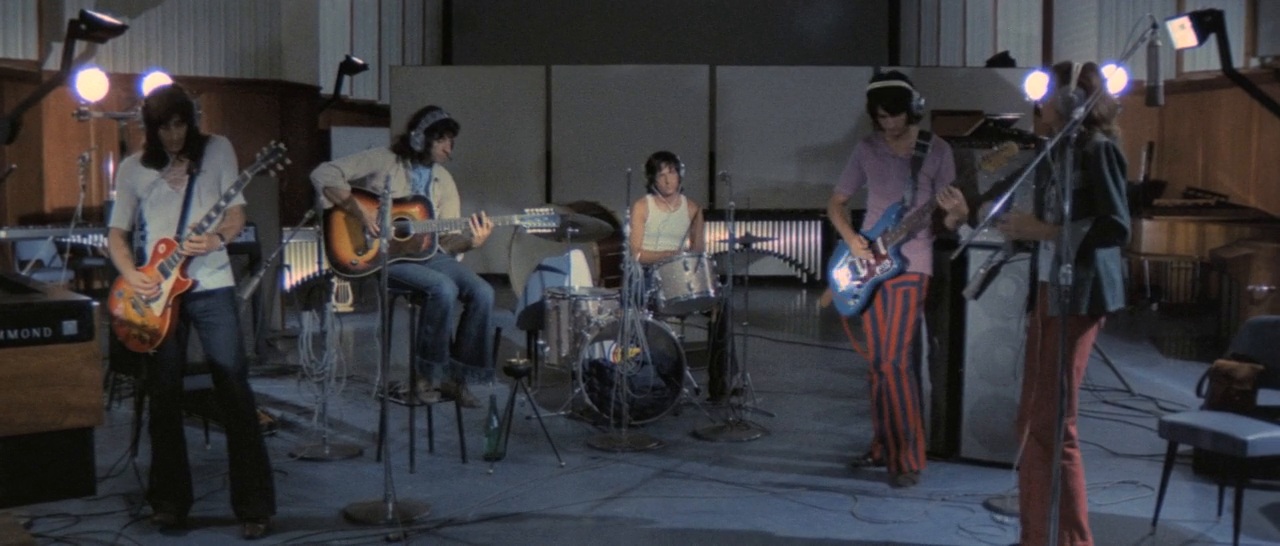
The rehearsal room frames the band.ENLARGE ↗
The rehearsal room frames the band.

The opening breaks a performance into instruments, hands, eyes and credit cards. Roberto is both the centre of the band and one fragment among many. The camera’s view from inside a guitar makes an ordinary instrument into an aperture: looking already involves passing through a constructed frame. The later camera, negative and optical apparatus extend this opening vocabulary.

Follow the close study →Back to the scene guide ↑

02 / 03:32

The watcher in the everyday

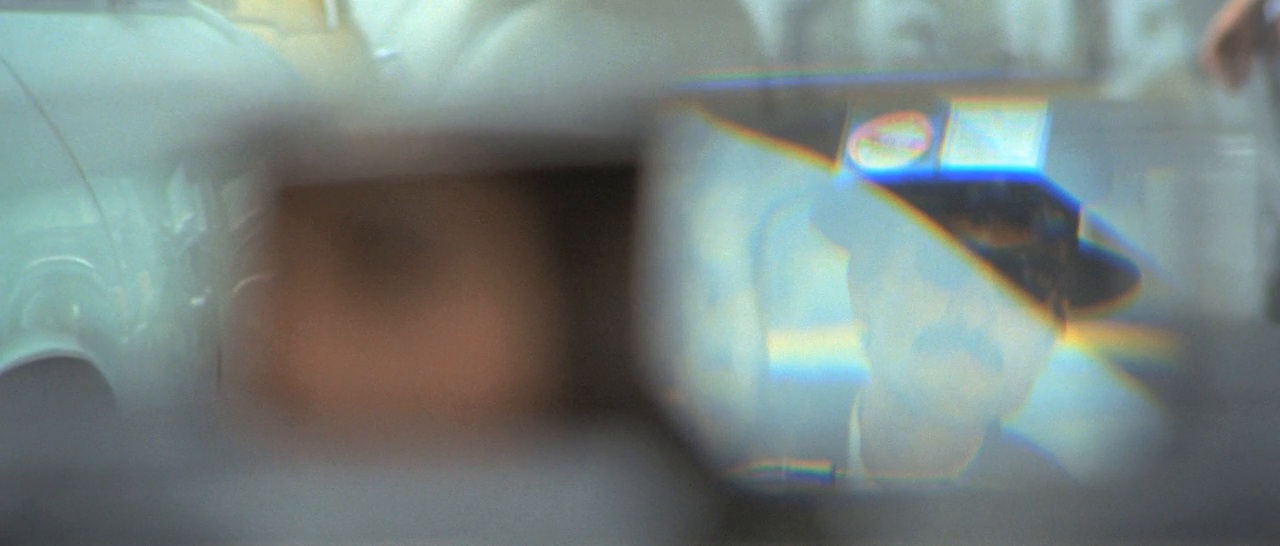
Glass and reflections interrupt the drive.ENLARGE ↗
Glass and reflections interrupt the drive.

Record-shop glass, street encounters and the rear-view mirror turn ordinary movement into surveillance. Roberto can recognise the man who follows him without knowing who has organised the encounter. The prismatic glass beside the mirror also belongs to the film’s larger interest in what happens to an image when it passes through an object.

Read further →Back to the scene guide ↑

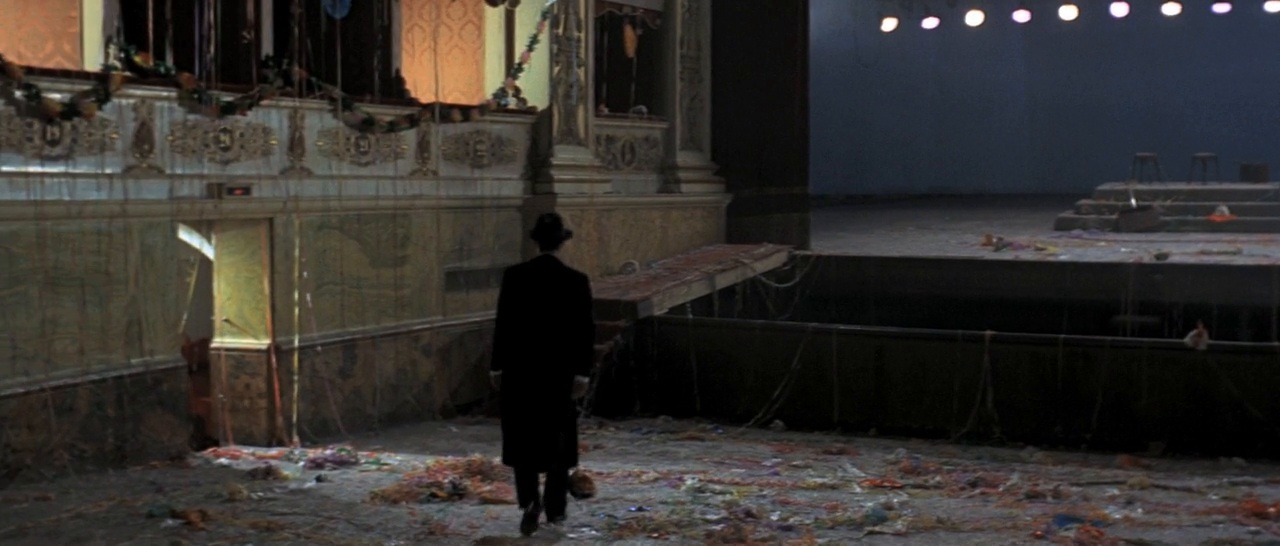
03 / 05:48

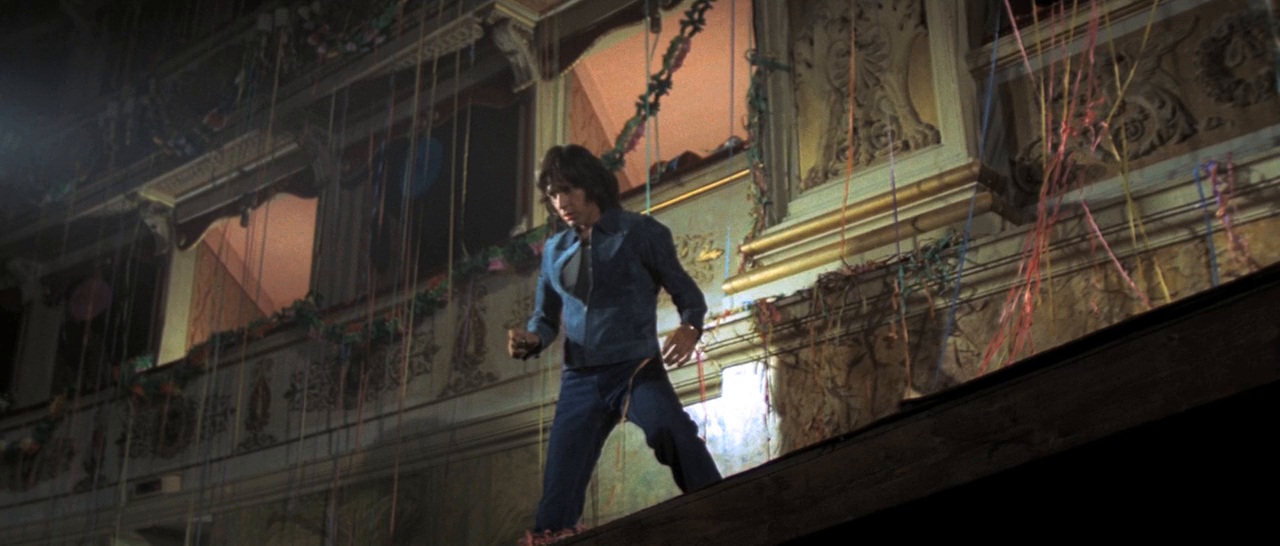
A theatre arranged for one spectator

Roberto enters the empty theatre.ENLARGE ↗
Roberto enters the empty theatre.

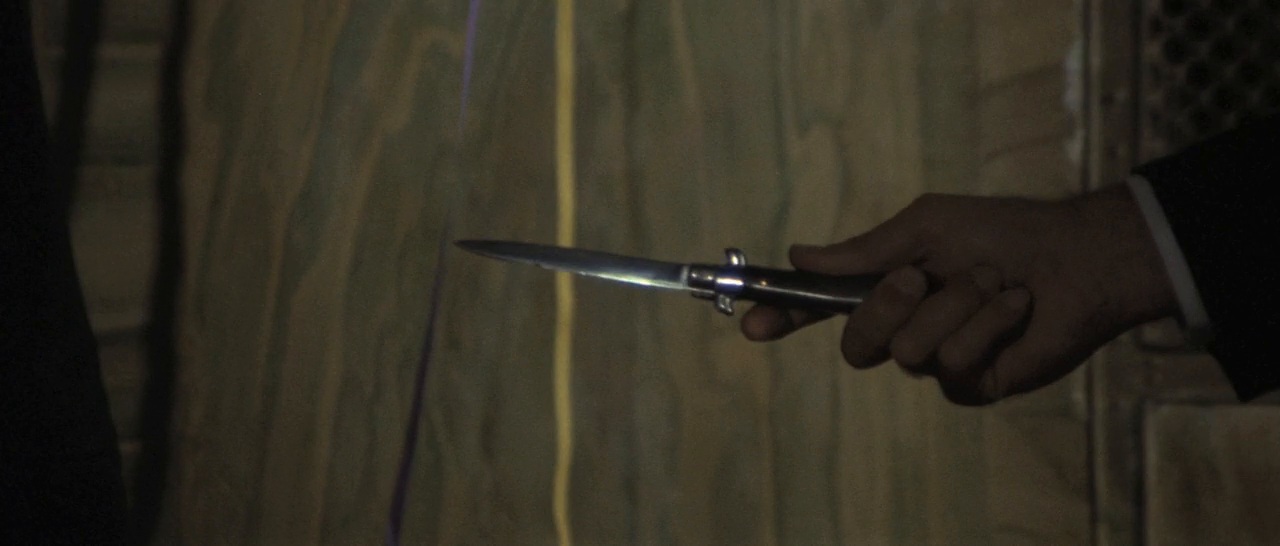
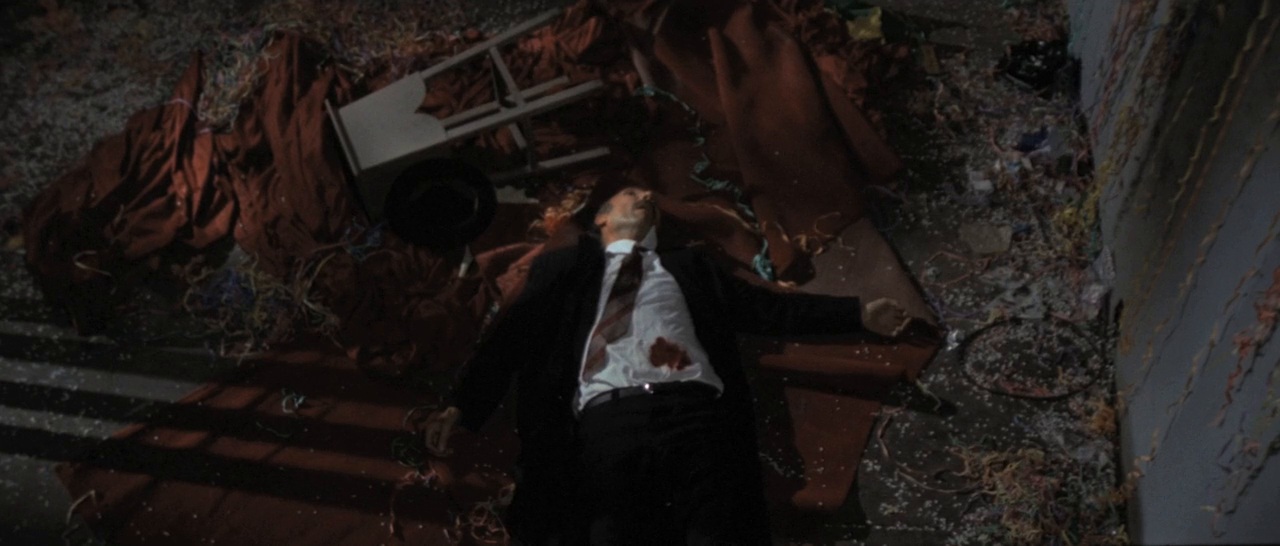
An ornate public space has become a private trap. The men move through empty seating and balconies before the photographer appears. The distance between the apparent crime and the camera matters: Roberto is close enough to handle the knife, yet the distant witness possesses the more powerful account of the event.

Explore the sequence gallery →Back to the scene guide ↑

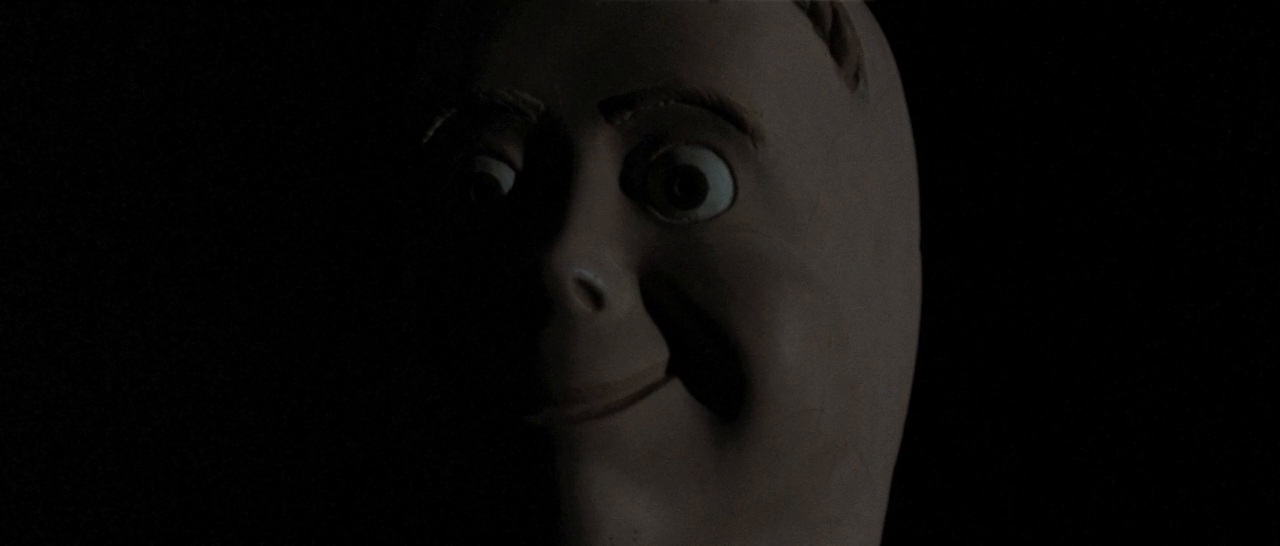
04 / 06:12

The fixed smile behind the camera

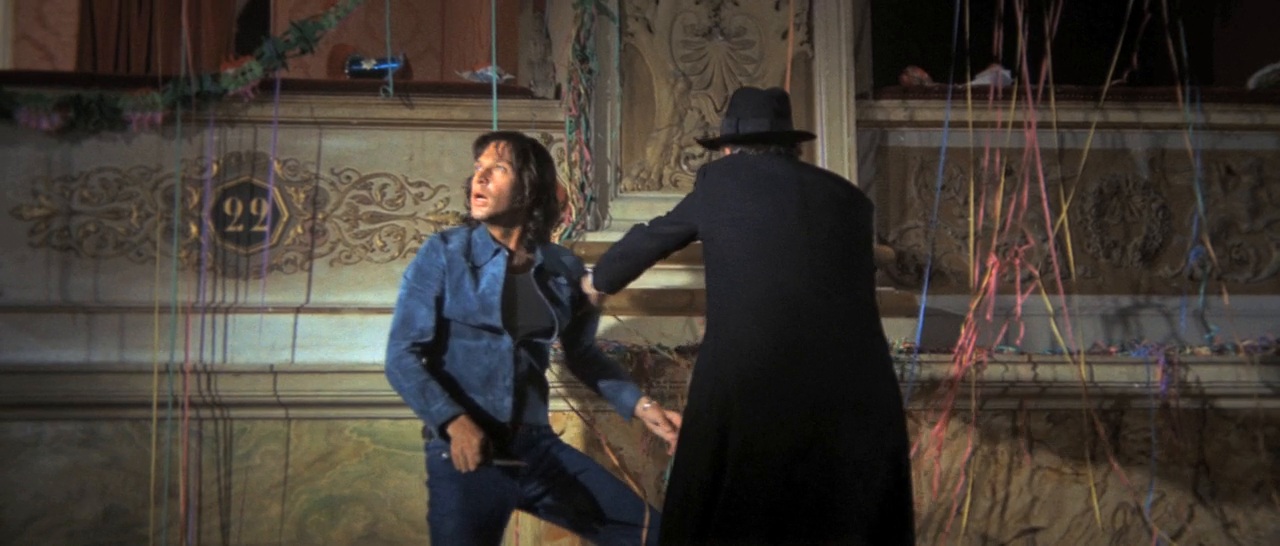
A masked photographer watches from above.ENLARGE ↗
A masked photographer watches from above.

The smiling mask supplies an expression that cannot change. Roberto’s reactions are exposed while the photographer’s are replaced by a prop. Camera and mask perform complementary jobs: one produces an identifiable image of Roberto, the other prevents an identifiable image of its operator.

Explore the sequence gallery →Back to the scene guide ↑

05 / 09:52

An event becomes a strip of evidence

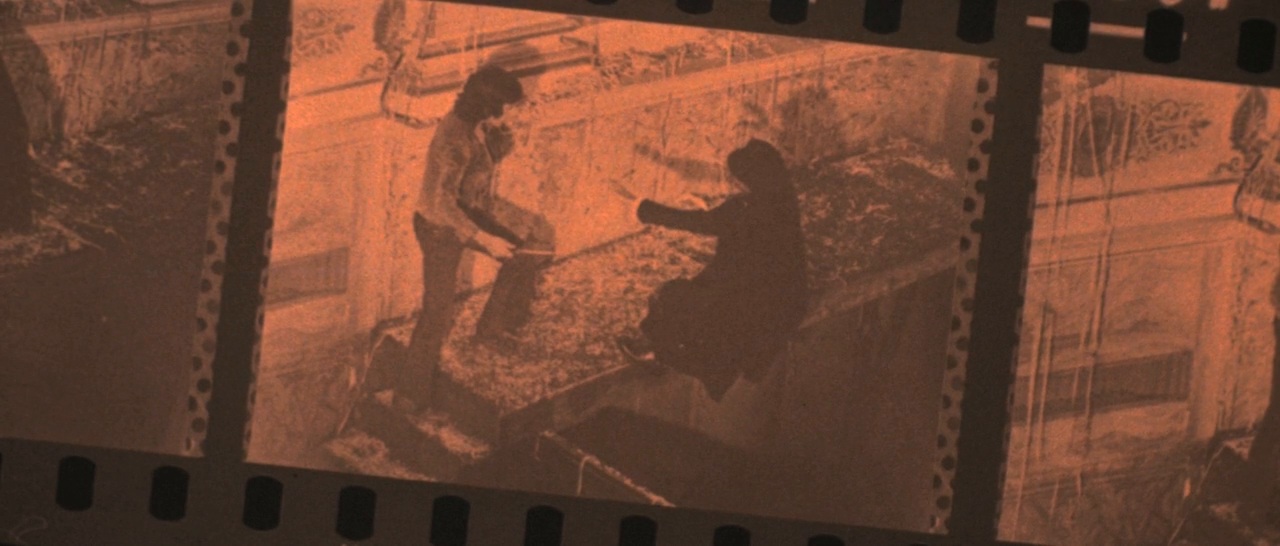
The knife encounter returns as a negative.ENLARGE ↗
The knife encounter returns as a negative.

The negative isolates the apparent killing from the theatre that made it possible. Its arrival moves the threat into Roberto’s home. He is now confronting a repeatable image rather than the encounter itself. The film cuts between a remembered action and an object that someone else can circulate or withhold.

Follow the close study →Back to the scene guide ↑

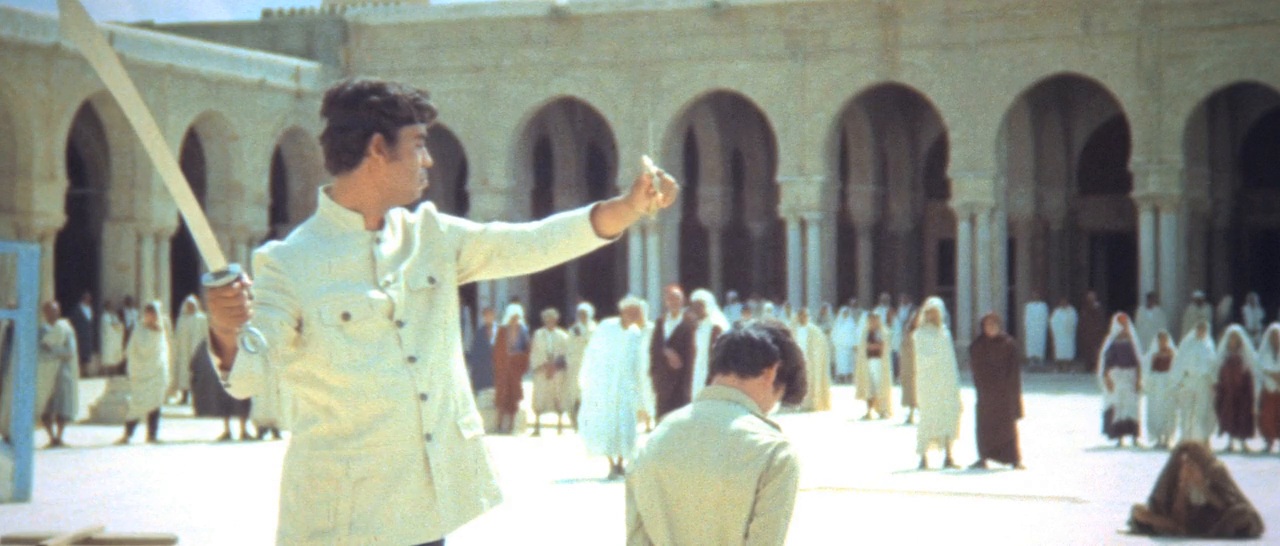
06 / 13:54

A dream with an unfinished action

The executioner extends the blade.ENLARGE ↗
The executioner extends the blade.

A monumental courtyard, a ring of spectators and a poised executioner make Roberto’s dream another staged spectacle. The dream repeatedly suspends an action whose ending he cannot accept. Its later return will alter the connection between dreamer, victim and witness, rather than simply reveal a missing piece of police evidence.

Read further →Back to the scene guide ↑

07 / 16:00

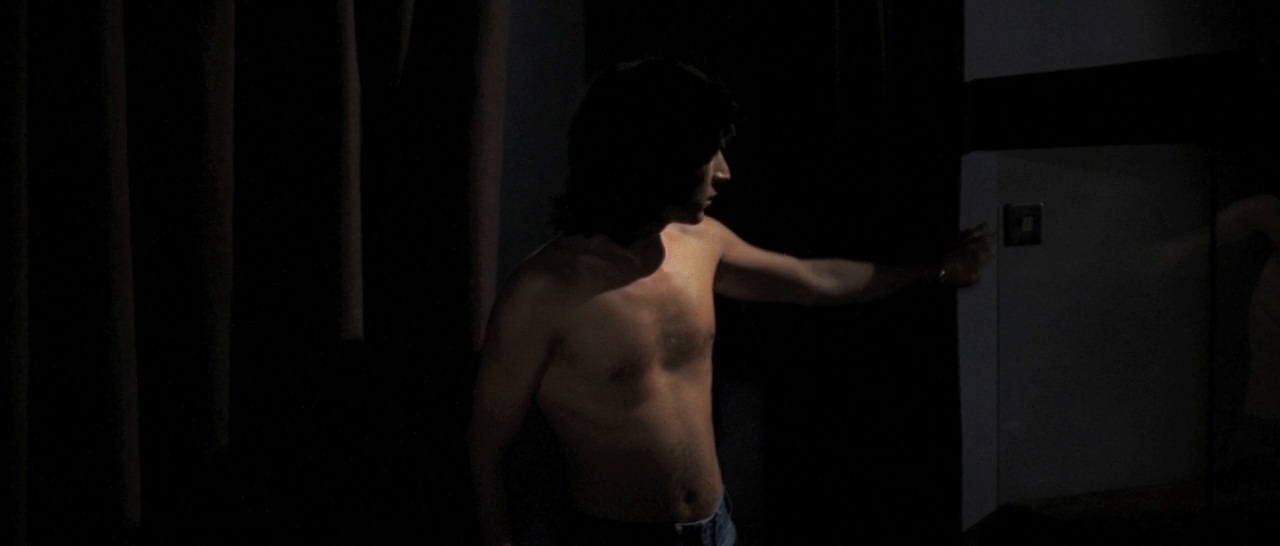
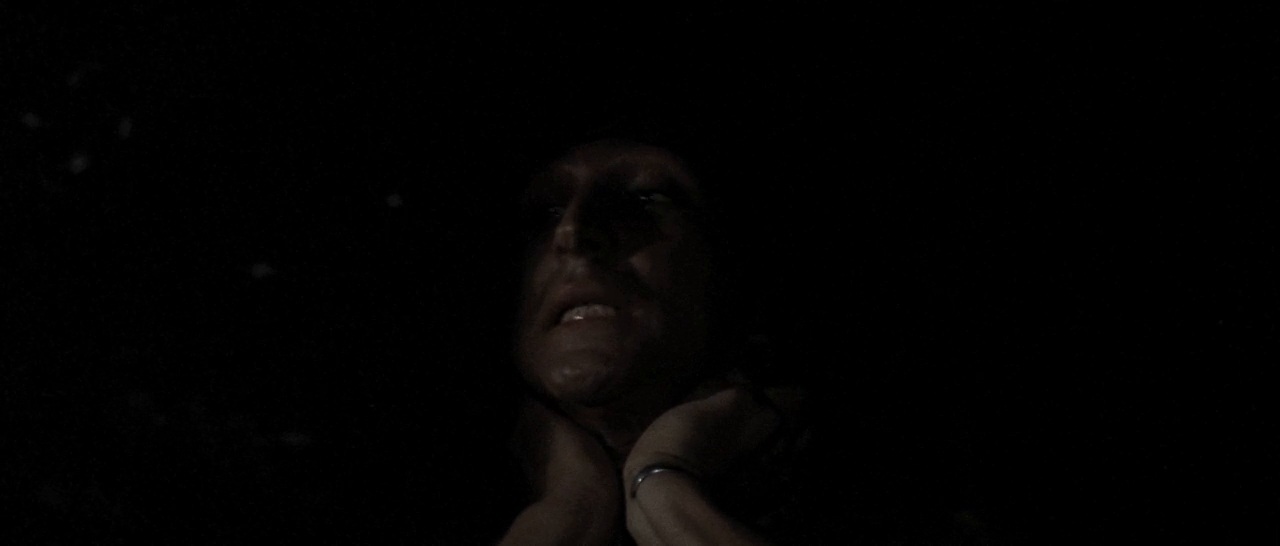
The mask enters the bedroom

The smiling mask emerges beside Roberto.ENLARGE ↗
The smiling mask emerges beside Roberto.

The theatre’s anonymous watcher becomes a bodily presence at home. Darkness gives way to a close encounter, a restraint and a threat. The mask is almost too near to read as a person; the scene substitutes proximity for the distant power of the balcony photograph.

Explore the sequence gallery →Back to the scene guide ↑

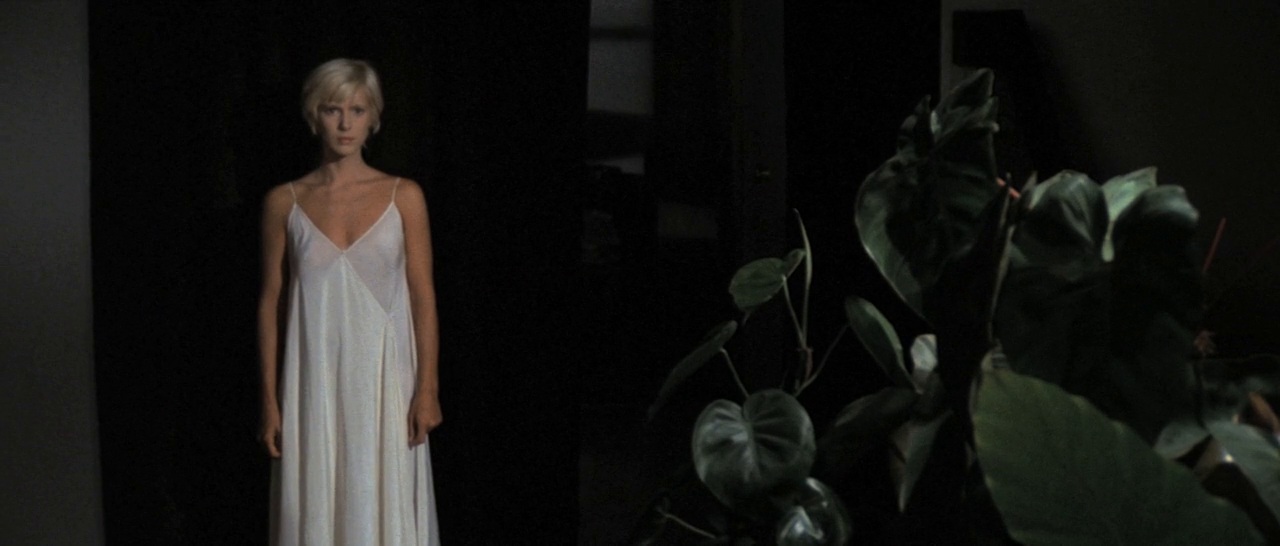
08 / 17:24

Light does not settle the matter

Nina appears on the stairs.ENLARGE ↗
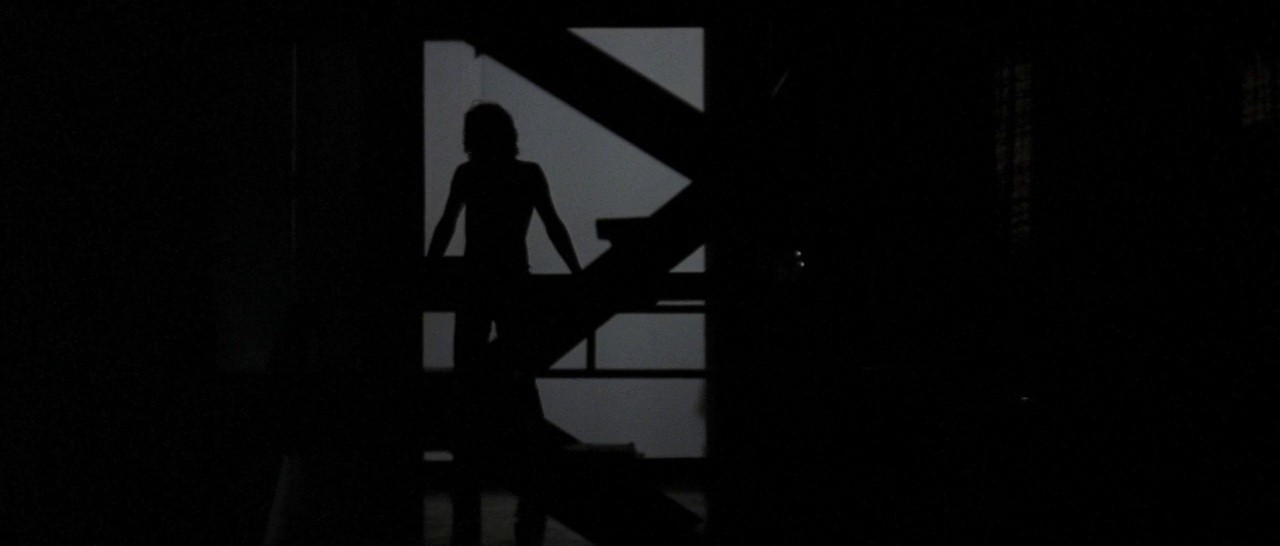
Nina appears on the stairs.

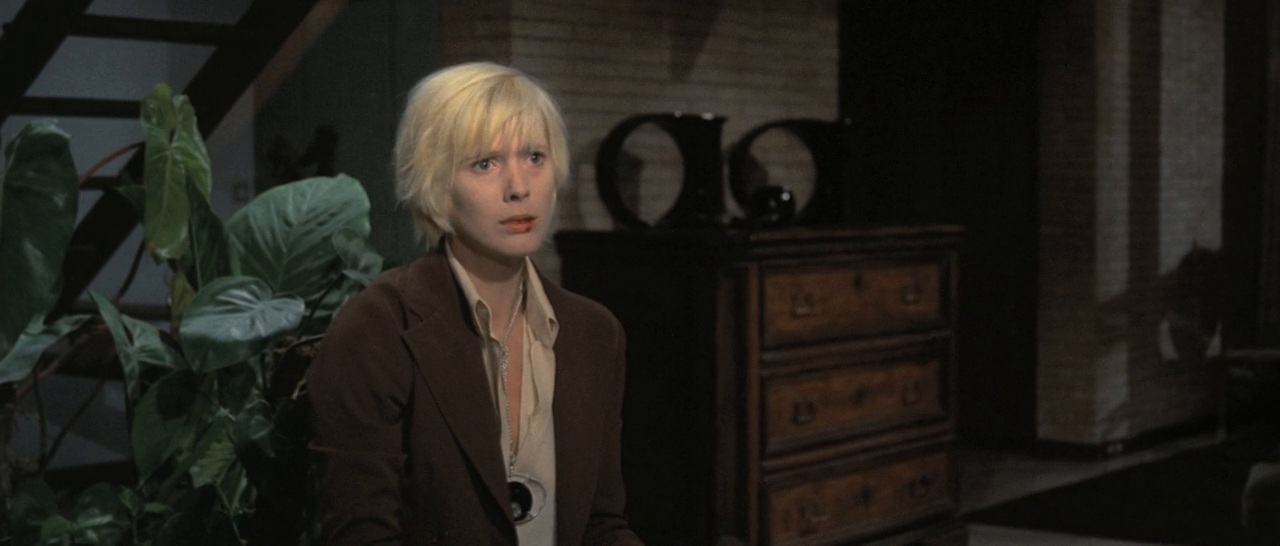
Nina’s arrival reorganises the room after the attack. The shift from obscurity to visible domestic space promises reassurance, but it does not reveal who controlled the earlier darkness. Her pale clothing and the stairs give her an immediately legible place in the house while her relation to the threat remains concealed.

Read further →Back to the scene guide ↑

09 / 24:15

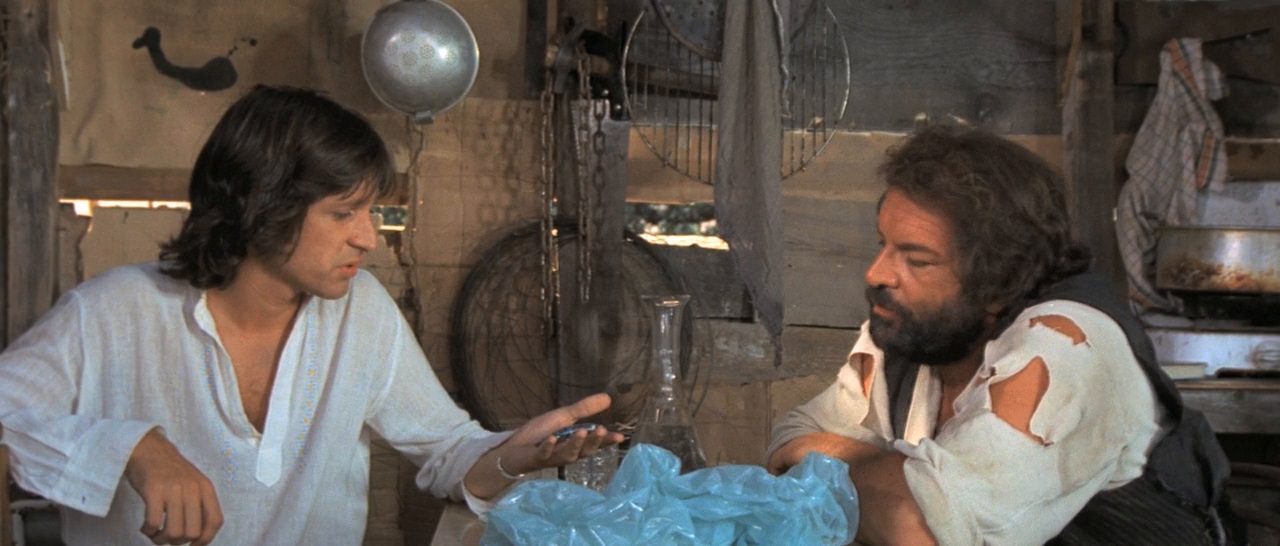
Godfrey by the river

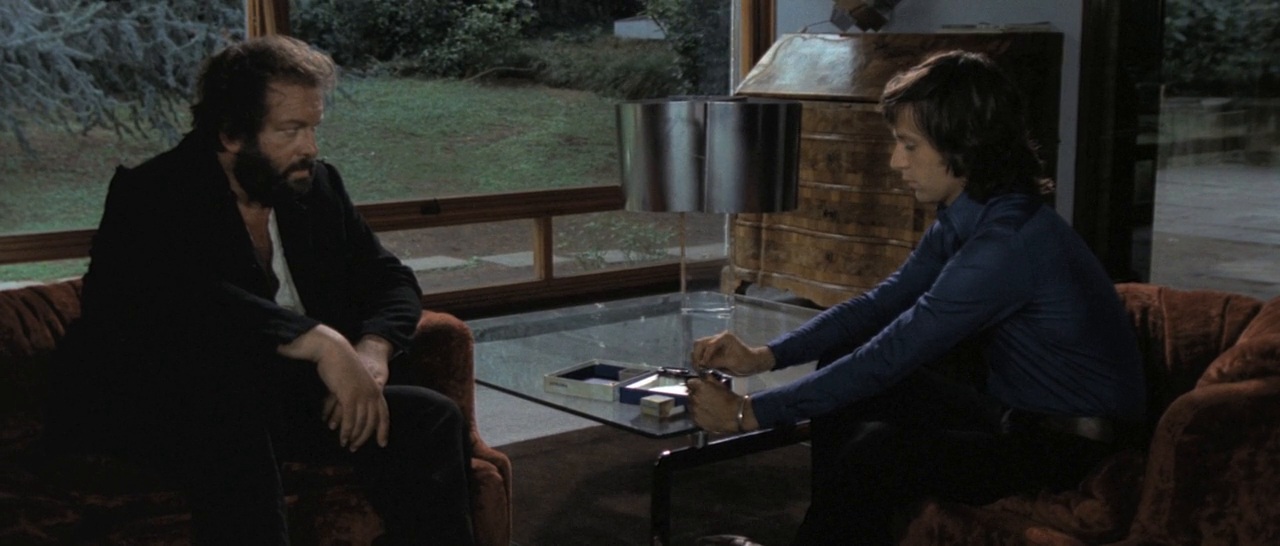
Roberto and Godfrey talk across the table.ENLARGE ↗
Roberto and Godfrey talk across the table.

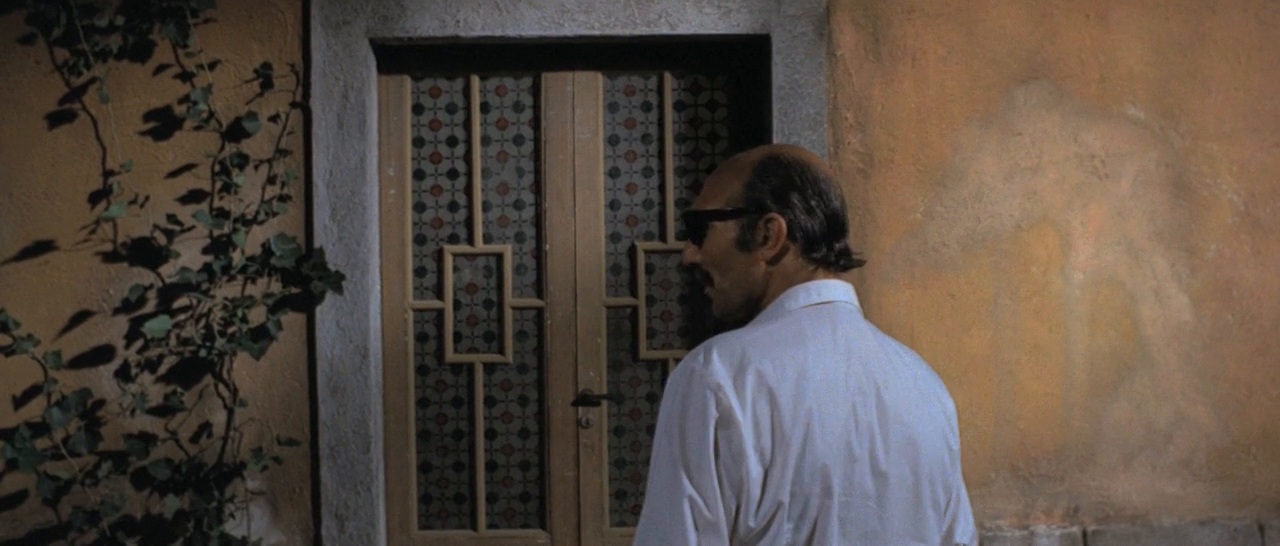
Godfrey’s marginal, makeshift surroundings offer a comic alternative to the polished spaces of the investigation. Roberto seeks help outside official authority, and the film allows friendship to interrupt its machinery of fear. This apparent digression becomes consequential when Godfrey returns at the end.

Read further →Back to the scene guide ↑

10 / 28:45

A blackmail plot inside the blackmail plot

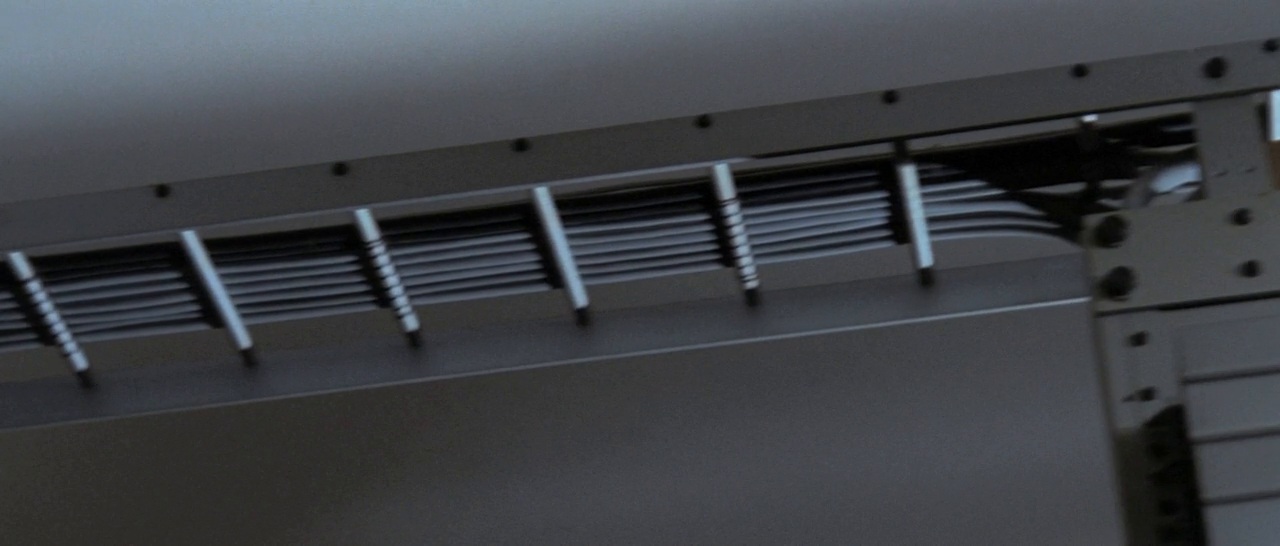
The camera studies an overhead grille.ENLARGE ↗
The camera studies an overhead grille.

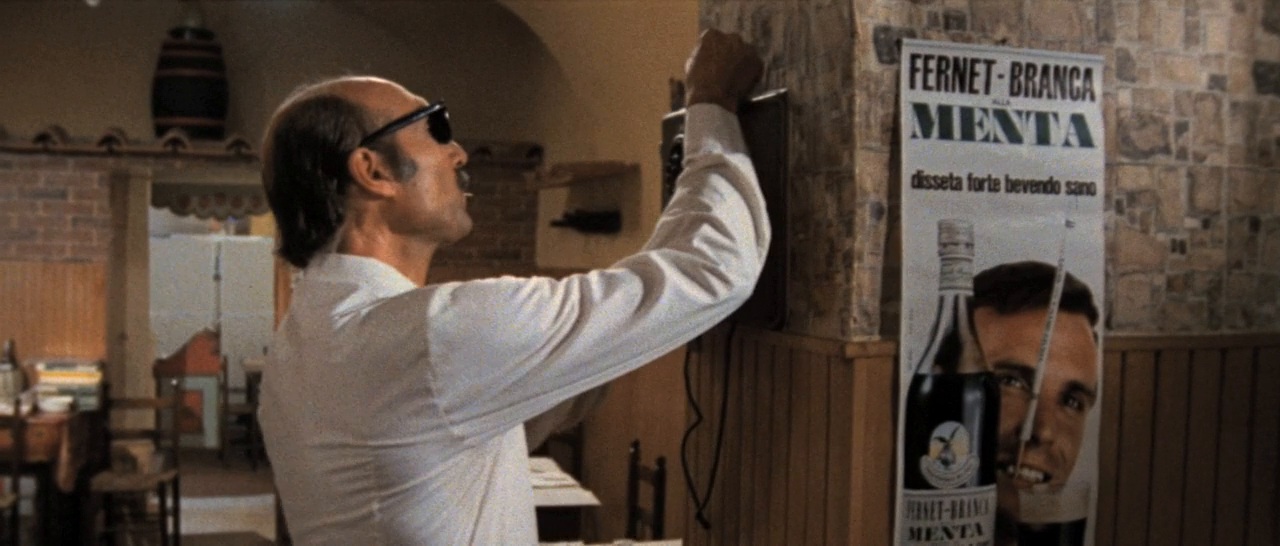
The maid’s attempt to turn what she knows into money gives the intimidation scheme another participant. The telephone exchange is followed by disturbing fragments of confinement and paternal authority. Knowledge is valuable here, but the person trying to sell it does not control the larger arrangement.

Read further →Back to the scene guide ↑

11 / 31:44

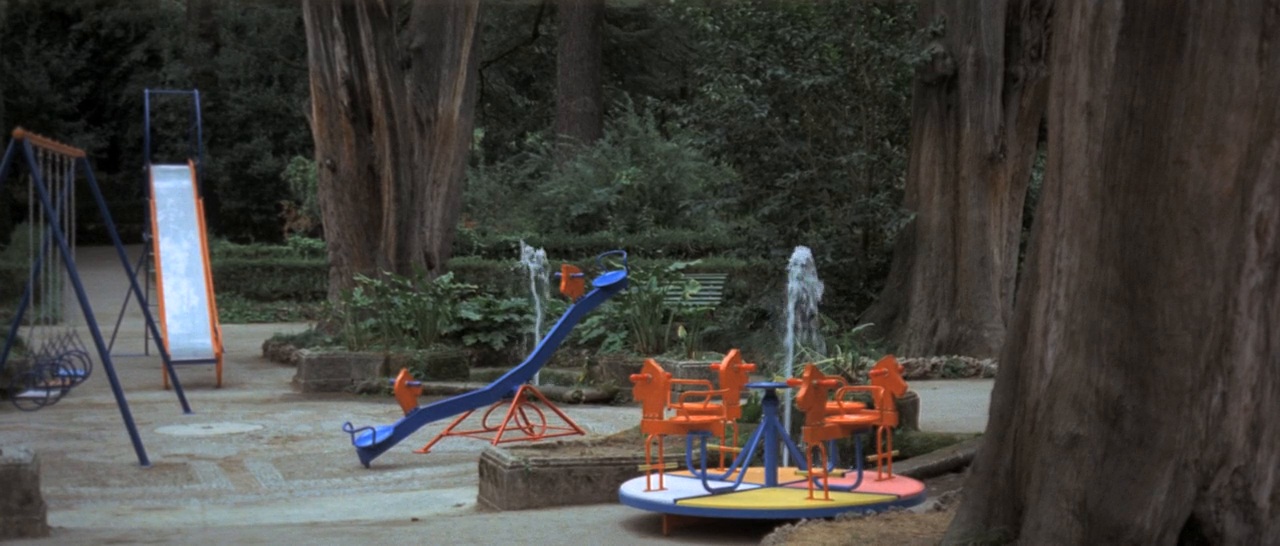
The park empties

The playground is suddenly deserted.ENLARGE ↗
The playground is suddenly deserted.

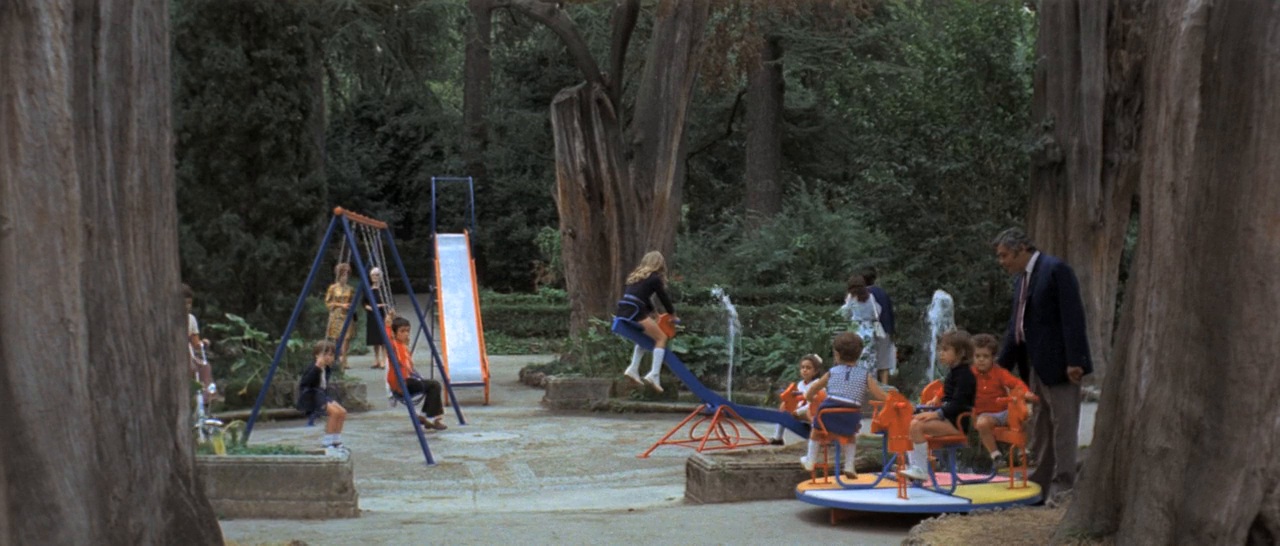
The park first offers movement, other people and familiar public facilities. These points of reassurance are progressively withdrawn. An empty playground and a closing gate change the meaning of the same location: the visitor who expected a meeting now has to find a way out.

Explore the sequence gallery →Back to the scene guide ↑

12 / 34:27

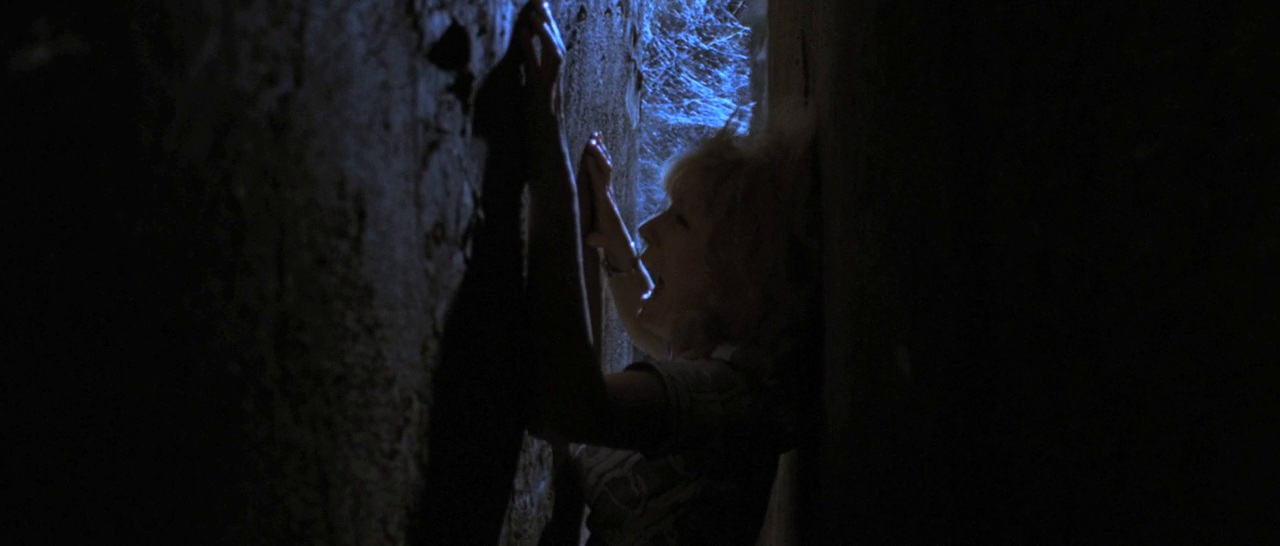
A gap becomes a trap

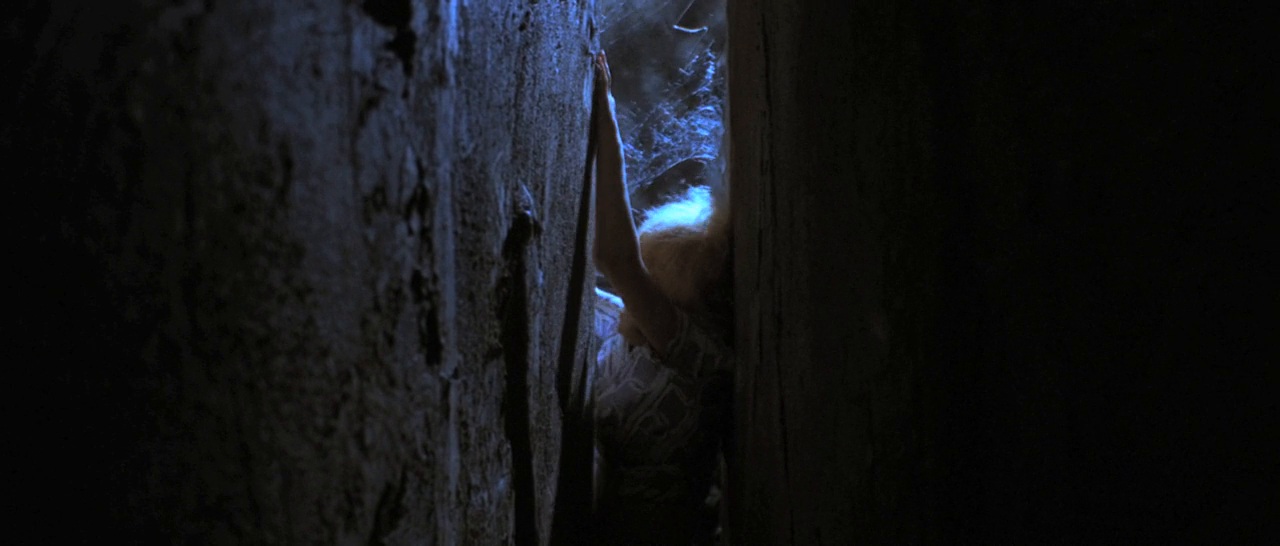
Amelia squeezes between the walls.ENLARGE ↗
Amelia squeezes between the walls.

The passage between two walls seems like a route until the body can barely fit through it. Argento makes architecture intimate: stone presses against face and hands. Nearby people do not share Amelia’s view or danger. A barrier that is insignificant to someone outside it becomes the entire world of the person trapped within.

Explore the sequence gallery →Back to the scene guide ↑

13 / 35:30

Nina, Dalia and the house

The film returns to the party.ENLARGE ↗
The film returns to the party.

The return to social space interrupts the park’s isolation. Dalia, Nina’s cousin, enters a household already organised around suspicion. The film’s movement between public sociability and private dread keeps changing which relationships seem safe enough to trust.

Read further →Back to the scene guide ↑

14 / 42:00

The actor wants out

Carlo makes a telephone call.ENLARGE ↗
Carlo makes a telephone call.

The man from the theatre is alive. His call makes the distinction between a performed killing and an actual death explicit: the arrangement has become more dangerous than the part he agreed to play. This scene changes the status of the earlier images without changing what the camera originally showed.

Read further →Back to the scene guide ↑

15 / 44:28

The staged victim is killed

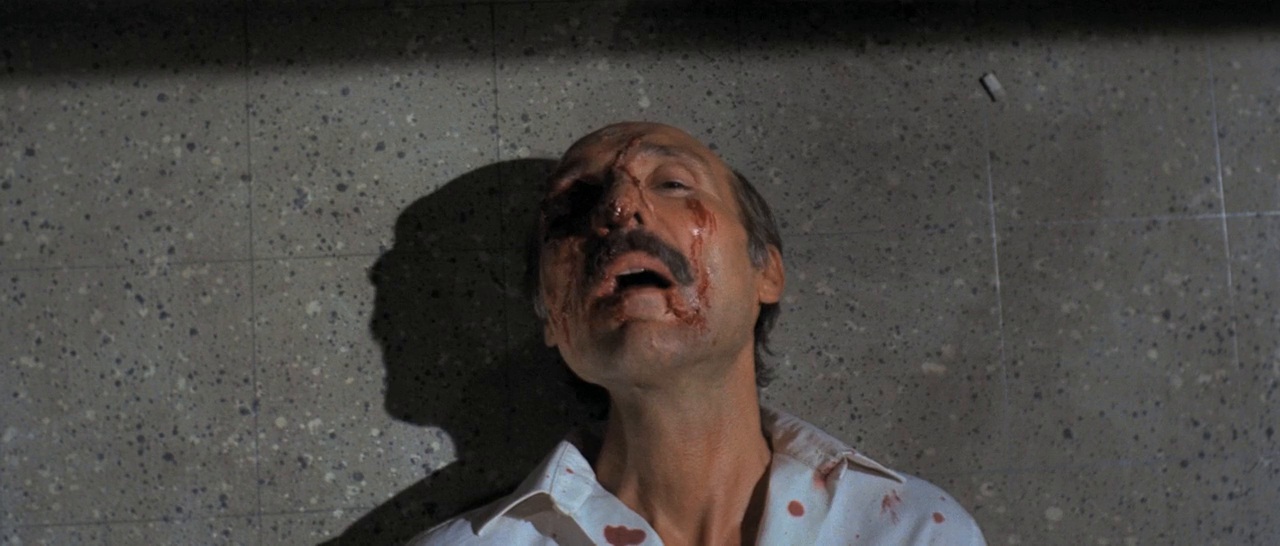
Blood marks Carlo’s face after the blow.ENLARGE ↗
Blood marks Carlo’s face after the blow.

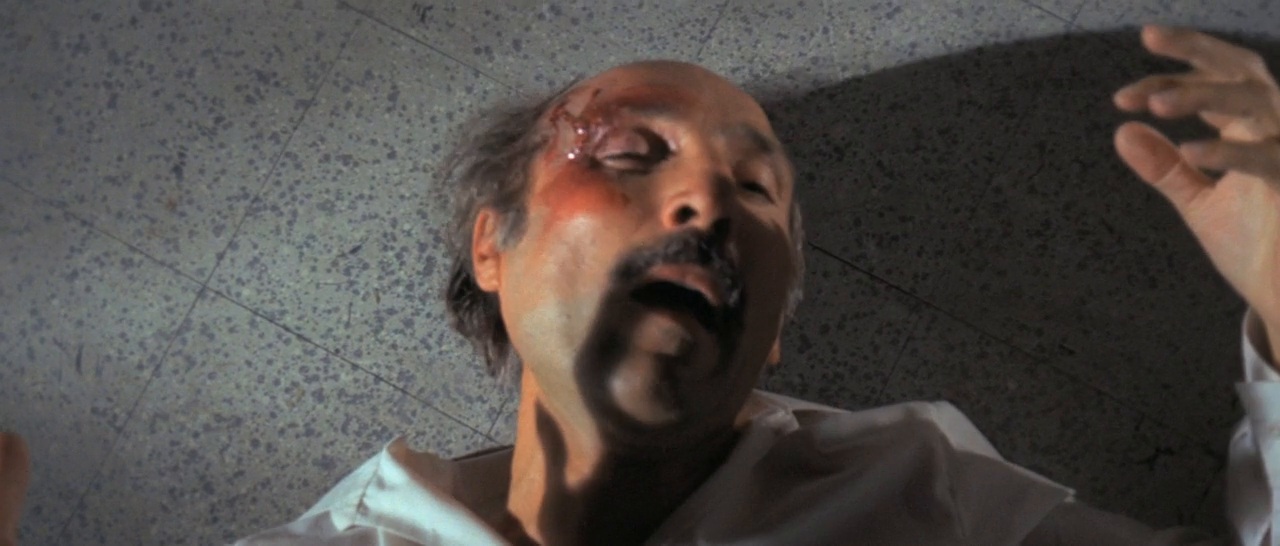
A blunt blow and a wire replace the theatre’s deceptive knife encounter. The cutting separates the injured face, the room and the instrument of strangulation. The later murder does not validate the photograph as evidence of the earlier one; it removes someone who could explain how that evidence was manufactured.

Explore the sequence gallery →Back to the scene guide ↑

16 / 46:45

Arrosio takes the case

Arrosio talks with Roberto in his office.ENLARGE ↗
Arrosio talks with Roberto in his office.

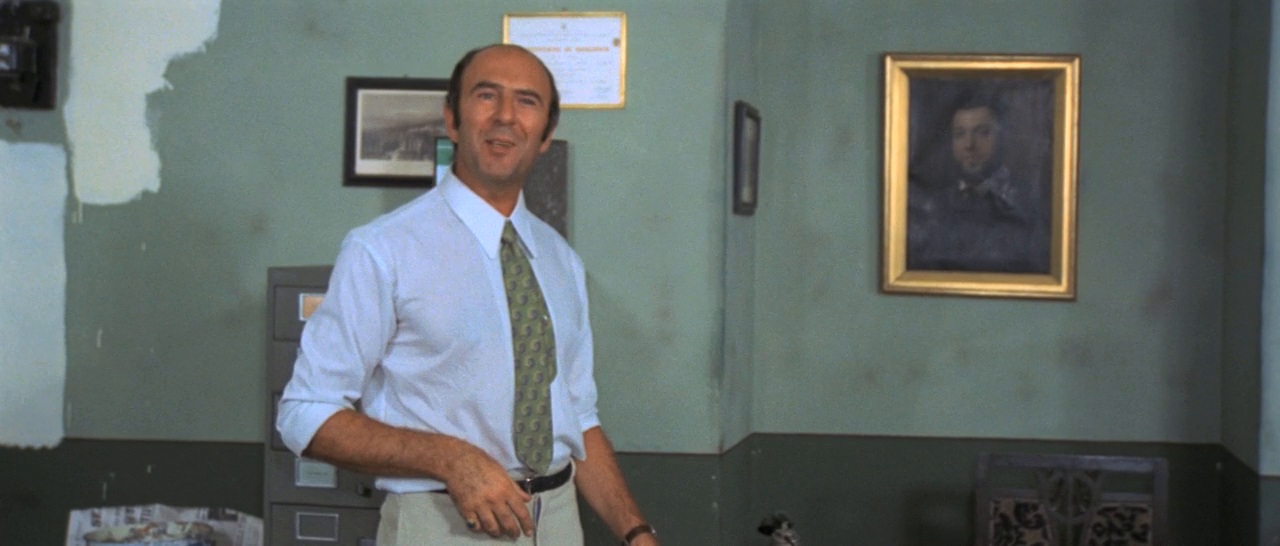
The private detective enters with comic self-presentation rather than the gravity of an infallible investigator. His eventual progress matters because the film has encouraged viewers to underestimate him. A correct inference will not guarantee either survival or the chance to pass it on.

Read further →Back to the scene guide ↑

17 / 54:00

Intimacy becomes another complication

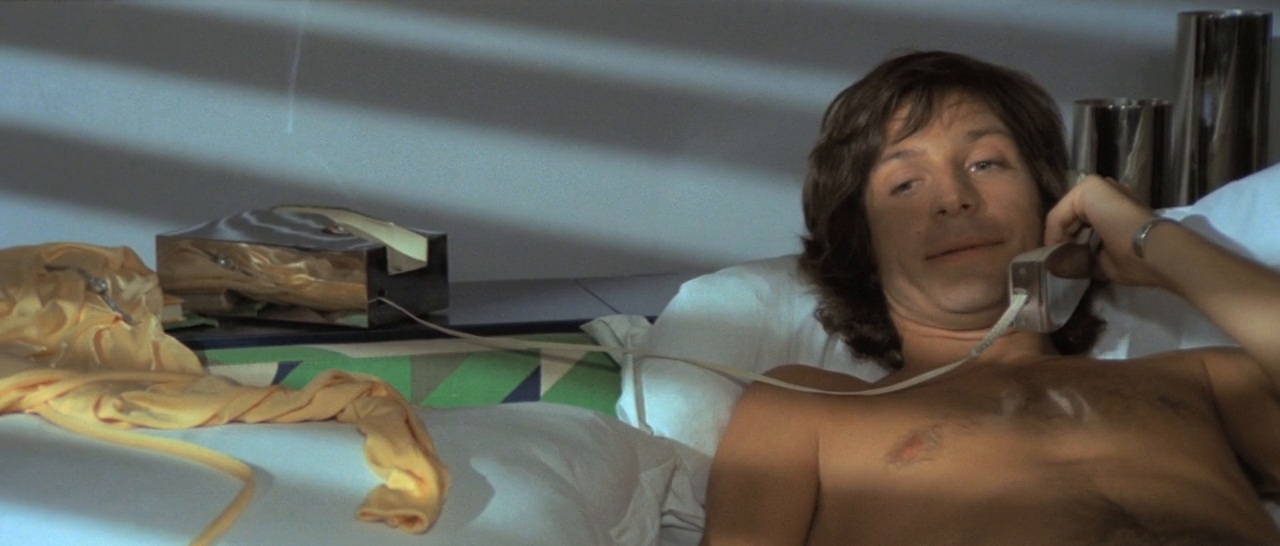
Roberto and Dalia share the bathroom.ENLARGE ↗
Roberto and Dalia share the bathroom.

The woman in the dossier’s published shower image is Dalia, not Nina. The affair complicates the film’s account of marriage rather than supplying an uncomplicated refuge from it. Shared physical space does not put the two characters in possession of the same knowledge.

Read further →Back to the scene guide ↑

18 / 1:03:56

A preparation before the pursuit

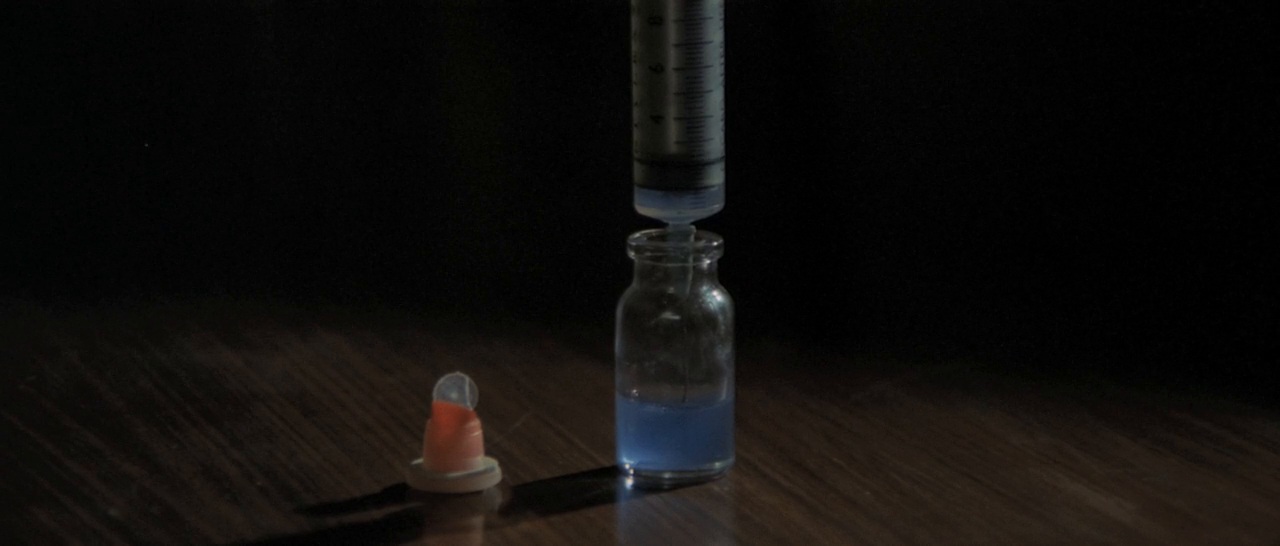
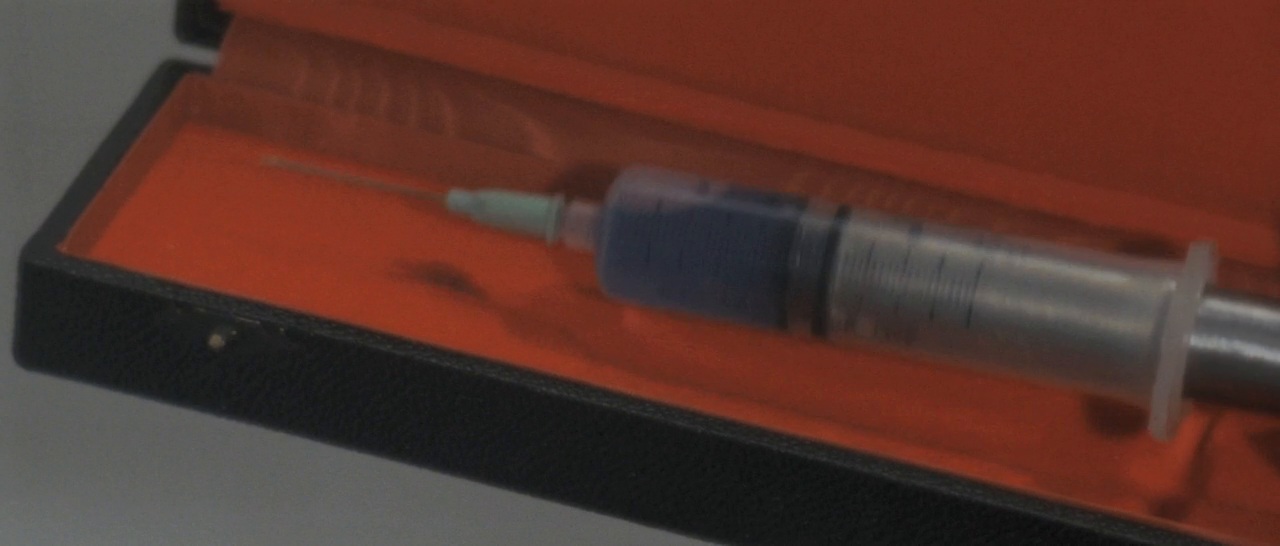
A syringe is prepared.ENLARGE ↗
A syringe is prepared.

An insert of the syringe interrupts the investigation before the washroom assault. It gives the spectator a piece of preparation without the identity that would explain it. Suspense depends on this uneven distribution: we know an instrument is ready while Arrosio continues to follow people and signs.

Explore the sequence gallery →Back to the scene guide ↑

19 / 1:07:16

From the crowd to the washroom

Arrosio follows the route through the station.ENLARGE ↗
Arrosio follows the route through the station.

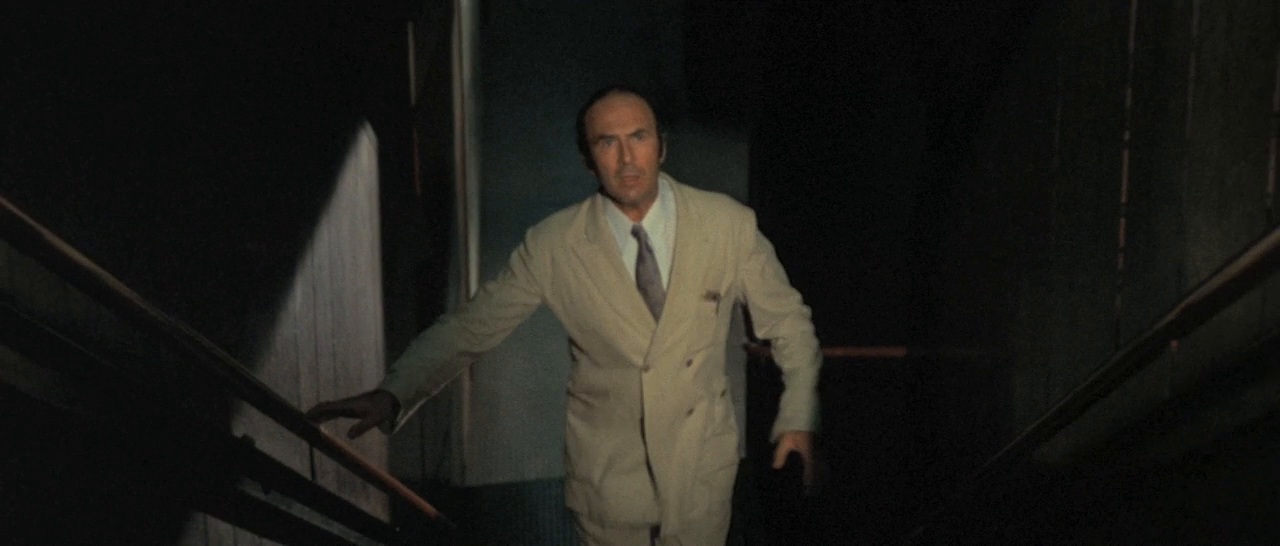
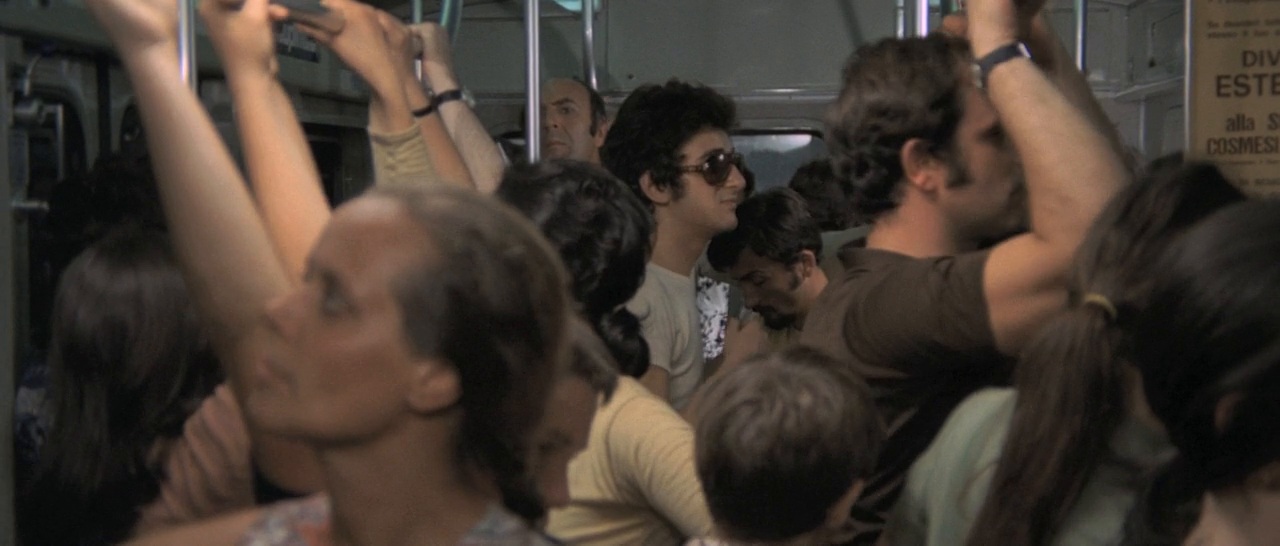
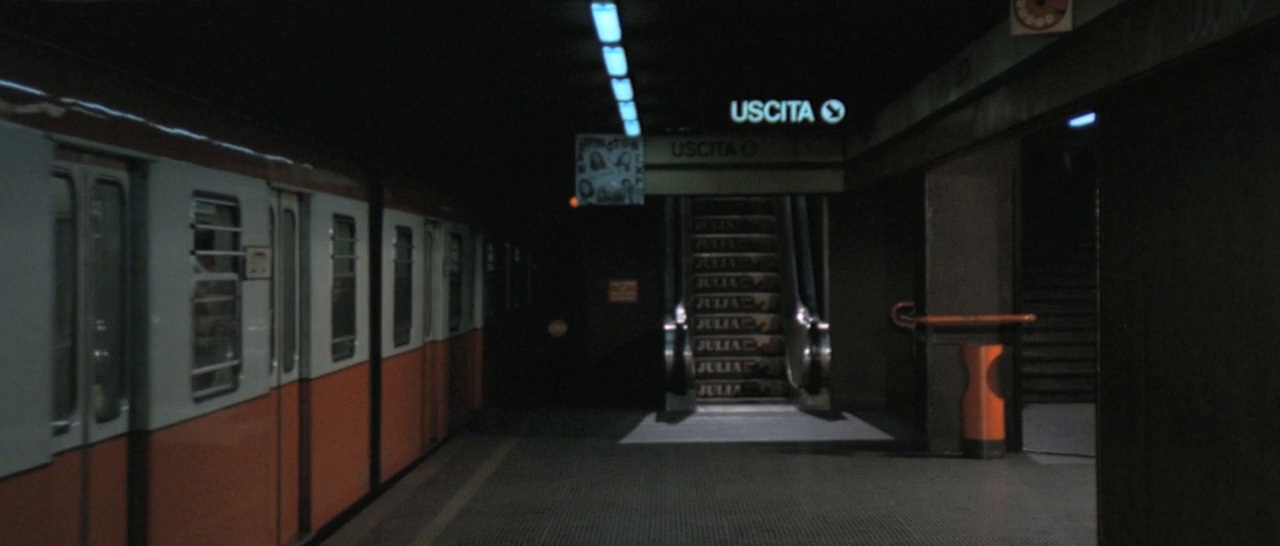
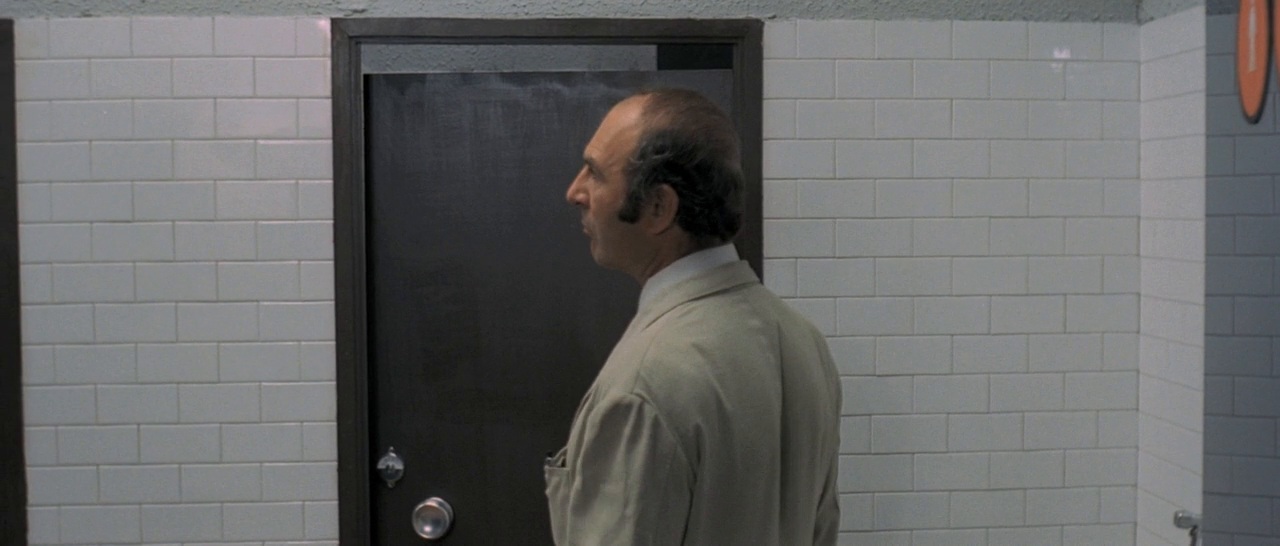
Crowded transport gives way to platforms, stairs and a nearly empty washroom. Each change of space reduces the protection offered by other bodies. Following successfully has brought the detective closer to his answer and deeper into a place where he can be attacked alone.

Explore the sequence gallery →Back to the scene guide ↑

20 / 1:09:32

The right answer arrives too late

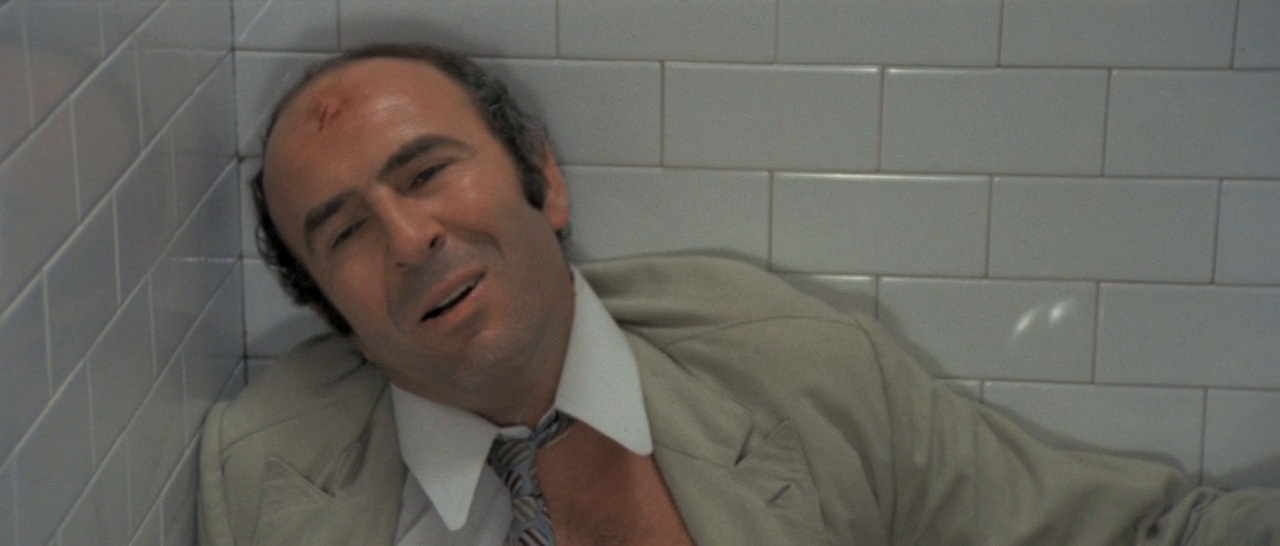
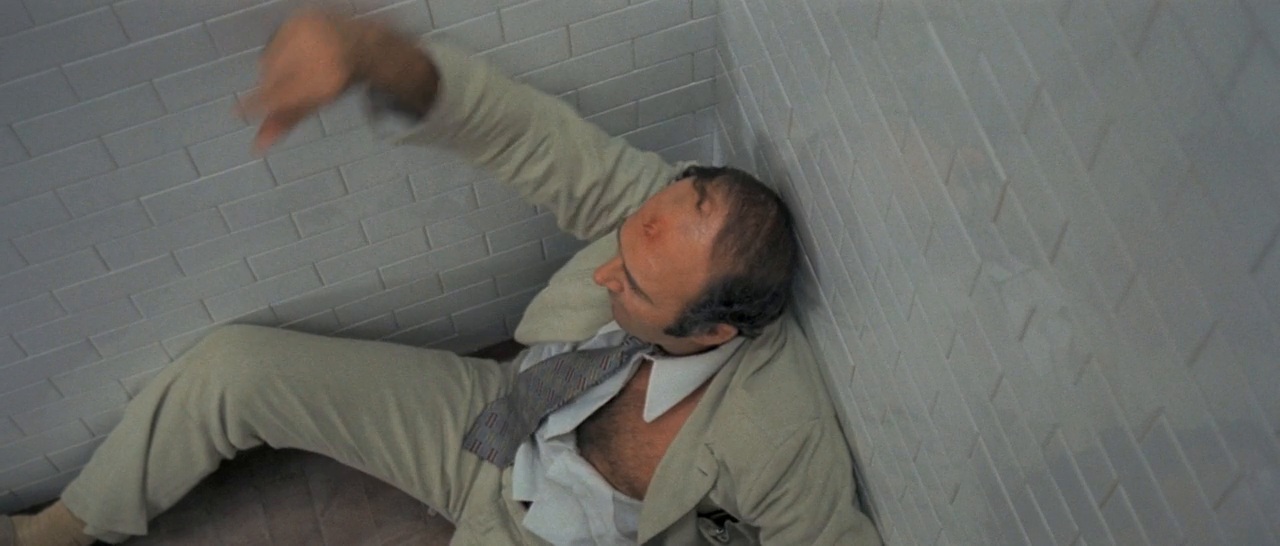
Arrosio collapses against the tiled wall.ENLARGE ↗
Arrosio collapses against the tiled wall.

The syringe attack ends with the detective isolated in a bright, hard-edged corner. The English dialogue pairs the assailant’s acknowledgement of his success with his own final recognition. The information needed to solve the mystery has been reached but cannot complete its journey back to Roberto.

Read further →Back to the scene guide ↑

21 / 1:13:00

Death as an exhibition

Godfrey and Roberto stand among the coffins.ENLARGE ↗
Godfrey and Roberto stand among the coffins.

The funerary exhibition turns mortality into merchandise and display. Upright coffins, demonstrations and argumentative conversation interrupt the murders with commerce and comedy. The film repeatedly changes the register in which death is presented: nightmare, professional service, theatrical trick and physical injury.

Read further →Back to the scene guide ↑

22 / 1:15:45

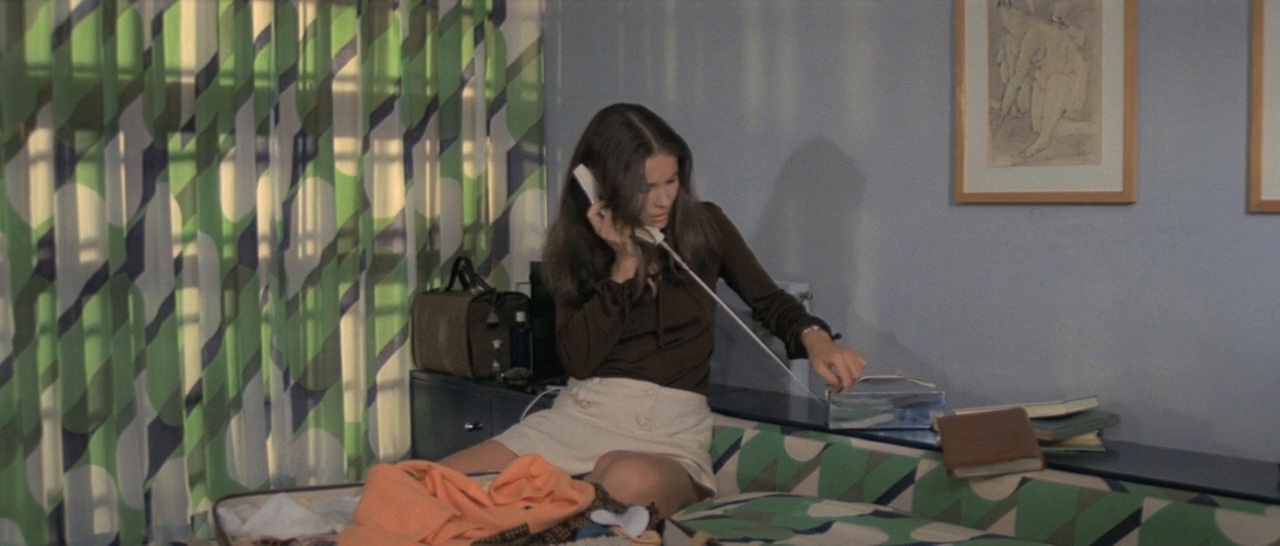
Dalia waits for a return call

Dalia waits beside the telephone.ENLARGE ↗
Dalia waits beside the telephone.

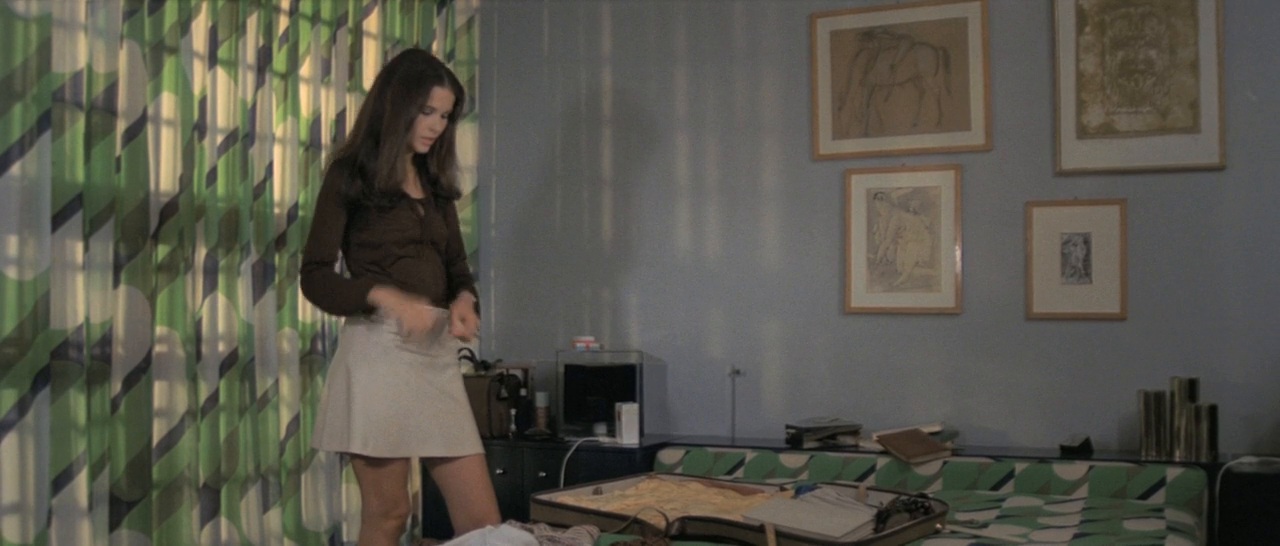
The telephone initially connects the house to Roberto’s workplace. Once the call fails to bring immediate help, waiting becomes the scene’s organising action. Packing, looking, listening and checking the time stretch an ordinary delay into an interval in which the house itself seems to acquire an unseen occupant.

Explore the sequence gallery →Back to the scene guide ↑

23 / 1:21:05

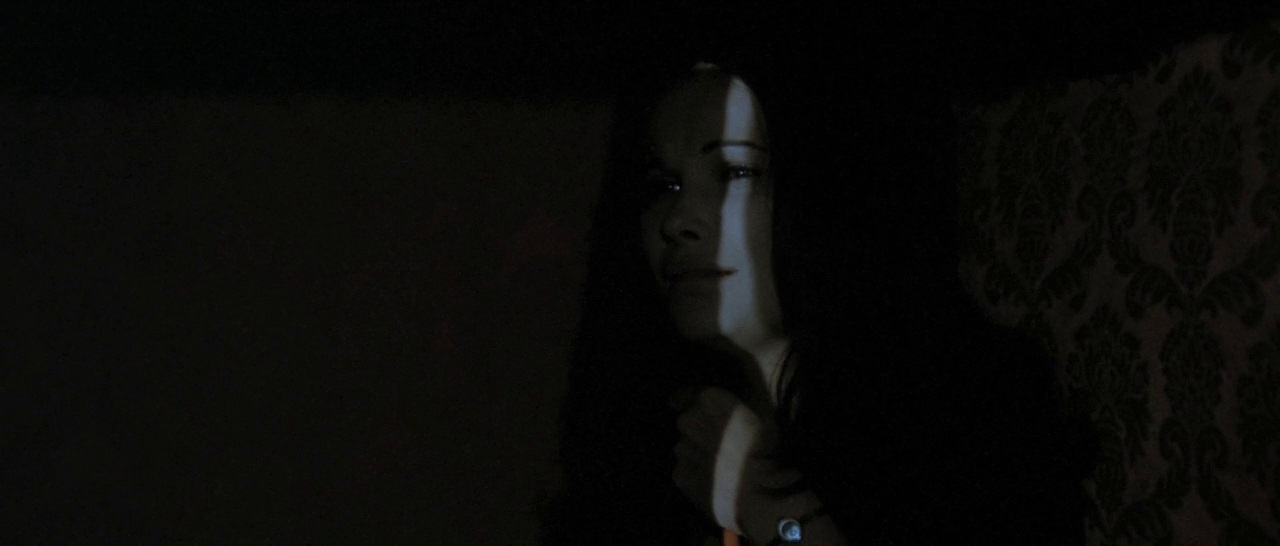
A face caught in a strip of light

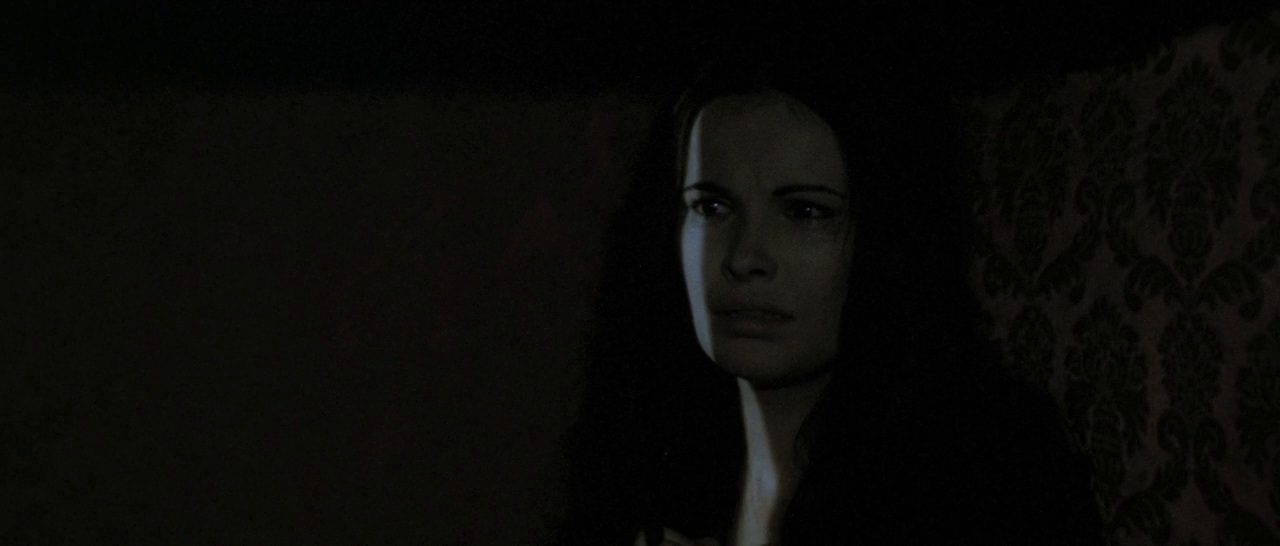
A narrow band of light catches Dalia’s face.ENLARGE ↗
A narrow band of light catches Dalia’s face.

The long approach distributes fear across corridors, curtains, stairs and doorways. Dalia’s face is repeatedly revealed in part. The withheld view of the attacker makes her reactions carry the scene until a sudden hand, blade and wound replace the extended search.

Explore the sequence gallery →Back to the scene guide ↑

24 / 1:24:38

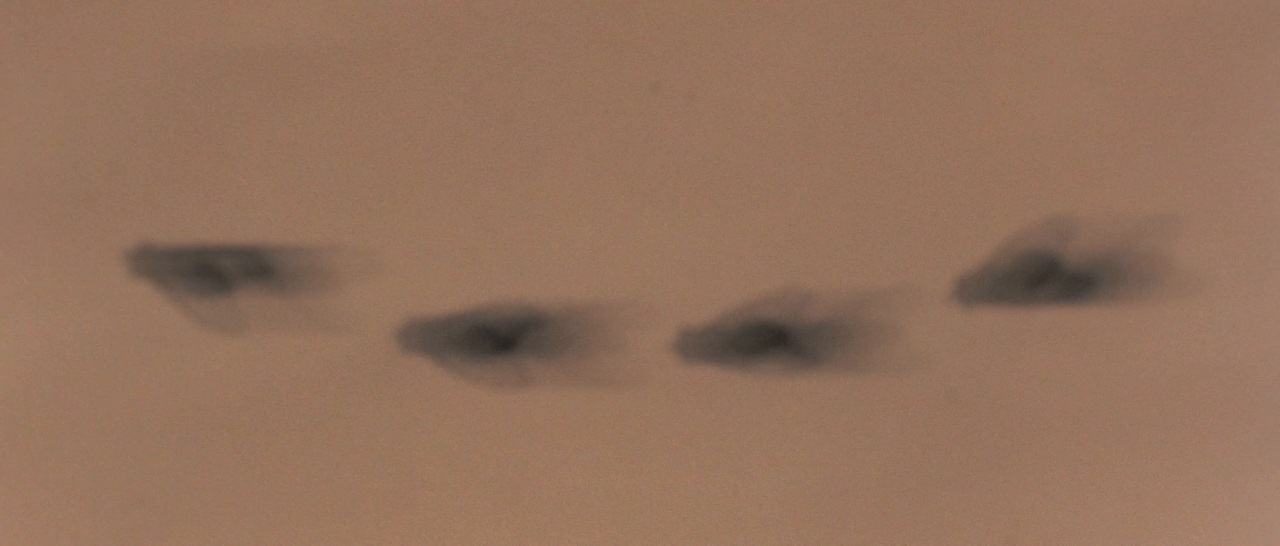
A machine promises the last image

Four fly-like forms appear on the screen.ENLARGE ↗
Four fly-like forms appear on the screen.

The optical demonstration gives the investigation a spectacular new image. It does not give the investigators a reliable reading of it. The procedure is the film’s fictional science: a story mechanism for making a dead person’s final sight recoverable, not a genuine method of forensic identification.

Follow the close study →Back to the scene guide ↑

25 / 1:31:30

Waiting with a weapon

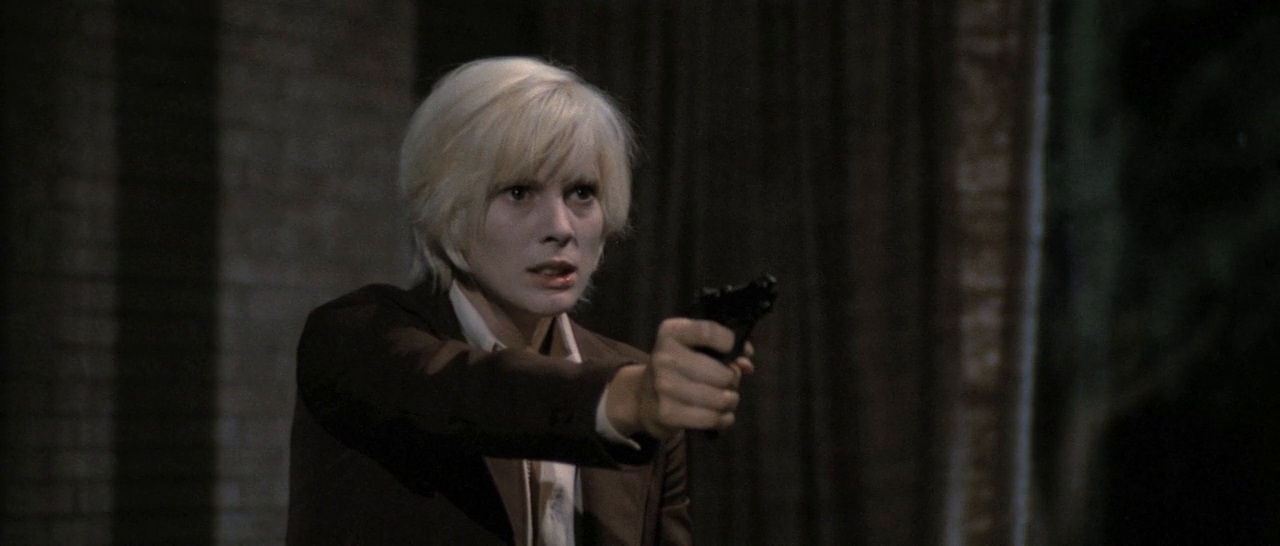
Roberto aims at the door.ENLARGE ↗
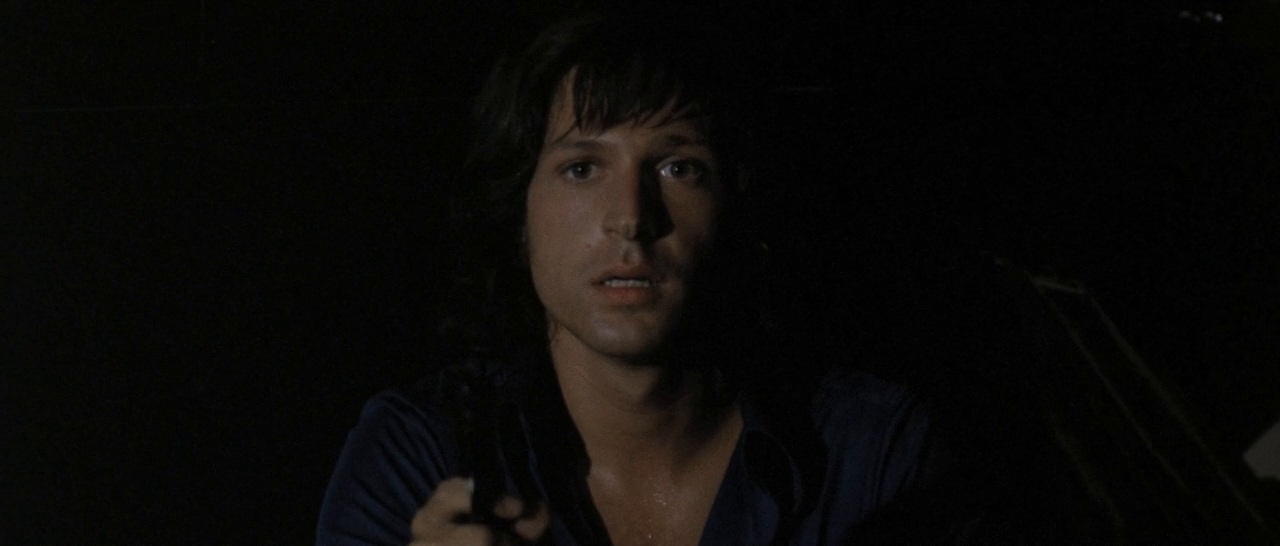
Roberto aims at the door.

The later watch at home changes Roberto from the photographed participant into someone trying to anticipate an entrance. A gun, doors and unreliable visibility organise the space. The threatening figure behind a barrier can still become a familiar person once it enters the light.

Explore the sequence gallery →Back to the scene guide ↑

26 / 1:33:15

One pendant, several impressions

A single fly is enclosed in Nina’s pendant.ENLARGE ↗
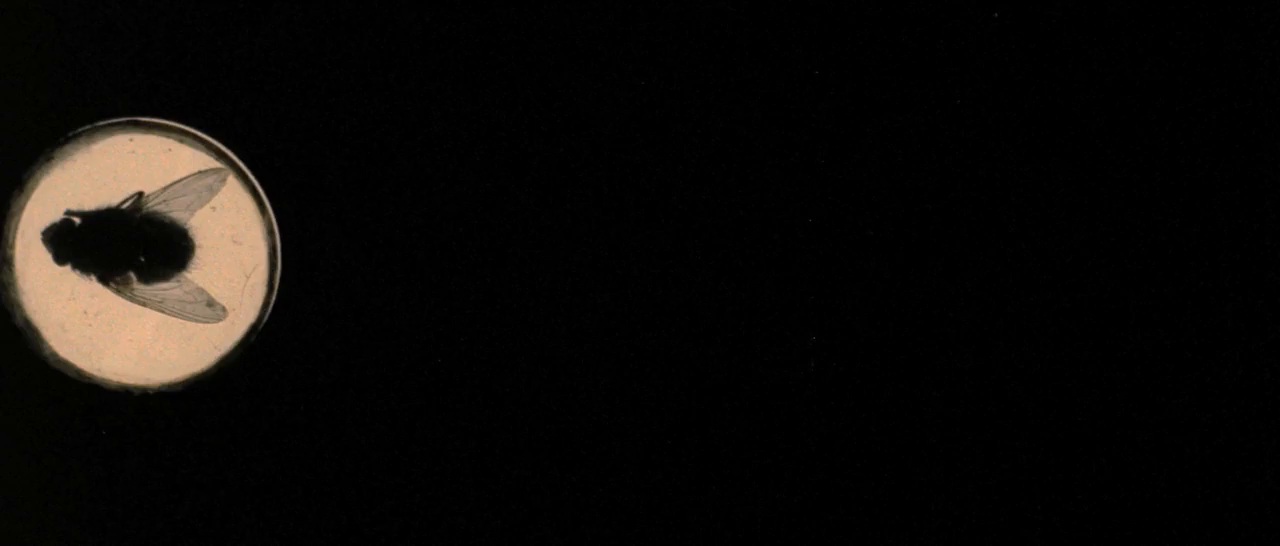
A single fly is enclosed in Nina’s pendant.

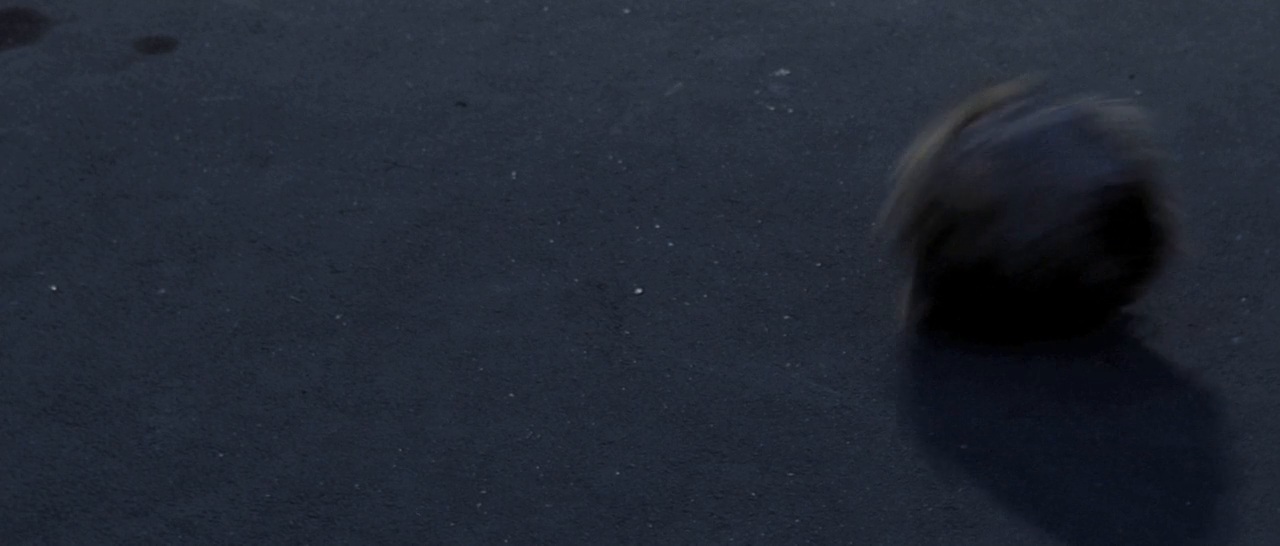
Nina’s moving pendant supplies the relation that the retinal image lacked. The discovery depends on recognising an object in motion, not identifying four separate insects. An apparently literal image has preserved a visual effect that Roberto must connect to something near him.

Follow the close study →Back to the scene guide ↑

27 / 1:37:30

An explanation under threat

Nina delivers her account at gunpoint.ENLARGE ↗
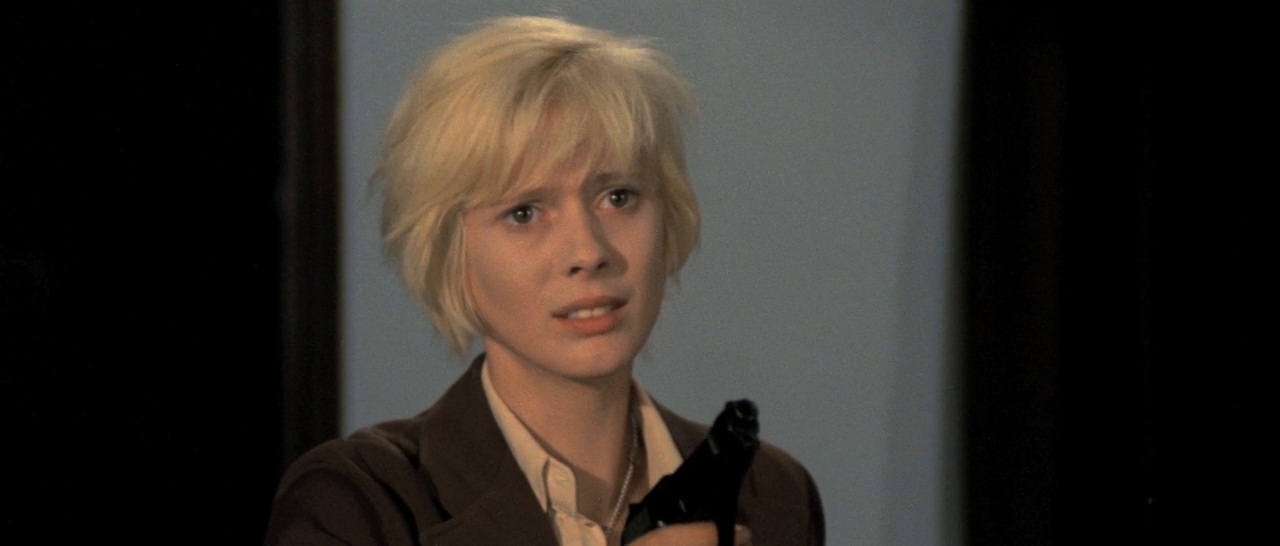
Nina delivers her account at gunpoint.

Nina describes paternal abuse, forced conformity and confinement, then makes Roberto’s resemblance to her father the basis for substitution. The film gives her a voice at the point when it also turns that history into a motive for murder. Her account is part of the thriller’s construction, not a general explanation of trauma or mental illness.

Read further →Back to the scene guide ↑

28 / 1:40:54

The dream passes to someone else

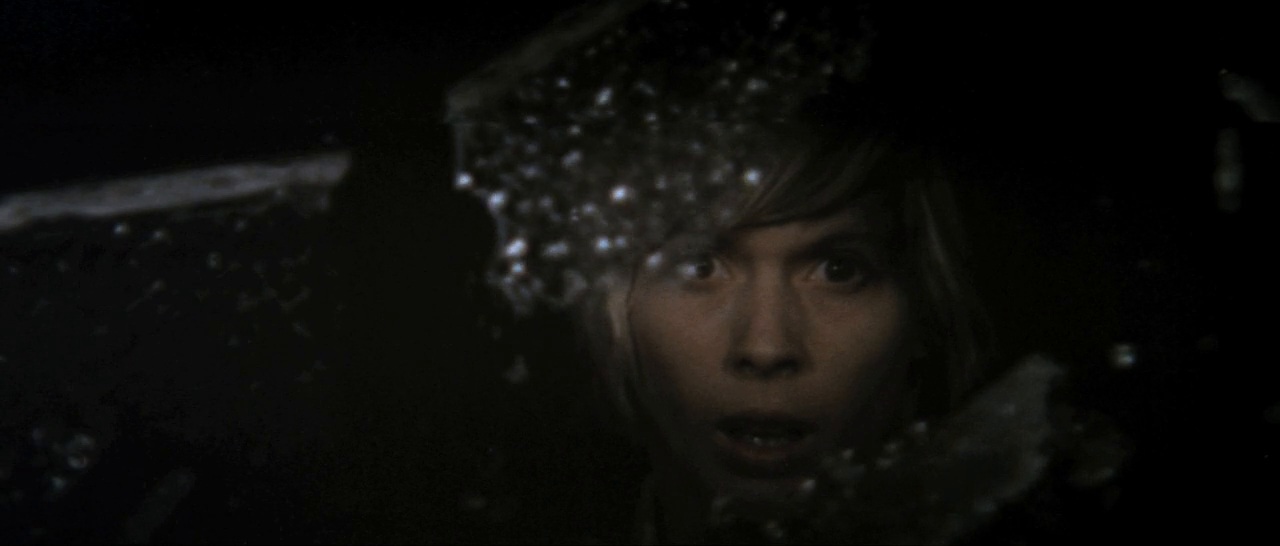
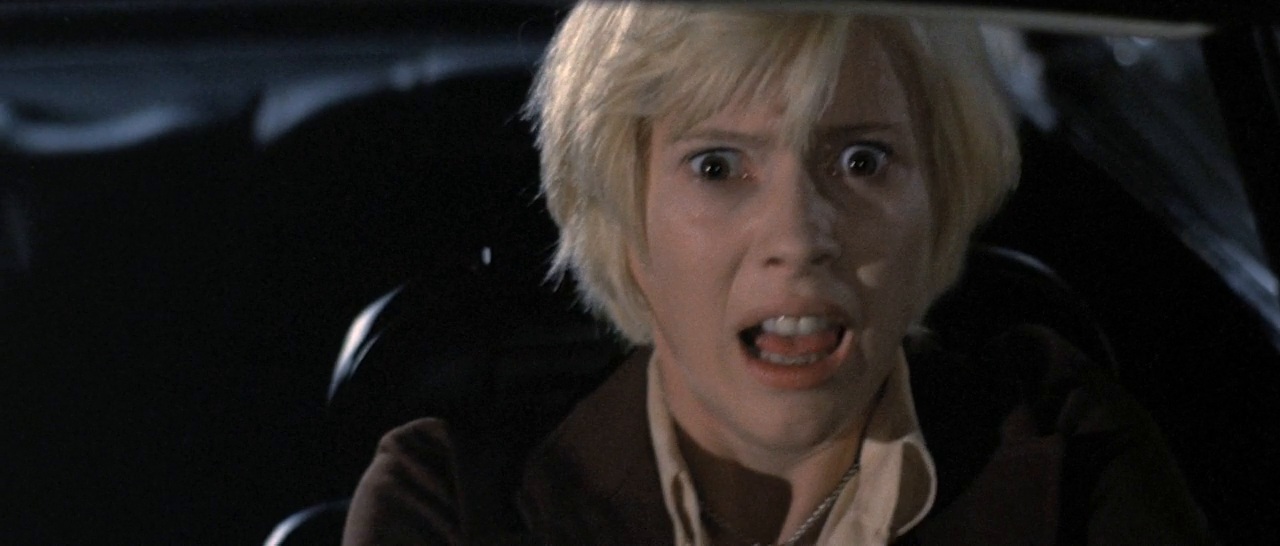
The breaking windscreen crosses Nina’s face.ENLARGE ↗
The breaking windscreen crosses Nina’s face.

The car’s movement becomes a sequence of delayed impacts, fractured glass and alternating viewpoints. The dream returns beside the road accident; its completion does not belong to the person who imagined himself at its centre. The sudden exterior fire ends an interval that the close views have made extraordinarily long.

Explore the sequence gallery →Back to the scene guide ↑

Film presentation & image sources →

GORE, EFFECTS & SUSPENSE

From the approach to the aftermath.

Eight sequences.
Eighty-five selected stages.

The film makes a fixed smile, a narrow gap, a wire and a windscreen into instruments of terror. Each study pairs a lead image with an optional sequence gallery. Open the gallery, then enlarge a frame to move through the stages.

SEQUENCE STUDY 01 / 05:00–07:08

The theatre: a murder performed for the camera

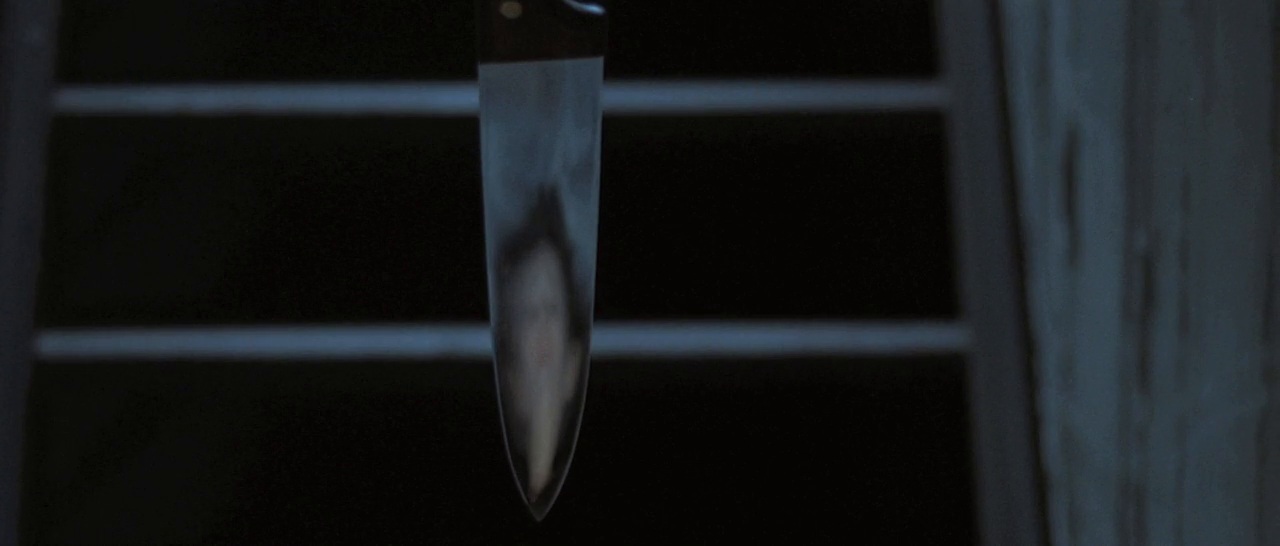
A knife enters the confrontation.ENLARGE ↗
A knife enters the confrontation.

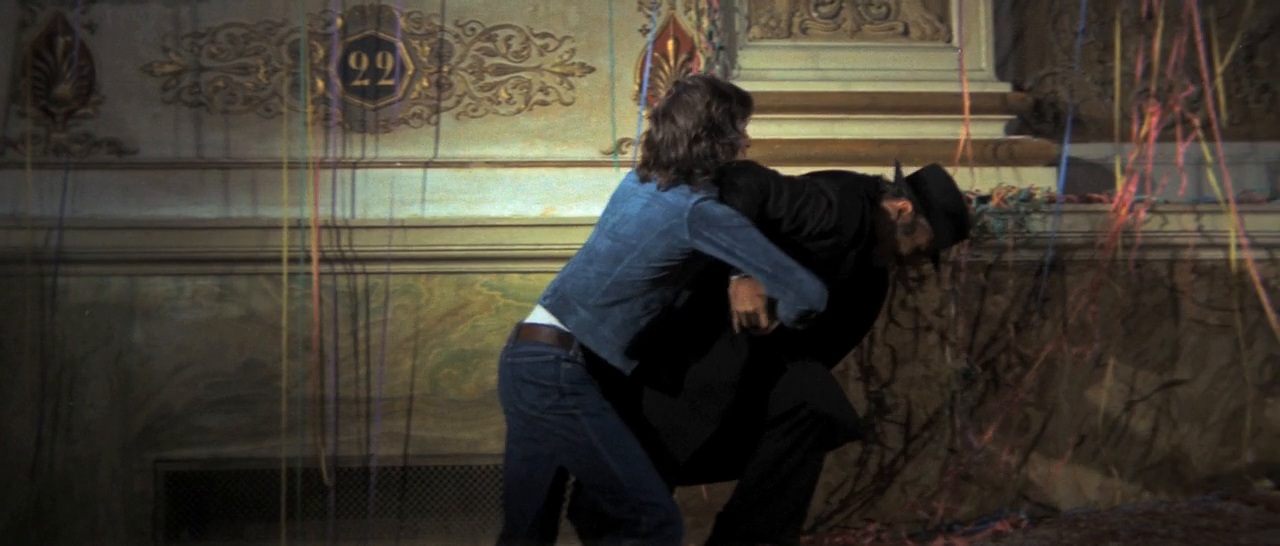
The sequence first establishes a place, then divides it between participants and watcher. The knife supplies the apparent cause of death; the body below supplies its apparent consequence; the photographer turns their connection into evidence. The later disclosure that Carlo is alive makes this a study in staged injury. The gallery shows how the performance is assembled without mistaking its fictional deception for a documented account of the production’s prop technique.

Return to the scene study →

Explore the sequence 10 stages
01 / 05:16
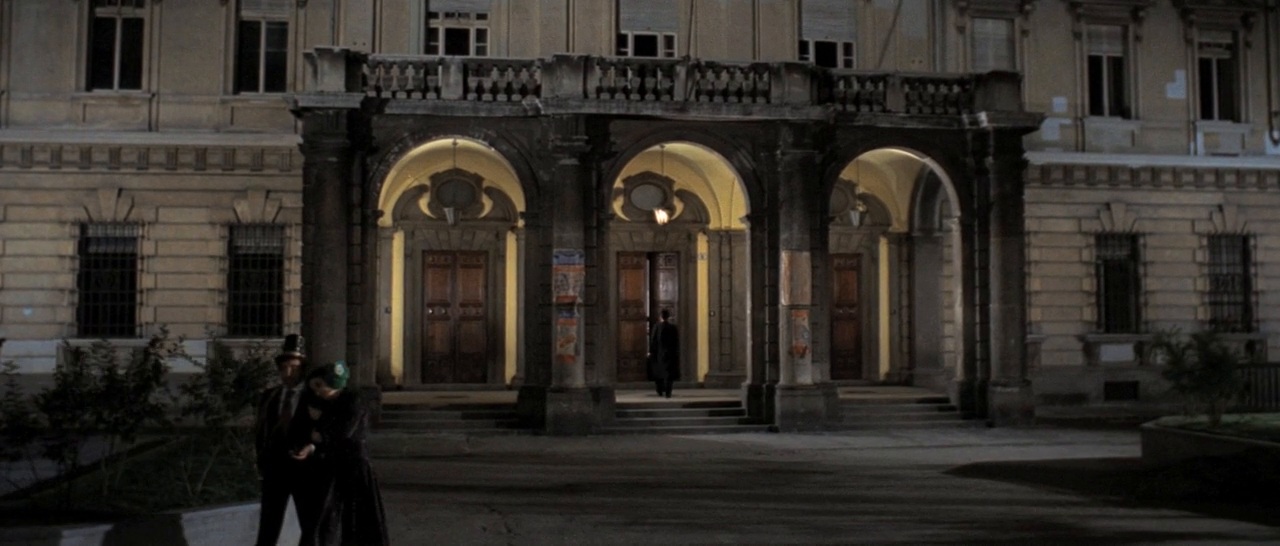
The theatre stands beyond the arcade.ENLARGE ↗
The theatre stands beyond the arcade.
02 / 05:48
Roberto enters the empty theatre.ENLARGE ↗
Roberto enters the empty theatre.
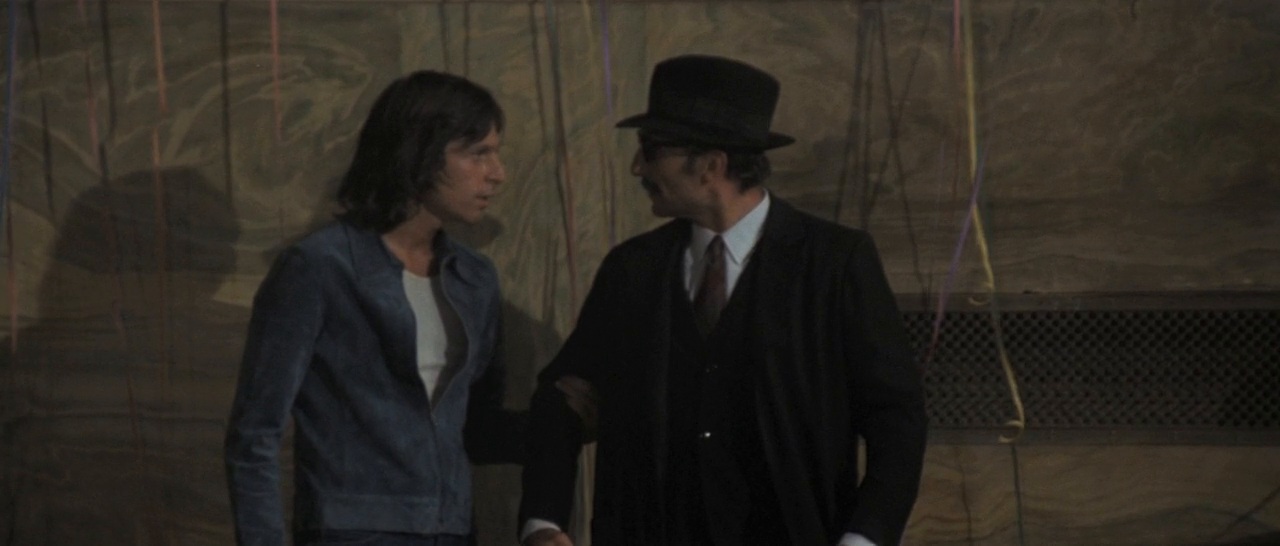
03 / 06:00
The men confront one another in the balcony.ENLARGE ↗
The men confront one another in the balcony.
04 / 06:12
The masked photographer takes aim.ENLARGE ↗
The masked photographer takes aim.
05 / 06:28
A knife enters the confrontation.ENLARGE ↗
A knife enters the confrontation.
06 / 06:36
The men struggle for the blade.ENLARGE ↗
The men struggle for the blade.
07 / 06:40
Roberto turns with the knife.ENLARGE ↗
Roberto turns with the knife.
08 / 06:44
The apparent victim lies below.ENLARGE ↗
The apparent victim lies below.
09 / 06:52
Roberto looks down with the knife in hand.ENLARGE ↗
Roberto looks down with the knife in hand.
10 / 07:04
The balconies separate the watcher from the scene.ENLARGE ↗
The balconies separate the watcher from the scene.
Back to the effects index ↑

SEQUENCE STUDY 02 / 14:40–17:30

The bedroom: the face that cannot change

The mask appears at close range.ENLARGE ↗
The mask appears at close range.

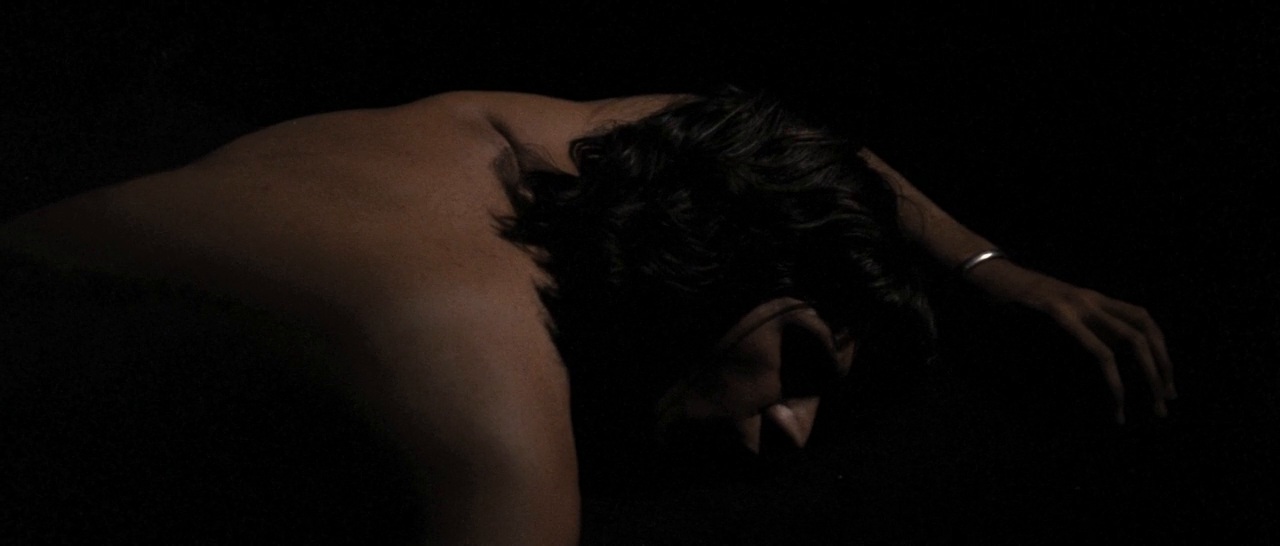
A fixed smile is brought into violent proximity with a moving, frightened face. Restrained movement and darkness do more work here than blood. The aftermath moves from Roberto’s lowered body to Nina on the stairs, making the arrival of light a change of information rather than proof that the danger has passed.

Return to the scene study →

Explore the sequence 8 stages
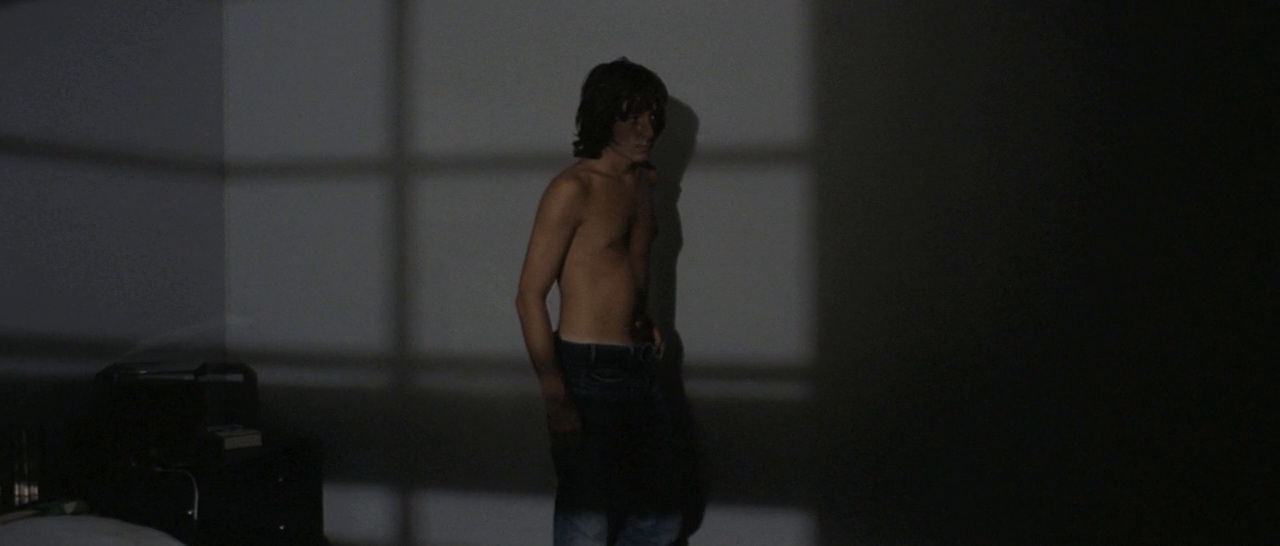
01 / 14:44
Window light divides the darkened room.ENLARGE ↗
Window light divides the darkened room.
02 / 15:36
Roberto reaches towards the switch.ENLARGE ↗
Roberto reaches towards the switch.
03 / 16:00
The mask appears at close range.ENLARGE ↗
The mask appears at close range.
04 / 16:04
Roberto is restrained.ENLARGE ↗
Roberto is restrained.
05 / 16:08
The threat is delivered beside his face.ENLARGE ↗
The threat is delivered beside his face.
06 / 16:20
Roberto bends forward after the encounter.ENLARGE ↗
Roberto bends forward after the encounter.
07 / 17:04
Nina appears as a silhouette on the stairs.ENLARGE ↗
Nina appears as a silhouette on the stairs.
08 / 17:24
The light reveals Nina in the house.ENLARGE ↗
The light reveals Nina in the house.
Back to the effects index ↑

SEQUENCE STUDY 03 / 29:40–35:30

The park: a body caught by its surroundings

Amelia squeezes between the walls.ENLARGE ↗
Amelia squeezes between the walls.

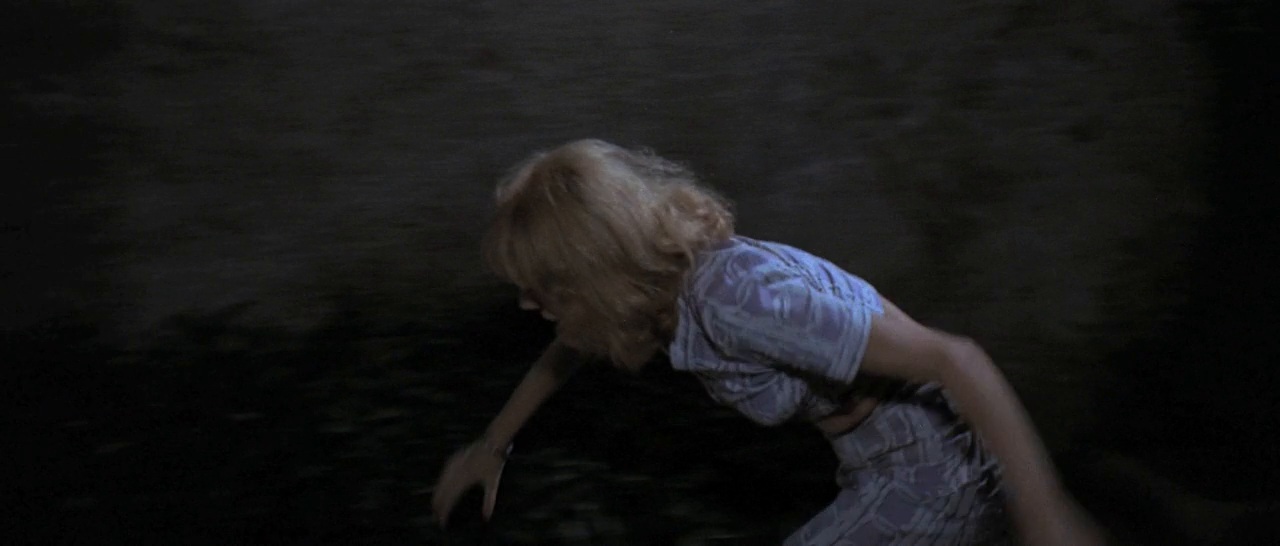
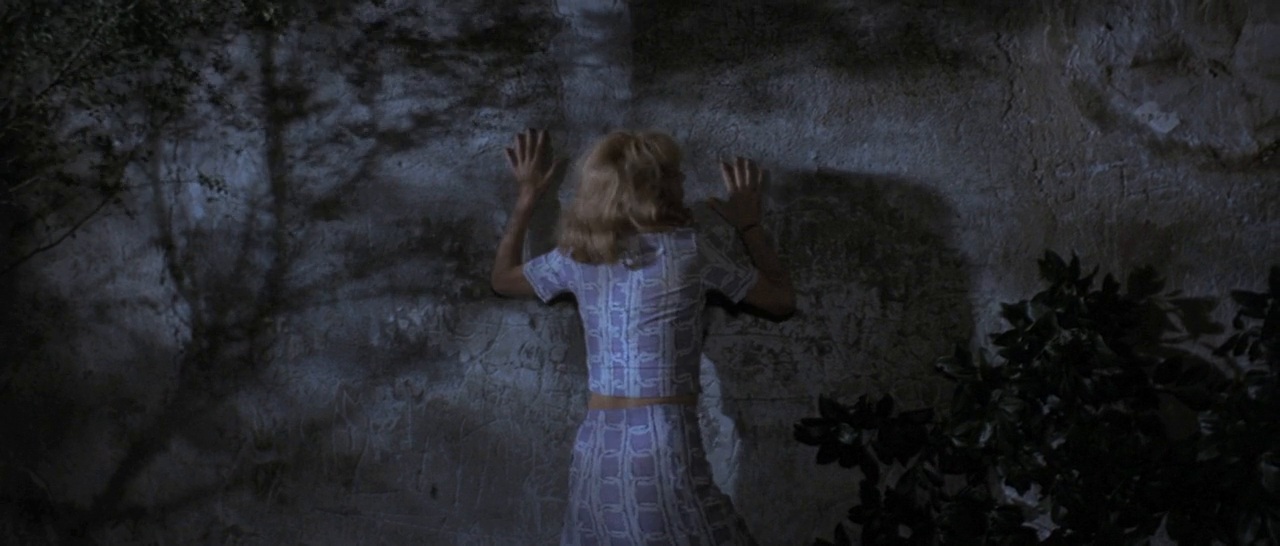
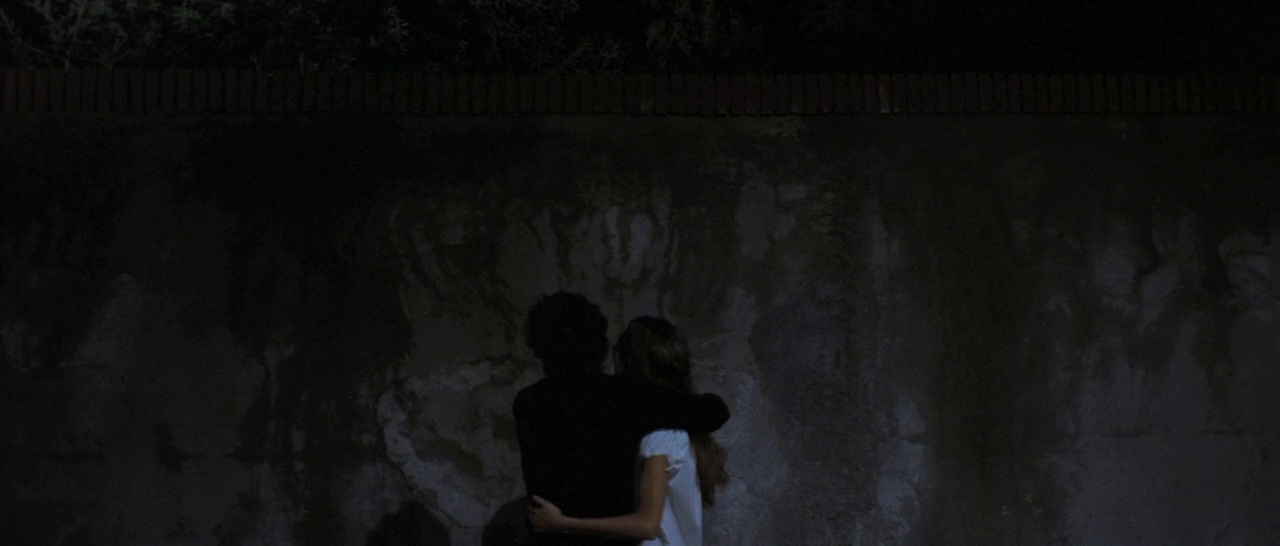
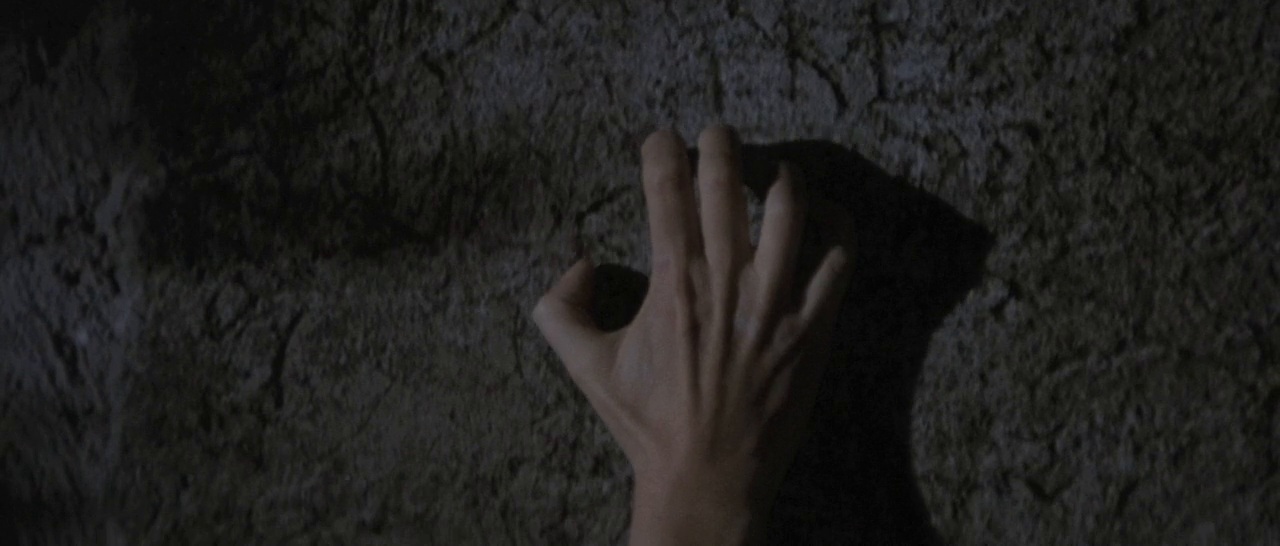
This attack is built as a sequence of disappearing exits. The populated playground becomes empty; the gate closes; a gap between walls catches the body it seemed to accommodate. The cut to an embracing couple outside the wall is a separate viewpoint, not a view of the assailant. Hands against stone and the final red interruption make the obstruction itself the dominant image of violence.

Return to the scene study →

Explore the sequence 12 stages
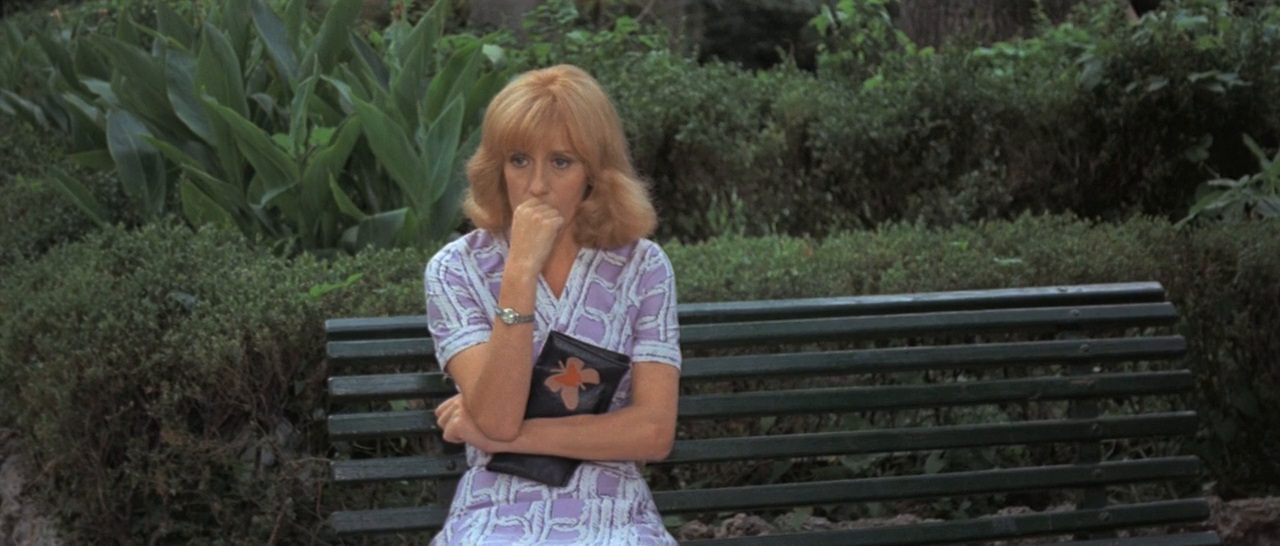
01 / 29:44
Amelia waits on the bench.ENLARGE ↗
Amelia waits on the bench.
02 / 29:56
Children occupy the playground.ENLARGE ↗
Children occupy the playground.
03 / 30:28
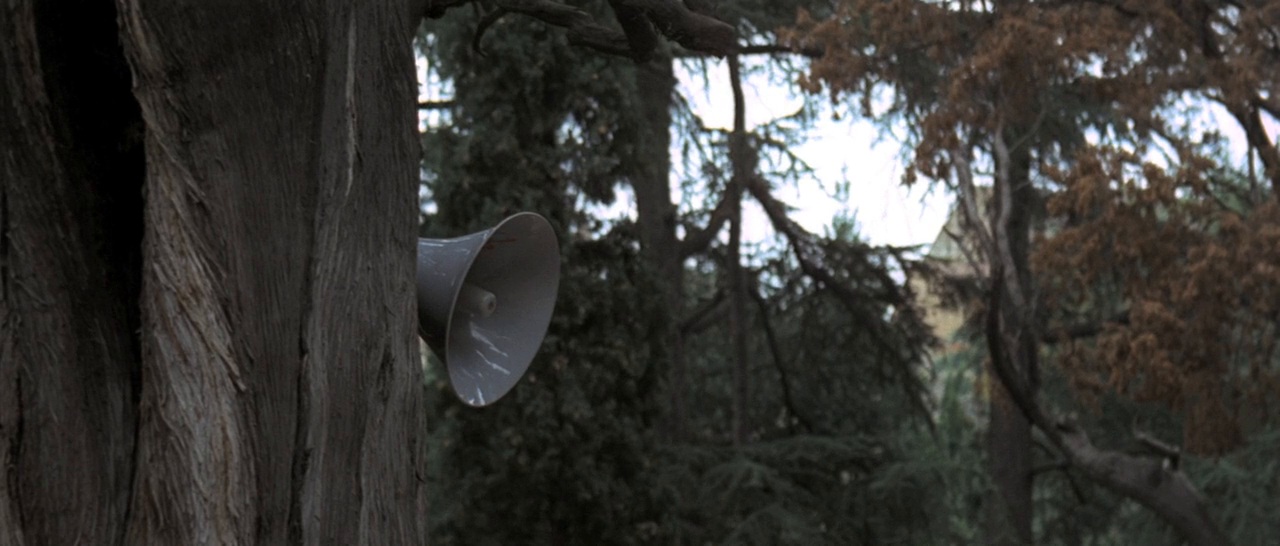
A loudspeaker hangs among the trees.ENLARGE ↗
A loudspeaker hangs among the trees.
04 / 31:44
The playground stands empty.ENLARGE ↗
The playground stands empty.
05 / 32:20
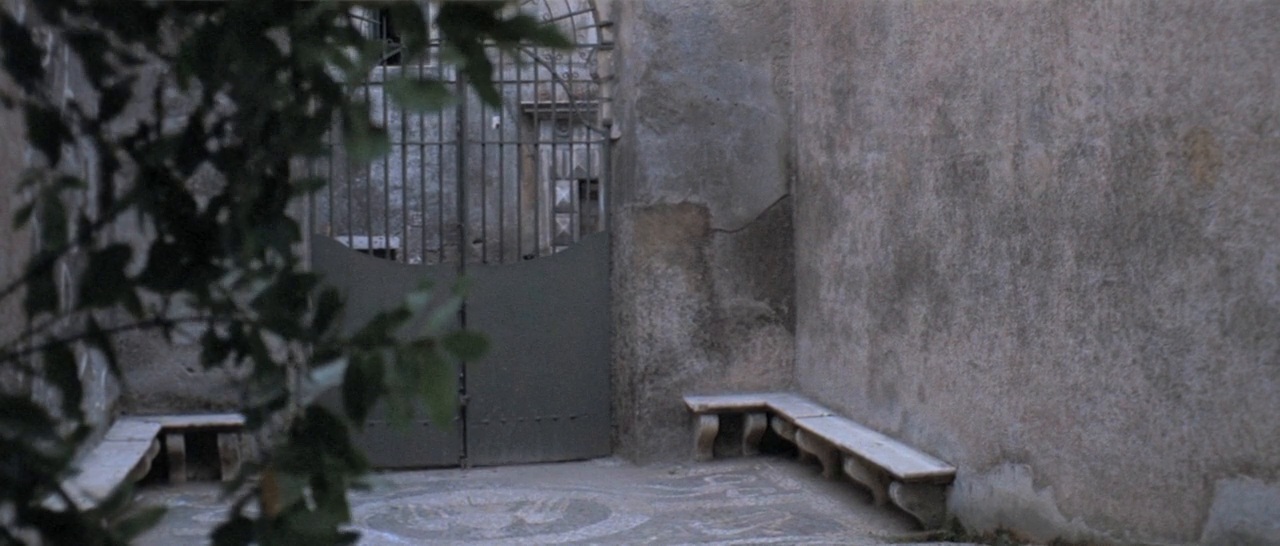
The gate is closed.ENLARGE ↗
The gate is closed.
06 / 33:36
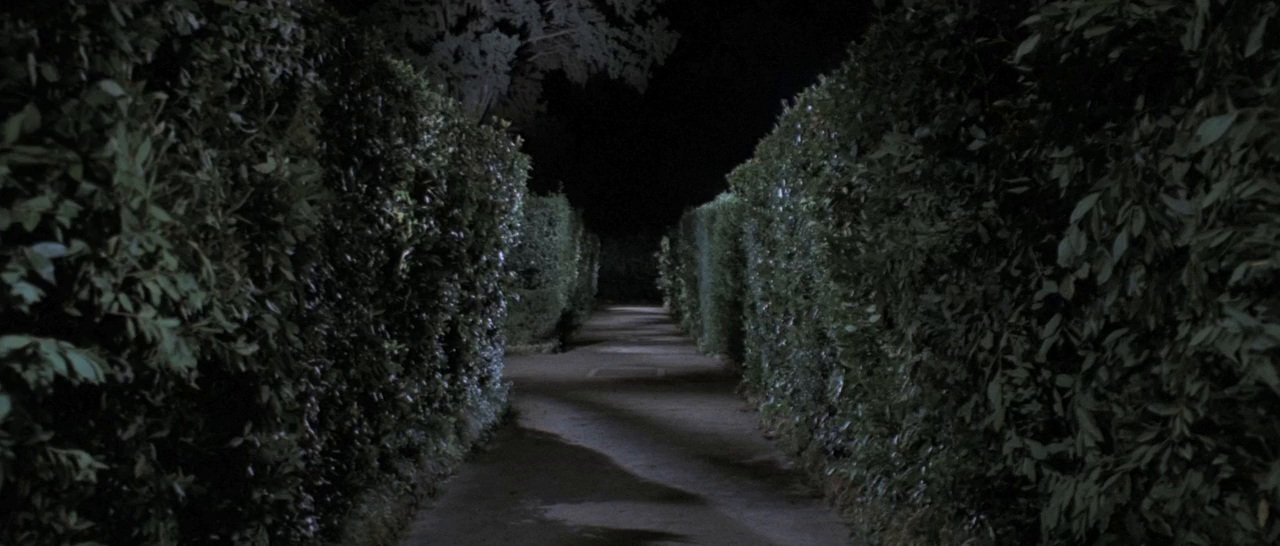
The path narrows between hedges.ENLARGE ↗
The path narrows between hedges.
07 / 34:27
Amelia squeezes between the walls.ENLARGE ↗
Amelia squeezes between the walls.
08 / 34:35
A hand braces against the stone.ENLARGE ↗
A hand braces against the stone.
09 / 34:41
She emerges from the narrow gap.ENLARGE ↗
She emerges from the narrow gap.
10 / 34:51
Her hands press against the wall.ENLARGE ↗
Her hands press against the wall.
11 / 34:55
A couple embrace on the other side.ENLARGE ↗
A couple embrace on the other side.
12 / 35:27
A hand reaches up the barrier.ENLARGE ↗
A hand reaches up the barrier.
Back to the effects index ↑

SEQUENCE STUDY 04 / 43:36–45:15

Carlo: the false death becomes a real one

Blood marks the face after the blow.ENLARGE ↗
Blood marks the face after the blow.

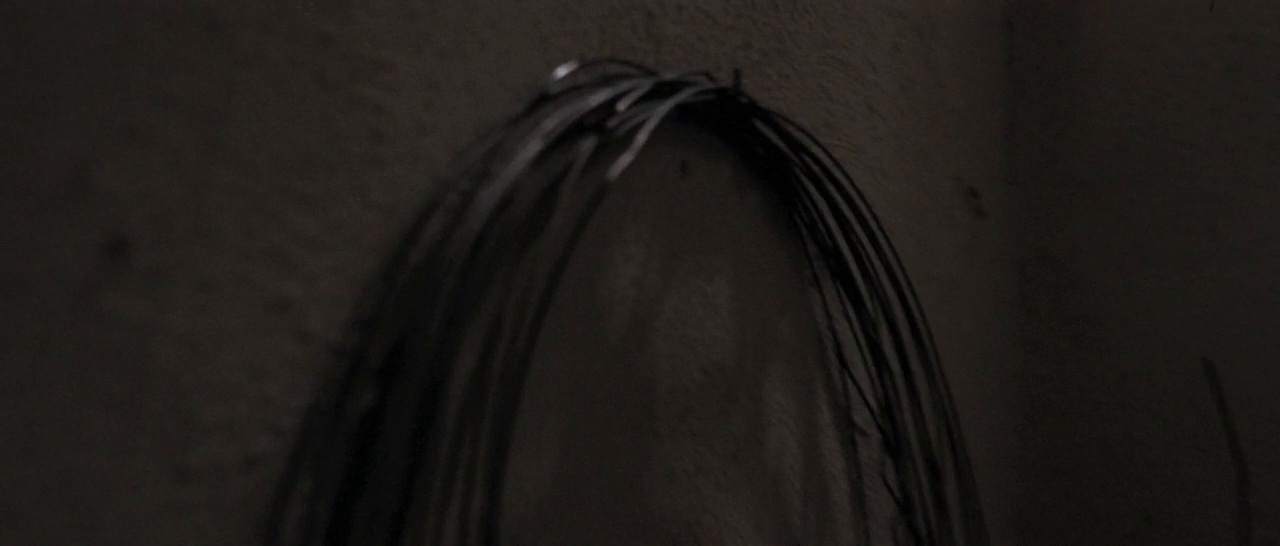
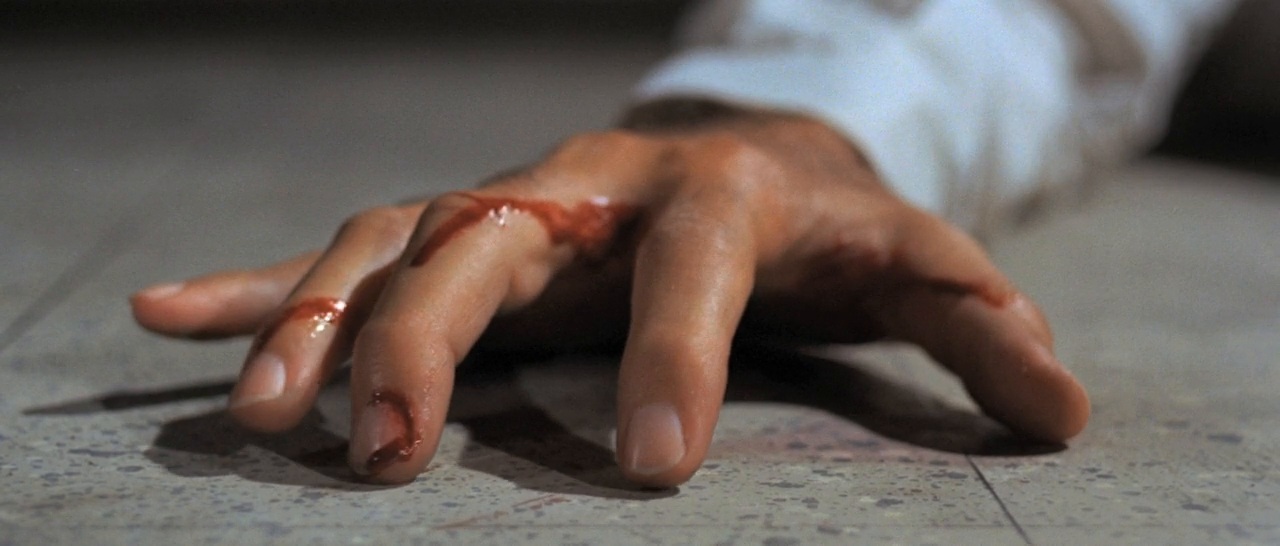
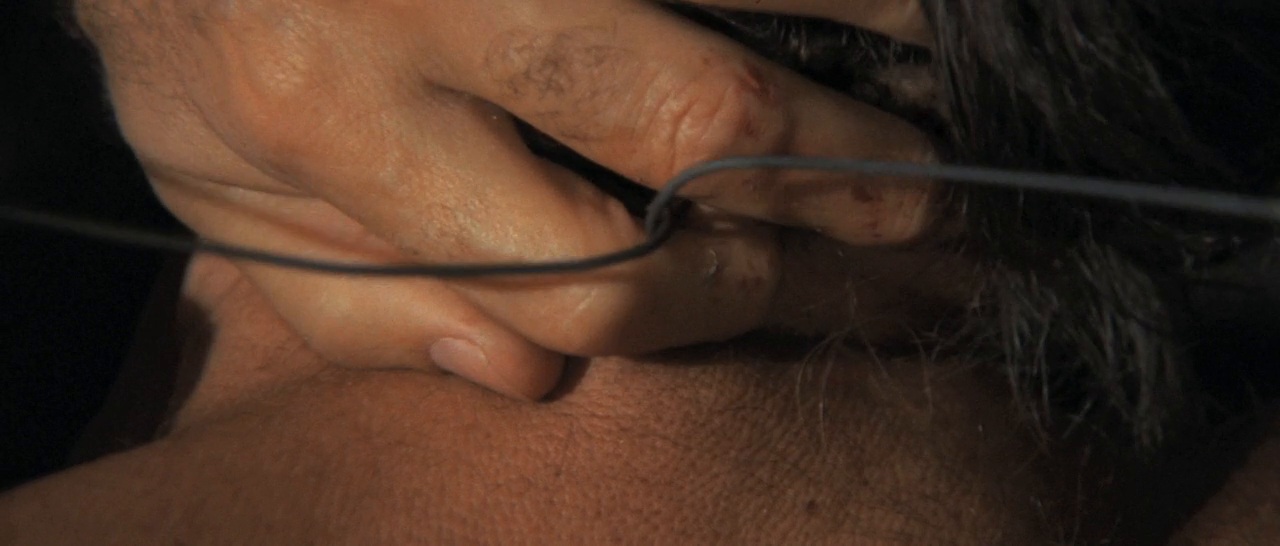
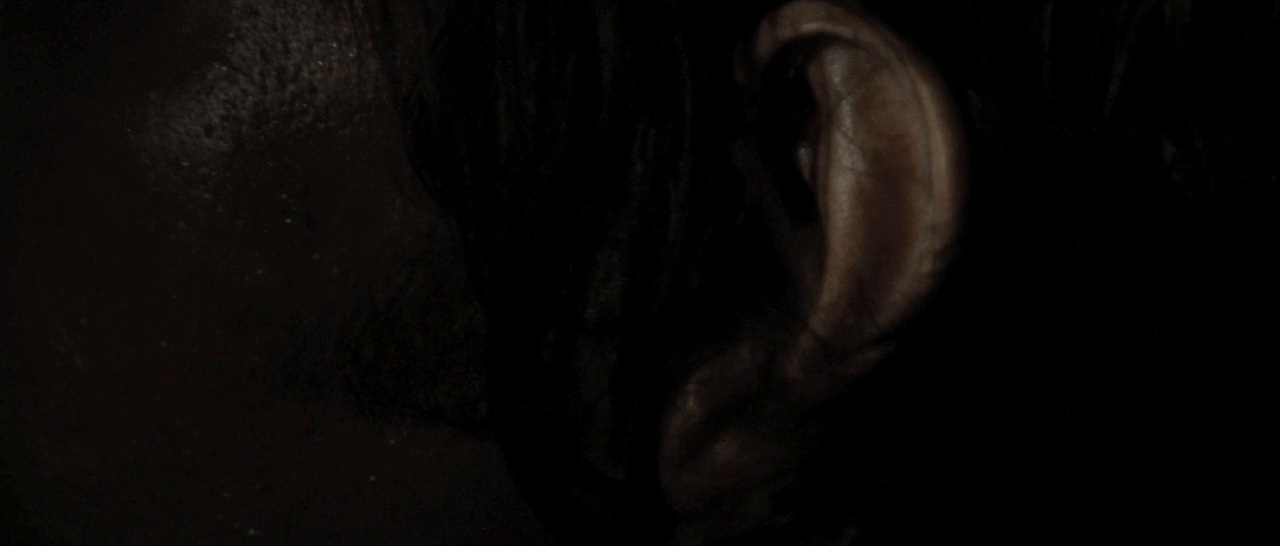
The attack separates a blunt impact from the later use of wire. Blood on the face establishes injury; the movement away from the body withholds the attacker while objects and gestures take over the account. The wire is read through its relation to neck and hands. These visible stages support an analysis of montage and makeup, but they do not by themselves establish the material used for any prop.

Return to the scene study →

Explore the sequence 10 stages
01 / 43:36
Carlo arrives at the door.ENLARGE ↗
Carlo arrives at the door.
02 / 44:18
He turns towards someone in the room.ENLARGE ↗
He turns towards someone in the room.
03 / 44:22
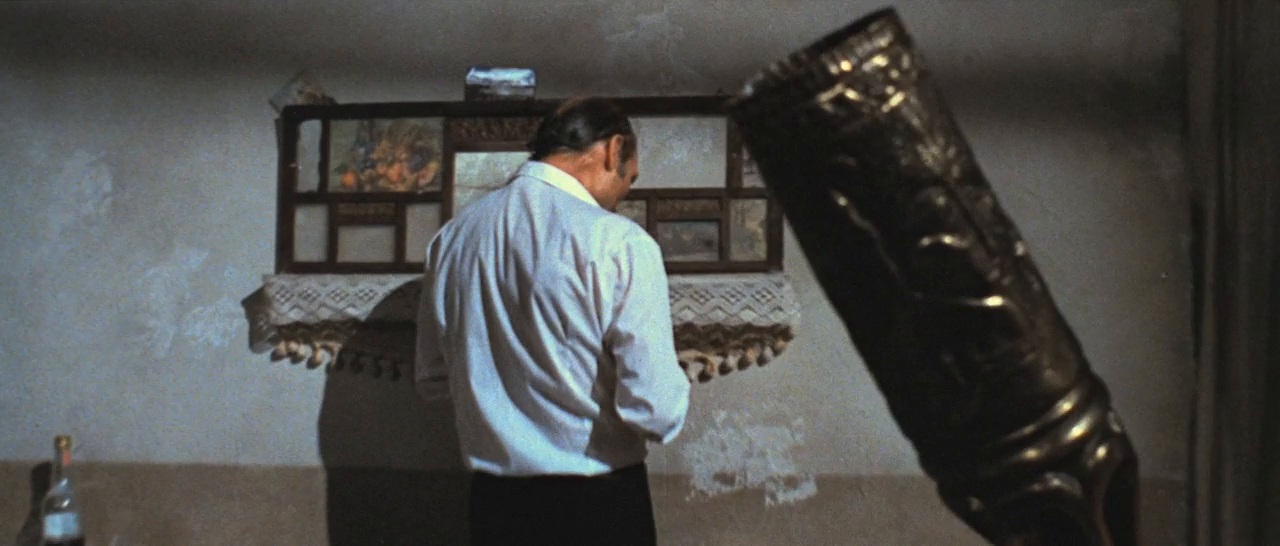
A heavy object crosses the foreground.ENLARGE ↗
A heavy object crosses the foreground.
04 / 44:28
Blood marks the face after the blow.ENLARGE ↗
Blood marks the face after the blow.
05 / 44:33
Carlo lies with his head in shadow.ENLARGE ↗
Carlo lies with his head in shadow.
06 / 44:42
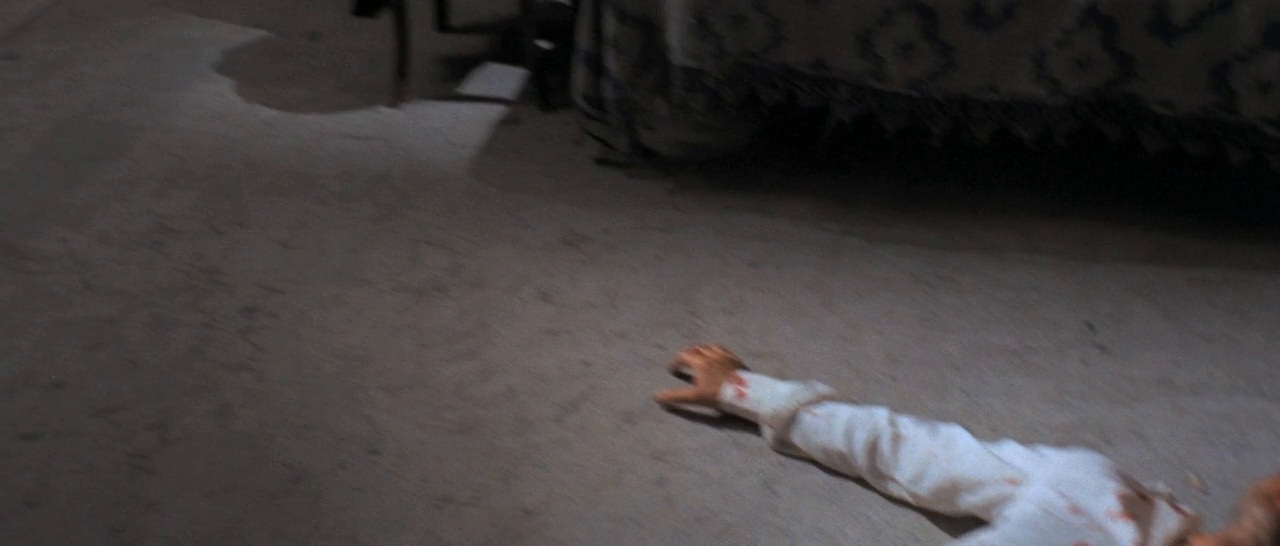
An arm rests against the floor.ENLARGE ↗
An arm rests against the floor.
07 / 44:51
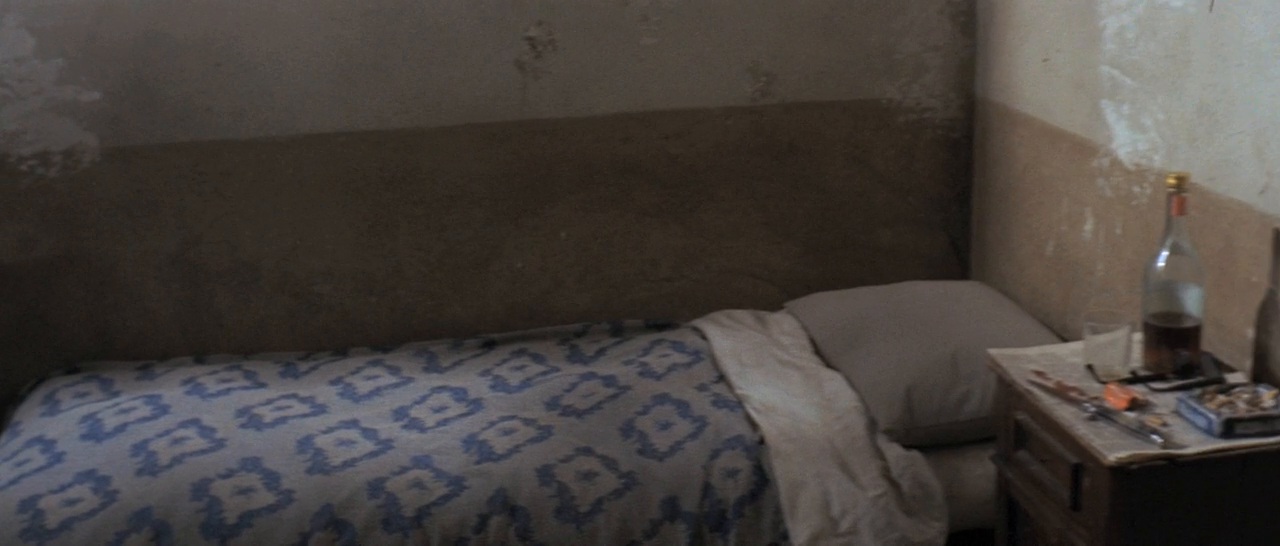
The view moves across the room.ENLARGE ↗
The view moves across the room.
08 / 45:00
A coil of wire comes into view.ENLARGE ↗
A coil of wire comes into view.
09 / 45:06
A bloodied hand lies on the floor.ENLARGE ↗
A bloodied hand lies on the floor.
10 / 45:15
The wire is drawn behind the ear.ENLARGE ↗
The wire is drawn behind the ear.
Back to the effects index ↑

SEQUENCE STUDY 05 / 1:03:56–1:09:38

Arrosio: a pursuit ends in an injection

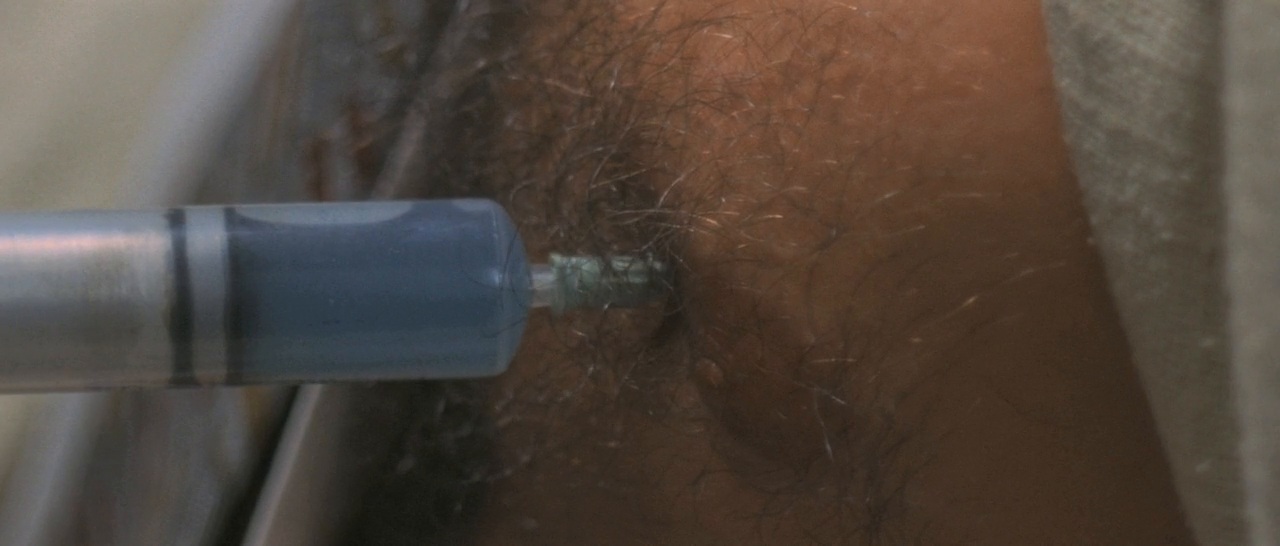
The needle is held against Arrosio’s head.ENLARGE ↗
The needle is held against Arrosio’s head.

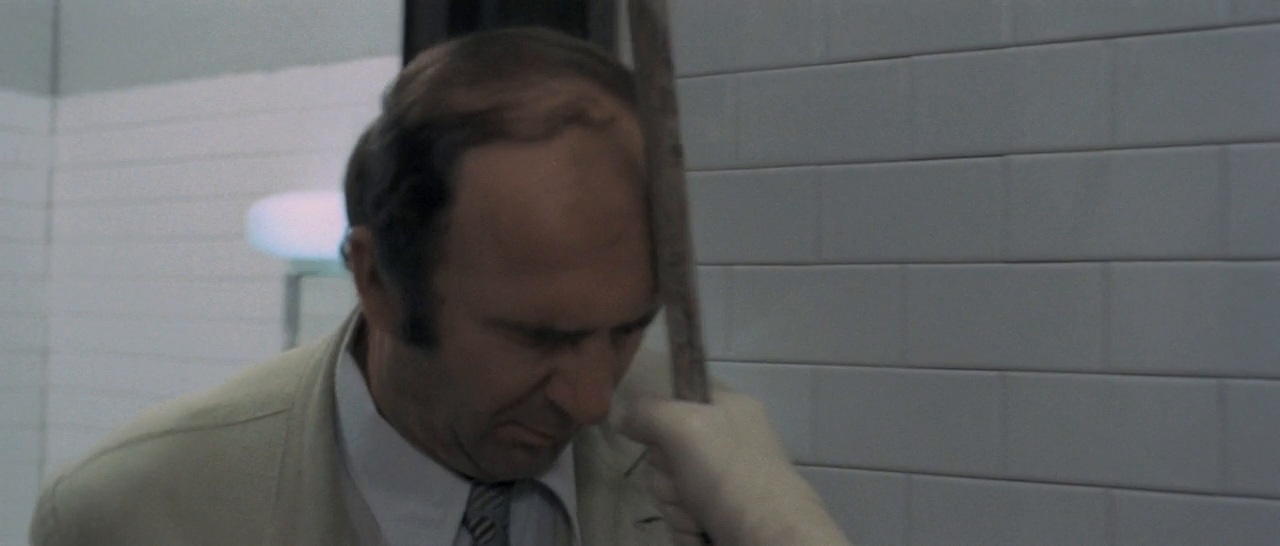
Preparation is shown before contact: the syringe is ready while the detective is still following his route. Public transport steadily gives way to a vacant washroom. The attack compresses the space into hands, needle and head, then releases it into the long collapse against the tiled corner. The progression from a crowded carriage to an isolated body is as important as the instrument itself.

Return to the scene study →

Explore the sequence 11 stages
01 / 1:03:56
The syringe is prepared.ENLARGE ↗
The syringe is prepared.
02 / 1:05:16
Passengers fill the carriage.ENLARGE ↗
Passengers fill the carriage.
03 / 1:06:56
Arrosio reaches the platform.ENLARGE ↗
Arrosio reaches the platform.
04 / 1:07:16
The route continues through the station.ENLARGE ↗
The route continues through the station.
05 / 1:08:04
The washroom opens into white surfaces.ENLARGE ↗
The washroom opens into white surfaces.
06 / 1:08:28
The assailant closes in.ENLARGE ↗
The assailant closes in.
07 / 1:08:36
A red case reveals the syringe.ENLARGE ↗
A red case reveals the syringe.
08 / 1:08:44
The needle is held against Arrosio’s head.ENLARGE ↗
The needle is held against Arrosio’s head.
09 / 1:08:56
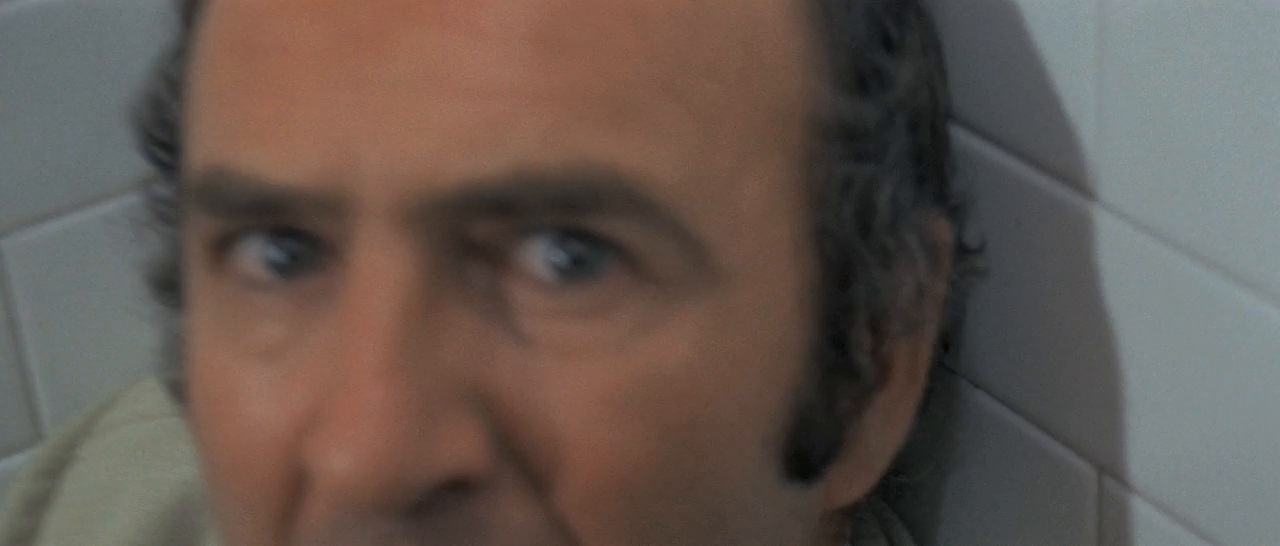
His face registers the attack.ENLARGE ↗
His face registers the attack.
10 / 1:09:12
He reaches upwards as he falls.ENLARGE ↗
He reaches upwards as he falls.
11 / 1:09:32
Arrosio slumps against the tiled corner.ENLARGE ↗
Arrosio slumps against the tiled corner.
Back to the effects index ↑

SEQUENCE STUDY 06 / 1:15:00–1:23:00

Dalia: the long wait and the sudden blade

Light cuts a narrow band across Dalia’s face.ENLARGE ↗
Light cuts a narrow band across Dalia’s face.

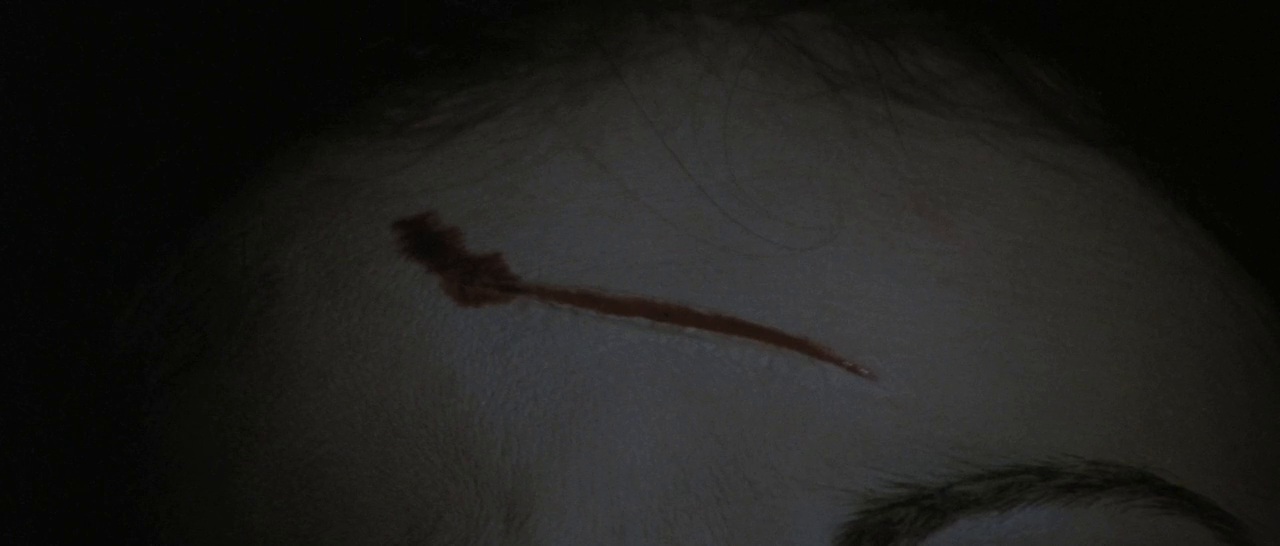
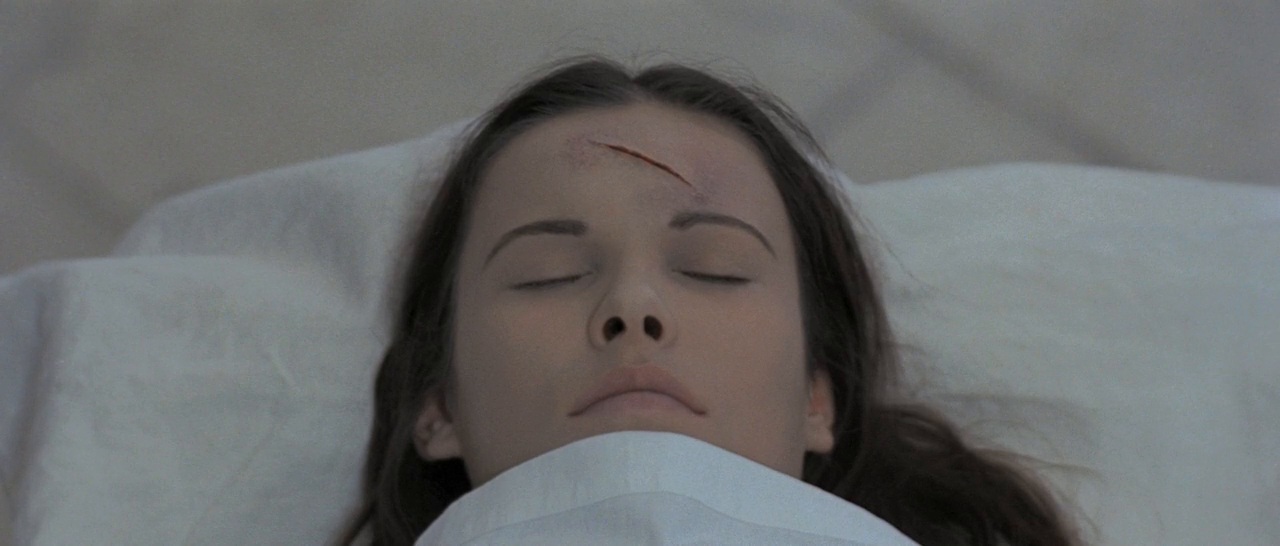
The assault is brief because the approach has occupied so much time. A telephone, watch, doorway and strip of light keep returning the viewer to Dalia’s attempts to locate danger. The hand and blade appear as fragments; the cut on her forehead and the subsequent mortuary image establish the result. Her eye then becomes the next scene’s object of investigation, carrying the attack directly into the retinal demonstration.

Return to the scene study →

Explore the sequence 12 stages
01 / 1:15:00
An open case lies on the bed.ENLARGE ↗
An open case lies on the bed.
02 / 1:15:45
Dalia waits beside the telephone.ENLARGE ↗
Dalia waits beside the telephone.
03 / 1:17:00
She checks her watch.ENLARGE ↗
She checks her watch.
04 / 1:17:20
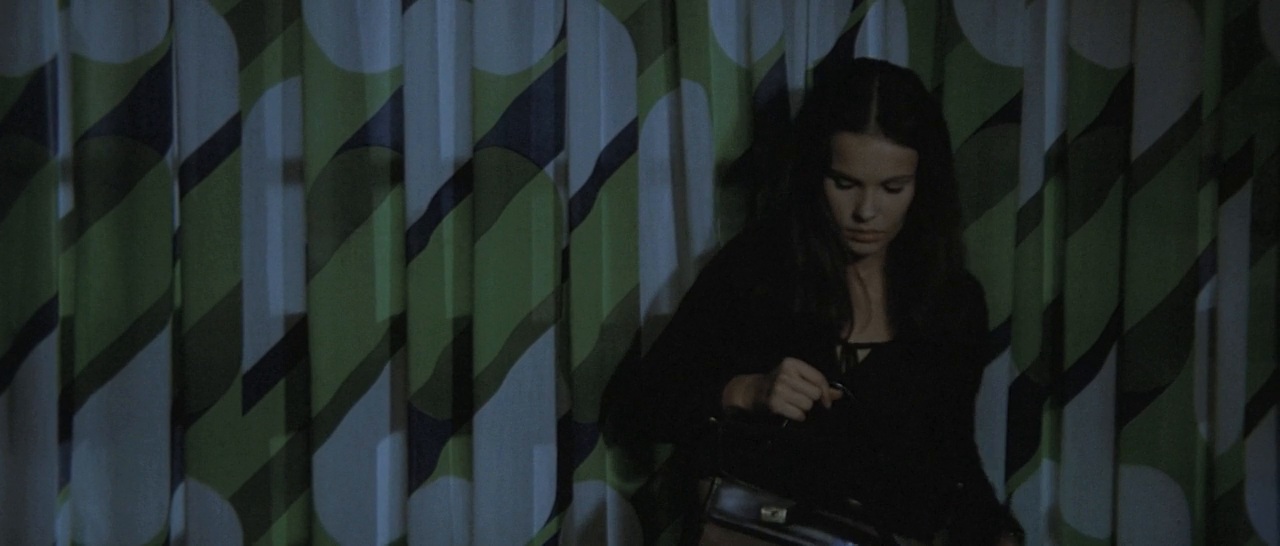
She parts the curtain towards the dark doorway.ENLARGE ↗
She parts the curtain towards the dark doorway.
05 / 1:19:25
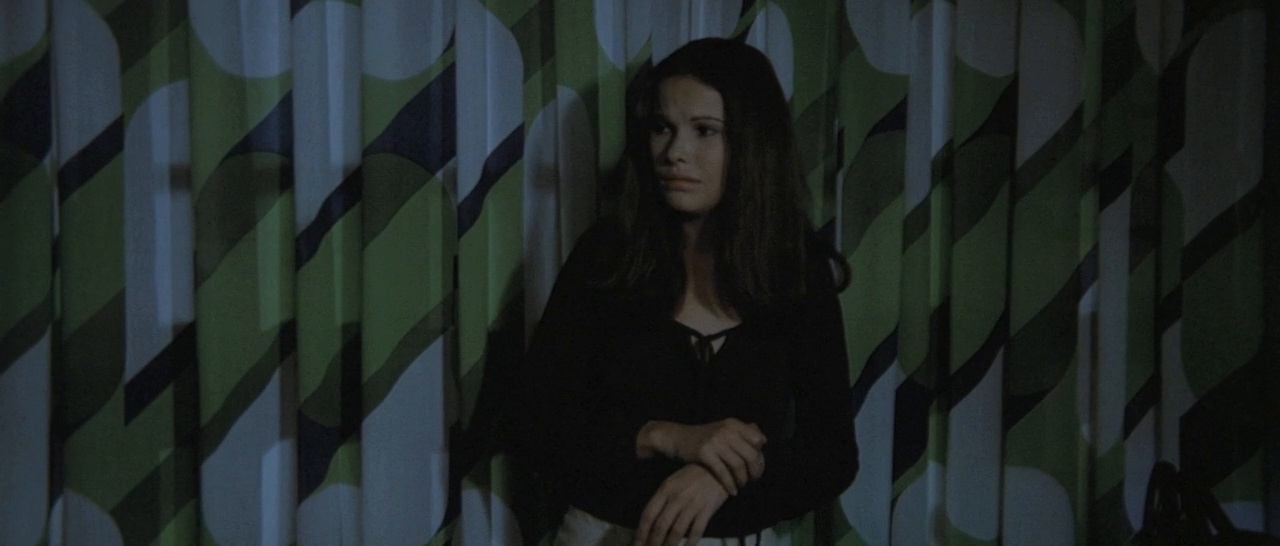
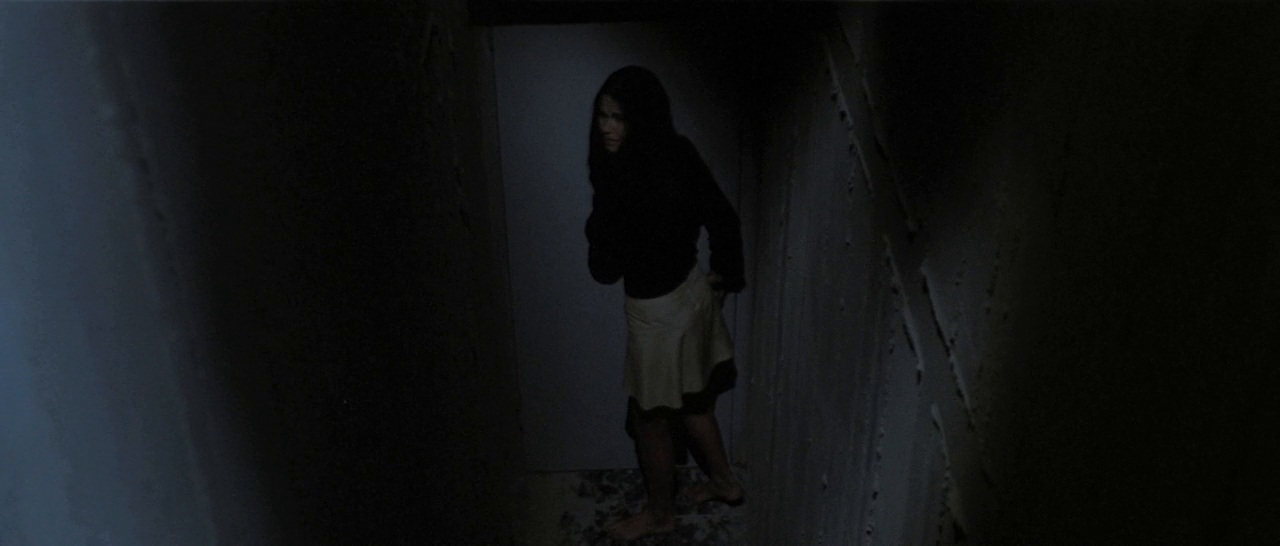
The stairs confine her movement.ENLARGE ↗
The stairs confine her movement.
06 / 1:19:40
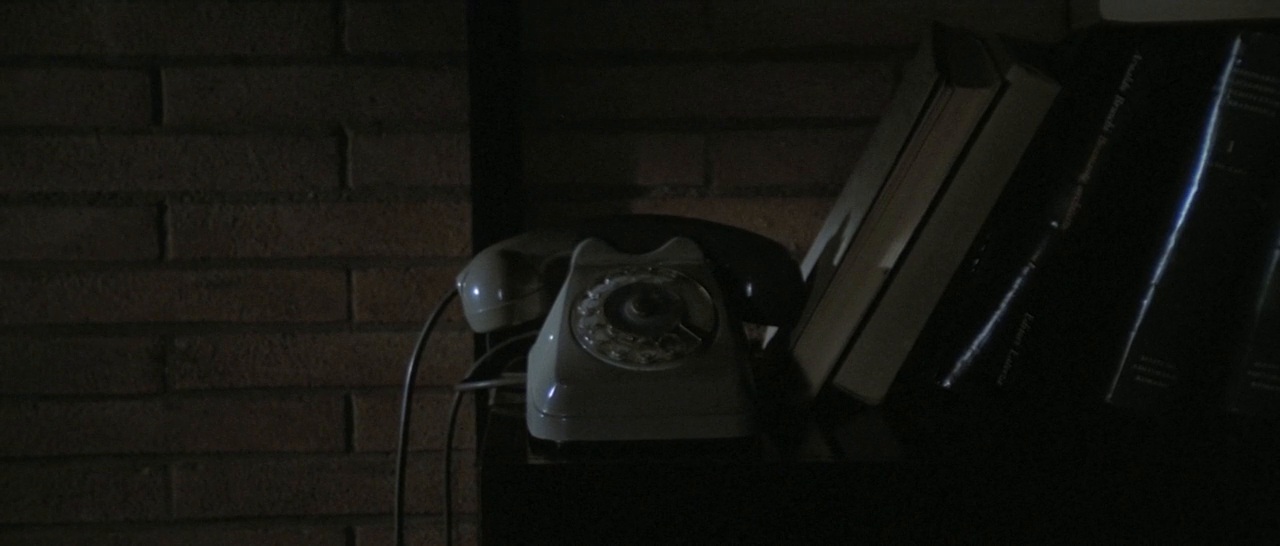
The telephone becomes an unanswered route out.ENLARGE ↗
The telephone becomes an unanswered route out.
07 / 1:21:05
Light cuts a narrow band across Dalia’s face.ENLARGE ↗
Light cuts a narrow band across Dalia’s face.
08 / 1:22:10
She listens at the door.ENLARGE ↗
She listens at the door.
09 / 1:22:39
A hand strikes into the frame.ENLARGE ↗
A hand strikes into the frame.
10 / 1:22:45
The blade descends.ENLARGE ↗
The blade descends.
11 / 1:22:47
A wound marks Dalia’s forehead.ENLARGE ↗
A wound marks Dalia’s forehead.
12 / 1:22:55
The body is shown on a white pillow.ENLARGE ↗
The body is shown on a white pillow.
Back to the effects index ↑

SEQUENCE STUDY 07 / 1:34:00–1:36:00

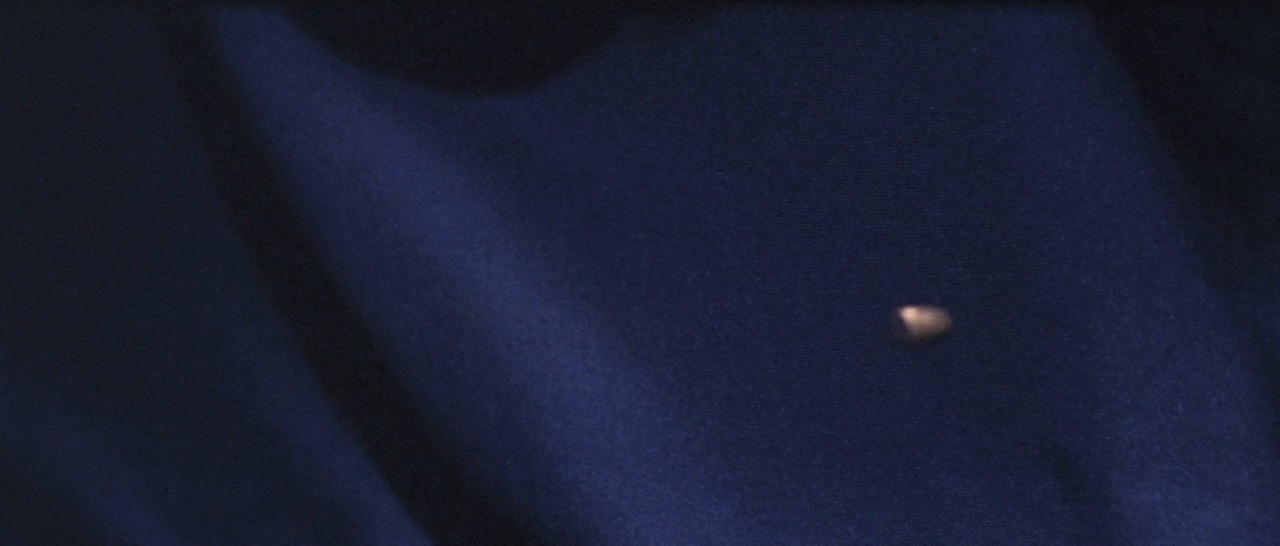
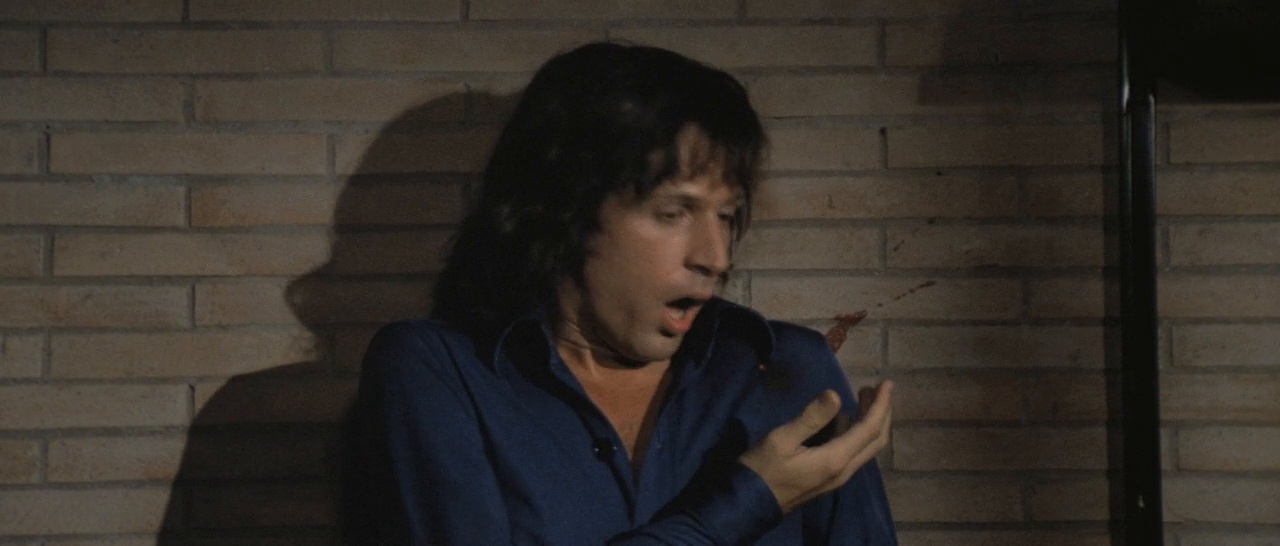
Roberto: the bullet becomes visible

The projectile is isolated against blue fabric.ENLARGE ↗
The projectile is isolated against blue fabric.

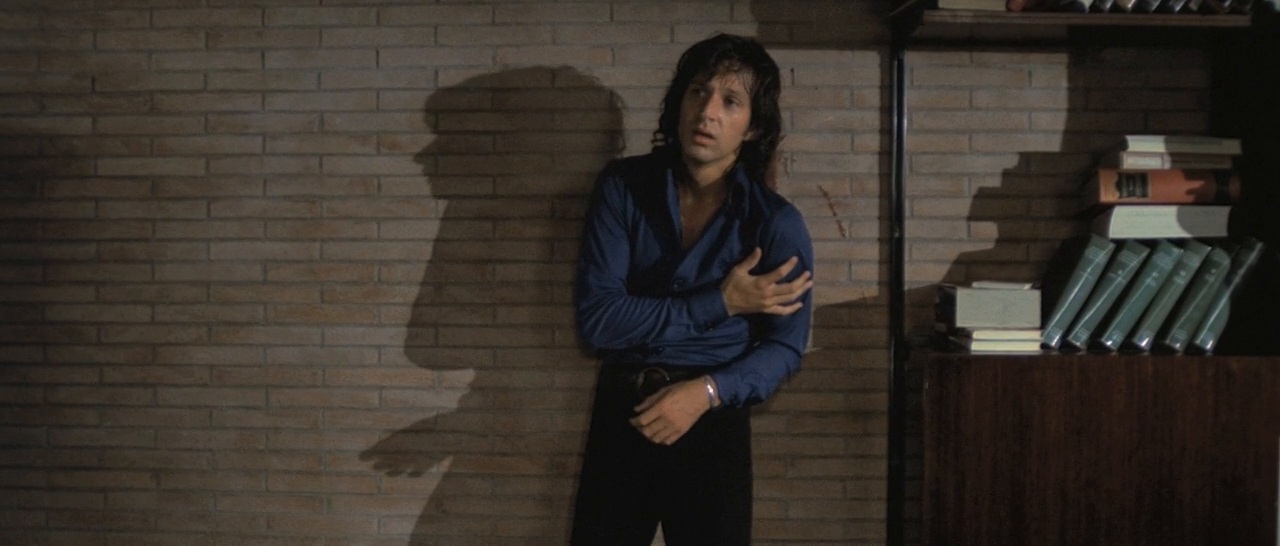
The confrontation interrupts ordinary action with an isolated projectile. Its passage is given a separate image between the gun and Roberto’s injured response. As in the finale, a normally brief event expands into several perceptible stages. The evidence is the visible construction: this presentation alone does not identify the camera, projectile apparatus or exposure speed used to produce it.

Return to the scene study →

Explore the sequence 8 stages
01 / 1:34:00
Nina reaches down towards the gun.ENLARGE ↗
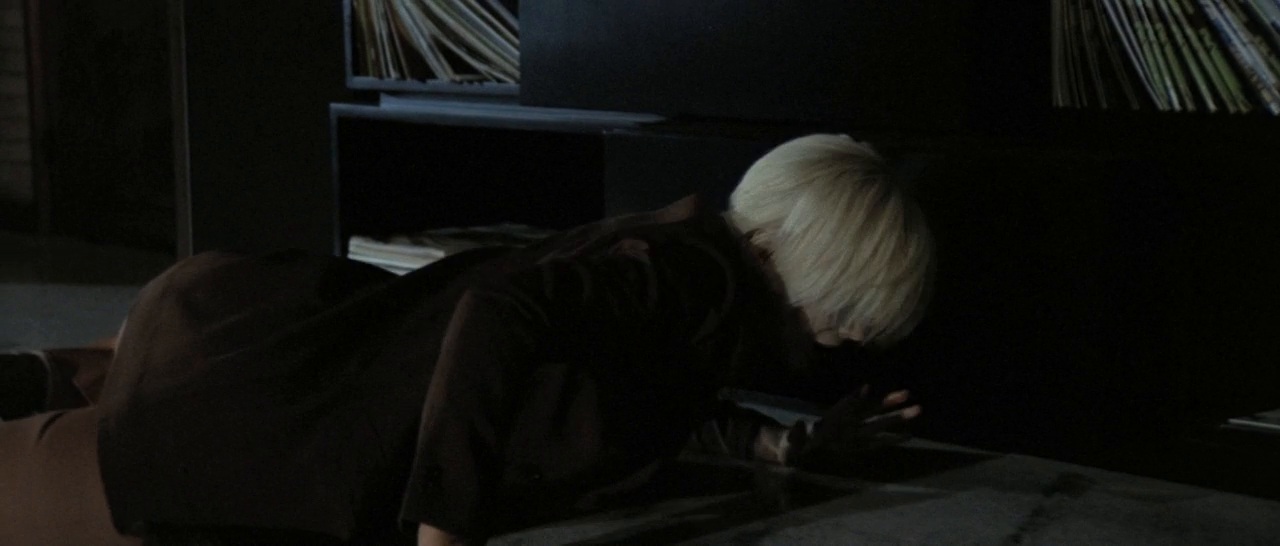
Nina reaches down towards the gun.
02 / 1:34:45
Nina aims across the room.ENLARGE ↗
Nina aims across the room.
03 / 1:35:42
Nina faces Roberto across the room.ENLARGE ↗
Nina faces Roberto across the room.
04 / 1:35:43
Roberto begins to move.ENLARGE ↗
Roberto begins to move.
05 / 1:35:46
The projectile is isolated against blue fabric.ENLARGE ↗
The projectile is isolated against blue fabric.
06 / 1:35:47
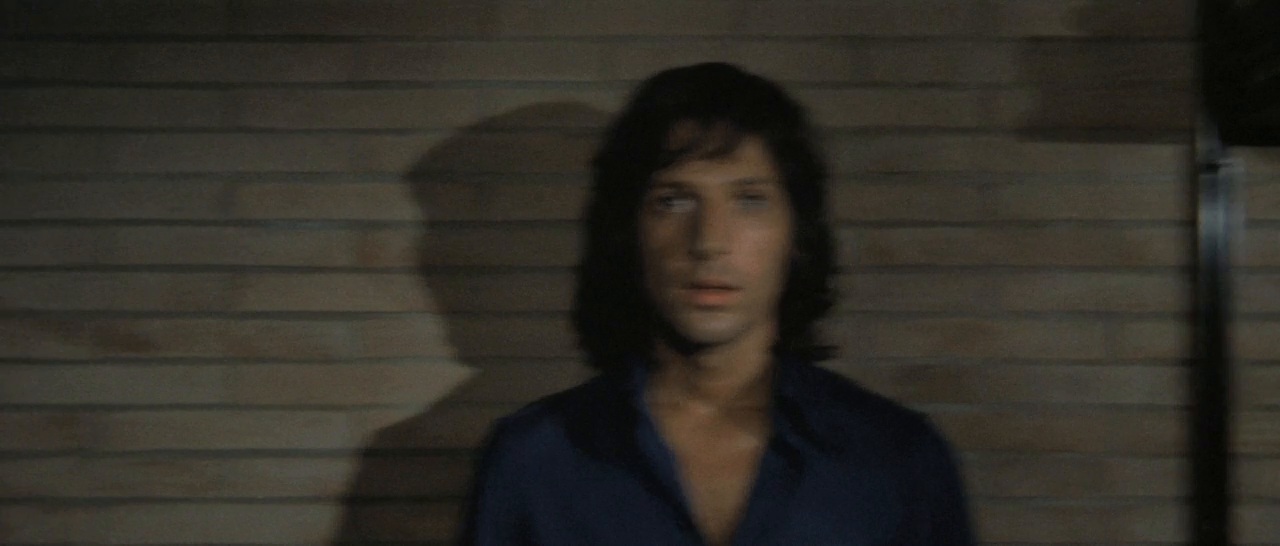
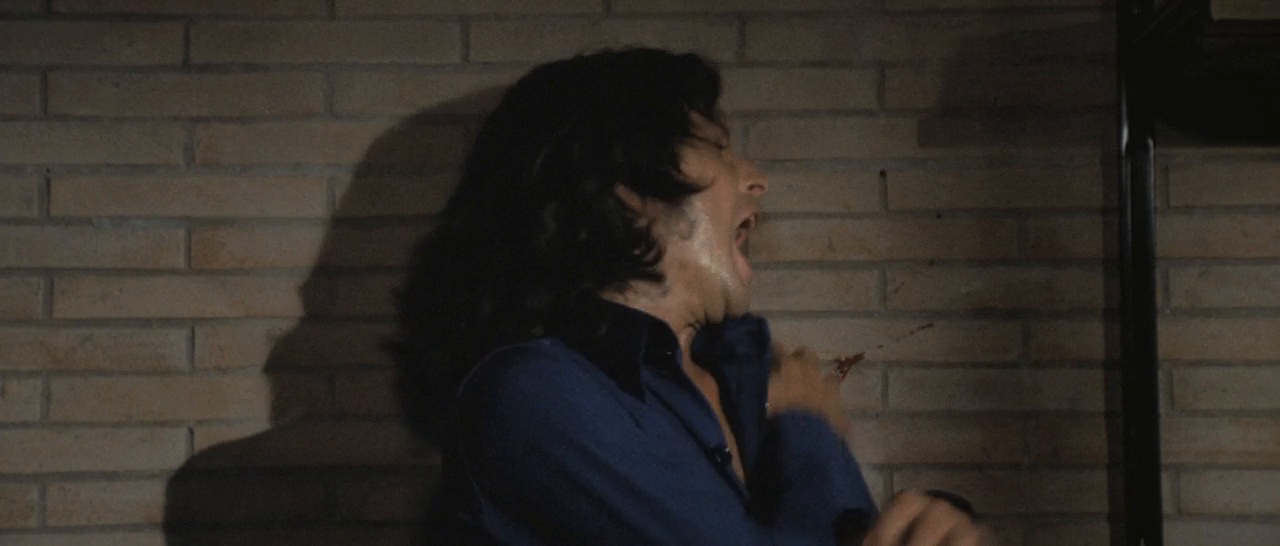
Roberto reacts to the shot.ENLARGE ↗
Roberto reacts to the shot.
07 / 1:35:50
He clutches his injured arm.ENLARGE ↗
He clutches his injured arm.
08 / 1:36:00
Roberto falls back against the wall.ENLARGE ↗
Roberto falls back against the wall.
Back to the effects index ↑

SEQUENCE STUDY 08 / 1:39:48–1:41:14

The windscreen: an instant stretched to its limit

Fragments pass across Nina’s face.ENLARGE ↗
Fragments pass across Nina’s face.

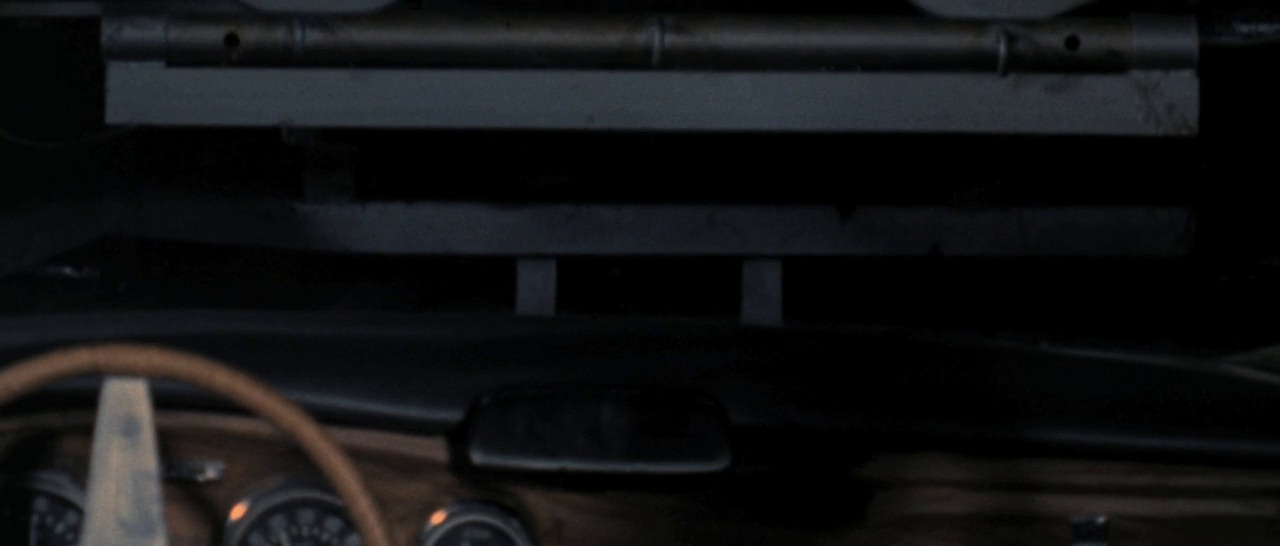
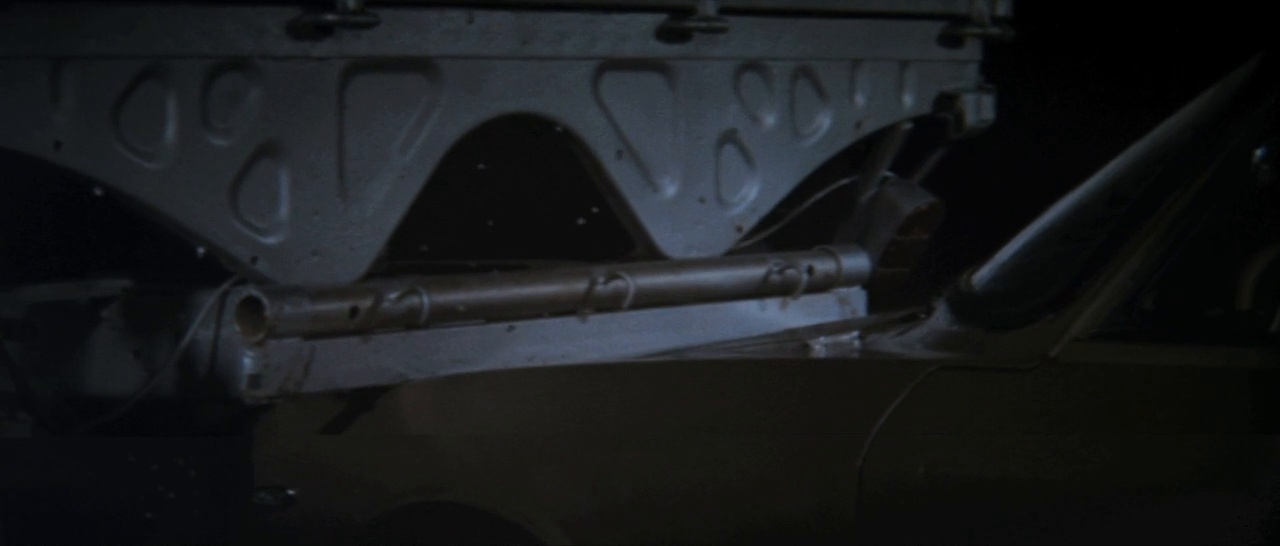
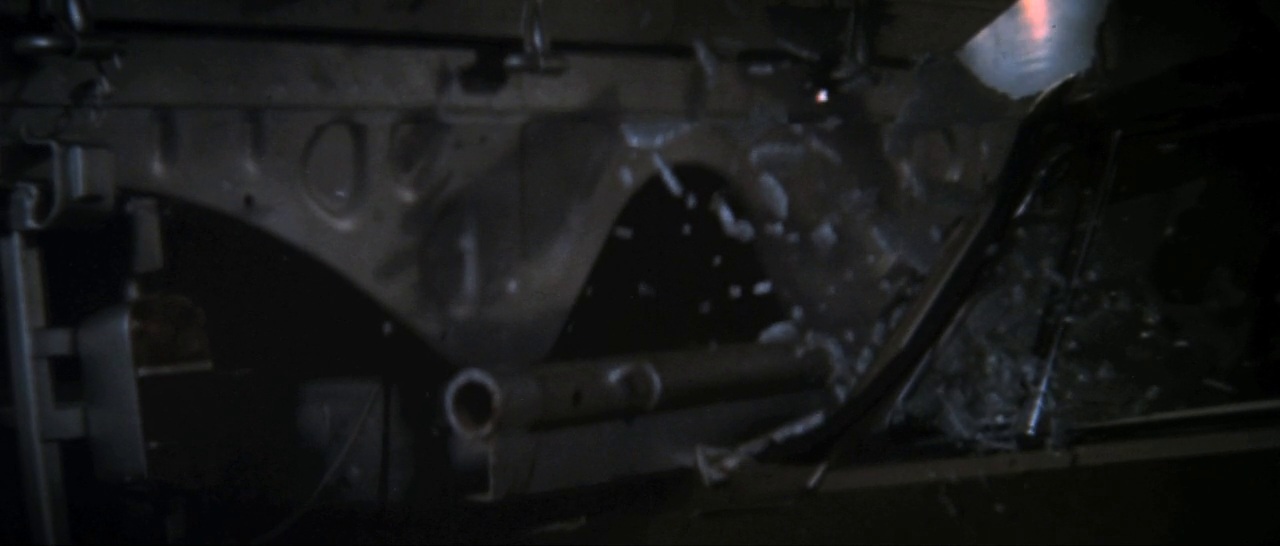
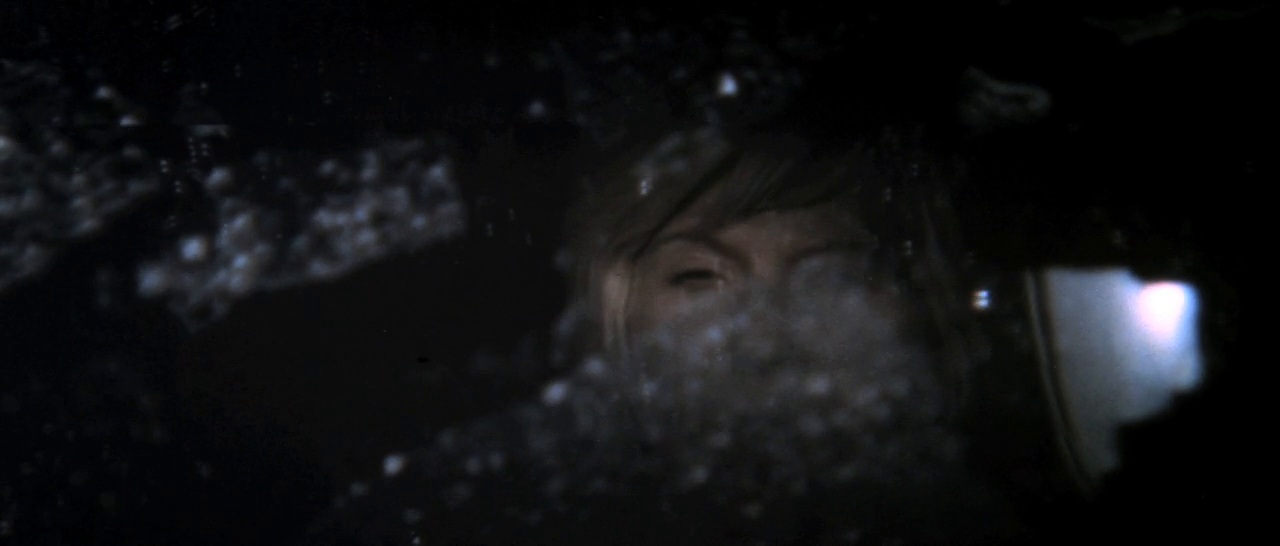
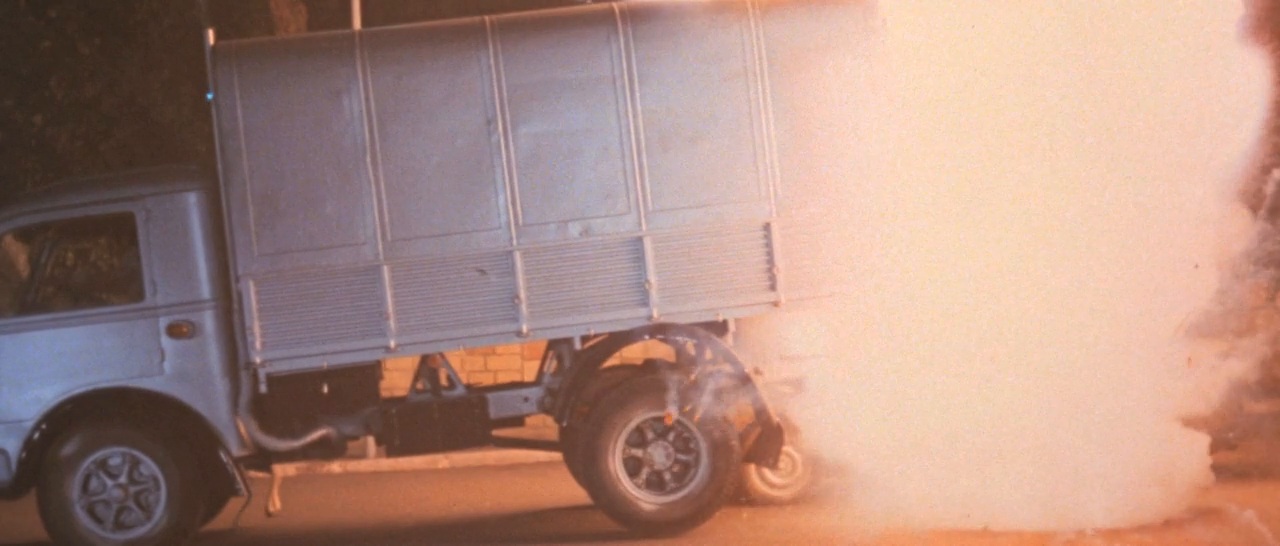
The car, Nina’s face and the rear of the truck are shown in alternating views as the collision approaches. The windscreen fractures before its fragments pass across her face. A return to the execution image and the exterior fire close the sequence in different registers. The end credits acknowledge high-speed photography assistance from the University of Naples engineering faculty; they do not supply a camera model or frame rate. The gallery follows the visible stages rather than attributing an undocumented mechanism.

Return to the scene study →

Explore the sequence 14 stages
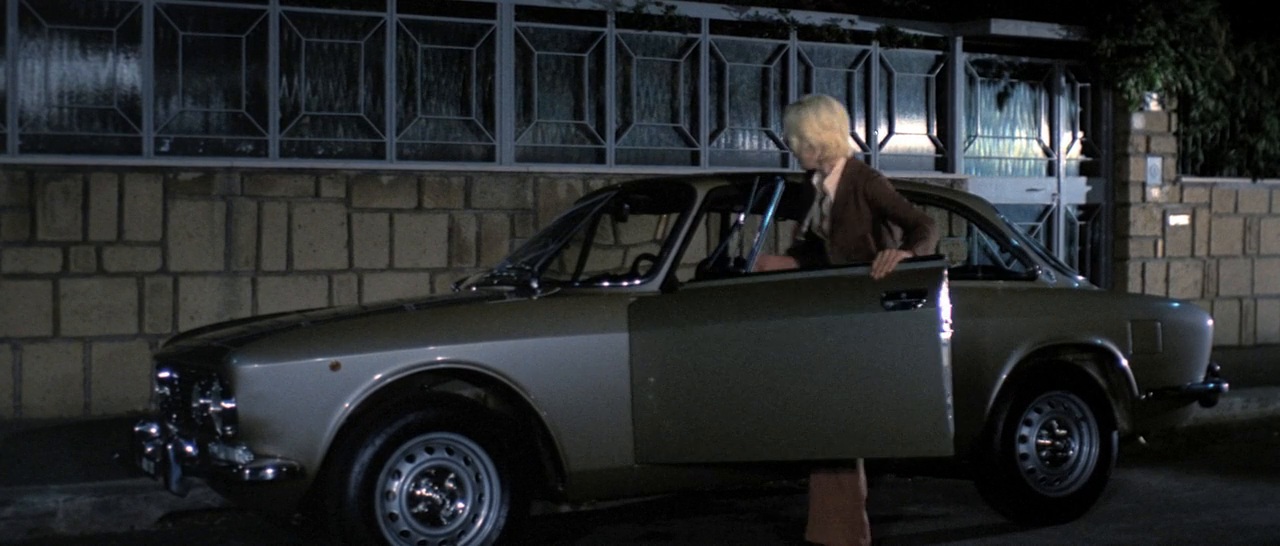
01 / 1:39:48
Nina gets into the car.ENLARGE ↗
Nina gets into the car.
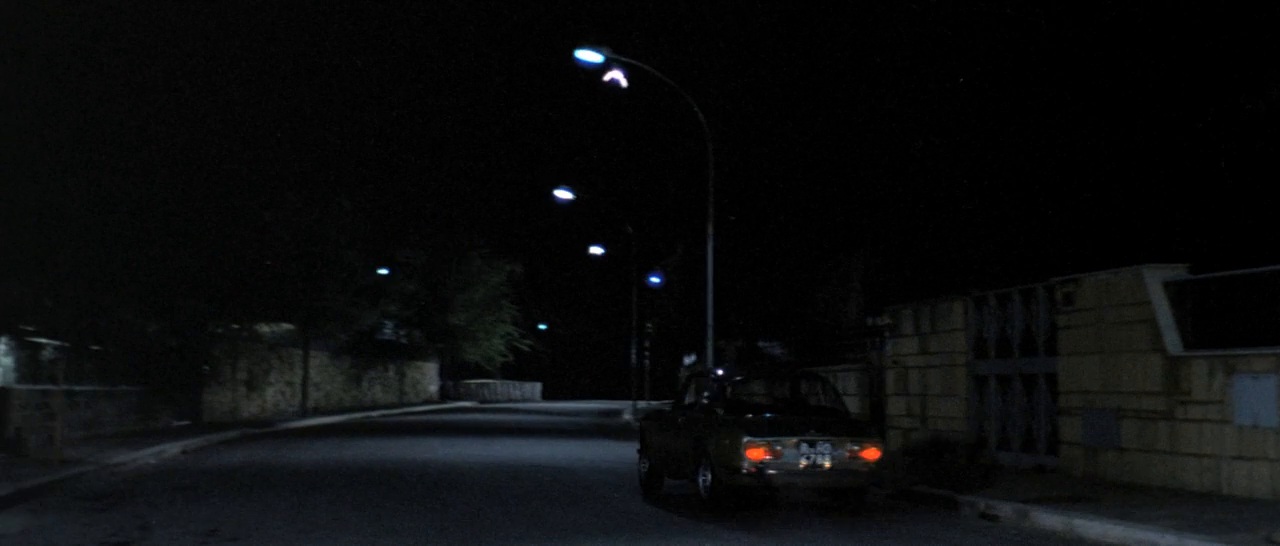
02 / 1:39:54
The car leaves along the dark road.ENLARGE ↗
The car leaves along the dark road.
03 / 1:39:58
The execution image returns.ENLARGE ↗
The execution image returns.
04 / 1:40:00
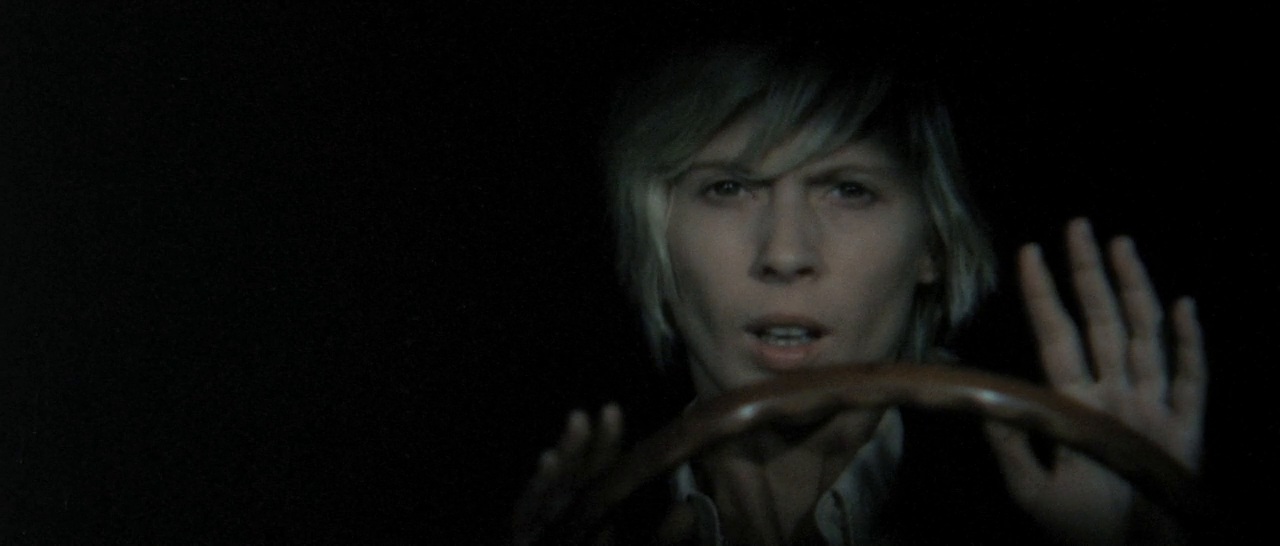
Nina reacts behind the wheel.ENLARGE ↗
Nina reacts behind the wheel.
05 / 1:40:06
The truck fills the view ahead.ENLARGE ↗
The truck fills the view ahead.
06 / 1:40:12
A hand rises beside Nina’s face.ENLARGE ↗
A hand rises beside Nina’s face.
07 / 1:40:24
The truck’s structure approaches the windscreen.ENLARGE ↗
The truck’s structure approaches the windscreen.
08 / 1:40:34
The windscreen begins to fracture.ENLARGE ↗
The windscreen begins to fracture.
09 / 1:40:42
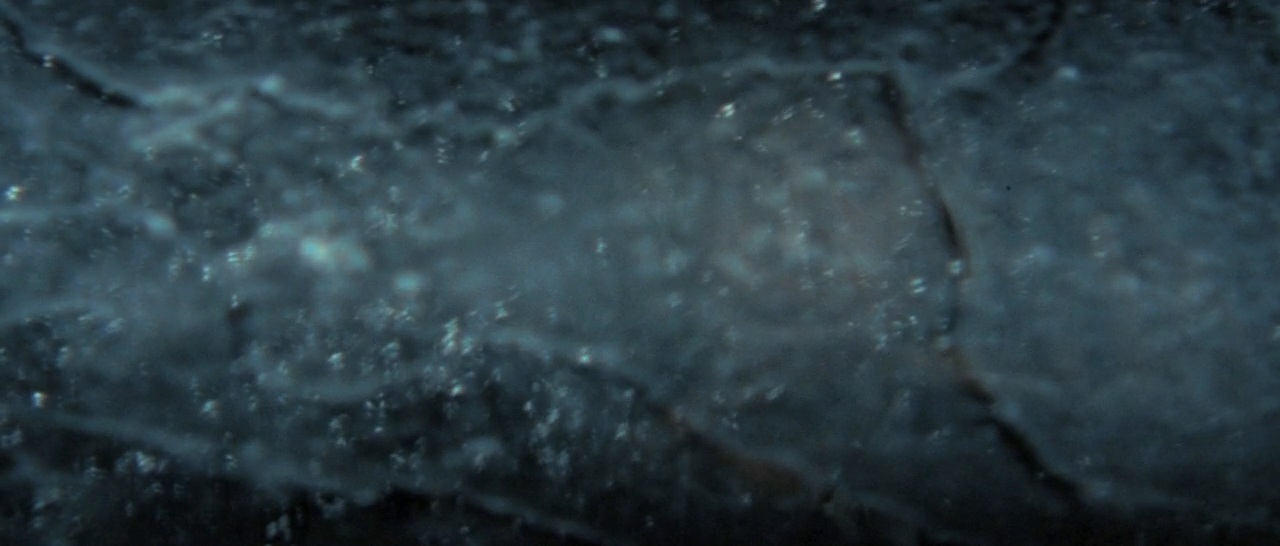
Cracks divide the glass into separate pieces.ENLARGE ↗
Cracks divide the glass into separate pieces.
10 / 1:40:50
Glass breaks away beside the truck.ENLARGE ↗
Glass breaks away beside the truck.
11 / 1:40:54
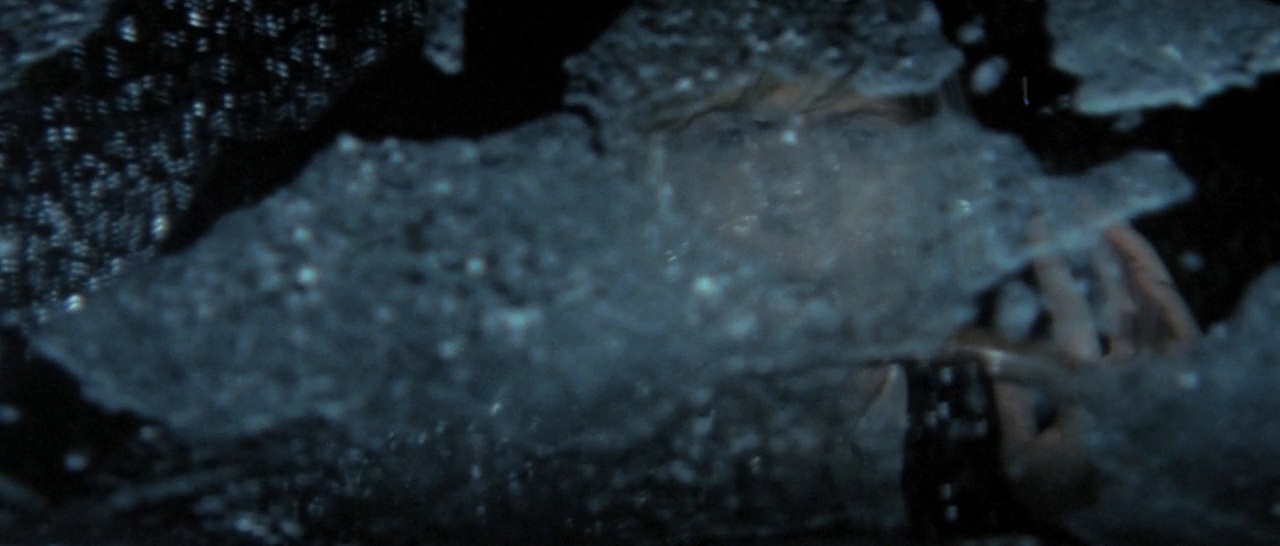
Fragments pass across Nina’s face.ENLARGE ↗
Fragments pass across Nina’s face.
12 / 1:41:04
The shattered screen crosses her features.ENLARGE ↗
The shattered screen crosses her features.
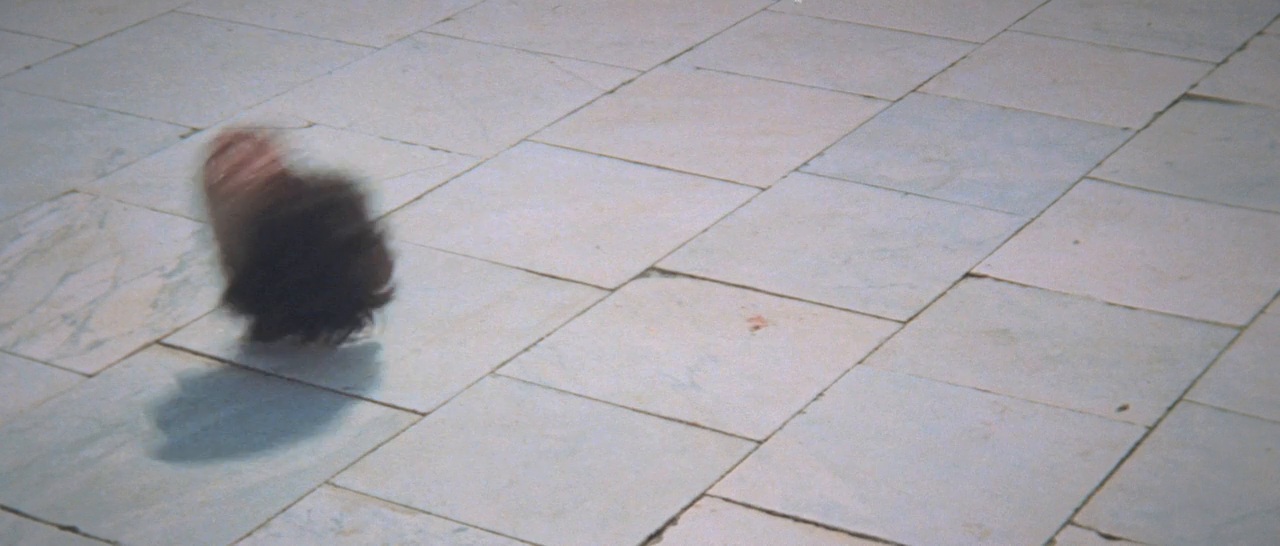
13 / 1:41:08
The execution image completes its return.ENLARGE ↗
The execution image completes its return.
14 / 1:41:10
The vehicles erupt in fire.ENLARGE ↗
The vehicles erupt in fire.
Back to the effects index ↑

Makeup, effects & high-speed photography → · Scene guide ↑

EDITING & VIEWPOINT

Follow the change of view.

Eight close studies.
Seventy-seven timed observations.

A selected view can carry a clue, withhold an identity or alter a space. Open a study to follow the sequence’s visual decisions. The locators identify observed moments in this presentation; they are not a claim to an exhaustive cut list.

CLOSE STUDY 01 / 00:10–03:43

Opening: instruments become ways of seeing

The guitar becomes an aperture.ENLARGE ↗
The guitar becomes an aperture.

The opening prepares a film in which seeing is always arranged by an object or position. The guitar aperture, cymbal gap and mirror do not carry identical meanings, but each makes the border of a view conspicuous. Lyons’s published account adds the musical disruptions; the frame study here concentrates on the changing visual access.

Follow the sequence 9 timed observations
  1. 00:10An overhead view makes drum heads and microphone into a graphic arrangement.
  2. 00:30Hands and credits occupy the same field; the title sequence divides performance into pieces.
  3. 00:40A beating-heart image supplies another visible rhythm.
  4. 01:10The watcher enters through the record-shop view.
  5. 01:25The band is reassembled in a wider room view.
  6. 01:45Strings cross a circular opening as the camera looks from inside the guitar.
  7. 02:10Roberto’s face interrupts the concentration on instruments.
  8. 03:15Cymbals frame a narrow view of his eyes.
  9. 03:32Glass near the rear-view mirror repeats the interest in optical obstruction.
Back to the close studies ↑

CLOSE STUDY 02 / 07:40–10:04

The negative: a picture separates from its event

The apparent crime is repeated on film.ENLARGE ↗
The apparent crime is repeated on film.

The force of the photograph lies in removal: the recorded gesture survives while the performance that arranged it disappears. Repetition increases the image’s authority without adding any knowledge of how the event was made.

Follow the sequence 6 timed observations
  1. 07:40The darkened house replaces the theatre’s ornamental public space.
  2. 07:52A cat interrupts the search through the room.
  3. 09:40The mask returns as an emphatic image.
  4. 09:46An orange negative strip gives the threat a material form.
  5. 09:52Roberto and the blade are legible within that strip.
  6. 10:04The domestic scene resumes around information that cannot be safely shared.
Back to the close studies ↑

CLOSE STUDY 03 / 29:44–35:27

The park: every new view removes a route

The path becomes a corridor.ENLARGE ↗
The path becomes a corridor.

The sequence’s logic is spatial rather than forensic. It does not need to provide a clear view of the killer at every stage. It makes ordinary routes cease to function, then contrasts the victim’s enclosure with the unrelated activity of people nearby.

Follow the sequence 11 timed observations
  1. 29:44The bench establishes waiting within a public place.
  2. 29:56The occupied playground supplies an initial sense of other people nearby.
  3. 30:28A loudspeaker appears above human eye level.
  4. 31:44The return to the playground removes its occupants.
  5. 32:20The closed gate makes departure a problem.
  6. 32:32The fountain is another emptied social space.
  7. 33:36The path is compressed between hedges.
  8. 34:27A narrower opening catches face and body.
  9. 34:41Emerging from the gap does not restore an open route.
  10. 34:55An embracing couple is shown beyond the victim’s immediate space.
  11. 35:27A hand at the wall reduces the attempted escape to one gesture.
Back to the close studies ↑

CLOSE STUDY 04 / 43:36–45:15

Carlo: impact, absence and the wire

The wire supplies the next threat.ENLARGE ↗
The wire supplies the next threat.

The first theatre encounter encouraged a false causal story; this sequence gives the actor a fatal one. The cut away from the face is not a release from violence. It extends the threat through objects whose use is becoming intelligible.

Follow the sequence 9 timed observations
  1. 43:36Arrival at the door gives the encounter an ordinary beginning.
  2. 44:18Carlo’s turn registers another presence.
  3. 44:22The striking object crosses the near plane of the image.
  4. 44:28The bloodied face supplies the consequence of the blow.
  5. 44:42A fallen arm turns the body into a fragment.
  6. 44:51The view moves through the room rather than identifying the attacker.
  7. 45:00The wire becomes a separate object of attention.
  8. 45:06The hand returns the object to the injured body’s space.
  9. 45:15Wire, ear and hand establish strangulation through a close relationship.
Back to the close studies ↑

CLOSE STUDY 05 / 1:03:56–1:09:32

Arrosio: the successful pursuit becomes isolation

The platform separates the detective from the crowd.ENLARGE ↗
The platform separates the detective from the crowd.

The detective’s progress is real, but spatial progress has a cost. By the time he reaches the person he follows, the population that made pursuit difficult is also gone. His last words turn success into a bitterly private recognition.

Follow the sequence 10 timed observations
  1. 1:03:56The prepared syringe gives the viewer knowledge of an approaching method.
  2. 1:04:52Faces in the crowd have to be separated from background activity.
  3. 1:05:16The crowded carriage complicates the detective’s view.
  4. 1:05:48Exiting feet supply a route when a complete body is not available.
  5. 1:06:56The platform opens around the detective.
  6. 1:07:16Stairs replace the moving carriage.
  7. 1:07:40A WC sign gives the next destination an ordinary name.
  8. 1:08:04White washroom surfaces eliminate the cover of the crowd.
  9. 1:08:44The needle attack compresses the scene into a close bodily contact.
  10. 1:09:32The corner holds the collapsed detective after the pursuit has ended.
Back to the close studies ↑

CLOSE STUDY 06 / 1:15:00–1:23:20

Dalia: the house delays a confrontation

A strip of light makes Dalia visible.ENLARGE ↗
A strip of light makes Dalia visible.

Repetition does not simply slow the story. It keeps changing what an object offers: a curtain might reveal an intruder, a telephone might reach help, a door might separate safety from danger. The attack arrives after those promises have been exhausted.

Follow the sequence 12 timed observations
  1. 1:15:00The open case establishes departure as a possible action.
  2. 1:15:45The call seeks contact outside the house.
  3. 1:17:00The watch measures a delay rather than resolving it.
  4. 1:17:20Opening a curtain exposes another dark plane.
  5. 1:19:25The stairs make her route narrow and directional.
  6. 1:19:40The telephone returns as a possible connection.
  7. 1:21:05A thin band of light reveals part of the face.
  8. 1:22:10Listening at the door keeps the danger on the other side.
  9. 1:22:39A hand abruptly replaces the long anticipation.
  10. 1:22:45The blade is supplied as a separate insert.
  11. 1:22:47The forehead wound establishes the result.
  12. 1:22:55The mortuary view changes the body from threatened person to evidence.
Back to the close studies ↑

CLOSE STUDY 07 / 1:24:06–1:33:20

Four impressions, one object

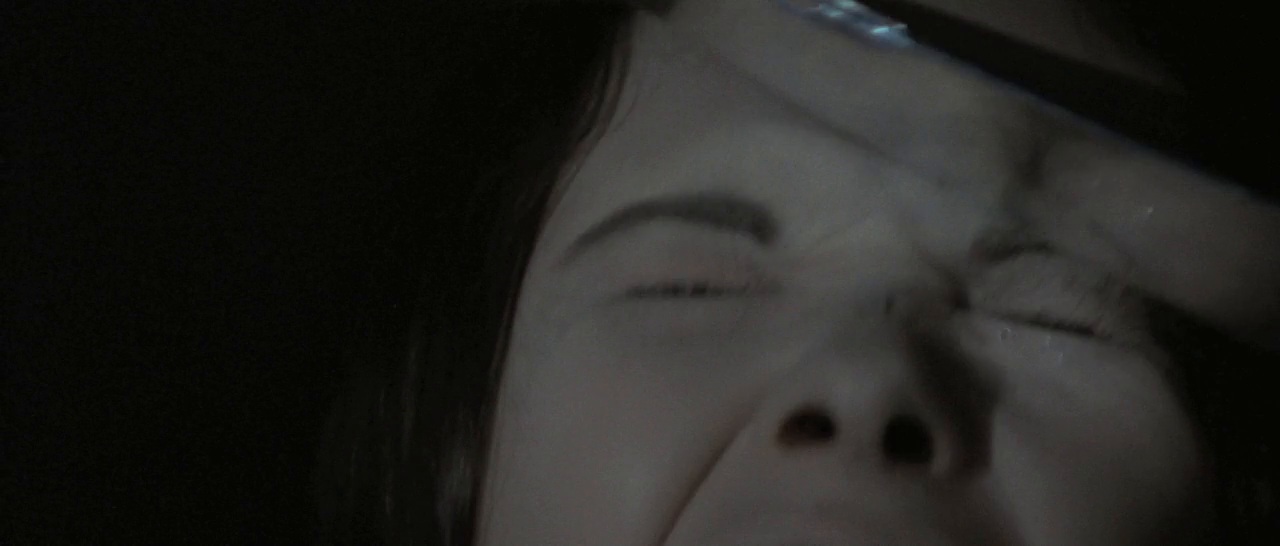
The eye is placed within an optical apparatus.ENLARGE ↗
The eye is placed within an optical apparatus.

The apparatus appears to solve a problem of access, but interpretation remains human and fallible. The answer is not four matching objects. It is one object whose movement can account for several impressions. This is narrative optical fantasy, not a demonstration of a real post-mortem imaging method.

Follow the sequence 8 timed observations
  1. 1:24:06An isolated eye is presented as an object within the apparatus.
  2. 1:24:10A lens supplies the familiar promise of a mechanically produced image.
  3. 1:24:22Light and optical components join the body to a display process.
  4. 1:24:38Four fly-like forms become the visible result.
  5. 1:24:42The investigators look at an image that they cannot yet explain.
  6. 1:33:05Nina’s moving pendant enters Roberto’s field of attention.
  7. 1:33:15The isolated pendant contains one fly.
  8. 1:33:20Roberto’s examination connects the personal object to the earlier display.
Back to the close studies ↑

CLOSE STUDY 08 / 1:39:48–1:41:14

The crash: several durations inside one impact

Glass moves between the camera and Nina.ENLARGE ↗
Glass moves between the camera and Nina.

The film ends by making a fraction of action occupy an unreasonable amount of viewing time. The slow passages do not merely clarify a collision; they give the spectator time to contemplate a face and a barrier changing together. The exterior explosion then changes scale and tempo at once.

Follow the sequence 12 timed observations
  1. 1:39:48Nina enters the car in a legible exterior view.
  2. 1:39:58The dream’s execution intrudes on the escape.
  3. 1:40:00A frontal close view keeps her reaction visible.
  4. 1:40:06The rear of the truck occupies the view through the windscreen.
  5. 1:40:12The raised hand offers a gesture of protection.
  6. 1:40:24The structure of the truck draws nearer without releasing the moment.
  7. 1:40:34Fracture becomes the centre of the image.
  8. 1:40:42The glass breaks into separate moving forms.
  9. 1:40:54The face is seen through the fragments.
  10. 1:41:04The same physical event is prolonged across another view.
  11. 1:41:08The execution image returns.
  12. 1:41:10Exterior fire abruptly replaces the suspended close views.
Back to the close studies ↑

VOICES, MUSIC & MISDIRECTION

What an image cannot tell us.

Eleven studies in dialogue
and the circulation of information.

Opening titles

The performer and the soundtrack separate

Kevin Lyons describes the opening drums continuing when Roberto stops, together with interruptions at the title cards. His account places an important limit on the musician’s visible control: the sound can belong to the film even when it seems attached to a performer. Read beside the instrument apertures, this makes the opening an enquiry into both looking and listening.

This musical observation is attributed to Lyons’s published BFI essay. The new local review establishes the pictured instruments and changing viewpoints; it is not a cue-by-cue audition of Morricone’s score.

Follow the sequence →

15:40–16:20

The threat postpones the action

The fixed smile faces Roberto.ENLARGE ↗
The fixed smile faces Roberto.

The masked visitor claims the power to kill Roberto immediately, then refuses to use it. The delay is itself the punishment. Questions about the police and outside help narrow his options until isolation becomes another part of the threat. A voice dictates the future while the mask keeps its expression fixed.

The spoken threat makes the bedroom invasion more than a demonstration of access. Roberto is forced to anticipate an attack without knowing its date or form. The unmoving smile and the changing terms of the speech work differently: the face withholds a person, while the voice imposes a relationship. The later photographs continue that relationship after the visitor has left.

Return to the bedroom sequence →

28:13–29:29

One threat gives way to another

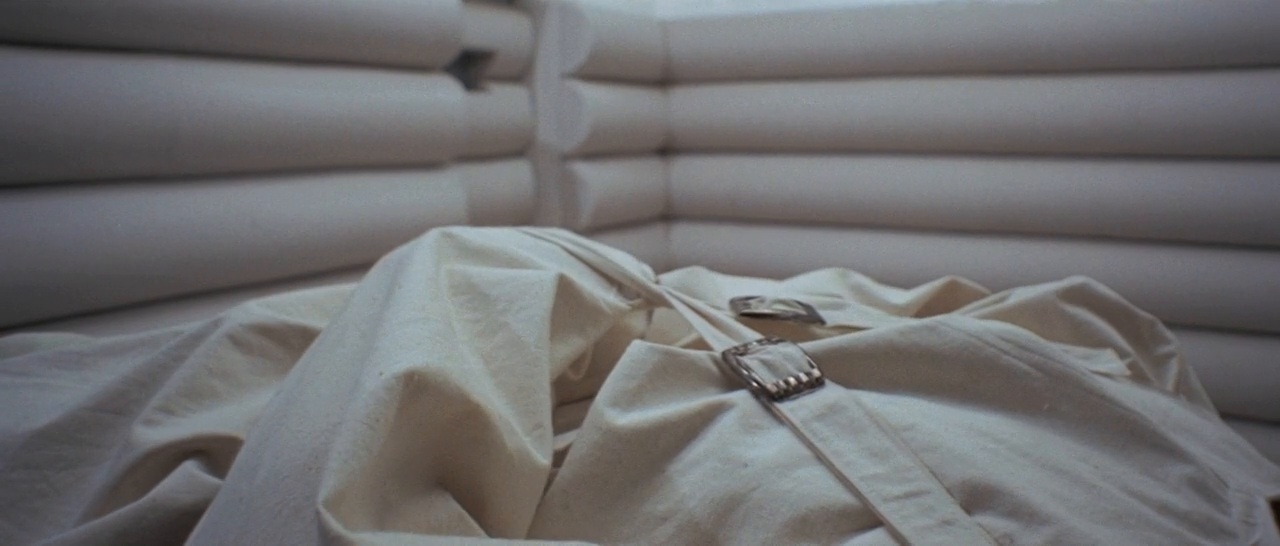
A restraint lies inside the padded room.ENLARGE ↗
A restraint lies inside the padded room.

Amelia’s telephone demand turns what she has seen into a price. She claims evidence, insists on money and invokes the police as an alternative. Her indifference to the motive makes the call a compact reversal of the theatre trap: knowledge of a concealed arrangement has become a means of coercing its organiser.

After the call, commands to fight back and suppress tears accompany the passage into photographs and the padded room. The cash demand gives way to a different form of control, rooted in punishment and imposed behaviour. The images do not yet explain whose history is being disclosed. Nina’s final speech will attach this early fragment to the family story and to Roberto’s resemblance.

Follow the later explanation →

41:40–42:40

A telephone call changes the status of a picture

Carlo’s call distinguishes the earlier arrangement from the fact that someone has now actually died. The dialogue makes his survival legible before the next attack removes him. The telephone carries information across a space that the viewer cannot fully see: one speaker is visible, but the identity and location of the other remain withheld.

The picture of the theatre was not false because it failed to record a gesture. It was misleading because the gesture belonged to an arranged performance. The call supplies the missing context in spoken form.

Follow the sequence →

46:35–47:30

The detective answers the client’s prejudice

Arrosio receives a doubtful client.ENLARGE ↗
Arrosio receives a doubtful client.

Roberto’s first response to Arrosio is to assume he has entered the wrong office. Once the detective identifies himself, their exchange exposes the assumptions behind that mistake. Arrosio anticipates the prejudice, turns it into a performance of his own and asserts his capacity to act. The scene lets him name the terms on which Roberto has underestimated him.

Its humour also trades in stereotypes, making the introduction an uneasy mixture of agency and caricature. The later investigation changes the balance: the man initially misread by his client notices the resemblance that matters. His final recognition of success gives the earlier comic encounter a consequence beyond the joke.

Follow Arrosio’s final exchange →

59:12–59:43

The clue is spoken before it is understood

Roberto listens to Arrosio’s call.ENLARGE ↗
Roberto listens to Arrosio’s call.

Arrosio tells Roberto that his study of the photographs has revealed a physical resemblance. He withholds the explanation until he can be more certain, then asks about Villa Rapidi. Roberto cannot identify the name. The call delivers two pieces of information without giving the client the relation between them.

This changes the meaning of Arrosio’s later death. He has already communicated part of the discovery; what fails to arrive is its completed interpretation. When Nina finally explains Roberto’s likeness to her father, the earlier word “resemblance” acquires its missing referents. The film’s decisive clue circulates as speech before the retinal image supplies another visual puzzle.

Compare the optical clue →

1:08:30–1:09:38

The answer cannot leave the room

The assailant acknowledges that Arrosio has worked out the answer; the dying detective recognises his own success. The exchange gives the scene a tragic asymmetry. A correct conclusion exists, but the person who reached it cannot return to his client with it.

The English audio extraction and embedded subtitles agree on that meaning while differing in wording. The discussion therefore paraphrases the exchange rather than presenting either version as a definitive transcript.

Follow the sequence →

1:15:35–1:16:40

The call connects two different kinds of waiting

Dalia reaches Roberto’s workplace and is told that he is unavailable. The film intercuts the house with the studio, where the band’s activity continues. The telephone creates a possible connection without producing an immediate meeting or rescue.

Once the call is over, the house retains its uncertainty. The delay is not empty time: looking at the watch, attending to doorways and returning to the phone become the scene’s actions.

Follow the sequence →

1:23:35–1:24:58

An explanation gives an impossible image authority

The spoken account of the eye procedure introduces the apparatus as a means of recovering a final impression. The display then offers four shapes without telling the observers how to read them. Explanatory speech has made the image appear obtainable; it has not made the image self-explanatory.

The English dialogue and subtitle check supports this distinction between producing a picture and identifying its referent. The procedure belongs to the film’s fantasy of scientific access.

Follow the sequence →

1:25:40–1:26:13

Advice becomes the plan for the ending

Godfrey advises Roberto to wait at home.ENLARGE ↗
Godfrey advises Roberto to wait at home.

Godfrey advises Roberto to stay at home, face the danger on familiar ground and wait for the attack. The conversation converts passive uncertainty into a strategy, while acknowledging the courage it will require. His promise to keep in touch supplies a continuing connection beyond the house.

The final confrontation develops the proposal spatially. Roberto waits with a weapon in a place he knows, yet the threat comes from the person whose familiarity has concealed it. Choosing the ground does not mean understanding the adversary. Godfrey’s eventual intervention also gives the earlier conversation a practical return: advice and assistance belong to the same relationship.

Continue to the final confrontation →

1:34:40–1:39:45

The final speech changes who Roberto resembles

Nina links her violence to a father who wanted a son, treated her abusively and confined her. Her account then identifies Roberto as a substitute because of his physical resemblance. The speech changes the interpretation of the marriage: his familiar face has carried a meaning for her that he did not recognise.

The clearest English-audio passages and embedded subtitles support this summary. Uncertain whispered portions are not quoted. Nina’s explanation is analysed as the film’s dramatic solution, with its reductive assumptions left open to criticism; it is not treated as a clinical account.

Follow the sequence →

Dialogue and listening sources → · Tracks and translations → · Commentaries and interviews → · Morricone and the soundtrack’s release history →

THE CRAFT RECORD

The names in the final images.

Read the credits beside
the finished effects.

The production acknowledges assistance with high-speed photography.ENLARGE ↗
The production acknowledges assistance with high-speed photography.

The Italian end titles provide a direct production record for several kinds of work discussed in the galleries. The high-speed acknowledgement names the Istituto Macchine of the engineering faculty at the University of Naples. It supports the involvement of that institution in high-speed photography; it does not identify an individual shot’s camera or exposure rate.

The credits name Cataldo Galiano for special effects, Giuliano Laurenti for makeup and Giovanni Morosi as makeup assistant. These are production credits, not evidence that any one person designed or executed every visible wound.

Sound work is also distributed: Mario Ronchetti is credited for sound, Anzellotti for sound effects, Franco Bassi for mixing at Fono Roma, and Giorgio Piferi for Italian dialogue adaptation. Bruno Nicolai receives the orchestra credit. The film’s images, score, voices and effects belong to this collaborative record.

Read the presentation note →

COMMENTARIES, INTERVIEWS & EDITIONS

Different discs open different conversations.

Find the voice, the version
and the source behind the claim.

The Severin and Shameless editions assemble different bodies of testimony. A feature-length commentary, a retrospective interview and a booklet essay are separate works, even when their contributors overlap.

SEVERIN / 2022

A commentary alongside two versions

Stephen Bjork’s Digital Bits review documents the Nathaniel Thompson and Troy Howarth commentary on the UHD and feature Blu-ray. It also identifies complete European and shorter English-language presentations, with English and Italian 2.0 mono tracks. In the full version, previously undubbed passages switch to Italian.

The commentary is critical analysis rather than production testimony. Thompson’s own Mondo Digital review discloses his participation; it should not be mistaken for an independent assessment of his track. Disc contents ↗ · Contributor’s edition review ↗

SEVERIN / PARTICIPANT INTERVIEWS

Writing, performance and camera work

Bjork lists Argento’s Lord of the Flies (28:12) and Cozzi’s The Day of the Flies (75:22). A separate supplements disc includes Bud Spencer’s Have a Talk with God (10:02), Gildo Di Marco’s Please, Mr. Postman (15:55), Roberto Forges Davanzati’s Death in Slo-Mo (7:23) and production manager Angelo Iacono’s Time Flies (14:01).

These interviews provide distinct routes into the credited work. Their listing establishes availability, not the exact camera speed or practical method behind any individual shot. Interview inventory ↗ · Compare the film’s credits ↗

SHAMELESS SHAM801 / 2025

Argento and Brandon return to the film

The publisher advertises new Argento and Michael Brandon interviews alongside Cozzi material. Leon Vegas’s review identifies Behind the Velvet Curtain (about 31 minutes), Brandon’s The Velvet Chronicles (about 41) and the archival Cozzi interview The Art of Murder (about 41). Those titles distinguish the 2025 interviews from the earlier Severin recordings.

Shameless also lists separate English opening and closing credits, trailers, a television spot and a photo gallery. Its published extras list does not advertise a commentary. Publisher’s specifications ↗ · Reviewed interview titles ↗

PRINT & RECORD

A shared title does not mean a shared text

Vegas identifies the Shameless booklet as Alan Jones’s Flies on the Wall: An Inside Story, twenty pages including illustrations. Mondo Digital lists an Alan Jones video feature called Flies on the Wall (15:31) on Severin. The booklet and the filmed contribution should be cited separately. Booklet description ↗ · Video feature ↗

The AMSLP38 soundtrack likewise has its own arrangement: suites I–IV and Shake on side A; suite V, title variants and two versions of Come un madrigale on side B. That album order is not a scene-by-scene cue list. Label’s programme ↗

THE LOCAL PRESENTATION / AUDIO CHECK

Two channels do not necessarily mean stereo.

The English and Italian tracks in the presentation used here are labelled stereo, but analysis across their full duration finds nearly identical left and right signals. That is consistent with mono carried in two channels. Measurement and dialogue method ↗

Subtitles and dub wording diverge

In Amelia’s call, the English speech extraction names a park playground when arranging the meeting; the corresponding subtitle passage is worded differently and does not supply that location in the same way. Arrosio’s introduction and the paternal commands also diverge in expression. The embedded subtitles cannot be treated as a word-for-word transcript of the English dub.

The studies follow meanings supported by both records and paraphrase them. The English and Italian tracks have not been compared as performances.

Running time and release records

This presentation runs 1:43:19 and uses Italian titles. Shameless’s 103-minute listing and FLC’s 104-minute programme are rounded descriptions; their difference does not establish missing footage. Return to the edition table ↗

The documented full and shorter Severin presentations offer a more specific version distinction. They should be named when comparing dialogue or story material, rather than reduced to a running-time label. Version comparison ↗

Return to sound and dialogue ↑ · Read the sources →

MY CINEMA / PRODUCTION TESTIMONY

Finding a camera for an impossible instant

Luigi Cozzi

Cozzi remembers Argento planning sequences in exact visual detail while they worked on Four Flies. The closing crash posed a specific problem: ordinary slow motion would not stretch the instant far enough. In My Cinema he recalls a prolonged search that led to a camera used for ballistic testing at a university in Naples, pursued despite Salvatore Argento’s doubts that the equipment could be found.

The account is valuable for the relationship between an imagined image and the search for a tool. The crash was conceived as an extended event, then made dependent on equipment outside normal production practice. Cozzi gives several possible speeds in his recollection; the useful historical point here is the scientific-camera solution, rather than a single shooting rate inferred from the interview.

Read beside his later account of developing individual murder ideas before the plot was settled, the testimony suggests two different stages of work. Invention could begin with a striking sequence; preparing that sequence for the set could then become highly exacting.

Source & passage

Dario Argento: My Cinema / Il mio cinema, two-part documentary presented on Severin Films’ Dario Argento’s Deep Cuts, Disc 1. Part One, 09:17–13:36.

The discussion paraphrases the English subtitles and distinguishes participant recollections from the documentary’s narration and production footage.

Explore both documentaries and follow the related dossiers →

DEEP CUTS / TESTIMONY & CONNECTIONS

The fabricated crime returns on television.

Nathaniel Thompson and Troy Howarth

In their commentary on Testimone oculare, Thompson and Howarth identify a reversal of Four Flies: a spouse’s concealed hostility and a staged murder are reorganised around a woman whose account others refuse to believe. The connection concerns the manufacture of experience as much as the final revelation. Both stories depend on someone arranging what another person sees, then exploiting the emotional consequences.

Source & passage

Eyewitness commentary, 19:35–20:05. Presented on Disc 2 of Severin Films’ Dario Argento’s Deep Cuts.

Follow the source discussion → · Documentary and interview guide →

THE READING ROOM

Return to the source.

Research expanded 4 November 2026. Testimony, criticism, edition specifications and visual interpretation remain distinct.

  1. 01

    BFI Southbank — programme essay and compiled credits ↗

    2023 programme reprinting Kevin Lyons’s 26 October 2018 essay, plus compiled credits. Used for narrative situations, opening and ending descriptions and crew; not a 1971 review or our viewing log.

    Return to the dossier ↑
  2. 02

    Luigi Cozzi at Macabro 2013 / ScreenAnarchy ↗

    Eric Ortiz Garcia, 3 September 2013. Reported participant testimony; Four Flies paragraph on title-first and murder-first writing.

    Return to the dossier ↑
  3. 03

    Cinematografo — film record and contemporary review ↗

    Compiled craft credits and a review attributed to Segnalazioni Cinematografiche, vol. 72 (1972). English paraphrase; the original volume, underlying credit materials and tentative Wallace attribution have not been verified.

    Return to the dossier ↑
  4. 04

    Dario Argento — excerpts reproduced by Cinematografo ↗

    Section “Dario Argento sul film”: excerpts attributed to Paura (2014) and Fabio Maiello’s L’occhio che uccide (1996). Retrospective testimony paraphrased in English.

    Return to the dossier ↑
  5. 05

    Xavier Mendik — Bodies of Desire and Bodies in Distress ↗

    Cambridge Scholars Publishing, 2015. Printed pp. 112–113 (PDF pp. 126–127) consulted; p. 113 visually. Retinal image, Nina’s motive and an attributed reading of the investigator’s failure. Public BCU copy; no book images reproduced.

    Return to the dossier ↑
  6. 06

    AMS Records — 4 mosche di velluto grigio, AMSLP38 ↗

    Label account of the score and ten-track vinyl programme. Used for musical description and album publication context; album programme consulted as a printed source. Selected film dialogue is discussed separately below.

    Return to the dossier ↑
  7. 07

    CG Entertainment — restoration and theatrical release notice ↗

    “Il restauro” section: source materials, Cineteca / Surf, L’Immagine Ritrovata, 2020 work and Tovoli’s colour supervision. Distributor’s account.

    Return to the dossier ↑
  8. 08

    Film at Lincoln Center — 2022 retrospective and published image ↗

    Programme dates, 104-minute Italian-subtitled presentation, restoration credit and retrospective interpretation. Image downloaded from the linked publisher asset at 1600 × 900.

    Return to the dossier ↑
  9. 09

    Shameless Films — SHAM801, 4K UHD ↗

    28 April 2025 public release date, specifications and advertised supplements.

    Return to the dossier ↑
  10. 10

    Mondo Digital — Four Flies edition review ↗

    Updated 1 May 2025. Used for attributed edition comparisons and the located Forges Davanzati interview. The reviewer co-recorded the Severin commentary and discloses that involvement; these are not our own transfer tests.

    Return to the dossier ↑
  11. 11

    Four Flies on Grey Velvet — film images and end credits

    The visual studies use a 1:43:19 presentation with Italian opening and end titles. The 106 stills drawn from this presentation preserve its complete 1280 × 546 picture. Selected observations span the film, with denser review of the eight sequence galleries and their surrounding passages. Time locators follow this presentation; they are not asserted as exact edit boundaries or an exhaustive shot catalogue. No commercial edition or restoration has been inferred from the picture alone.

    End-credit checks include camera and sound work around 1:42:00, makeup around 1:42:08, orchestra around 1:42:32, sound effects and dialogue adaptation around 1:42:40, special effects around 1:42:55, and the high-speed photography acknowledgement around 1:43:01. The older Film at Lincoln Center image retains its separate published source.

    Return to the visual studies ↑
  12. 12

    Selected English dialogue and published listening observations

    The dialogue studies compare local automated speech extraction with the embedded English subtitles for the masked threat, Amelia’s demand and the following commands, Carlo’s call, Arrosio’s introduction, his resemblance clue and final exchange, Dalia’s telephone call, the retinal explanation, Godfrey’s advice and the clearest portions of Nina’s final speech. Ambiguous output is excluded, and wording is paraphrased where the two records differ. This is selected dialogue analysis, not a complete soundtrack audition, an Italian/English performance comparison or a verified full transcript.

    Claims about the opening’s musical continuation and interruptions remain attributed to Kevin Lyons’s BFI essay. The AMS album programme documents score publication, not the placement of every cue. No commentary or disc interview is represented as heard in this pass. The supplements guide uses publisher specifications and attributed disc reviews.

    Both AC-3 film tracks were decoded across 6,199.712 seconds. Left/right correlation is 0.999987 for English and 0.9999998 for Italian. Difference-signal energy is approximately 49 dB and 67 dB below the combined energy of the two channels, respectively. These measurements support the description of near-identical channels, not a judgement about the original mix, perceived distortion or exact release. The file contains no commentary track. Subtitle differences are reported as differences between the embedded text and checked English speech extraction, not as a verified Italian translation comparison.

    Return to sound and dialogue ↑
  13. 13

    Stephen Bjork — The Digital Bits, Severin UHD review ↗

    28 December 2022. Reviewed disc contents, language tracks, version structure, commentary participants and timed supplement inventory. These are attributed edition findings, not an audition of the supplements here.

    Return to the Severin guide ↑
  14. 14

    Leon Vegas — Blueprint Review, Shameless UHD review ↗

    4 May 2025. Interview titles, approximate lengths and the illustrated Alan Jones booklet. The original booklet pages and full interview recordings were not available for direct review; no new interview statements are attributed from their titles alone.

    Return to the Shameless guide ↑

Corrections, contributions and enquiries: argentochrome@rareprintsandposters.com