THE ARGENTO ARCHIVEFILM / COLOUR / SOUND / OBJECTS
ARGENTOCHROME

FILM DOSSIERS / 017 · FILM DOSSIER

Two Evil Eyes The image-maker becomes the suspect.

Poe’s confession becomes a photographer’s crime. Alongside Romero’s Valdemar, Argento’s Black Cat asks who controls a body, an image and the evidence left behind.

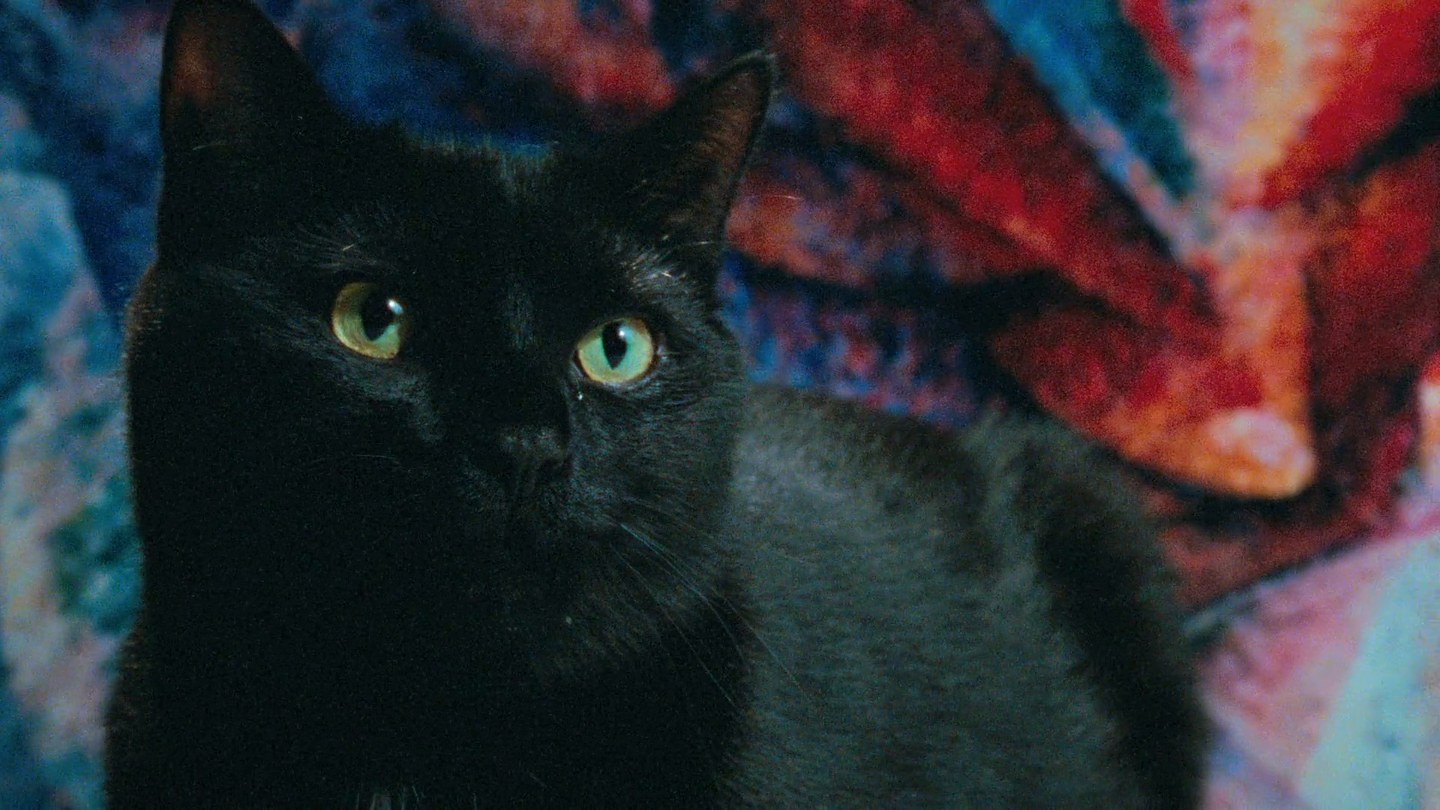
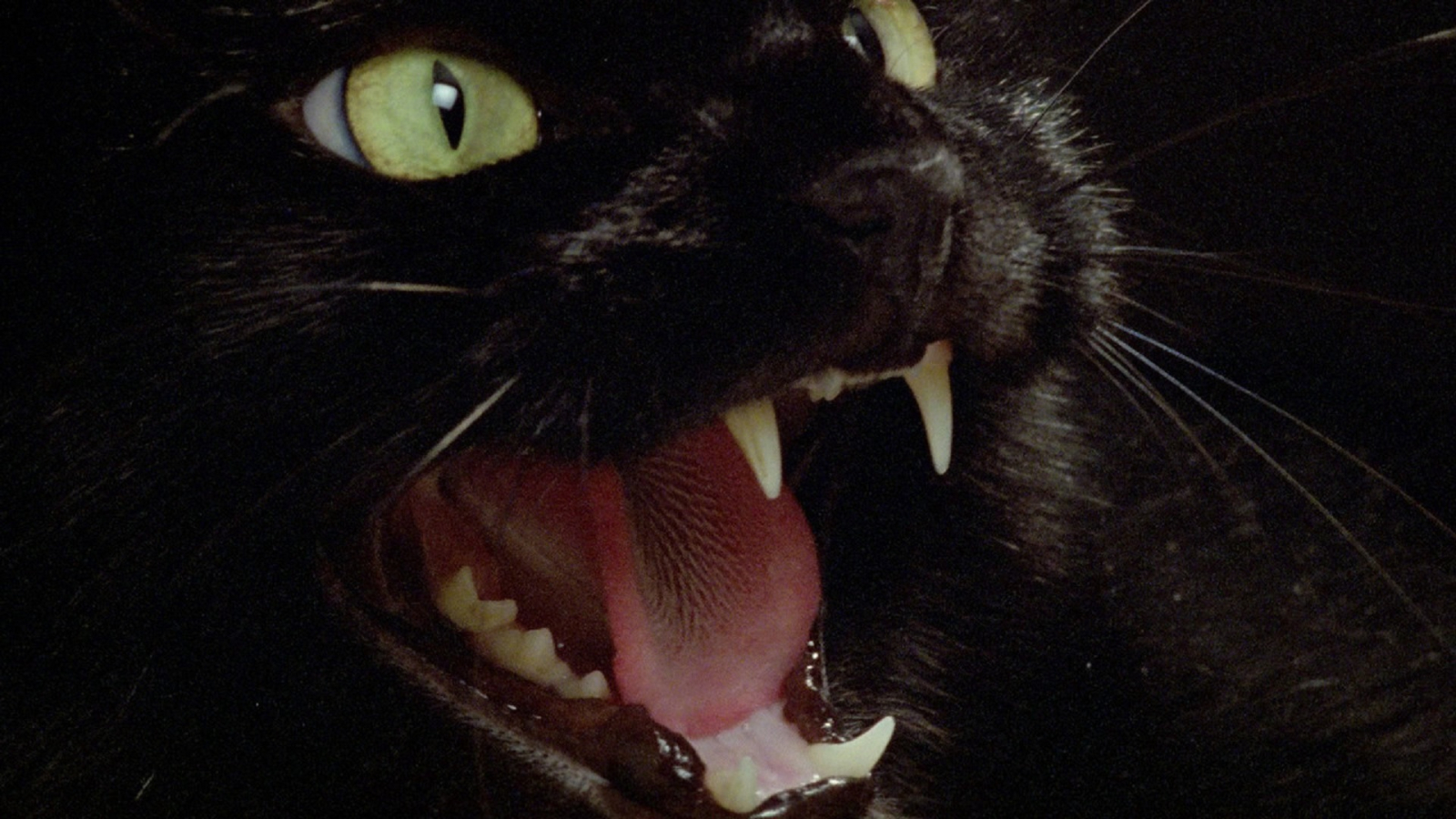
A black cat fills the frame, with yellow-green eyes, white whiskers, exposed teeth and a pink tongue inside its open mouth.ENLARGE ↗
The black cat fills the frame.FLC image source ↗
1990 · DARIO ARGENTO / GEORGE A. ROMERODue occhi diaboliciSCENES, VOICES & EFFECTS · 5 NOVEMBER 2026
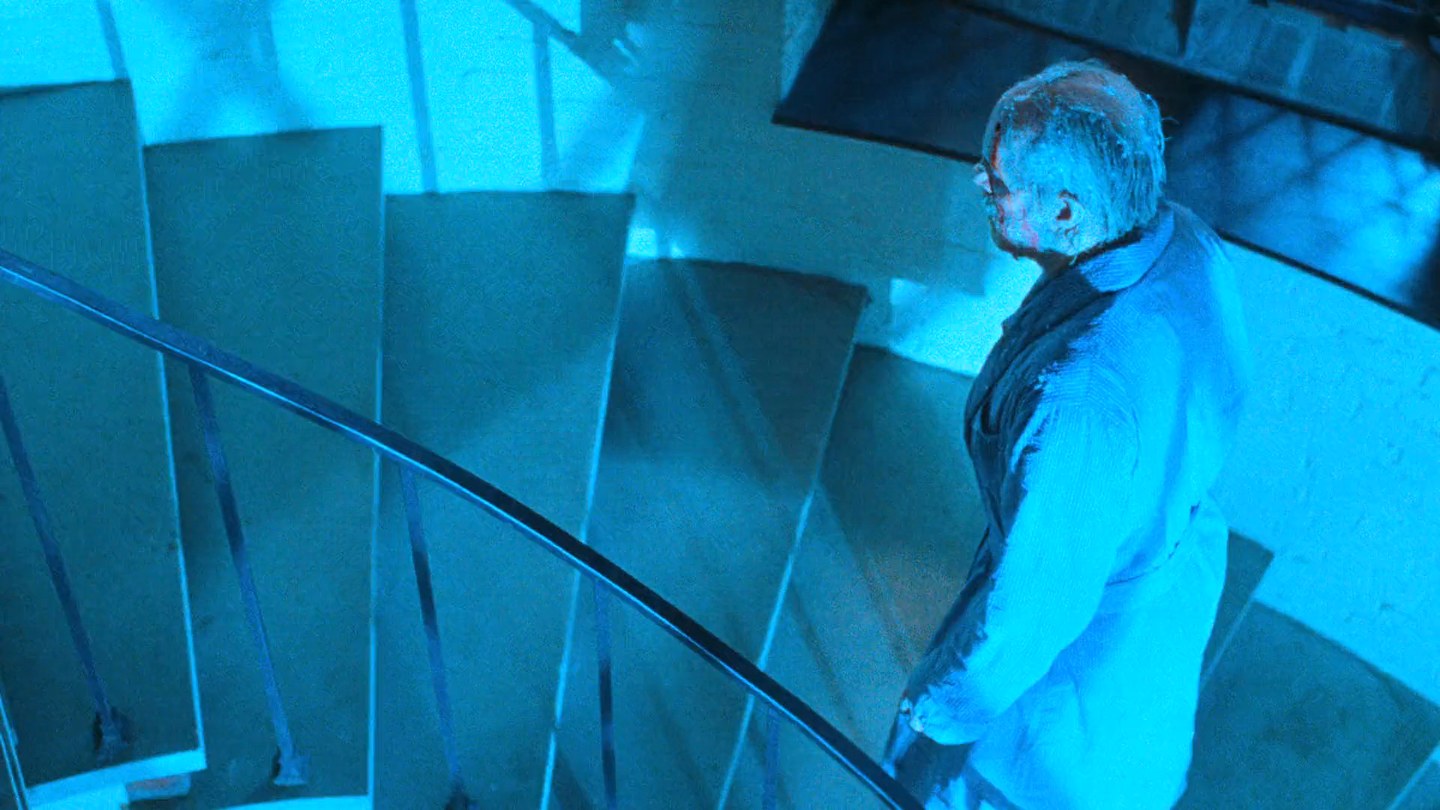
Blue light fills the spiral staircase.

GEORGE A. ROMERO

The body returns

Follow the conspiracy from signature to bloodied money.

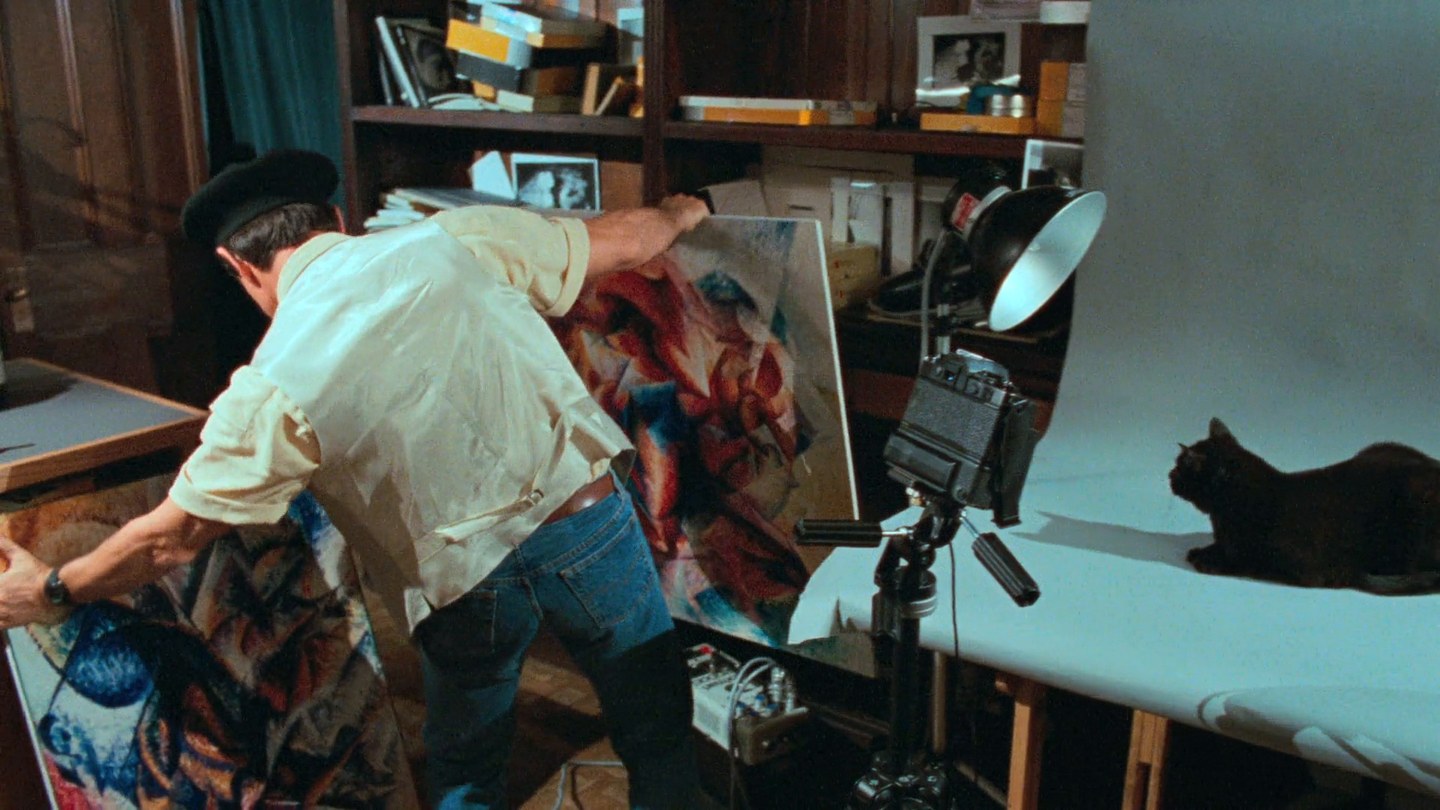
Rod arranges the cat before the camera.

DARIO ARGENTO

The camera accuses

Enter the studio, the nightmare and the concealed room.

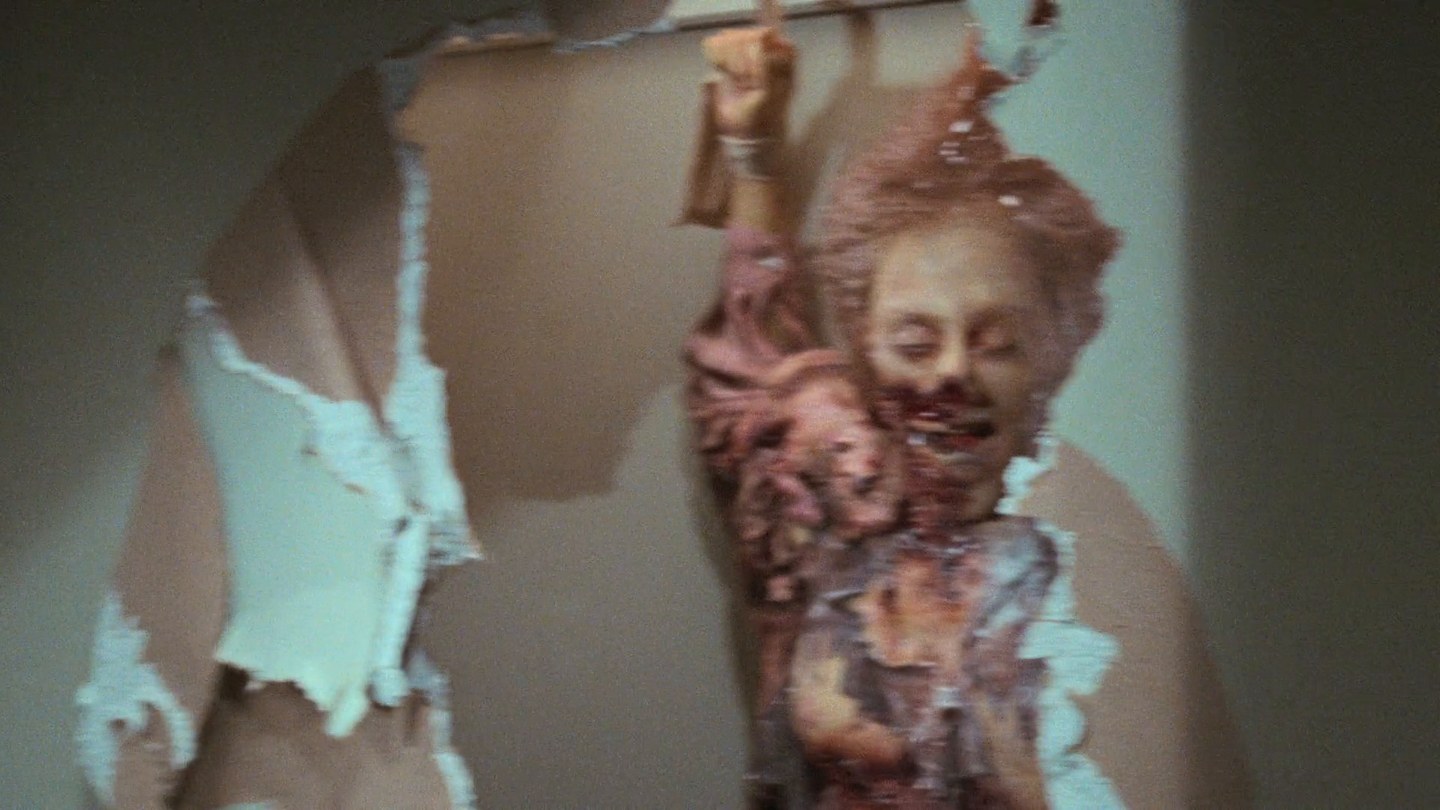
Hands pull away the broken plaster.

GORE & EFFECTS

Behind the spectacle

Eight expandable sequences, with 75 stages to explore.

A photograph develops under red light.

POE, CRAFT & EDITIONS

Read the dossier

Literary sources, production, music and presentation histories.

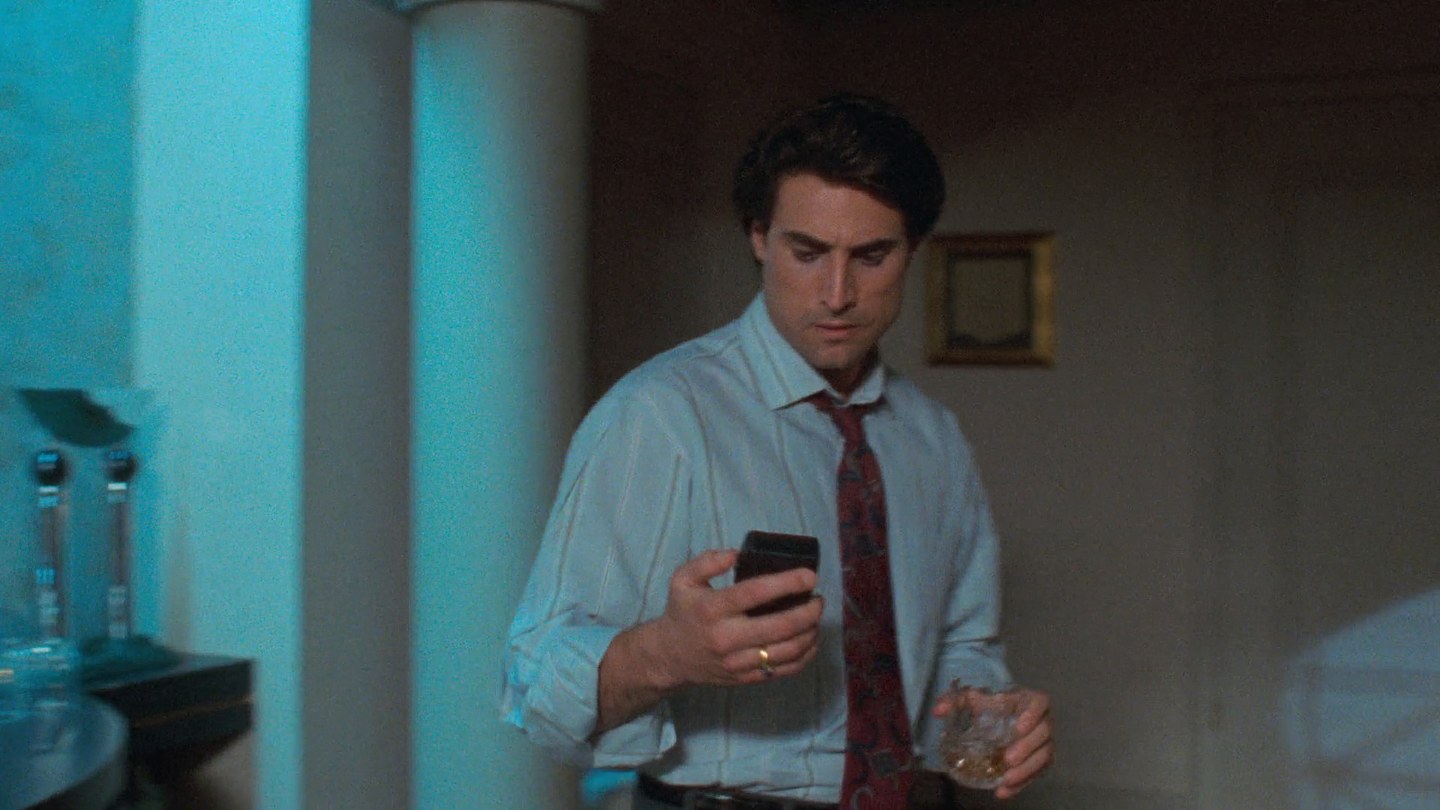
Robert replays the voice on a handheld recorder.

VOICE & DIALOGUE

The voice gives it away

Nine illustrated studies follow recorded voices, calls and false explanations.

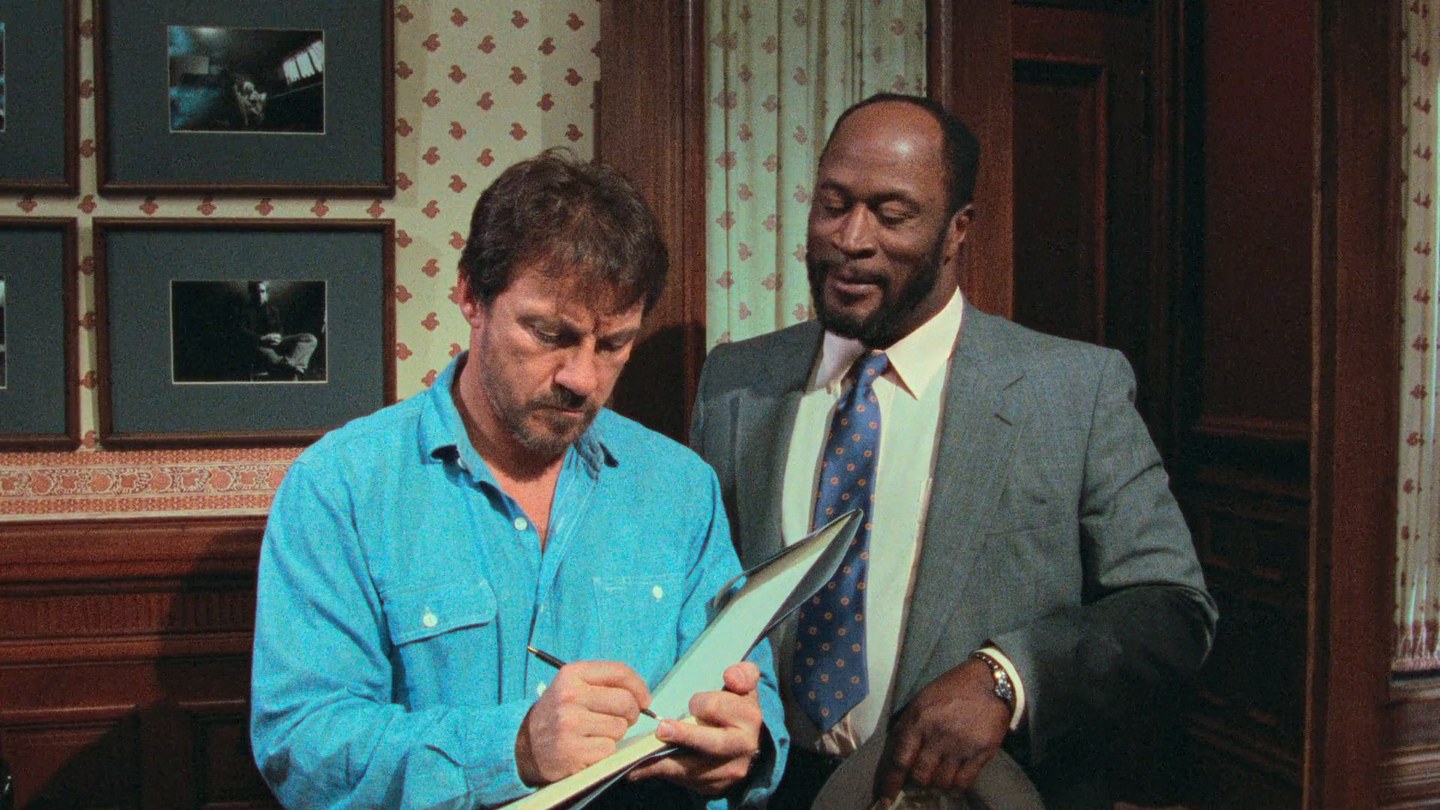
Rod inscribes the book while Legrand waits.

COMMENTARY & SOUND

Follow another reading

Troy Howarth’s observations, the sound team and the soundtrack record.

TWO EVIL EYES / THE SCENE GUIDE

Two stories. Two ways to lose control.

Thirty-two illustrated studies follow the double bill from the papers beside Ernest Valdemar’s bed to the wall behind Rod Usher’s bookcase. Move between the episodes, open the effects galleries, or follow a visual idea across both films.

Romero: The Facts in the Case of Mr. Valdemar

01:00

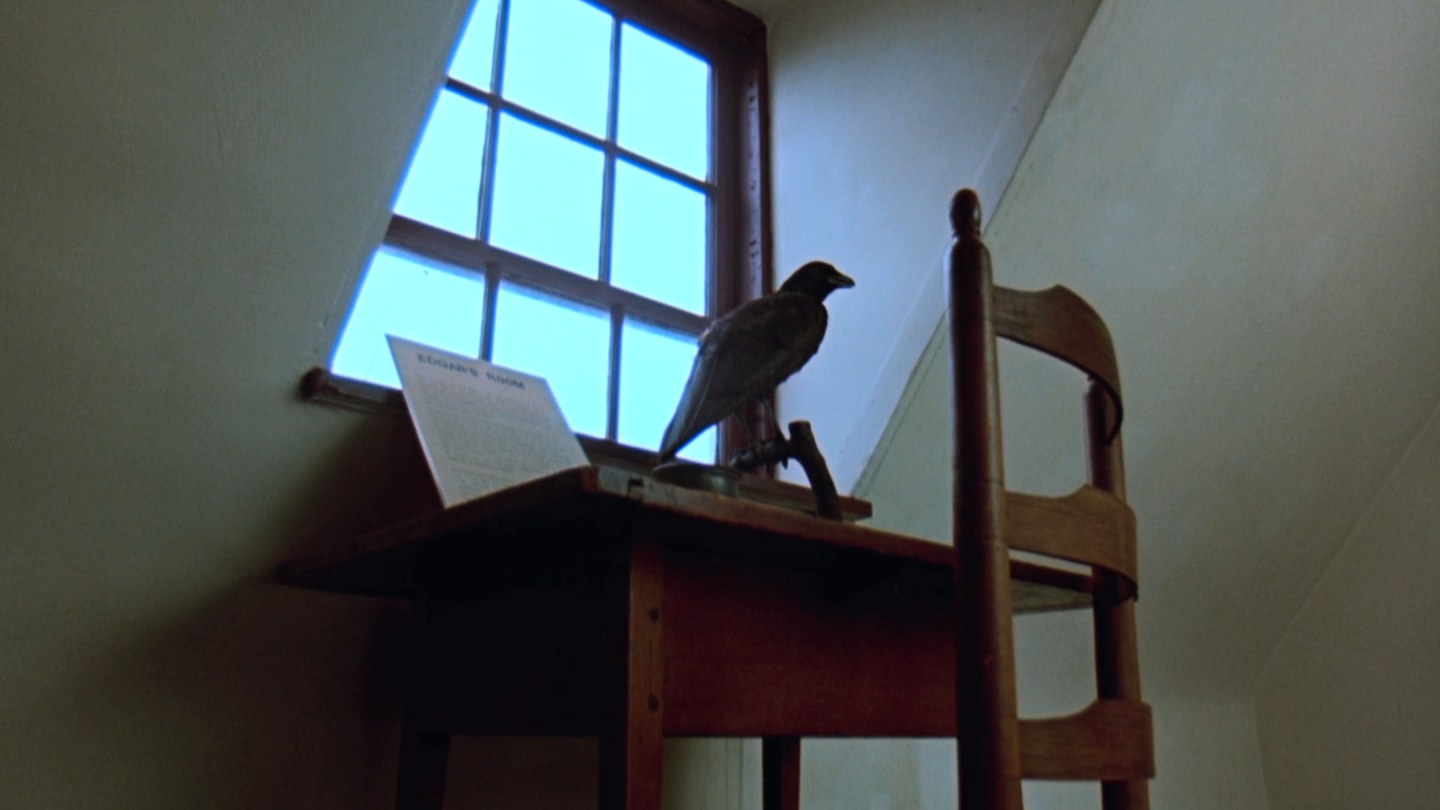
A writer’s room before the nightmares

A raven beside the blue-lit window.ENLARGE ↗
A raven beside the blue-lit window.

The prologue gives Poe an environment of objects: a desk, a window, a bird and a place from which to write. The still life introduces a film in which objects repeatedly outlive the explanations attached to them. Later, a signature, a banknote and a photograph will each promise a stable account of something that refuses to stay settled.

03:15

Money begins in a respectable room

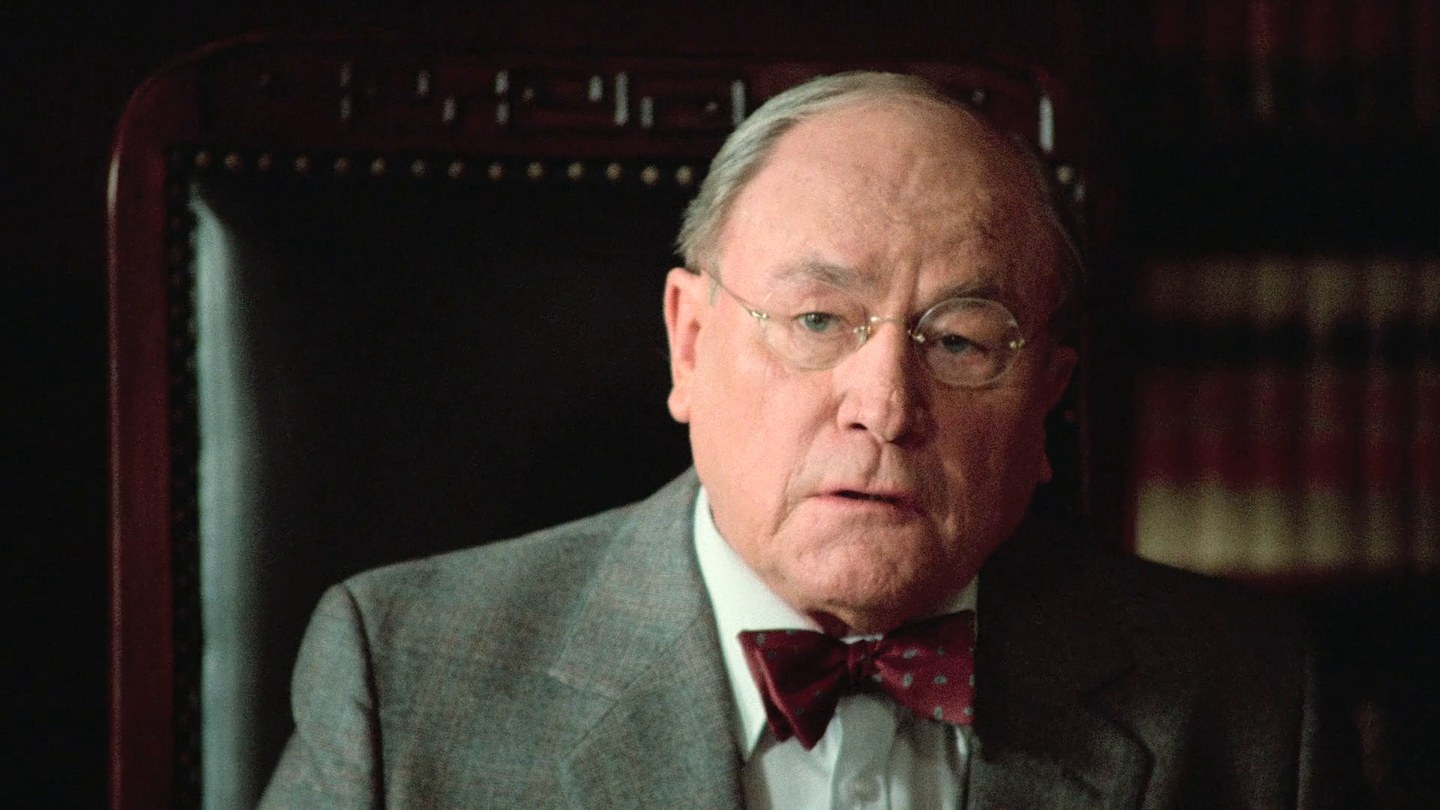
Jessica faces the lawyer across his desk.ENLARGE ↗
Jessica faces the lawyer across his desk.

Romero begins the transaction at conversational distance, with papers and a substantial desk between the participants. The room lends the scheme the appearance of orderly business. Its calm surfaces matter: exploitation enters through familiar professional rituals before the film gives it a monstrous face.

07:00

The house as a prize

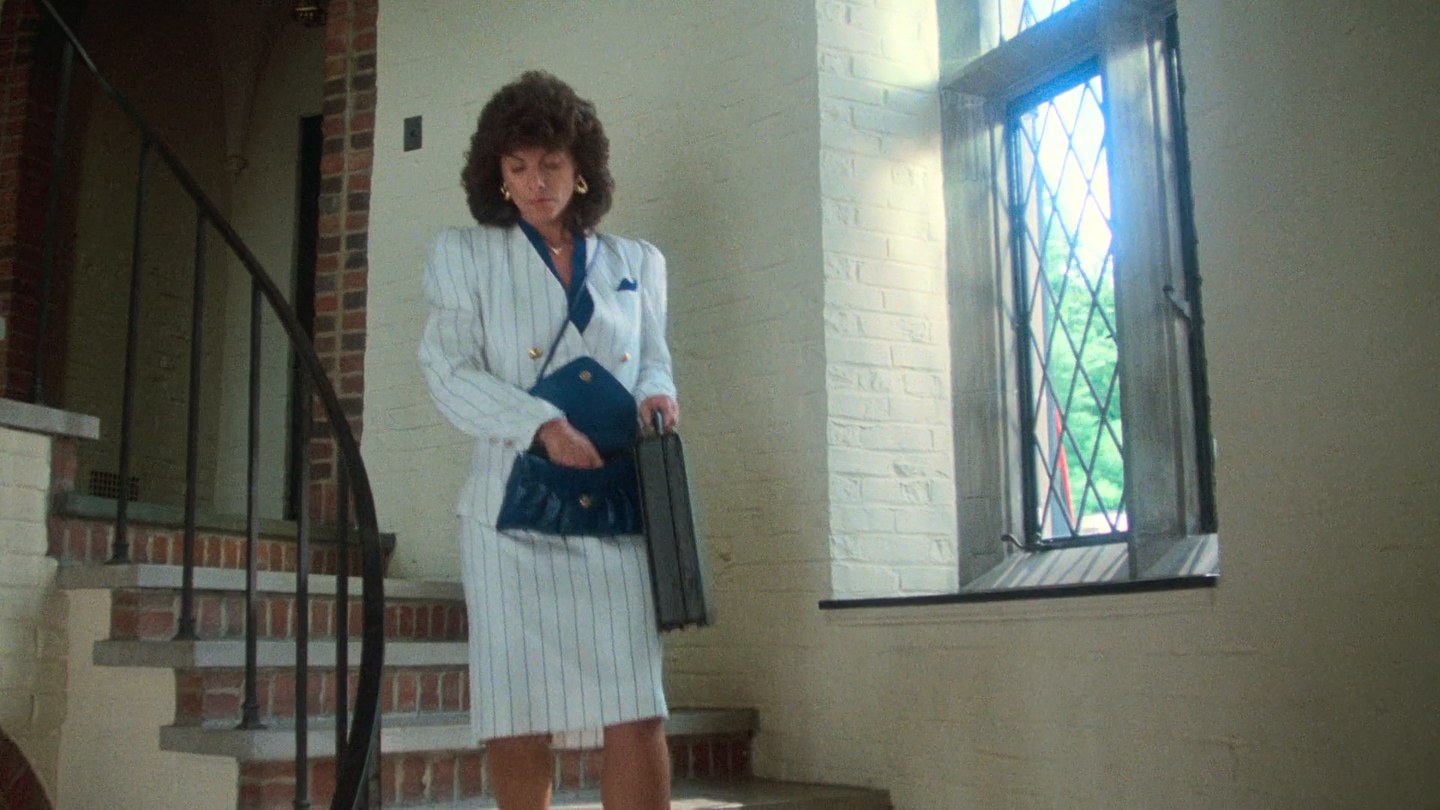
Jessica enters the mansion’s staircase hall.ENLARGE ↗
Jessica enters the mansion’s staircase hall.

Polished surfaces, a curved stair and deep interior space turn wealth into something that can be walked through. The house is more than a reward for the plot. Its routes between bedroom, basement and upper landing will organise the return of the body the conspirators want to put away.

15:45

The hand that makes ownership real

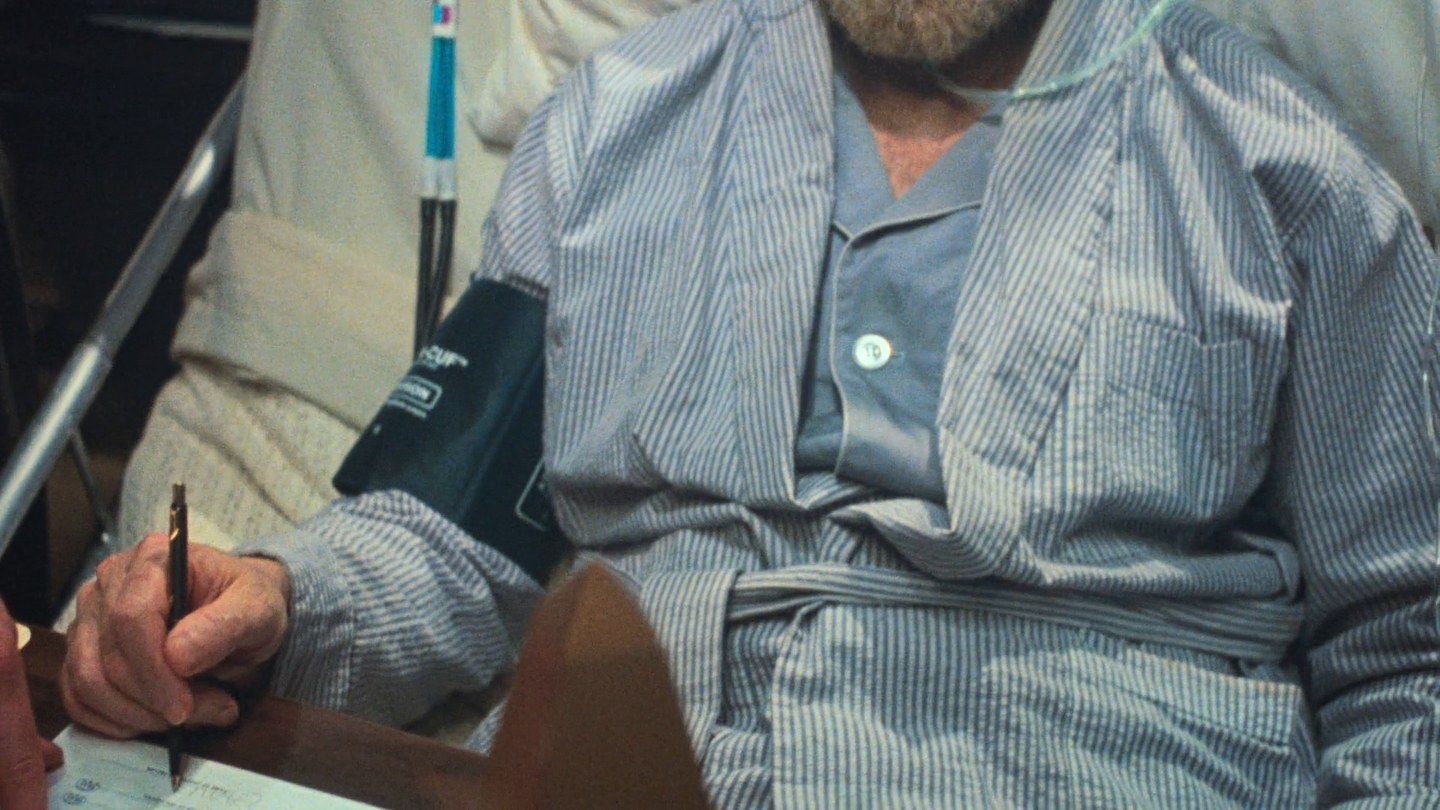
Ernest signs beside the blood-pressure cuff.ENLARGE ↗
Ernest signs beside the blood-pressure cuff.

Medical equipment and paperwork occupy the same small area around Ernest’s hand. The signature translates the vulnerable body into financial authority. The proximity of cuff, pen and hand makes the episode’s central abuse visible without needing the later supernatural spectacle.

16:05

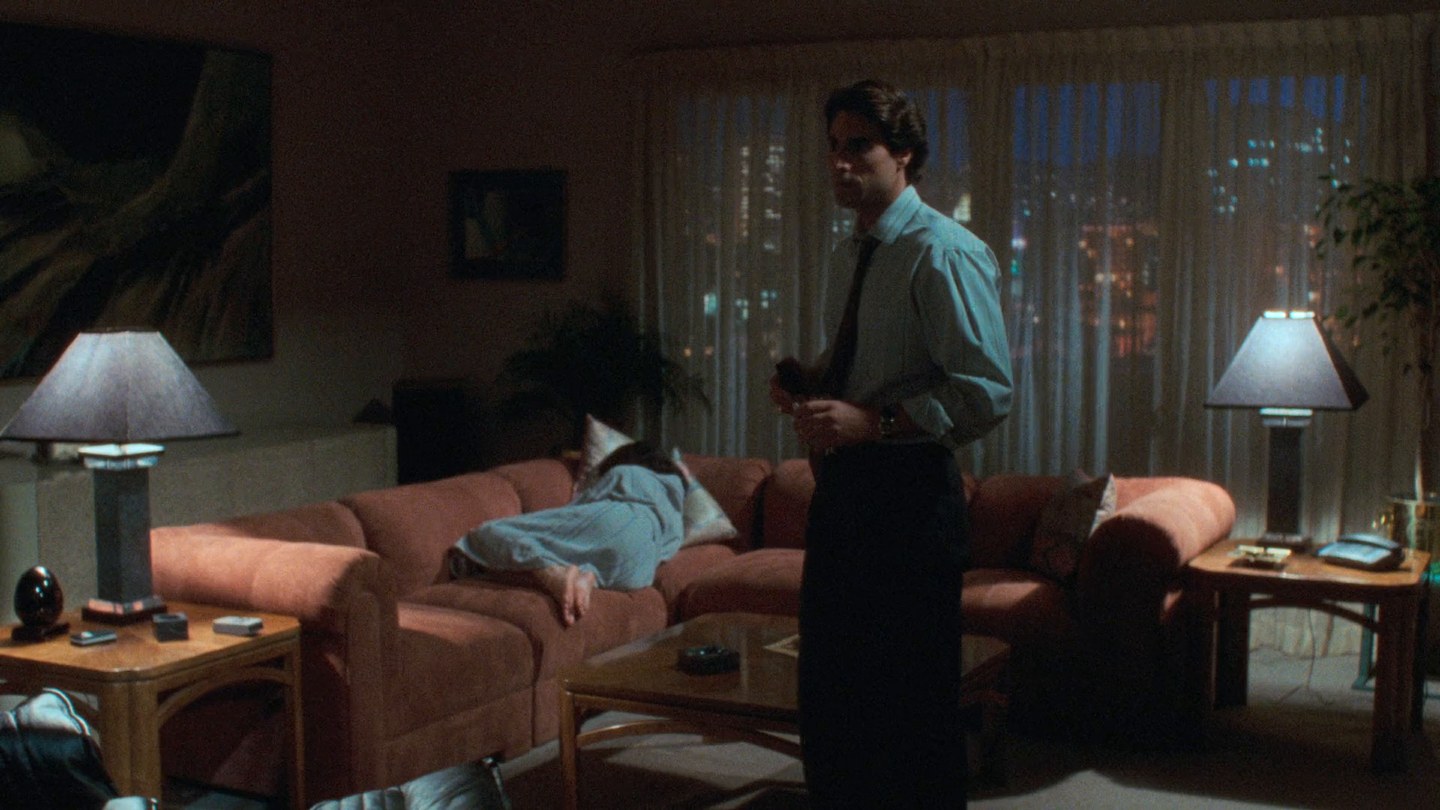
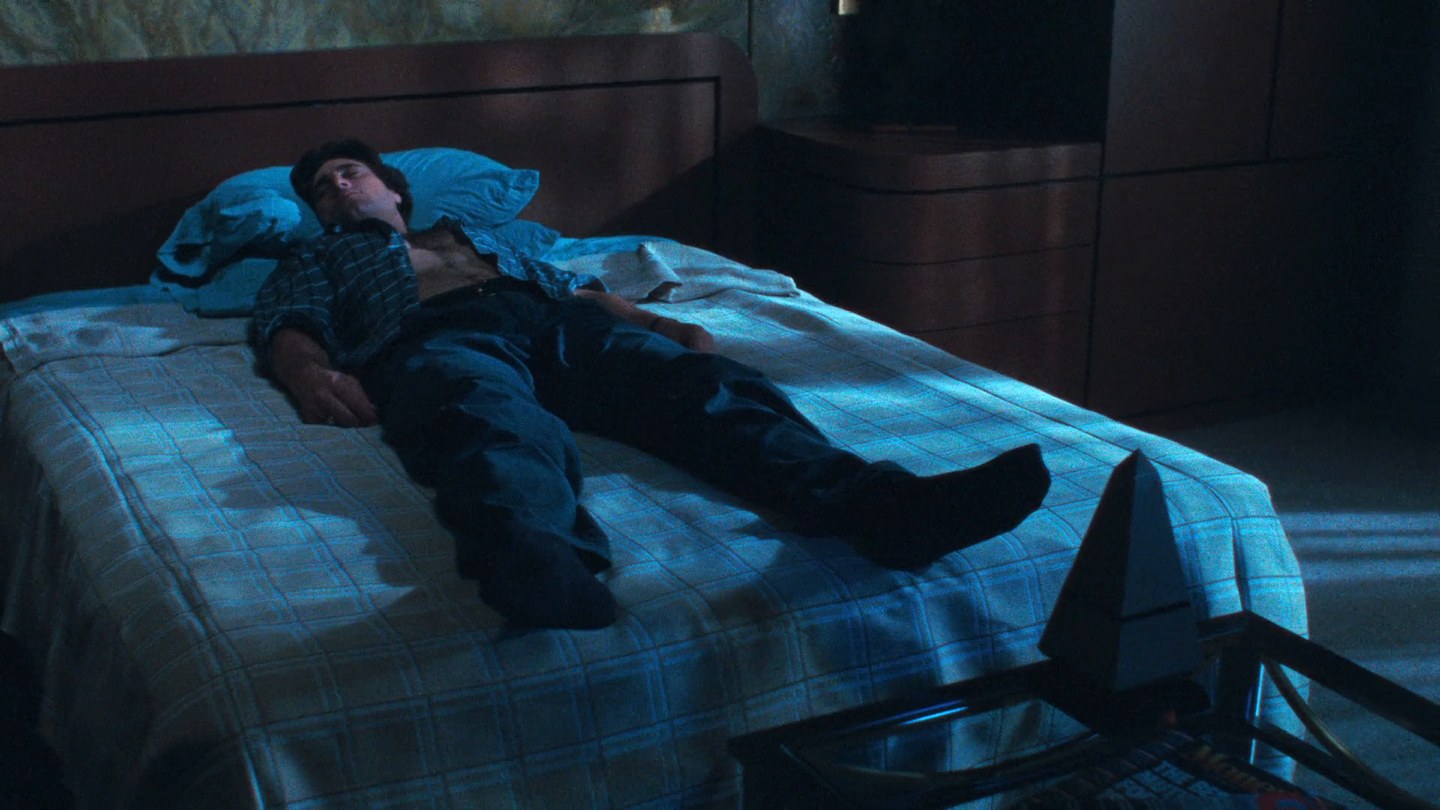
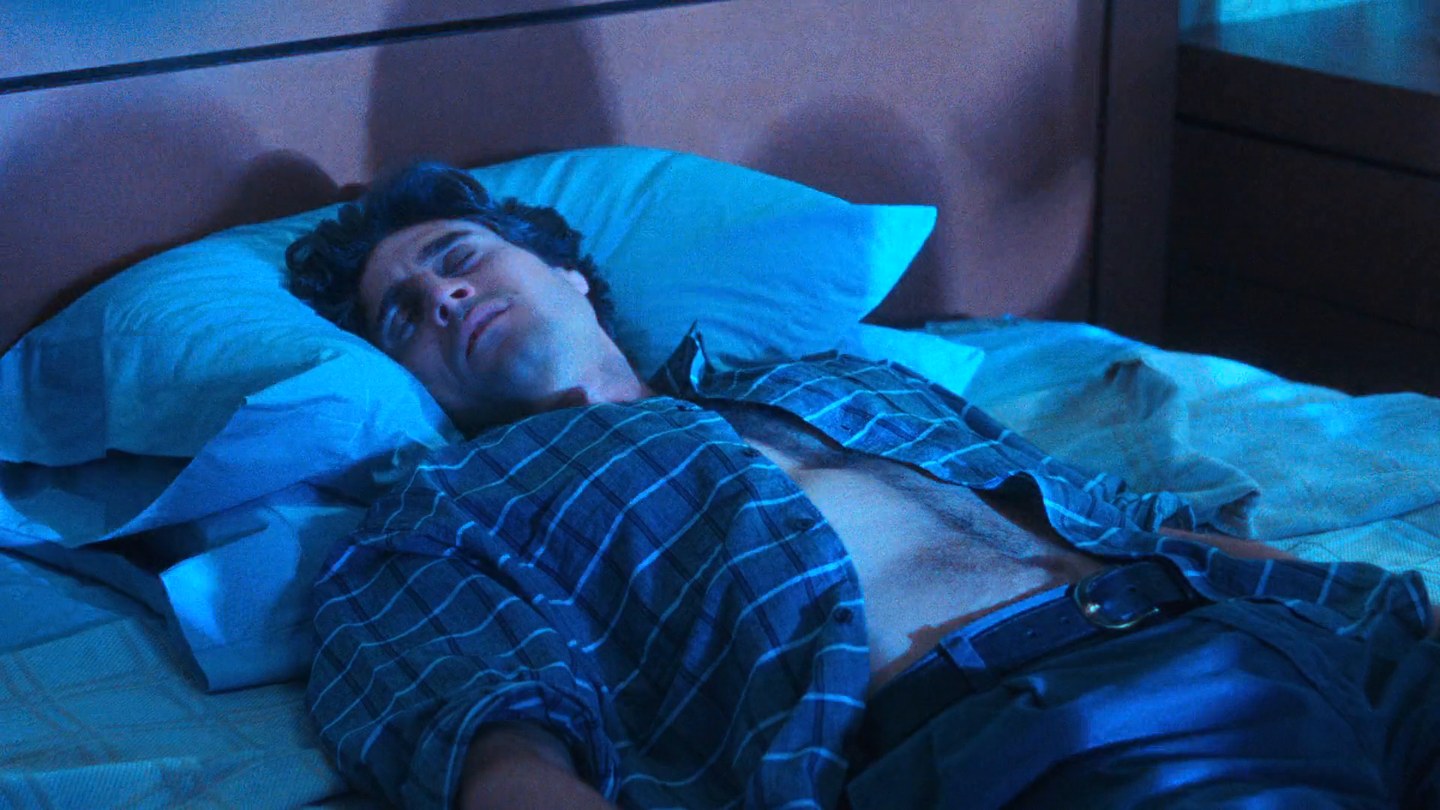
A patient between two observers

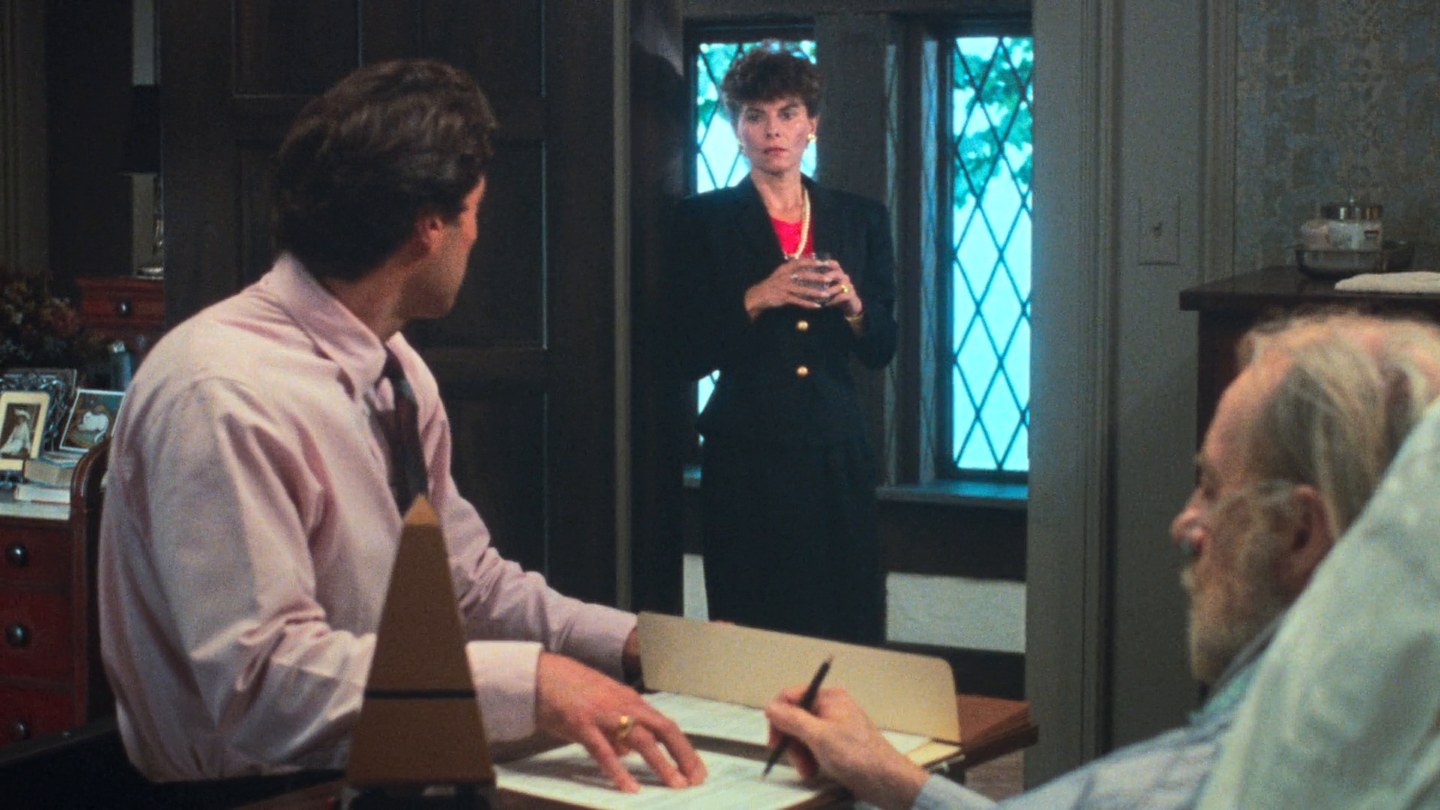
Robert stands beside Ernest as Jessica watches.ENLARGE ↗
Robert stands beside Ernest as Jessica watches.

The bed establishes an unequal triangle. Ernest lies horizontally while the two people who want to control his future can stand, move and look down. The doorway keeps Jessica both within the scene and slightly outside the doctor’s immediate working space.

20:25

A body becomes a storage problem

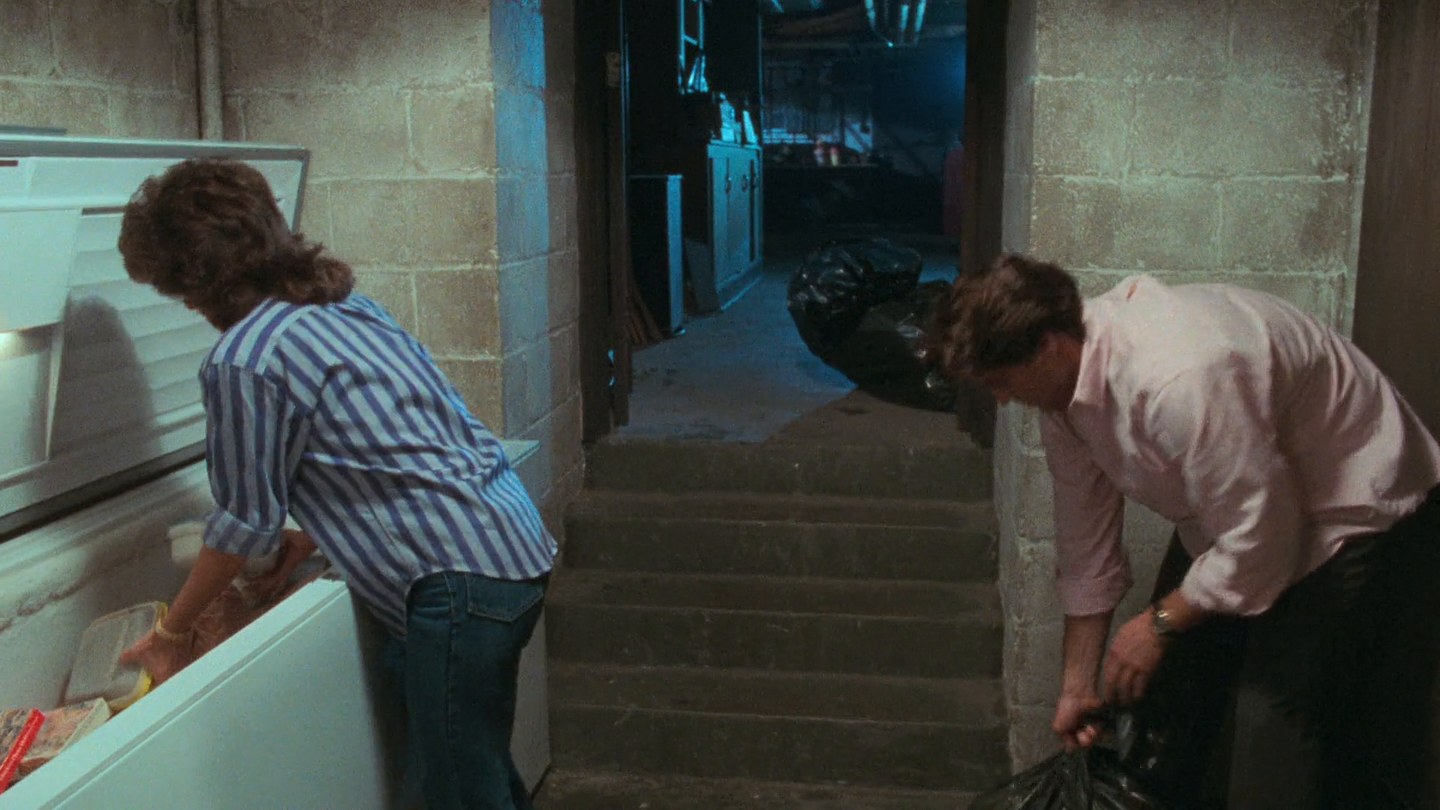
Jessica and Robert move the bundled body.ENLARGE ↗
Jessica and Robert move the bundled body.

The coverings suppress the outline of a person and turn the action into awkward domestic labour. Moving the body toward the freezer attempts to exchange the uncertain process of dying for a manageable object in a container. The rest of the episode dismantles that exchange.

25:00

Waiting is part of the scheme

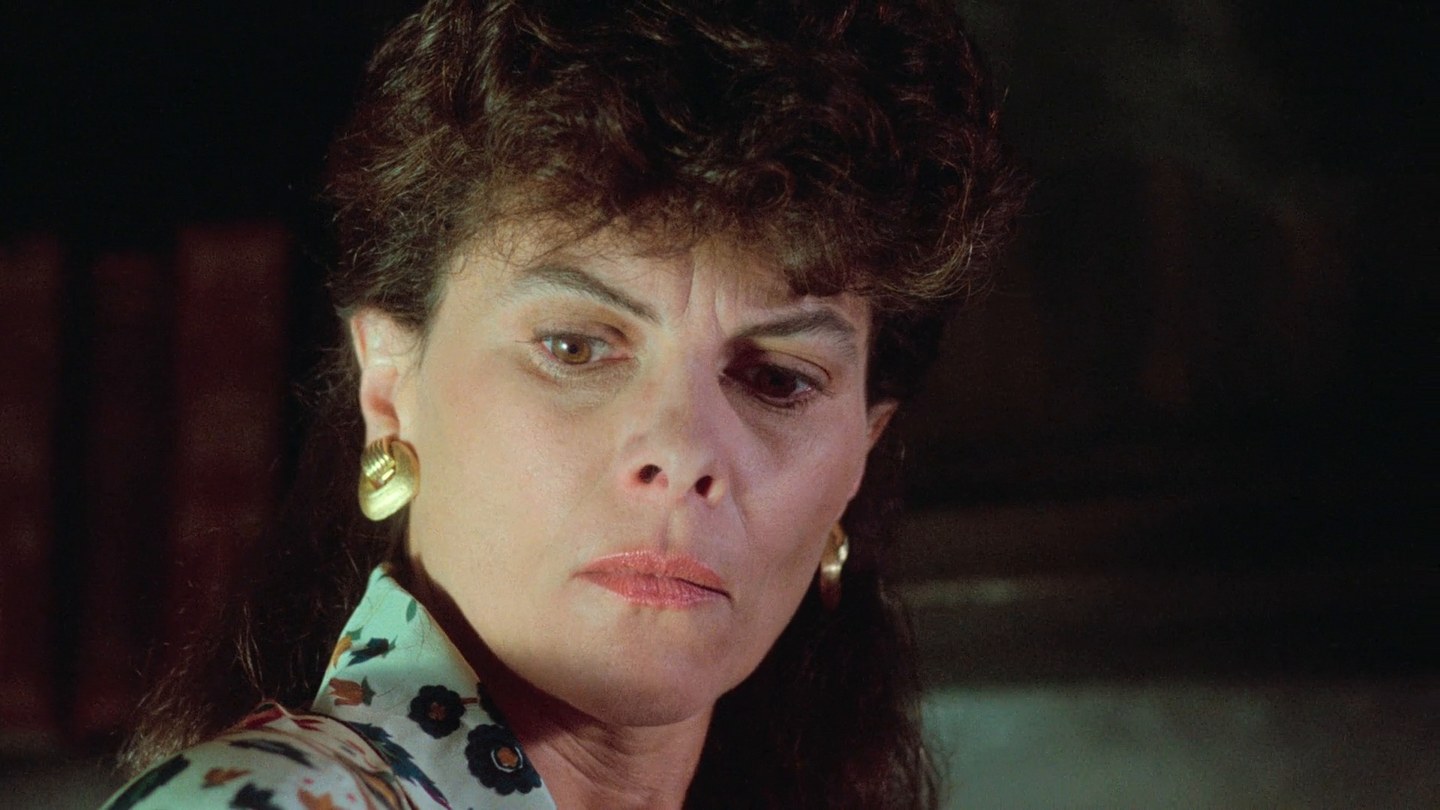
Jessica plays cards in the quiet house.ENLARGE ↗
Jessica plays cards in the quiet house.

The card table holds attention at a small, orderly scale while the surrounding house remains spacious and difficult to monitor. Waiting becomes an activity with its own visual pattern. Cards, money and the later bloodied banknotes also connect apparent abstraction to the bodies on which the scheme depends.

32:30

The stored body acquires a face

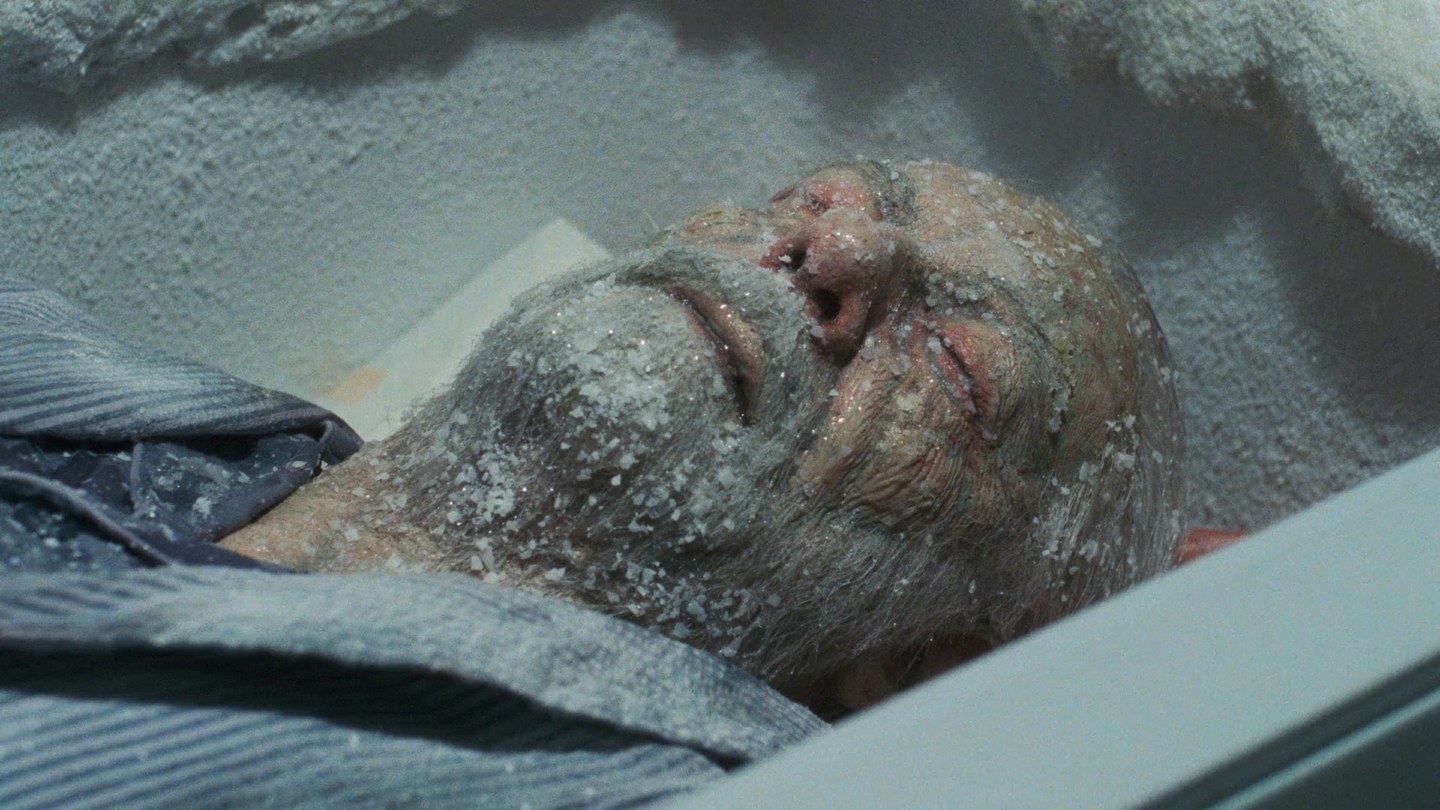
Frost gathers across Ernest’s face.ENLARGE ↗
Frost gathers across Ernest’s face.

The close-up returns individuality to what the coverings and freezer had made into cargo. Frost is simultaneously a surface texture and evidence of the concealment method. The image makes the container’s apparent efficiency look temporary.

Explore the effects sequence →

39:15

Control is rehearsed at the bedside

Robert attends Jessica on the bed.ENLARGE ↗
Robert attends Jessica on the bed.

The doctor’s authority moves from the dying husband to his partner in the scheme. Bedside positioning again makes one body available to another person’s intervention. This repetition prepares the final reversal, when Robert’s own body becomes the episode’s most emphatic evidence.

45:20

The house changes colour

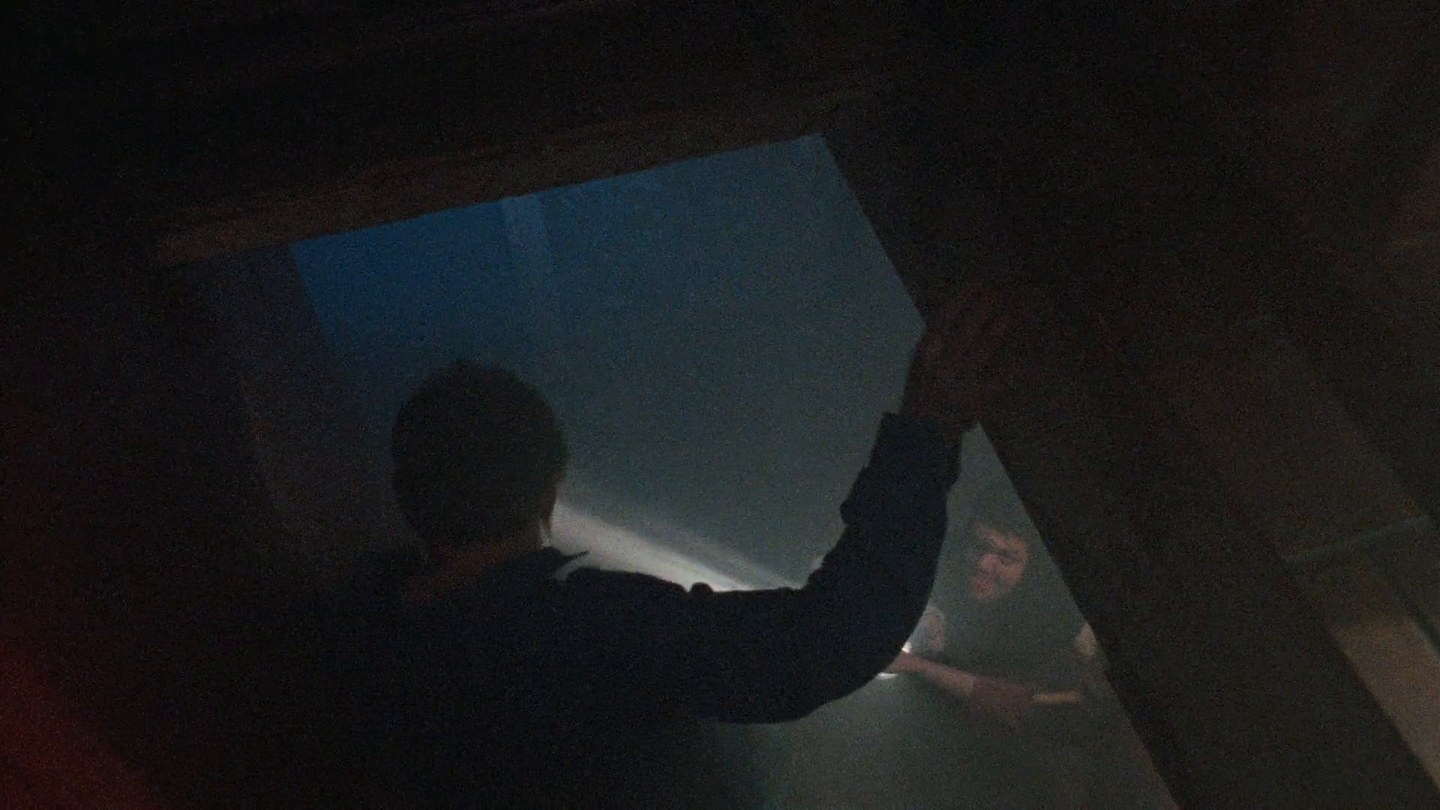
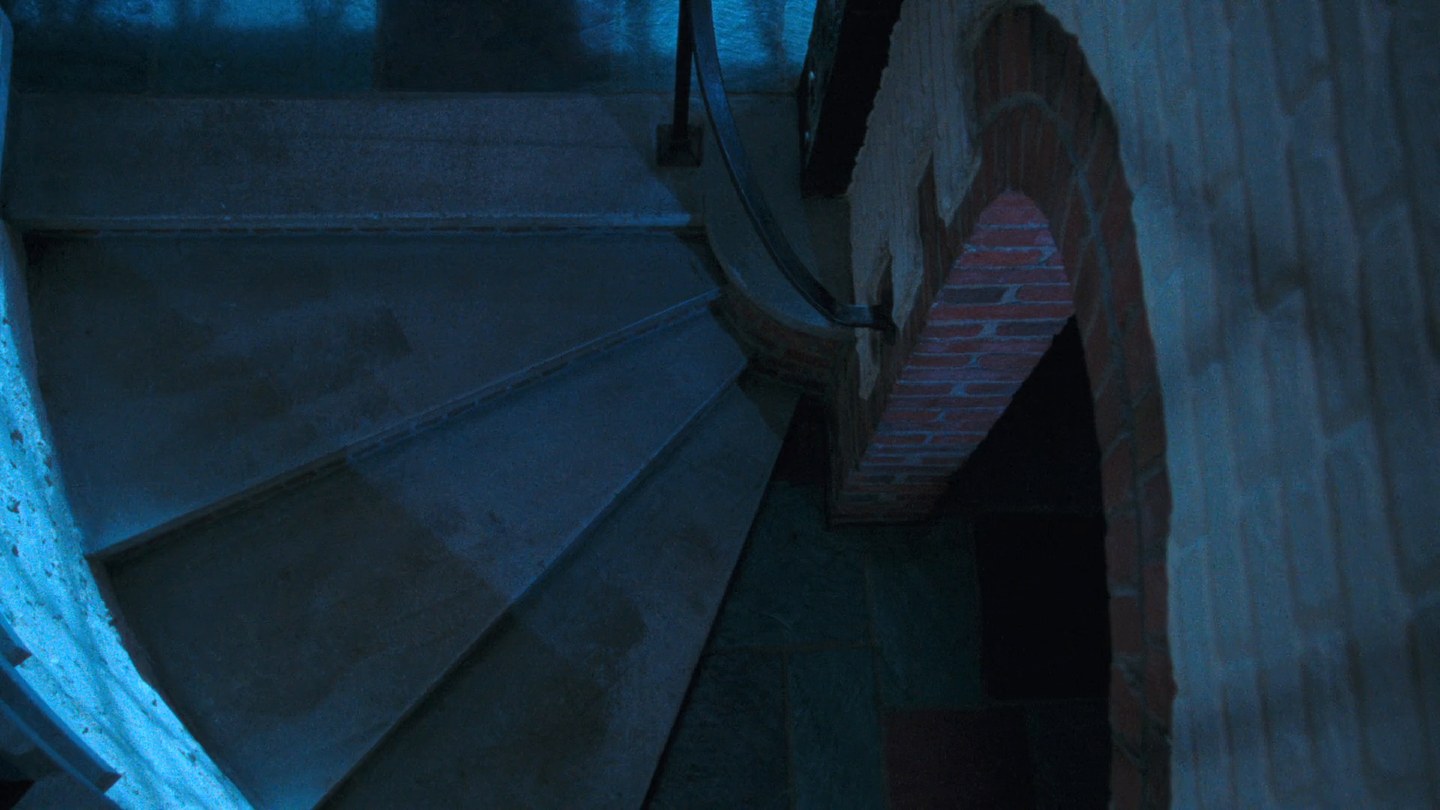
Blue light fills the spiral staircase.ENLARGE ↗
Blue light fills the spiral staircase.

The staircase’s warm domestic identity disappears under an intense blue wash. Its curves now seem to conduct something between the basement and the occupied rooms. Colour gives the returning body a route before the body fully takes possession of the frame.

Explore the effects sequence →

46:02

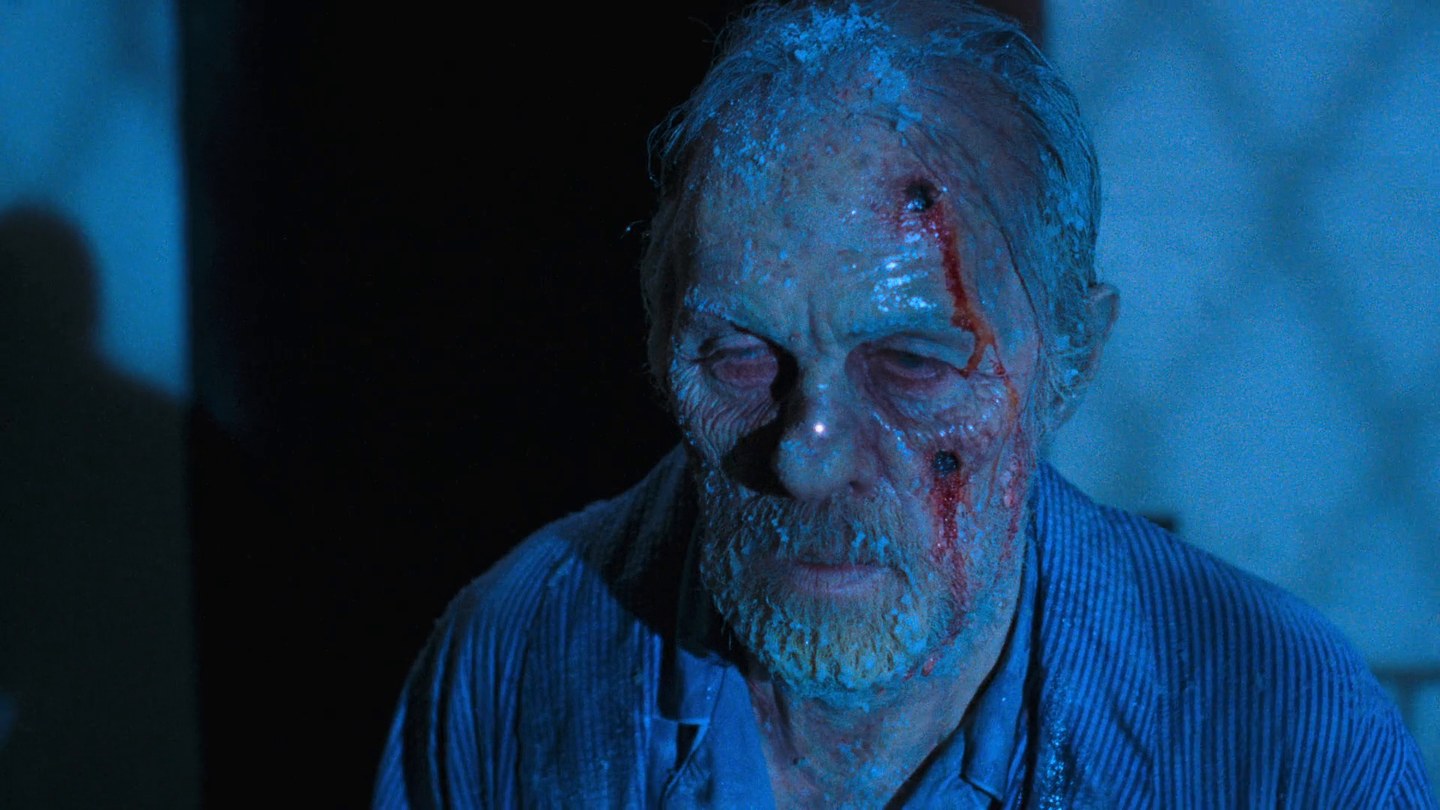
The patient returns as an intruder

Ernest emerges with a ruined face.ENLARGE ↗
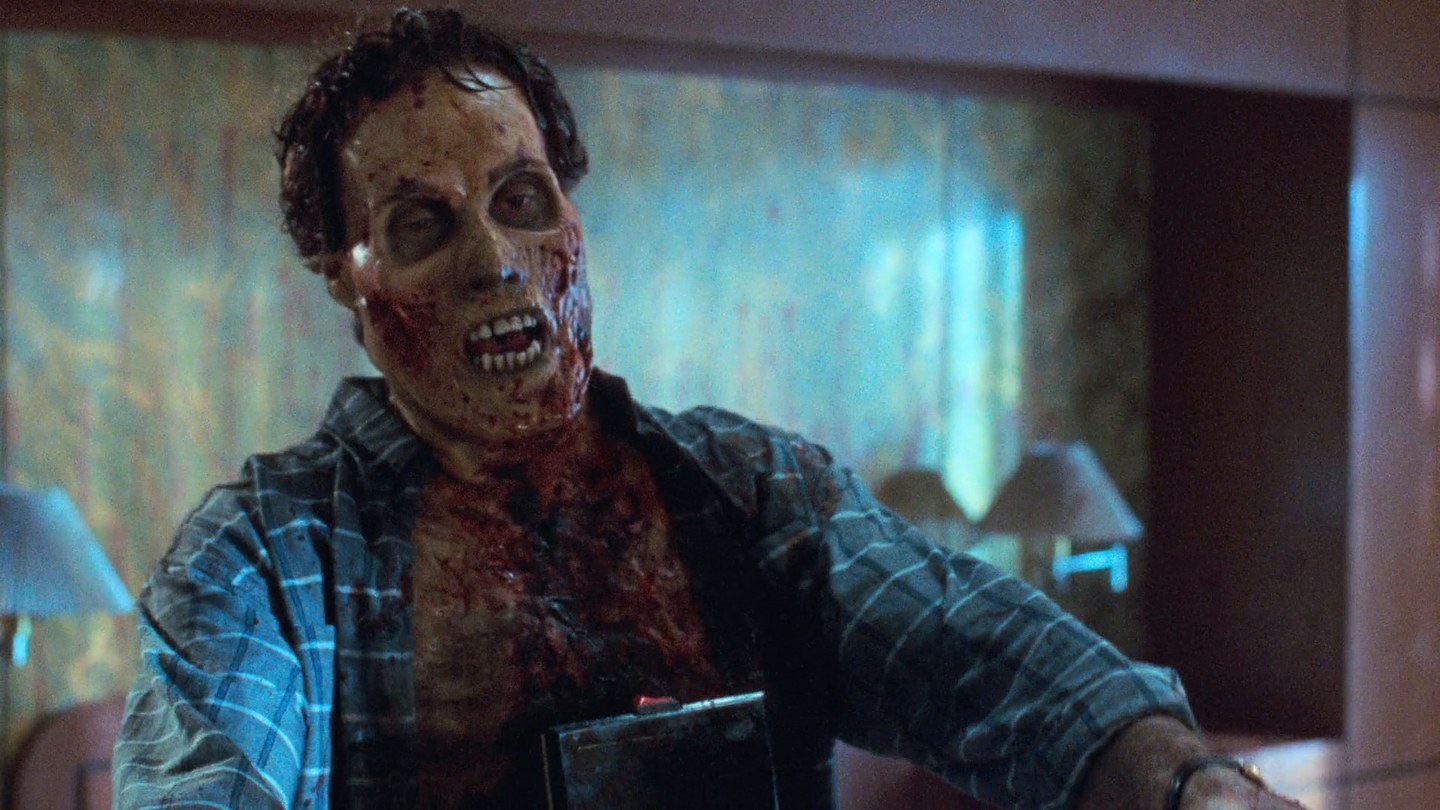
Ernest emerges with a ruined face.

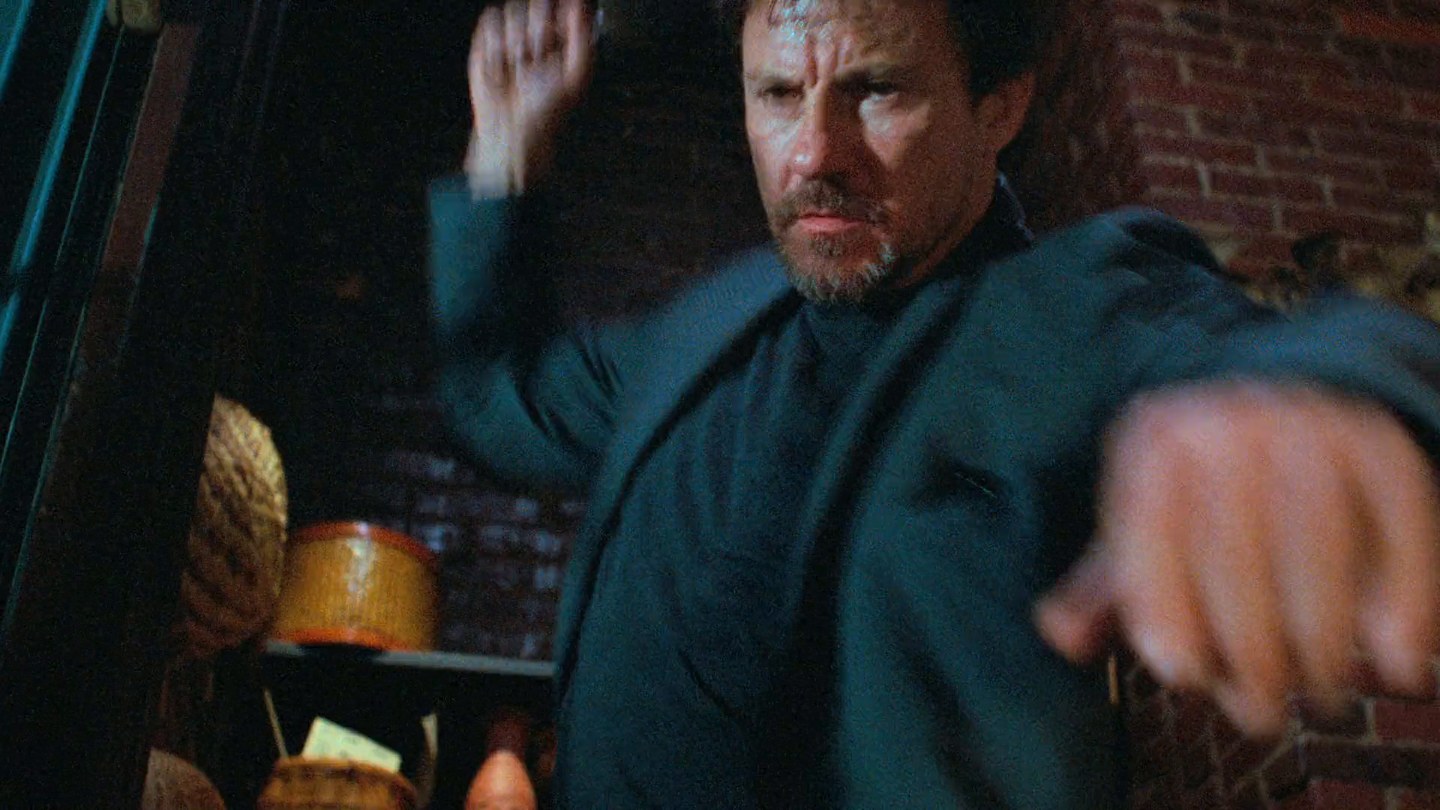
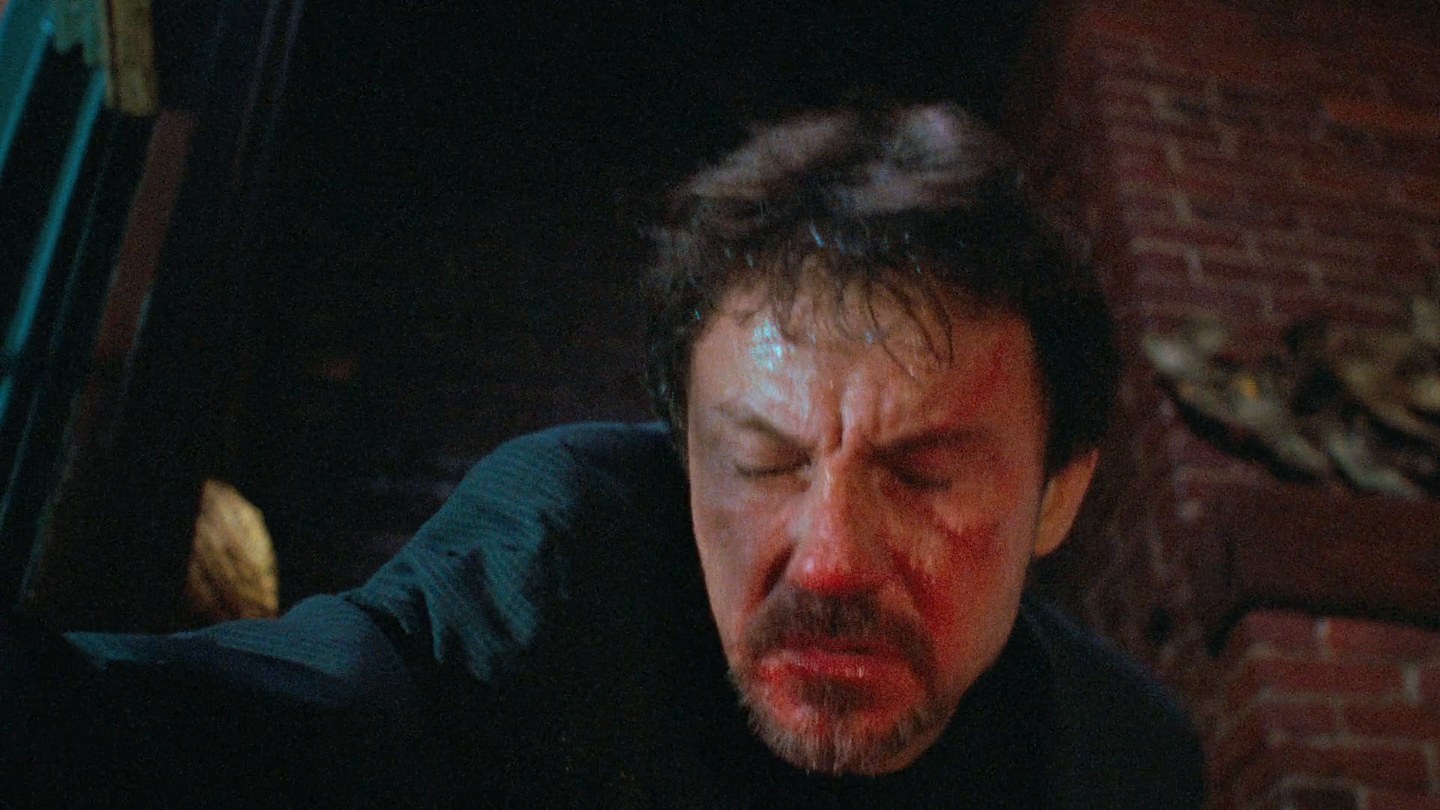
The damaged skin changes the meaning of the face without erasing the person beneath it. The corpse now occupies the upright, mobile position denied to Ernest in the bedroom. Makeup, posture and the blue light work together to reverse the earlier arrangement of authority.

Explore the effects sequence →

47:44

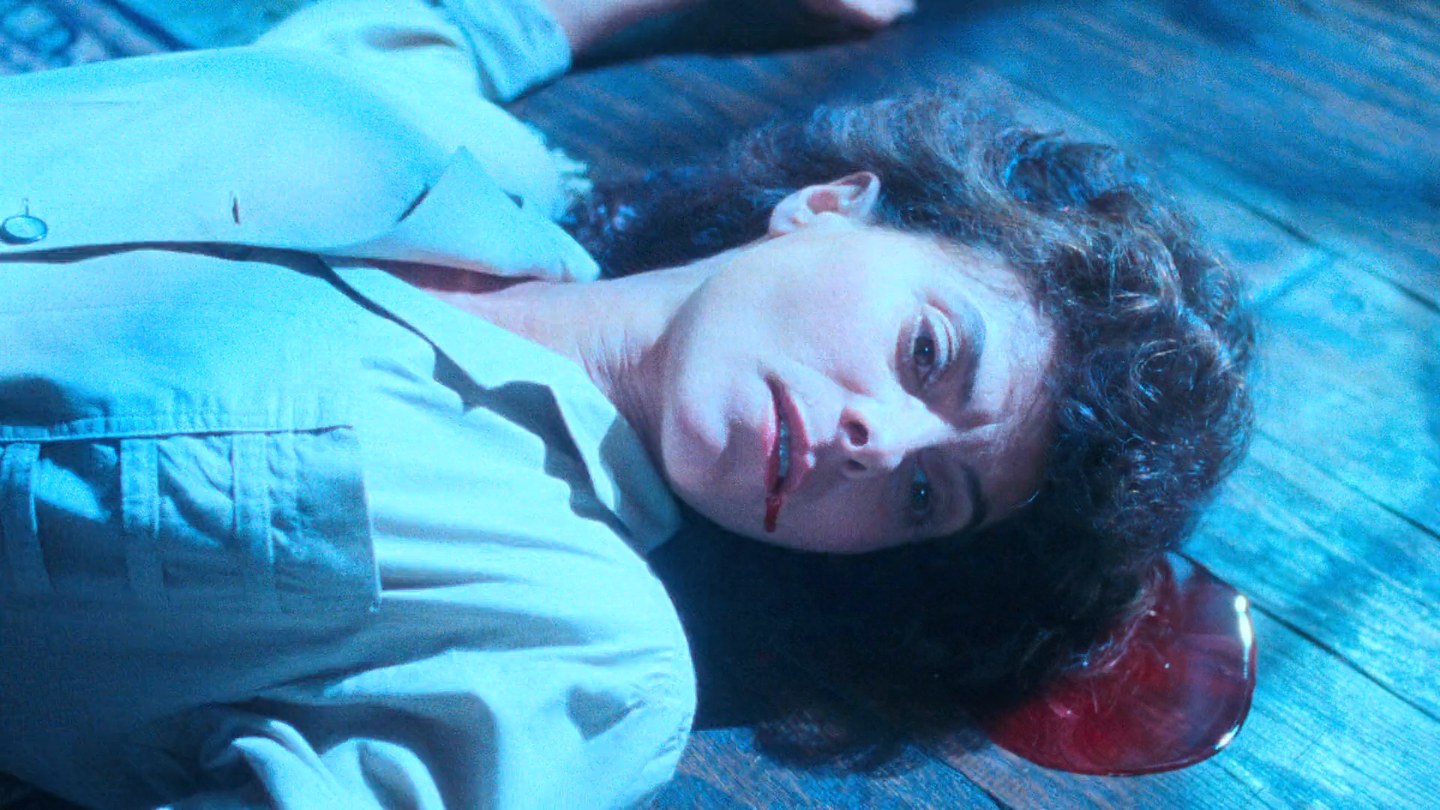
The scheme ends on the floor

Jessica lies beneath the upper landing.ENLARGE ↗
Jessica lies beneath the upper landing.

The return to the room’s floor and architecture gives the preceding close views a consequence in space. The ornate interior no longer protects its occupants or displays their success. It becomes the place where the body can no longer be excluded from the story of the money.

Explore the effects sequence →

54:47

The doctor becomes the specimen

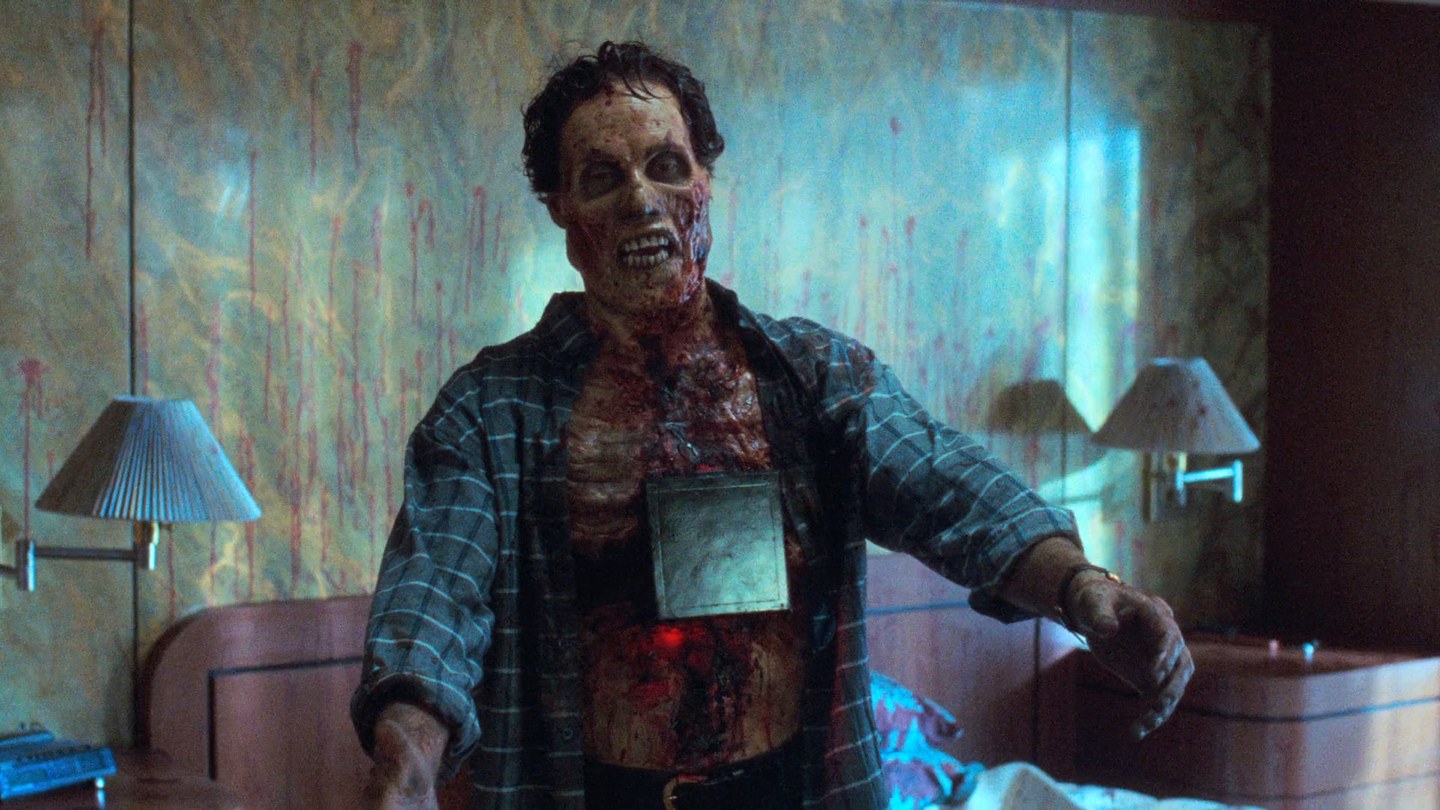
Robert’s ruined face confronts the investigators.ENLARGE ↗
Robert’s ruined face confronts the investigators.

The concluding body image makes the former controller available for inspection. His face and the apparatus at his chest join bodily decay to the instruments of his profession. The reversal is legible at a glance: the man who regulated other people’s conditions has become an inexplicable condition himself.

Explore the effects sequence →

54:58

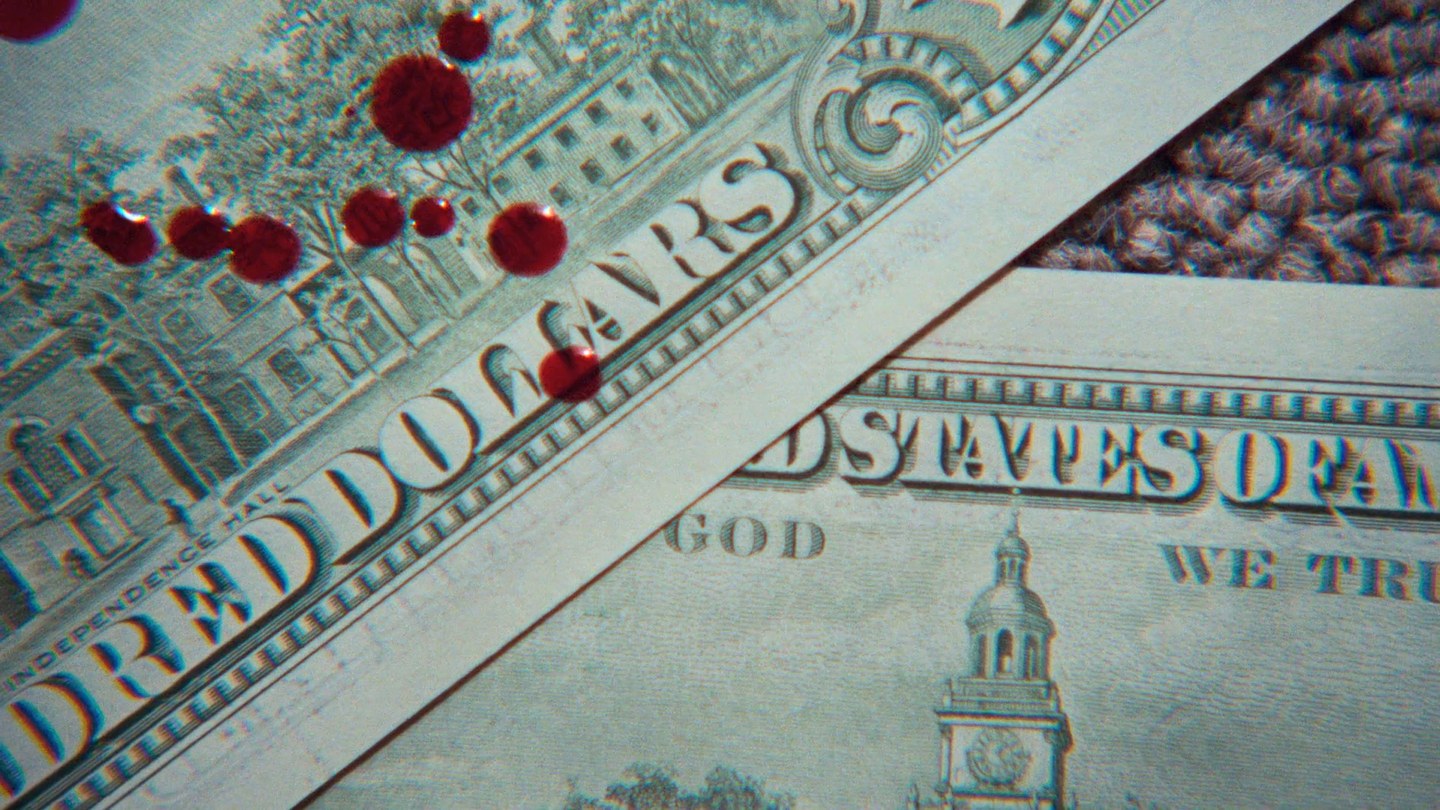
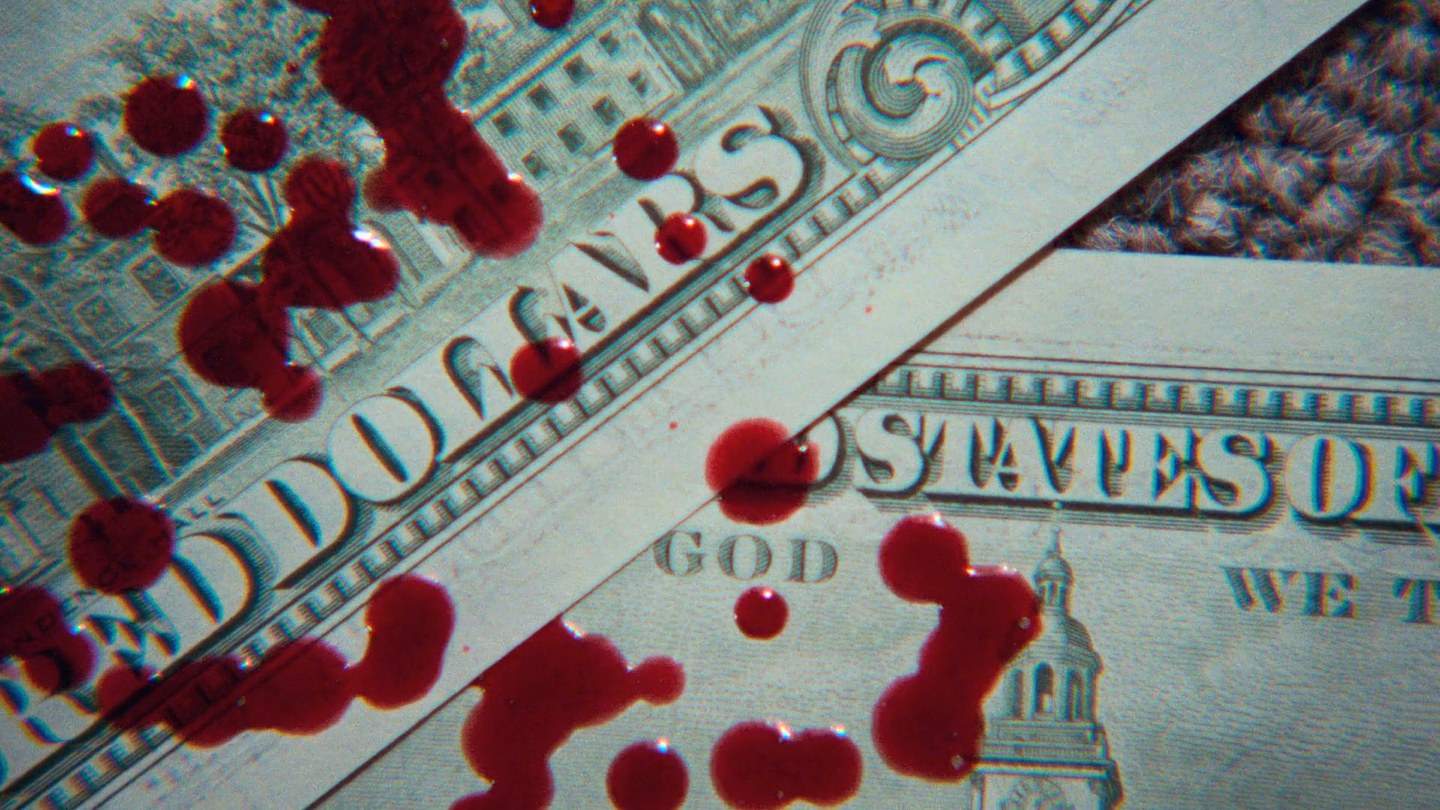
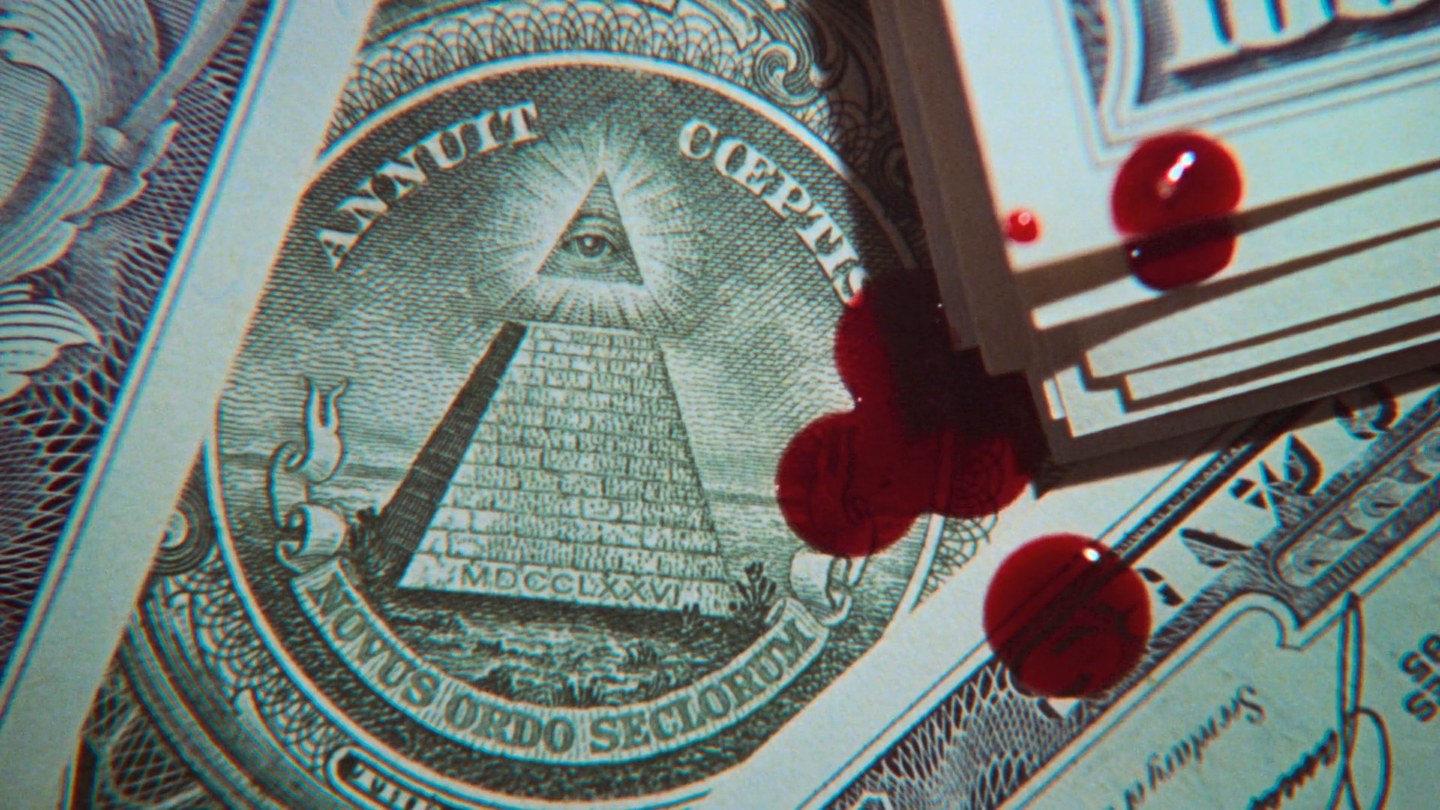
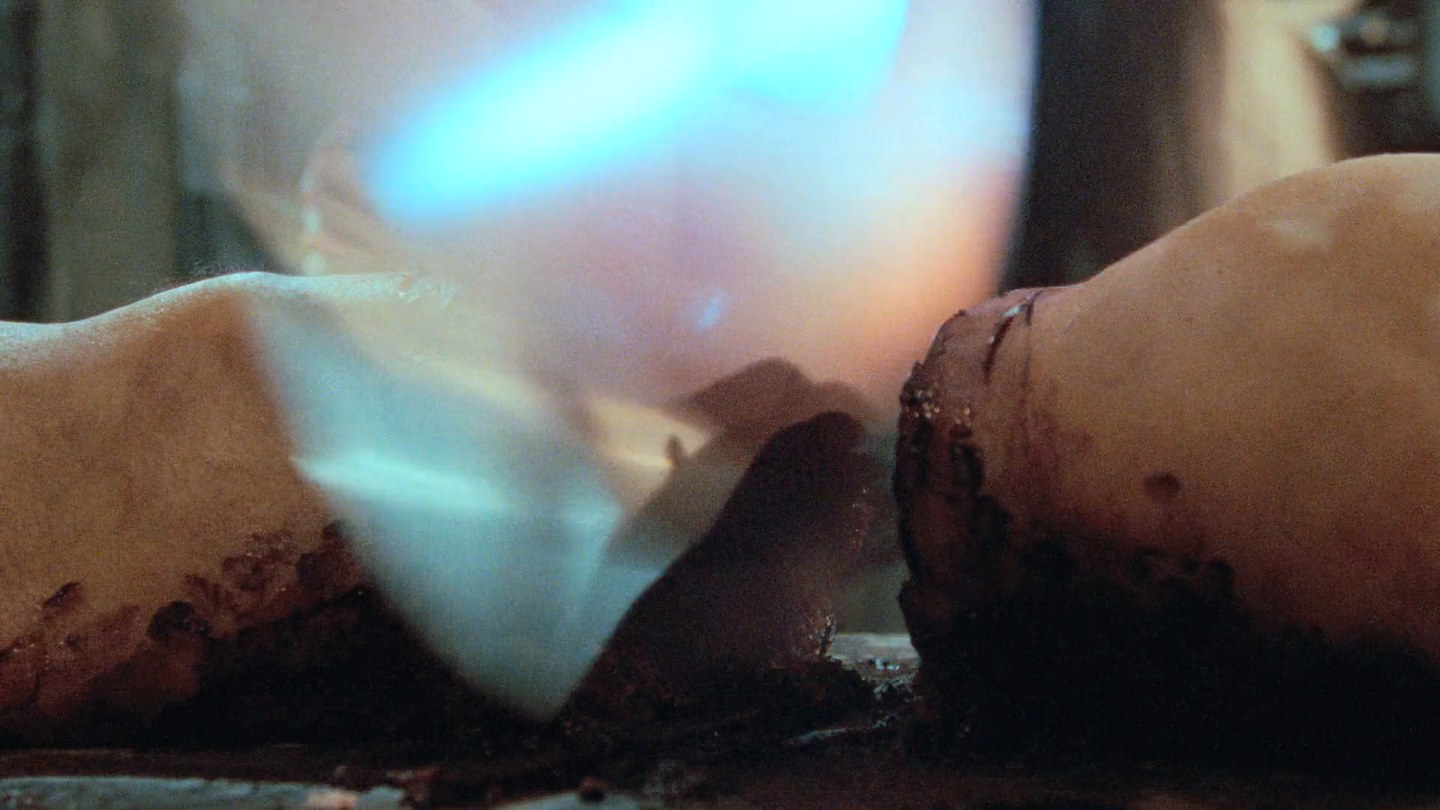
Blood interrupts the currency

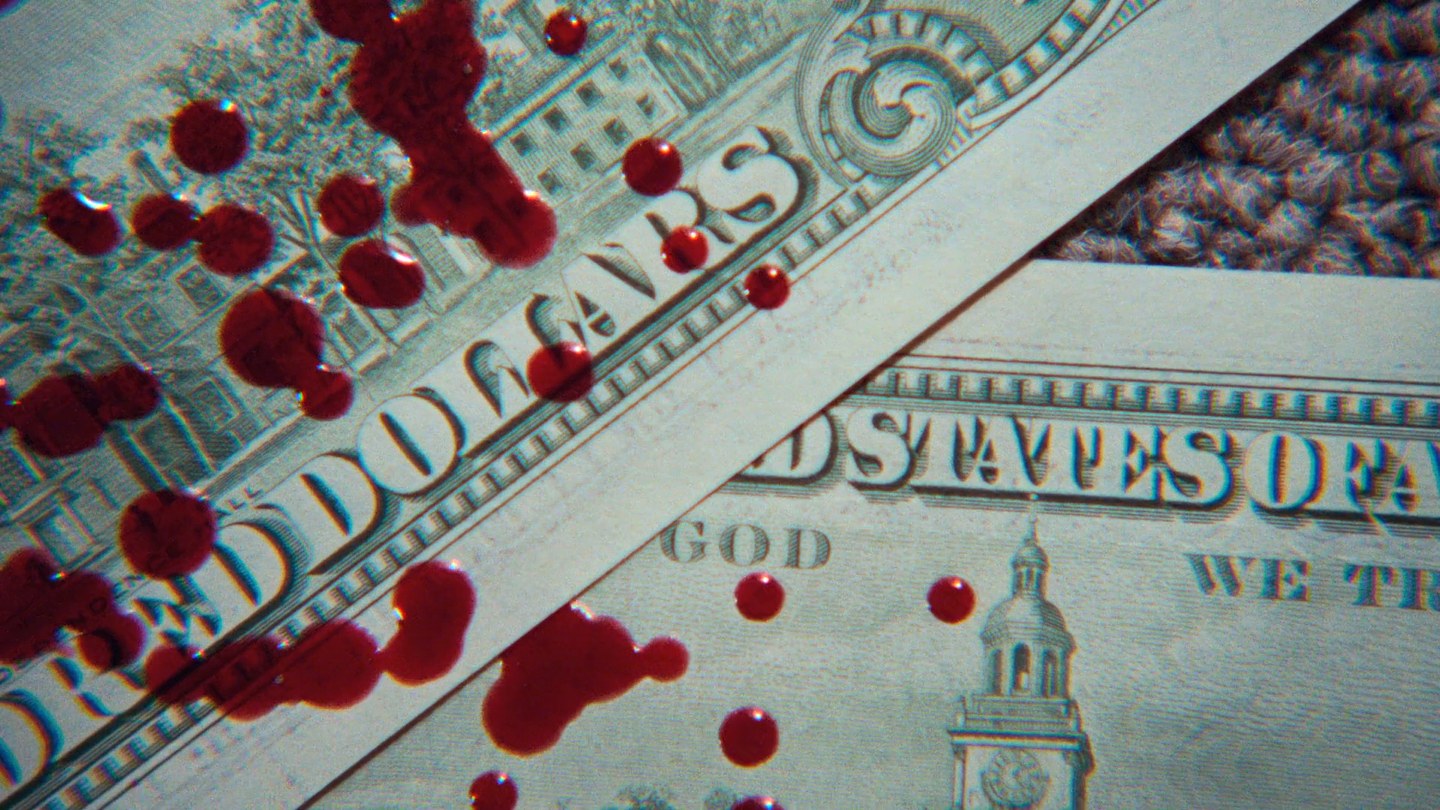
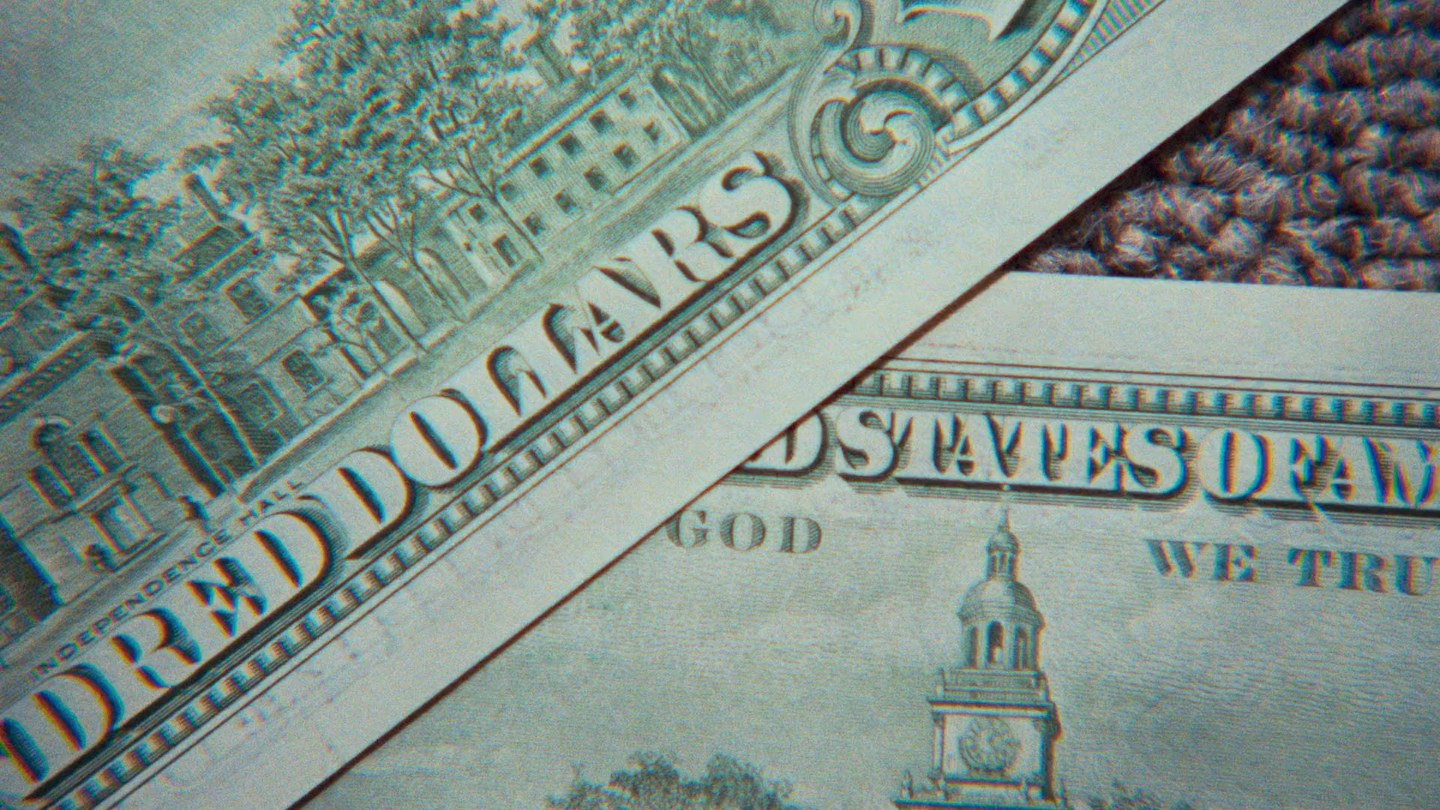
Blood falls across the banknotes.ENLARGE ↗
Blood falls across the banknotes.

The final money insert compresses the entire scheme into a surface. Notes can count wealth but cannot absorb the violence without being visibly changed. The close view gives the transaction a material residue just before the film moves into its second story.

Explore the effects sequence →
Back to the dossier entrance ↑

Argento: The Black Cat

56:04

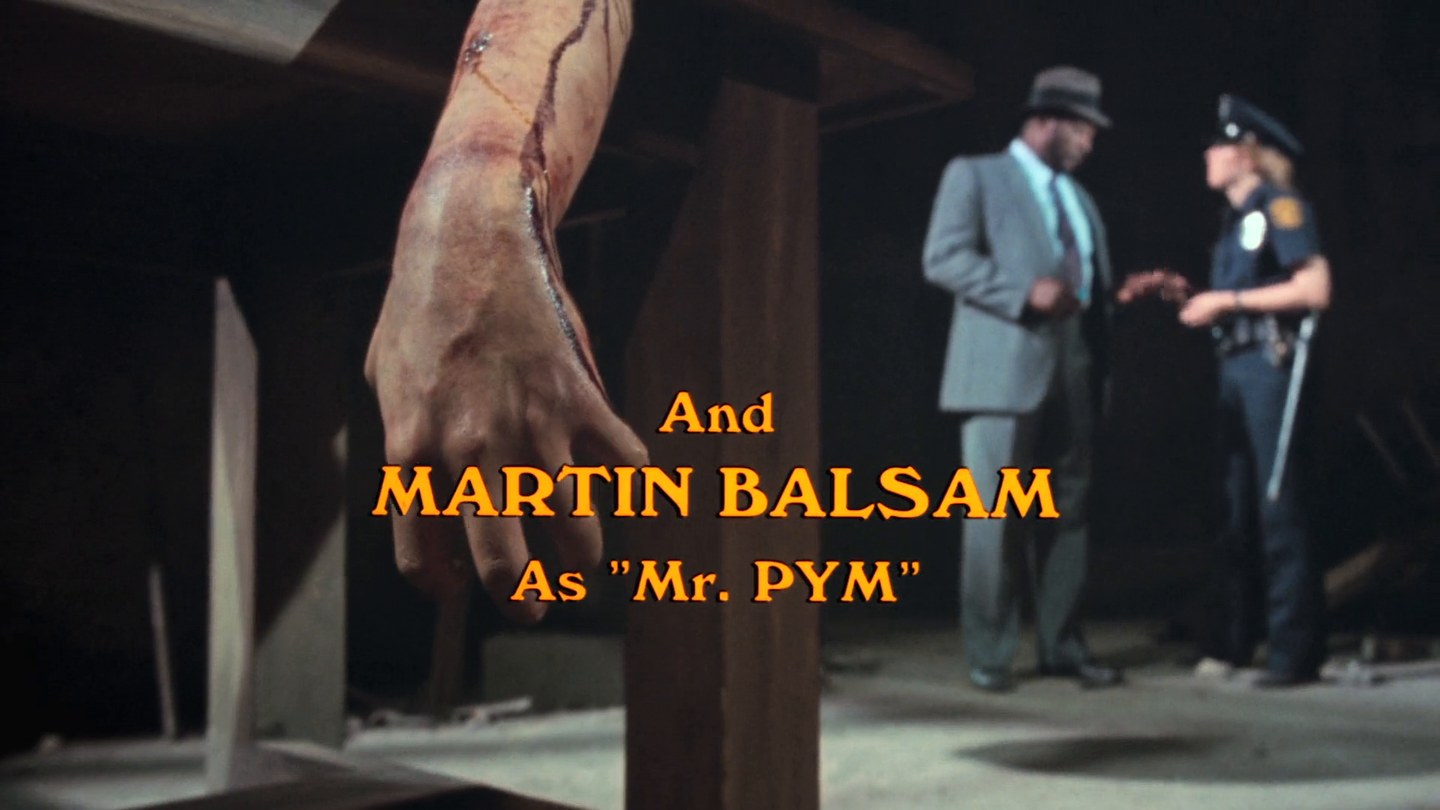
A crime already arranged for viewing

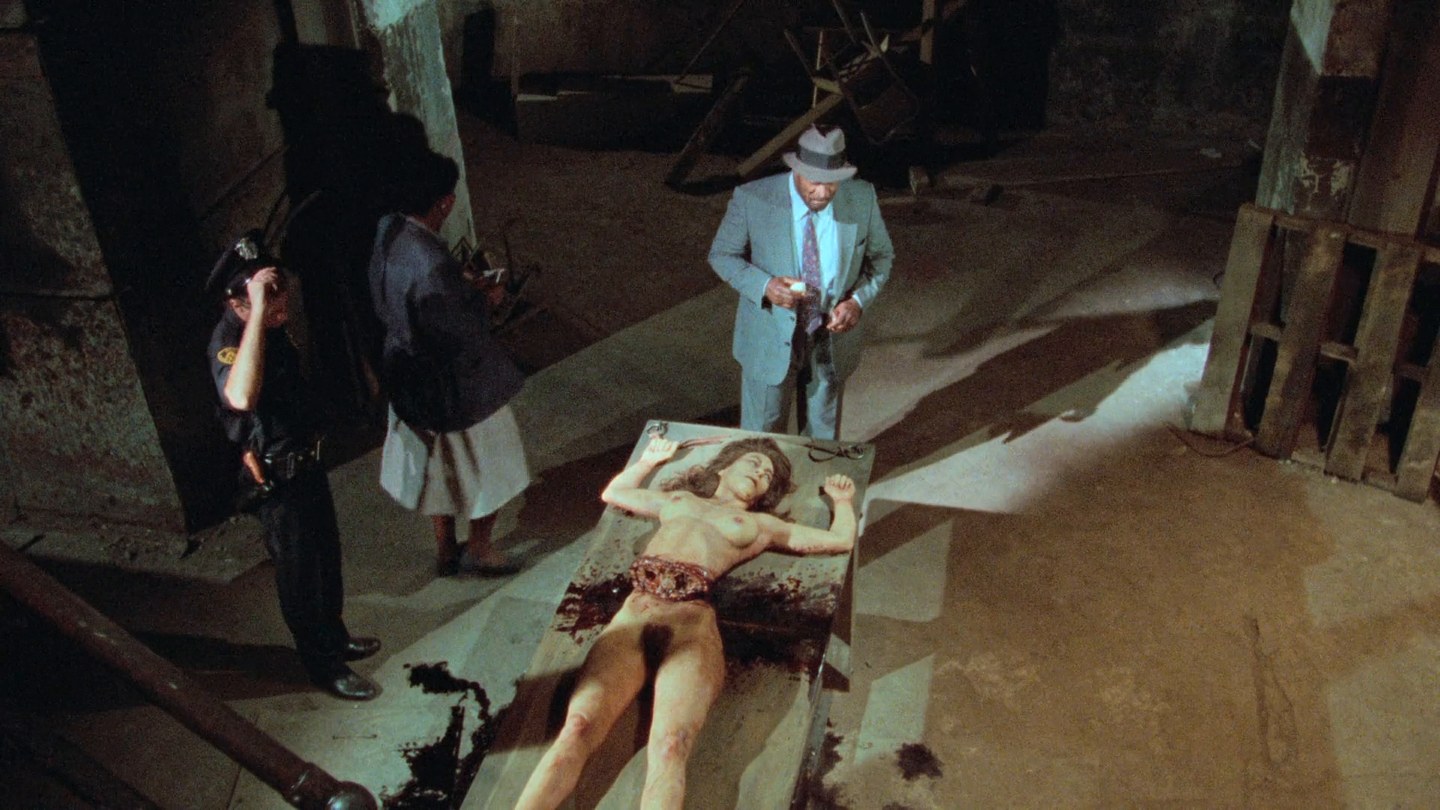
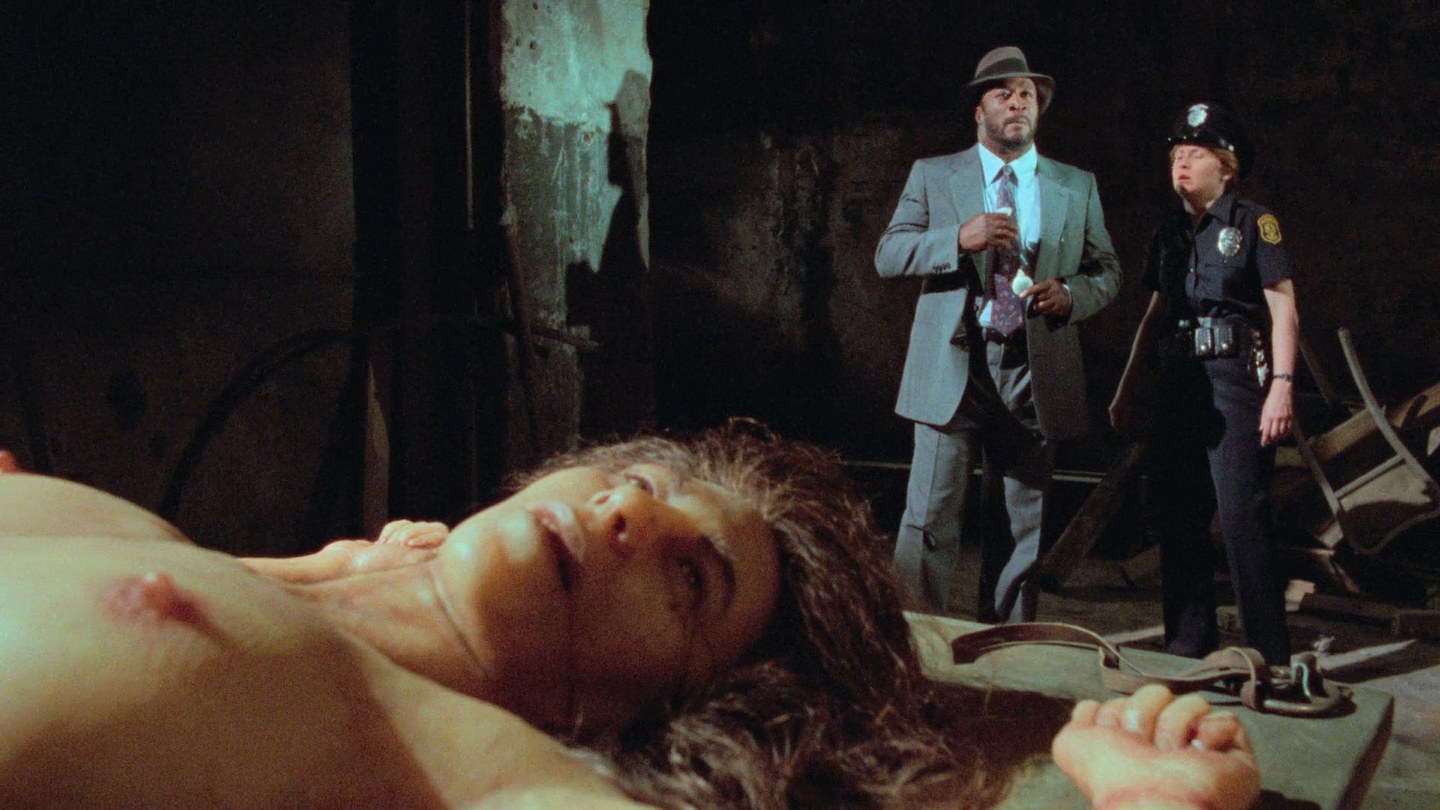
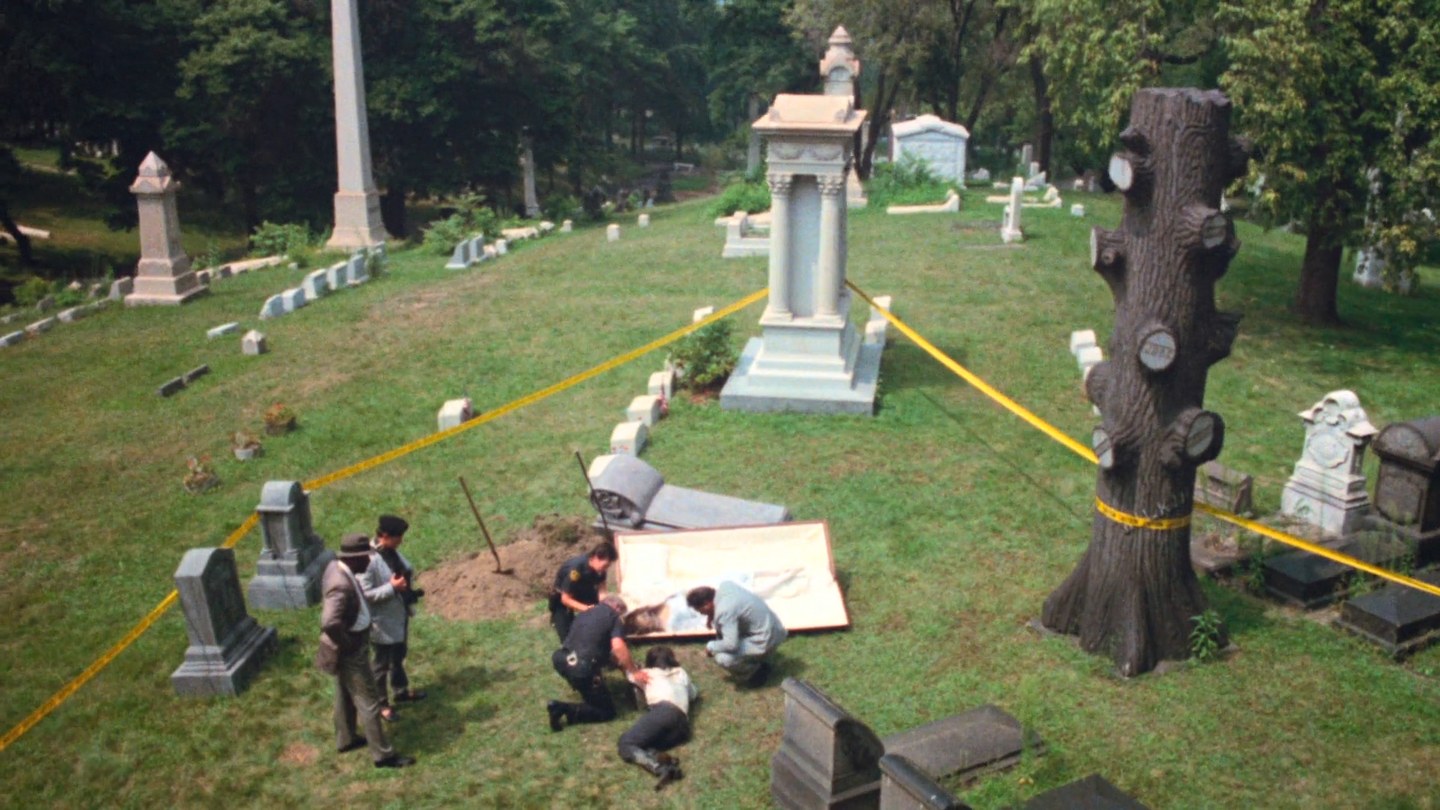
Investigators stand around the divided body.ENLARGE ↗
Investigators stand around the divided body.

Argento introduces Rod within a completed tableau rather than a neutral studio. The overhead view turns the body and the surrounding investigators into a diagram. The professional photographer enters an environment already structured as an image, with police, apparatus and corpse occupying distinct positions.

Explore the effects sequence →

57:28

The wound becomes a print

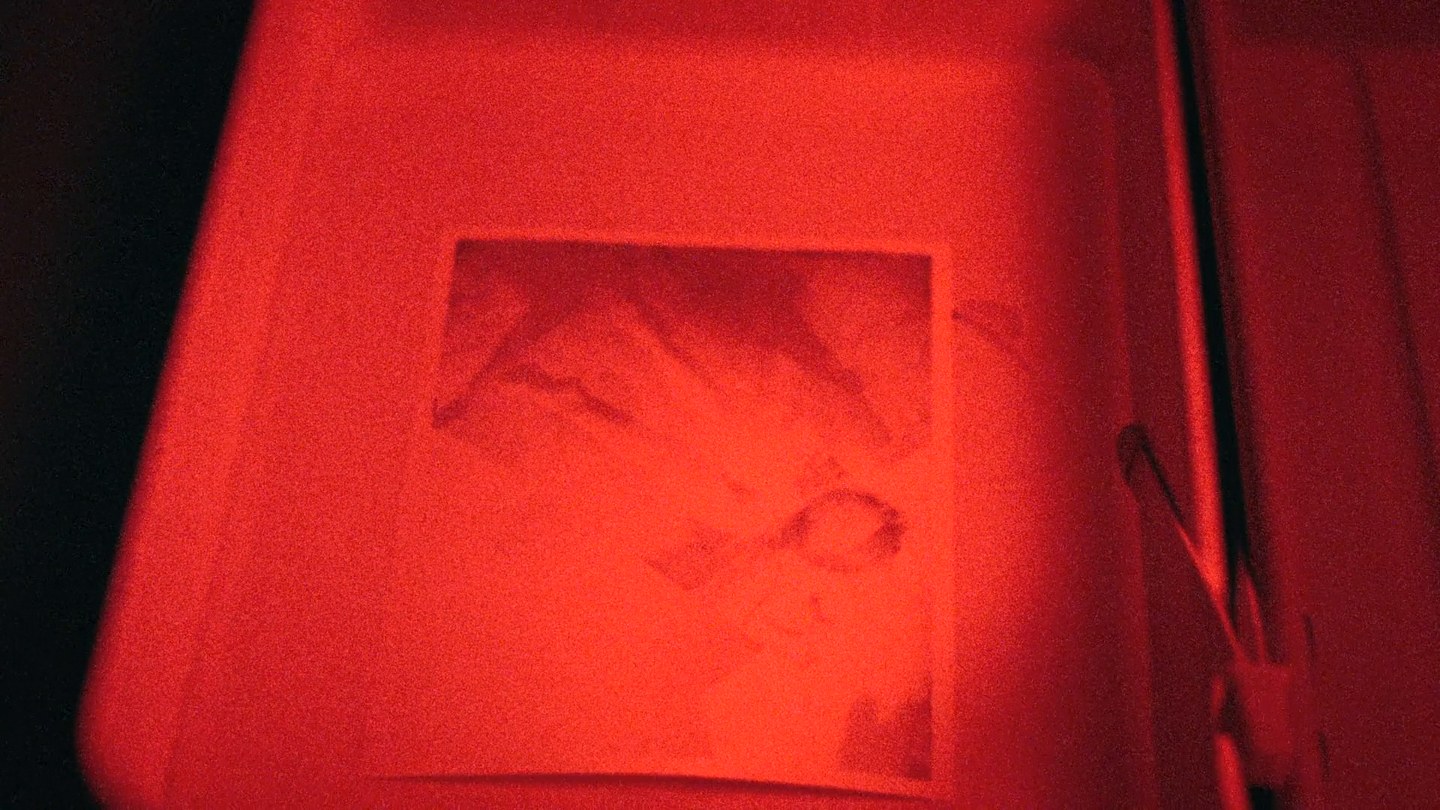
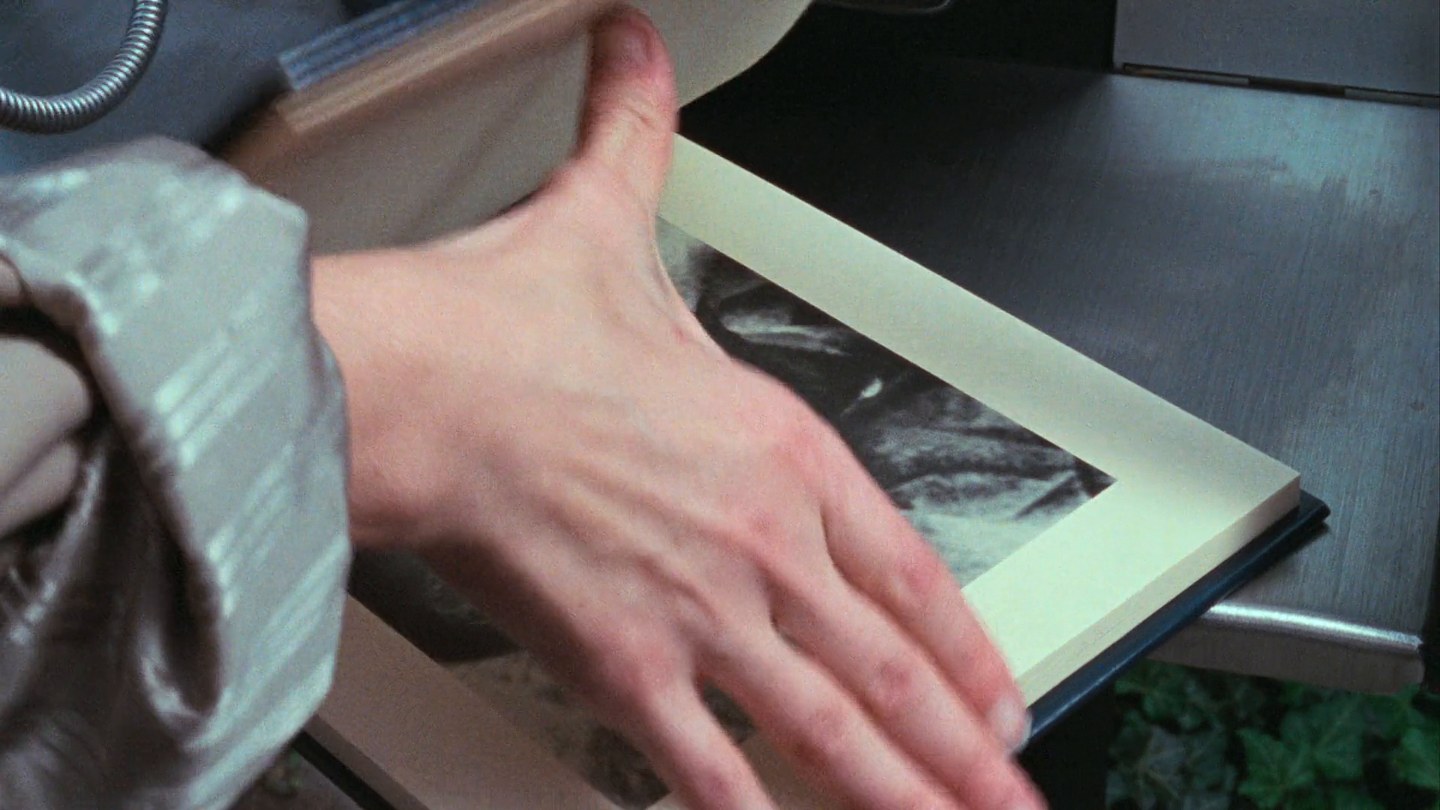
A photograph develops under red light.ENLARGE ↗
A photograph develops under red light.

The darkroom changes the body into an image that can be handled, selected and circulated. Red light connects the practical work of photography to the blood in the preceding scene, without making the two activities identical. Rod’s power rests on deciding what enters the rectangle and what remains outside it.

Explore the effects sequence →

1:02:30

Another kind of making

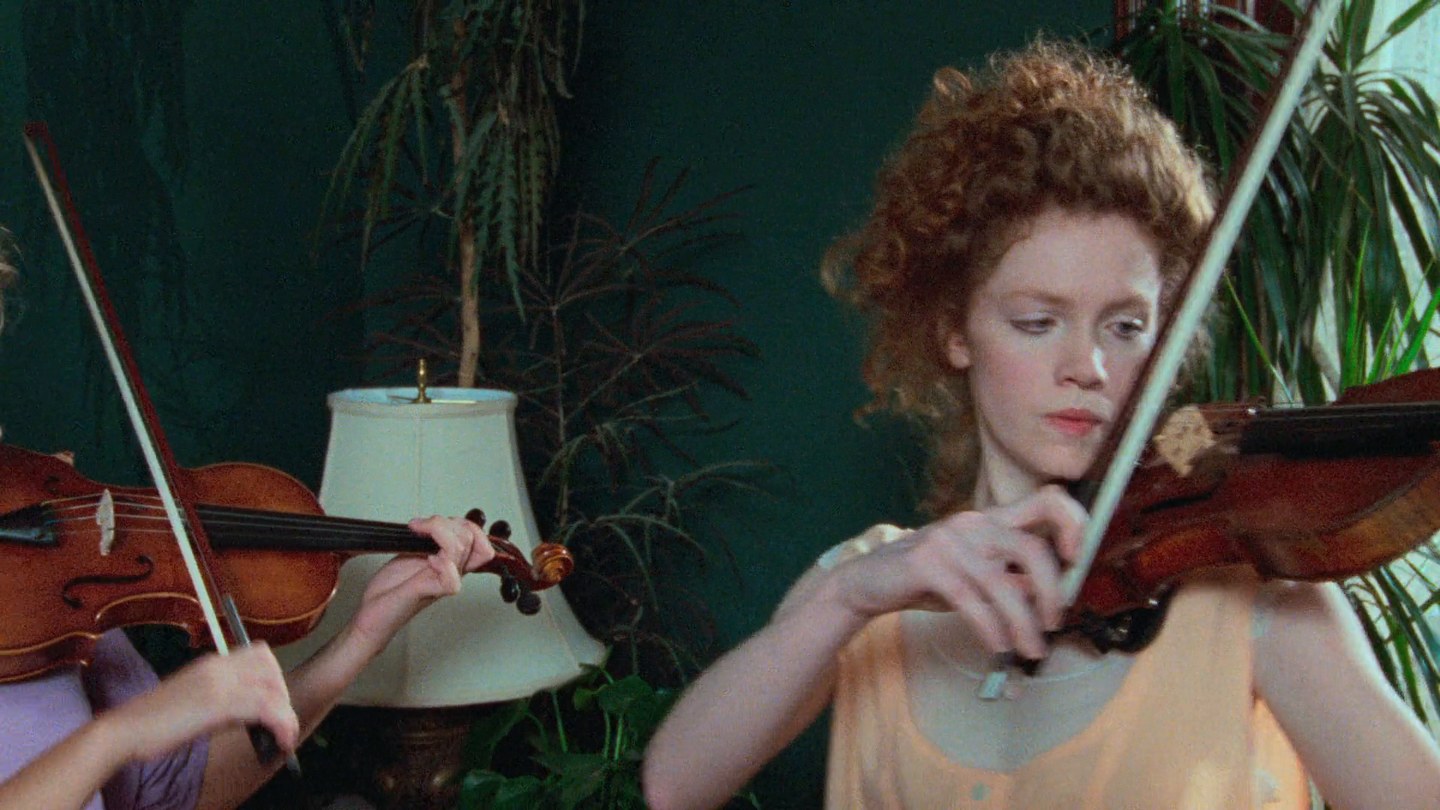
Annabel leads a violin lesson.ENLARGE ↗
Annabel leads a violin lesson.

In Annabel’s lesson, making something involves other people’s attention and repeated practice. The instruments and the occupied room provide a counter-image to Rod’s isolated control of the photographic event. The two creative activities share a home but establish different relationships with their subjects.

1:07:00

The photographer constructs the event

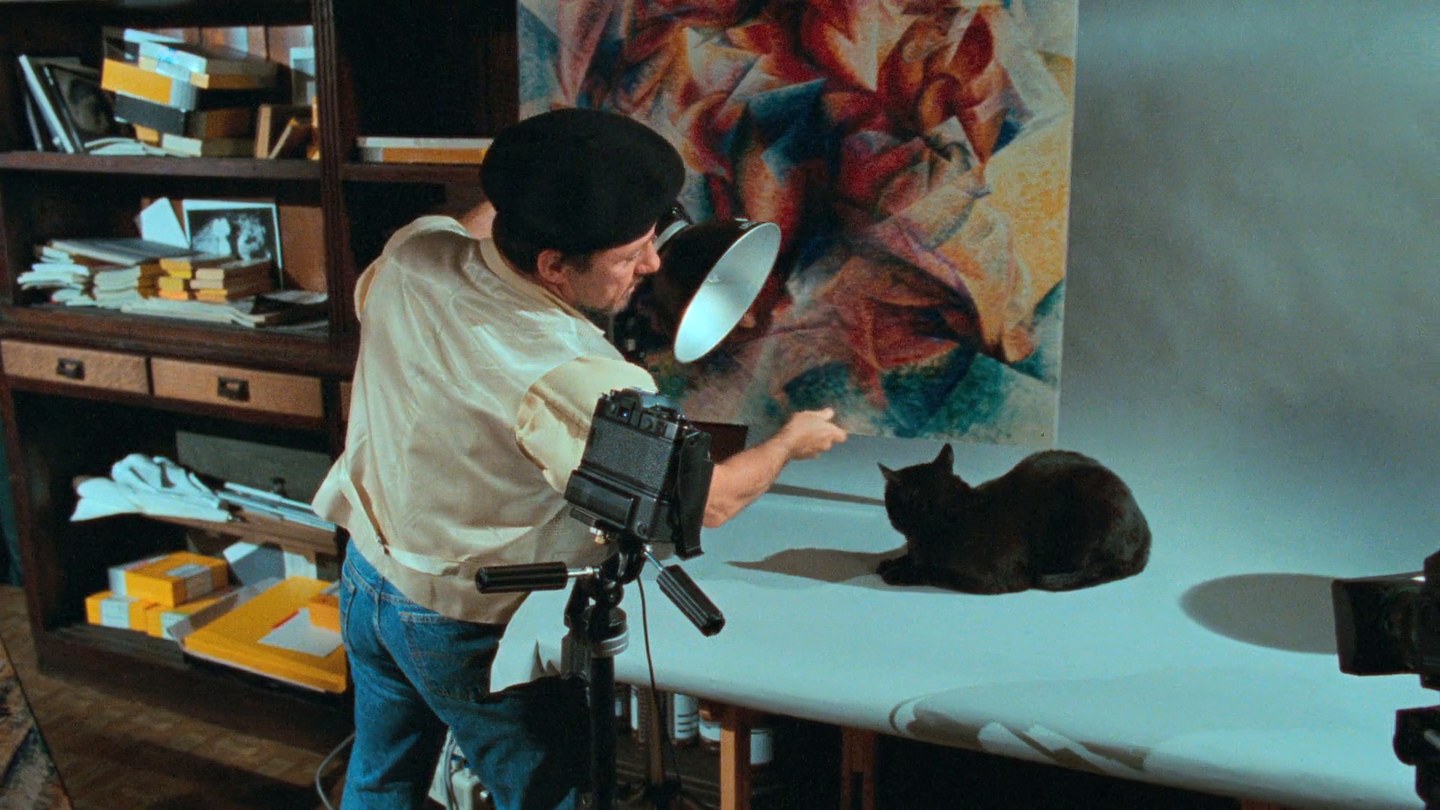
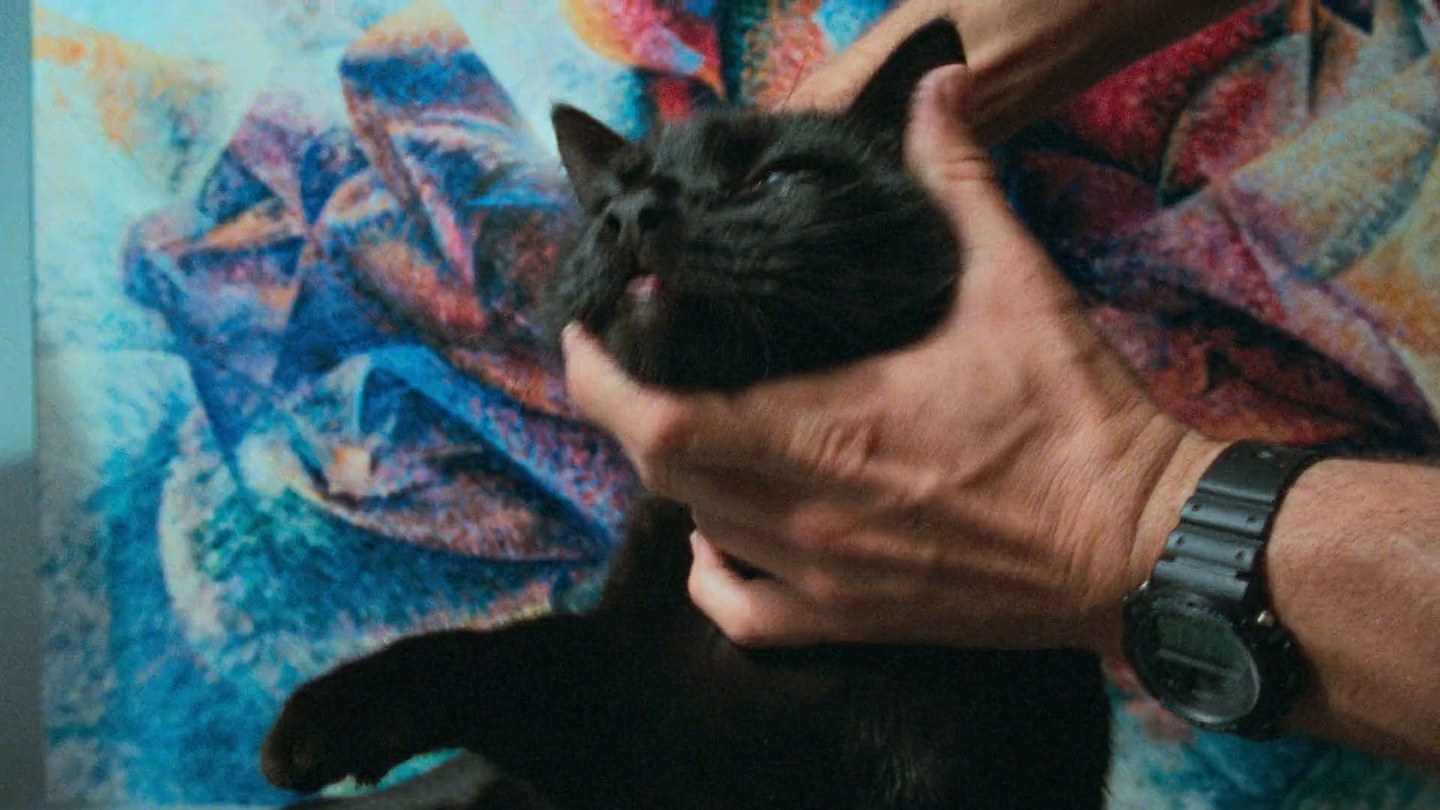
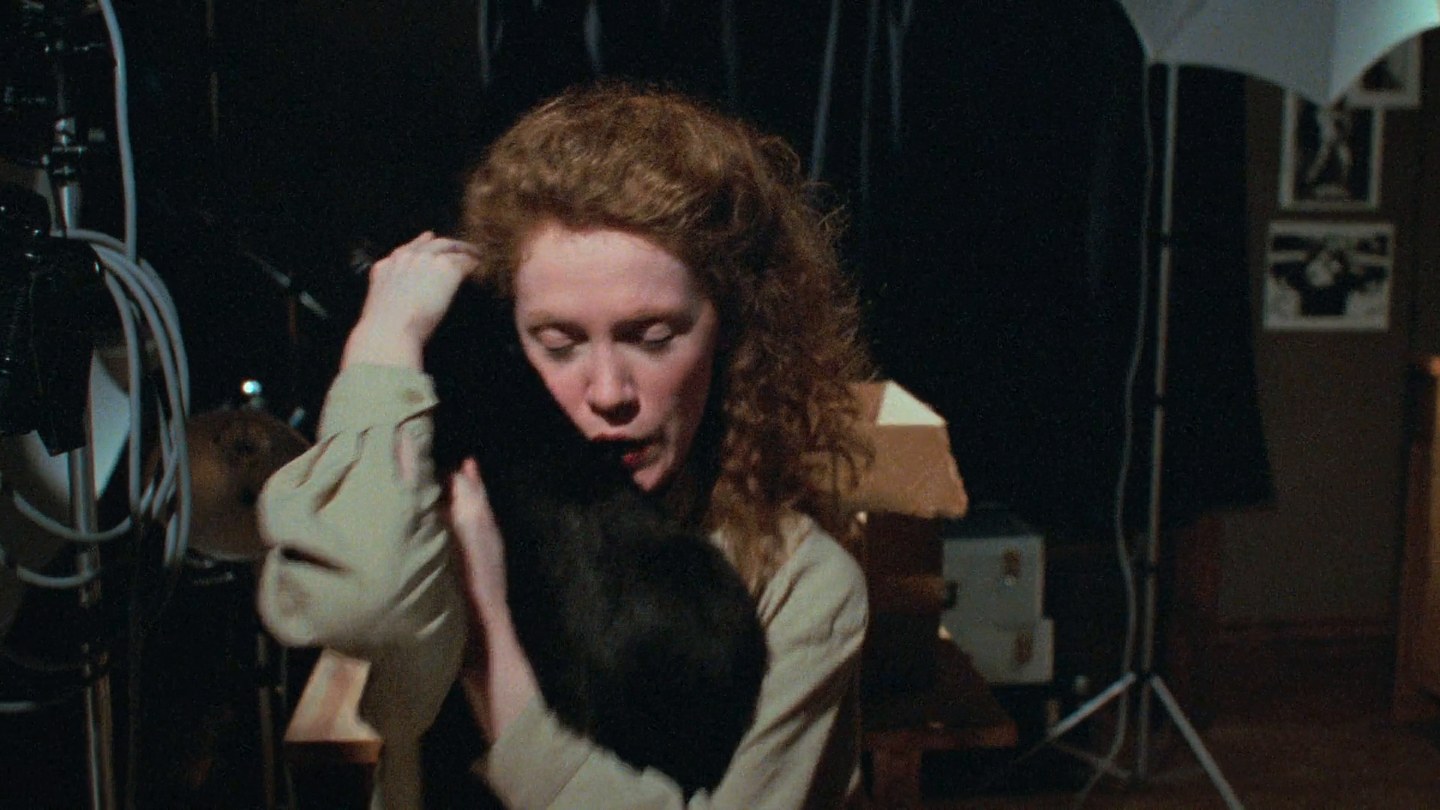
Rod arranges the cat before the camera.ENLARGE ↗
Rod arranges the cat before the camera.

Lamps, backdrop, table and camera expose the manufacture of the photograph. The arrangement removes any comfortable idea that Rod is merely encountering an event in the world. His image-making now includes the power to position and endanger the being that will appear in the finished picture.

Explore the effects sequence →

1:10:00

The image returns to the relationship

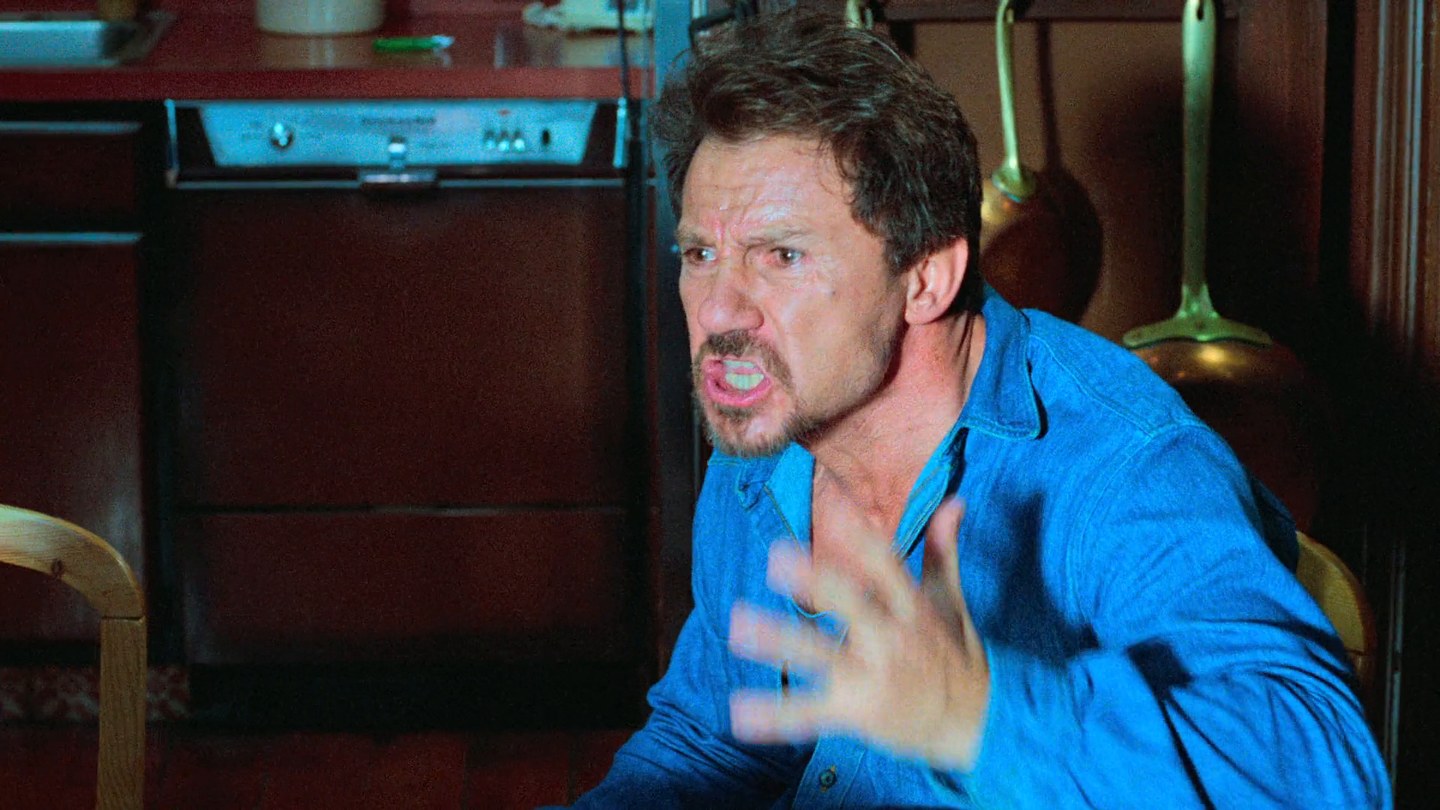
Rod argues across the kitchen table.ENLARGE ↗
Rod argues across the kitchen table.

The blue shirt, open gestures and ordinary kitchen setting keep Rod’s aggression within everyday domestic space. The photograph cannot remain sealed inside a professional practice. Annabel’s presence makes its production a matter of responsibility between people who know one another.

1:11:52

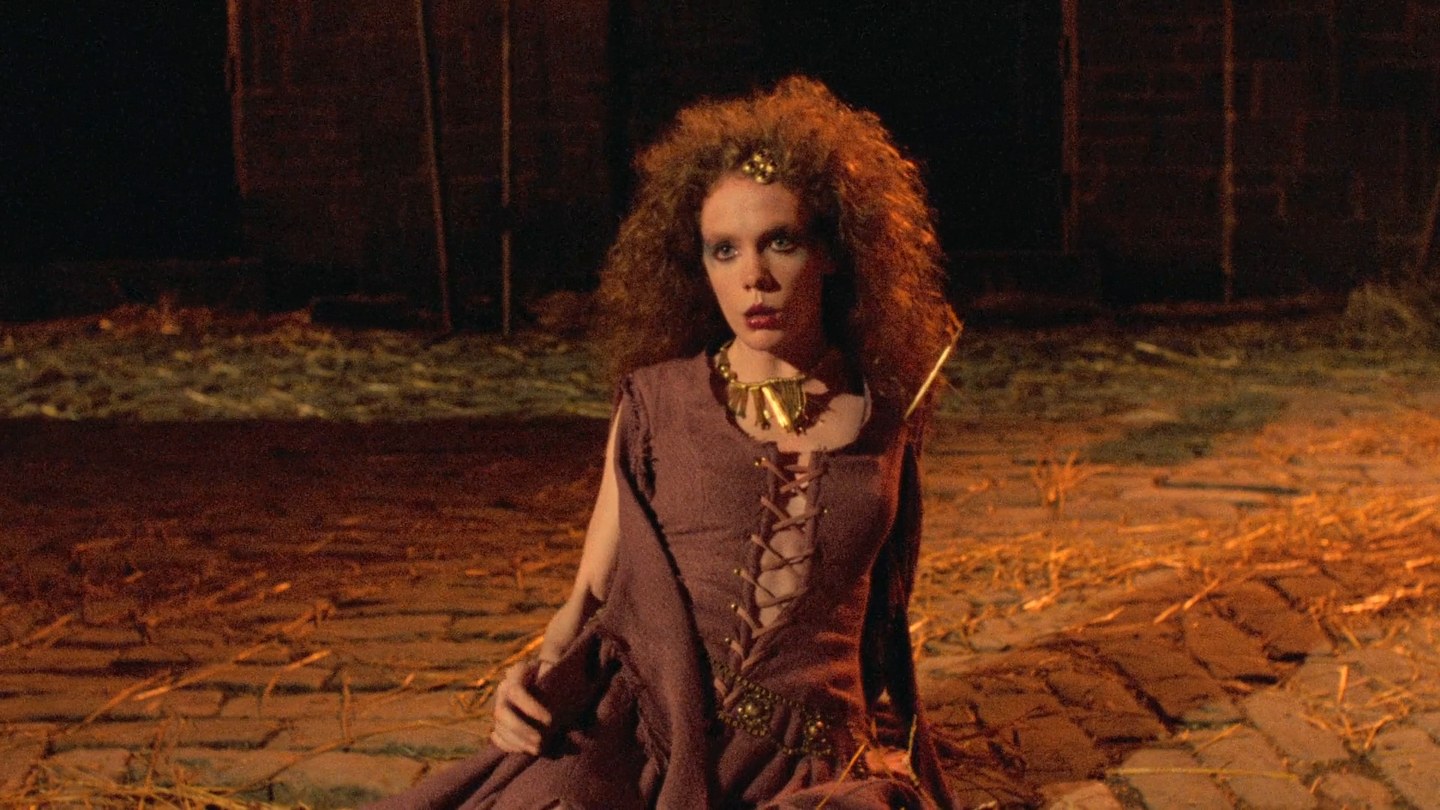
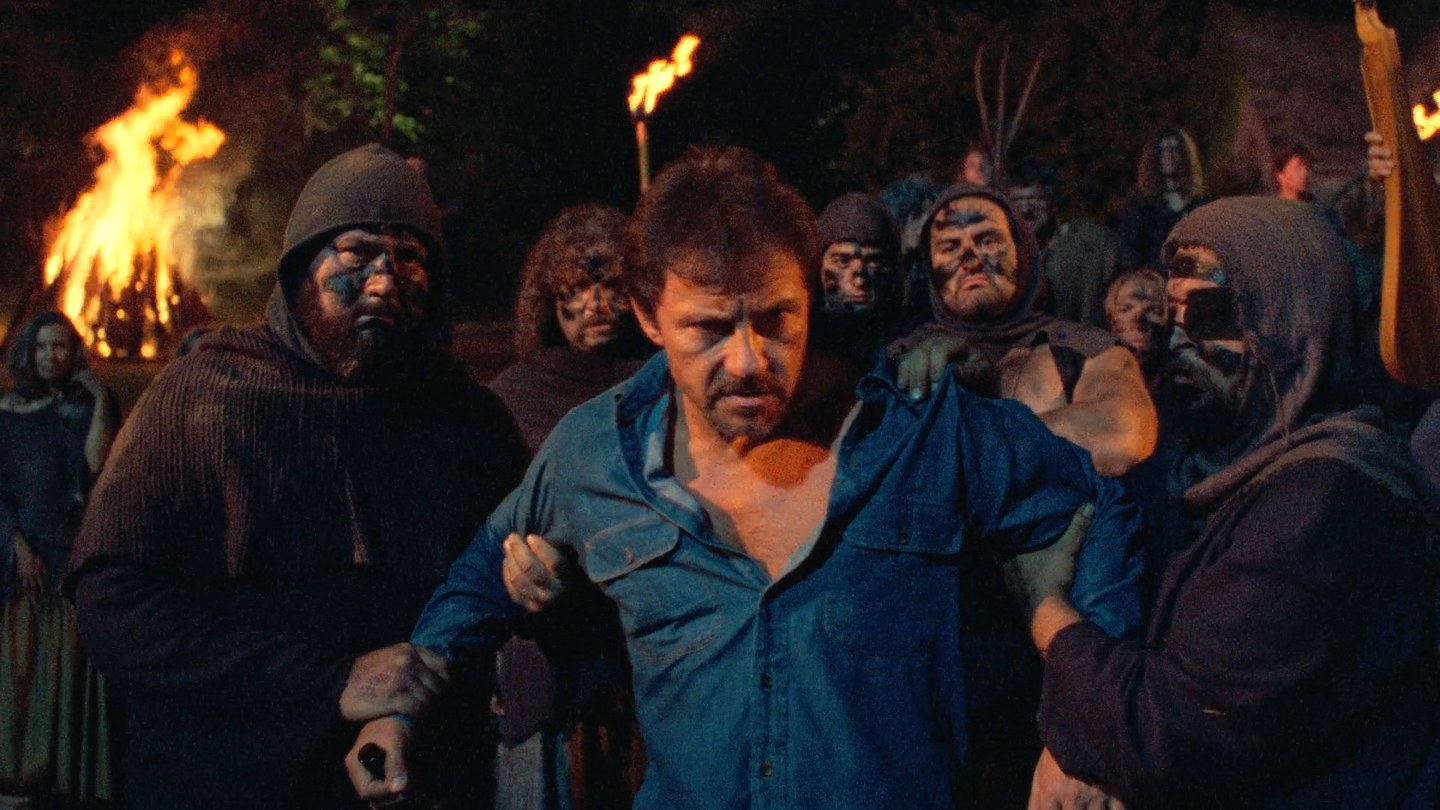
A doorway opens into another century

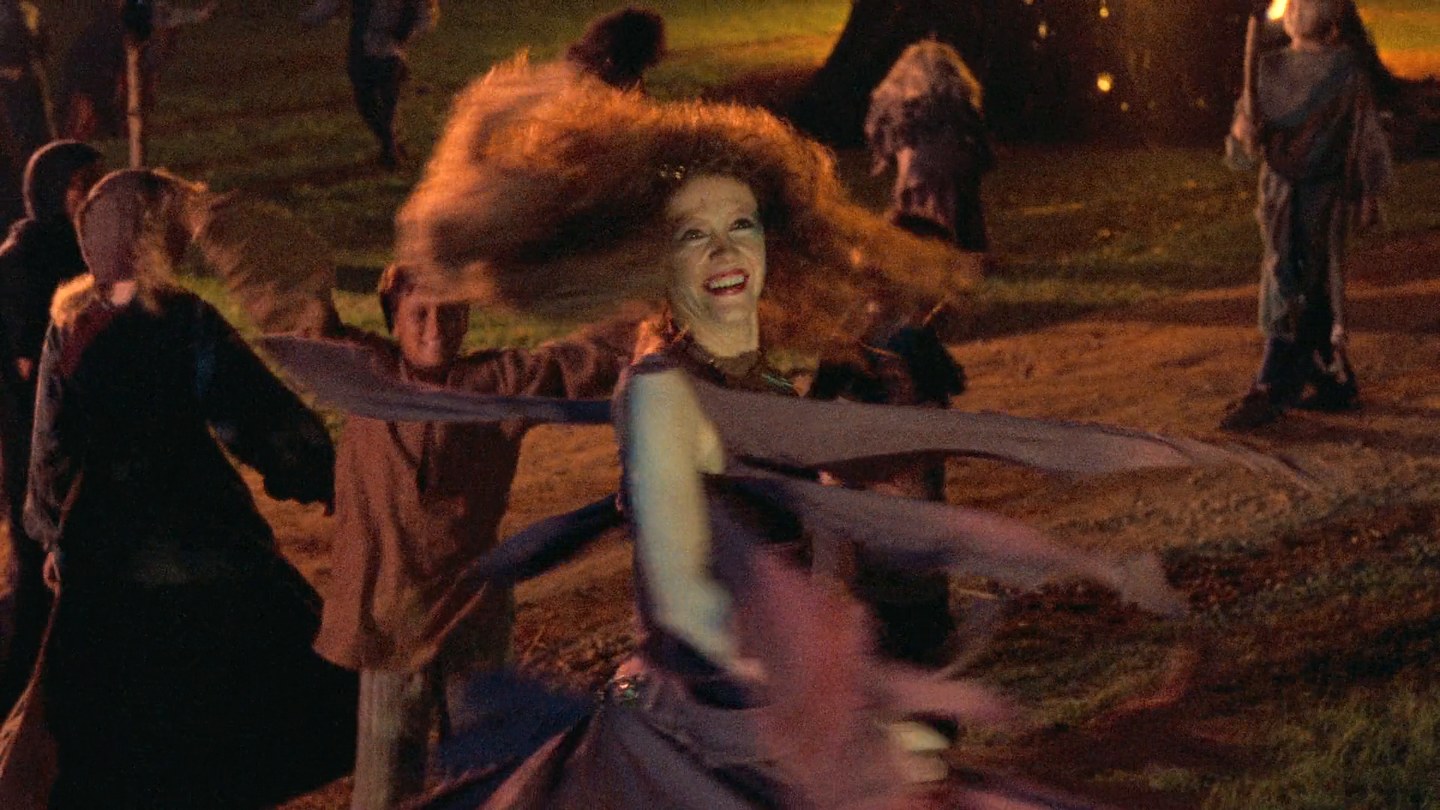
Rod enters the torchlit gathering.ENLARGE ↗
Rod enters the torchlit gathering.

The domestic threshold leads into a theatrical world of torches, costumes and watching faces. The dream gives Rod a new position within a spectacle: he is the person arriving without control of the arrangement. Its unreal geography is precise in its reversal of the studio scene.

Explore the effects sequence →

1:13:22

The animal becomes a human face

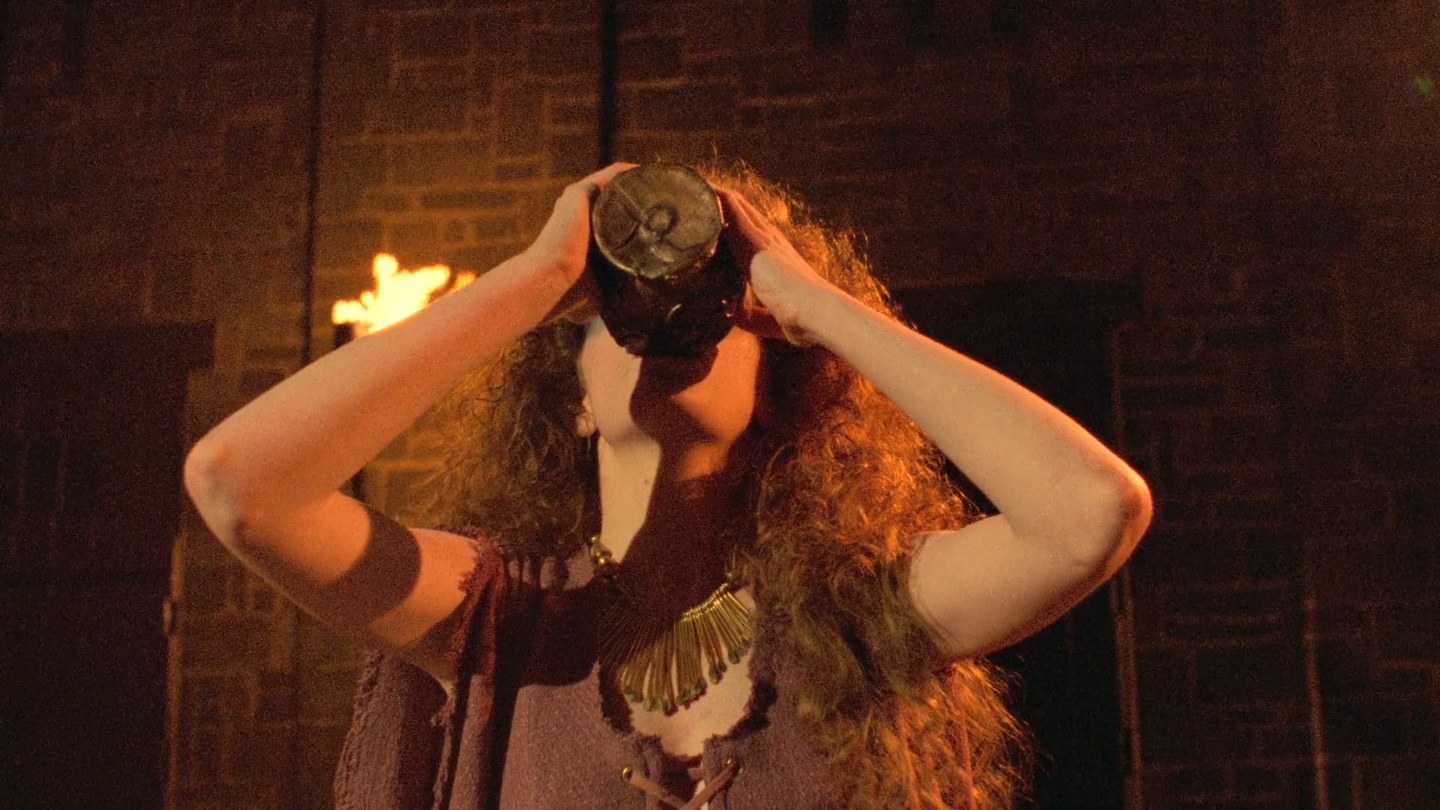
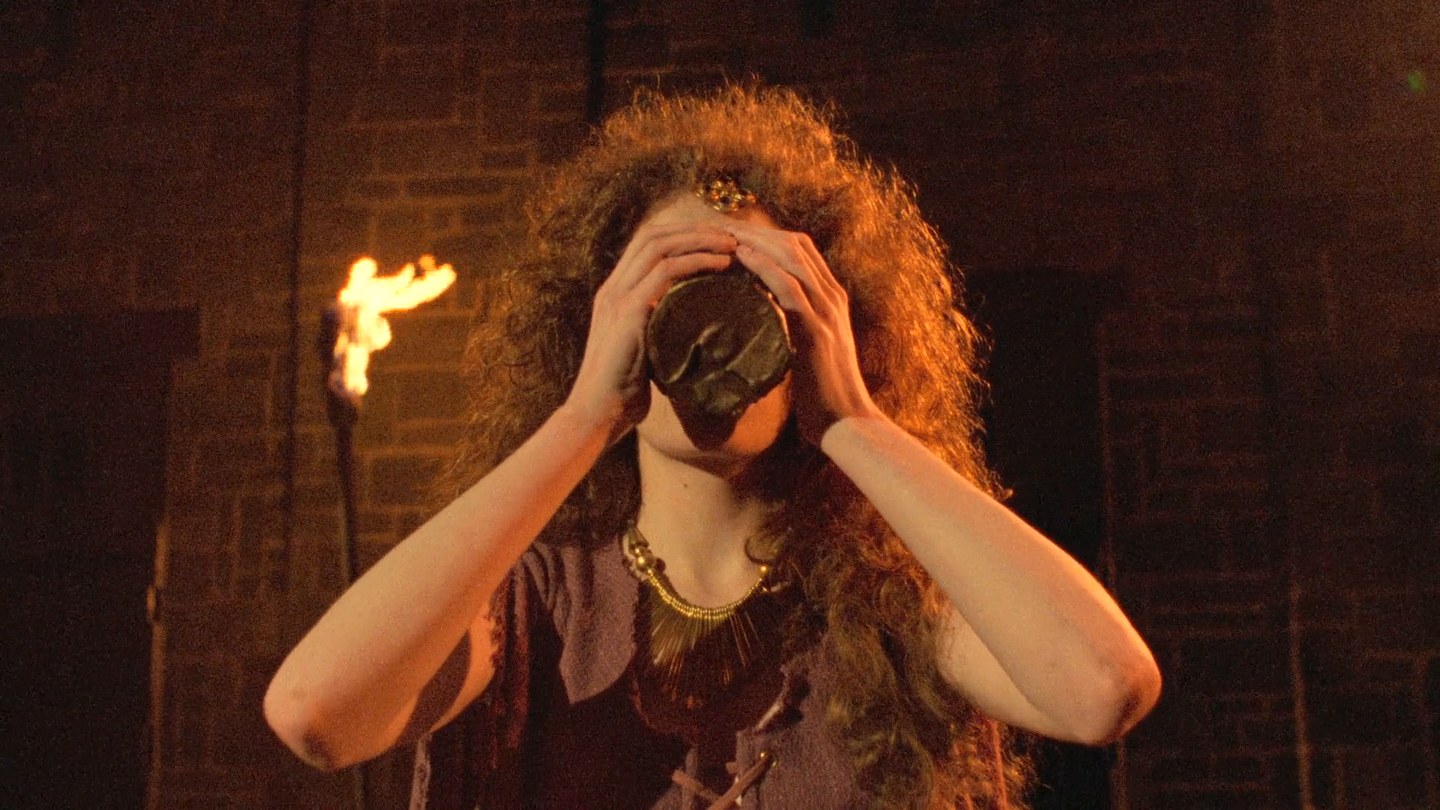
A black cat mask covers the woman’s face.ENLARGE ↗
A black cat mask covers the woman’s face.

The mask crosses the boundary Rod has relied on between human organiser and animal subject. It is an openly theatrical object, held and worn in front of him. The scene’s menace comes partly from this visible act of transformation rather than from disguising how the image is made.

Explore the effects sequence →

1:16:50

The next body is another assignment

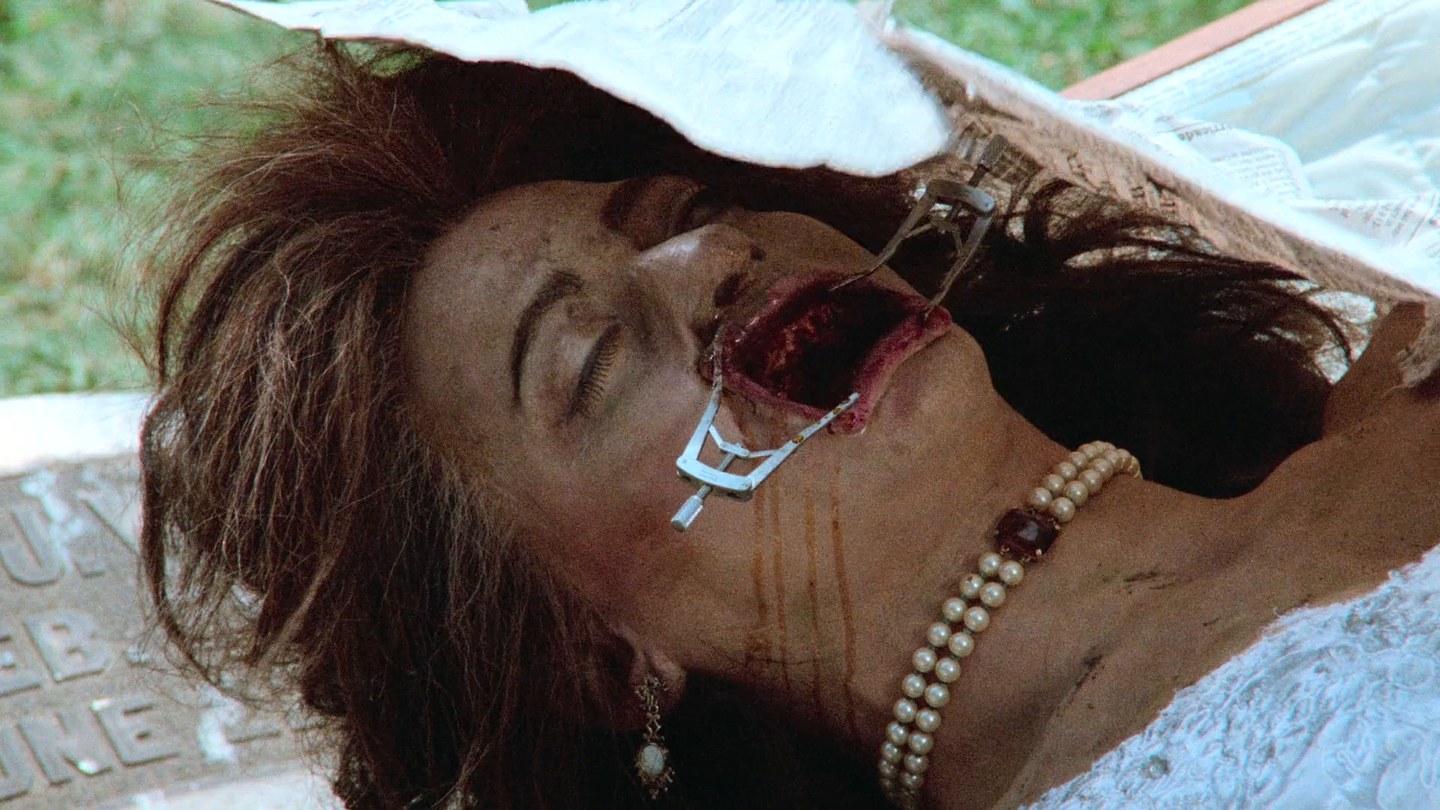
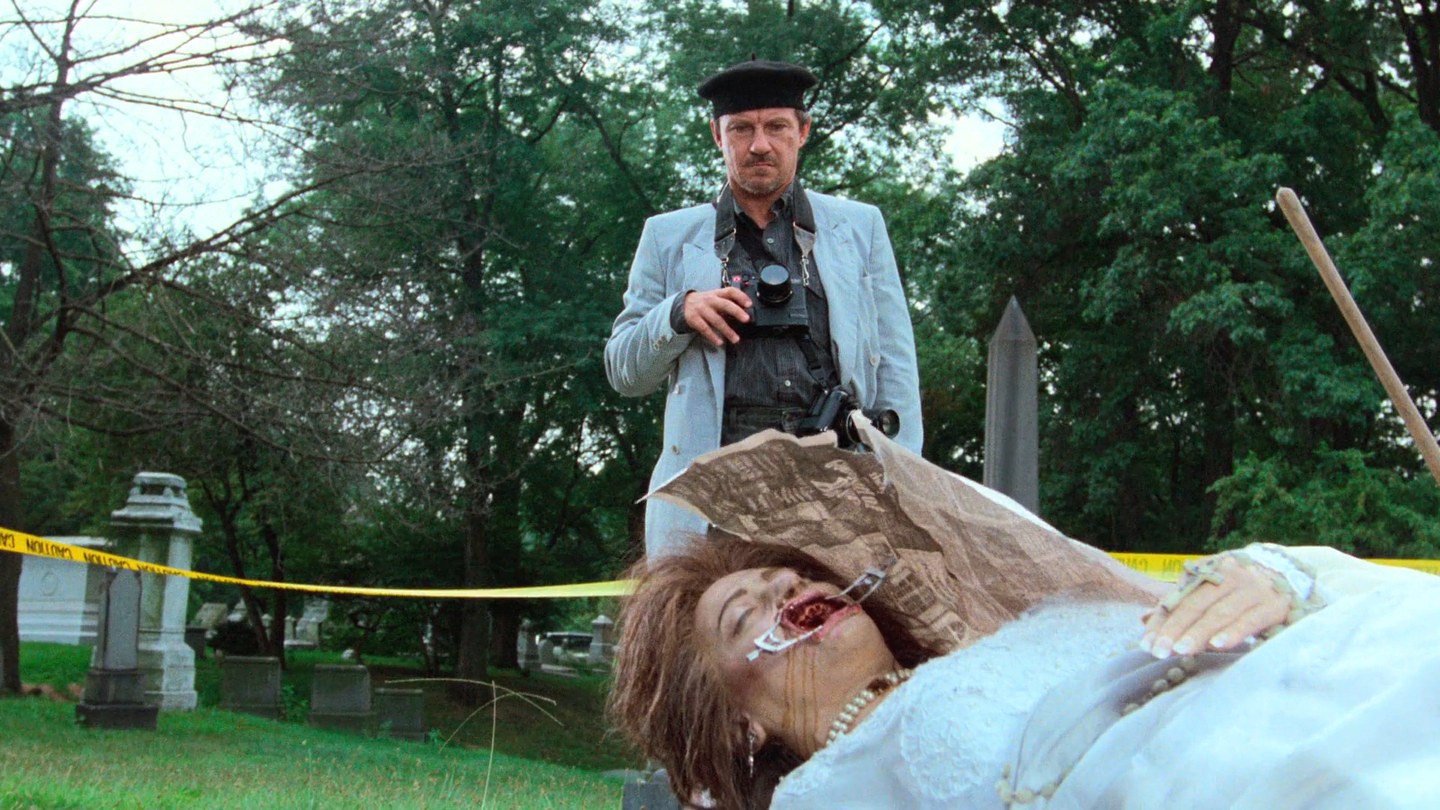
The victim’s damaged mouth is exposed.ENLARGE ↗
The victim’s damaged mouth is exposed.

The photographed corpse gives the episode a second professional crime scene. The mouth becomes a concentrated effects image, then the accompanying case turns the removed teeth into arranged objects. Rod’s camera links these different forms of display without supplying a moral distance from them.

Explore the effects sequence →

1:19:45

The private act acquires an audience

Annabel examines the published photograph.ENLARGE ↗
Annabel examines the published photograph.

The book carries Rod’s image beyond the room where he made it. Annabel’s scrutiny reconnects the finished photograph with the animal and with the person who controlled its production. Publication becomes an exposure of the maker as well as a display of his work.

1:26:30

A mark makes resemblance troubling

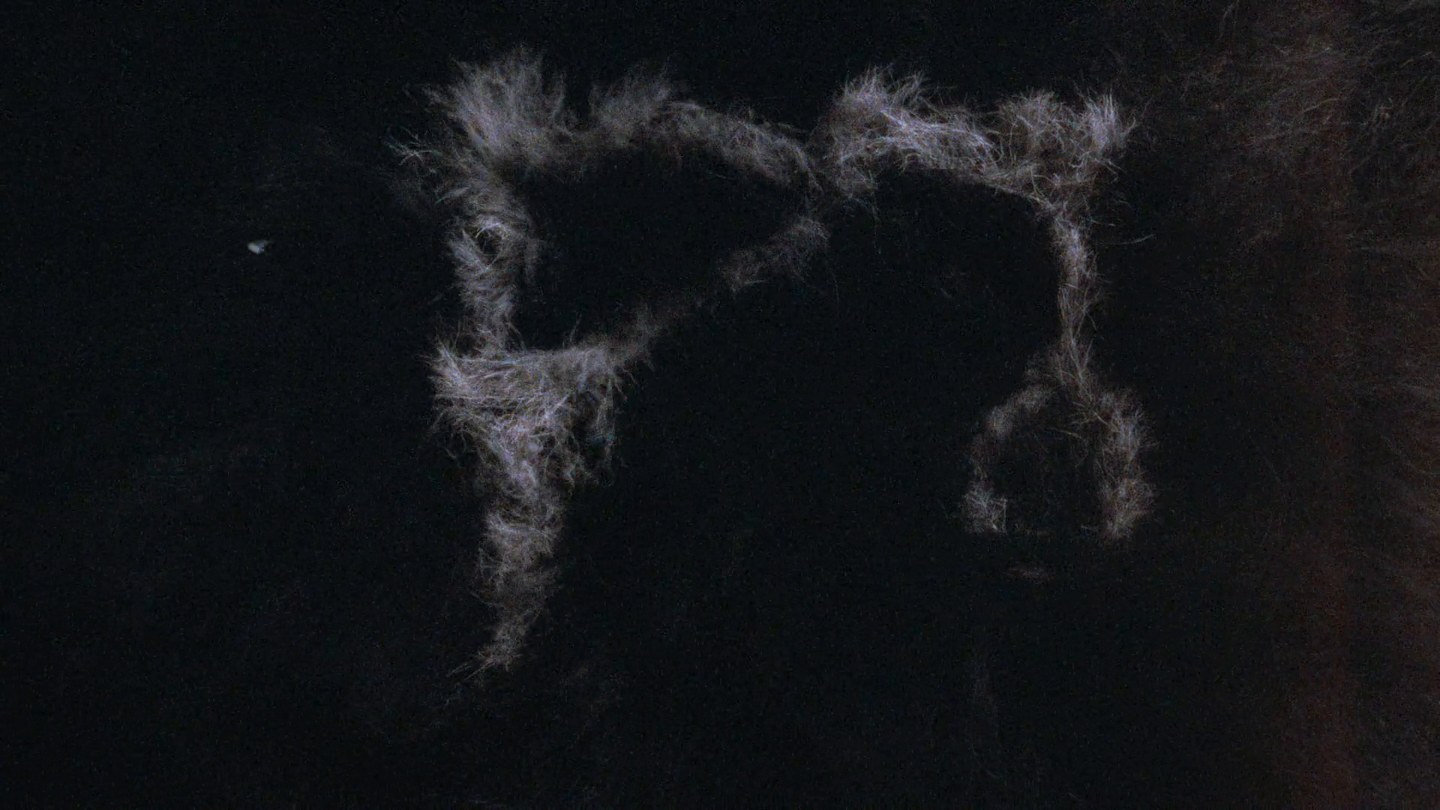
A pale marking breaks the cat’s black fur.ENLARGE ↗
A pale marking breaks the cat’s black fur.

The new cat is read through a small difference on its body. A patch of light fur becomes something to inspect and interpret, reversing the apparent certainty of Rod’s own finished photographs. The image does not need to resolve whether resemblance is coincidence, projection or supernatural return to make his looking unstable.

1:27:16

Annabel interrupts the staged cruelty

Annabel confronts Rod beside the cat.ENLARGE ↗
Annabel confronts Rod beside the cat.

Her intervention disrupts a setup organised around Rod’s hands and the animal’s body. The encounter changes the scene from a private arrangement into a contested space. The following violence is inseparable from that refusal to let him continue unchallenged.

Explore the effects sequence →

1:28:24

The weapon changes its object

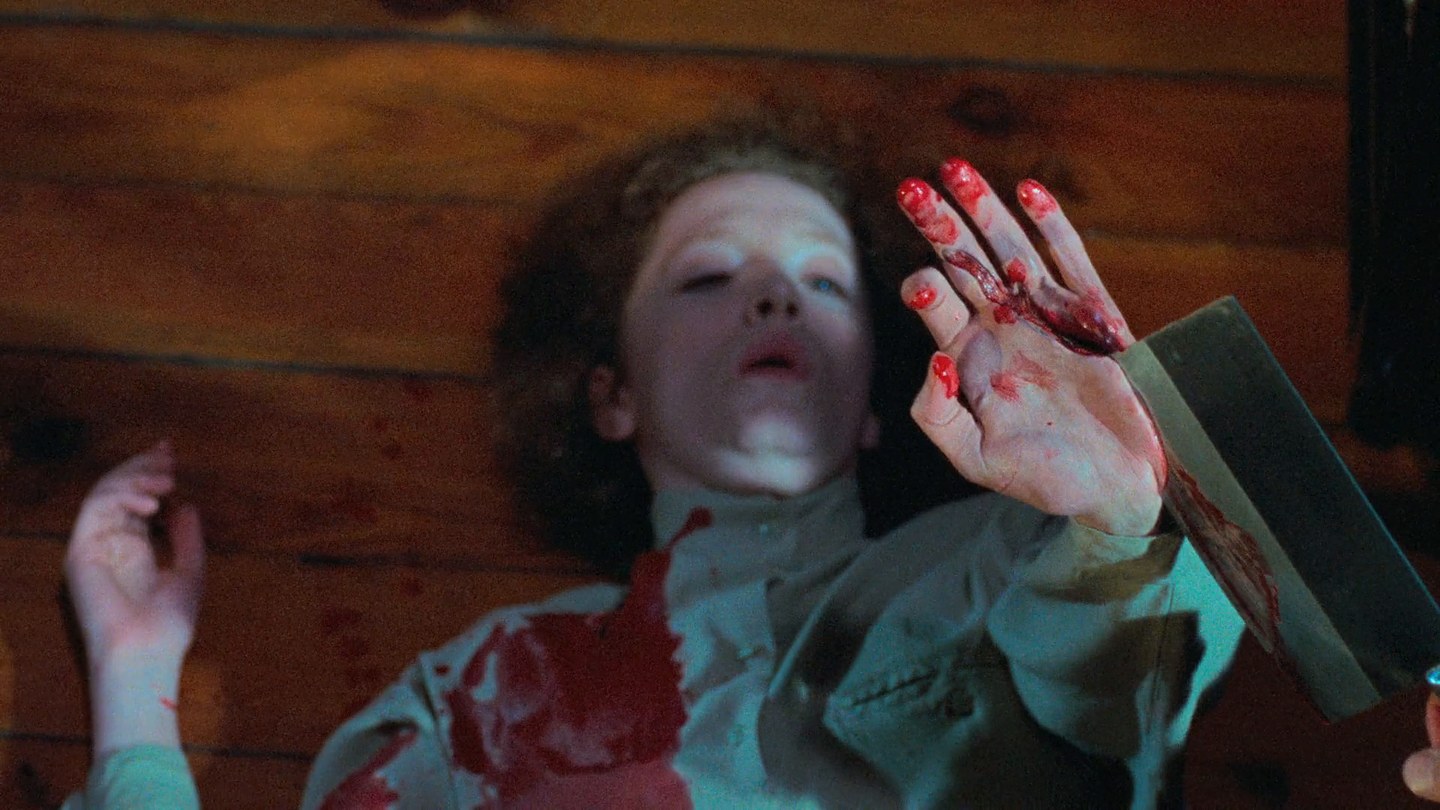
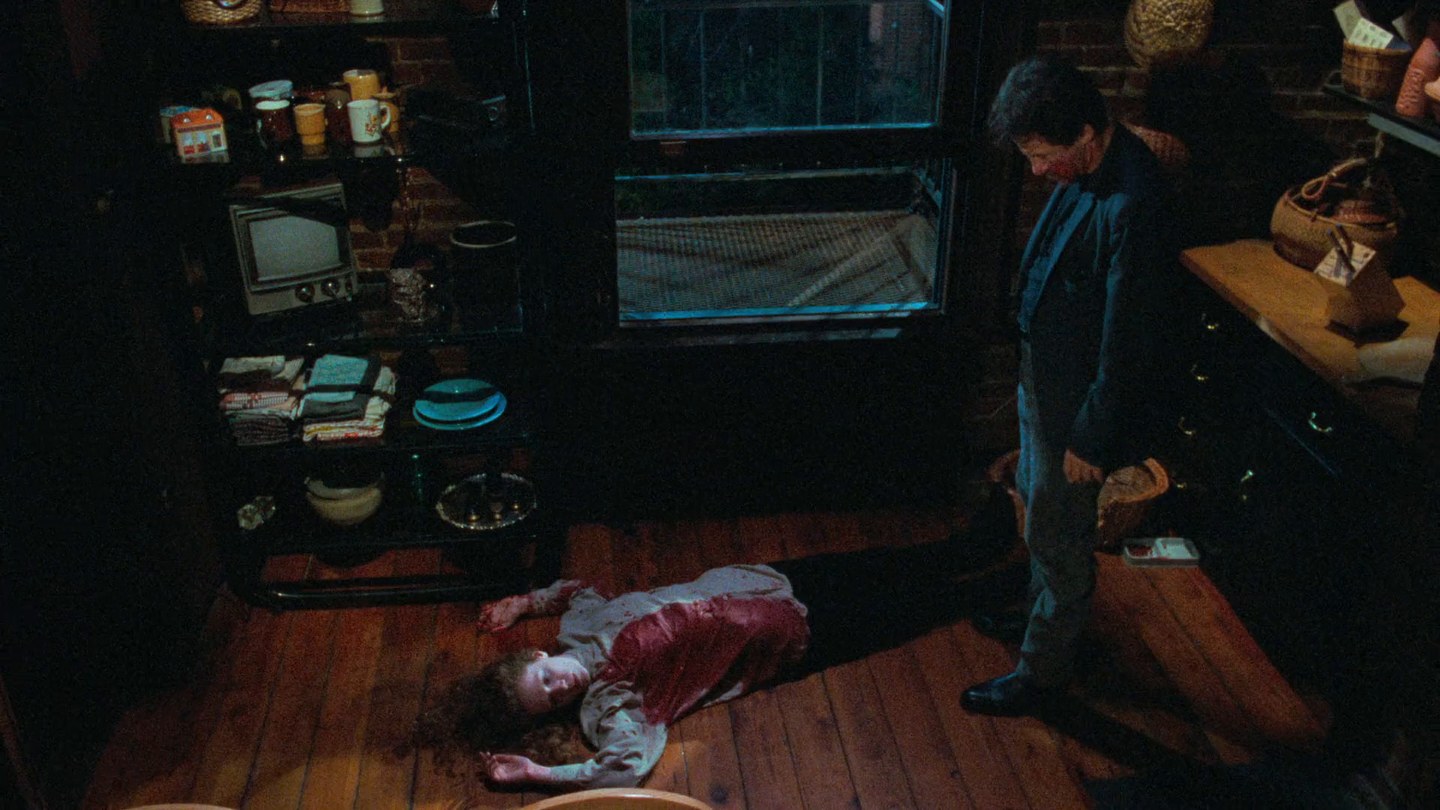
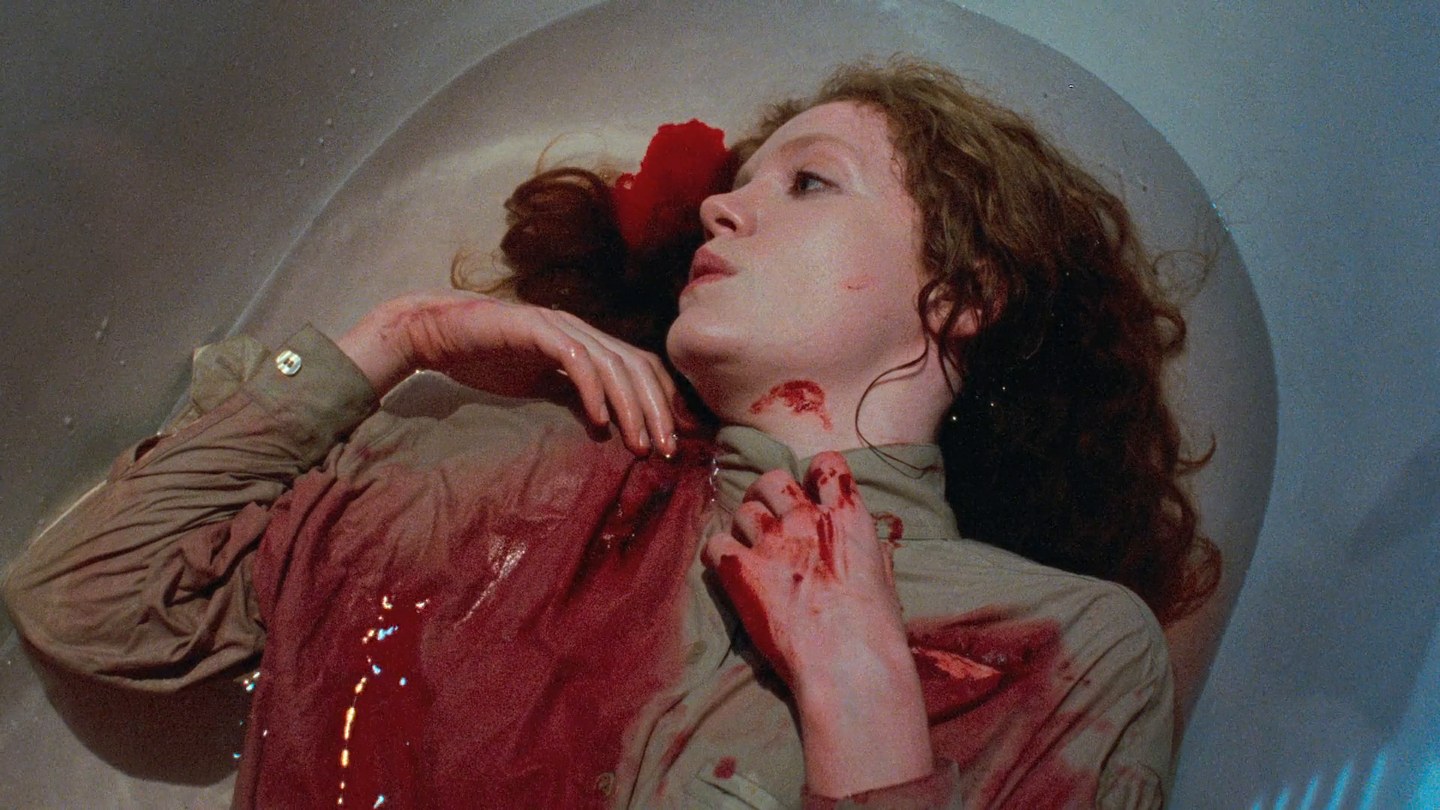
Annabel lies bloodied on the kitchen floor.ENLARGE ↗
Annabel lies bloodied on the kitchen floor.

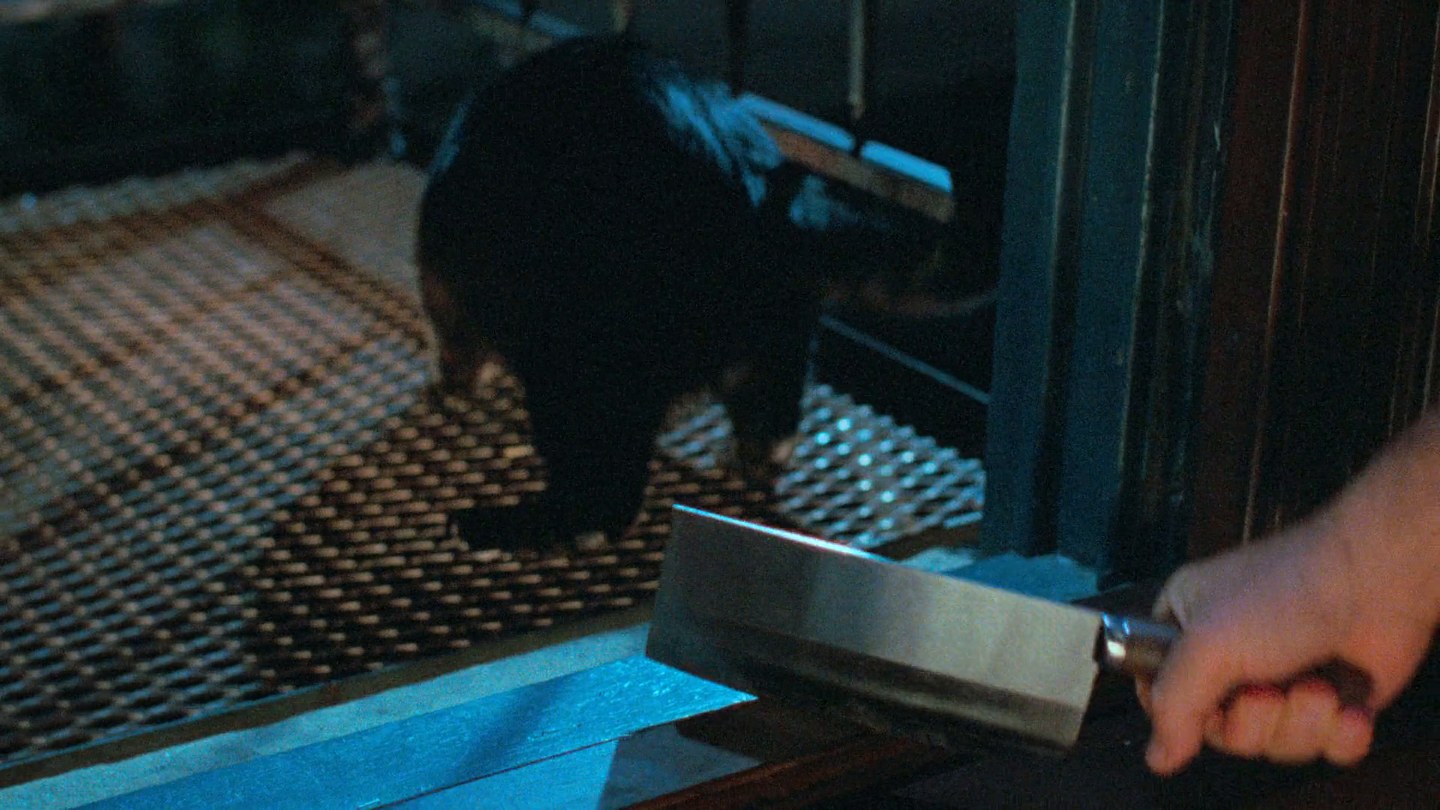
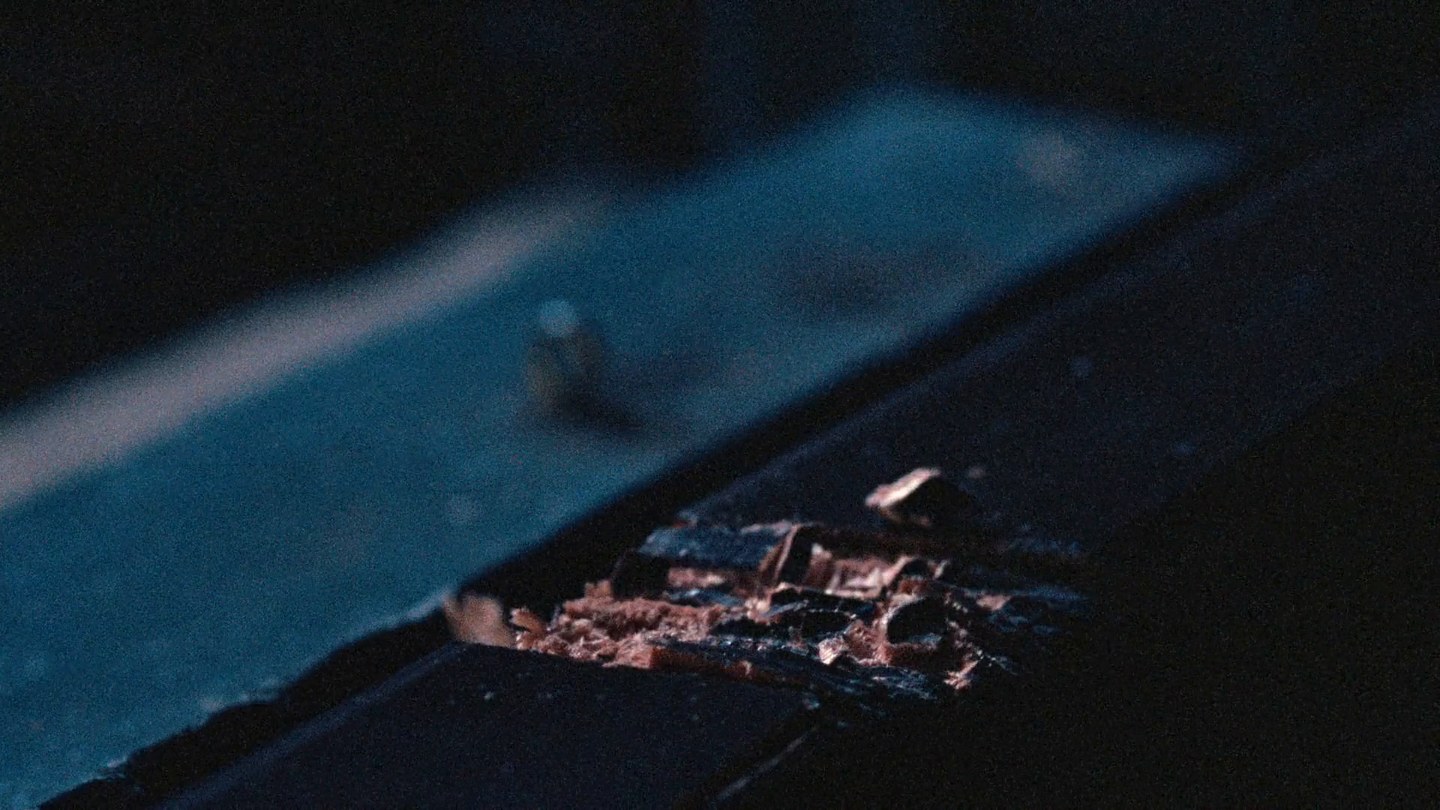
The kitchen’s familiar tools and pale surfaces become part of a sequence that moves from the threatened cat to Annabel’s body. Brief inserts separate the cleaver, damaged wood, the animal’s escape and the wound. Returning to the floor restores the human consequence of those fragments.

Explore the effects sequence →

1:29:12

The body leaves a record

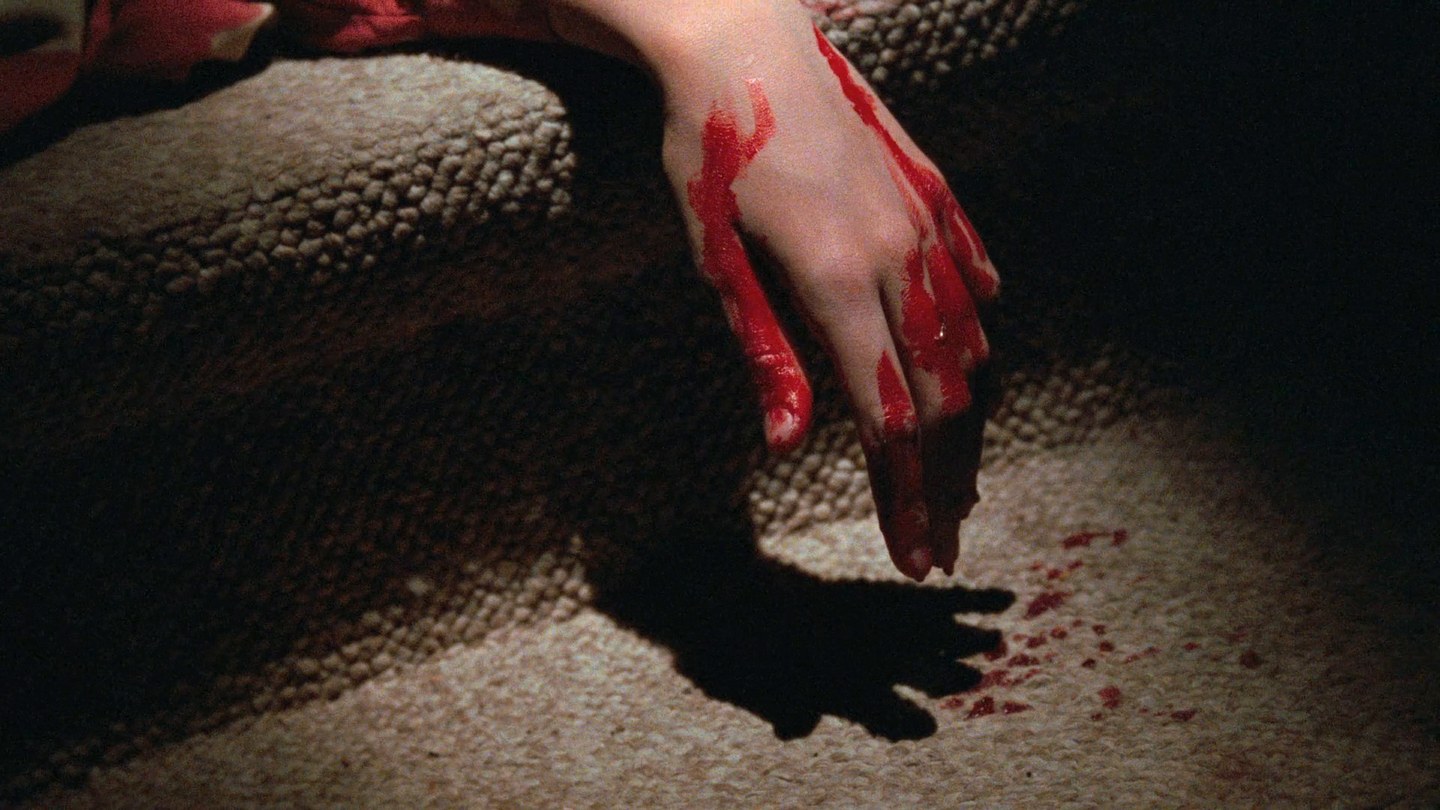
A bloodied hand marks the stair carpet.ENLARGE ↗
A bloodied hand marks the stair carpet.

Moving the body cannot erase what has happened; the movement produces another trace. The hand and carpet make concealment visibly self-defeating. Rod’s efforts to remove evidence repeatedly create new images that could expose him.

Explore the effects sequence →

1:33:15

The wall promises a blank image

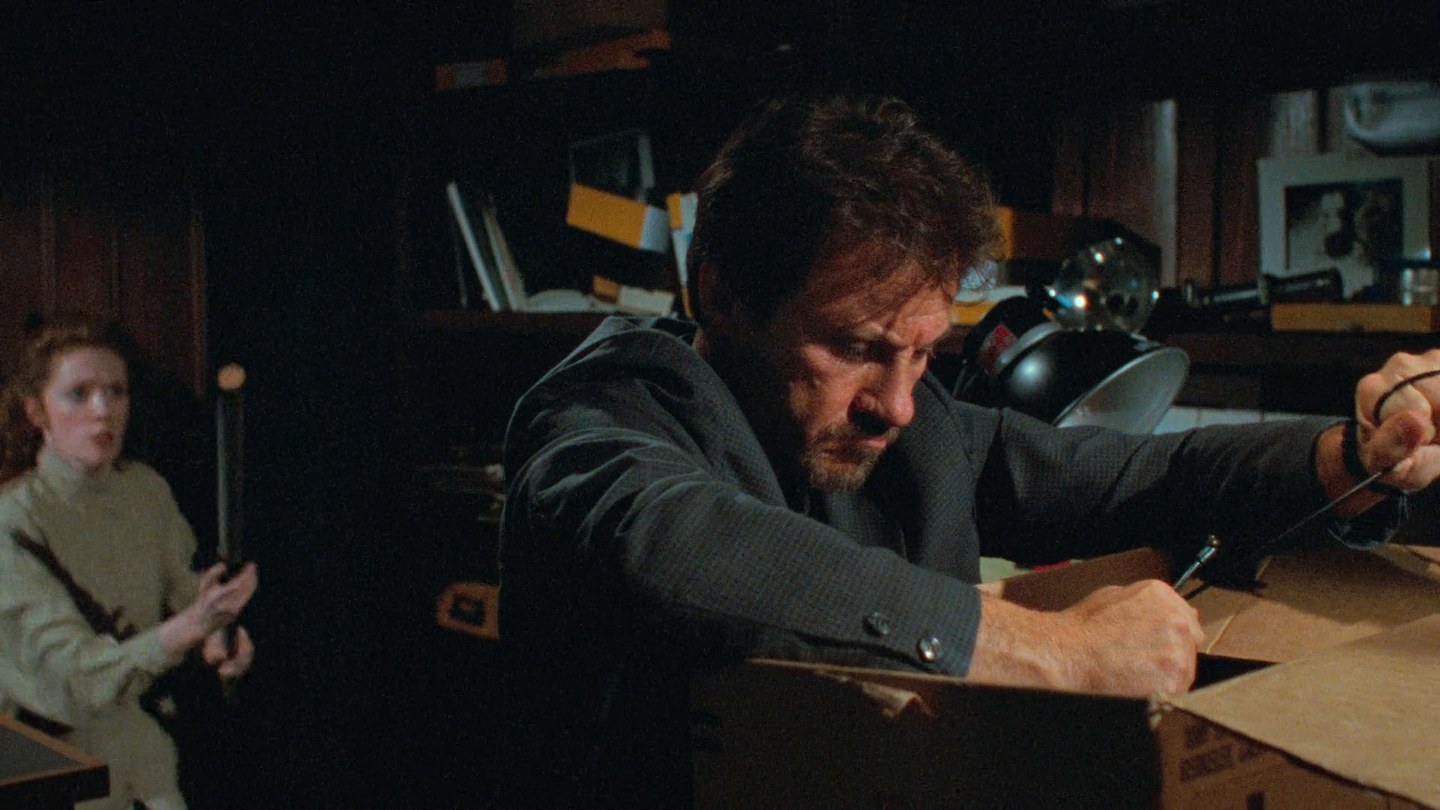
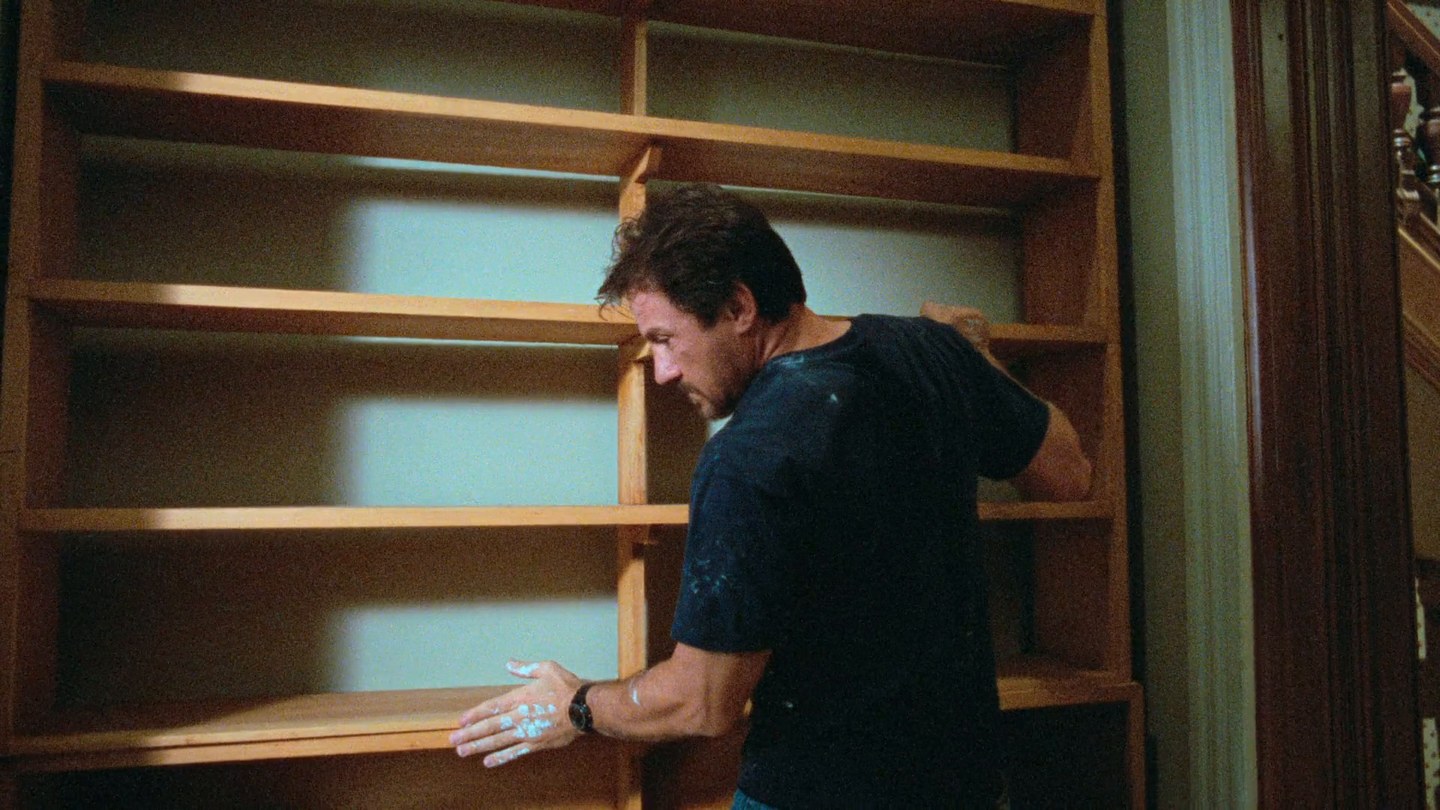
Rod works at the recess behind the bookcase.ENLARGE ↗
Rod works at the recess behind the bookcase.

The hiding place is an attempt to replace a body with an ordinary surface. Shelves and books make the intervention look like part of the room’s existing order. The wall becomes a false photograph: a rectangle that seems to show everything relevant because it conceals what is behind it.

1:46:45

The photographer performs normality

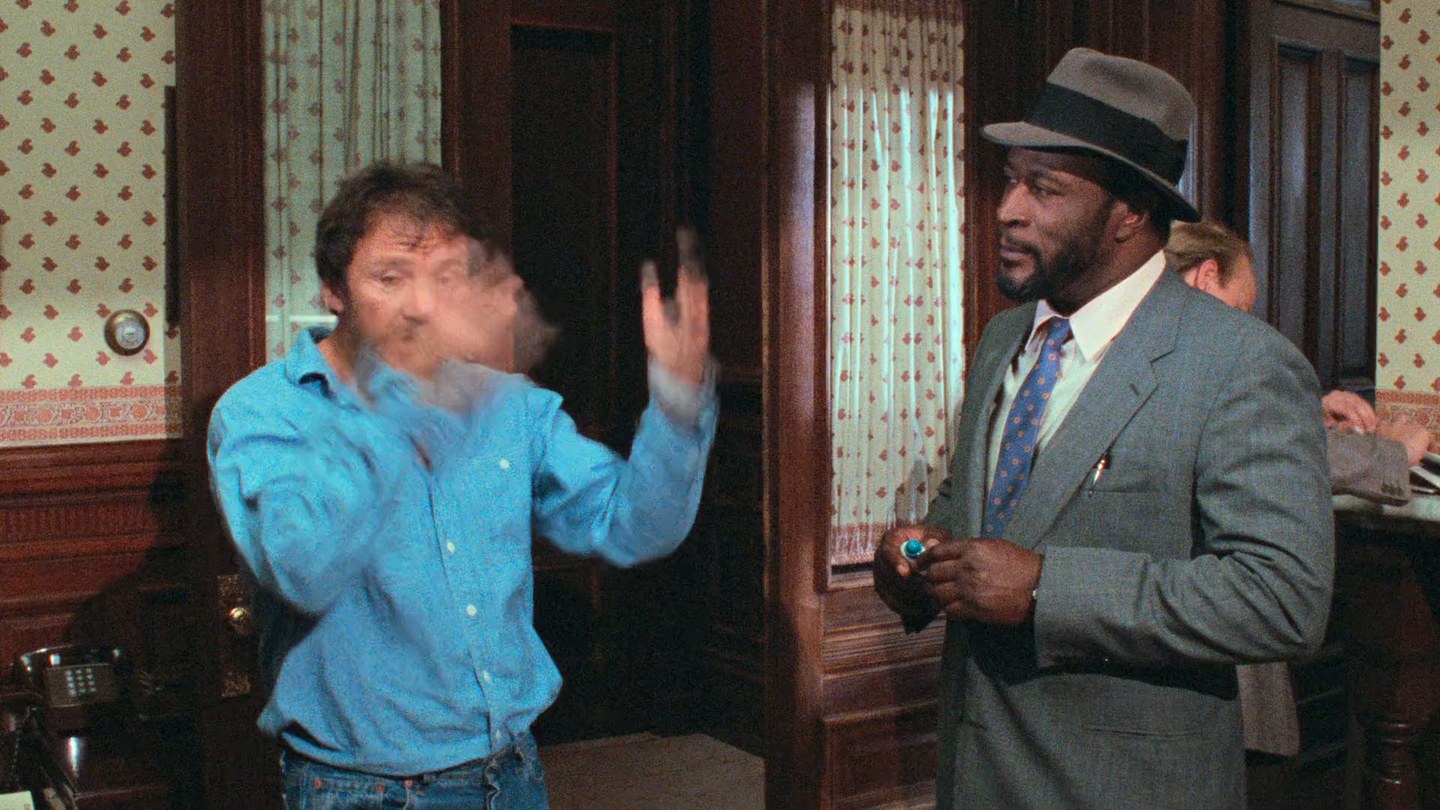
Rod faces the police inside the house.ENLARGE ↗
Rod faces the police inside the house.

Conversation and routine inspection temporarily restore the scale of ordinary social behaviour. Rod needs the investigators to accept the rooms as they appear. Keitel’s controlled presence belongs to the same effort as the repaired wall: both are surfaces intended to prevent further scrutiny.

1:54:10

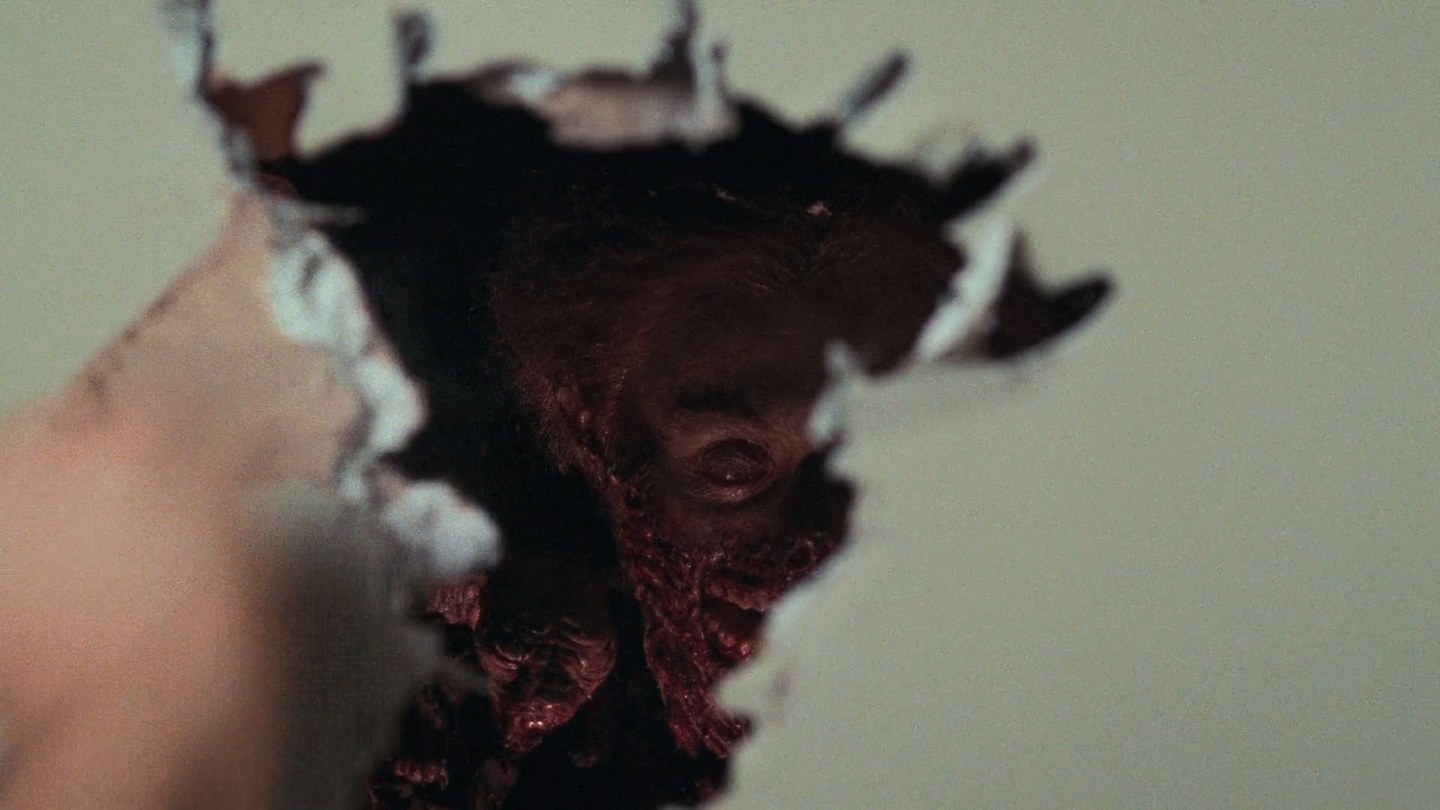
The blank surface opens

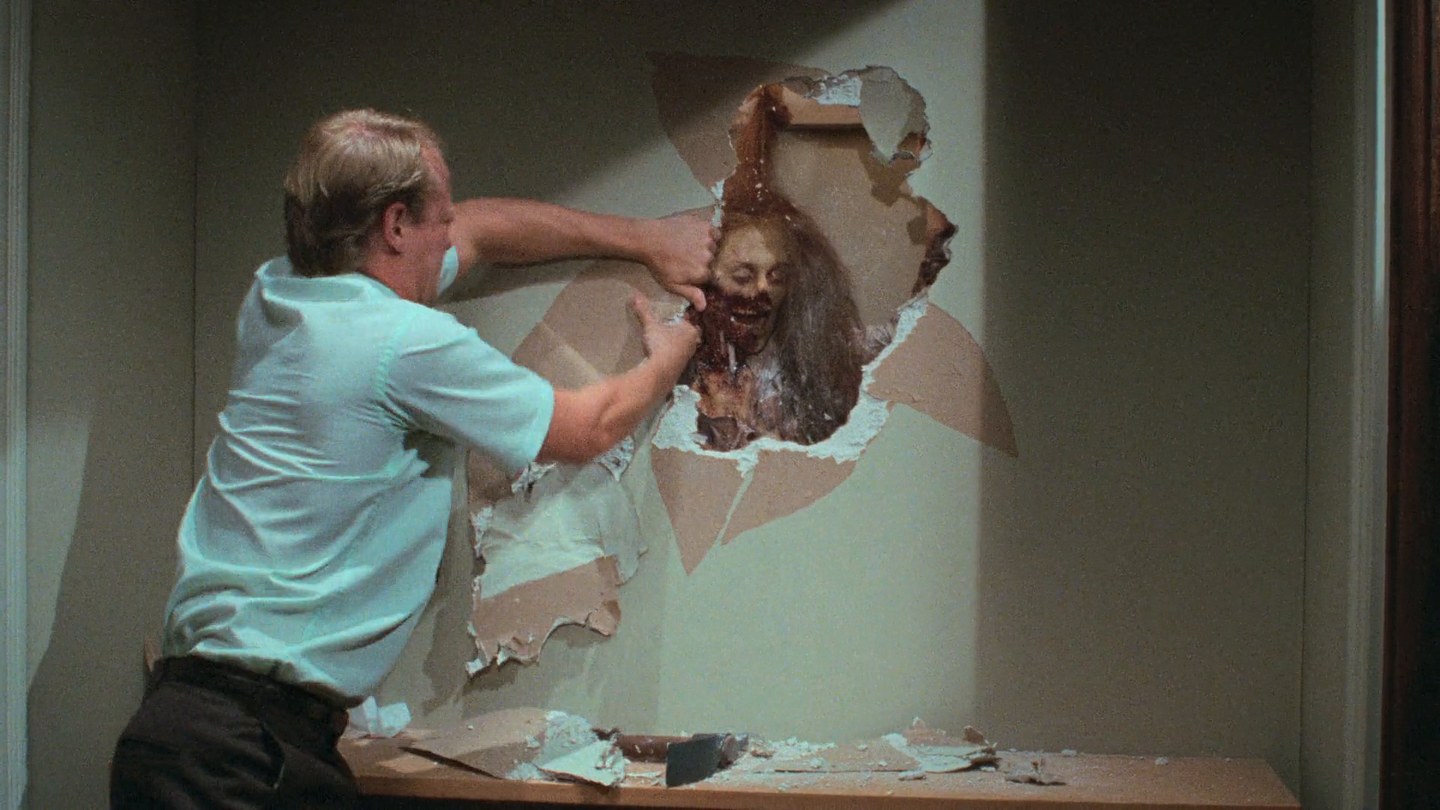
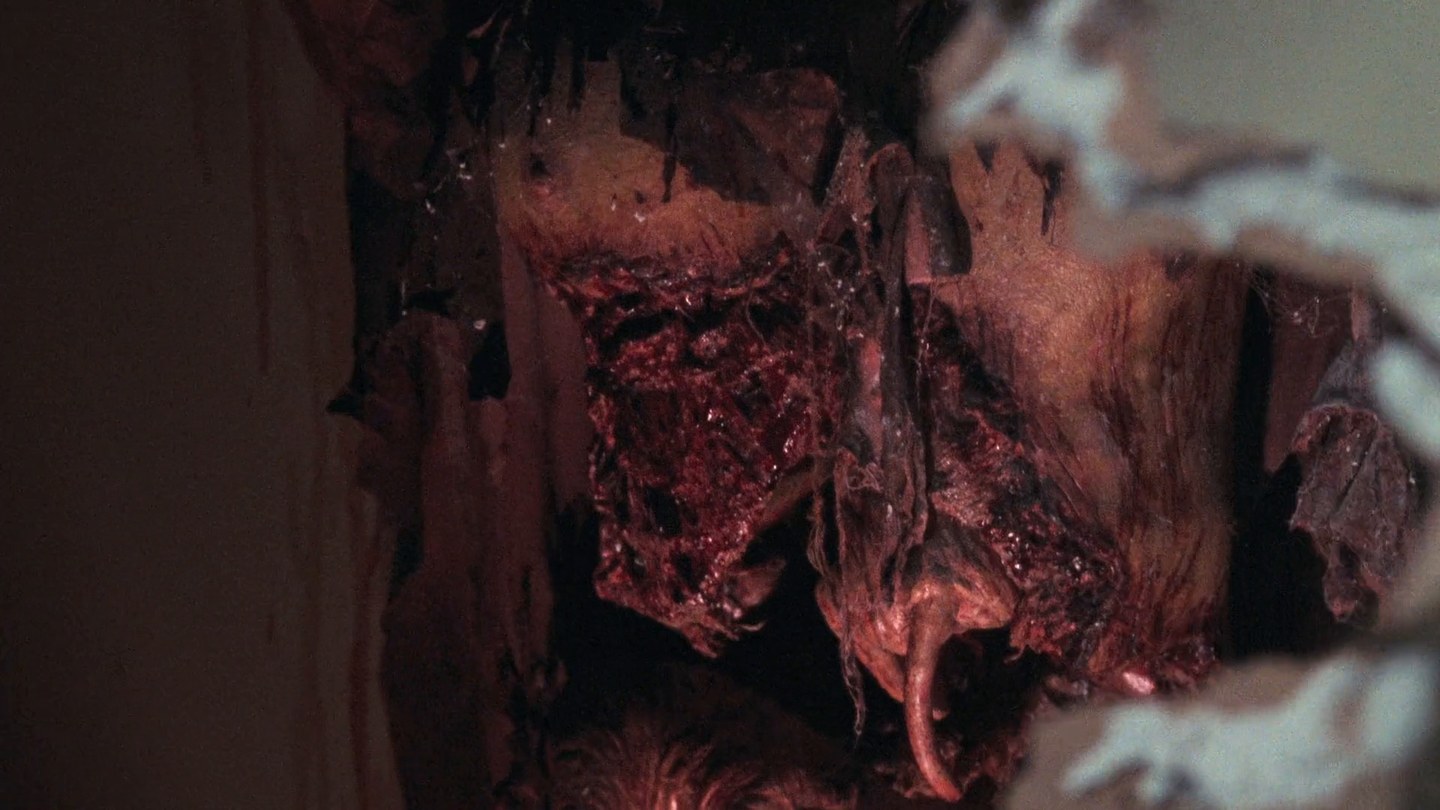
Annabel’s body appears through the broken wall.ENLARGE ↗
Annabel’s body appears through the broken wall.

The widening hole makes discovery a sequence rather than a single revelation. A fragment of face becomes a larger figure, then the damaged torso takes over the close view. The wall does not simply disclose evidence; its broken edges frame the evidence while Rod and the police become its unwilling audience.

Explore the effects sequence →

1:54:38

The investigation loses its order

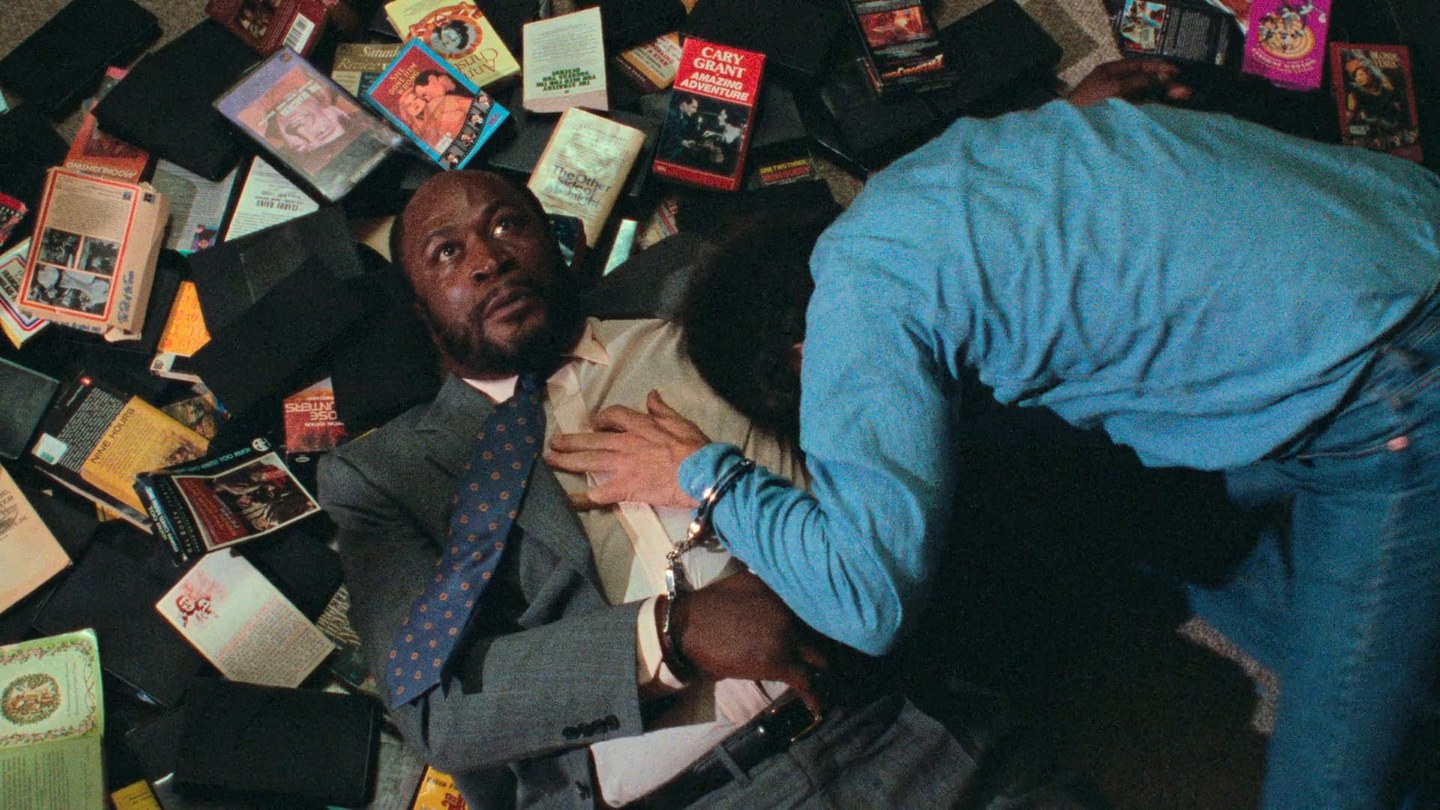
The struggle scatters bodies and books.ENLARGE ↗
The struggle scatters bodies and books.

Once the concealment fails, the stable positions of suspect and investigators collapse into a crowded physical struggle. Books that helped the room look orderly become loose objects on the floor. The image-maker can no longer control either the evidence or the arrangement of the people looking at it.

Explore the effects sequence →

1:56:22

Escape becomes exposure

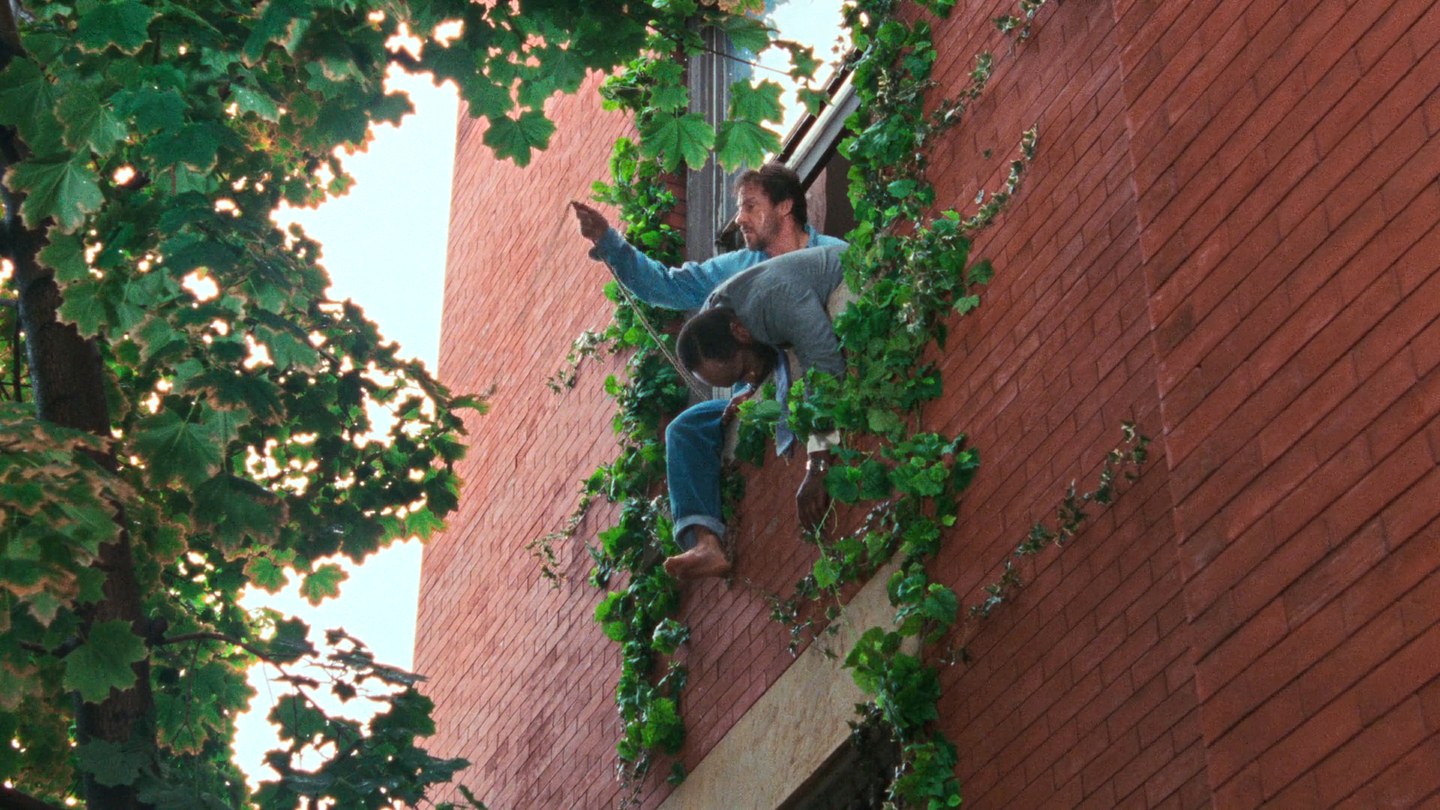
The figures hang outside the brick wall.ENLARGE ↗
The figures hang outside the brick wall.

The final move outside reverses the entire strategy of concealment. Instead of keeping a body inside a closed surface, the escape leaves bodies exposed against the building’s exterior. The house that supplied rooms, recesses and frames ends as the support for a public, hanging image.

Back to the dossier entrance ↑

GORE & EFFECTS

The body becomes the evidence.

Eight studies connect the film’s effects to their preparation, presentation and aftermath. Each has a lead image and an optional gallery. Enlarge a frame to move through the sequence with the previous and next controls.

32:30–48:20

Valdemar: frost, return and reversal

Ernest emerges with a ruined face.ENLARGE ↗
Ernest emerges with a ruined face.

The freezer attempts to arrest change, but the sequence makes change its central spectacle. The stored face returns upright, lit in blue and marked by decay. Cuts between Ernest, Jessica and Robert keep the transformed body inside the failed conspiracy.

The gallery follows the return through the gun confrontation and its aftermath. The earlier frozen face is included because the later makeup gains its force from what the conspirators thought they had safely contained.

Explore the sequence 10 stages

01 · 32:30

Frost covers the face in the freezer.ENLARGE ↗
Frost covers the face in the freezer.

02 · 44:26

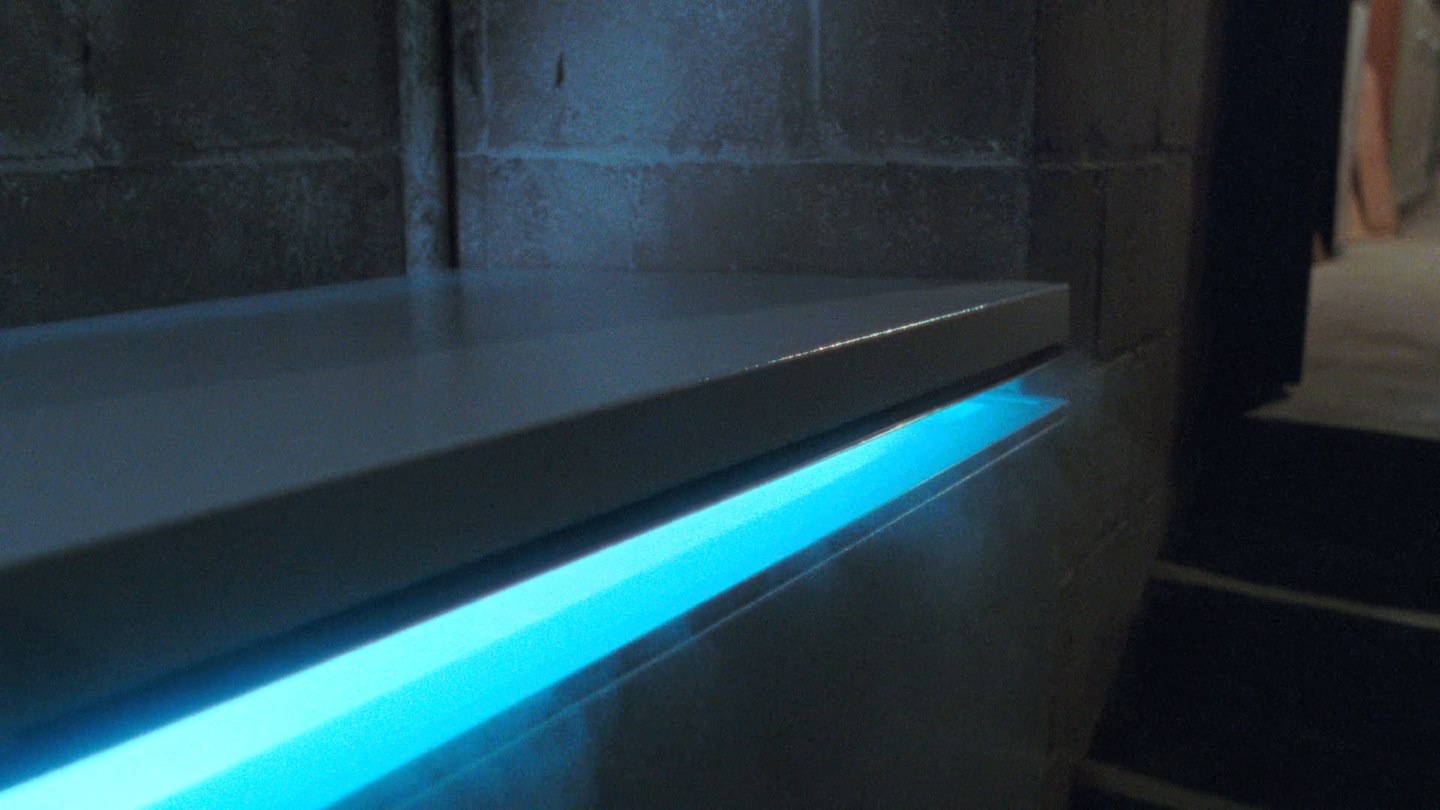
Blue light escapes beneath the lid.ENLARGE ↗
Blue light escapes beneath the lid.

03 · 45:20

The staircase takes on the blue light.ENLARGE ↗
The staircase takes on the blue light.

04 · 45:50

Ernest climbs into the occupied house.ENLARGE ↗
Ernest climbs into the occupied house.

05 · 46:02

The ruined face is revealed.ENLARGE ↗
The ruined face is revealed.

06 · 46:08

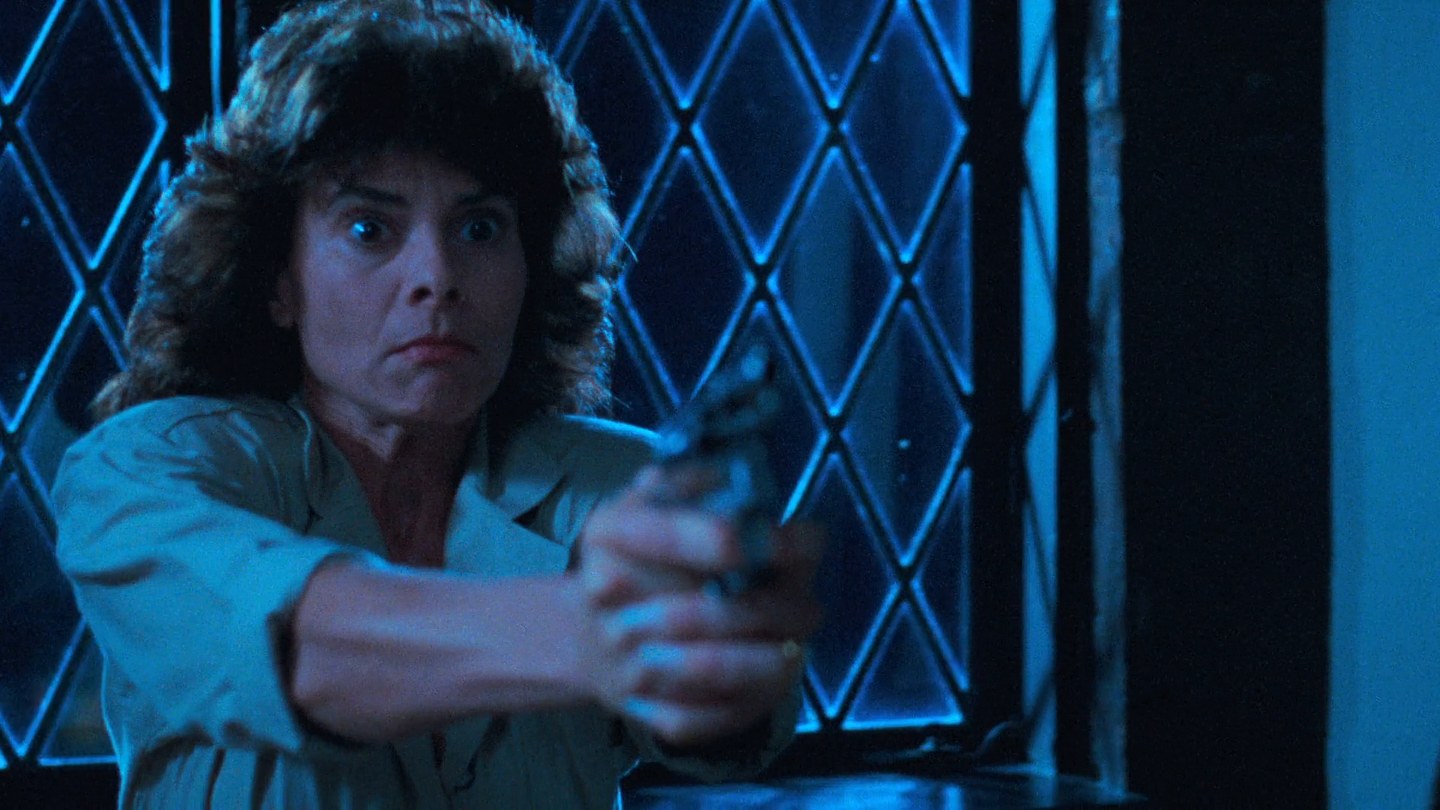
Jessica raises the gun.ENLARGE ↗
Jessica raises the gun.

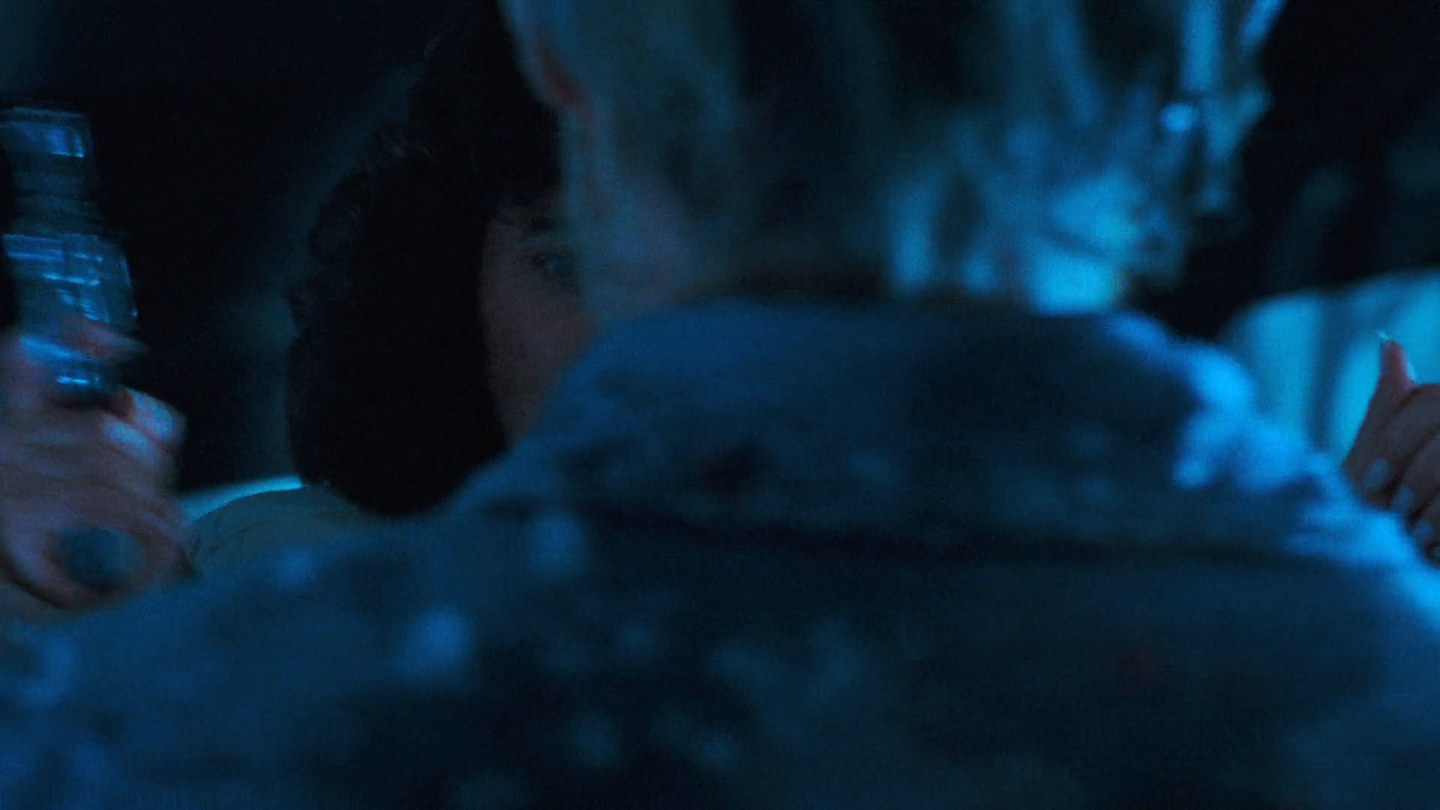
07 · 47:08

Ernest seizes Jessica’s arm.ENLARGE ↗
Ernest seizes Jessica’s arm.

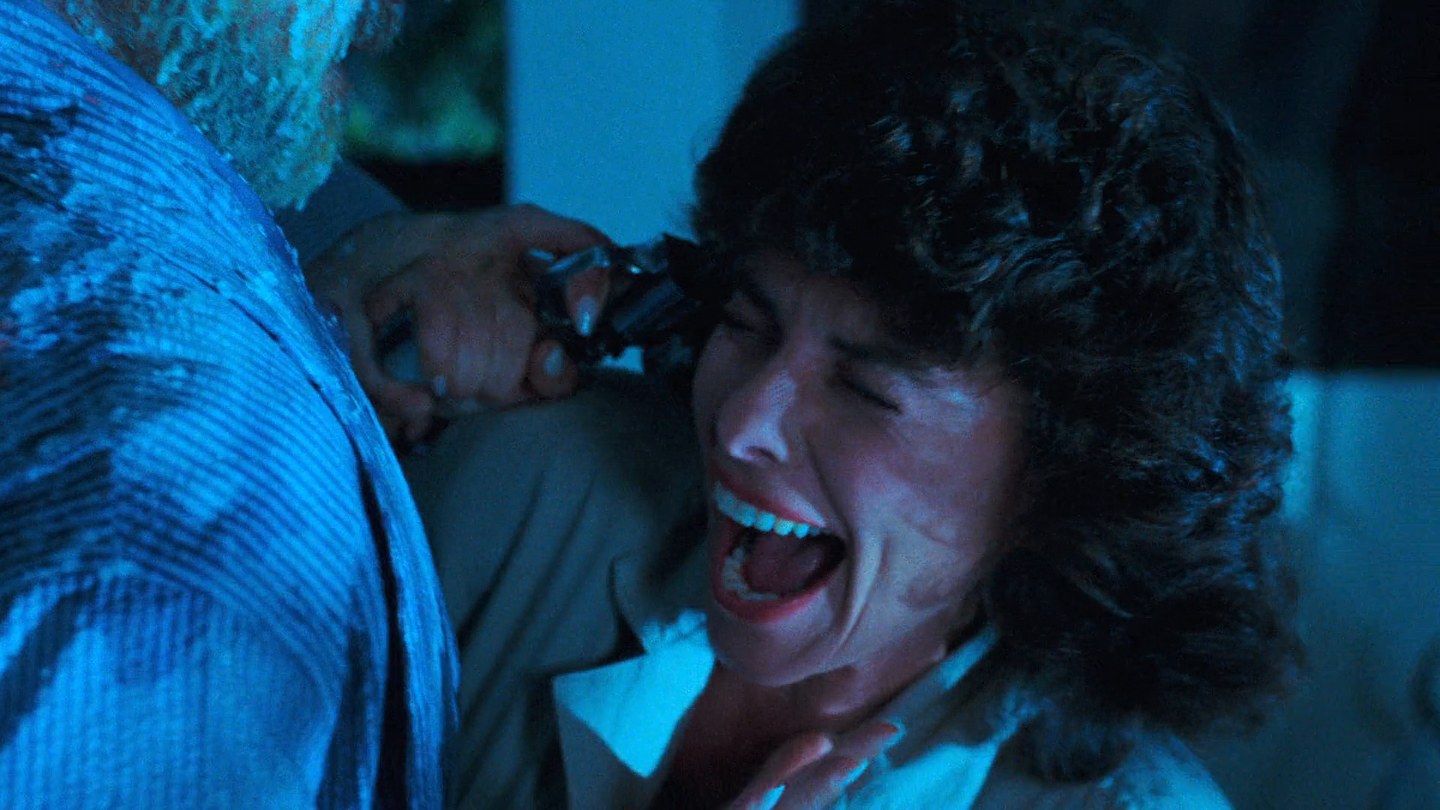
08 · 47:14

The gun is held beside Jessica’s head.ENLARGE ↗
The gun is held beside Jessica’s head.

09 · 47:44

Jessica lies in a pool of blood.ENLARGE ↗
Jessica lies in a pool of blood.

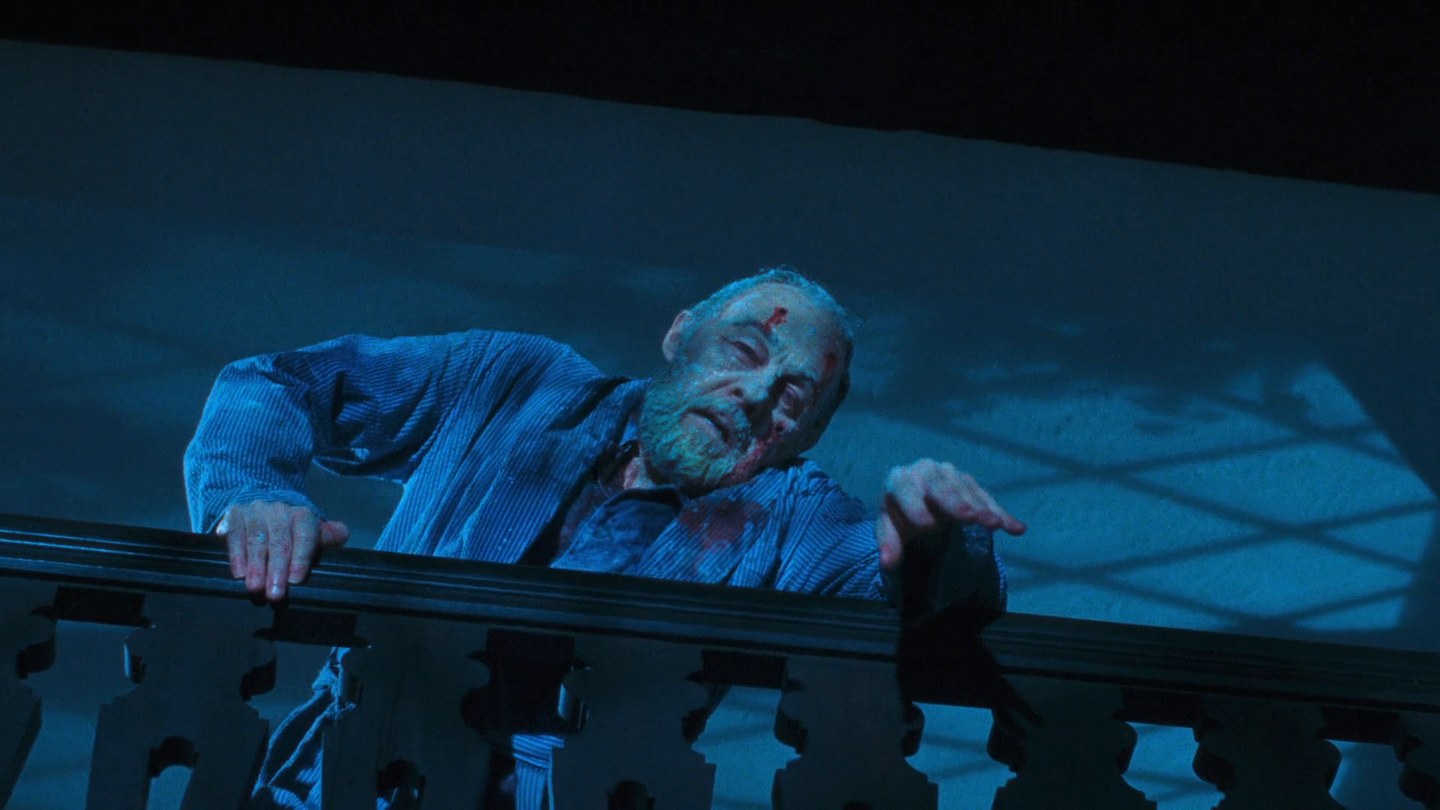
10 · 48:20

Ernest folds over the upper railing.ENLARGE ↗
Ernest folds over the upper railing.
Back to the effects guide ↑

51:24–55:04

Robert: the apparatus and the banknotes

Robert’s ruined face confronts the investigators.ENLARGE ↗
Robert’s ruined face confronts the investigators.

Romero’s final reversal brings the doctor’s instruments back against him. The living face on the bed gives way to a ruined figure whose chest carries the apparatus. The money then receives its own wound as blood falls onto the notes.

The sequence links two scales of evidence: a whole body confronting investigators and a close view of currency. The gallery keeps the preparation, discovery and last insert together rather than isolating the corpse as a single shock.

Explore the sequence 10 stages

01 · 51:24

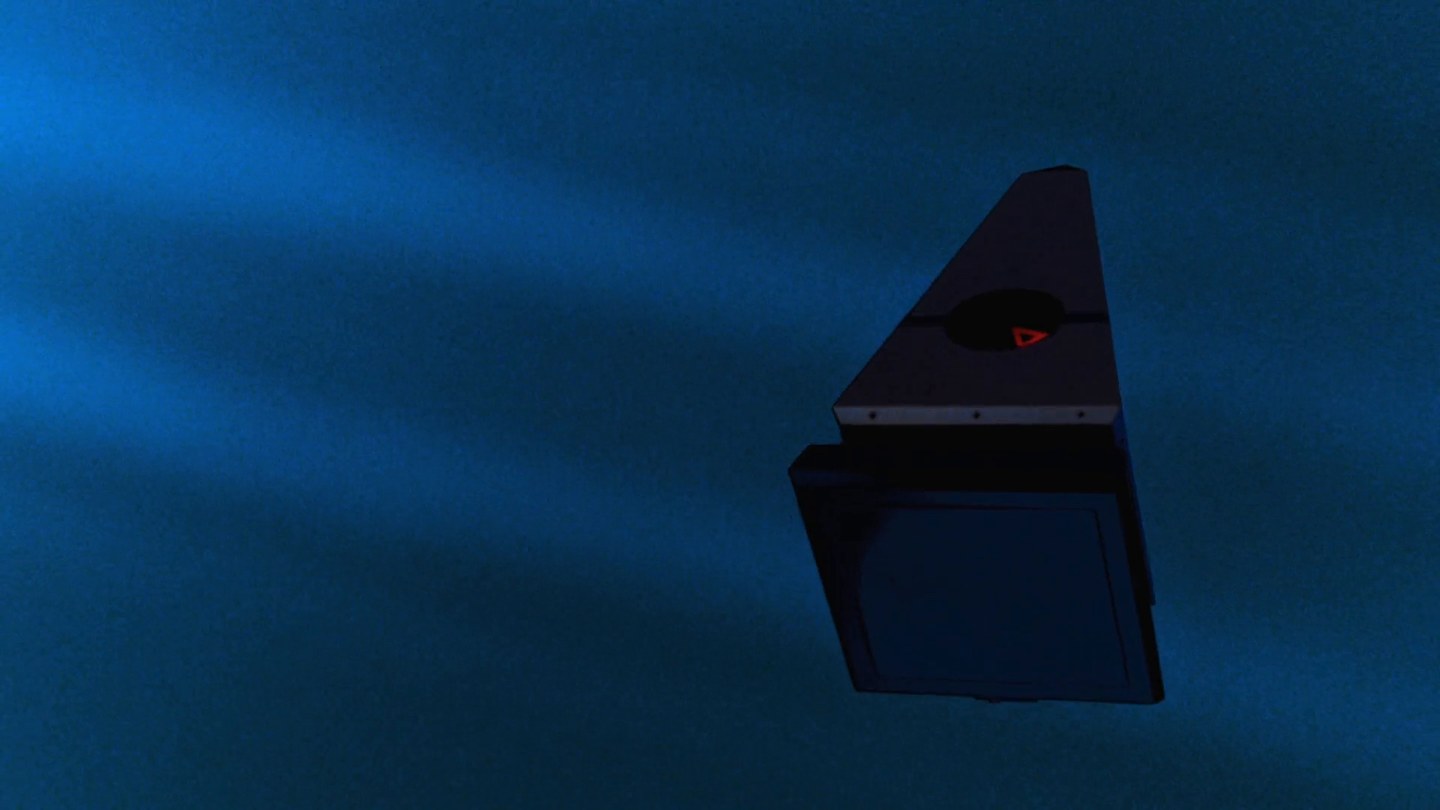
Robert lies beneath the hypnotic apparatus.ENLARGE ↗
Robert lies beneath the hypnotic apparatus.

02 · 51:40

His eyes open on the bed.ENLARGE ↗
His eyes open on the bed.

03 · 52:12

The apparatus drops from its position.ENLARGE ↗
The apparatus drops from its position.

04 · 54:41

The investigators confront the ruined figure.ENLARGE ↗
The investigators confront the ruined figure.

05 · 54:47

The damaged face fills the frame.ENLARGE ↗
The damaged face fills the frame.

06 · 54:56

The banknotes initially remain clean.ENLARGE ↗
The banknotes initially remain clean.

07 · 54:57

The first drops strike the money.ENLARGE ↗
The first drops strike the money.

08 · 54:58

Blood spreads across the printed faces.ENLARGE ↗
Blood spreads across the printed faces.

09 · 55:00

The notes become a bloodied surface.ENLARGE ↗
The notes become a bloodied surface.

10 · 55:04

The banknote’s eye remains in close view.ENLARGE ↗
The banknote’s eye remains in close view.
Back to the effects guide ↑

55:36–57:28

The pendulum: an aftermath made spectacular

Investigators stand around the divided body.ENLARGE ↗
Investigators stand around the divided body.

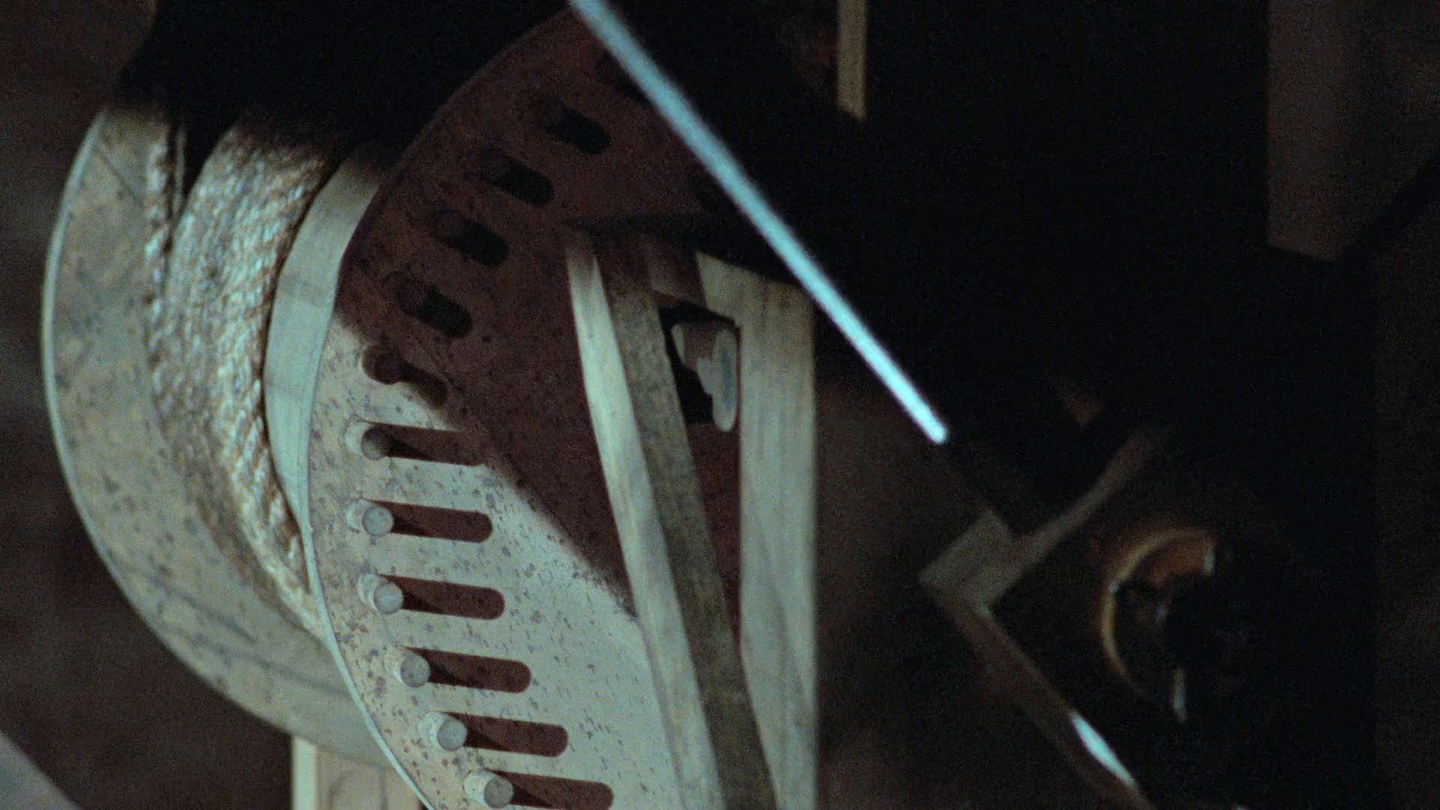
The Black Cat begins with the result of an elaborate killing. Overhead and low views establish the body’s relation to the apparatus, while Rod’s camera converts the scene into professional material. The moving blade remains present after its work is done.

These are stages in the film’s disclosure of the crime scene, not a reconstruction of the killing. Their interest lies in how machinery, wound, investigators and photographer are assembled into a legible tableau.

Explore the sequence 8 stages

01 · 55:36

The bound body appears beneath the credits.ENLARGE ↗
The bound body appears beneath the credits.

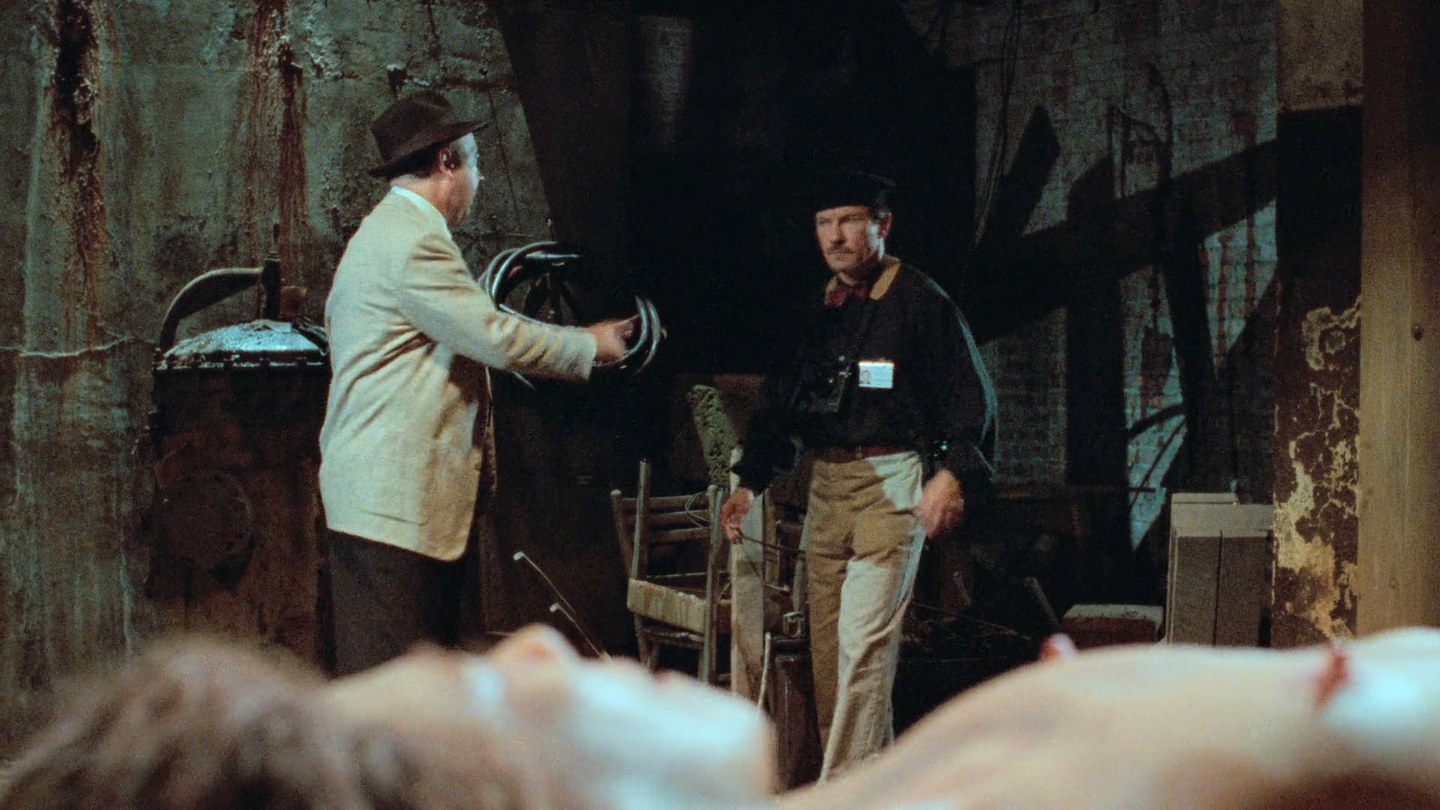
02 · 55:48

Legrand and Rod survey the scene.ENLARGE ↗
Legrand and Rod survey the scene.

03 · 55:52

The victim’s face occupies the foreground.ENLARGE ↗
The victim’s face occupies the foreground.

04 · 56:04

The overhead view exposes the divided torso.ENLARGE ↗
The overhead view exposes the divided torso.

05 · 56:52

The pendulum’s mechanism enters the frame.ENLARGE ↗
The pendulum’s mechanism enters the frame.

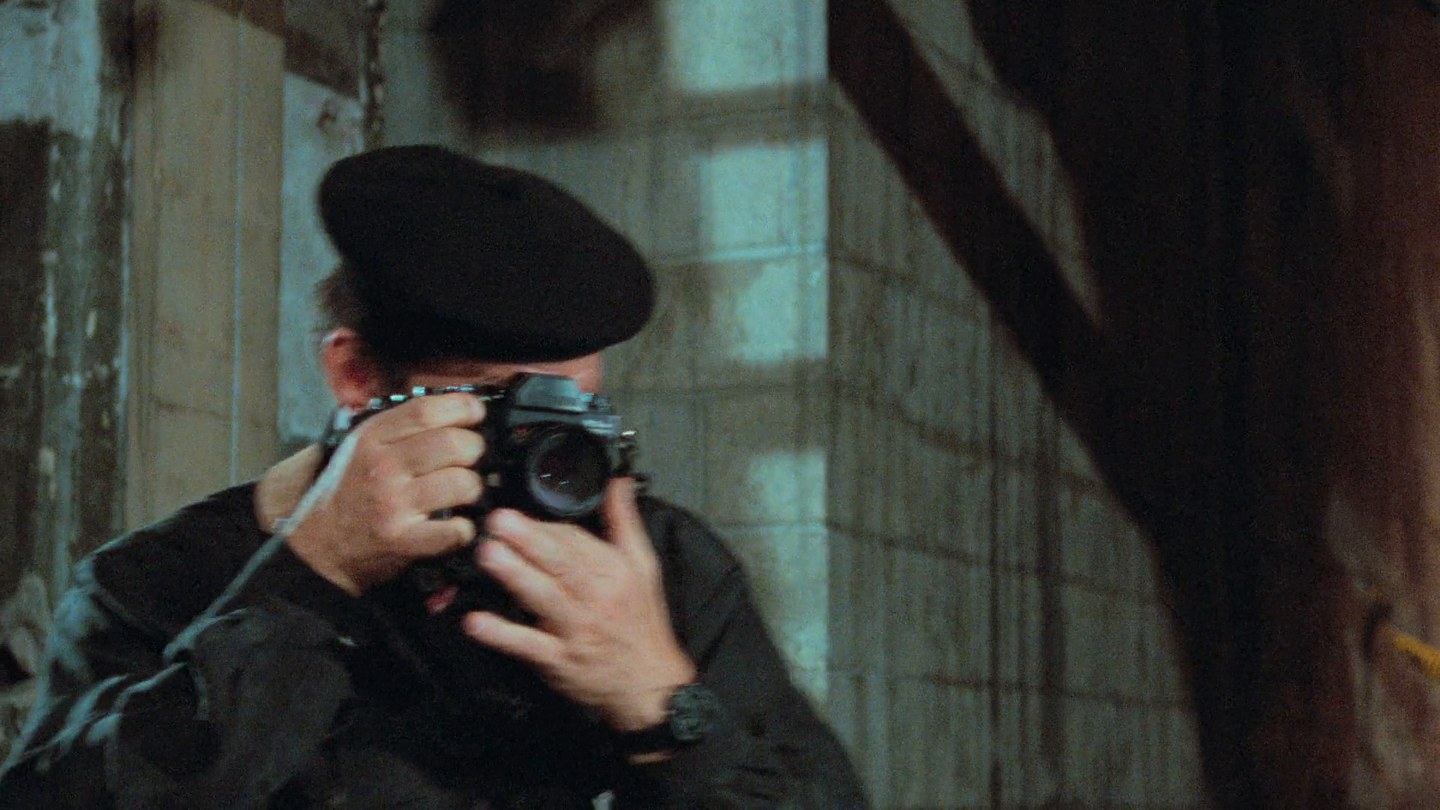
06 · 57:00

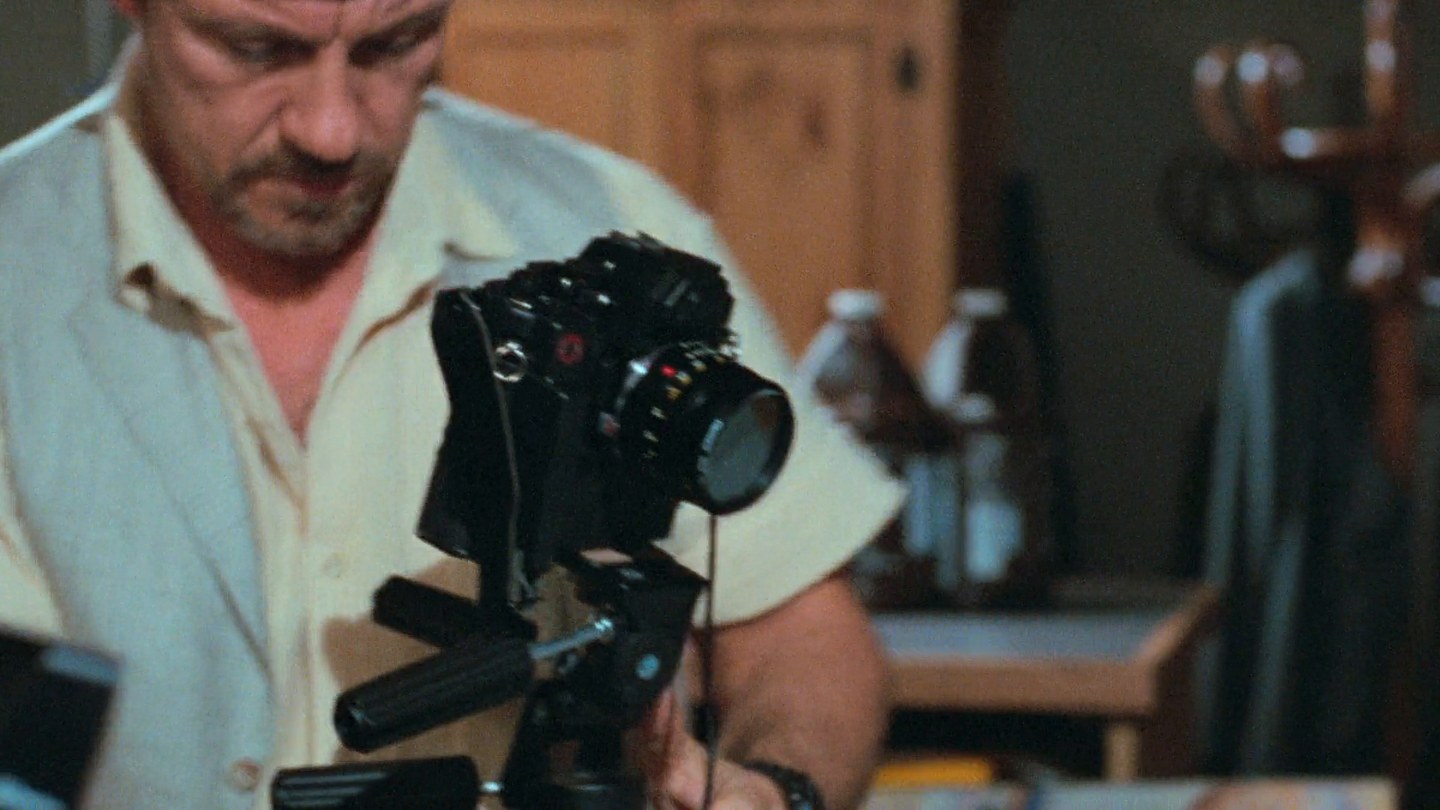
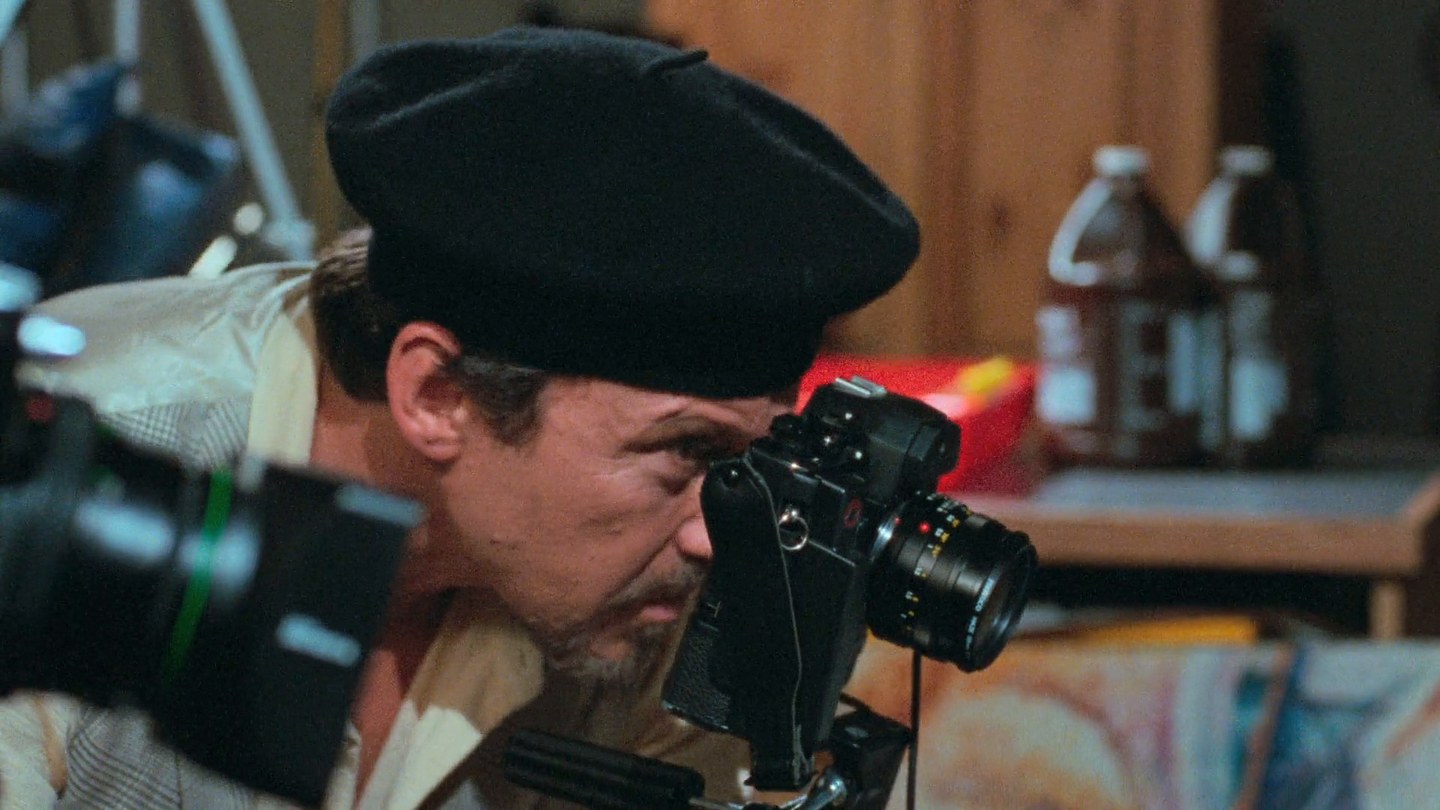
Rod raises the camera to his eye.ENLARGE ↗
Rod raises the camera to his eye.

07 · 57:12

The blade hangs above the opened body.ENLARGE ↗
The blade hangs above the opened body.

08 · 57:28

The crime becomes a developing photograph.ENLARGE ↗
The crime becomes a developing photograph.
Back to the effects guide ↑

1:06:52–1:07:48

The cat: cruelty arranged for the camera

Rod arranges the cat before the camera.ENLARGE ↗
Rod arranges the cat before the camera.

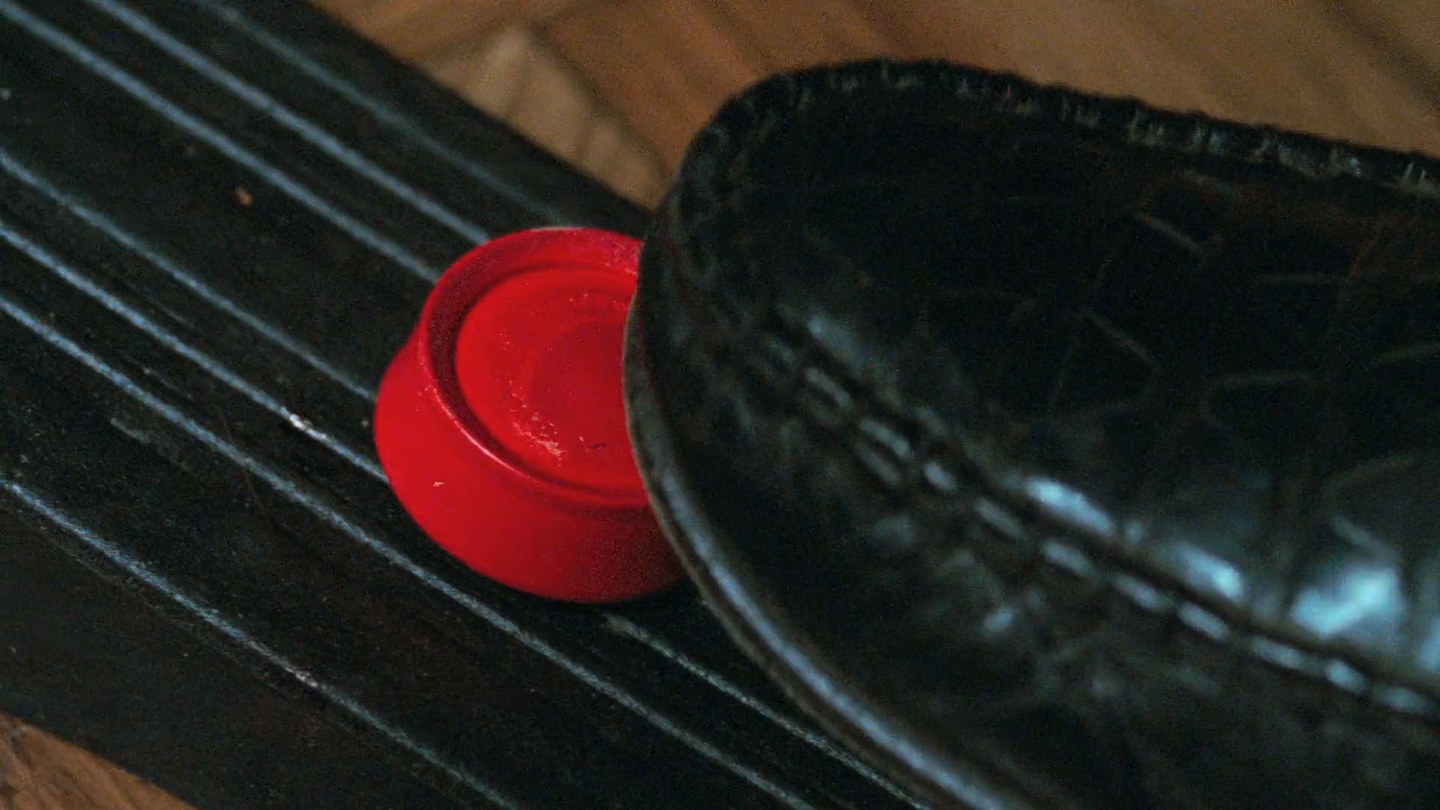
The studio makes each part of Rod’s control visible: lighting, background, camera, the animal’s position and the shutter release beneath his shoe. The sequence refuses to let the finished image conceal the choices that produced it.

Its horror is bound to fabrication within the story. The closing roll carries an American Humane Association statement about the treatment of live animals during production; that credit is distinct from the cruelty represented by Rod’s actions.

Explore the sequence 8 stages

01 · 1:06:52

Rod adjusts the studio backdrop.ENLARGE ↗
Rod adjusts the studio backdrop.

02 · 1:07:00

Camera, lamps and cat share the setup.ENLARGE ↗
Camera, lamps and cat share the setup.

03 · 1:07:04

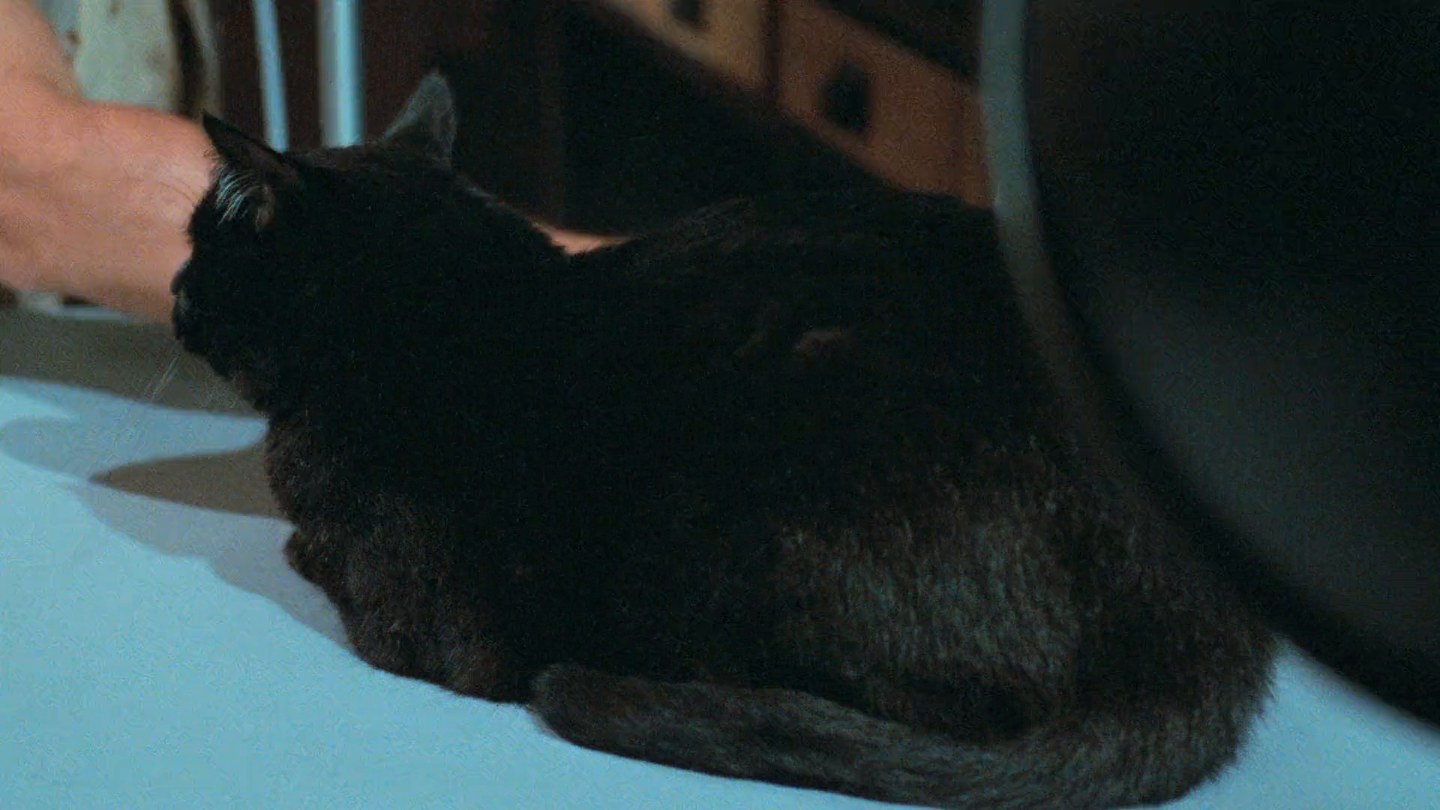
A hand fixes the animal’s position.ENLARGE ↗
A hand fixes the animal’s position.

04 · 1:07:08

The camera waits at the edge of the table.ENLARGE ↗
The camera waits at the edge of the table.

05 · 1:07:12

The cat faces the lens.ENLARGE ↗
The cat faces the lens.

06 · 1:07:16

Rod looks through the viewfinder.ENLARGE ↗
Rod looks through the viewfinder.

07 · 1:07:36

His shoe controls the shutter release.ENLARGE ↗
His shoe controls the shutter release.

08 · 1:07:48

His hand closes around the cat’s throat.ENLARGE ↗
His hand closes around the cat’s throat.
Back to the effects guide ↑

1:11:52–1:15:58

The nightmare: mask, fangs and public punishment

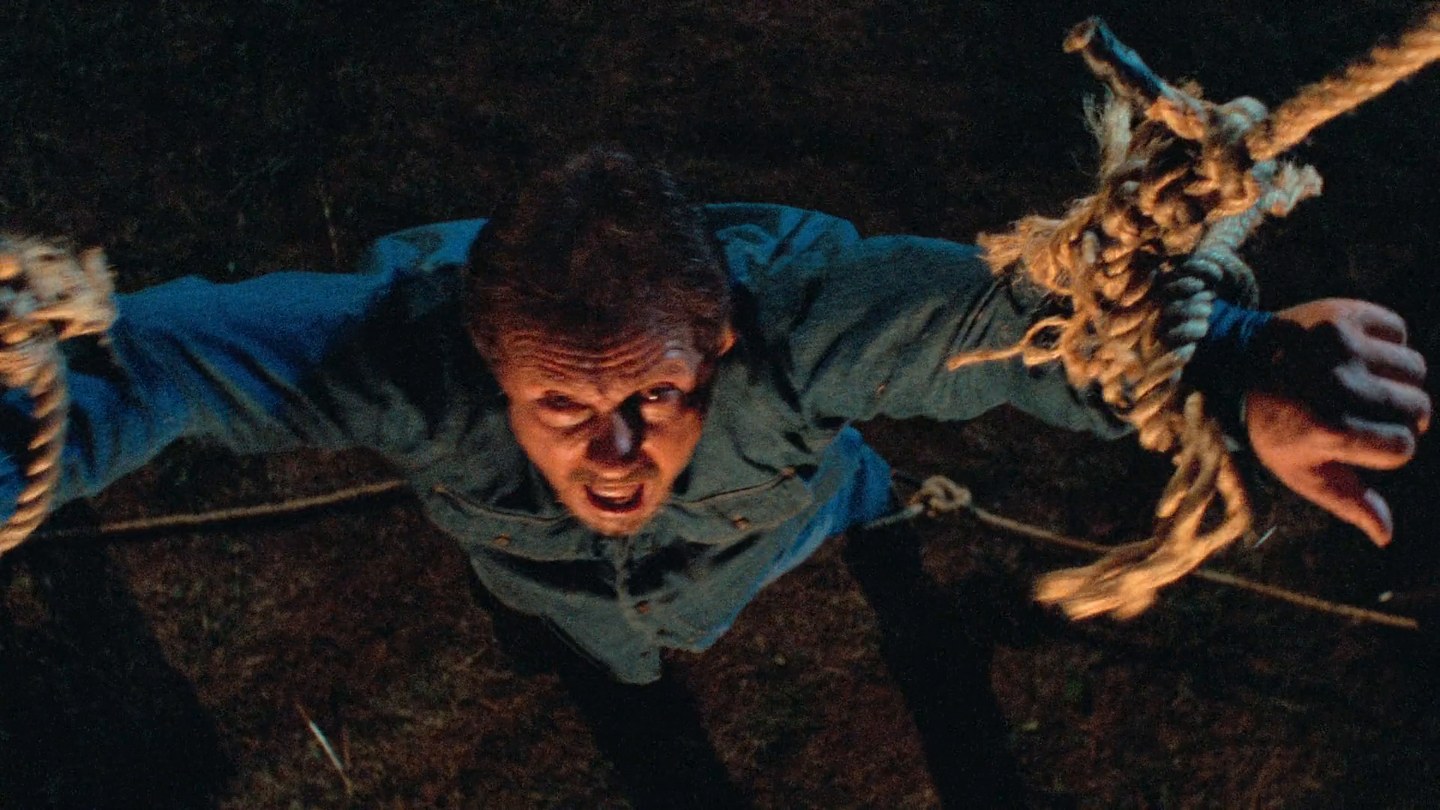
His restrained body hangs above the camera.ENLARGE ↗
His restrained body hangs above the camera.

The studio’s private hierarchy becomes a public ritual in which Rod is the captive subject. Masked faces, a fanged mouth, ropes and watching bodies replace his lamps and backdrop. The scene displays its theatricality while making that theatricality threatening.

The transformation moves through costume and changes of scale. A mask can be held in the hand; a mouth can suddenly fill the view; a restrained body can be suspended over the camera. These effects make a dream of judgment out of the photographer’s own arrangements.

Explore the sequence 9 stages

01 · 1:11:52

Rod crosses into the torchlit gathering.ENLARGE ↗
Rod crosses into the torchlit gathering.

02 · 1:13:16

The woman raises the cat mask.ENLARGE ↗
The woman raises the cat mask.

03 · 1:13:22

The mask replaces the visible face.ENLARGE ↗
The mask replaces the visible face.

04 · 1:14:04

Fangs transform the uncovered mouth.ENLARGE ↗
Fangs transform the uncovered mouth.

05 · 1:14:16

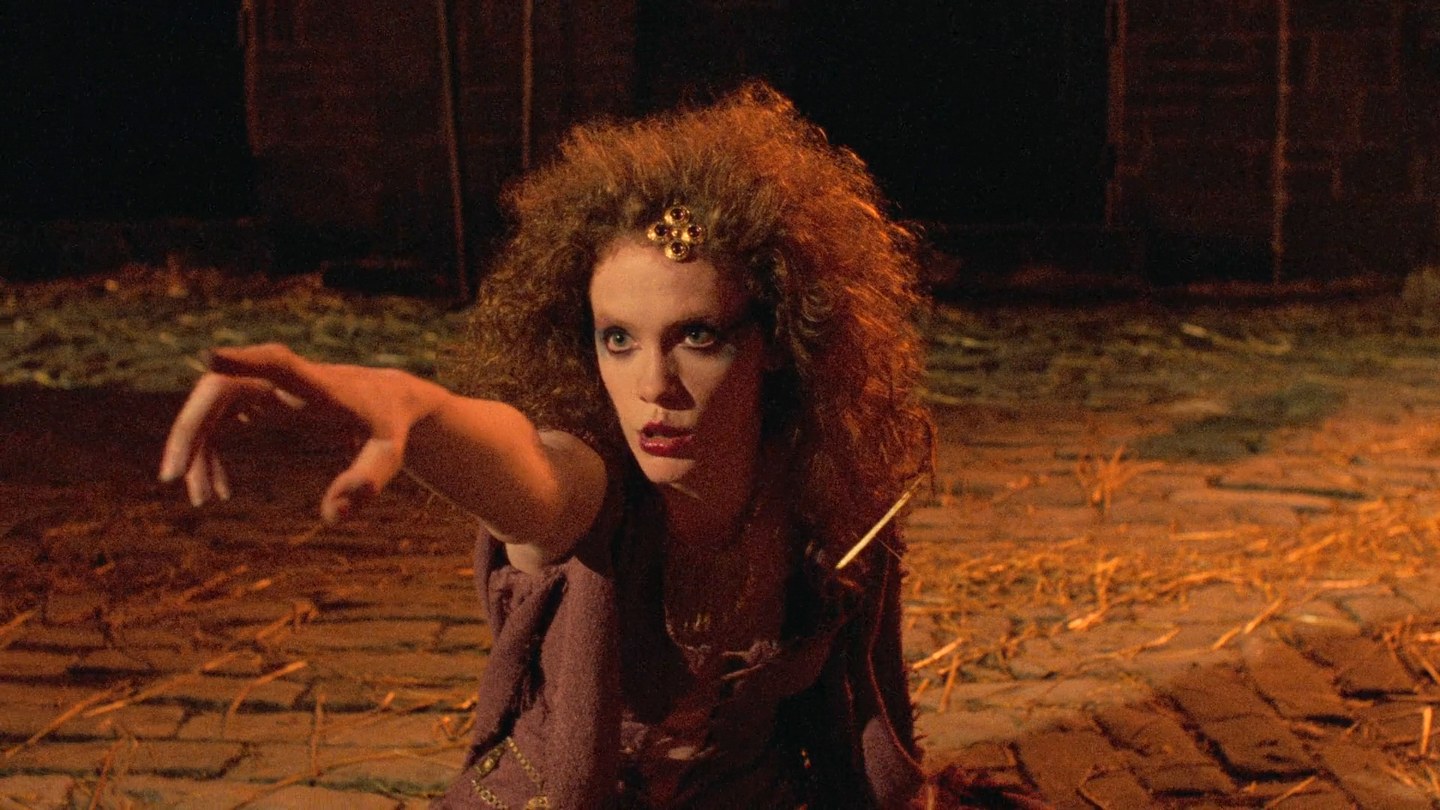
The woman points toward Rod.ENLARGE ↗
The woman points toward Rod.

06 · 1:14:40

The crowd holds him in place.ENLARGE ↗
The crowd holds him in place.

07 · 1:15:10

Rope is arranged around his neck.ENLARGE ↗
Rope is arranged around his neck.

08 · 1:15:46

His restrained body hangs above the camera.ENLARGE ↗
His restrained body hangs above the camera.

09 · 1:15:58

The woman watches the punishment.ENLARGE ↗
The woman watches the punishment.
Back to the effects guide ↑

1:16:34–1:17:50

The teeth: body, instruments and display

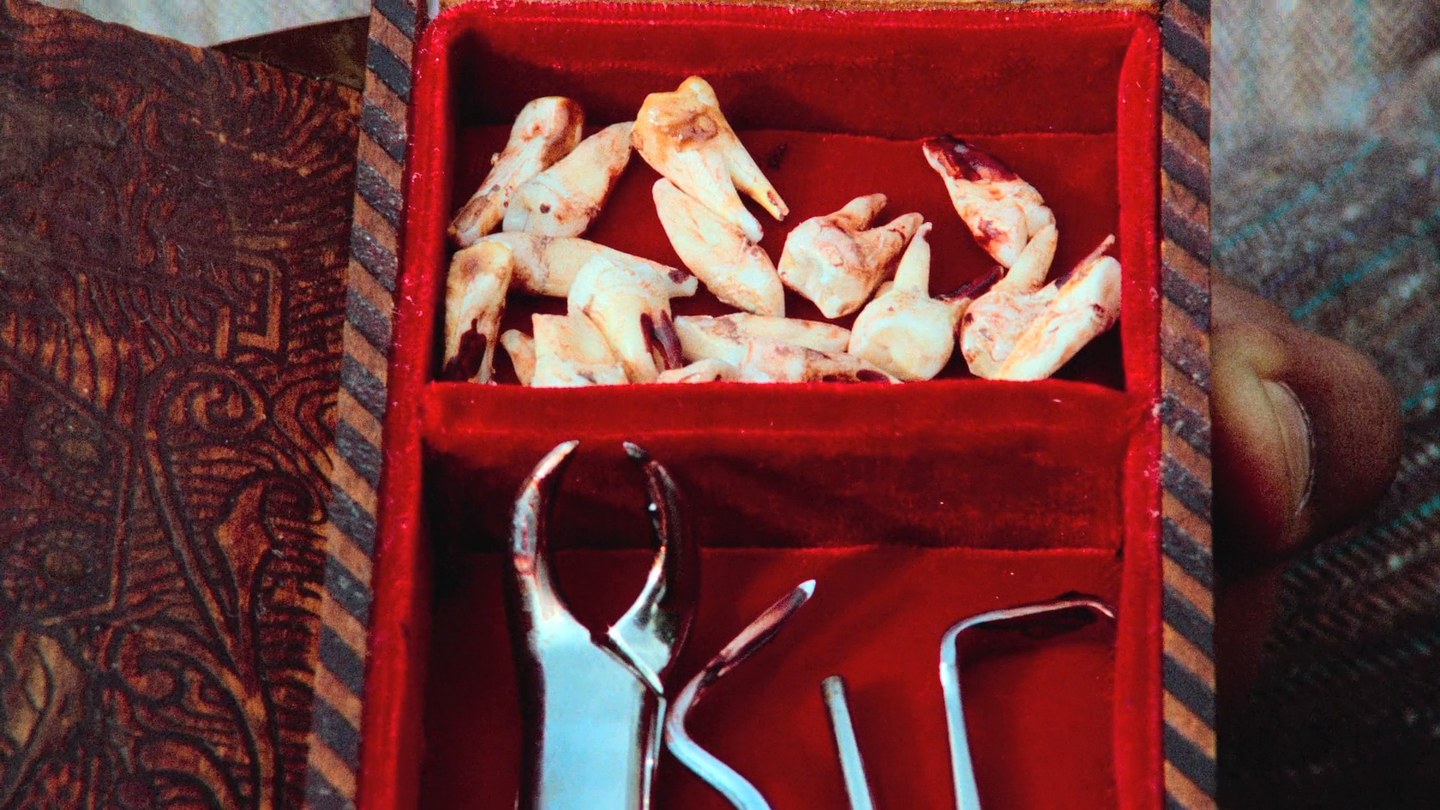
The contents become a tightly framed display.ENLARGE ↗
The contents become a tightly framed display.

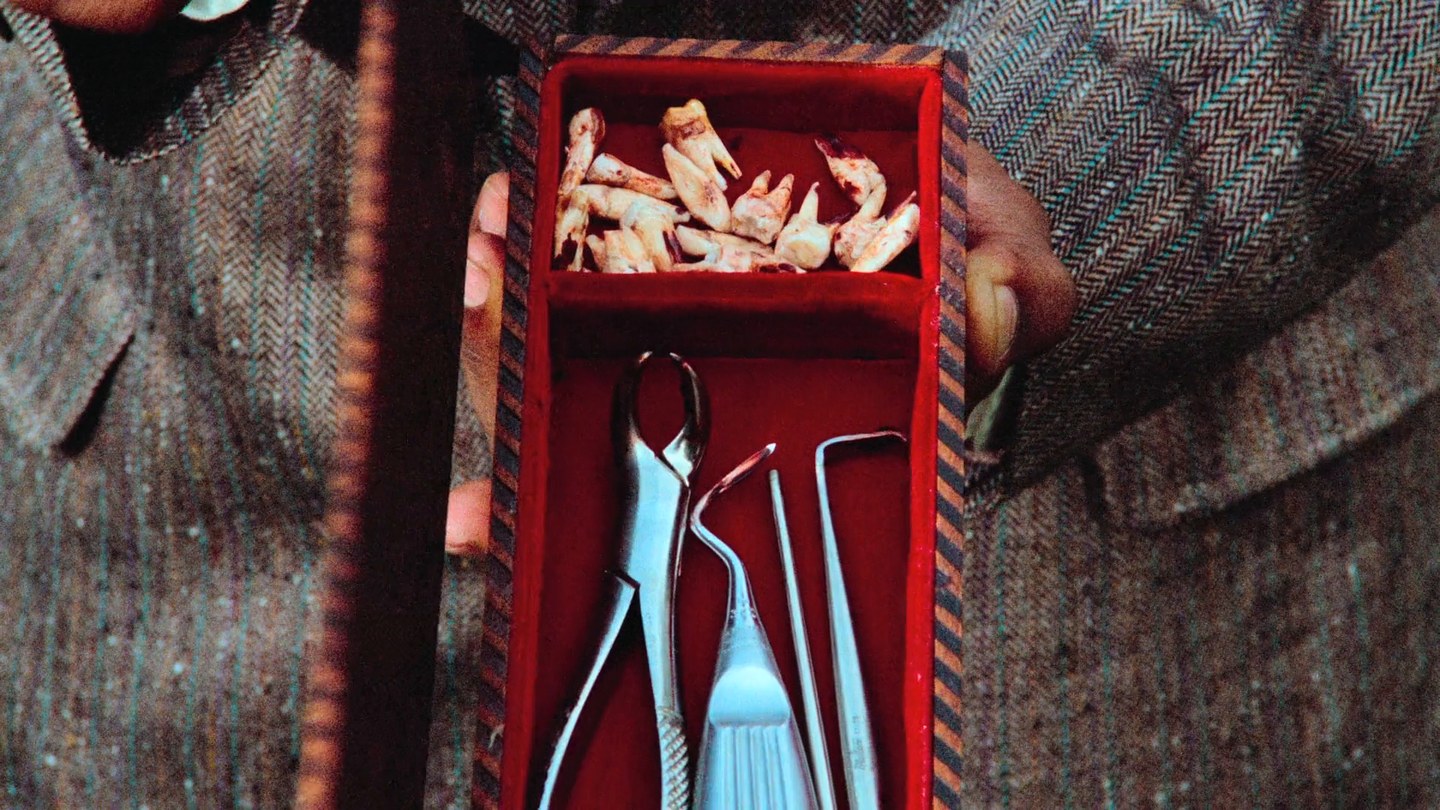
A damaged mouth and a case of extracted teeth create two connected views of the same violence. One is attached to the victim; the other has been arranged as a collection. Rod’s repeated raising of the camera joins them as photographic subjects.

The sequence shows the investigation and its aftermath. Its effects design depends on the contrast between exposed flesh, carefully ordered teeth and the velvet-lined container, rather than on showing the extraction itself.

Explore the sequence 6 stages

01 · 1:16:34

The investigators gather at the body.ENLARGE ↗
The investigators gather at the body.

02 · 1:16:50

The damaged mouth is exposed.ENLARGE ↗
The damaged mouth is exposed.

03 · 1:17:10

Rod photographs the victim.ENLARGE ↗
Rod photographs the victim.

04 · 1:17:22

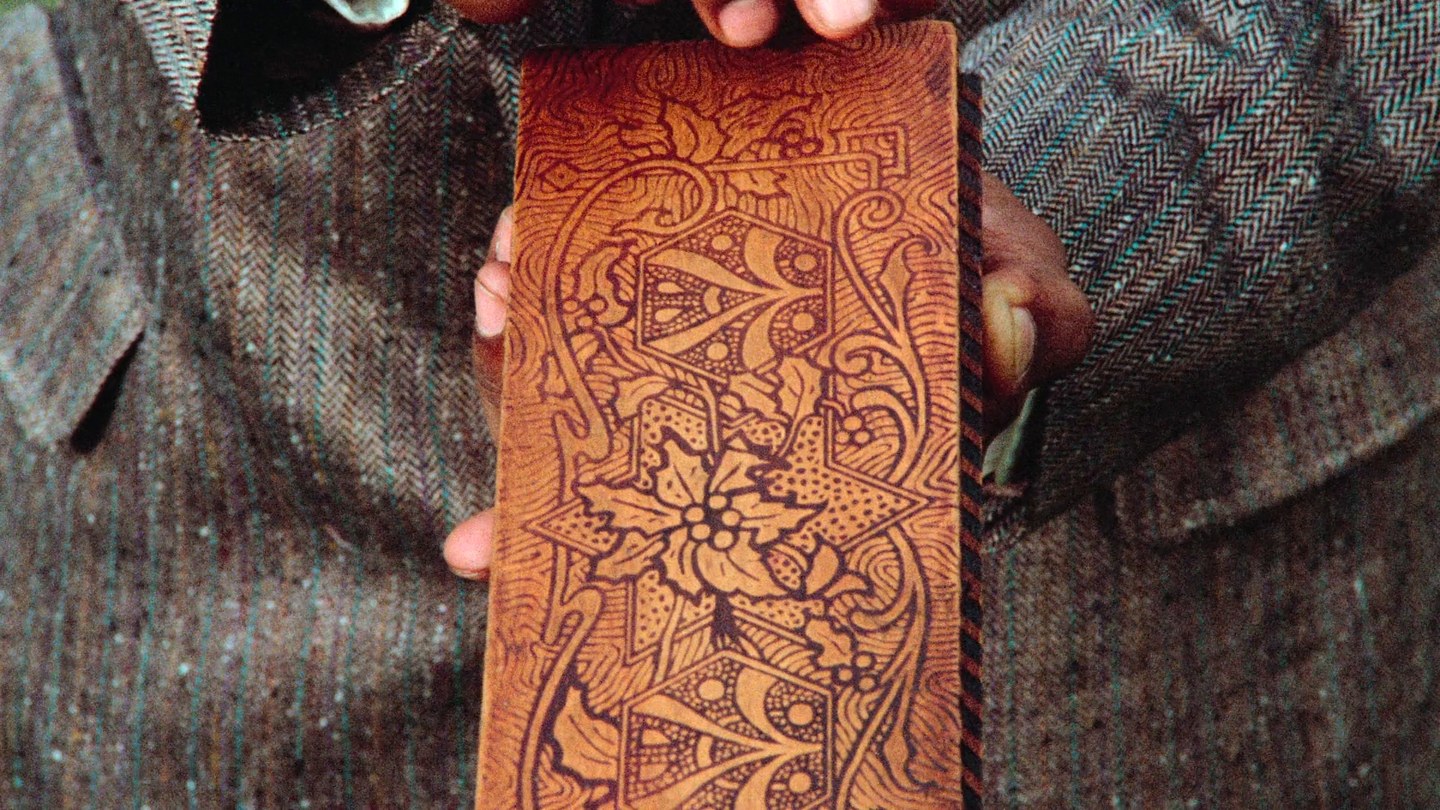
Legrand holds the closed wooden case.ENLARGE ↗
Legrand holds the closed wooden case.

05 · 1:17:42

The open case reveals teeth and tools.ENLARGE ↗
The open case reveals teeth and tools.

06 · 1:17:50

The contents become a tightly framed display.ENLARGE ↗
The contents become a tightly framed display.
Back to the effects guide ↑

1:27:16–1:29:52

Annabel: the cleaver, the wound and the trace

Annabel lies bloodied on the kitchen floor.ENLARGE ↗
Annabel lies bloodied on the kitchen floor.

The sequence changes its target through a chain of short, concrete images. Annabel intervenes, the cleaver is taken, the cat escapes, and damaged wood briefly registers the weapon’s force before the film turns to the human wound. Blood then joins the body, Rod’s face and the route through the house.

The aftermath is part of the effect. A marked carpet and bloody bath make cleanup another form of exposure. The gallery follows the action’s visible construction without treating every adjacent image as one continuous, unbroken performance.

Explore the sequence 13 stages

01 · 1:27:16

Annabel interrupts Rod beside the cat.ENLARGE ↗
Annabel interrupts Rod beside the cat.

02 · 1:27:28

She holds the cat away from him.ENLARGE ↗
She holds the cat away from him.

03 · 1:28:14

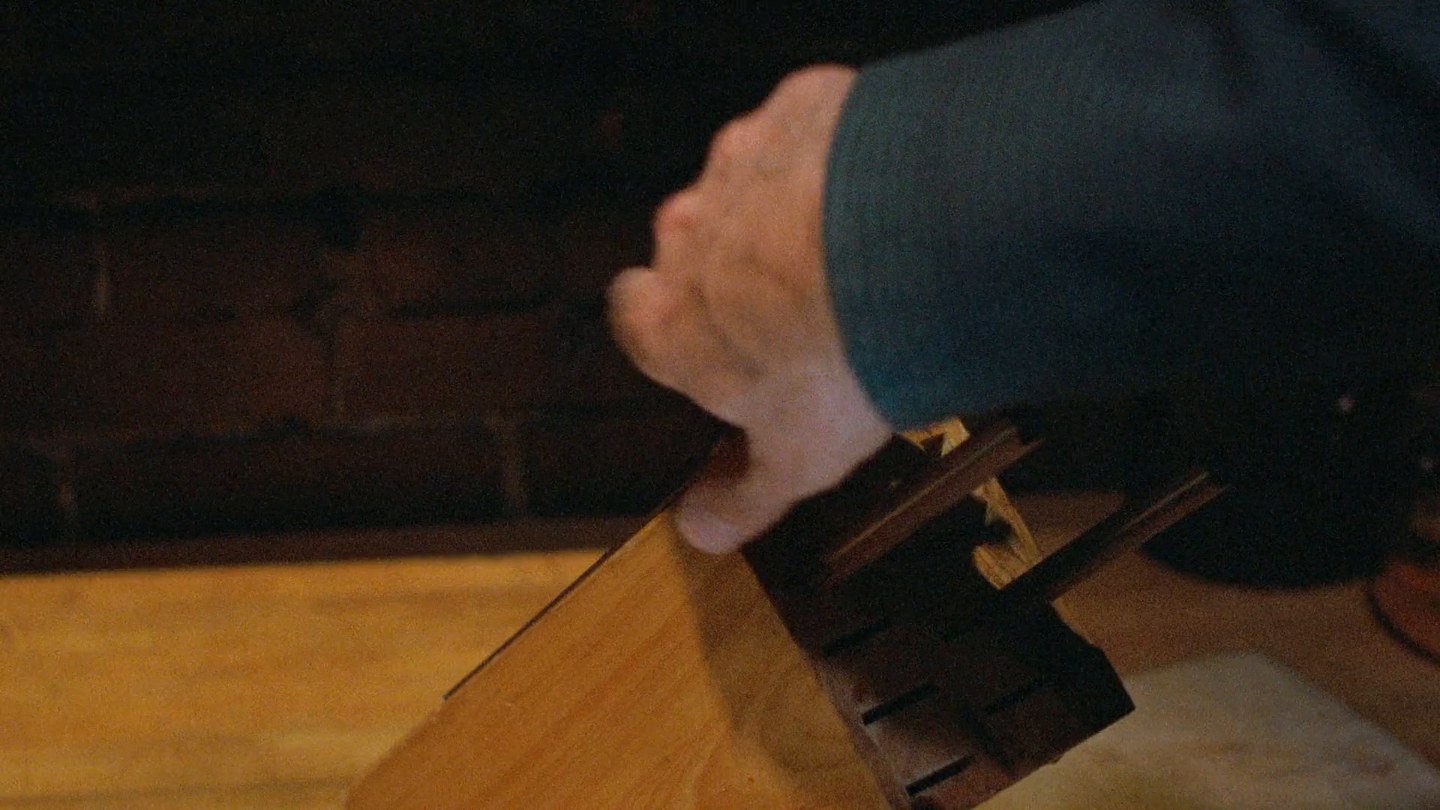
Rod takes the cleaver from the holder.ENLARGE ↗
Rod takes the cleaver from the holder.

04 · 1:28:15

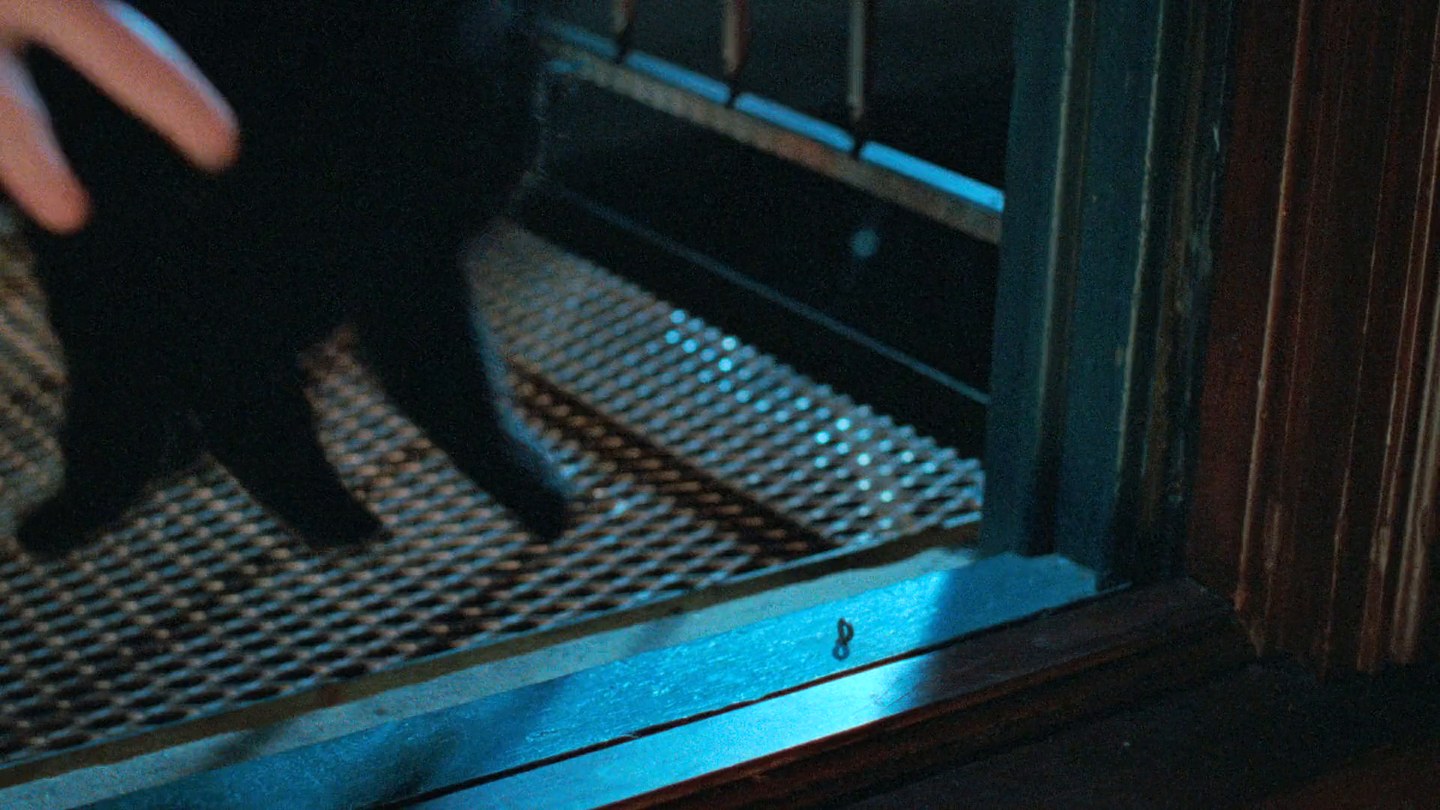
The cat leaps toward the window.ENLARGE ↗
The cat leaps toward the window.

05 · 1:28:16

The cleaver strikes the windowsill.ENLARGE ↗
The cleaver strikes the windowsill.

06 · 1:28:17

A cut in the wood records the blow.ENLARGE ↗
A cut in the wood records the blow.

07 · 1:28:22

Rod raises the weapon again.ENLARGE ↗
Rod raises the weapon again.

08 · 1:28:24

Annabel lies wounded on the floor.ENLARGE ↗
Annabel lies wounded on the floor.

09 · 1:28:29

Fresh blood marks Rod’s face.ENLARGE ↗
Fresh blood marks Rod’s face.

10 · 1:28:34

The overhead view restores the kitchen space.ENLARGE ↗
The overhead view restores the kitchen space.

11 · 1:29:12

Her hand leaves blood on the stair carpet.ENLARGE ↗
Her hand leaves blood on the stair carpet.

12 · 1:29:40

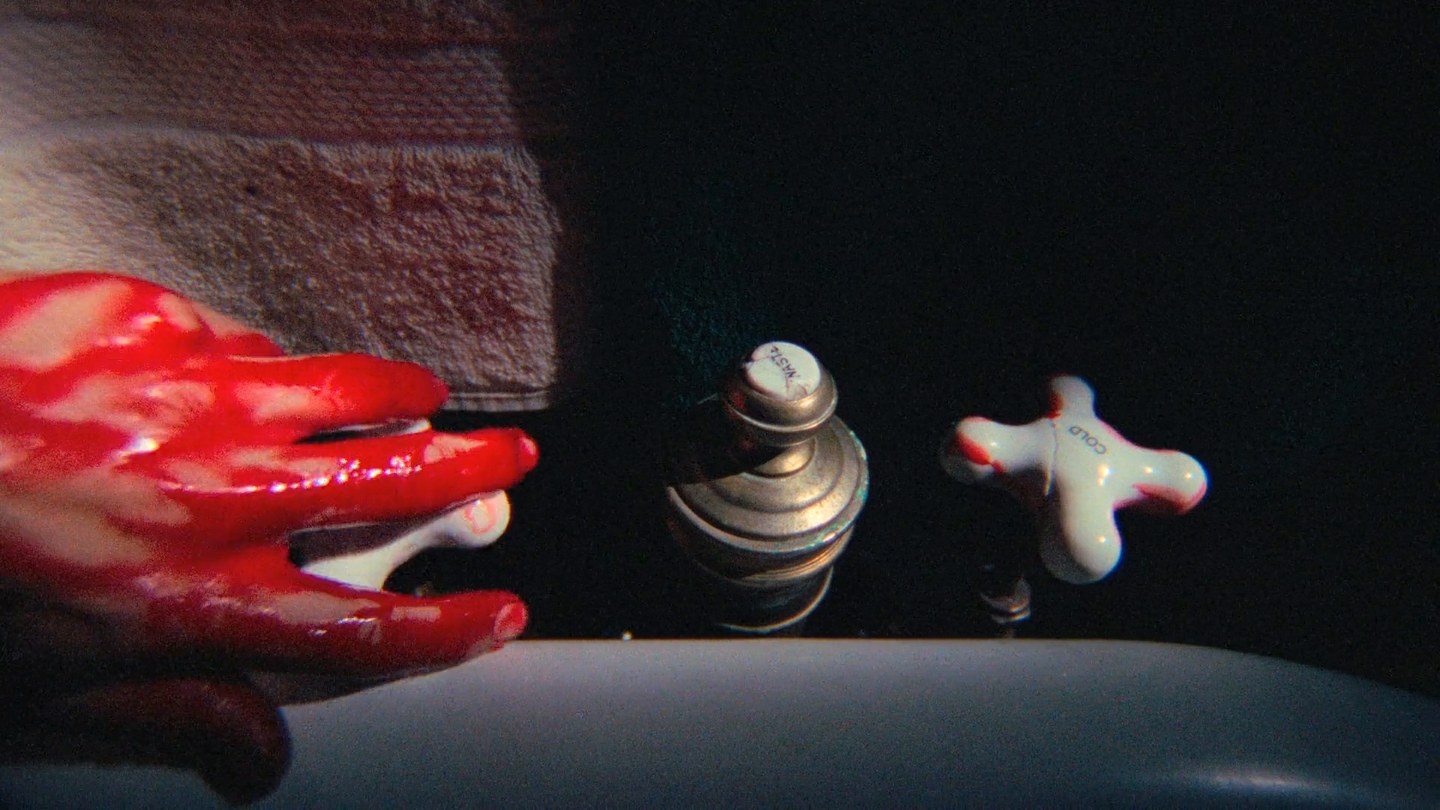
A bloodied hand reaches for the tap.ENLARGE ↗
A bloodied hand reaches for the tap.

13 · 1:29:52

The body lies in the bath.ENLARGE ↗
The body lies in the bath.
Back to the effects guide ↑

1:52:58–1:54:38

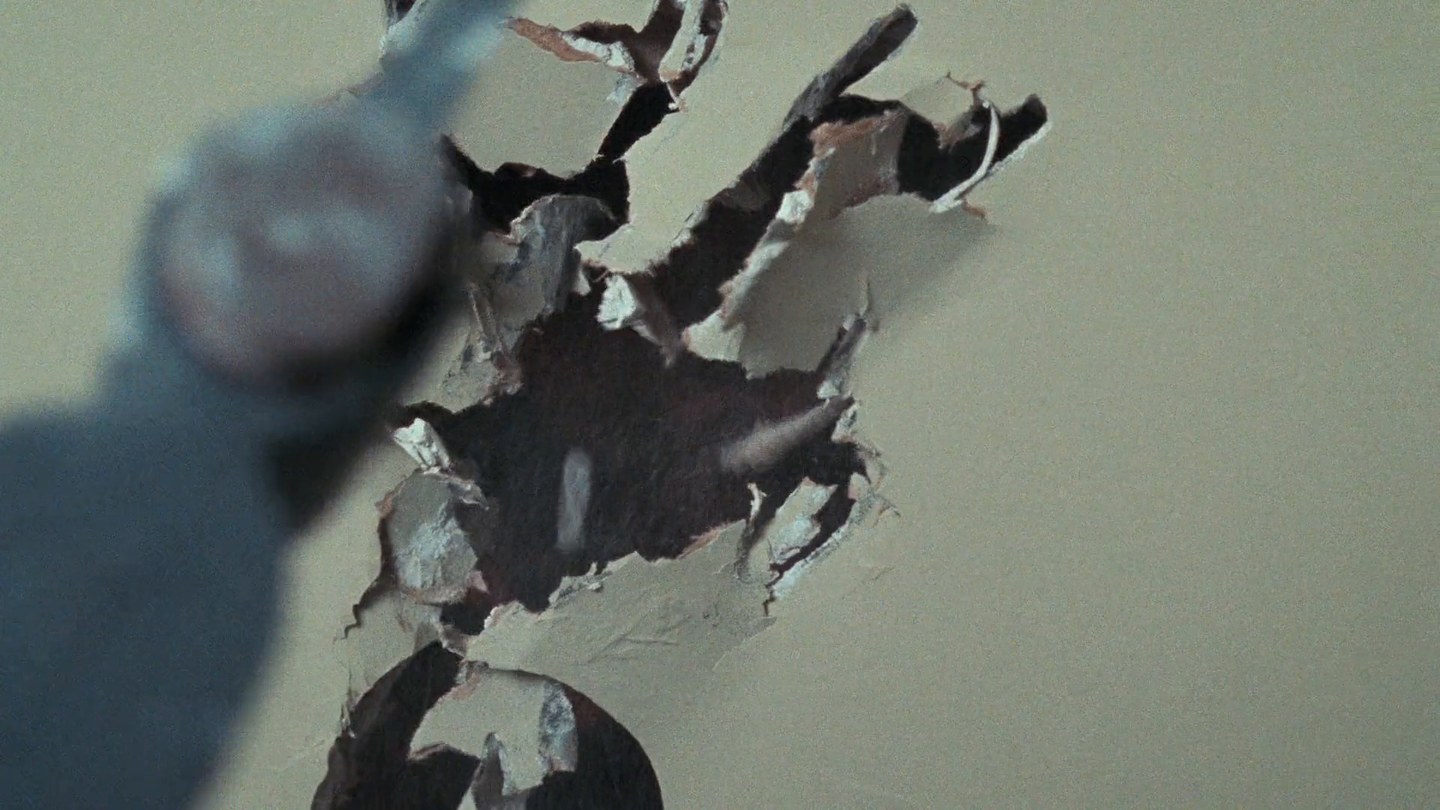
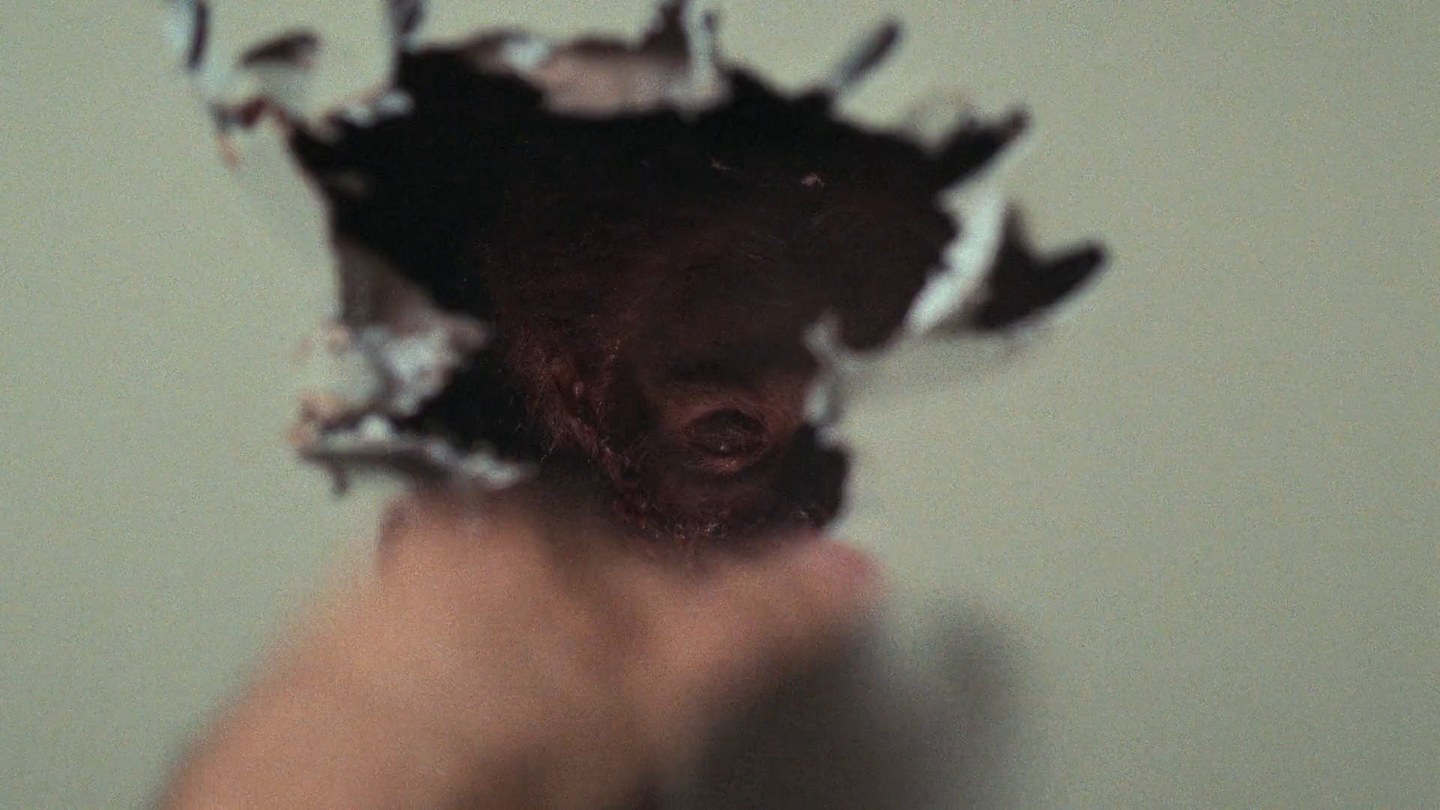
The wall: concealment becomes an exhibition

The ruined torso fills the view.ENLARGE ↗
The ruined torso fills the view.

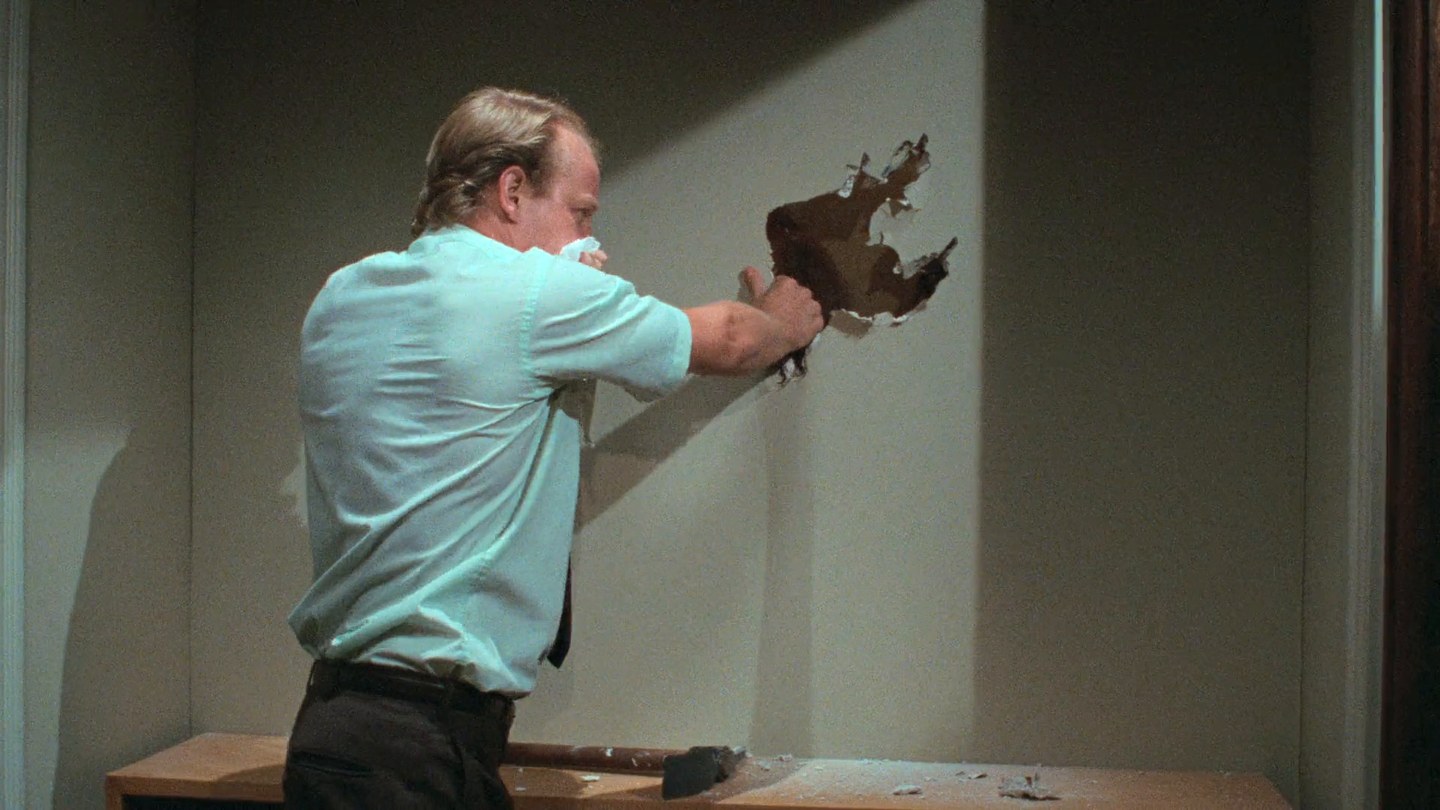
Discovery begins as a small break in a plain surface. The face appears first through a jagged opening; hands remove more plaster; the torso receives a much closer inspection. Reactions from Rod and the investigators repeatedly interrupt this enlargement.

The wall acts as a second frame around the body. Its destruction reverses Rod’s practice as a photographer: someone else now determines what will be shown, how close the inspection will become, and who must look at the result.

Explore the sequence 11 stages

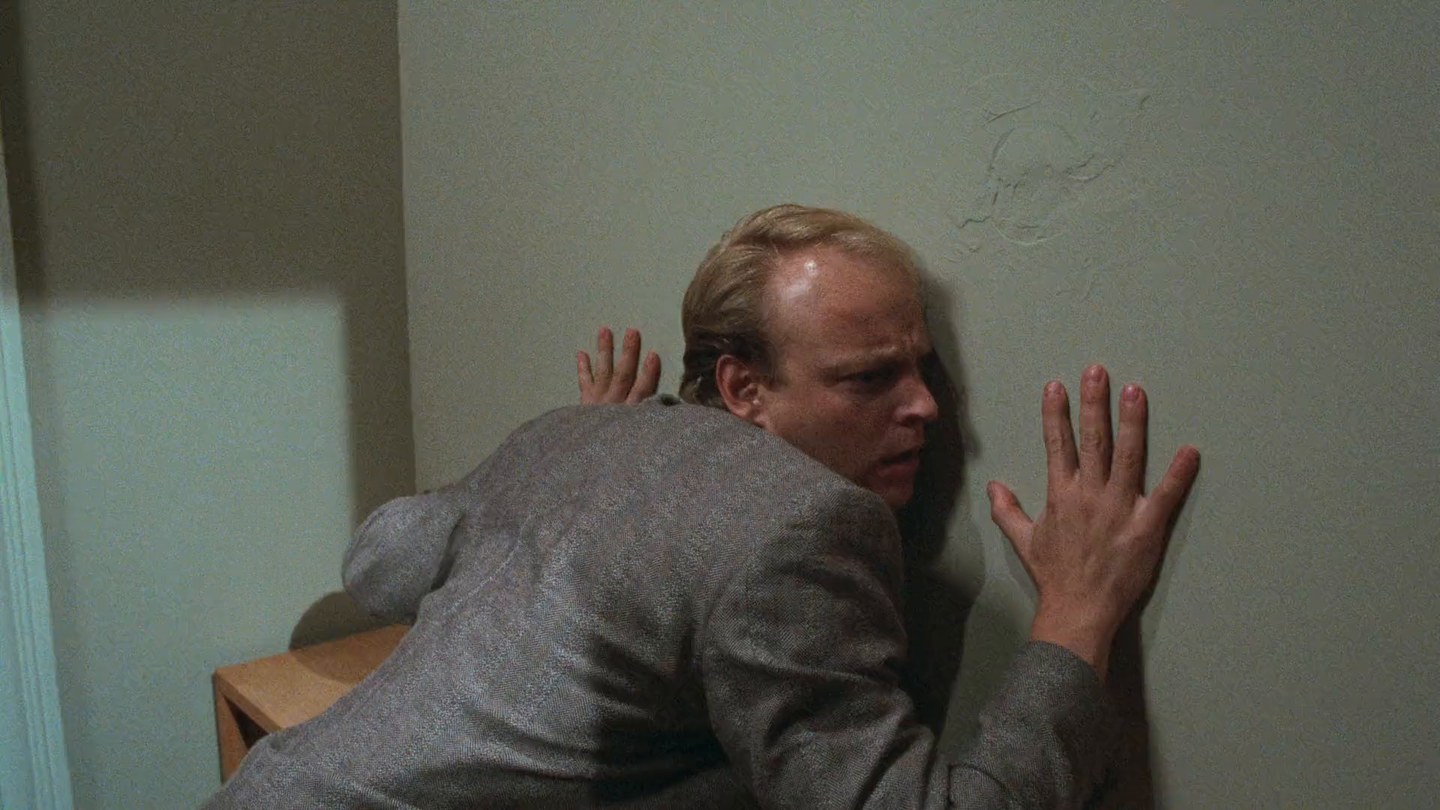
01 · 1:52:58

The investigator listens against the wall.ENLARGE ↗
The investigator listens against the wall.

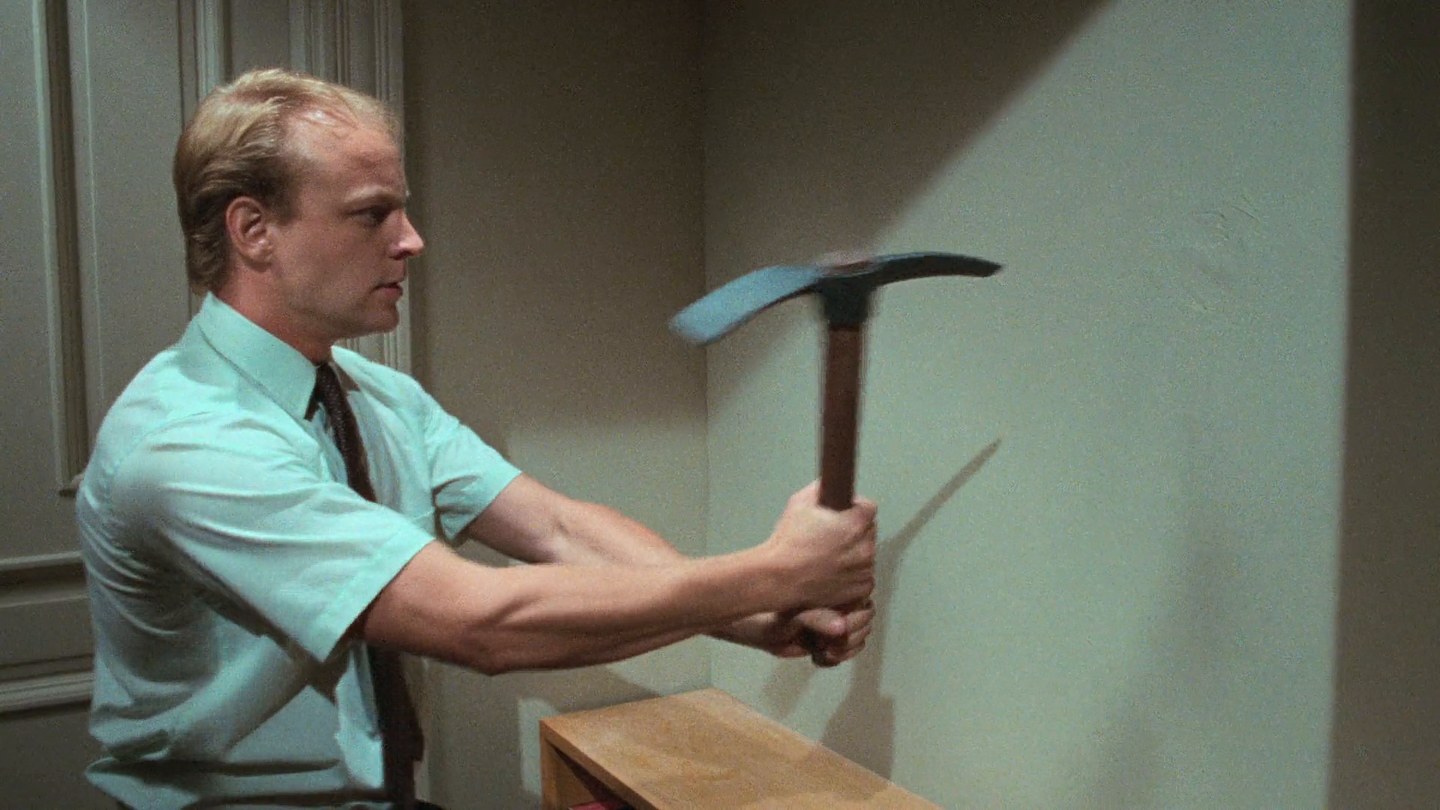
02 · 1:53:34

The pick is raised over the smooth surface.ENLARGE ↗
The pick is raised over the smooth surface.

03 · 1:53:42

The first hole breaks through.ENLARGE ↗
The first hole breaks through.

04 · 1:53:46

Part of the face appears in the opening.ENLARGE ↗
Part of the face appears in the opening.

05 · 1:53:52

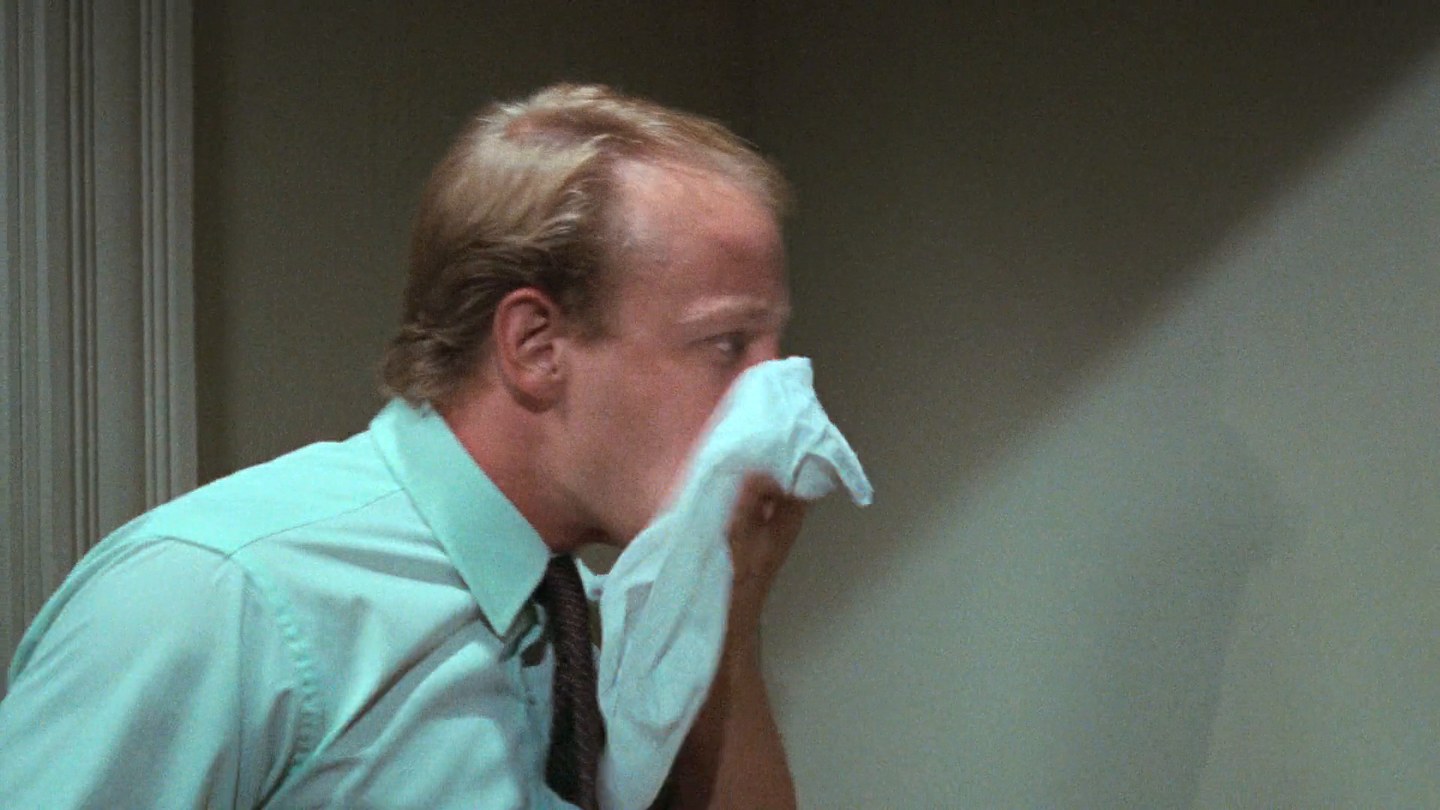
The investigator covers his nose.ENLARGE ↗
The investigator covers his nose.

06 · 1:53:54

Hands pull away the broken plaster.ENLARGE ↗
Hands pull away the broken plaster.

07 · 1:54:04

The face is exposed at closer range.ENLARGE ↗
The face is exposed at closer range.

08 · 1:54:10

The opening reveals the raised arms and torso.ENLARGE ↗
The opening reveals the raised arms and torso.

09 · 1:54:16

The ruined torso fills the view.ENLARGE ↗
The ruined torso fills the view.

10 · 1:54:26

The body occupies the widened opening.ENLARGE ↗
The body occupies the widened opening.

11 · 1:54:38

The discovery gives way to a struggle.ENLARGE ↗
The discovery gives way to a struggle.
Back to the effects guide ↑

CLOSE VISUAL STUDIES

What the two eyes share.

Four comparisons trace containers, photographs, traces and captive spectators through 29 timed observations. They connect the episodes without making their styles interchangeable.

Containers that fail

Jessica and Robert move the bundled body.ENLARGE ↗
Jessica and Robert move the bundled body.

A freezer and a wall turn two very different stories into related experiments in containment. Both seem to offer a clean boundary between a usable room and an inconvenient body. Each episode then makes the boundary visible by breaking it.

Follow the visual progression 8 observations
  1. 16:05
    Ernest’s bed establishes the body under supervision.
  2. 20:25
    Coverings convert him into something to transport.
  3. 32:30
    The freezer returns his face to view.
  4. 44:26
    Light escapes the closed container.
  5. 45:50
    The body resumes its own route through the house.
  6. 1:33:15
    Rod prepares a recess behind the bookcase.
  7. 1:53:42
    The wall’s smooth surface is broken.
  8. 1:54:10
    The hidden body becomes the room’s central display.

From photographing violence to producing it

Rod arranges the cat before the camera.ENLARGE ↗
Rod arranges the cat before the camera.

The episode moves Rod through three positions: professional observer, maker of the event, and suspect exposed by another act of looking. Repeated views of his camera do not guarantee the same ethical relationship each time. The apparatus stays recognisable while its use changes.

Follow the visual progression 7 observations
  1. 56:04
    The first crime scene is already arranged before Rod photographs it.
  2. 57:00
    The camera marks his professional role.
  3. 57:28
    The event becomes a print in the darkroom.
  4. 1:07:00
    Rod now arranges the living subject and the studio.
  5. 1:07:36
    The foot-operated shutter links bodily action to exposure.
  6. 1:19:45
    Annabel examines the resulting published image.
  7. 1:54:10
    An investigator opens the surface that Rod wanted to keep closed.

Money, blood and ordinary surfaces

Blood falls across the banknotes.ENLARGE ↗
Blood falls across the banknotes.

Violence becomes readable through marks on things that were not made to represent it. The banknotes, windowsill, carpet and bath register consequences that their owners would prefer to suppress. These inserts give the film a material account of guilt alongside its supernatural one.

Follow the visual progression 7 observations
  1. 15:45
    A signature makes a financial transfer concrete.
  2. 54:56
    The money appears as clean, ordered paper.
  3. 54:58
    Blood alters its printed surface.
  4. 1:28:17
    The cleaver leaves a visible cut in the sill.
  5. 1:28:34
    The kitchen floor becomes a field of blood and bodily position.
  6. 1:29:12
    Moving the body creates a further trace on the stairs.
  7. 1:29:52
    The bath contains the body without making it disappear.

The maker becomes the watched

His restrained body hangs above the camera.ENLARGE ↗
His restrained body hangs above the camera.

The nightmare and the ending take Rod out of the protected place behind the camera. In one, a crowd arranges his punishment; in the other, the building exposes his body. Neither reversal needs to reproduce the studio literally for its change of power to be clear.

Follow the visual progression 7 observations
  1. 1:07:16
    Rod looks through the camera while controlling the subject.
  2. 1:11:52
    He enters a gathering whose arrangement he does not control.
  3. 1:13:22
    A masked figure faces him as part of a performance.
  4. 1:14:40
    Other hands restrict his movement.
  5. 1:15:46
    The low view makes his captive body into a spectacle.
  6. 1:54:10
    He must witness the disclosure of Annabel’s body.
  7. 1:56:22
    Escape leaves bodies exposed against the house’s exterior.

VOICE & DIALOGUE

Who speaks for the absent?

A husband answers the telephone under another man’s control. A doctor records the dead. A photographer invents explanations for a woman who can no longer contradict him. Across both episodes, voices make appearances credible—and expose the stories built around them.

A voice borrowed for the transaction

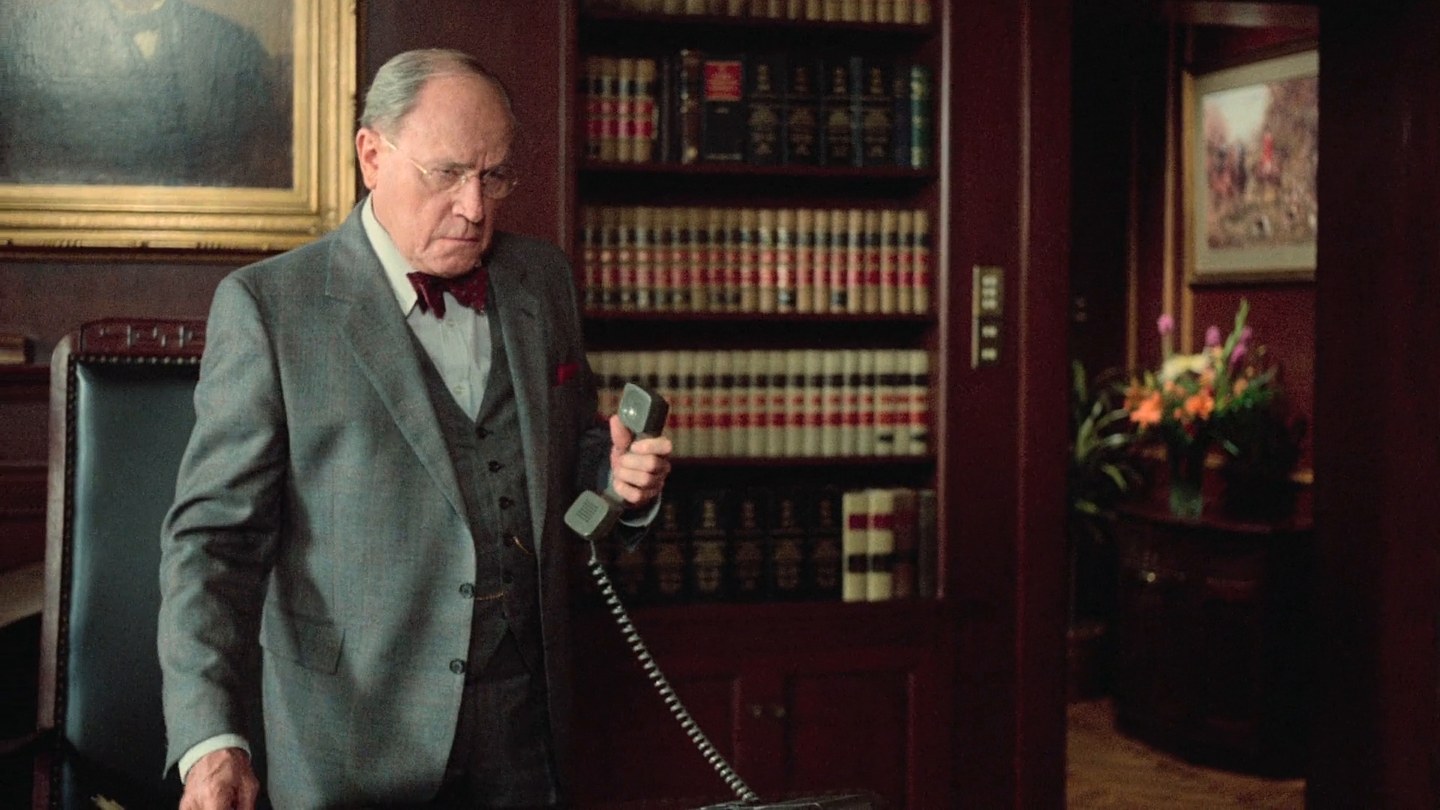
Pike questions Ernest over the telephone.ENLARGE ↗
Pike questions Ernest over the telephone.

The telephone lets Pike question Ernest without seeing the conditions under which he answers. Robert then takes over the call and offers the reassurance of medical authority. The later bedroom exchange exposes the arrangement: the doctor can order Ernest to repeat the very explanation that made the transaction sound voluntary. Voice supplies the appearance of consent while the image eventually discloses who controls it.

Jessica’s rehearsed accusation in the taxi gives this deception a smaller counterpart. She prepares a sentence before using it against the lawyer. Romero places performed spontaneity at the start of a story in which words repeatedly arrive with an unseen author.

The signature and the controlled body →
Follow the dialogue 5 observations
  1. 01:45
    Jessica rehearses her challenge to Pike before the meeting.
  2. 04:20
    She uses the accusation when he questions the signature.
  3. 05:03
    Pike speaks to Ernest without seeing his bedside situation.
  4. 05:40
    Robert intervenes as the apparently responsible doctor.
  5. 08:03
    The bedroom demonstration reveals command and repetition behind the call.
Back to the dialogue guide ↑

The voice that can wake you

Robert lies beneath the hypnotic apparatus.ENLARGE ↗
Robert lies beneath the hypnotic apparatus.

Robert describes hypnosis as a relationship governed by a particular voice: the person who put the subject under must bring them back. His explanation of self-hypnosis contains the trap that the ending will spring. There is no second person with the necessary voice. What sounds like an efficient way to sleep is also a way of becoming unreachable.

Jessica’s requests that he remain available turn the rule into a problem of intimacy. He insists that being physically beside her means he is present; she understands that a companion who cannot answer is already absent in another sense. His final plea completes the reversal from the man giving commands to the man who cannot obtain a response.

The final body and the banknotes →
Follow the dialogue 5 observations
  1. 27:36
    Robert presents self-hypnosis as an alternative to medication.
  2. 27:49
    He explains the rule about the initiating voice.
  3. 27:54
    Jessica asks for a companion she can actually wake.
  4. 47:59
    Robert tries to end Ernest’s trance by counting.
  5. 54:43
    Robert’s own ruined body asks for a voice that is no longer available.
Back to the dialogue guide ↑

The recorded dead

Robert replays the voice on a handheld recorder.ENLARGE ↗
Robert replays the voice on a handheld recorder.

The first impossible voice divides the conspirators’ explanations. Jessica proposes a recording and a trick; Robert insists on the physical fact of the frozen body. Their argument makes sound a problem of evidence rather than merely a shock. A voice can be heard, but that does not settle where it comes from or what kind of speaker could produce it.

The recorder then changes the problem. Robert questions Ernest at the freezer and can replay the answers elsewhere. Recording preserves the words without explaining them. The repeated questions about comfort and pain turn the doctor’s familiar bedside language into a procedure for investigating something his profession cannot contain.

The frozen face →
Follow the dialogue 5 observations
  1. 32:01
    Robert addresses the body and receives an answer.
  2. 33:23
    Jessica suggests that a recorded voice could explain the event.
  3. 36:33
    The questions about comfort and pain become an interview.
  4. 37:07
    Ernest describes distance, darkness and cold.
  5. 39:03
    The recorded words are replayed outside the freezer encounter.
Back to the dialogue guide ↑

Two worlds competing for attention

Blue light fills the staircase.ENLARGE ↗
Blue light fills the staircase.

A report on markets and retail sales continues the financial language with which the episode began. Ernest’s appeal then demands a different kind of attention. The contrast brings the story’s transaction and its victim into the same passage: abstract economic information gives way to a request to be released.

Ernest’s account distinguishes his own suffering from the forces using him. He describes himself as a passage between worlds, later says that others are moving his body, and finally warns that breaking his trance has stranded them with the living. The returning corpse is therefore more complicated than a husband simply taking revenge. Its visible actions and its spoken explanation do not assign agency to the same place.

The body’s return →
Follow the dialogue 5 observations
  1. 39:49
    The broadcast describes sales and market activity.
  2. 40:14
    Ernest’s plea interrupts Jessica’s attention.
  3. 41:28
    He explains that the others want to pass through him.
  4. 46:06
    He separates himself from the forces using his body.
  5. 48:20
    The broken trance leaves the others on the living side.
Back to the dialogue guide ↑

Annabel has a life beyond Rod’s frame

Annabel leads a violin lesson.ENLARGE ↗
Annabel leads a violin lesson.

Annabel’s speech establishes a working and social world that Rod cannot reduce to his pictures. She corrects a student, asks about practice, speaks with friends and arranges help in New York. These exchanges matter because the subsequent cover-up depends on speaking for her. The film has already given us people who know what she does and expect to hear from her.

Joseph’s offer is concrete: somewhere to stay and possible teaching work. Annabel plans a flight. Her disappearance cannot be explained away as an abstract change of mood, because an actual person is waiting for an arrival that never happens. Christian’s musical relationship with her later produces a practical question about the violin left behind.

The lesson and another kind of making →
Follow the dialogue 5 observations
  1. 1:02:14
    The lesson makes Annabel’s authority audible through correction and counting.
  2. 1:09:24
    A call from Christian interrupts the domestic argument.
  3. 1:19:34
    She asks Joseph to help her leave.
  4. 1:23:00
    Joseph offers accommodation and possible teaching positions.
  5. 1:39:50
    Christian connects the claimed orchestra tour to the instrument still in the house.
Back to the dialogue guide ↑

The nightmare speaks again in the bar

Rod hangs above the camera in the nightmare.ENLARGE ↗
Rod hangs above the camera in the nightmare.

Annabel’s account of persecuted women and black cats gives the later nightmare a vocabulary as well as an image-world. The crowd turns the question of murder back on Rod, while the white marking is described as a written punishment. He objects that nothing is written there. The quarrel concerns who has the authority to make an image mean something.

The bar encounter repeats the invitation to see the mark. Familiar wording carries the nightmare into an ordinary conversation, before the new cat is taken home. This echo does not force a single explanation of Eleonora or the animal. It makes Rod’s attempt to treat the dream as safely finished much harder to sustain.

The mask and public punishment →
Follow the dialogue 5 observations
  1. 1:00:48
    Annabel connects black-cat superstition with persecution.
  2. 1:13:46
    The nightmare asks the animal to identify its murderer.
  3. 1:14:35
    The marking is announced as Rod’s punishment and destiny.
  4. 1:14:43
    Rod challenges the claim that anything is written there.
  5. 1:22:29
    Eleonora repeats the invitation to see the mark.
Back to the dialogue guide ↑

Music becomes an alibi

Mr. Pym complains at Rod’s door.ENLARGE ↗
Mr. Pym complains at Rod’s door.

After Annabel’s death, Mr. Pym complains about the disturbance and specifically asks Rod not to forget the music. Rod gives the noise a false domestic explanation: Annabel has locked herself upstairs after an argument. Sound becomes a way of making a person appear present without producing her body or allowing her to speak.

The explanation is immediately fragile. Another sound prompts Pym to question where she is, while blood on the stairs forces Rod into a second story about an injured foot. Later requests for quiet turn the same fiction inside out: now Annabel is supposedly sleeping. The cover-up needs an adaptable account of what neighbours can hear as much as what they can see.

The blood left on the stairs →
Follow the dialogue 5 observations
  1. 1:30:21
    Pym demands that the disturbance be reduced.
  2. 1:30:28
    Rod attributes it to an argument and Annabel upstairs.
  3. 1:30:43
    A further sound makes Pym question that account.
  4. 1:31:14
    Pym explicitly returns to the music in his complaint.
  5. 1:32:32
    Rod tells a visitor and the delivery workers that someone is sleeping.
Back to the dialogue guide ↑

The telephone will not accept the story

Rod faces the investigators in his house.ENLARGE ↗
Rod faces the investigators in his house.

Rod gives different audiences different versions of Annabel’s absence: a holiday, an orchestra tour, a separation. The telephone joins those audiences together. Joseph is waiting in New York; Christian hears enough of the call to connect it to the missing violin; the investigators arrive with questions the separate stories cannot answer consistently.

Rod tries to control access to speech by ending calls, disconnecting the phone and dismissing callers as admirers of his photographs. When Joseph reaches the house during the police visit, Rod pretends that Mr. Usher is not at home. The photographer’s increasingly elaborate management of appearances now includes an improvised voice at the end of the line.

The performance of normality →
Follow the dialogue 5 observations
  1. 1:38:57
    The orchestra tour becomes Rod’s explanation to Christian.
  2. 1:39:26
    Joseph says he has been waiting in New York.
  3. 1:40:17
    Christian repeats the contradiction in front of the neighbours.
  4. 1:46:19
    The investigators notice the unplugged phone.
  5. 1:48:52
    Rod answers Joseph while pretending to be someone other than himself.
Back to the dialogue guide ↑

A signature gives the police time to hear

Rod inscribes the book while Legrand waits.ENLARGE ↗
Rod inscribes the book while Legrand waits.

The book seems ready to leave the house as a gift, carrying Rod’s finished images into the investigator’s possession. Legrand returns because it has not been signed. The failed pen brings him inside again; the request to acknowledge his contribution as a kind of co-author prolongs the encounter. A small social exchange creates the time in which the hiding place can betray itself.

The question about where a sound is coming from shifts attention from the book to the house. The investigators move upstairs and open the wall. This gives the ending a precise answer to Rod’s insistence that cats cannot talk: evidence need not take the form of a verbal explanation to overturn the explanation he has supplied.

The wall opened in stages →
Follow the dialogue 5 observations
  1. 1:50:03
    Rod jokes that Legrand almost co-authored the book.
  2. 1:50:34
    His boast draws attention to the solidity of the walls.
  3. 1:50:57
    Legrand returns for the missing signature.
  4. 1:51:52
    The inscription is interrupted by a question about a sound.
  5. 1:53:58
    The discovery of the kittens explains the hidden activity in the wall.
Back to the dialogue guide ↑

Dialogue sources and timing reference →

TROY HOWARTH / COMMENTARY GUIDE

Seven passages to return to.

Howarth’s commentary moves between performance, Poe, production history and the directors’ contrasting careers. His strong preference for Argento’s episode gives the track a clear critical position. These selected passages connect his arguments to the images and dialogue explored here.

43:40–44:18

The conspiracy changes its balance

Howarth follows a reversal after the shooting: Jessica becomes harder and more decisive as Robert grows less able to sustain the scheme. His observation directs attention back to the exchange of orders and reassurances, rather than treating the couple as a single unit of greed.

The body and its explanation →

50:28–50:46

The police bring class into the room

Howarth reads the police exchange as part of Romero’s social criticism. The officers’ contempt for the wealthy connects the supernatural aftermath with the sale, signatures and money that organized the opening.

The original transaction →

61:44–61:53 · 87:17–87:43

Working in English

Howarth describes English-language shooting with direct sound and identifies Ken Gargaro as a go-between for Argento and the actors. This is his production account. The film’s separate dialogue-editing and ADR credits show why direct recording should not be taken to mean an absence of later voice work.

The credited sound team →

69:15–70:10 · 88:57–89:18

Annabel is more than a victim

Howarth praises Madeleine Potter’s ability to hold her own opposite Harvey Keitel and stresses the sympathy Annabel earns before the attack. Her teaching, friendships and preparations to leave give that judgment concrete dramatic support.

Annabel’s independent life →

76:46–77:25

A further Poe story inside the crime scene

Howarth connects the extracted-teeth episode to Berenice. His reference extends the film’s network of Poe allusions beyond the two stories named by the double bill, while the scene itself makes the photographer’s appetite for troubling images newly explicit.

The teeth and the camera →

89:21–90:09

The staircase borrows a memory

Howarth points to Martin Balsam’s casting and the memory of his staircase death in Psycho. He reads Pym’s visit as a reversal of that expectation: the neighbour comes dangerously close to the concealed crime and survives the encounter.

Pym’s visit and Rod’s explanations →

1:53:53–1:56:32

Legrand’s unassuming manner

Howarth places John Amos’s Legrand among Argento’s capable investigators and compares his apparently casual approach to Columbo. The request for a book inscription makes a useful companion to that reading: a friendly social gesture keeps the investigator inside the house.

The inscription and the wall →

Commentary identification and source note →

THE SOUND RECORD

Voices are made, edited and mixed.

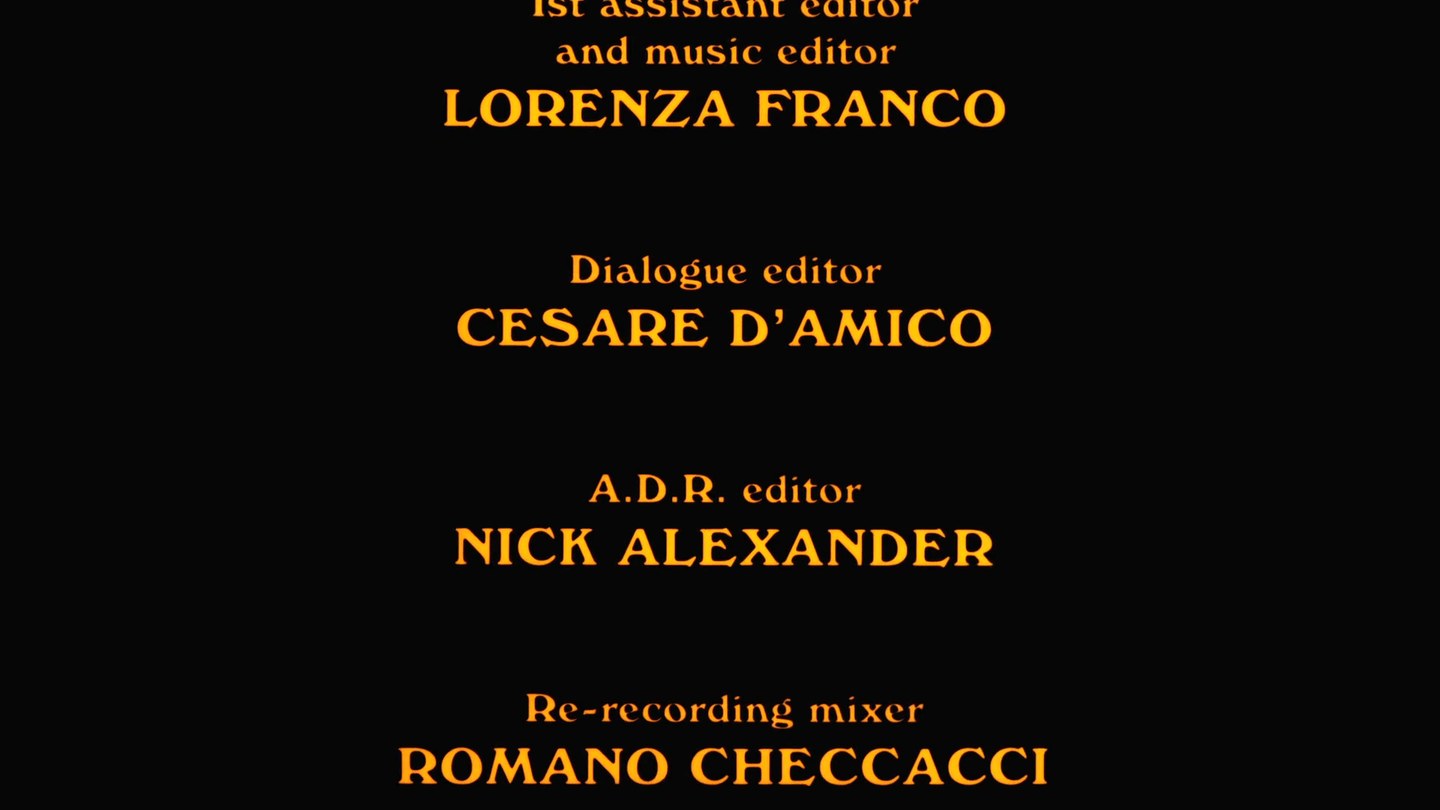
Dialogue, ADR and re-recording credits.ENLARGE ↗
Dialogue, ADR and re-recording credits.
Dialogue editor
Cesare D’Amico
ADR editor
Nick Alexander
Re-recording mixer
Romano Checcacci
First assistant editor / music editor
Lorenza Franco

The closing roll distinguishes work on recorded dialogue, additional voice recording, music editing and the final mix. Fono Roma is credited as the post-production facility; Luciano and Massimo Anzellotti receive the additional sound-effects and Foley credit.

These roles matter to a film in which a recorded voice, an unseen speaker and a sound behind a wall can change the meaning of an image. The credits identify the collaborators without assigning an individual effect to a technician where the film makes no such attribution.

From the film to the album

Rustblade’s soundtrack record separates Pino Donaggio’s score from the anonymous Adest Sponsus, performed by the Boston Camerata under Joel Cohen. It also credits Paolo Steffan with the lyrics to Dreaming Dreams, alongside his programming role. Label credits →

Titles such as Hypnosis, The Others and The Signature offer routes through the album. Album titles and durations identify the recording; they do not by themselves establish the placement or boundaries of cues in the film.

Read the Donaggio and Massara study →

LANGUAGE & PRESENTATION

The voice, the track and the edition.

The English presentation

The presentation used for these studies carries English dialogue in a six-channel soundtrack and a separate stereo commentary. Embedded English subtitles provide a second wording reference. The studies follow how speech establishes and undermines the characters’ explanations.

Track labels and channel arrangement describe this file; they do not identify the original theatrical mix. Dialogue method →

Choosing a comparison

The Blue Underground listing separates Blu-ray’s English 7.1 and 2.0 DTS-HD options from UHD’s Atmos and 2.0 DTS-HD options. Tyner’s criticism of the 2019 surround balance concerns the specific release he reviewed; it is retained as his listening judgment.

Compare the edition records →
Read the 2019 audio review →

THE CRAFT RECORD

Faces, surfaces and the people who made them.

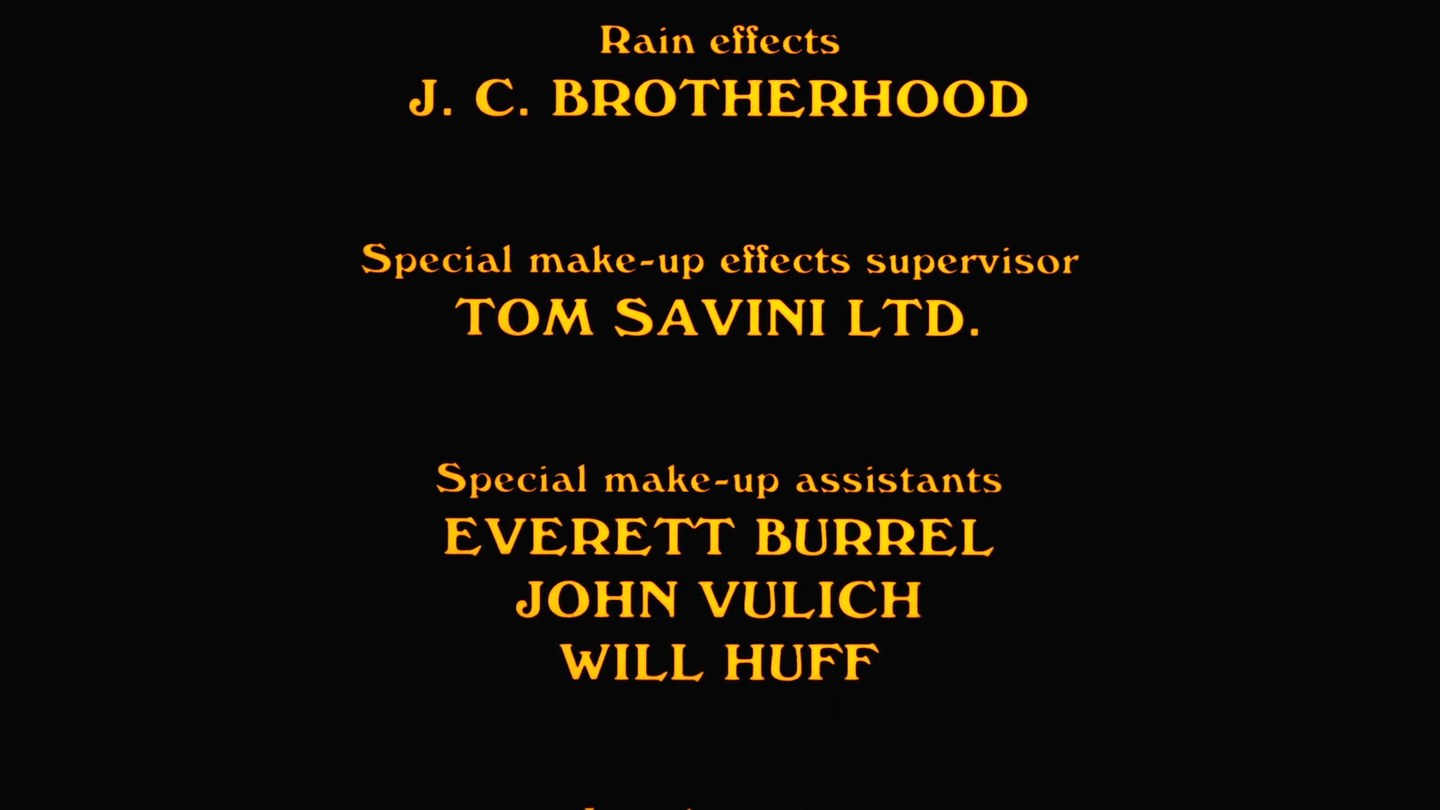
The special makeup effects team in the closing credits.ENLARGE ↗
The special makeup effects team in the closing credits.
Special makeup effects supervisor
Tom Savini Ltd.
Special makeup assistants
Everett Burrell, John Vulich and Will Huff. The on-screen roll spells Burrell’s surname “Burrel”.

The team credit supports the film’s shared effects record. It does not divide the individual prosthetics and inserts between technicians. The production chapter places that work beside the separate photography credits for the two episodes.

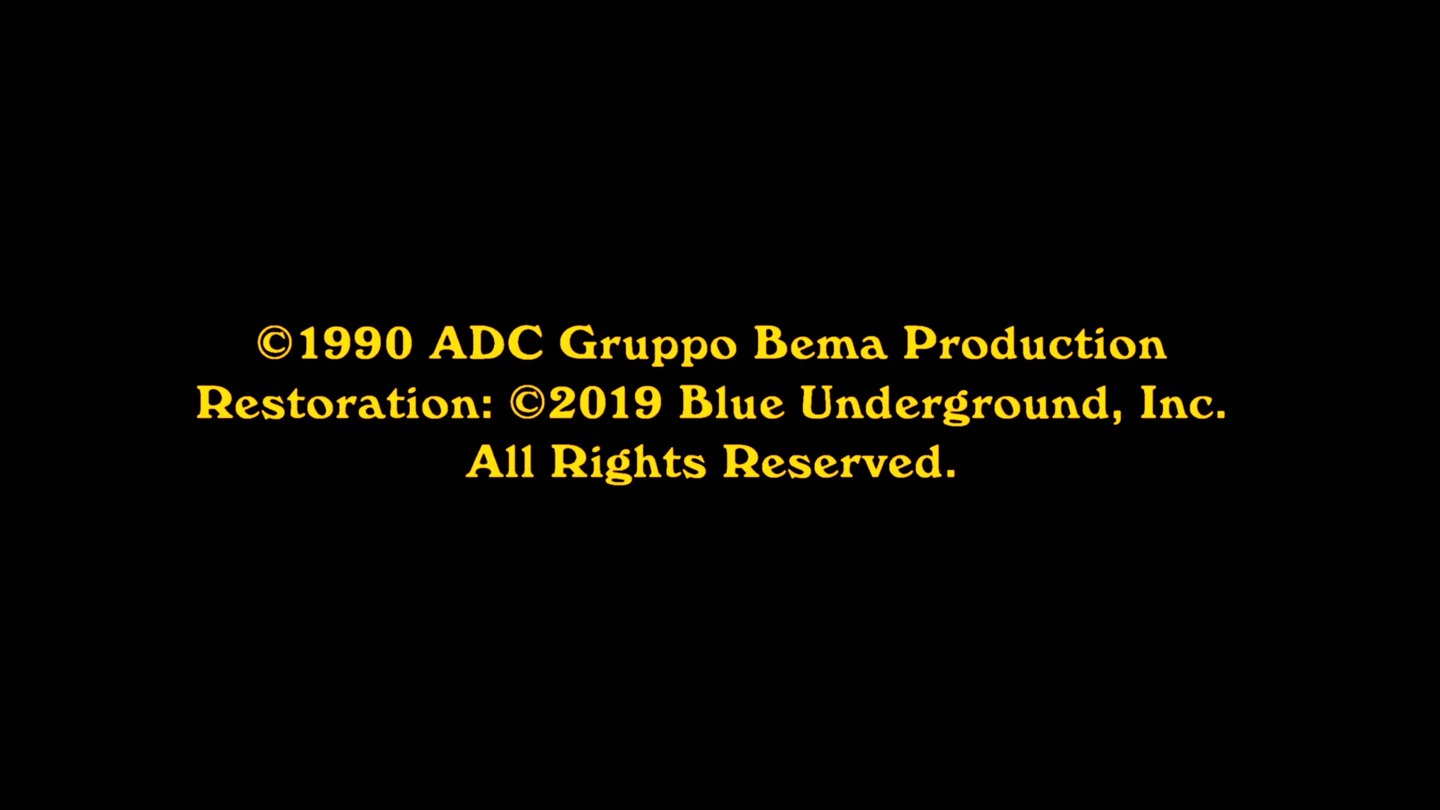
The 2019 restoration credit.ENLARGE ↗
The 2019 restoration credit.
The restoration shown here
The closing card identifies Blue Underground’s 2019 restoration. The presentation runs approximately 120 minutes and fills a 16:9 frame.
Format matters
The current Blue Underground listing distinguishes a 1.78:1 Blu-ray specification from 1.85:1 UHD and DVD specifications. Its Atmos listing belongs to the UHD presentation; it should not be applied automatically to every copy.
Read the format and supplement record →
The animal-treatment credit
The animal-treatment statement in the closing roll.ENLARGE ↗
The animal-treatment statement in the closing roll.

The closing roll attributes to the American Humane Association a certification that the live animals used in The Black Cat suffered no physical or psychological abuse. This is the production’s on-screen statement, distinct from the fictional cruelty depicted in the studio and kitchen sequences.

Poe & photographic evidence

Two stories, two directors, one problem of control. This expanded dossier centres Argento’s The Black Cat while examining its place beside Romero’s Valdemar: Poe’s narrators, Rod and Annabel, Keitel’s performance, collective craft, Donaggio’s score, critical disagreement and the film’s changing presentations.

Spoilers: this study discusses the film’s story and ending.

01 / ROMERO, ARGENTO & THE RIGHT TO CONTROL

Two stories of bodies that will not cooperate

Two Evil Eyes places two different abuses of authority beside one another. In Romero’s The Facts in the Case of Mr. Valdemar, a doctor and a younger wife manipulate a dying man to obtain his money. In Argento’s The Black Cat, a photographer turns cruelty into an image and then tries to conceal a murder. These are separate narratives, with separately credited directors and writers, inside one feature. The two-segment record ↗

Our central comparison is between the management of property and the management of evidence. Both depend on making another body serve an intended outcome. A signature should settle ownership; a picture should fix what can be seen; a hiding place should prevent discovery. The supernatural disruption exposes the limits of those arrangements.

That connection gives the pairing more to offer than a contest over which director delivers the better episode. Its two professional worlds also invite different forms of trust. Medical authority suggests care, while documentary photography suggests truthful observation. The premises place exploitation within those apparently legitimate activities.

Argento’s contribution remains the centre of this dossier, but Romero’s changes the questions we bring to it. A victim’s body is never merely an inconvenient object, however efficiently someone tries to treat it as one.

02 / POE & THE SELF-PROTECTIVE NARRATOR

Confession does not guarantee understanding

Poe’s “The Black Cat,” in the transcription of its 19 August 1843 printing, begins with a narrator facing death and insisting that he is sane. He presents his story as domestic fact while repeatedly assigning his behaviour to drink, perverseness and the animal’s supposed persecution. An admission can be precise about an action and evasive about responsibility at the same time. Poe’s opening and account of cruelty ↗

The wife’s murder makes that evasion especially stark. She interrupts a blow aimed at the cat; the narrator turns the weapon on her. Afterwards, his attention moves to the practical problem of concealing her body. His account gives considerable space to his own feelings and ingenuity, while the person he has killed becomes material to arrange.

At the ending, his confidence in the wall’s construction prompts the boast that betrays him. The cat’s cry exposes the concealed corpse. Even then, he blames the creature for seducing him into murder. The last explanation attempts to recover the authority that the physical evidence has destroyed.

The opening and conclusion of Poe’s 1845 “Valdemar” work differently. Its speaker claims the authority of an investigator correcting public misunderstanding. The attempt to regulate death ends in a body’s sudden dissolution. Poe’s experiment and conclusion ↗ Read together, the tales distrust the reassuring forms in which a person may present something appalling: the orderly confession and the orderly report.

03 / ROD USHER, ANNABEL & THE VIOLENCE OF MAKING

The witness begins manufacturing the evidence

Noah Cowan’s 1990 Toronto programme account describes a crime photographer who kills the cat before his camera to complete a book, then murders the woman who discovers what he has done. The contemporary programme account ↗ The profession gives Poe’s problem of narration a material counterpart. Rod does not only describe violence after it happens; he can produce an image by causing the event.

The distinction between witnessing and making matters. A disturbing photograph might expose suffering, exploit it or do both. Once the photographer creates the suffering for the photograph, any claim to detached observation collapses. A finished image can conceal that collapse by showing an object while withholding the circumstances of its manufacture.

Madeleine Potter’s Annabel is consequently more than an obstacle to Rod’s composure. Her discovery brings the photograph back into a relationship, where its production can be questioned. The domestic violence and the professional violence belong to the same effort to prevent another being from resisting his account.

The 2022 FLC programme presents Keitel’s role as an unusually concentrated actor’s showcase. It relays Argento’s account to Maitland McDonagh of a criminal who believes silence can protect him. FLC’s account of the performance ↗ This supplies a useful tension: a man whose work makes things visible wants his own conduct to remain inaccessible.

04 / THE INSPECTED IMAGE & THE ANIMAL’S PRESENCE

A face that will not stay in the background

The supplied FLC image fills almost the entire rectangle with the cat’s face. A large yellow-green eye occupies the upper left; the second eye is partly caught at the top edge. White whiskers and exposed teeth break sharply through the black fur. The open mouth, pink tongue and dark interior give the lower half its own centre of attention.

Very little surrounding space survives. There is no comfortable view of the animal as a small decorative presence in a human room. The face confronts the viewer at a scale normally associated with a human close-up, while refusing the verbal explanation that a human character might supply.

That makes the image a productive counterweight to Rod’s profession. He wants to organise what other bodies mean; here, the body resists becoming background. Accusation, fear and aggression are possible readings of the expression, but the reproduction does not settle which is intended. Nor does an open mouth establish the accompanying sound.

The full supplied 1600 × 900 composition is retained above and served locally. This visual reading concerns the inspected image; it does not identify a lens, animal-training method, effect, camera movement or original colour standard.

05 / PITTSBURGH, SEPARATE CAMERAS & SHARED CRAFT

A collaboration made by more than two men

Torino’s credit list assigns photography to Peter Reniers for Romero’s episode and Giuseppe Maccari for Argento’s. It credits Franco Ferrini alongside Argento on the second screenplay, with Pasquale Buba editing, Cletus Anderson designing the settings and Barbara Anderson designing costumes. Department and segment credits ↗ The joint title should not flatten that division of labour.

Adam Tyner’s 2019 account places the production in Pittsburgh and describes a larger anthology conception that contracted into the finished pairing. He also reports Argento’s Baltimore footage about Poe’s life. Tyner’s production account ↗

Tom Savini’s effects work occupies an especially revealing position in a film about photographed injury. The image may be fictional within the story, fabricated for the camera, and then sold to an audience as a convincing spectacle. Keeping those levels distinct allows us to discuss the attraction of the effects without confusing staged harm with an undocumented account of what happened on set.

The Blue Underground edition listing offers concrete routes into that collective work: Ferrini on rewriting Poe, Luigi Cozzi on the production, Everett Burrell on makeup assistance, and Savini’s effects feature. Listed production supplements ↗ They should help identify who made particular photographs, prosthetics and props before individual effects are assigned to a single name.

06 / DONAGGIO, MASSARA & THE RECORDED OBJECT

One composer credit contains several kinds of music

Rustblade’s 2024 soundtrack credits distinguish Donaggio’s composition from orchestration shared with Natale Massara, Massara’s conducting, Paolo Steffan’s programming, and Sergio Marcotulli’s recording and mixing at Forum Music Village in Rome. The same record identifies “Adest Sponsus” as anonymous music performed by the Boston Camerata under Joel Cohen. Album credits and track listing ↗ Treating every musical sound as an original Donaggio composition would lose that distinction.

The album connects both sides of the feature through titles including “The Photographer,” “The Black Cat,” “The Signature” and “Hypnosis.”

Mixing is another layer. Tyner reported dialogue-balance problems in the 2019 release’s 7.1 track and preferred its stereo option. That is his listening report, not a result reproduced here. The edition-specific audio report ↗ It makes identification of the actual mix essential before drawing conclusions about the balance of voice, music and effects.

The voice and dialogue studies follow those acts of interpretation across both stories, while the sound record separates the credited crafts. The presentation guide keeps the soundtrack formats and edition-specific listening reports distinct.

07 / KEITEL, PASTICHE & CHANGING EXPECTATIONS

The same excess can be a strength or a failure

Cowan’s 1990 festival note welcomes the pairing and praises Keitel’s controlled unpleasantness. Walter Chaw’s 2009 review reaches the opposite judgment: the Poe references strike him as decorative, and the performance and narrative energy disappoint him. Cowan’s festival judgment ↗ Chaw’s critical response ↗

Tyner’s 2019 reassessment complicates a simple preference for Argento. He describes moving toward Romero’s episode over successive viewings, finding more in Barbeau’s conflicted Jessica while becoming less persuaded by Keitel’s extremity. A critic revises his preference ↗ The question is partly one of dramatic development: does an immediately excessive performance make obsession tangible, or leave it too little distance to travel?

Pastiche creates a related test. A borrowed name or murder device can invite recognition without becoming dramatically necessary. Yet recognition can also be part of a film’s pleasure, letting a familiar literary world appear in unfamiliar arrangements. Neither the number of references nor fidelity to a single tale settles the achievement.

In his 2013 conversation with L. Andrew Cooper, Argento rejects the proposed stylistic rupture between Opera and Trauma, the period that includes Two Evil Eyes. He describes continuity in his work despite different stories. Argento’s retrospective account ↗ That answer belongs beside the reviews, not above them. The filmmaker’s sense of continuity and a spectator’s experience of change can remain in disagreement.

08 / FESTIVAL RECORDS, RESTORATIONS & DIFFERENT UNITS

A segment is not the whole feature

The original Toronto programme page is a particularly useful object. The scan, printed page 298, lists 105 minutes and 35mm. Torino later lists the feature at 117 minutes; its header says 1989 while its filmography says 1990. Neither record has been silently converted into a verified edition length. Original Toronto page ↗ Torino’s record ↗

What the records identify
RecordListed presentationWhat remains distinct
Toronto, 1990Feature · 105 minutes · 35mmOriginal programme listing.
Torino, 19th festivalFeature · 117 minutesCatalogue record with inconsistent year fields.
FLC, 2022The Black Cat · 66 minutesArgento’s segment; Cinecittà 4K restoration credit.
Blue Underground listingFeature · 120 minutesThe publisher specifies a 4K negative scan, Dolby Vision and a new Atmos mix.

FLC’s 66-minute entry describes a different unit from a complete double bill. The Blue Underground specifications reproduced by Cinematic Vault describe another release lineage. FLC presentation ↗ Home-video specification ↗

The indexed text of Italian approval file 85361 records 22 January 1990, 3,200 metres and an under-14 restriction. Approval-file access note ↗

The listing’s separate format panels matter: Blu-ray is described at 1.78:1 with English 7.1 and 2.0 DTS-HD tracks; UHD is described at 1.85:1 with Atmos and 2.0 DTS-HD. The presentation used for the new visual studies has a 2019 restoration card and a 16:9 image.

For further production testimony, the listed supplements provide four distinct routes: Savini’s EFX and Everett Burrell’s Two Evil Brothers for effects work; Franco Ferrini’s Rewriting Poe for adaptation; Madeleine Potter’s Behind the Wall for performance; and Donaggio’s One Maestro and Two Masters for the score. These are the edition’s advertised interviews and features, not newly transcribed testimony. Edition and supplement listing ↗

09 / ADAPTATION & ARGENTO’S AMERICAN WORK

A useful hinge, without a verdict of decline

Asked about literary adaptation by Cooper, Argento links “The Black Cat” with his Phantom of the Opera and Dracula while emphasising his wish to transform inherited material. The director on changing an adaptation ↗ This is a productive connection for the archive: what matters is not only what survives from a source, but the new pressure exerted on it.

Here, the pressure comes from turning a self-justifying speaker into a maker of photographs. The adaptation asks how an image can appear to report the world while participating in violence. It belongs beside The Cat o’ Nine Tails as an inquiry into photographic evidence, and beside Trauma as part of the investigation of Argento’s American production work.

The pairing with Romero also makes collaboration visible as a structure of difference. Shared literary material, a shared feature and some shared craftspeople do not produce interchangeable films. A useful assessment can hold that unevenness in view without treating the work solely as a prelude to later disappointments or as an obligation to defend a favourite director.

The enduring question is more concrete: what happens when a person who claims the right to represent other people’s suffering loses control of the evidence? Poe’s narrator, Rod’s photographs and the double bill’s recalcitrant bodies provide different ways into it.
MY CINEMA / PRODUCTION TESTIMONY

Poe’s obsessions enter an ordinary present

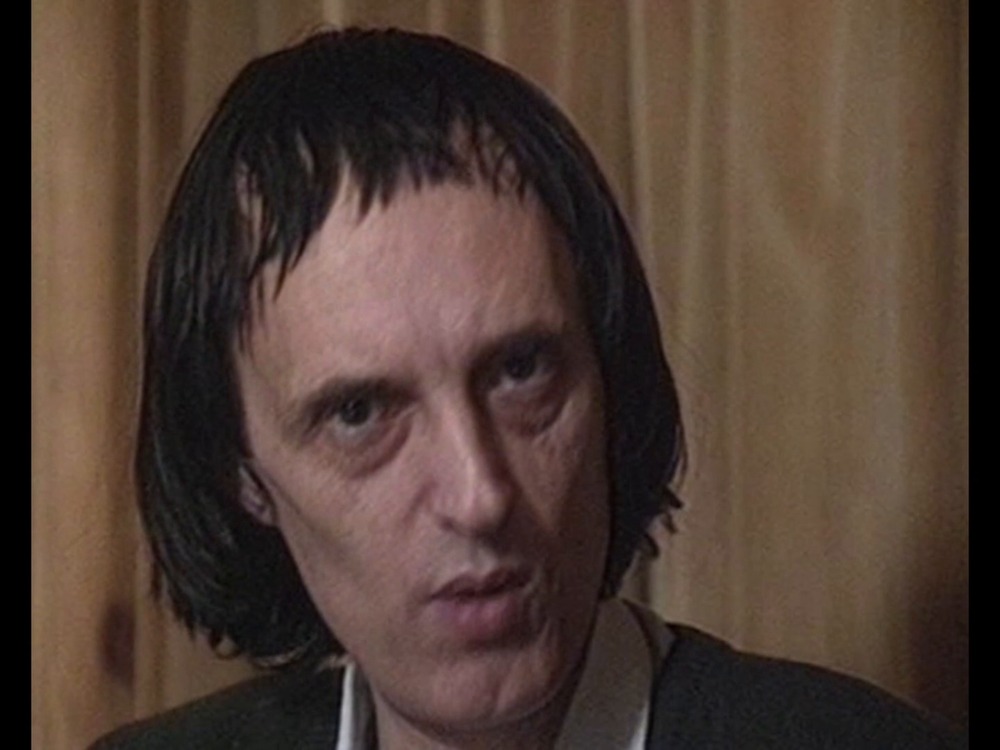
Dario Argento and Pino Donaggio

Argento recalls discovering Poe through his father’s library and asks, in My Cinema, whether those obsessions could retain their force in contemporary surroundings. He describes bringing them into ordinary American locations rather than protecting them inside a period setting. The interview gives the adaptation a practical test: the emotion must survive the change of time and place.

Donaggio offers a different perspective on the same film’s pace. He remembers Two Evil Eyes giving the music less prominence because of its rapid action, contrasting that experience with the room available to the score in The Sect. This is the composer’s account of dramatic function, not an absence of music. It helps explain why a soundtrack album and the film’s use of the same composer can leave very different impressions.

Source & passage

Dario Argento: My Cinema / Il mio cinema, two-part documentary presented on Severin Films’ Dario Argento’s Deep Cuts, Disc 1. Part Two, 32:54–33:30 and 38:57–41:20.

The discussion paraphrases the English subtitles and distinguishes participant recollections from the documentary’s narration and production footage.

Explore both documentaries and follow the related dossiers →

DEEP CUTS / TESTIMONY & CONNECTIONS

Four projected stories become two.

Dario Argento

Argento recalls the Poe project.

Argento recalls discovering Poe in his father’s library and describes an anthology originally planned for four directors. He says two could not participate when required, and that he and Romero chose to proceed rather than postpone the production. The resulting two-part structure therefore emerged from a practical change to the project. He also connects the American setting to Poe and discusses the decision to bring the stories into a contemporary world.

Source & passage

Dario Argento: Master of Horror, 1:03:42–1:07:22. Presented on Disc 2 of Severin Films’ Dario Argento’s Deep Cuts.

Follow the source discussion → · Documentary and interview guide →

THE READING ROOM

Return to the source.

Poe’s texts, festival records, participant recollections, criticism and edition specifications. Visual studies, dialogue, commentary and sound credits expanded 5 November 2026.

  1. 01

    Film at Lincoln Center — The Black Cat, 2022 ↗
    Programme account of the segment, a mediated McDonagh quotation, the 66-minute listing and Cinecittà restoration credit. The film image above comes from FLC. The original research recorded limited access to the page.

    Return to the dossier ↑
  2. 02

    Torino Film Festival — Two Evil Eyes ↗
    Segment synopses, credits and 117-minute entry. Header 1989 differs from filmography 1990.

    Return to the dossier ↑
  3. 03

    Poe Society — The Black Cat, 1843 printing ↗

    Public-domain transcription: opening, cruelty, murder, concealment and ending. This extends the first-edition textual reading; no shot-by-shot adaptation comparison is claimed.

    Return to the dossier ↑
  4. 04

    Poe Society — The Facts of M. Valdemar’s Case, 1845 ↗

    Selected opening and concluding passages of the American Review transcription. Basis for the contrast between confession and experimental report; not a complete collation of Poe editions.

    Return to the dossier ↑
  5. 05

    Noah Cowan — Toronto programme, 1990 ↗

    Reproduced text and linked original scan, printed page 298. Narrative account, contemporary criticism and the 105-minute programme listing.

    Return to the dossier ↑
  6. 06

    Adam Tyner — DVD Talk, 26 October 2019 ↗

    Production overview, narrative account, revised critical preference and 2019 audio comparison. Secondary production reporting and a critic’s own listening judgments.

    Return to the dossier ↑
  7. 07

    Cinematic Vault — Blue Underground edition listing ↗

    Retail listing reproducing Blue Underground specifications, 120-minute runtime and named extras. Multiple formats share the page; features and mixes are kept format-specific.

    Return to the dossier ↑
  8. 08

    Rustblade — Two Evil Eyes soundtrack, 2024 ↗

    Label track list and credits read: composition, orchestration, conducting, programming, recording and the separately credited Adest Sponsus.

    Return to the dossier ↑
  9. 09

    Walter Chaw — Film Freak Central, 2 July 2009 ↗

    Review text; direct capture returned 403. Used as a dissenting critical position on performance and Poe pastiche, not as production testimony or a consensus.

    Return to the dossier ↑
  10. 10

    L. Andrew Cooper interviews Dario Argento — Illinois Press, 2013 ↗

    Answers about transforming literary sources and the proposed Opera-to-Trauma stylistic turn. Retrospective participant account, not proof of production intention in 1990.

    Return to the dossier ↑
  11. 11

    Cinecensura — approval file 85361 (access limited) ↗

    The date, metreage, restriction and transcribed credits come from search-index text. The original paperwork remains unexamined; the indexed details are not a verified account of cuts.

    Return to the dossier ↑
  12. 12

    Two Evil Eyes — selected scenes, effects and on-screen credits

    The illustrated studies use selected frames from a 120-minute English-language presentation bearing Blue Underground’s 2019 restoration card. Closer sampling of the effects sequences supports the stage galleries; time labels locate examples in this presentation. The opening and closing credits support the craft record.

    The scene guide and close studies are visual analyses of selected passages, rather than a frame-by-frame catalogue of every cut. The voice and dialogue studies and commentary guide extend this visual record through their separately documented speech sources.

    Return to the scene guide ↑
  13. 13

    Two Evil Eyes — English dialogue and sound credits

    The complete English speech track was processed through local speech recognition and checked against all 1,003 embedded subtitle cues, with closer recognition passes for selected exchanges and visual checks of the recorder, telephone, book and closing credits. The resulting studies are critical paraphrases, not a verbatim transcript. Time labels locate passages in this approximately 120-minute presentation.

    This establishes the dialogue and credited roles used here. It is not a direct listening comparison of mixes, a music-cue audit or verification of the original theatrical soundtrack.

    Return to the dialogue studies ↑
  14. 14

    Troy Howarth — Two Evil Eyes commentary

    The speaker identifies himself at the opening and closing of the commentary and thanks Blue Underground near its conclusion. The complete track’s locally generated speech transcript was reviewed; the guide paraphrases selected passages and gives their locations. Howarth’s production accounts and critical judgments retain their attribution. His closing acknowledgement identifies Alan Jones’s Dario Argento: The Man, the Myths & the Magic as a source for production dates.

    Other advertised interviews remain distinct from this reviewed speech source.

    Return to the commentary guide ↑

Corrections, contributions and enquiries: argentochrome@rareprintsandposters.com