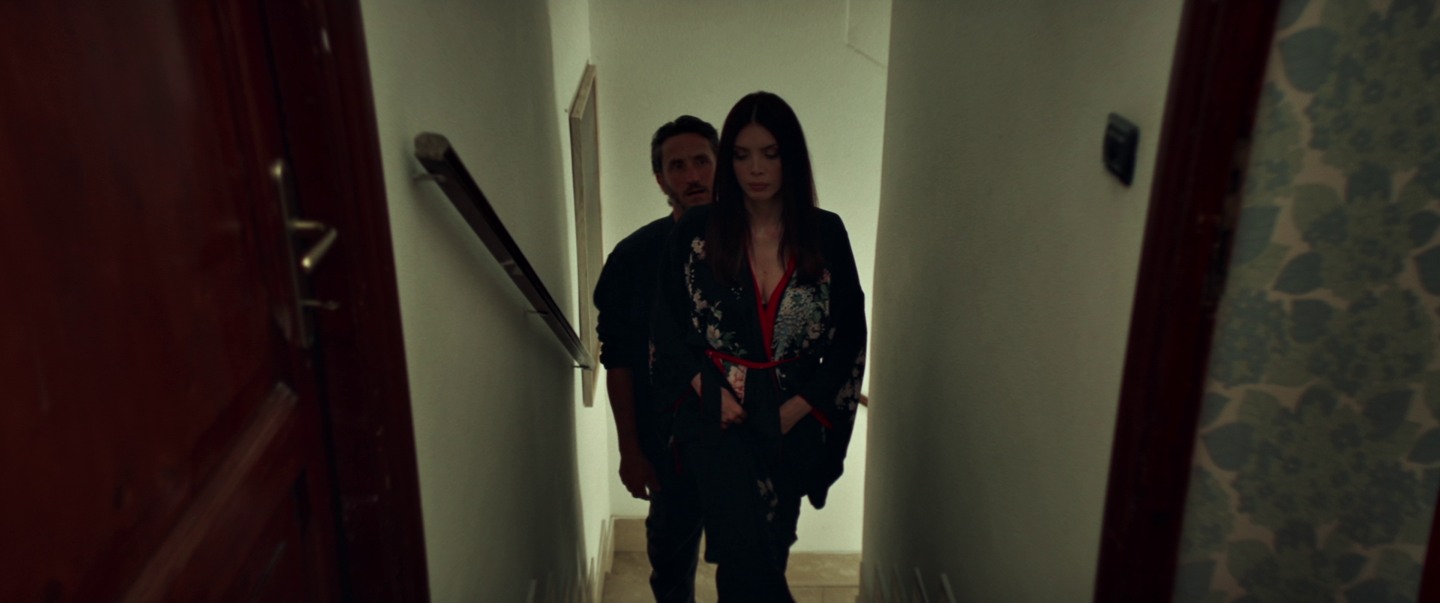
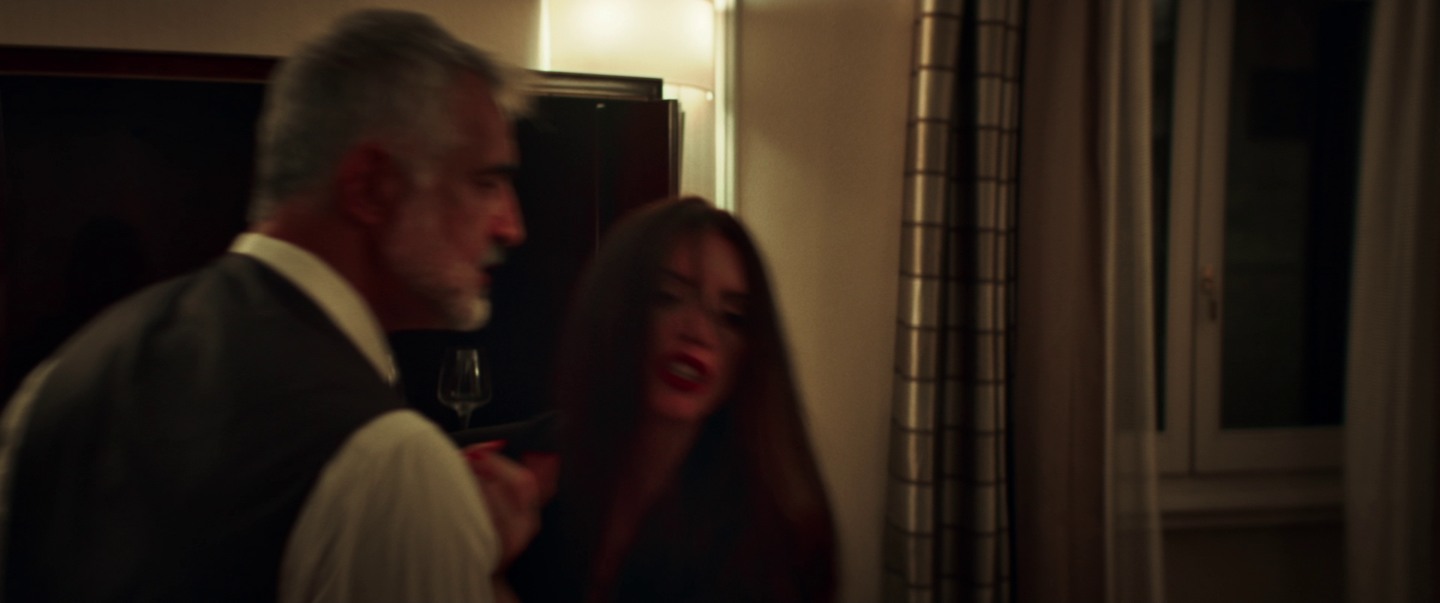
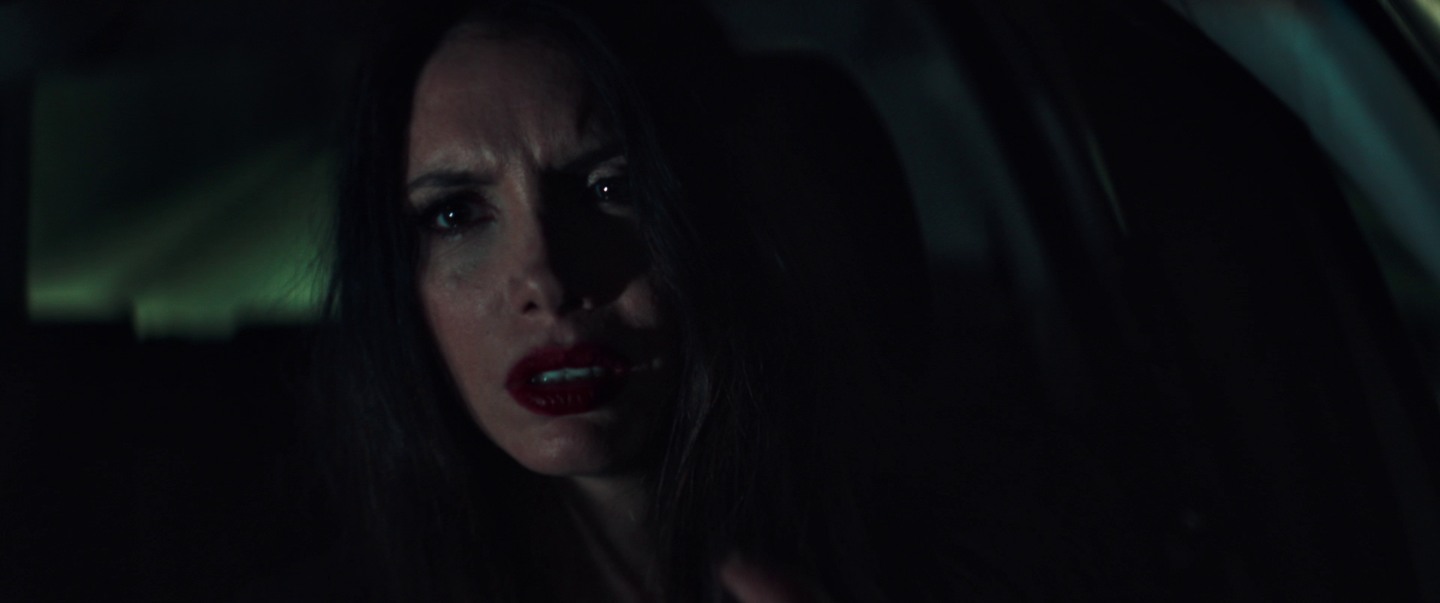
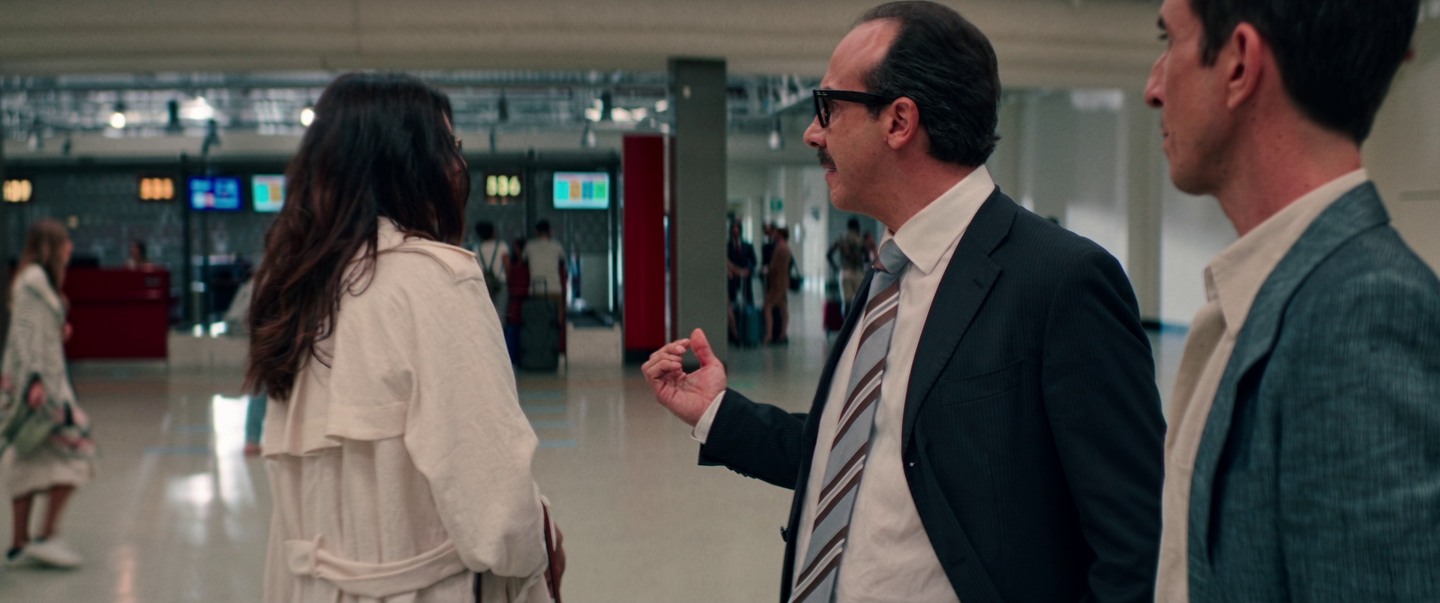
An eclipse, a pursuit and an alliance built through sound and touch. Explore the complete story, the effects workshop, the recovered screenplay and the work of staying alive.
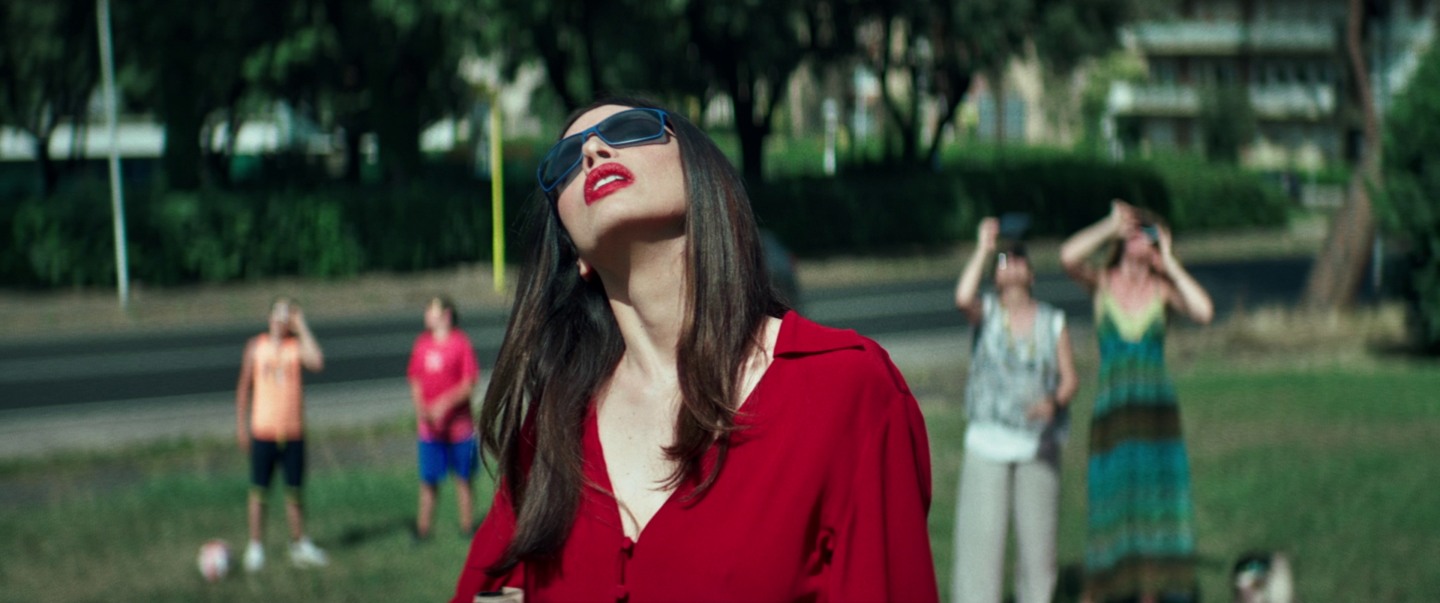
Rome briefly becomes a city of spectators: faces, balconies and glasses turn toward the same event. Diana shares the spectacle before the later collision makes seeing itself the film’s central problem. The eclipse supplies a visual rhyme with her blindness; the story does not make it the cause.
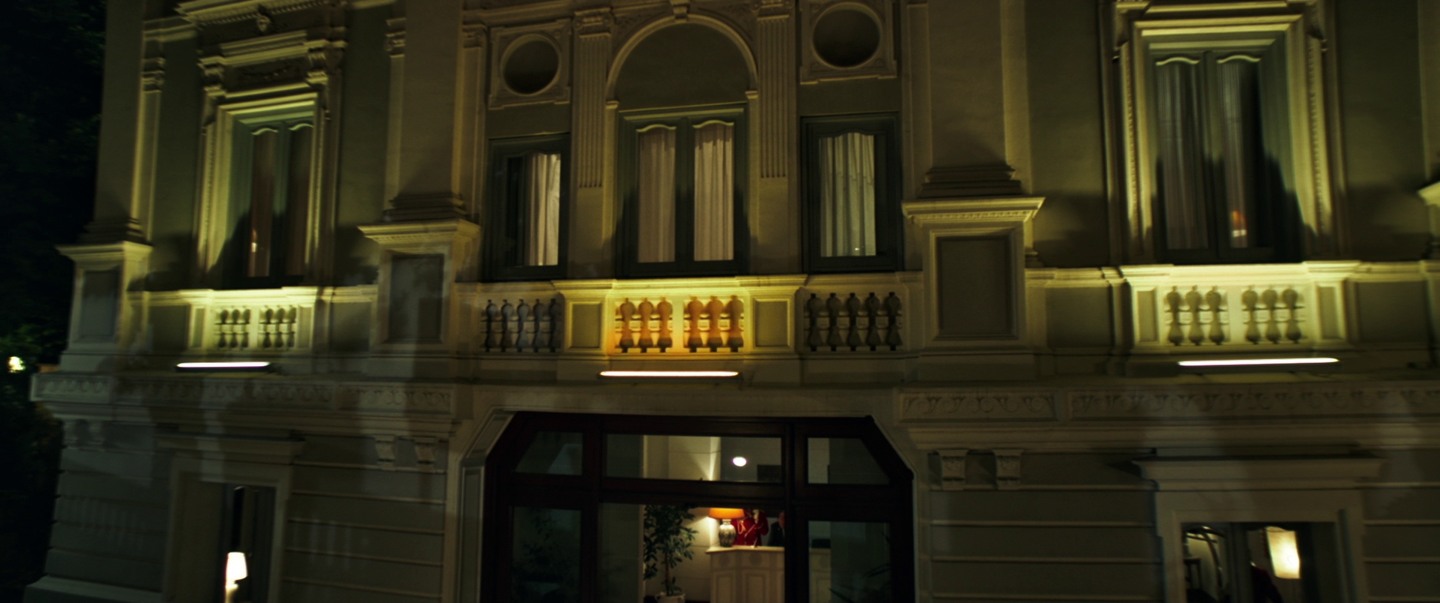
ENLARGE ↗The hotel entrance before the attack.06:15–08:45
From payment to pursuit
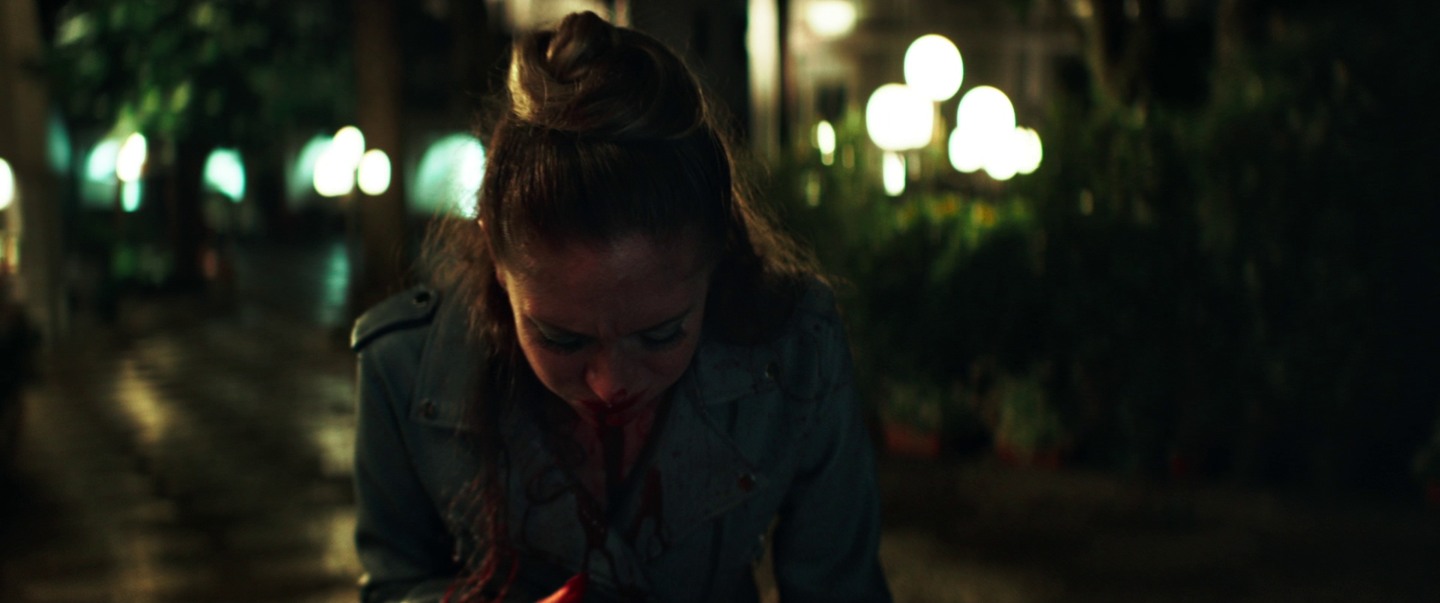
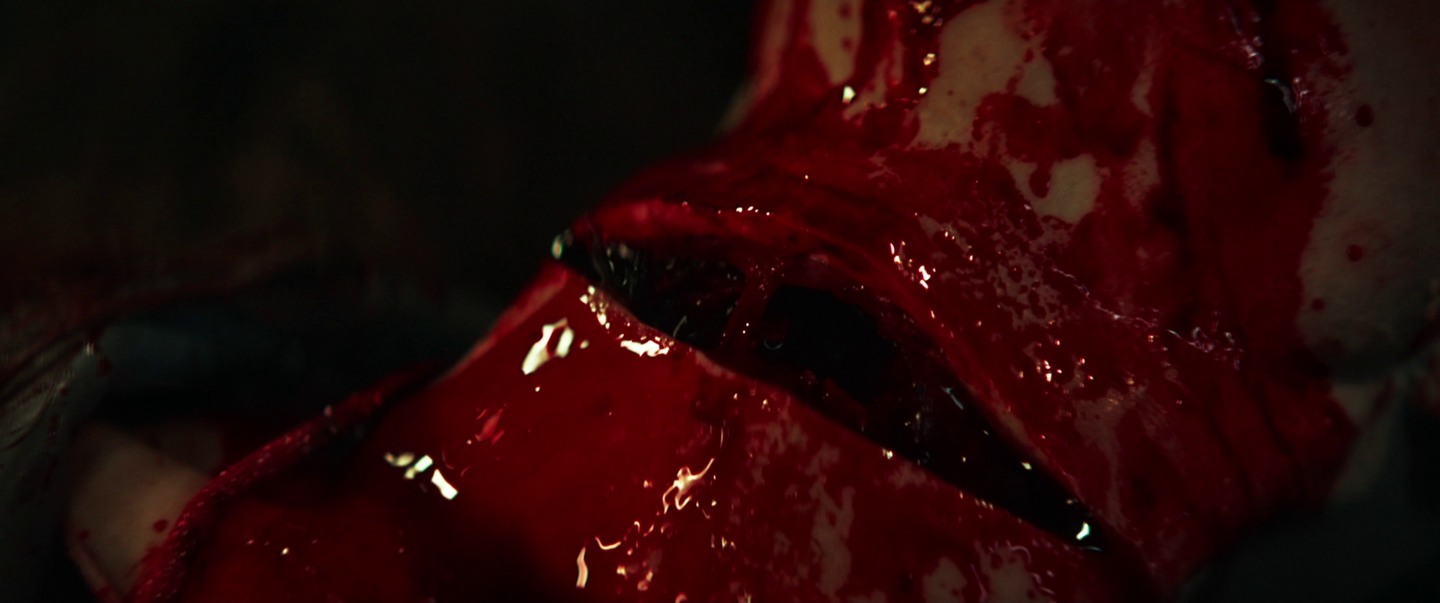
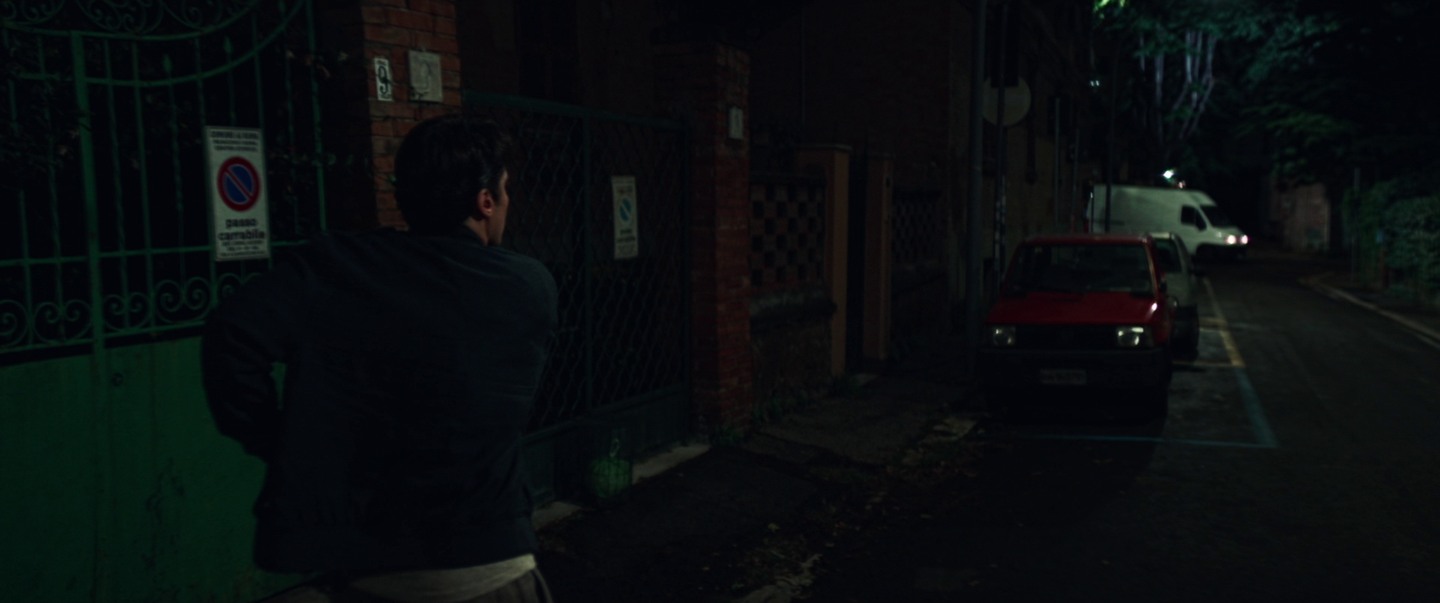
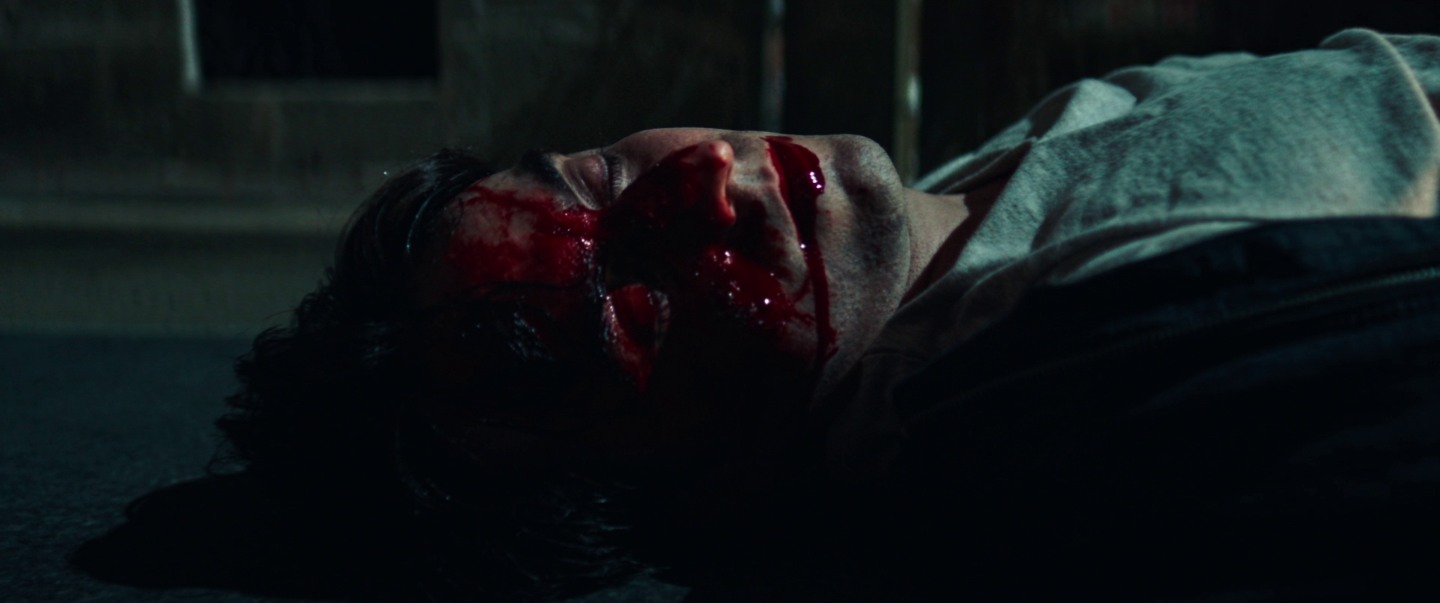
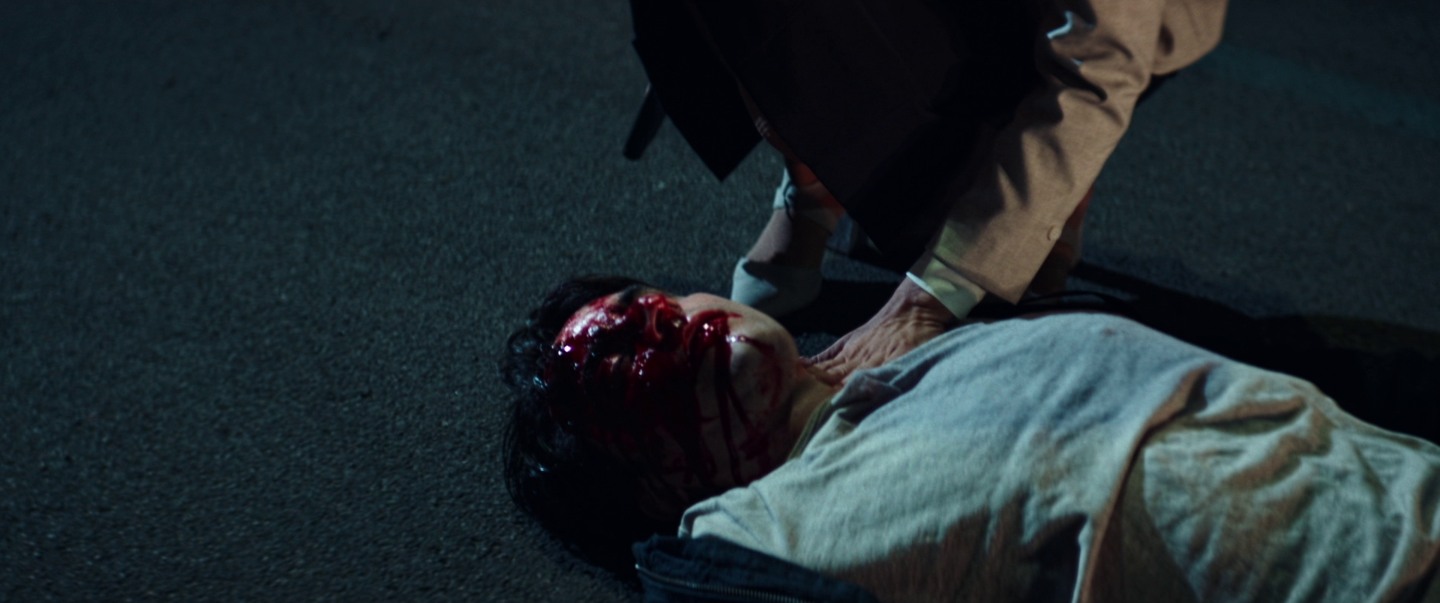
The first murder follows an ordinary exchange over payment. The camera leaves the hotel’s illuminated façade for the obscurity of the pavement and the violence of the wire. The later wound insert turns a struggling body into evidence for the arriving police.
ENLARGE ↗The appointment that plants a clue.12:10–13:25
A detail remembered by another sense
Matteo’s first appointment introduces the smell associated with his work around dogs. Diana asks him to wash and he takes the request as humiliation. The exchange plants the clue she will recover through smell, rather than through a belated correction of something she saw.
A second encounter makes Diana’s boundaries explicit. When a client turns threatening, she uses pepper spray and leaves. This assertion of control precedes the road pursuit; the film establishes her ability to refuse before staging the assault that changes her life.
ENLARGE ↗Diana checks the pursuing van.15:20–18:20
The road narrows the choices
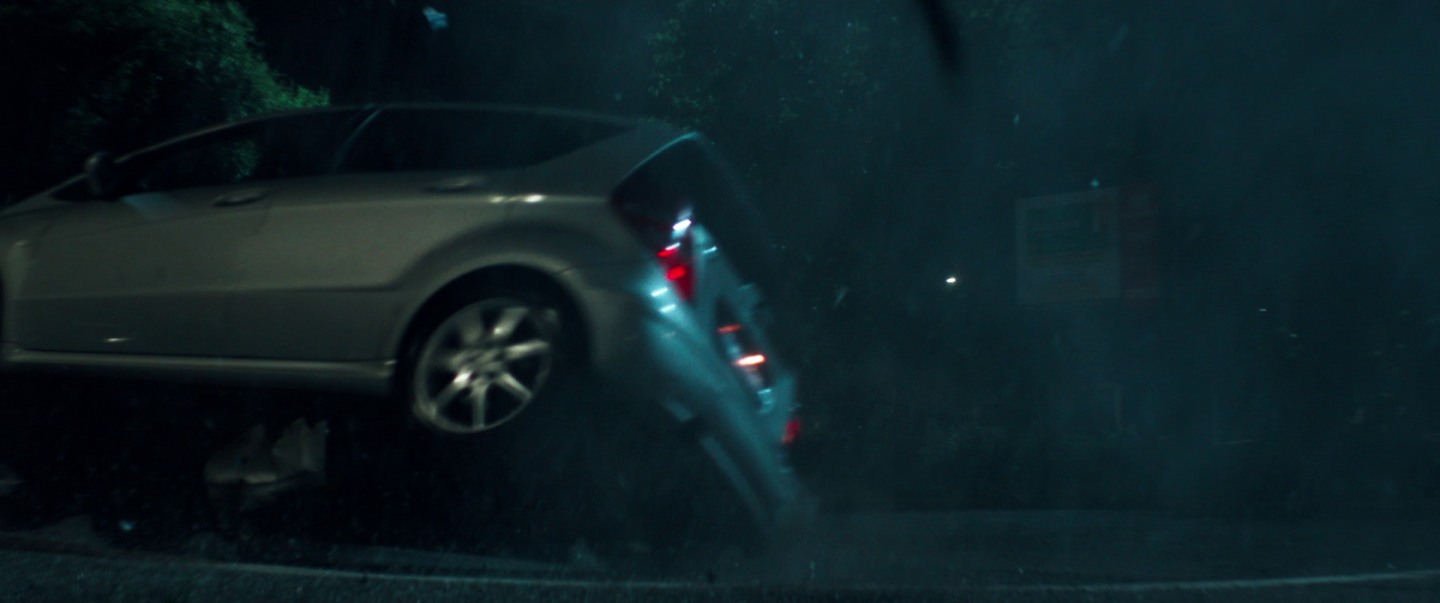
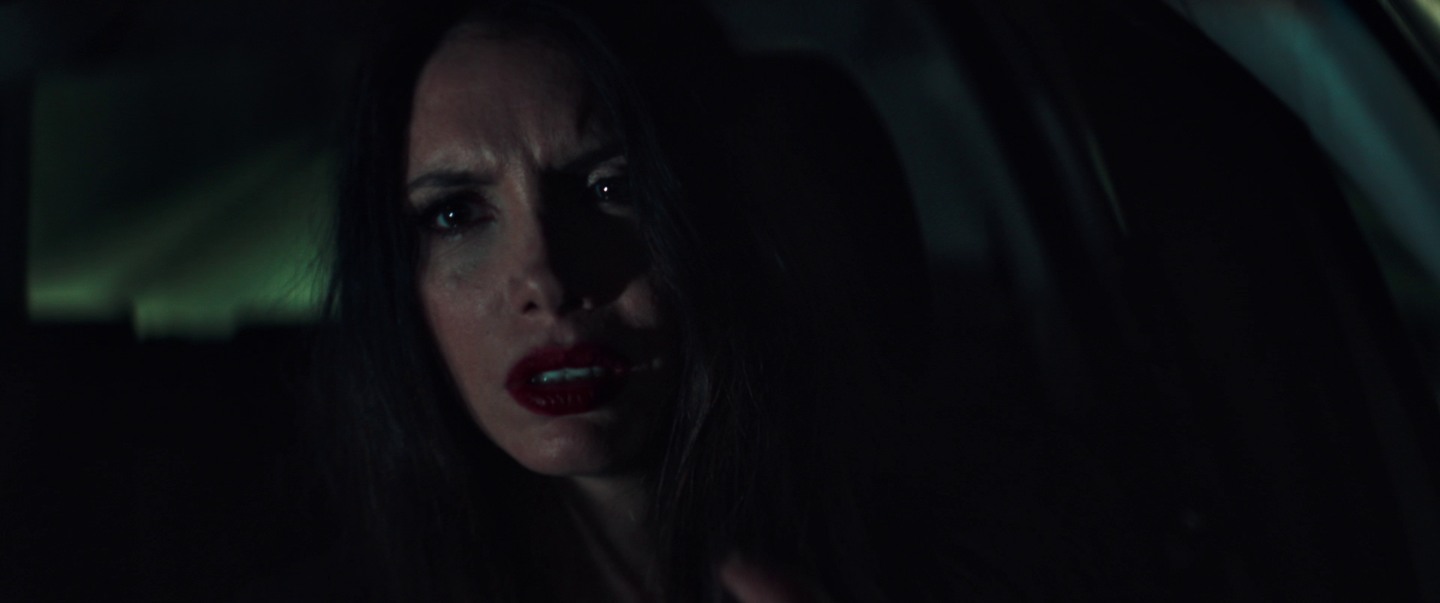
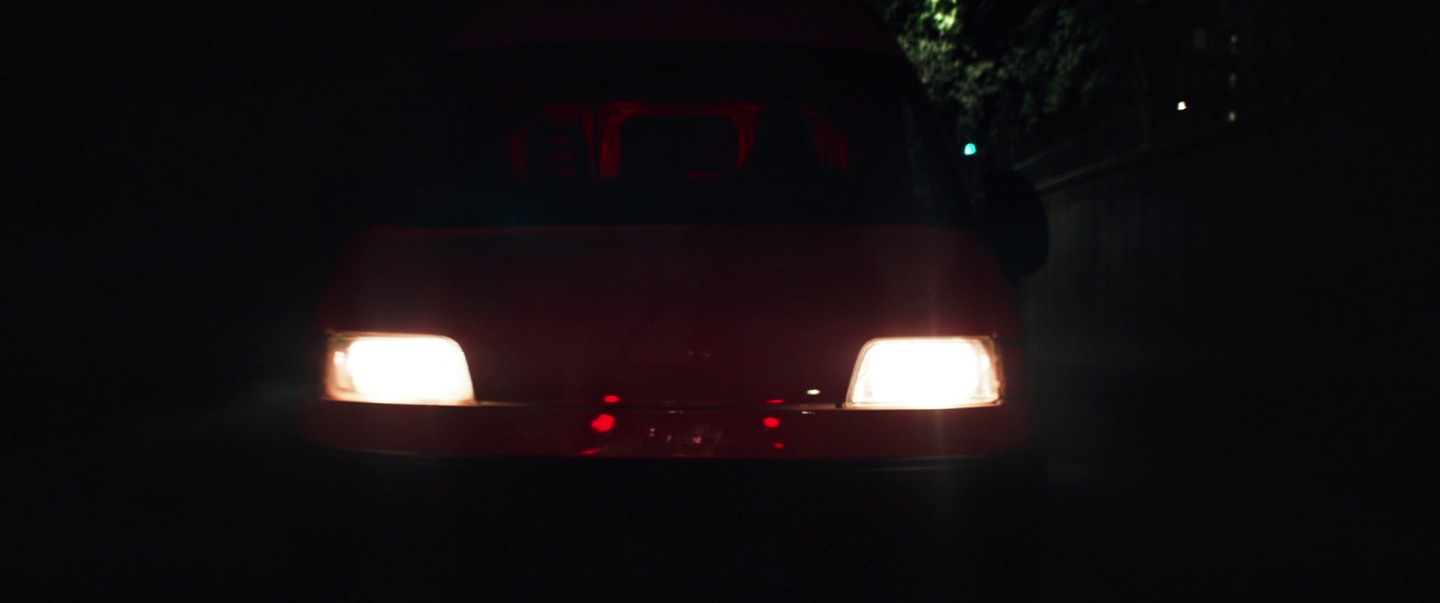
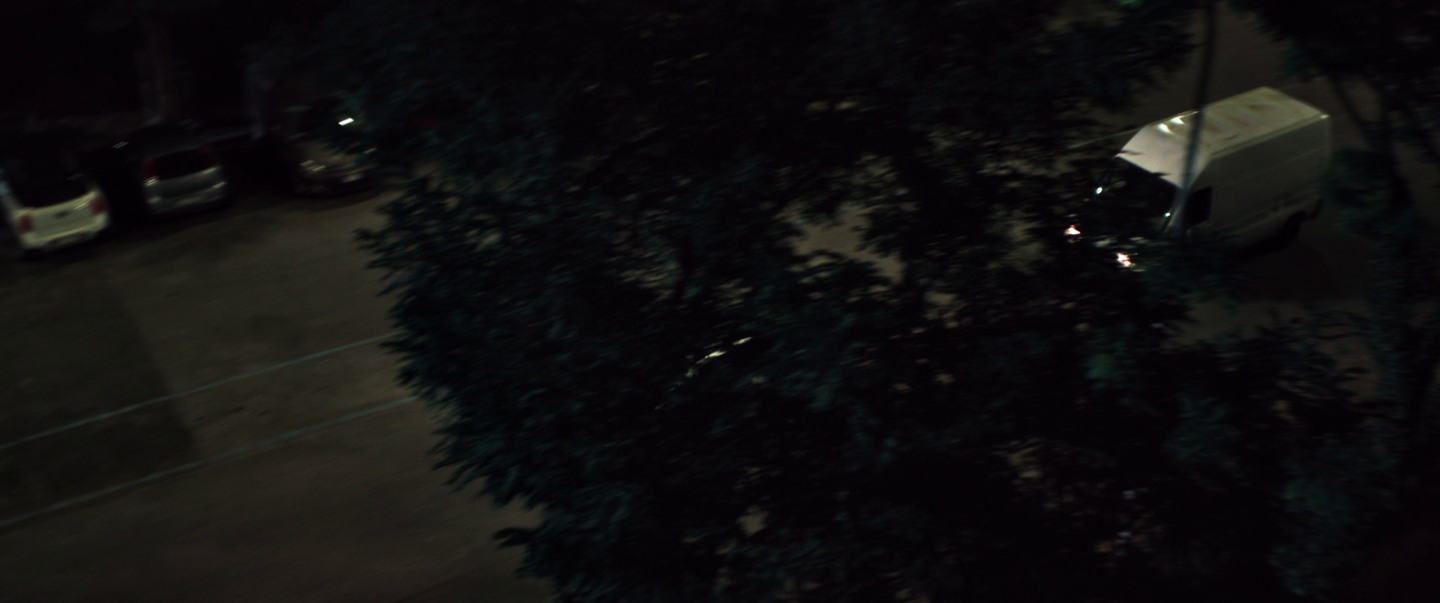
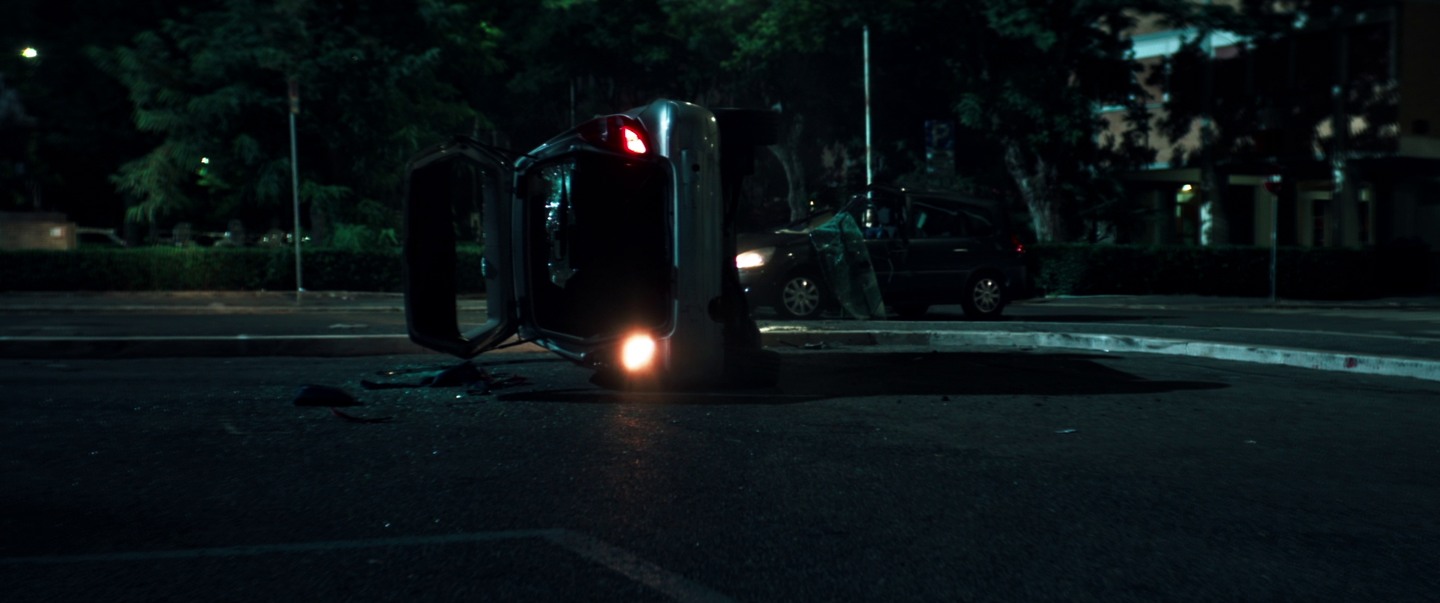
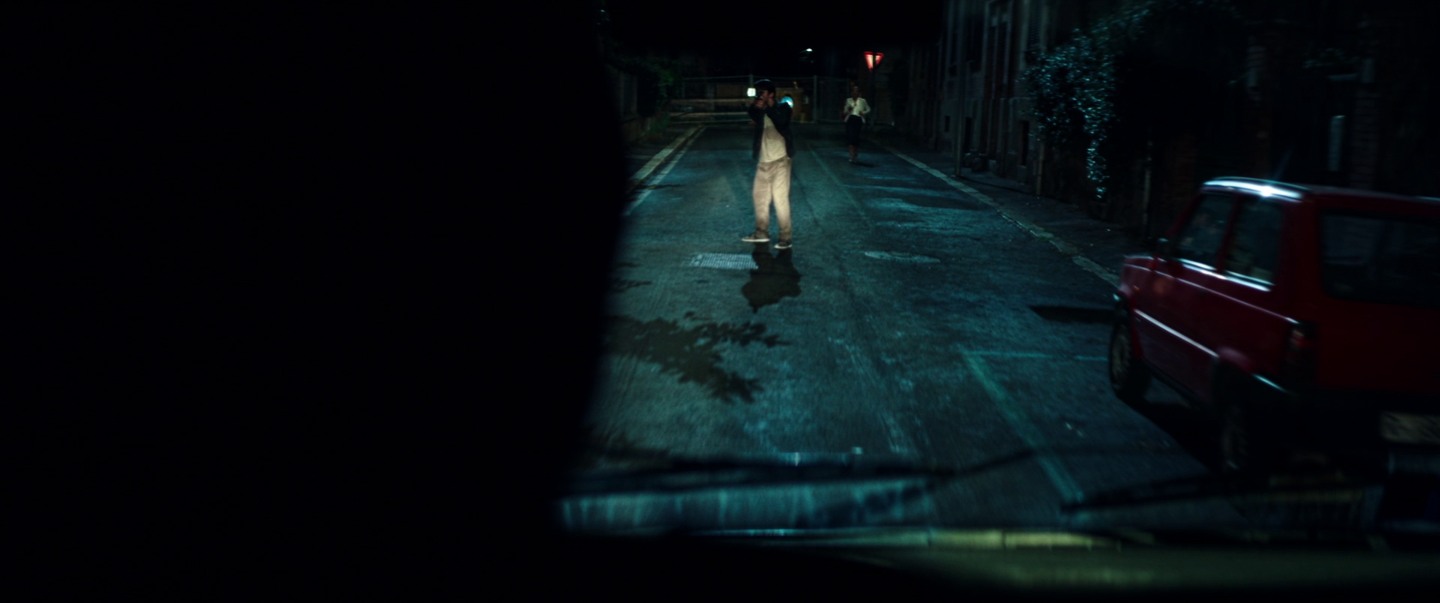
Rearward looks, approaching headlights and forward road views separate Diana’s attention into competing directions. The collision interrupts that repeated pattern. A wider view displays the overturned vehicle; the return to her damaged car and restricted sight converts an action sequence into a lasting change of perspective.
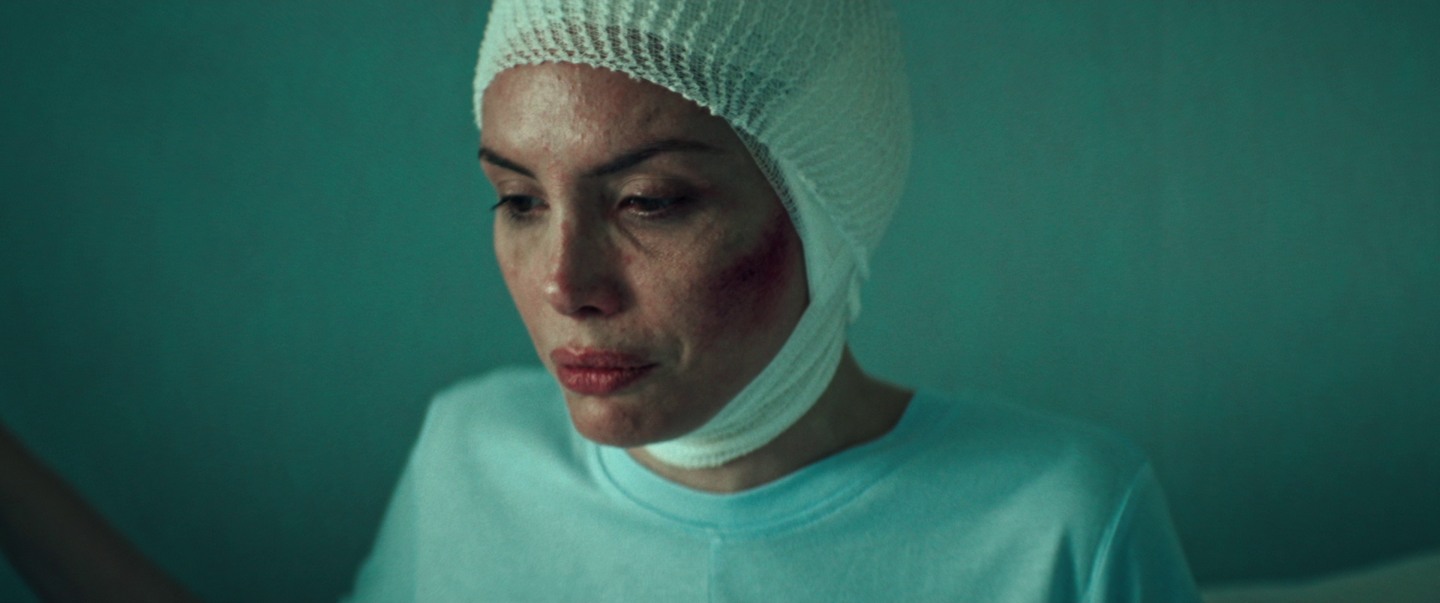
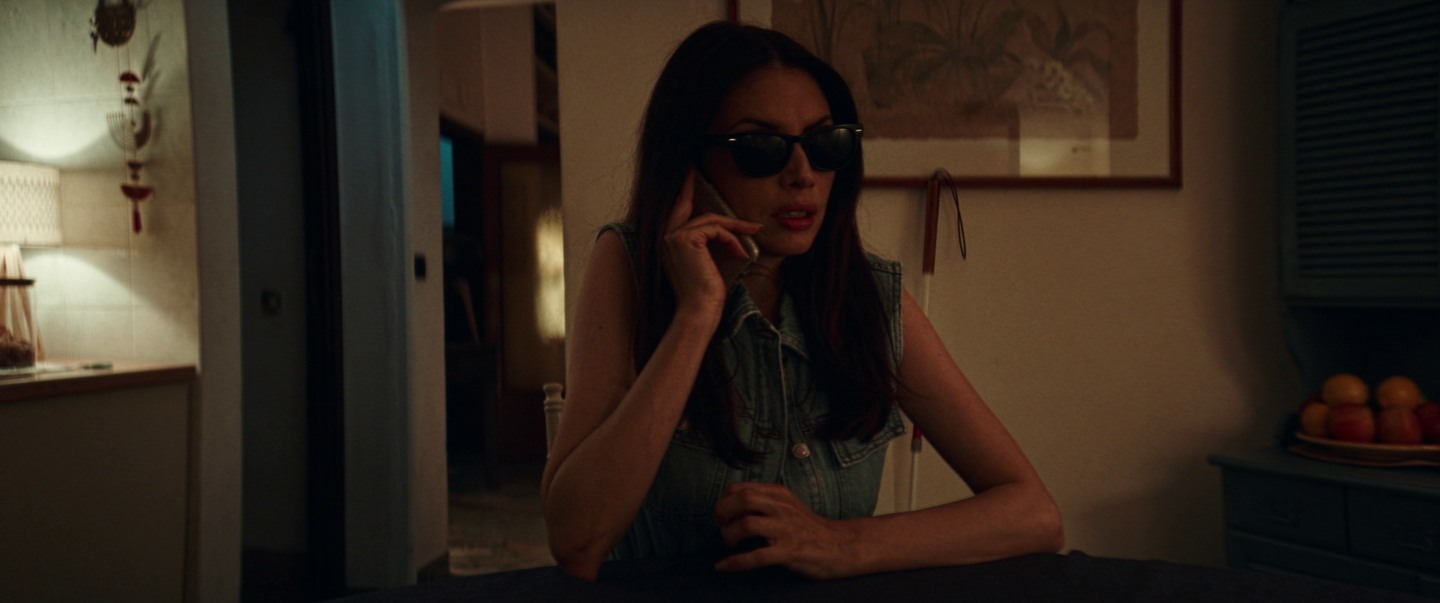
The hospital keeps Diana’s face available to the audience while the room is unavailable to her. The doctor’s explanation establishes the story’s account of her lost sight; the police bring news of the other family in the collision. In the backstage interview, Pastorelli identifies this discovery of blindness as the most difficult scene to perform.
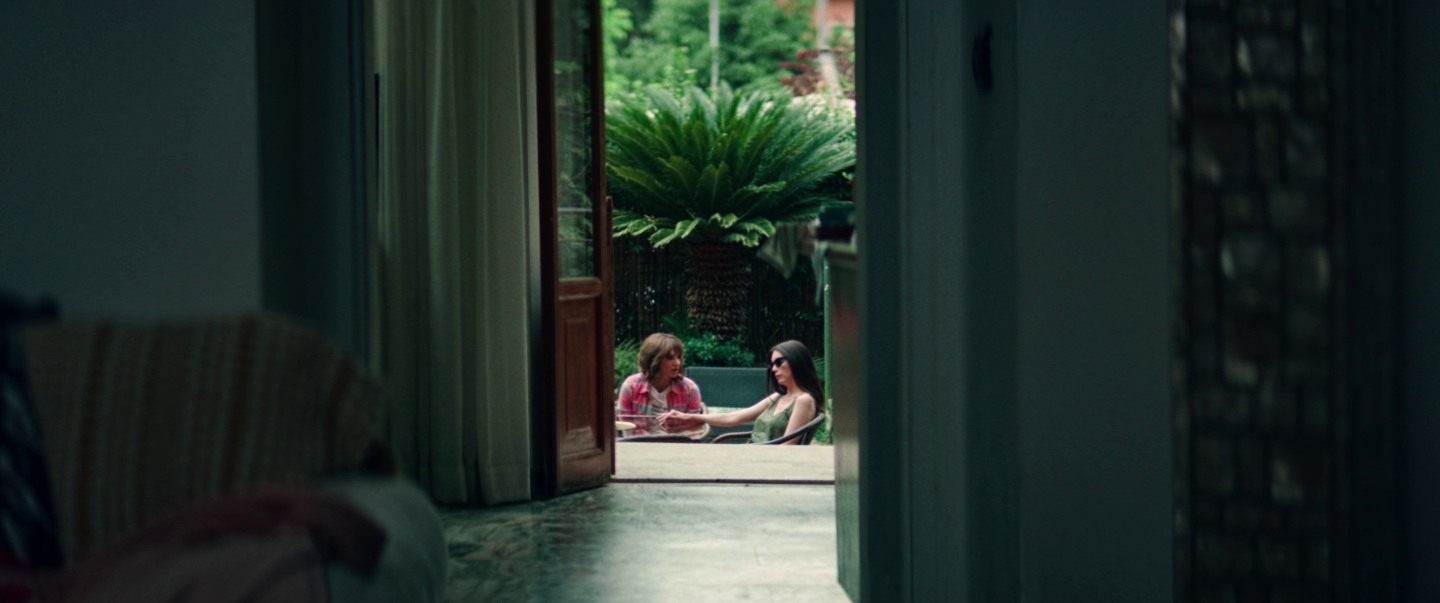
ENLARGE ↗The courtyard becomes a place to learn.22:35–24:30
Assistance becomes a practice
Rita’s lessons turn thresholds, an offered elbow and familiar reference points into practical knowledge. The sequence gives assistance a duration: orientation has to be learned and repeated. It also establishes the trust that will make Rita’s later absence matter beyond her role in the plot.
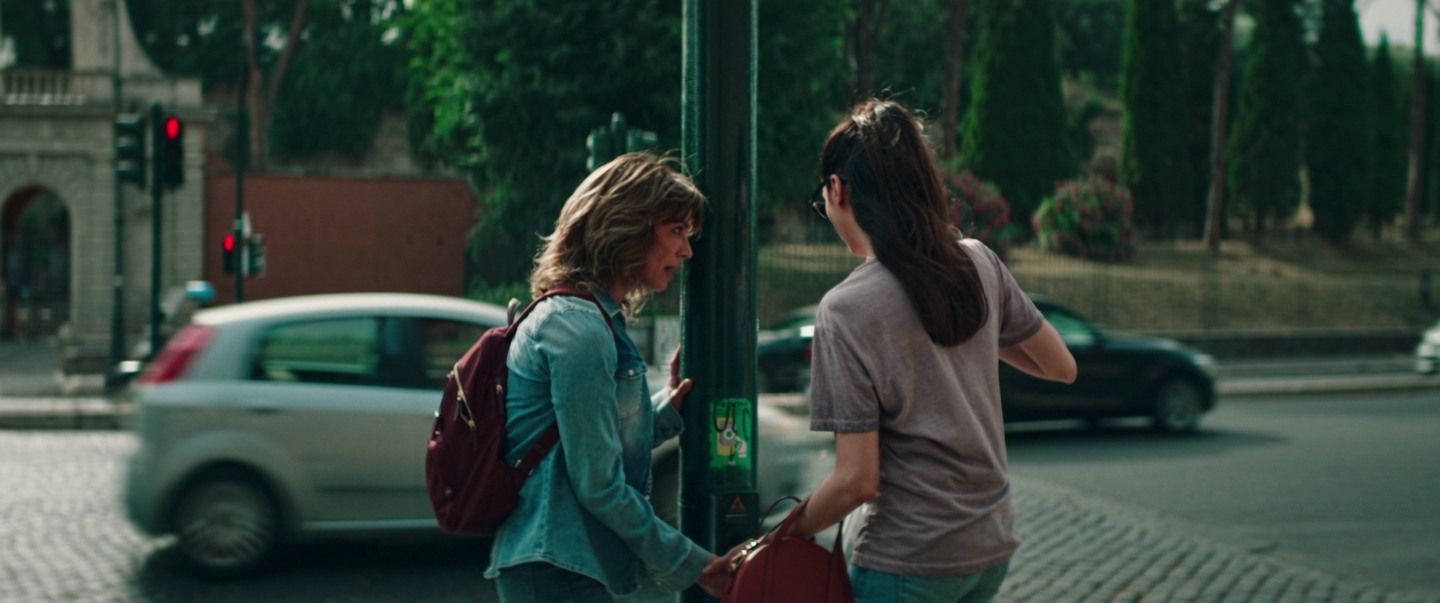
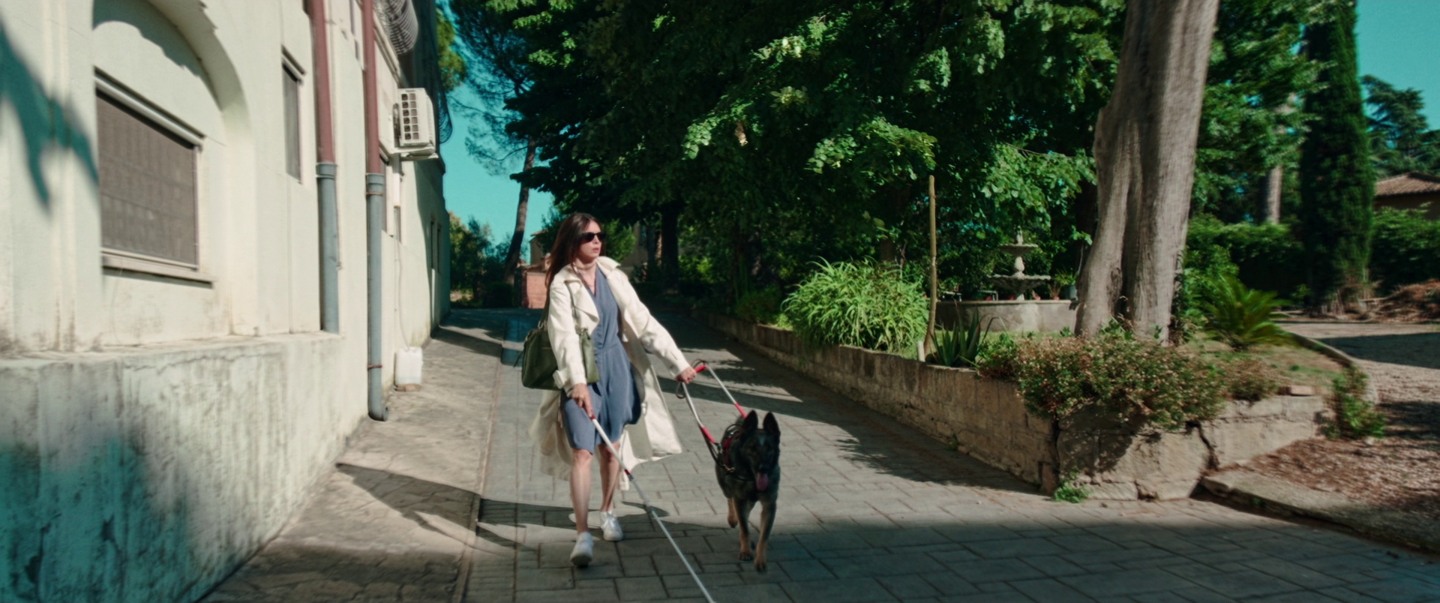
ENLARGE ↗Diana and Rita at the crossing.24:35–26:15
A street heard and described
Traffic, the crossing signal and Rita’s instructions organise a route Diana can use. Their conversation about the sky distinguishes description from vision. When Rita mentions a white van, an apparently incidental detail immediately recalls the pursuit; language can bring the threat back into an otherwise ordinary lesson.
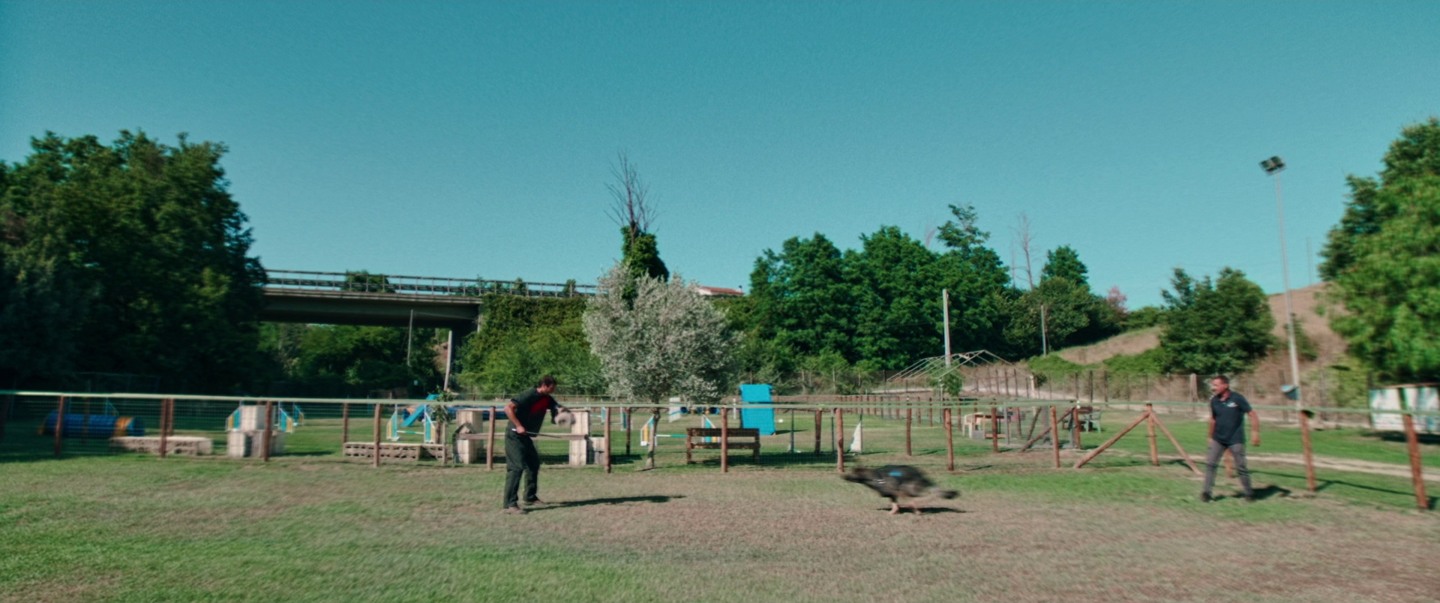
ENLARGE ↗Nerea’s training demonstration.26:35–27:45
Protection rehearsed in daylight
The attack exercise shows a dog responding to commands against a protected trainer. Advice about feeding and handling Nerea makes the relationship personal as well as functional. The finale returns to this training: the ability to give a command, and the dog’s response to it, become decisive.
ENLARGE ↗Diana and Nerea outside the care home.28:20–31:10
An alliance begins with refusal
Chin initially rejects both Diana’s gift and her apology. Their next encounter occurs outside, where she intervenes against the boys bullying him. The relationship begins with resentment and reciprocal help, not an immediate reconciliation after the crash.
Chin threatens himself to prevent Diana from sending him back. Her hand discovers that the object is a pen. Touch supplies knowledge that his words conceal. The scene complicates their alliance: he depends on her willingness to shelter him, while she must decide which of his claims to trust.
ENLARGE ↗Pardi visits Diana after the accident.34:30–36:45
Who benefits from not being seen?
Diana’s return to paid work is driven by rent and living costs. Pardi treats her blindness as relief from being judged by her gaze; Diana distinguishes his appearance from the violence of the man who attacked her. Their conversation moves the question of looking into shame, money and unequal vulnerability.
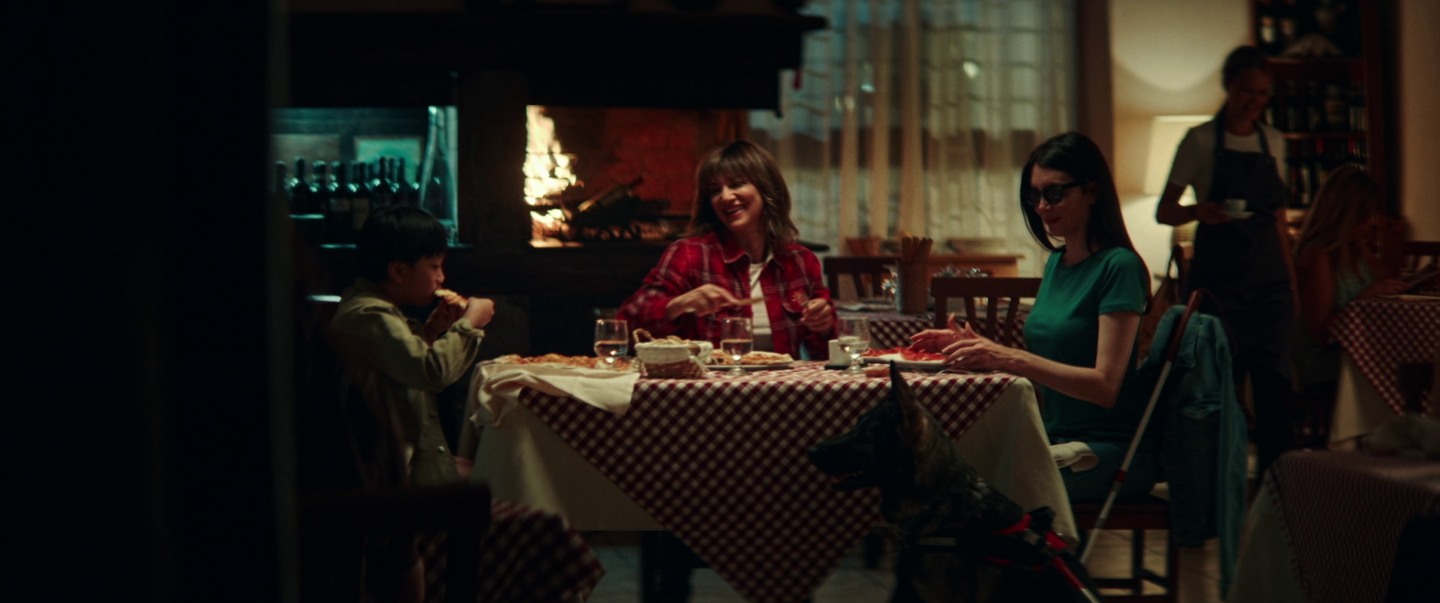
ENLARGE ↗Rita, Diana and Chin share a meal.37:00–38:15
A table and a withheld truth
The meal places the three characters in a provisional domestic arrangement. A hospital call then tells Diana that Chin’s mother has died. She initially withholds the news, making care and concealment inseparable. The eventual disclosure will arrive in a far less protected setting.
The officers’ search for Chin puts Diana’s home under scrutiny. Later, the white van attacks them outside that same house. The repeated approach, the wounded colleague and the weapon left on the road dismantle the promise of official protection in a few blunt images.
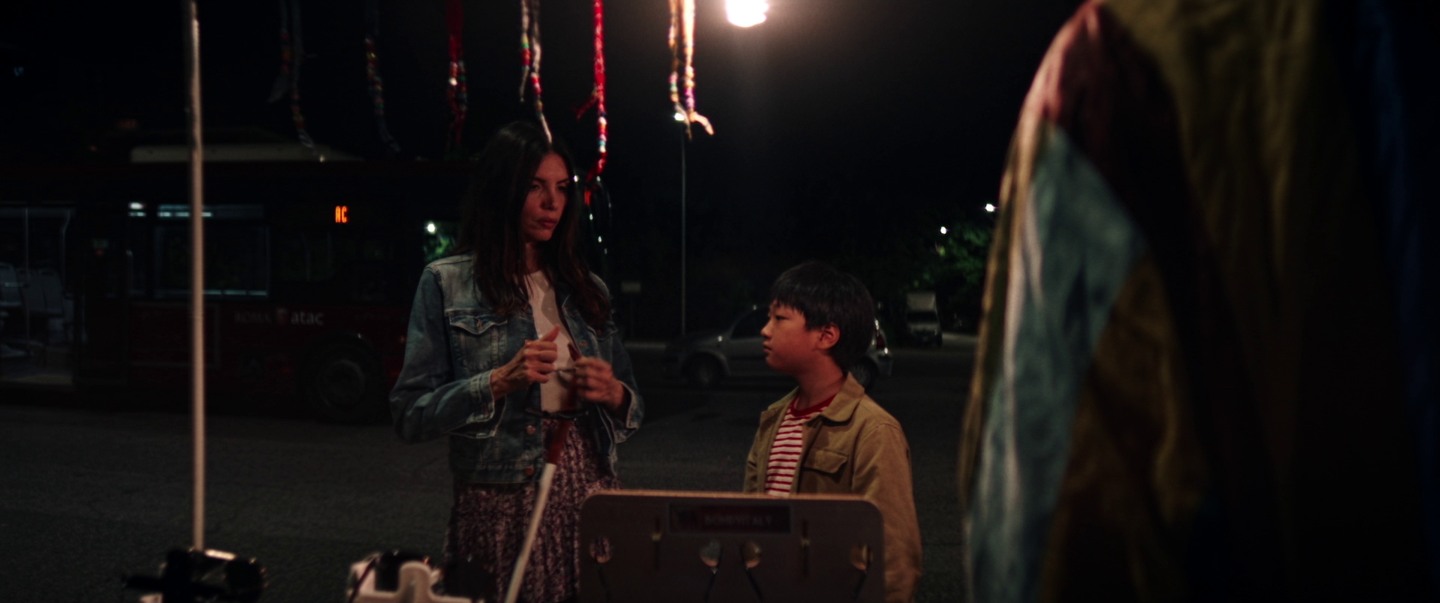
Flight from Chin’s former home leads to a bus terminus and a street stall. The replacement glasses preserve the film’s central visual motif while making it part of their improvised cooperation. Chin describes and chooses; Diana depends on him without simply disappearing from the decision.
ENLARGE ↗The officer’s phone becomes a trap.49:30–53:00
The wrong voice answers
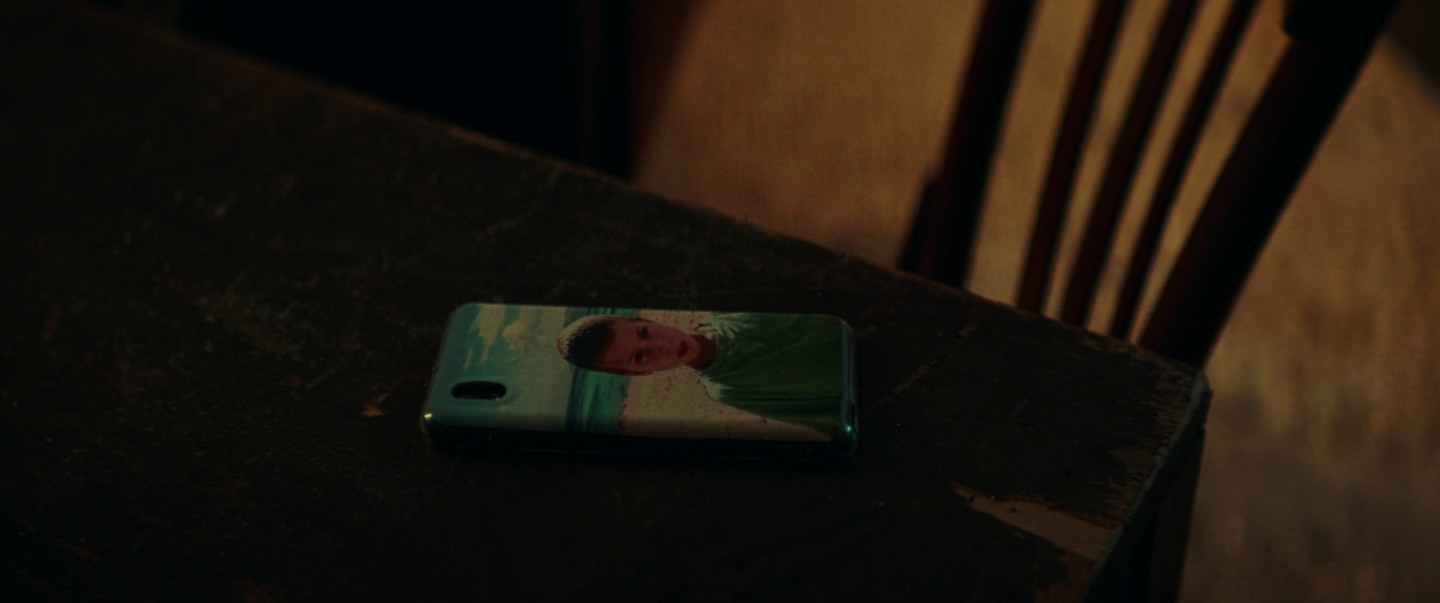
Chin calls the dead officer’s phone. The killer answers as a supposed colleague, asks him not to tell Diana, and obtains their location. The phone’s institutional association lends authority to an unverified voice. A tool intended to summon protection becomes a route into the refuge.
ENLARGE ↗Diana reaches Rita in the field.54:30–59:15
Care becomes an absence
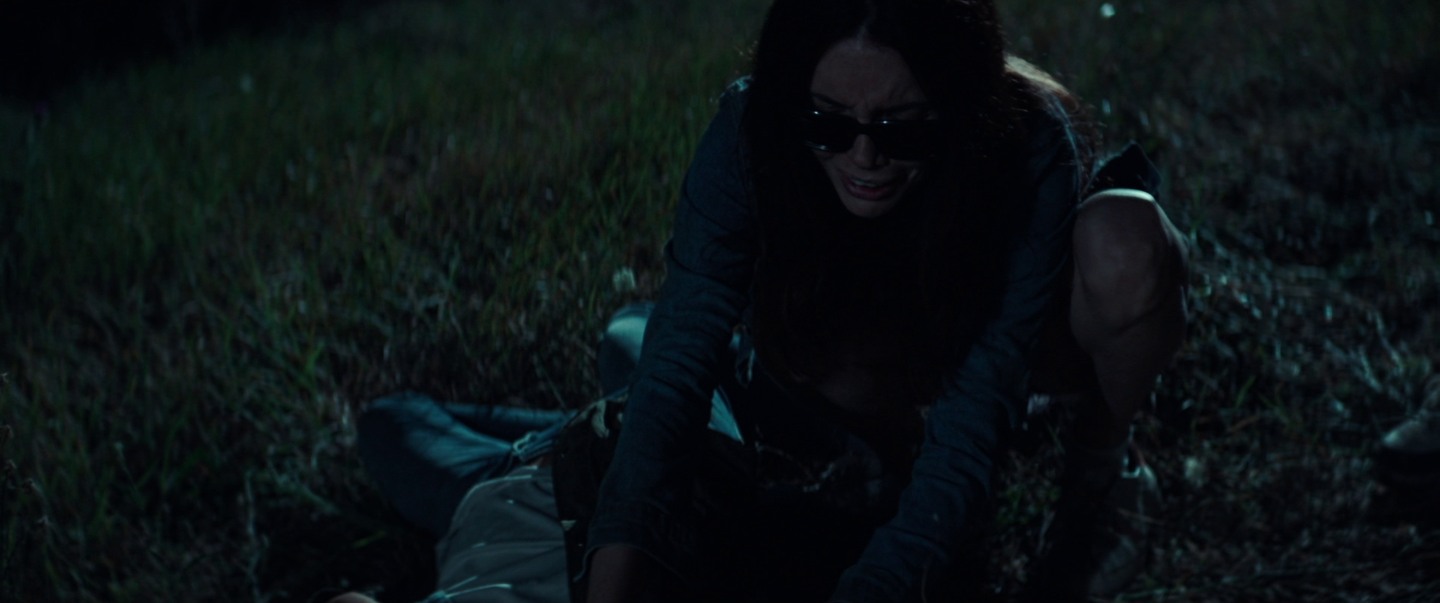
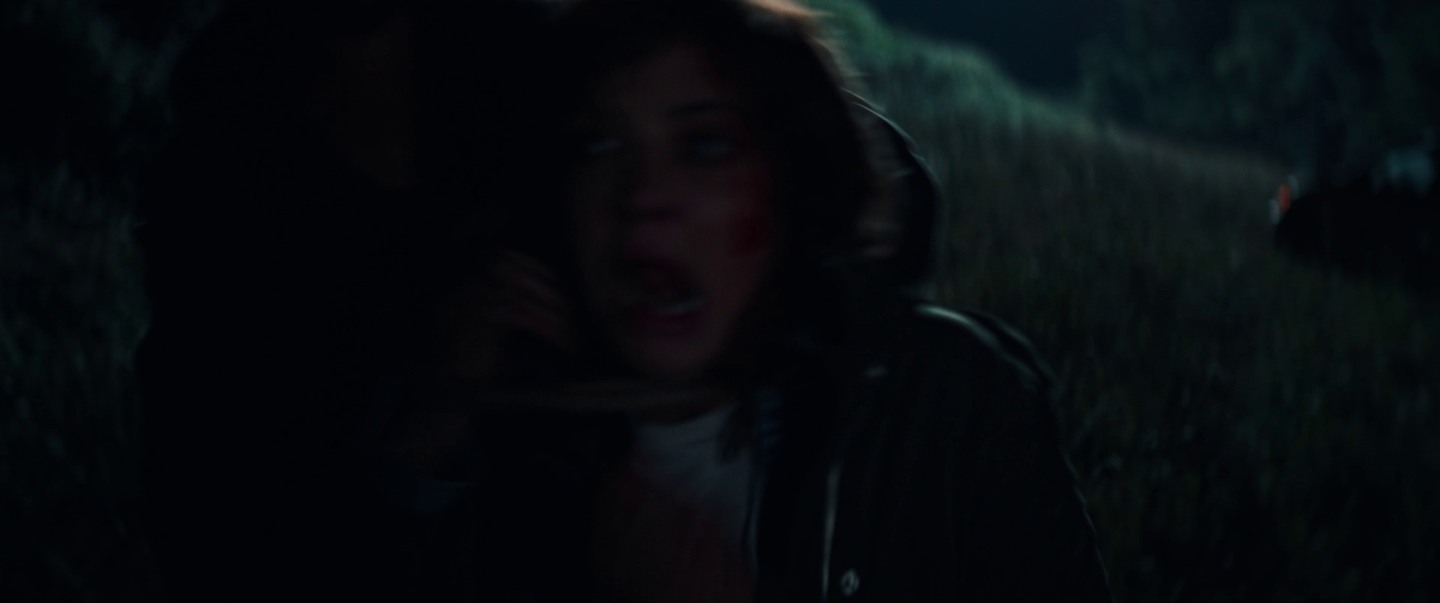
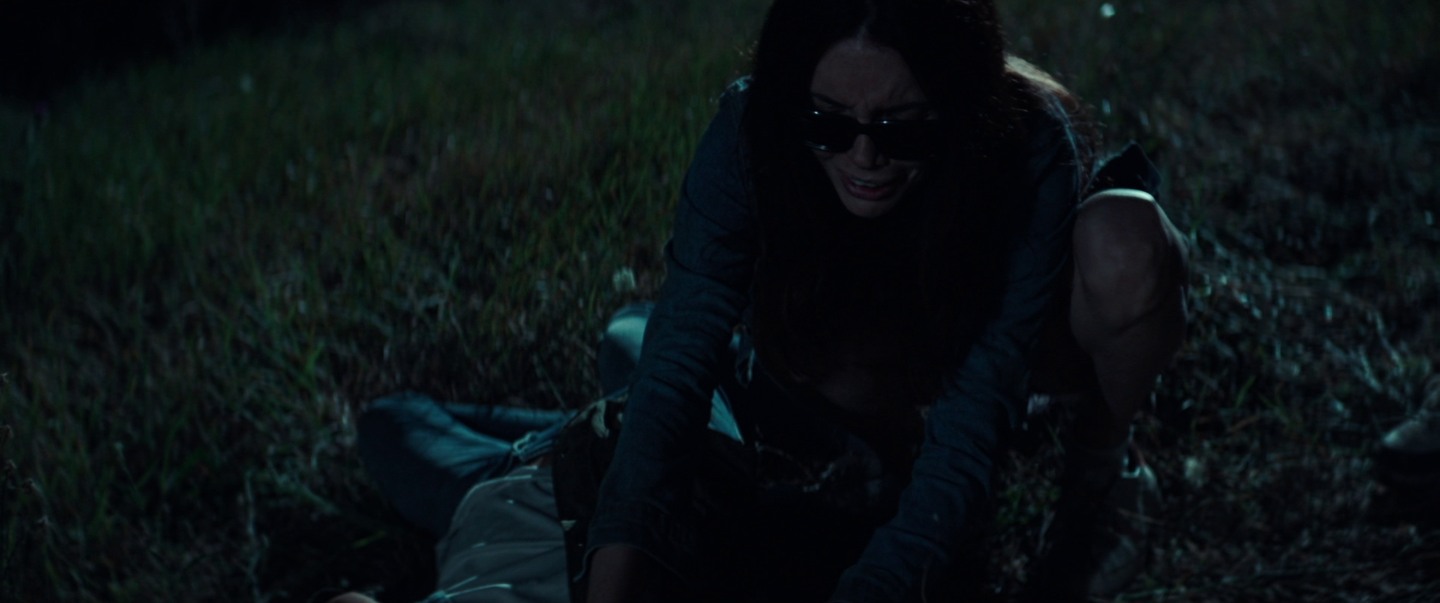
Rita’s warning sends Diana and Chin into flight, but Rita herself is caught. Chin first sees the body; Diana then learns through touch. The sequence links the loss of Diana’s guide with her disclosure that Chin’s mother has died. Each must acknowledge a person who can no longer return.
ENLARGE ↗A snake appears among the reeds.60:10–62:40
Refuge turns hostile
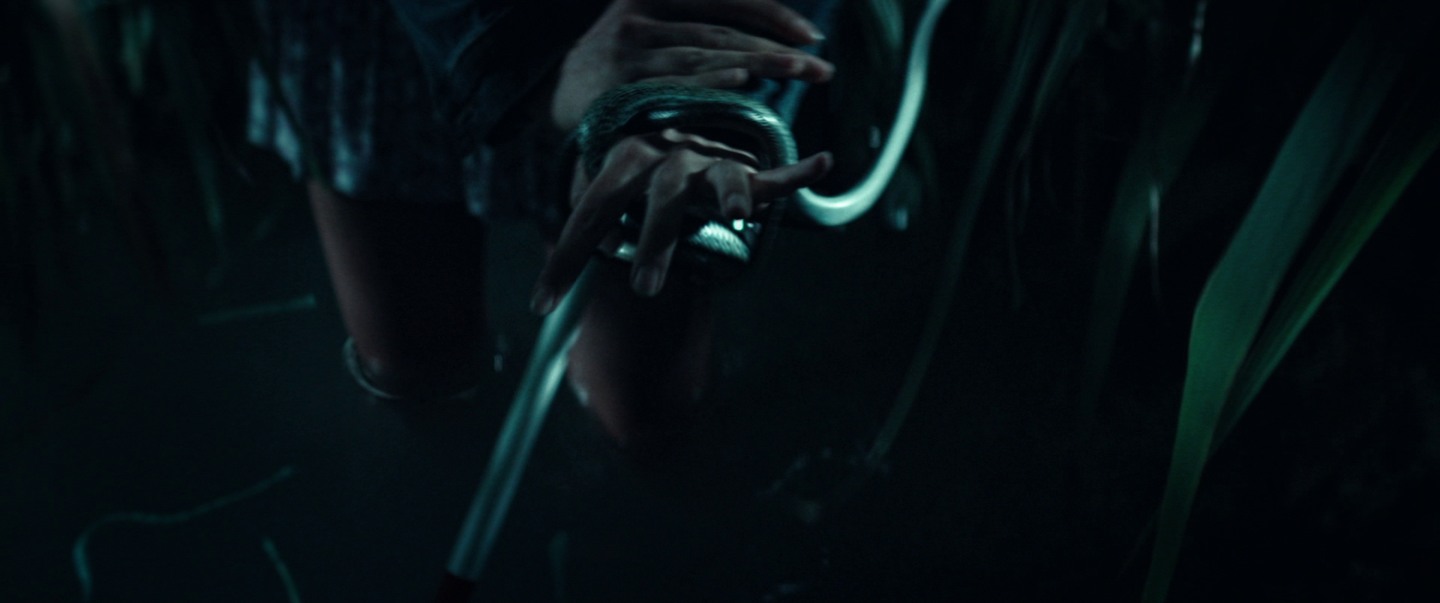
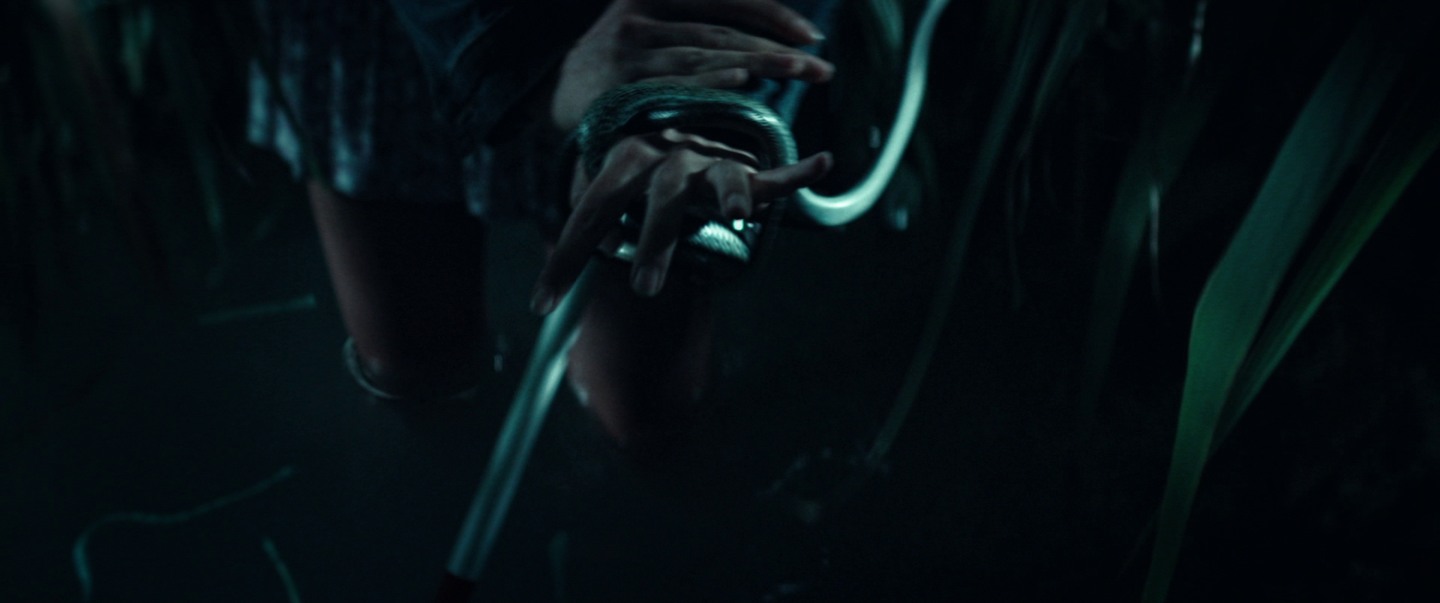
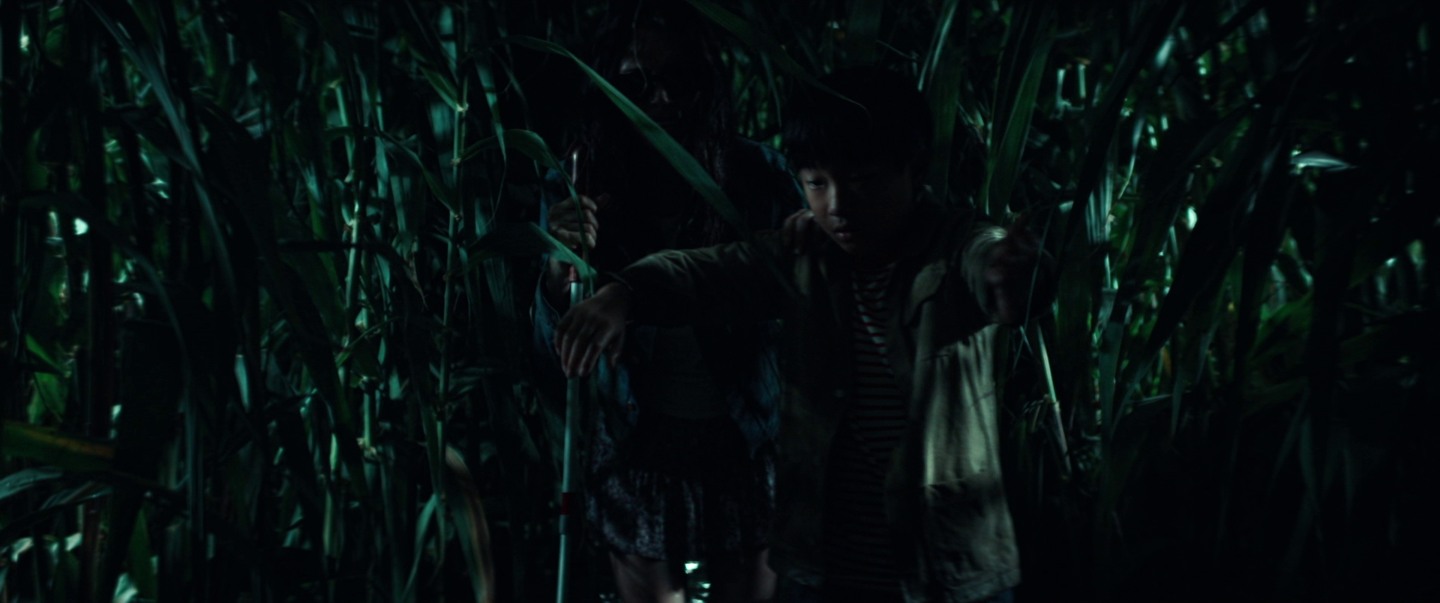
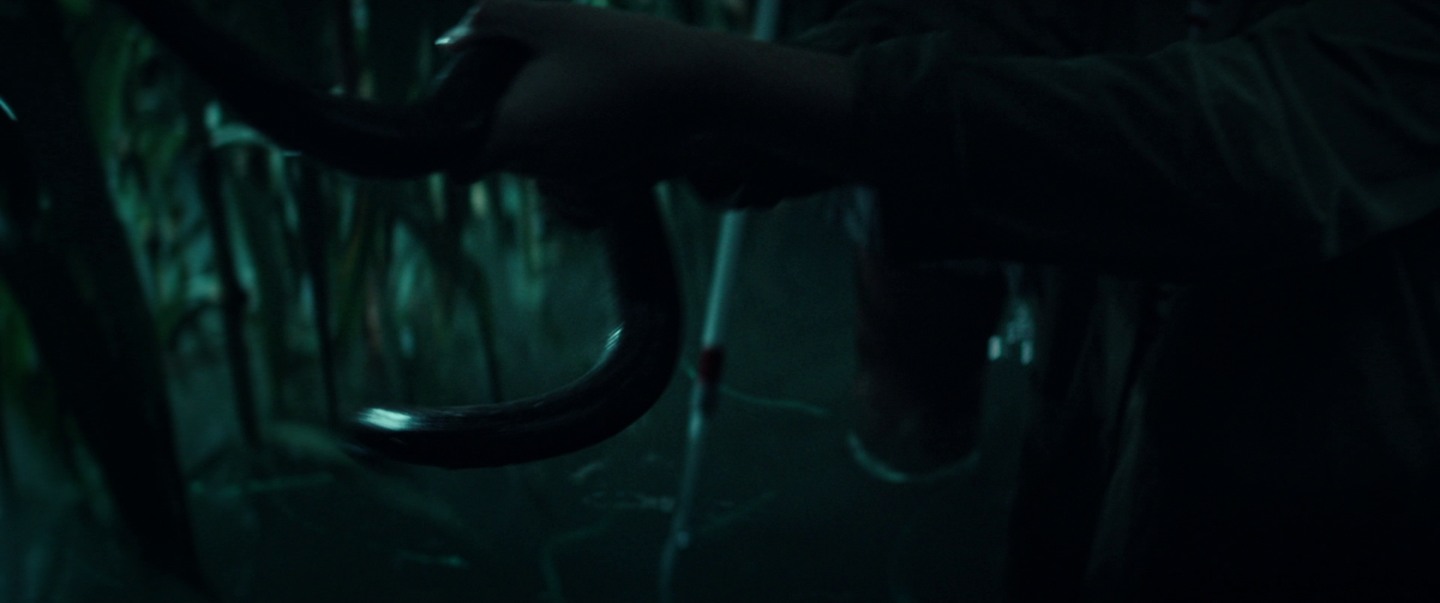
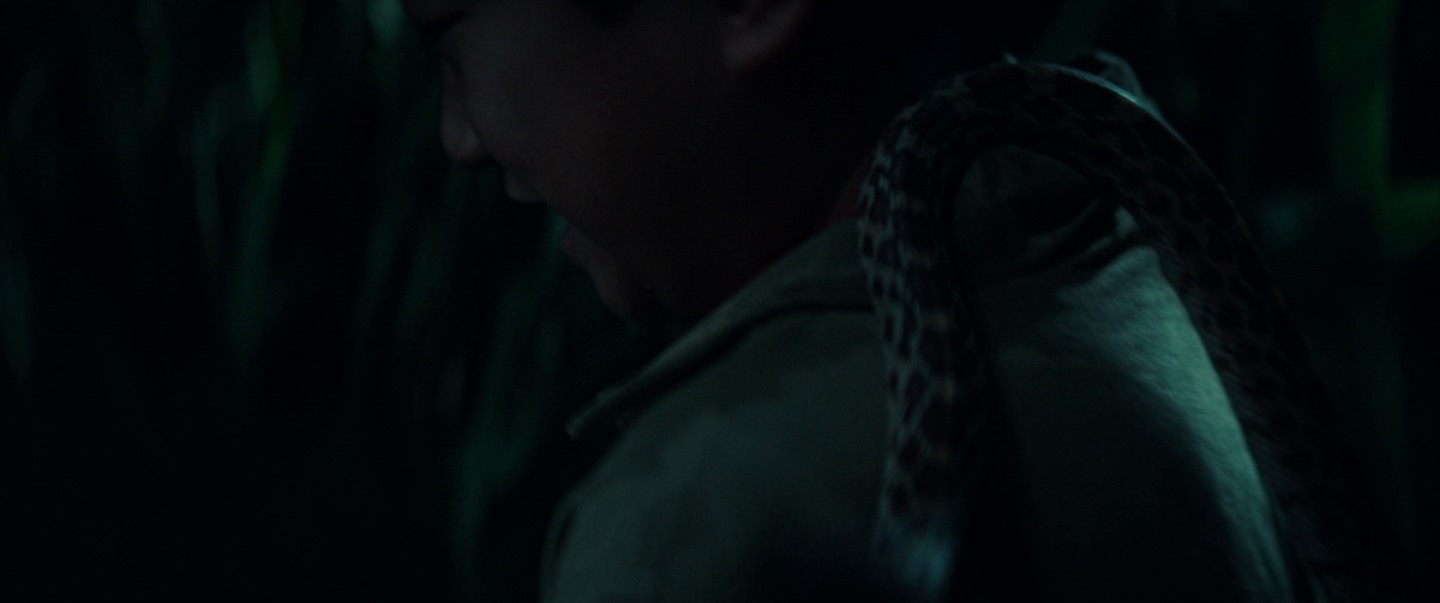
The water initially promises concealment. Inserts of snakes, bodies obstructed by reeds and partial underwater views transform the hiding place into another trap. The danger is distributed around the characters instead of being concentrated in a single attacker they can face.
ENLARGE ↗Diana fires with Chin beside her.63:20–66:00
A direction cannot guarantee a shot
The encounter with two men briefly offers towels, transport and police assistance. The attacker interrupts it. When Diana acquires the fallen gun, Chin supplies directions, turning an earlier conversation about her inability to aim into an immediate experiment in cooperation. Possessing the weapon does not restore control.
ENLARGE ↗Diana searches for Chin in the woods.66:20–69:35
The voice loses its partner
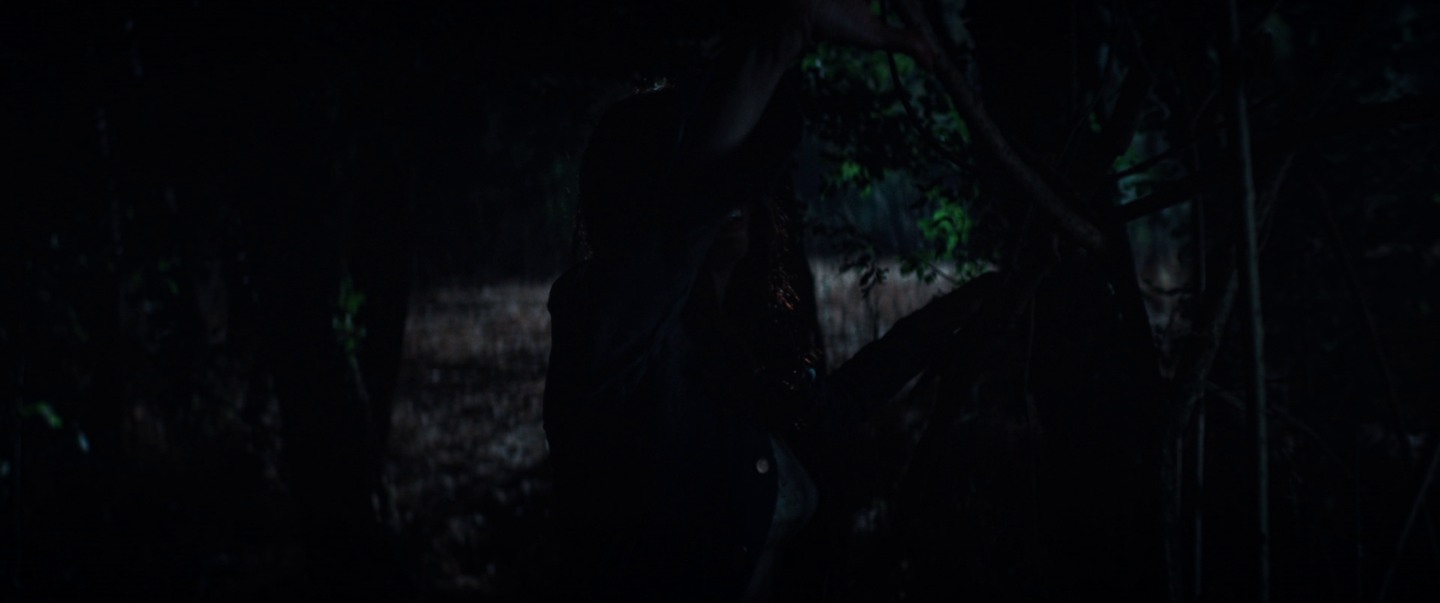
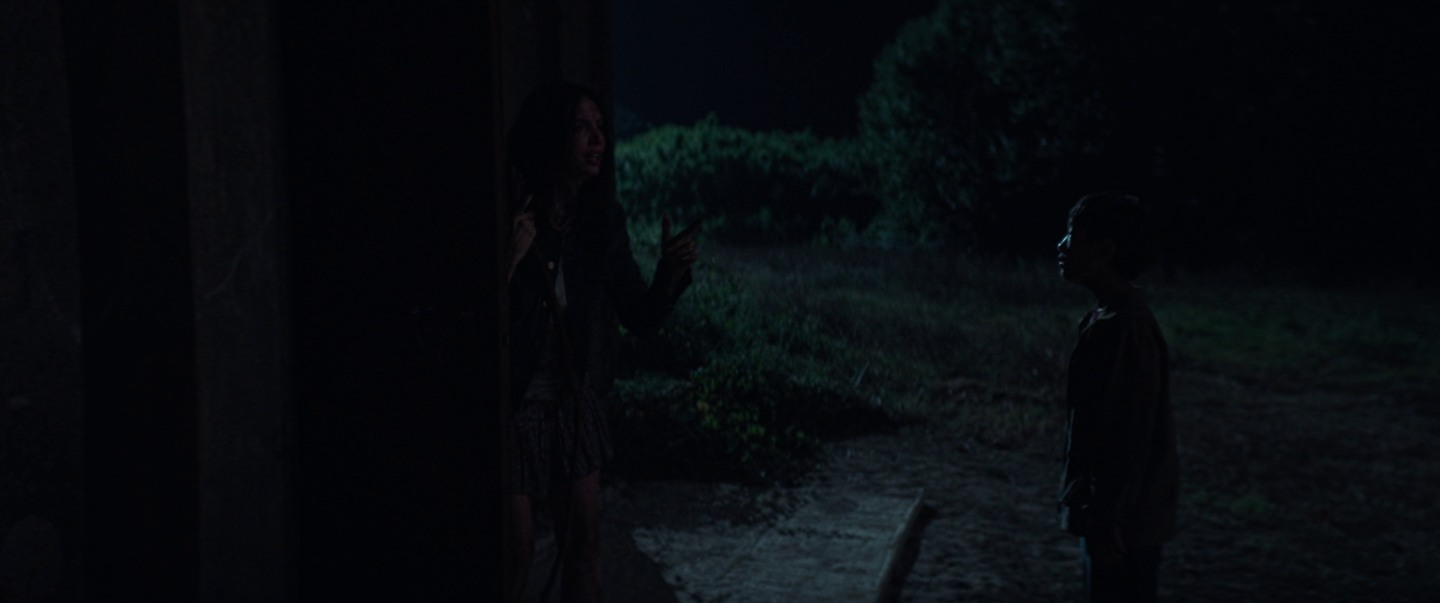
Chin follows the river sound and becomes separated from Diana. Calling his name no longer guarantees an answering presence. Wide views make the surrounding darkness and vegetation visible to us while leaving her without the person who has been describing the route.
ENLARGE ↗The caretaker building becomes a trap.69:45–74:10
Recognition arrives before the confession
The caretaker building offers walls and objects to explore but no secure escape. When Matteo approaches, Diana identifies him by smell. His complaint about her earlier request confirms the connection. The recognition answers who he is; it does not solve the physical problem of getting away.
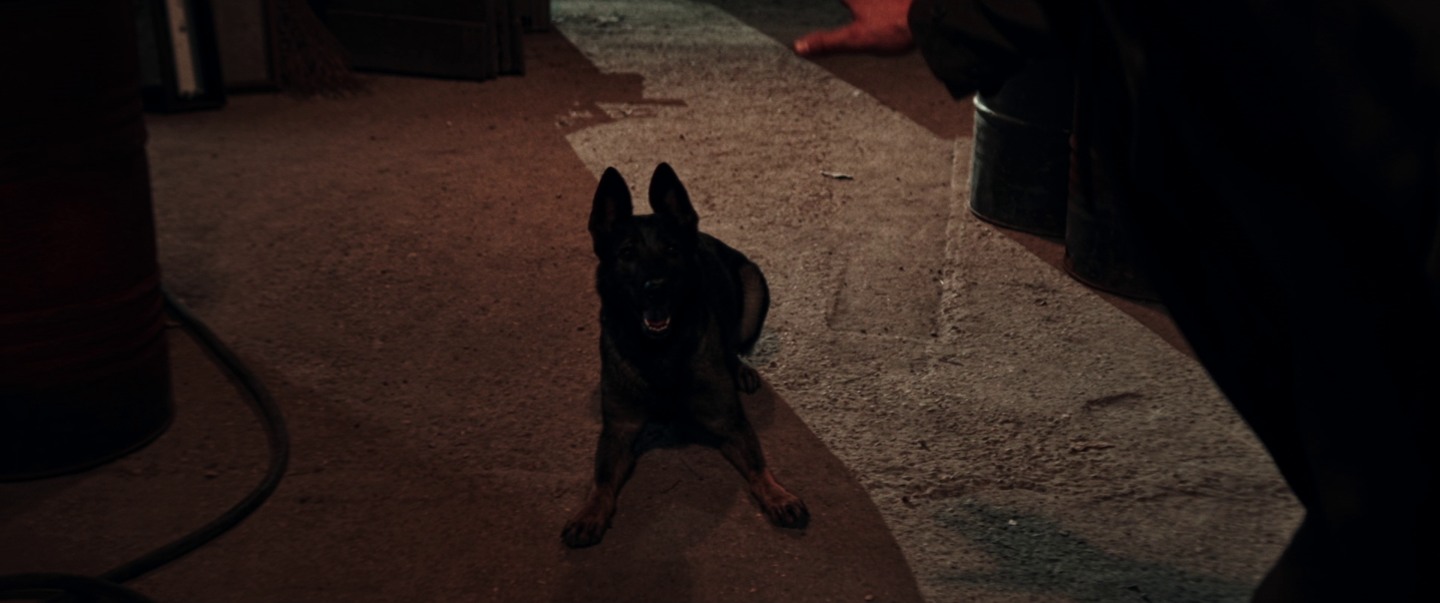
ENLARGE ↗Nerea waits between Diana and Matteo.74:15–78:35
Nerea decides the confrontation
Matteo’s control of the kennel appears to include the stolen dog. Diana’s repeated commands challenge that control. The scene alternates her effort to make Nerea act with the dog’s hesitation and the attacker’s movement. The eventual mauling pays off the earlier training demonstration through a reversal of ownership and obedience.
Daylight, police and the removal of the killer’s body change the scene’s conditions without returning Diana’s sight or undoing either family’s losses. The film gives the survivors an exit from danger while refusing a return to the life before the collision.
Chin leaves with his cousin for Hong Kong. Diana’s refusal of an offered police ride and her final attachment to Nerea leave the ending between independence and isolation. The child is safe, but the companionship that organised their escape cannot simply continue unchanged.
FX / ACTION / EDITING
How the danger takes shape.
Open each sequence to move through its stages, then enlarge any image to step through the gallery.
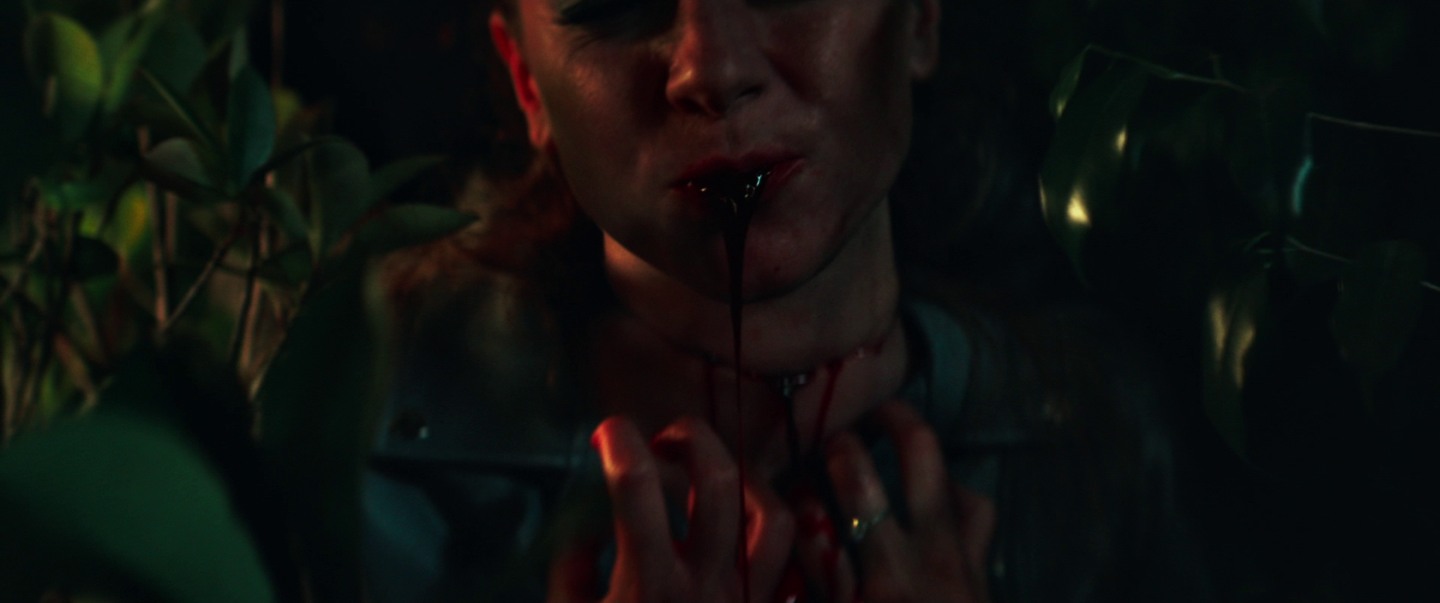
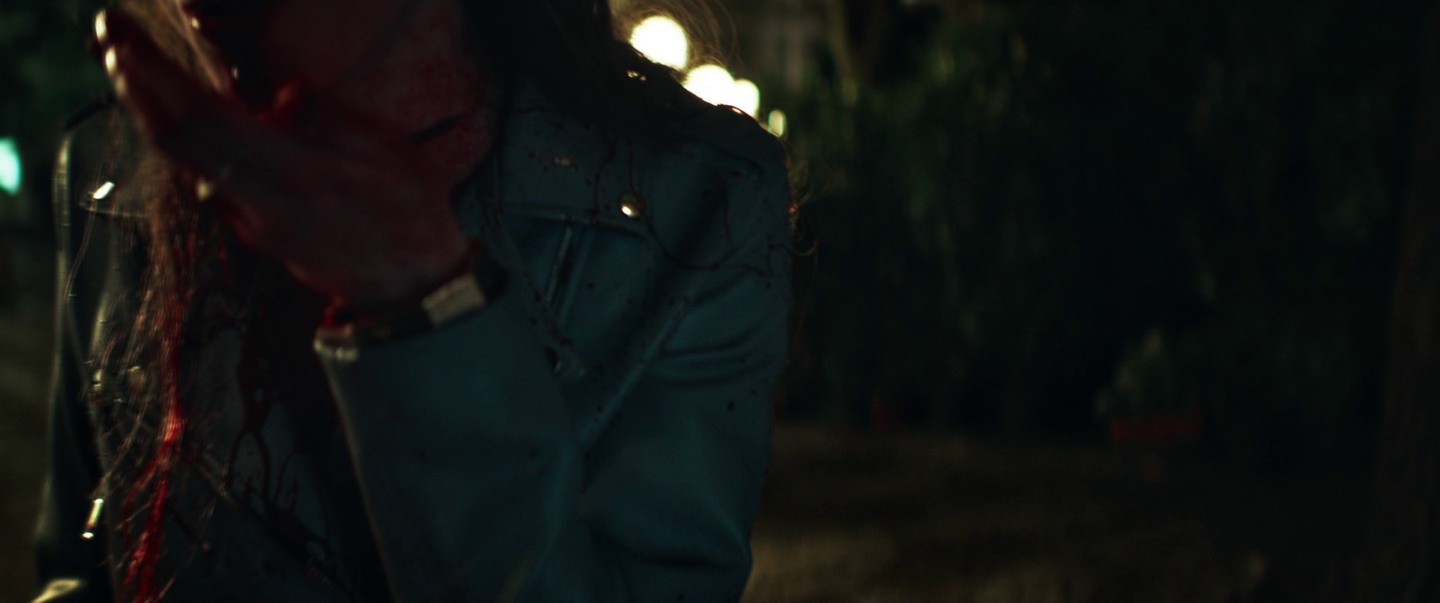
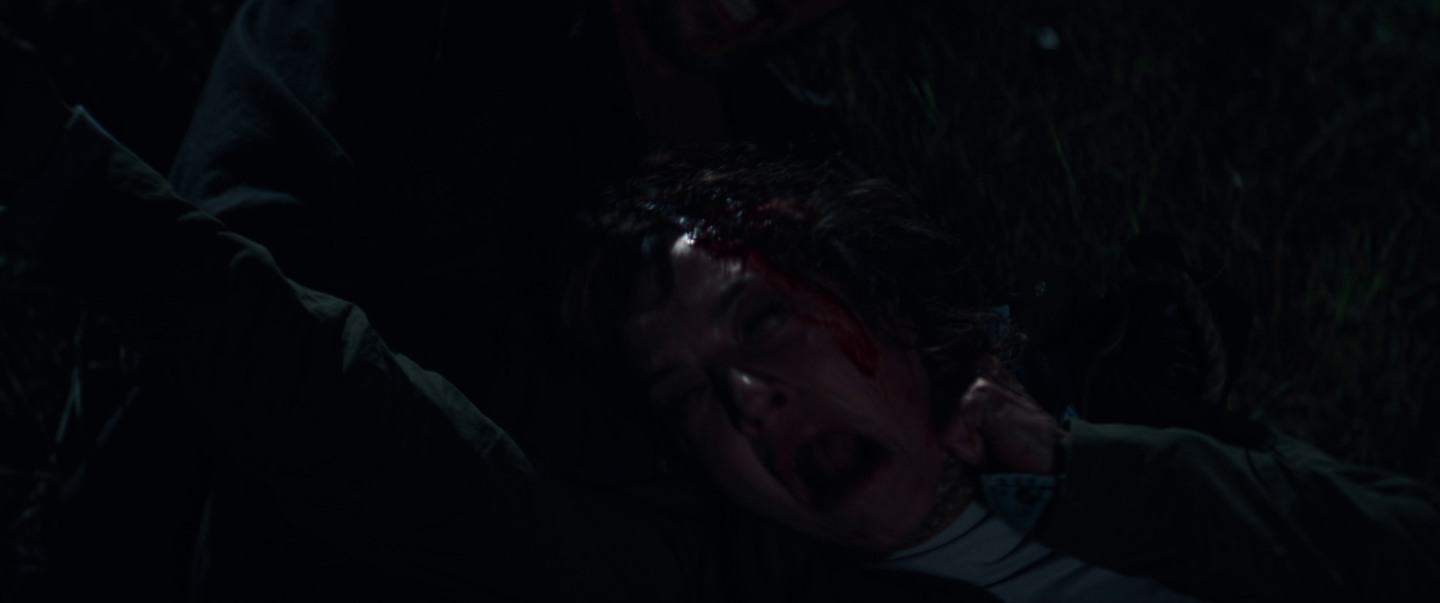
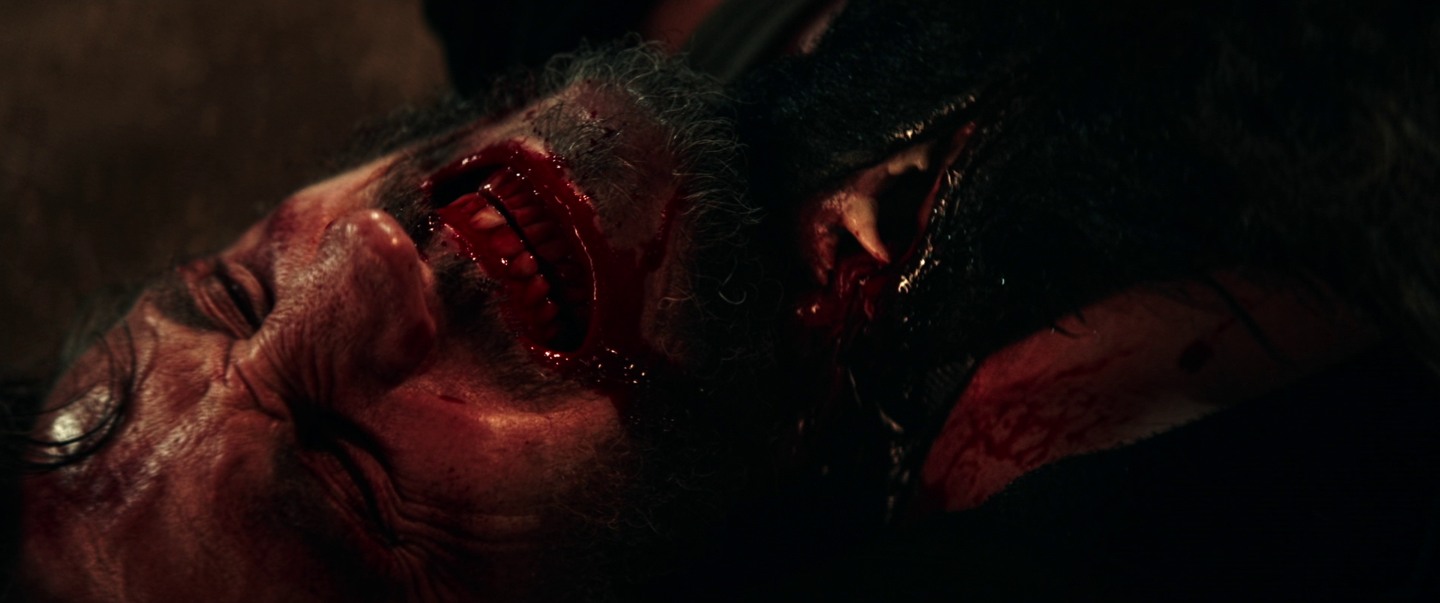
The sequence moves from a partly obscured assault to the victim’s struggle in brighter street light, then delays the explicit wound insert until the police inspection. Hands, blood and the thin line around the neck carry different stages of the effect. The changing scale of the shots is as important as the final prosthetic detail.
Explore the 6 stages
ENLARGE ↗The attack emerges from the dark.ENLARGE ↗The wire tightens.ENLARGE ↗The struggle moves into the light.ENLARGE ↗Hands search for the wound.ENLARGE ↗The victim reaches the parked cars.ENLARGE ↗The wound becomes police evidence.
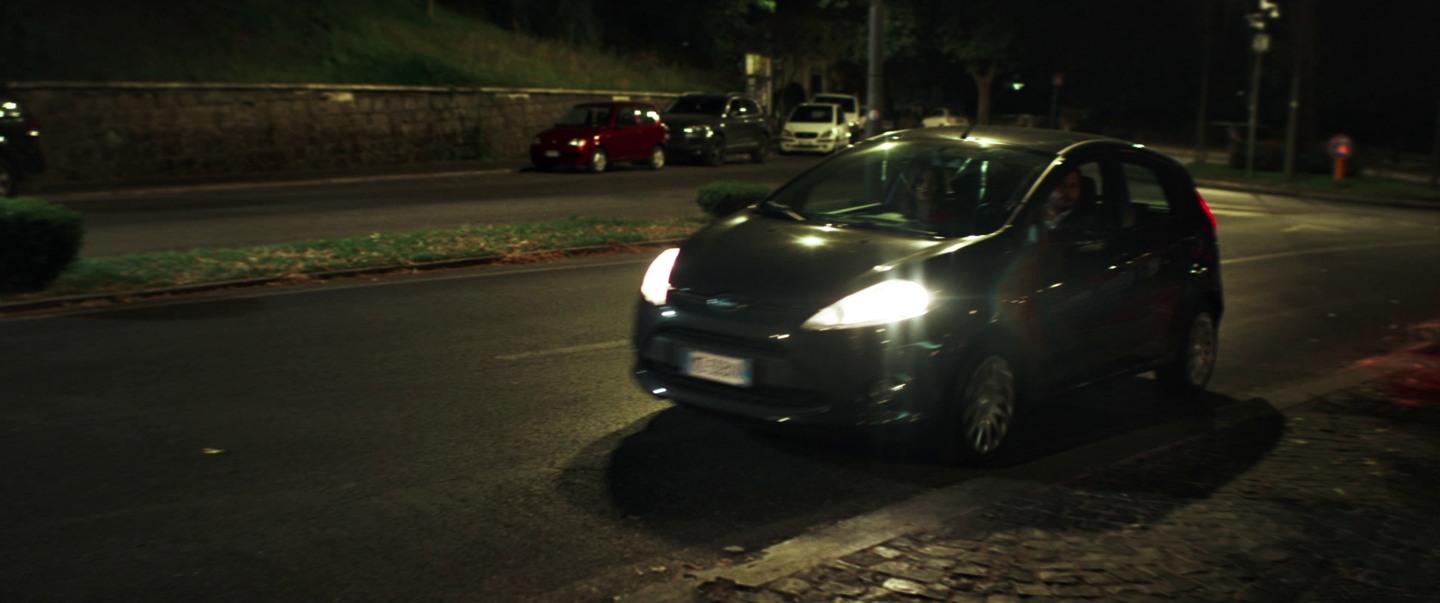
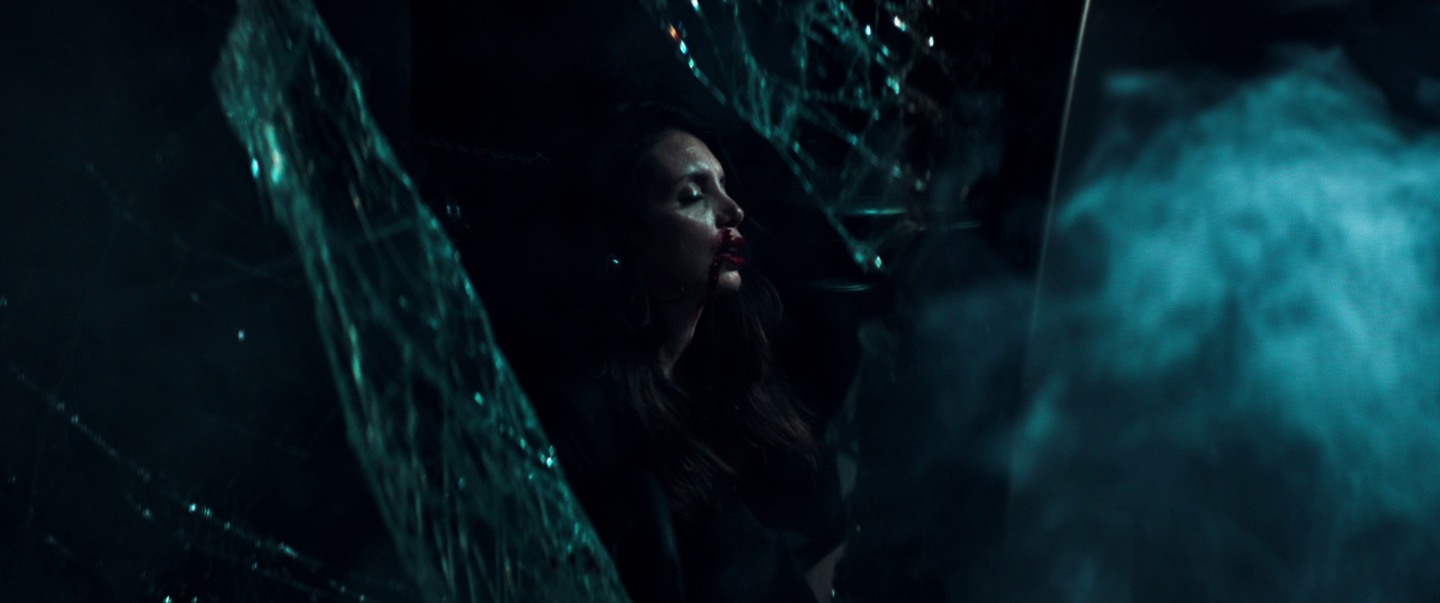
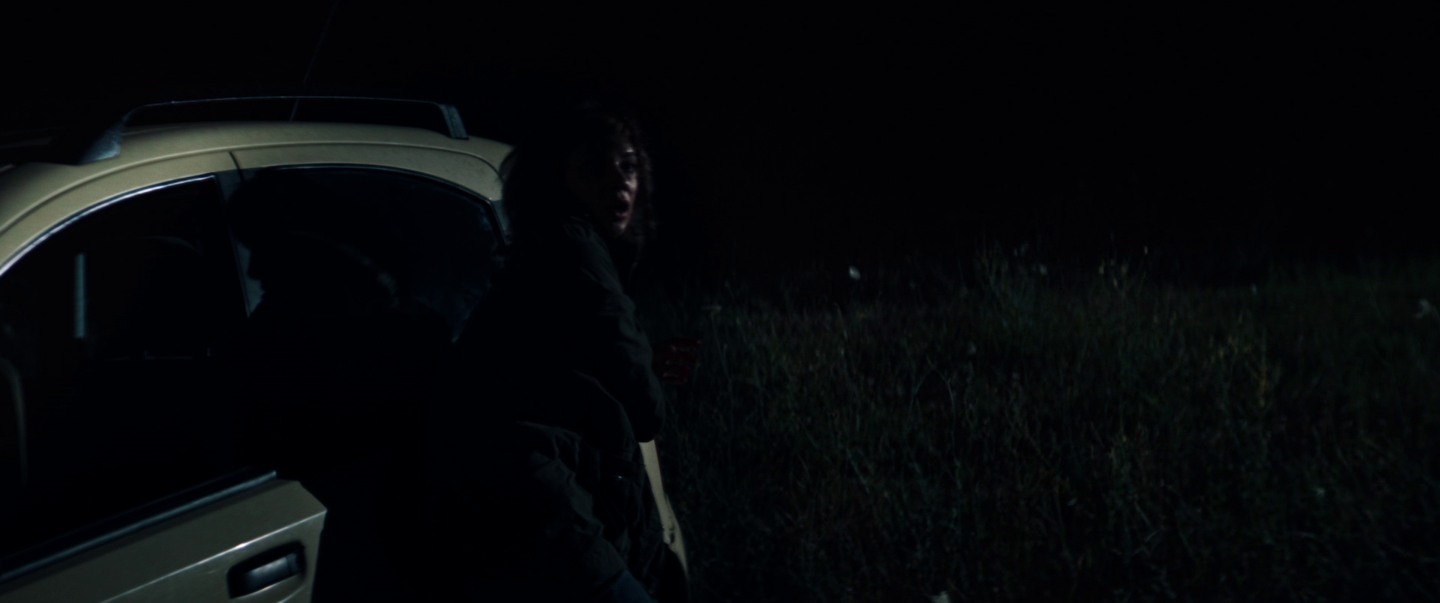
Alternating driver, pursuer and road views establish the chase before the impact breaks its rhythm. The rollover is followed by a held exterior and a confined view through damaged glass. The sequence divides stunt spectacle from the subjective aftermath of the crash.
Explore the 6 stages
ENLARGE ↗Diana looks back.ENLARGE ↗The van fills the road behind her.ENLARGE ↗The junction arrives too quickly.ENLARGE ↗The car rolls.ENLARGE ↗The overturned car holds the frame.ENLARGE ↗Diana behind the broken windscreen.
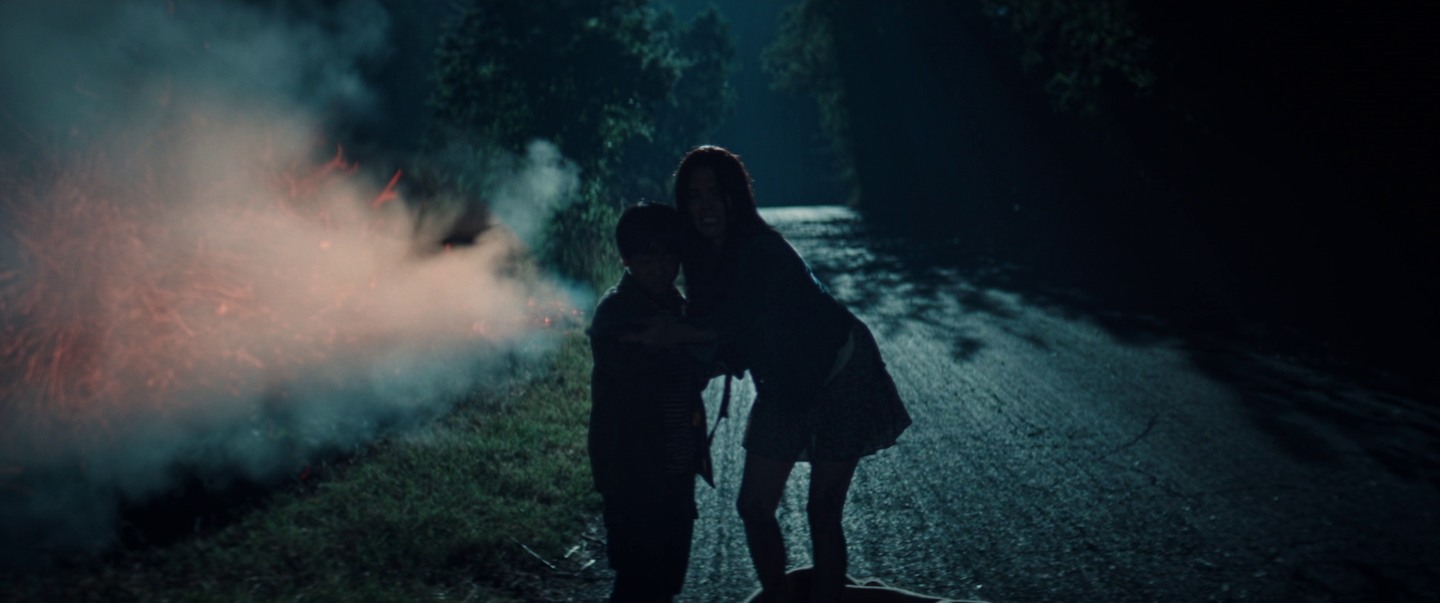
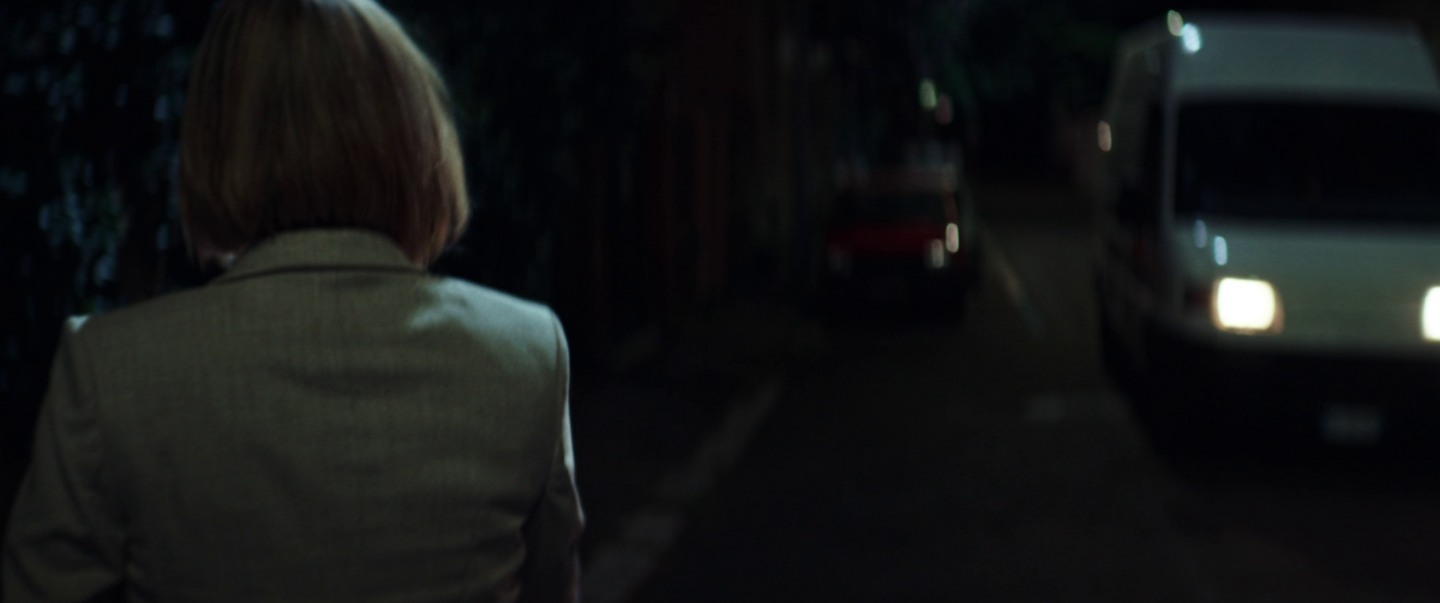
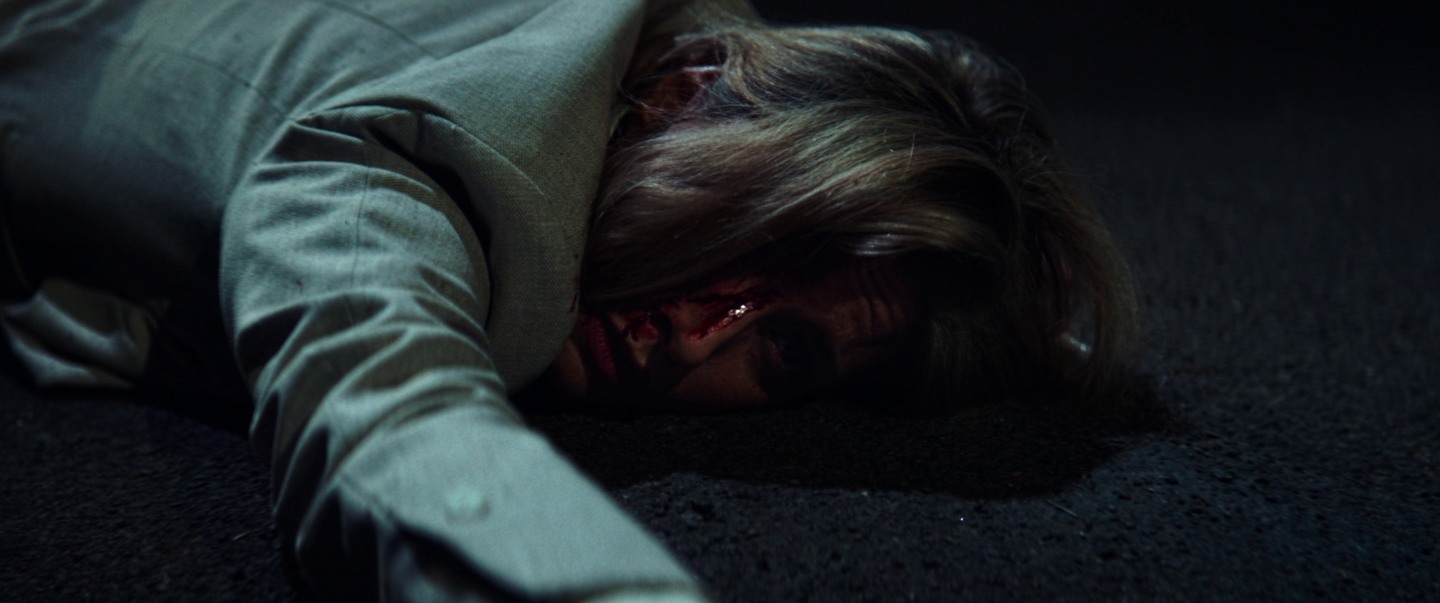
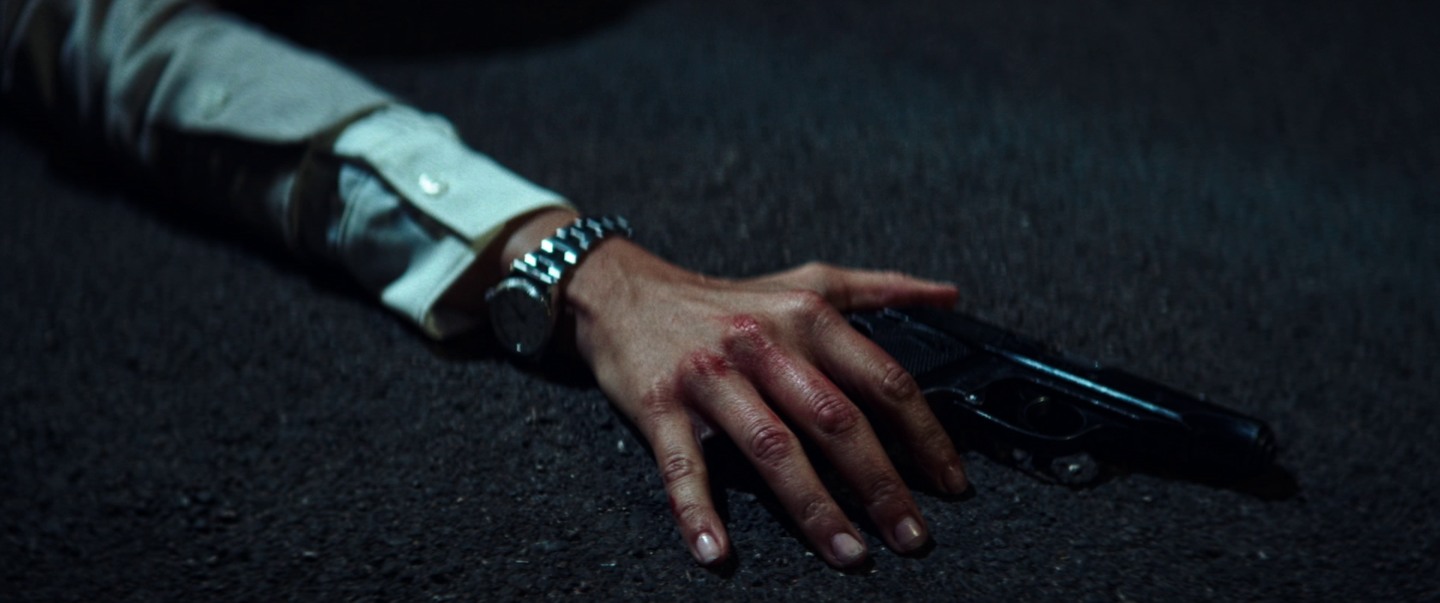
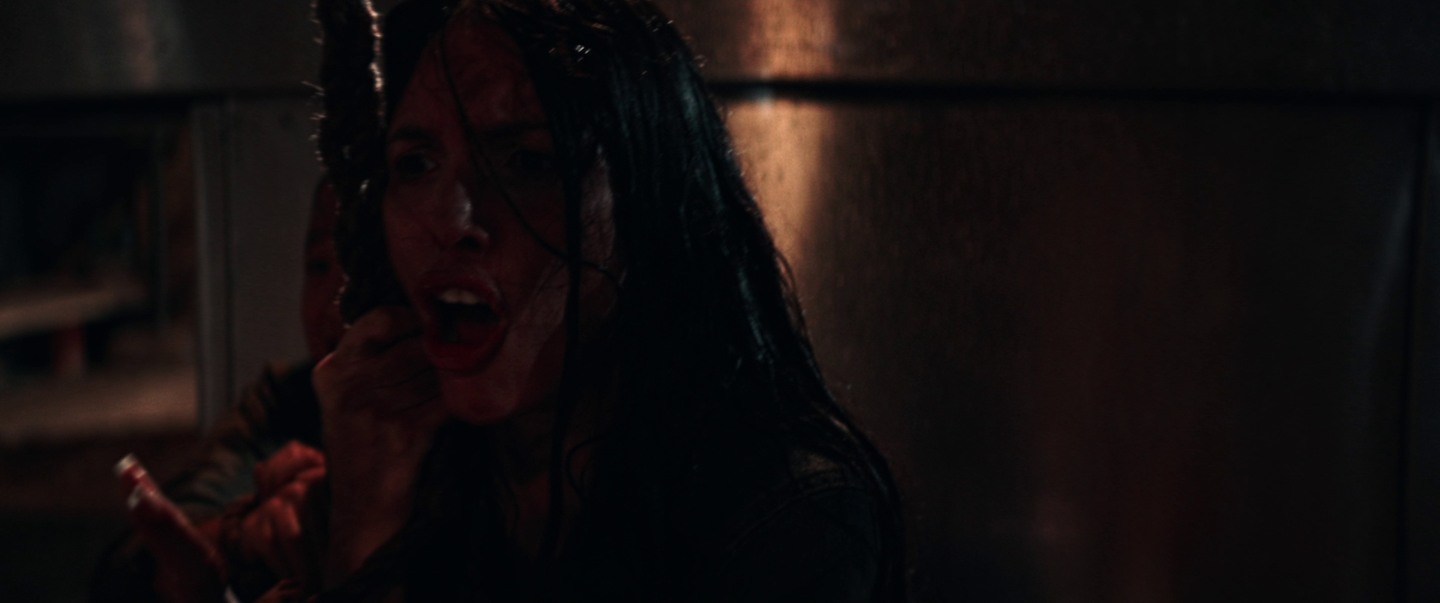
The second approach repeats the vehicle threat while changing the target. Bajani’s attention to her injured colleague leaves the returning van behind her. Injury makeup, the fallen body and the abandoned pistol replace the officers’ earlier authority with a set of exposed objects on the road.
Explore the 7 stages
ENLARGE ↗The officers wait outside the house.ENLARGE ↗Headlights isolate the officer.ENLARGE ↗The first impact’s aftermath.ENLARGE ↗Bajani reaches her colleague.ENLARGE ↗The van returns toward Bajani.ENLARGE ↗Bajani lies on the road.ENLARGE ↗The pistol remains within reach of no one.
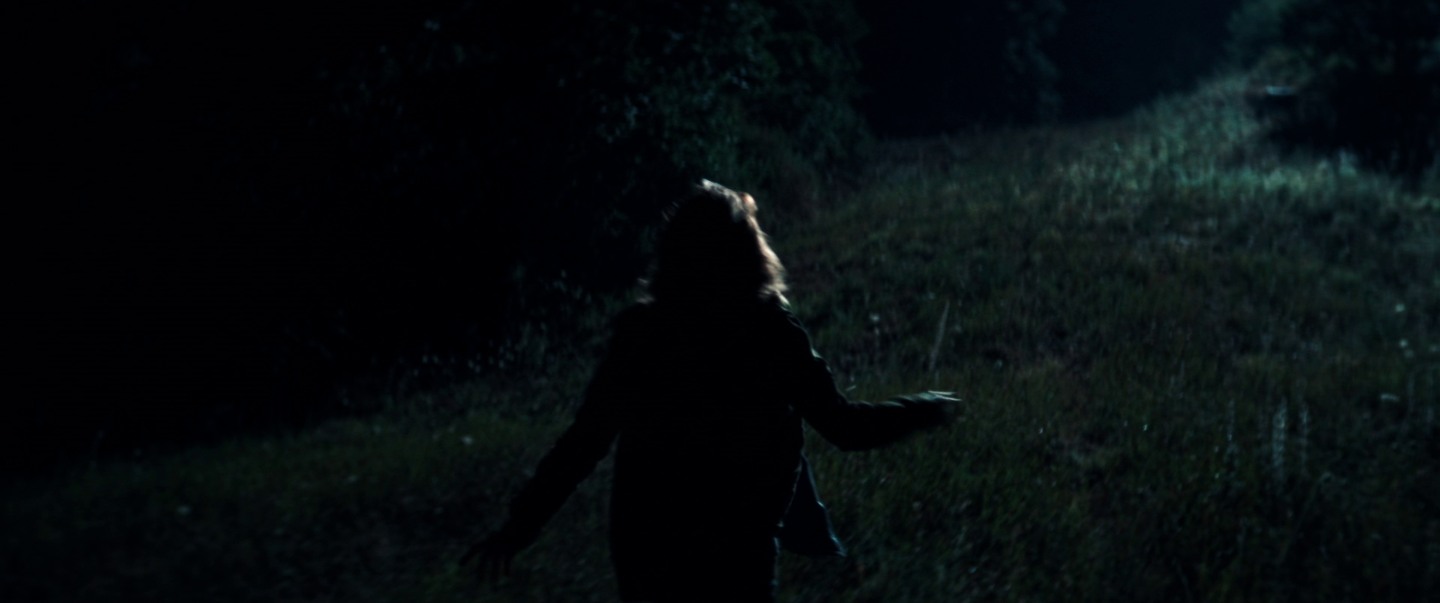
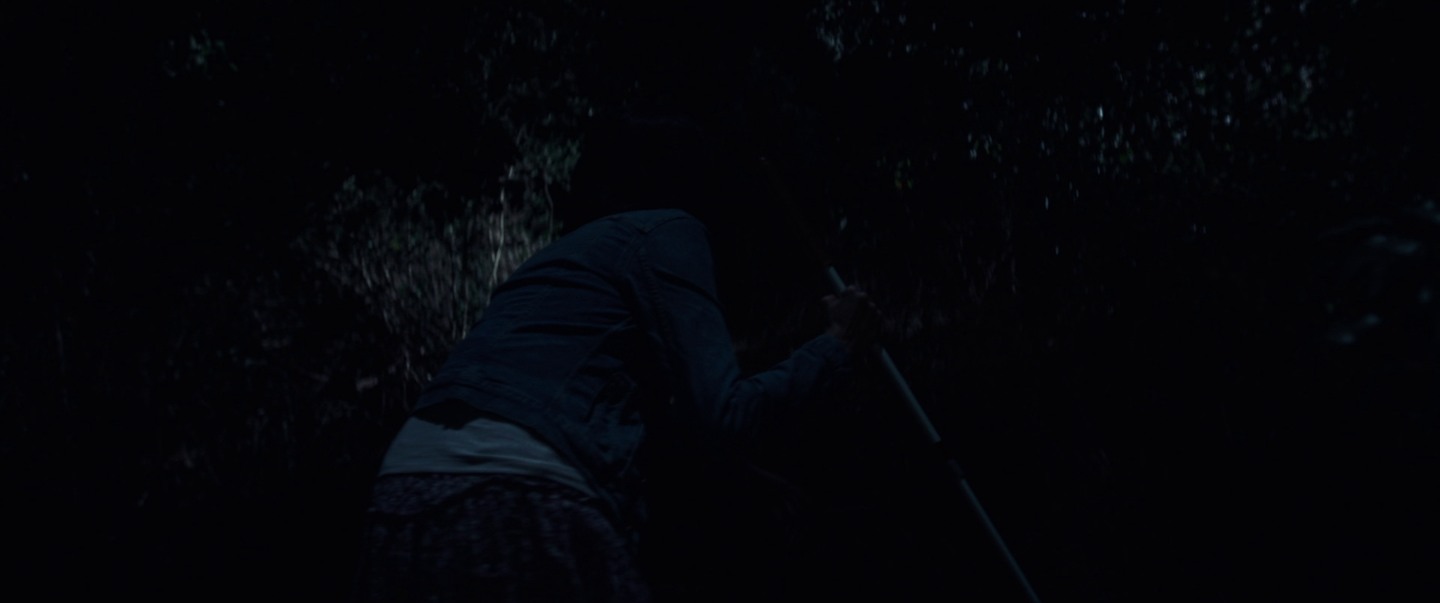
The field offers open space but little visibility. The attack closes that space around Rita’s neck, recalling the first murder’s wire. Its aftermath changes the mode of discovery: Chin can look, while Diana must use touch. The final image belongs to their relationship as much as to the wound effect.
The cutting moves between bodies in reeds, isolated animal details and submerged views with little stable geography. Concealment becomes exposure. The gallery follows how these different views are assembled into a single threat.
Explore the 6 stages
ENLARGE ↗Diana and Chin enter the reeds.ENLARGE ↗A snake breaks the shelter’s calm.ENLARGE ↗A body passes beneath the surface.ENLARGE ↗Diana lifts a snake away.ENLARGE ↗The threat reaches Chin’s shoulder.ENLARGE ↗They struggle out of the hiding place.
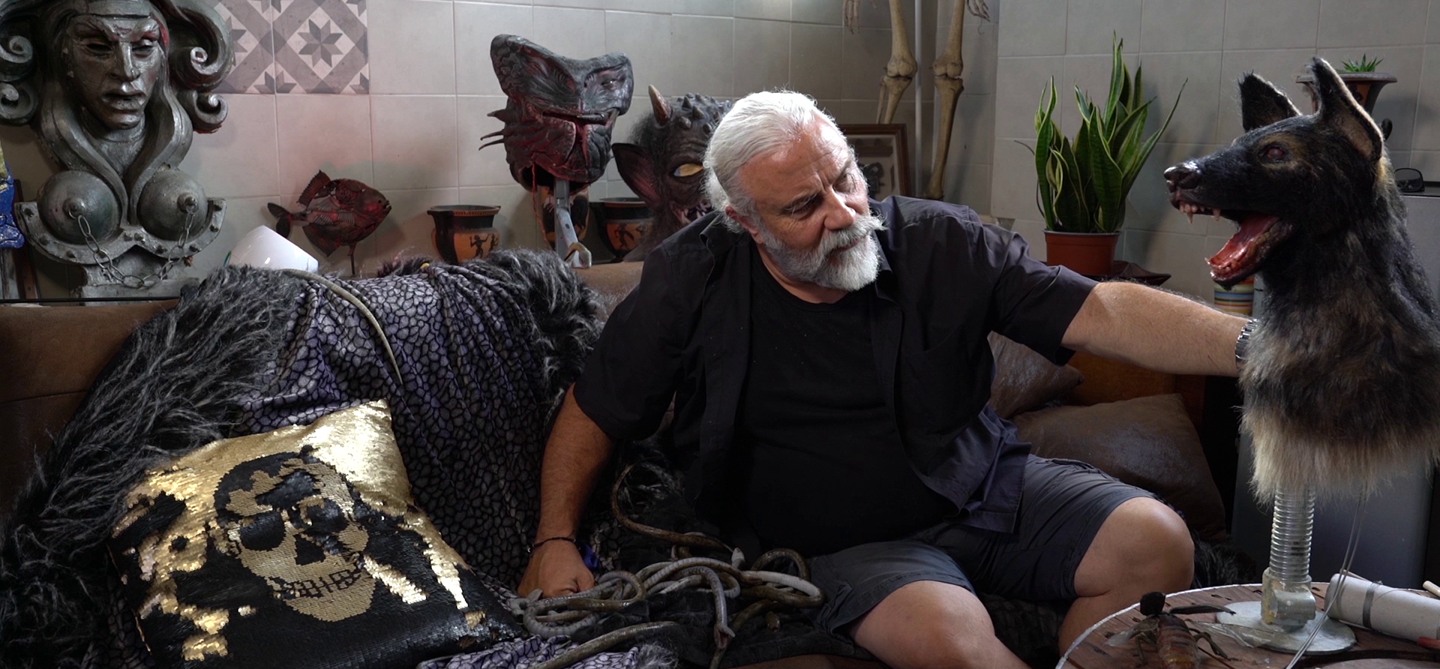
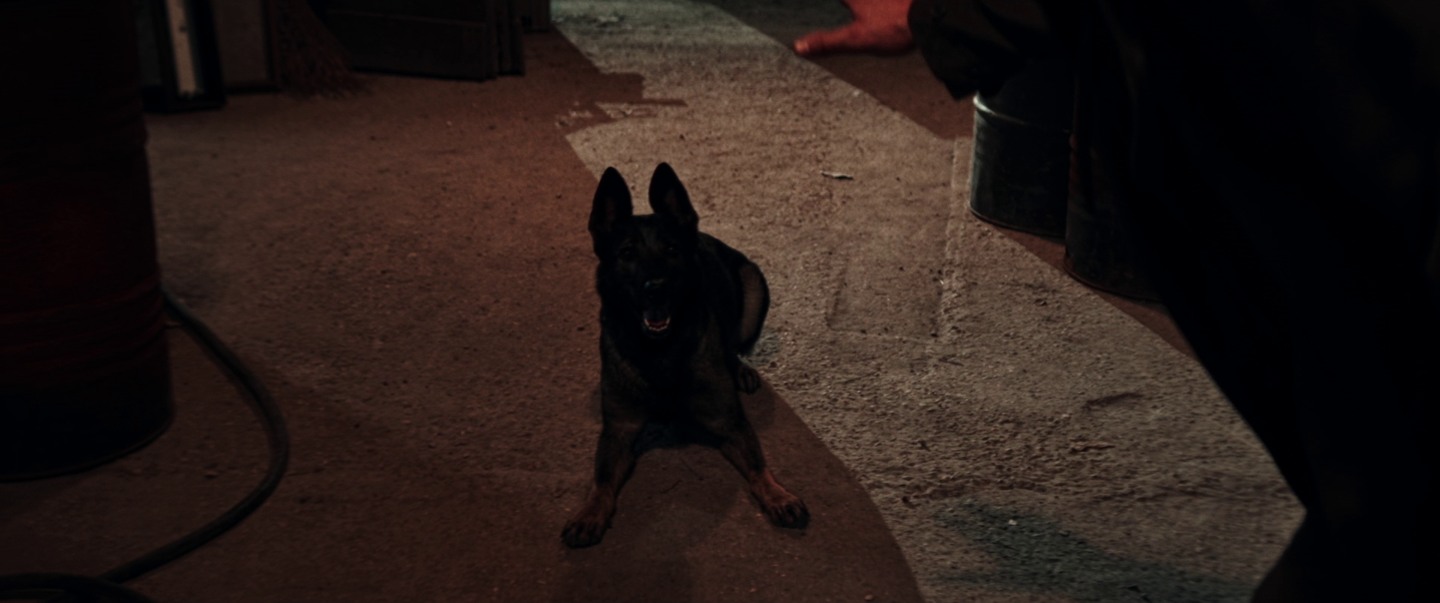
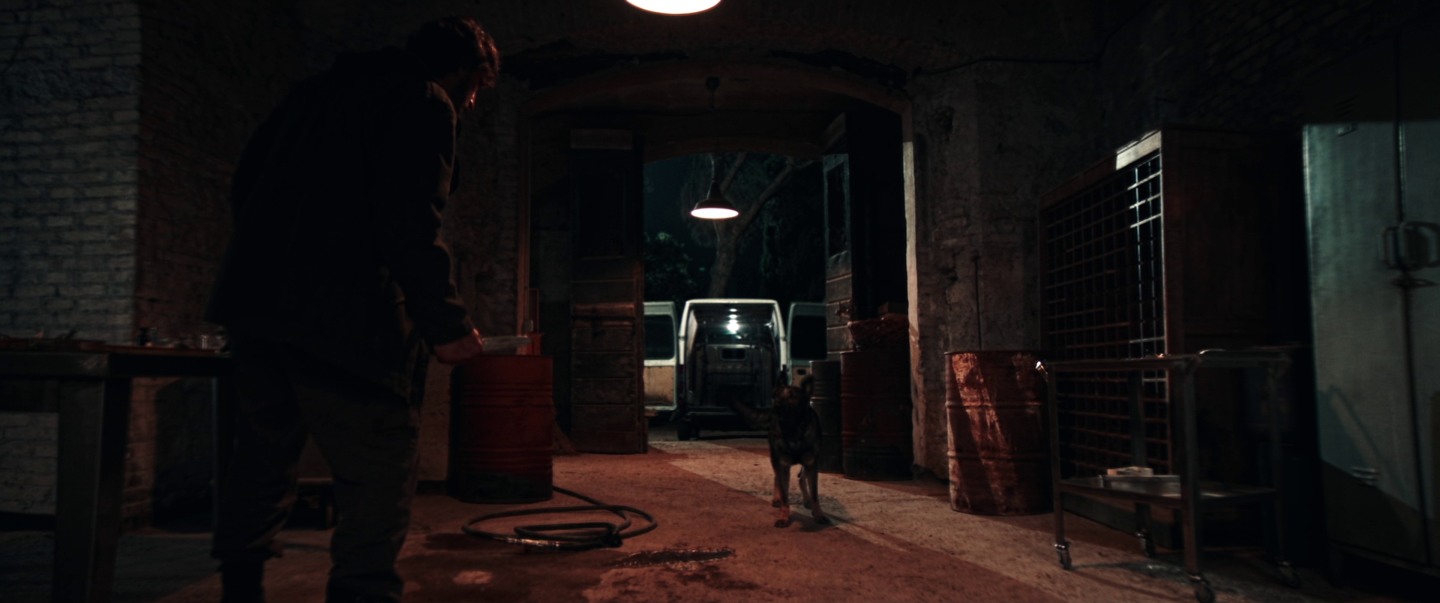
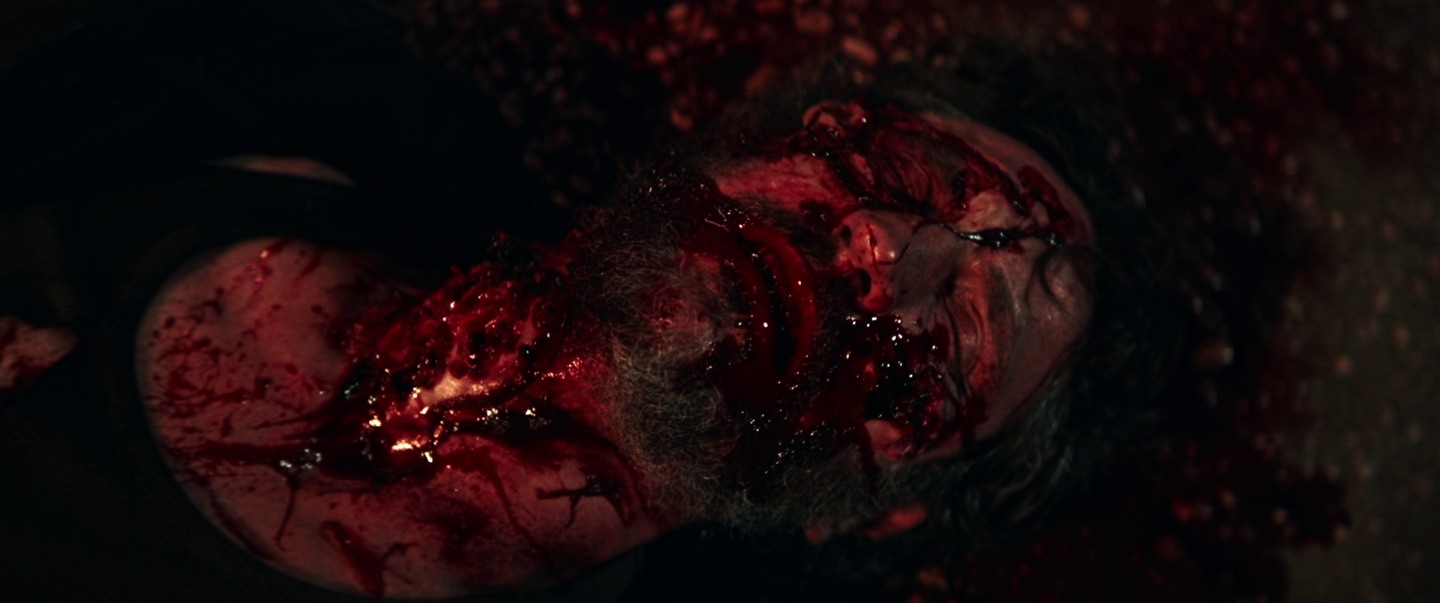
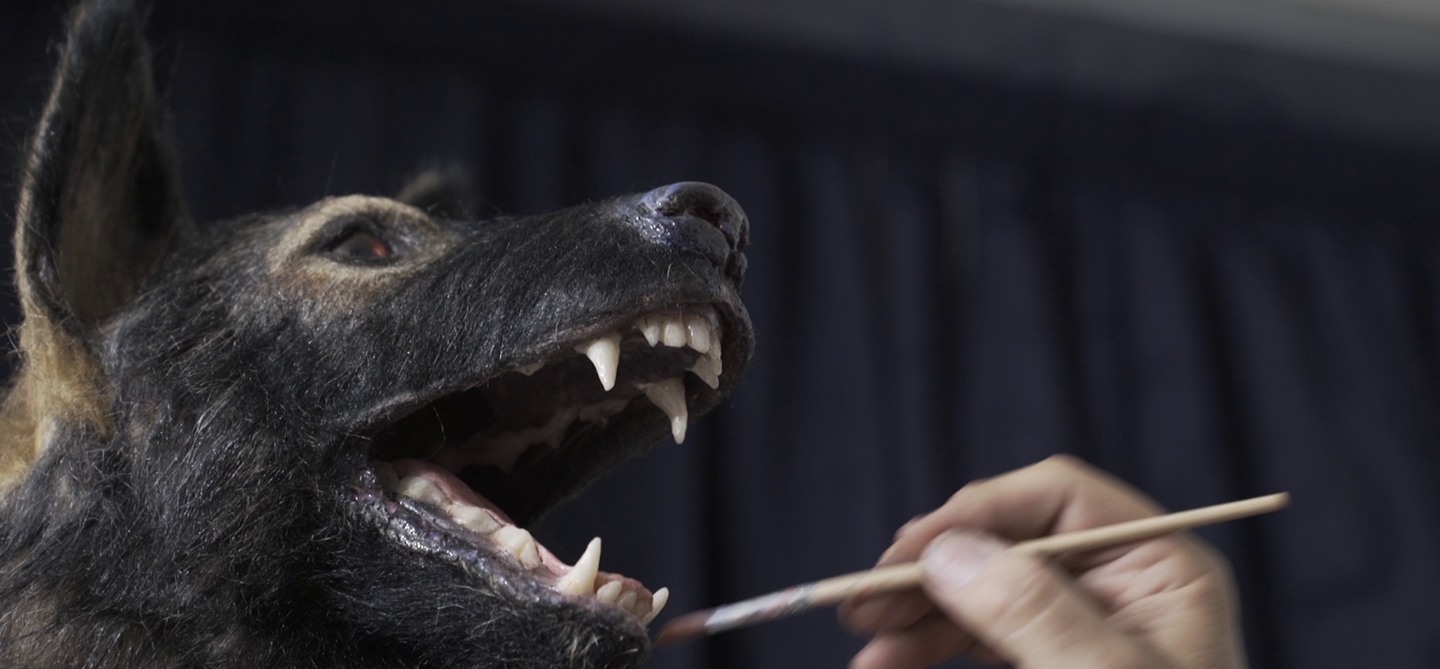
The decisive action begins in the gap between a spoken command and the dog’s response. Wider views establish Nerea’s movement; close views of the attack and the damaged neck deliver the physical result. Stivaletti’s backstage demonstration adds unusually direct production evidence: a furred dog head, mouth detailing and footage of the set. He identifies the attack as a deliberate return to the dog sequence in Suspiria. Here the protector turns on the aggressor, reversing the earlier film’s betrayal.
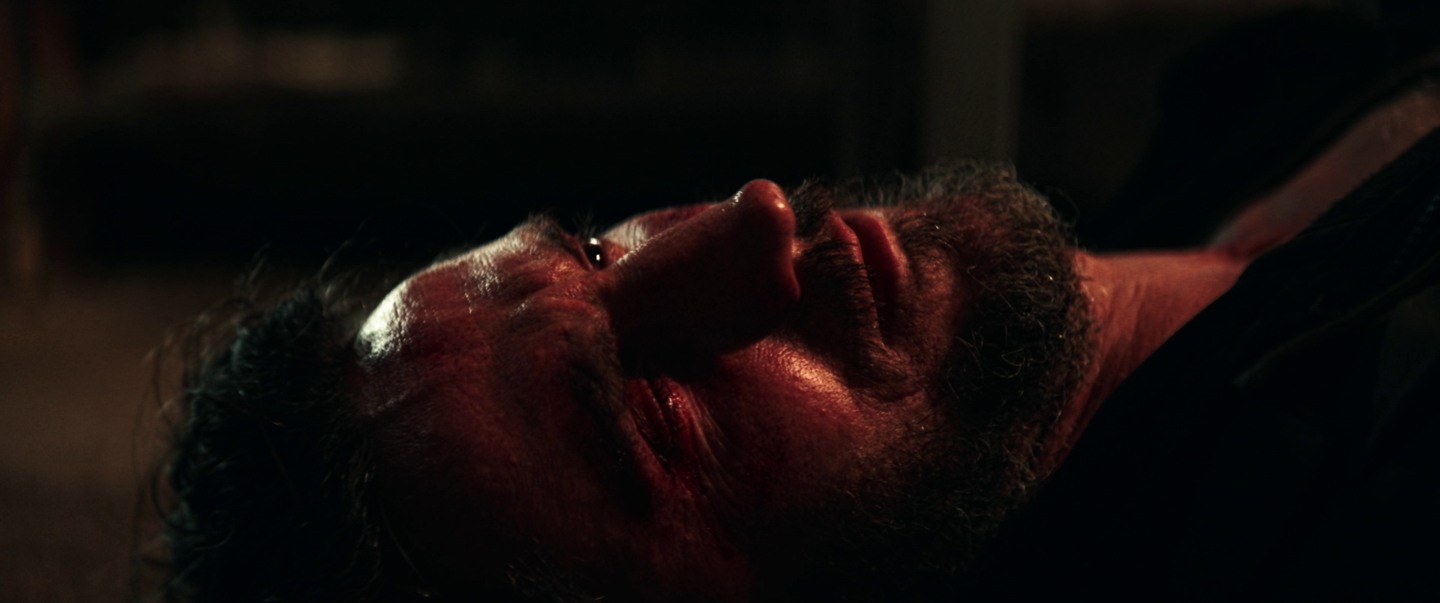
ENLARGE ↗Nerea waits for a command.ENLARGE ↗Diana calls to her.ENLARGE ↗The dog closes the distance.ENLARGE ↗Matteo falls beneath the dog.ENLARGE ↗The attack closes around his neck.ENLARGE ↗The bite is held in close view.ENLARGE ↗The final wound reveals the effect.
OCCHIALI NERI / BACKSTAGE
The people behind the return.
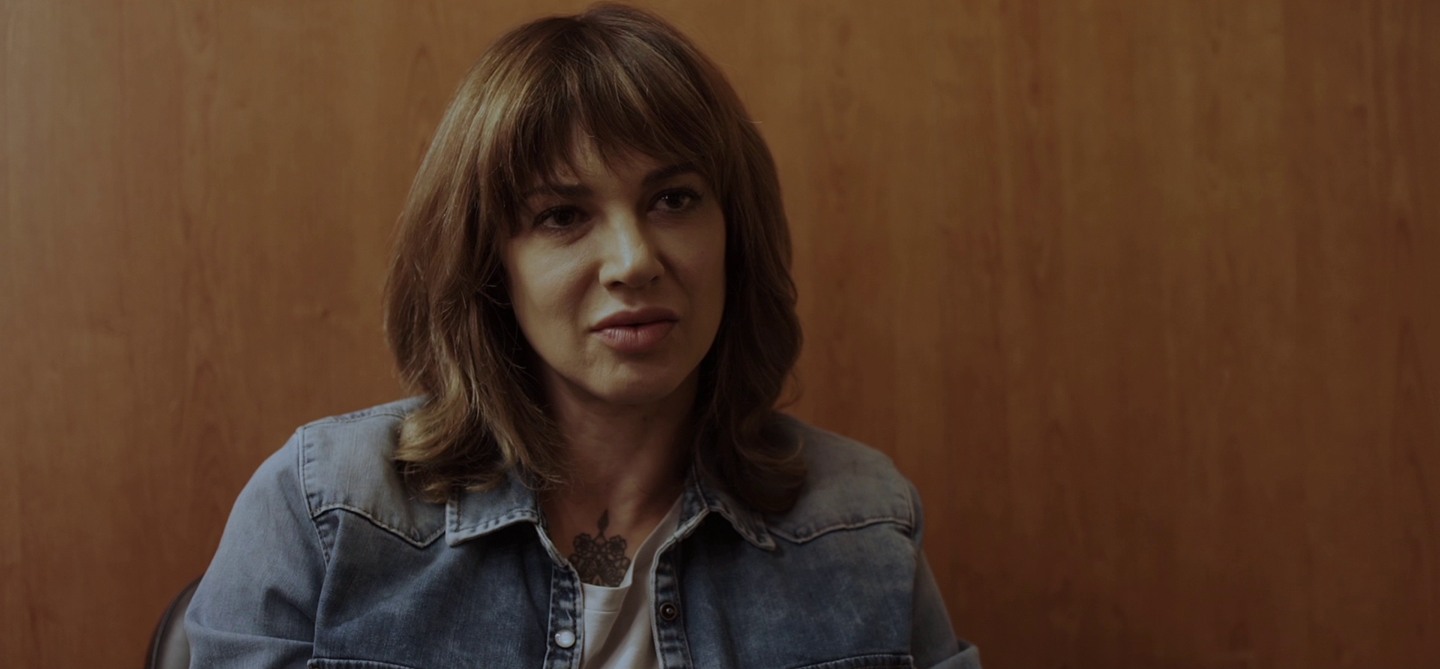
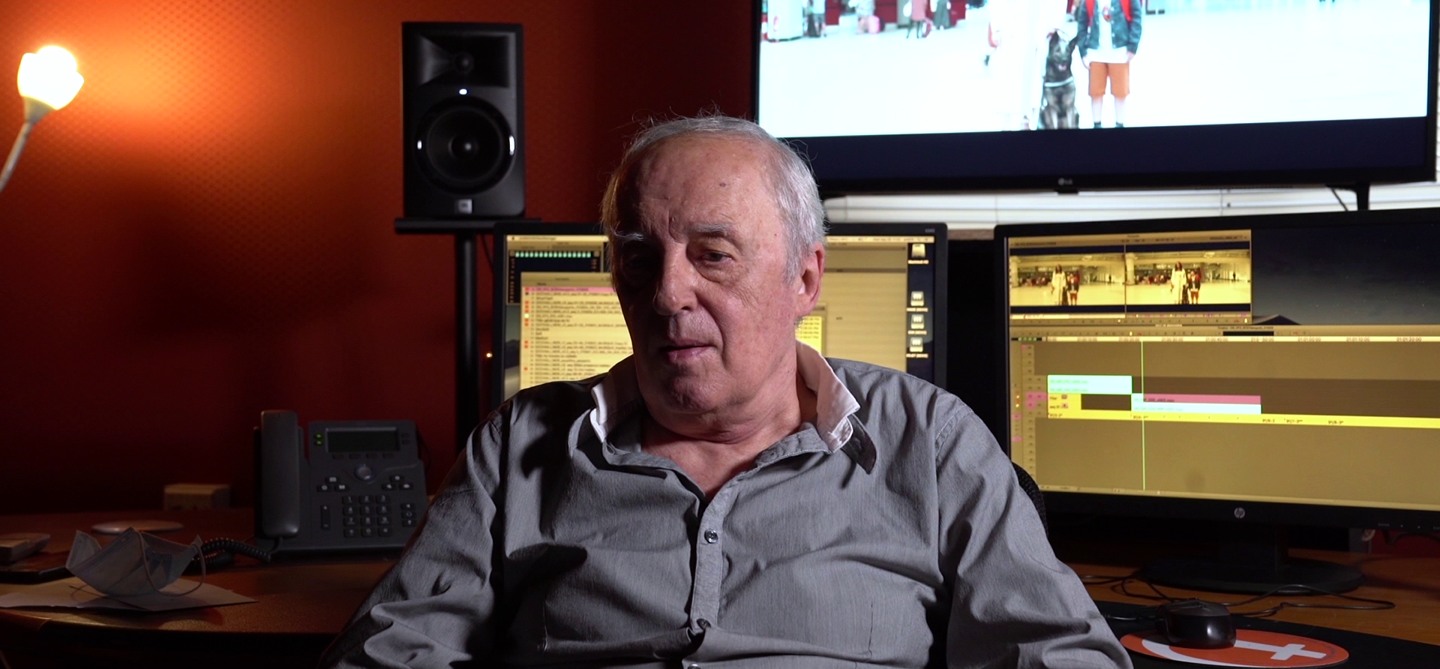
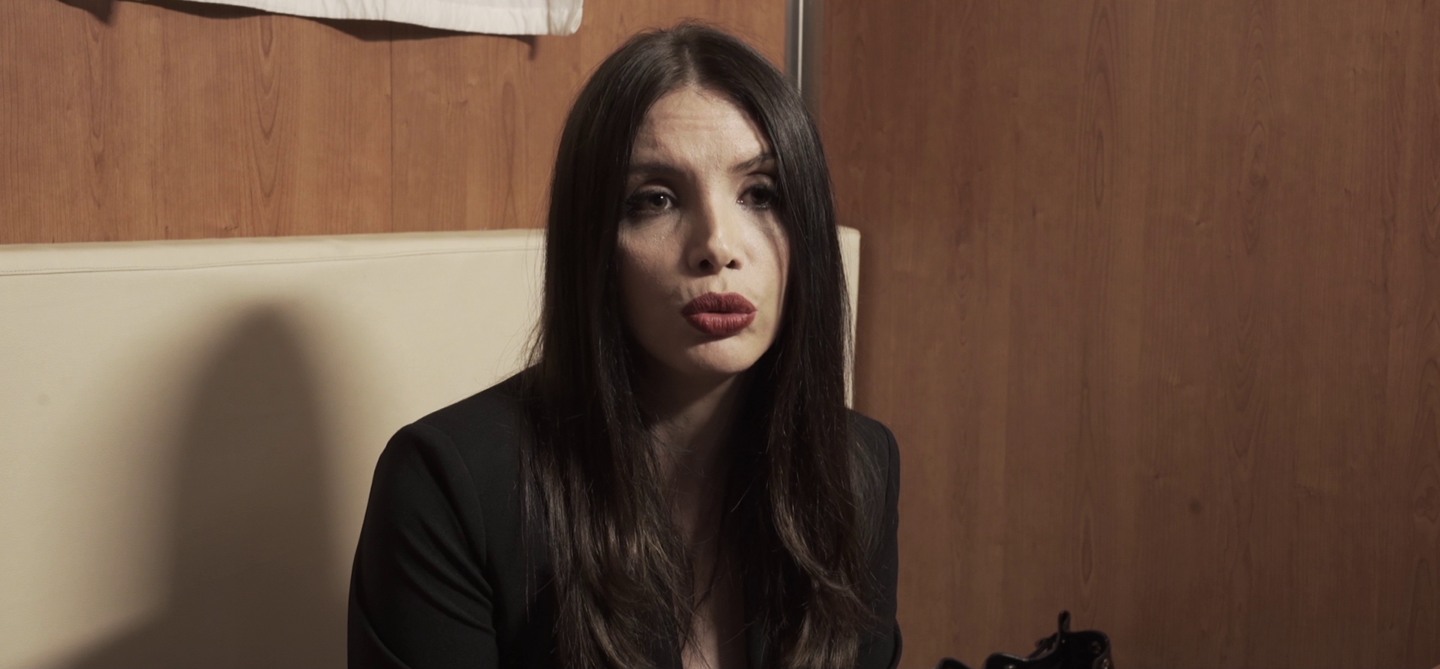
The Blu-ray’s five-minute-forty-second backstage film brings together Argento, Asia Argento, Ilenia Pastorelli and Sergio Stivaletti, alongside location and workshop footage.
Asia Argento recalls asking her father about an abandoned project, then recovering a paper copy through his co-writer Franco Ferrini. The account makes the revival concrete: someone had to retrieve and reread a surviving script before it could be adapted again. She places the earlier writing after The Stendhal Syndrome, qualifying the memory, and describes an early-to-mid-1990s setting that required updating.
Argento’s contemporary Variety interview gives a separate production milestone: an attempt with Vittorio Cecchi Gori in 2002, abandoned when the company collapsed during location scouting. He credits Asia with reviving the project and bringing it to Wild Bunch. The recollection of the script’s origins and the date of that interrupted production describe different stages. Read the interview source →
Argento describes the opening eclipse partly as a tribute to Michelangelo Antonioni, then identifies its function here as a premonition. That distinction helps keep the opening’s two roles in view: a reference to cinema and an event that anticipates the story’s descent into darkness. The extra does not specify a single Antonioni shot as its model.
Pastorelli singles out waking in hospital and discovering the loss of sight as the most difficult passage. Her account centres on the emotional transition rather than an outward imitation of blindness. Argento’s parallel remarks describe the challenge for an image-maker of imagining a person deprived of images. Return to the hospital study →
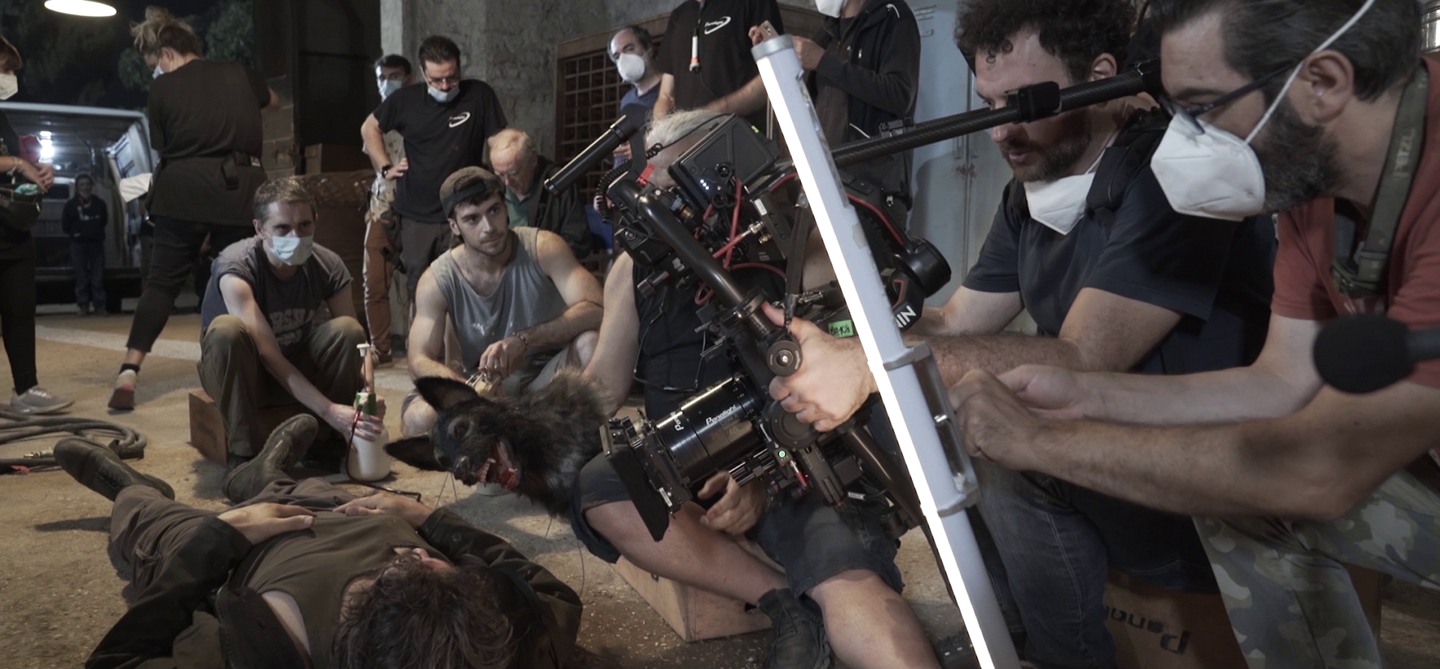
Stivaletti identifies the dog attack as a deliberate self-reference to Suspiria and says he was asked to supervise the effects for the whole sequence. The film shows him beside a furred dog head, then moves into mouth detailing and footage of the attack being staged. This is direct evidence for a constructed animal effect within a sequence that also uses the trained dog.
ENLARGE ↗Detailing the dog’s mouth.ENLARGE ↗The attack staged for the camera.
The comparison also clarifies a change in dramatic function. Daniel’s dog turns against its owner in Suspiria; Nerea becomes the means of defeating Diana’s attacker. Stivaletti is describing his work on Dark Glasses, not claiming a role in the 1977 film. Continue in the Suspiria dossier →
BACKSTAGE · 04:36–05:36
Making a place for fear
The closing remarks connect fear, laughter and filmmaking. Asia describes helping her father give form to the fears that recur in his work; the accompanying set footage restores the collective labour behind that personal account. The extra’s interviews are intercut with production images, so the speaker’s testimony and the evidence visible in a particular shot remain distinct.
Rita’s courtyard and crossing lessons make speech useful through specificity: where to place a hand, which reference point to use, when to move. Later, Chin’s directions while Diana holds the gun expose the limits of the same arrangement. A description can enable an action without guaranteeing its result.
The call to Bajani’s phone transforms a reassuring association into a trap. Chin accepts the caller’s claimed institutional role and supplies the refuge’s address. The voice succeeds because the object—the police contact—already appears trustworthy.
Matteo’s smell links the first appointment to the caretaker building. His later account of being humiliated confirms something Diana has already recognised. Unlike a revelation dependent on replaying a misleading image, this connection belongs to a sense the audience can only understand through her response.
The repeated appeal to Nerea prolongs the finale before the physical attack. Diana can speak but cannot see whether the dog will obey; the audience can see the waiting animal. The interval between those two positions supplies the scene’s suspense.
The opening credits resolve the photography attribution and distinguish sound, music and creature work. The end roll adds the practical effects and animal-training teams.
Screenplay
Dario Argento and Franco Ferrini
Cinematography
Matteo Cocco
Editing
Flora Volpelière
Original music
Arnaud Rebotini
Direct sound / sound design / mix
Daniele Maraniello / Bruno Ventura / Damiano Silva
Special makeup, prosthetics and animatronics
Sergio Stivaletti Studio
FX supervisor
Carlo Corridori
Nerea’s preparation
Dog Studios di Carolina Basile; dog trainer Carolina Basile
Orientation and mobility consultant
Paola Cataneo
The trained animal, the constructed dog effect, stunt action and sound work belong to related but distinct parts of the production. The backstage account specifically connects Stivaletti to the dog sequence; the credit roll supplies the wider departmental context.
Survival & shared knowledge
An eclipse invites a city to look; a collision changes how one woman must navigate it. This expanded dossier follows Dark Glasses through survival, the recovered screenplay, performance and assistance, the production workshop, Rebotini’s score and the divided response at Berlin.
Spoilers: this study discusses the film’s story and ending.
01 / THE ECLIPSE & THE CHANGE OF QUESTION
Knowing the killer does not end the danger
Dark Glasses begins its published premise with a disturbance shared by a city: an eclipse darkens a hot Roman day. Diana’s later loss of sight follows a collision while she is escaping a killer. Vision Distribution presents the celestial event as a premonition, then describes a more practical struggle involving Diana, the child Chin and her dog Nerea. The distributor’s account ↗
The movement from public spectacle to personal disorientation offers a useful way into the film. An eclipse invites people to look together at something unusual. Diana’s changed circumstances make the everyday environment something she must learn to navigate again. The connection is a narrative proposition, not a medical explanation of blindness, and the crash should not be confused with the earlier act of looking at the sun.
Quebec’s classification rationale describes another change: an opening murder and police investigation give way to the flight of a woman and child from an already identified killer. The regulator’s narrative account ↗ The problem shifts from assigning a name to finding a safe action. An explanation can be available while escape remains uncertain.
This makes suspense a question of unequal access to information. The audience may recognise a threat without being able to communicate it to Diana; Chin may see a route without possessing an adult’s authority; professional help may arrive without solving the immediate danger. The illustrated scene guide follows those changes through the film, from the first appointment to Matteo’s recognition and Nerea’s intervention. They let the dossier ask what changes after recognition, rather than judge the whole film by the concealment of its culprit.
02 / FERRINI, ASIA ARGENTO & A REVIVED PROJECT
An old script returns to a different workshop
At the 2022 Berlin press conference, as reported by Vania Amitrano, Argento recalled abandoning the project after a producer’s collapse. Asia rediscovered the script while searching old papers for her autobiography, encouraged him to reread it, and the lockdown gave him time to revise it. The reported development account ↗ The story gives the revival a human cause without providing a documented revision history.
Filmitalia credits the screenplay to Argento and Franco Ferrini. Film at Lincoln Center’s programme also identifies Asia as associate producer and performer. Writing credits ↗The programme’s collaboration account ↗ Rediscovery, rewriting, production advocacy and performance are different contributions. Keeping them distinct makes the collaboration more visible than a generic story about a master returning alone.
A recovered script is not simply a film postponed intact. Its characters must be recast, its spaces found or built, and its action made workable by a new crew. The available accounts do not identify which scenes survived from the earliest version or what Ferrini changed. An authenticated early draft would answer a more useful question than the number of years the idea supposedly spent in a drawer.
Asia’s account to Bruno Ployer adds a perspective on the shoot. She describes Argento encouraging different deliveries between takes and leaving room for actors’ contributions. She tentatively connects that openness to his recent acting experience in Vortex. Asia on variation and direction ↗ That connection remains her interpretation. The reported working method, however, complicates the notion that an old screenplay necessarily produced a rigidly predetermined performance.
03 / PASTORELLI, CHIN, RITA & NEREA
Help is a relationship, not a cure
Diana and Chin are connected by the collision and its consequences, not simply by complementary abilities. The distributor’s premise makes their flight a shared problem; Nerea’s assistance adds another relationship to the group. The companions in flight ↗ It would be reductive to treat the child and dog as replacement eyes whose only function is to complete an otherwise incomplete heroine.
Rita, played by Asia Argento, introduces another form of help: instruction that enables Diana to act. In the reported Berlin remarks, Asia describes Rita’s generosity alongside an attachment to Diana that could arouse suspicion. Asia on Rita ↗ Assistance is therefore not outside the thriller. Trust, closeness and the right to intervene become part of its uncertainty.
Ilenia Pastorelli reported meeting blind women while preparing the role and working through her own fear of dogs. Pastorelli on preparation ↗ In Ployer’s interview she identifies imagining terror, rather than portraying loss of sight alone, as the harder acting task: on set she had to summon a pursuer who was not actually chasing her. Pastorelli on performing fear ↗
The critical question is what Diana does with help. Does a scene allow her to decide, refuse, initiate or revise a plan? Does Chin have needs beyond guiding her? Does the film make their mutual dependence meaningful, or repeatedly turn it into an opportunity to expose them to harm? Those questions keep affection and autonomy in the same account. The contemporary reviews disagree about precisely this balance. The pen bluff, the guided shot and the airport separation offer three different tests of how the relationship distributes knowledge, dependence and choice.
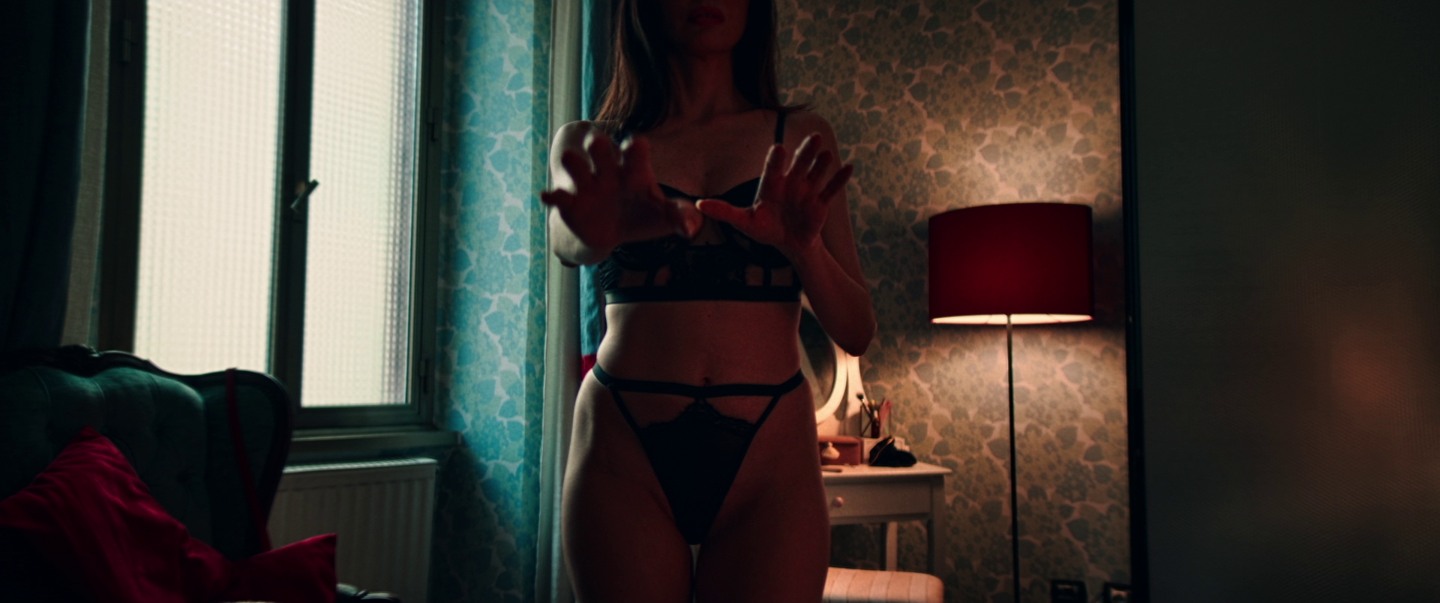
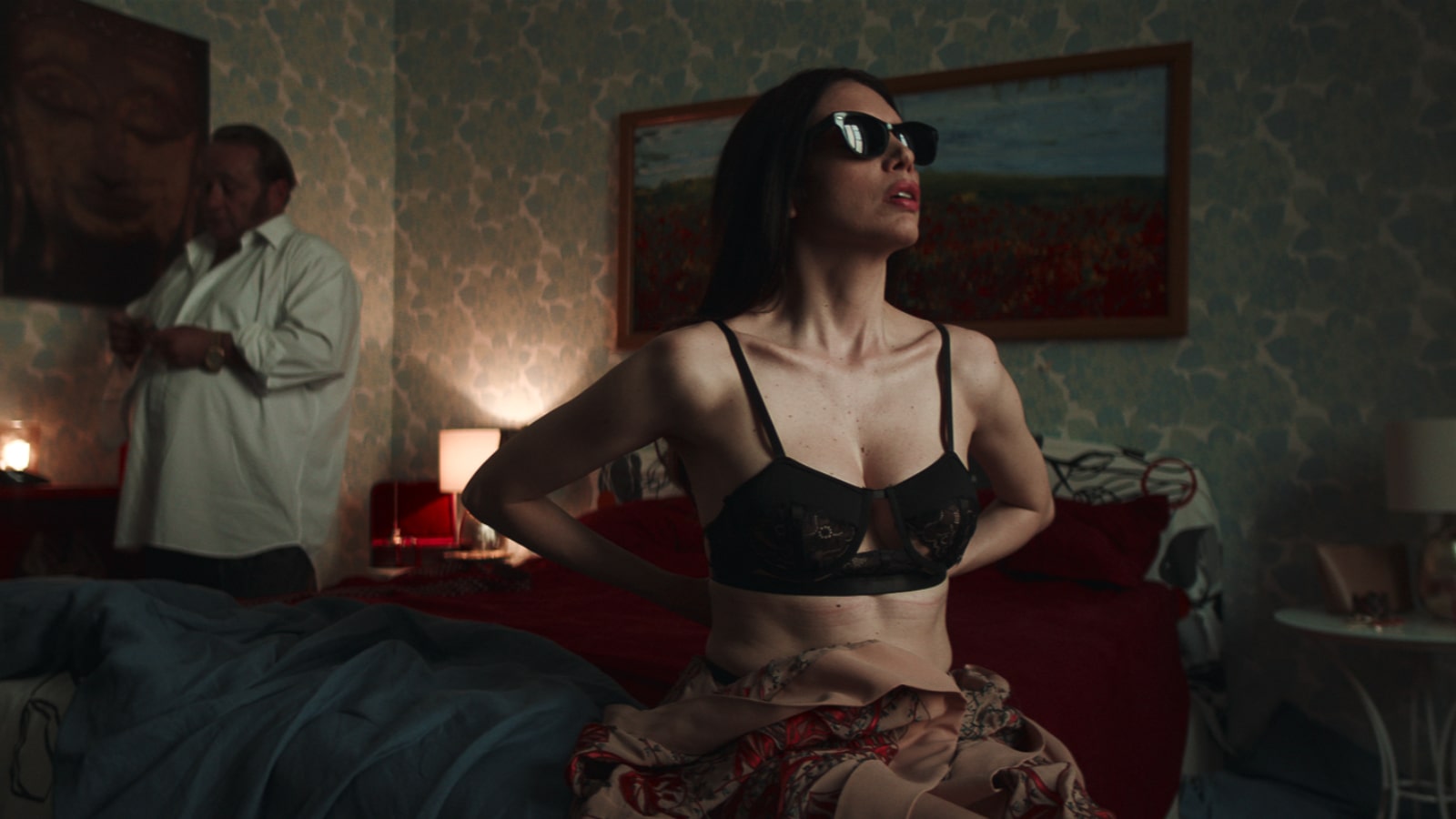
In Film at Lincoln Center’s supplied image, Diana sits near the front of a bed, wearing dark glasses and a black bra, with patterned fabric across her lap. Her hands reach behind her body and her head turns toward the upper right. Farther back at the left, a man stands in a white shirt beside a large portrait. The image gives the spectator access to both figures without establishing what either is saying.
The glasses are especially active surfaces. Bright window-shaped reflections occupy the lenses where we might expect to read the direction of her eyes. They make light visible while preventing a familiar exchange of looks. Her lifted chin and parted lips give her attention a visible form.
The room also contains competing pictures: the face at the left and a landscape behind Diana. Their frames, the patterned wall and the bed’s dark red fabric surround her with things available to our gaze. Visibility is abundant; knowledge is not. We should not turn the man’s background position into proof of threat, or her turned face into proof of unawareness, without the sequence.
The 1600 × 900 original supplied by FLC is now served locally, preserving the full reproduction without enlargement, crop or colour adjustment. Image source and programme ↗ This close reading concerns the inspected image. No lens, camera movement or original colour standard is inferred.
05 / COCCO, VOLPELIÈRE & COLLECTIVE CRAFT
Rome is also an arrangement of work
Filmitalia credits Matteo Cocco’s cinematography, Flora Volpelière’s editing, Marcello Di Carlo’s set design and Luigi Bonanno’s costumes. Its producers are Conchita Airoldi, Laurentina Guidotti and Brahim Chioua, within an Italian–French production. The industry record ↗ These names give the film’s spaces and rhythms a more concrete history than the director’s reputation alone can provide.
The inspected bedroom image offers a modest example of why that separation matters. Clothes, furnishings, pictures and light all help organise attention. Their combined effect cannot tell us which person chose a particular object or where the room was filmed. A credit identifies responsibility within a department; a production photograph, plan or specific interview is needed to attribute a particular solution.
Cinematografo separately lists Claudia Aureli for sound, Sergio Stivaletti for effects and Virginia Cefaly for visual effects. The catalogue’s department credits ↗ The separation prevents a common shortcut: treating every audible threat as Rebotini’s work, or every creature and injury as the product of one effects technique.
The film’s opening credit names Matteo Cocco alone as director of photography. This agrees with Filmitalia and resolves the additional Tovoli attribution in Cinematografo’s catalogue. The screen credits →
These limits still leave a useful account of collaboration. Volpelière’s role, for example, becomes more specific in Rebotini’s testimony: he describes substantial discussion with the editor while developing the score. The relation between an image’s duration and a musical phrase is therefore not merely an abstract possibility; there is a reported working exchange to investigate.
06 / REBOTINI, THE EDITOR & THE ALBUM
Continuity can be a method of change
Speaking to Olivier Pernot in January 2022, Arnaud Rebotini described composing after reading the screenplay and seeing the first twenty minutes. An early main-theme idea persuaded Argento, who gave him broad freedom; Rebotini also spoke extensively with Volpelière. The composer’s contemporary account ↗ This places the music within a developing relationship between script, images and editing, rather than simply after a finished film.
Rebotini framed the task as imagining how Goblin might work in 2022. In the statement accompanying his Black Strobe vinyl release, he describes an entirely electronic score, combining dark material and pop elements with his own electro and techno vocabulary. Rebotini’s album statement ↗ Continuity here is a proposed working principle: bring an inherited appetite for stylistic mixture into a different musical present.
That does not mean the album can stand in for the film mix. The two-disc BSR045 listing separates pieces with titles including L’Ospedale, Inseguimento Notturno, Un’Eclissi su Roma and La Solitudine di Diana. The release and track sequence ↗
For Diana’s story, those distinctions are central. Music can orient the audience while a character is still trying to locate a sound; a voice can communicate a direction that the picture makes obvious to us.
07 / GRAY & BERTOLIN AT BERLIN
Tenderness is also the point of disagreement
Carmen Gray’s Berlinale review in Sight and Sound finds familiar gore and an effective electronic score but insufficient visual invention. More consequentially, she argues that Diana’s disability is used to intensify helplessness, and that violence against sex workers repeats a dated gender politics rather than examining it. Gray, 16 February 2022 ↗ Her objection concerns the film’s relation to its characters as well as its formal energy.
Paolo Bertolin, writing two days later for Cinematografo, welcomes a shift from conventional giallo construction toward a dark fable. He reads the association of Diana, the child and the dog as part of that movement, and values the alternation between tenderness and cruelty despite weaknesses in the writing. Bertolin, 18 February 2022 ↗ What looks inadequately motivated in one account can look productively irrational in another.
Neither position is answered simply by saying that Argento has always made violent films. The question is what kind of relation this particular film constructs between looking at vulnerability and remaining interested in the vulnerable person. Affection elsewhere in a narrative does not automatically neutralise an exploitative image; an image of danger does not automatically erase a character’s capacity to act.
The disagreement also makes “return to form” an inadequate finishing point. It can tell us what a reviewer missed in earlier work, but not which criteria should govern this film. Gray’s criticism asks about agency and the use of a familiar style; Bertolin’s defence asks how irrationality, attachment and cruelty can coexist.
08 / FESTIVAL, CINEMA & DISC RECORDS
Festival listings and the Blu-ray presentation
The RLJE Films / Shudder Blu-ray presents the feature at 1:25:56, at 23.976 frames per second, with Italian audio and English subtitles. Its substantive extra is the 5:40 backstage film discussed above. The disc also carries a Shudder catalogue promotion, distributor idents and notices. It has no feature commentary.
Filmitalia records the film in the 2022 Berlinale Special Gala and dates its Italian release to 24 February 2022. Vision Distribution confirms that cinema date. Film at Lincoln Center’s retrospective listing places an Argento-introduced screening on 19 June. Festival and release record ↗Italian distribution ↗The New York programme ↗ The dossier uses 2022 as its film year.
What the records say, and what they cannot settle
Record
Listed year or length
Evidence limit
Filmitalia
2022; 90 minutes
Industry catalogue, not a timed print inspection.
Film at Lincoln Center
2022 screening; 90 minutes; Italian with English subtitles
Festival programme listing.
Cinematografo
2021 year field; 87 minutes; Italian release in 2022
Catalogue fields kept distinct from release history.
Quebec classification
2021 production field; 86-minute Italian DVD with English subtitles, classified 7 March 2023
Identified classification record, not a comparison with other editions.
The shorter catalogue lengths need investigation, not immediate explanation. Neither the 87-minute entry nor the 86-minute DVD record demonstrates a censored or differently edited version. Cinematografo’s fields ↗The classified DVD ↗ Rounding, playback rate, credit lengths and differing materials are possibilities to check against actual carriers.
A useful next comparison would begin by naming the release, language, playback rate and the points from which its duration was measured. It would then inspect a few matching passages before making claims about cuts. Similarly, a 2021 catalogue production field and a 2022 release record need not describe contradictory events.
FOLLOW THE CONNECTIONS
Another way in.
Read across films, then return to the evidence for each one.
Expanded 11 November 2026 with the feature, screen credits and backstage interviews. Industry records, participant testimony and criticism retain their distinct roles.
2022 retrospective programme, development/collaboration account, 90-minute listing and image. Current indexed text; direct capture restricted. Original 1600 × 900 JPEG.
Department credits, 87-minute duration and date fields. Its additional Tovoli photography attribution differs from the opening screen credit, which names Matteo Cocco alone. Reprinted reviews are separate from Bertolin’s original review below.
Official distributor synopsis and 24 February cinema date. Promotional narrative account; embedded trailer not viewed or heard. No current streaming availability asserted.
Ciak, 13 February 2022. Written report of participant remarks on script revival, Rita and preparation. Participant recollection is not an authenticated draft history.
Sky TG24, 11 February 2022. Written interview checked for Pastorelli’s acting process and Asia’s account of varied takes. Video not viewed; English text here paraphrases the Italian.
Tsugi, 13 January 2022. Composer’s account of the script, early footage, main theme, Argento and Volpelière read in French. No independent listening or cue comparison claimed.
Sight and Sound, 16 February 2022; reviewed at Berlin. Her criticism of style, gender politics and disability is attributed, not presented as consensus or our own viewing.
18 February 2022. Original review inspected for its defence of the dark-fable structure and alternation of tenderness and cruelty. A different contemporary reading, not an objective verdict.
Feature: 1:25:56; Italian soundtrack with English subtitles. Opening and end credits, illustrated scene studies and FX sequences. Extra: Occhiali neri: Backstage, 5:40, with Argento, Asia Argento, Ilenia Pastorelli and Sergio Stivaletti; English-subtitled Italian interviews and production footage. Passage locators appear in the studies.
Variety, 10 February 2022. Contemporary director interview on the interrupted 2002 production, Asia’s revival of the script, Wild Bunch and the later rewriting.