THE ARGENTO ARCHIVEFILM / COLOUR / SOUND / OBJECTS
ARGENTOCHROME

THE FILM DOSSIERS / 018 · FILM DOSSIER

The Card PlayerThe interface sets the rules.

A captive on a screen. A game imposed on the police. In Rome, the distance between an image and a body keeps collapsing.

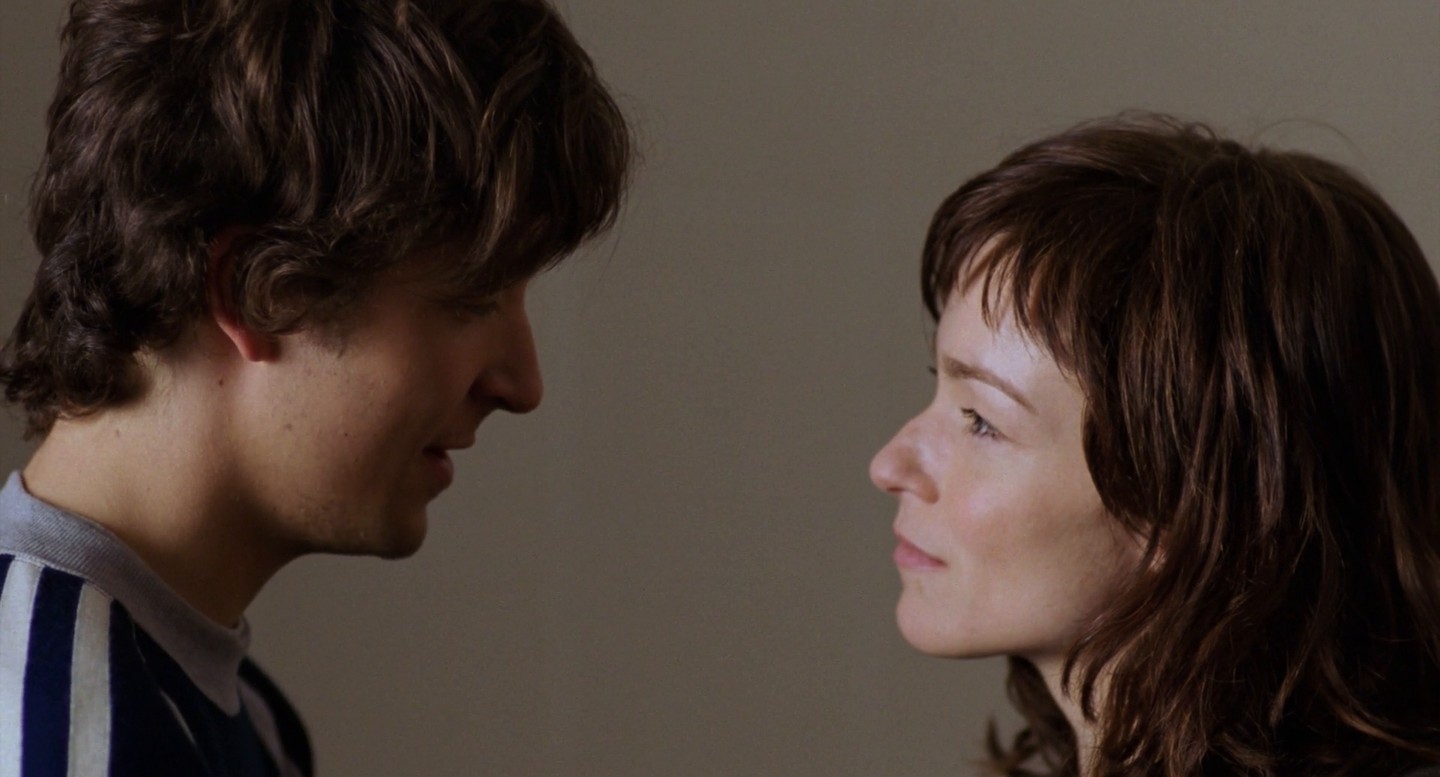
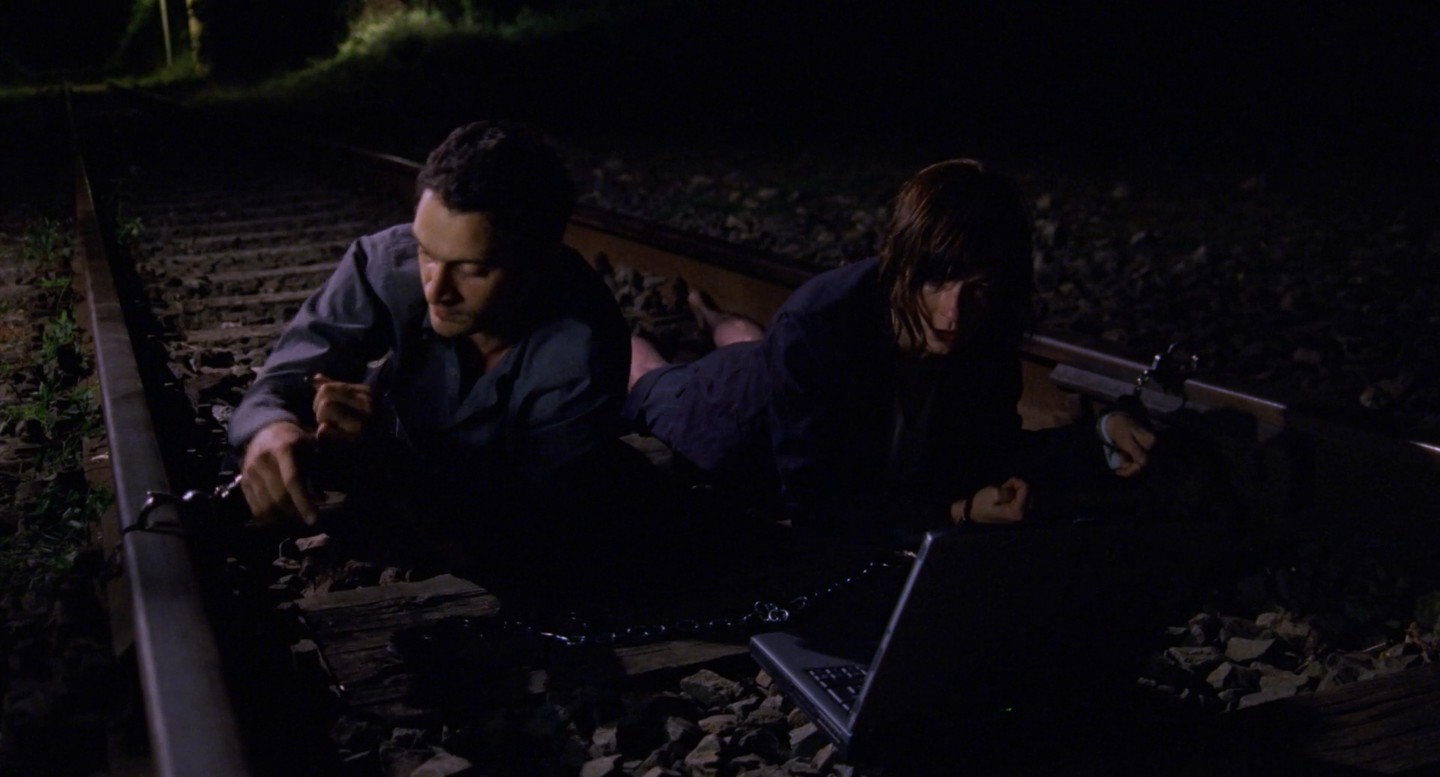
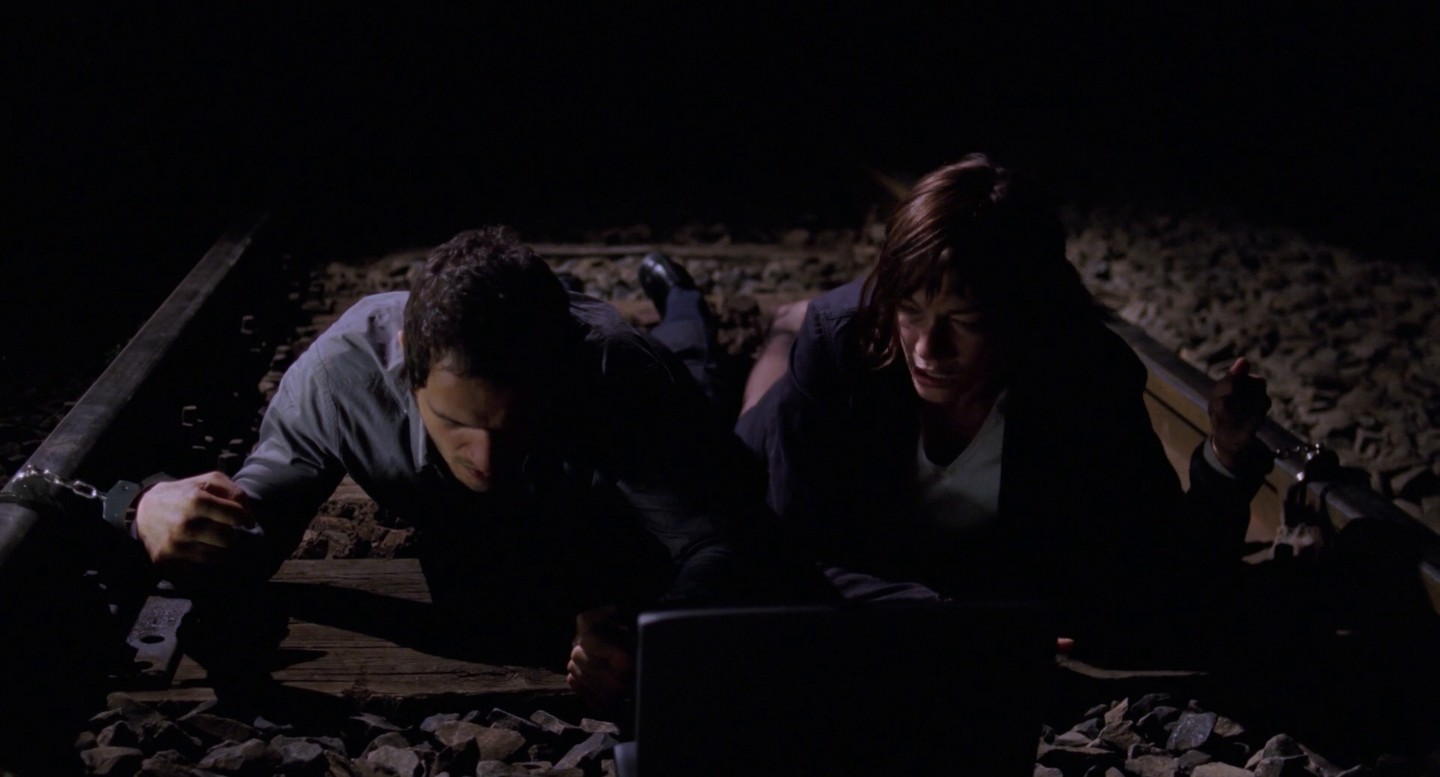
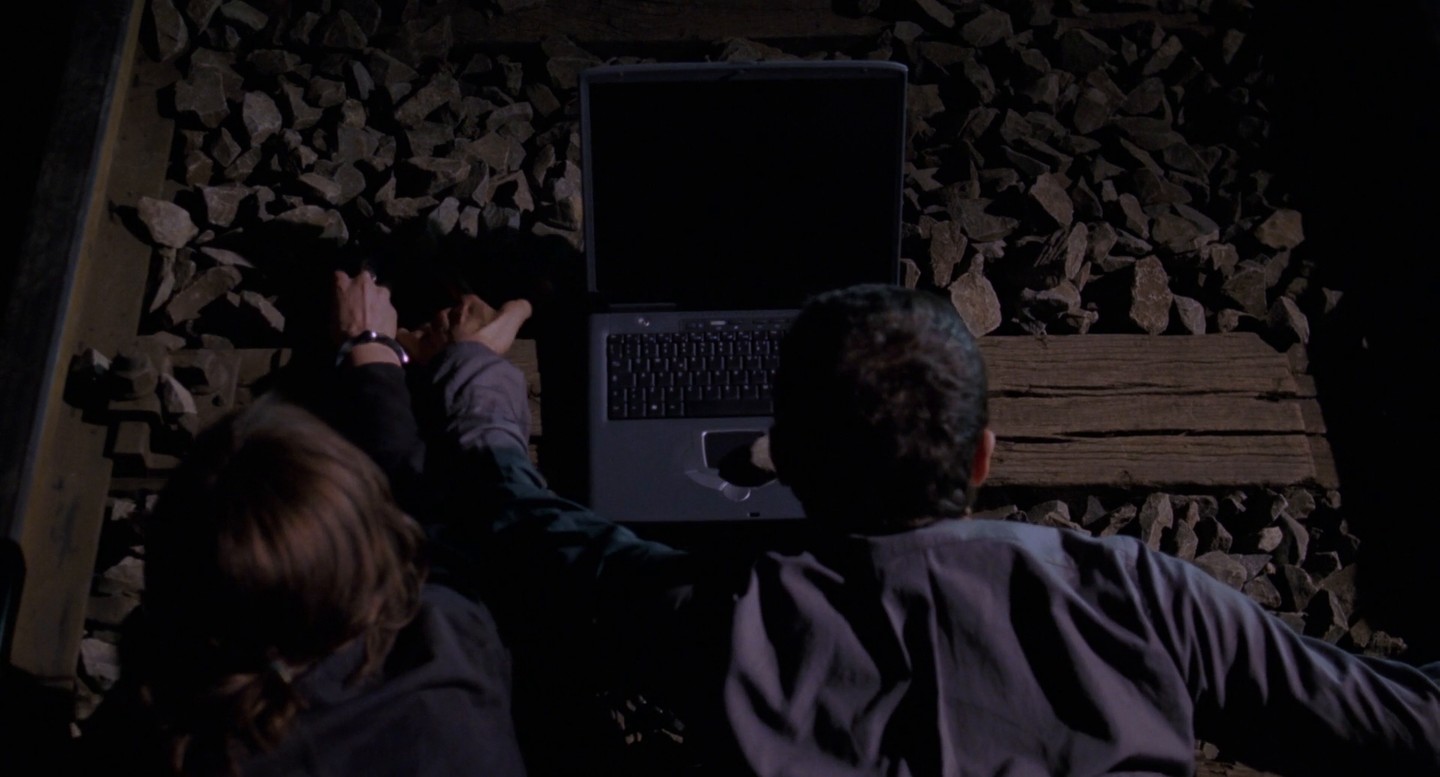
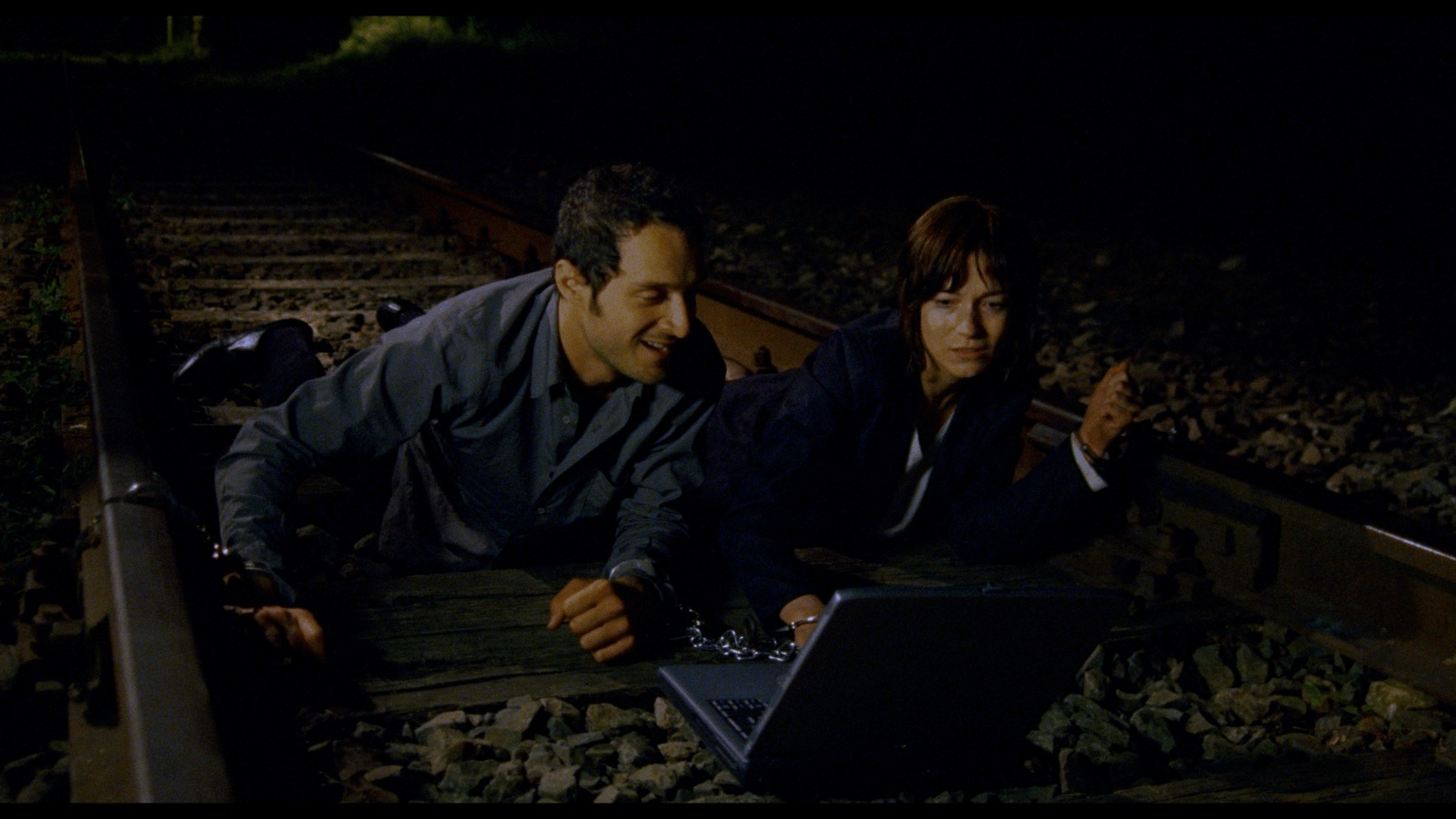
A man and woman lie between railway rails at night, facing a laptop in the foreground; a chain crosses the space between their arms.ENLARGE ↗
Anna and Carlo face the laptop between the rails.Film at Lincoln Center ↗
2004 · DARIO ARGENTOIl cartaioSCENES, EFFECTS & DIALOGUE · 6 NOVEMBER 2026
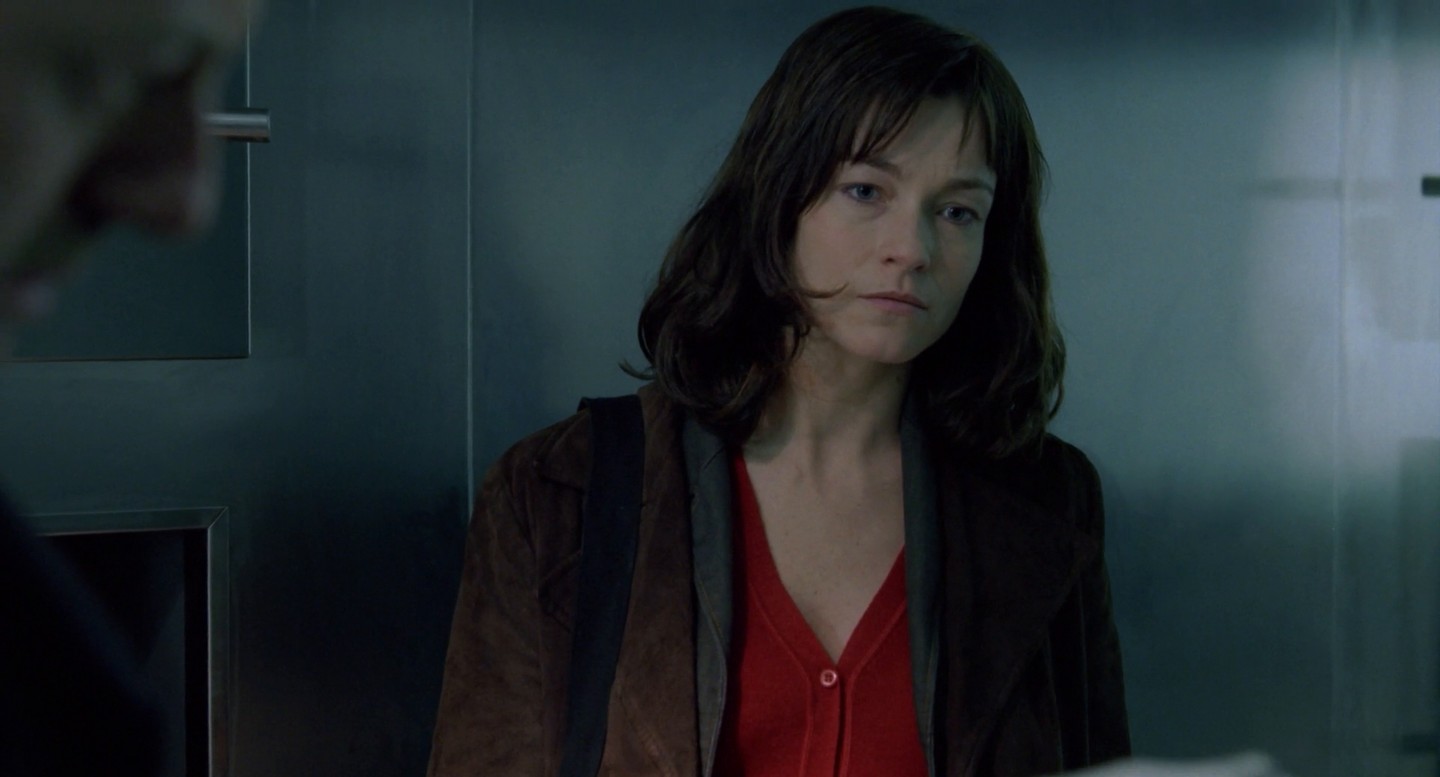
Remo plays with Anna beside him.

THE FILM IN IMAGES

Follow the case

From the first message to the final call.

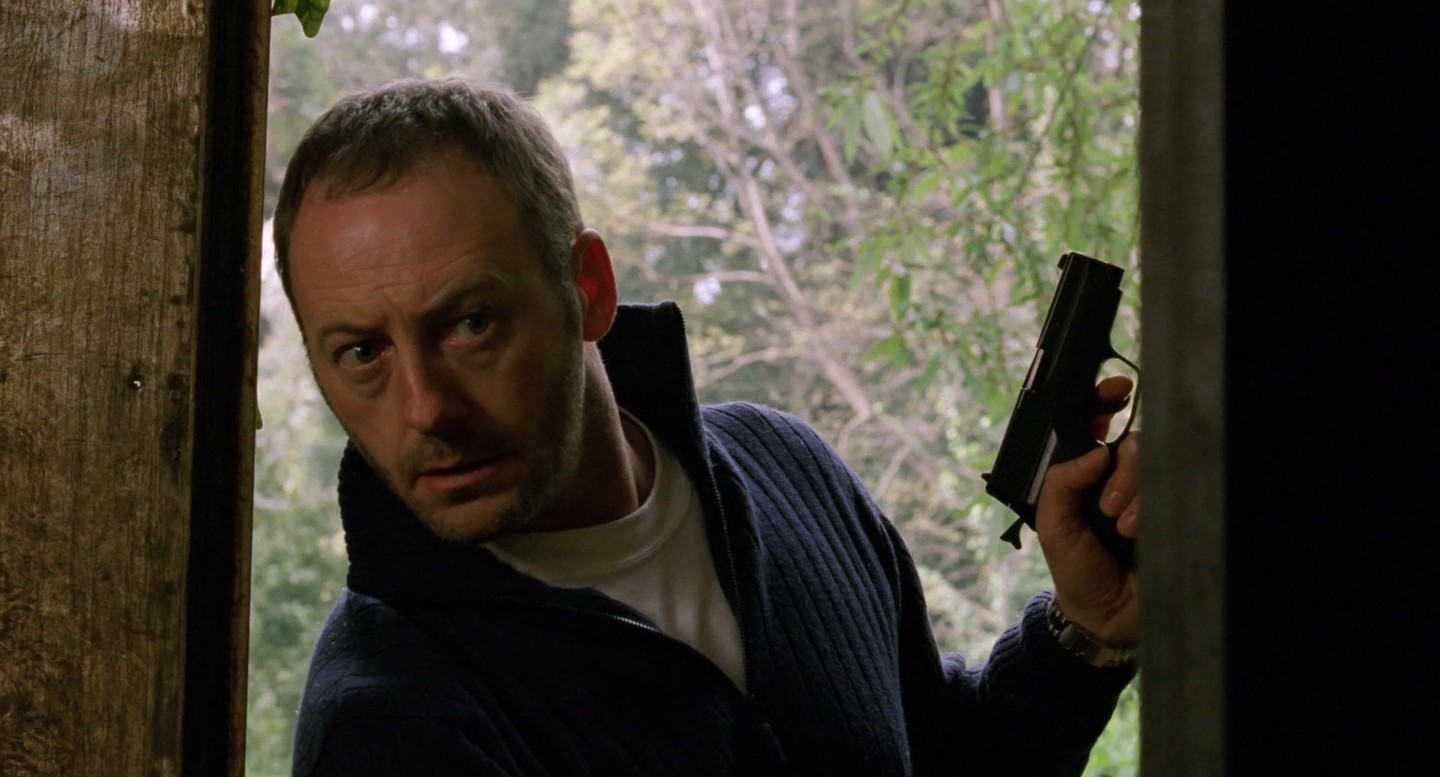
John looks into the room.

GORE & EFFECTS

Inside the traps

Eight sequences, with expandable stage galleries.

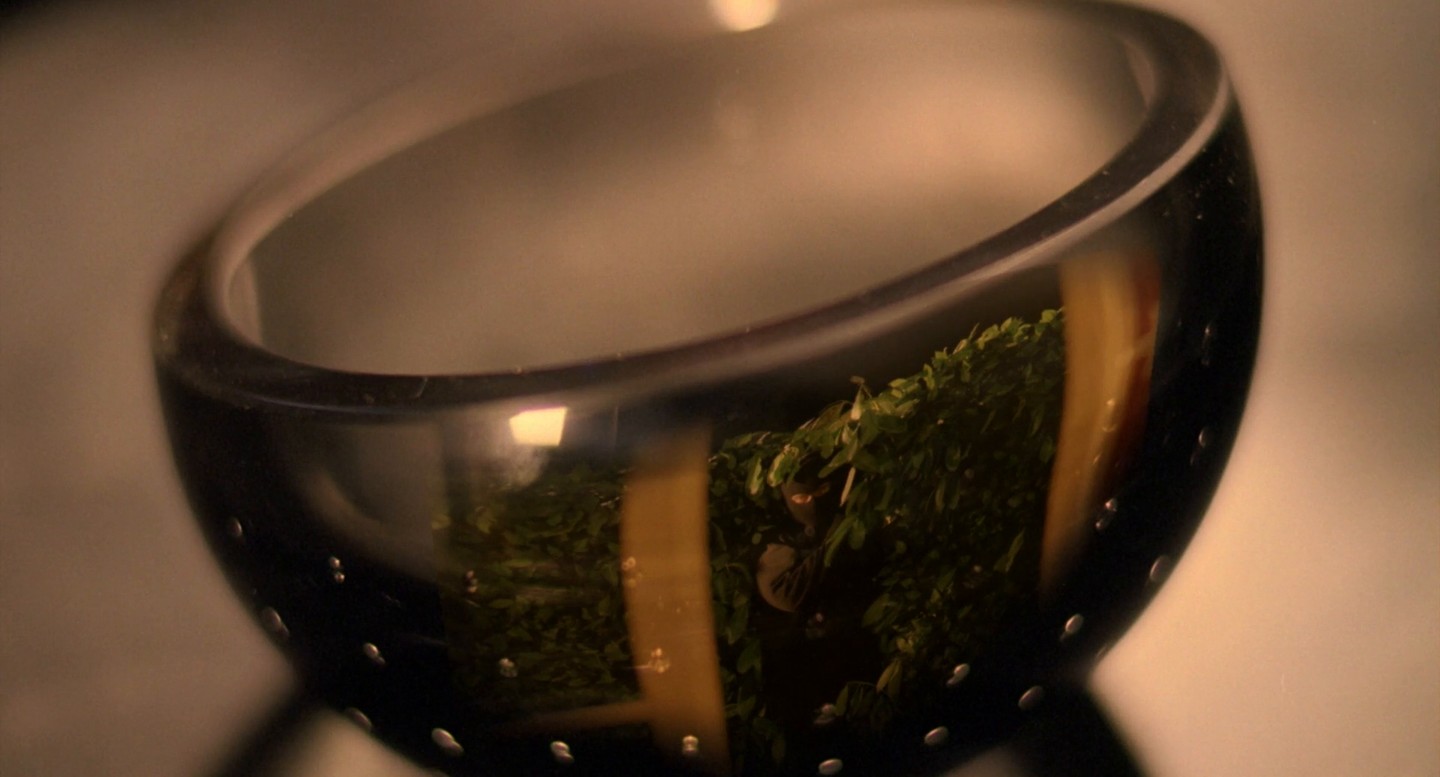
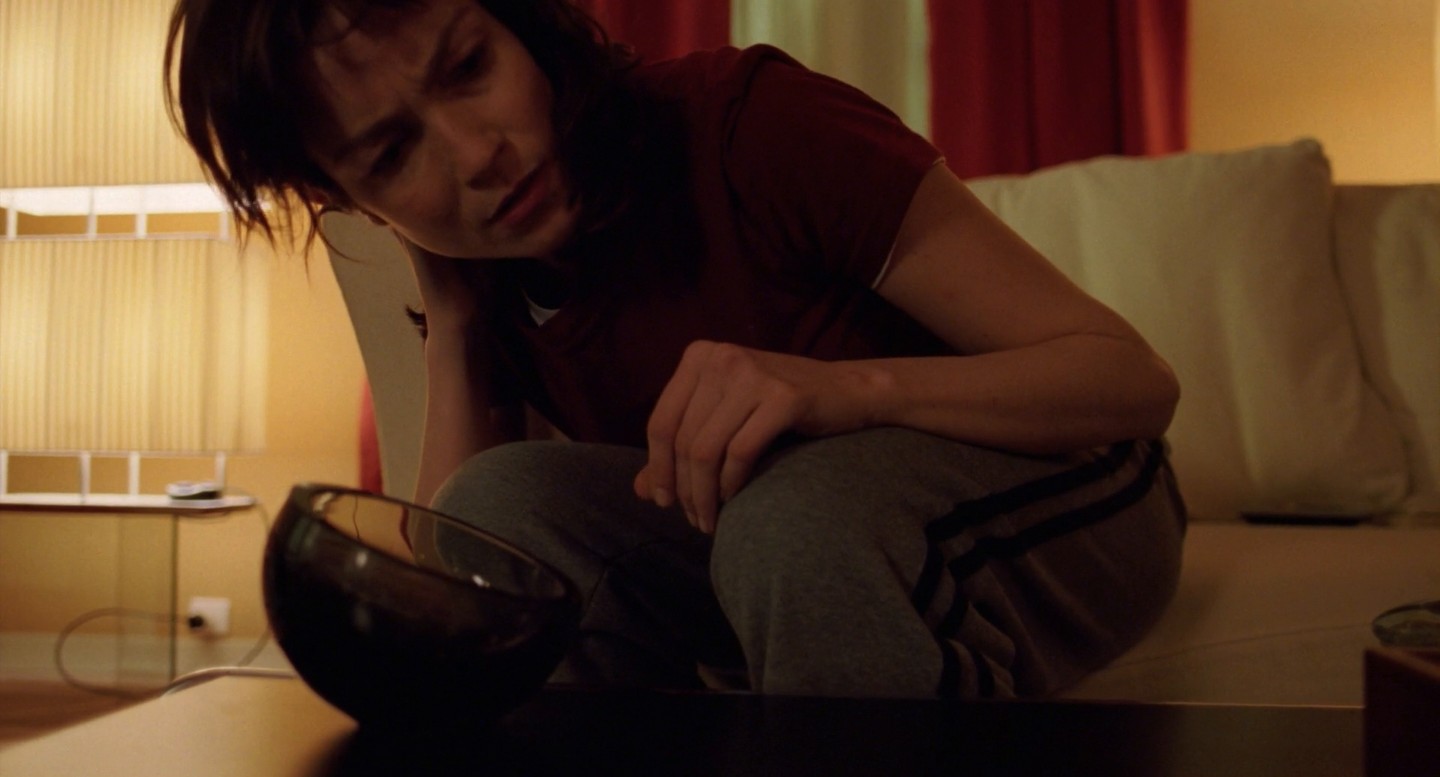
The garden appears in the bowl’s reflection.

LOOK CLOSER

Screens and reflections

How the frame distributes danger and knowledge.

WORDS & CLUES

Follow the conversation

Twelve studies connect promises, instructions and revelations.

BEHIND THE SOUND

Voices, Foley and score

The credited crafts behind the film’s sound.

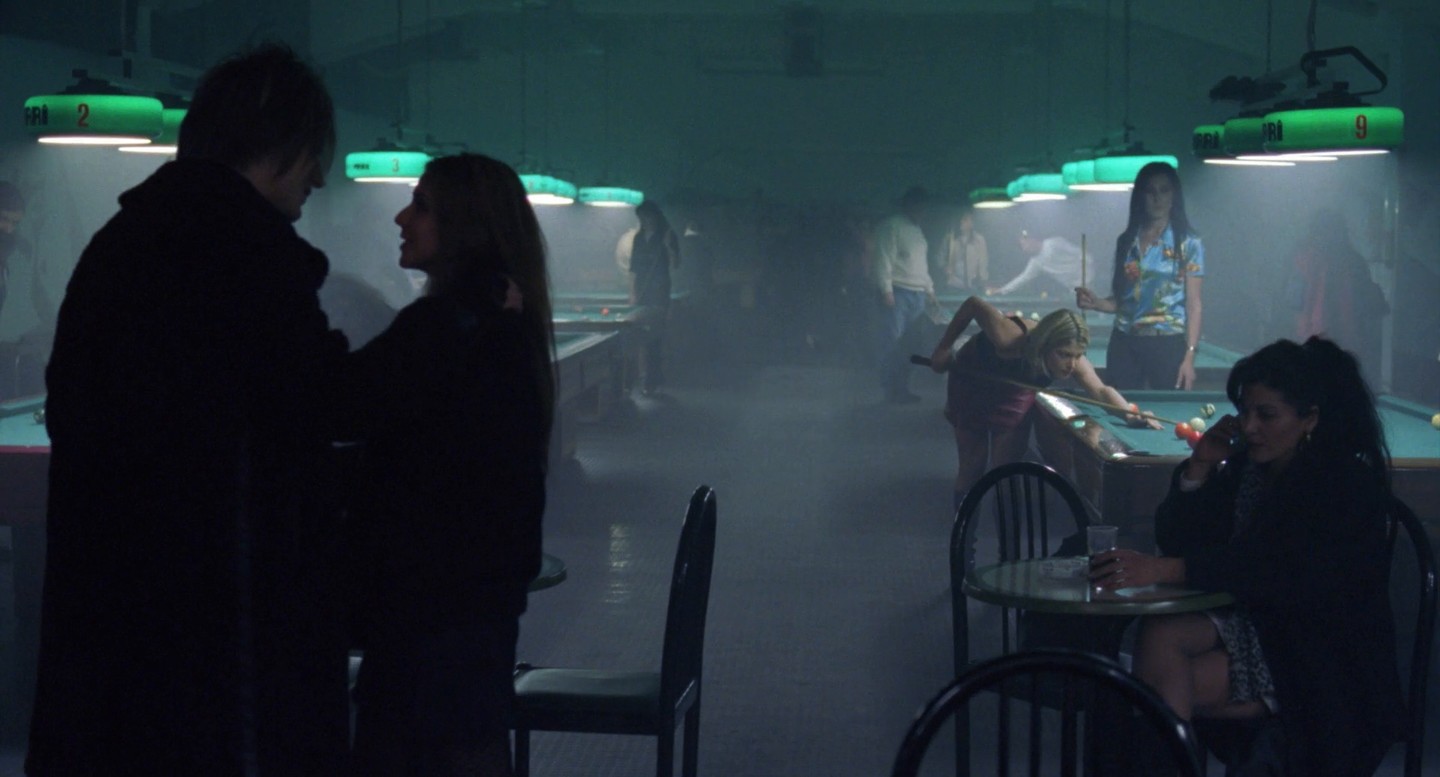
Green lamps hang above the gaming room.

THE RESEARCH DOSSIER

Read the evidence

Rome, collaborators, music and release history.

THE CARD PLAYER / THE SCENE GUIDE

Who controls the image?

Thirty-two illustrated studies follow the case through its screens, rooms and physical traps. Follow the film in sequence, or take a closer look at an attack and its aftermath.

Includes the ending and graphic violence. Image and presentation notes →

00:36

A working identity

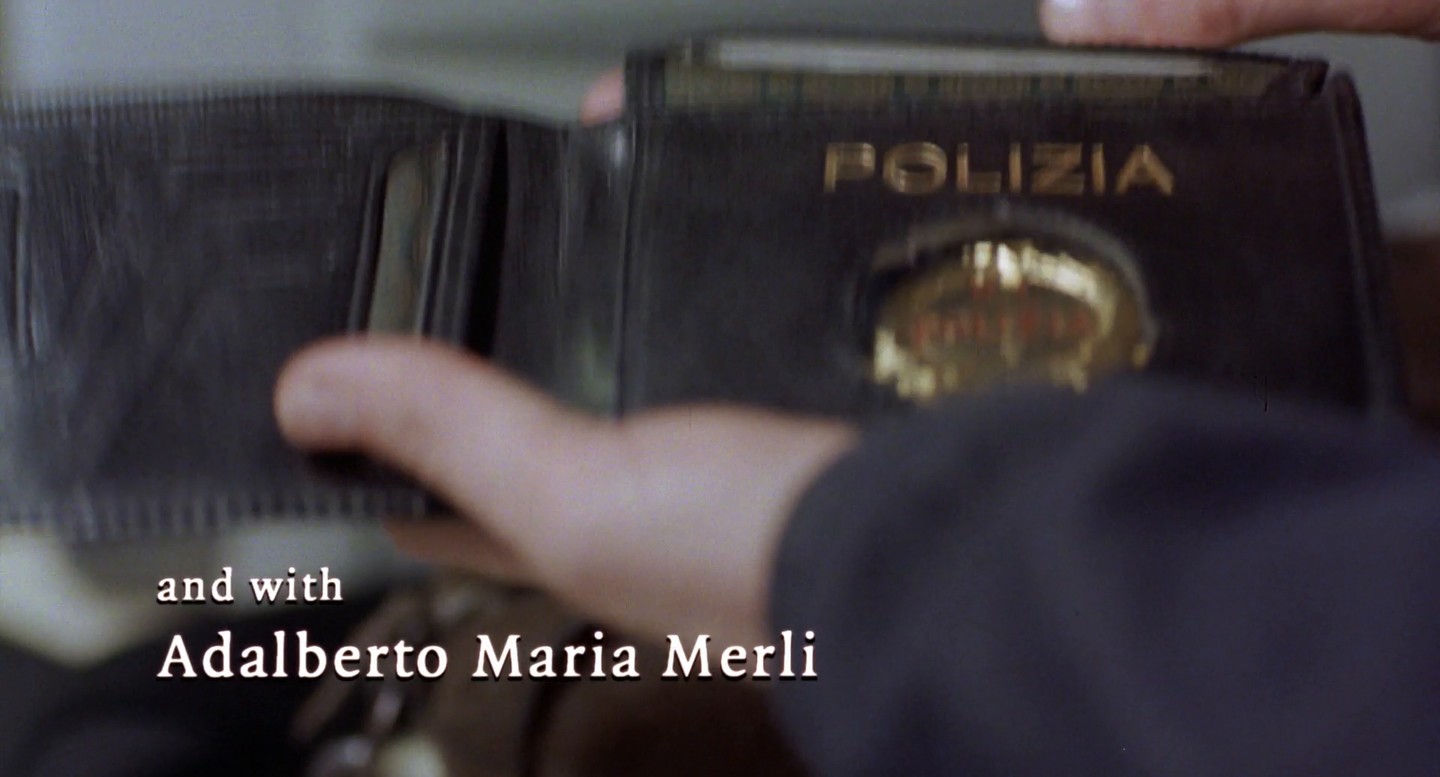
A police badge among Anna’s belongings.ENLARGE ↗
A police badge among Anna’s belongings.

The opening introduces the investigator through objects and gestures: clothing, a badge, handcuffs and documents. The procedure of getting ready puts ordinary police equipment in view before the killer takes command of the institution’s working day.

03:15

The interruption

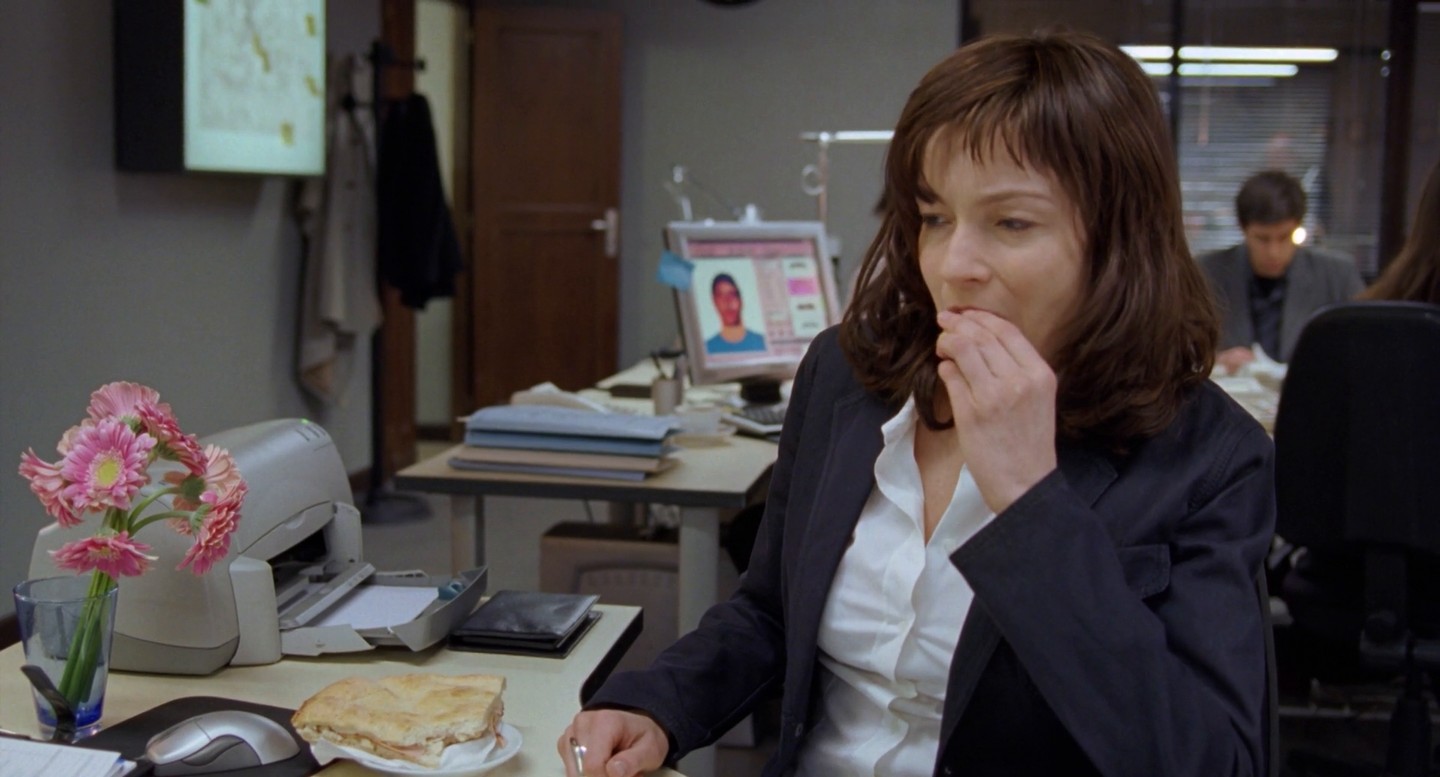
Anna at her birthday desk.ENLARGE ↗
Anna at her birthday desk.

Flowers, paperwork and the open office establish a workplace with a life beyond the case. The challenge reaches Anna through equipment already embedded in that routine. The computer does not enter as a mysterious object; its familiar place is what makes the intrusion effective.

06:45

A window opens

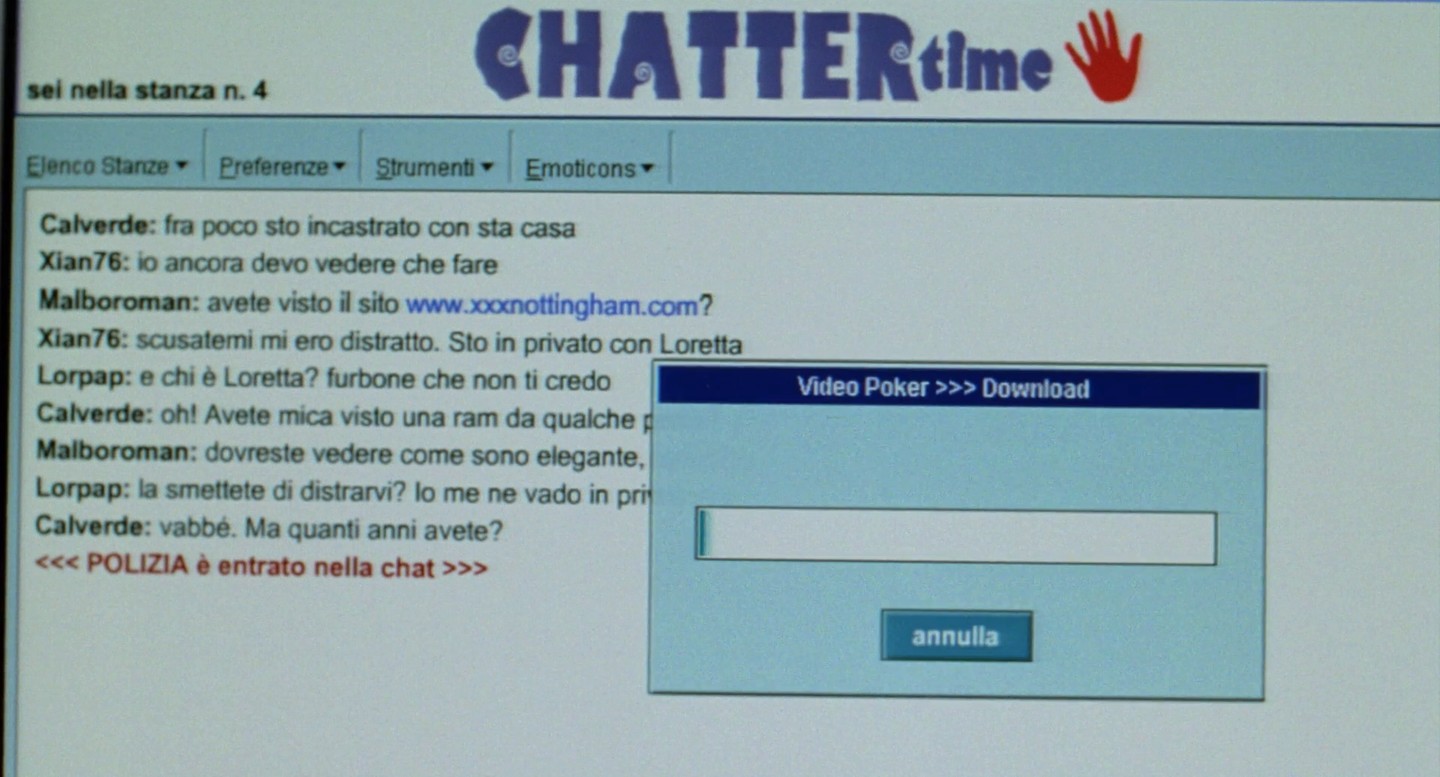
The invitation arrives through a chat window.ENLARGE ↗
The invitation arrives through a chat window.

Chat boxes, installation prompts and the green playing surface break the screen into nested spaces. Access is something the police must accept and configure. The killer’s apparent helpfulness supplies the route into an encounter whose terms he controls.

08:20

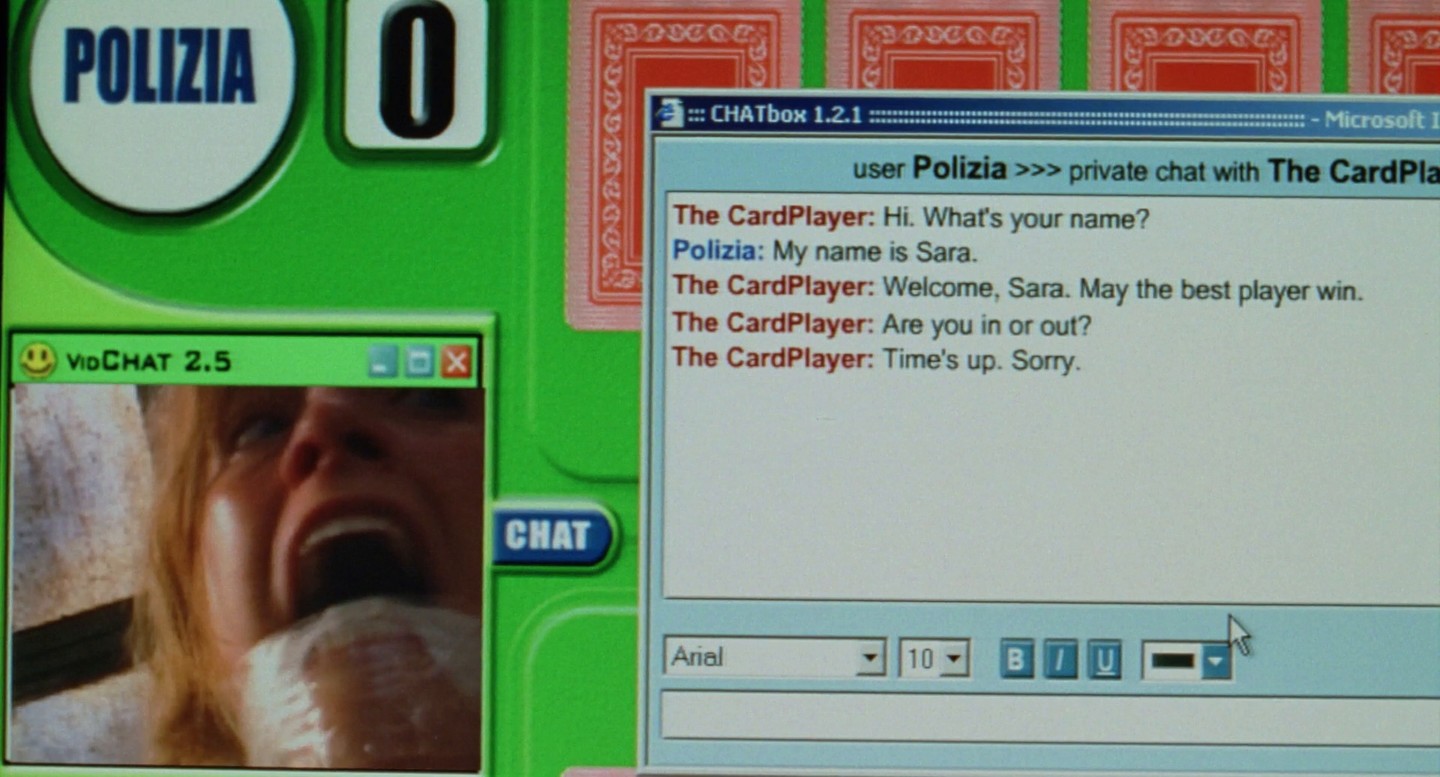
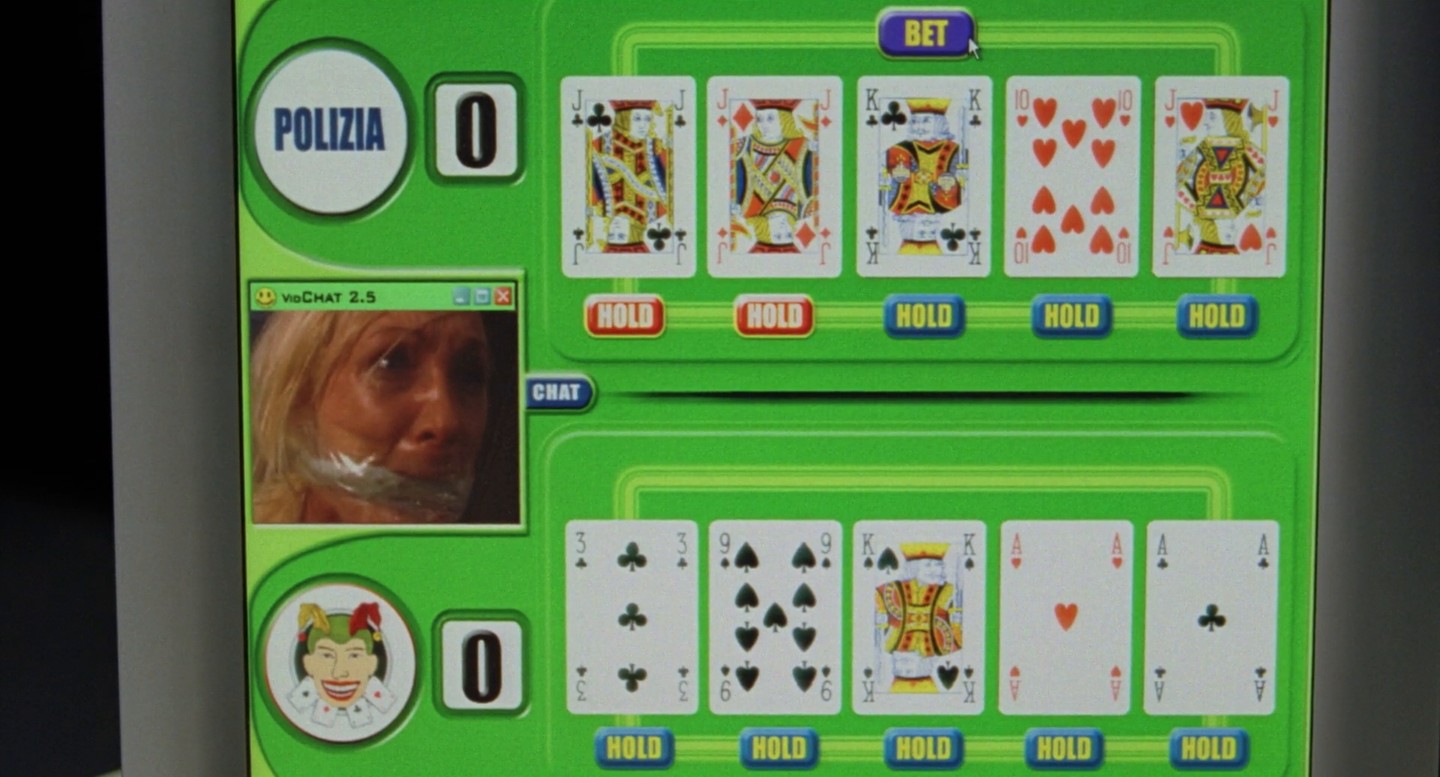
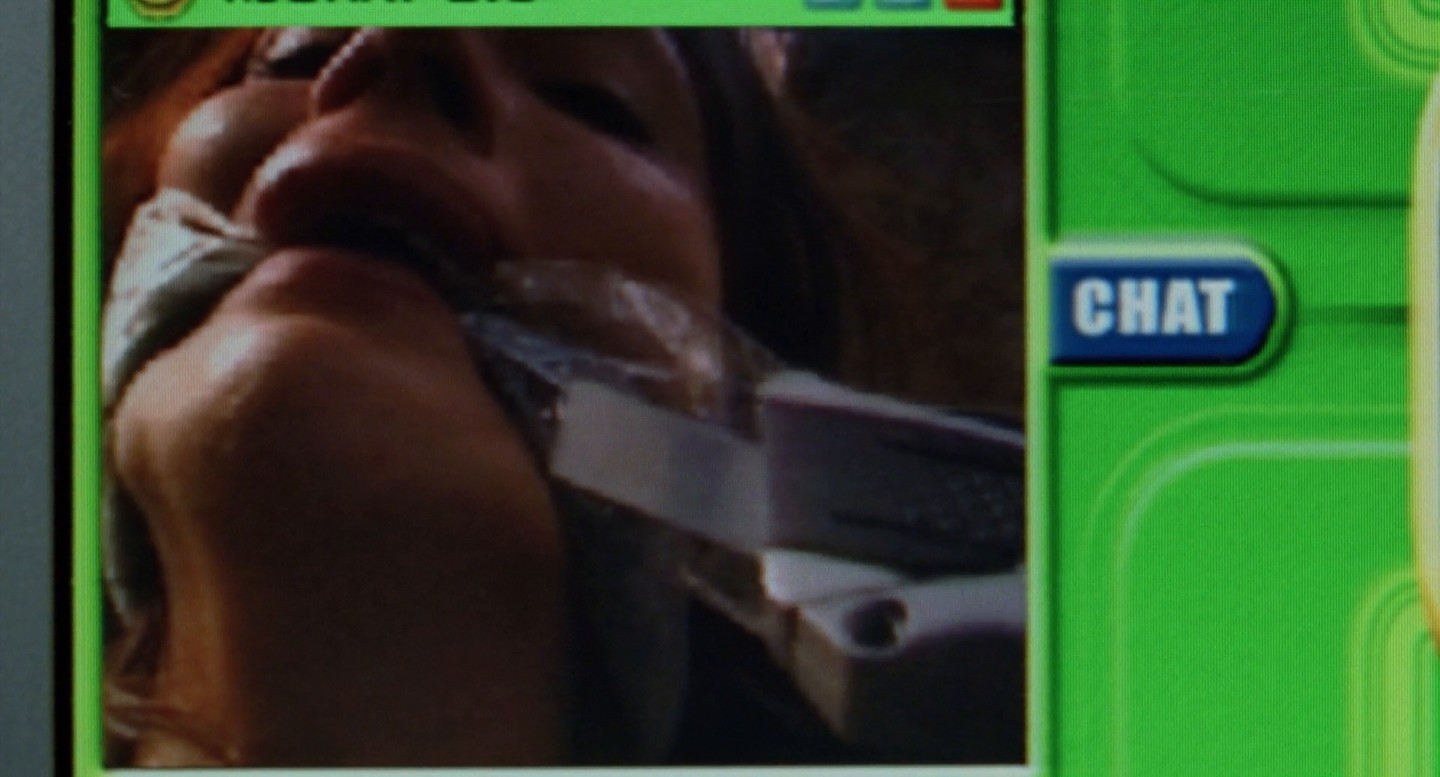
The captive inside the game

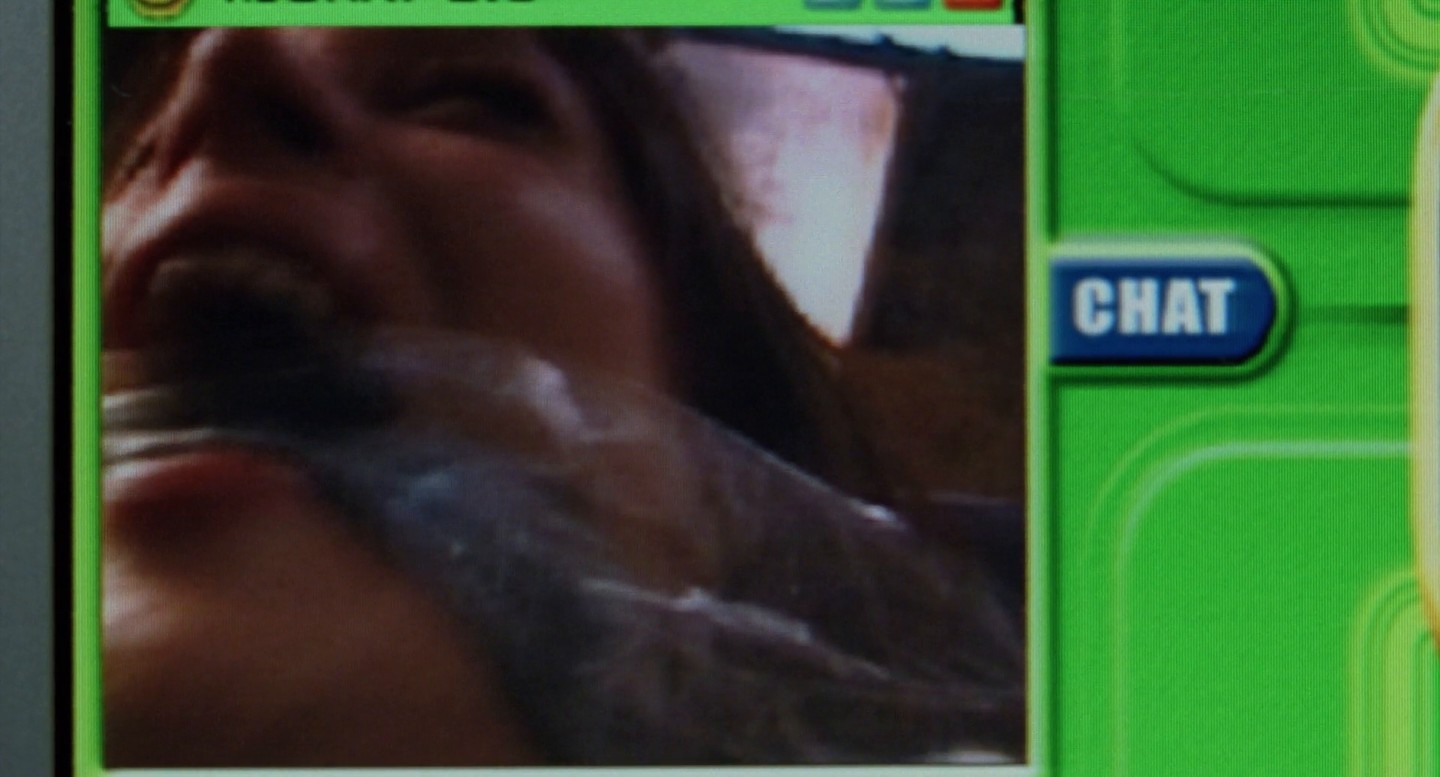
The captive occupies a small video window.ENLARGE ↗
The captive occupies a small video window.

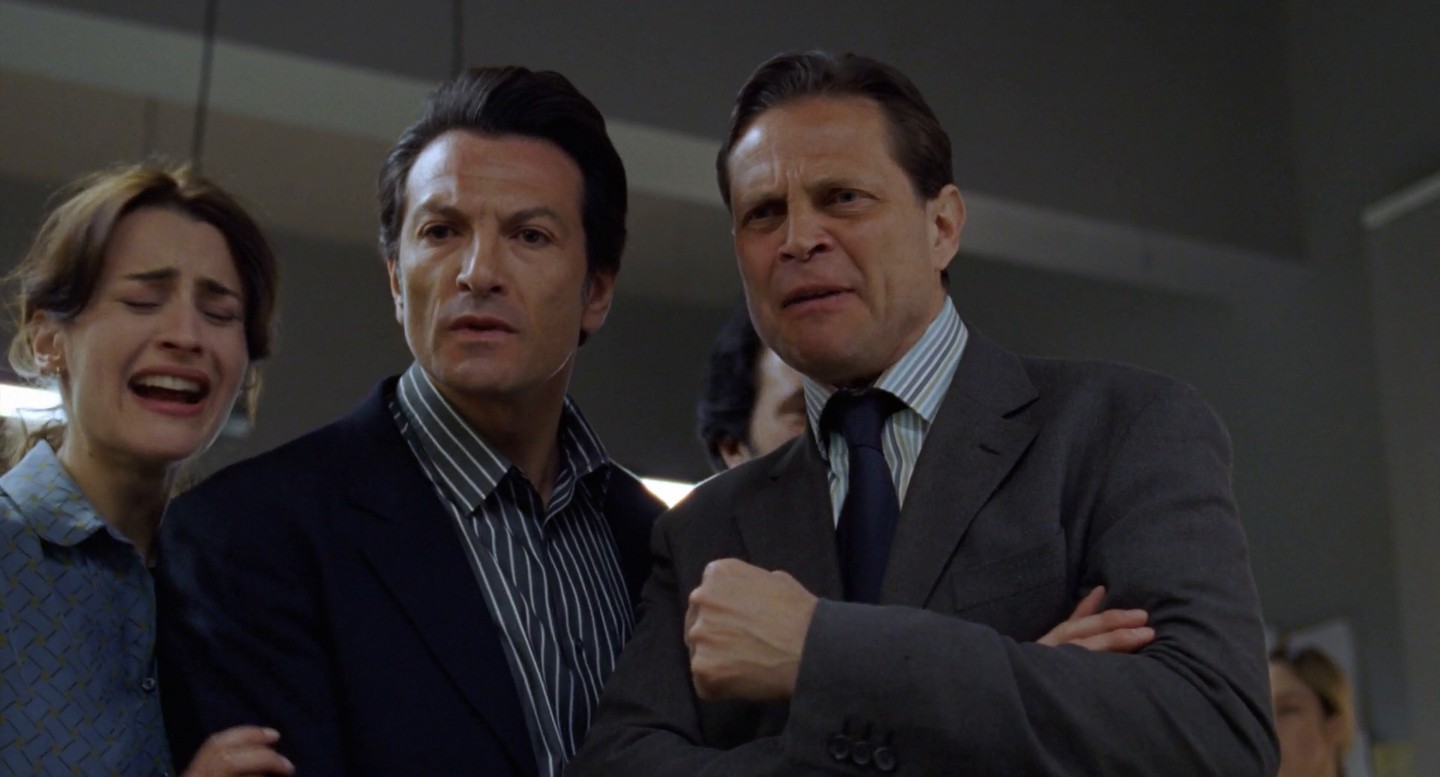
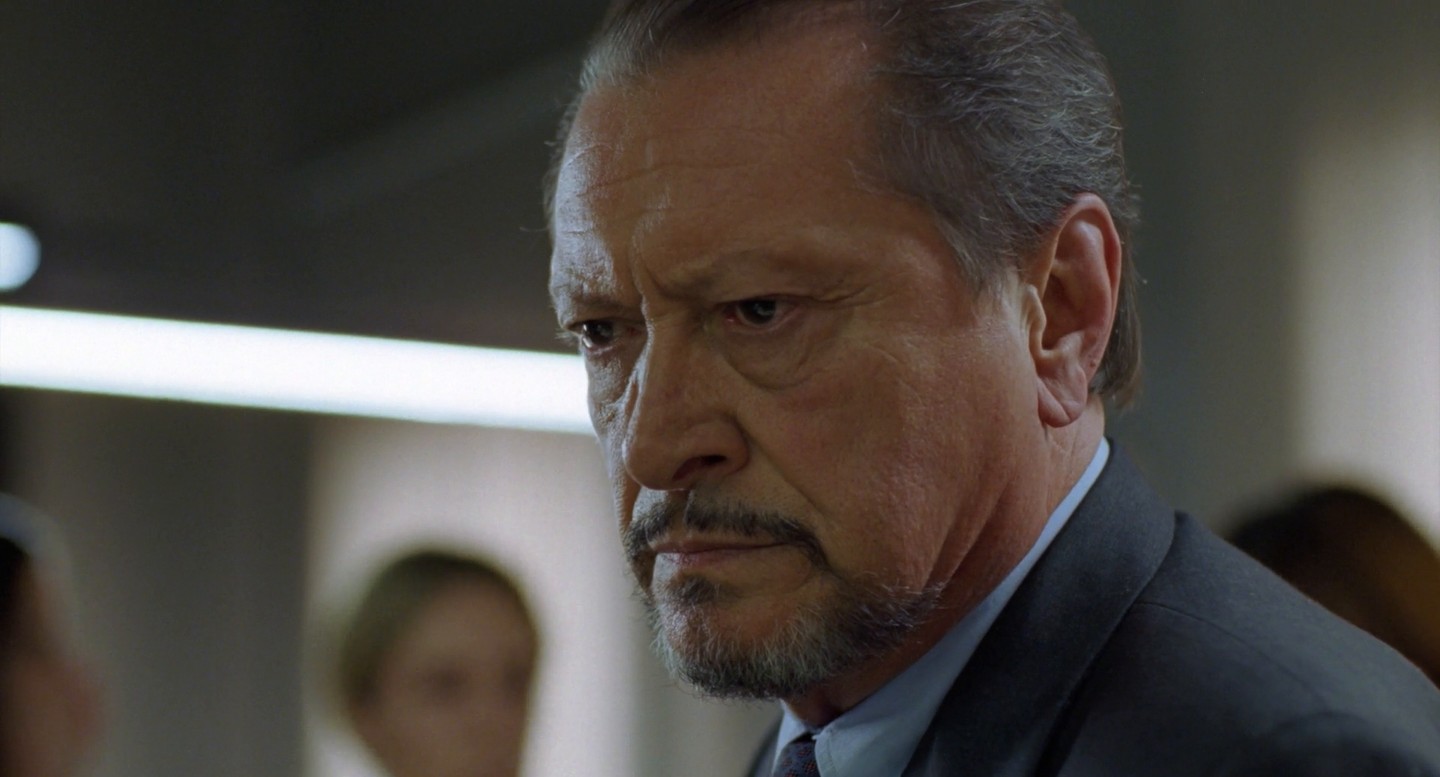
The victim appears beside a chat exchange and the police score. Her face has to compete with the interface that makes her available to view. Cutting to the commissioner and the assembled officers enlarges their reactions while leaving the captive trapped inside the smaller frame.

Explore the sequence →

09:16

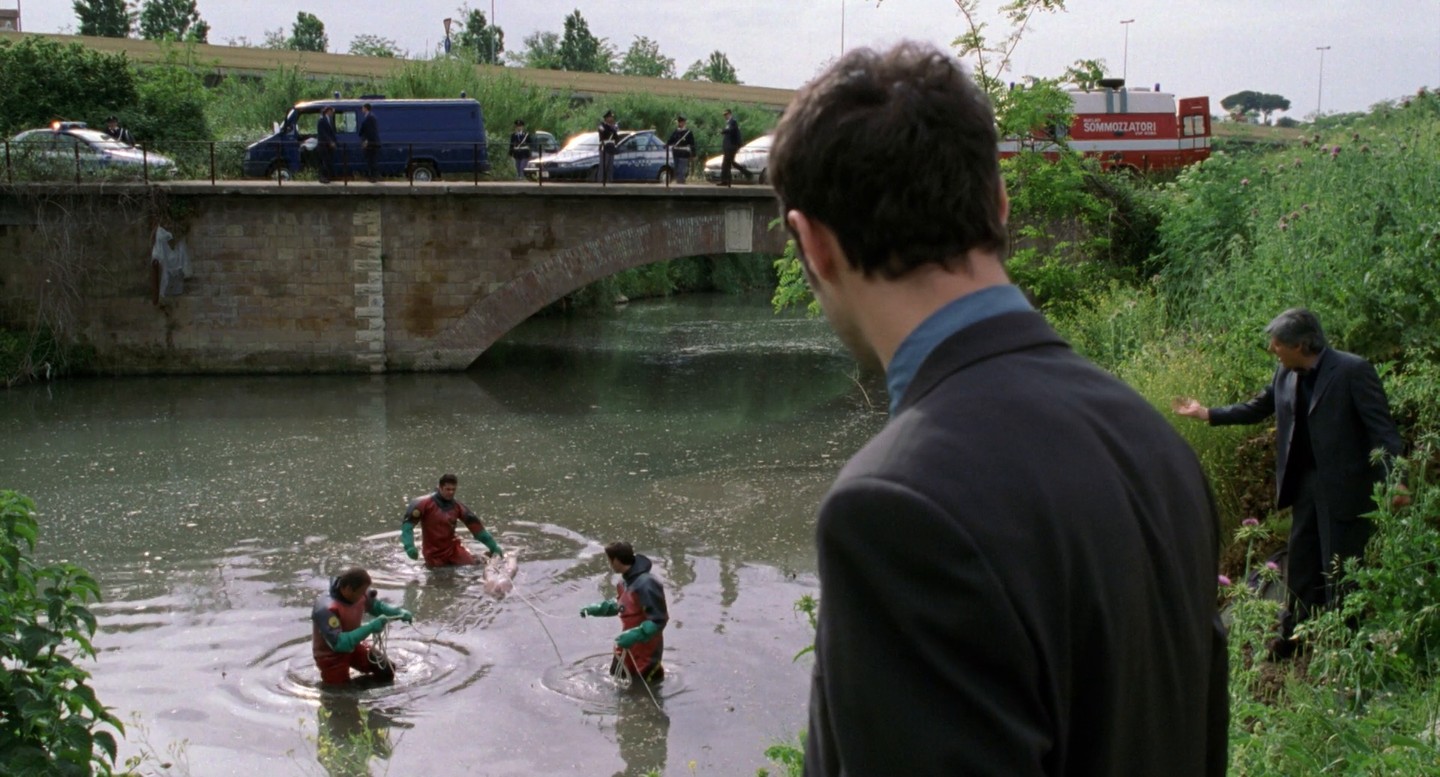
The image acquires a body

Police recover a body from the river.ENLARGE ↗
Police recover a body from the river.

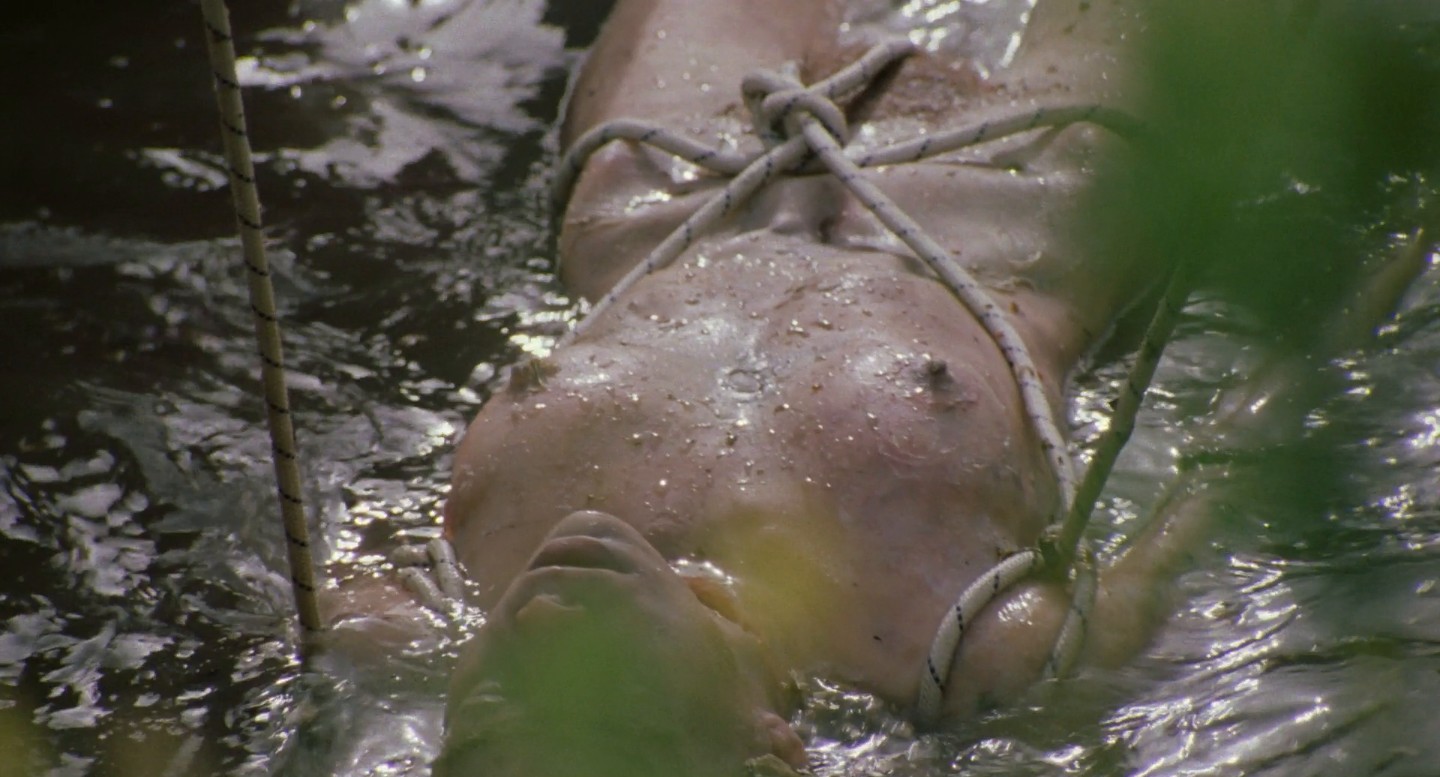
The daylight riverbank replaces the glowing display. Boats, officers and the watching investigators give the recovered body a physical setting that the transmission withheld. The investigation must now move from a criminal’s selected image to material traces.

Explore the sequence →

12:05

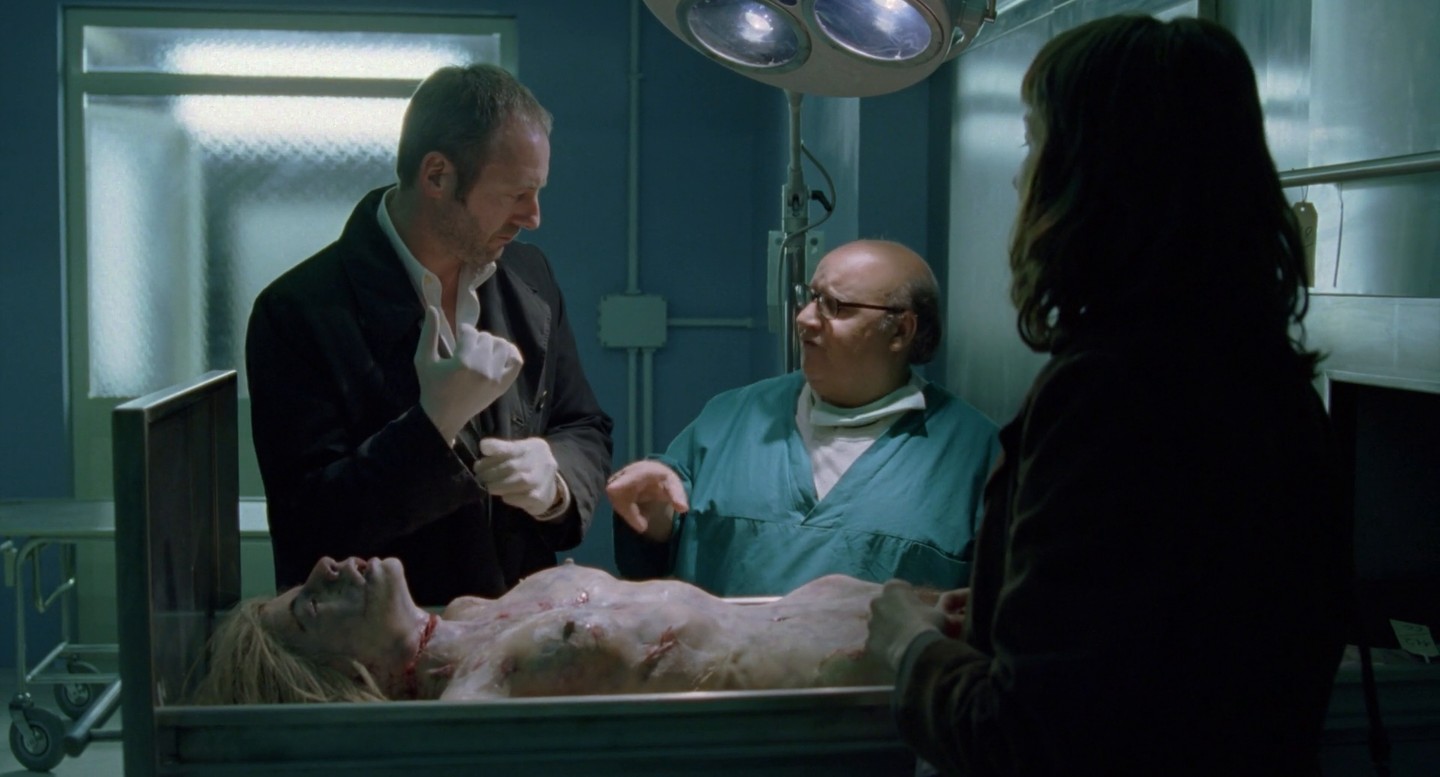
Looking becomes handling

John examines the body while Anna watches.ENLARGE ↗
John examines the body while Anna watches.

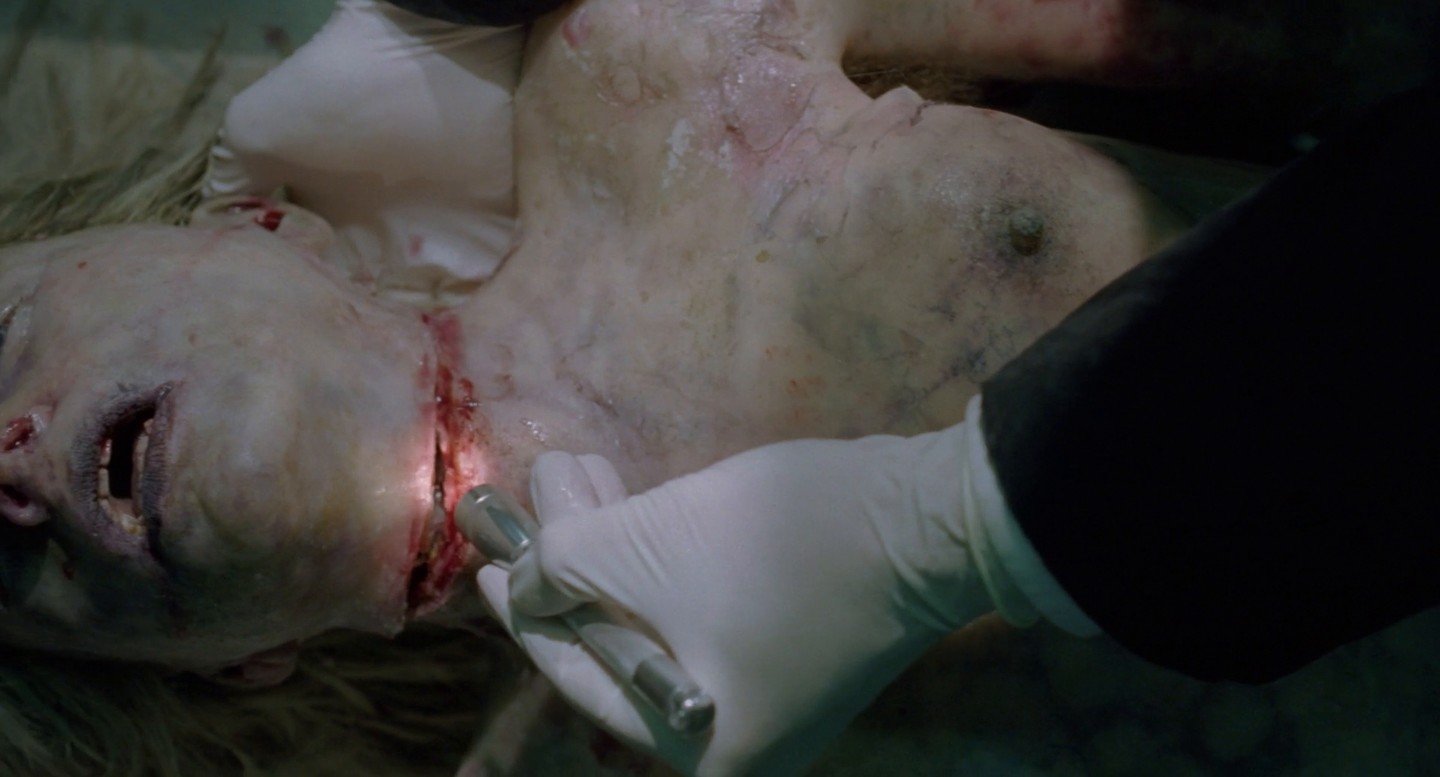
The cold green room places the corpse across the foreground. John’s gloved work brings the throat, mouth and eye into much closer view. Anna’s reaction shots preserve a second way of looking: she remains present without adopting his professional detachment.

Explore the sequence →

20:31

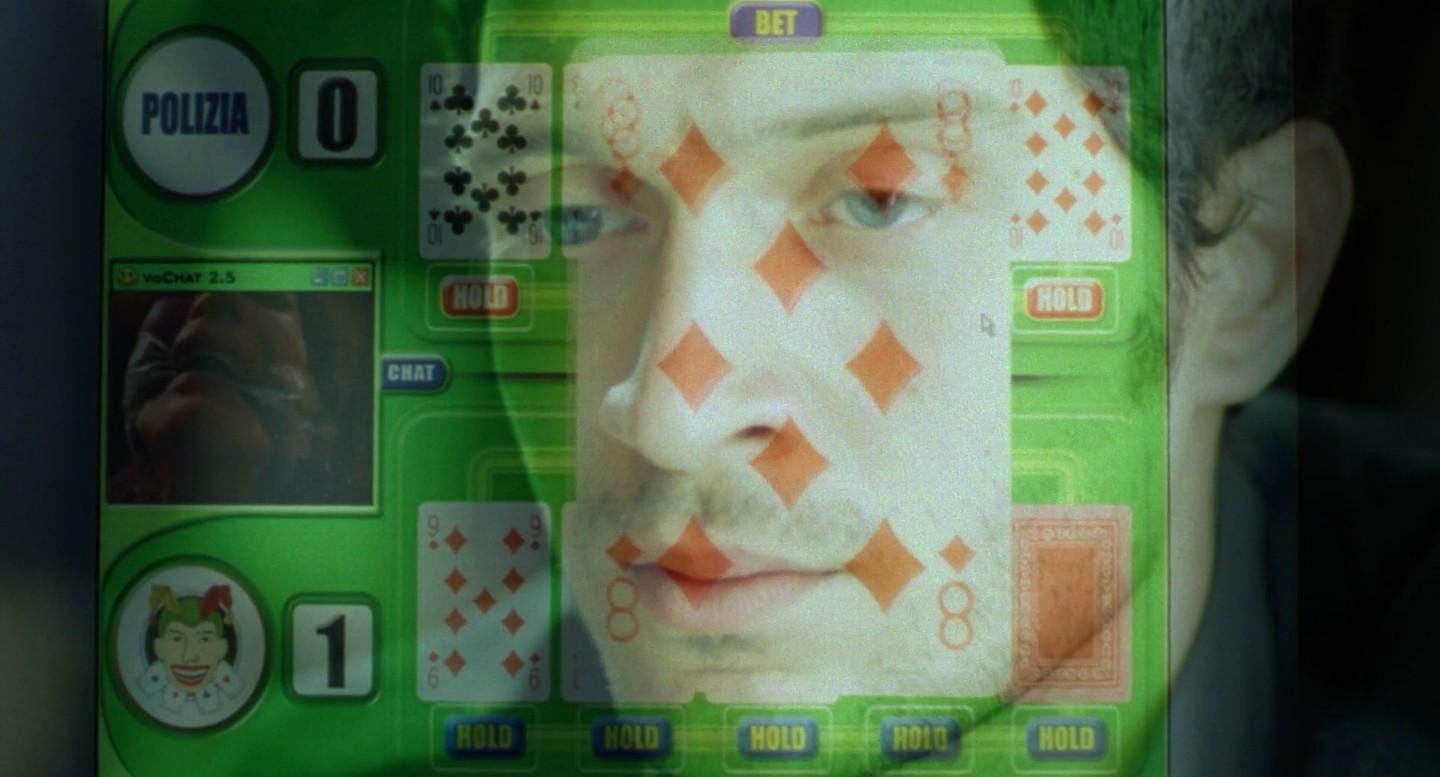
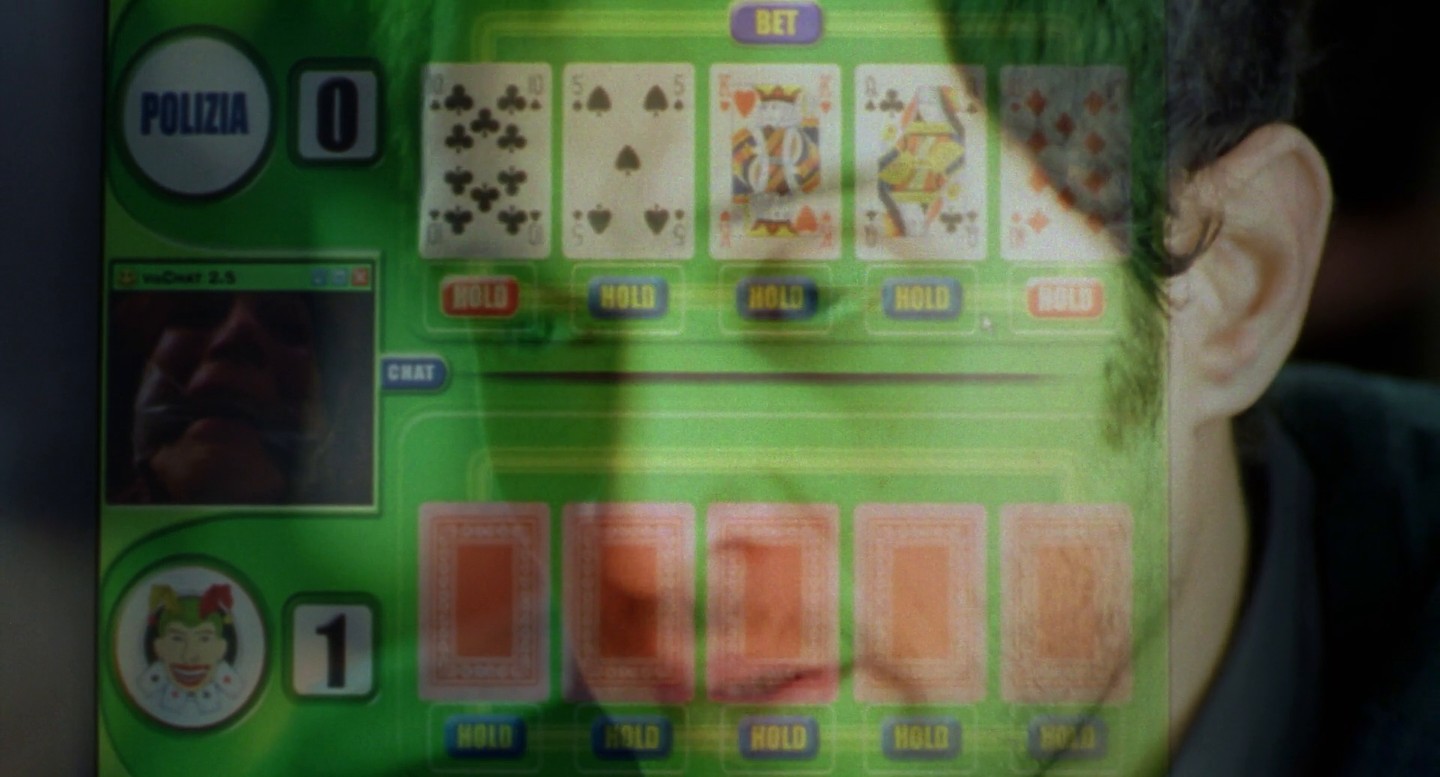
A face under the cards

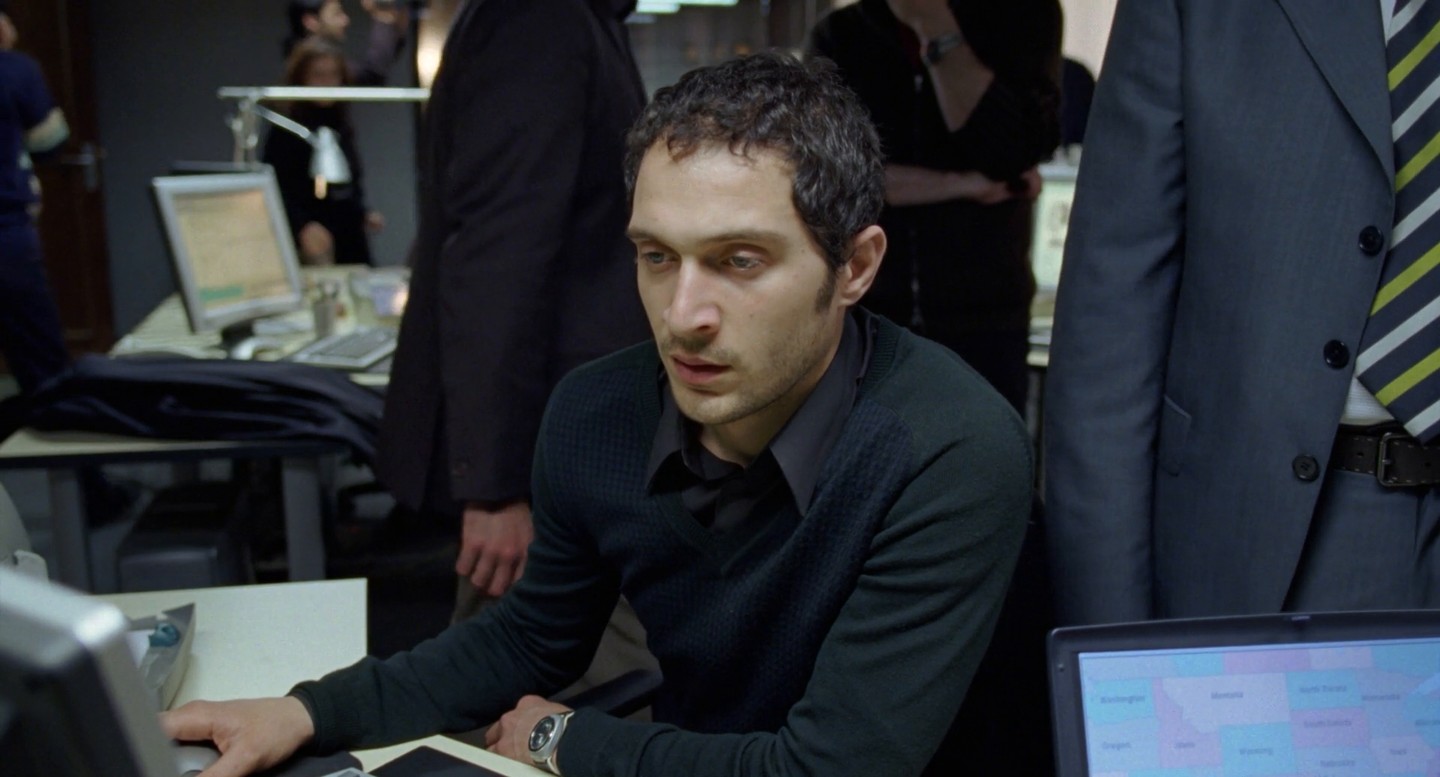
The poker interface overlays the player’s face.ENLARGE ↗
The poker interface overlays the player’s face.

Superimposition brings face and game into the same visual field. Cards cross the player’s eyes and cheeks; changing combinations become inseparable from concentration. The device answers the problem of making someone at a keyboard visually active, while the captive remains a small inset.

Explore the sequence →

22:31

The room after defeat

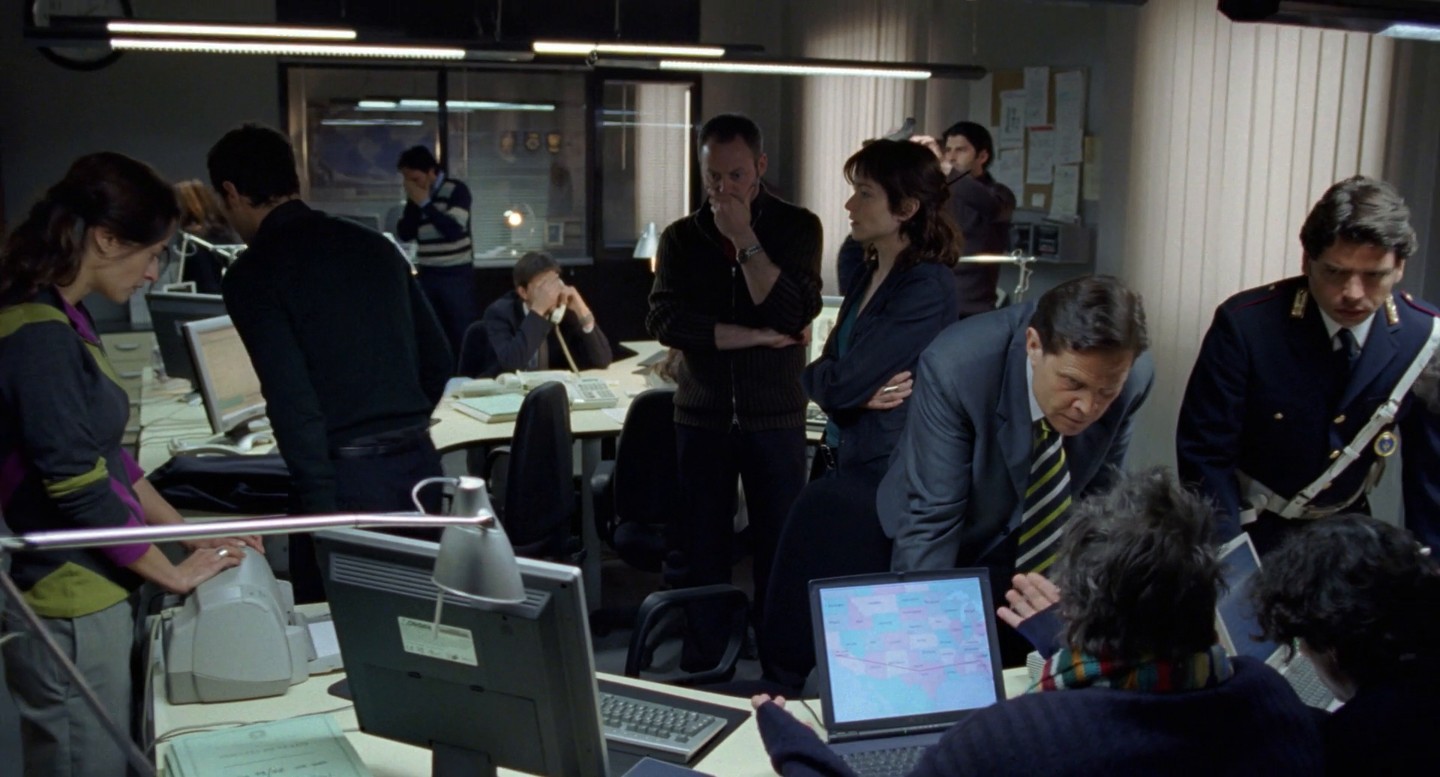
The officers disperse after the game.ENLARGE ↗
The officers disperse after the game.

A wide office view shows the collective arrangement breaking apart. Desks and monitors remain in place while people withdraw from the screen. The game has produced an outcome, but the room offers no corresponding sense that the police have regained control.

Explore the sequence →

23:15

Company outside the office

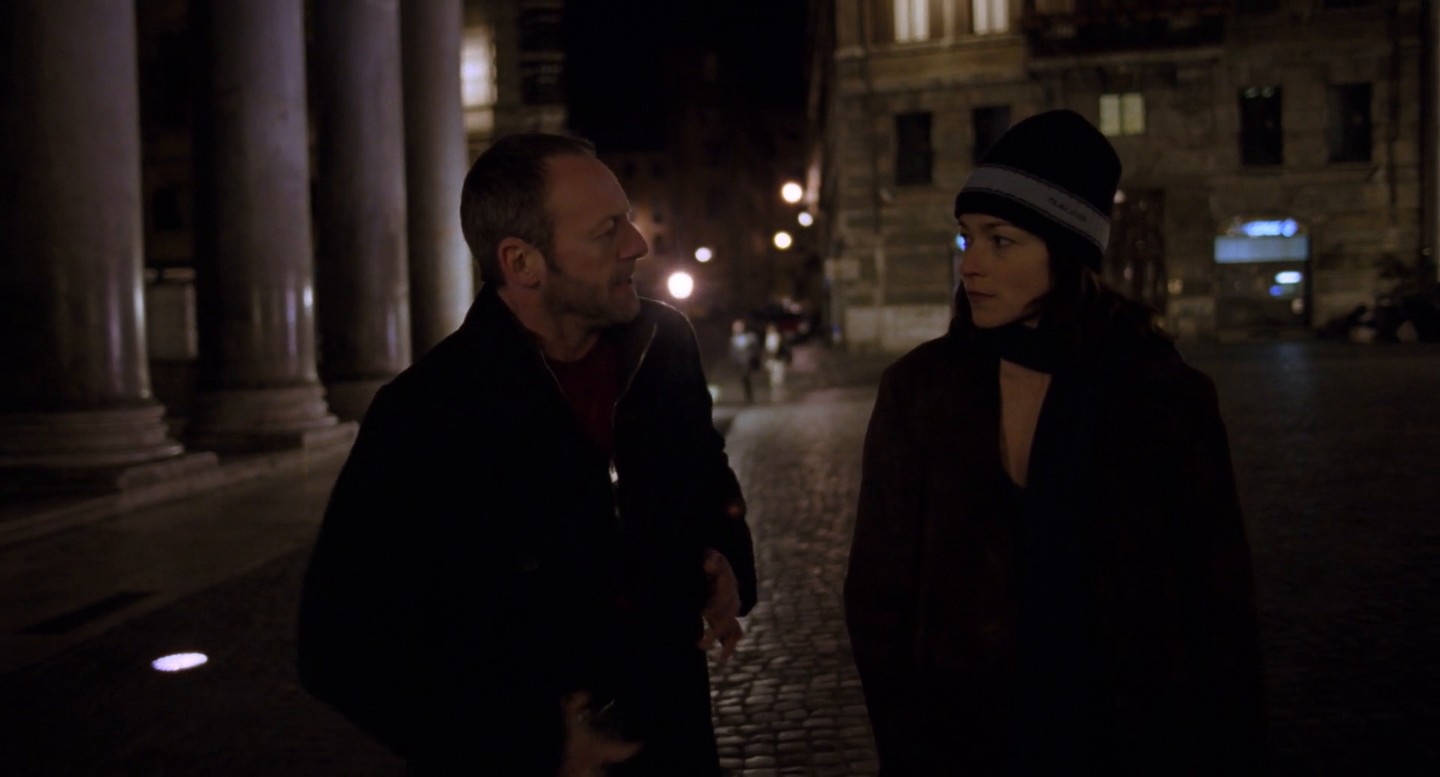
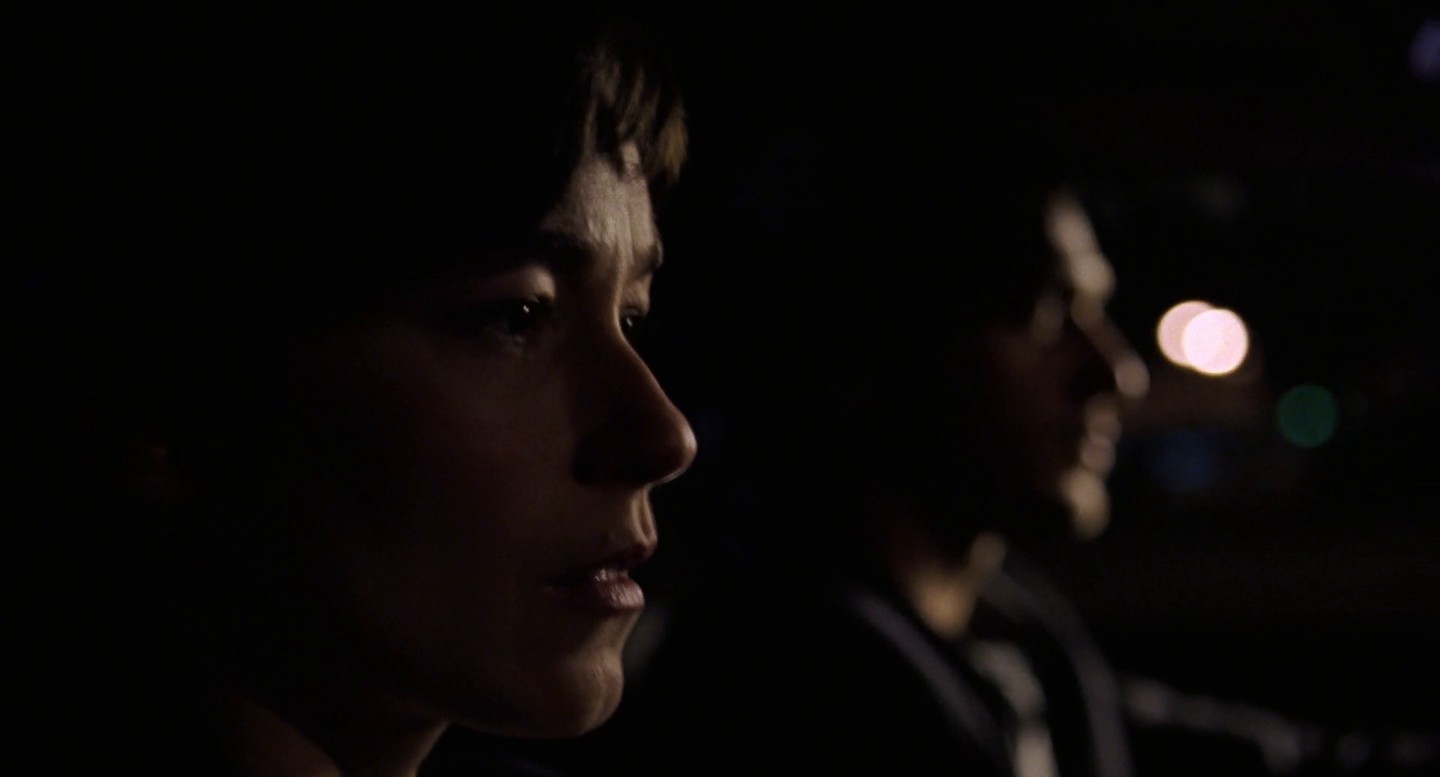
Anna and John walk through nighttime Rome.ENLARGE ↗
Anna and John walk through nighttime Rome.

The investigation briefly gives way to accompaniment. The pair share the city at walking pace, away from the desk and the crowd of observers. Cunningham’s published recollection of filming near the Pantheon supplies a production counterpart to this warmer, less official relationship.

26:26

Another body, another clue

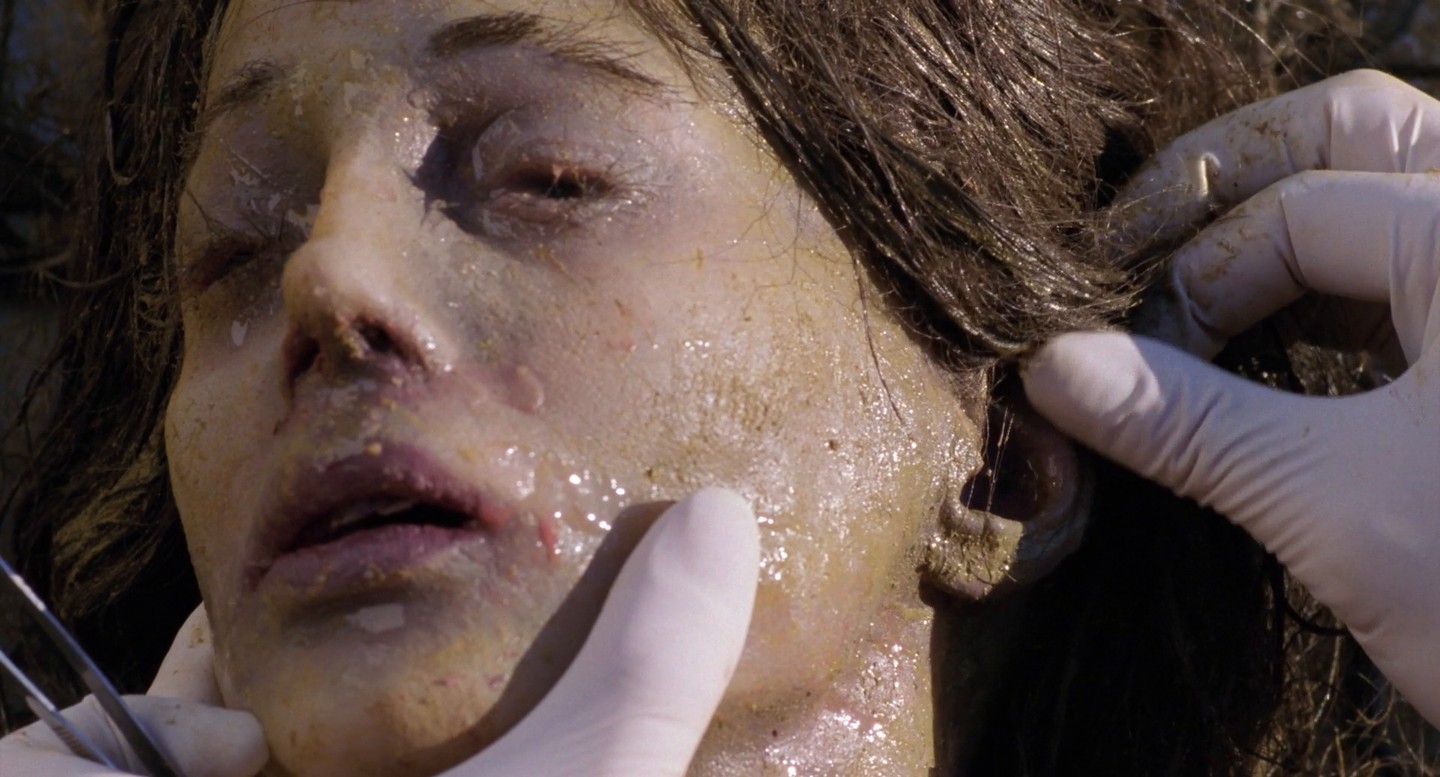
The second victim’s face in daylight.ENLARGE ↗
The second victim’s face in daylight.

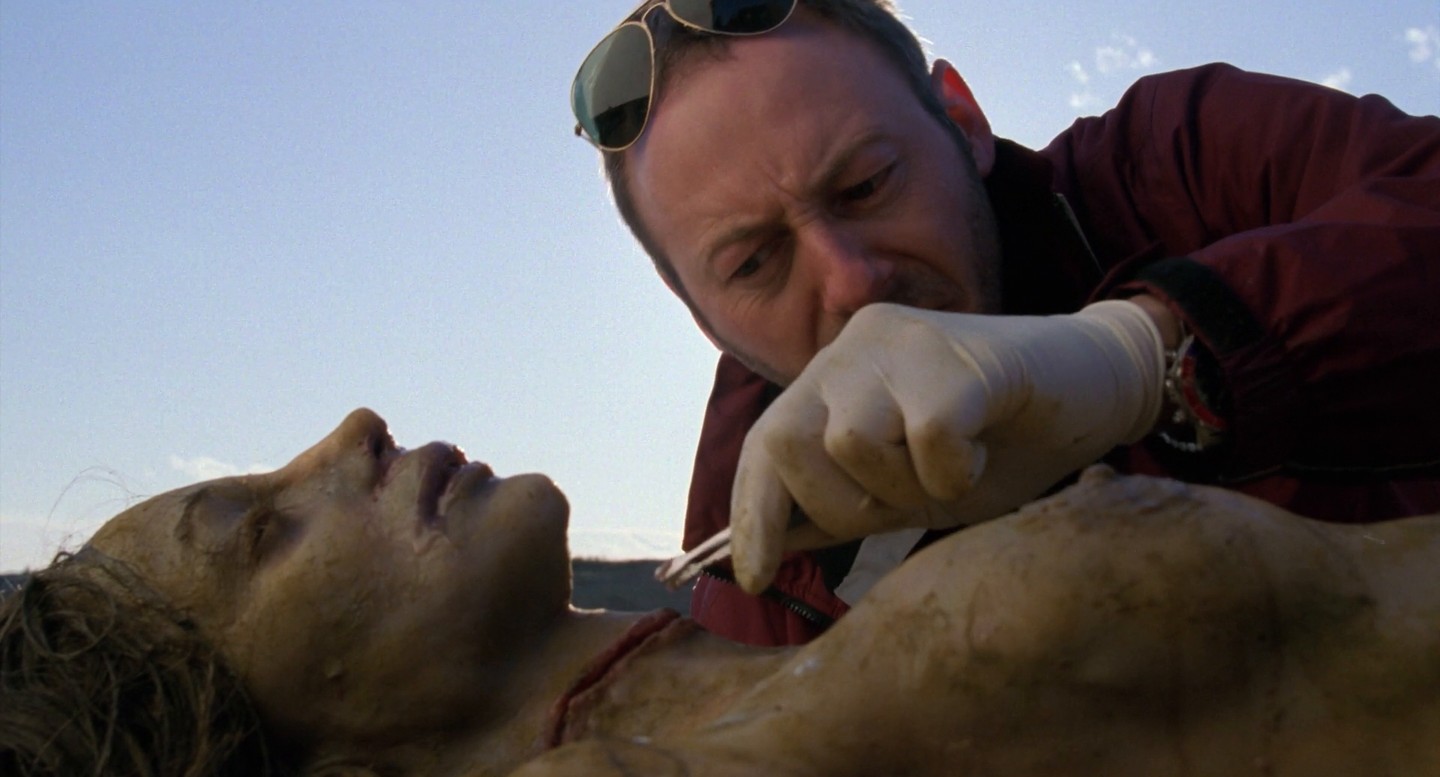
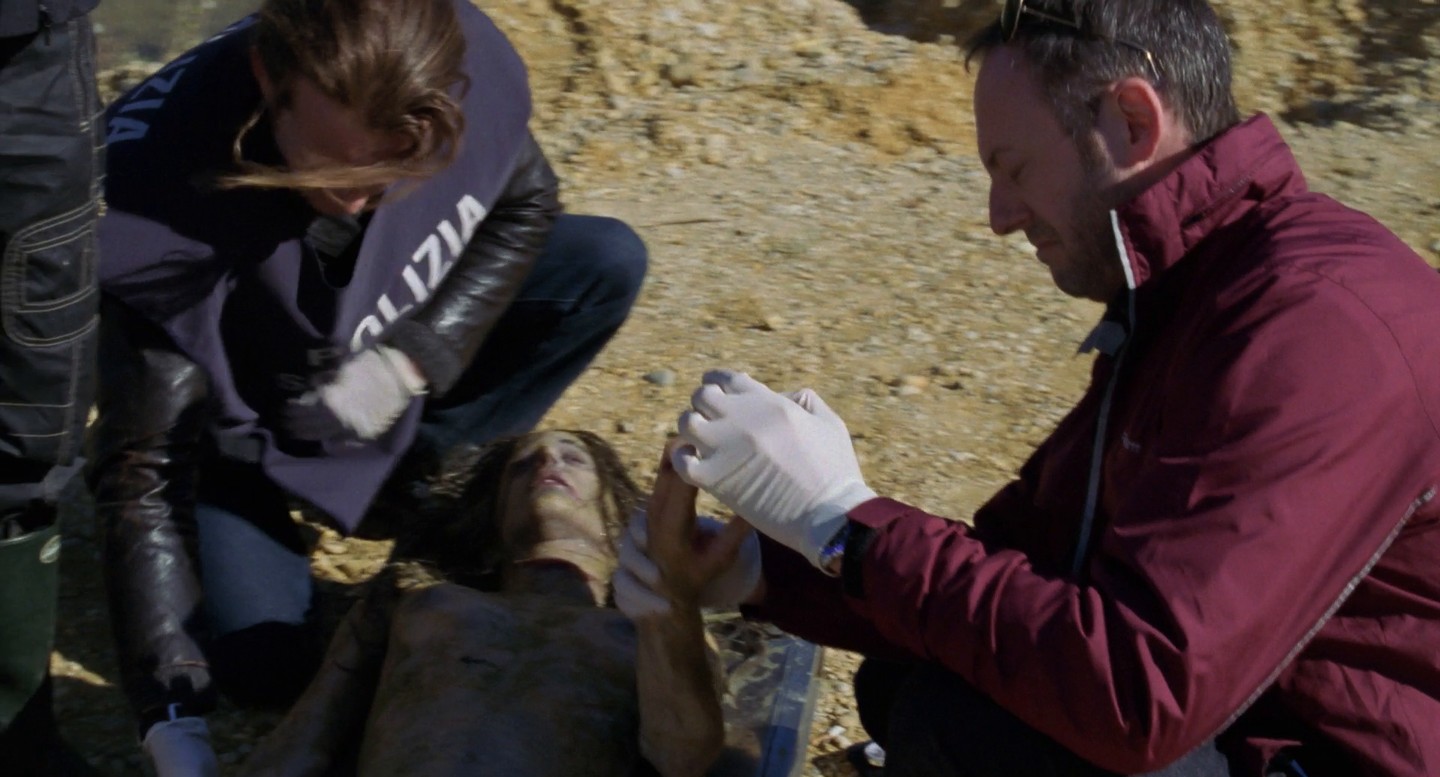
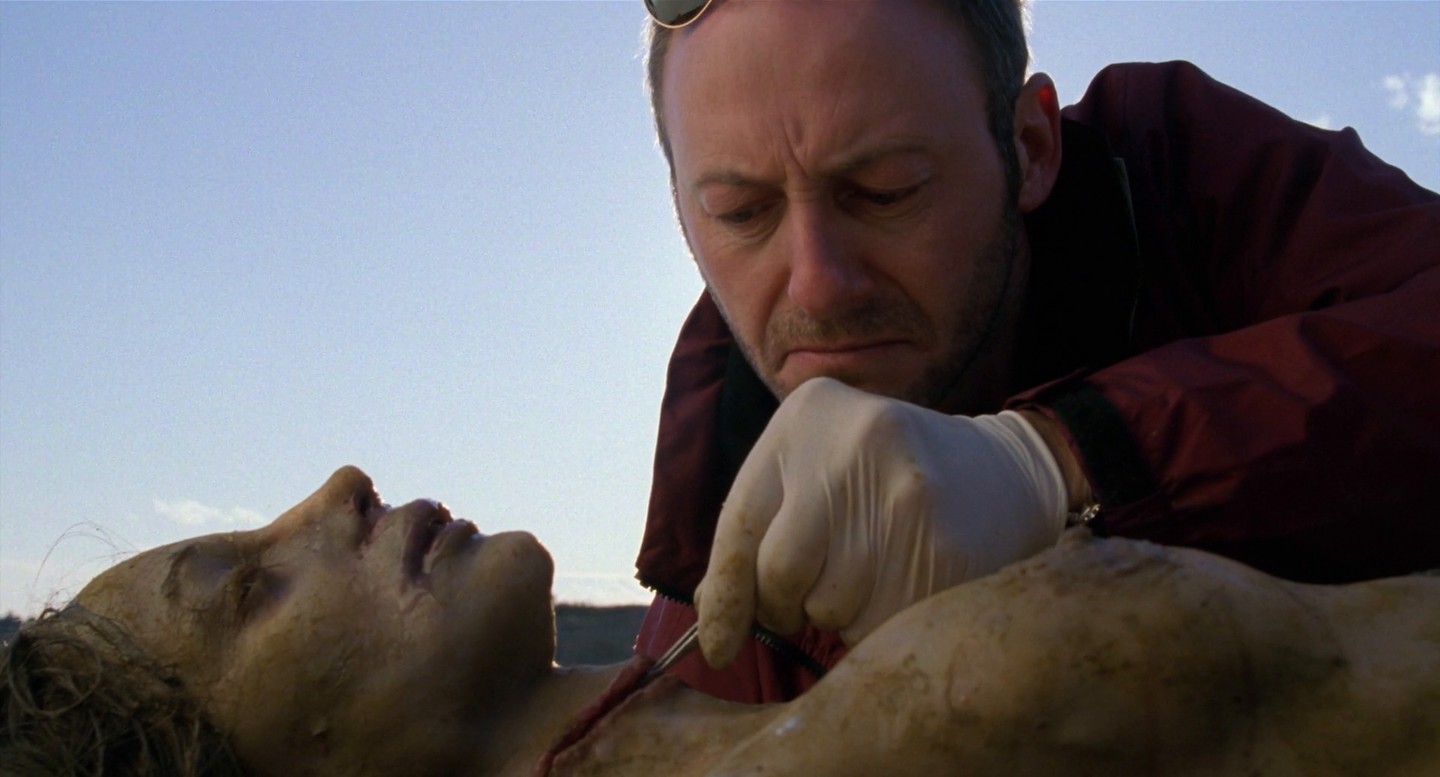
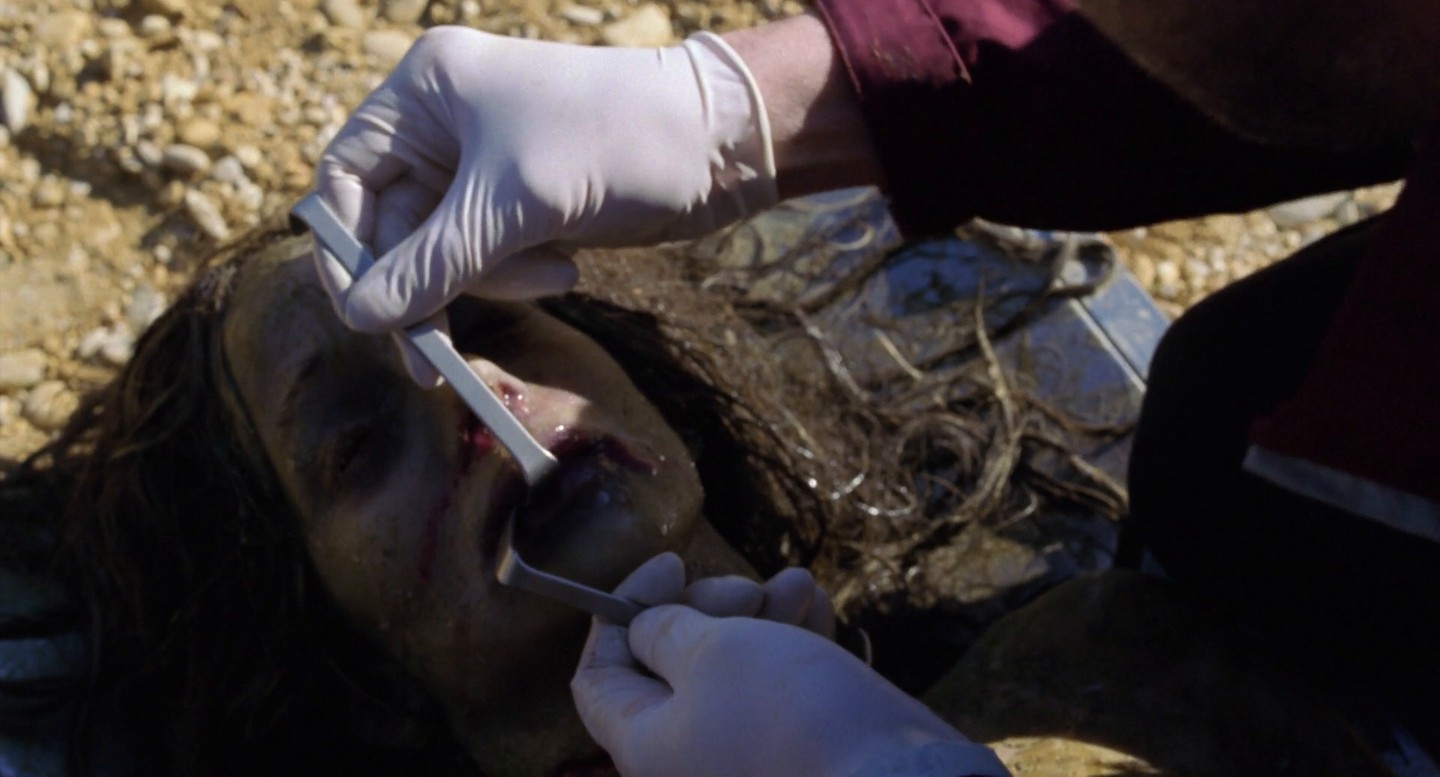
The outdoor examination repeats the forensic attention to face and throat in open sun. Gloved hands and small instruments direct the viewer toward individual marks. Brightness makes the corpse’s surface available to scrutiny; it does not make the scene reassuring.

Explore the sequence →

27:15

A game brought into the meeting

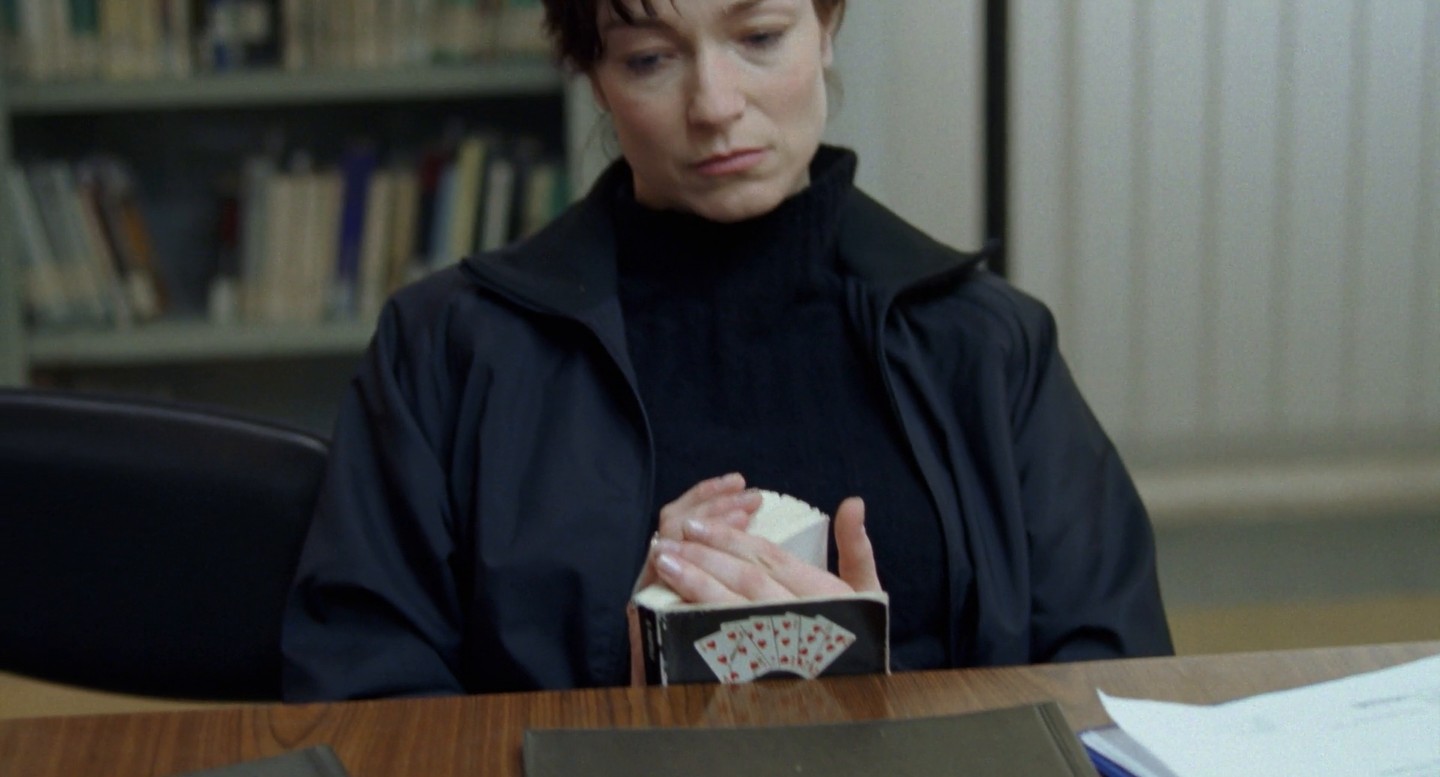
A pack of cards at the investigators’ table.ENLARGE ↗
A pack of cards at the investigators’ table.

Physical cards move the problem off the computer and into the investigators’ hands. Their ordinary scale contrasts with the huge screen inserts. A skill can be discussed and demonstrated, but the police still have to find someone able to exercise it under pressure.

31:15

Sound becomes an image

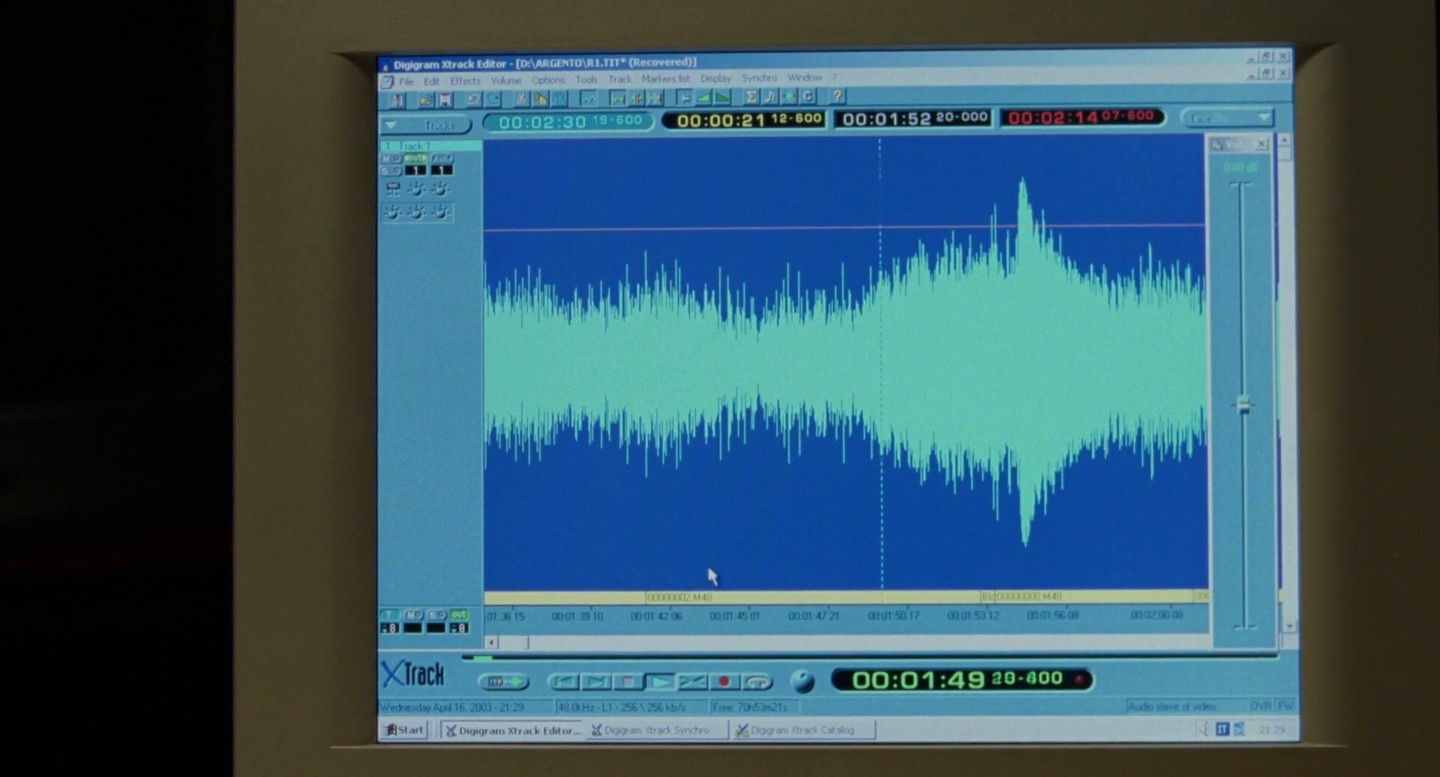
A recording is displayed as a waveform.ENLARGE ↗
A recording is displayed as a waveform.

The waveform adds another kind of screen to the investigation. A sound is rendered as something that can be located, compared and replayed. It prepares the distinction between an image’s apparent present tense and the time at which it was actually recorded.

35:15

Expertise outside the police

Green lamps hang above the gaming room.ENLARGE ↗
Green lamps hang above the gaming room.

The investigators move into a social space organised around play. Green table light echoes the poker interface without reproducing its isolation. Remo’s usefulness comes from habits learned outside the official chain of command.

40:45

The recruited player

Anna talks with Remo away from the desk.ENLARGE ↗
Anna talks with Remo away from the desk.

The quieter conversation gives the young player an identity beyond a pair of hands at the keyboard. Once he enters the police room, that individuality is surrounded by other people’s expectations. His skill makes him necessary and conspicuous.

42:45

One player, many spectators

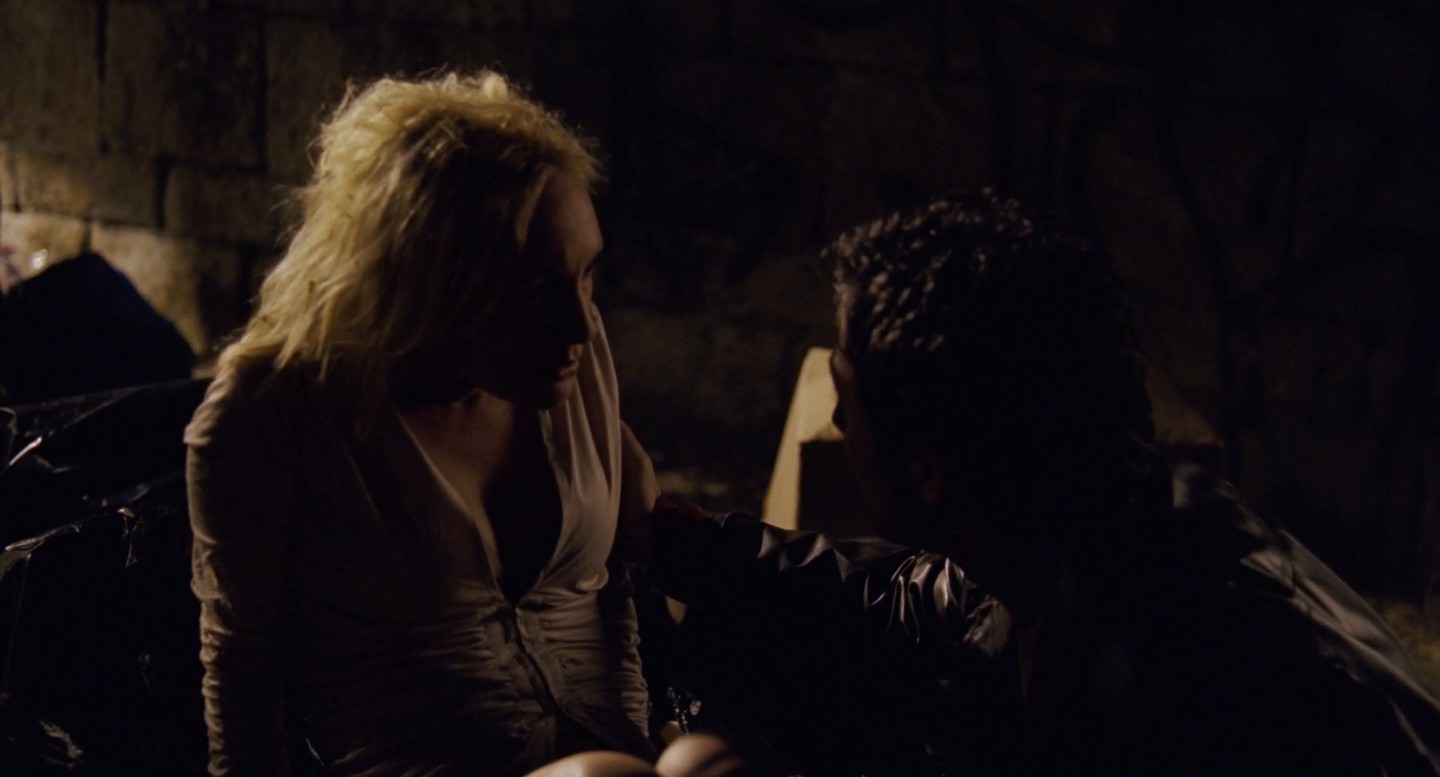
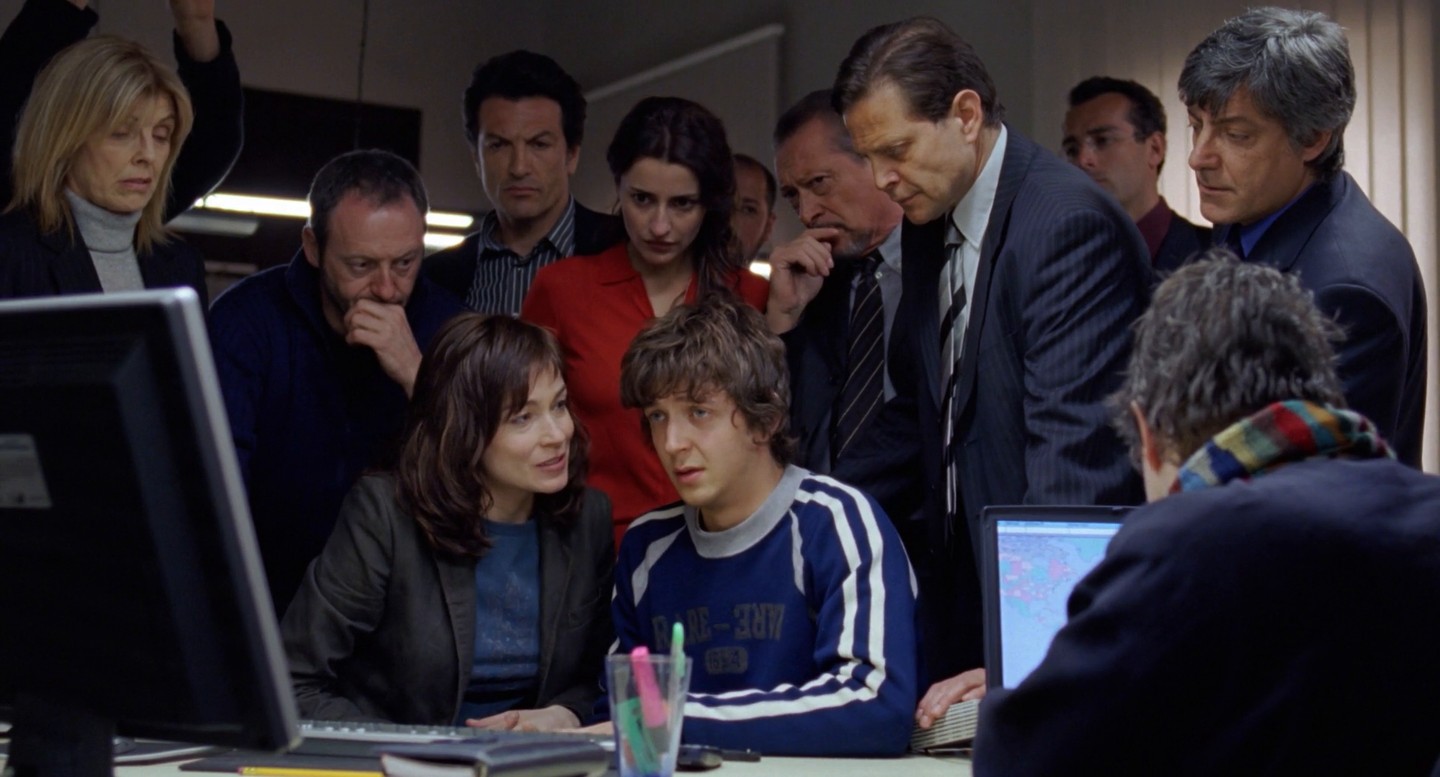
Remo plays with Anna beside him.ENLARGE ↗
Remo plays with Anna beside him.

The computer becomes the centre of a compact group. Faces and shoulders crowd around the seated player, concentrating institutional pressure on someone without institutional authority. The arrangement makes the difference between participating and watching visible within a single frame.

48:15

A warmer interior

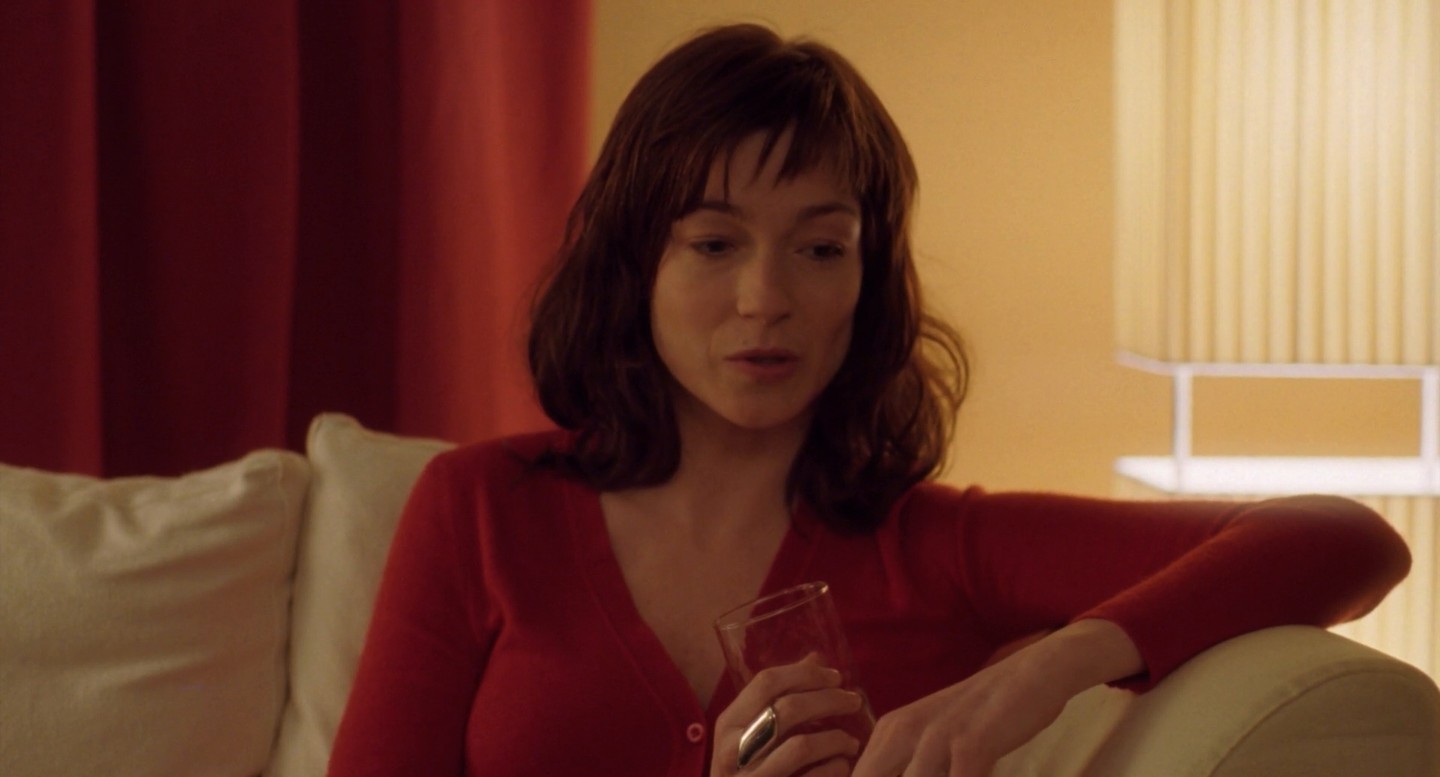
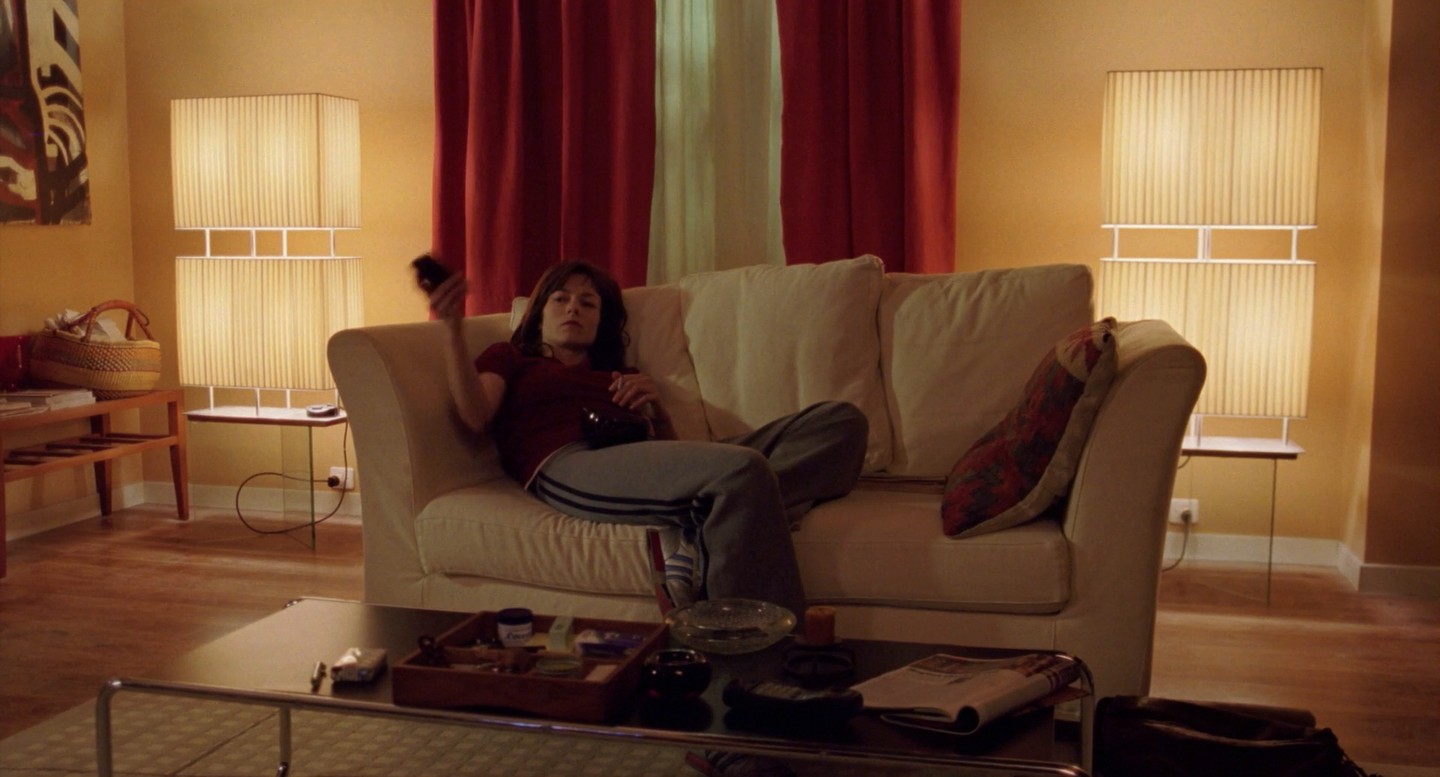
Anna sits on the cream sofa.ENLARGE ↗
Anna sits on the cream sofa.

Red curtains, shaded lamps and the pale sofa separate Anna’s home from the fluorescent workplace. The room initially offers privacy and warmth. Its windows and deep doorway later provide the very openings through which that security can be questioned.

50:55

The curved warning

The garden appears in the bowl’s reflection.ENLARGE ↗
The garden appears in the bowl’s reflection.

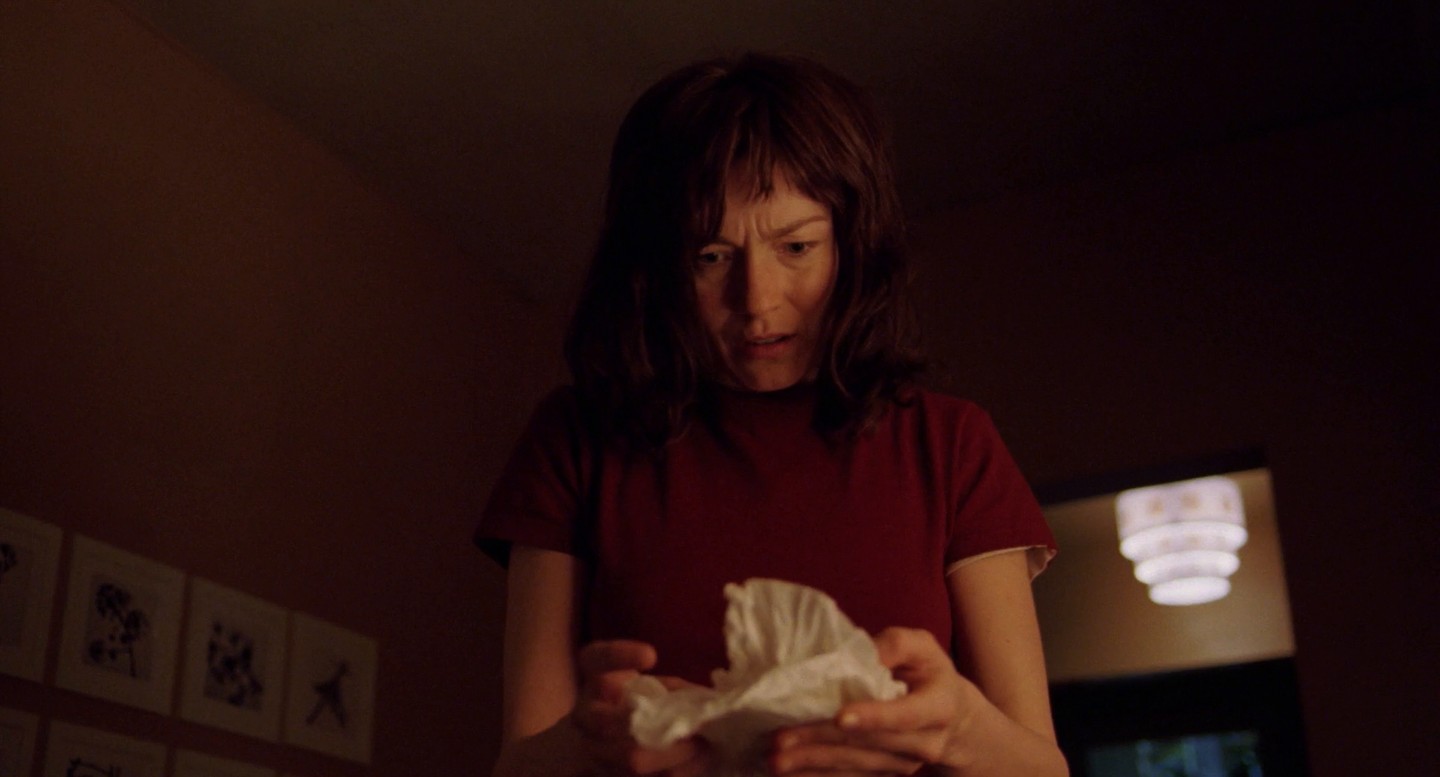
The polished bowl supplies a distorted view of the space behind Anna. Recognition begins in a reflection rather than a direct encounter. The domestic object becomes an improvised surveillance device, prompting her to test what the room’s ordinary viewpoint has concealed.

Explore the sequence →

55:10

A room turned against its occupant

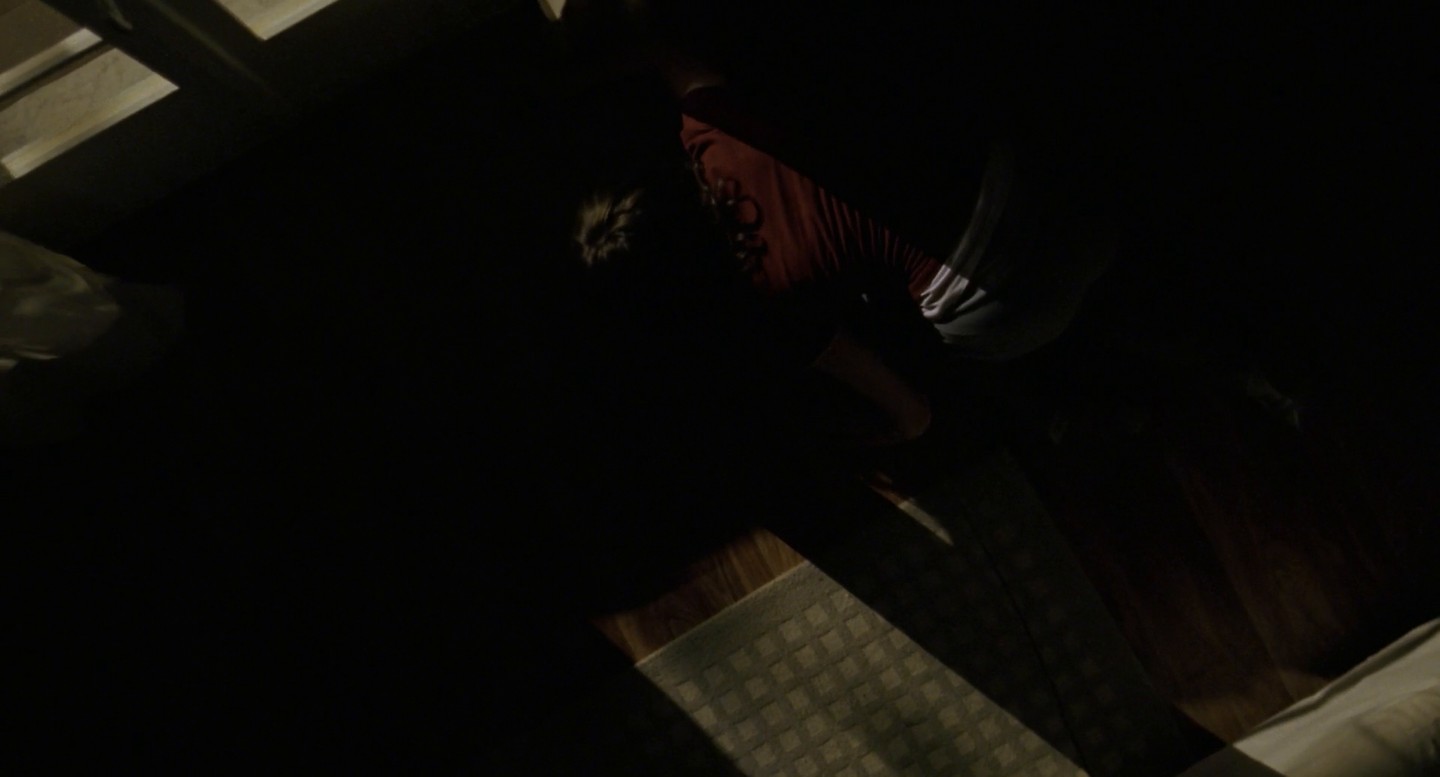
Anna struggles beneath the high viewpoint.ENLARGE ↗
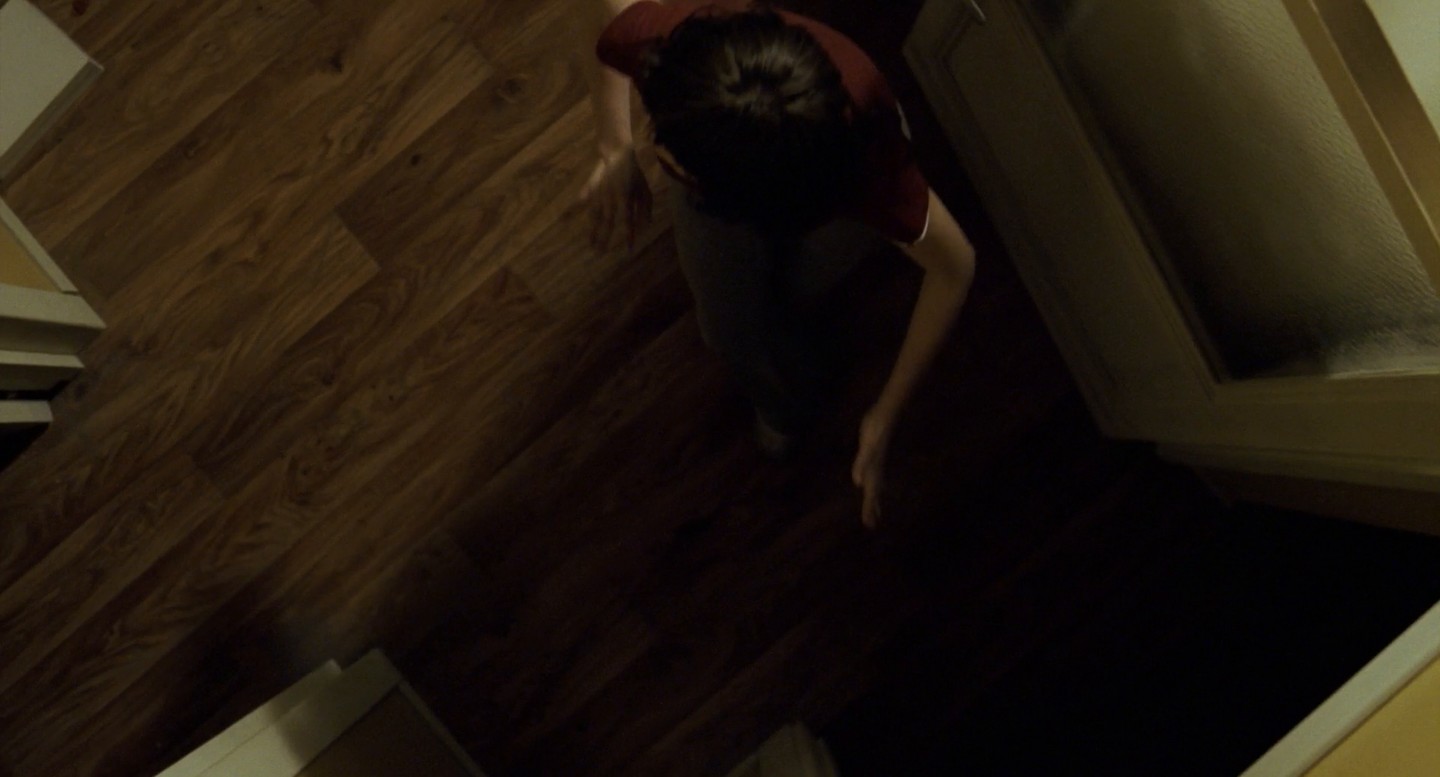
Anna struggles beneath the high viewpoint.

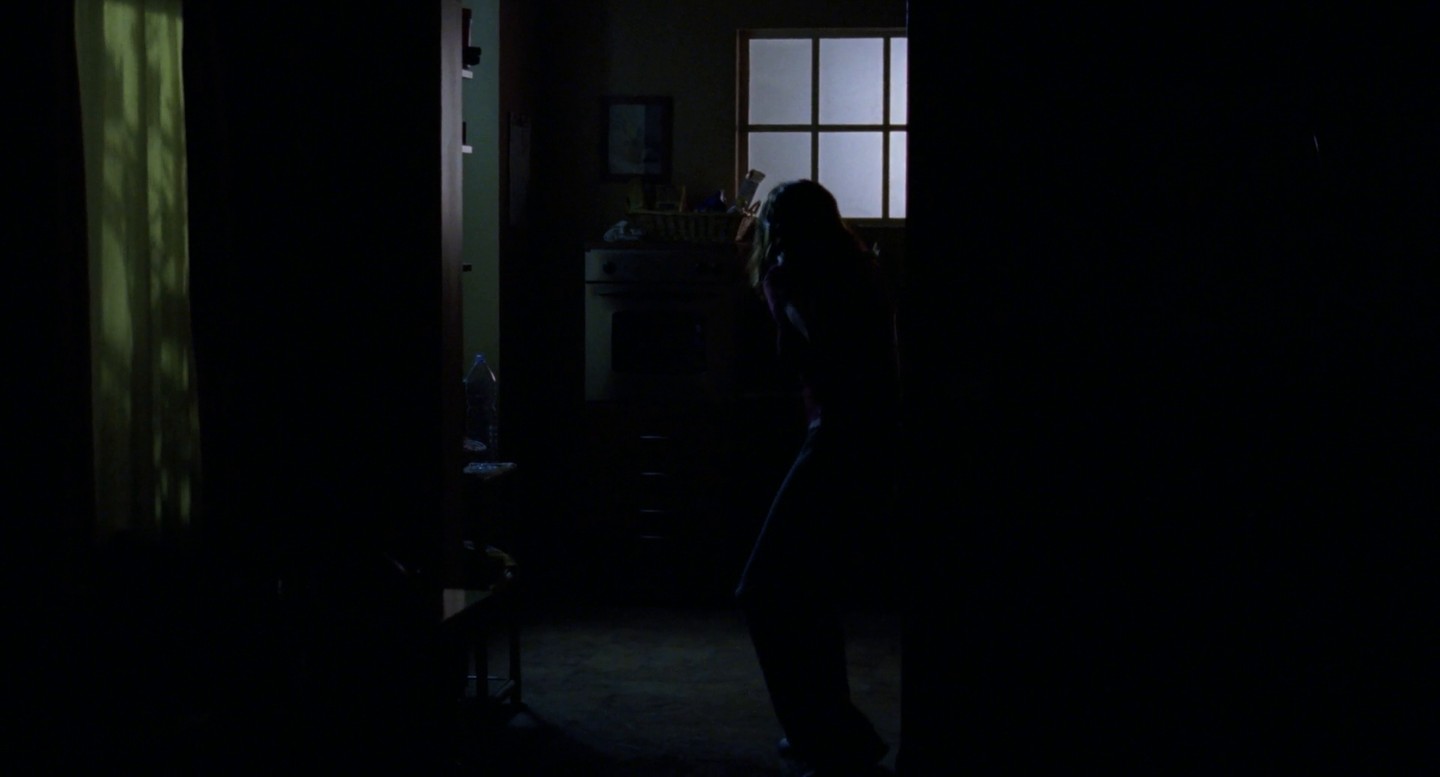
Once the lights fail, the warm room loses its clear divisions. A steep overhead angle reorients the struggle around the furniture and floor. The visual problem changes from reading an image on a monitor to locating a body in an immediate, poorly visible space.

Explore the sequence →

1:03:45

The stakes reach the commissioner

Lucia appears in the poker window.ENLARGE ↗
Lucia appears in the poker window.

Lucia’s captivity makes the commissioner’s position personal. The familiar cluster around the monitor now holds a different emotional balance. Remo’s play offers a possible rescue, but the interface still defines what everyone else can see and do.

1:08:15

A victory with an aftermath

Lucia receives comfort after her release.ENLARGE ↗
Lucia receives comfort after her release.

The released captive can finally share the investigators’ physical space. The change from an isolated video inset to direct human contact gives the successful game a consequence beyond a score. Remo’s later vulnerability prevents the rescue from becoming a lasting resolution.

1:15:40

Remo leaves the public room

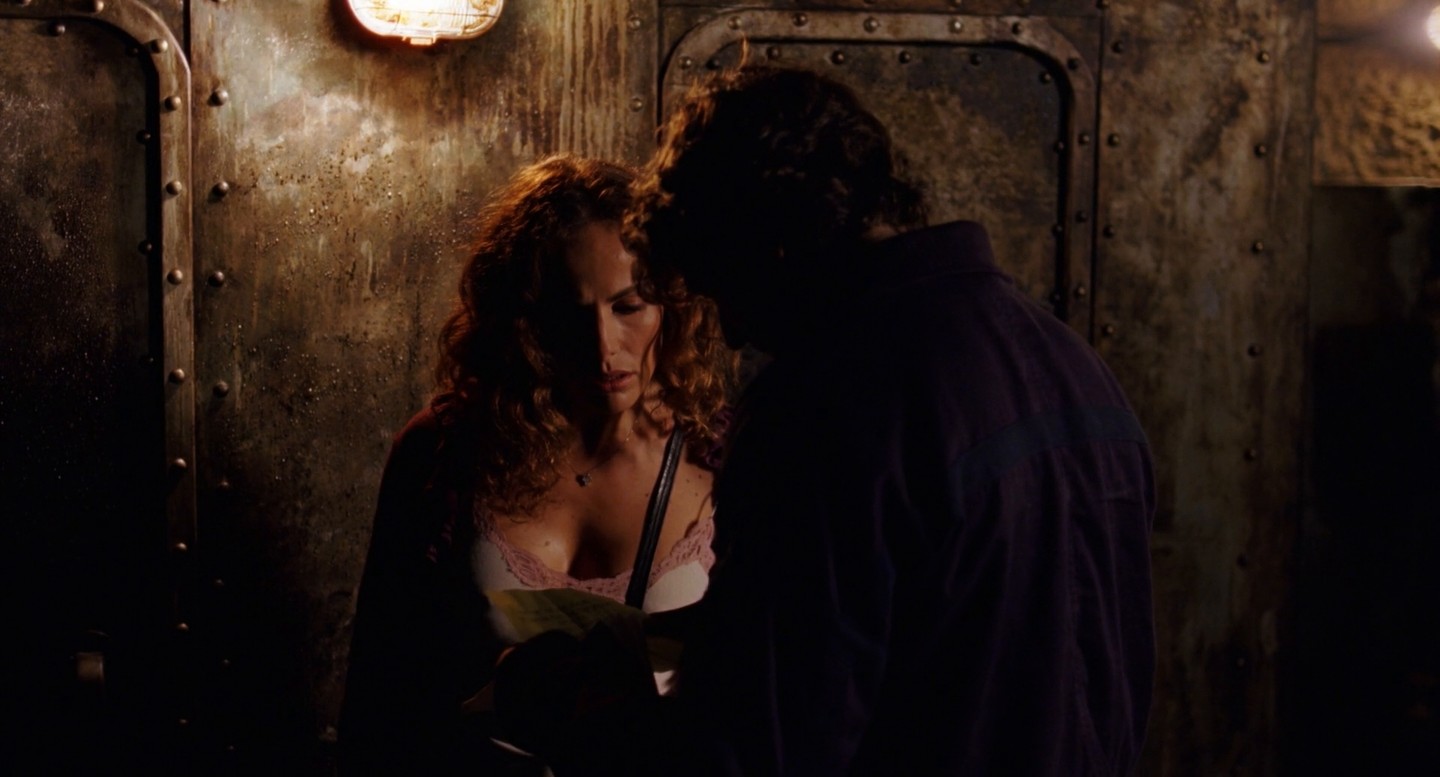
Remo and the woman at the metal doorway.ENLARGE ↗
Remo and the woman at the metal doorway.

The crowded bar gives way to a waterfront encounter and an increasingly confined route. The woman and the paper in her hand occupy his attention before the doorway takes over the composition. Desire and curiosity lead him out of the protection offered by public space.

1:16:55

A route becomes a trap

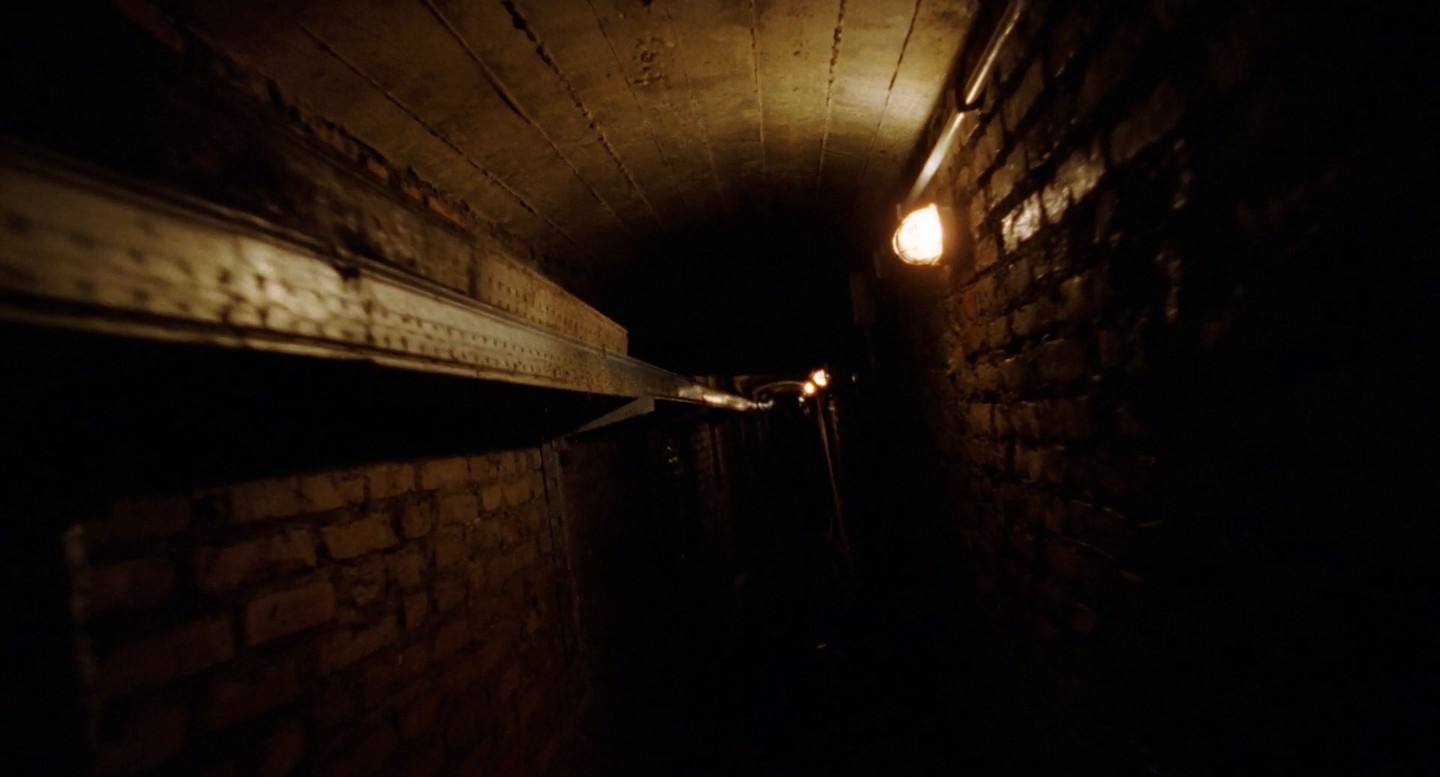
The narrow passage is crossed by cables.ENLARGE ↗
The narrow passage is crossed by cables.

Brickwork, pipes and cables press the passage into a long, restrictive corridor. Low and tilted views deny the comfortable overview that might make the route easy to read. Remo has to negotiate the setting bodily, one obstruction at a time.

Explore the sequence →

1:18:25

The open bank is not an escape

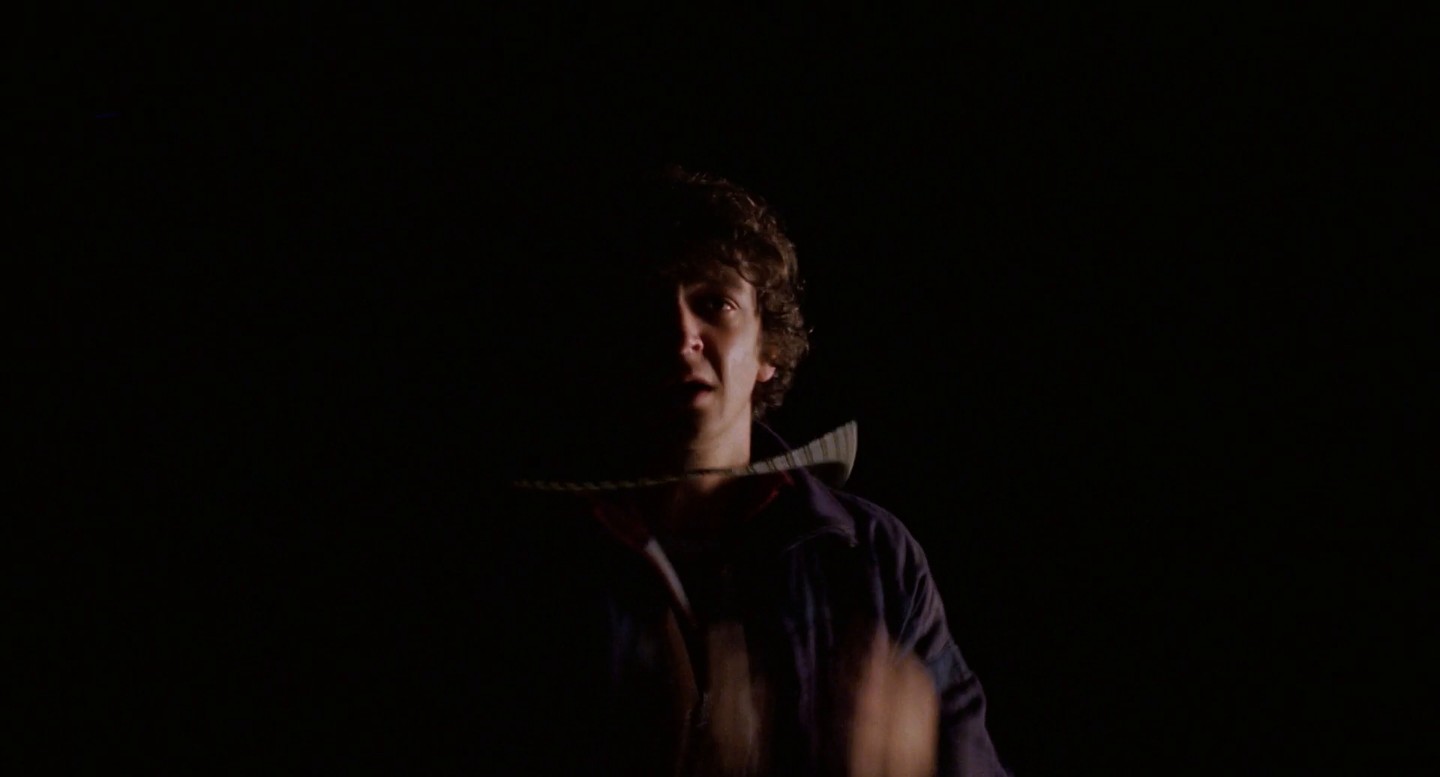
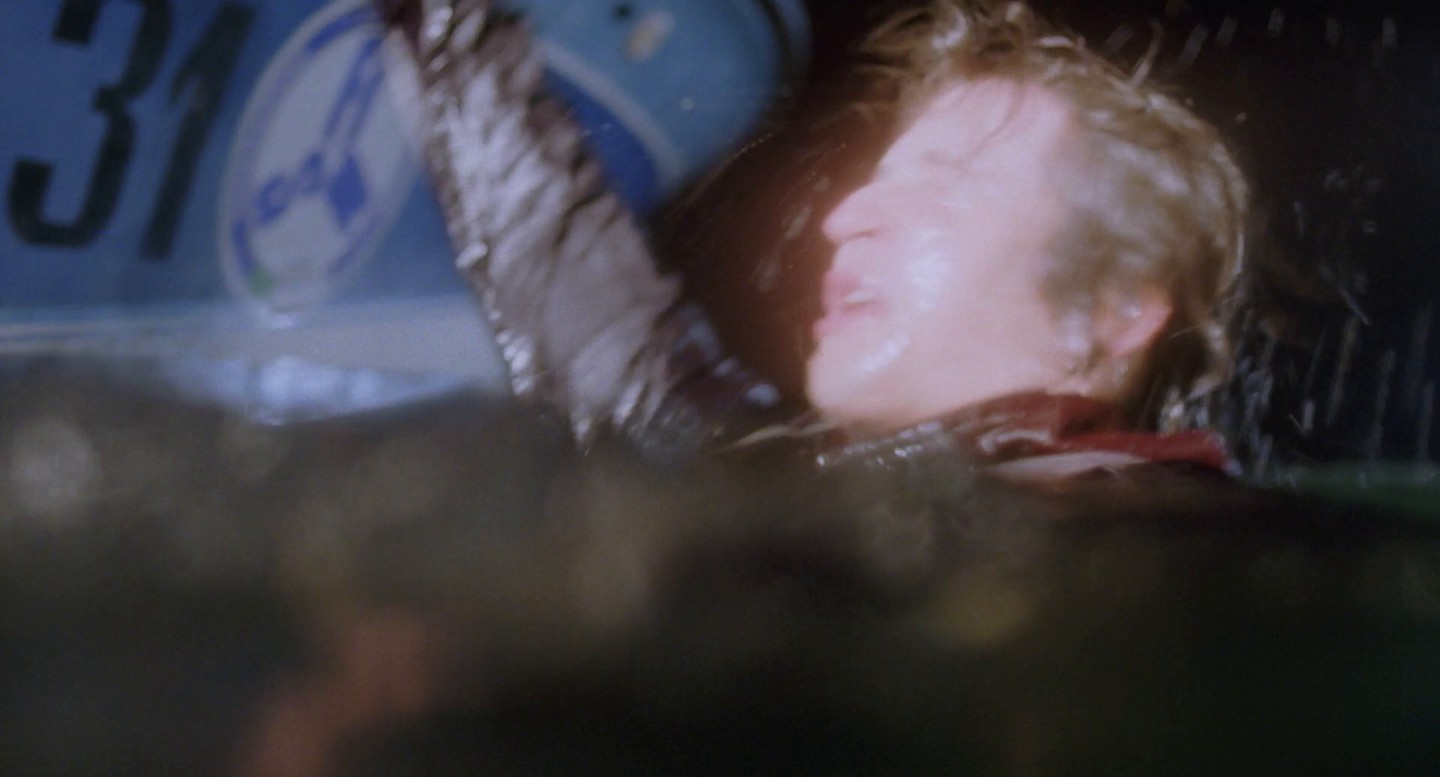
A rope catches Remo across the neck.ENLARGE ↗
A rope catches Remo across the neck.

Leaving the passage seems to restore open space. The rope abruptly turns that openness into another controlled route, pulling the threat out toward the water. The shift connects the enclosed obstacle course to the river that has already returned the killer’s victims.

Explore the sequence →

1:19:45

The cost of recruitment

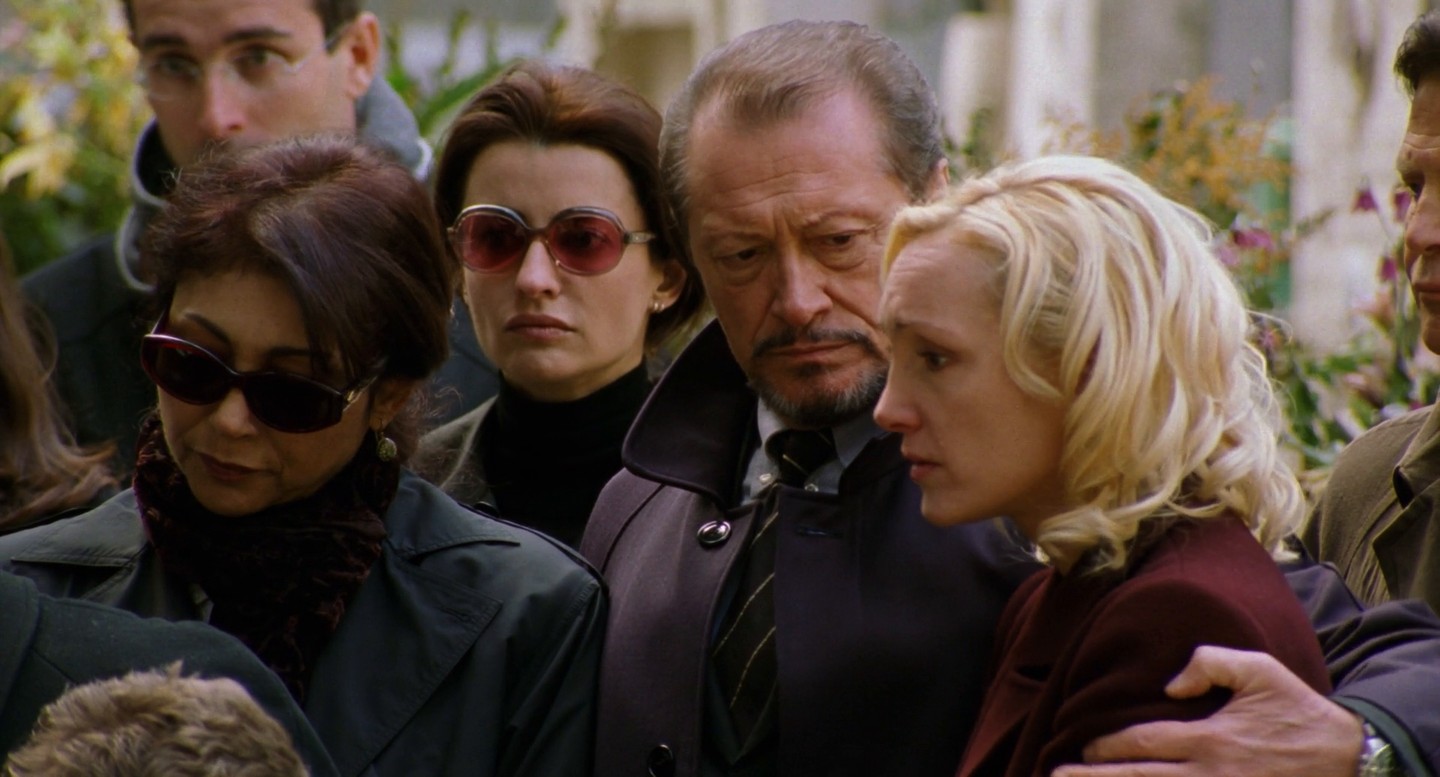
The mourners gather after Remo’s death.ENLARGE ↗
The mourners gather after Remo’s death.

The group assembles again, now around a loss rather than a monitor. Remo’s usefulness to the police has not kept him safe. The funeral changes the meaning of those earlier crowded compositions: being surrounded by the institution was not the same as being protected.

1:22:15

An ordinary event breaks the illusion

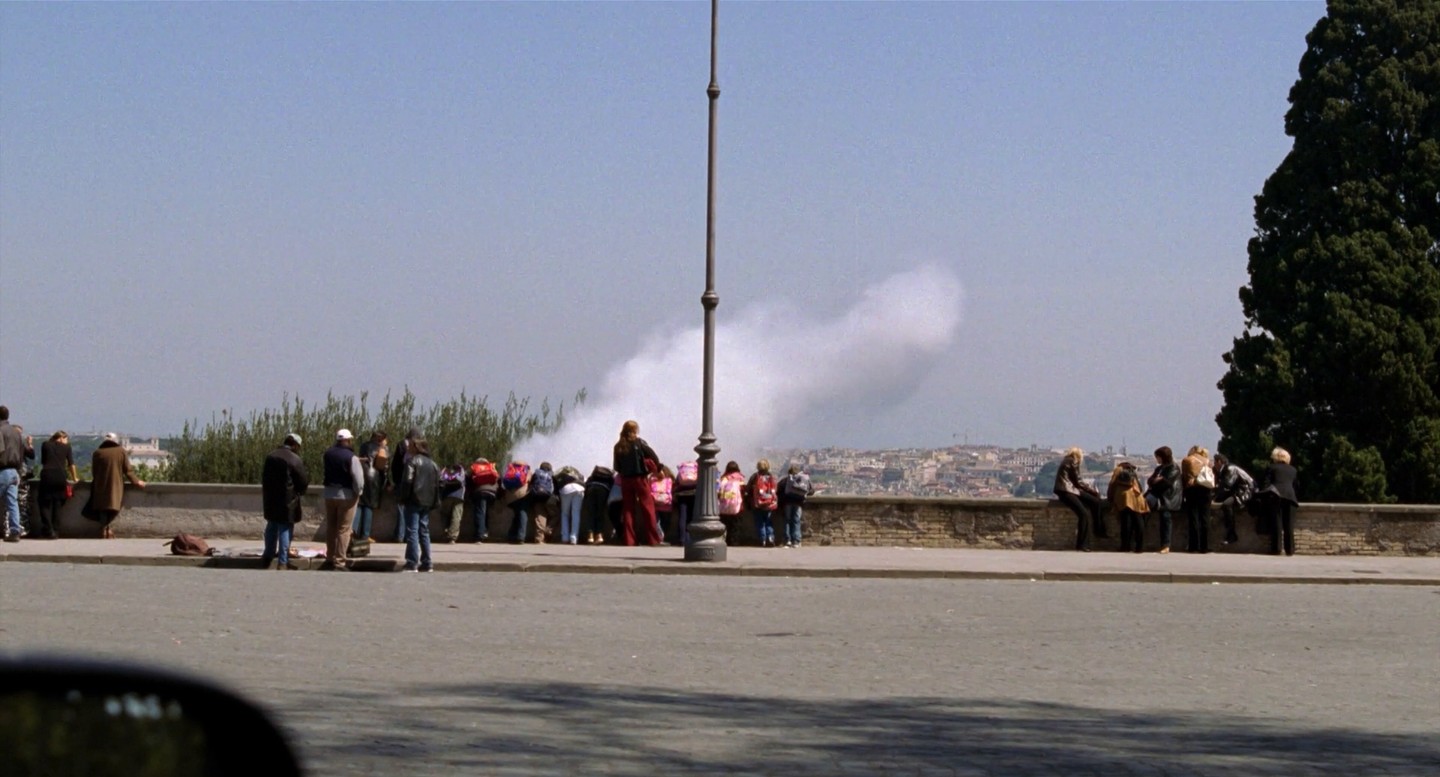
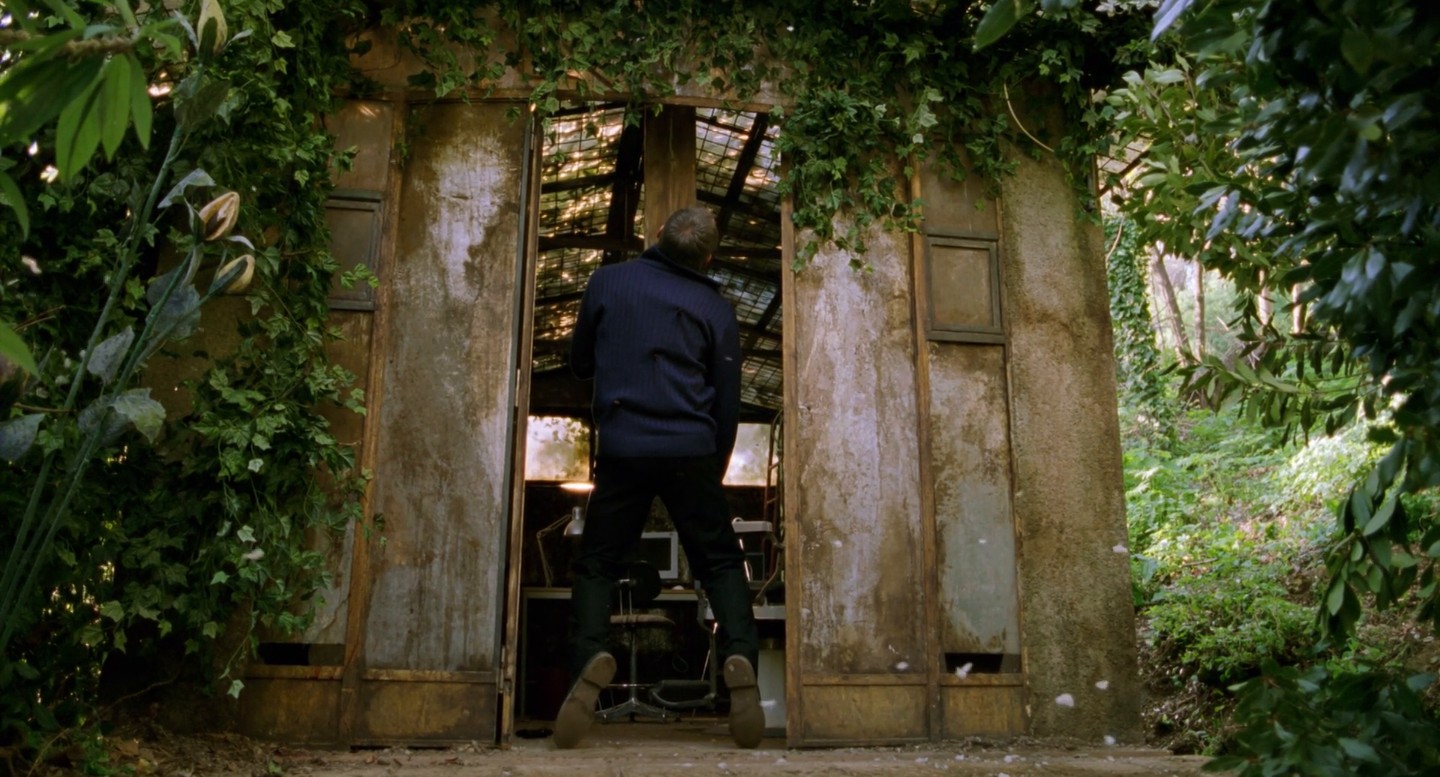
John watches the daytime activity on the hill.ENLARGE ↗
John watches the daytime activity on the hill.

The investigation returns to a public part of Rome. In the accompanying English subtitles, John connects the cannon’s scheduled firing with the sound on the recording. The clue challenges the supposed timing of the transmitted killing, rather than merely naming a location.

1:26:56

The other side of the webcam

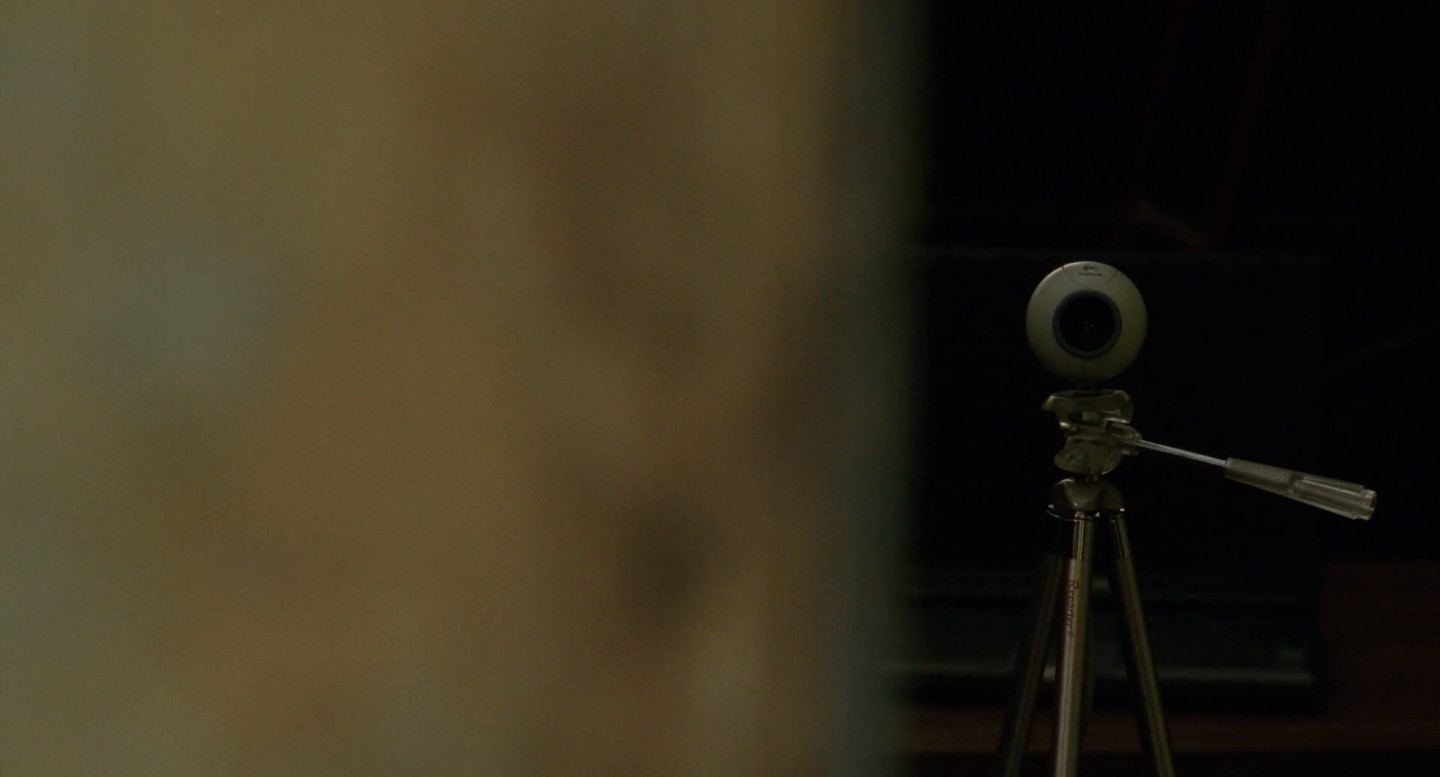
A webcam stands inside the hidden room.ENLARGE ↗
A webcam stands inside the hidden room.

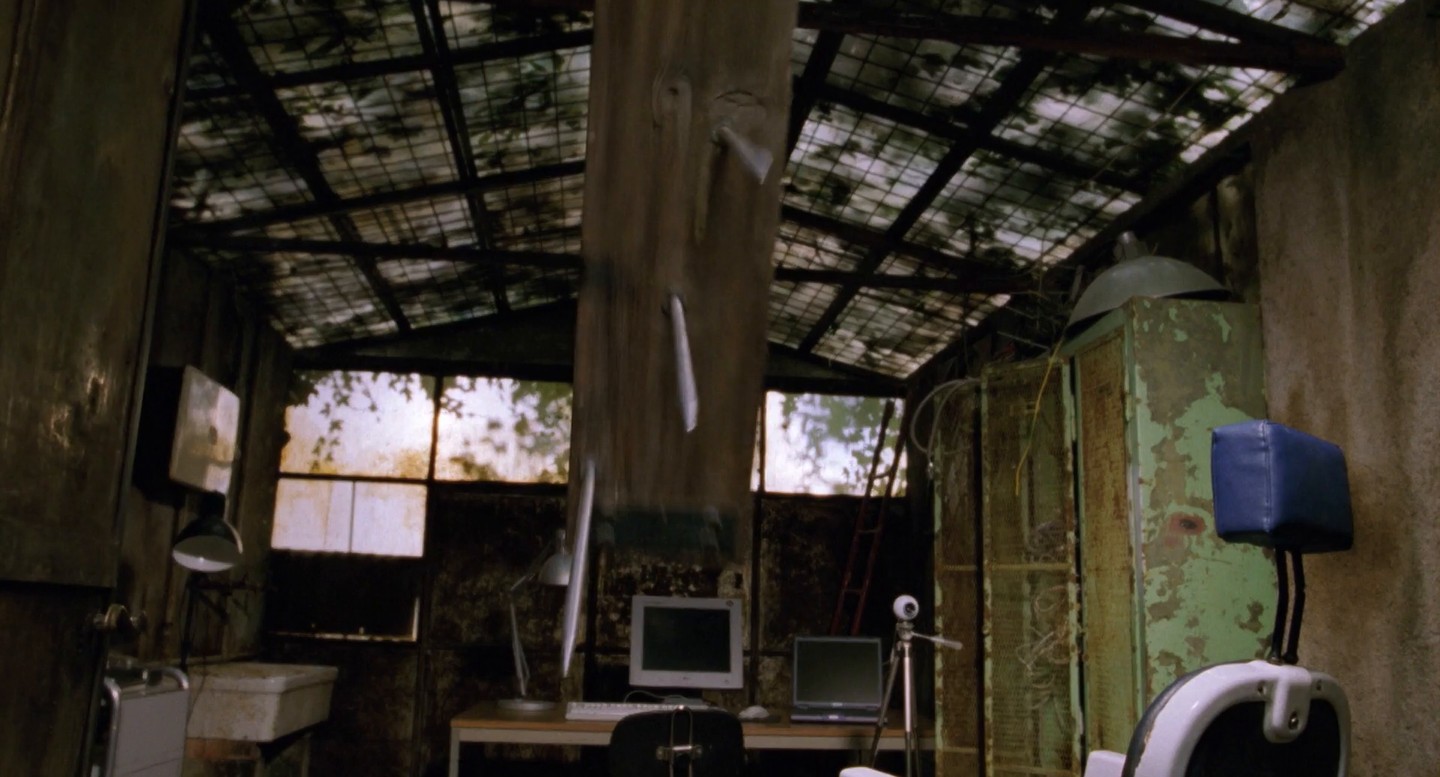
The camera and monitor are now objects in a deteriorating building, not disembodied access to a captive. John reaches the physical place behind the screen. Finding it does not grant him mastery: the doorway itself is part of a mechanical ambush.

Explore the sequence →

1:27:05

Discovery and injury

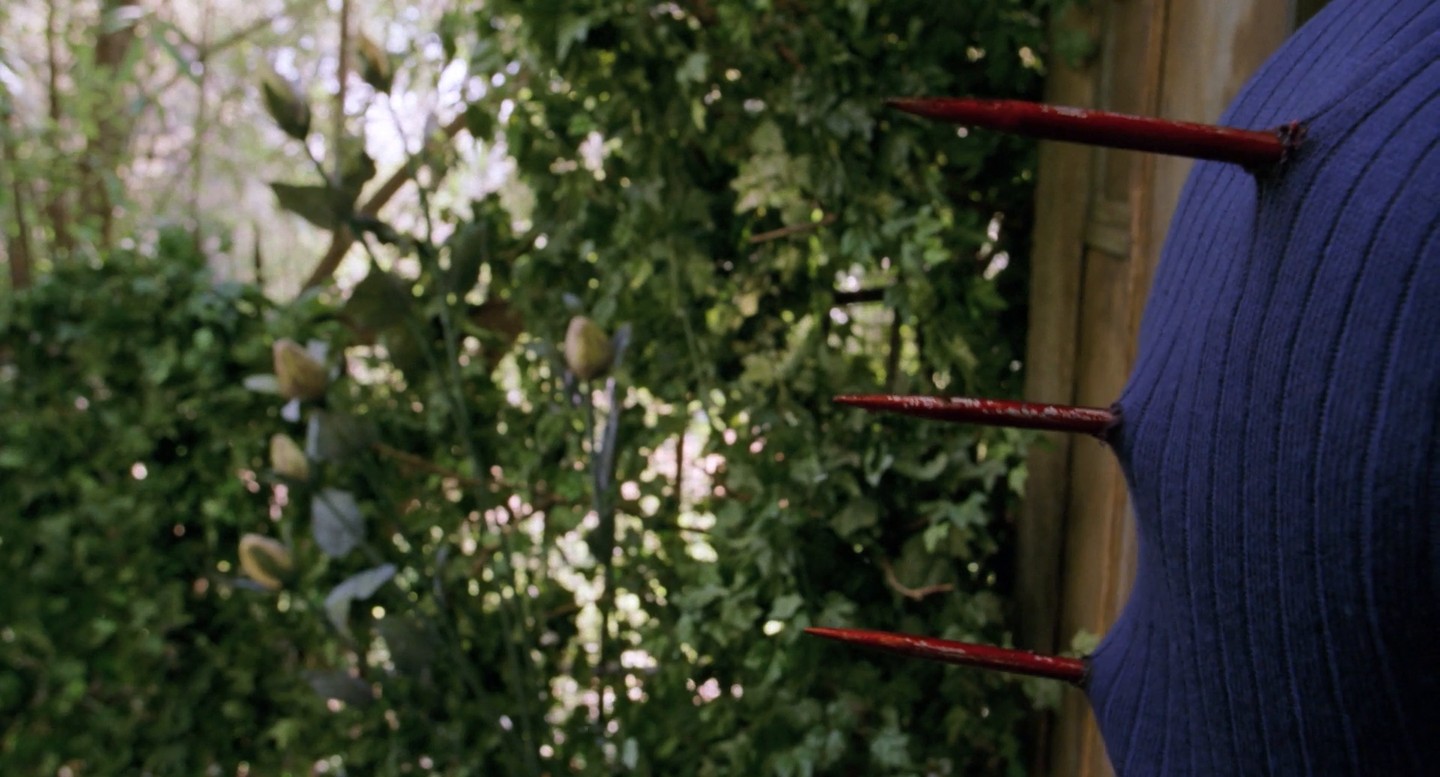
Projectiles pierce John’s sweater.ENLARGE ↗
Projectiles pierce John’s sweater.

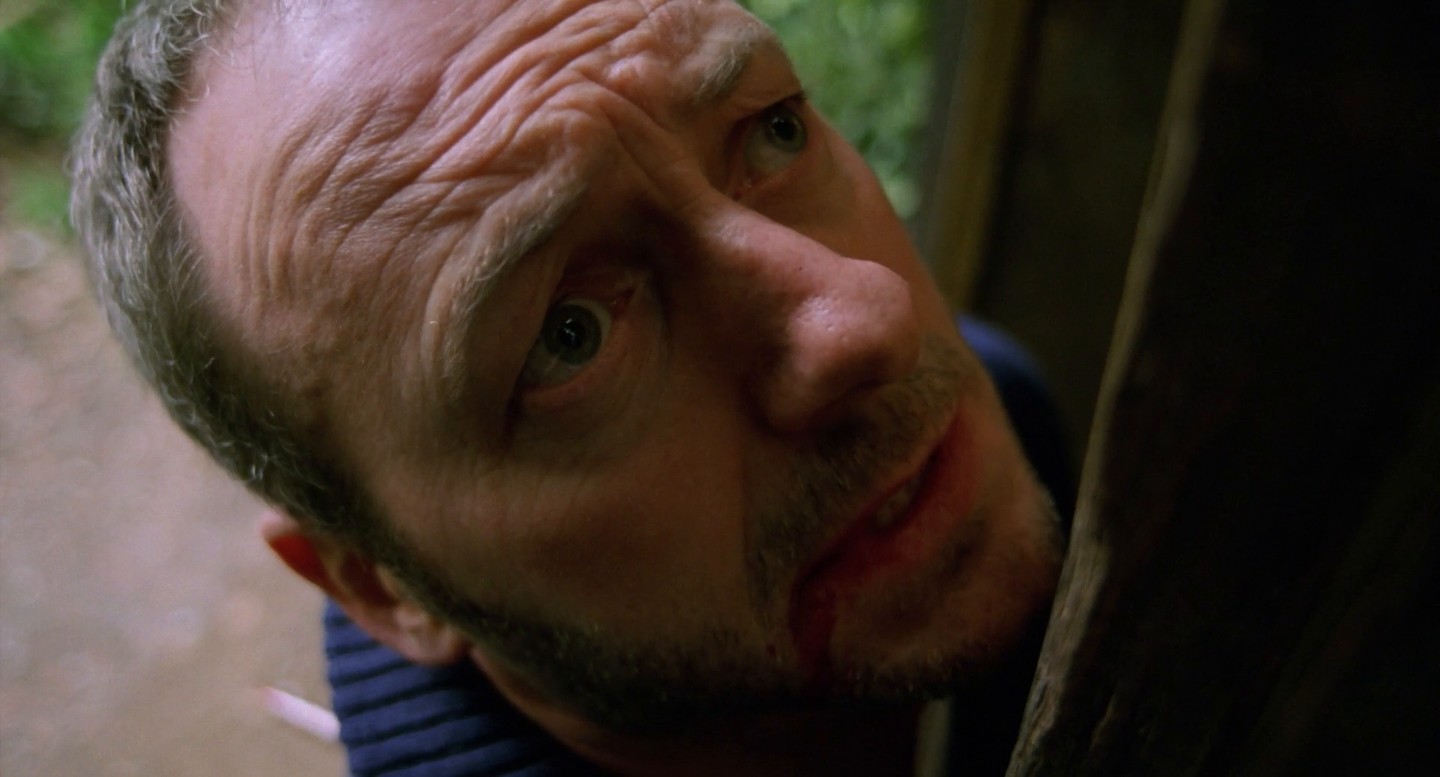
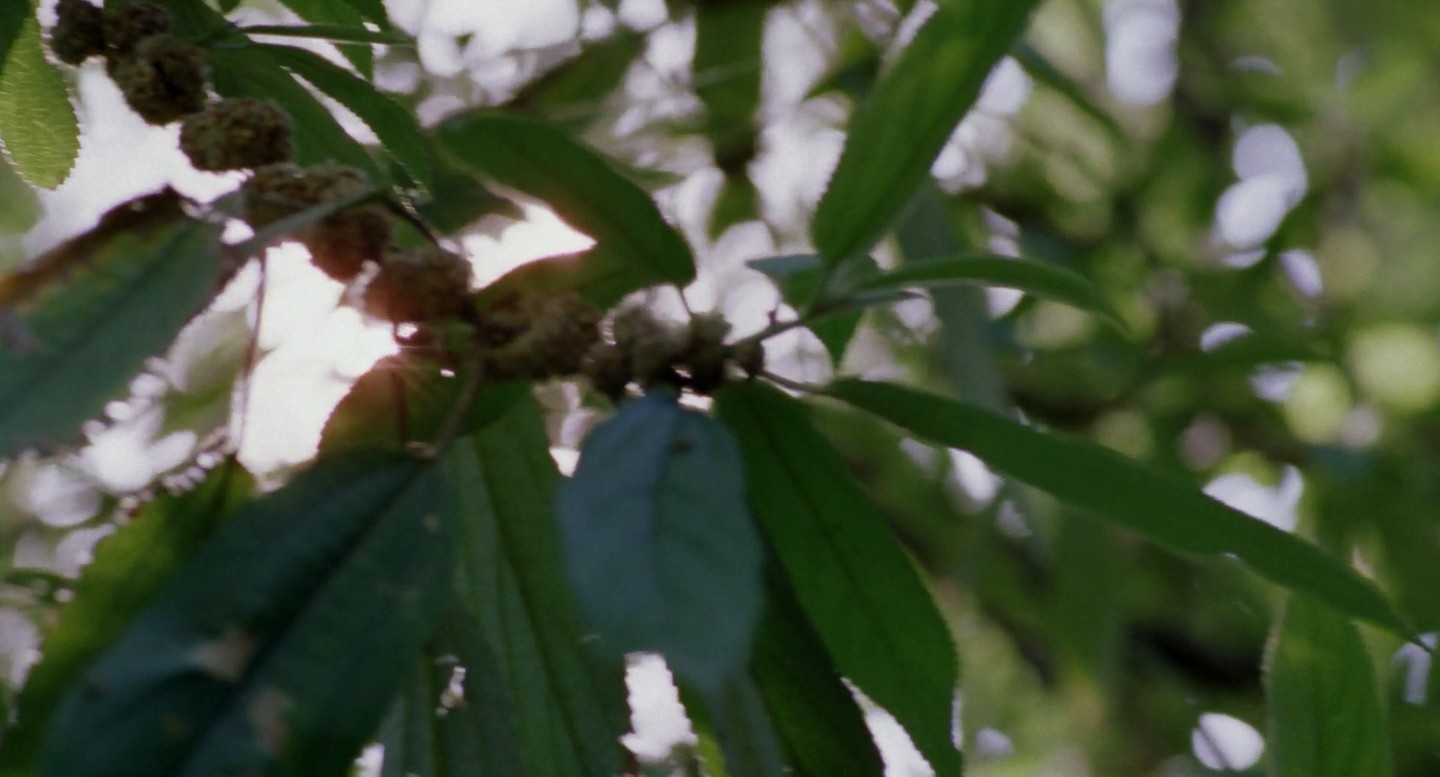
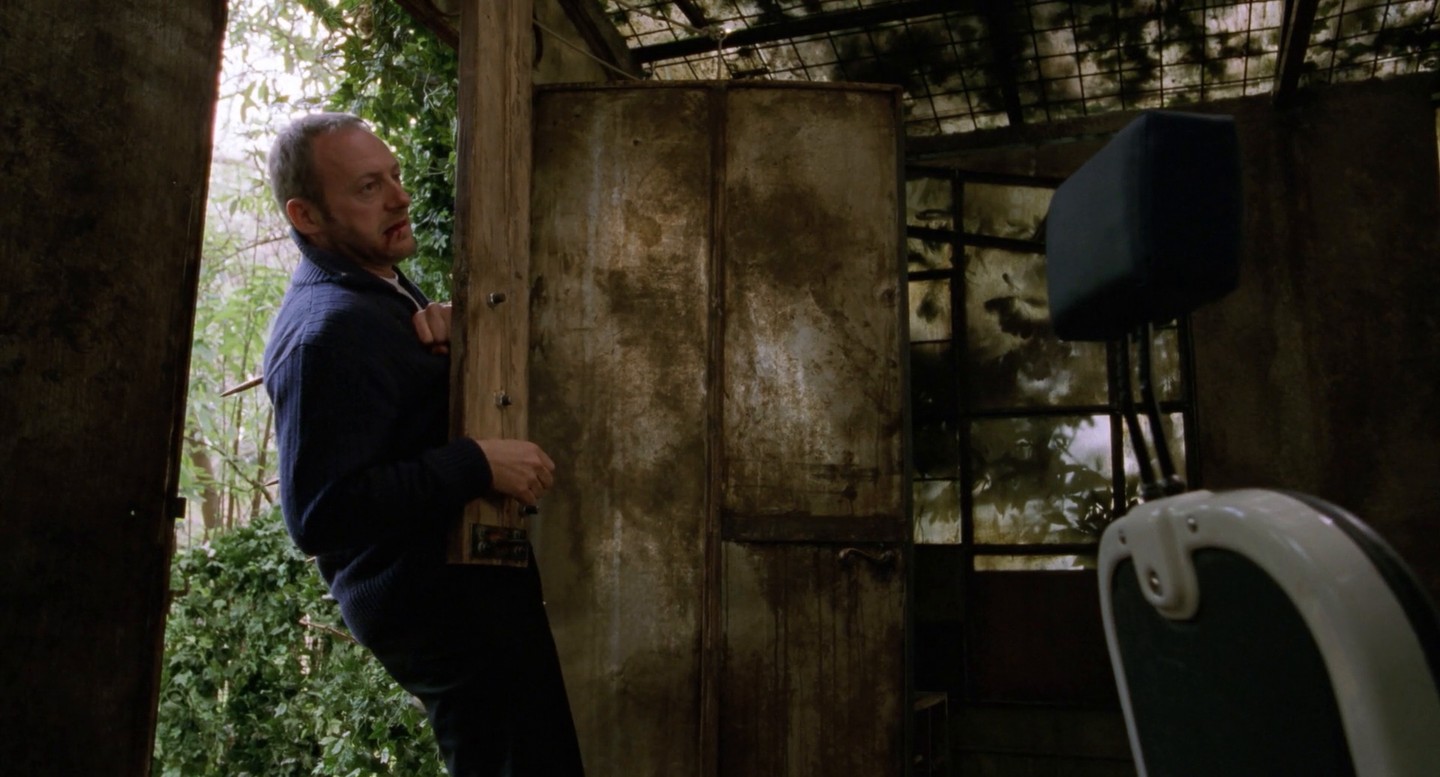
The mechanism, the projectiles and the wound are distributed across separate views. John’s face supplies the human consequence before the wider doorway composition fixes him in the trap. Sunlit leaves interrupt the encounter with an exterior that remains indifferent to it.

Explore the sequence →

1:29:15

The colleague beside Anna

Anna sits beside Carlo in the car.ENLARGE ↗
Anna sits beside Carlo in the car.

The car places danger within the familiar proximity of a colleague. Anna’s attention to the trace on Carlo’s shoulder changes the meaning of their shared journey. The confined seating arrangement leaves little distance between recognising the threat and being subjected to it.

1:33:10

A shared screen, opposing intentions

Carlo and Anna face the laptop between the rails.ENLARGE ↗
Carlo and Anna face the laptop between the rails.

The final game removes the safe distance between display and consequence. The computer rests beside chained bodies on the track. An apparently shared viewpoint conceals incompatible aims: each person’s survival depends on defeating the other.

Explore the sequence →

1:38:38

Reading the restraint

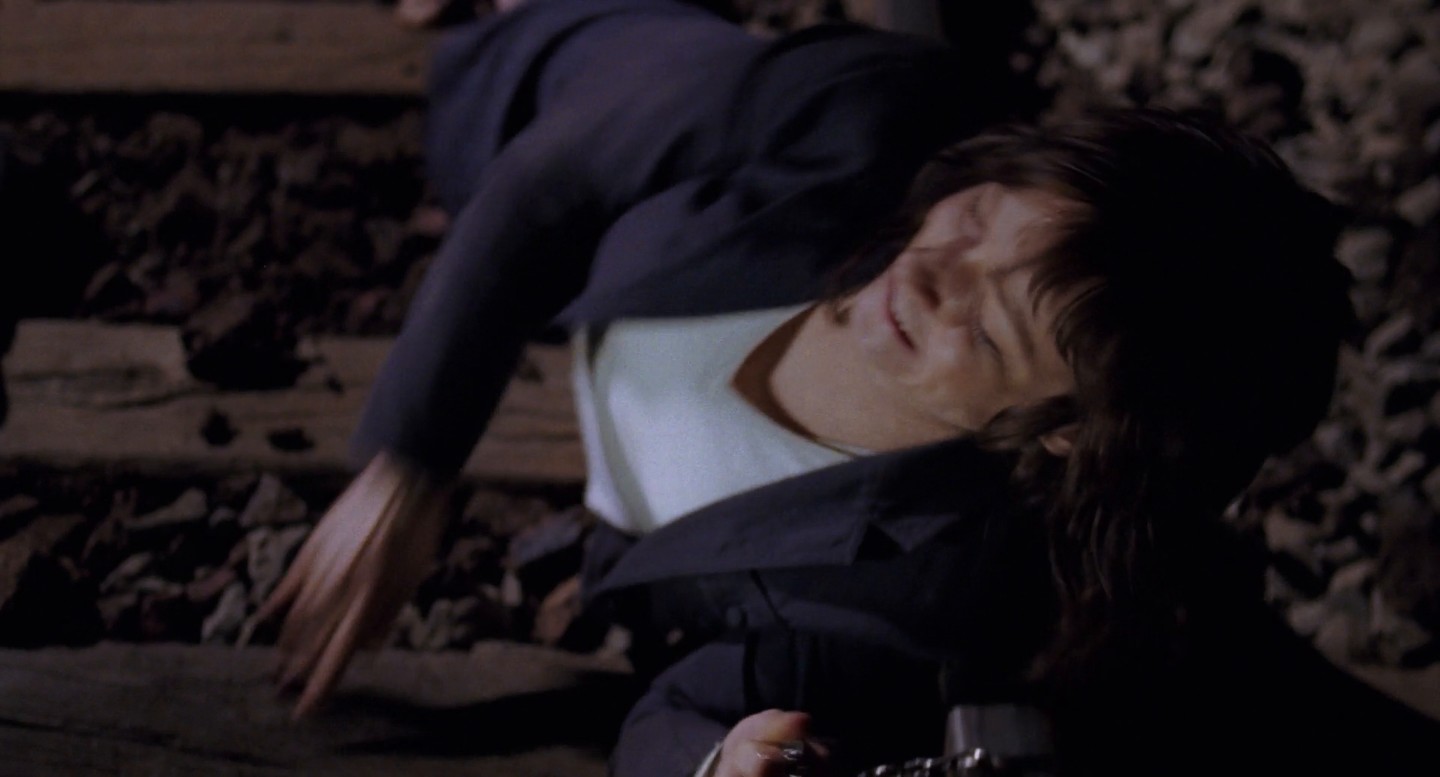
Anna turns onto her back between the rails.ENLARGE ↗
Anna turns onto her back between the rails.

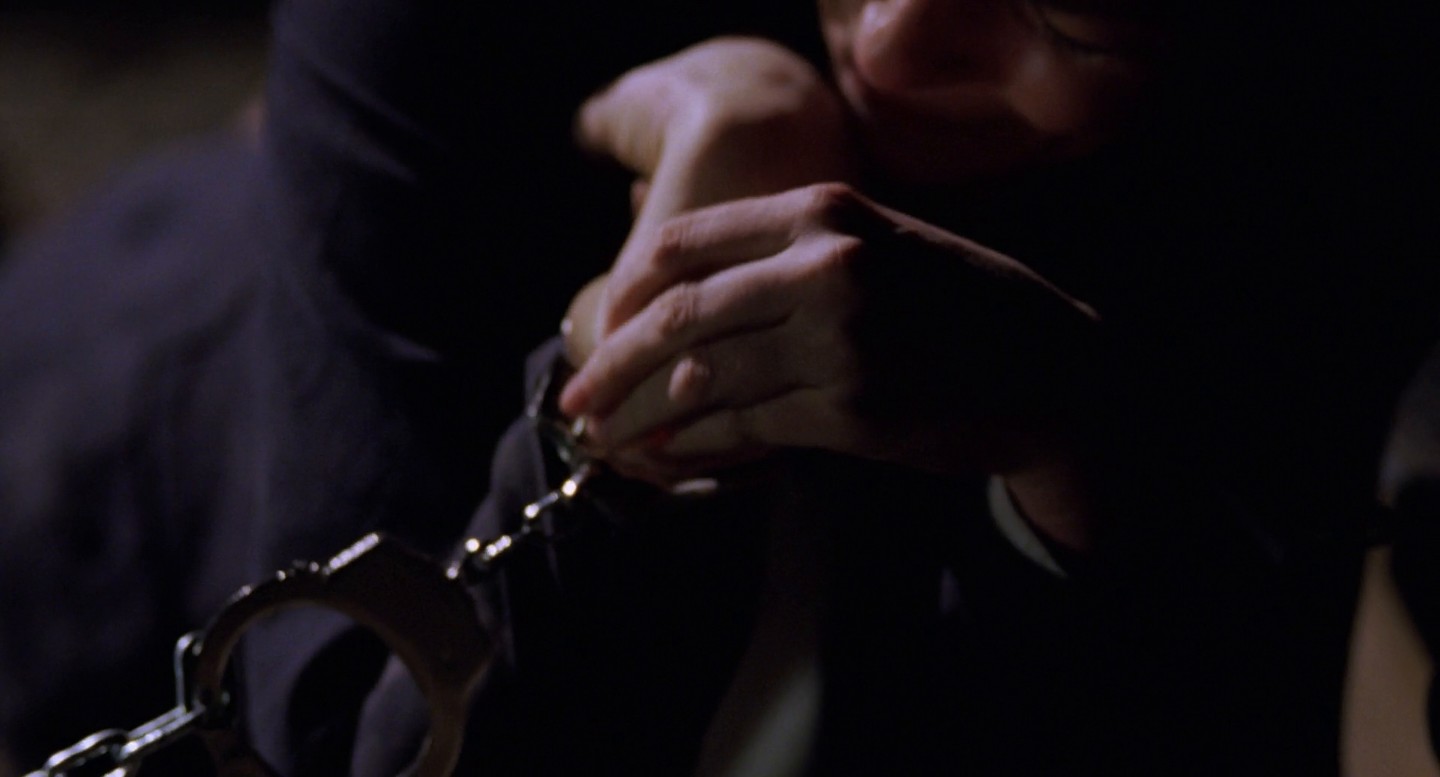
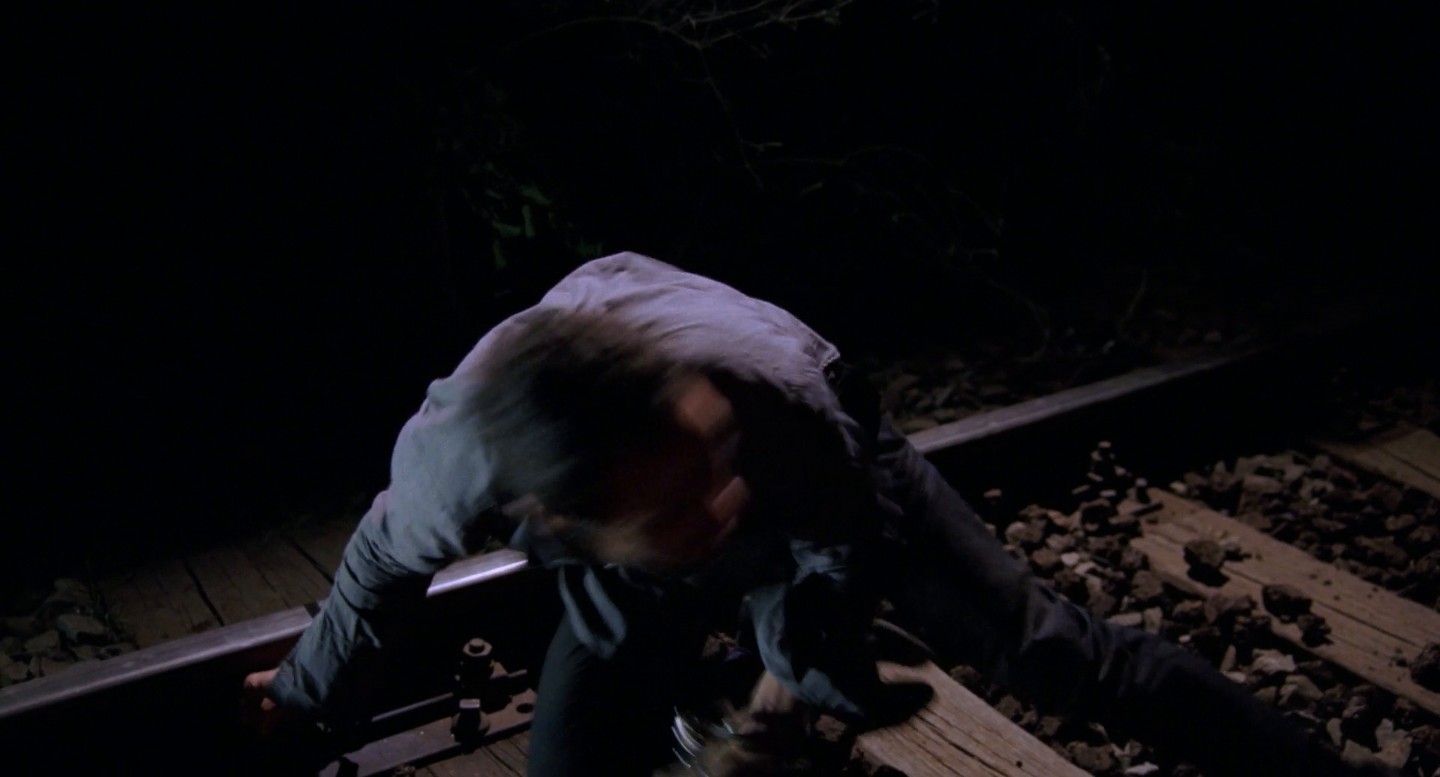
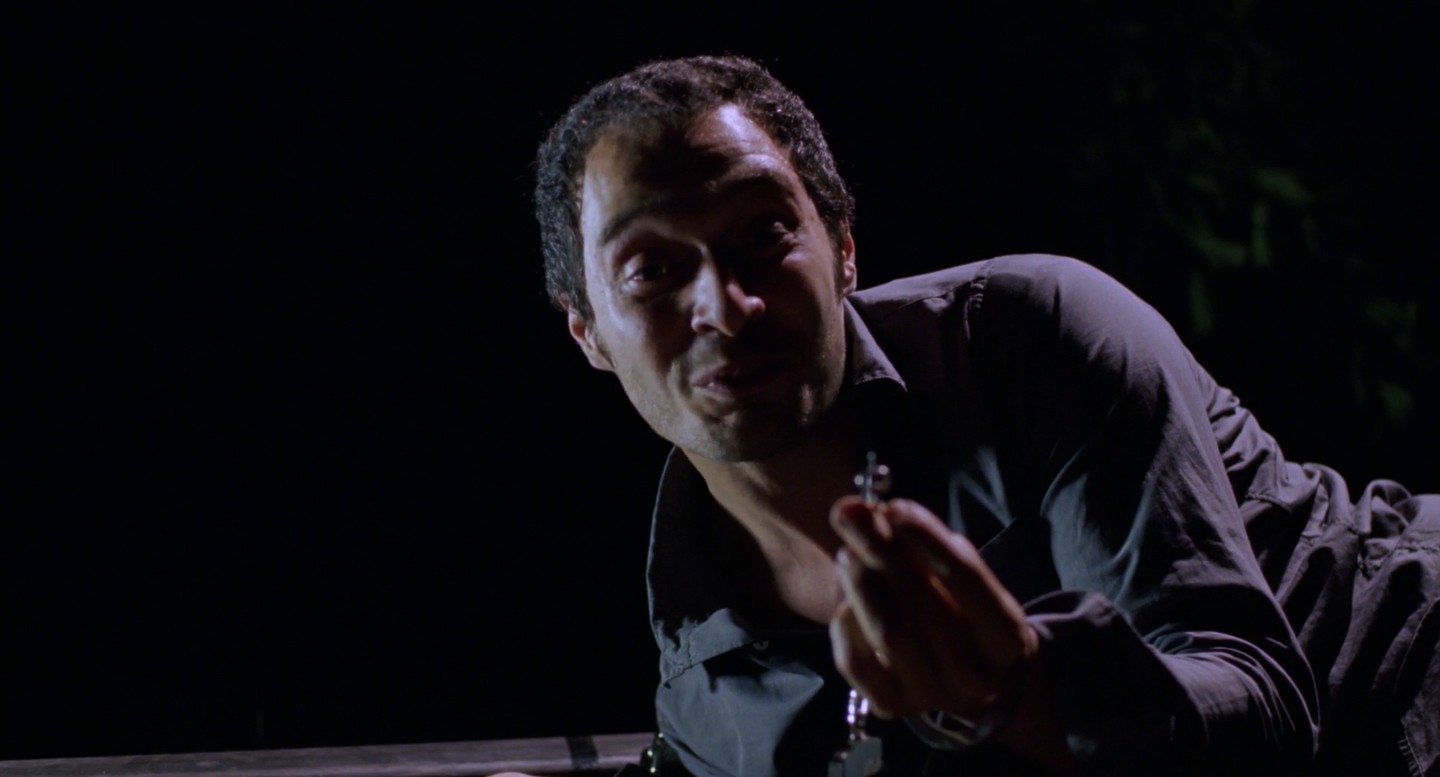
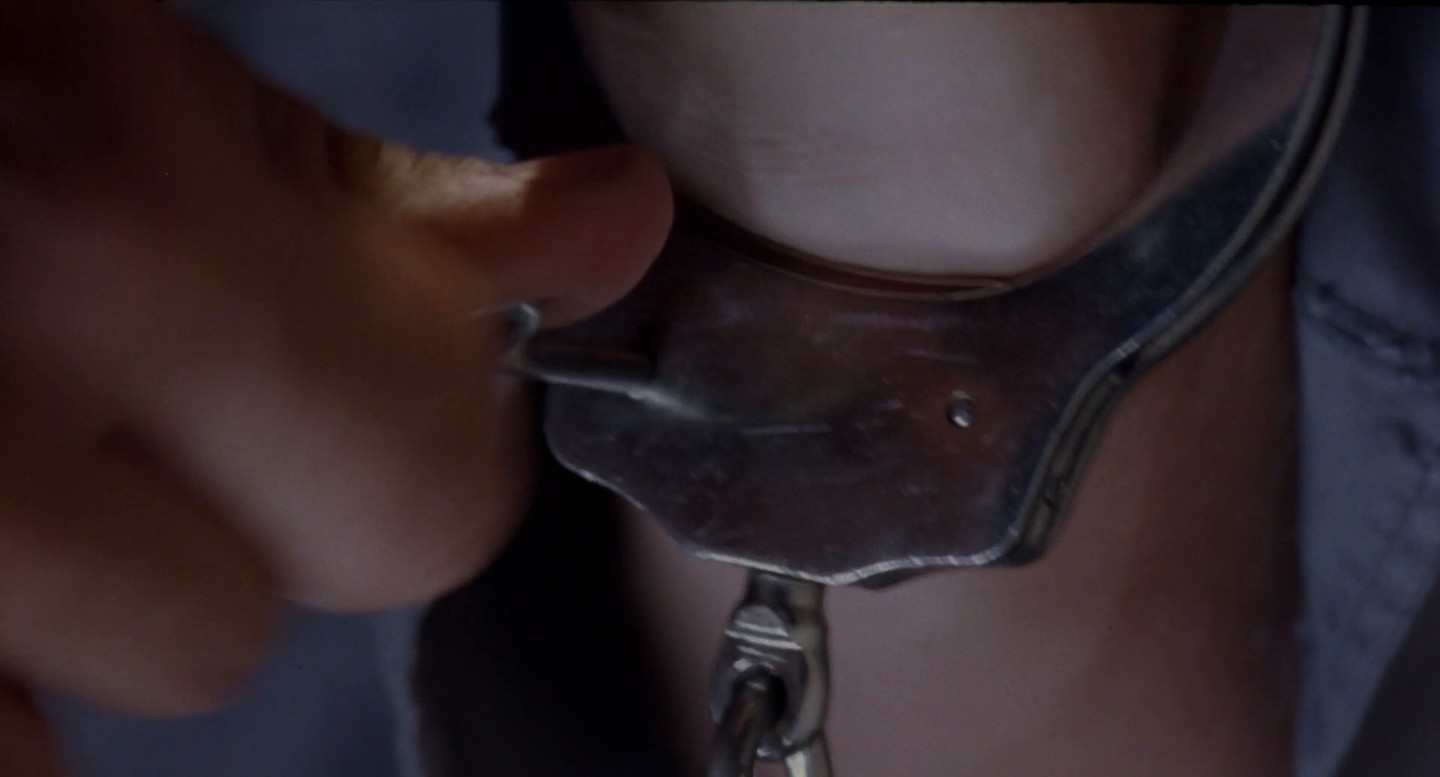
Hands, cuffs, keys and gravel take over from the card combinations. The last stage of the confrontation is worked out through immediate physical actions. The repeated track views keep the approaching danger spatially legible while the close views make escape a matter of small movements.

Explore the sequence →

1:39:53

Outside the track

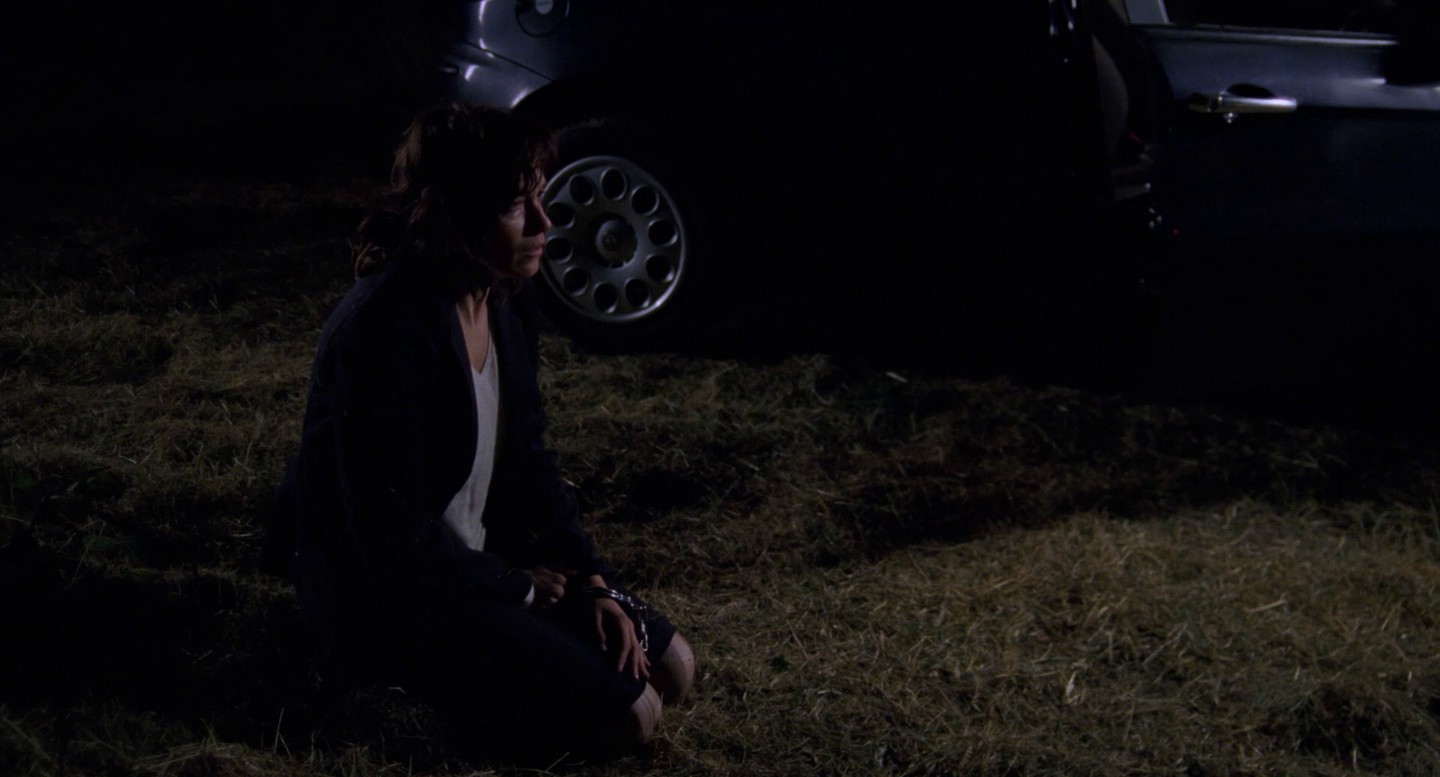
Anna sits beside the car after the train passes.ENLARGE ↗
Anna sits beside the car after the train passes.

The open grass beside the car offers a space beyond the narrow corridor of the rails. The laptop no longer organises the image. Survival is registered through Anna’s posture and gradual recovery, rather than through another victorious game screen.

1:41:04

A future beyond the case

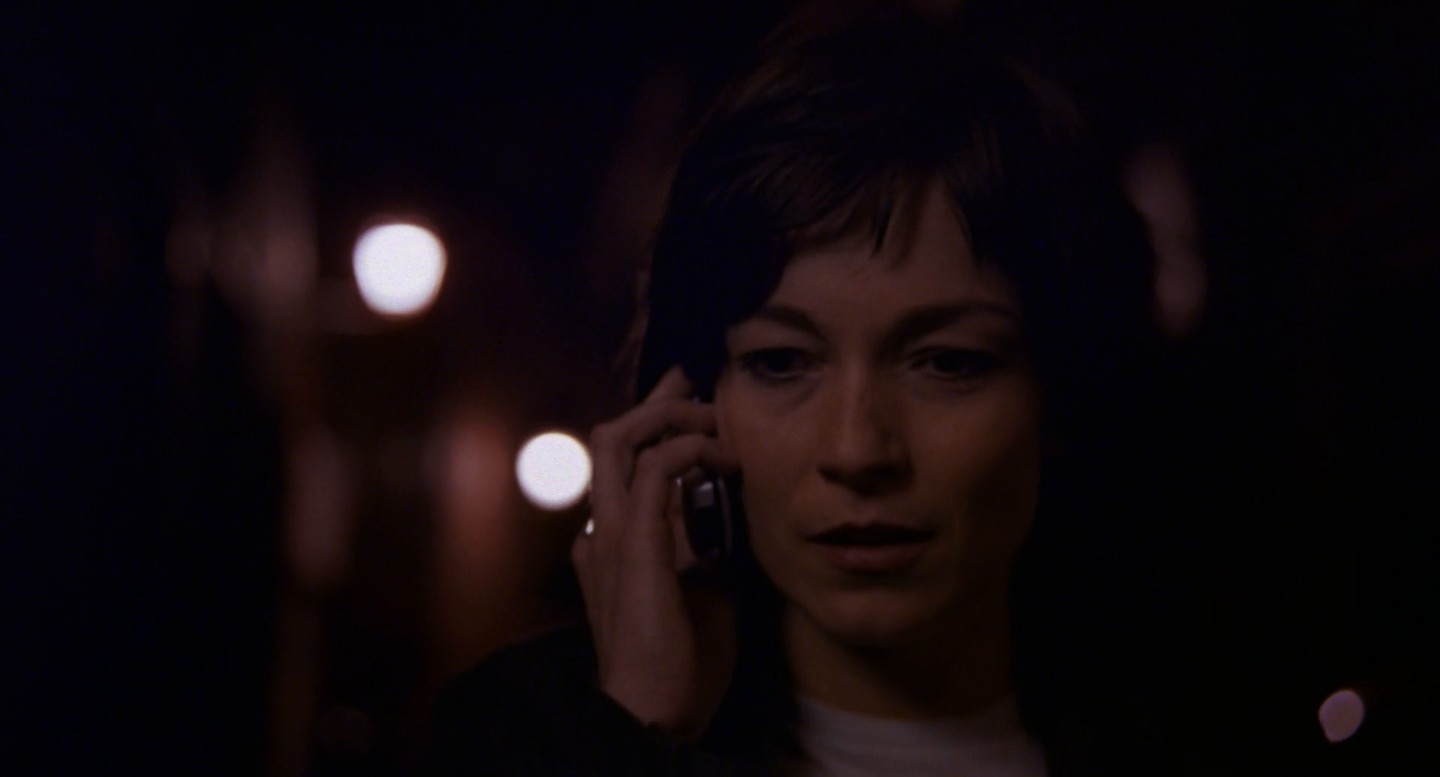
Anna listens to the final phone call.ENLARGE ↗
Anna listens to the final phone call.

The final call changes Anna’s face before the cast begins to roll across it. The pregnancy news, also described by the published synopsis and English subtitles, gives the ending a future that the solved crime cannot supply. John’s loss remains part of that future.

Back to the dossier entrance ↑

GORE & EFFECTS

The threat becomes physical.

Each study pairs a main image with an optional gallery. Follow the setup, attack and aftermath; enlarge a frame to move through the sequence. Corpse effects, mechanical traps and physical action each have their place in the film’s design.

08:20–09:24

The first transmission

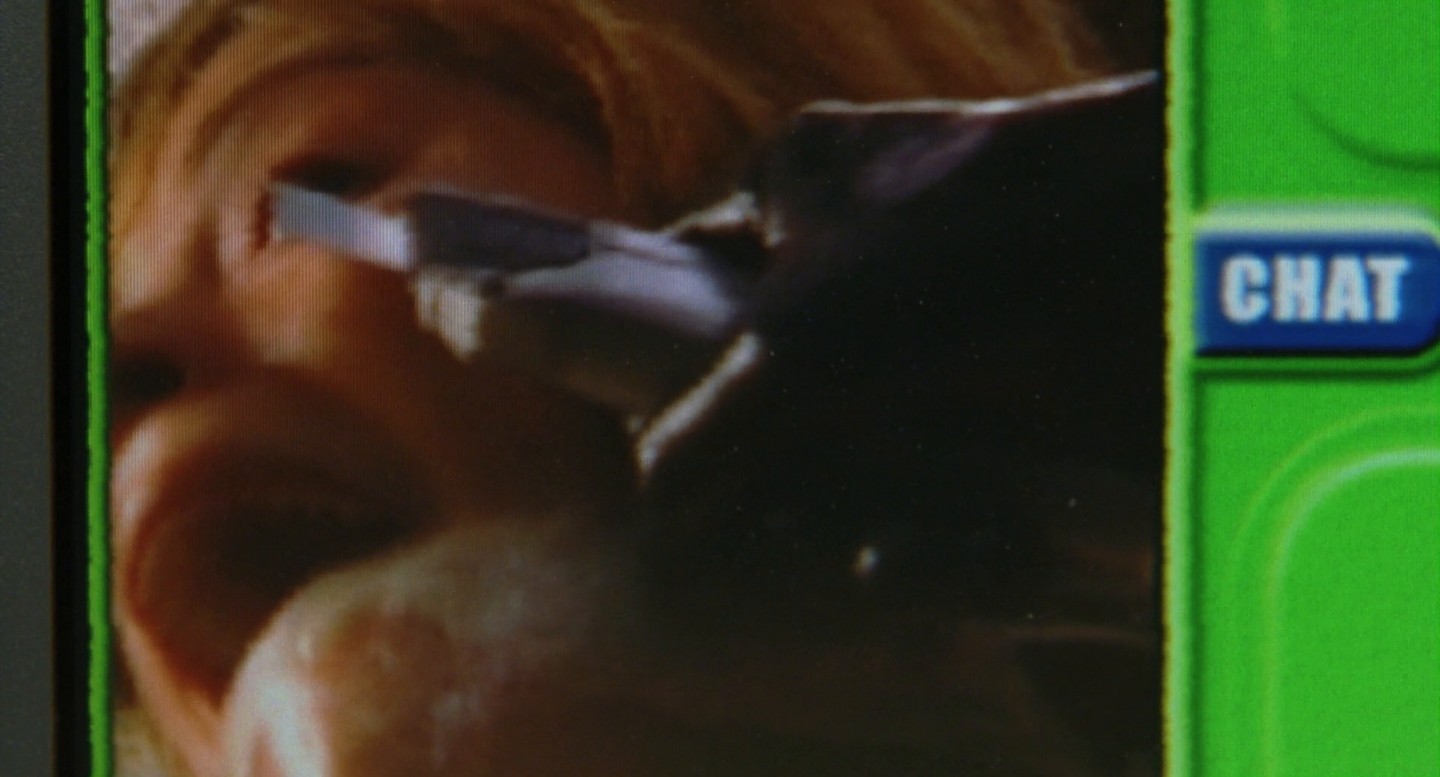
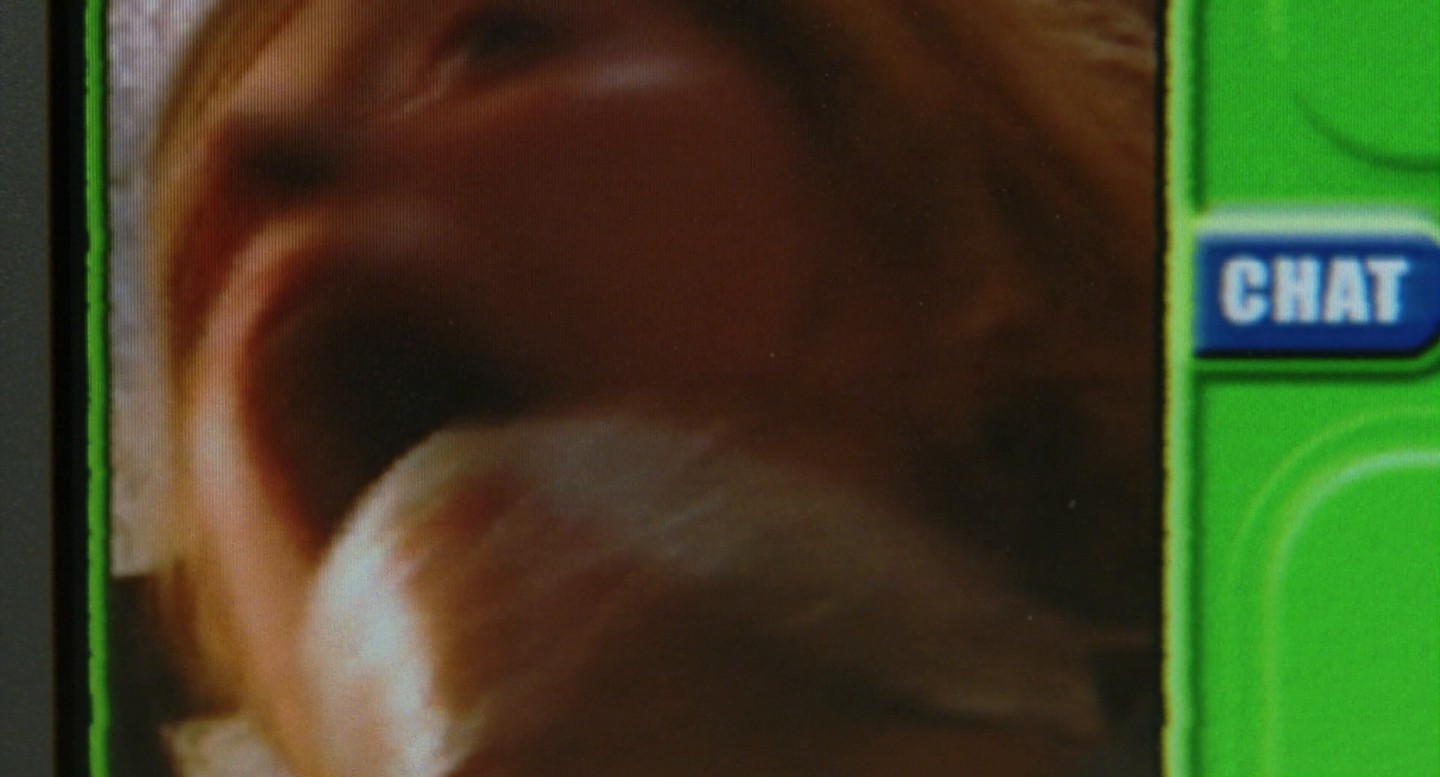
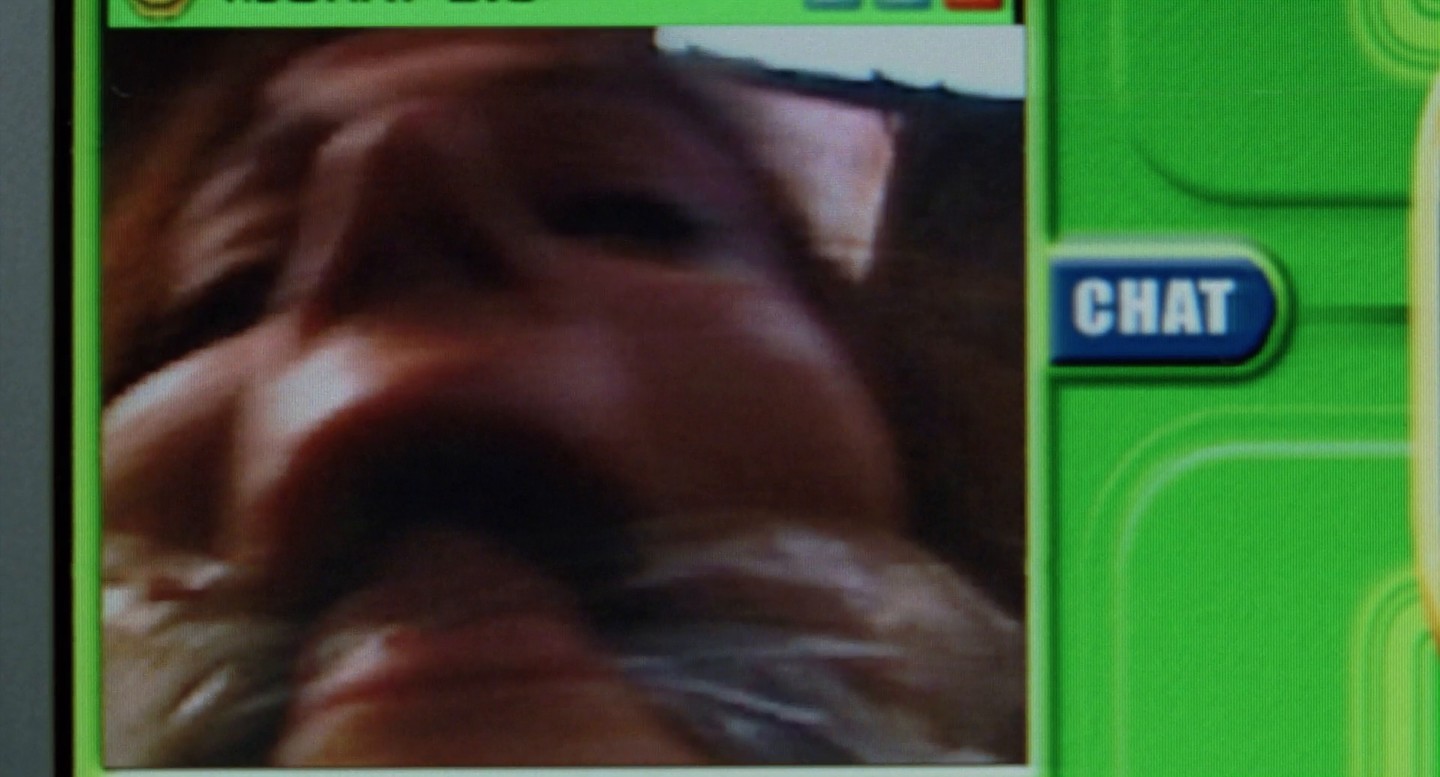
The blade crosses the captive’s face.ENLARGE ↗
The blade crosses the captive’s face.

The knife is confined to the captive’s video window. The surrounding chat and game graphics remain bright and functional, creating a cruel imbalance between the interface’s normal operation and the violence it carries.

The progression runs from the police refusal to the river recovery. Reactions in the office and the later physical body make the consequences larger than the tiny window in which they first appear.

Explore the sequence 8 stages

01 · 08:20

Chat and captive share the screen.ENLARGE ↗
Chat and captive share the screen.

02 · 08:24

The blade crosses the captive’s face.ENLARGE ↗
The blade crosses the captive’s face.

03 · 08:28

The captive turns inside the video frame.ENLARGE ↗
The captive turns inside the video frame.

04 · 08:32

Her head drops out of clear view.ENLARGE ↗
Her head drops out of clear view.

05 · 08:36

The officers recoil.ENLARGE ↗
The officers recoil.

06 · 08:40

The commissioner watches.ENLARGE ↗
The commissioner watches.

07 · 09:16

Recovery begins on the river.ENLARGE ↗
Recovery begins on the river.

08 · 09:24

The bound body emerges from the water.ENLARGE ↗
The bound body emerges from the water.
Back to the effects guide ↑

12:05–13:35

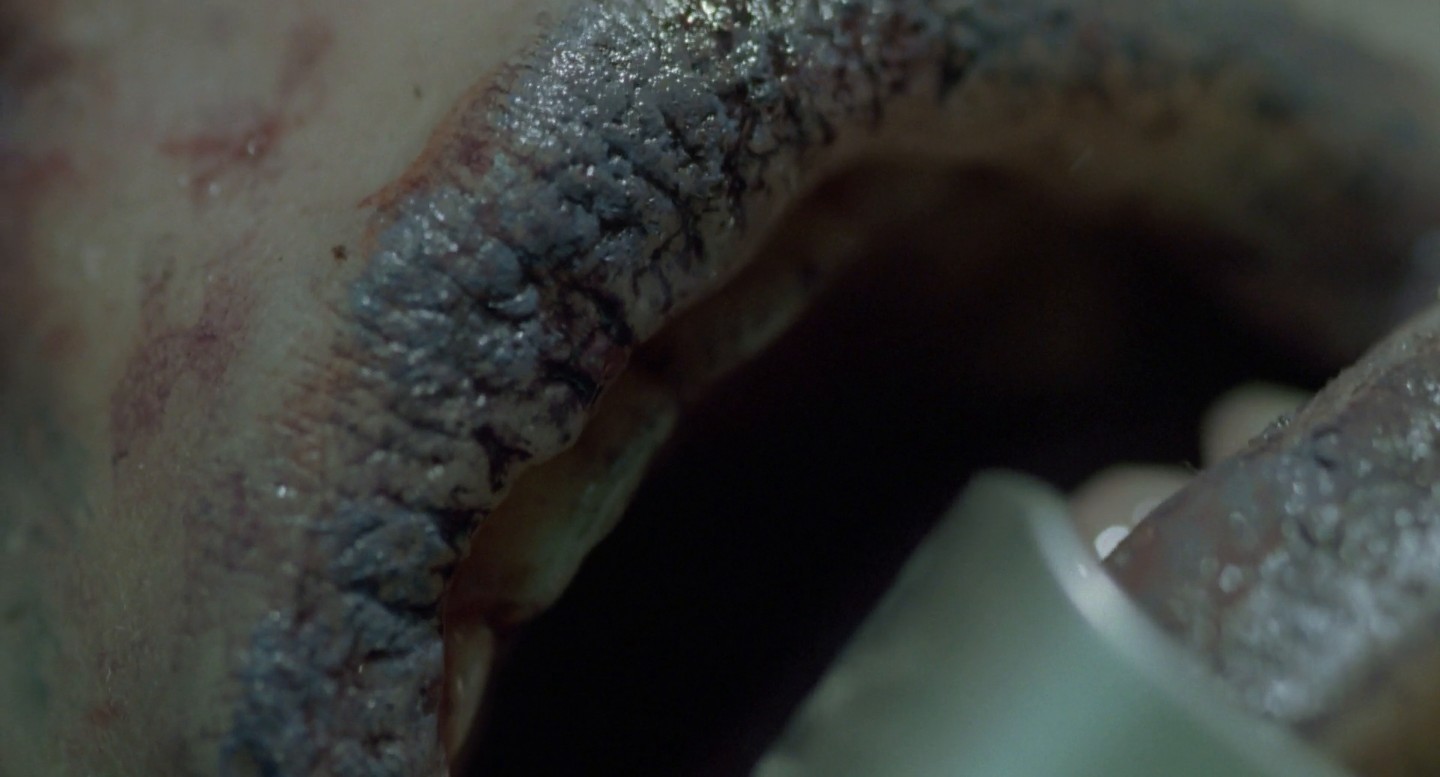
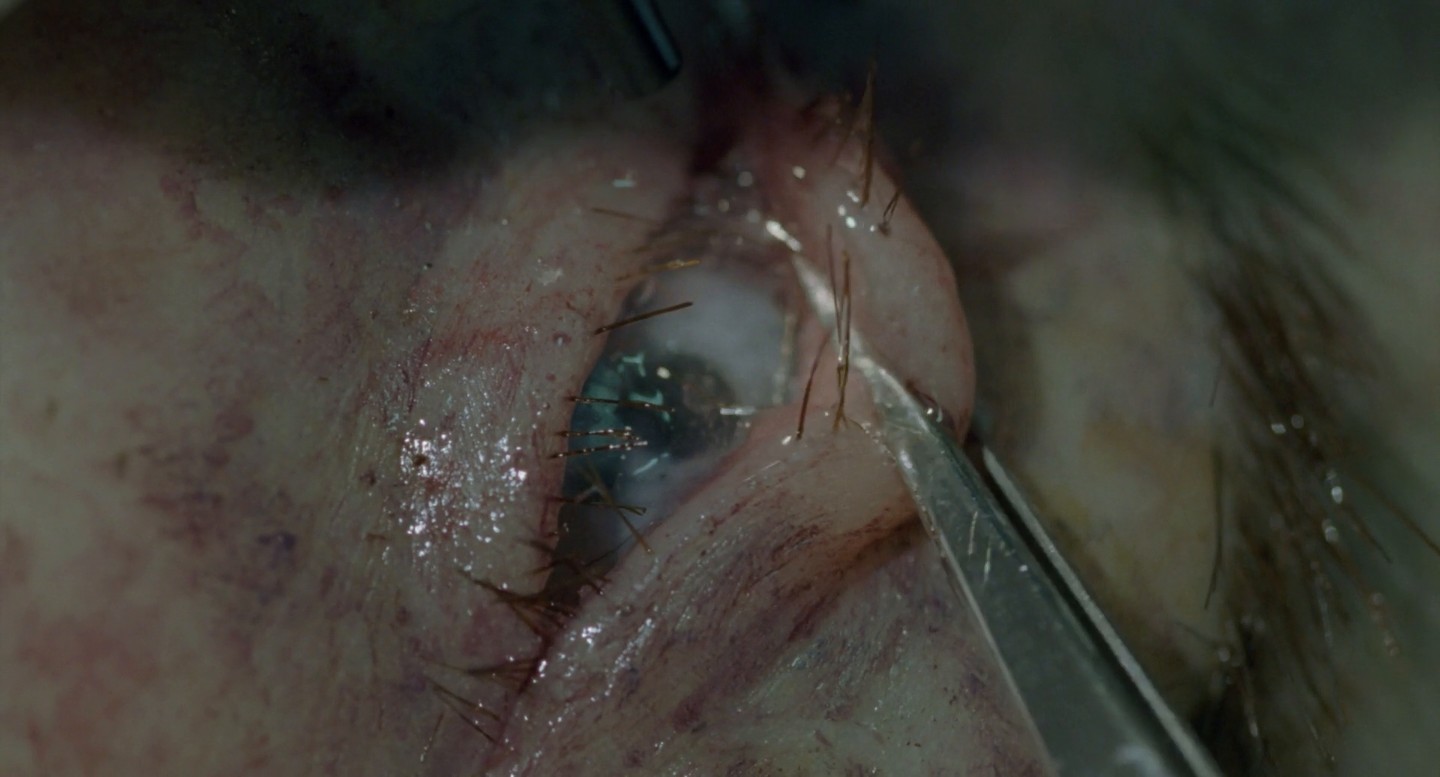
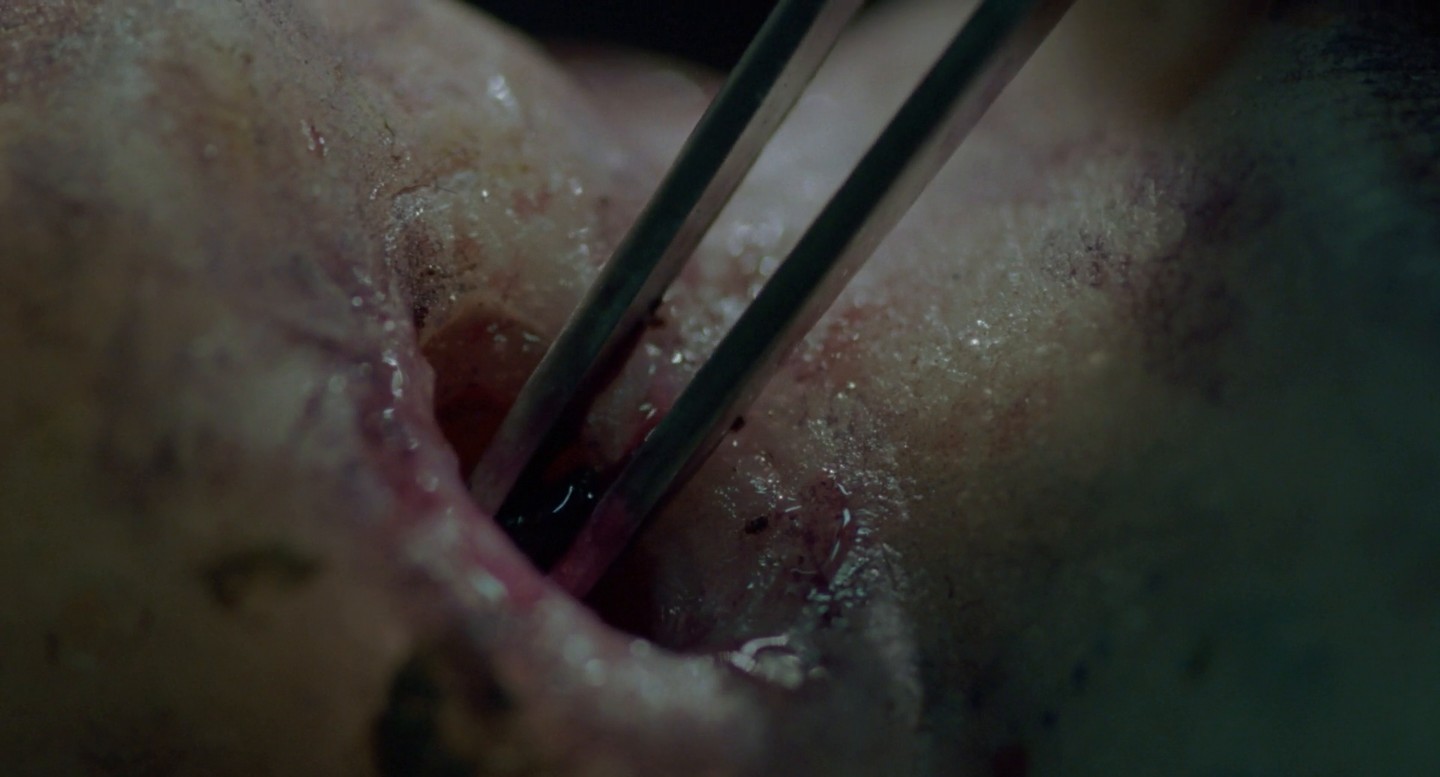
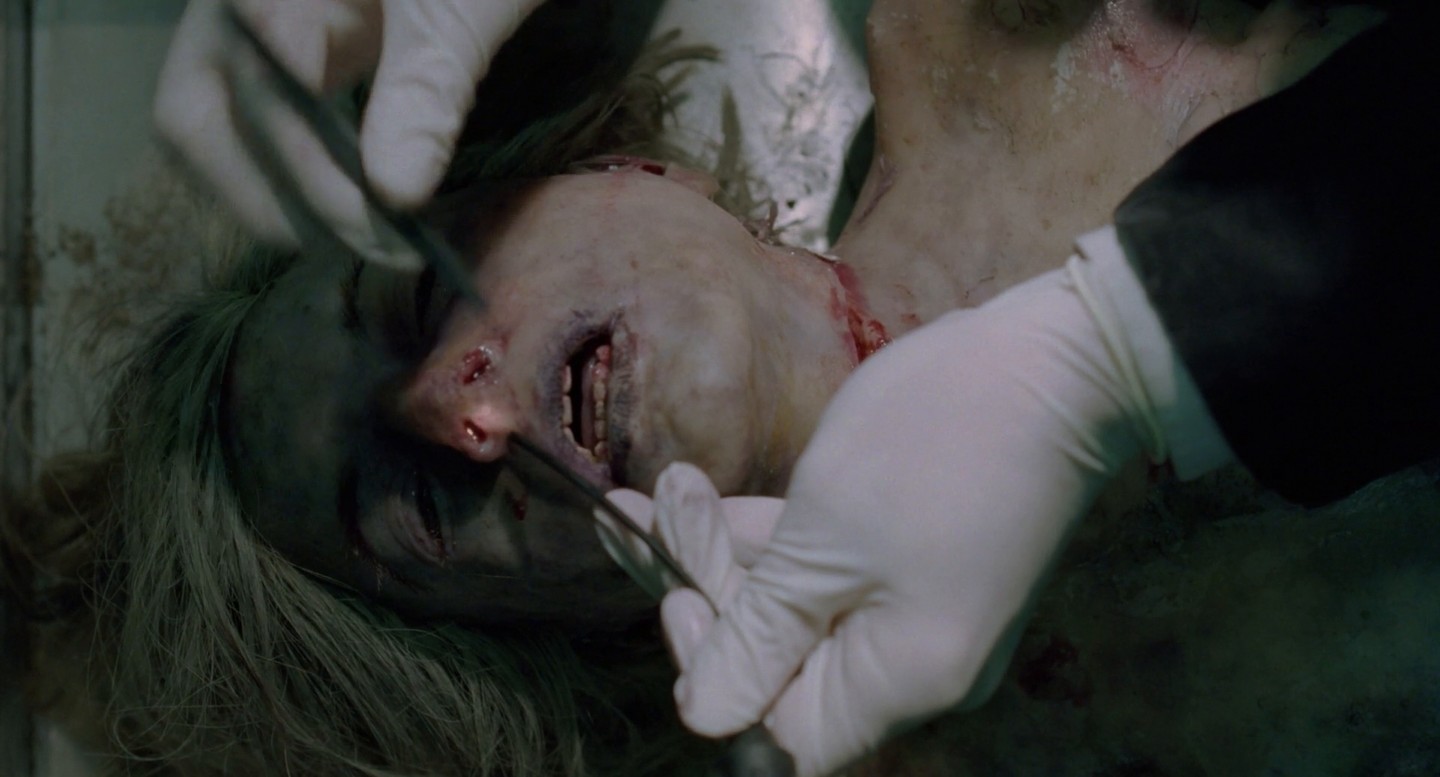
The first body: an examination in close-up

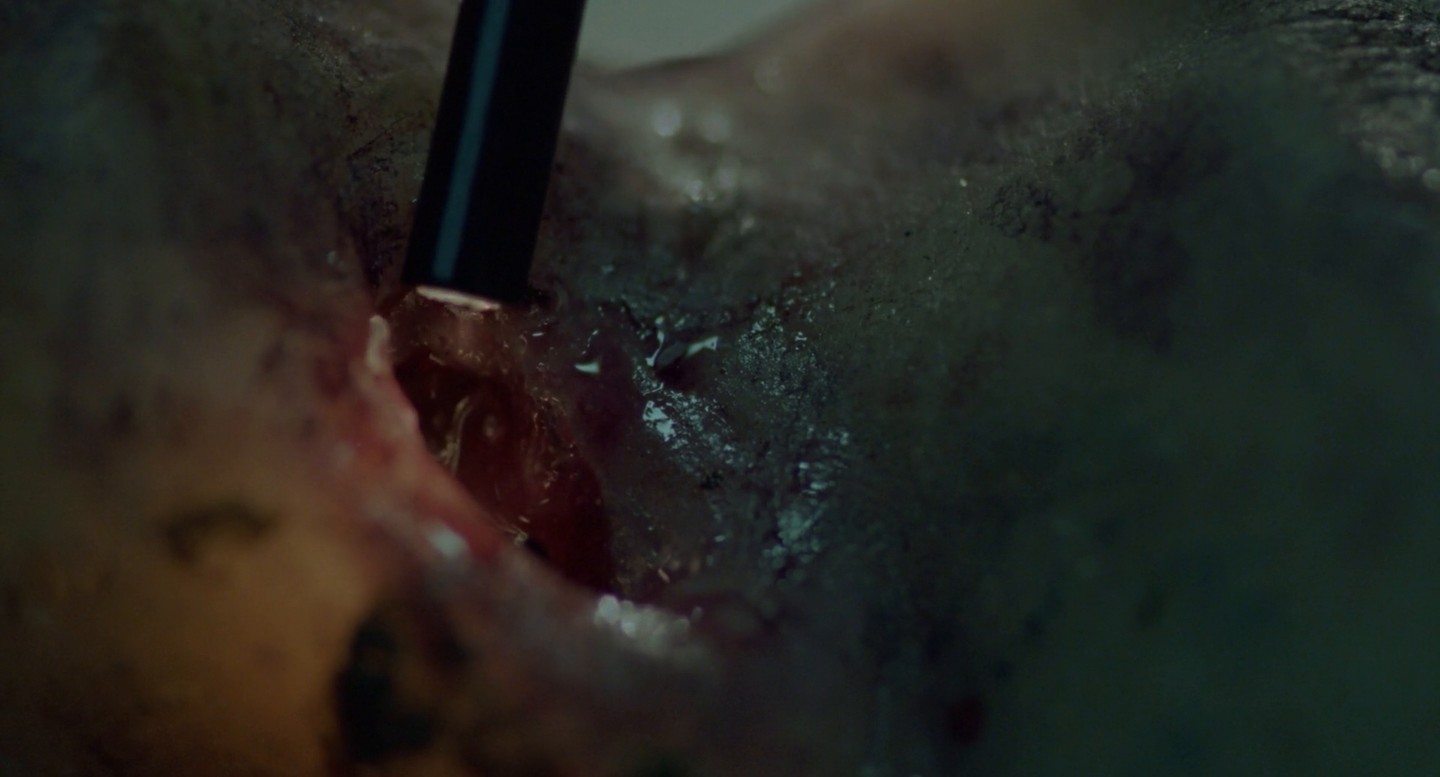
The throat wound is exposed.ENLARGE ↗
The throat wound is exposed.

The morgue passage allows the body to be seen at a proximity denied by the webcam. Mottled skin, the throat wound, the eye and the mouth become successive centres of attention.

The illusion depends on more than the wound insert. Gloved hands establish contact, the wider table view gives the body weight, and Anna’s watchfulness carries the discomfort between the close details. Stivaletti receives the film’s special visual effects credit; individual construction methods are not assigned from the finished image alone.

Explore the sequence 10 stages

01 · 12:05

John works beside the examination table.ENLARGE ↗
John works beside the examination table.

02 · 12:30

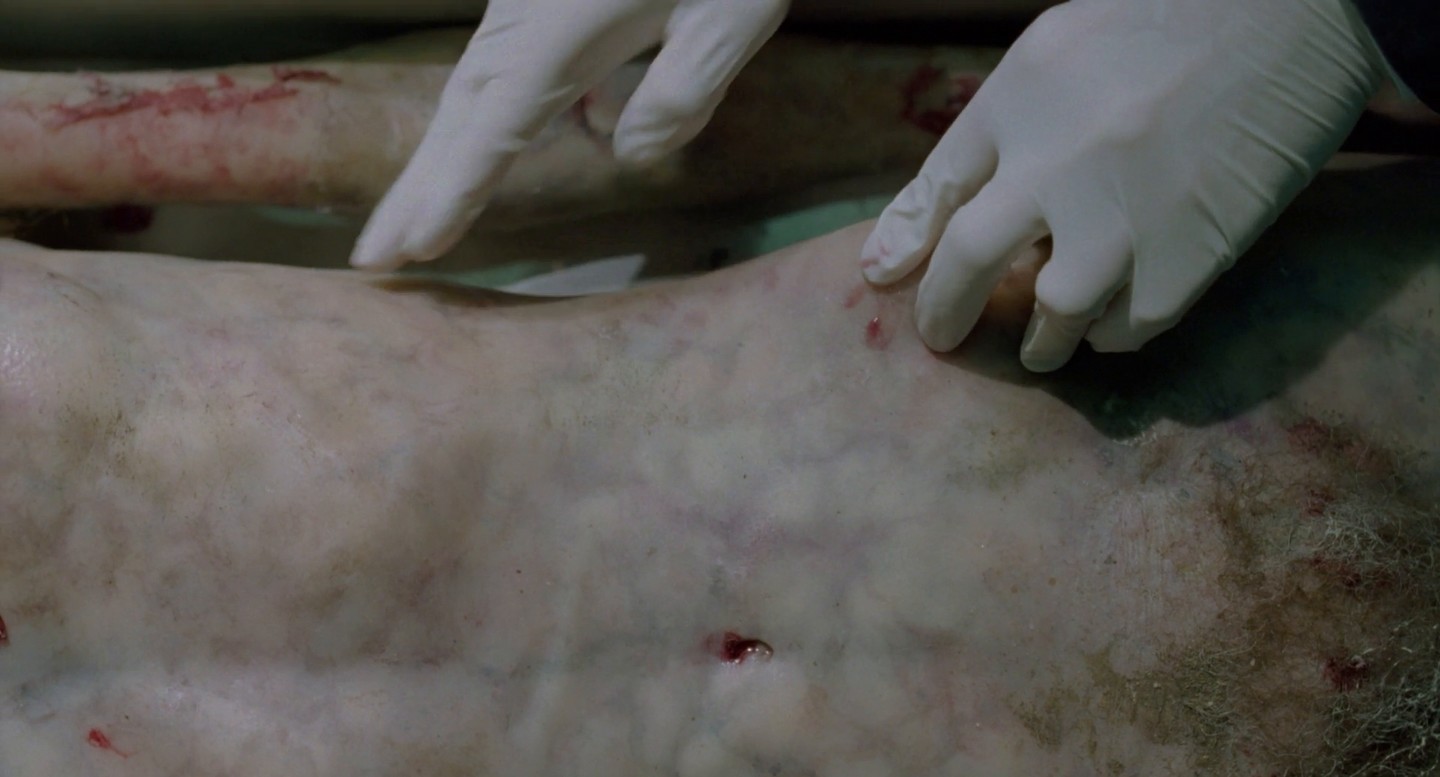
Gloved hands examine the torso.ENLARGE ↗
Gloved hands examine the torso.

03 · 12:45

The throat wound is exposed.ENLARGE ↗
The throat wound is exposed.

04 · 12:55

The mouth fills the frame.ENLARGE ↗
The mouth fills the frame.

05 · 13:00

An instrument enters the mouth.ENLARGE ↗
An instrument enters the mouth.

06 · 13:10

The eye under examination.ENLARGE ↗
The eye under examination.

07 · 13:15

Hands reposition the head.ENLARGE ↗
Hands reposition the head.

08 · 13:20

The wound and the instrument.ENLARGE ↗
The wound and the instrument.

09 · 13:30

The instrument searches the wound.ENLARGE ↗
The instrument searches the wound.

10 · 13:35

Anna watches the examination.ENLARGE ↗
Anna watches the examination.
Back to the effects guide ↑

20:15–22:31

The losing hand and the second killing

The blade enters the captive’s window.ENLARGE ↗
The blade enters the captive’s window.

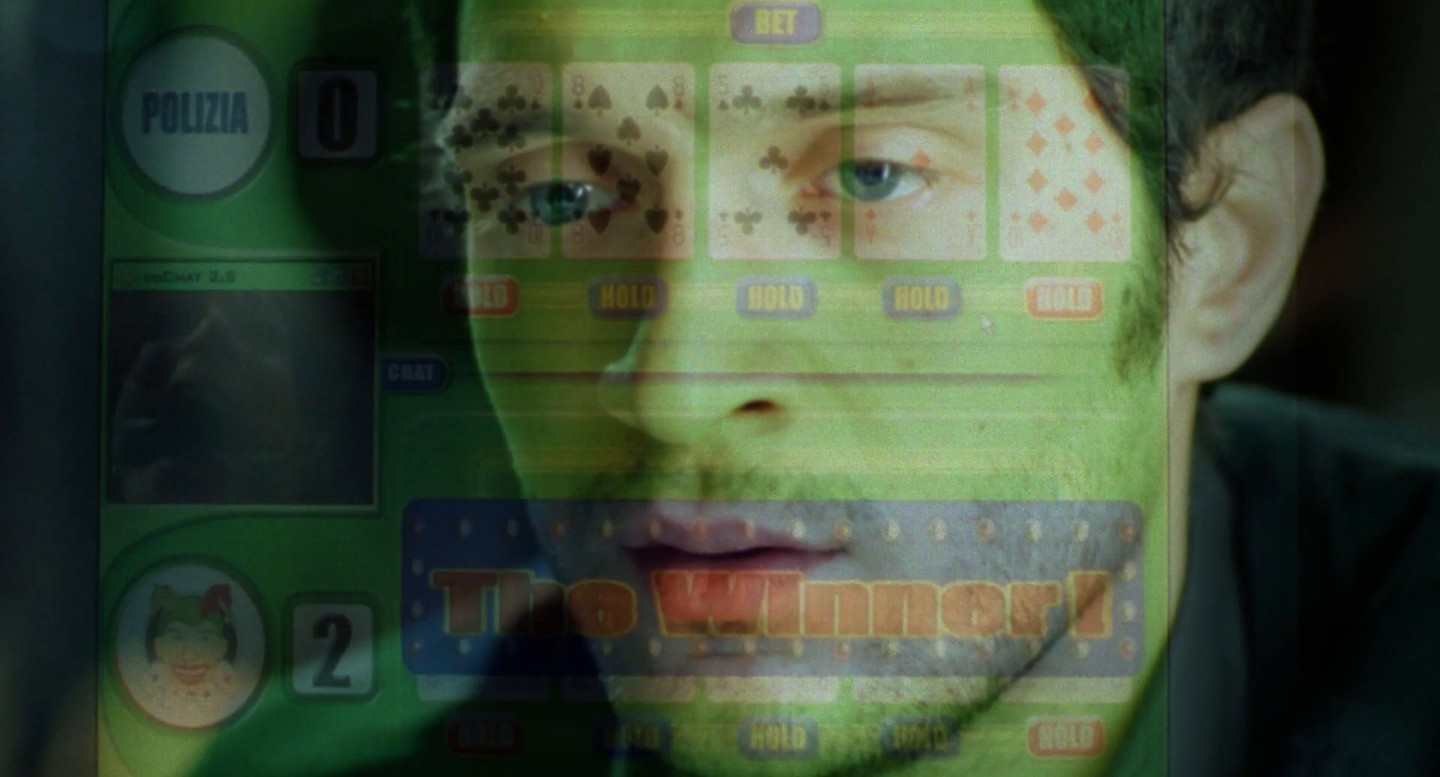
The player’s face is covered by the translucent card display before the film returns to the captive. The loss is first a change in a game, then a threatened body at the edge of that same interface.

The sequence also moves the commissioner outside the immediate group, beyond the office door. The contrast between his withdrawal and the image still playing makes refusal to look another action within the scene.

Explore the sequence 9 stages

01 · 20:15

Cards overlay the player’s face.ENLARGE ↗
Cards overlay the player’s face.

02 · 20:31

A diamond crosses his eyes.ENLARGE ↗
A diamond crosses his eyes.

03 · 20:55

The game announces its winner.ENLARGE ↗
The game announces its winner.

04 · 21:51

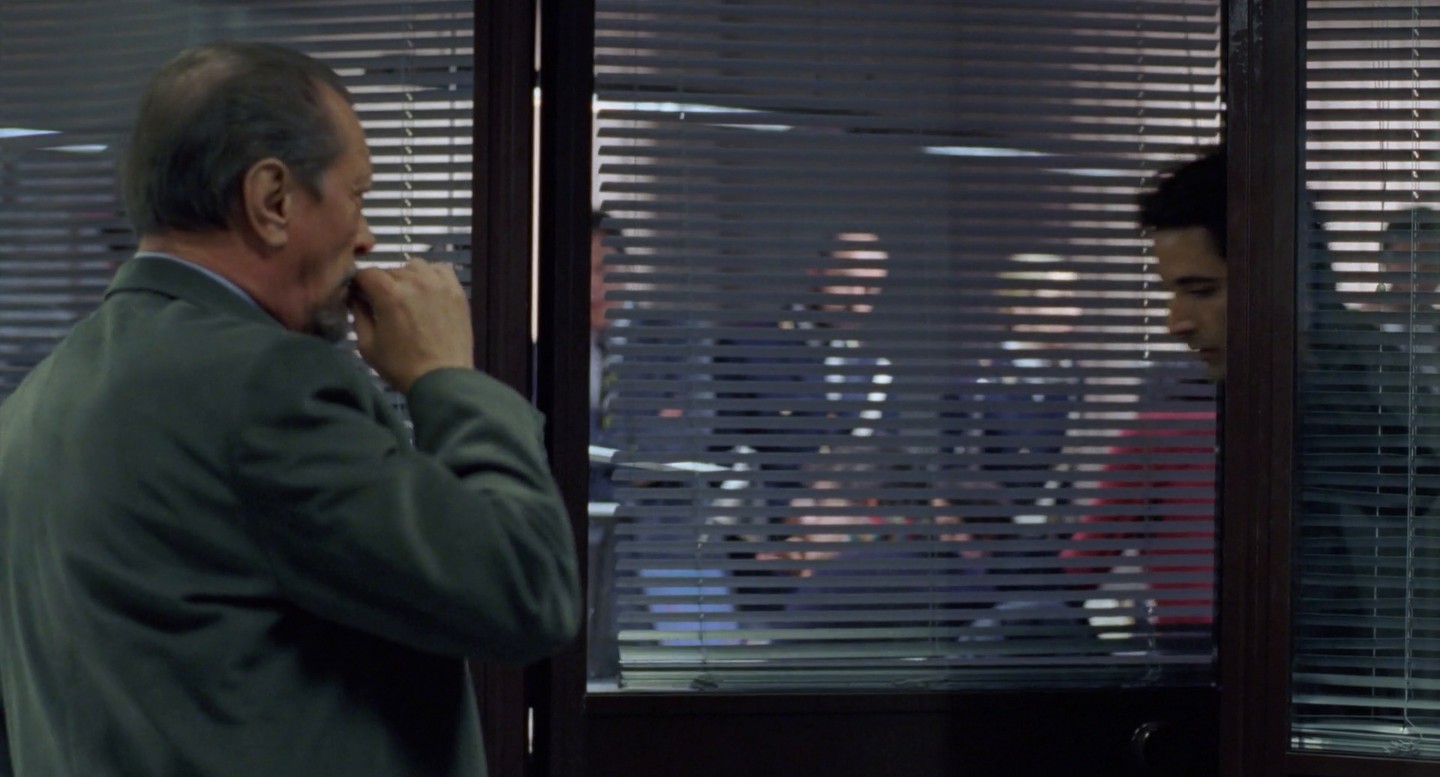
The commissioner stands beyond the blinds.ENLARGE ↗
The commissioner stands beyond the blinds.

05 · 21:59

The blade enters the captive’s window.ENLARGE ↗
The blade enters the captive’s window.

06 · 22:07

The blade remains against the neck.ENLARGE ↗
The blade remains against the neck.

07 · 22:15

The captive moves within the inset.ENLARGE ↗
The captive moves within the inset.

08 · 22:23

The player looks back at the screen.ENLARGE ↗
The player looks back at the screen.

09 · 22:31

The office group breaks apart.ENLARGE ↗
The office group breaks apart.
Back to the effects guide ↑

25:35–26:38

The second body: evidence in daylight

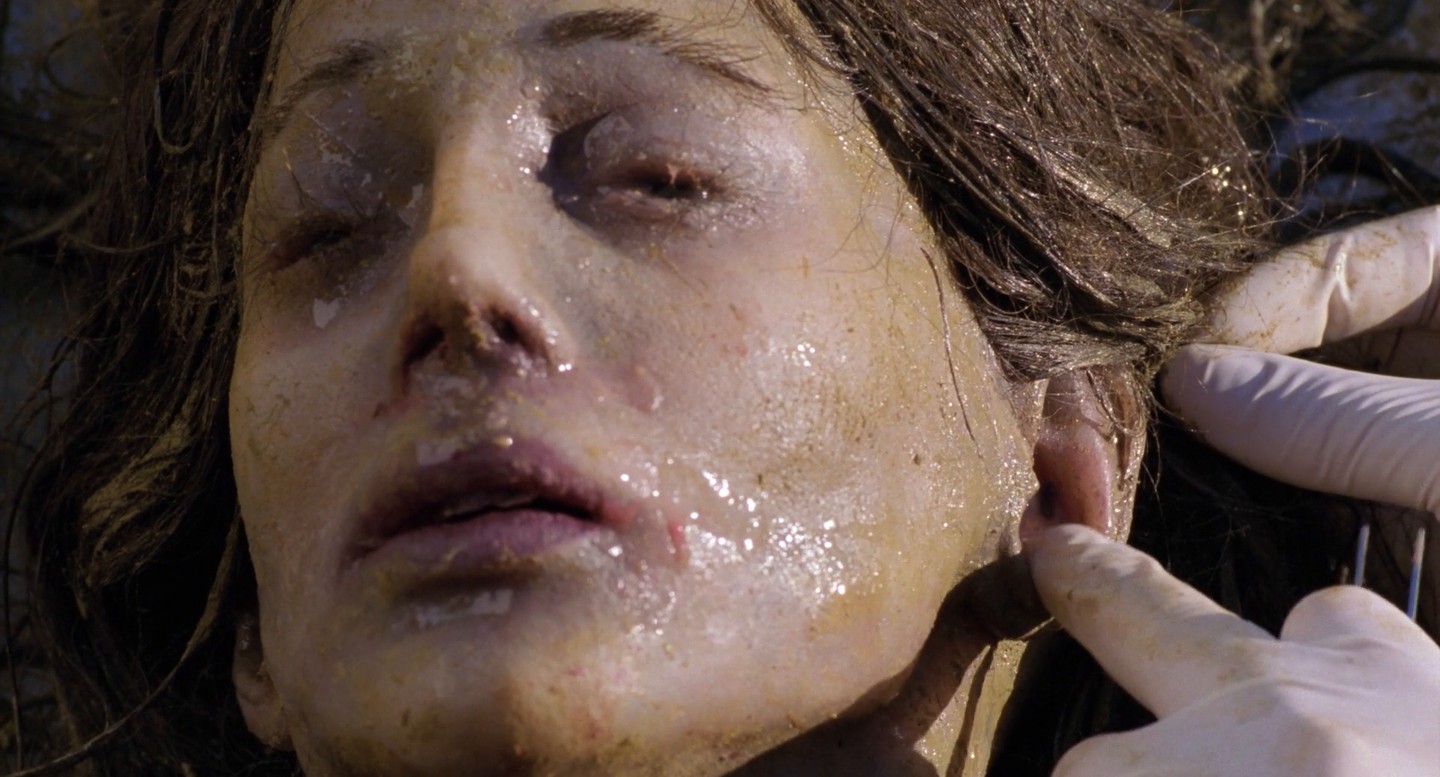
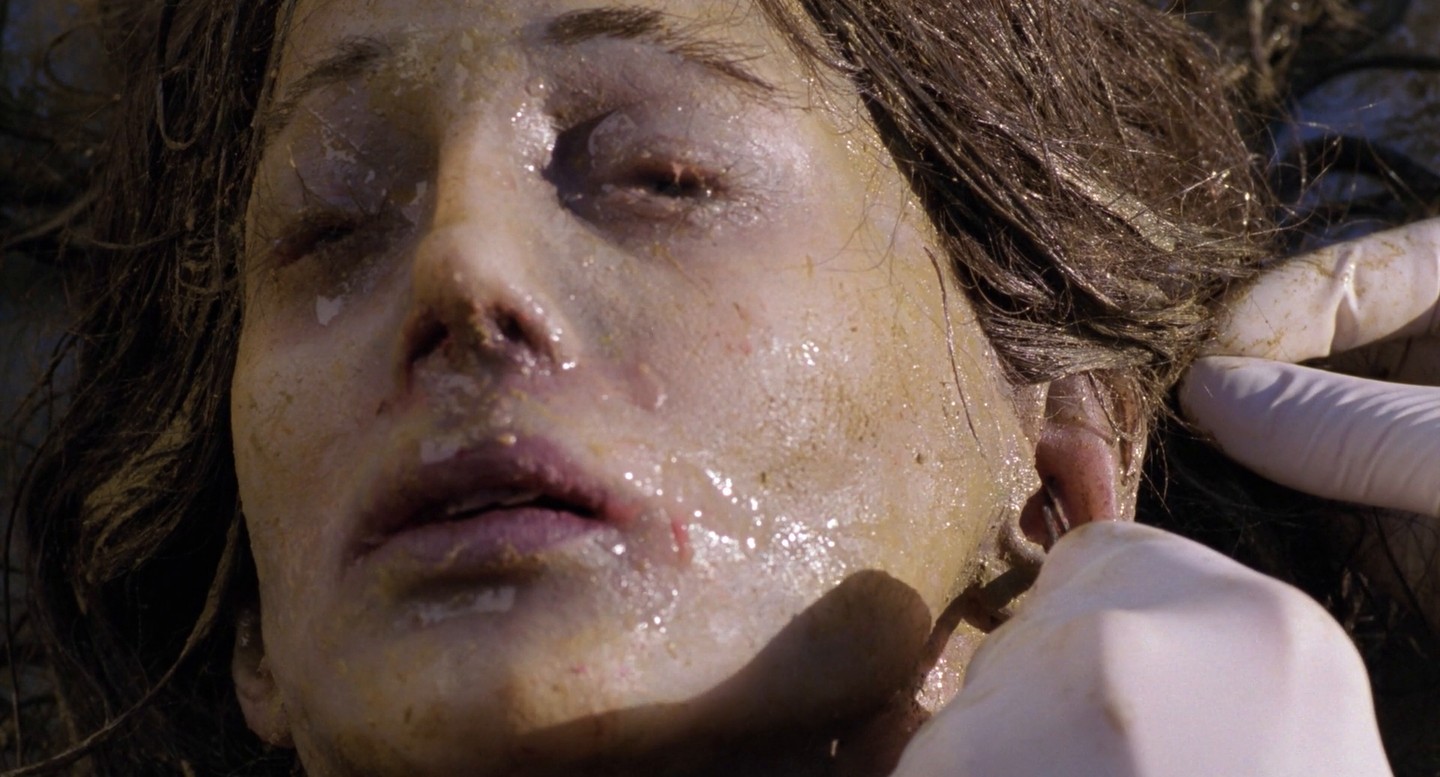
John examines the damaged throat.ENLARGE ↗
John examines the damaged throat.

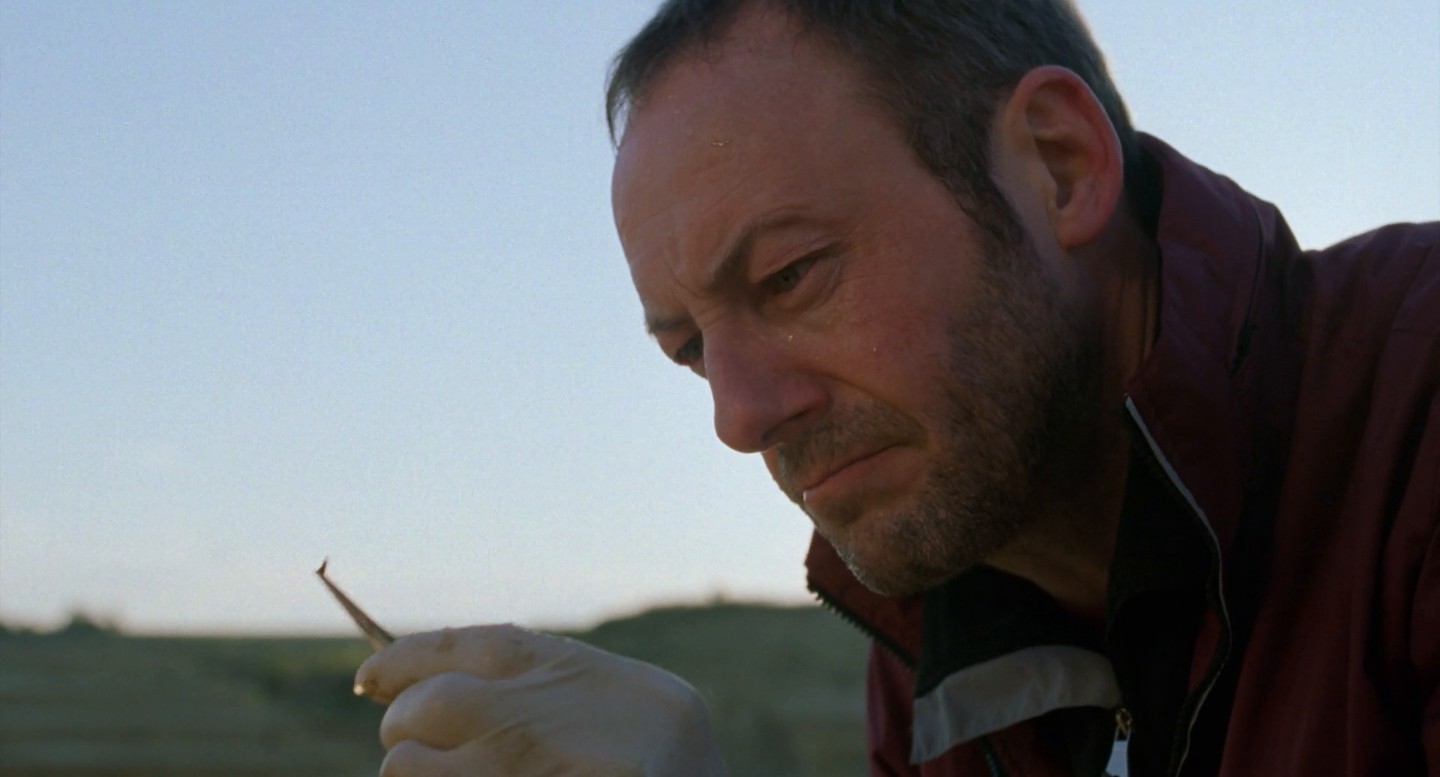
The second examination replaces the morgue’s green interior with direct daylight. The corpse, the small cutting and probing instruments, and John’s face share an unusually exposed setting.

The later close view of the ear directs attention toward a tiny trace. An effects body thus serves two functions: a convincing aftermath of violence and a surface on which the investigation can find information.

Explore the sequence 8 stages

01 · 25:35

The investigators gather at the water’s edge.ENLARGE ↗
The investigators gather at the water’s edge.

02 · 25:47

John examines the damaged throat.ENLARGE ↗
John examines the damaged throat.

03 · 25:50

The instrument follows the wound.ENLARGE ↗
The instrument follows the wound.

04 · 25:59

The mouth is examined in sunlight.ENLARGE ↗
The mouth is examined in sunlight.

05 · 26:26

Hands frame the victim’s face.ENLARGE ↗
Hands frame the victim’s face.

06 · 26:32

Attention moves toward the ear.ENLARGE ↗
Attention moves toward the ear.

07 · 26:35

A small trace is lifted beside the ear.ENLARGE ↗
A small trace is lifted beside the ear.

08 · 26:38

John studies the recovered material.ENLARGE ↗
John studies the recovered material.
Back to the effects guide ↑

50:30–56:10

The home intrusion

Anna struggles beneath the high viewpoint.ENLARGE ↗
Anna struggles beneath the high viewpoint.

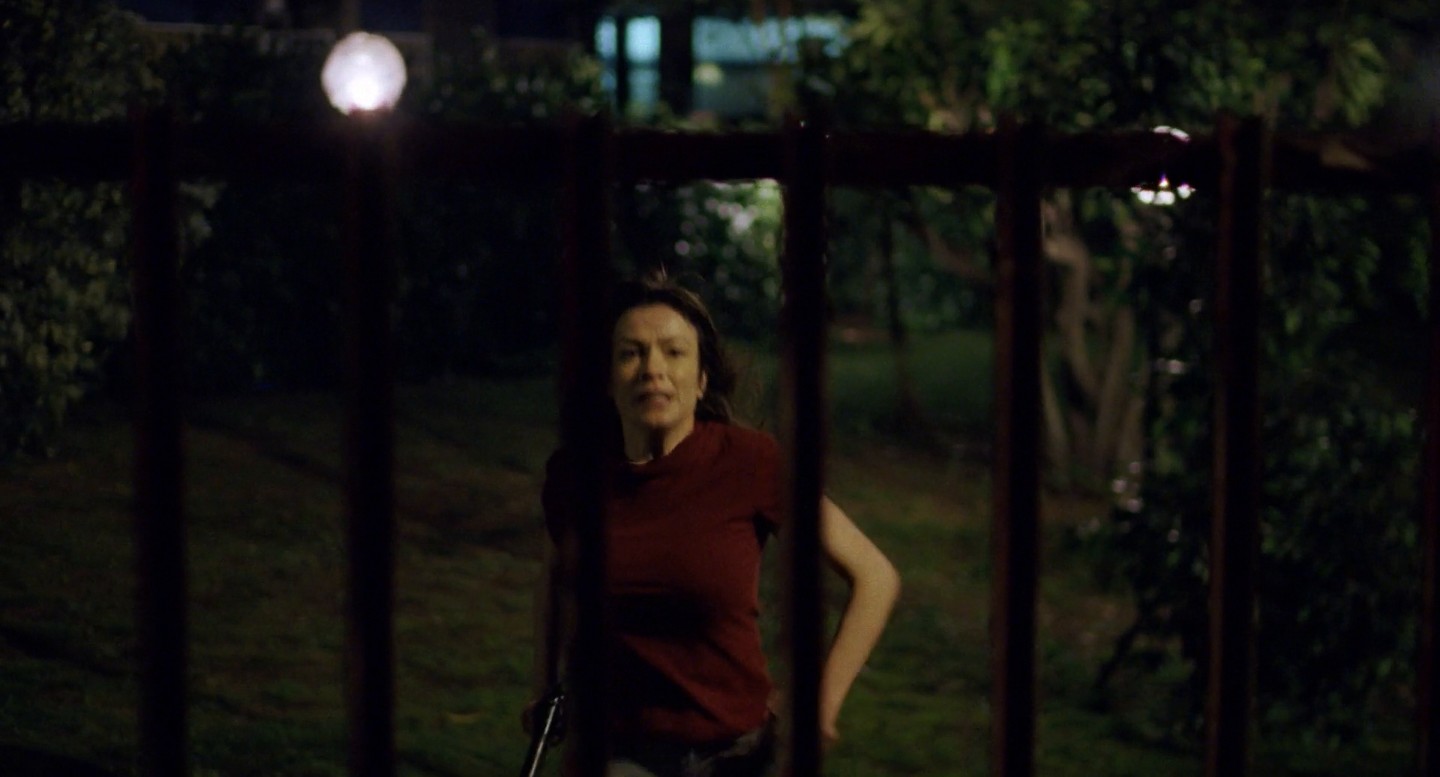
The threat begins before the direct attack, in the curved reflection of the garden. Anna’s search traces the boundary between the warm living room and the dark exterior. Returning inside does not restore the original feeling of safety.

The bag, curtains and open doorway keep directing her attention across the set. Darkness then breaks that readable arrangement; the overhead struggle turns furnishings into obstacles. This gallery follows suspense and physical action rather than treating every attack as a display of wounds.

Explore the sequence 11 stages

01 · 50:30

Anna rests in the warm living room.ENLARGE ↗
Anna rests in the warm living room.

02 · 50:55

The bowl reflects the garden.ENLARGE ↗
The bowl reflects the garden.

03 · 51:00

Anna studies the reflection.ENLARGE ↗
Anna studies the reflection.

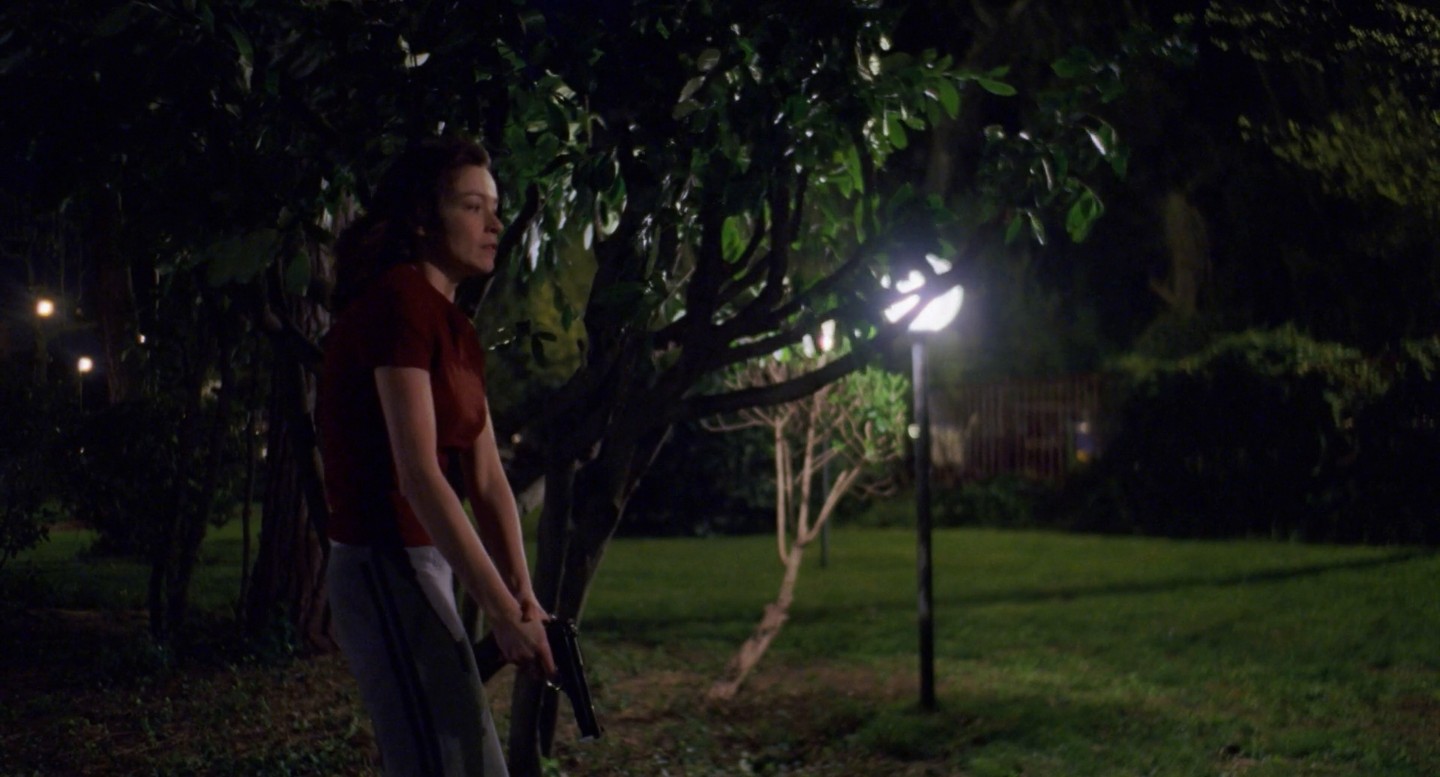
04 · 51:40

She searches the garden with her gun.ENLARGE ↗
She searches the garden with her gun.

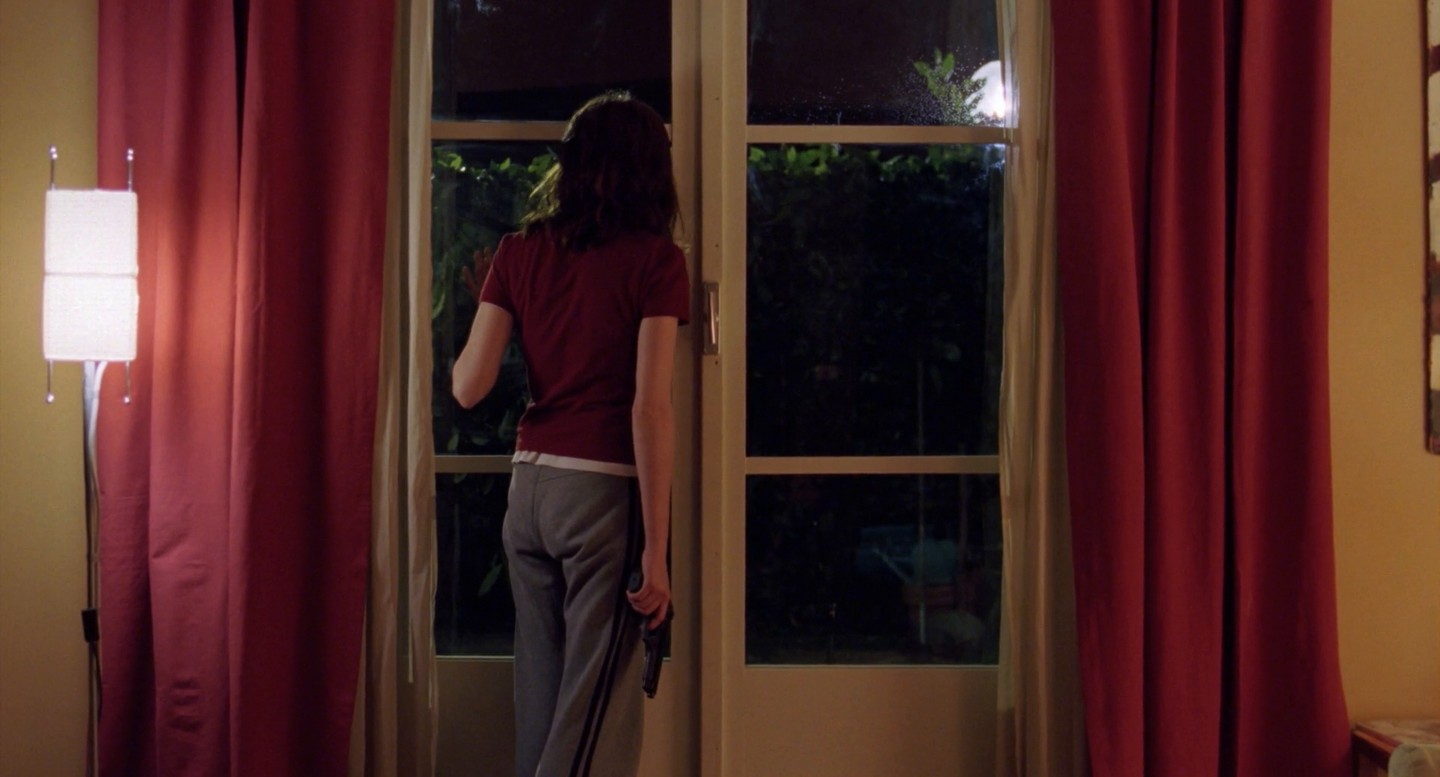
05 · 52:20

The open window frames the return indoors.ENLARGE ↗
The open window frames the return indoors.

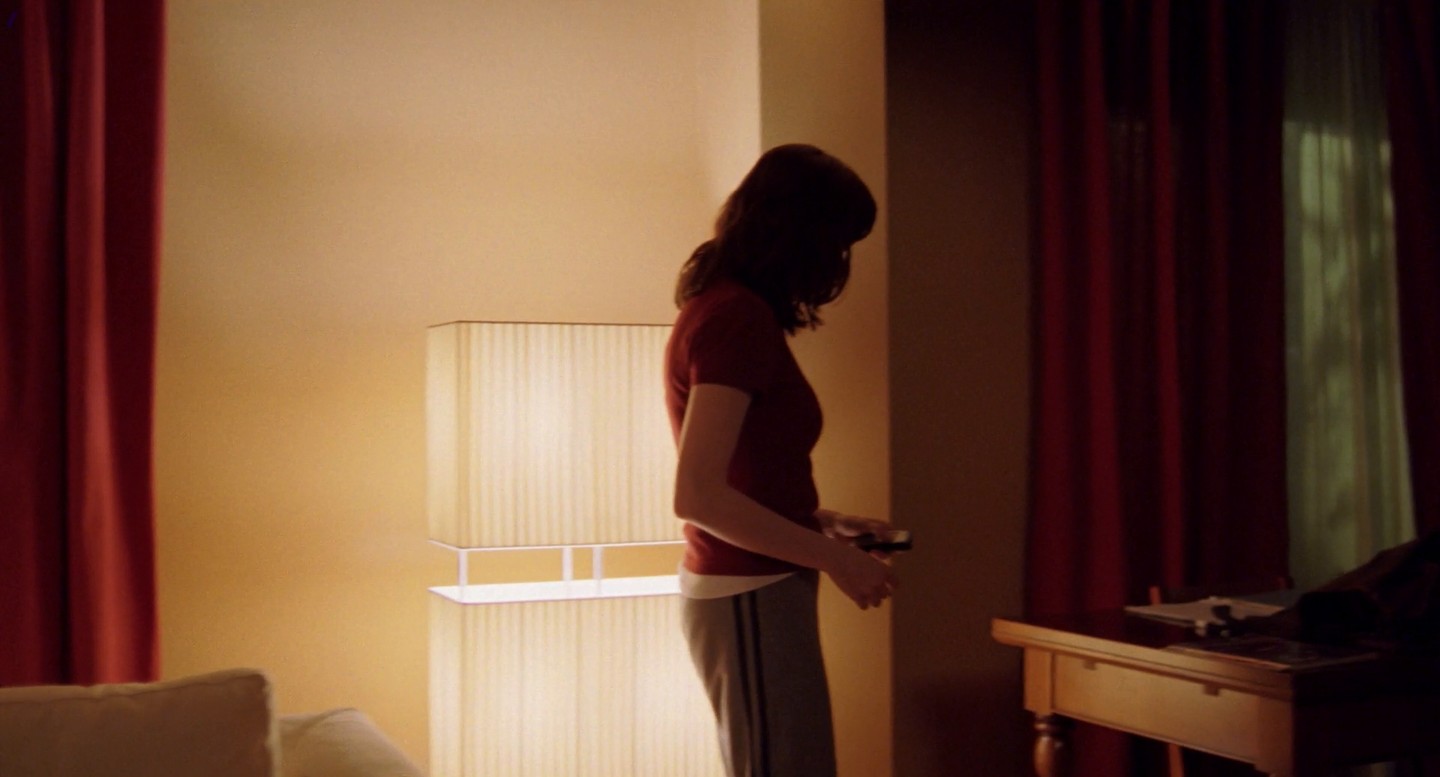
06 · 53:20

The bag draws her back to the table.ENLARGE ↗
The bag draws her back to the table.

07 · 54:00

Anna lifts a pale cloth from the bag.ENLARGE ↗
Anna lifts a pale cloth from the bag.

08 · 54:40

The room falls into darkness.ENLARGE ↗
The room falls into darkness.

09 · 55:10

The struggle is seen from above.ENLARGE ↗
The struggle is seen from above.

10 · 55:30

Anna regains her footing.ENLARGE ↗
Anna regains her footing.

11 · 56:10

She returns to the garden.ENLARGE ↗
She returns to the garden.
Back to the effects guide ↑

1:15:40–1:19:15

Remo: the passage and the river

A crosspiece narrows the opening.ENLARGE ↗
A crosspiece narrows the opening.

The attack is spread across changing spaces. A metal doorway leads to a narrow service passage; cables and crosspieces force Remo to read the route with his whole body. The threat is organised as an environment before it becomes a direct assault.

Outside, a rope crosses his neck and the action moves into the water. The apparent exit from the corridor has only delivered him to another stage of the trap. The gallery follows these changes of scale without brightening the film’s deliberately dark images.

Explore the sequence 12 stages

01 · 1:15:40

Remo reaches the metal doorway.ENLARGE ↗
Remo reaches the metal doorway.

02 · 1:16:15

The woman lies on the wet ground.ENLARGE ↗
The woman lies on the wet ground.

03 · 1:16:40

Remo enters the confined passage.ENLARGE ↗
Remo enters the confined passage.

04 · 1:16:55

Cables cross the route ahead.ENLARGE ↗
Cables cross the route ahead.

05 · 1:17:05

A crosspiece narrows the opening.ENLARGE ↗
A crosspiece narrows the opening.

06 · 1:17:25

The passage is viewed at an angle.ENLARGE ↗
The passage is viewed at an angle.

07 · 1:18:19

Remo reaches the open bank.ENLARGE ↗
Remo reaches the open bank.

08 · 1:18:25

The rope catches his neck.ENLARGE ↗
The rope catches his neck.

09 · 1:18:27

The body hits the water.ENLARGE ↗
The body hits the water.

10 · 1:18:35

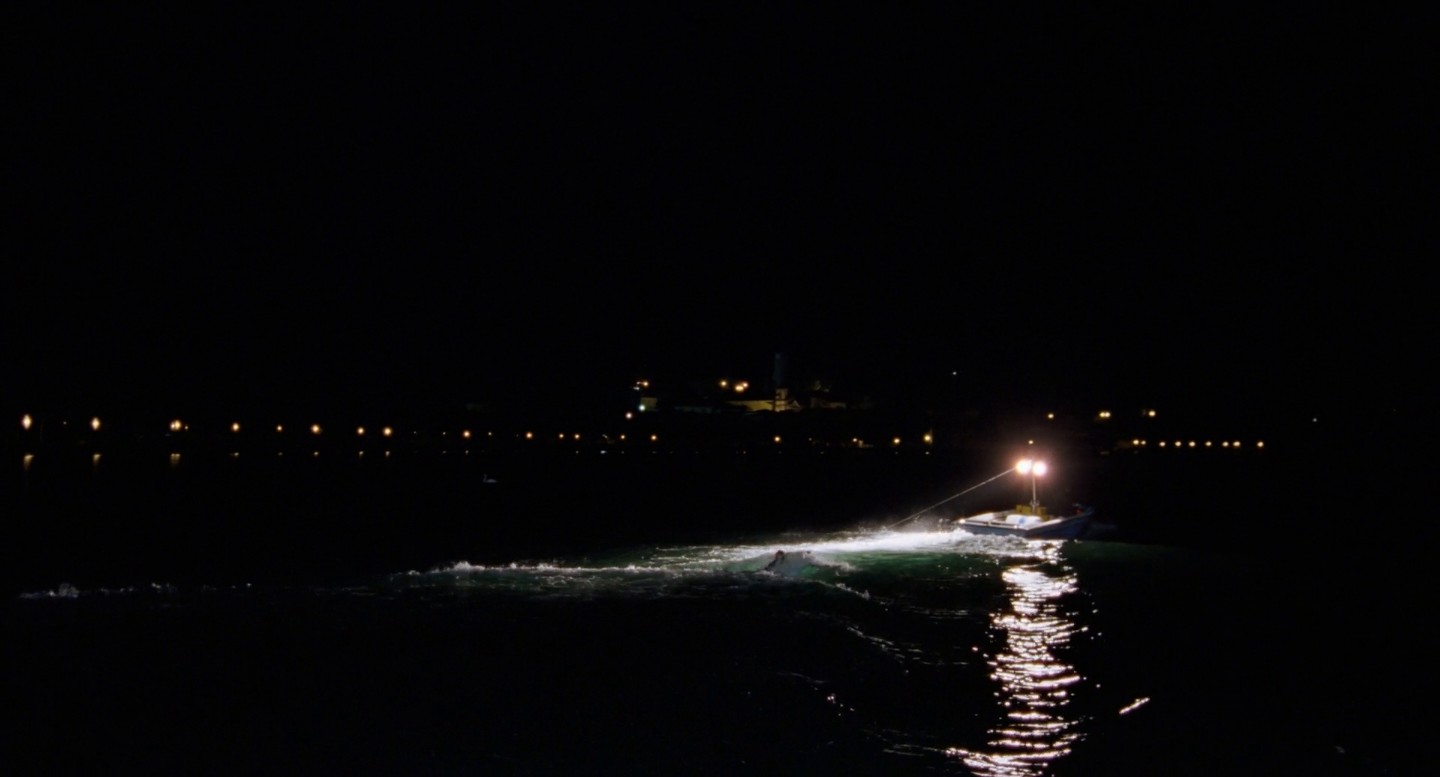
A boat leaves a bright wake.ENLARGE ↗
A boat leaves a bright wake.

11 · 1:18:45

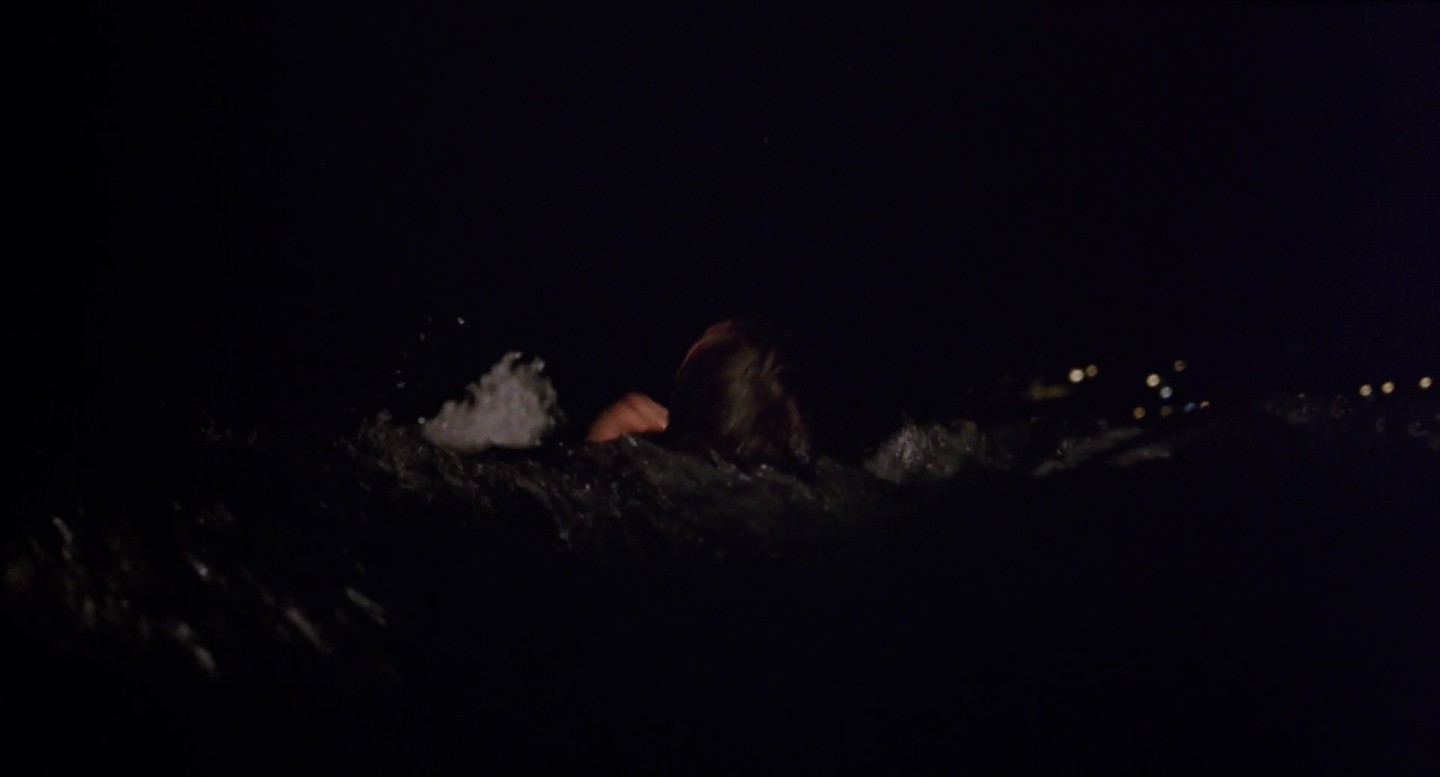
Remo struggles at the surface.ENLARGE ↗
Remo struggles at the surface.

12 · 1:19:15

The river returns his body.ENLARGE ↗
The river returns his body.
Back to the effects guide ↑

1:26:50–1:27:22

John: the mechanical ambush

Projectiles pierce John’s sweater.ENLARGE ↗
Projectiles pierce John’s sweater.

The sequence first reveals the camera and the room, then isolates the concealed mechanism. The sudden projectile insert transforms a successful discovery into a bodily trap.

John’s bloodied mouth and the wider image of his body against the doorway provide different registers of the wound. The cut toward sunlit leaves briefly opens the frame beyond him, making the closeness of death to ordinary daylight especially stark.

Explore the sequence 11 stages

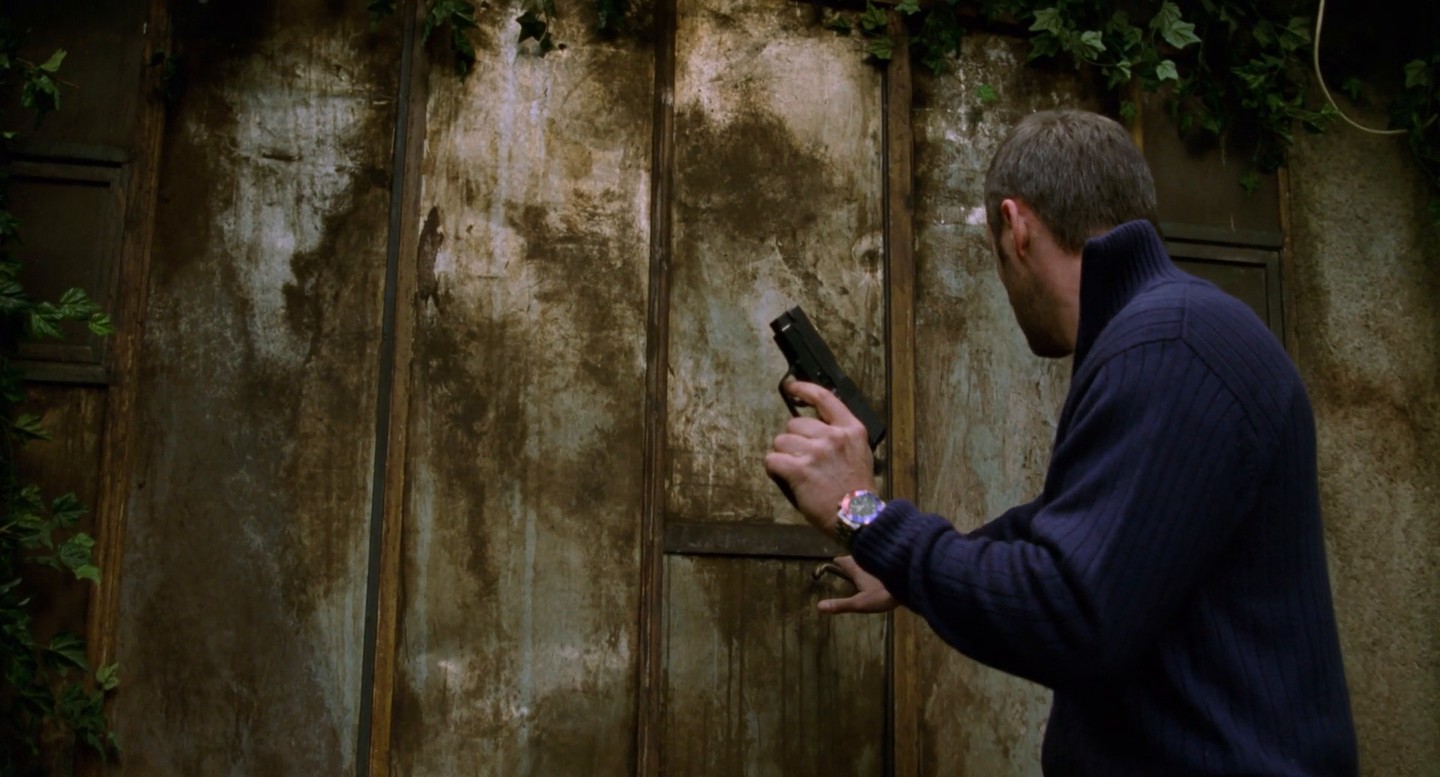
01 · 1:26:50

John approaches the door with his gun.ENLARGE ↗
John approaches the door with his gun.

02 · 1:26:56

The webcam is visible inside.ENLARGE ↗
The webcam is visible inside.

03 · 1:27:00

The concealed mechanism is revealed.ENLARGE ↗
The concealed mechanism is revealed.

04 · 1:27:02

John looks into the room.ENLARGE ↗
John looks into the room.

05 · 1:27:03

The mechanism sits beside the window.ENLARGE ↗
The mechanism sits beside the window.

06 · 1:27:04

Projectiles cross the room.ENLARGE ↗
Projectiles cross the room.

07 · 1:27:05

The shafts pierce his sweater.ENLARGE ↗
The shafts pierce his sweater.

08 · 1:27:06

Blood marks John’s mouth.ENLARGE ↗
Blood marks John’s mouth.

09 · 1:27:10

Sunlight catches the leaves outside.ENLARGE ↗
Sunlight catches the leaves outside.

10 · 1:27:16

The wider doorway reveals the trap.ENLARGE ↗
The wider doorway reveals the trap.

11 · 1:27:22

The garden encloses the scene.ENLARGE ↗
The garden encloses the scene.
Back to the effects guide ↑

1:33:10–1:39:53

The railway game and escape

Carlo and Anna face the laptop between the rails.ENLARGE ↗
Carlo and Anna face the laptop between the rails.

The laptop, chains and track turn an online contest into a physical arrangement. The film alternates the two players and their screen with the oncoming route, then concentrates on keys and cuffs as the game gives way to escape.

The ending is built from separation: Anna moves beyond the rails while Carlo remains attached to them. The passing train completes the threat without a lingering anatomical insert. The final wide view and Anna beside the car carry its consequence.

Explore the sequence 12 stages

01 · 1:33:10

The players lie beside the laptop.ENLARGE ↗
The players lie beside the laptop.

02 · 1:37:50

The game breaks into a struggle.ENLARGE ↗
The game breaks into a struggle.

03 · 1:37:56

A hand reaches for the restraint.ENLARGE ↗
A hand reaches for the restraint.

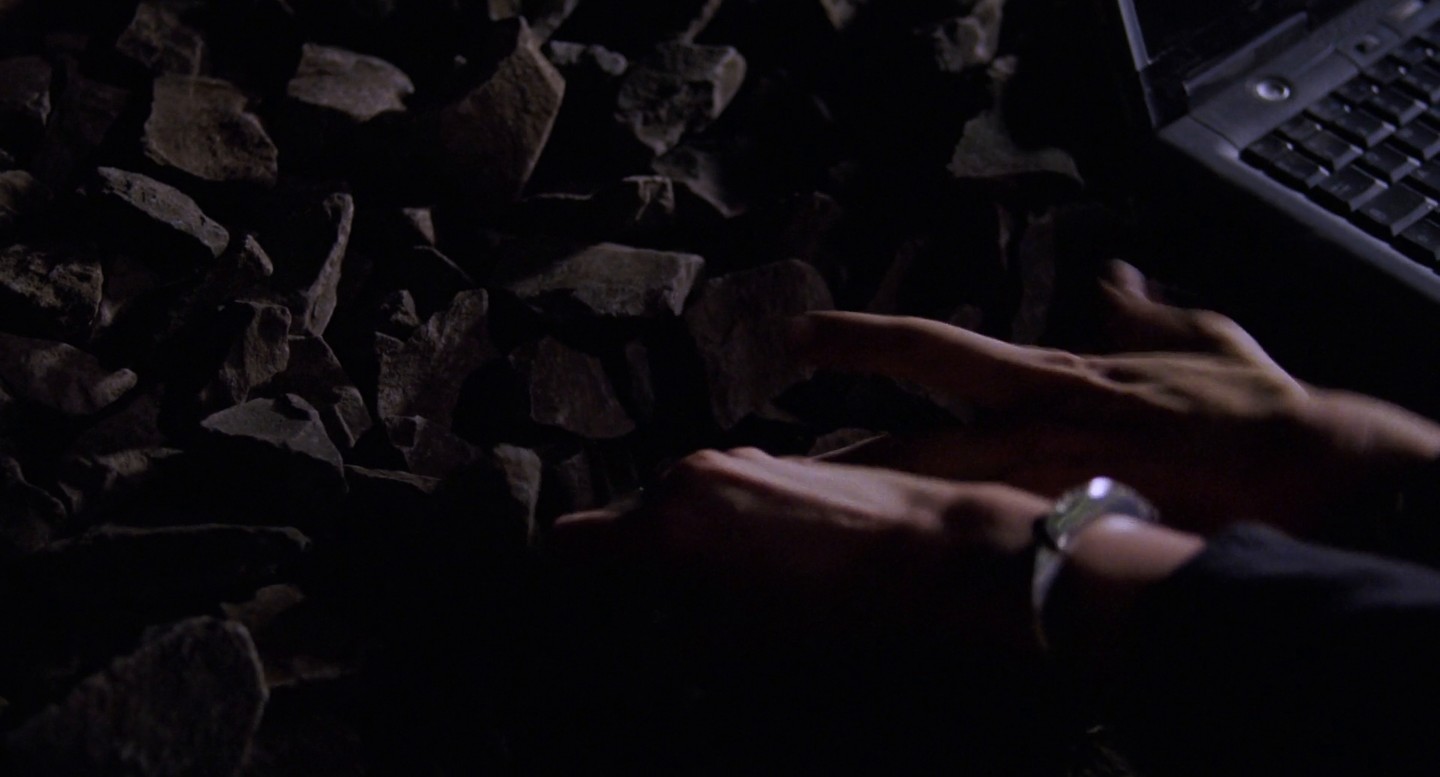
04 · 1:38:08

Hands and chain against the gravel.ENLARGE ↗
Hands and chain against the gravel.

05 · 1:38:23

The laptop goes dark.ENLARGE ↗
The laptop goes dark.

06 · 1:38:38

Anna turns onto her back.ENLARGE ↗
Anna turns onto her back.

07 · 1:38:53

Carlo reaches after her.ENLARGE ↗
Carlo reaches after her.

08 · 1:39:02

Carlo produces another key.ENLARGE ↗
Carlo produces another key.

09 · 1:39:20

The key meets the handcuff.ENLARGE ↗
The key meets the handcuff.

10 · 1:39:32

Carlo stands in the train’s path.ENLARGE ↗
Carlo stands in the train’s path.

11 · 1:39:41

The train passes the car.ENLARGE ↗
The train passes the car.

12 · 1:39:53

Anna sits beyond the rails.ENLARGE ↗
Anna sits beyond the rails.
Back to the effects guide ↑

CLOSE VISUAL STUDIES

What an image makes possible.

Four paths connect the film’s displays, reflective surfaces, bodies and routes of escape.

Three kinds of screen

The poker interface overlays the player’s face.ENLARGE ↗
The poker interface overlays the player’s face.

The computer is both a place of work and the killer’s chosen stage. The poker overlay makes play visible on a face; the waveform converts recorded sound into an object of examination; the hidden webcam finally supplies a physical origin for the image. These displays have different owners and different claims to truth.

Follow the visual progression 6 observations
  1. 06:45
    The chat window makes entry into the game look like an ordinary software exchange.
  2. 08:20
    The captive is compressed into a corner of an interface controlled by her attacker.
  3. 20:31
    Face and cards share the frame through superimposition.
  4. 31:15
    The waveform gives recorded sound a visible pattern.
  5. 1:26:56
    The camera appears as equipment in a room John can enter.
  6. 1:33:10
    At the railway, screen and threatened bodies occupy the same piece of ground.

The house as a changing map

The garden appears in the bowl’s reflection.ENLARGE ↗
The garden appears in the bowl’s reflection.

The intrusion converts a domestic arrangement into a test of perception. The cream sofa and red curtains first locate Anna in a warm, legible room. The curved bowl complicates that view; the search beyond the window fails to resolve it. When darkness falls, even a familiar space has to be discovered again.

Follow the visual progression 6 observations
  1. 48:15
    The lamps, sofa and curtains establish a warm resting place.
  2. 50:30
    Anna is alone in the same arrangement.
  3. 50:55
    A reflected garden occupies the curved object in the foreground.
  4. 52:20
    The window becomes a boundary she crosses and checks.
  5. 54:40
    Darkness strips the room of its earlier clarity.
  6. 55:10
    The high viewpoint reorganises the fight around floor and furniture.

From remote image to material trace

The second victim’s face in daylight.ENLARGE ↗
The second victim’s face in daylight.

The corpse effects are integral to the mystery’s changing scale. The threatened face is first small, distant and controlled by the killer. The examination makes that face available to touch and close scrutiny. What looked like a closed spectacle can leave information outside the murderer’s control.

Follow the visual progression 6 observations
  1. 08:24
    The knife enters a video image the police cannot physically interrupt.
  2. 09:24
    The recovered body brings weight and binding into view.
  3. 12:45
    The throat wound becomes an object of examination.
  4. 13:10
    The eye is approached at extreme proximity.
  5. 26:26
    Daylight exposes the second victim’s face.
  6. 26:35
    A tiny trace redirects attention away from the spectacle of injury.

Two exits that do not release the body

The narrow passage is crossed by cables.ENLARGE ↗
The narrow passage is crossed by cables.

Remo’s service passage and the final railway share a directional geometry. Both organise movement along a narrow line. The difference lies in who can finally leave that line: Remo’s apparent exit delivers him to the river attack, while Anna’s escape is completed by moving off the track.

Follow the visual progression 6 observations
  1. 1:16:55
    Remo’s corridor compresses the available route.
  2. 1:17:25
    A tilted view makes the obstructions harder to read as a stable map.
  3. 1:18:25
    The open bank is caught by a rope stretched across the body.
  4. 1:33:10
    The railway fixes two bodies beside a single screen.
  5. 1:38:38
    Anna changes her position in relation to the rails.
  6. 1:39:53
    The grass and car provide an image of space beyond the trap.

THE CRAFT RECORD

Names behind the images.

Story and screenplay.ENLARGE ↗
Story and screenplay.

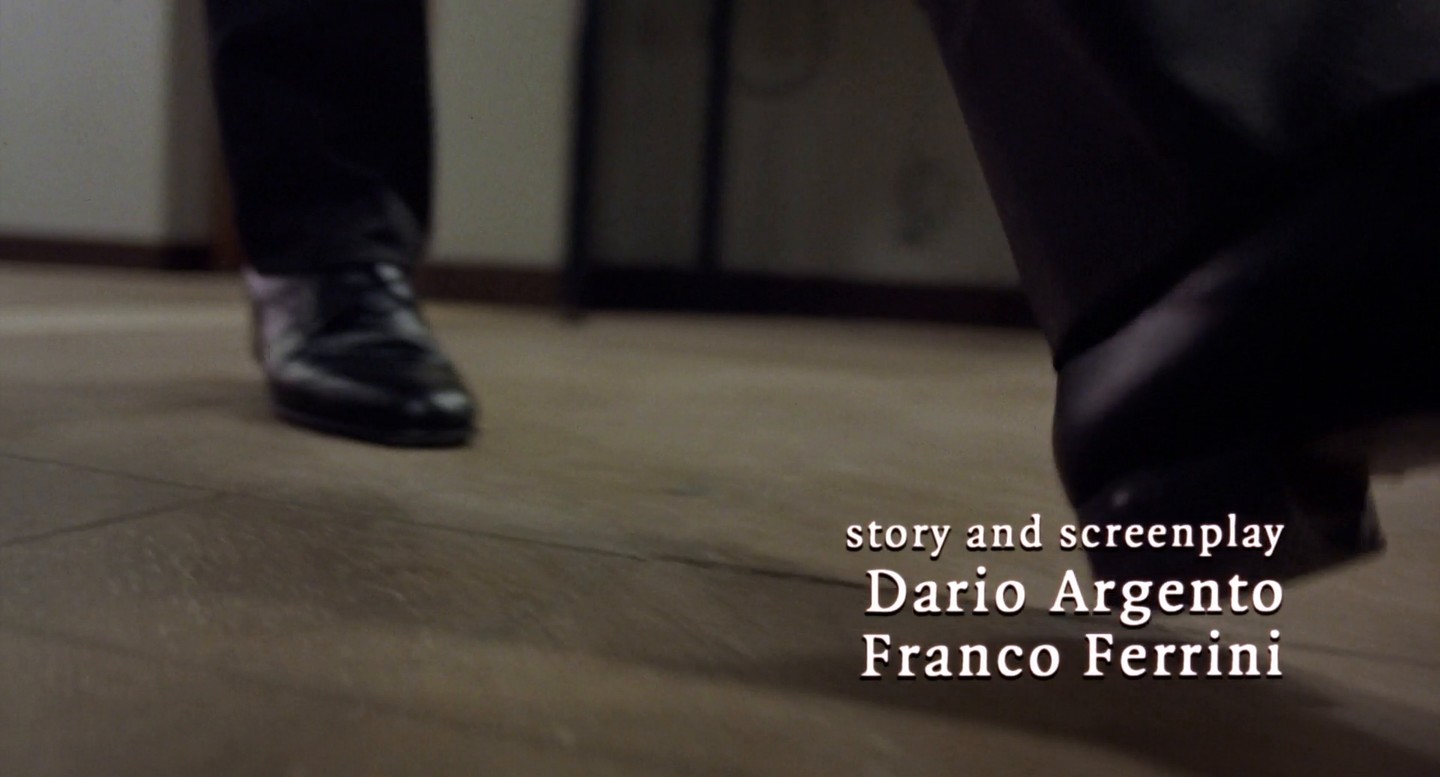
Story and screenplay

The opening titles name Dario Argento and Franco Ferrini for story and screenplay. The existing research follows how the imposed game distributes knowledge, authority and danger. Read the interface study →

Photography and design.ENLARGE ↗
Photography and design.

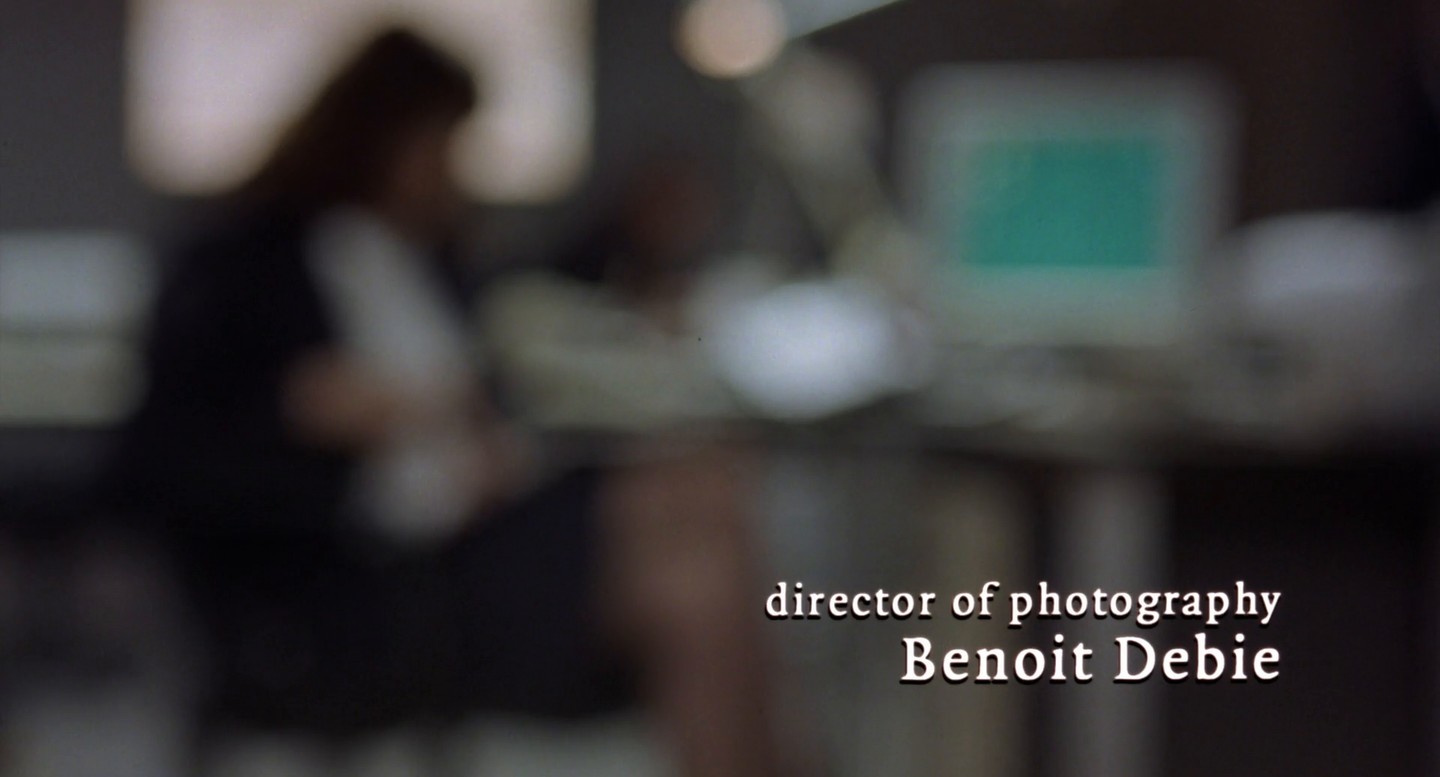
Photography and design

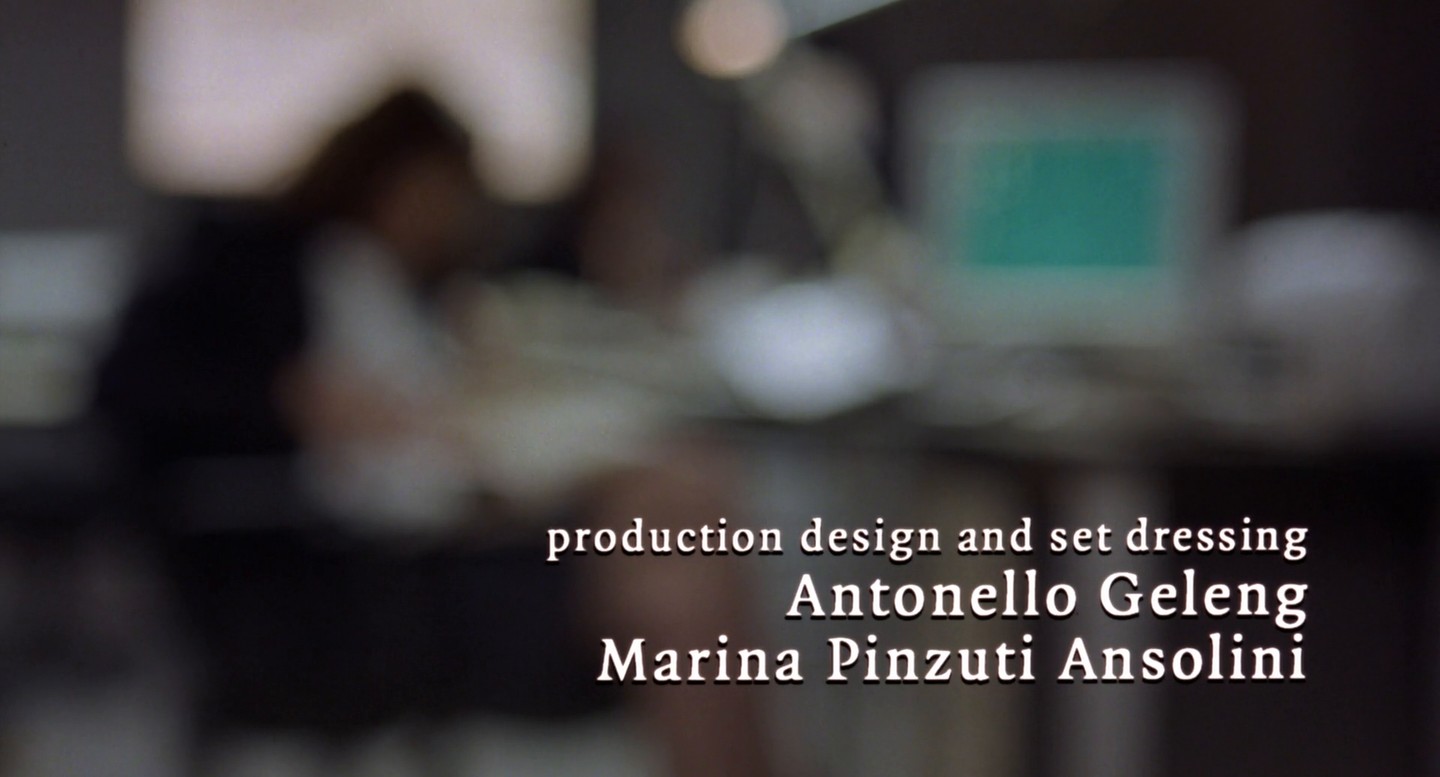
Benoît Debie receives the cinematography credit. The following design credit names Antonello Geleng and Marina Pinzuti Ansolini. Their names belong beside the visible differences between the police office, Anna’s home and the overgrown hidden room. Read the collaborators’ accounts →

View the related credits
The production-design and set-dressing credit.ENLARGE ↗
The production-design and set-dressing credit.
Editing and music.ENLARGE ↗
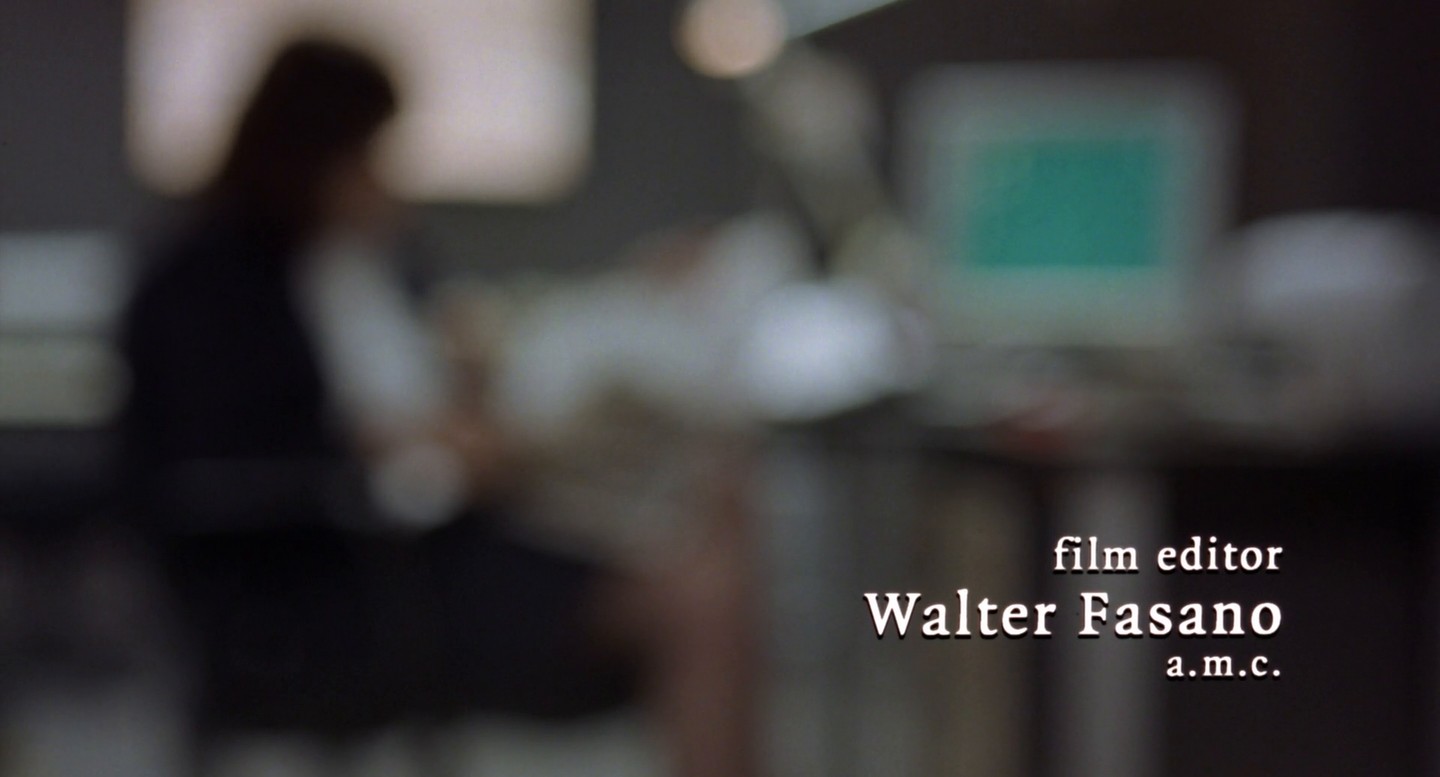
Editing and music.

Editing and music

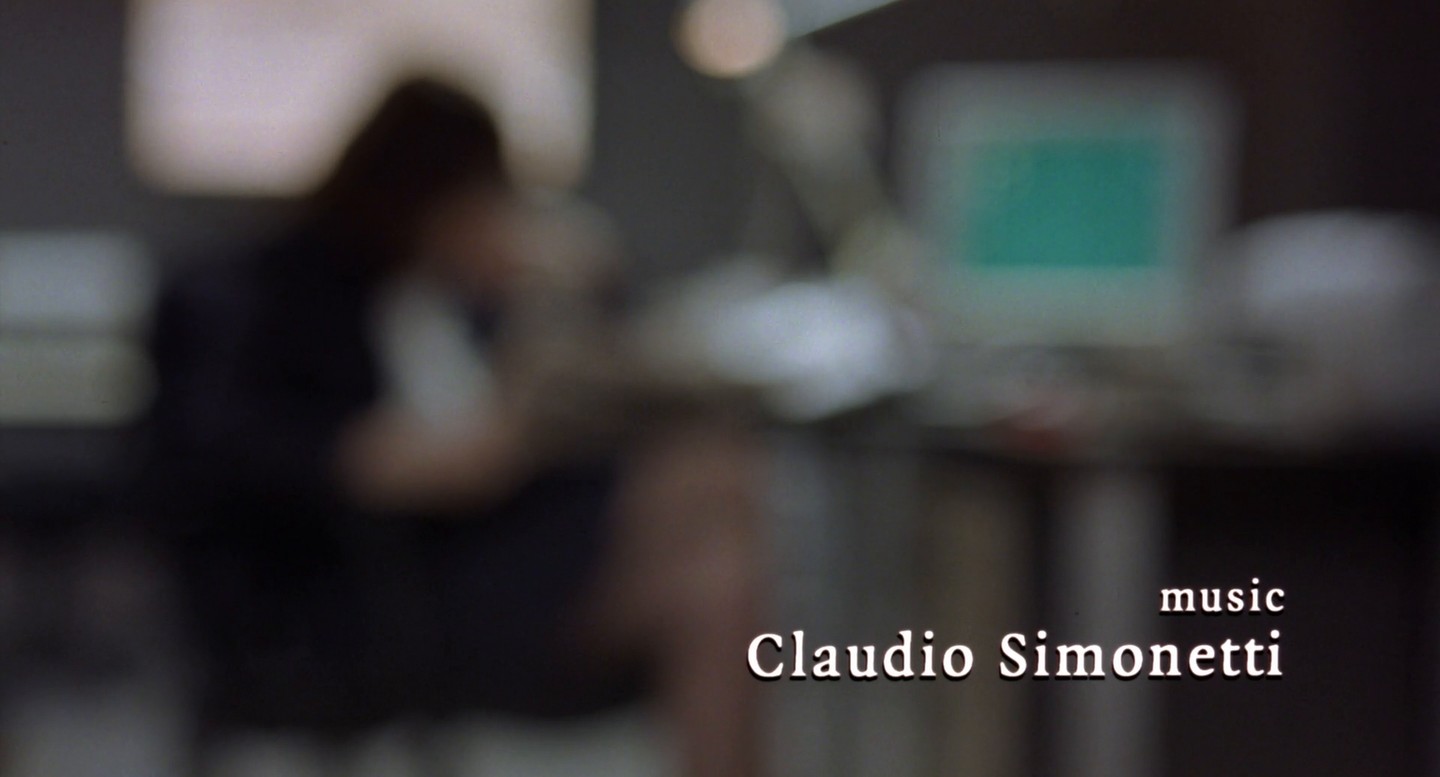
Walter Fasano is credited as editor and Claudio Simonetti for music. Simonetti’s release-period interview describes trying music in the editing room and exchanging ideas with Fasano. The credit supports that collaboration without assigning an unheard cue to a particular scene. Read the music research →

View the related credits
Claudio Simonetti’s music credit.ENLARGE ↗
Claudio Simonetti’s music credit.
The effects team.ENLARGE ↗
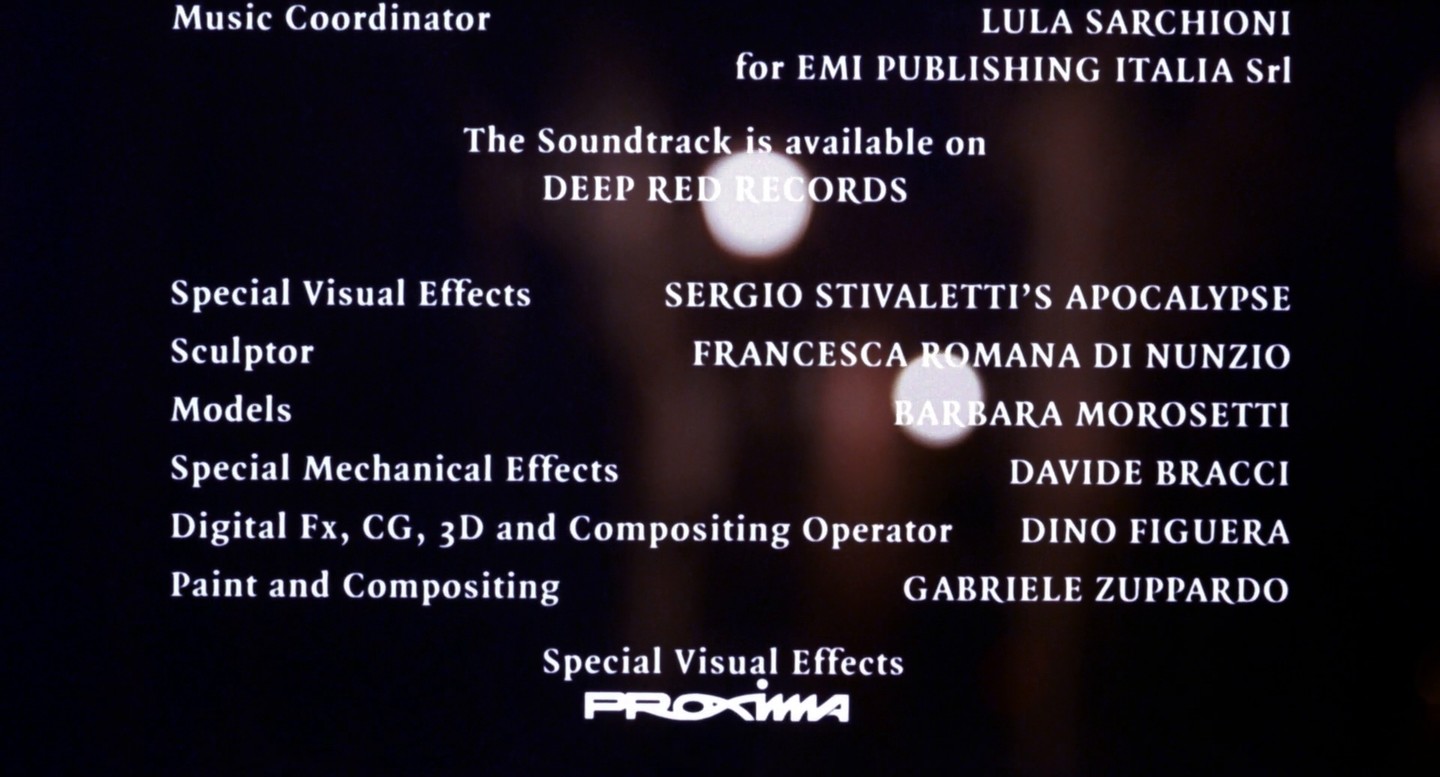
The effects team.

The effects team

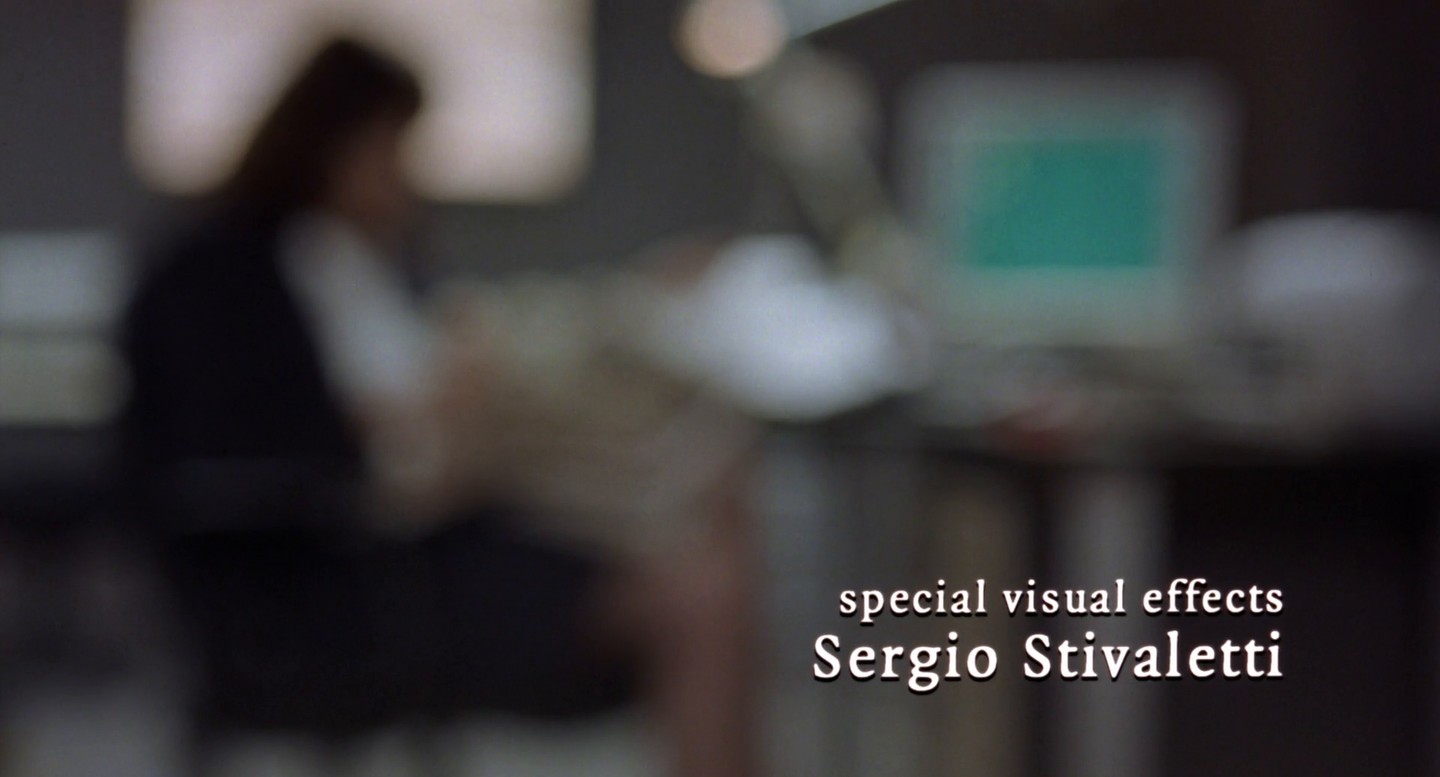
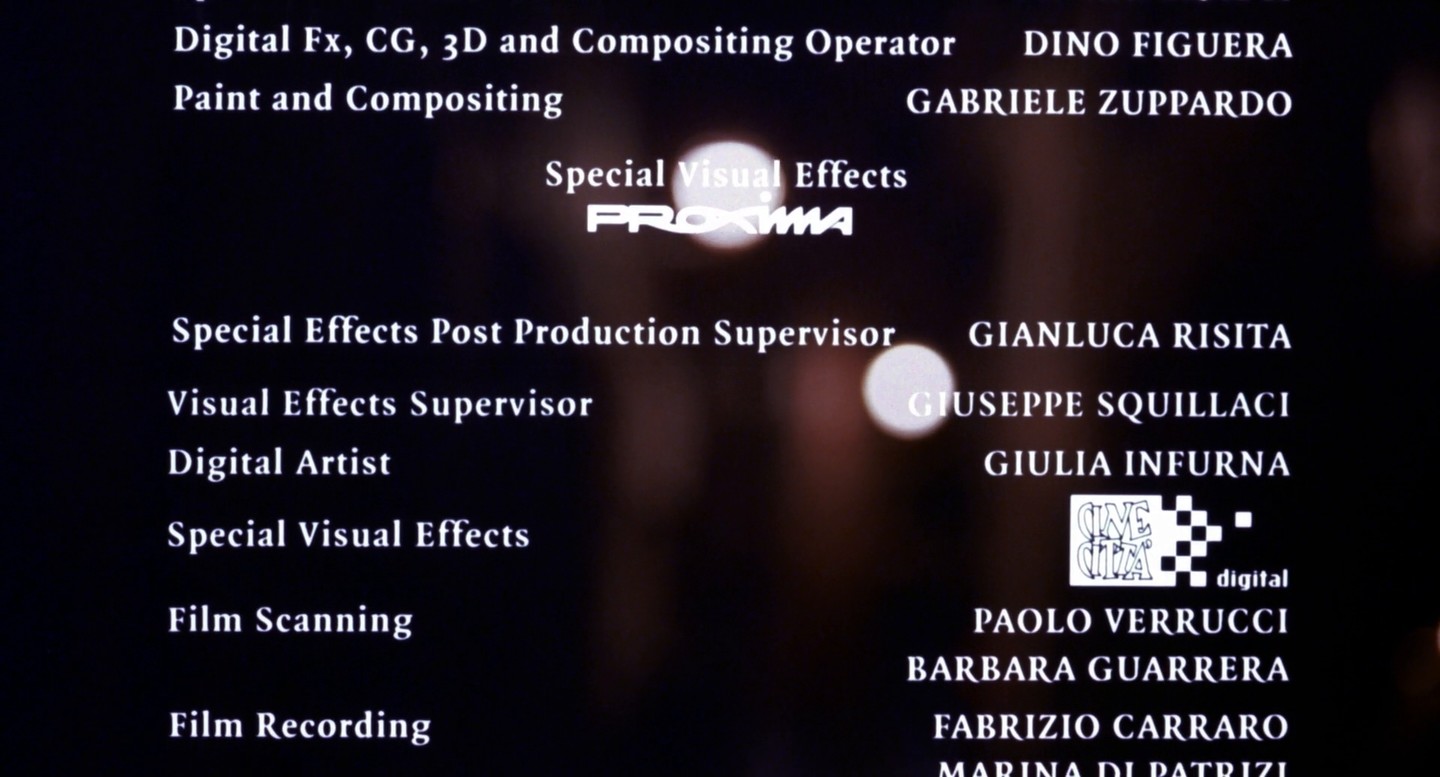
The closing roll names Sergio Stivaletti’s Apocalypse under special visual effects. It specifies Francesca Romana Di Nunzio for sculpture, Barbara Morosetti for models, Davide Bracci for special mechanical effects, Dino Figuera for digital FX, CG, 3D and compositing, and Gabriele Zuppardo for paint and compositing. These are department credits, not a claimed allocation of each individual image.

View the related credits
Sergio Stivaletti’s opening effects credit.ENLARGE ↗
Sergio Stivaletti’s opening effects credit.
The effects and compositing credits continue.ENLARGE ↗
The effects and compositing credits continue.
Action, set effects and stunts.ENLARGE ↗
Action, set effects and stunts.

Action, set effects and stunts

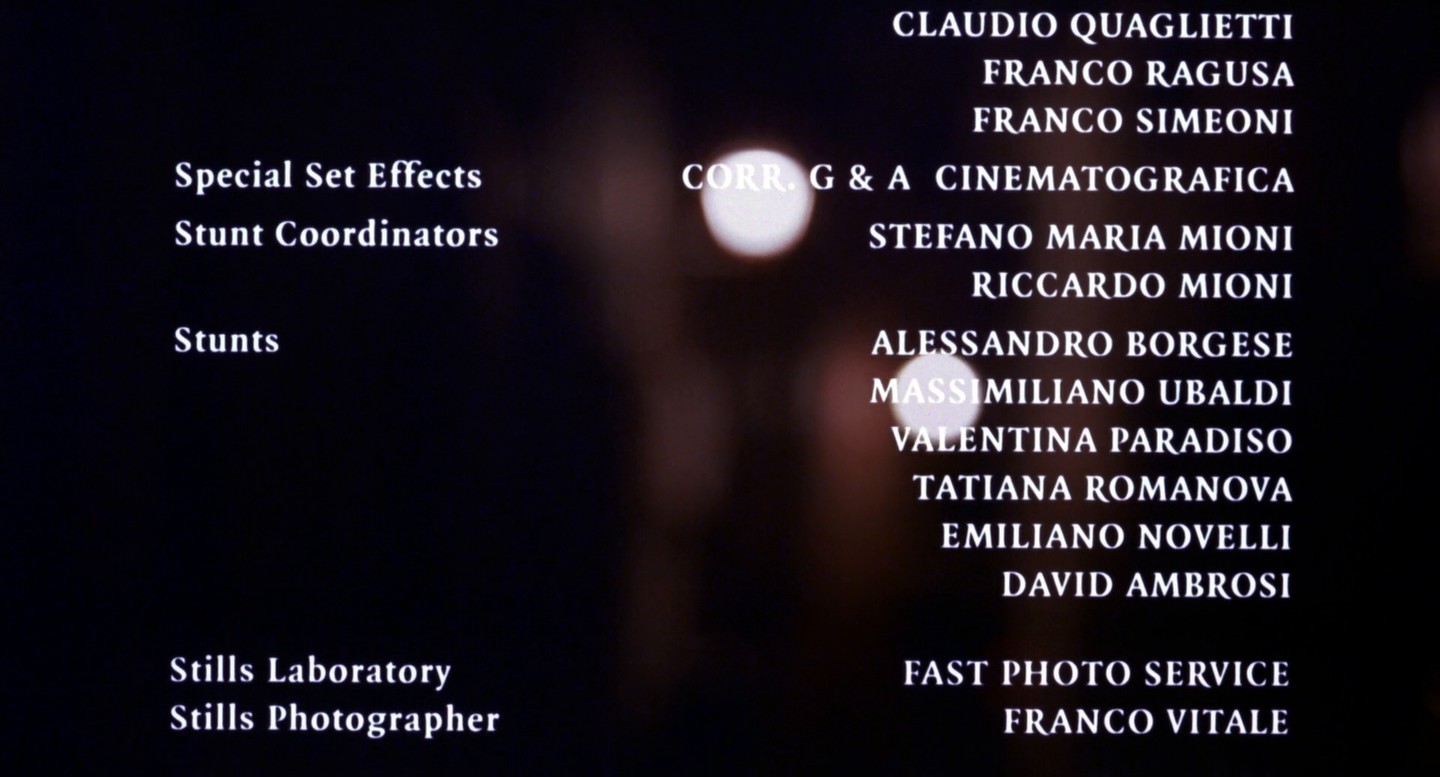
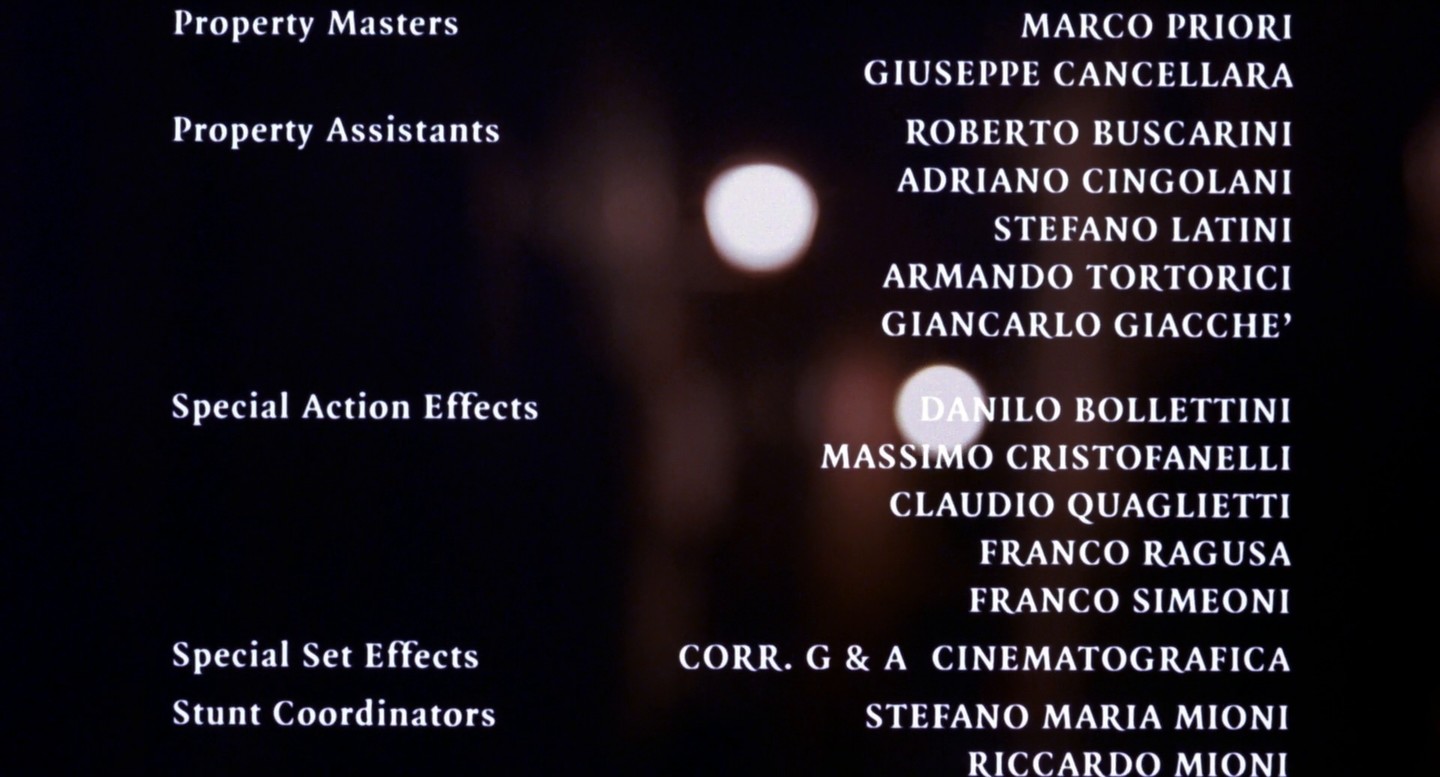
The roll separately lists special action effects and special set effects, followed by stunt coordinators Stefano Maria Mioni and Riccardo Mioni. Keeping these categories distinct avoids reducing the passage traps and railway action to a single makeup credit.

View the related credits
The set-effects and stunt credits.ENLARGE ↗
The set-effects and stunt credits.
The game as a designed object.ENLARGE ↗
The game as a designed object.

The game as a designed object

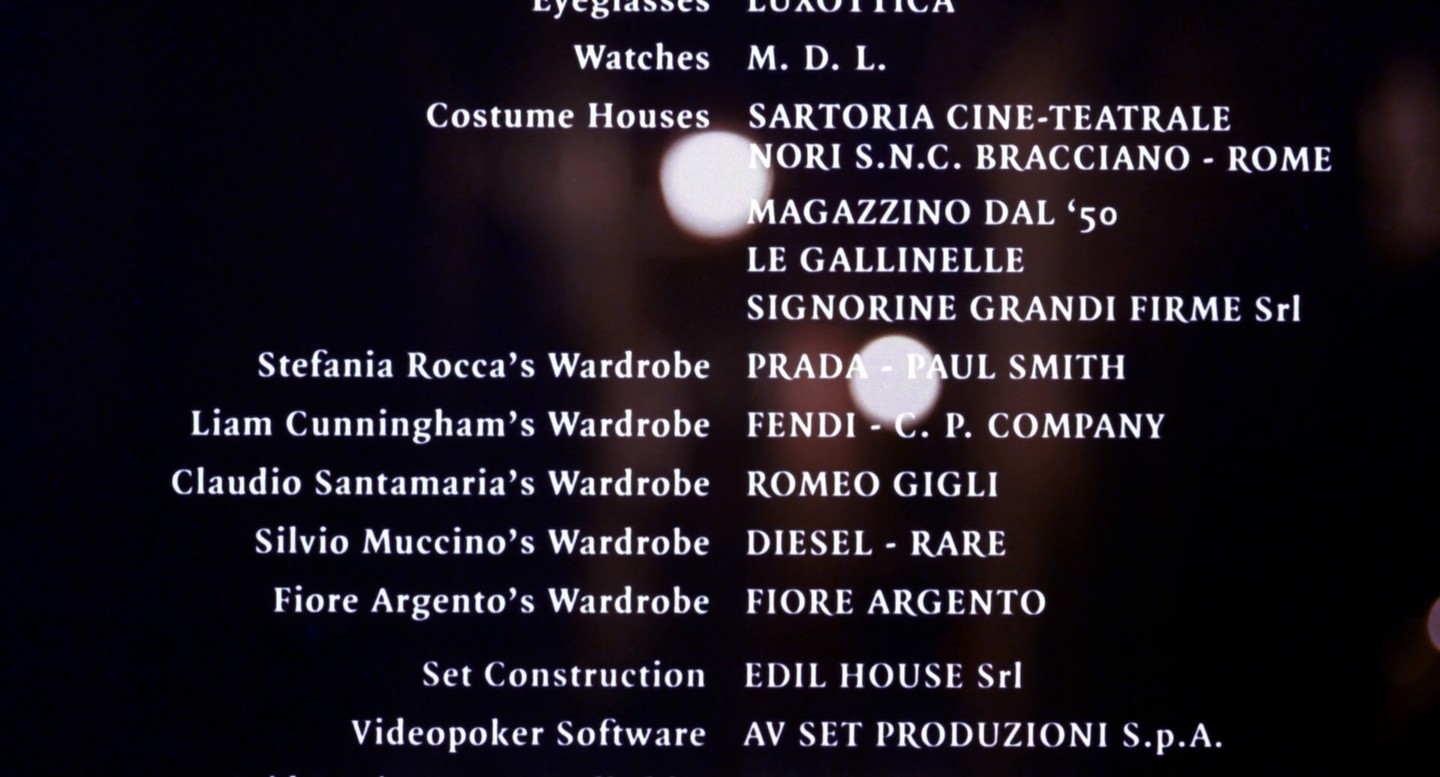
The closing acknowledgements credit video-poker software to AV Set Produzioni S.p.A. The screen is therefore part of the production’s constructed world, alongside sets, props and images. The visual study follows its readable surfaces and placement; it does not treat the onscreen game as a guide to real poker rules.

DIALOGUE & SOUND EVIDENCE

Every reassurance has a second meaning.

Twelve illustrated studies follow the words that make the game work: invitations, commands, memories and clues. Open each study’s notes to trace its connections through the film.

Includes the ending. Review sources and method ↗

01:52–02:30

Familiarity before the threat

Anna at her birthday desk.ENLARGE ↗
Anna at her birthday desk.

Carlo’s birthday flowers come with a claim to know everything about Anna. She answers his invitation by drawing a boundary between work and intimacy. The exchange plants the relationship that the final confrontation will recast: his attention is already more possessive than her response permits.

See the scene study ↗ · All dialogue studies ↑

Follow the dialogue · 3 observations
  1. 01:52
    The present makes an ordinary office encounter personal before the first threatening message arrives.
  2. 02:10
    Carlo asks who will share her celebration; Anna declines his proposed place in it.
  3. 1:31:30
    His later complaint about her response to his gifts turns this opening courtesy into a grievance.

04:20–08:10

An order disguised as a choice

The invitation arrives through a chat window.ENLARGE ↗
The invitation arrives through a chat window.

The police receive both an emergency and an instruction manual. The demand defines refusal, defeat and victory in advance, leaving the institution to argue over an opponent’s terms. Explaining the game is therefore part of the intimidation: the killer makes his procedure sound like the only available route to saving a life.

See the scene study ↗ · All dialogue studies ↑

Follow the dialogue · 3 observations
  1. 04:30
    Anna translates the message into a briefing: the missing woman becomes the stake of a proposed game.
  2. 06:45
    The unusual pack and sequence of hands are accepted as the opponent’s rules, not presented as a lesson in standard poker.
  3. 07:35
    The commissioner’s assertion of responsibility closes the debate; rank can stop participation but cannot control the remote room.

09:50–15:30 · 23:05–24:20

The outsider becomes an ally

Anna and John walk through nighttime Rome.ENLARGE ↗
Anna and John walk through nighttime Rome.

John enters by rejecting the institution’s excuses. Anna’s private agreement with him opens a relationship through disagreement with her own colleagues. His explanation of the London siege and reassignment gives that abrasiveness a history; the later walk moves their conversation from professional solidarity toward companionship.

See the scene study ↗ · All dialogue studies ↑

Follow the dialogue · 3 observations
  1. 10:40
    Anna names herself and offers support after the public confrontation. John distinguishes his Irish identity from his British police posting.
  2. 14:45
    His account of the siege, the press response and his move to Rome makes the embassy assignment a consequence rather than a promotion.
  3. 23:05
    Her refusal of a drink and his invitation upstairs turn the conversation into an exchange of personal limits.

24:55–25:20 · 49:55–50:10

The book supplies a second investigation

Anna sits on the cream sofa.ENLARGE ↗
Anna sits on the cream sofa.

The poker book treats play as an exercise in reading people. That proposition sits beside the police’s technical effort to trace a machine: hands, reactions and confidence offer another route to knowledge. Its later advice about unsettling a stronger opponent supplies Anna with an approach she can put into practice on the railway.

See the scene study ↗ · All dialogue studies ↑

Follow the dialogue · 3 observations
  1. 24:55
    The first passage relates conduct at the table to conduct in life, giving the game a psychological purpose.
  2. 49:55
    The next passage recommends disrupting an opponent’s confidence rather than surrendering to it.
  3. 1:35:10
    The advice returns at the crisis. Anna changes how she addresses Carlo, making an earlier lesson an immediate tactic.

27:00–29:20

The reassurance the film will overturn

A pack of cards at the investigators’ table.ENLARGE ↗
A pack of cards at the investigators’ table.

The briefing separates a criminal appetite for risk from cheating. A technical assurance that the game is interactive is followed by a psychological account that makes risk part of the killer’s identity. Later evidence will expose the danger of allowing those two explanations to reinforce one another too neatly.

See the scene study ↗ · All dialogue studies ↑

Follow the dialogue · 3 observations
  1. 27:20
    A direct question about cheating is answered with confidence in the system and then in the killer’s supposed character.
  2. 27:55
    Railway risk, illegal racing and Russian roulette turn the profile into a list of possible records to search.
  3. 1:23:15
    John’s discovery challenges the time of the displayed killing. The important distinction is between a game’s operation and the truth of the image accompanying it.

37:20–43:10 · 1:02:15–1:07:45

Remo’s uncertainty is more useful than certainty

Anna talks with Remo away from the desk.ENLARGE ↗
Anna talks with Remo away from the desk.

The police call Remo a genius; he keeps describing luck, fear and a skill he cannot explain as a system. Anna listens closely enough to reuse his image of a force passing through his arm into his hand. Her encouragement works through his own language, while the surrounding officers continue to turn him into their solution.

See the scene study ↗ · All dialogue studies ↑

Follow the dialogue · 3 observations
  1. 38:20
    His wish to leave meets a financial offer and the promise that his existing trouble can disappear.
  2. 40:30
    The wind metaphor gives the player a vocabulary for intuition. He immediately admits that he can still fail.
  3. 42:35 · 1:07:35
    Anna recalls the wind before play and asks about it after the later victory. The repeated phrase makes a private conversation useful in the crowded room.

47:55–49:50

A confession changes the stakes

Anna sits on the cream sofa.ENLARGE ↗
Anna sits on the cream sofa.

Anna’s account of her father explains why cards and railway tracks cannot remain abstract devices in this story. She describes gambling consuming his life and remembers being beside him before his death. Comparing his frightened eyes with the captives brings her childhood into the present investigation without a separate explanatory flashback.

See the scene study ↗ · All dialogue studies ↑

Follow the dialogue · 3 observations
  1. 47:55
    John’s question about practising with the book opens a subject that is much more painful than preparation for a game.
  2. 48:05
    Anna links obsession, debt and the railway. The final location will repeat this history deliberately.
  3. 49:15–49:50
    Their intimacy does not erase her hesitation. Her request for space keeps the conversation from becoming a simple declaration of recovery.

1:09:40–1:10:50

The survivor describes what the camera cannot

Lucia receives comfort after her release.ENLARGE ↗
Lucia receives comfort after her release.

Lucia’s testimony turns attention toward the unseen surroundings of the webcam. Her account of injections and interrupted consciousness limits what she could observe, but she can describe a room, computers and an outdoor soundscape. John’s follow-up about an explosion shows the investigation trying to connect her memory with an earlier recorded trace.

See the scene study ↗ · All dialogue studies ↑

Follow the dialogue · 3 observations
  1. 1:09:40
    The account begins with the injection and waking bound, establishing the conditions under which she could remember anything.
  2. 1:10:25
    Birds, distant traffic and wind supply a setting beyond the image selected by the kidnapper.
  3. 1:10:40
    Her denial of a bang leaves John’s specific clue unresolved; a witness’s absence of that memory is not proof that the recorded sound was meaningless.

1:12:10–1:16:30

An invitation becomes a command

Remo and the woman at the metal doorway.ENLARGE ↗
Remo and the woman at the metal doorway.

Remo’s encounter begins with the language of play and attraction. Once he notices that the woman knows his name and carries his photograph, the supposed chance meeting breaks down. Her admission that someone paid her exposes a designed route. The demand to choose a door then repeats the film’s central cruelty: an apparently available choice is delivered inside a trap.

See the scene study ↗ · All dialogue studies ↑

Follow the dialogue · 3 observations
  1. 1:12:10
    An offer to play for money gives way to Remo’s suggestion of another kind of encounter.
  2. 1:14:40
    His questions change from flirtation to identification: who supplied his name and photograph?
  3. 1:15:20–1:16:30
    The paid invitation leads to instructions about safety and death. The killer’s claim that this is no longer a game does not make the choice any freer.

1:00:05 · 1:20:30–1:23:50

A sound becomes a clock

John watches the daytime activity on the hill.ENLARGE ↗
John watches the daytime activity on the hill.

The noise on the recording first remains open to an ordinary explanation. The later Gianicolo scene provides something more useful than a name for the sound: a fixed time. John’s phone call joins that daily schedule to the earlier transmission and concludes that the killing happened three hours before the police believed they were watching it.

See the scene study ↗ · All dialogue studies ↑

Follow the dialogue · 3 observations
  1. 1:00:05
    John has not yet resolved the recorded noise; it can still be dismissed as an accident of recording.
  2. 1:20:30
    Alvaro corrects the identification of the skilled gambler. This redirects John toward the Gianicolo and the old Russian-roulette file.
  3. 1:22:40–1:23:50
    The explanation of the noon cannon leads to John’s alibi deduction. The failing phone connection then makes communicating the discovery a new source of danger.

1:27:25–1:39:15

The word “fair” belongs to the trap

Carlo and Anna face the laptop between the rails.ENLARGE ↗
Carlo and Anna face the laptop between the rails.

Anna passes John’s discovery to Carlo before realising whom she is addressing. On the railway, his language of love, fairness and shared police identity tries to make coercion sound reciprocal. She refuses that account and uses the book’s psychological advice against him. His concealed duplicate key finally gives material form to the gap between his rules and his intentions.

See the scene study ↗ · All dialogue studies ↑

Follow the dialogue · 3 observations
  1. 1:27:25
    Reporting John’s absence also tells Carlo how much the investigators have learned about the recording.
  2. 1:33:00–1:34:20
    Carlo presents a fair game and a declaration of love; Anna answers by rejecting both his authority and his account of their relationship.
  3. 1:35:10–1:39:15
    The remembered advice, her taunts and the dispute over the winning hand expose his insecurity. The extra key undercuts his claimed equality of risk.

1:40:45–1:41:05

A telephone can carry a future

Anna listens to the final phone call.ENLARGE ↗
Anna listens to the final phone call.

The last call changes the function of the telephone. Earlier calls summon players, transmit partial clues or fail at a critical moment. The pregnancy result addresses Anna’s life beyond the investigation. Her brief response leaves the emotional work with her face: survival and John’s loss occupy the same ending.

See the scene study ↗ · All dialogue studies ↑

Follow the dialogue · 3 observations
  1. 1:40:45
    The caller identifies Anna and reports the result without the threatening demands attached to earlier communications.
  2. 1:40:55
    The news revisits her relationship with John after the case has closed.
  3. 1:41:05
    The image holds the response as the credits begin, allowing the ending to continue beyond the solved crime.

THE SOUND RECORD

Voices, Foley and the electronic score.

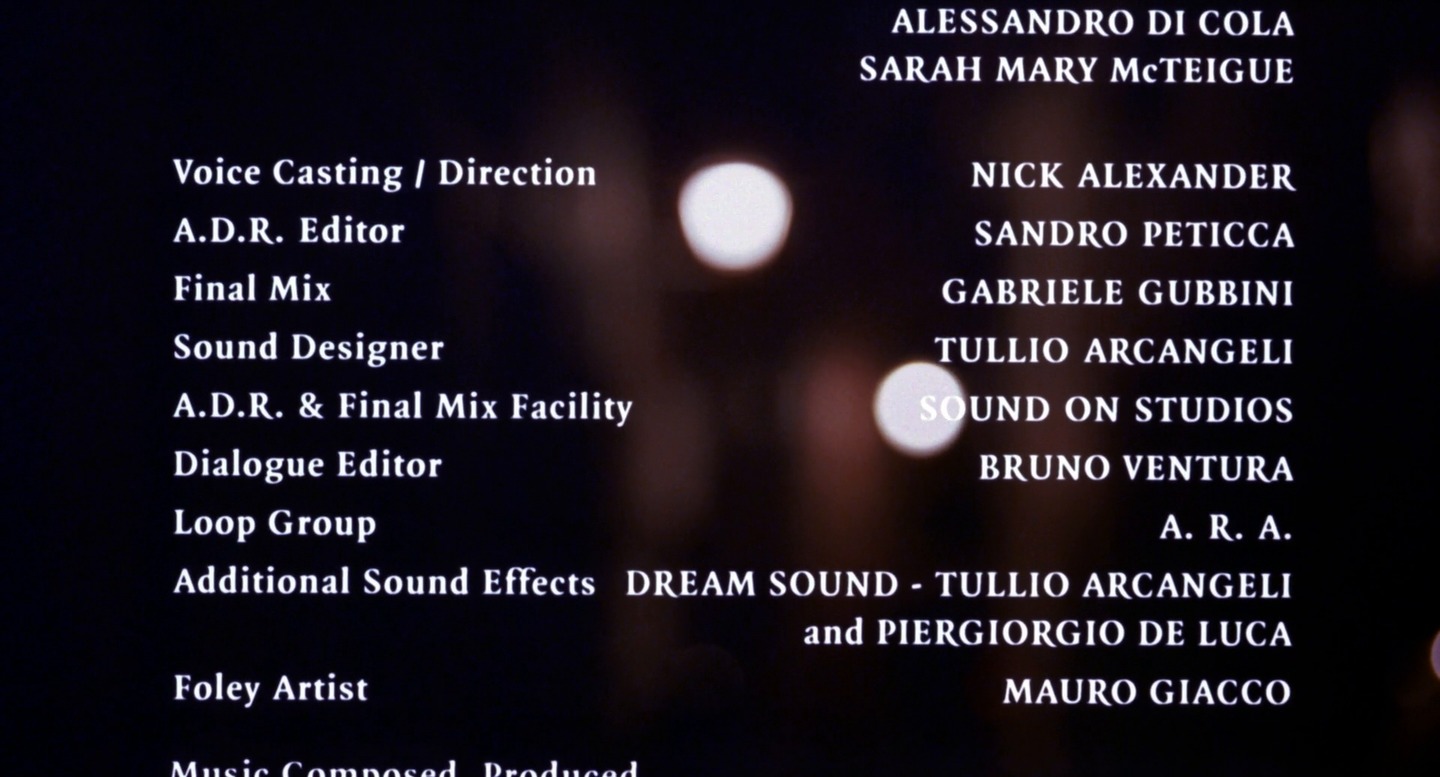
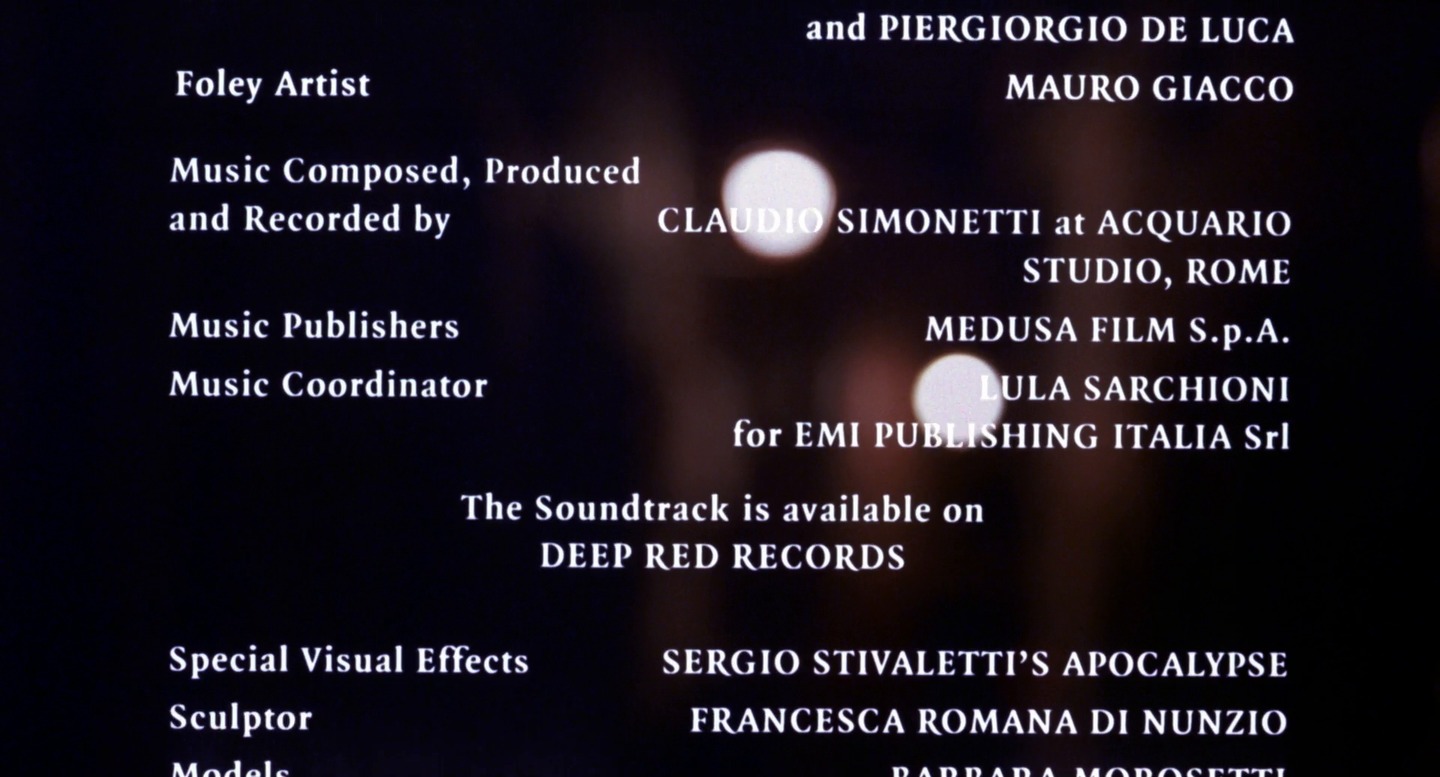
The end titles separate the work of directing voices, editing dialogue, creating effects and producing the final mix. These credits identify the crafts; they do not by themselves identify a particular voice performer or every sound in a scene.

End titles crediting voice direction, ADR, final mix, sound design, dialogue editing and Foley.ENLARGE ↗
Voice and sound credits.

Building the voice and effects tracks

Voice casting and direction
Nick Alexander
ADR editor
Sandro Peticca
Dialogue editor
Bruno Ventura
Sound designer
Tullio Arcangeli
Additional sound effects
Dream Sound — Tullio Arcangeli and Piergiorgio De Luca
Foley artist
Mauro Giacco
Final mix
Gabriele Gubbini
ADR and final-mix facility
Sound On Studios
End titles identifying Claudio Simonetti, Acquario Studio in Rome, the music publishers and soundtrack label.ENLARGE ↗
Music production credits.

Making Simonetti’s score

The music was composed, produced and recorded by Claudio Simonetti at Acquario Studio, Rome. The titles name Medusa Film S.p.A. as music publisher, Lula Sarchioni for EMI Publishing Italia Srl as music coordinator, and Deep Red Records for the soundtrack.

Simonetti’s release-period account and Argento’s later interview describe music developing alongside the film and its editing. The credits add the production setting to that testimony. Read the Simonetti–Fasano study →

What a recording can reveal

The noon-cannon deduction makes recorded sound evidence about time. Lucia’s recollection instead describes an environment beyond the webcam. Neither passage needs the camera to show the whole space: the investigation grows by asking what the image leaves out.

Presentation and review scope ↗ · Compare the published editions →

Screens & constrained choices

The Card Player turns the police investigation into an imposed game. This expanded dossier follows its interface, Anna, John and Remo, Debie’s photography, Rome, the railway image, Simonetti’s collaboration with Fasano, critical disagreement and changing presentations.

Spoilers: this study discusses the film’s story and ending.

01 / THE KILLER’S INTERFACE

Information arrives with conditions attached

The Card Player makes an offer that is already an act of violence. The killer demands an online poker game in which a captive’s life is the stake. Police can see a person they cannot reach; the connection provides access while withholding rescue. The published premise gives the investigation a particular imbalance: the criminal supplies both the emergency and the procedure for responding to it. Italian catalogue synopsis ↗

An ordinary evidence image is something investigators obtain and interpret. This image arrives as a demand. Looking carries an obligation to act, but acting means entering rules imposed by the person being pursued. The question is no longer simply whether an image contains a clue. It is whether the conditions under which the image is offered can be trusted.

Vinegar Syndrome’s synopsis describes an initial refusal by the commissioner, followed by the killing of a captive on the webcam. Refusal does not restore control. The police confront a trap in which participating and declining can both be made to serve the killer’s performance. The opening challenge ↗

The screen also changes the relation between authority and competence. Rank does not necessarily confer the relevant skill; a game has to be played as well as a crime investigated. That distinction makes the premise more specific than a general warning about dangerous technology. The police possess an institution, while the killer determines the immediate encounter.

For the spectator, there are two frames to consider: the film image and the image presented within it. The latter is selected by an adversary. Its apparent immediacy need not establish its completeness or reliability. The second transmission gallery follows one such exchange: the hand, the surrounding reactions, the captive and the room after defeat. The later recording clue challenges the image’s apparent simultaneity.

02 / ANNA, JOHN & REMO

An investigation needs more than official expertise

Stefania Rocca’s Anna Mari and Liam Cunningham’s John Brennan lead the investigation, while Silvio Muccino plays Remo. The Catholic film commission’s synopsis describes the recruitment of this skilled young player and his success in securing Lucia’s release. Its later account of his murder makes expertise a source of danger as well as usefulness. Cast and characters ↗ Remo’s role in the investigation ↗

Recruiting a player changes who can act effectively. The police seek a skill acquired beyond their professional structure, but drawing someone into an investigation does not give him the protection or authority of the institution. The premise makes the distance between competence and security unusually visible. Winning a round is not the same as escaping the person who arranged it.

Cunningham’s recollection supplies a different register. At Comicon in 2017, he remembered Argento inviting him to work in Rome and a scene with Rocca in Piazza del Pantheon: he was playing drunkenness, walking and singing. His account identifies a performance situation and a remembered filming location. Cunningham’s Roman memory ↗

The recollection matters because these investigators must also inhabit a city outside the immediate business of solving the case. Singing, walking and accompanying another person offer forms of interaction that a police briefing cannot. Their dramatic value lies in the possibility of companionship amid a narrative governed by coercive exchanges. The anecdote does not, by itself, establish how the completed scene is cut or mixed.

The commission’s ending synopsis reports Anna’s pregnancy after John’s death. In that account, the conclusion carries a private future beyond the solved crime. It complicates a simple victory structure: identifying and defeating the killer cannot restore a lost relationship. The final illustrated study follows that change across Anna’s face as the cast roll begins. The reported ending ↗

A casting plan meets another filmmaking career.

Asia Argento recalls in Panico that she had been expected to make The Card Player, but the rapid start of her own American directing project, The Heart Is Deceitful Above All Things, prevented her return to Italy. Her account supplies a performer-director’s explanation of her unavailability. Panico: testimony and passage locators ↗

This earlier plan belongs beside the finished film’s performance history. It does not establish a signed casting contract or reveal which screenplay changes, if any, followed. Stefania Rocca’s Anna remains the character whose gestures, conversations and decisions the scene and dialogue studies examine.

03 / DEBIE, ARGENTO & ROME

Renewal does not have a single colour

Asked by L. Andrew Cooper about his later work, Argento singled out The Card Player for a different vision of Rome, especially its periphery. The claim gives the city a specific creative function: familiar territory could become unfamiliar without relocating the story to an invented world. Argento on the city’s edges ↗

Benoît Debie’s 2009 career interview adds a collaborator’s perspective. He remembers Argento wanting a younger, more contemporary image and describes an appetite for colour and vitality. He also recalls feeling intimidated by the distinguished cinematographers who had preceded him. Renewal here concerns a working relationship as well as a visual result. Debie on joining Argento ↗

Film at Lincoln Center’s retrospective instead emphasises natural light and a desaturated Rome, relating the film to Dogme 95. These descriptions should remain attached to their speakers. Debie recalls the brief; the programme characterises the finished film. A request for vitality and a later perception of desaturation need not be identical accounts of colour. Nor does a programme’s comparison establish Dogme certification. The retrospective’s visual framing ↗

This difference is useful rather than embarrassing. Colour can be present in a city’s surfaces while its overall effect remains subdued. A lively image can refer to movement, changes of exposure or an approach to location as much as to high saturation. The sources invite these possibilities, but they do not license a technical reconstruction of lighting setups.

Cunningham’s memory of the Pantheon also keeps the geography from becoming a slogan. Argento’s emphasis on the periphery does not mean every scene avoids recognisable Rome. A city can contain both the monumental and the marginal; their relationship is more revealing than either label alone. A later location study should connect named scenes to verified shooting places and examine how the film moves between them.

04 / THE LAPTOP, THE CHAIN & THE TRACK

The screen has physical consequences

In the supplied FLC image, two people lie low between railway rails, facing an open laptop near the bottom of the composition. A visible chain crosses the space between their arms. The man’s face is animated; the woman looks toward the computer. Gravel, sleepers and rails occupy much of the image. These observations refer to the inspected reproduction, retained at its supplied 1600 × 900 dimensions. The programme image and climax description ↗

The arrangement makes the computer a physical object among other objects. It has weight, an angle and a position that bodies must accommodate. The railway gives those bodies a narrow corridor. Unlike a screen’s apparently expandable field of information, the track offers a severe restriction of movement.

That contrast concentrates the film’s governing problem. A remote connection can seem to separate action from consequence. Here the interface sits directly beside vulnerable bodies. Looking at the computer and attending to the surrounding space become competing demands. The device does not remove the material world; it occupies the place from which the characters must confront it.

The image also complicates the idea that everyone looking at one screen necessarily shares a position. Proximity does not establish agreement. The chain makes connection visible while refusing to make it reassuring. A common object of attention can coexist with radically different intentions.

The railway sequence gallery follows the image into action: the struggle, cuffs and keys, the darkened laptop and the passing train. The return to hands and restraints gives immediate physical form to the control previously exercised through a screen. Anna’s move beyond the track finally separates her position from Carlo’s.

05 / SIMONETTI, FASANO & THE ELECTRONIC SCORE

Music was being tested while the film took shape

In Gabrielle Lucantonio’s release-period interview, Simonetti says Argento explicitly requested electronic instruments because the story concerned the Internet and computer poker. They listened to electronic recordings together, after which Simonetti sought a less cold result than the examples. The brief linked the musical palette to the subject without dictating emotional neutrality. Colonne Sonore, January–February 2004, p. 17 ↗

He also describes access to the screenplay and the filming, and frequent visits to the editing room to try developing pieces against scenes. Walter Fasano supplied ideas; Simonetti says he dedicated “Fasan Techno” to him. This is unusually useful evidence of music and editing influencing each other during the work. It does not identify every cue’s final placement. The collaboration with Fasano ↗

Argento’s 2009 Electric Sheep interview recalls hearing Simonetti’s new material at the end of each day. His account supports the picture of an ongoing exchange, while leaving the precise production calendar unspecified. Argento on the electronic collaboration ↗

The distinction changes how an electronic score can be discussed. Calling it electronic identifies a means of making sound. It does not settle what the sound does to a face, a room or a spectator’s expectation. Simonetti’s wish to avoid coldness suggests that the score’s relationship to the computer was not simply imitation. A technological subject could still demand warmth, unease, propulsion or contrast.

Working with an editor also creates more than one route to a musical accent. A cue can be changed to suit a cut, or a cut can be reconsidered in relation to music. The interview establishes collaboration but not which direction prevailed at any particular moment. The sound-credit record identifies the credited departments, while the dialogue studies trace how verbal instructions and recorded evidence change the investigation. A cue-by-cue listening comparison remains a separate task.

06 / RELEASE-PERIOD DISAGREEMENT

Does watching become an action?

Cinematografo preserves sharply different Italian responses. Lietta Tornabuoni’s 30 December 2003 La Stampa notice objects to groups gathered around computer displays and the difficulty for viewers unfamiliar with poker. Dario Zonta’s 2 January 2004 l’Unità notice singles out the home ambush and its audiovisual construction. These are reprinted excerpts, not the original newspaper pages. Tornabuoni and Zonta excerpts ↗

The disagreement exposes a real problem posed by the premise. A character can be intensely involved in a game while a viewer sees only people attending to a screen. The film must communicate stakes, changes of advantage and reactions. Suspense depends partly on how effectively that attention becomes an event in its own right.

Zonta’s chosen example moves the discussion away from the computer gathering. An intrusion gives space, concealment and bodily movement a different role. His praise suggests a question about the relation between kinds of suspense: do the game passages and physical attacks intensify each other, or does one chiefly provide relief from the other?

Tullio Kezich’s 3 January Corriere della Sera excerpt praises atmosphere despite conventional characters and implausibilities. The commission, by contrast, finds the dramatic and performance work wanting while recognising the unusual nocturnal Rome. The divide is more informative than a single approval score: visual interest and narrative conviction are being evaluated separately. Kezich excerpt ↗ The commission’s assessment ↗

The first-edition reception note is clarified here: the specific home-ambush discussion belongs to Zonta’s excerpt. Roberto Silvestri’s separate notice discusses photography, bodies, editing and atmosphere. Keeping those voices distinct gives future readers a usable route back to the argument. A complete reception history would require original reviews and their release contexts; this selection establishes a contemporary disagreement, not a consensus.

07 / RELEASE, RESTORATION & ACCESS

A catalogue number is not a cut list

The film’s dates describe different stages of release. Cinematografo catalogues the production as 2003 and records its Italian opening on 2 January 2004. Argentochrome retains 2004 in its public title while recording the earlier production year. The difference need not imply two films or an incorrect title. Production and Italian release dates ↗

Published presentation records; copies not directly compared
RecordDurationPresentation
Cinematografo106 minutesItalian catalogue. Record ↗
Catholic film commission106 minutesRelease-period review listing. Record ↗
FLC / 2022 retrospective103 minutesItalian with English subtitles; restoration credited to Cinecittà. Programme ↗
Vinegar Syndrome103 minutesUHD/Blu-ray listing, English and Italian, 1.85:1. Edition ↗
American Genre Film Archive103 minutesVinegar Syndrome theatrical listing; DCP, 1.85:1. Booking record ↗

The later 103-minute records agree, but they do not identify the reason for the earlier 106-minute figure. An estimate, a catalogue mistake, playback differences and an actual edit are separate possibilities. No deletion can be named from these numbers alone.

Vinegar Syndrome describes a new 4K restoration from the 35mm camera negative, with Dolby Vision and DTS-HD Master Audio 5.1. These are publisher specifications, not results of our own disc inspection. The relationship between that restoration and the Cinecittà presentation also remains unestablished. Restoration and technical listing ↗

The presentation used for the illustrated studies runs 1:43:39. It is recorded separately from the published edition specifications.

Explore the 2025 edition’s interviews and commentary

The publisher lists a commentary by Troy Howarth and Nathaniel Thompson. New interviews pair Stefania Rocca’s Playing the Game (27 minutes), Claudio Simonetti’s Digital Nightmare (19), Sergio Stivaletti’s Like in War (10) and Walter Fasano’s Sharp Cuts (20).

Archival interviews include Dario Argento’s Watch Me When I Kill (18 minutes), Franco Ferrini’s Taking Risks (9), Antonello Geleng’s A Chip and a Chair (12) and Fiore Argento’s Game Over (8), alongside nine minutes of behind-the-scenes footage. These are the publisher’s contents and running times; they provide routes into the production rather than testimony quoted without listening. Official edition contents ↗

The same edition offers a concrete route back to production testimony: interviews with Rocca, Simonetti, Stivaletti, Fasano, Argento, Ferrini and Geleng are listed among its supplements.

The illustrated studies can be read alongside the production testimony and contemporary criticism. Edition comparison remains a question of identified copies and documented differences; a runtime discrepancy alone cannot resolve it.
DEEP CUTS / TESTIMONY & CONNECTIONS

A voice becomes part of the apartment’s defences.

Nathaniel Thompson and Troy Howarth

The commentary on Testimone oculare offers a useful earlier counterpart to The Card Player’s threatened apartment. Thompson and Howarth single out Roberta’s recognition that the voice below her window has changed, connecting the isolated waiting to both Four Flies on Grey Velvet and the later film. In the television episode, a familiar voice is supposed to guarantee protection; the wrong reply transforms the same domestic space into a trap.

Source & passage

Eyewitness commentary, 42:45–45:19. Presented on Disc 2 of Severin Films’ Dario Argento’s Deep Cuts.

Follow the source discussion → · Documentary and interview guide →

THE READING ROOM

Return to the source.

Research sources checked 17 October 2026; visual and dialogue studies, screen credits and the official edition listing updated 6 November 2026. Participant testimony, a release-period music interview, an inspected image, contemporary criticism and edition records retain their different evidential roles.

  1. 01

    Film at Lincoln Center — The Card Player, 2022 ↗
    Programme, 103-minute Italian-language presentation, Dogme comparison and Cinecittà restoration credit. Supplied railway image. Programme wording is not a technical report.

    Return to the dossier ↑
  2. 02

    Cinematografo — Il cartaio ↗
    Credits, production/release dates, duration and reproduced review excerpts.

    Return to the dossier ↑
  3. 03

    Commissione Nazionale Valutazione Film — Il cartaio ↗
    Synopsis including Remo and the ending, 106-minute listing and institutional evaluation. Published scene account, not direct viewing evidence.

    Return to the dossier ↑
  4. 04
  5. 05

    L. Andrew Cooper — conversation with Dario Argento ↗
    Card Player exchange on Rome’s periphery. Interviewer’s characterisation of lighting is distinguished from Argento’s own answer.

    Return to the dossier ↑
  6. 06

    Giuseppe Grossi — Liam Cunningham at Comicon, 2 May 2017 ↗

    Cunningham’s Card Player recollection read: invitation, Rome, Rocca and Pantheon scene. Retrospective testimony, not a shot or location ledger.

    Return to the dossier ↑
  7. 07

    Gabrielle Lucantonio — Una Rockstar Techno, Colonne Sonore no. 4, pp. 14–17 ↗

    January–February 2004 issue. Film-specific answers on printed p. 17 read and visually checked against the PDF; byline on p. 14. Electronic brief and editing-room collaboration, not a complete cue sheet.

    Return to the dossier ↑
  8. 08
  9. 09

    Vinegar Syndrome — The Card Player edition ↗

    Synopsis, runtime, languages, restoration specification and supplement list rechecked 6 November 2026.

    Return to the dossier ↑
  10. 10

    American Genre Film Archive — The Card Player ↗

    103-minute, 1.85:1 DCP booking entry and Vinegar Syndrome attribution.

    Return to the dossier ↑
  11. 11

    The Card Player — selected scenes, effects and screen credits

    Selected frames were examined across a 1:43:39 presentation, with closer sampling of the eight illustrated effects and action passages. Time labels locate the views; the scene guide is not an inventory of every cut. Stills retain the picture’s proportions without added letterbox bars.

    Opening and closing credits supply the craft attributions. The dialogue studies now extend the narrative context, with their method recorded below. The official Vinegar Syndrome edition contents were rechecked on 6 November 2026.

    Return to the scene guide ↑
  12. 12

    The Card Player — dialogue and sound evidence

    The complete English track of the 1:43:39 presentation was processed with local speech recognition, followed by a second pass of its centre channel, targeted checks and comparison with 881 embedded English subtitle cues. Dialogue is paraphrased; the subtitles are not treated as a verbatim transcript of the English dub. Time labels locate passages in this presentation.

    Sound-department and music credits were inspected directly. The file contains English and Italian AC3 5.1 tracks; both decoded through the end, but this review does not constitute direct full-track listening, an Italian-dialogue comparison or a surround-mix audit. No commentary is present in this copy. Vinegar Syndrome’s advertised English and Italian DTS-HD MA 5.1 tracks describe its published edition, not an identification of this local transfer.

    Return to the dialogue studies ↑

Corrections, contributions and enquiries: argentochrome@rareprintsandposters.com