THE ARGENTO ARCHIVEFILM / COLOUR / SOUND / OBJECTS
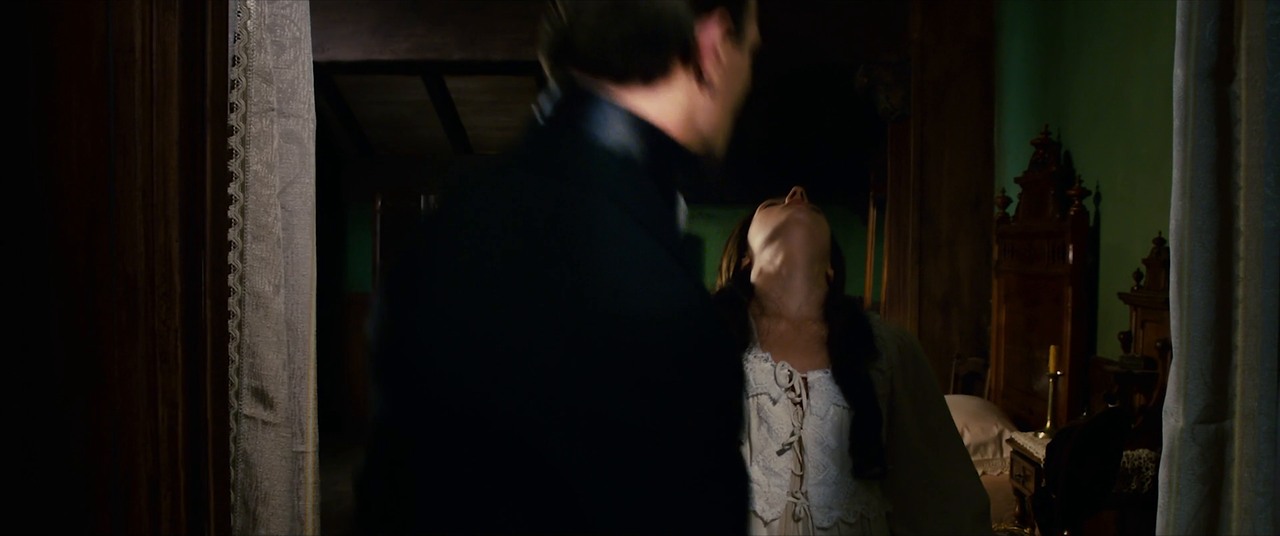
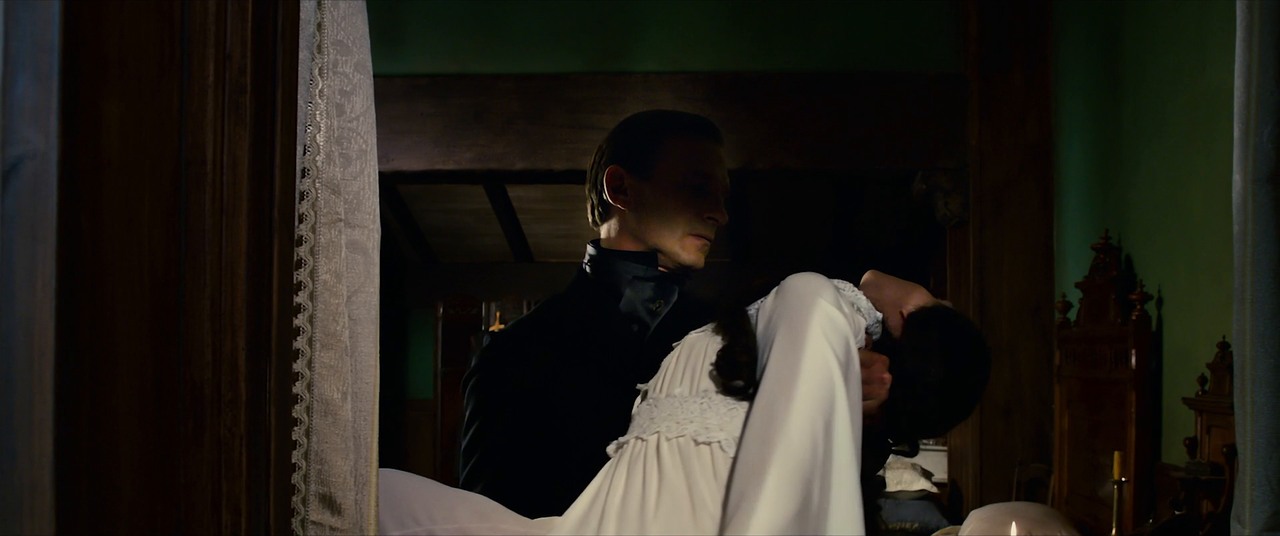
ARGENTOCHROME

FILM DOSSIERS / 021 · FILM DOSSIER

Dracula 3DDistance becomes part of the drama.

The invitation, the image and the claim on Mina. Stoker’s story meets stereoscopic space, Simonetti’s music and a divided critical response.

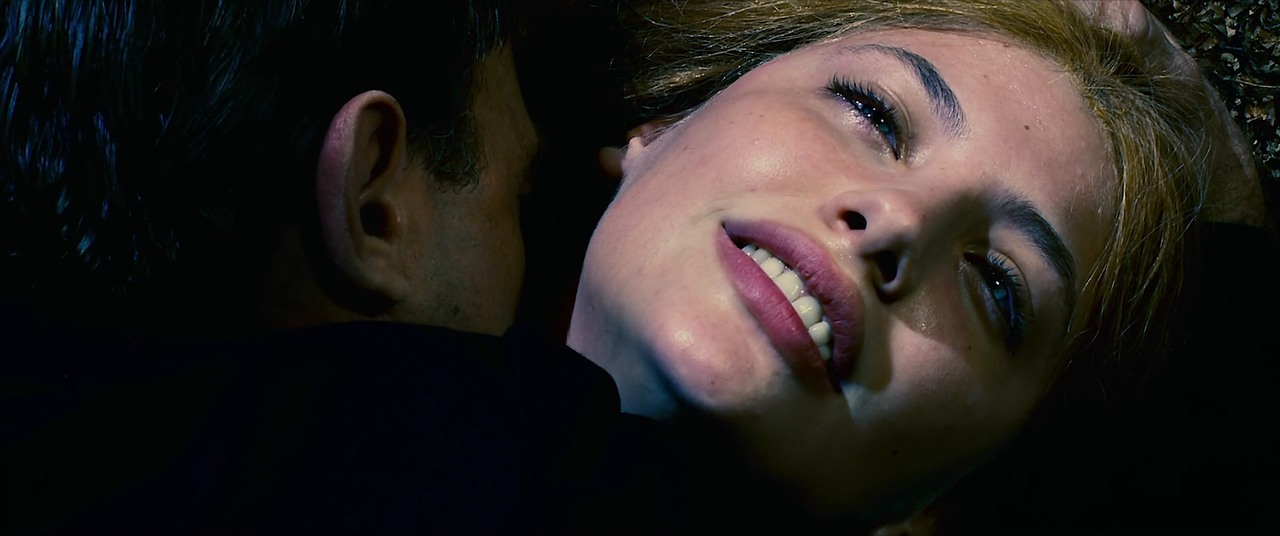
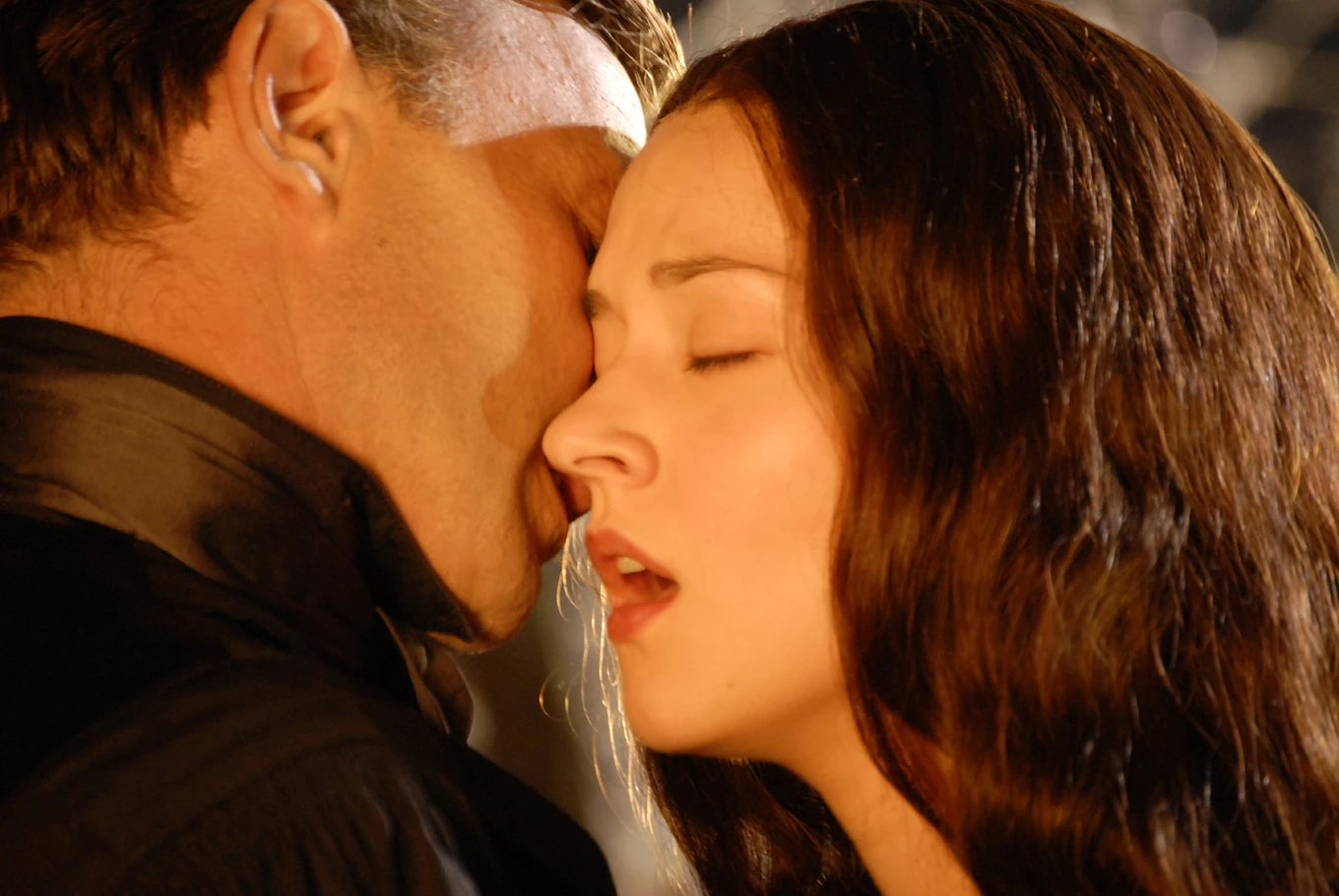
Thomas Kretschmann leans from the left toward Marta Gastini, whose eyes are closed and lips parted, in a warmly lit close photograph.ENLARGE ↗
Dracula and Mina. Official Cannes promotional photograph.Cannes gallery ↗
2012 · DARIO ARGENTODario Argento DraculaSCENES, DIALOGUE & SOUND · 7 NOVEMBER 2026
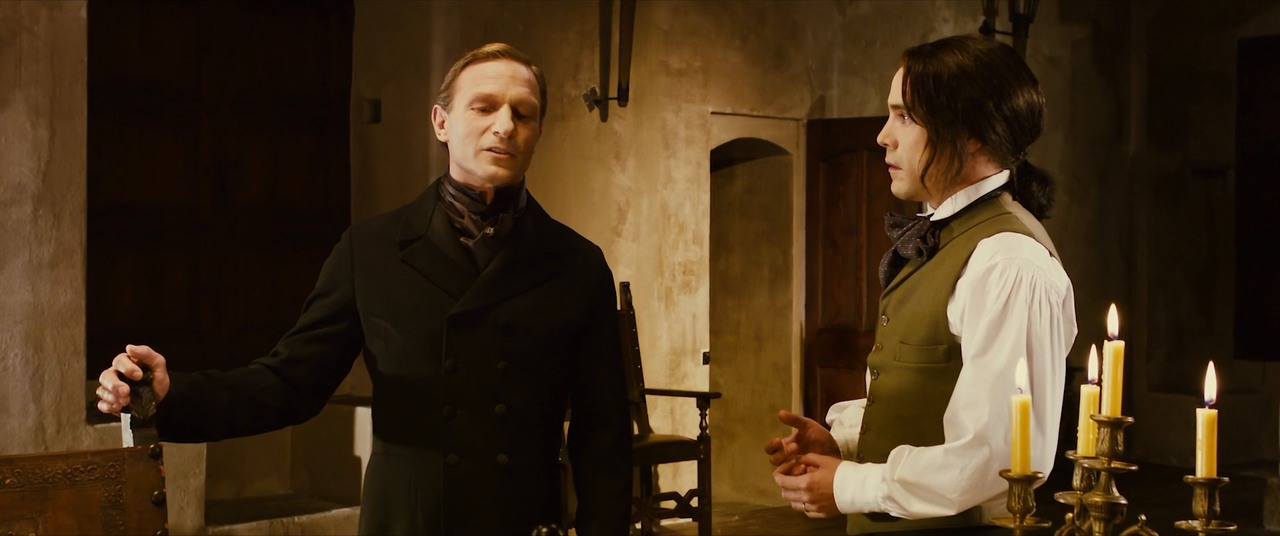
Dracula receives Harker.

THE FILM IN IMAGES

Enter the castle

Thirty-two studies from the village to the tomb.

The mantis advances.

GORE & EFFECTS

The changing monster

Eight expandable sequence galleries.

The castle staircase from overhead.

LOOK CLOSER

Rooms, faces and bodies

Three routes across the film’s visual patterns.

Mina and Van Helsing remain.

DIALOGUE STUDIES

Who speaks for Mina?

Twelve studies of warnings, desire and control.

The blue-lit village beneath the opening titles.

MUSIC & SOUND

Behind the soundtrack

Simonetti, the orchestra, song and sound team.

Dracula and Mina beside Dolingen’s tomb.

THE RESEARCH DOSSIER

Follow the evidence

Stoker, collaborators, music and editions.

DRACULA 3D / THE SCENE GUIDE

The invitation has a price.

Thirty-two illustrated studies follow the invitation into the castle, the village’s bargain and Mina’s final confrontation.

Includes the ending and graphic violence. Image and presentation notes →

00:55

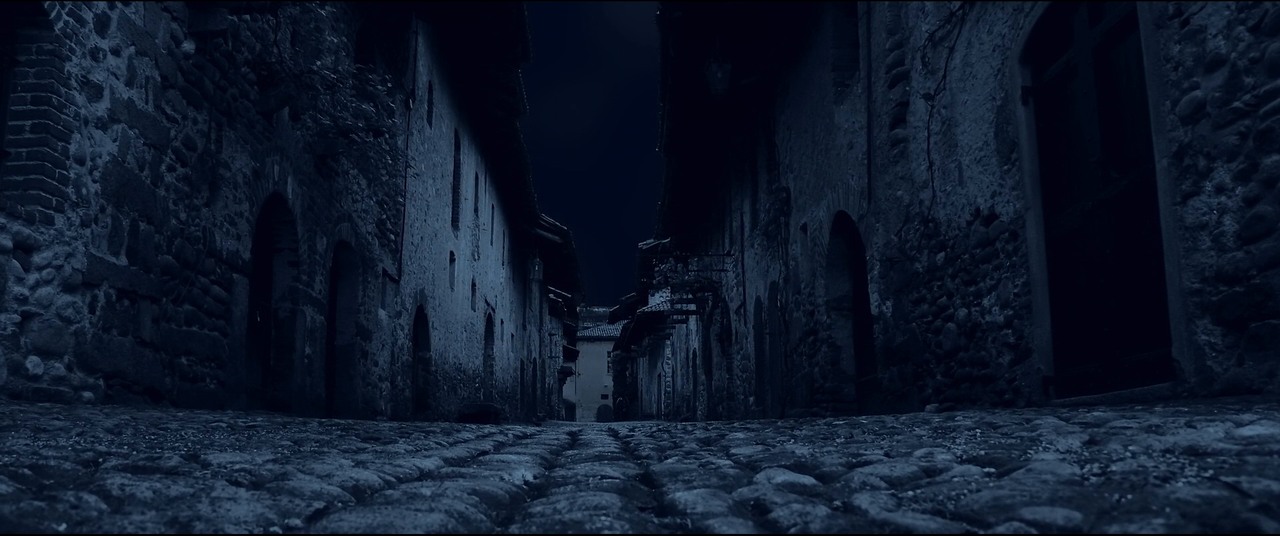
A village built for looking

The blue-lit village beneath the opening titles.ENLARGE ↗
The blue-lit village beneath the opening titles.

Stone walls, tiled roofs and a narrow lane give the opening a recognisable geography. The titles occupy this constructed world rather than a separate neutral screen. Even before the first encounter, the film asks us to attend to passages between buildings.

03:15

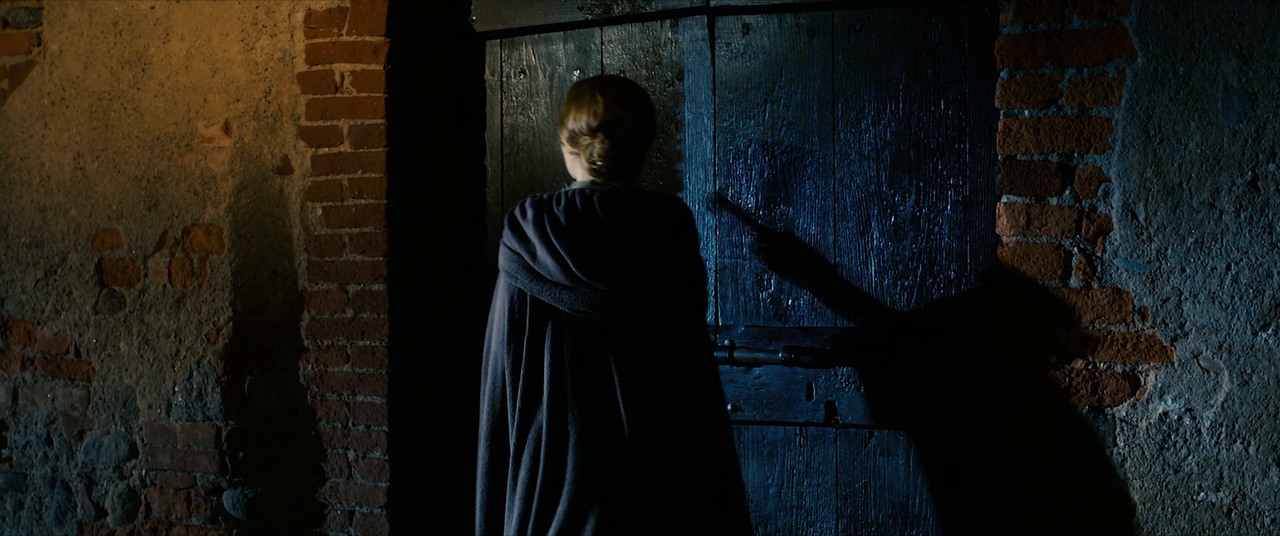
A door into the night

Tania leaves the house.ENLARGE ↗
Tania leaves the house.

Warm domestic light gives way to the colder exterior. The doorway marks a change in both colour and security: the enclosed room gives her a place in a household, while the night opens routes that other people cannot supervise.

07:10

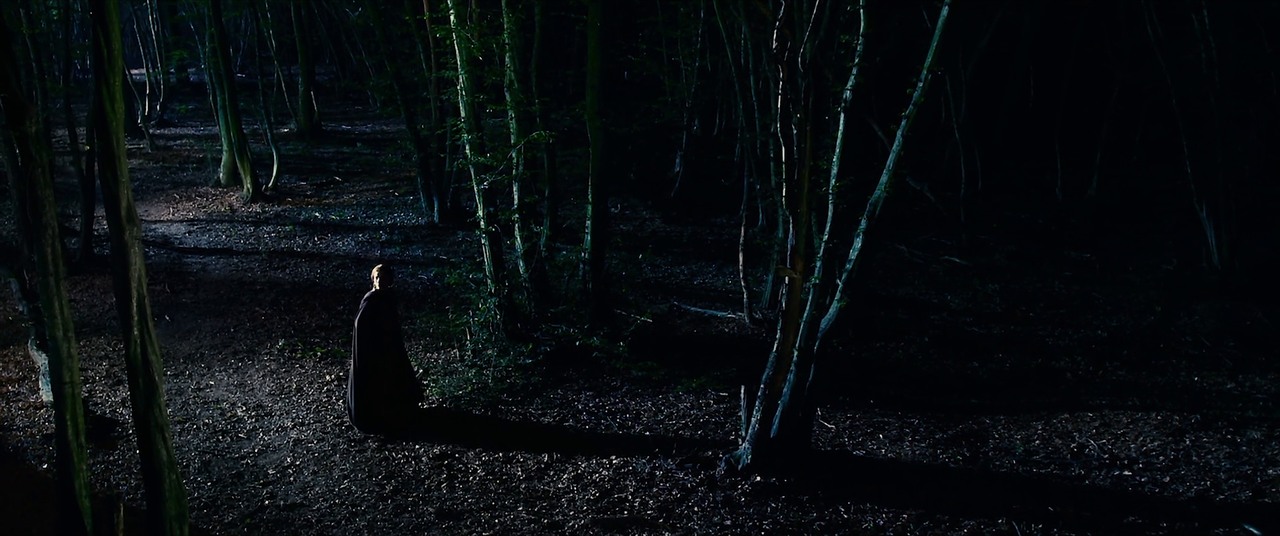
The forest watches back

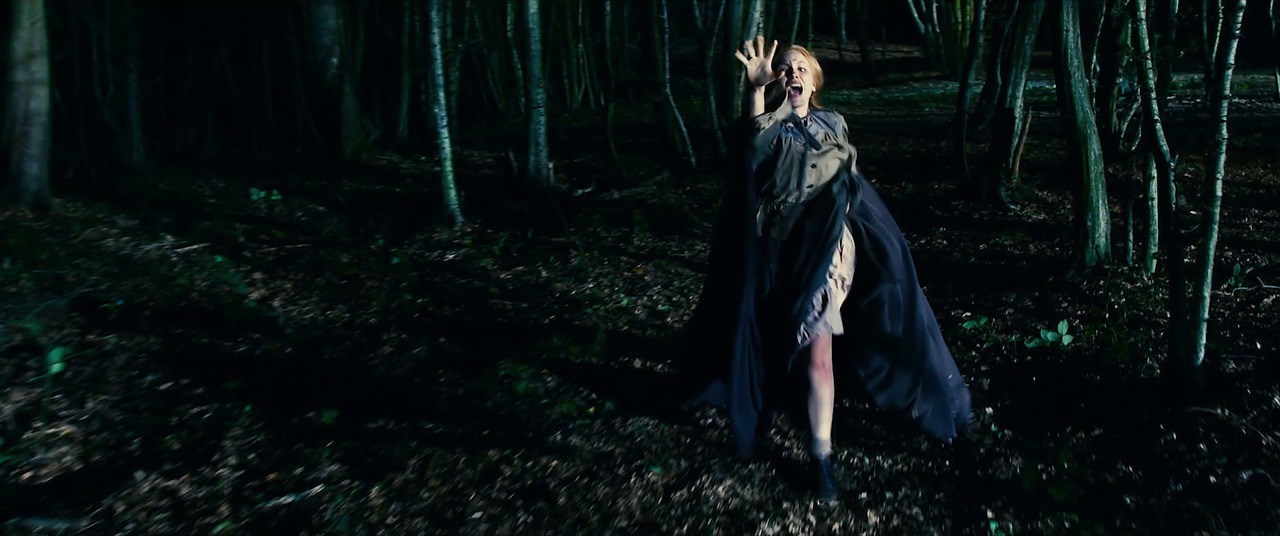
Tania on the forest path.ENLARGE ↗
Tania on the forest path.

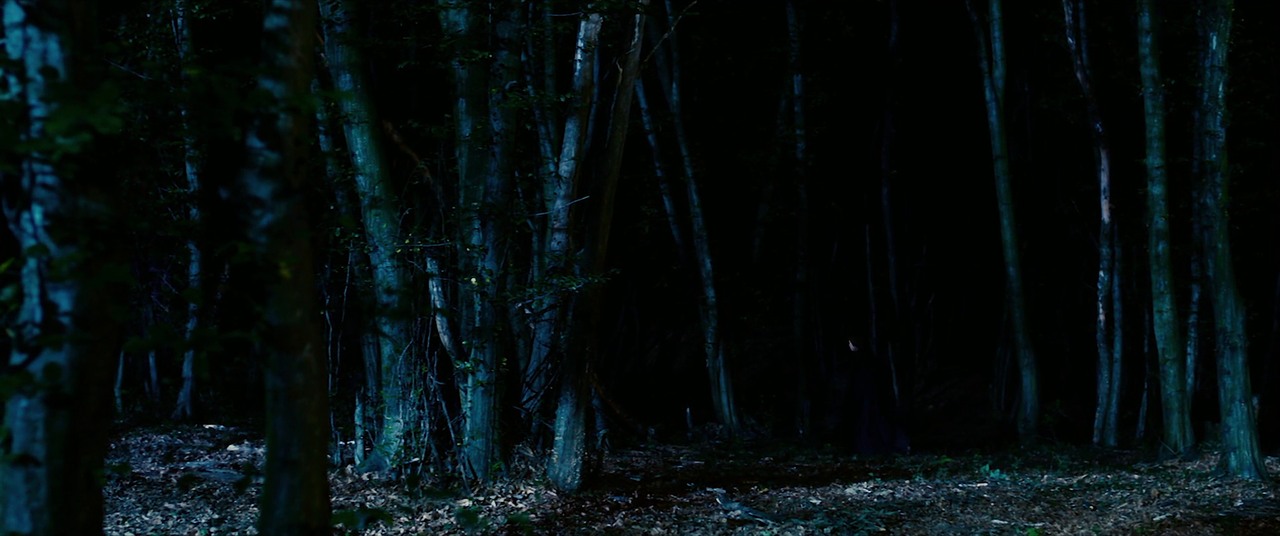
Trunks divide the wide frame into vertical strips, making the path appear open and obstructed at once. Subsequent close views of the pursuing creature and the victim break that continuous space into encounters at suddenly different scales.

Explore the sequence →

08:05

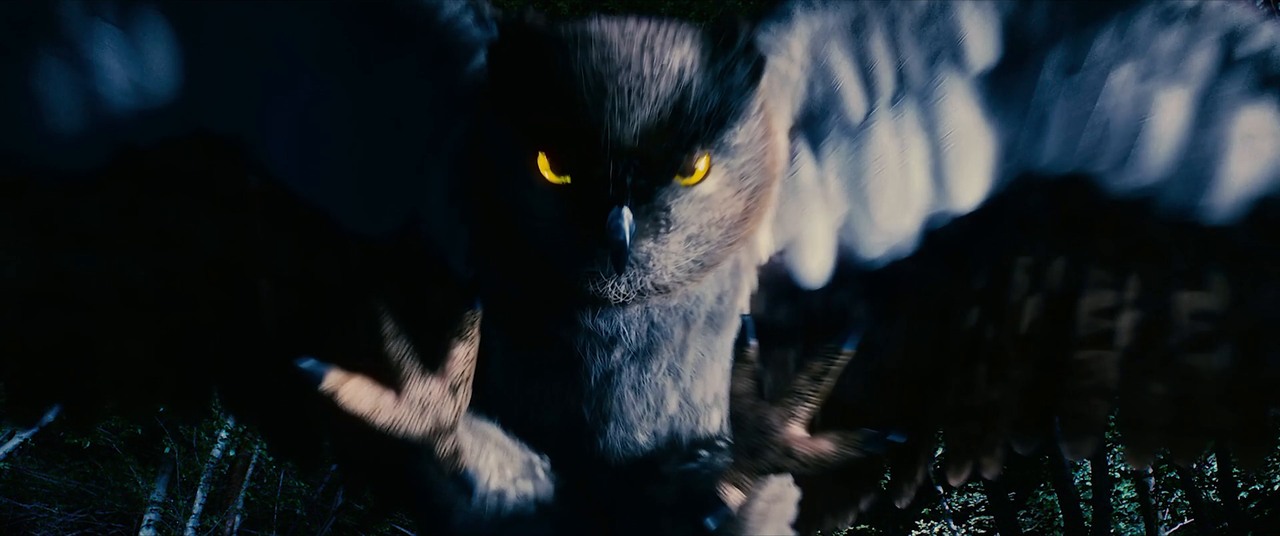
An animal face

The owl fills the frame.ENLARGE ↗
The owl fills the frame.

The large frontal animal head interrupts the human scale of the pursuit. Its eyes supply a concentrated point of attention before Dracula appears at biting distance. The forest attack introduces transformation through an abrupt exchange of bodies.

Explore the sequence →

08:45

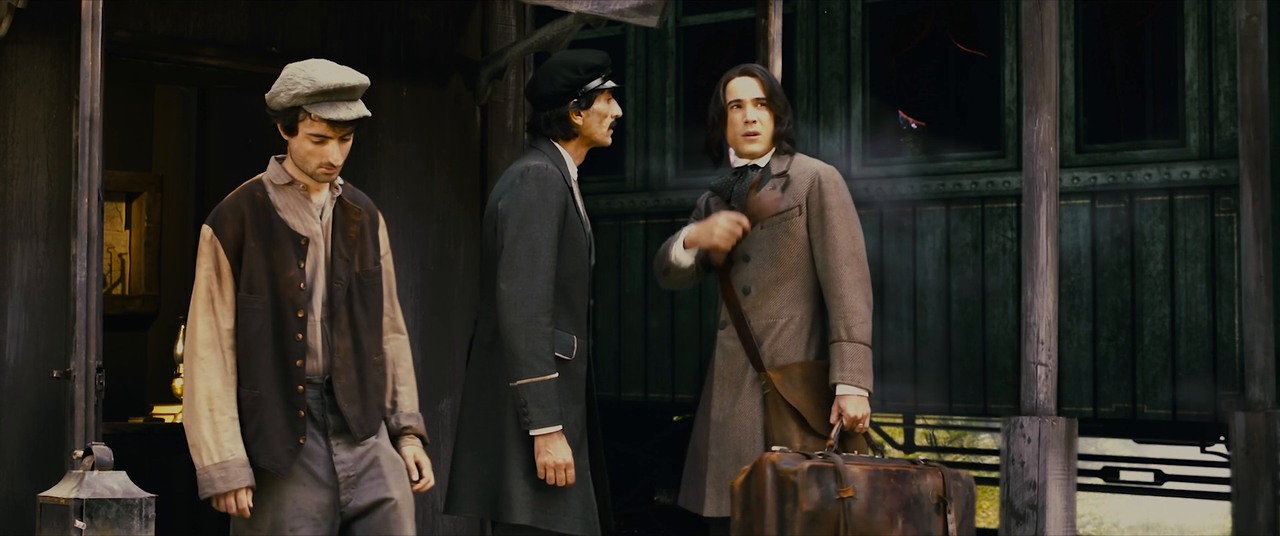
Harker arrives

Harker beside the railway.ENLARGE ↗
Harker beside the railway.

Daylight and the railway replace the nocturnal forest. Harker enters a world already marked by an attack he has not witnessed. His ordinary traveller’s appearance gives the village’s evasions and hostile looks a practical human measure.

13:40

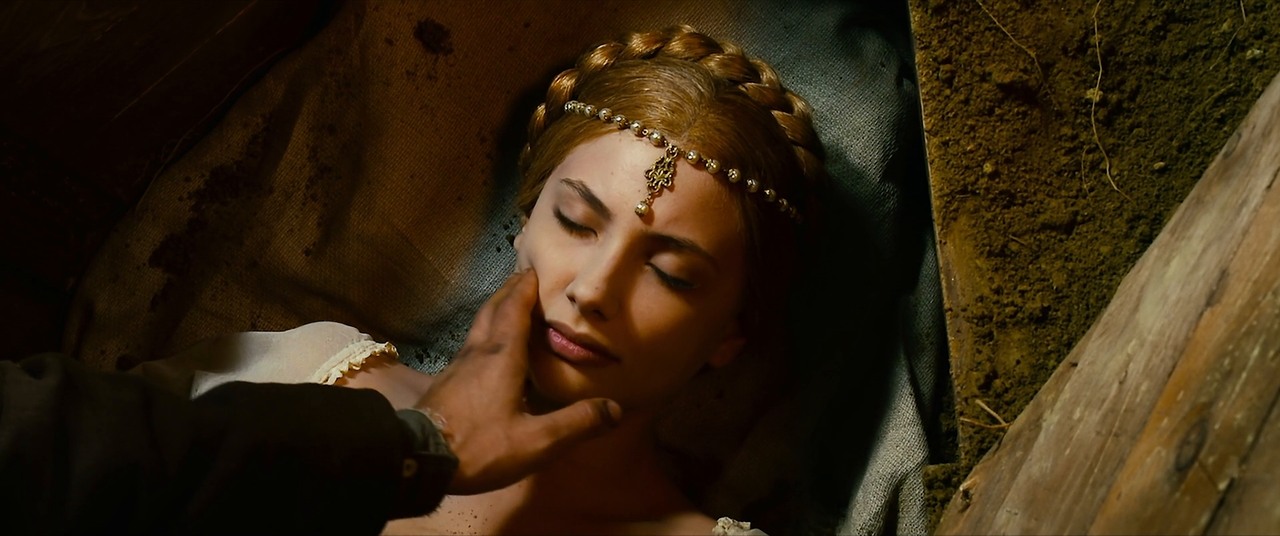
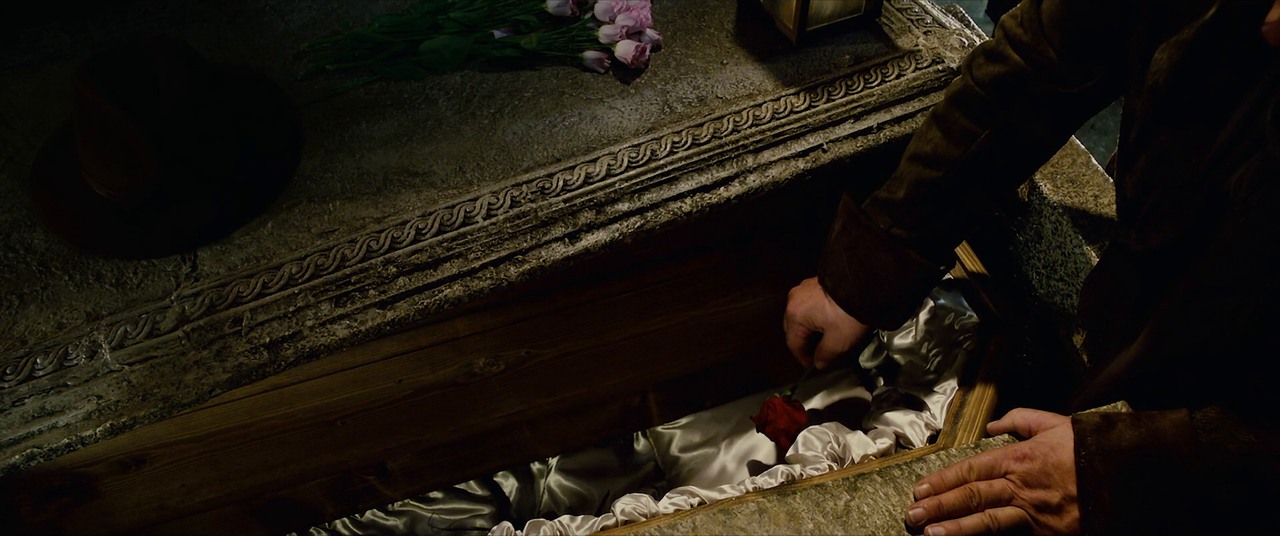
The body returns to view

Tania lies in the opened coffin.ENLARGE ↗
Tania lies in the opened coffin.

The coffin converts a disappearance into something the men can inspect. Its straight edges frame a composed face, temporarily stilling the disorder of the forest. Renfield’s arrival will break the distance between observers and body.

Explore the sequence →

18:15

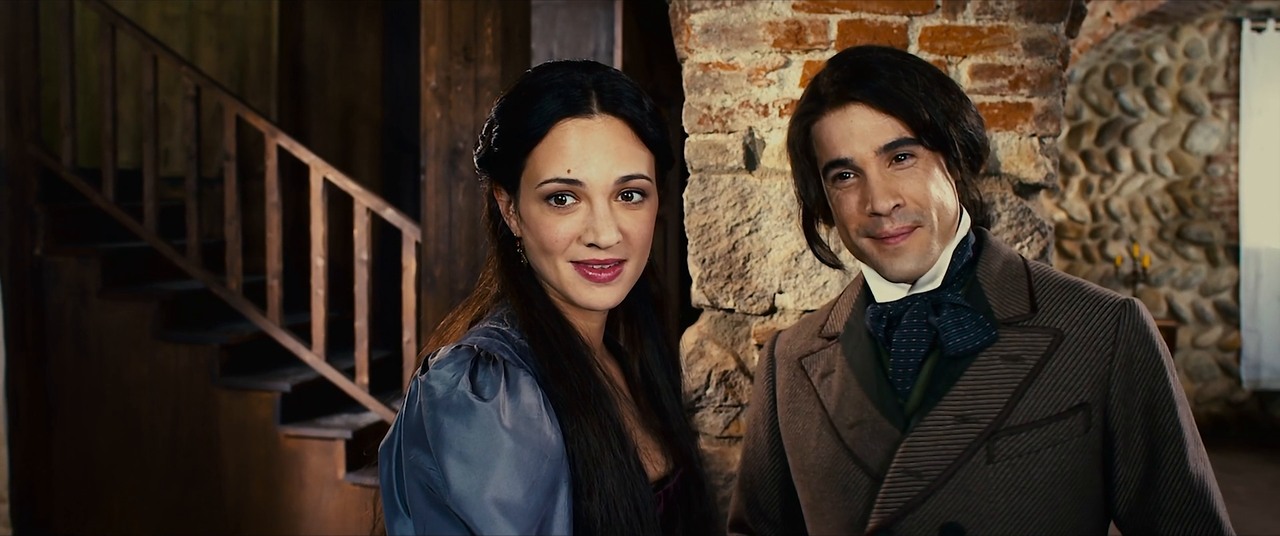
A familiar face in the village

Lucy welcomes Harker.ENLARGE ↗
Lucy welcomes Harker.

The shared composition briefly gives Harker a place within a friendly household. This warmth provides a contrast to the guarded reception at the inn and the formal hospitality he will encounter at the castle.

20:15

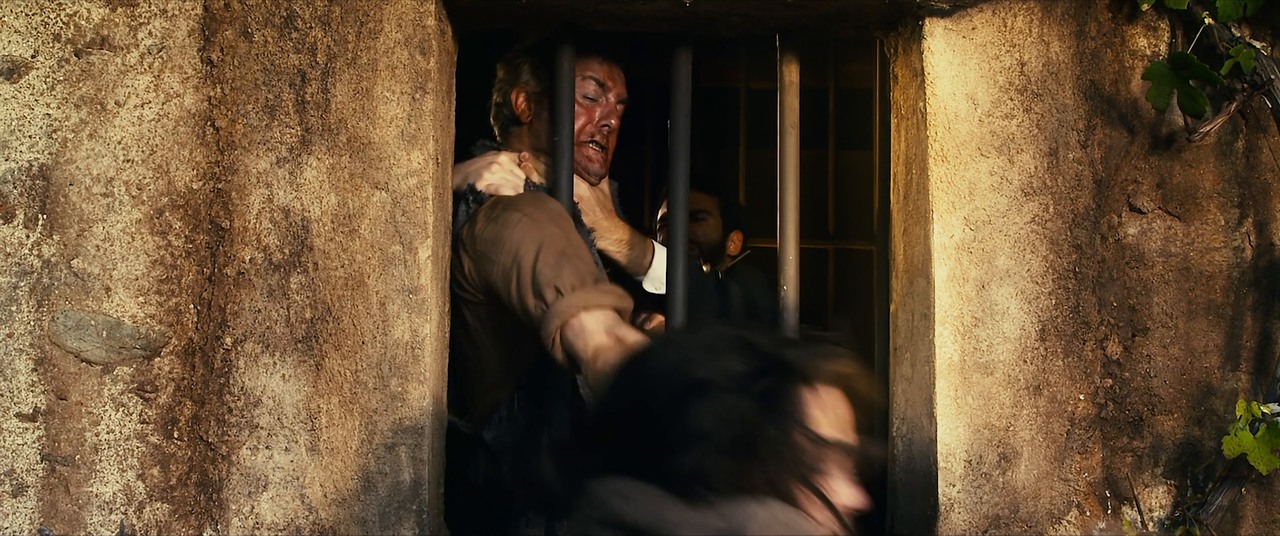
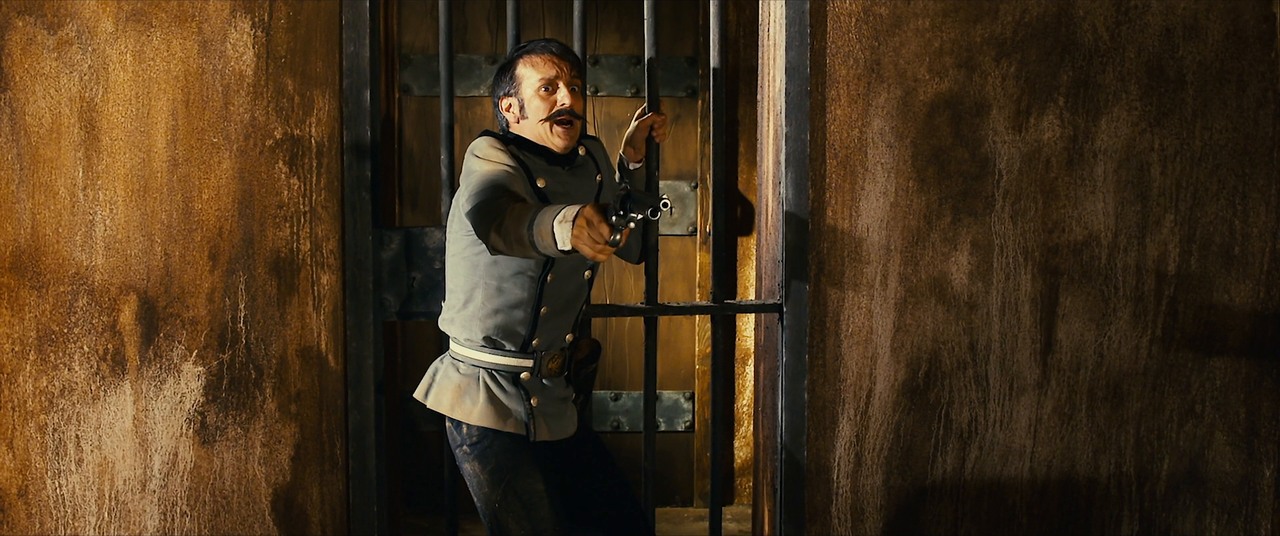
Renfield behind bars

Renfield confined in his cell.ENLARGE ↗
Renfield confined in his cell.

Vertical bars impose an obvious division between the prisoner and those who question him. The composition makes authority visible as access: one side can approach and inspect, while the other cannot choose to leave.

22:15

An invitation through an arch

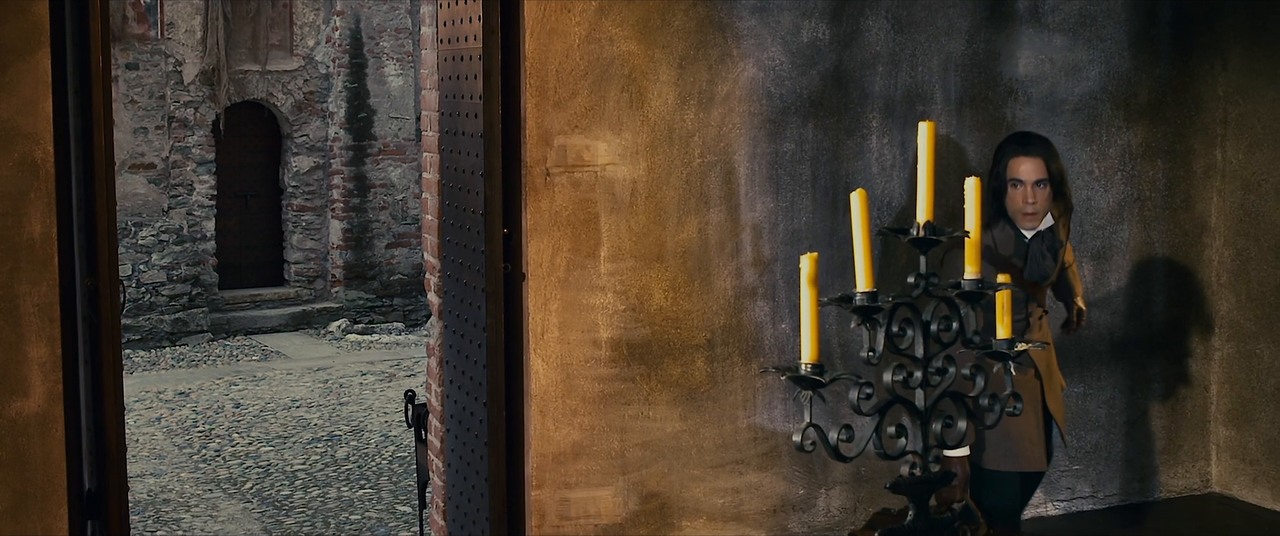
Harker enters the candlelit castle.ENLARGE ↗
Harker enters the candlelit castle.

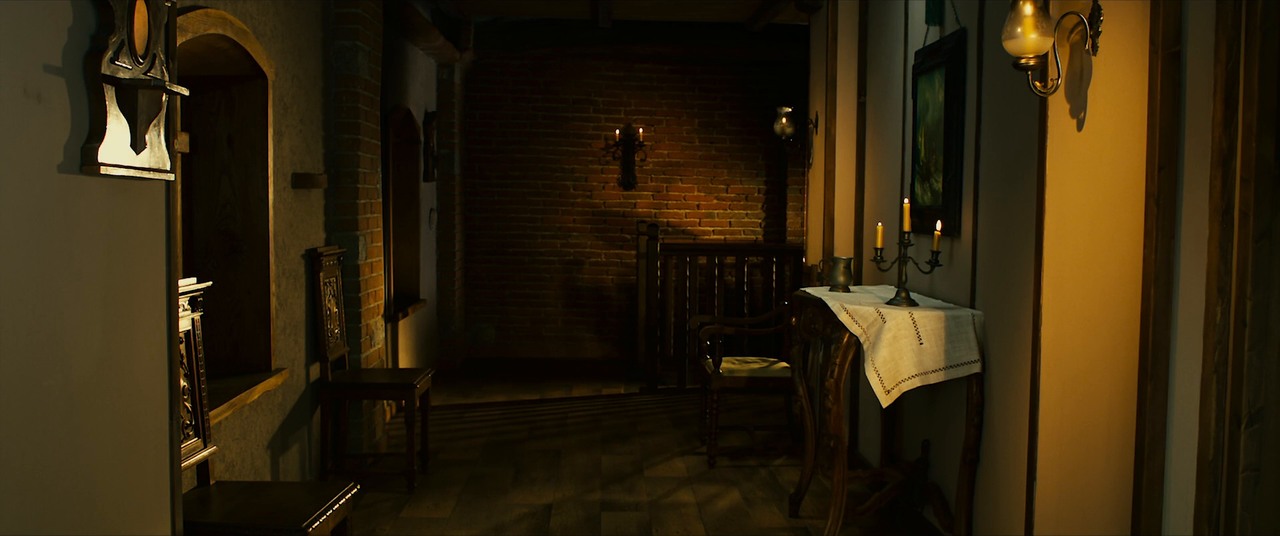
Arches, furniture and candlelight set out successive thresholds. The rooms look available for exploration, yet Harker is being received within someone else’s arrangement. Hospitality and confinement begin with the same gesture of entering.

22:45

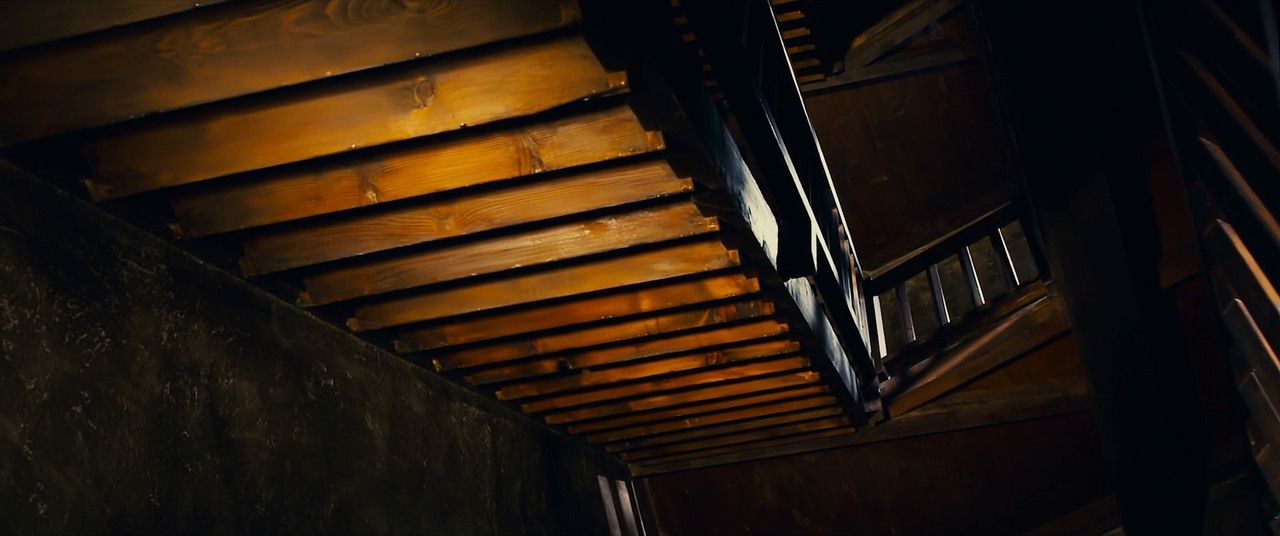
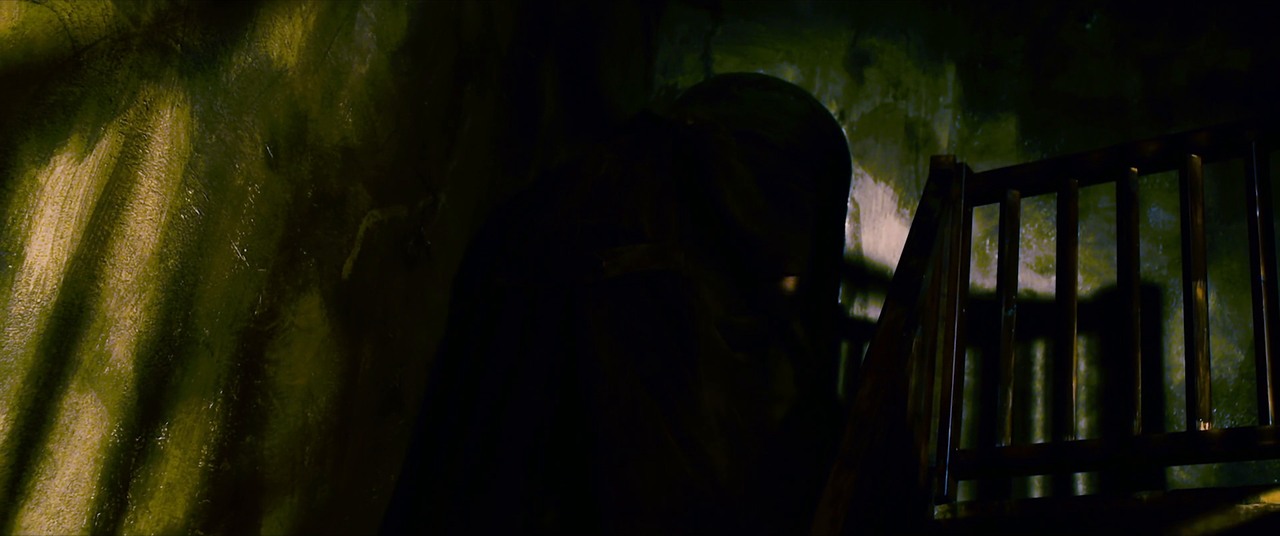
A route seen from above

The castle staircase from overhead.ENLARGE ↗
The castle staircase from overhead.

The high view turns the stairs into a shape around a central void. A person can move through the building without controlling its overall plan. This is a strong example of the film’s layered composition in the flat presentation, separate from any judgement about stereoscopic depth.

25:15

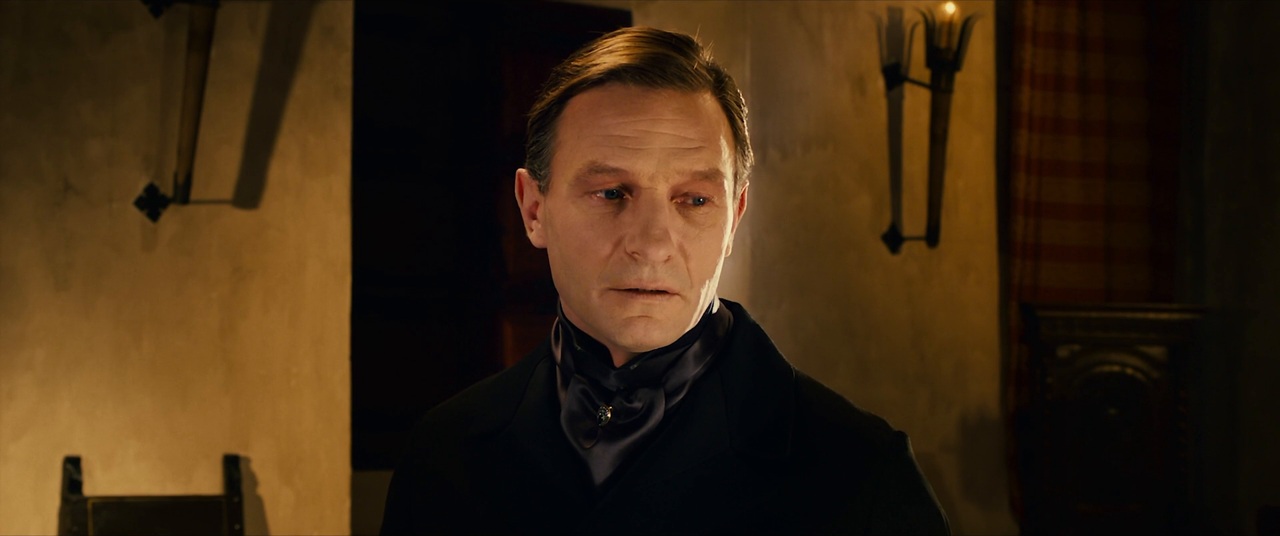
Host and guest

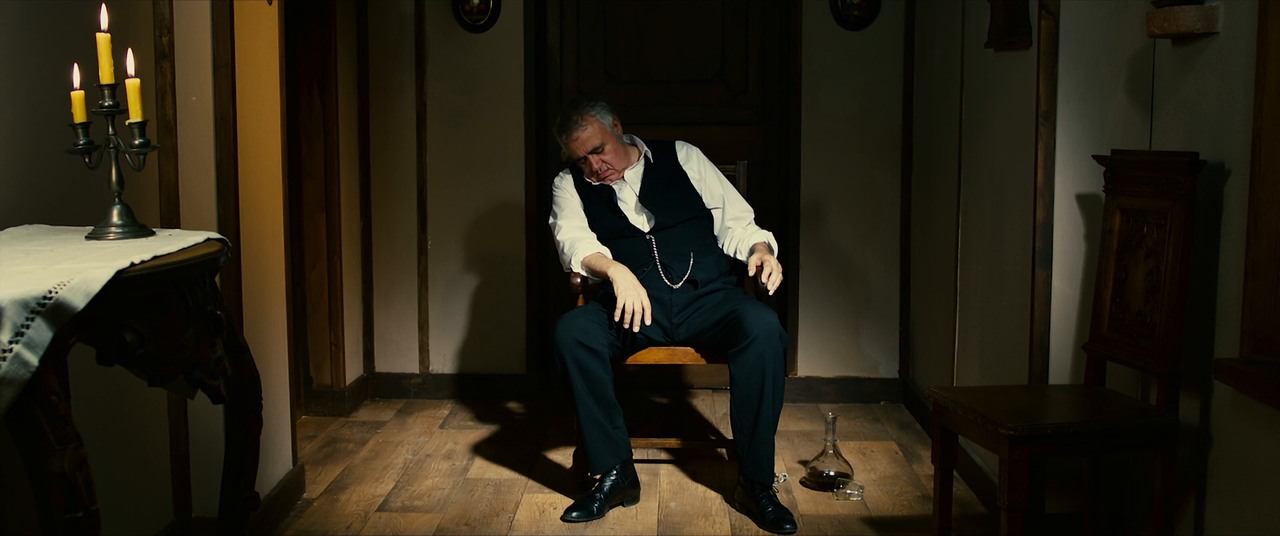
Dracula receives Harker.ENLARGE ↗
Dracula receives Harker.

The formal encounter locates menace in posture and proximity rather than an immediate attack. The guest must read a composed host whose power over the rooms is already apparent. Furniture and the interval between the men give the greeting its tension.

27:15

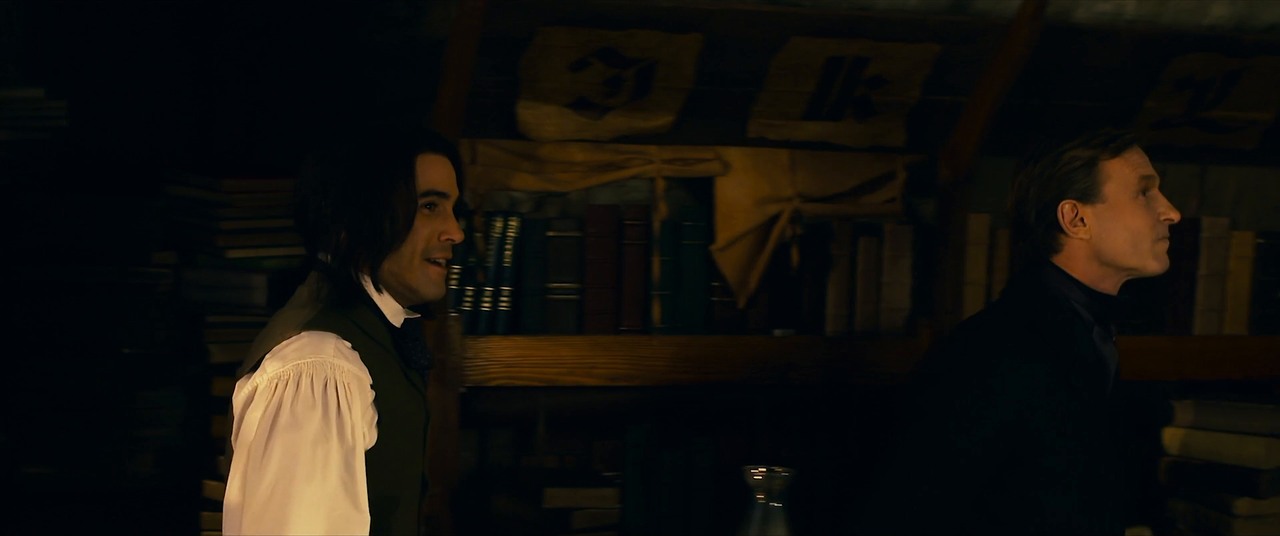
Books as employment and enclosure

Harker among the library shelves.ENLARGE ↗
Harker among the library shelves.

The library is both the reason for Harker’s visit and another enclosed interior he must negotiate. The adaptation’s change of profession becomes visible through the shelves and work surfaces. Knowledge draws him deeper into the castle.

29:30

The broken portrait

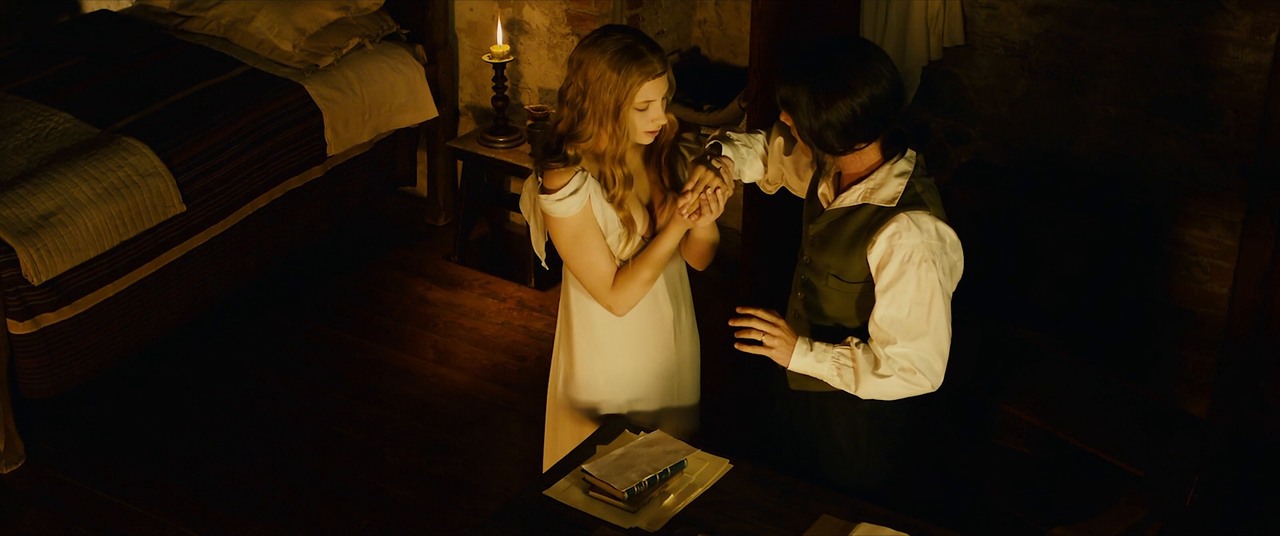
Tania takes Harker’s injured finger.ENLARGE ↗
Tania takes Harker’s injured finger.

A domestic image leads to broken glass and a small wound. Tania’s response collapses the polite distance of the earlier meal into bodily intimacy. The photograph’s role changes from a connection to Mina into an opening for another person’s appetite.

34:45

The room becomes a prison

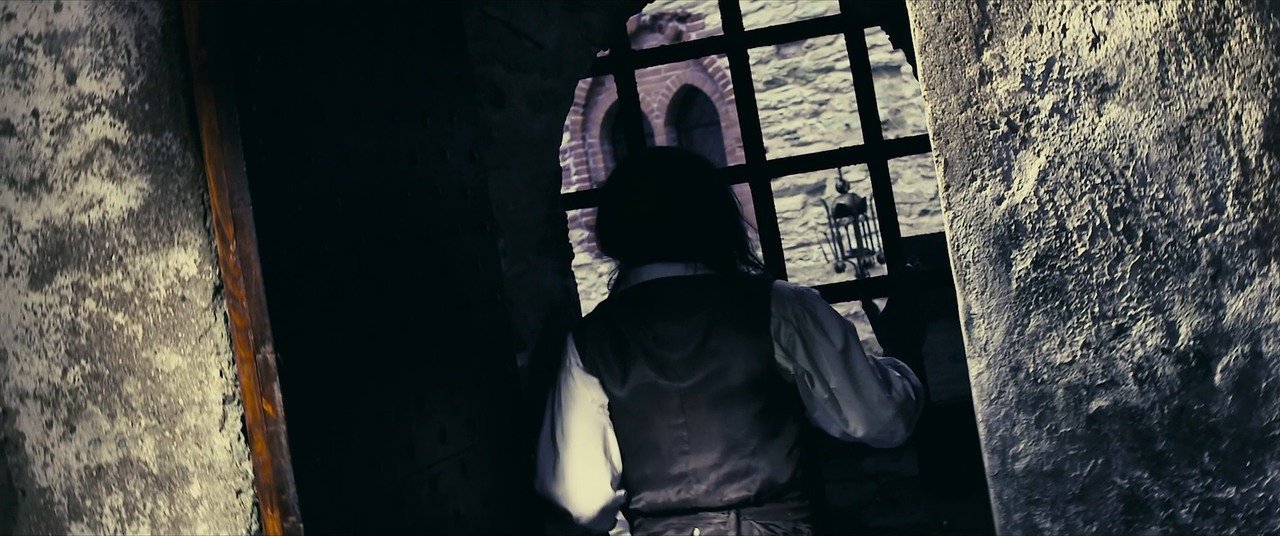
Harker at the barred window.ENLARGE ↗
Harker at the barred window.

A window usually promises a view beyond a room. Here its bars make that view inaccessible. The visible exterior intensifies confinement: Harker can recognise a space outside without being able to enter it.

39:15

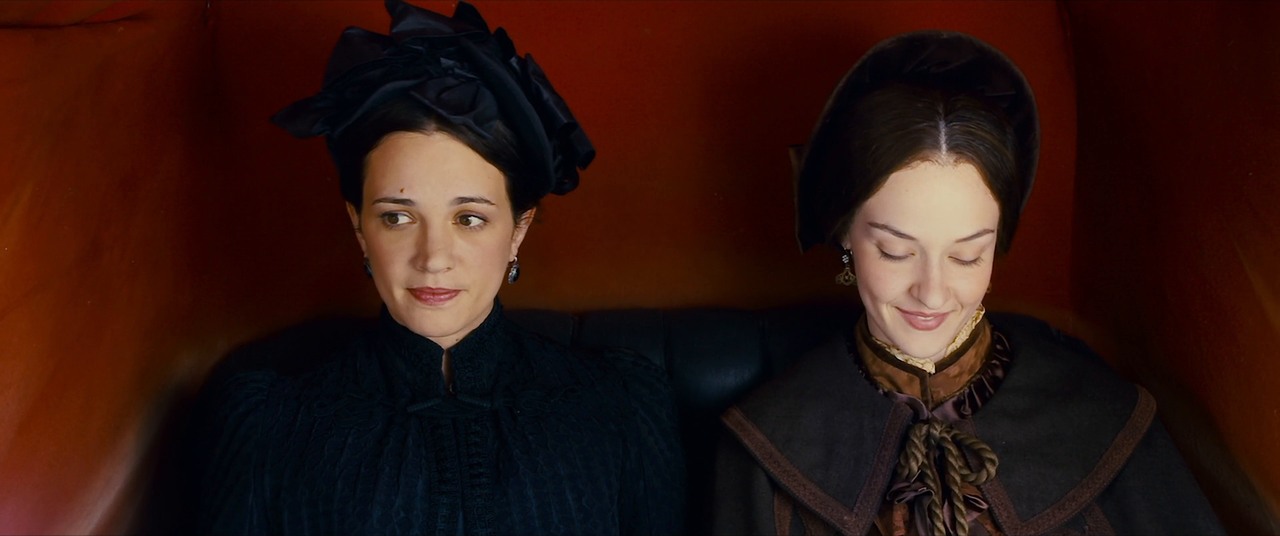
Mina enters the story

Mina and Lucy share the carriage.ENLARGE ↗
Mina and Lucy share the carriage.

Two women occupy a moving public space together, a contrast to Harker’s increasing isolation. The arrival reconnects the portrait to a living person. Mina can now encounter the village’s people and evidence directly.

46:45

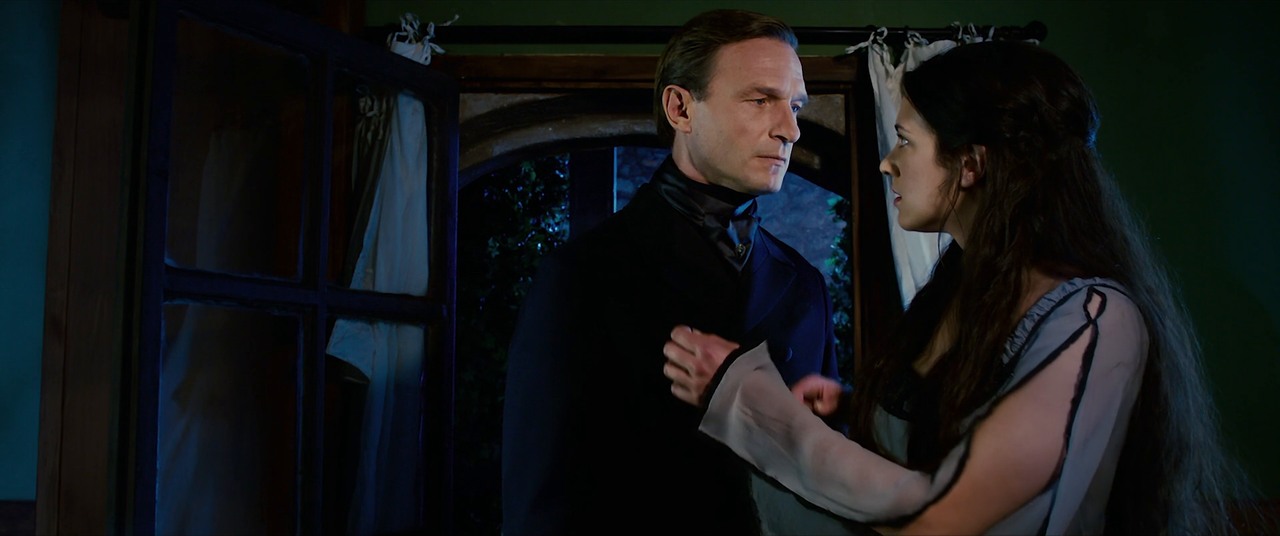
A visitor after dark

Dracula meets Lucy at the window.ENLARGE ↗
Dracula meets Lucy at the window.

The open window joins the blue night to the warm interior. The formal clothing and close arrangement of bodies differ from Tania’s frightened flight, but the visitor carries the same threat into a domestic space.

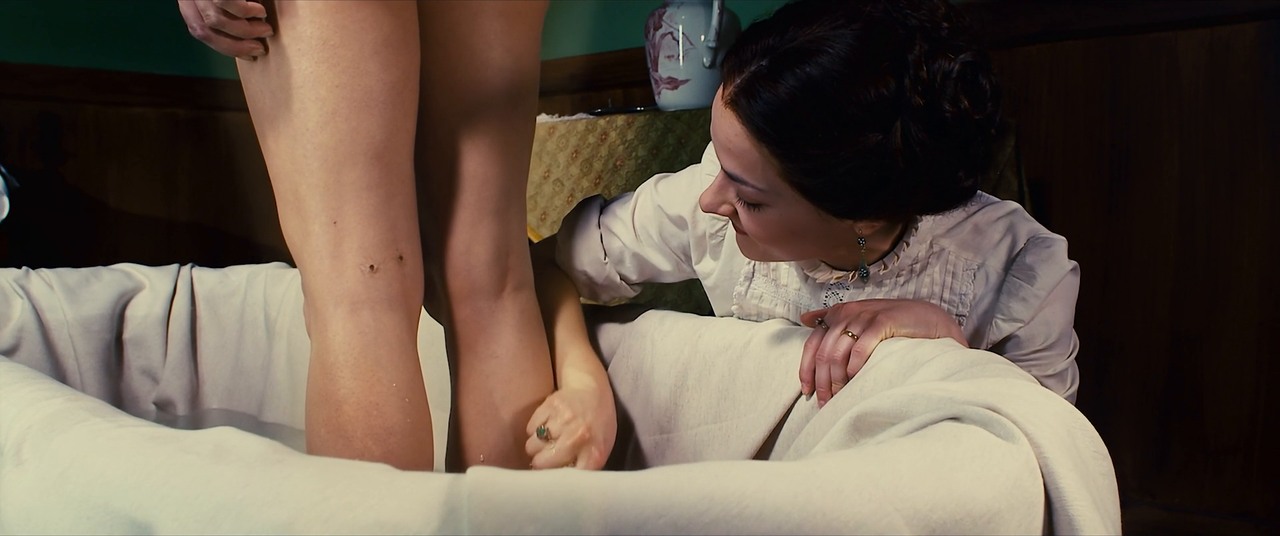
54:15

The hidden bite

The bite behind Lucy’s knee.ENLARGE ↗
The bite behind Lucy’s knee.

The wound is located away from the conventional exposed throat. Its small scale requires a close view, turning care for Lucy into an act of inspection. The body offers evidence that her appearance in conversation cannot explain.

56:45

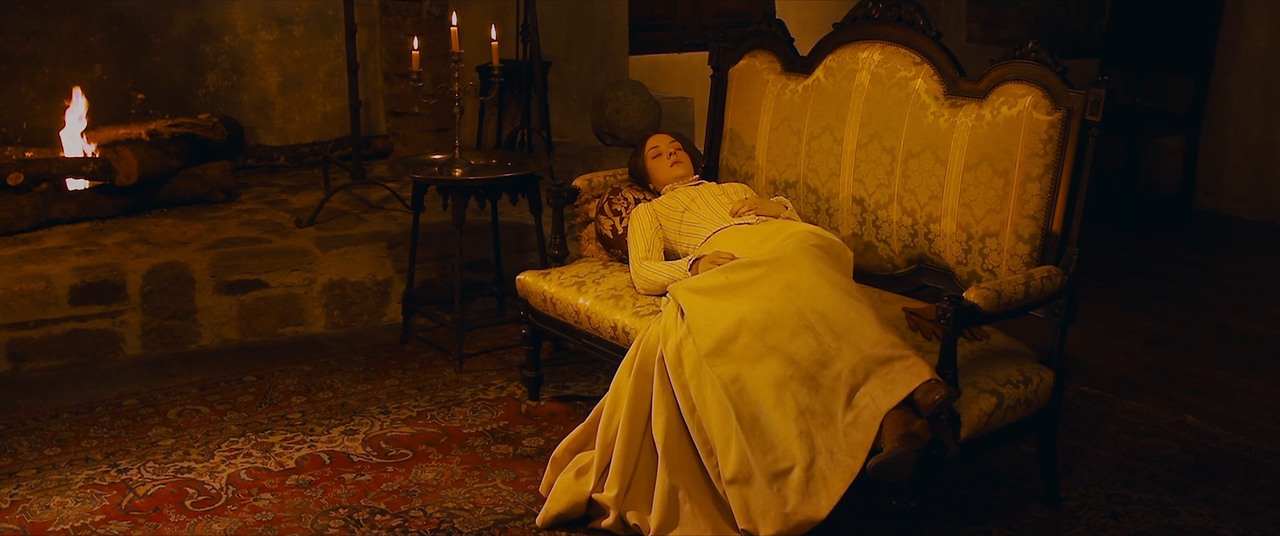
Another guest wakes in the castle

Mina on the castle couch.ENLARGE ↗
Mina on the castle couch.

The furnished interior offers comfort at the moment Mina is least able to account for her route into it. The contrast between soft upholstery and the host’s control repeats the ambiguity of Harker’s reception.

1:03:45

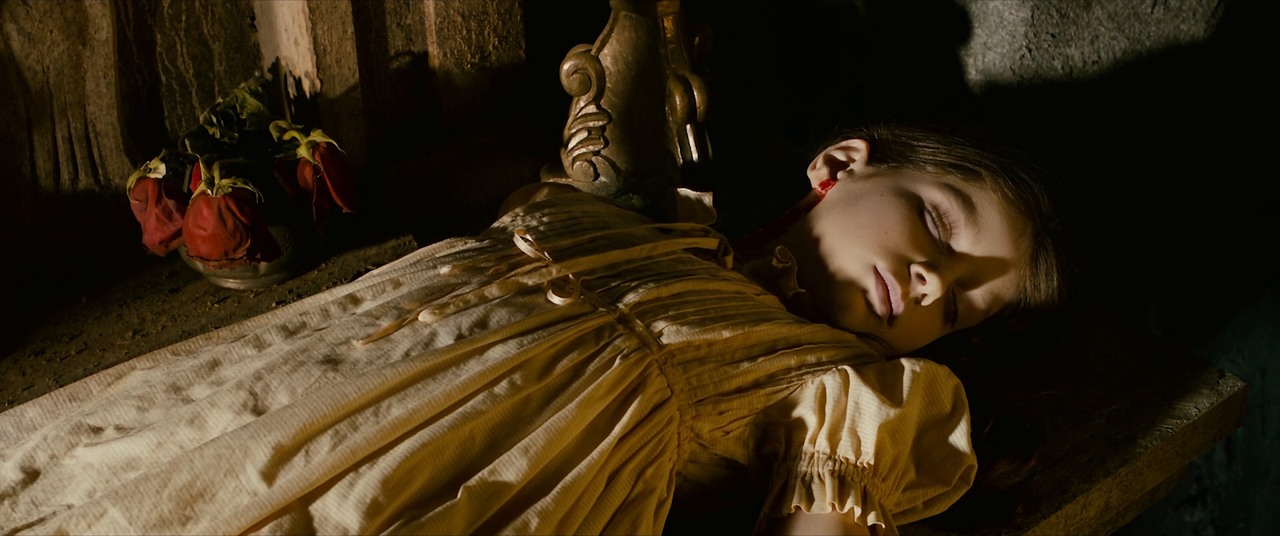
Lucy laid out

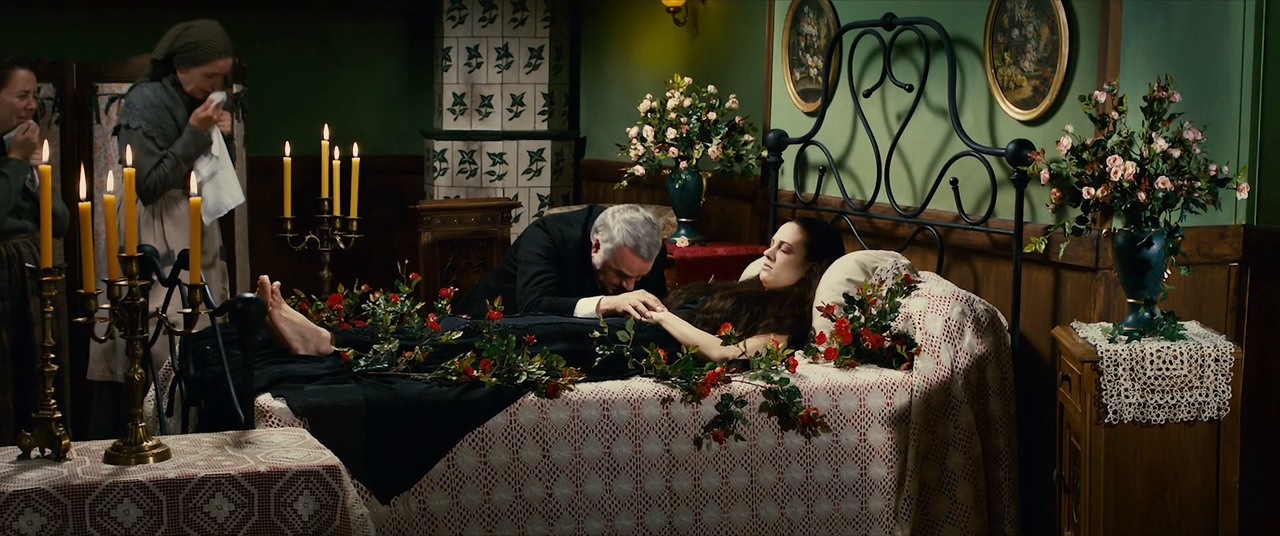
Lucy on the funeral bier.ENLARGE ↗
Lucy on the funeral bier.

The body is presented ceremonially, with candles and orderly fabric. Such composure invites the assumption that the story of the person has ended. The later crypt sequence will overturn that reading of stillness.

1:08:45

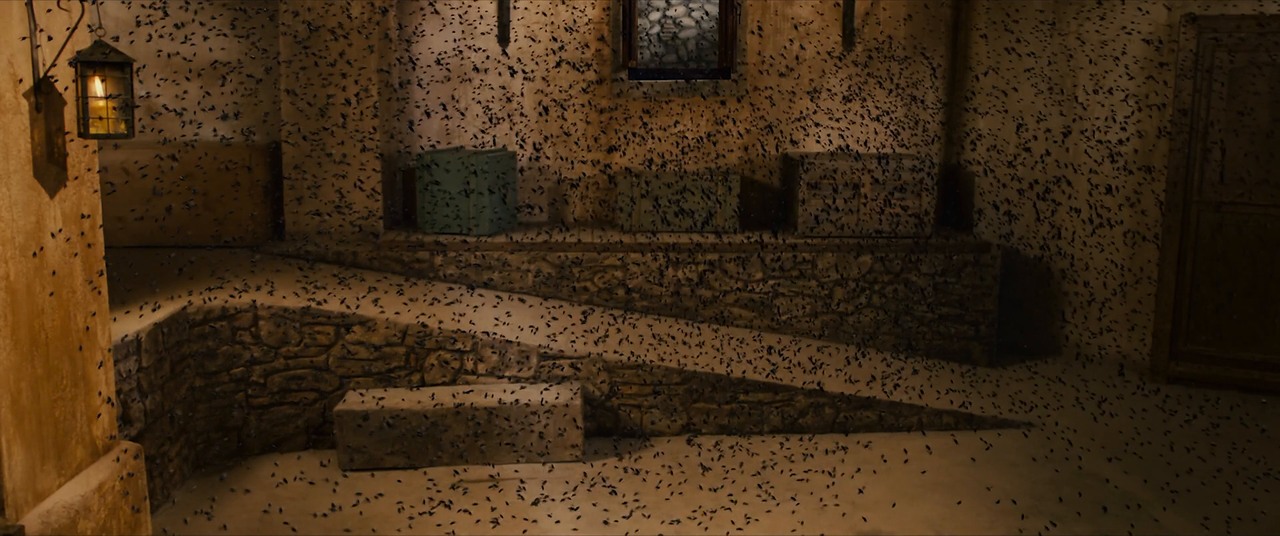
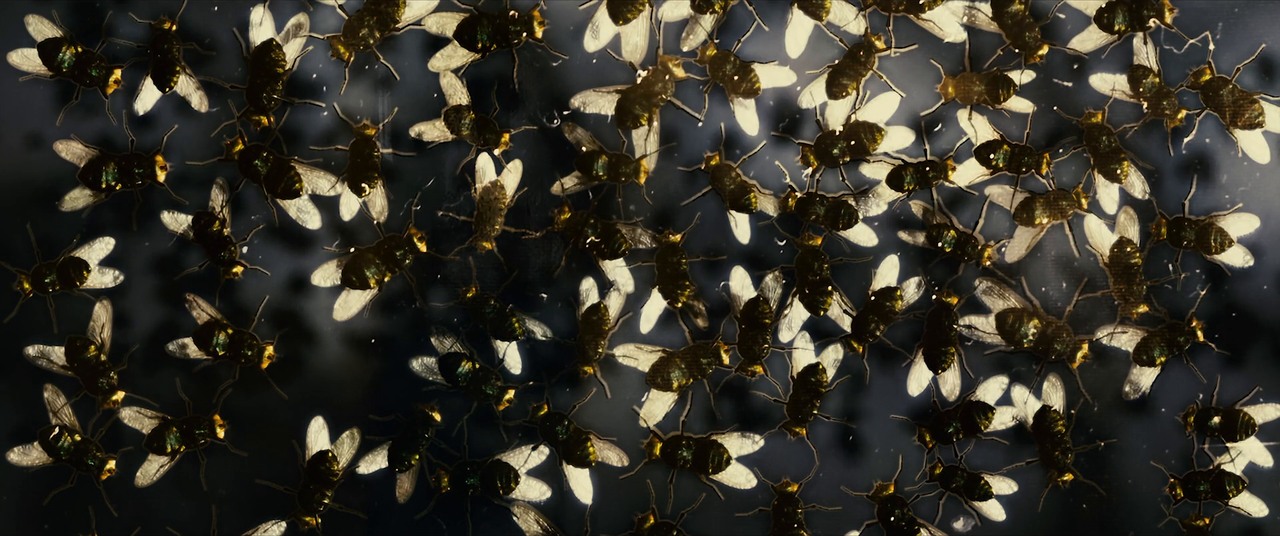
The room fills with flies

A swarm spreads through the tavern.ENLARGE ↗
A swarm spreads through the tavern.

The Count’s arrival first makes the air itself active. The wide room remains visible through the moving mass, so the effect works against an established arrangement of tables and witnesses. The human figure then gives the dispersed threat a centre.

Explore the sequence →

1:11:45

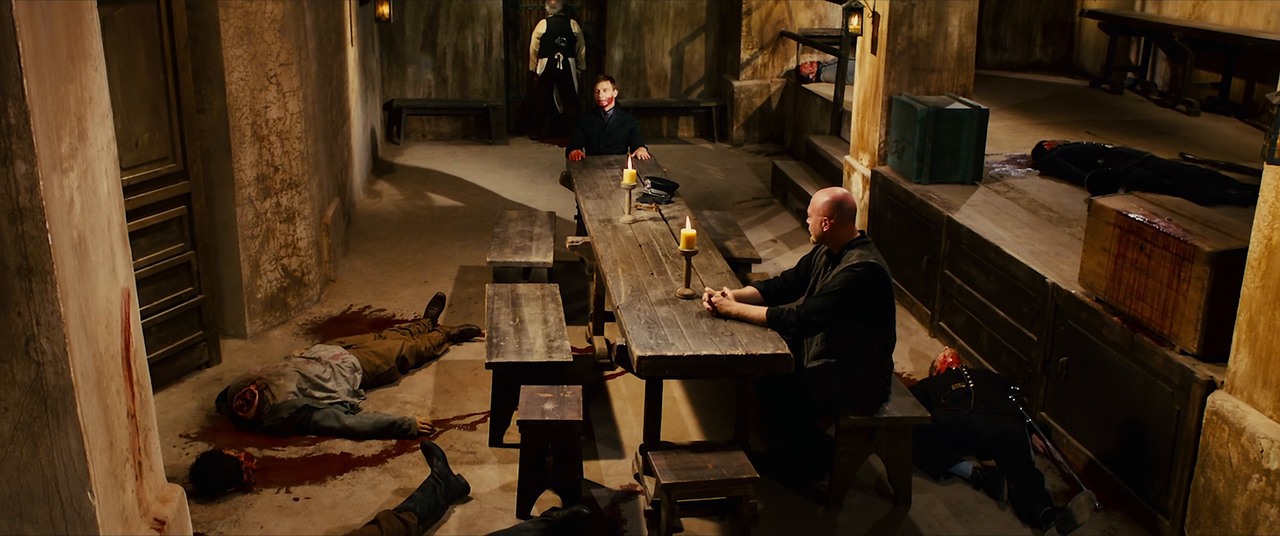
An audience reduced to bodies

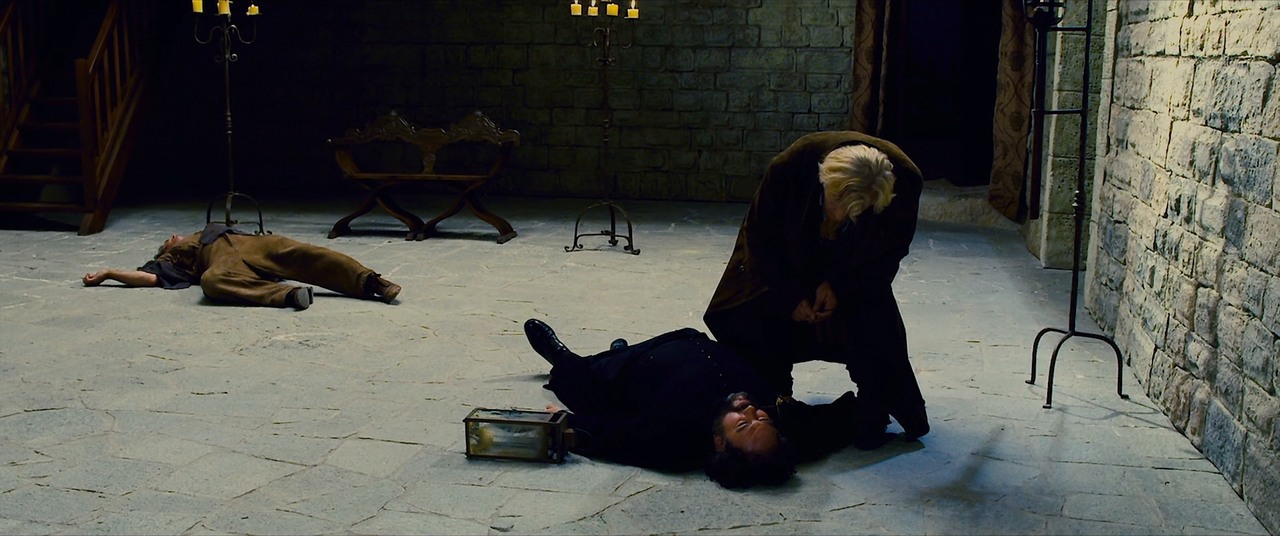
The tavern after Dracula’s attack.ENLARGE ↗
The tavern after Dracula’s attack.

The large view collects the injuries that the preceding close images separate. Tables and chairs remain as ordinary spatial references around the fallen men. The room has become a display of the Count’s power over the village.

Explore the sequence →

1:13:45

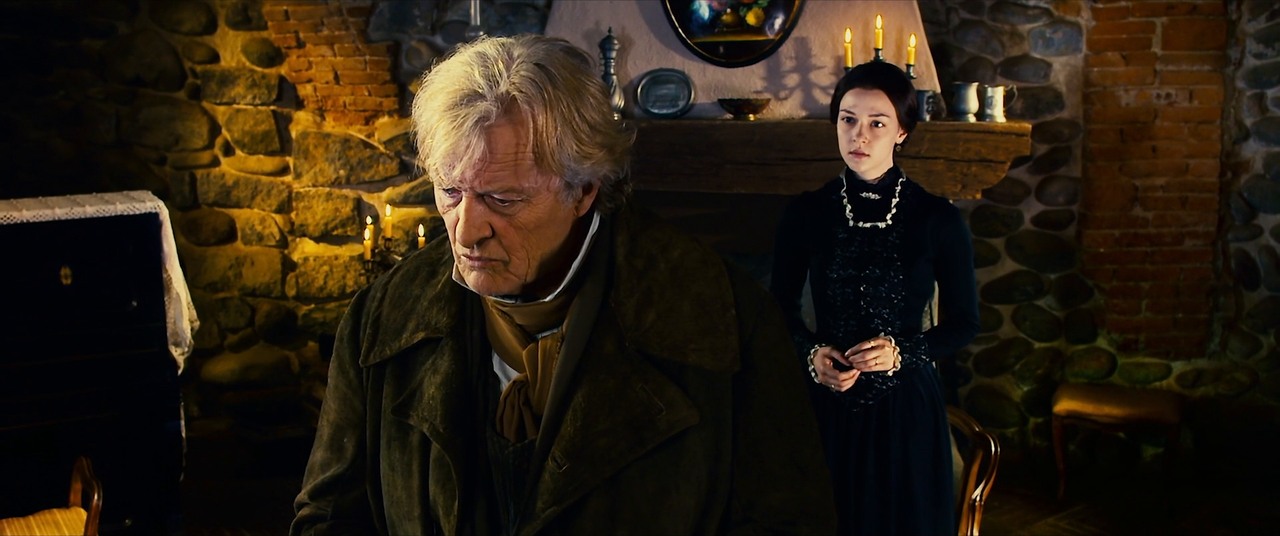
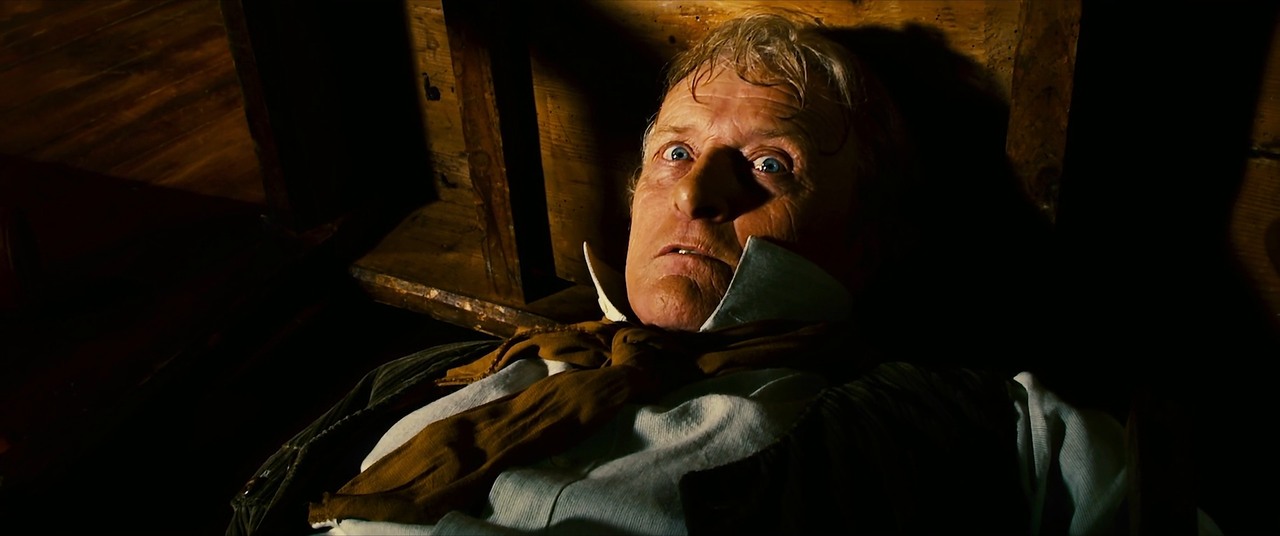
Van Helsing joins Mina

Van Helsing and Mina confer.ENLARGE ↗
Van Helsing and Mina confer.

The new arrival brings another older male authority into the story. His proximity to Mina is organised around investigation and protection. Their paired compositions will become the principal alternative to Dracula’s attempts to isolate her.

1:16:00

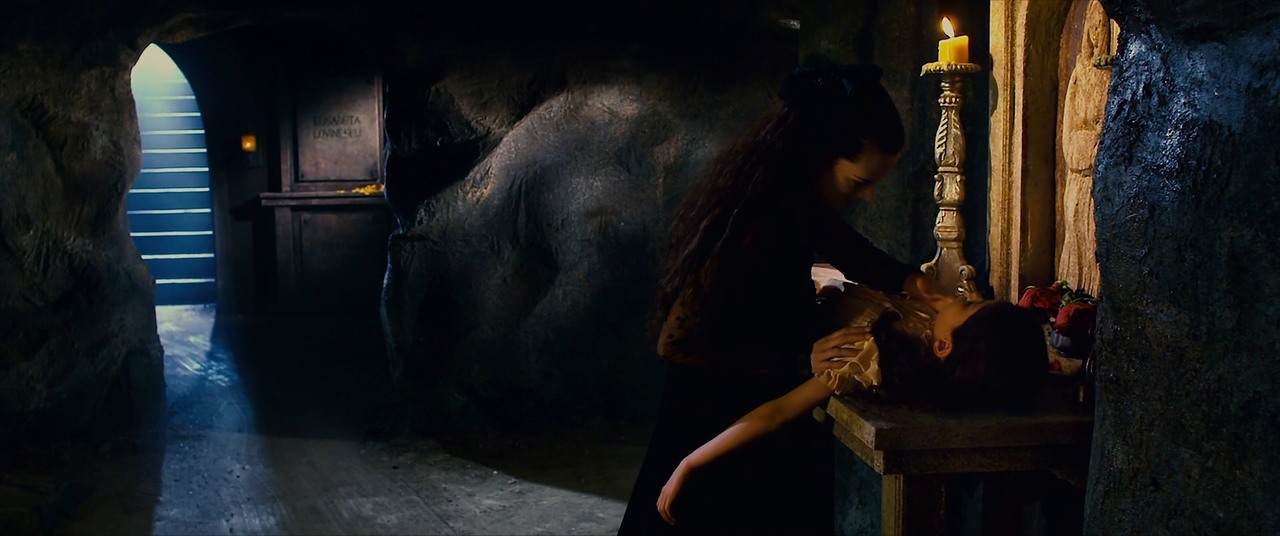
The empty coffin has an answer

Lucy appears at the crypt entrance.ENLARGE ↗
Lucy appears at the crypt entrance.

The discovery of an empty resting place is answered by a figure at a doorway. The staging moves the question from where the body has gone to what it can now do. Lucy’s familiar face no longer guarantees a familiar relationship.

Explore the sequence →

1:22:34

Tania and the fallen chair

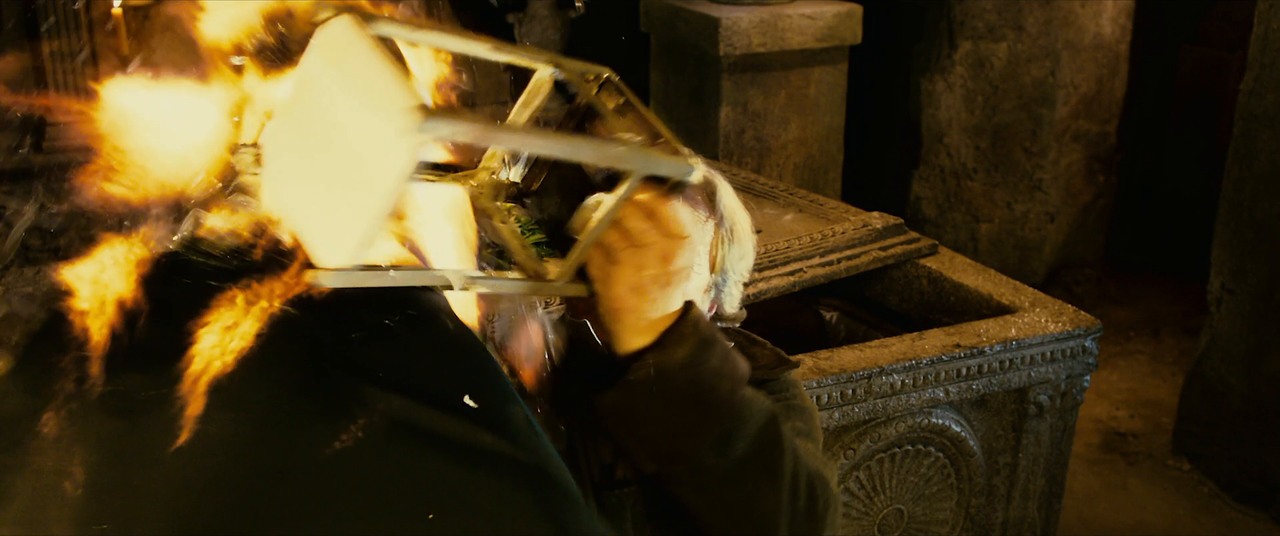
Tania beneath the broken chair.ENLARGE ↗
Tania beneath the broken chair.

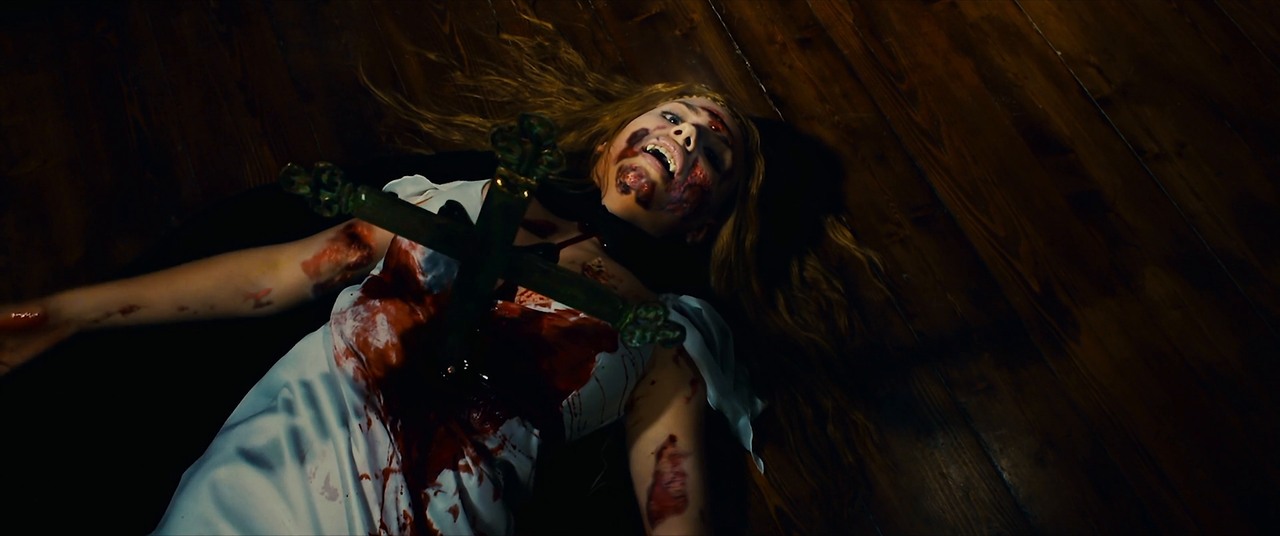
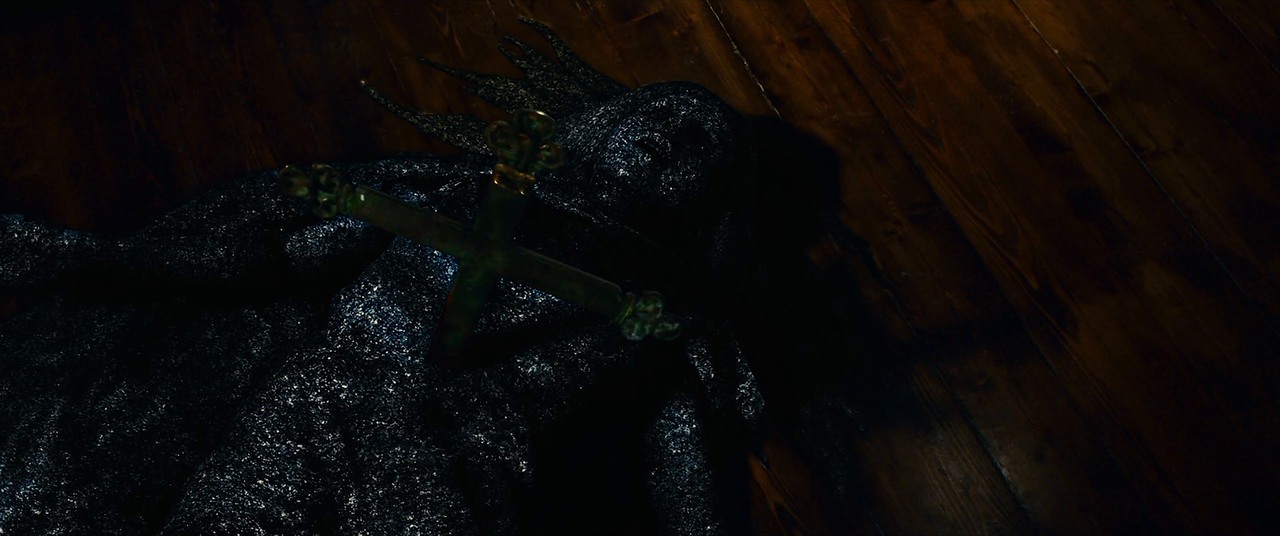
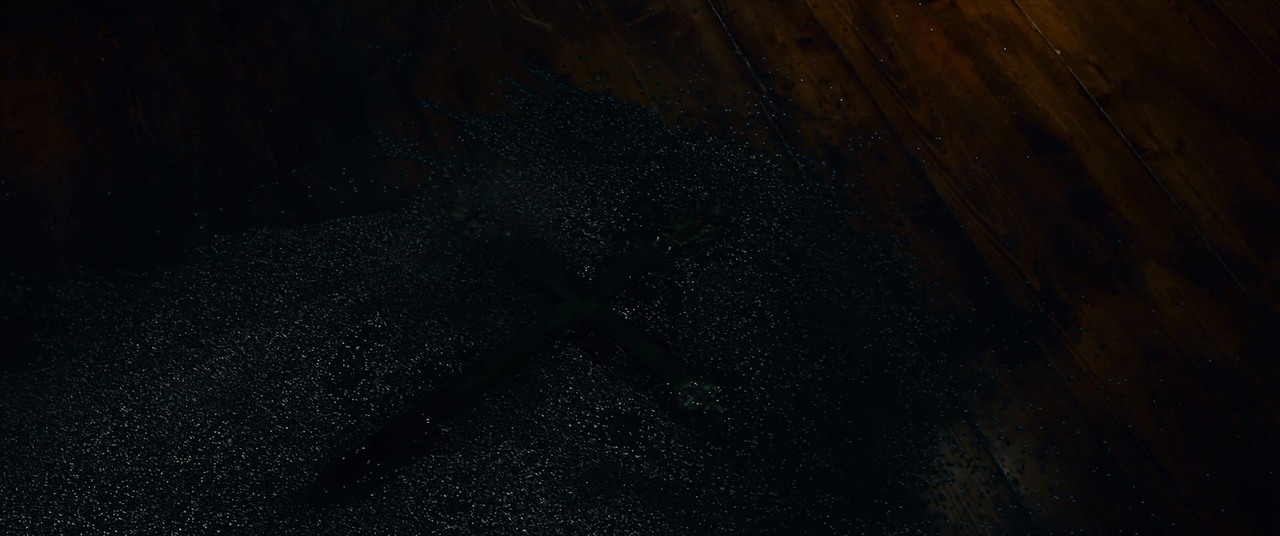
The room’s wooden surfaces anchor an effect that makes a body progressively less substantial. Reaction shots preserve a human witness while the figure on the floor changes from wounded flesh to dark fragments.

Explore the sequence →

1:23:40

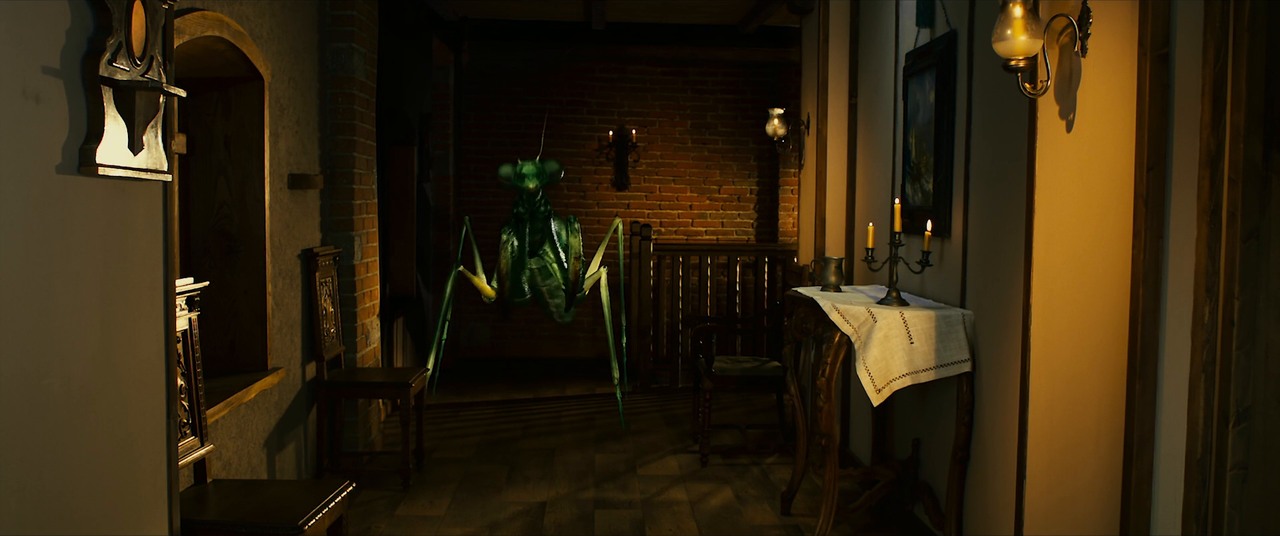
A creature in the corridor

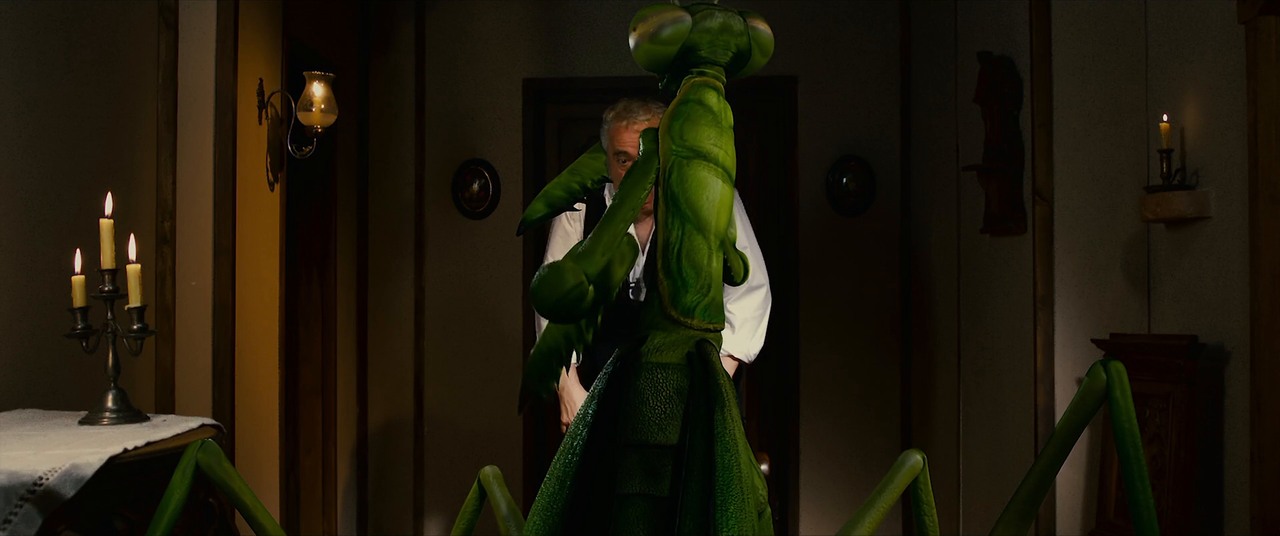
The giant mantis advances along the landing.ENLARGE ↗
The giant mantis advances along the landing.

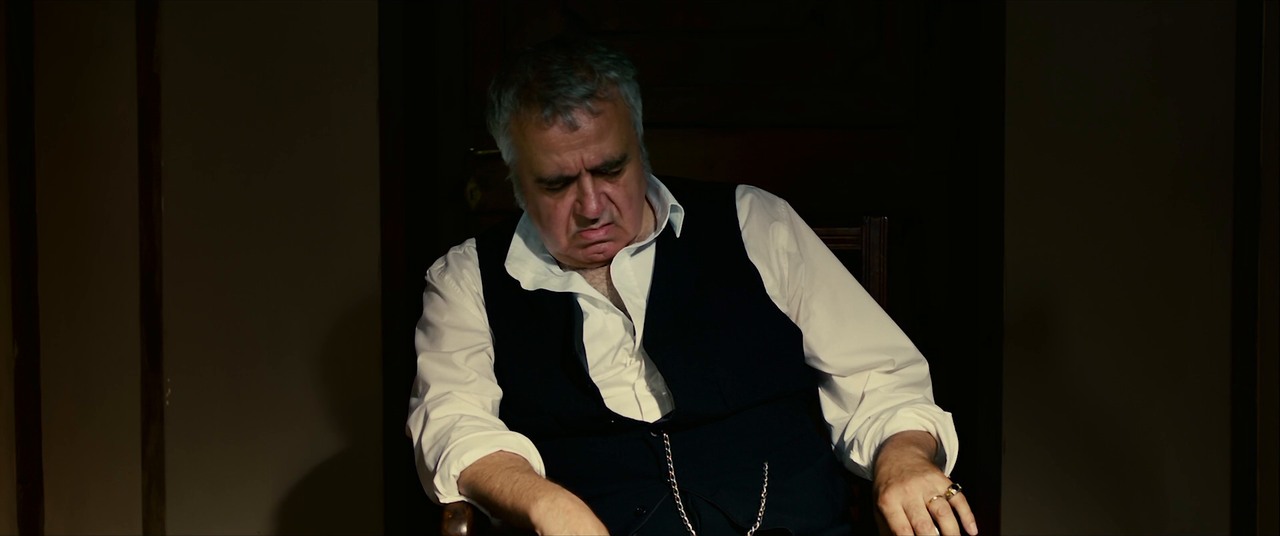
The long corridor gives the insect a route and an exaggerated scale. Doorways, lamps and the railing establish the ordinary dimensions it exceeds. Its approach prepares a violent interruption of the seated mayor’s apparent safety.

Explore the sequence →

1:26:45

The hunter’s workbench

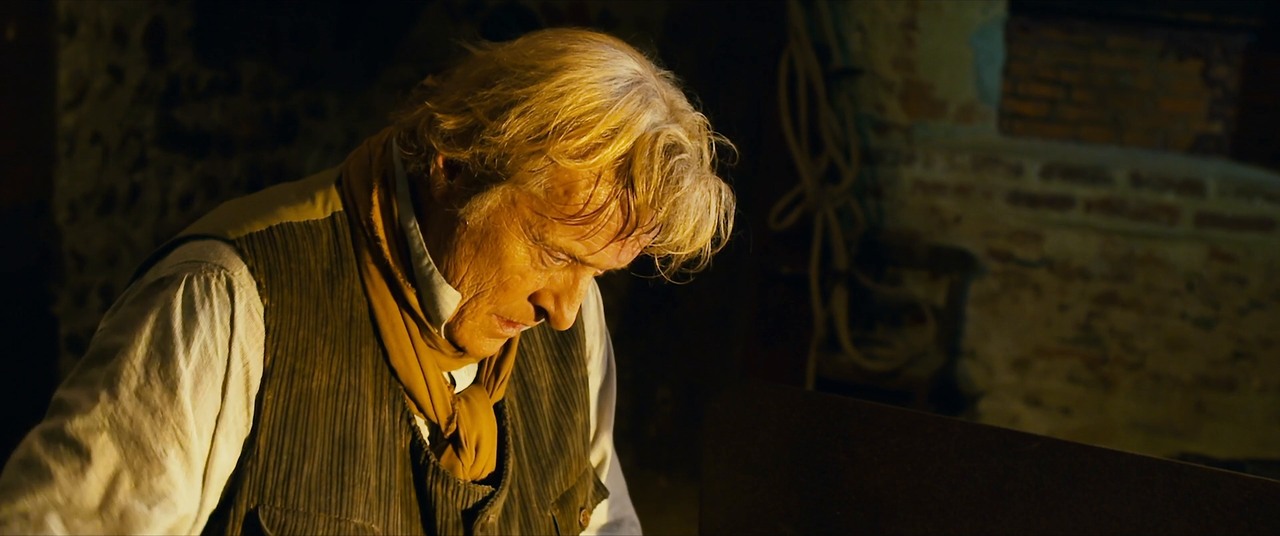
Van Helsing works beside the flame.ENLARGE ↗
Van Helsing works beside the flame.

Small tools and heated material move the struggle from supernatural display to patient preparation. The sequence gives his expertise a physical form. It contrasts with Dracula’s effortless changes of shape without requiring the spectator to accept those changes as ordinary.

1:33:45

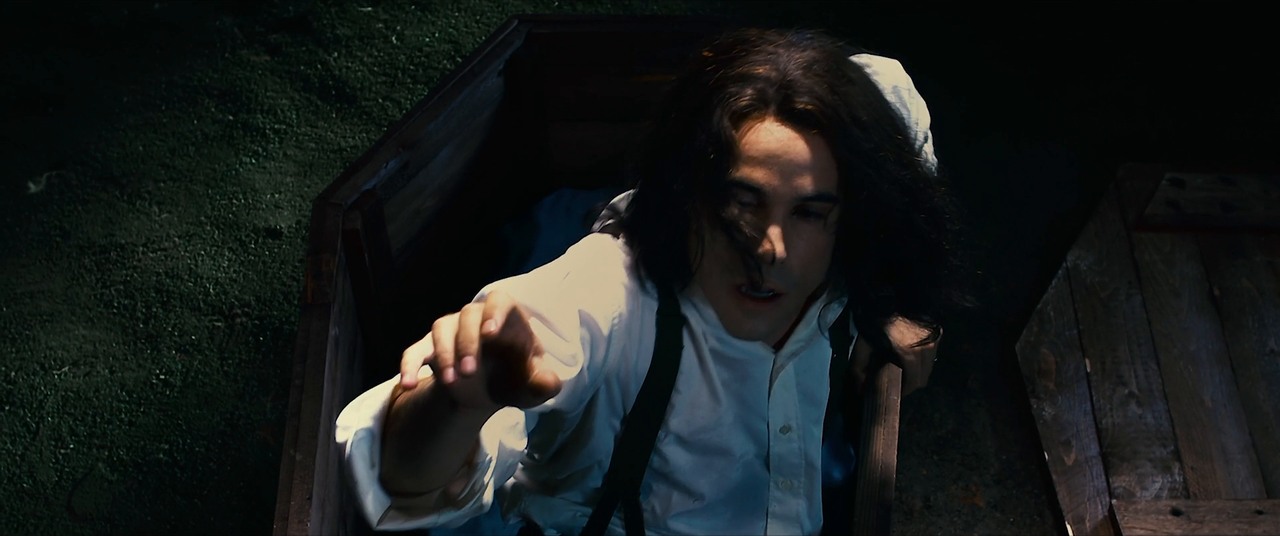
Harker in the coffin

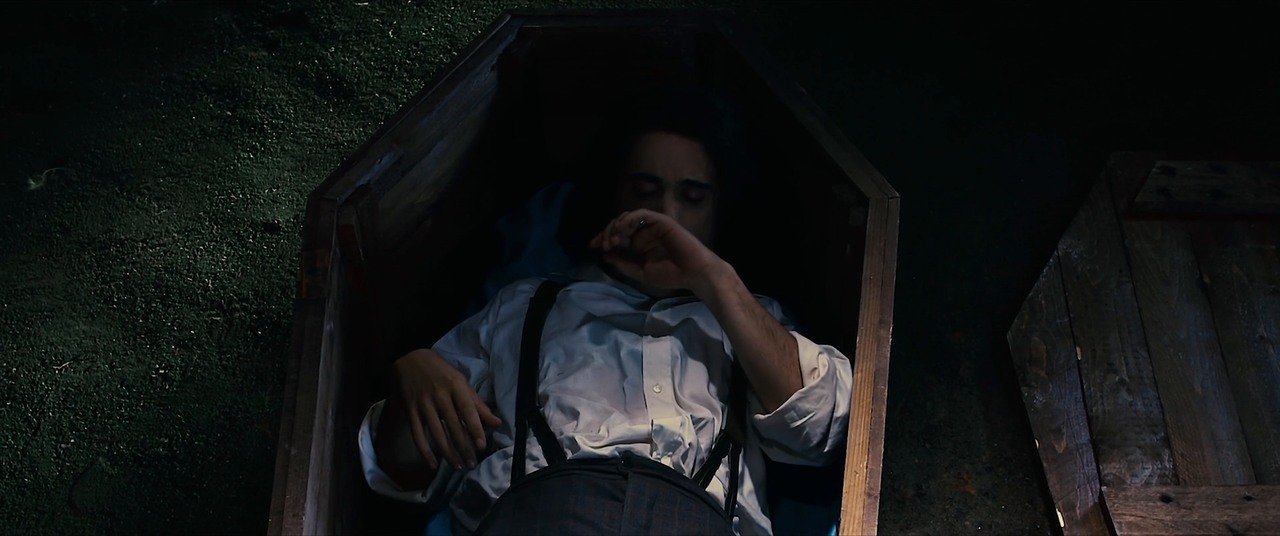
Jonathan opens his eyes in the crypt.ENLARGE ↗
Jonathan opens his eyes in the crypt.

The man who arrived by railway now occupies the same kind of container that framed Tania. Recognition does not restore him to the position of guest or husband. His opening eyes make the coffin a beginning of danger rather than its conclusion.

Explore the sequence →

1:37:15

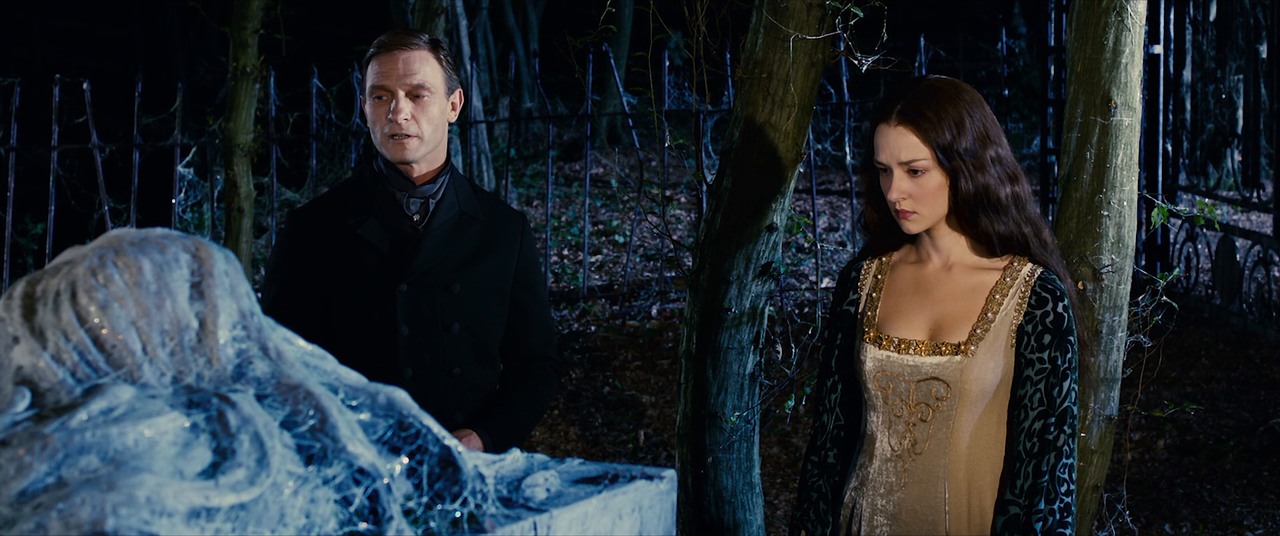
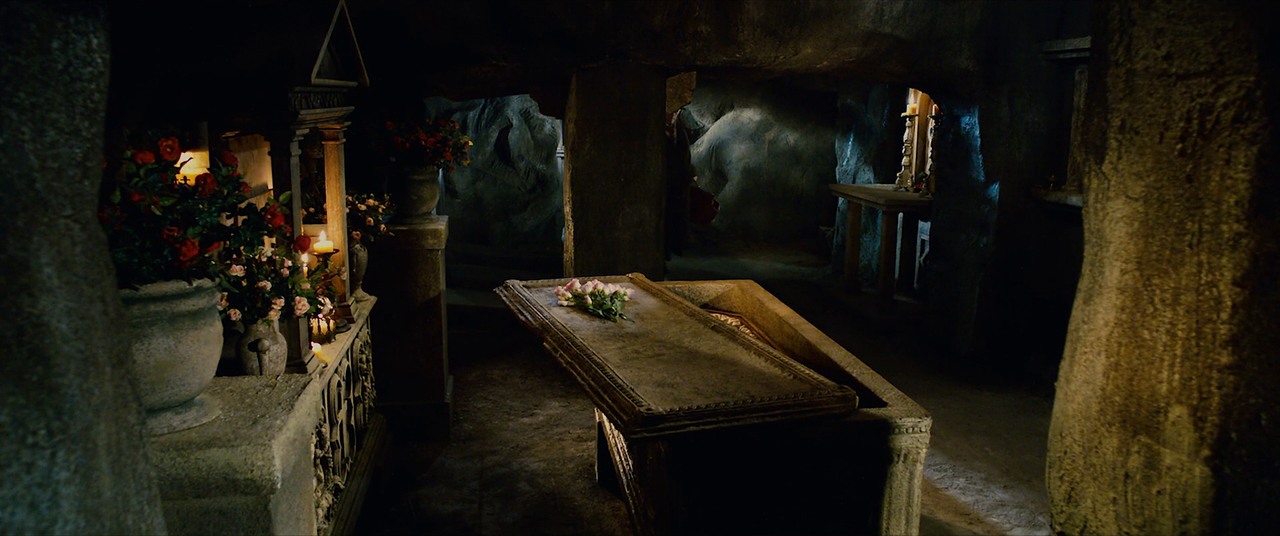
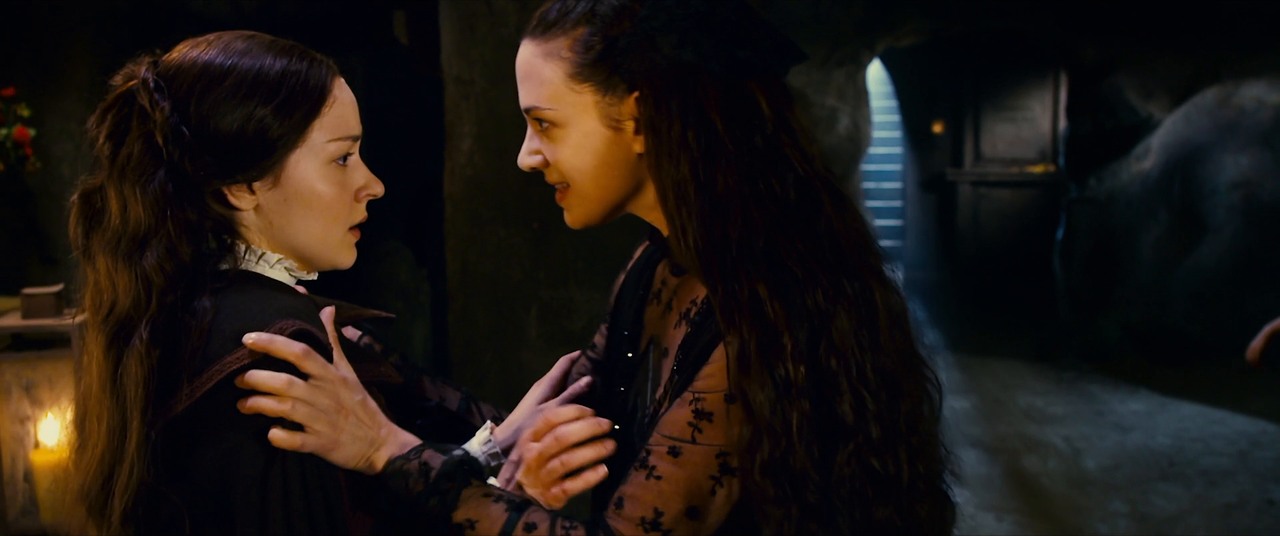
The name on the tomb

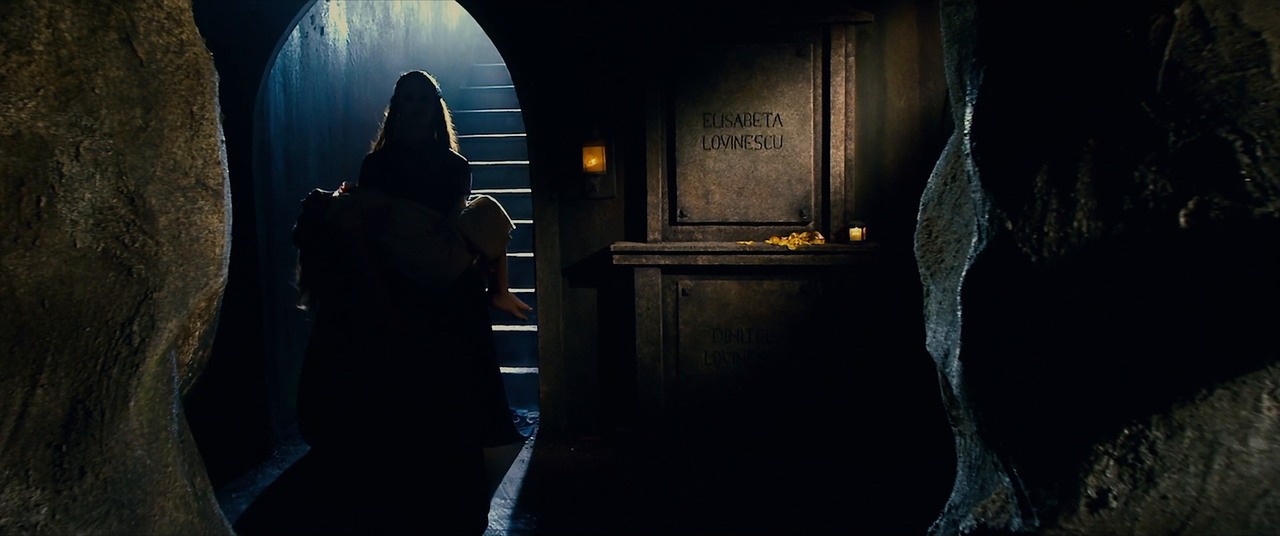
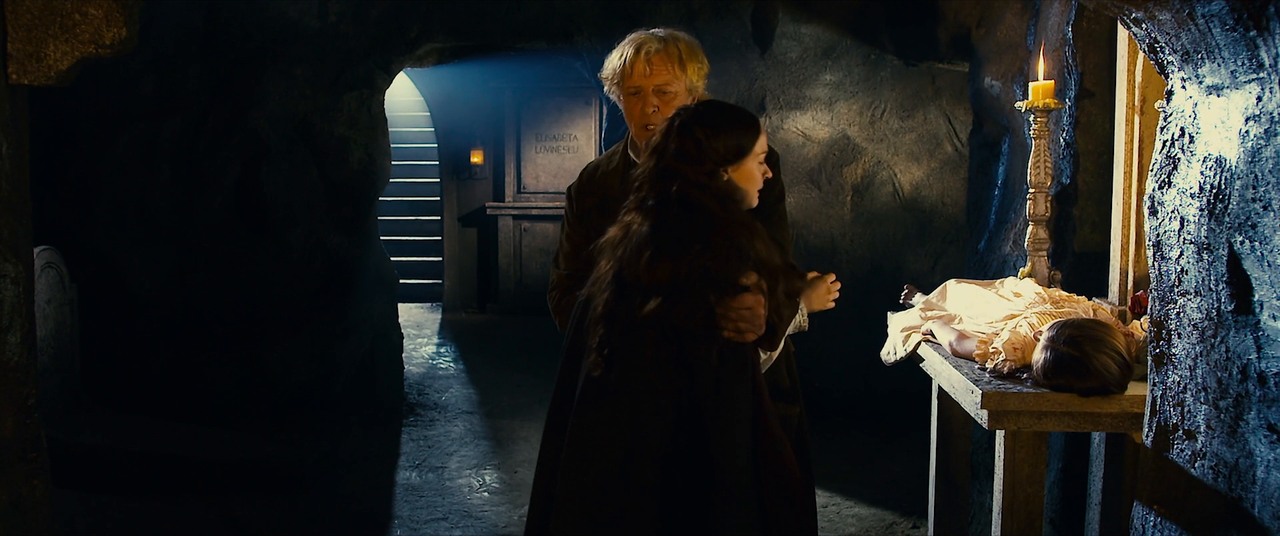
Dracula and Mina beside Dolingen’s tomb.ENLARGE ↗
Dracula and Mina beside Dolingen’s tomb.

The carved monument gives Dracula’s account of lost love a material setting. Its permanence supports his insistence on continuity, while Mina remains a living person beside it. Stone and body embody different claims on the present.

1:39:20

Romance at biting distance

Blood marks Mina’s neck.ENLARGE ↗
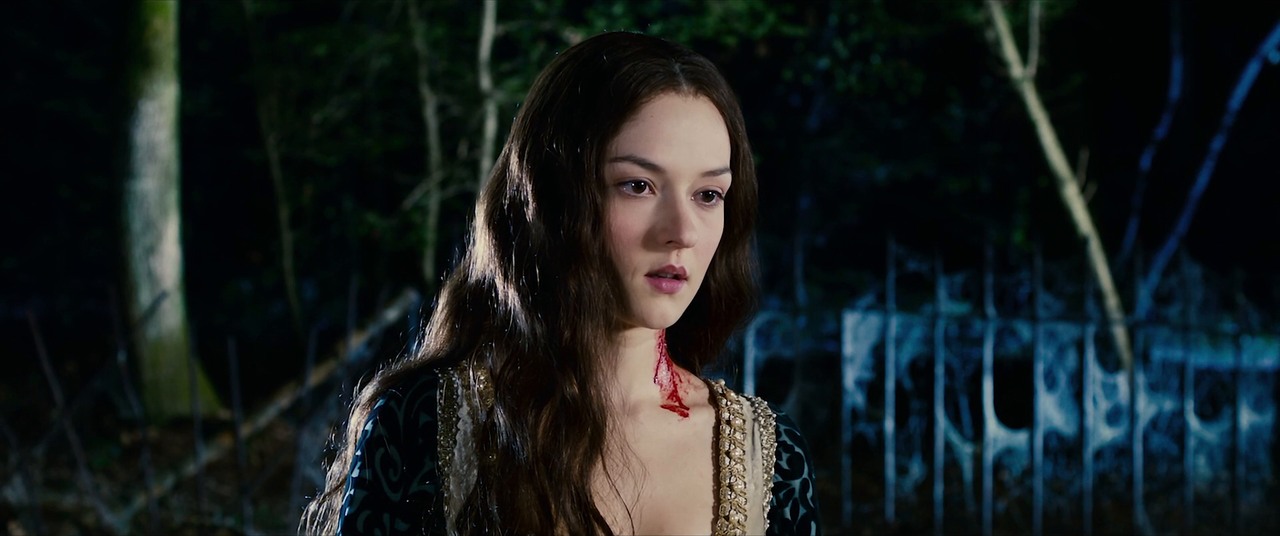
Blood marks Mina’s neck.

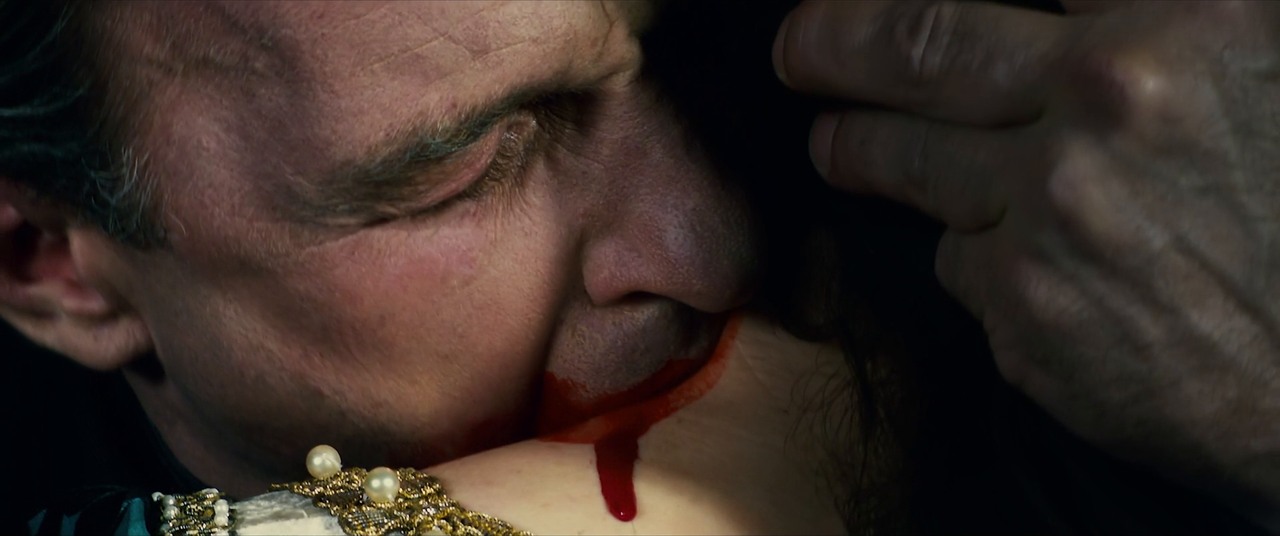
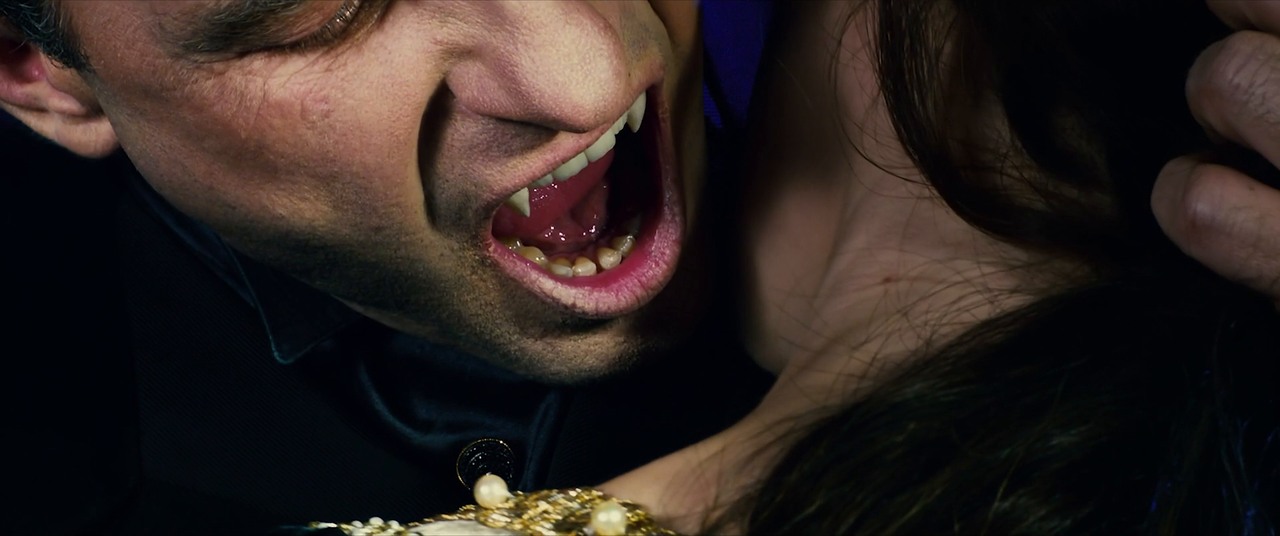
The close contact repeats the language of an embrace while making injury unmistakable. Mouth, skin and blood occupy the foreground. The intimacy of the Cannes publicity photograph now has a harsher counterpart within the film’s action.

Explore the sequence →

1:41:05

Mina faces the Count

Mina holds the gun in the clearing.ENLARGE ↗
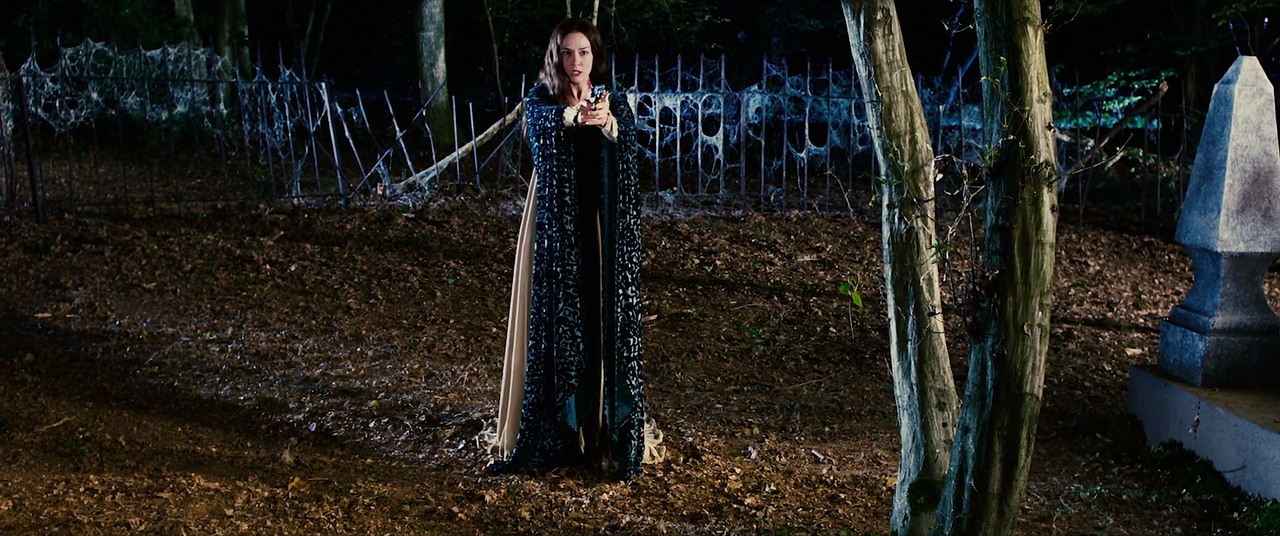
Mina holds the gun in the clearing.

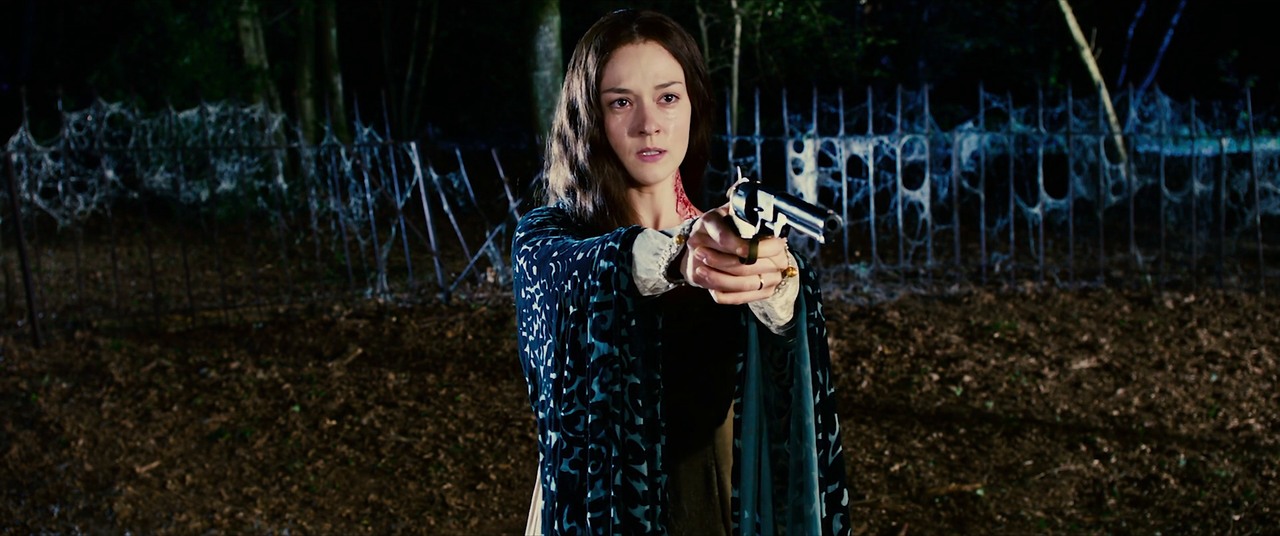
The wider view restores an interval between Mina and Dracula. After so many approaches that reduce her freedom to move, she occupies a position from which she can answer him. Van Helsing’s presence does not remove her central place in this confrontation.

Explore the sequence →

1:42:20

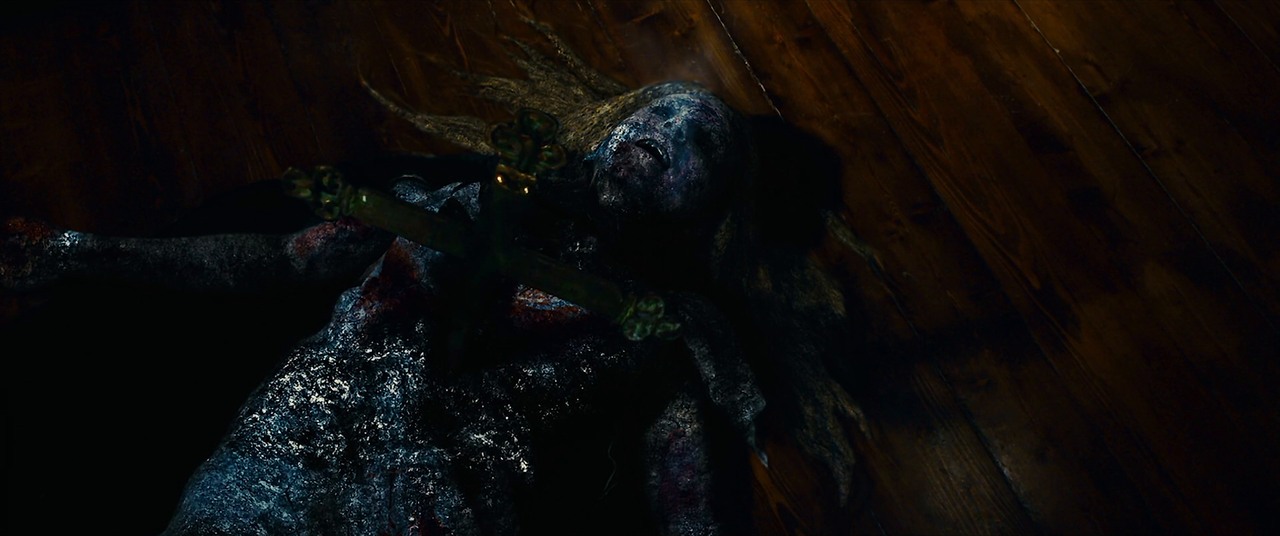
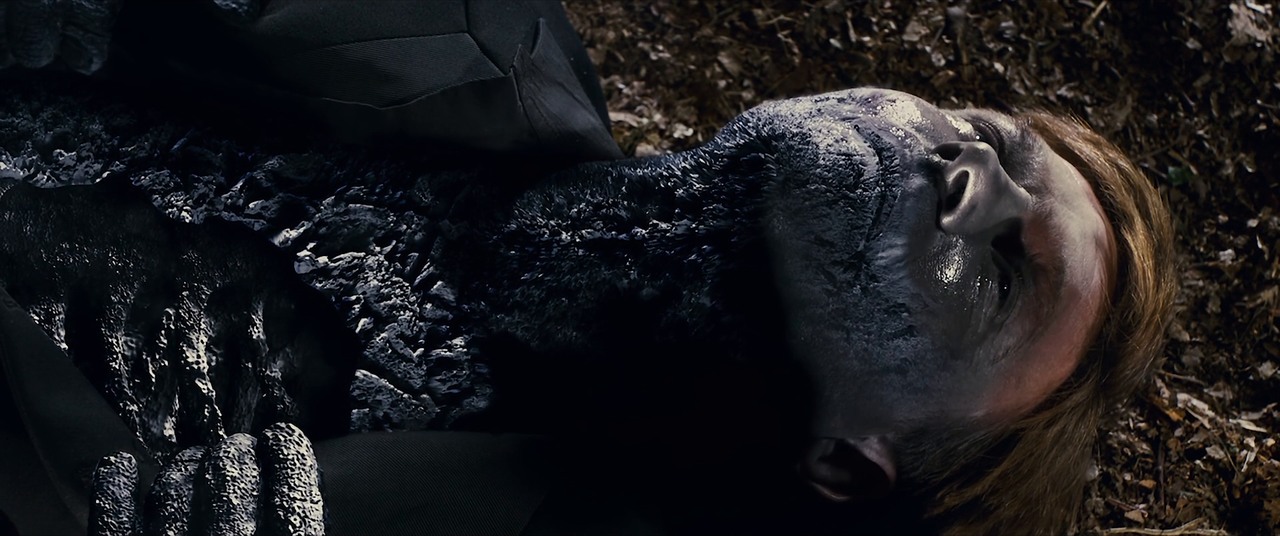
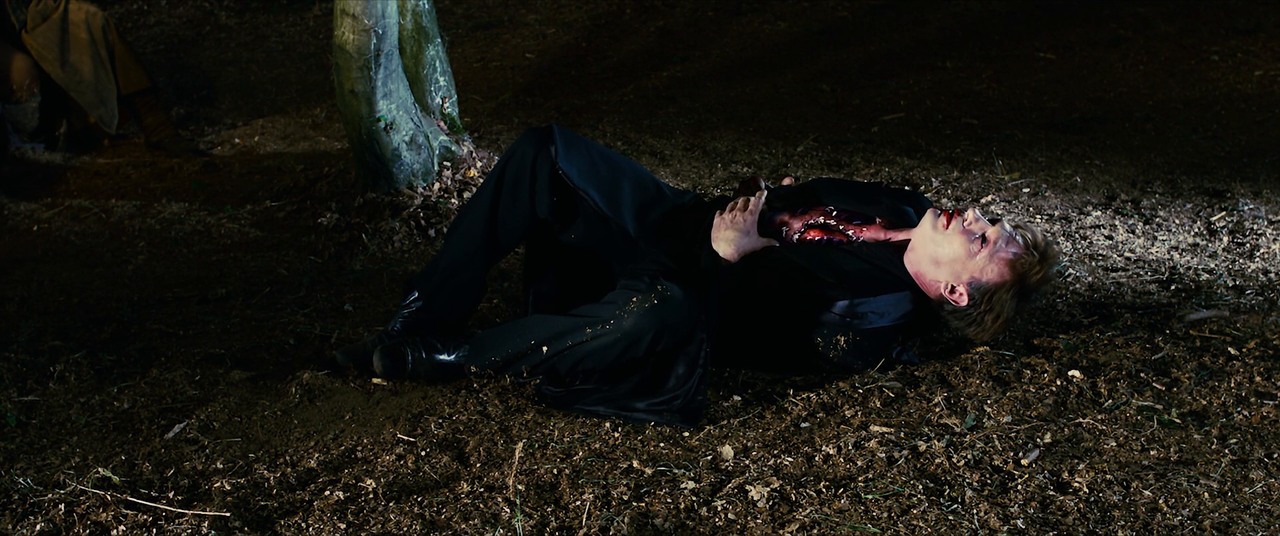
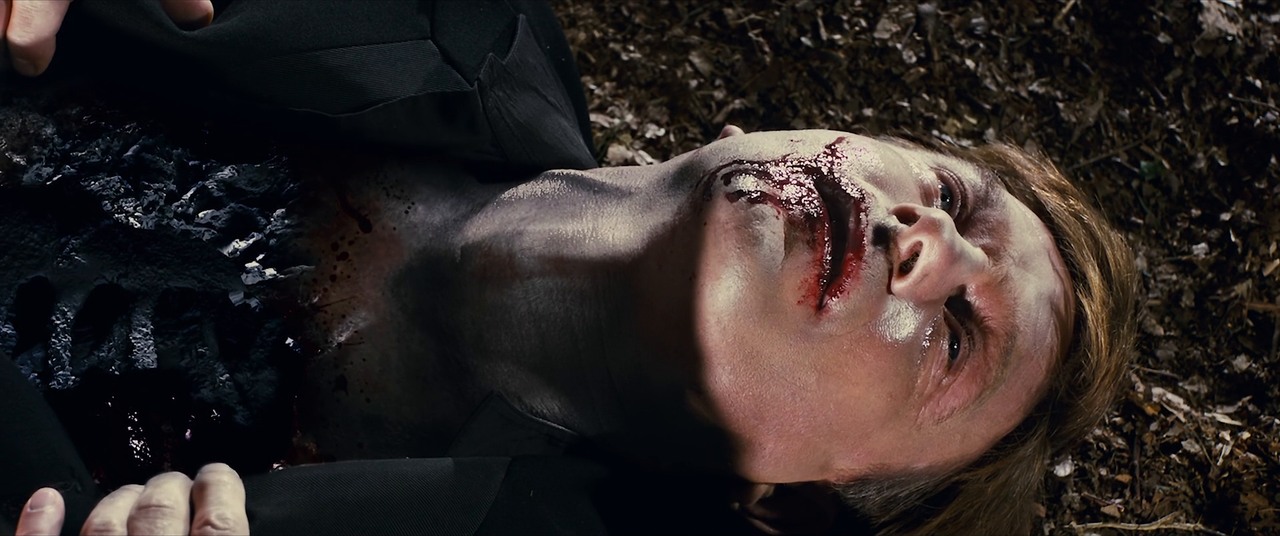
The body loses its shape

Dracula’s face becomes a dark crust.ENLARGE ↗
Dracula’s face becomes a dark crust.

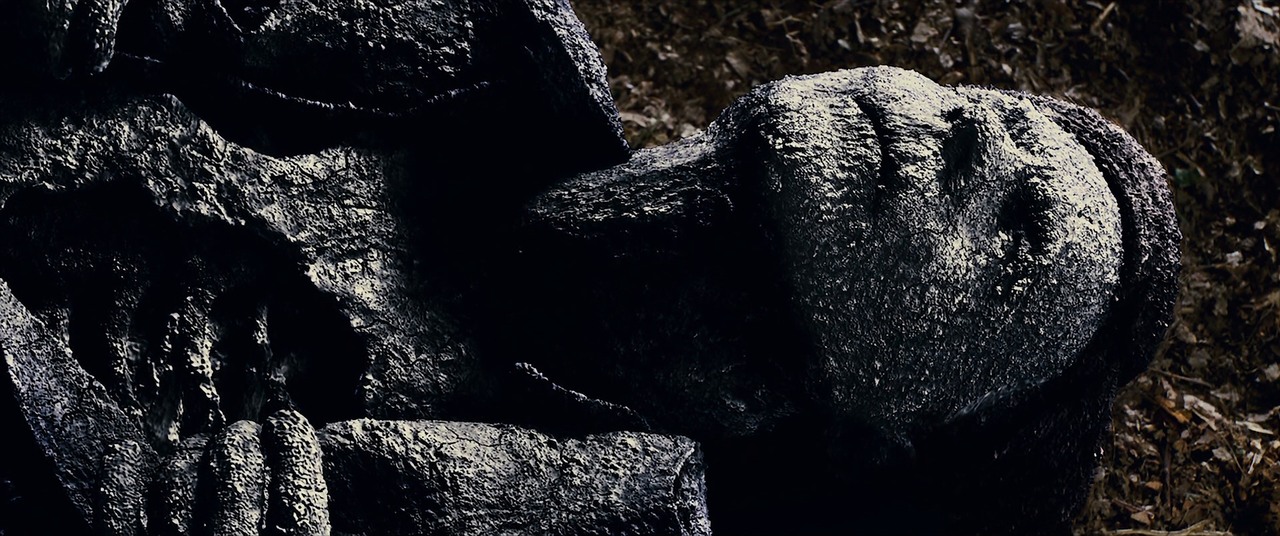
The ending makes recognition unstable: the actor’s features are progressively covered, broken down and dispersed. This repeats Tania’s destruction on a larger narrative scale. The face that held the film’s romantic claim is the surface that finally fails.

Explore the sequence →

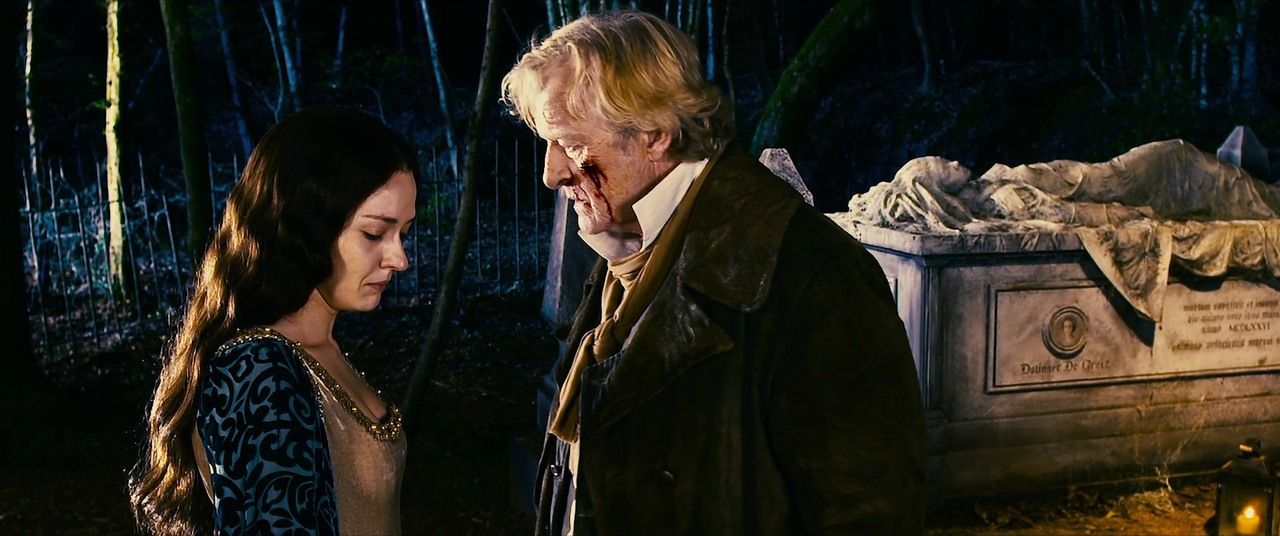
1:42:30

Two people remain

Mina and Van Helsing beside the tomb.ENLARGE ↗
Mina and Van Helsing beside the tomb.

The surviving pair share the space that Dracula had used to bind Mina to his past. The monument remains visible, but its meaning has changed. The composition ends the immediate struggle with two living witnesses rather than the solitary authority of the Count.

Back to the dossier entrance ↑

GORE & EFFECTS

The monster changes its body.

Follow the forest attack, graveyard, tavern, Lucy, Tania, mantis, castle crypt and final confrontation. Each study opens with a main image; expand its gallery to follow the stages and enlarge any view.

07:10–08:25

The forest: pursuit, owl and bite

The owl fills the frame.ENLARGE ↗
The owl fills the frame.

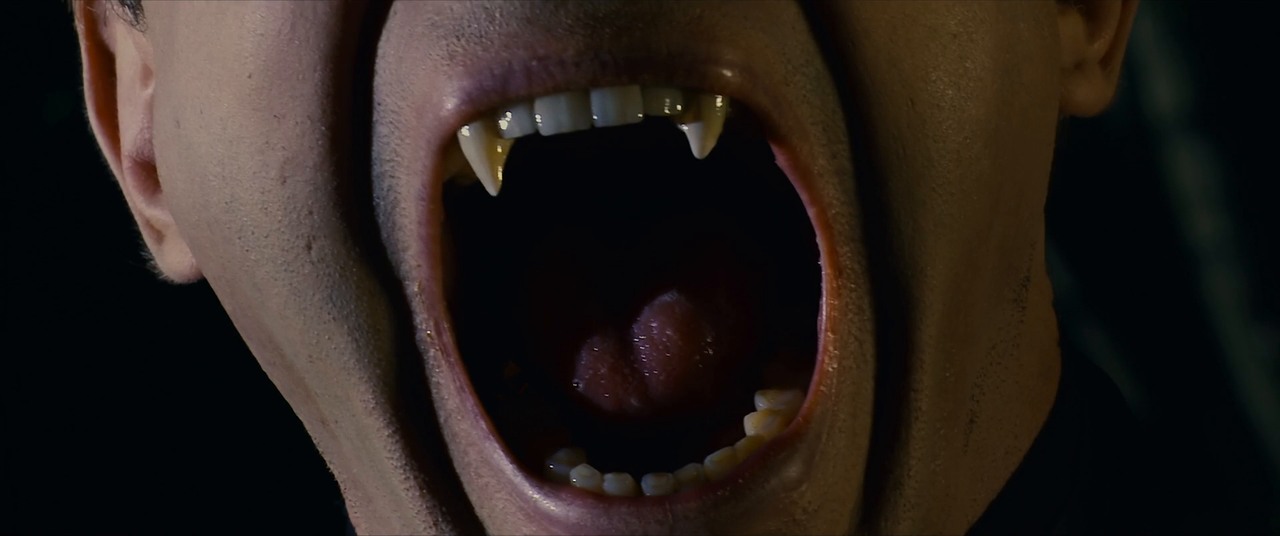
The sequence begins with a small figure divided from the surrounding darkness by her pale clothing. Close views of fear, the owl and Dracula then shorten the distance rapidly. Transformation is registered through the succession of recognisable bodies.

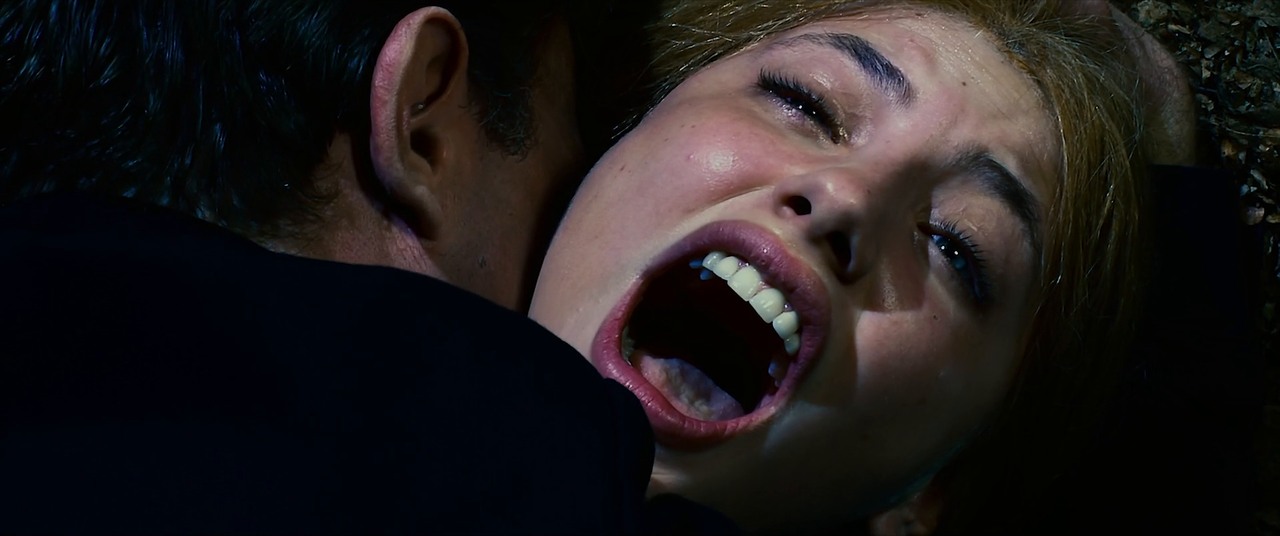
The bite is framed as contact between faces and neck, followed by a quieter image of Tania. The watching man at the cottage gives the attack a witness outside that intimate space.

Explore the sequence 9 stages

01 · 07:10

Tania on the forest path.ENLARGE ↗
Tania on the forest path.

02 · 07:30

The trees conceal the pursuer.ENLARGE ↗
The trees conceal the pursuer.

03 · 07:45

Tania reaches into the darkness.ENLARGE ↗
Tania reaches into the darkness.

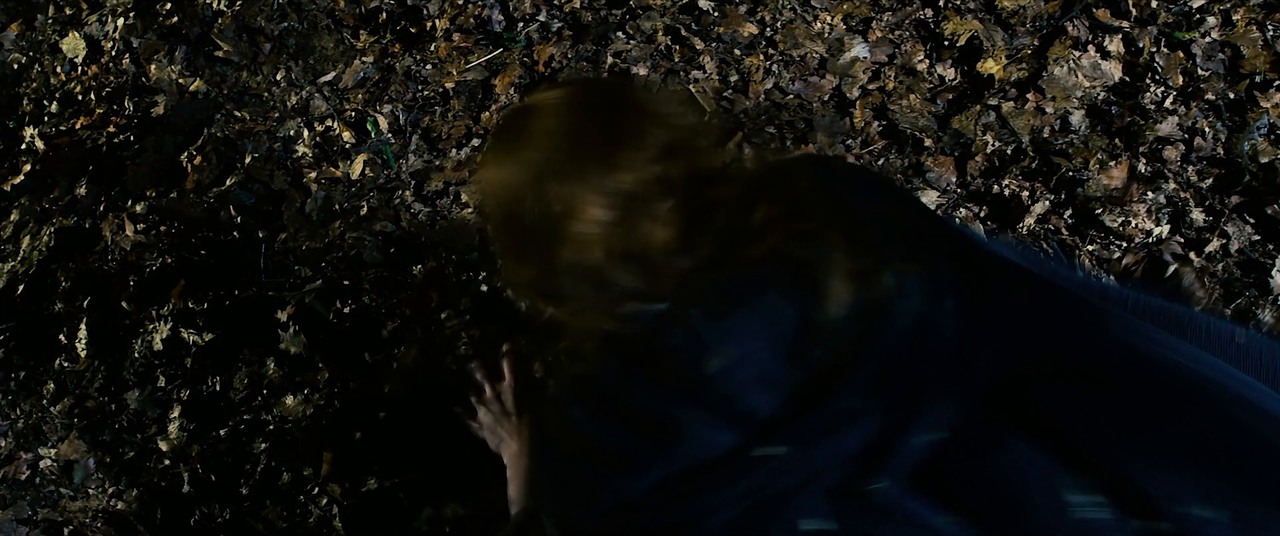
04 · 08:00

Tania falls back.ENLARGE ↗
Tania falls back.

05 · 08:05

The owl fills the frame.ENLARGE ↗
The owl fills the frame.

06 · 08:10

Dracula bares his fangs.ENLARGE ↗
Dracula bares his fangs.

07 · 08:15

The bite at Tania’s neck.ENLARGE ↗
The bite at Tania’s neck.

08 · 08:20

A witness at the cottage.ENLARGE ↗
A witness at the cottage.

09 · 08:25

Tania after the attack.ENLARGE ↗
Tania after the attack.
Back to the effects guide ↑

13:15–15:00

The graveyard: an opened coffin and a broken face

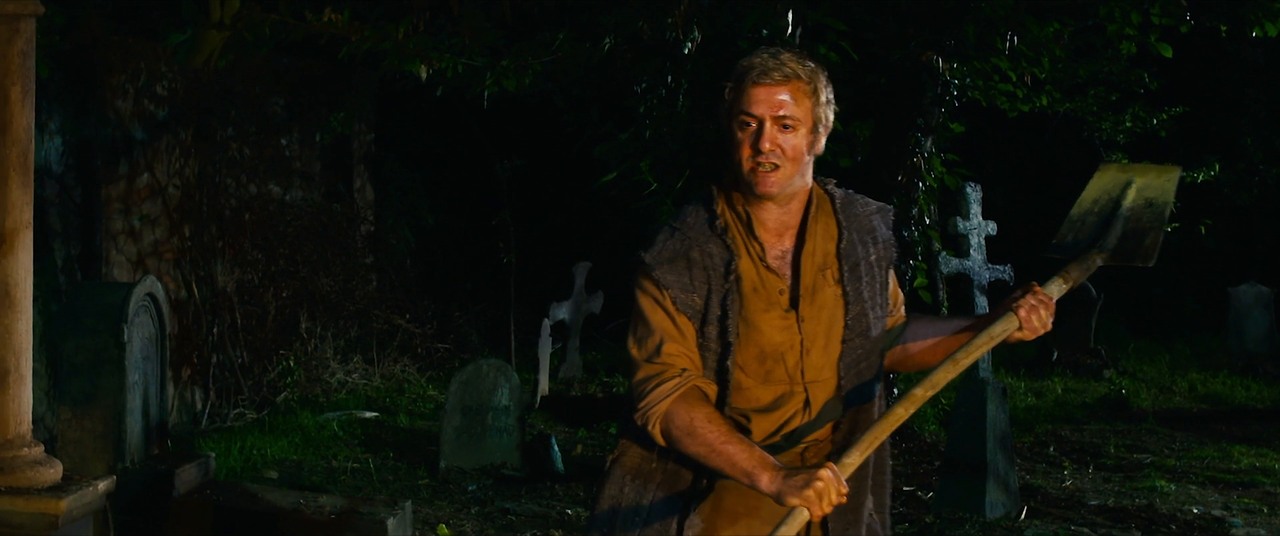
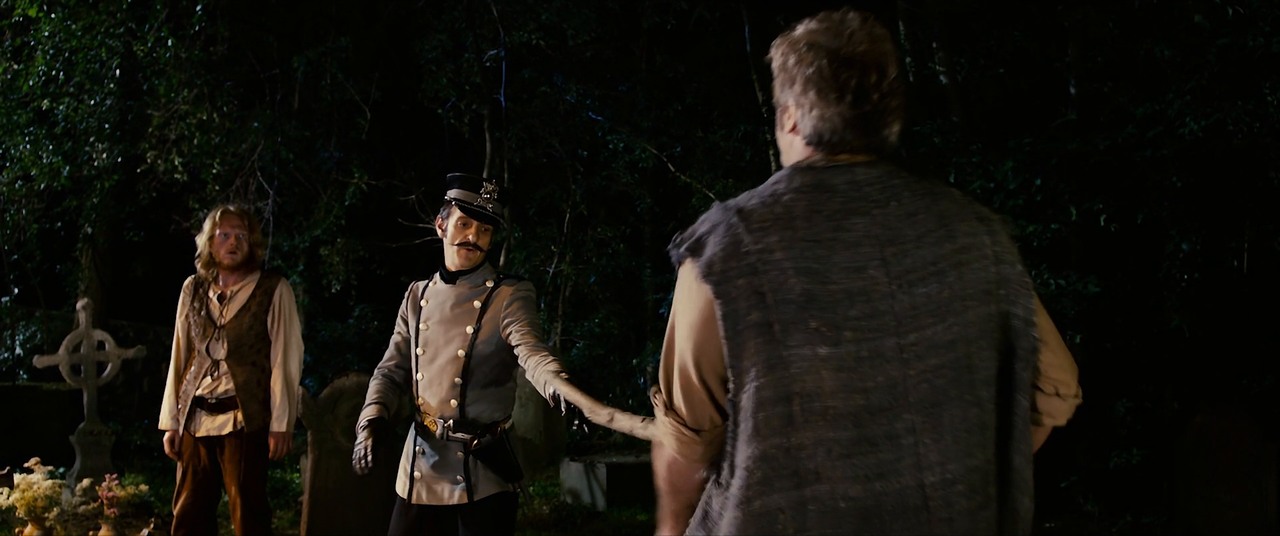
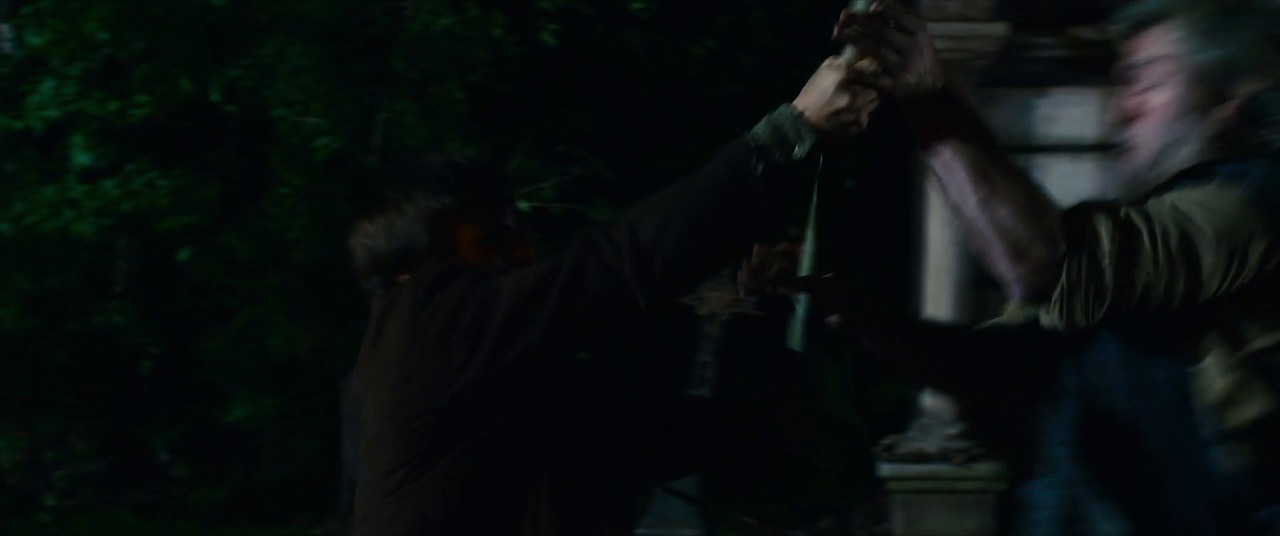
Renfield with the axe.ENLARGE ↗
Renfield with the axe.

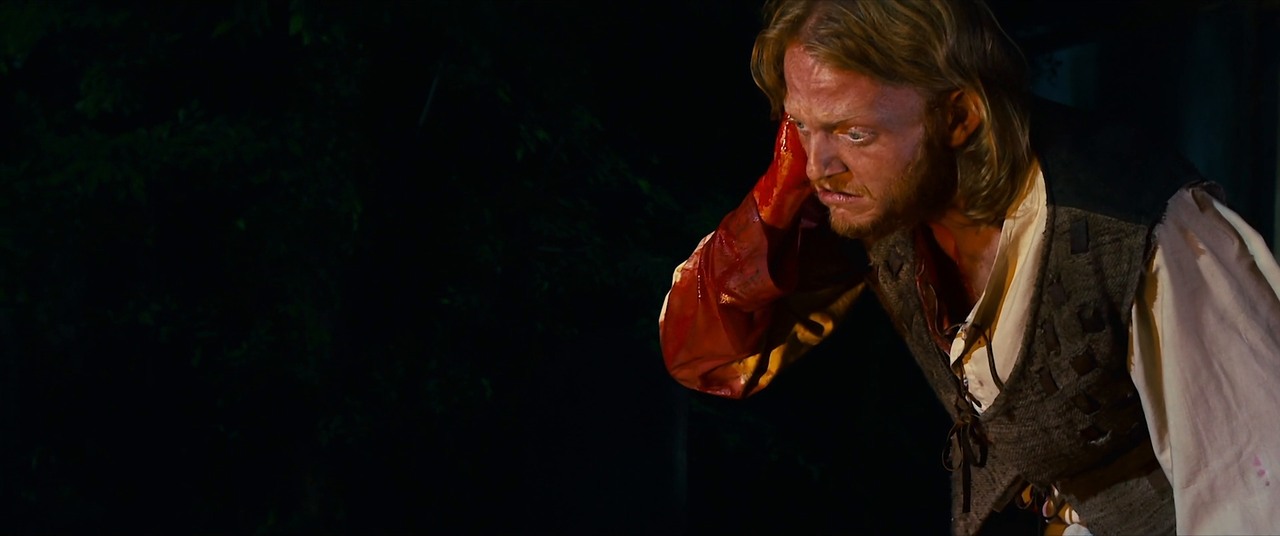
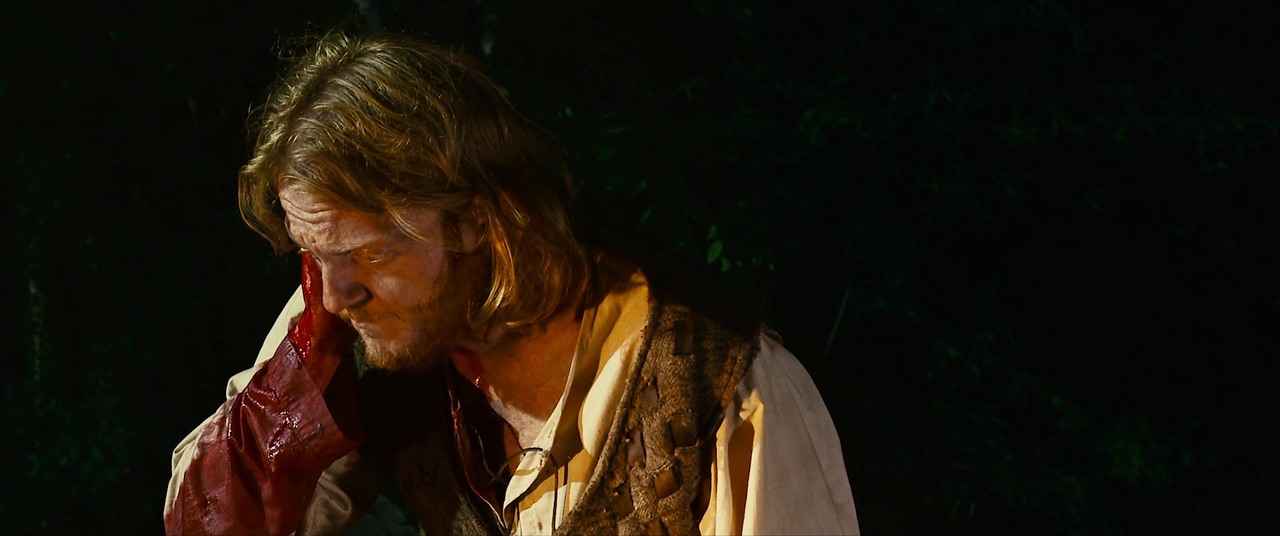
The orderly inspection of Tania’s coffin gives way to a struggle over the body. Renfield’s intrusion brings the men together at arm’s length. The axe then changes the scale of the confrontation, with a damaged face supplying its most conspicuous aftermath.

The gallery keeps the preparations and reactions around the injury. The coffin, the weapon and the men’s positions explain how a graveyard inspection turns into another violent public encounter.

Explore the sequence 9 stages

01 · 13:15

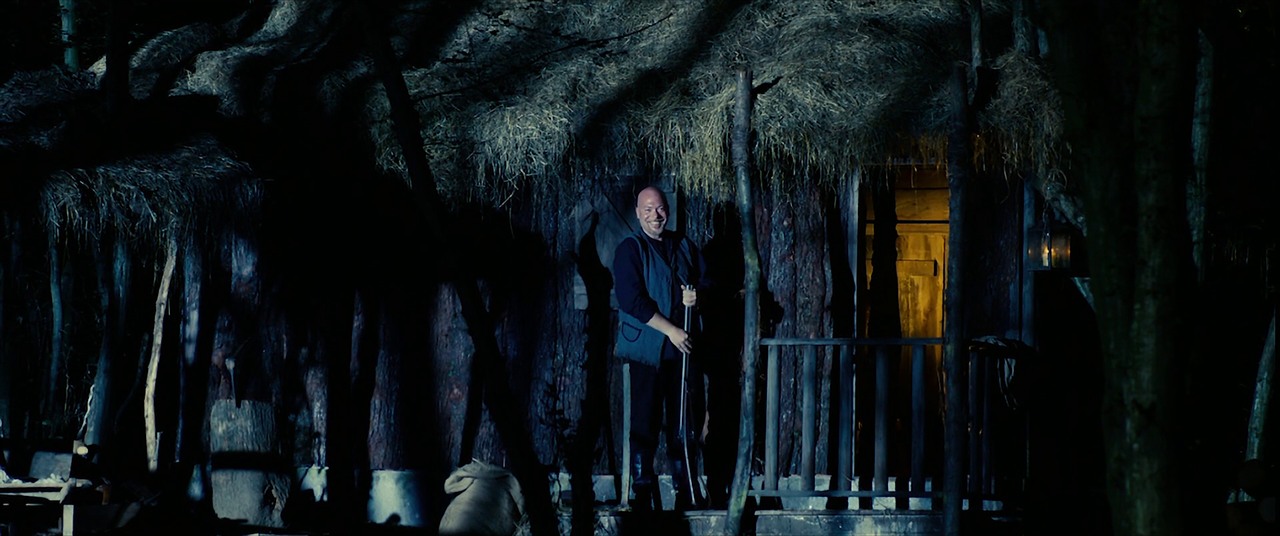
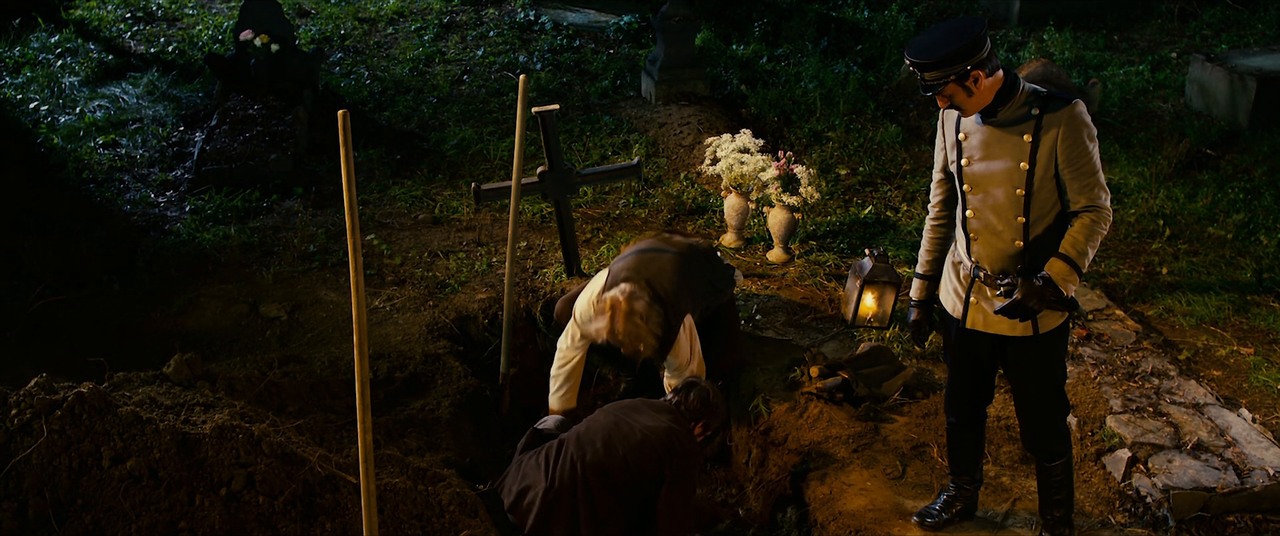
The men gather around the grave.ENLARGE ↗
The men gather around the grave.

02 · 13:40

Tania in the opened coffin.ENLARGE ↗
Tania in the opened coffin.

03 · 13:45

Renfield enters behind Milos.ENLARGE ↗
Renfield enters behind Milos.

04 · 14:00

The men confront Renfield.ENLARGE ↗
The men confront Renfield.

05 · 14:15

The axe rises in the struggle.ENLARGE ↗
The axe rises in the struggle.

06 · 14:25

Renfield with the axe.ENLARGE ↗
Renfield with the axe.

07 · 14:45

Milos’s wounded face.ENLARGE ↗
Milos’s wounded face.

08 · 14:50

An injured man recoils.ENLARGE ↗
An injured man recoils.

09 · 15:00

Blood stains the raised sleeve.ENLARGE ↗
Blood stains the raised sleeve.
Back to the effects guide ↑

1:08:30–1:11:45

The tavern: a swarm becomes a massacre

The swarm fills the tavern.ENLARGE ↗
The swarm fills the tavern.

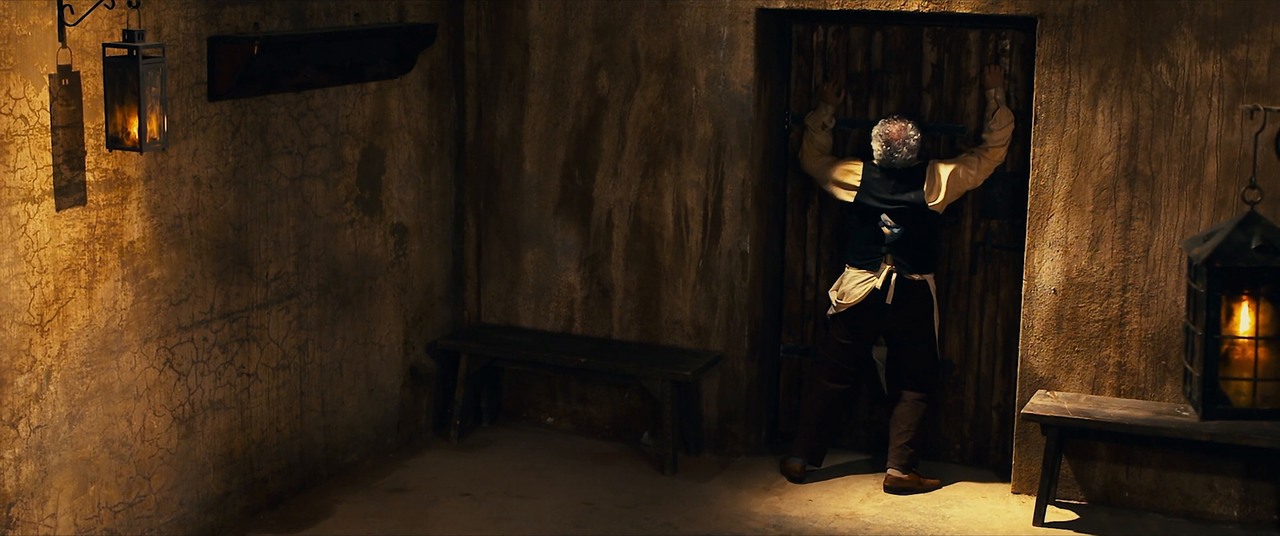
The flies occupy the air before Dracula occupies the room. The broad view makes this a collective encounter, then the attack breaks the group into individual wounds and reactions. A small moving creature and a human predator become two forms of the same threat.

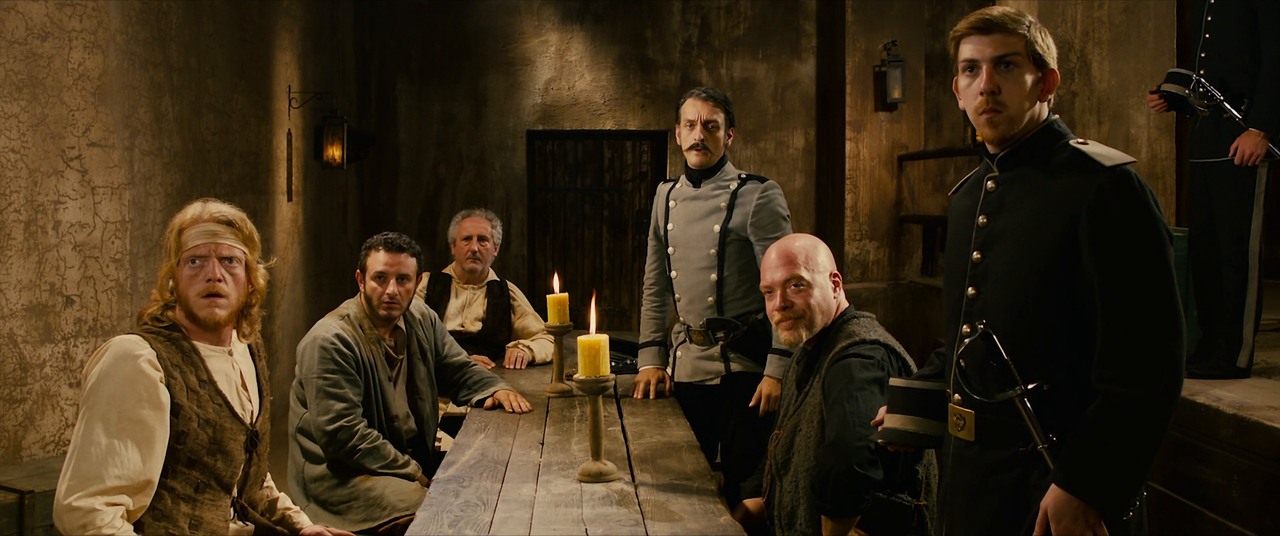
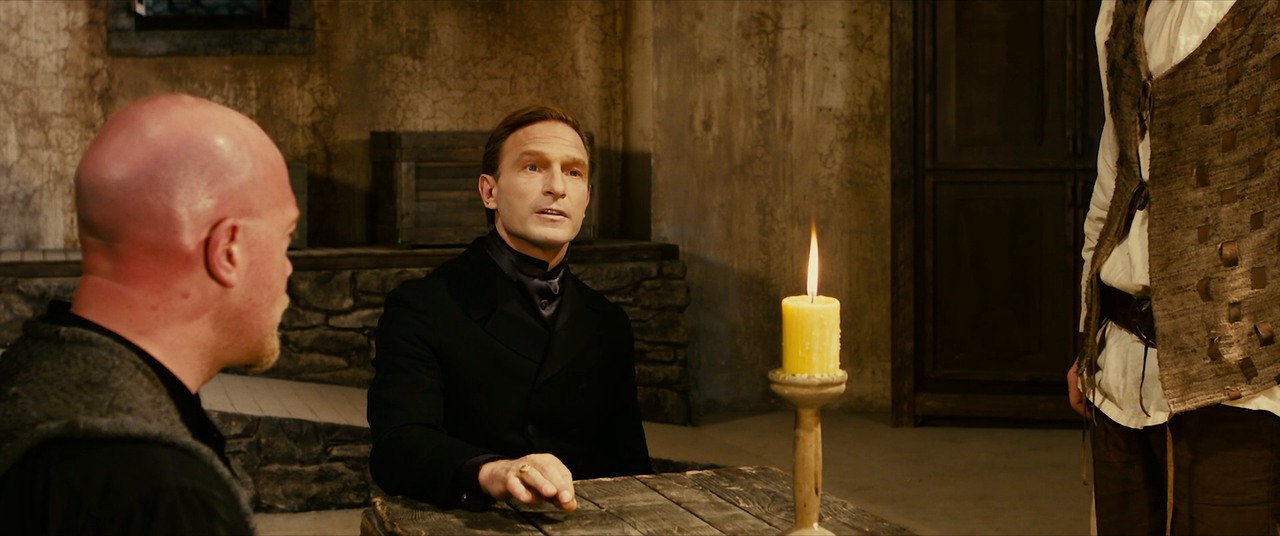
The return to a wide view matters: it places the bodies back inside the room whose occupants had tried to discuss their position. The Count’s composed posture stands against the disorder he has produced.

Explore the sequence 12 stages

01 · 1:08:30

Flies gather in close view.ENLARGE ↗
Flies gather in close view.

02 · 1:08:45

The swarm fills the tavern.ENLARGE ↗
The swarm fills the tavern.

03 · 1:08:50

The men watch the disturbance.ENLARGE ↗
The men watch the disturbance.

04 · 1:09:00

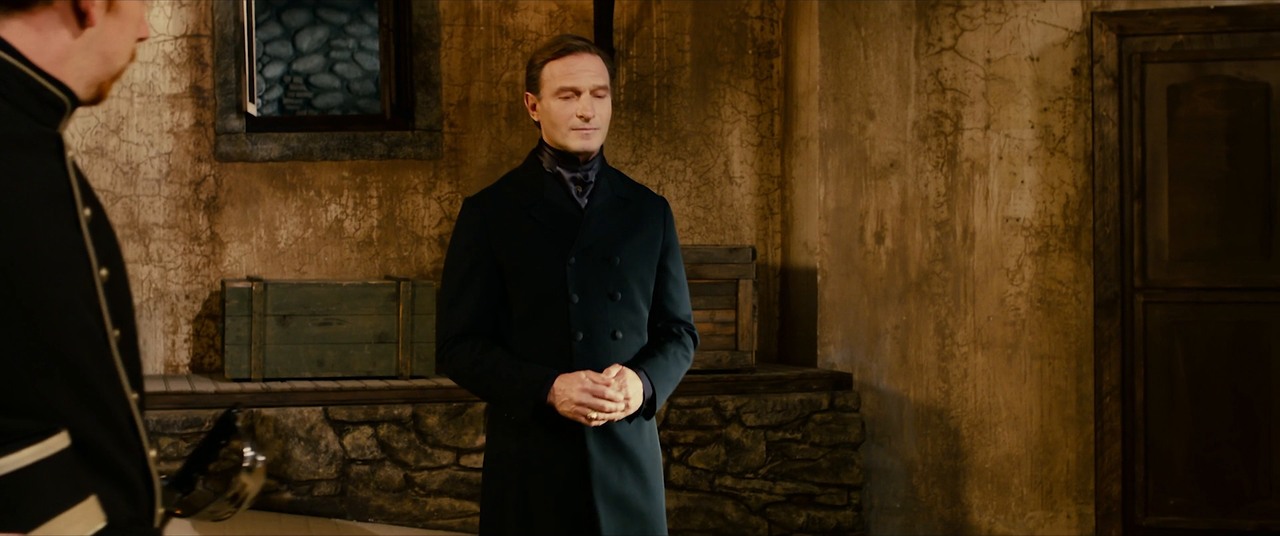
Dracula stands in the room.ENLARGE ↗
Dracula stands in the room.

05 · 1:09:15

The Count faces the table.ENLARGE ↗
The Count faces the table.

06 · 1:10:00

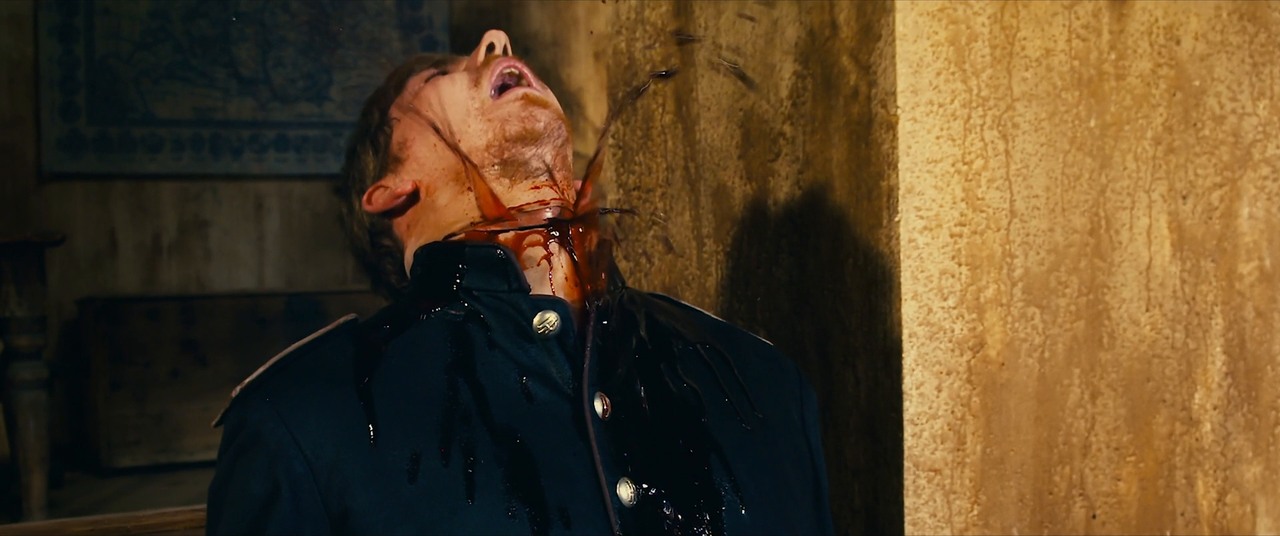
Blood sprays at the wall.ENLARGE ↗
Blood sprays at the wall.

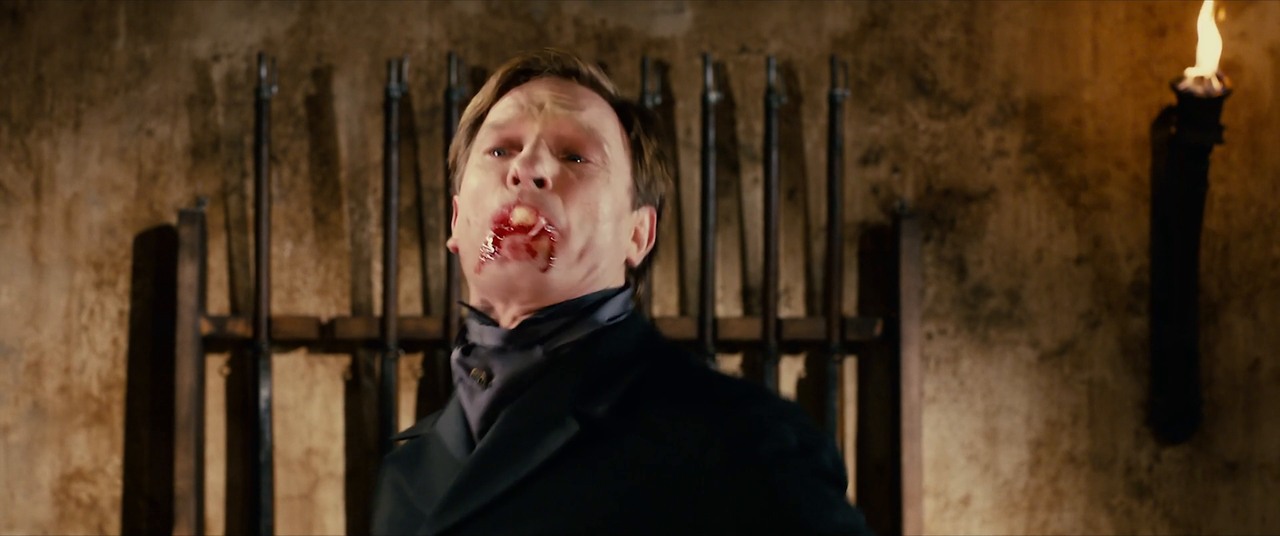
07 · 1:10:10

Dracula’s bloodied mouth.ENLARGE ↗
Dracula’s bloodied mouth.

08 · 1:10:20

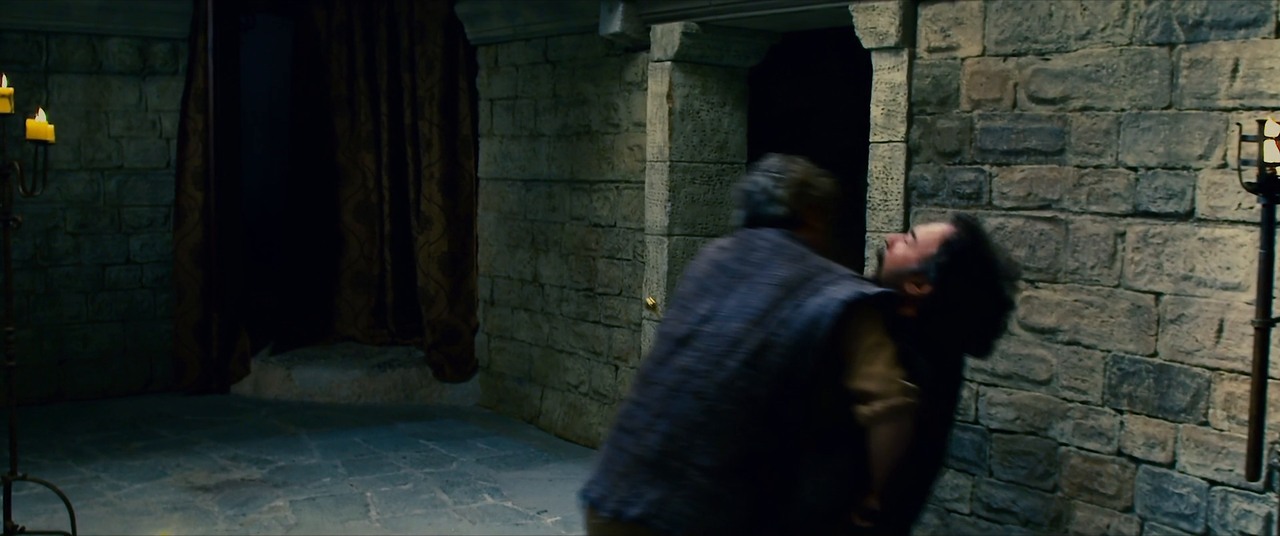
A victim arches backward.ENLARGE ↗
A victim arches backward.

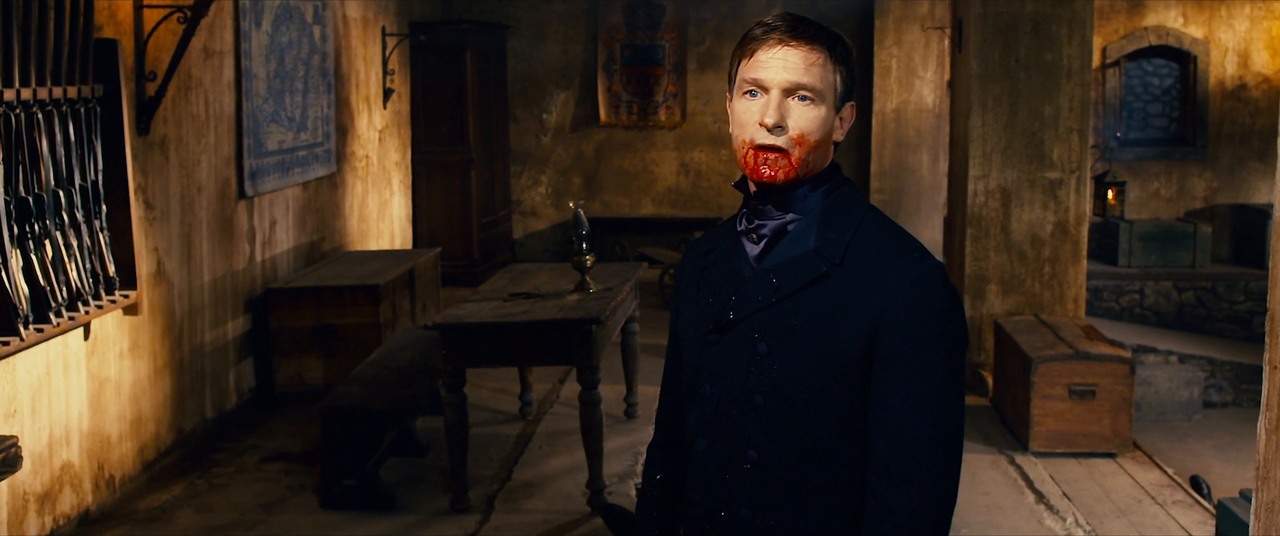
09 · 1:10:35

Blood beneath the Count’s chin.ENLARGE ↗
Blood beneath the Count’s chin.

10 · 1:10:55

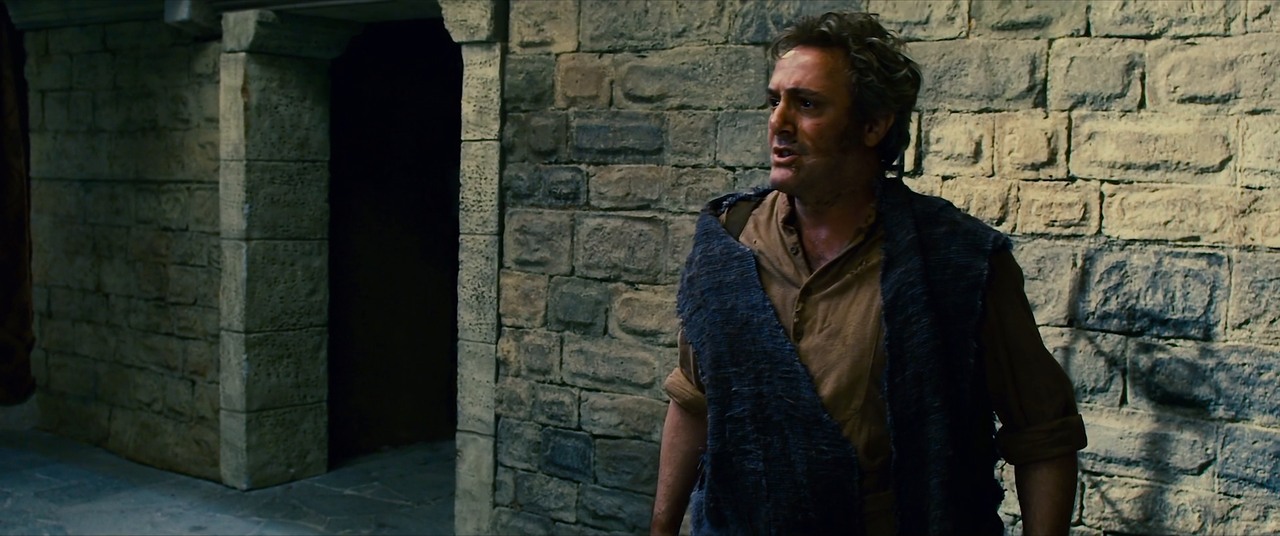
Delbruck raises his gun.ENLARGE ↗
Delbruck raises his gun.

11 · 1:11:25

Delbruck falls back.ENLARGE ↗
Delbruck falls back.

12 · 1:11:45

The tavern after the attack.ENLARGE ↗
The tavern after the attack.
Back to the effects guide ↑

1:15:05–1:17:45

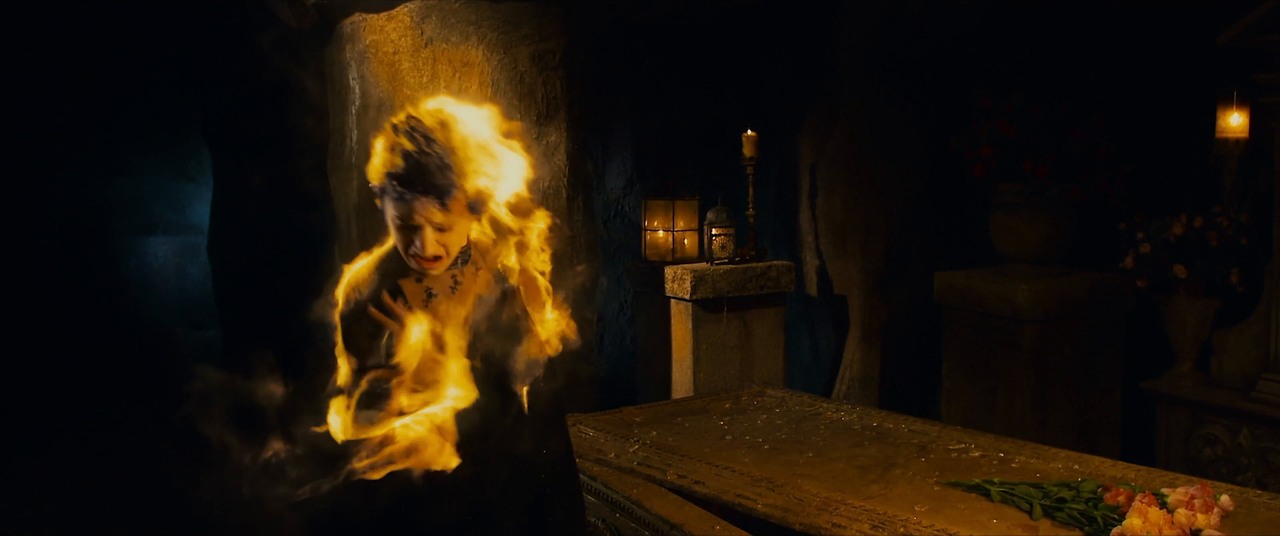
Lucy: from empty coffin to fire

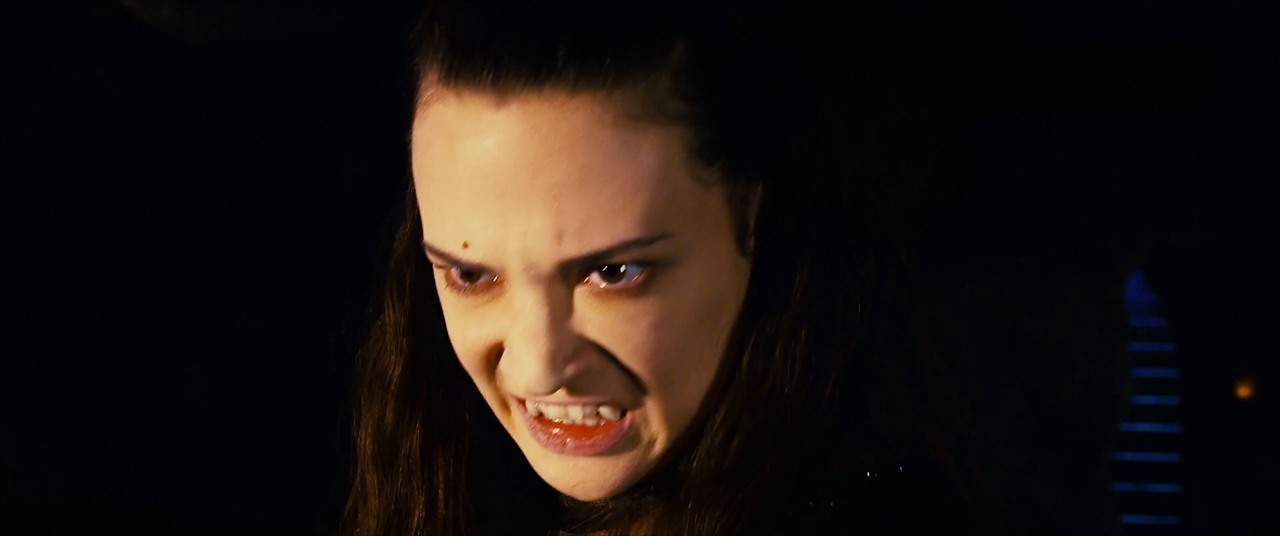
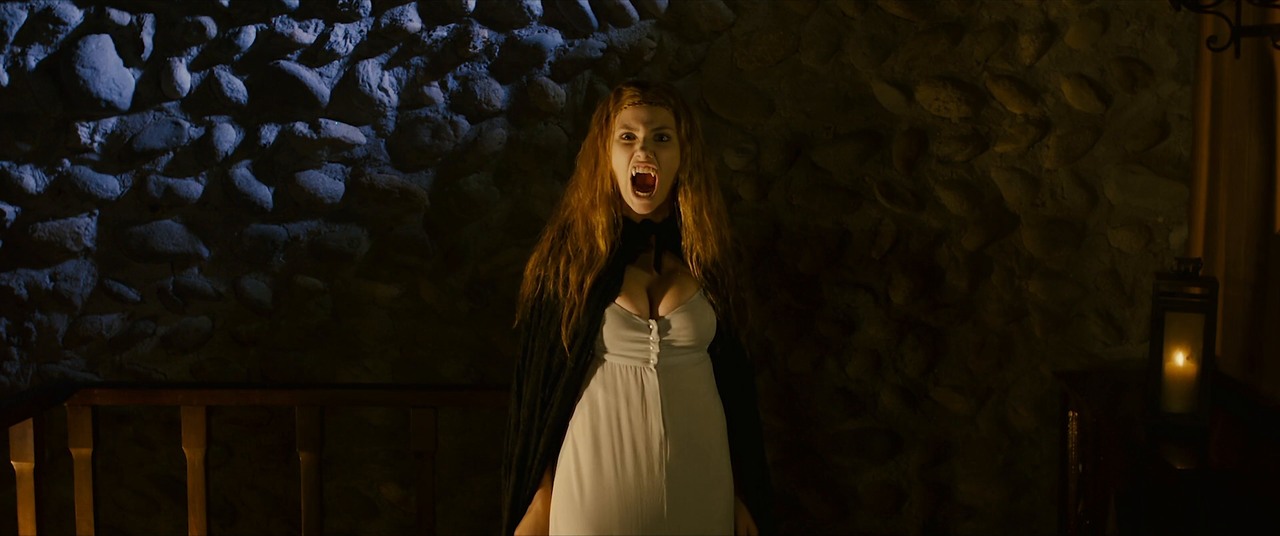
Lucy bares her fangs.ENLARGE ↗
Lucy bares her fangs.

An empty coffin prepares the appearance of a familiar person in an unfamiliar role. Lucy approaches Mina while Van Helsing intervenes, so the sequence repeatedly divides attraction from defence. Her exposed fangs make the change explicit before the flames take over.

The burning figure and her return to the coffin are shown against the crypt’s fixed surfaces. Those spatial references preserve continuity while the appearance of the victim changes.

Explore the sequence 12 stages

01 · 1:15:05

The closed coffin.ENLARGE ↗
The closed coffin.

02 · 1:15:25

The coffin is empty.ENLARGE ↗
The coffin is empty.

03 · 1:16:00

Lucy at the crypt entrance.ENLARGE ↗
Lucy at the crypt entrance.

04 · 1:16:15

Lucy forces Van Helsing back.ENLARGE ↗
Lucy forces Van Helsing back.

05 · 1:16:25

Lucy approaches Mina.ENLARGE ↗
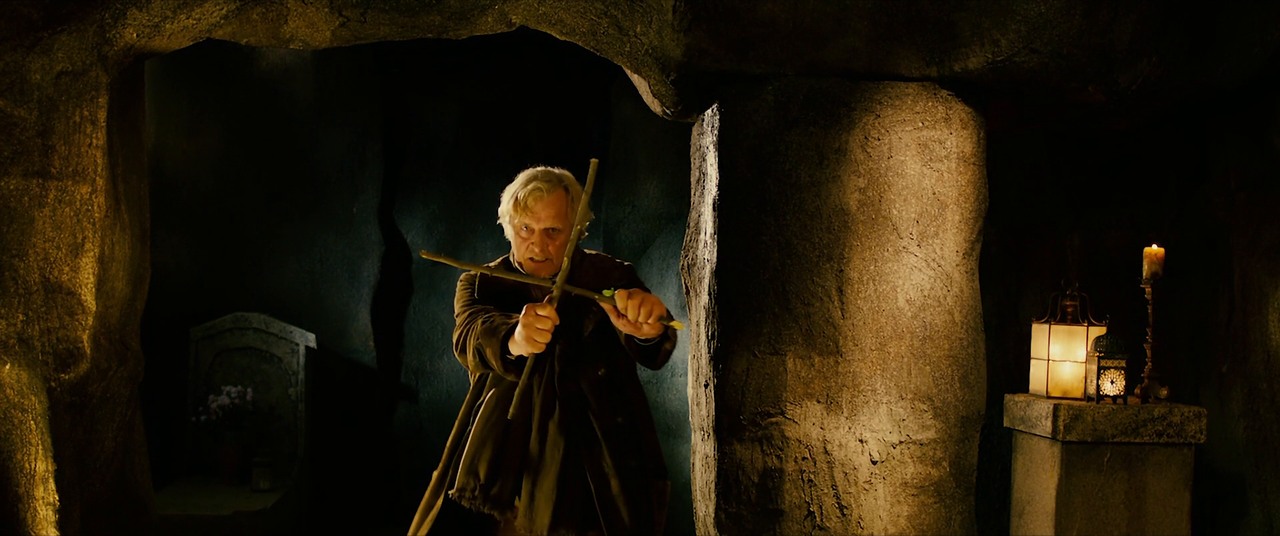
Lucy approaches Mina.

06 · 1:16:35

Van Helsing raises the cross.ENLARGE ↗
Van Helsing raises the cross.

07 · 1:16:45

Lucy bares her fangs.ENLARGE ↗
Lucy bares her fangs.

08 · 1:16:55

Flame enters the confrontation.ENLARGE ↗
Flame enters the confrontation.

09 · 1:17:00

Lucy catches fire.ENLARGE ↗
Lucy catches fire.

10 · 1:17:15

The burning body falls.ENLARGE ↗
The burning body falls.

11 · 1:17:30

Lucy lies in the coffin.ENLARGE ↗
Lucy lies in the coffin.

12 · 1:17:45

Mina and Van Helsing look on.ENLARGE ↗
Mina and Van Helsing look on.
Back to the effects guide ↑

1:22:08–1:22:54

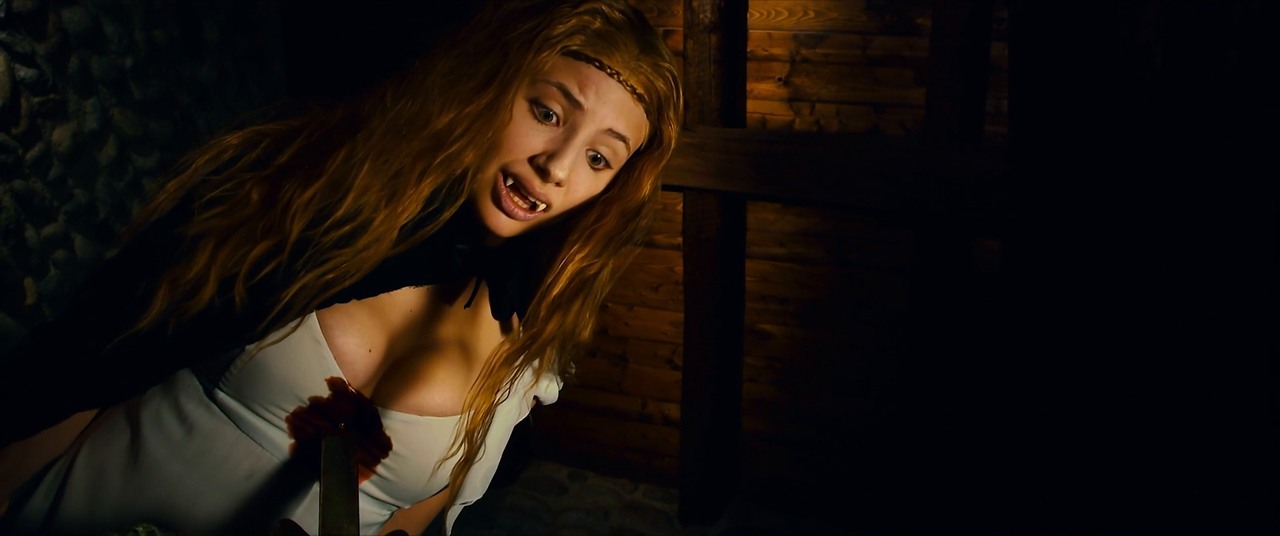
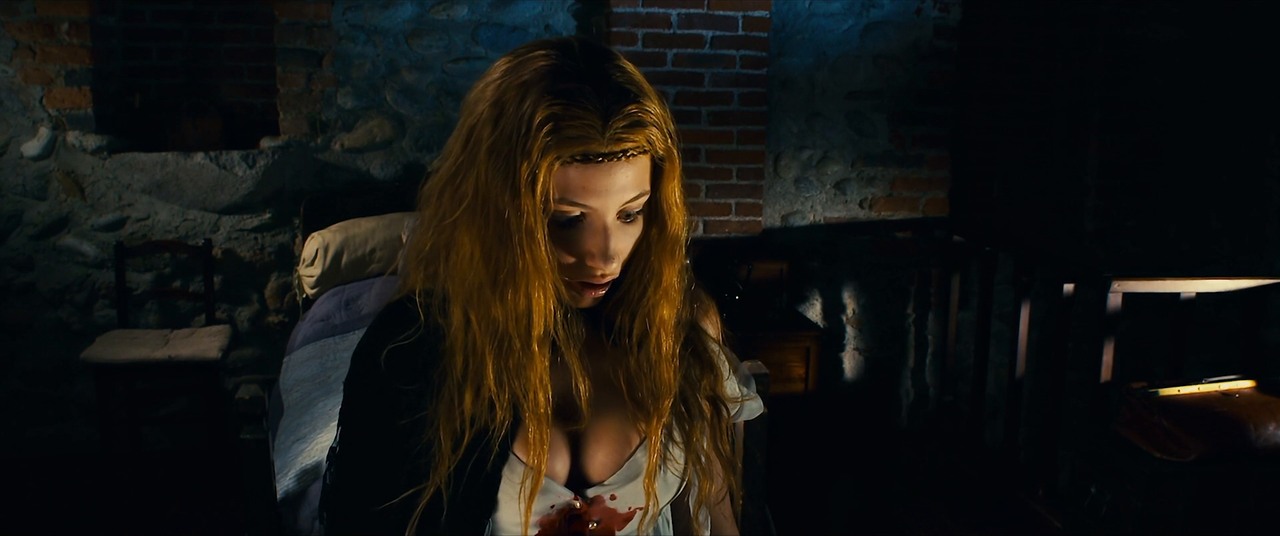
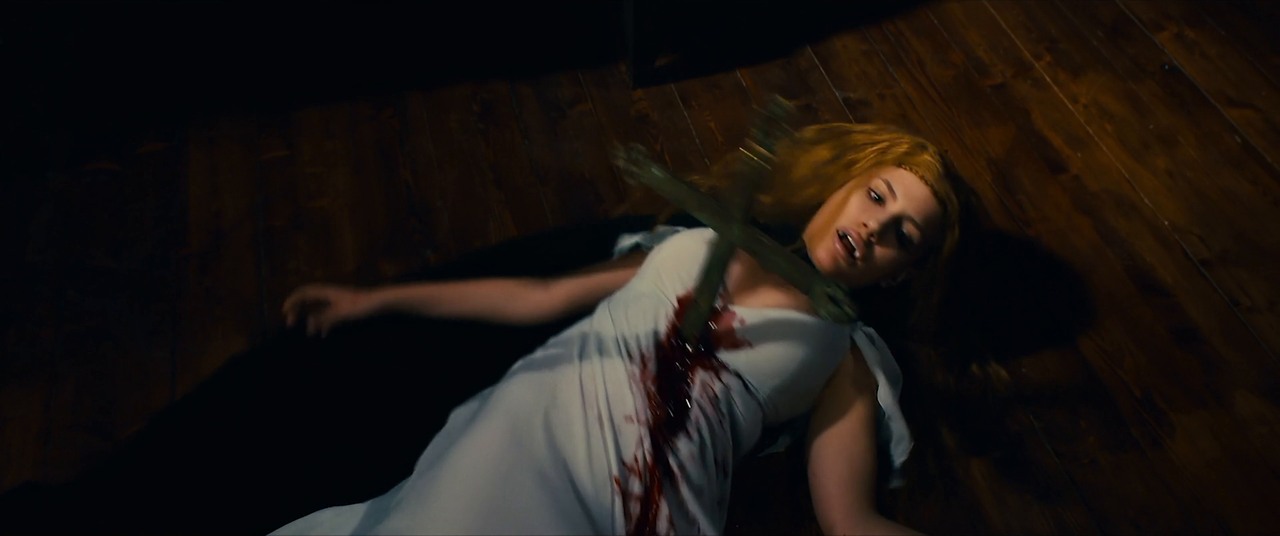
Tania: the wound becomes dust

A dark crust replaces the flesh.ENLARGE ↗
A dark crust replaces the flesh.

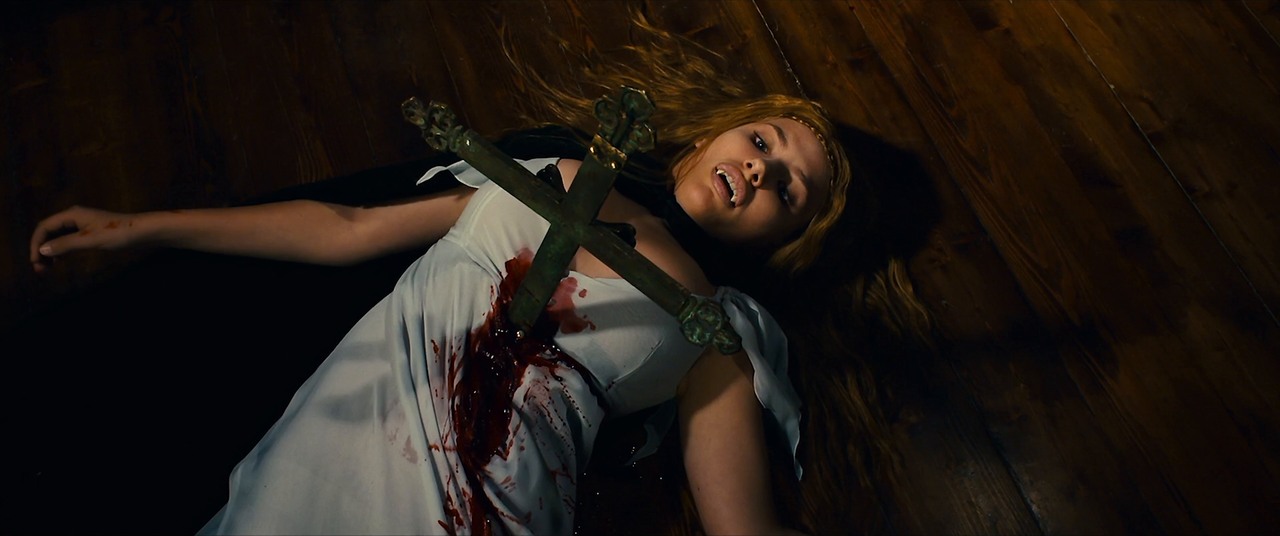
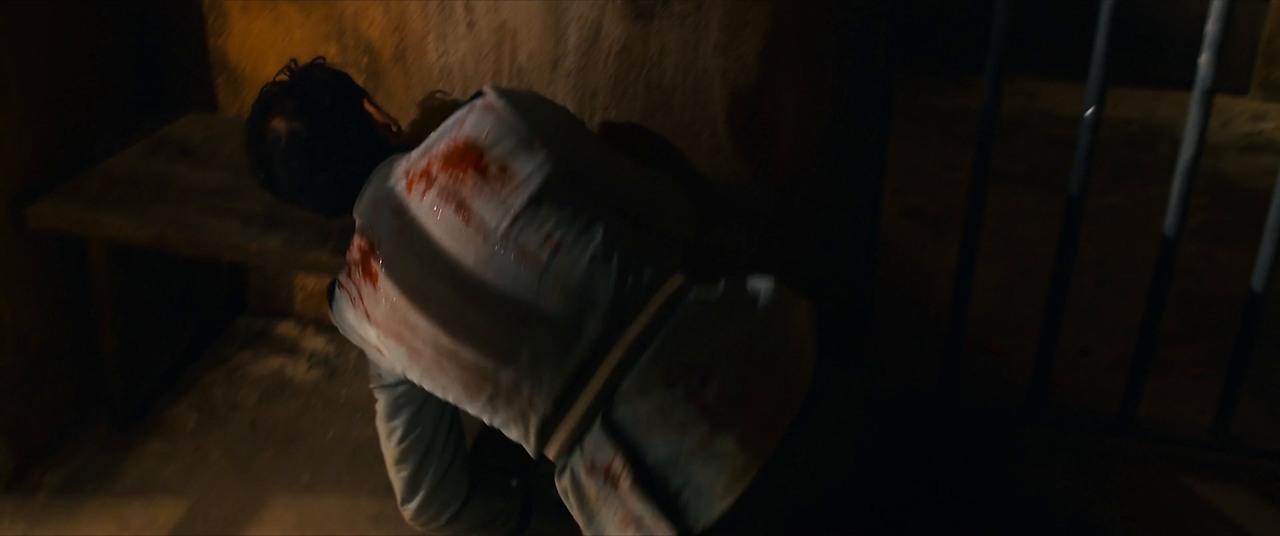
The attack on Van Helsing reverses through the chair and the improvised barrier between the bodies. Close views register Tania’s surprise at her wound before a higher angle establishes her position on the floor.

Blood and torn clothing give way to a blackened surface and then dispersal. The sequence alternates the changing body with the hunter’s face, distinguishing the effect’s display from the response of the person who survives it.

Explore the sequence 12 stages

01 · 1:22:08

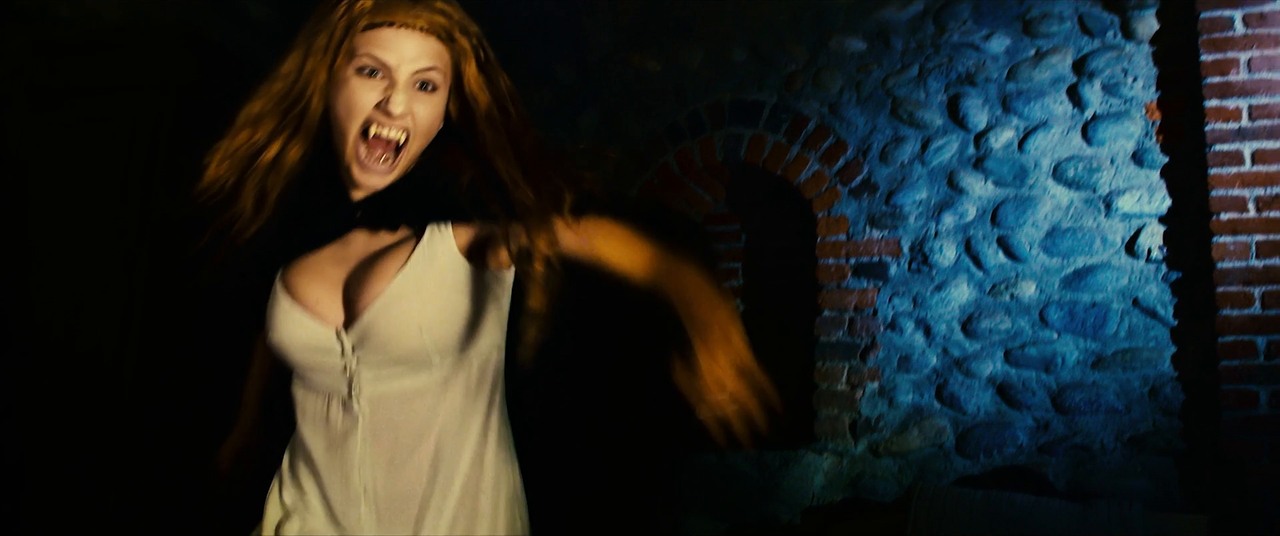
Tania enters with her fangs exposed.ENLARGE ↗
Tania enters with her fangs exposed.

02 · 1:22:12

Tania rushes forward.ENLARGE ↗
Tania rushes forward.

03 · 1:22:16

Van Helsing falls back.ENLARGE ↗
Van Helsing falls back.

04 · 1:22:18

The wound opens in Tania’s chest.ENLARGE ↗
The wound opens in Tania’s chest.

05 · 1:22:22

Tania looks down at the injury.ENLARGE ↗
Tania looks down at the injury.

06 · 1:22:28

Tania falls to the floor.ENLARGE ↗
Tania falls to the floor.

07 · 1:22:34

The broken chair crosses her body.ENLARGE ↗
The broken chair crosses her body.

08 · 1:22:46

Her face and chest begin to change.ENLARGE ↗
Her face and chest begin to change.

09 · 1:22:48

A dark crust replaces the flesh.ENLARGE ↗
A dark crust replaces the flesh.

10 · 1:22:50

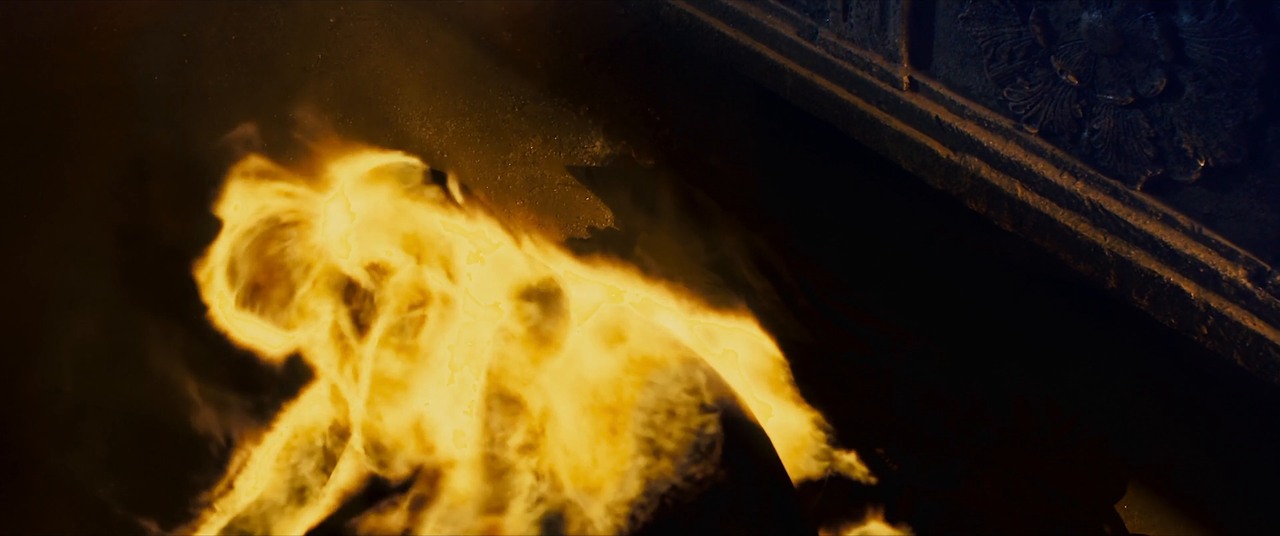
The body breaks into fragments.ENLARGE ↗
The body breaks into fragments.

11 · 1:22:52

Dust spreads across the floor.ENLARGE ↗
Dust spreads across the floor.

12 · 1:22:54

Van Helsing watches the aftermath.ENLARGE ↗
Van Helsing watches the aftermath.
Back to the effects guide ↑

1:23:18–1:24:04

The mantis: the corridor becomes a trap

The mantis advances.ENLARGE ↗
The mantis advances.

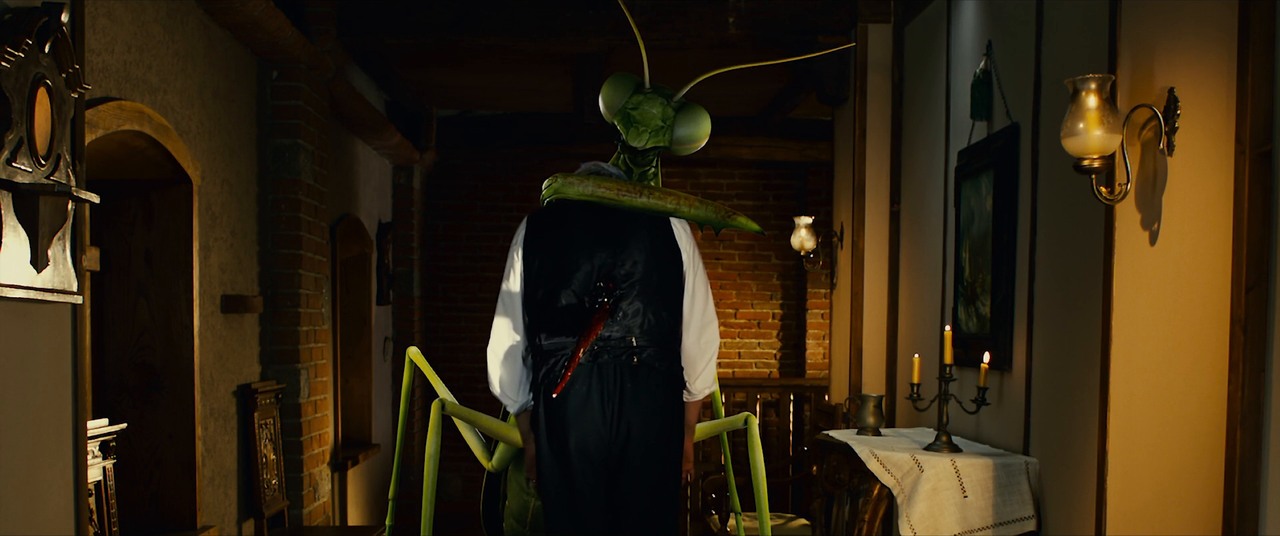
The long landing is first presented as an ordinary domestic passage. The mantis advances through its depth, then a wider view aligns its oversized limbs with the seated mayor. The architecture supplies the creature’s scale.

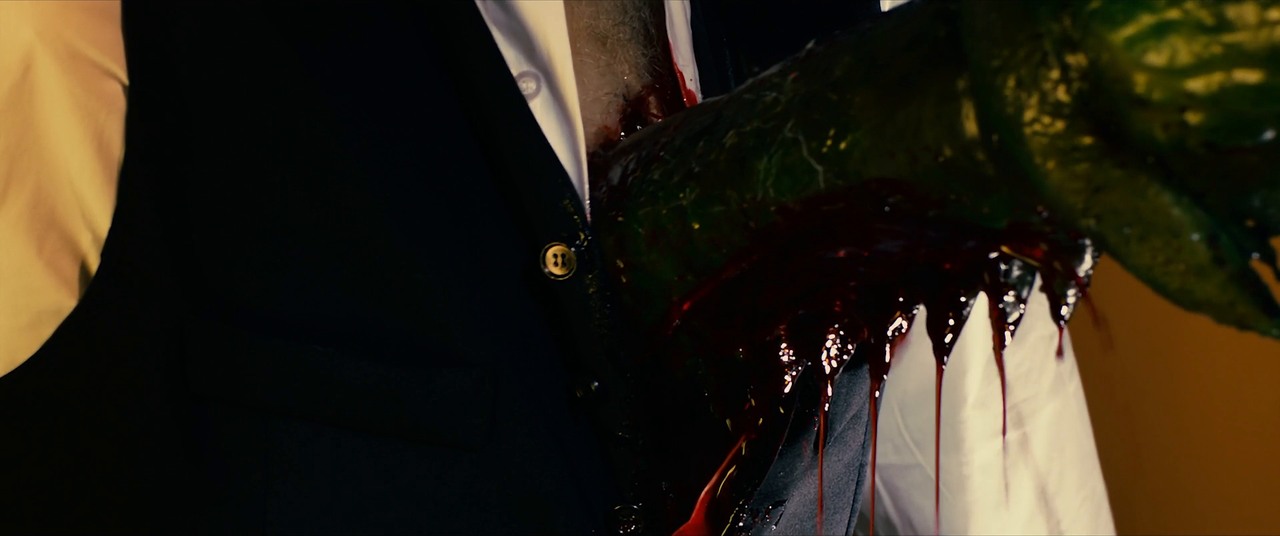
The injury is isolated in a close view before Mina’s reaction and the Count’s reappearance restore the human figures. The succession joins creature spectacle, bodily damage and abduction within one connected interior.

Explore the sequence 11 stages

01 · 1:23:18

The mayor sits beside the doorway.ENLARGE ↗
The mayor sits beside the doorway.

02 · 1:23:26

The empty landing.ENLARGE ↗
The empty landing.

03 · 1:23:34

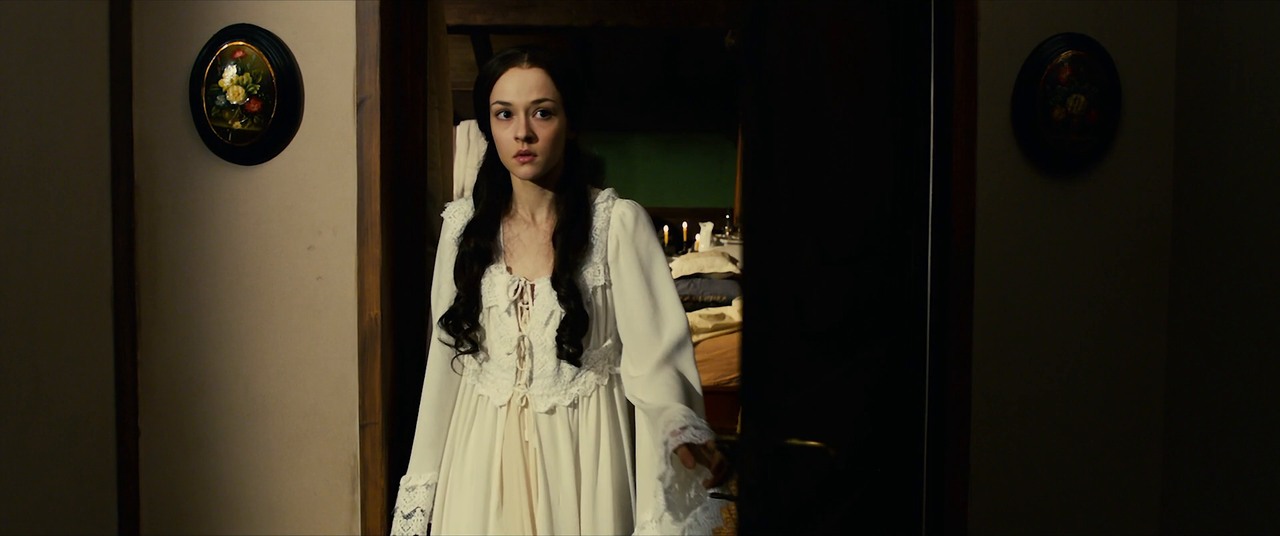
Mina turns toward the corridor.ENLARGE ↗
Mina turns toward the corridor.

04 · 1:23:40

The mantis advances.ENLARGE ↗
The mantis advances.

05 · 1:23:42

The mayor looks up.ENLARGE ↗
The mayor looks up.

06 · 1:23:46

The insect towers over its victim.ENLARGE ↗
The insect towers over its victim.

07 · 1:23:48

The wound in the mayor’s chest.ENLARGE ↗
The wound in the mayor’s chest.

08 · 1:23:50

Mina witnesses the attack.ENLARGE ↗
Mina witnesses the attack.

09 · 1:23:52

The body is held in the corridor.ENLARGE ↗
The body is held in the corridor.

10 · 1:23:58

Dracula reaches Mina.ENLARGE ↗
Dracula reaches Mina.

11 · 1:24:04

The Count carries her away.ENLARGE ↗
The Count carries her away.
Back to the effects guide ↑

1:33:20–1:35:45

The castle crypt: recognition and destruction

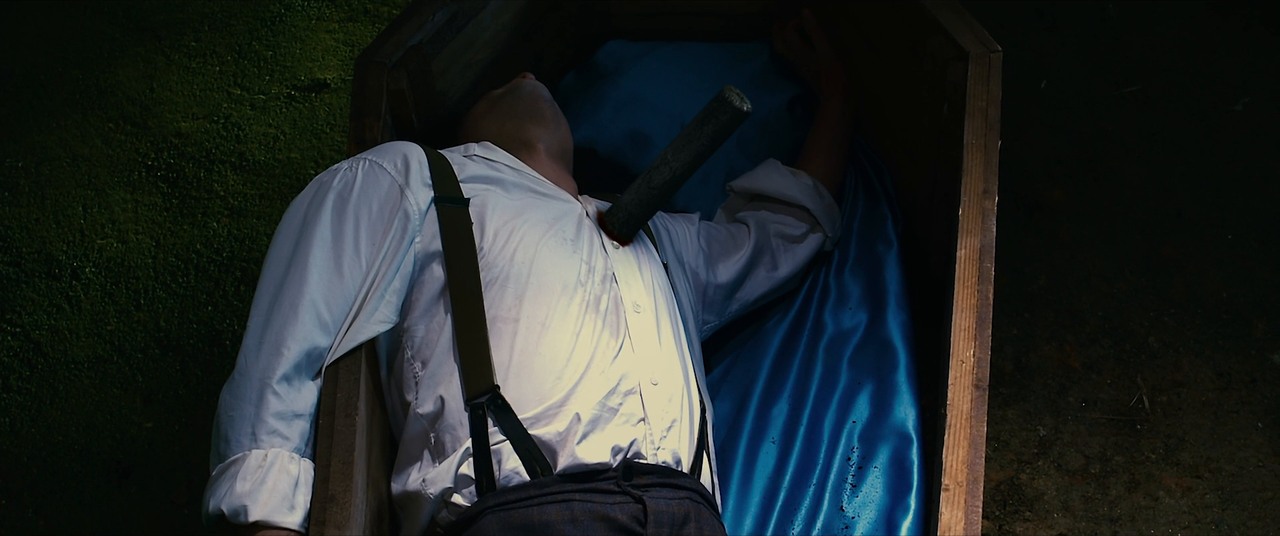
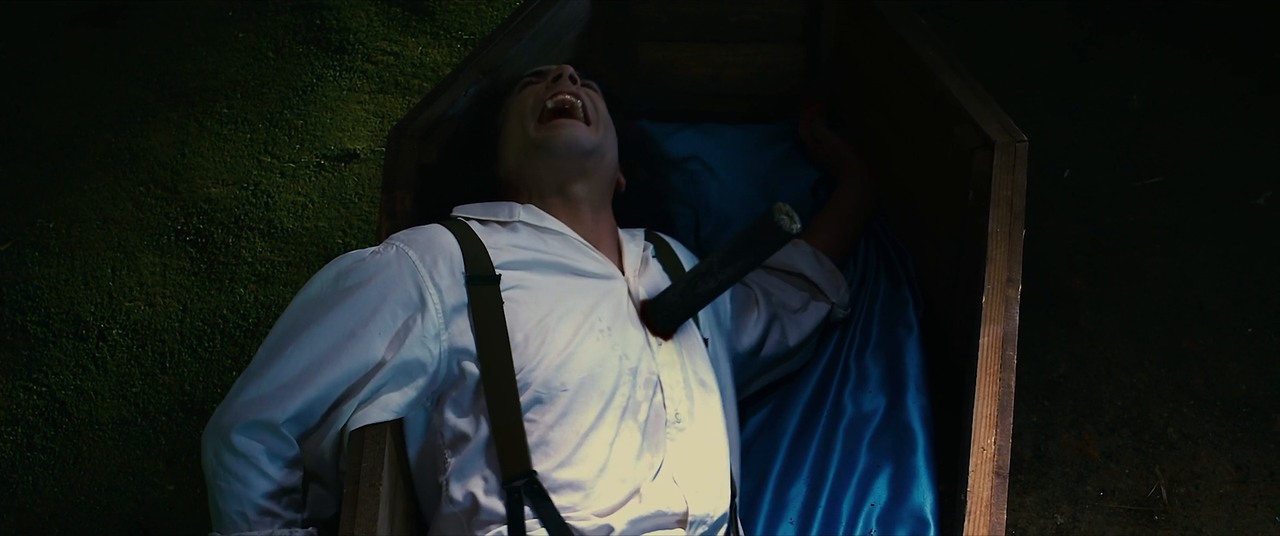
Jonathan falls back with the stake in his chest.ENLARGE ↗
Jonathan falls back with the stake in his chest.

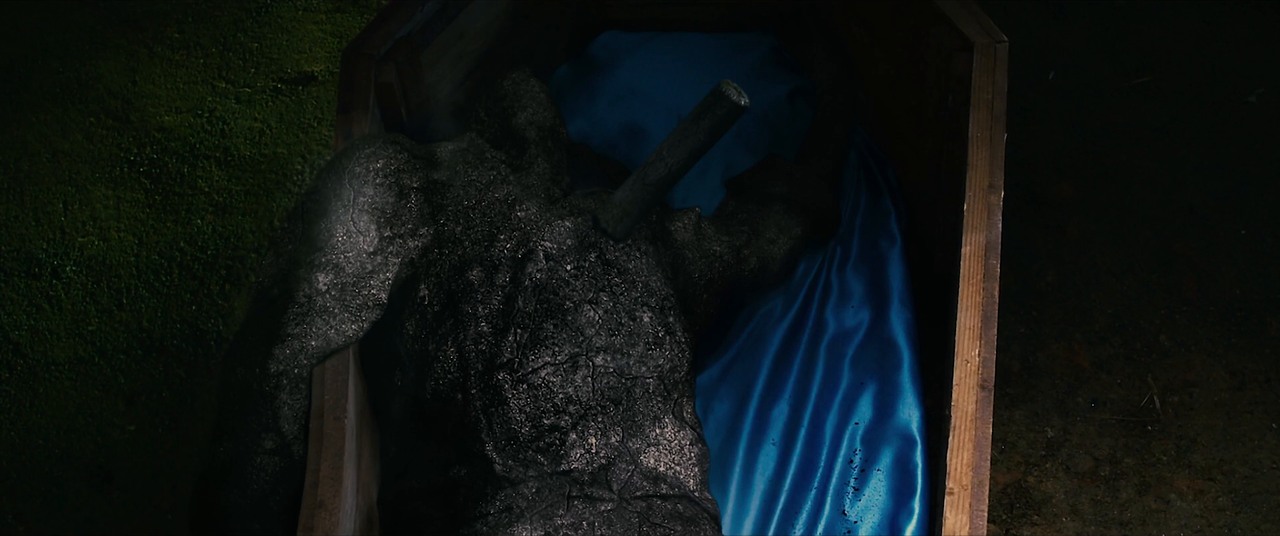
Jonathan’s eyes open inside the coffin, changing the act of finding him into an immediate threat. The rise of the body, the stake and the dispersal of the remains supply distinct stages. The man who arrived to work among books now belongs to the castle’s collection of the dead.

The adjoining attack on the priest extends the danger beyond the coffin. Keeping his fall and Renfield’s presence in the gallery reconnects the isolated effects to the cost of moving through the castle.

Explore the sequence 10 stages

01 · 1:33:20

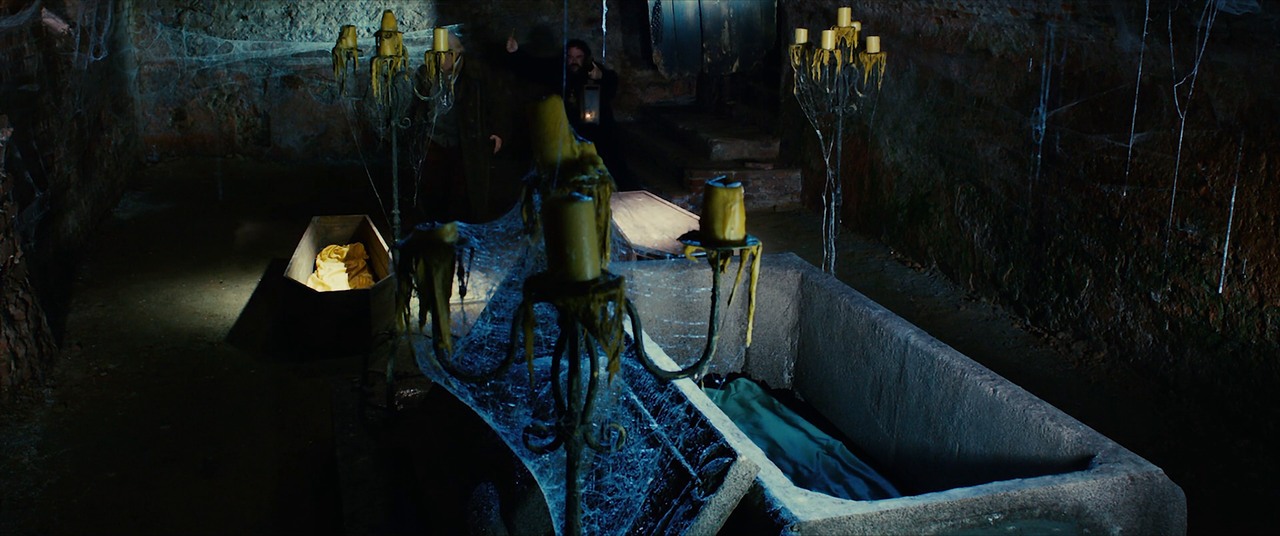
The coffin in the candlelit crypt.ENLARGE ↗
The coffin in the candlelit crypt.

02 · 1:33:45

Jonathan opens his eyes.ENLARGE ↗
Jonathan opens his eyes.

03 · 1:34:00

Jonathan reaches forward.ENLARGE ↗
Jonathan reaches forward.

04 · 1:34:10

The stake meets his chest.ENLARGE ↗
The stake meets his chest.

05 · 1:34:15

Jonathan falls back with the stake in his chest.ENLARGE ↗
Jonathan falls back with the stake in his chest.

06 · 1:34:20

The body disintegrates.ENLARGE ↗
The body disintegrates.

07 · 1:34:30

Renfield attacks the priest.ENLARGE ↗
Renfield attacks the priest.

08 · 1:34:55

The priest collapses.ENLARGE ↗
The priest collapses.

09 · 1:35:00

Renfield watches.ENLARGE ↗
Renfield watches.

10 · 1:35:45

Van Helsing beside the fallen priest.ENLARGE ↗
Van Helsing beside the fallen priest.
Back to the effects guide ↑

1:39:05–1:42:30

The finale: bite, refusal and disintegration

The features become brittle.ENLARGE ↗
The features become brittle.

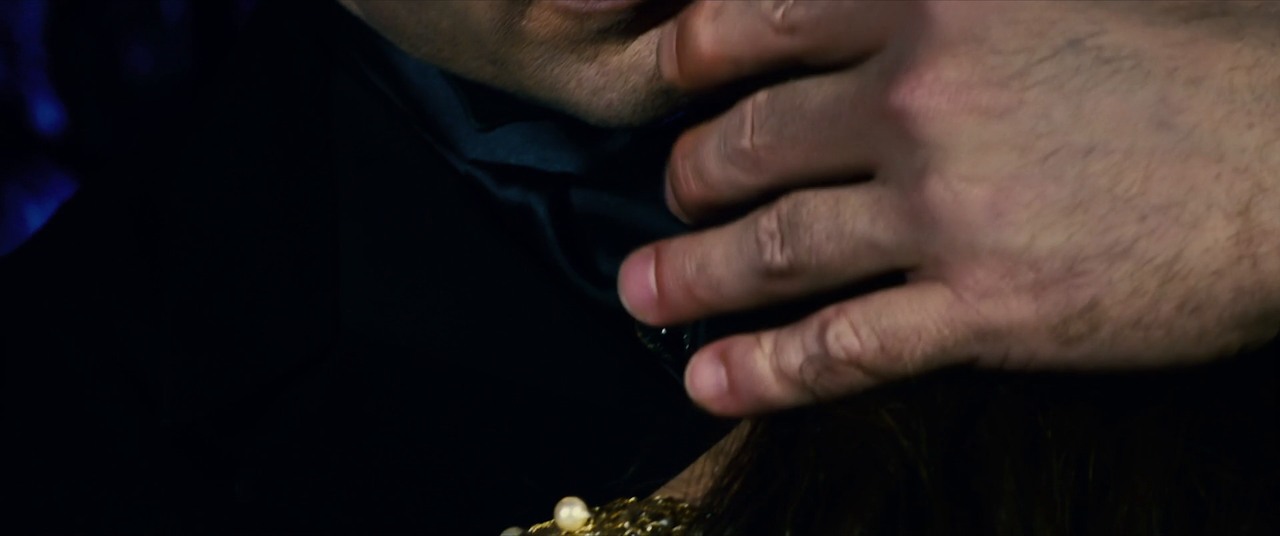
The embrace narrows to a bite, with blood marking Mina’s neck. The confrontation then reopens the space between her and Dracula. Her standing figure and the gun answer the Count’s attempt to keep her within the story of his lost love.

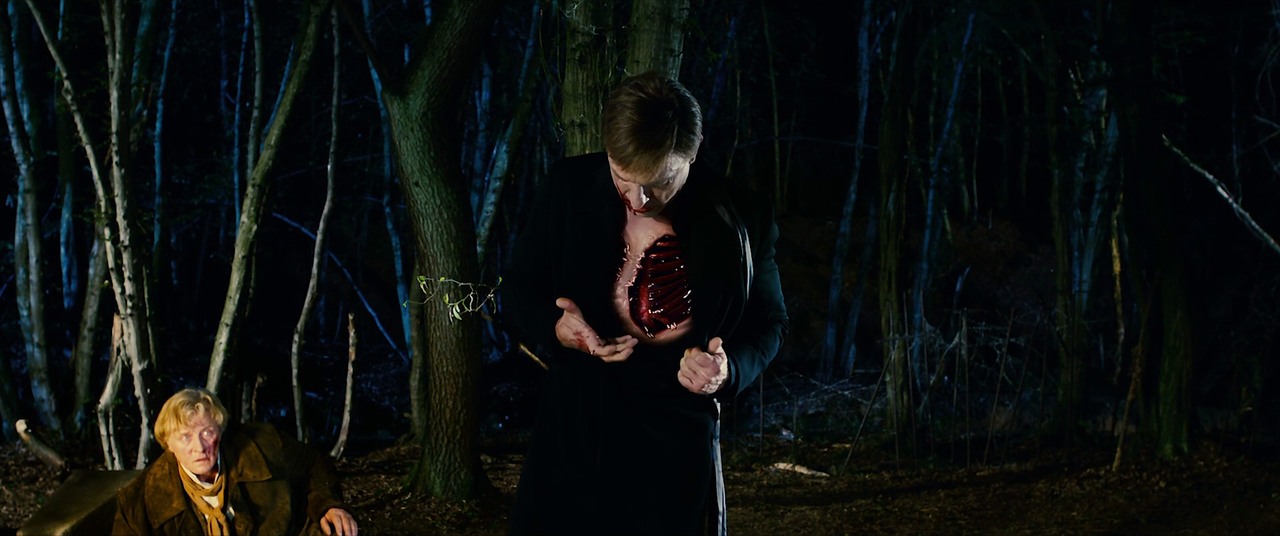
After the chest wound, the body falls and the face changes from recognisable flesh to a dark granular surface. The final dispersal repeats Tania’s fate while removing the figure who had organised the film’s invitations and imprisonments.

Explore the sequence 13 stages

01 · 1:39:05

The hand at Mina’s neck.ENLARGE ↗
The hand at Mina’s neck.

02 · 1:39:10

The fangs approach.ENLARGE ↗
The fangs approach.

03 · 1:39:20

Blood at the bite.ENLARGE ↗
Blood at the bite.

04 · 1:39:50

Mina stands with the wound visible.ENLARGE ↗
Mina stands with the wound visible.

05 · 1:40:40

Mina faces Dracula across the clearing.ENLARGE ↗
Mina faces Dracula across the clearing.

06 · 1:41:05

The gun remains between them.ENLARGE ↗
The gun remains between them.

07 · 1:41:30

Dracula reveals the chest wound.ENLARGE ↗
Dracula reveals the chest wound.

08 · 1:41:55

The Count falls to the ground.ENLARGE ↗
The Count falls to the ground.

09 · 1:42:10

His face remains recognisable.ENLARGE ↗
His face remains recognisable.

10 · 1:42:15

A dark crust spreads across the face.ENLARGE ↗
A dark crust spreads across the face.

11 · 1:42:20

The features become brittle.ENLARGE ↗
The features become brittle.

12 · 1:42:25

The body disperses into dust.ENLARGE ↗
The body disperses into dust.

13 · 1:42:30

Mina and Van Helsing remain.ENLARGE ↗
Mina and Van Helsing remain.
Back to the effects guide ↑

CLOSE VISUAL STUDIES

Rooms, faces and bodies.

Three routes connect thresholds, uncertain recognition and the monster’s changing scale across the film.

Hospitality and confinement

The castle staircase from overhead.ENLARGE ↗
The castle staircase from overhead.

Doorways and windows repeatedly promise access while restricting movement. The castle receives Harker as a guest, but the same arches and stairs later organise his captivity. The mantis sequence gives this concern a spectacular form: a familiar corridor becomes the route of an impossible body.

Follow the visual progression 6 observations
  1. 03:15
    Tania crosses from the warm house into the night.
  2. 22:15
    The castle entrance presents successive layers of interior space.
  3. 22:45
    The overhead stairway makes the route subordinate to the building’s shape.
  4. 34:45
    The barred window offers a view without an exit.
  5. 1:16:00
    Lucy appears at the threshold after the empty coffin.
  6. 1:23:40
    The mantis takes possession of the long corridor.

A face is not a guarantee

Tania takes Harker’s injured finger.ENLARGE ↗
Tania takes Harker’s injured finger.

The film repeatedly presents recognition as a danger. The portrait, the familiar friend and the returning husband all promise continuity, yet each becomes connected to a wound or a changed body. Dracula’s demand that Mina repeat another woman’s life belongs to the same uncertainty about what resemblance can establish.

Follow the visual progression 6 observations
  1. 18:15
    Lucy and Harker share a friendly moment in the house.
  2. 29:30
    The damaged frame leads to an injury and Tania’s appetite.
  3. 1:16:45
    Lucy’s familiar face reveals fangs.
  4. 1:33:45
    Jonathan’s opening eyes turn reunion into danger.
  5. 1:37:15
    Dolingen’s tomb lends permanence to Dracula’s claim.
  6. 1:42:20
    Dracula’s own features become unrecognisable.

The monster changes scale

The swarm fills the tavern.ENLARGE ↗
The swarm fills the tavern.

The Count’s power is expressed through incompatible sizes and textures: the owl’s face, the dispersed swarm, the enormous insect and the dust that replaces a body. The rooms and human witnesses give these transformations a scale. Their effect depends on the relation between the manufactured figure and the stable space around it.

Follow the visual progression 6 observations
  1. 07:10
    The forest gives Tania a small place within a large night landscape.
  2. 08:05
    The owl abruptly occupies most of the image.
  3. 1:08:45
    Flies make the entire room appear active.
  4. 1:11:45
    Human bodies restore a measurable scale after the massacre.
  5. 1:23:46
    The mantis exceeds the proportions of the domestic interior.
  6. 1:42:25
    The Count loses a single bodily outline altogether.

DIALOGUE & THE STORY

The words that keep the Count in power.

Warnings, reassuring explanations and declarations of love carry the film’s struggle over who may speak for another person. Twelve illustrated studies follow that struggle from Tania’s home to Mina’s final account.

01:27–09:12

The warning that everyone already knows

Tania on the forest path.ENLARGE ↗
Tania on the forest path.

Walpurgis Night is introduced as a household rule. Tania knows the warning before her mother finishes it; later, Milos uses the cross to excuse himself from walking her home. The danger is familiar enough to be managed by rules, yet those rules leave the vulnerable person alone.

Follow the conversation 3 observations
  1. 01:27–01:44 · Close the shutters

    Tania completes her mother’s reference to Walpurgis Night. Their exchange establishes shared knowledge rather than a legend being explained to a newcomer. The closed house is a practical answer to that knowledge.

  2. 05:51–06:52 · Wind, footsteps and the cross

    Tania and Milos disagree over the sound around them. His explanation reduces the disturbance to wind; his later assurance that the cross will protect her replaces the escort she asks for. Her refusal of the cross follows his refusal to accompany her.

  3. 08:42–09:12 · A warning for the visitor

    The station attendant hesitates before warning Harker about the woods. Unlike the mother’s instruction, this advice reaches someone who does not share the village’s experience. Harker proceeds with his journey.

Back to the dialogue guide ↑

12:38–28:13

The patron and the unreliable welcome

Dracula receives Harker.ENLARGE ↗
Dracula receives Harker.

Dracula’s power first reaches Harker through other people’s praise. Lucy presents the Count as a benefactor and the library job as an opportunity. The mayor’s private reaction unsettles that account before Harker meets his employer. Later, Harker’s own written observations register contradictions that polite conversation leaves unchallenged.

Follow the conversation 3 observations
  1. 12:38–12:55 · The diary admits uncertainty

    Harker records the wolves he thinks he has seen, distinguishing a nightmare-like experience from sleep. The diary preserves uncertainty instead of settling whether the journey was an illusion.

  2. 17:50–19:03 · Employment and public benefit

    Lucy says that Dracula has helped the town and thanks pass between her and Harker over the librarian’s post. Once Harker has gone, her father questions why she did not tell him about the arrangement. Public hospitality and private concern occupy the same household.

  3. 26:46–28:13 · The employer’s history

    Dracula associates the library with centuries of family esteem for books, then assigns Harker its catalogue. Harker’s diary notices that the Count’s apparently youthful body does not match his manner. The job promises access to knowledge while placing its worker inside the person he needs to understand.

Back to the dialogue guide ↑

23:51–35:48

Care becomes a claim on the body

Tania takes Harker’s injured finger.ENLARGE ↗
Tania takes Harker’s injured finger.

Tania cannot quite define her place in Dracula’s household. The Count supplies a respectable family label for her, while her concern over Harker’s cut gives an intimate encounter the language of medical care. When Dracula intervenes, the vocabulary changes to possession. Their competing claims make the guest’s body the object of the argument.

Follow the conversation 3 observations
  1. 23:51–25:23 · What is a guest?

    Harker asks whether Tania is also a guest; she answers uncertainly. Dracula subsequently introduces her as his niece. The two descriptions do not offer the same account of her freedom or her relationship with the host.

  2. 28:42–30:05 · The photograph and the wound

    Mina’s photograph enters the conversation before Harker injures his finger. Tania offers to prevent infection. The language of help gives her an opening to cross the distance between them, linking care to appetite.

  3. 32:25–35:48 · Asking, claiming, obeying

    Harker demands an explanation, Tania redirects him towards desire, and Dracula asserts his claim on him. Renfield’s later gratitude and request for instructions extend the pattern: the Count’s household organises relationships through service and ownership.

Back to the dialogue guide ↑

40:56–45:11

A wolf makes the story manageable

Mina and Lucy share the carriage.ENLARGE ↗
Mina and Lucy share the carriage.

Mina encounters an official explanation before she understands what it conceals. Jarmila’s protest is met with an insistence that a wolf killed her daughter. The mayor repeats the animal story, then changes the subject to dinner. Domestic hospitality makes the town’s denial easier to live with.

Follow the conversation 3 observations
  1. 40:56–41:14 · The explanation is enforced

    Delbruck insists on the wolf account while Jarmila rejects it and protests her daughter’s death. The exchange is an argument over what may be acknowledged, not merely a disagreement about an unseen animal.

  2. 41:52–42:39 · A warning and a change of subject

    The mayor advises Mina against travelling through the woods after dark. He nevertheless repeats the wolf explanation and redirects the gathering towards celebration and food. He recognises danger without naming its source.

  3. 45:04–45:11 · Going outside the village

    The proposal to alert the authorities suggests that the village cannot resolve the danger through its own offices. Read alongside the later pact, this brief exchange exposes the limits of the official explanation.

Back to the dialogue guide ↑

47:28–55:26

Lucy gives the wound another name

The bite behind Lucy’s knee.ENLARGE ↗
The bite behind Lucy’s knee.

Lucy’s condition is negotiated through ordinary explanations: tiredness, fever, influenza and an insect bite. Mina’s friendship initially supports staying at her bedside, while Lucy keeps directing her towards the castle. The dialogue makes care and concealment difficult to separate.

Follow the conversation 3 observations
  1. 47:40–48:27 · Refusing the doctor

    Lucy minimises her symptoms and rejects medical help. Mina offers to stay, but Lucy reminds her that Jonathan is waiting. Affection produces two competing obligations: remain with the sick friend or search for the absent husband.

  2. 49:38–50:57 · A father who needs to look

    The mayor insists on examining Lucy, and she challenges what he is searching for. Her later explanation turns his concern into an overreaction to influenza. The argument suggests that he suspects more than he says.

  3. 54:20–55:26 · The size of the marks

    Mina rejects the insect explanation because it does not fit the wound. Lucy again urges her to go to the castle; Mina promises to return with Jonathan. A small act of observation punctures the reassuring vocabulary even though it does not yet identify the attacker.

Back to the dialogue guide ↑

58:26–66:44

The rescue story and the missing memory

Mina on the castle couch.ENLARGE ↗
Mina on the castle couch.

Dracula tells Mina how she came to be in his house, where Jonathan has gone and why the reunion must be delayed. She has to rely on the account of the very person controlling her access to her husband. After leaving, her inability to remember makes finding another witness urgent.

Follow the conversation 3 observations
  1. 58:26–60:12 · The host supplies the facts

    Dracula presents himself as Mina’s rescuer and says that Jonathan has gone to collect books. Both explanations make her dependent on him for information. Her gratitude comes before she can test the account.

  2. 60:29–62:02 · Recognition without a history

    Mina describes a feeling of having met him before, but later insists that she must leave. The conversation contains attraction and resistance; neither should be flattened into an uncomplicated declaration of love.

  3. 64:39–66:44 · Looking for a witness

    Mina tells the priest that she cannot remember the castle clearly and asks about Jarmila. He withholds what he knows but directs her towards someone who can help. Her search moves from the Count’s self-serving explanation to an independent inquiry.

Back to the dialogue guide ↑

67:24–70:52

The town finally names its bargain

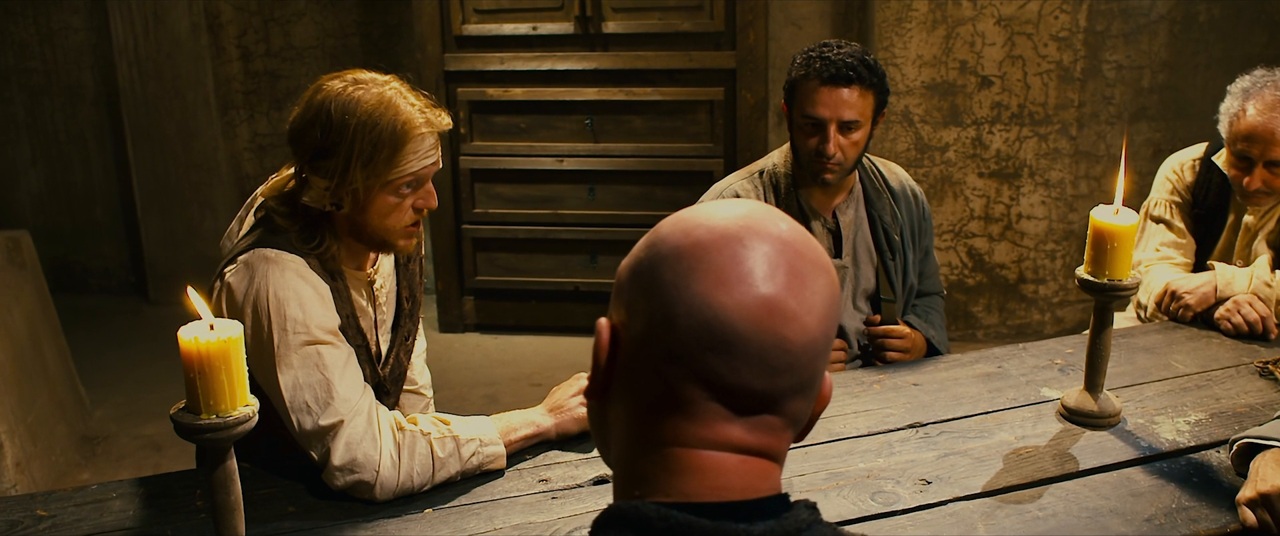
The villagers debate their bargain.ENLARGE ↗
The villagers debate their bargain.

The meeting makes explicit what earlier conversations kept indirect. Dracula has financed schools and paid debts; the villagers have accepted a pact whose cost becomes harder to ignore. When the Count enters, he treats their attempt to organise as a servant’s betrayal of a master.

Follow the conversation 3 observations
  1. 67:42–68:14 · Benefits beside the dead

    The villagers identify the deaths and disappearances while Delbruck recalls the Count’s financial support. The argument connects patronage to silence: the town has already benefited from the arrangement it now fears.

  2. 68:20–68:37 · Blaming the victim

    Delbruck invokes the pact and returns to Tania’s decision to go out on Walpurgis Night. A warning that began as household protection becomes a defence of the bargain, shifting responsibility towards the person killed.

  3. 69:11–70:52 · Master and servant

    Dracula asks who wishes to break the agreement, then names Delbruck as his servant. The massacre gives physical form to the hierarchy his words expose. The village’s public official has been answering to another authority.

Back to the dialogue guide ↑

72:12–81:31

Van Helsing changes the questions

Van Helsing and Mina confer.ENLARGE ↗
Van Helsing and Mina confer.

Van Helsing first asks about symptoms, burial and access to the house. He does not immediately confirm Mina’s theory. After Lucy’s return, his explanation separates a familiar appearance from the person Mina knew and connects her missing memory to Dracula’s control.

Follow the conversation 3 observations
  1. 72:45–73:50 · Questions before a diagnosis

    The marks behind Lucy’s knee, the date of burial and an open door become concrete points of inquiry. His warning about the door returns the film to its opening concern with the boundary between safety and intrusion.

  2. 76:24–80:08 · A name is not proof of identity

    The returning Lucy identifies herself to Mina. After the encounter, Van Helsing explains that transformation can preserve a recognisable body while changing what inhabits it. The reassurance of a friend’s name has become dangerous.

  3. 80:34–81:31 · Memory and a conditional promise

    He describes Dracula’s ability to possess the mind, then promises to bring Jonathan back only if he remains human. This qualification matters: the investigator will not offer the absolute reassurance that other characters have used to conceal danger.

Back to the dialogue guide ↑

85:00–91:23

The priest has to act on his words

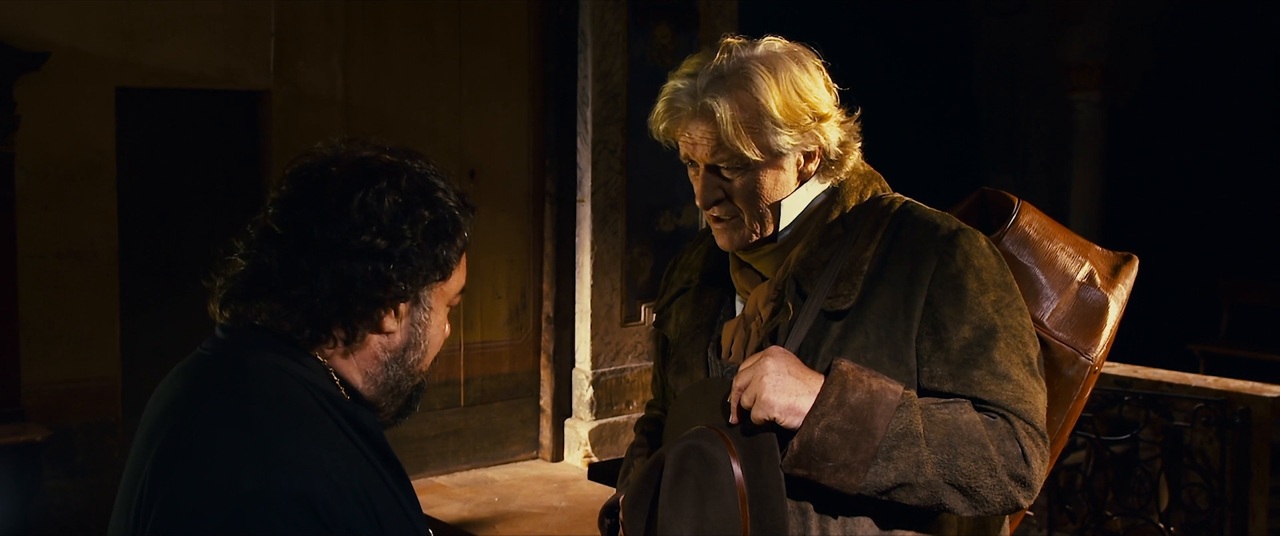
Van Helsing asks the priest for help.ENLARGE ↗
Van Helsing asks the priest for help.

The priest’s knowledge does not initially make him courageous. He recognises what Dracula can do but turns Van Helsing away. Prayer precedes his decision to help; the return changes his function from a keeper of secrets into a participant who accepts the danger.

Follow the conversation 3 observations
  1. 85:15–85:50 · Recognition followed by refusal

    Van Helsing rejects the priest’s pretence not to know him. The priest’s warning about evil explains his fear, yet does not help Mina. The scene distinguishes knowing the threat from confronting it.

  2. 87:41–89:47 · Asking for strength

    The priest asks for strength and courage before joining Van Helsing. His changed decision gives those words a practical consequence. The religious appeal is attached to an action rather than left as a declaration of belief.

  3. 91:03–91:23 · The cost of waiting

    The priest proposes daylight as the safer time to enter. Van Helsing answers that sunrise may be too late. The dispute turns the rescue into a choice between their own protection and Mina’s remaining time.

Back to the dialogue guide ↑

88:45–92:01

A confession that asks to be loved

Dracula confesses to Mina.ENLARGE ↗
Dracula confesses to Mina.

Dracula presents his grief and monstrosity to Mina as a personal confession. He acknowledges what he is while inviting sympathy for what he has lost. The musical metaphor in his self-description gives that confession an expressive shape, but the later scene at the tomb exposes the coercion behind it.

Follow the conversation 3 observations
  1. 88:45–89:23 · The dead wife

    The anniversary of his wife’s death gives Dracula a history of suffering, and Mina responds with sympathy. The conversation prepares his claim that she can repair the loss before he reveals how he brought her to the village.

  2. 90:07–90:59 · A discord in creation

    Dracula identifies himself as undead and describes his existence as a discordant chord within a divine symphony. Mina’s answer offers love rather than rejection. The exchange makes a musical image part of the character’s argument; it does not establish a corresponding musical cue.

  3. 91:48–92:01 · The time remains his

    Even after inviting emotional intimacy, Dracula decides where and when the encounter will continue. His postponement preserves his command over the setting and the next stage of Mina’s experience.

Back to the dialogue guide ↑

94:59–95:16

Renfield reverses the word “monster”

Renfield watches.ENLARGE ↗
Renfield watches.

Renfield’s devotion gives Tania a name opposite to the one used by her enemies. When she is called a monster, he calls her an angel and applies monstrosity to himself. The brief exchange does not undo her violence; it shows how attachment can reorganise the language used to judge it.

Follow the conversation 3 observations
  1. 94:59–95:04 · Naming the absent woman

    Renfield identifies the lingering scent of Tania before naming her as his mistress. Her physical absence has not broken his allegiance; the confrontation is driven by devotion to someone already destroyed.

  2. 95:09–95:12 · Monster and angel

    The opposing descriptions are placed directly against each other. For Renfield, the intimate bond outweighs the category used to identify the supernatural threat.

  3. 95:16 · The accusation turns inward

    He calls himself the monster. Placed beside Dracula’s self-confession, the line links two very different characters through self-condemnation, while their actions prevent those declarations from functioning as absolution.

Back to the dialogue guide ↑

96:36–103:49

Mina gets the final account of her own desire

Mina and Van Helsing remain.ENLARGE ↗
Mina and Van Helsing remain.

At the tomb, Dracula identifies Mina with Dolingen and explains the arrangement that brought her to him. Mina contests his account by naming the people harmed. After his destruction, she describes her apparent consent as something he compelled. The ending therefore changes how the earlier romantic exchanges should be understood.

Follow the conversation 3 observations
  1. 97:08–97:48 · A resemblance becomes a claim

    Dracula says that Mina’s photograph prompted his plan and that Lucy helped bring her to the village. Mina denies being the dead woman. Her objection separates her own identity from the role he has assigned her.

  2. 97:55–100:33 · The people removed from his story

    Mina confronts him about Lucy and Jonathan. He recasts death as eternal life and the husband as an obstacle, then orders Mina to shoot Van Helsing. The language of reunion reveals the people it requires her to disregard.

  3. 102:48–103:49 · Words spoken under another will

    Mina describes her speech and actions as guided by Dracula and asks why he forced declarations of love that he knew were not freely meant. Van Helsing answers through the destructive nature of his passion. Her testimony gives the last conversation its ethical centre: attraction in the earlier scenes cannot simply be treated as consent.

Back to the dialogue guide ↑

Dialogue sources and presentation →

MUSIC & SOUND PRODUCTION

A gothic score, a song and the voices between them.

Simonetti’s account of the musical design joins the orchestra, song performers, dialogue editor and Foley team named in the closing credits.

Hammer memories, modern sound

The orchestra and its recording credits.ENLARGE ↗
The orchestra and its recording credits.

In Loreana Rushe’s 2015 interview, Claudio Simonetti names Christopher Lee’s Dracula as a favourite and says that, for Argento’s film, he sought the atmosphere of Hammer horror using modern sound. This gives the score’s historical reference a basis in the composer’s own intention. Read the interview source →

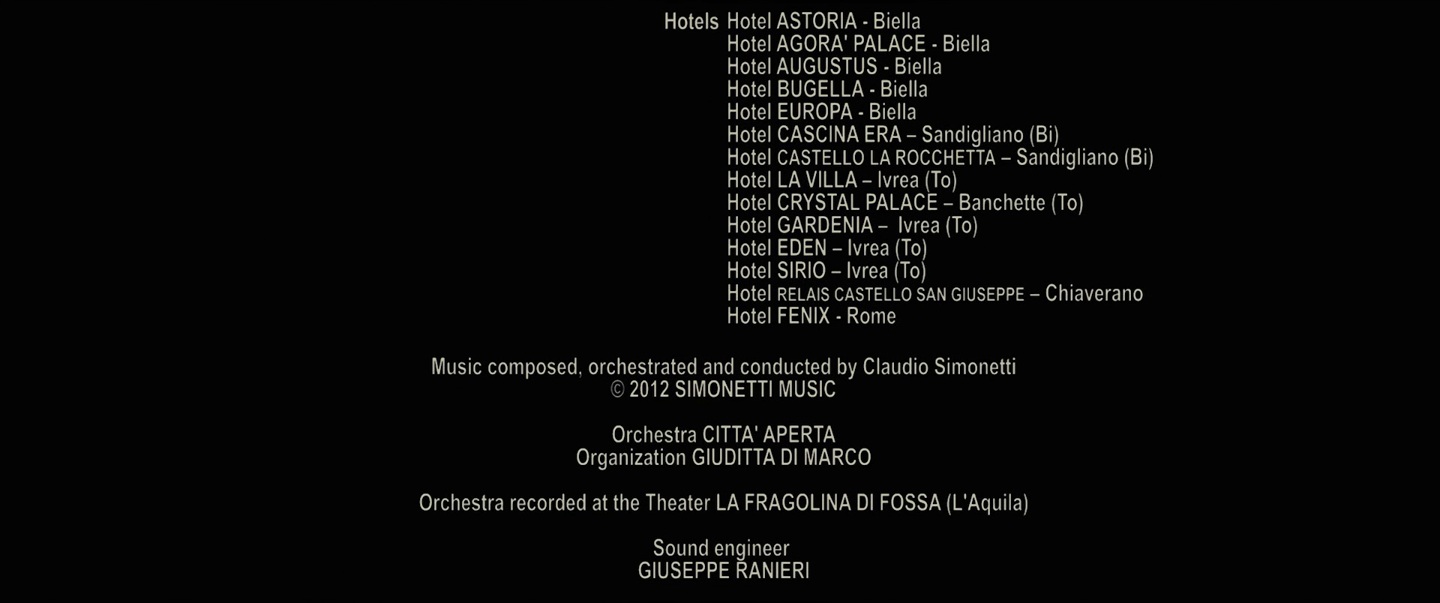
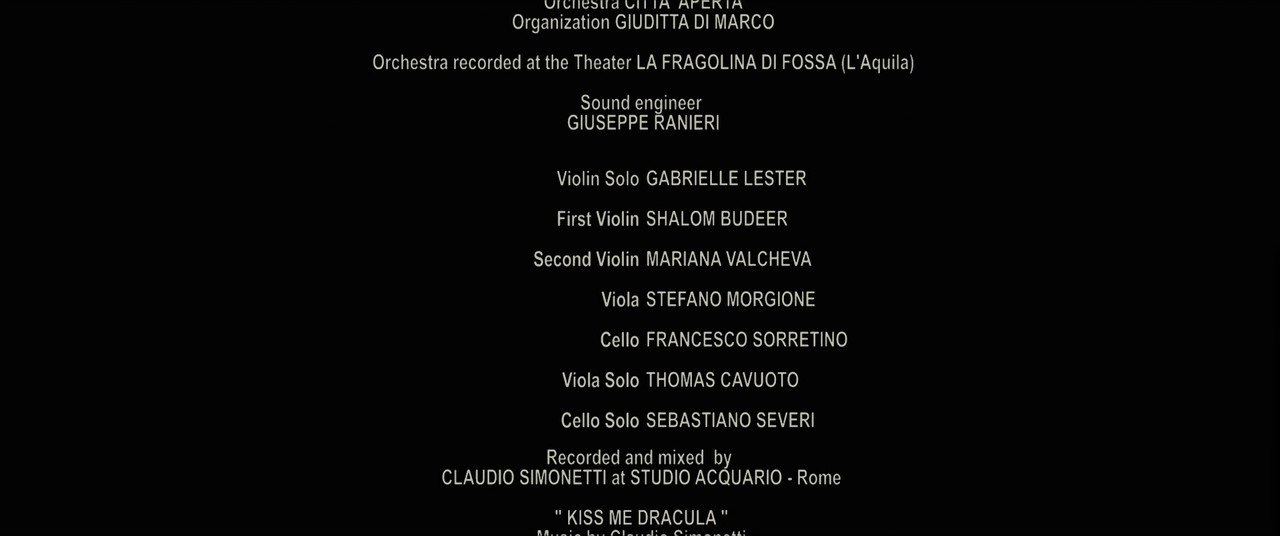
The closing roll credits Simonetti with composition, orchestration and conducting. It names Orchestra Città Aperta, organised by Giuditta Di Marco, and records the orchestral sessions at La Fragolina di Fossa in L’Aquila, with sound engineer Giuseppe Ranieri. Simonetti is also credited with recording and mixing at Studio Acquario in Rome. The score’s production extends beyond a single keyboard performance.

The people behind Kiss Me Dracula

The song and Simonetti Project credits.ENLARGE ↗
The song and Simonetti Project credits.

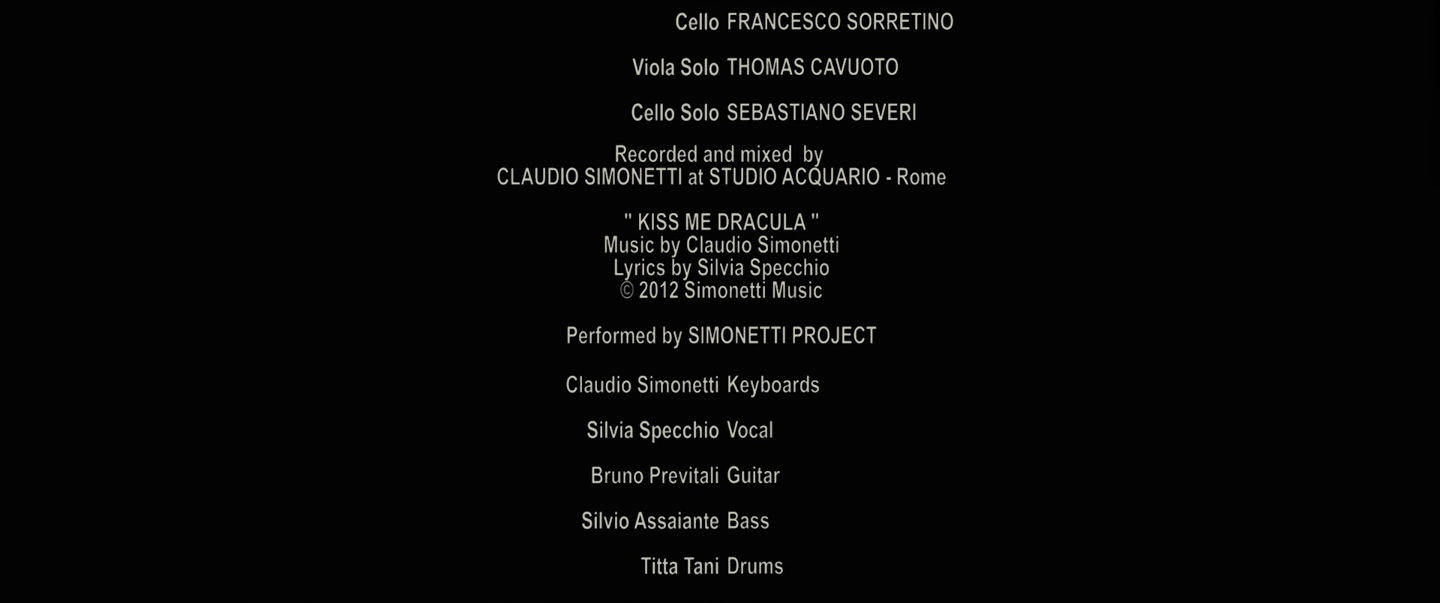
The song’s credit separates Simonetti’s music from Silvia Specchio’s lyrics and vocals. It is performed by Simonetti Project, with Simonetti on keyboards, Bruno Previtali on guitar, Silvio Assaiante on bass and Titta Tani on drums.

The official soundtrack listing gives the song several forms: the opening album track, a later radio version and a video on the accompanying DVD. These are release details, not a reason to attribute the entire film score to the song’s band. Album and DVD contents →

Dialogue, Foley and sound design

Voices, Foley and sound design.ENLARGE ↗
Voices, Foley and sound design.

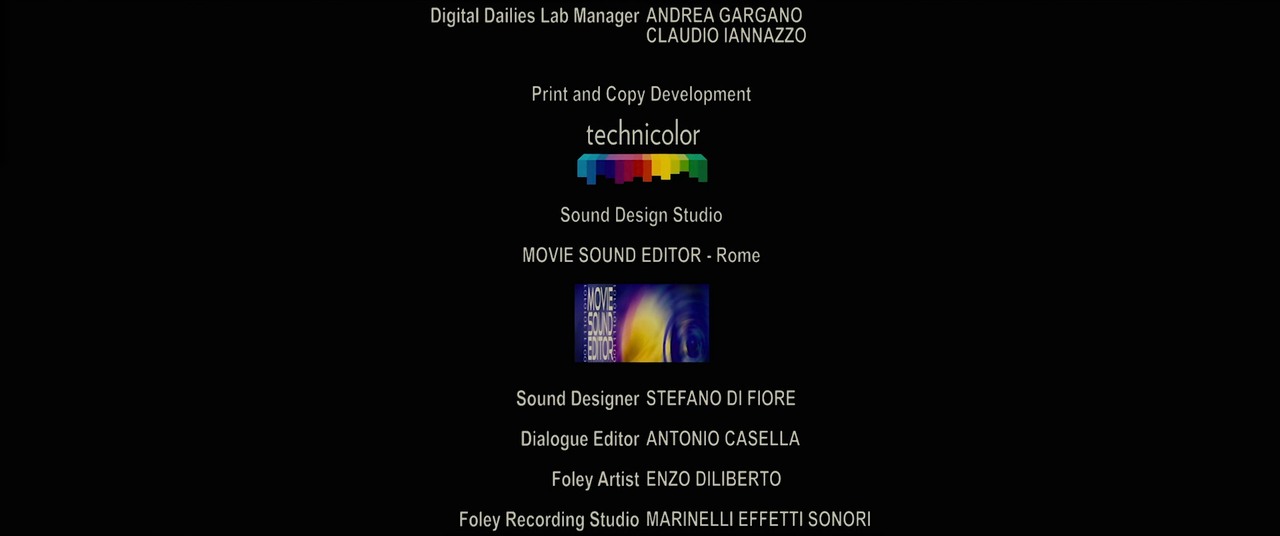
The closing roll names Stefano Di Fiore as sound designer, Antonio Casella as dialogue editor and Enzo Diliberto as Foley artist, with Marinelli Effetti Sonori as the Foley studio and Movie Sound Editor, Rome among the credited facilities.

These roles place the spoken exchanges within a wider construction of voices, performed effects and sound design. The opening disagreement over footsteps makes that relationship part of the story itself: characters argue over what a sound means before they understand the danger around them.

Continue through the screen credits →

A route through the soundtrack album

The blue-lit village beneath the opening titles.ENLARGE ↗
The blue-lit village beneath the opening titles.

The official Deep Red release, DR008, lists forty-six CD tracks. Its titles offer a useful listening route through characters, places and transformations:

  • Tania, Tania Loves Milos and The Evil Forest connect the opening character and setting.
  • Mina, Dracula in Love and Mina Leaves Dracula place the romantic encounter beside separation.
  • The Massacre, Lucy Burns and Tania’s Attack identify violent episodes.
  • Confessions, The Final Fight, Evil Dies and To Eternity lead towards the ending.

The album sequence is a separate listening presentation; its track boundaries should not be treated as a frame-accurate cue sheet for the film. Explore the official release →

Back to the dossier entrance ↑

THE CRAFT RECORD

Names behind the images.

Special makeup and the workshop

Special makeup and the workshop.ENLARGE ↗
Special makeup and the workshop.

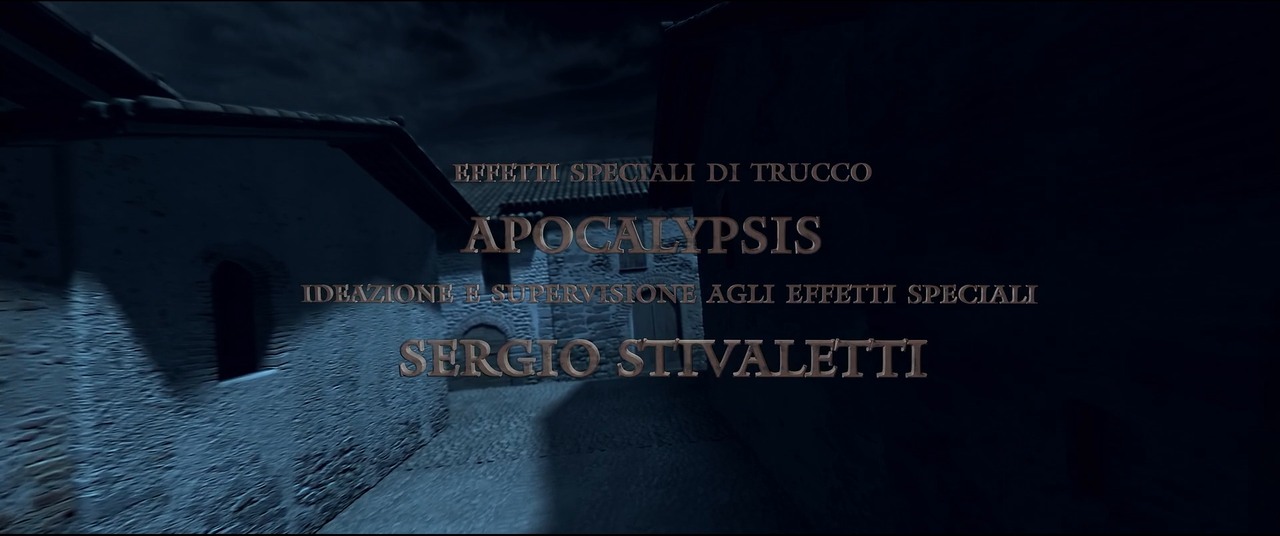
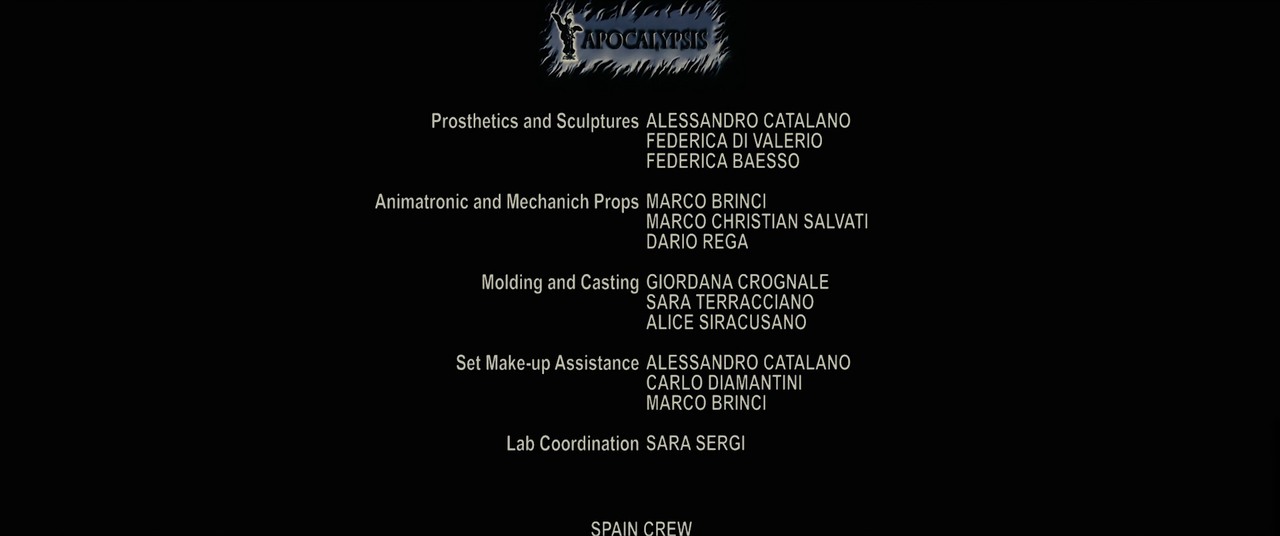
The opening titles credit Apocalypsis for special makeup effects and Sergio Stivaletti for their conception and supervision. The closing roll names Alessandro Catalano, Federica Di Valerio and Federica Baesso for prosthetics and sculpture; Marco Brinci, Marco Christian Salvati and Dario Rega for animatronic and mechanical props. These workshop credits do not assign each visible wound to an individual artist.

View the related credits
The Apocalypsis workshop credits.ENLARGE ↗
The Apocalypsis workshop credits.

Visual effects and stereoscopic supervision

Visual effects and stereoscopic supervision.ENLARGE ↗
Visual effects and stereoscopic supervision.

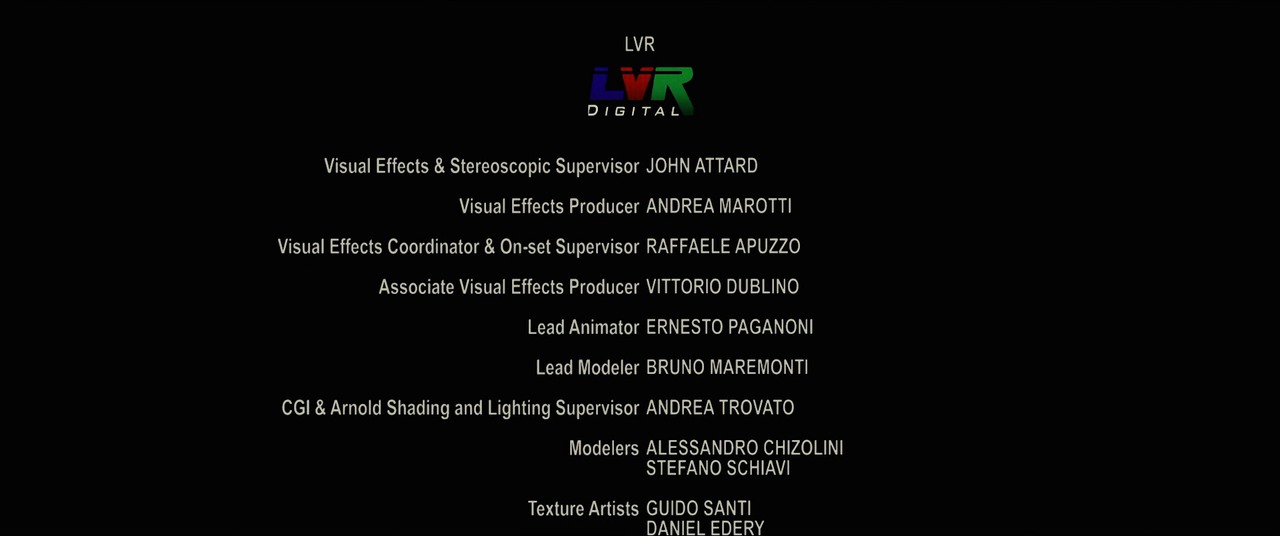
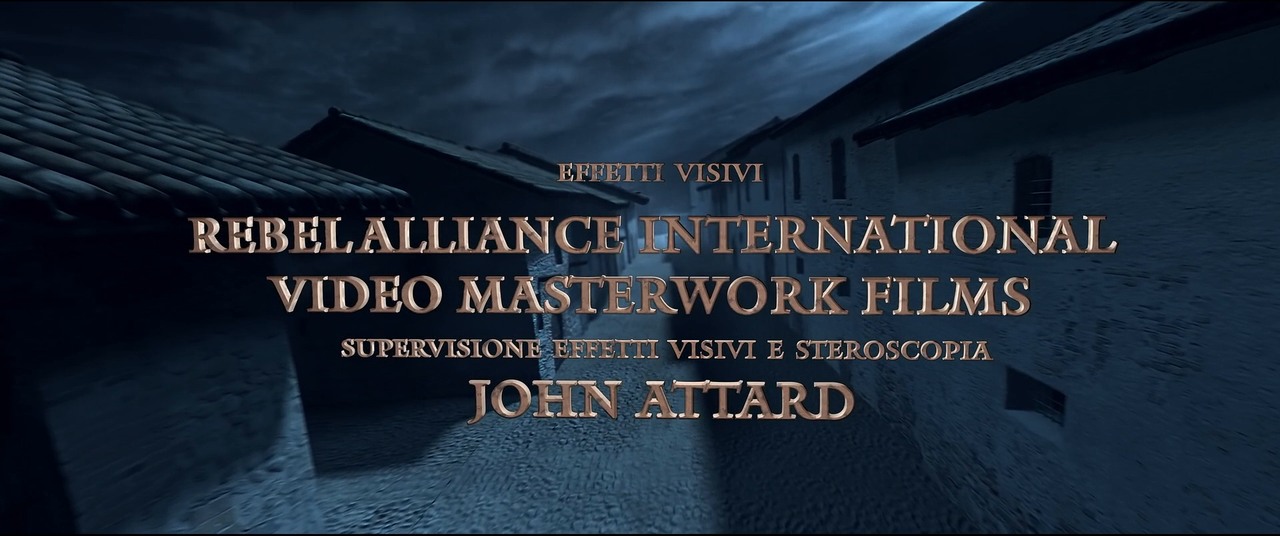
The opening names Rebel Alliance International and Video Masterwork Films for visual effects, with John Attard supervising visual effects and stereoscopy. The closing LVR Digital card additionally identifies Andrea Marotti as visual-effects producer, Raffaele Apuzzo as coordinator and on-set supervisor, Ernesto Paganoni as lead animator, Bruno Maremonti as lead modeler and Andrea Trovato for CGI shading and lighting supervision. The credits establish departments and roles, rather than a shot-by-shot allocation.

View the related credits
Visual-effects companies and John Attard’s credit.ENLARGE ↗
Visual-effects companies and John Attard’s credit.

Voices, Foley and sound design

Voices, Foley and sound design.ENLARGE ↗
Voices, Foley and sound design.

The closing roll names Stefano Di Fiore as sound designer, Antonio Casella as dialogue editor and Enzo Diliberto as Foley artist, with Marinelli Effetti Sonori credited for Foley recording. These are separate contributions to the soundtrack; the screen record expands the existing music research without substituting for a listening analysis.

The orchestra and recording

The orchestra and recording.ENLARGE ↗
The orchestra and recording.

The roll identifies the Città Aperta orchestra and records its work at Teatro La Fragolina di Fossa, with Giuseppe Ranieri as sound engineer. Gabrielle Lester receives the violin-solo credit. Claudio Simonetti is named for recording and mixing at Studio Acquario in Rome. These details connect the score’s credited performance and recording to the separately released soundtrack album.

Stereoscopy & adaptation

An old story built around a new spatial experiment. This expanded dossier follows Dracula 3D through Stoker’s novel, Mina’s altered place in the story, Argento and Tovoli’s intentions, the production workshop, Simonetti’s music and the argument over the result.

Spoilers: this study discusses the film’s story and ending.

01 / ARGENTO, TOVOLI & STEREOSCOPIC SPACE

The invitation is to enter

A vampire can threaten from the far end of a room. He does not need to reach out of the screen. That distinction opens a more useful approach to Dracula 3D than simply counting its conspicuous effects: what happens when the distance between people becomes part of the attraction?

In Peter Sobczynski’s 2013 interview, Argento describes wanting audiences to feel inside the image rather than assailed by objects coming out of it. He connects the planning of distances to Dial M for Murder, where furniture and objects articulate a room. Argento on depth and Hitchcock ↗

Luciano Tovoli’s later account makes the question more precise. He finds stereoscopy interesting because it gives weight to elements that conventional focus might subordinate, including details outside sharp focus. Tovoli on space and attention ↗ A room can become more physically insistent without becoming easier to read. The spectator must negotiate what matters within it.

For a story of invitations, thresholds and unwanted proximity, this is a potentially expressive choice. Dracula’s hospitality promises access while arranging captivity. Depth might make that arrangement palpable: a person can appear available to approach and yet remain difficult to reach. It establishes the question and the makers’ stated intentions, then places them beside responses that disagree about the result.

02 / STOKER, HARKER & MINA

Who gets to organise the evidence?

In chapter II of Bram Stoker’s 1897 novel, Jonathan Harker comes to Dracula as a newly qualified solicitor helping with the purchase of an English estate. The Count’s library is filled with information about England. His questions about speech, law and everyday life make study part of a larger preparation to enter and master another society. By chapter III, Harker’s professional visit has become imprisonment, with even his correspondence subject to control. Stoker, chapters II–III ↗

The published premise of Argento’s film makes Harker a librarian arriving in Transylvania in 1893. The Cannes synopsis ↗ That change keeps books close to the encounter while altering the visitor’s job. In the novel, a legal transaction helps the predator travel outward. In this adaptation’s premise, employment draws the visitor inward. Knowledge is connected to access in both cases, but the arrangement of dependence changes.

Mina provides an equally productive comparison. In chapter XVII, she helps turn scattered accounts into usable collective evidence, transcribing Seward’s phonograph records and organising material so others can compare it. Her work changes who can know what. Stoker, chapter XVII ↗ This is a practical role in the investigation, not merely an emotional reason for other characters to act.

The film’s distributor synopsis instead foregrounds Dracula’s belief that Mina is the reincarnation of his long-dead love, Dolingen. The adaptation’s romantic premise ↗ The useful question is what this does to her position. A woman who assembles other people’s stories and a woman whom someone claims to recognise from his own past occupy very different relations to narrative authority. The contrast does not prove that the film removes all of Mina’s agency. The final confrontation gives this comparison a concrete image: Mina stands apart from the Count, holding the weapon herself.

03 / ROMANCE, POSSESSION & THE CAST

An old love can become a new claim

Argento’s brief Sky interview presents a Dracula capable of romantic attachment, while his longer conversation with Olivier Rossignot acknowledges extensive changes to Stoker and emphasises the character’s sentimental dimension. The 2012 account ↗ The 2013 account ↗ His attraction to the figure is not confined to the mechanics of a faithful adaptation.

Romance complicates the monster without automatically absolving him. If Dracula believes he has found someone he lost centuries ago, he also risks denying the person before him a present of her own. Recognition becomes possession when his memory is treated as more authoritative than her wishes.

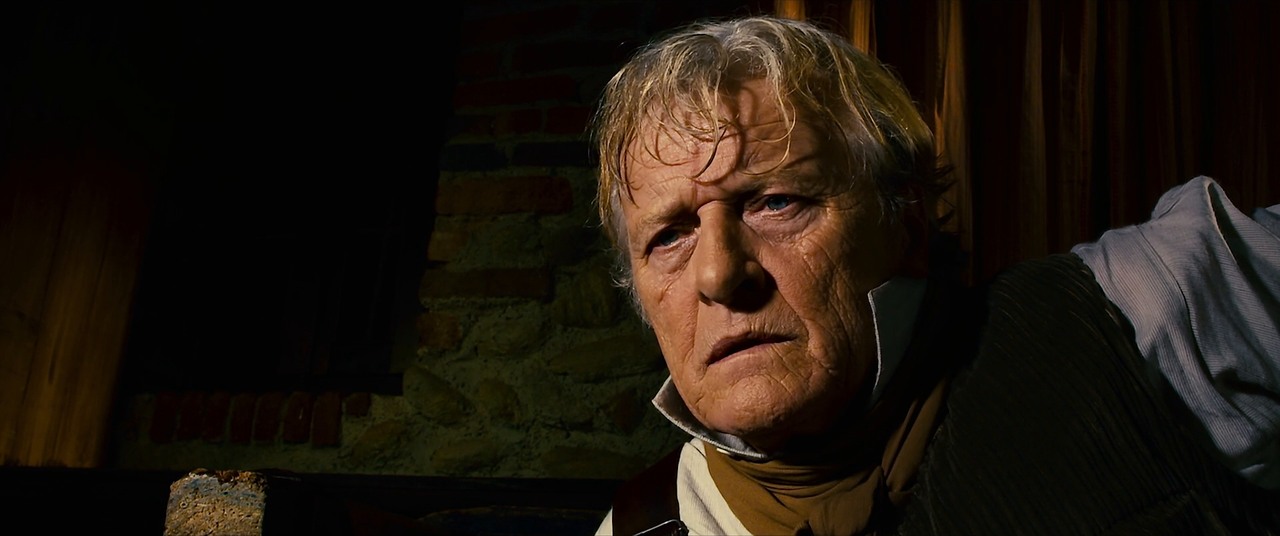
Thomas Kretschmann plays Dracula, Marta Gastini is Mina, Asia Argento is Lucy, Unax Ugalde is Jonathan and Rutger Hauer is Van Helsing. The principal cast ↗ These roles distribute desire, vulnerability and resistance across an ensemble. The Count’s fascination is only one perspective on the relationship. Mina’s response, Lucy’s involvement and Jonathan’s predicament deserve attention alongside his account of himself.

The casting also brings a remembered cinema into the encounter. Argento had already worked with Kretschmann on The Stendhal Syndrome; in the Rossignot interview he speaks of his admiration for Hauer. His acknowledged affection for Christopher Lee’s Dracula supplies another point of reference. Argento on actors and predecessors ↗ These connections explain a field of associations, not a set of performances we can declare equivalent. The later critical disagreement about Hauer is especially useful because it shows how differently a familiar presence can register.

04 / READING THE CANNES PHOTOGRAPH

The room disappears between two faces

The official Cannes photograph places Kretschmann close to Gastini, his face entering from the left toward hers. Her eyes are closed and her lips parted. Warm light gives both faces a tactile presence, while the surroundings offer little information. The image makes closeness immediately legible and the larger situation difficult to reconstruct.

This is a different kind of attraction from a spacious view of a castle. There is scarcely a room here to explore. Faces and the small interval between them dominate the composition. The publicity image therefore gives the film’s romantic proposition a compact visual form: proximity can look like tenderness before the story tells us what it costs.

Her closed eyes also leave the viewer without an answering gaze. That absence should not be turned into a diagnosis of consent, sleep or fear from a single photograph. It is enough to notice how the image distributes visible information. One face approaches; the other remains available to our inspection without looking back.

The existing 1360 × 910 Cannes reproduction is retained locally with its full composition and without alteration. Official gallery provenance ↗ It is a promotional photograph. Its warmth and intimacy can be discussed directly; a lens, lighting plan, timecode or depth effect cannot be established from it.

05 / PIEDMONT, THE SET & THE DIGITAL BODY

Several crafts build the same impossible space

The regional production record separates Tovoli’s photography, Antonello Geleng’s production design, Claudio Cosentino’s scenography and Monica Celeste’s costumes. It also identifies stereographic work, digital effects and Sergio Stivaletti’s makeup effects. The regional crew record ↗ These distinctions matter when a film’s artificiality is treated as though it came from a single decision.

The Cannes press kit describes eight weeks of preparation, nine of shooting and eight months of postproduction. Its production account places location work in Piedmont and technical work in Lazio, with digital effects and stereoscopic finishing extending the process beyond the shoot. Its technical credits name Jean Antoine Delille as stereographer and ARRI ALEXA and Sony F3 cameras. Press kit, PDF pages 10 and 12 ↗ These are supplied production records, not our inspection of camera reports.

A convincing depth arrangement depends on more than a camera. A costume separates a figure from a wall; a set gives that figure a route; a digital element has to occupy a compatible space. Editing then determines how long the spectator has to understand those relationships. The credits give us a way to ask about this shared work without assigning every result to the director or every creature to one effects artist.

Argento describes expanding Dracula’s transformations to include a fly, a mantis and rats. His account of the creature forms ↗ This offers a particularly sharp test of the project: a recognisable actor becomes an overtly manufactured body. The resulting shift may feel uncanny, playful or implausible. The critical responses help locate that disagreement; they do not identify which individual made each effect. The eight sequence galleries now follow the visible effects, while the screen-credit study distinguishes the contributing departments. The credits alone do not allocate individual shots to artists.

06 / SIMONETTI, THE SCORE & ITS SEPARATE RELEASE

The album offers another route into the castle

Claudio Simonetti’s soundtrack has a life outside the film. The official distributor lists the Deep Red album DR008 for 28 August 2012. Its track sequence begins with Kiss Me Dracula and Dracula Suite, and includes character and situation titles such as Mina, Dracula in Love and Van Helsing. The album’s release and track record ↗

The press kit credits the Città Aperta orchestra and separately names Stefano Di Fiore for sound design. Press kit, PDF page 12 ↗ Composition, instrumental performance and the organisation of effects and voices are related but distinct activities. A discussion of “the soundtrack” can obscure those differences if it treats every audible choice as part of the score.

Marco Minniti’s Cannes review hears Simonetti’s contribution as part of the film’s deliberately old-fashioned gothic character. A contemporary response to the music ↗ That is an attributed listening judgment. It suggests a useful tension between a new image technology and a musical appeal to an older horror vocabulary, without supplying our own account of timbre, synchronisation or mix balance.

The music and sound-production guide adds Simonetti’s own account of his Hammer reference, the orchestra’s recording credits, the contributors to Kiss Me Dracula and the dialogue and Foley teams. The Count’s confession also makes music a metaphor within the dialogue. A direct listening comparison of the romantic encounter, transformations and Van Helsing’s arrival remains a useful next step for the score’s placement in the mix.

07 / TWO CANNES RESPONSES

Brightness can illuminate or disperse attention

Craig Skinner’s Cannes review finds the bright imagery and conspicuous depth distracting, while allowing that the opening forest initially benefits from the format. His response becomes sharply negative about the effects and the use of space. Skinner, 28 May 2012 ↗ The concern is not simply that the film is too colourful. It is that available detail can compete with a clear centre of attention.

Marco Minniti’s review is more receptive to the artificial, pictorial world and its Hammer associations. He considers 3D dispensable but sometimes imaginatively used, while criticising weaknesses in the writing and effects. Minniti, 20 May 2012 ↗ Artificiality, in this reading, can be an aesthetic choice without making every execution successful.

Their responses to Hauer also diverge: Skinner finds the performance disengaged, whereas Minniti appreciates its irony. Skinner on Van Helsing ↗ Minniti on Van Helsing ↗ A familiar actor can seem to bring economical authority or insufficient commitment to a role. The difference is worth keeping visible rather than manufacturing a consensus.

Placed beside Argento and Tovoli’s accounts, these reviews turn a verdict into a set of testable questions. Does the depth organise looking or scatter it? Does stylisation intensify the fable or weaken physical conviction? Does a performance acknowledge the tradition with wit or retreat into it? The makers explain what interested them; the critics describe different experiences of the outcome. Neither kind of evidence can substitute for the other, and two reviews cannot represent an entire reception history.

08 / CANNES, CINEMAS & HOME VIDEO

A duration is a record before it is a difference

Cannes presented Dario Argento Dracula in its 2012 Midnight Screenings programme, out of competition. The regional record dates the Italian theatrical release to 22 November 2012. Festival record ↗ Italian release record ↗ These are separate events in the film’s circulation, not competing production dates.

Presentations and the limits of their records
RecordWhat it listsWhat remains unverified
Cannes, 2012Midnight Screenings; 106 minutesNo timed inspection of the festival presentation.
Cannes press kitStereoscopic production; DCP 3D and 2D delivery; 106 minutesDelivery specifications do not prove the configuration of every screening.
FCTPItalian cinema release, 22 November 2012No territorial print or release comparison performed.
MPI Blu-ray BDIFC192128 January 2014; 110 minutes; catalogue year field 2013Home-video edition.

MPI markets the home-video edition as Argento’s Dracula. Its 110-minute listing differs from the Cannes and regional 106-minute records, and its year field differs from the film’s 2012 festival history. The distributor’s Blu-ray entry ↗ The dossier retains 2012 as the film year. It does not silently turn the later catalogue field into a second production.

Nor does a four-minute discrepancy demonstrate a longer cut. A proper comparison needs an identified carrier, language, playback rate and actual start and end points. Rounding, packaging information and different materials are possible avenues to check, not established explanations. Likewise, watching a 2D presentation would not be enough to settle an argument specifically about stereoscopic depth.

The illustrated guide supplies a direct route through the film alongside these release records. Its flat widescreen presentation runs 1:49:53 including titles and credits, with a 1920 × 804 picture. That running time locates the new images.
FOLLOW THE PEOPLE

Across the films.

Luciano Tovoli: cinematography →

THE READING ROOM

Return to the source.

Research sources checked 17 October 2026; illustrated studies, dialogue, sound-production research, screen credits and the Cannes programme added or updated 7 November 2026. The novel, production records, participant testimony, criticism and the inspected photograph retain their distinct roles.

  1. 01

    Festival de Cannes — Dario Argento Dracula ↗
    Official 2012 programme, synopsis, credits, 106-minute listing and gallery. Existing 1360 × 910 promotional photograph.

    Return to the dossier ↑
  2. 02

    Cannes — original production press kit ↗
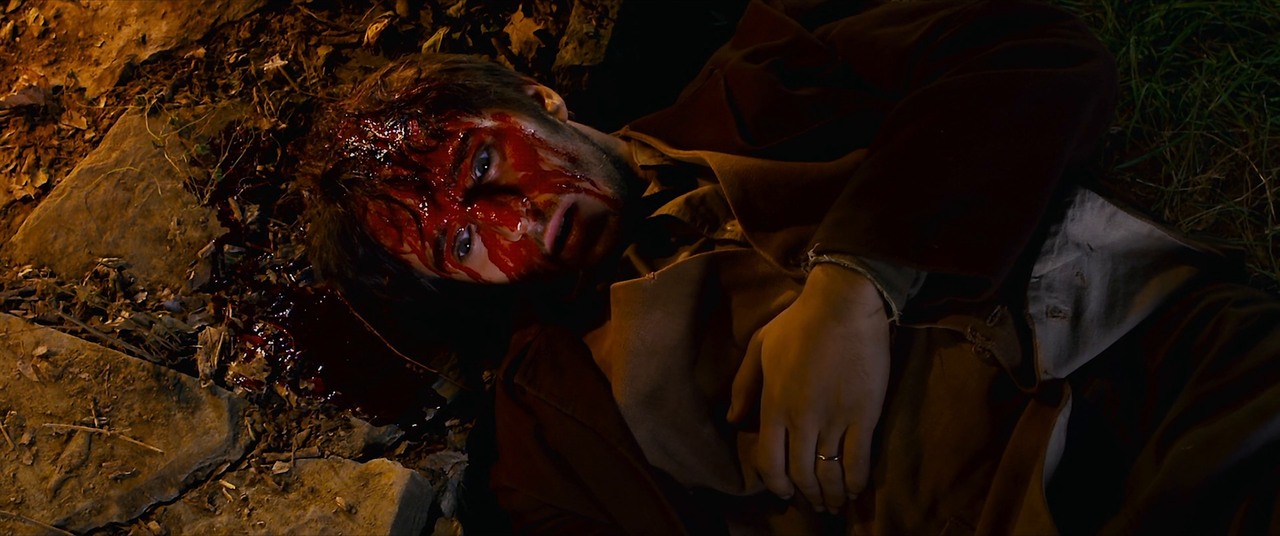
    Image-based PDF. Story, production notes, Argento Q&A and technical credits visually inspected on PDF pages 2, 10, 11 and 12. Promotional participant record, not independently audited camera or postproduction logs.

    Return to the dossier ↑
  3. 03

    Peter Sobczynski — Dario Argento on Dracula and horror ↗
    21 October 2013. Relevant interview passages read through indexed text; direct access was restricted. Used for Argento’s stated spatial intention and Hitchcock reference.

    Return to the dossier ↑
  4. 04

    Sky TG24 — Argento on Dracula 3D ↗
    28 November 2012. Short written interview extract checked for the romantic conception. Embedded video not viewed or heard.

    Return to the dossier ↑
  5. 05

    Valentina D’Amico — interview with Luciano Tovoli ↗

    8 May 2018. Relevant Dracula passage discusses 3D, spatial weight and out-of-focus elements. Retrospective testimony, not a measured depth analysis.

    Return to the dossier ↑
  6. 06

    Bram Stoker — Dracula (1897) ↗

    Project Gutenberg text: selected passages in chapters II–III and XVII checked for Harker’s work, the library, confinement and Mina’s organisation of evidence. No complete novel-to-film collation claimed.

    Return to the dossier ↑
  7. 07

    Olivier Rossignot — interview with Dario Argento ↗

    25 October 2013. Relevant answers on adaptation, romance, animal forms, actors and Hammer read in French. Paraphrases here; no English quotations attributed to the interview.

    Return to the dossier ↑
  8. 08

    Film Commission Torino Piemonte — Dracula 3D ↗

    Regional production and department credits, location/support record, duration and Italian release date.

    Return to the dossier ↑
  9. 09

    Self Distribuzione — Dracula 3D OST ↗

    Official album listing: Deep Red DR008, release date, track sequence and packaging. Catalogue.

    Return to the dossier ↑
  10. 10

    Craig Skinner — Cannes 2012: Dracula 3D review ↗

    28 May 2012. Article text inspected for contemporary criticism of space, effects and performance; direct retrieval was restricted. An attributed response, not our viewing report.

    Return to the dossier ↑
  11. 11

    Marco Minniti — Morsi stereoscopici ↗

    20 May 2012. Contemporary review used for its qualified defence of stylisation, musical response and reading of Hauer. No representative consensus claimed.

    Return to the dossier ↑
  12. 12

    MPI Home Video — Argento’s Dracula 3D Blu-ray ↗

    Distributor synopsis and BDIFC1921 release/duration fields. The 2013 year and 110-minute listing are retained as catalogue data.

    Return to the dossier ↑
  13. 13

    Dracula 3D — visual studies and screen credits

    Selected frames examined across a 1:49:53 presentation, with closer sampling of the eight effects passages. Time labels locate the images; this is a scene guide rather than an inventory of every cut. Stills retain the widescreen composition at 1280 × 536.

    The flat presentation supports discussion of framing, colour and visible action, not stereoscopic depth. Opening and closing credits supply the new craft attributions; the Cannes programme was rechecked on 7 November 2026. The dialogue studies and sound-production guide continue this visual work. Direct soundtrack listening and comparison of authenticated editions remain separate questions.

    Return to the scene guide ↑
  14. 14

    Dracula 3D — English dialogue and sound credits

    The English dialogue was reviewed across the complete 1:49:53 presentation using local speech recognition, the embedded English subtitles and focused centre-channel checks. The studies paraphrase conversations rather than reproduce a script; their time ranges locate passages. The supplied presentation has an English AC-3 5.1 track and no commentary track.

    The closing roll supplies the orchestra, recording, song, dialogue and Foley credits. This is a machine-assisted dialogue review and a study of documented sound production. Direct listening is still required for performance, musical-cue synchronisation and spatial-mix judgments.

    Return to the dialogue studies ↑
  15. 15

    Claudio Simonetti interviewed by Loreana Rushe

    The Thin Air, 28 October 2015. Simonetti discusses his affection for Christopher Lee’s Dracula and the Hammer atmosphere he sought for Argento’s film, using modern sound. This is the composer’s account of his intention, rather than a substitute for comparing individual cues.

    Read the interview → Return to the score study ↑

Corrections, contributions and enquiries: argentochrome@rareprintsandposters.com